Compare commits
| Author | SHA1 | Date | |
|---|---|---|---|
  Alby96andClaude Opus 5.5 |
f7c9cf6da8 | ||
|
Alby96
|
4ecf15b609 | ||
|
Alby96andClaude Opus 5.5
|
b4a2802bed | ||
|
Alby96andClaude Opus 5.5
|
8198e0a754 | ||
|
Alby96andClaude Opus 5.5
|
f415dc37a8 | ||
|
Alby96andClaude Opus 5.5
|
acb7e598d1 | ||
|
Alby96andClaude Opus 5.5
|
75d60ee4c4 | ||
|
Alby96
|
d0f9d0e651 | ||
|
Alby96andClaude Opus 5.5
|
d958e7372d | ||
|
Alby96andClaude Opus 5.5
|
b341ade9e9 | ||
|
Alby96andClaude Opus 5.5
|
cf6f849cc1 | ||
|
Alby96
|
1c30054e3d | ||
|
Alby96andClaude Opus 5.5
|
4502526f4d | ||
|
Alby96andClaude Opus 5.5
|
032c602b49 | ||
|
Alby96
|
4582837b70 | ||
|
Alby96andClaude Opus 5.5
|
edce4702da | ||
|
Alby96
|
6eef15c487 | ||
|
Alby96andClaude Opus 5.5
|
738c43ba0a | ||
|
Alby96
|
28e7a6e18a |
No files matched your search
@@ -10,6 +10,10 @@
|
||||
.data/
|
||||
out/
|
||||
docs/
|
||||
# ...except the copy of the wiki and the images it shows, shipped as the in-app help (ADR 0023).
|
||||
!docs/wiki/
|
||||
!docs/mockups/thumbs/
|
||||
!docs/mockups/png/
|
||||
deploy/
|
||||
*.md
|
||||
!README.md
|
||||
|
||||
@@ -70,4 +70,12 @@ dotnet_diagnostic.IDE0005.severity = warning
|
||||
[tests/**.cs]
|
||||
# CA1707 (underscores in names): test names read as Method_Condition_Result.
|
||||
dotnet_diagnostic.CA1707.severity = none
|
||||
# CA1861/CA1847/CA1862: tests pass literal arrays and write the string predicates the query translator must handle.
|
||||
dotnet_diagnostic.CA1861.severity = none
|
||||
dotnet_diagnostic.CA1847.severity = none
|
||||
dotnet_diagnostic.CA1862.severity = none
|
||||
# MSTEST0037 and friends stay at their defaults.
|
||||
|
||||
# Migration classes are named after their version, M<yyyymmdd>_<nnn>_<Name> (SPEC 5.3).
|
||||
[**/Migrations/*.cs]
|
||||
dotnet_diagnostic.CA1707.severity = none
|
||||
@@ -135,19 +135,25 @@ jobs:
|
||||
docker build -f docker/Dockerfile --build-arg VERSION=0.0.0-ci --build-arg GIT_SHA="$(git rev-parse --short HEAD)" \
|
||||
--label khaemhat-ci.job="$(hostname)" -t "$NAME:image" .
|
||||
|
||||
- name: Smoke test (/health/live, non-root user, PUID/PGID)
|
||||
- name: Smoke test (start-up, login page, non-root user, PUID/PGID)
|
||||
run: |
|
||||
docker network create --label khaemhat-ci.job="$(hostname)" "$NAME"
|
||||
docker network connect "$NAME" "$(hostname)"
|
||||
# Since M2 the instance needs a key, a super user and a first company; the key is thrown away with the run.
|
||||
docker run -d --name "$NAME-app" --network "$NAME" --label khaemhat-ci.job="$(hostname)" \
|
||||
-e KHAEMHAT_SYSTEM_DB=sqlite:///data/system.db -e KHAEMHAT_LICENSE_MODE=test -e PUID=99 -e PGID=100 "$NAME:image"
|
||||
for i in $(seq 1 30); do
|
||||
if curl -fsS --max-time 5 "http://$NAME-app:8080/health/live"; then echo; break; fi
|
||||
-e KHAEMHAT_SYSTEM_DB=sqlite:///data/system.db -e KHAEMHAT_LICENSE_MODE=test \
|
||||
-e KHAEMHAT_SECRET_KEY="$(head -c 32 /dev/urandom | base64)" \
|
||||
-e KHAEMHAT_SUPERUSER=root -e KHAEMHAT_SUPERUSER_PASSWORD=Ci-Smoke-Test-2026 -e KHAEMHAT_COMPANY_CODE=CI \
|
||||
-e PUID=99 -e PGID=100 "$NAME:image"
|
||||
for i in $(seq 1 60); do
|
||||
if curl -fsS --max-time 5 "http://$NAME-app:8080/health/ready"; then echo; break; fi
|
||||
sleep 2
|
||||
done
|
||||
curl -fsS --max-time 5 "http://$NAME-app:8080/health"
|
||||
echo
|
||||
curl -fsS --max-time 5 "http://$NAME-app:8080/" | grep -q "in costruzione"
|
||||
test "$(curl -s -o /dev/null -w '%{http_code}' --max-time 5 "http://$NAME-app:8080/")" = "302"
|
||||
curl -fsS --max-time 5 "http://$NAME-app:8080/login" | grep -q "Accedi"
|
||||
curl -fsS -D - -o /dev/null --max-time 5 "http://$NAME-app:8080/login" | grep -qi "content-security-policy"
|
||||
test "$(docker exec "$NAME-app" sh -c 'stat -c %u:%g /proc/1')" = "99:100"
|
||||
test "$(docker exec "$NAME-app" stat -c %u:%g /data)" = "99:100"
|
||||
docker exec "$NAME-app" pg_dump --version
|
||||
|
||||
@@ -113,15 +113,18 @@ jobs:
|
||||
--label khaemhat-ci.job="$(hostname)" \
|
||||
-t "$IMAGE:$VERSION" .
|
||||
|
||||
- name: Smoke test (/health/live)
|
||||
- name: Smoke test (/health/ready)
|
||||
if: env.PUBLISHED != 'true'
|
||||
run: |
|
||||
docker network create --label khaemhat-ci.job="$(hostname)" "$NAME"
|
||||
docker network connect "$NAME" "$(hostname)"
|
||||
docker run -d --name "$NAME-app" --network "$NAME" --label khaemhat-ci.job="$(hostname)" \
|
||||
-e KHAEMHAT_SYSTEM_DB=sqlite:///data/system.db -e KHAEMHAT_LICENSE_MODE=test "$IMAGE:$VERSION"
|
||||
for i in $(seq 1 30); do
|
||||
if curl -fsS --max-time 5 "http://$NAME-app:8080/health/live"; then echo; break; fi
|
||||
-e KHAEMHAT_SYSTEM_DB=sqlite:///data/system.db -e KHAEMHAT_LICENSE_MODE=test \
|
||||
-e KHAEMHAT_SECRET_KEY="$(head -c 32 /dev/urandom | base64)" \
|
||||
-e KHAEMHAT_SUPERUSER=root -e KHAEMHAT_SUPERUSER_PASSWORD=Ci-Smoke-Test-2026 -e KHAEMHAT_COMPANY_CODE=CI \
|
||||
"$IMAGE:$VERSION"
|
||||
for i in $(seq 1 60); do
|
||||
if curl -fsS --max-time 5 "http://$NAME-app:8080/health/ready"; then echo; break; fi
|
||||
sleep 2
|
||||
done
|
||||
report="$(curl -fsS --max-time 5 "http://$NAME-app:8080/health")"
|
||||
|
||||
@@ -424,3 +424,4 @@ deploy/.env
|
||||
out/
|
||||
# License signing keys (tools/Khaemhat.LicenseTool): the private key never enters the repository (ADR 0008).
|
||||
*.khkey
|
||||
*.pem
|
||||
@@ -7,6 +7,148 @@ un'immagine `gitea.encke-hake.ts.net/balbosoft/khaemhat:X.Y.Z`.
|
||||
|
||||
## [Unreleased]
|
||||
|
||||
## [0.3.0] - 2026-11-11
|
||||
|
||||
M3 — Framework UI. La shell dell'applicazione, la libreria di componenti `Kh*` con griglie, radar e pagine record, la
|
||||
dashboard a widget, le preferenze dell'utente, ricerca, aiuto e notifiche, allegati e anteprima di stampa, tutto
|
||||
provato su un documento di sviluppo in attesa delle maschere vere (da M4).
|
||||
|
||||
### Added
|
||||
- Libreria di componenti `Kh*` (ADR 0024): campi con numeri e date all'italiana (`T`, `F`, `I`, `+n`, cifre senza
|
||||
separatori) e calcolo `=10*3`, messaggi accanto al campo e riepilogo che porta al campo, pannelli, tessere, badge,
|
||||
chip, importi, schede con `Alt+1`…`Alt+9`, passi, finestre di dialogo, pannelli laterali e messaggi a comparsa.
|
||||
- `KhIconToolbar` su una riga con il menu `…`, `KhDocHead` a tre blocchi e le basi `RecordPage`, `DocumentPage`,
|
||||
`MasterDataPage` con comandi standard, conferme e scorciatoie `Ctrl+S`, `Ctrl+N`, `Ctrl+P`, `Ctrl+Canc`, `F9`.
|
||||
- Liste con un solo modello di richiesta (`ListQuery`, `ListFields`): la stessa descrizione dei campi diventa SQL o
|
||||
filtra righe in memoria. `KhGrid` virtualizzata (100.000 righe) con ordinamento, selezione, tastiera, modifica in
|
||||
riga, totali, menu di riga, colonne salvate ed esportazione CSV/XLSX; `KhRadar` con ricerca, filtri rapidi,
|
||||
costruttore di filtri e filtri salvati; finestra radar per la ricerca `F4`; `KhLinesGrid` per le righe dei
|
||||
documenti.
|
||||
- *Il mio profilo*: dati personali, cambio password che chiude le altre sessioni, attivazione e disattivazione della
|
||||
verifica in due passaggi con codici di recupero.
|
||||
- Catalogo dei componenti e documento di prova per gli sviluppatori (`/sviluppo/componenti`, `/sviluppo/documento`,
|
||||
solo in sviluppo).
|
||||
- Primi screenshot reali nella wiki (`docs/wiki/img/`): finestra, menu compresso, ricerca, notifiche, aiuto,
|
||||
dashboard, profilo, tema scuro, documento, allegati, storico, anteprima di stampa, telefono.
|
||||
- Shell (mockup 004, 007, 013): barra superiore con marchio e versione, cambio azienda per gli account di istanza,
|
||||
ricerca, recenti, notifiche, tema rapido, aiuto e menu utente; menu laterale per sezioni con voci filtrate da
|
||||
licenza e permessi, compresso a sole icone con sottomenu a comparsa (`Ctrl+B`, stato ricordato per utente,
|
||||
compresso sotto i 1100 px); barra di stato con azienda, esercizio, utente, latenza, cache e versione.
|
||||
- Schede tenute in vita: ogni pagina aperta resta com'era passando da una scheda all'altra, pallino delle modifiche,
|
||||
conferma alla chiusura, massimo 12 schede (si chiude la meno usata senza modifiche) (ADR 0020).
|
||||
- Scorciatoie da tastiera in un'unica tabella, con le varianti `Alt+W`, `Alt+PagGiù`/`Alt+PagSu`, `Alt+N` per le
|
||||
combinazioni che i browser tengono per sé; ricerca rapida `Ctrl+K` di pagine e comandi; `F1` apre la pagina wiki
|
||||
della maschera.
|
||||
- Testi dell'interfaccia in `Resources/it-IT/*.json` letti da `ITexts`, formati italiani per importi e date; test che
|
||||
vietano i testi letterali nei componenti e controllano che ogni chiave esista.
|
||||
- *Il mio profilo*: aspetto (tema automatico, chiaro, scuro, alto contrasto; otto accenti; densità; dimensione del
|
||||
testo; menu; numeri tabellari, animazioni ridotte, suggerimenti, evidenza della riga) con anteprima dal vivo,
|
||||
pagina iniziale, sessioni attive con chiusura, elenco delle scorciatoie.
|
||||
- Preferenze salvate per utente in `sys_user_settings` (account di istanza) e `user_settings` (utenti aziendali); il
|
||||
tema è già nella pagina inviata dal server.
|
||||
- Aiuto in app (mockup 011): `F1` e `?` aprono in una scheda la pagina wiki della maschera dalla copia della wiki
|
||||
contenuta nell'immagine (`/aiuto`, funziona senza Internet), con indice, *Apri nel wiki* e *Segnala un problema*;
|
||||
Markdown convertito in casa; nuova variabile facoltativa `KHAEMHAT_HELP_URL` per la wiki online (ADR 0023).
|
||||
- Pannello notifiche (mockup 010): filtri *Tutte* e *Non lette*, segna come letta, *Segna tutte come lette*,
|
||||
conteggio aggiornato ogni minuto; le notifiche per tutti si segnano lette per ciascun utente (tabelle
|
||||
`sys_notification_reads` e `notification_reads`).
|
||||
- Ricerca globale a fornitori (`GlobalSearchService`, `ISearchProvider`): oltre a pagine e comandi trova le pagine e
|
||||
le sezioni dell'aiuto; prefissi `#` documenti e `@` persone pronti per i moduli successivi.
|
||||
- Allegati nell'interfaccia (mockup 024): `KhAttachmentList` con caricamento, anteprima, download, blocco, cestino
|
||||
con ripristino, versioni precedenti, *Scarica tutto (ZIP)* e *Genera file* / *Rigenera*; anteprima di PDF e
|
||||
immagini nel browser, di XML e testo come testo, di CSV e XLSX come griglia (lettore XLSX scritto in casa).
|
||||
- Anteprima di stampa (mockup 025): `KhPrintPreview` con foglio A4 in HTML e CSS, *Stampa* del solo foglio, PDF da
|
||||
aprire o scaricare e *Salva come allegato*; prova sul documento di sviluppo con `Ctrl+P`.
|
||||
- Storico di un record: `AuditTrailService` legge il registro delle modifiche e `KhAuditList` mostra chi ha cambiato
|
||||
cosa, con i valori prima e dopo.
|
||||
- Indirizzi `/files/{id}`, `/files/zip` e `/files/generate` per scaricare gli allegati, tutti gli allegati di un
|
||||
record e un file generato al volo; solo PDF e immagini si aprono nel browser, con una politica di sicurezza propria
|
||||
che permette l'anteprima dentro Khaemhat.
|
||||
- Con la dashboard spenta, Home con licenza, moduli, azienda e aree disponibili; le aree delle prossime versioni
|
||||
aprono una pagina che dice con quale milestone arrivano.
|
||||
- Dashboard a widget (mockup 004-006, ADR 0022): Da fare oggi, Fatto oggi, Scadenze 30 giorni, Promemoria personali,
|
||||
Scorciatoie e Stato del sistema con dati veri; i widget dei moduli futuri si possono già accendere e dicono da quale
|
||||
versione arrivano i dati. Pannello *Personalizza* con pagina iniziale, interruttore della dashboard, widget da
|
||||
accendere, ordinare e dimensionare, trascinamento sulla griglia e pulsanti equivalenti da tastiera, *Ripristina* e
|
||||
layout predefinito per ruolo. Le liste raccolgono le righe da sorgenti che ogni modulo registra.
|
||||
- Impostazioni dell'azienda nella tabella `company_settings`, scritte con il permesso `company.settings.write`.
|
||||
- Token, temi e classi dei mockup in `css/tokens.css` e `css/components.css`, sprite di icone proprie, stampa sempre
|
||||
in chiaro.
|
||||
|
||||
### Changed
|
||||
- `Esc` chiude anche un pannello laterale aperto quando il focus non è in un campo.
|
||||
- Su telefono la barra superiore mostra solo le icone e la barra di stato solo connessione, cache e versione.
|
||||
|
||||
### Fixed
|
||||
- L'etichetta *Totale documento* dell'intestazione era tagliata: prendeva lo stile della timeline (`.tl`).
|
||||
- Le schede dei temi e dei colori nel profilo andavano in colonna: la classe `.kh-choices` del radar le
|
||||
ridefiniva; il gruppo di scelte del radar ora si chiama `.kh-radio-set`.
|
||||
- Pagine di accesso, errori e riconnessione con i testi localizzati e i colori del tema.
|
||||
|
||||
## [0.2.0] - 2026-11-11
|
||||
|
||||
M2 — Sistema e sicurezza. L'istanza si avvia da sola, crea super utente e prima azienda, e si entra con password e
|
||||
verifica in due passaggi.
|
||||
|
||||
### Added
|
||||
- Avvio guidato dalle variabili `KHAEMHAT_*` (anche `_FILE`): tutte le variabili sbagliate elencate insieme e uscita
|
||||
con codice 2; migrazioni del sistema e delle aziende all'avvio, super utente e prima azienda al primo avvio,
|
||||
pagina "Avvio in corso" e `/health/ready` a 503 finché non è pronto (ADR 0019).
|
||||
- Account di istanza (super utente, amministratori) e utenti aziendali, password PBKDF2-SHA256 con storico, blocco
|
||||
dopo 5 errori, limite di 10 accessi al minuto per indirizzo IP.
|
||||
- Pagine di accesso (mockup 001-003): scelta dell'azienda, cambio password obbligatorio, attivazione e verifica in
|
||||
due passaggi (TOTP, RFC 6238) con 10 codici di recupero; uscita con `POST /logout`.
|
||||
- Sessioni nel database con token salvato come hash, rigenerato a ogni passo, revocabili, riverificate dal circuito
|
||||
Blazor ogni minuto; audit di sicurezza in `sys_security_audit` con catena di hash.
|
||||
- Ruoli predefiniti, permessi `modulo.area.azione` con override per utente, attributi `[RequirePermission]`,
|
||||
`[RequireLevel]`, `[RequireModule]`.
|
||||
- Licenze: trial di 60 giorni, file `.khl` firmati ECDSA P-256, codici di attivazione dei moduli, modalità test con
|
||||
i codici fittizi, limite di aziende e di utenti contemporanei; strumento `tools/Khaemhat.LicenseTool`.
|
||||
- Chiavi DataProtection nel database di sistema, cifrate con la chiave di istanza.
|
||||
- Cache in memoria o su Redis (client RESP scritto in casa, `KHAEMHAT_REDIS`), con ritorno alla memoria se Redis non
|
||||
risponde.
|
||||
- Log su database (`sys_log`) per sezioni, con identificativo di traccia (`X-Trace-Id`), utente e azienda; query
|
||||
lente nella sezione *Prestazioni*; esito delle migrazioni nella sezione *Migrazioni*.
|
||||
- Attività programmate: cron a 5 campi con fuso orario, lock, timeout, tentativi, storico; job di sistema per pulizia
|
||||
sessioni, controllo licenza e retention del log.
|
||||
- Storico dei record (`audit_log` aziendale) con i soli campi cambiati.
|
||||
- Aziende: creazione e collegamento, stati attiva / manutenzione / sola lettura / disattivata, contesto azienda per
|
||||
pagine e API (`X-Company`), risposta 503 per le aziende in manutenzione.
|
||||
- Header di sicurezza su tutte le risposte (CSP senza script inline, `X-Frame-Options`, `nosniff`,
|
||||
`Referrer-Policy`, `Permissions-Policy`).
|
||||
- Tabelle di sistema e aziendali di M2, documentate in `docs/DATA-MODEL.md` (rigenerato).
|
||||
|
||||
### Changed
|
||||
- La home richiede l'accesso: senza sessione porta a `/login`.
|
||||
- I database SQLite in memoria restano disponibili per tutta la vita del processo.
|
||||
|
||||
## [0.1.0] - 2026-11-11
|
||||
|
||||
M1 — Strato dati. Nessuna funzione visibile nell'interfaccia: è il motore su cui si appoggiano tutte le milestone
|
||||
successive.
|
||||
|
||||
### Added
|
||||
- Micro-ORM interno in `Khaemhat.Data` (ADR 0004, ADR 0018): mappe esplicite `EntityMap<T>`, query tipizzate
|
||||
`Query.For<T>().Where(...)` con un sottoinsieme sicuro di espressioni, `SqlFragment` con valori sempre
|
||||
parametrizzati, `IUnitOfWork` con transazioni, `IRepository<T,TKey>` con colonne di audit e concorrenza
|
||||
ottimistica su `row_version` (`ConcurrencyException`), tentativi automatici sugli errori transitori.
|
||||
- Provider SQLite (tabelle `STRICT`, WAL, decimali esatti come interi scalati x10^6, LIKE senza distinzione di
|
||||
maiuscole anche per le lettere accentate, scritture serializzate) e PostgreSQL 16+ (`numeric(19,6)`, `timestamptz`,
|
||||
`jsonb`, `ILIKE`, lock di transazione, creazione ed eliminazione dei database aziendali, informazioni sul server).
|
||||
- Configurazione dei database da URL `postgres://` e `sqlite://` (`DatabaseUrl`), con la password mai mostrata nei
|
||||
messaggi.
|
||||
- Migrazioni in C#: cataloghi di sistema e aziendale, `schema_version` con checksum in ogni database, una
|
||||
migrazione per transazione sotto lock, rifiuto delle versioni sconosciute; prime tabelle di sistema
|
||||
`sys_companies` e `sys_settings`.
|
||||
- Registro delle aziende (`CompanyRegistry`) con la posizione del database cifrata e risoluzione
|
||||
`DatabaseScope.System` / `DatabaseScope.Company(codice)` in `IUnitOfWorkFactory`.
|
||||
- Cifratura dei segreti a riposo con AES-256-GCM e chiave derivata da `KHAEMHAT_SECRET_KEY` (`SecretProtector`,
|
||||
formato `khs1`), con il mattone della rotazione delle chiavi.
|
||||
- `scripts/new-migration.sh` e `scripts/gen-datamodel.sh` (con `tools/Khaemhat.DataModelTool`): la sezione
|
||||
*Schema attuale* di `docs/DATA-MODEL.md` è generata dalle migrazioni e un test ne verifica l'aggiornamento.
|
||||
- Test su SQLite e PostgreSQL (tipi, decimali, paginazione, upsert, LIKE, ordinamento temporale, CRUD, concorrenza,
|
||||
transazioni, input ostile, migrazioni, registro, cifratura) e misure di riferimento delle prestazioni.
|
||||
|
||||
## [0.0.1] - 2026-11-11
|
||||
|
||||
Prima versione: M0 — Bootstrap. Nessuna funzione gestionale ancora; c'è lo scheletro su cui costruirle.
|
||||
|
||||
@@ -41,6 +41,8 @@ Project("{2150E333-8FDC-42A3-9474-1A3956D46DE8}") = "tools", "tools", "{07C2787E
|
||||
EndProject
|
||||
Project("{FAE04EC0-301F-11D3-BF4B-00C04F79EFBC}") = "Khaemhat.LicenseTool", "tools\Khaemhat.LicenseTool\Khaemhat.LicenseTool.csproj", "{4317FFD0-9473-43FD-8543-F80EF9BA812A}"
|
||||
EndProject
|
||||
Project("{FAE04EC0-301F-11D3-BF4B-00C04F79EFBC}") = "Khaemhat.DataModelTool", "tools\Khaemhat.DataModelTool\Khaemhat.DataModelTool.csproj", "{7CA26565-5E1A-46AA-A2F7-C38FBADF0E3F}"
|
||||
EndProject
|
||||
Global
|
||||
GlobalSection(SolutionConfigurationPlatforms) = preSolution
|
||||
Debug|Any CPU = Debug|Any CPU
|
||||
@@ -243,6 +245,18 @@ Global
|
||||
{4317FFD0-9473-43FD-8543-F80EF9BA812A}.Release|x64.Build.0 = Release|Any CPU
|
||||
{4317FFD0-9473-43FD-8543-F80EF9BA812A}.Release|x86.ActiveCfg = Release|Any CPU
|
||||
{4317FFD0-9473-43FD-8543-F80EF9BA812A}.Release|x86.Build.0 = Release|Any CPU
|
||||
{7CA26565-5E1A-46AA-A2F7-C38FBADF0E3F}.Debug|Any CPU.ActiveCfg = Debug|Any CPU
|
||||
{7CA26565-5E1A-46AA-A2F7-C38FBADF0E3F}.Debug|Any CPU.Build.0 = Debug|Any CPU
|
||||
{7CA26565-5E1A-46AA-A2F7-C38FBADF0E3F}.Debug|x64.ActiveCfg = Debug|Any CPU
|
||||
{7CA26565-5E1A-46AA-A2F7-C38FBADF0E3F}.Debug|x64.Build.0 = Debug|Any CPU
|
||||
{7CA26565-5E1A-46AA-A2F7-C38FBADF0E3F}.Debug|x86.ActiveCfg = Debug|Any CPU
|
||||
{7CA26565-5E1A-46AA-A2F7-C38FBADF0E3F}.Debug|x86.Build.0 = Debug|Any CPU
|
||||
{7CA26565-5E1A-46AA-A2F7-C38FBADF0E3F}.Release|Any CPU.ActiveCfg = Release|Any CPU
|
||||
{7CA26565-5E1A-46AA-A2F7-C38FBADF0E3F}.Release|Any CPU.Build.0 = Release|Any CPU
|
||||
{7CA26565-5E1A-46AA-A2F7-C38FBADF0E3F}.Release|x64.ActiveCfg = Release|Any CPU
|
||||
{7CA26565-5E1A-46AA-A2F7-C38FBADF0E3F}.Release|x64.Build.0 = Release|Any CPU
|
||||
{7CA26565-5E1A-46AA-A2F7-C38FBADF0E3F}.Release|x86.ActiveCfg = Release|Any CPU
|
||||
{7CA26565-5E1A-46AA-A2F7-C38FBADF0E3F}.Release|x86.Build.0 = Release|Any CPU
|
||||
EndGlobalSection
|
||||
GlobalSection(SolutionProperties) = preSolution
|
||||
HideSolutionNode = FALSE
|
||||
@@ -264,5 +278,6 @@ Global
|
||||
{C5C8124F-3B12-43A9-BD0F-5AA5F7261699} = {0AB3BF05-4346-4AA6-1389-037BE0695223}
|
||||
{FDCAC352-BB40-4B5E-948A-2CDAA48B9E6A} = {0AB3BF05-4346-4AA6-1389-037BE0695223}
|
||||
{4317FFD0-9473-43FD-8543-F80EF9BA812A} = {07C2787E-EAC7-C090-1BA3-A61EC2A24D84}
|
||||
{7CA26565-5E1A-46AA-A2F7-C38FBADF0E3F} = {07C2787E-EAC7-C090-1BA3-A61EC2A24D84}
|
||||
EndGlobalSection
|
||||
EndGlobal
|
||||
@@ -32,6 +32,7 @@
|
||||
<Config Name="KHAEMHAT_LICENSE_MODE" Target="KHAEMHAT_LICENSE_MODE" Default="production" Mode="" Description="production oppure test (abilita i codici di licenza fittizi)" Type="Variable" Display="advanced" Required="false" Mask="false">production</Config>
|
||||
<Config Name="KHAEMHAT_LICENSE" Target="KHAEMHAT_LICENSE" Default="" Mode="" Description="Licenza firmata (.khl, testo). Vuoto = Trial" Type="Variable" Display="advanced" Required="false" Mask="true"></Config>
|
||||
<Config Name="KHAEMHAT_SEED_DEMO" Target="KHAEMHAT_SEED_DEMO" Default="false" Mode="" Description="true = dati dimostrativi al primo avvio (solo database vuoto)" Type="Variable" Display="advanced" Required="false" Mask="false">false</Config>
|
||||
<Config Name="KHAEMHAT_HELP_URL" Target="KHAEMHAT_HELP_URL" Default="" Mode="" Description="Opzionale: wiki online aperta da Apri nel wiki (predefinita https://gitea.encke-hake.ts.net/BalboSoft/Khaemhat/wiki/)" Type="Variable" Display="advanced" Required="false" Mask="false"></Config>
|
||||
<Config Name="KHAEMHAT_UPDATE_FEED" Target="KHAEMHAT_UPDATE_FEED" Default="" Mode="" Description="Opzionale: URL API pacchetti Gitea per il controllo aggiornamenti (https://gitea.encke-hake.ts.net/api/v1/packages/BalboSoft?type=container&q=khaemhat)" Type="Variable" Display="advanced" Required="false" Mask="false"></Config>
|
||||
<Config Name="TZ" Target="TZ" Default="Europe/Rome" Mode="" Description="Fuso orario" Type="Variable" Display="advanced" Required="false" Mask="false">Europe/Rome</Config>
|
||||
<Config Name="PUID" Target="PUID" Default="99" Mode="" Description="UID per i file in /data" Type="Variable" Display="advanced" Required="false" Mask="false">99</Config>
|
||||
|
||||
@@ -1,6 +1,6 @@
|
||||
# Architettura di Khaemhat
|
||||
|
||||
> Stato: bozza · Revisione 2026-11-11 · Fonte: SPEC §1, §2, §3, §4, §5, §7, §9, §13, §15, §19, §21; ADR 0009-0017
|
||||
> Stato: bozza · Revisione 2026-11-11 · Fonte: SPEC §1, §2, §3, §4, §5, §7, §9, §13, §15, §19, §21; ADR 0009-0018
|
||||
|
||||
Questo documento descrive l'architettura **prevista** del gestionale: livelli, progetti, regole di dipendenza,
|
||||
composizione dei moduli, gestione multi-database, ciclo di una richiesta e servizi trasversali. Il codice non esiste
|
||||
@@ -74,6 +74,7 @@ client degli aggiornamenti è `GiteaPackagesClient`.
|
||||
| `Khaemhat.Application` | casi d'uso, moduli (`IModule`), motore documenti e contabile, seeding, report | M2 → M12 |
|
||||
| `Khaemhat.Web` | host ASP.NET Core 10, Blazor Interactive Server, Minimal API, MCP, autenticazione | M0 → M13 |
|
||||
| `tools/Khaemhat.LicenseTool` | CLI per chiavi ed emissione licenze (chiave privata mai nel repository; non distribuito) | M2 |
|
||||
| `tools/Khaemhat.DataModelTool` | rigenera la sezione generata di `docs/DATA-MODEL.md` dalle migrazioni (non distribuito, ADR 0018) | M1 |
|
||||
| `tests/*` | `Core`, `Data`, `Infrastructure`, `Fiscal.Italy`, `Application`, `Web` (MSTest) | ogni milestone |
|
||||
|
||||
## 3. Regole di dipendenza
|
||||
@@ -171,11 +172,11 @@ tabelle è in [DATA-MODEL.md](DATA-MODEL.md).
|
||||
|
||||
| Tipo | Progetto | Responsabilità |
|
||||
|---|---|---|
|
||||
| `IDbProvider` | Data | motore (`DbEngine`), dialetto, `SchemaBuilder`, creazione connessioni, `EnsureDatabaseExistsAsync`, `DropDatabaseAsync`, `GetServerInfoAsync` |
|
||||
| `ISqlDialect` | Data | quoting, parametri, paginazione, `InsertReturningId`, `Upsert`, `CaseInsensitiveLike`, `AdvisoryLock`, conversioni `ColumnType` |
|
||||
| `IDbProvider` | Data | motore (`DbEngine`), dialetto, generatore DDL (`Ddl`), connection string da `DatabaseUrl`, creazione connessioni, `EnsureDatabaseExistsAsync`, `DatabaseExistsAsync`, `DropDatabaseAsync`, `GetServerInfoAsync`, `IsTransient`, `EnterWriteScopeAsync` (ADR 0018) |
|
||||
| `ISqlDialect` | Data | quoting, parametri, paginazione, `InsertReturningId`, `Upsert`, `CaseInsensitiveLike` e `AdvisoryLock` come `SqlFragment`, conversioni `ColumnType` |
|
||||
| `IUnitOfWorkFactory` | Data | `CreateAsync(DatabaseScope scope)` dove lo scope è `System` oppure `Company(code)` |
|
||||
| `IUnitOfWork` / `IRepository<T,TKey>` | Data | transazione, repository tipizzati, `ExecuteAsync`/`QueryAsync`/`StreamAsync` su `SqlFragment` |
|
||||
| `ICompanyRegistry` (`CompanyRegistry`) | Data | risolve `companyCode → (IDbProvider, connection string decifrata)` leggendo `sys_companies` |
|
||||
| `ICompanyRegistry` (`CompanyRegistry`) | Data | registra le aziende e risolve `companyCode → DatabaseTarget` (provider + connection string) decifrando l'URL salvato in `sys_companies` |
|
||||
| `ICompanyContext` | Core (interfaccia), Web (`CompanyContextAccessor`) | azienda corrente: **per circuito Blazor** e **per richiesta API** (header `X-Company`) |
|
||||
| `SecretProtector` | Infrastructure | AES-256-GCM con chiave derivata da `KHAEMHAT_SECRET_KEY` per connection string e credenziali |
|
||||
|
||||
@@ -440,11 +441,11 @@ stando fuori dal pacchetto fiscale: è la collocazione indicata da SPEC §21.
|
||||
|
||||
| Area | Classi |
|
||||
|---|---|
|
||||
| Contratti | `IDbProvider`, `ISqlDialect`, `ISchemaBuilder`, `IUnitOfWork`, `IUnitOfWorkFactory`, `IRepository<,>`, `Repository<,>` |
|
||||
| Registro database | `ICompanyRegistry`, `CompanyRegistry`, `DatabaseScope` |
|
||||
| Contratti | `IDbProvider`, `ISqlDialect`, `ISchemaBuilder`, `IUnitOfWork`, `IUnitOfWorkFactory`, `IRepository<,>`, `Repository<,>`, `DatabaseUrl`, `DatabaseTarget`, `DbProviderCatalog` |
|
||||
| Registro database | `ICompanyRegistry`, `CompanyRegistry`, `IDatabaseLocator`, `DatabaseLocator`, `DatabaseScope`, `CompanyCodes` |
|
||||
| Mappe e query | `EntityMap<T>`, `ColumnMap`, `ColumnType`, `MapRegistry`, `QueryBuilder<T>`, `Query<T>`, `PagedResult<T>`, `SqlFragment`, `ExpressionTranslator` |
|
||||
| Esecuzione | `DbExecutor`, `ReaderMapper<T>`, `CommandCache`, `TransientRetryPolicy` |
|
||||
| Migrazioni | `IMigration`, `MigrationAttribute`, `MigrationRunner`, `MigrationCatalog` (System/Company), `SchemaVersionStore`, `TableDefinition`, `ColumnDefinition`, `IndexDefinition`, `ForeignKeyDefinition`, `DdlGenerator` |
|
||||
| Esecuzione | `UnitOfWork`, `UnitOfWorkFactory`, `DataAccessContext` (orologio, utente, tentativi), `DbExecutor`, `ReaderMapper`, `CommandCache`, `TransientRetryPolicy` |
|
||||
| Migrazioni | `IMigration`, `MigrationAttribute`, `MigrationRunner`, `MigrationReport`, `MigrationCatalog` (`ForSystem`/`ForCompany`), `SchemaVersionStore`, `SchemaModel`, `DataModelDocument`, `TableDefinition`, `ColumnDefinition`, `IndexDefinition`, `ForeignKeyDefinition`, `DdlGenerator` |
|
||||
| SQLite | `SqliteProvider`, `SqliteDialect`, `SqliteSchemaBuilder`, `SqliteWriteLock`, `SqliteDecimalConverter` |
|
||||
| PostgreSQL | `PostgresProvider`, `PostgresDialect`, `PostgresSchemaBuilder`, `PostgresDatabaseCreator`, `PostgresAdvisoryLocks`, `PostgresPartitioning`, `PostgresServerInfo` |
|
||||
|
||||
|
||||
@@ -1,12 +1,13 @@
|
||||
# Modello dati
|
||||
|
||||
> Stato: bozza · Revisione 2026-11-10 · Fonte: SPEC §5, §7, §8, §9, §11, §12, §13, §14, §21
|
||||
> Stato: in corso · Revisione 2026-11-11 (M1) · Fonte: SPEC §5, §7, §8, §9, §11, §12, §13, §14, §21
|
||||
|
||||
> **Versione pianificata.** A partire dalla milestone 1 questo file sarà **generato** da `scripts/gen-datamodel.sh`
|
||||
> leggendo le mappe `XxxMap : EntityMap<Xxx>` e le migrazioni: non andrà più modificato a mano. Finché il codice non
|
||||
> esiste, questa è la versione pianificata ricavata dalla specifica: nomi e colonne sono indicativi e verranno
|
||||
> confermati (o corretti) dalla prima generazione. I nomi di tabella contrassegnati con **†** non compaiono
|
||||
> letteralmente in SPEC: sono derivati dal nome dell'entità di SPEC §21 secondo la convenzione snake_case plurale.
|
||||
> **Due parti.** La sezione [8. Schema attuale](#8-schema-attuale-generato) è **generata** da
|
||||
> `scripts/gen-datamodel.sh` leggendo le migrazioni: non si modifica a mano e un test fallisce se non è aggiornata.
|
||||
> Le sezioni 3-4 sono la **pianificazione** ricavata dalla specifica: nomi e colonne sono indicativi e vengono
|
||||
> confermati (o corretti) dalla migrazione che crea ciascuna tabella, milestone dopo milestone. I nomi di tabella
|
||||
> contrassegnati con **†** non compaiono letteralmente in SPEC: sono derivati dal nome dell'entità di SPEC §21
|
||||
> secondo la convenzione snake_case plurale.
|
||||
|
||||
Documenti collegati: [ARCHITECTURE.md](ARCHITECTURE.md) · [MODULES.md](MODULES.md) · [API.md](API.md).
|
||||
|
||||
@@ -31,24 +32,29 @@ Documenti collegati: [ARCHITECTURE.md](ARCHITECTURE.md) · [MODULES.md](MODULES.
|
||||
|
||||
| `ColumnType` | PostgreSQL | SQLite | Note |
|
||||
|---|---|---|---|
|
||||
| `String(n)` | `varchar(n)` | `TEXT` | lunghezza verificata dall'applicazione su SQLite |
|
||||
| `String(n)` | `varchar(n)` | `TEXT` + `CHECK (length(col) <= n)` | la lunghezza è imposta dal database su entrambi i motori |
|
||||
| `Text` | `text` | `TEXT` | |
|
||||
| `Int32` | `int` | `INTEGER` | |
|
||||
| `Int32` | `integer` | `INTEGER` | |
|
||||
| `Int64` | `bigint` | `INTEGER` | chiavi primarie ed esterne |
|
||||
| `Decimal(19,6)` | `numeric(19,6)` | `INTEGER` scalato x10⁶ | vedi §1.3 |
|
||||
| `Bool` | `boolean` | `INTEGER` 0/1 | |
|
||||
| `Bool` | `boolean` | `INTEGER` + `CHECK (col IN (0, 1))` | |
|
||||
| `Date` | `date` | `TEXT` `yyyy-MM-dd` | `DateOnly` in C# |
|
||||
| `DateTimeUtc` | `timestamptz` | `TEXT` ISO 8601 UTC | `DateTime` UTC; conversione a `Europe/Rome` solo in presentazione |
|
||||
| `DateTimeUtc` | `timestamptz` | `TEXT` `yyyy-MM-ddTHH:mm:ss.ffffffZ` | `DateTime` UTC al microsecondo su entrambi i motori; conversione a `Europe/Rome` solo in presentazione |
|
||||
| `Guid` | `uuid` | `TEXT` | |
|
||||
| `Bytes` | `bytea` | `BLOB` | |
|
||||
| `Json` | `jsonb` | `TEXT` | diff di audit, payload dei canali, dati di log |
|
||||
|
||||
Le tabelle SQLite sono `STRICT`: un valore del tipo sbagliato è rifiutato invece di essere convertito. Le enumerazioni
|
||||
sono memorizzate **per nome** (`String(40)`), così un riordino dei valori in C# non altera i dati.
|
||||
|
||||
### 1.3 Decimali scalati su SQLite
|
||||
|
||||
SQLite non ha un tipo decimale esatto: i valori `Decimal(19,6)` sono memorizzati come **interi moltiplicati per
|
||||
10⁶** (`SqliteDecimalConverter`). Conseguenze per chi scrive query:
|
||||
|
||||
- `ISqlDialect.ToDbValue` / `FromDbValue` convertono in scrittura e in lettura; i parametri passano già scalati;
|
||||
- l'arrotondamento al sesto decimale è *half away from zero* (`1,2345675` diventa `1,234568`), come `numeric(19,6)`
|
||||
su PostgreSQL; un valore oltre l'intervallo solleva `OverflowException` invece di essere troncato;
|
||||
- le **somme in SQL** (`SUM`, `GROUP BY`) operano sugli interi scalati e vengono **riscalate in lettura**: niente
|
||||
aritmetica in virgola mobile;
|
||||
- prodotti e divisioni fra due colonne decimali non vanno fatti in SQL su SQLite (il fattore di scala si
|
||||
@@ -59,8 +65,14 @@ SQLite non ha un tipo decimale esatto: i valori `Decimal(19,6)` sono memorizzati
|
||||
|
||||
- Ogni entità ha una mappa `XxxMap : EntityMap<Xxx>` (tabella, colonne, chiave, indici, FK, conversioni); nessuna
|
||||
riflessione a runtime oltre la costruzione iniziale (`MapRegistry`).
|
||||
- `QueryBuilder<T>`: uguaglianza, confronto, `Contains`/`StartsWith`, `In`, `And`/`Or`/`Not`, `IsNull`; il resto come
|
||||
`SqlFragment` parametrizzato. Mai concatenare input utente in SQL.
|
||||
- `Query.For<T>().Where(x => ...)`: uguaglianza, confronto, `== null`, `Contains`/`StartsWith`/`EndsWith` (LIKE
|
||||
senza distinzione di maiuscole e accenti compresi, con `%` e `_` dell'utente protetti), `lista.Contains(x.Col)`
|
||||
(`IN`), `&&`/`||`/`!`, `string.IsNullOrEmpty`; il resto come `SqlFragment` parametrizzato. Un'espressione fuori da
|
||||
questo insieme solleva `NotSupportedException`, non viene valutata in memoria. Mai concatenare input utente in SQL:
|
||||
in `SqlFragment.Of($"... {valore}")` ogni valore interpolato diventa un parametro.
|
||||
- `IRepository<T, TKey>` compila le colonne di audit, imposta `row_version = 1` all'inserimento e la incrementa a ogni
|
||||
modifica; `IUnitOfWork.AcquireLockAsync(chiave)` prende un lock di transazione (`pg_advisory_xact_lock` o il lock di
|
||||
scrittura di SQLite) per numeratori e chiusure.
|
||||
- SQLite: `journal_mode=WAL; foreign_keys=ON; busy_timeout=5000`; scritture serializzate da `SqliteWriteLock`.
|
||||
- PostgreSQL: pool separato per database (`MaxPoolSize` da impostazioni), `statement_timeout` per sessione,
|
||||
`pg_advisory_xact_lock` per numeratori, chiusure e scheduler.
|
||||
@@ -68,22 +80,24 @@ SQLite non ha un tipo decimale esatto: i valori `Decimal(19,6)` sono memorizzati
|
||||
## 2. Migrazioni (SPEC §5.3)
|
||||
|
||||
```csharp
|
||||
[Migration(20261013_001, "create_parties")]
|
||||
public sealed class M20261013_001 : IMigration
|
||||
[Migration(20261013_001, "create_parties")] // Target = MigrationTarget.Company se omesso
|
||||
public sealed class M20261013_001_CreateParties : IMigration
|
||||
{
|
||||
public void Up(ISchemaBuilder sb) { /* tabelle, colonne, indici, FK in forma neutra */ }
|
||||
public string? UpSql(ISqlDialect d) => null; // SQL specifico del dialetto, se serve
|
||||
public void Up(ISchemaBuilder schema) { /* tabelle, colonne, indici, FK in forma neutra */ }
|
||||
public string? UpSql(ISqlDialect dialect) => null; // SQL specifico del dialetto, se serve
|
||||
}
|
||||
```
|
||||
|
||||
| Regola | Dettaglio |
|
||||
|---|---|
|
||||
| Due cataloghi | `MigrationCatalog.System` (database di sistema) e `MigrationCatalog.Company` (ogni azienda) |
|
||||
| Versioni | `schema_version(module, version, name, applied_at, checksum)` in **ogni** database |
|
||||
| Esecuzione | `MigrationRunner` applica in transazione, è idempotente, registra l'esito nella sezione di log *Migrazioni* |
|
||||
| Downgrade | non supportato: se trova versioni applicate non note rifiuta di partire |
|
||||
| Due cataloghi | `MigrationCatalog.ForSystem()` (database di sistema) e `MigrationCatalog.ForCompany(assembly dei moduli)` |
|
||||
| Versioni | `yyyymmdd_nnn` (11 cifre, data valida, `nnn` da 001), uniche per modulo; `schema_version(module, version, name, applied_at, checksum)` in **ogni** database, `checksum` = SHA-256 delle istruzioni generate |
|
||||
| Esecuzione | `MigrationRunner` applica **una migrazione per transazione** sotto lock (più istanze che partono insieme non si pestano i piedi), è idempotente e restituisce un `MigrationReport`; la registrazione nella sezione di log *Migrazioni* arriva con il log (M2) |
|
||||
| Checksum diverso | una migrazione già applicata e poi modificata produce un avviso, non un errore: le migrazioni applicate non si cambiano, se ne scrive una nuova |
|
||||
| Downgrade | non supportato: se trova versioni applicate non note rifiuta di partire (`MigrationException`) |
|
||||
| Avvio | il sistema è migrato all'avvio; le aziende all'avvio (impostazione) o dal pannello (SPEC §12.1) in modalità manutenzione |
|
||||
| Nuova migrazione | `scripts/new-migration.sh` |
|
||||
| Nuova migrazione | `scripts/new-migration.sh <system\|company> <nome_snake_case> [cartella] [modulo]` |
|
||||
| Documentazione | `scripts/gen-datamodel.sh` rigenera la [sezione 8](#8-schema-attuale-generato); `--check` verifica soltanto |
|
||||
| Test obbligatorio | tutte le migrazioni da zero su SQLite e PostgreSQL, `schema_version` coerente, riapplicazione senza effetti |
|
||||
|
||||
## 3. Database di sistema (`khaemhat_system`)
|
||||
@@ -325,9 +339,637 @@ qualunque modifica ──► audit_log
|
||||
- Obiettivi di prestazione di riferimento (SPEC §18): bilancio di verifica su 2 M righe < 10 s, pagina log con 1 M
|
||||
righe < 1 s per filtro.
|
||||
|
||||
### 6.1 Misure di riferimento dello strato dati (M1)
|
||||
|
||||
`PerformanceBaselineTests` inserisce righe con tutti i tipi di colonna tramite `IRepository` in una sola transazione,
|
||||
poi le legge tutte e legge una pagina filtrata con il conteggio totale. Con `KHAEMHAT_PERF=1` usa 100.000 righe,
|
||||
altrimenti 2.000 (prova di fumo, sempre eseguita anche in CI).
|
||||
|
||||
```bash
|
||||
KHAEMHAT_PERF=1 scripts/test.sh --filter TestCategory=Performance --logger "console;verbosity=detailed"
|
||||
```
|
||||
|
||||
| Data | Motore | Macchina | Inserimenti | Lettura di tutte le righe | Pagina filtrata + conteggio |
|
||||
|---|---|---|---|---|---|
|
||||
| 2026-11-11 | SQLite (file in memoria) | Ryzen 5 2600X, Windows 11, .NET 10.0.403 | 100.000 in 5,6 s (circa 17.800/s) | 0,9 s | 17 ms |
|
||||
|
||||
Le misure servono a riconoscere un peggioramento, non come soglia: il test non fallisce sui tempi. Le misure su
|
||||
PostgreSQL si aggiungono dal job `postgres` della CI alla chiusura della milestone.
|
||||
|
||||
## 7. Segreti nel database
|
||||
|
||||
Cifrati con AES-256-GCM e chiave derivata da `KHAEMHAT_SECRET_KEY` (`SecretProtector`): connection string delle
|
||||
aziende (`sys_companies`), password SMTP/PEC/S3/WebDAV (`sys_settings`), token degli intermediari e credenziali dei
|
||||
canali SDI (`sdi_channels`), credenziali dei canali e-commerce (`sales_channels`), segreti dei webhook. La rotazione
|
||||
avviene con `KHAEMHAT_SECRET_KEY_NEW` (SPEC §12.9). Gli hash (password, chiavi API) non sono cifrati ma irreversibili.
|
||||
|
||||
## 8. Schema attuale (generato)
|
||||
|
||||
Questa sezione è scritta da `scripts/gen-datamodel.sh` a partire dalle migrazioni presenti nel codice; il test
|
||||
`DataModelDocumentTests` fallisce se non è aggiornata. Comprende `schema_version`, presente in ogni database.
|
||||
|
||||
<!-- BEGIN GENERATED: scripts/gen-datamodel.sh, do not edit by hand -->
|
||||
|
||||
### Database di sistema
|
||||
|
||||
Migrazioni applicate in ordine:
|
||||
|
||||
- `core` 20261111001 `create_sys_companies` (M20261111_001_CreateSysCompanies)
|
||||
- `core` 20261111002 `create_sys_settings` (M20261111_002_CreateSysSettings)
|
||||
- `core` 20261111003 `create_sys_users` (M20261111_003_CreateSysUsers)
|
||||
- `core` 20261111004 `create_sys_sessions` (M20261111_004_CreateSysSessions)
|
||||
- `core` 20261111005 `create_sys_roles_templates` (M20261111_005_CreateSysRolesTemplates)
|
||||
- `core` 20261111006 `create_sys_licenses` (M20261111_006_CreateSysLicenses)
|
||||
- `core` 20261111007 `create_sys_data_protection_keys` (M20261111_007_CreateSysDataProtectionKeys)
|
||||
- `core` 20261111008 `create_sys_log` (M20261111_008_CreateSysLog)
|
||||
- `core` 20261111009 `create_sys_security_audit` (M20261111_009_CreateSysSecurityAudit)
|
||||
- `core` 20261111010 `create_sys_scheduler` (M20261111_010_CreateSysScheduler)
|
||||
- `core` 20261111011 `create_sys_notifications` (M20261111_011_CreateSysNotifications)
|
||||
- `core` 20261111012 `create_sys_user_settings` (M20261111_012_CreateSysUserSettings)
|
||||
- `core` 20261111013 `create_sys_notification_reads` (M20261111_013_CreateSysNotificationReads)
|
||||
|
||||
#### `schema_version`
|
||||
|
||||
| Colonna | Tipo | Null | Default | Note |
|
||||
|---|---|---|---|---|
|
||||
| `module` | String(50) | no | | chiave primaria |
|
||||
| `version` | Int64 | no | | chiave primaria |
|
||||
| `name` | String(200) | no | | |
|
||||
| `applied_at` | DateTimeUtc | no | | |
|
||||
| `checksum` | String(64) | no | | |
|
||||
|
||||
Chiave primaria: `module`, `version`.
|
||||
|
||||
#### `sys_companies`
|
||||
|
||||
| Colonna | Tipo | Null | Default | Note |
|
||||
|---|---|---|---|---|
|
||||
| `id` | Int64 | no | | chiave primaria, identity |
|
||||
| `code` | String(20) | no | | |
|
||||
| `name` | String(200) | no | | |
|
||||
| `engine` | String(20) | no | | |
|
||||
| `connection_string` | Text | no | | |
|
||||
| `status` | String(40) | no | `'Active'` | |
|
||||
| `is_default` | Bool | no | `false` | |
|
||||
| `notes` | Text | sì | | |
|
||||
| `created_at` | DateTimeUtc | no | | |
|
||||
| `created_by` | String(100) | sì | | |
|
||||
| `updated_at` | DateTimeUtc | sì | | |
|
||||
| `updated_by` | String(100) | sì | | |
|
||||
| `row_version` | Int64 | no | `1` | |
|
||||
|
||||
- indice unico `ux_sys_companies_code` su `code`
|
||||
|
||||
#### `sys_data_protection_keys`
|
||||
|
||||
| Colonna | Tipo | Null | Default | Note |
|
||||
|---|---|---|---|---|
|
||||
| `id` | Int64 | no | | chiave primaria, identity |
|
||||
| `friendly_name` | String(200) | no | | |
|
||||
| `xml` | Text | no | | |
|
||||
| `created_at` | DateTimeUtc | no | | |
|
||||
| `created_by` | String(100) | sì | | |
|
||||
| `updated_at` | DateTimeUtc | sì | | |
|
||||
| `updated_by` | String(100) | sì | | |
|
||||
| `row_version` | Int64 | no | `1` | |
|
||||
|
||||
- indice unico `ux_sys_data_protection_keys_friendly_name` su `friendly_name`
|
||||
|
||||
#### `sys_job_locks`
|
||||
|
||||
| Colonna | Tipo | Null | Default | Note |
|
||||
|---|---|---|---|---|
|
||||
| `id` | String(100) | no | | chiave primaria |
|
||||
| `owner` | String(100) | no | | |
|
||||
| `acquired_at` | DateTimeUtc | no | | |
|
||||
| `expires_at` | DateTimeUtc | no | | |
|
||||
|
||||
#### `sys_job_runs`
|
||||
|
||||
| Colonna | Tipo | Null | Default | Note |
|
||||
|---|---|---|---|---|
|
||||
| `id` | Int64 | no | | chiave primaria, identity |
|
||||
| `task_code` | String(100) | no | | |
|
||||
| `started_at` | DateTimeUtc | no | | |
|
||||
| `finished_at` | DateTimeUtc | sì | | |
|
||||
| `outcome` | String(40) | no | | |
|
||||
| `attempt` | Int32 | no | `1` | |
|
||||
| `message` | Text | sì | | |
|
||||
| `trace_id` | String(64) | sì | | |
|
||||
|
||||
- indice `ix_sys_job_runs_task_code_started_at` su `task_code`, `started_at`
|
||||
|
||||
#### `sys_license_activations`
|
||||
|
||||
| Colonna | Tipo | Null | Default | Note |
|
||||
|---|---|---|---|---|
|
||||
| `id` | Int64 | no | | chiave primaria, identity |
|
||||
| `action` | String(40) | no | | |
|
||||
| `source` | String(40) | no | | |
|
||||
| `modules` | String(400) | sì | | |
|
||||
| `outcome` | String(60) | no | | |
|
||||
| `message` | Text | sì | | |
|
||||
| `created_at` | DateTimeUtc | no | | |
|
||||
| `created_by` | String(100) | sì | | |
|
||||
| `updated_at` | DateTimeUtc | sì | | |
|
||||
| `updated_by` | String(100) | sì | | |
|
||||
| `row_version` | Int64 | no | `1` | |
|
||||
|
||||
#### `sys_licenses`
|
||||
|
||||
| Colonna | Tipo | Null | Default | Note |
|
||||
|---|---|---|---|---|
|
||||
| `id` | Int64 | no | | chiave primaria, identity |
|
||||
| `source` | String(40) | no | | |
|
||||
| `payload` | Text | no | | |
|
||||
| `licensee` | String(200) | sì | | |
|
||||
| `modules` | String(400) | no | | |
|
||||
| `max_concurrent_users` | Int32 | no | `0` | |
|
||||
| `max_companies` | Int32 | no | `0` | |
|
||||
| `issued_at` | DateTimeUtc | sì | | |
|
||||
| `expires_at` | DateTimeUtc | sì | | |
|
||||
| `grace_period_days` | Int32 | no | `0` | |
|
||||
| `is_active` | Bool | no | `true` | |
|
||||
| `created_at` | DateTimeUtc | no | | |
|
||||
| `created_by` | String(100) | sì | | |
|
||||
| `updated_at` | DateTimeUtc | sì | | |
|
||||
| `updated_by` | String(100) | sì | | |
|
||||
| `row_version` | Int64 | no | `1` | |
|
||||
|
||||
#### `sys_log`
|
||||
|
||||
| Colonna | Tipo | Null | Default | Note |
|
||||
|---|---|---|---|---|
|
||||
| `id` | Int64 | no | | chiave primaria, identity |
|
||||
| `at` | DateTimeUtc | no | | |
|
||||
| `level` | String(20) | no | | |
|
||||
| `section` | String(40) | no | | |
|
||||
| `source` | String(200) | no | | |
|
||||
| `message` | Text | no | | |
|
||||
| `exception` | Text | sì | | |
|
||||
| `user_name` | String(100) | sì | | |
|
||||
| `company_code` | String(20) | sì | | |
|
||||
| `trace_id` | String(64) | sì | | |
|
||||
| `request` | String(400) | sì | | |
|
||||
| `entity` | String(100) | sì | | |
|
||||
| `entity_id` | String(100) | sì | | |
|
||||
| `data` | Json | sì | | |
|
||||
|
||||
- indice `ix_sys_log_at` su `at`
|
||||
- indice `ix_sys_log_section_at` su `section`, `at`
|
||||
- indice `ix_sys_log_trace_id` su `trace_id`
|
||||
|
||||
#### `sys_notification_reads`
|
||||
|
||||
| Colonna | Tipo | Null | Default | Note |
|
||||
|---|---|---|---|---|
|
||||
| `id` | Int64 | no | | chiave primaria, identity |
|
||||
| `notification_id` | Int64 | no | | |
|
||||
| `user_id` | Int64 | no | | |
|
||||
| `created_at` | DateTimeUtc | no | | |
|
||||
| `created_by` | String(100) | sì | | |
|
||||
| `updated_at` | DateTimeUtc | sì | | |
|
||||
| `updated_by` | String(100) | sì | | |
|
||||
| `row_version` | Int64 | no | `1` | |
|
||||
|
||||
- indice `ix_sys_notification_reads_user_id` su `user_id`
|
||||
- indice unico `ux_sys_notification_reads_notification_user` su `notification_id`, `user_id`
|
||||
|
||||
#### `sys_notifications`
|
||||
|
||||
| Colonna | Tipo | Null | Default | Note |
|
||||
|---|---|---|---|---|
|
||||
| `id` | Int64 | no | | chiave primaria, identity |
|
||||
| `recipient_user_id` | Int64 | sì | | |
|
||||
| `category` | String(40) | no | | |
|
||||
| `severity` | String(40) | no | | |
|
||||
| `title` | String(200) | no | | |
|
||||
| `body` | Text | sì | | |
|
||||
| `link` | String(400) | sì | | |
|
||||
| `read_at` | DateTimeUtc | sì | | |
|
||||
| `created_at` | DateTimeUtc | no | | |
|
||||
| `created_by` | String(100) | sì | | |
|
||||
| `updated_at` | DateTimeUtc | sì | | |
|
||||
| `updated_by` | String(100) | sì | | |
|
||||
| `row_version` | Int64 | no | `1` | |
|
||||
|
||||
- indice `ix_sys_notifications_recipient_user_id` su `recipient_user_id`
|
||||
|
||||
#### `sys_roles_templates`
|
||||
|
||||
| Colonna | Tipo | Null | Default | Note |
|
||||
|---|---|---|---|---|
|
||||
| `id` | Int64 | no | | chiave primaria, identity |
|
||||
| `code` | String(50) | no | | |
|
||||
| `name` | String(100) | no | | |
|
||||
| `description` | Text | sì | | |
|
||||
| `permissions` | Json | no | | |
|
||||
| `sort_order` | Int32 | no | `0` | |
|
||||
| `created_at` | DateTimeUtc | no | | |
|
||||
| `created_by` | String(100) | sì | | |
|
||||
| `updated_at` | DateTimeUtc | sì | | |
|
||||
| `updated_by` | String(100) | sì | | |
|
||||
| `row_version` | Int64 | no | `1` | |
|
||||
|
||||
- indice unico `ux_sys_roles_templates_code` su `code`
|
||||
|
||||
#### `sys_scheduled_tasks`
|
||||
|
||||
| Colonna | Tipo | Null | Default | Note |
|
||||
|---|---|---|---|---|
|
||||
| `id` | Int64 | no | | chiave primaria, identity |
|
||||
| `code` | String(100) | no | | |
|
||||
| `name` | String(200) | no | | |
|
||||
| `job_type` | String(100) | no | | |
|
||||
| `company_code` | String(20) | sì | | |
|
||||
| `cron` | String(100) | no | | |
|
||||
| `time_zone` | String(64) | no | | |
|
||||
| `timeout_seconds` | Int32 | no | `600` | |
|
||||
| `max_retries` | Int32 | no | `0` | |
|
||||
| `is_enabled` | Bool | no | `true` | |
|
||||
| `is_system` | Bool | no | `false` | |
|
||||
| `parameters` | Json | sì | | |
|
||||
| `last_run_at` | DateTimeUtc | sì | | |
|
||||
| `next_run_at` | DateTimeUtc | sì | | |
|
||||
| `last_outcome` | String(40) | sì | | |
|
||||
| `created_at` | DateTimeUtc | no | | |
|
||||
| `created_by` | String(100) | sì | | |
|
||||
| `updated_at` | DateTimeUtc | sì | | |
|
||||
| `updated_by` | String(100) | sì | | |
|
||||
| `row_version` | Int64 | no | `1` | |
|
||||
|
||||
- indice unico `ux_sys_scheduled_tasks_code` su `code`
|
||||
|
||||
#### `sys_security_audit`
|
||||
|
||||
| Colonna | Tipo | Null | Default | Note |
|
||||
|---|---|---|---|---|
|
||||
| `id` | Int64 | no | | chiave primaria, identity |
|
||||
| `at` | DateTimeUtc | no | | |
|
||||
| `action` | String(100) | no | | |
|
||||
| `user_name` | String(100) | sì | | |
|
||||
| `company_code` | String(20) | sì | | |
|
||||
| `ip_address` | String(64) | sì | | |
|
||||
| `target` | String(200) | sì | | |
|
||||
| `details` | Json | sì | | |
|
||||
| `previous_hash` | String(64) | no | | |
|
||||
| `hash` | String(64) | no | | |
|
||||
|
||||
- indice `ix_sys_security_audit_at` su `at`
|
||||
|
||||
#### `sys_sessions`
|
||||
|
||||
| Colonna | Tipo | Null | Default | Note |
|
||||
|---|---|---|---|---|
|
||||
| `id` | Int64 | no | | chiave primaria, identity |
|
||||
| `token_hash` | String(64) | no | | |
|
||||
| `user_id` | Int64 | no | | -> `sys_users` (Cascade) |
|
||||
| `state` | String(40) | no | | |
|
||||
| `company_code` | String(20) | sì | | |
|
||||
| `ip_address` | String(64) | sì | | |
|
||||
| `user_agent` | String(400) | sì | | |
|
||||
| `persistent` | Bool | no | `false` | |
|
||||
| `last_seen_at` | DateTimeUtc | no | | |
|
||||
| `expires_at` | DateTimeUtc | no | | |
|
||||
| `revoked_at` | DateTimeUtc | sì | | |
|
||||
| `revoked_reason` | String(100) | sì | | |
|
||||
| `created_at` | DateTimeUtc | no | | |
|
||||
| `created_by` | String(100) | sì | | |
|
||||
| `updated_at` | DateTimeUtc | sì | | |
|
||||
| `updated_by` | String(100) | sì | | |
|
||||
| `row_version` | Int64 | no | `1` | |
|
||||
|
||||
- indice `ix_sys_sessions_user_id` su `user_id`
|
||||
- indice unico `ux_sys_sessions_token_hash` su `token_hash`
|
||||
|
||||
#### `sys_settings`
|
||||
|
||||
| Colonna | Tipo | Null | Default | Note |
|
||||
|---|---|---|---|---|
|
||||
| `id` | Int64 | no | | chiave primaria, identity |
|
||||
| `key` | String(200) | no | | |
|
||||
| `value` | Text | sì | | |
|
||||
| `is_secret` | Bool | no | `false` | |
|
||||
| `created_at` | DateTimeUtc | no | | |
|
||||
| `created_by` | String(100) | sì | | |
|
||||
| `updated_at` | DateTimeUtc | sì | | |
|
||||
| `updated_by` | String(100) | sì | | |
|
||||
| `row_version` | Int64 | no | `1` | |
|
||||
|
||||
- indice unico `ux_sys_settings_key` su `key`
|
||||
|
||||
#### `sys_user_settings`
|
||||
|
||||
| Colonna | Tipo | Null | Default | Note |
|
||||
|---|---|---|---|---|
|
||||
| `id` | Int64 | no | | chiave primaria, identity |
|
||||
| `user_id` | Int64 | no | | |
|
||||
| `key` | String(200) | no | | |
|
||||
| `value` | Text | sì | | |
|
||||
| `created_at` | DateTimeUtc | no | | |
|
||||
| `created_by` | String(100) | sì | | |
|
||||
| `updated_at` | DateTimeUtc | sì | | |
|
||||
| `updated_by` | String(100) | sì | | |
|
||||
| `row_version` | Int64 | no | `1` | |
|
||||
|
||||
- indice unico `ux_sys_user_settings_user_id_key` su `user_id`, `key`
|
||||
|
||||
#### `sys_users`
|
||||
|
||||
| Colonna | Tipo | Null | Default | Note |
|
||||
|---|---|---|---|---|
|
||||
| `id` | Int64 | no | | chiave primaria, identity |
|
||||
| `user_name` | String(100) | no | | |
|
||||
| `display_name` | String(200) | no | | |
|
||||
| `email` | String(254) | sì | | |
|
||||
| `level` | String(40) | no | | |
|
||||
| `password_hash` | String(200) | sì | | |
|
||||
| `password_history` | Json | sì | | |
|
||||
| `password_changed_at` | DateTimeUtc | sì | | |
|
||||
| `must_change_password` | Bool | no | `false` | |
|
||||
| `temporary_password_expires_at` | DateTimeUtc | sì | | |
|
||||
| `failed_login_count` | Int32 | no | `0` | |
|
||||
| `locked_until` | DateTimeUtc | sì | | |
|
||||
| `totp_secret` | Text | sì | | |
|
||||
| `totp_enabled` | Bool | no | `false` | |
|
||||
| `totp_last_step` | Int64 | sì | | |
|
||||
| `totp_recovery_codes` | Json | sì | | |
|
||||
| `recovery_token_hash` | String(64) | sì | | |
|
||||
| `recovery_token_expires_at` | DateTimeUtc | sì | | |
|
||||
| `is_active` | Bool | no | `true` | |
|
||||
| `last_login_at` | DateTimeUtc | sì | | |
|
||||
| `linked_company_code` | String(20) | sì | | |
|
||||
| `linked_user_id` | Int64 | sì | | |
|
||||
| `created_at` | DateTimeUtc | no | | |
|
||||
| `created_by` | String(100) | sì | | |
|
||||
| `updated_at` | DateTimeUtc | sì | | |
|
||||
| `updated_by` | String(100) | sì | | |
|
||||
| `row_version` | Int64 | no | `1` | |
|
||||
|
||||
- indice unico `ux_sys_users_user_name` su `user_name`
|
||||
|
||||
### Database aziendale
|
||||
|
||||
Migrazioni applicate in ordine:
|
||||
|
||||
- `core` 20261111001 `create_users` (M20261111_001_CreateUsers)
|
||||
- `core` 20261111002 `create_user_sessions` (M20261111_002_CreateUserSessions)
|
||||
- `core` 20261111003 `create_roles` (M20261111_003_CreateRoles)
|
||||
- `core` 20261111004 `create_audit_log` (M20261111_004_CreateAuditLog)
|
||||
- `core` 20261111005 `create_notifications` (M20261111_005_CreateNotifications)
|
||||
- `core` 20261111006 `create_user_settings` (M20261111_006_CreateUserSettings)
|
||||
- `core` 20261111007 `create_attachments` (M20261111_007_CreateAttachments)
|
||||
- `core` 20261111008 `create_company_settings` (M20261111_008_CreateCompanySettings)
|
||||
- `core` 20261111009 `create_notification_reads` (M20261111_009_CreateNotificationReads)
|
||||
|
||||
#### `attachments`
|
||||
|
||||
| Colonna | Tipo | Null | Default | Note |
|
||||
|---|---|---|---|---|
|
||||
| `id` | Int64 | no | | chiave primaria, identity |
|
||||
| `entity` | String(100) | no | | |
|
||||
| `entity_id` | Int64 | no | | |
|
||||
| `kind` | String(40) | no | | |
|
||||
| `name` | String(255) | no | | |
|
||||
| `mime` | String(150) | no | | |
|
||||
| `size` | Int64 | no | | |
|
||||
| `sha256` | String(64) | no | | |
|
||||
| `version` | Int32 | no | | |
|
||||
| `version_key` | String(300) | no | | |
|
||||
| `generated_by` | String(100) | sì | | |
|
||||
| `storage_key` | String(60) | no | | |
|
||||
| `user_name` | String(100) | sì | | |
|
||||
| `locked` | Bool | no | `false` | |
|
||||
| `deleted_at` | DateTimeUtc | sì | | |
|
||||
| `created_at` | DateTimeUtc | no | | |
|
||||
| `created_by` | String(100) | sì | | |
|
||||
| `updated_at` | DateTimeUtc | sì | | |
|
||||
| `updated_by` | String(100) | sì | | |
|
||||
| `row_version` | Int64 | no | `1` | |
|
||||
|
||||
- indice `ix_attachments_deleted_at` su `deleted_at`
|
||||
- indice `ix_attachments_entity_entity_id` su `entity`, `entity_id`
|
||||
- indice unico `ux_attachments_entity_entity_id_version_key_version` su `entity`, `entity_id`, `version_key`, `version`
|
||||
|
||||
#### `audit_log`
|
||||
|
||||
| Colonna | Tipo | Null | Default | Note |
|
||||
|---|---|---|---|---|
|
||||
| `id` | Int64 | no | | chiave primaria, identity |
|
||||
| `at` | DateTimeUtc | no | | |
|
||||
| `entity` | String(100) | no | | |
|
||||
| `entity_id` | String(100) | no | | |
|
||||
| `action` | String(20) | no | | |
|
||||
| `user_name` | String(100) | sì | | |
|
||||
| `diff` | Json | sì | | |
|
||||
| `trace_id` | String(64) | sì | | |
|
||||
|
||||
- indice `ix_audit_log_at` su `at`
|
||||
- indice `ix_audit_log_entity_entity_id` su `entity`, `entity_id`
|
||||
|
||||
#### `company_settings`
|
||||
|
||||
| Colonna | Tipo | Null | Default | Note |
|
||||
|---|---|---|---|---|
|
||||
| `id` | Int64 | no | | chiave primaria, identity |
|
||||
| `key` | String(200) | no | | |
|
||||
| `value` | Text | sì | | |
|
||||
| `created_at` | DateTimeUtc | no | | |
|
||||
| `created_by` | String(100) | sì | | |
|
||||
| `updated_at` | DateTimeUtc | sì | | |
|
||||
| `updated_by` | String(100) | sì | | |
|
||||
| `row_version` | Int64 | no | `1` | |
|
||||
|
||||
- indice unico `ux_company_settings_key` su `key`
|
||||
|
||||
#### `notification_reads`
|
||||
|
||||
| Colonna | Tipo | Null | Default | Note |
|
||||
|---|---|---|---|---|
|
||||
| `id` | Int64 | no | | chiave primaria, identity |
|
||||
| `notification_id` | Int64 | no | | |
|
||||
| `user_id` | Int64 | no | | |
|
||||
| `created_at` | DateTimeUtc | no | | |
|
||||
| `created_by` | String(100) | sì | | |
|
||||
| `updated_at` | DateTimeUtc | sì | | |
|
||||
| `updated_by` | String(100) | sì | | |
|
||||
| `row_version` | Int64 | no | `1` | |
|
||||
|
||||
- indice `ix_notification_reads_user_id` su `user_id`
|
||||
- indice unico `ux_notification_reads_notification_user` su `notification_id`, `user_id`
|
||||
|
||||
#### `notifications`
|
||||
|
||||
| Colonna | Tipo | Null | Default | Note |
|
||||
|---|---|---|---|---|
|
||||
| `id` | Int64 | no | | chiave primaria, identity |
|
||||
| `recipient_user_id` | Int64 | sì | | |
|
||||
| `category` | String(40) | no | | |
|
||||
| `severity` | String(40) | no | | |
|
||||
| `title` | String(200) | no | | |
|
||||
| `body` | Text | sì | | |
|
||||
| `link` | String(400) | sì | | |
|
||||
| `read_at` | DateTimeUtc | sì | | |
|
||||
| `created_at` | DateTimeUtc | no | | |
|
||||
| `created_by` | String(100) | sì | | |
|
||||
| `updated_at` | DateTimeUtc | sì | | |
|
||||
| `updated_by` | String(100) | sì | | |
|
||||
| `row_version` | Int64 | no | `1` | |
|
||||
|
||||
- indice `ix_notifications_recipient_user_id` su `recipient_user_id`
|
||||
|
||||
#### `role_permissions`
|
||||
|
||||
| Colonna | Tipo | Null | Default | Note |
|
||||
|---|---|---|---|---|
|
||||
| `id` | Int64 | no | | chiave primaria, identity |
|
||||
| `role_id` | Int64 | no | | -> `roles` (Cascade) |
|
||||
| `permission` | String(100) | no | | |
|
||||
| `created_at` | DateTimeUtc | no | | |
|
||||
| `created_by` | String(100) | sì | | |
|
||||
| `updated_at` | DateTimeUtc | sì | | |
|
||||
| `updated_by` | String(100) | sì | | |
|
||||
| `row_version` | Int64 | no | `1` | |
|
||||
|
||||
- indice unico `ux_role_permissions_role_id_permission` su `role_id`, `permission`
|
||||
|
||||
#### `roles`
|
||||
|
||||
| Colonna | Tipo | Null | Default | Note |
|
||||
|---|---|---|---|---|
|
||||
| `id` | Int64 | no | | chiave primaria, identity |
|
||||
| `code` | String(50) | no | | |
|
||||
| `name` | String(100) | no | | |
|
||||
| `description` | Text | sì | | |
|
||||
| `is_predefined` | Bool | no | `false` | |
|
||||
| `template_code` | String(50) | sì | | |
|
||||
| `created_at` | DateTimeUtc | no | | |
|
||||
| `created_by` | String(100) | sì | | |
|
||||
| `updated_at` | DateTimeUtc | sì | | |
|
||||
| `updated_by` | String(100) | sì | | |
|
||||
| `row_version` | Int64 | no | `1` | |
|
||||
|
||||
- indice unico `ux_roles_code` su `code`
|
||||
|
||||
#### `schema_version`
|
||||
|
||||
| Colonna | Tipo | Null | Default | Note |
|
||||
|---|---|---|---|---|
|
||||
| `module` | String(50) | no | | chiave primaria |
|
||||
| `version` | Int64 | no | | chiave primaria |
|
||||
| `name` | String(200) | no | | |
|
||||
| `applied_at` | DateTimeUtc | no | | |
|
||||
| `checksum` | String(64) | no | | |
|
||||
|
||||
Chiave primaria: `module`, `version`.
|
||||
|
||||
#### `user_permission_overrides`
|
||||
|
||||
| Colonna | Tipo | Null | Default | Note |
|
||||
|---|---|---|---|---|
|
||||
| `id` | Int64 | no | | chiave primaria, identity |
|
||||
| `user_id` | Int64 | no | | -> `users` (Cascade) |
|
||||
| `permission` | String(100) | no | | |
|
||||
| `allowed` | Bool | no | | |
|
||||
| `created_at` | DateTimeUtc | no | | |
|
||||
| `created_by` | String(100) | sì | | |
|
||||
| `updated_at` | DateTimeUtc | sì | | |
|
||||
| `updated_by` | String(100) | sì | | |
|
||||
| `row_version` | Int64 | no | `1` | |
|
||||
|
||||
- indice unico `ux_user_permission_overrides_user_id_permission` su `user_id`, `permission`
|
||||
|
||||
#### `user_roles`
|
||||
|
||||
| Colonna | Tipo | Null | Default | Note |
|
||||
|---|---|---|---|---|
|
||||
| `id` | Int64 | no | | chiave primaria, identity |
|
||||
| `user_id` | Int64 | no | | -> `users` (Cascade) |
|
||||
| `role_id` | Int64 | no | | -> `roles` (Cascade) |
|
||||
| `created_at` | DateTimeUtc | no | | |
|
||||
| `created_by` | String(100) | sì | | |
|
||||
| `updated_at` | DateTimeUtc | sì | | |
|
||||
| `updated_by` | String(100) | sì | | |
|
||||
| `row_version` | Int64 | no | `1` | |
|
||||
|
||||
- indice unico `ux_user_roles_user_id_role_id` su `user_id`, `role_id`
|
||||
|
||||
#### `user_sessions`
|
||||
|
||||
| Colonna | Tipo | Null | Default | Note |
|
||||
|---|---|---|---|---|
|
||||
| `id` | Int64 | no | | chiave primaria, identity |
|
||||
| `token_hash` | String(64) | no | | |
|
||||
| `user_id` | Int64 | no | | -> `users` (Cascade) |
|
||||
| `state` | String(40) | no | | |
|
||||
| `company_code` | String(20) | sì | | |
|
||||
| `ip_address` | String(64) | sì | | |
|
||||
| `user_agent` | String(400) | sì | | |
|
||||
| `persistent` | Bool | no | `false` | |
|
||||
| `last_seen_at` | DateTimeUtc | no | | |
|
||||
| `expires_at` | DateTimeUtc | no | | |
|
||||
| `revoked_at` | DateTimeUtc | sì | | |
|
||||
| `revoked_reason` | String(100) | sì | | |
|
||||
| `created_at` | DateTimeUtc | no | | |
|
||||
| `created_by` | String(100) | sì | | |
|
||||
| `updated_at` | DateTimeUtc | sì | | |
|
||||
| `updated_by` | String(100) | sì | | |
|
||||
| `row_version` | Int64 | no | `1` | |
|
||||
|
||||
- indice `ix_user_sessions_user_id` su `user_id`
|
||||
- indice unico `ux_user_sessions_token_hash` su `token_hash`
|
||||
|
||||
#### `user_settings`
|
||||
|
||||
| Colonna | Tipo | Null | Default | Note |
|
||||
|---|---|---|---|---|
|
||||
| `id` | Int64 | no | | chiave primaria, identity |
|
||||
| `user_id` | Int64 | no | | |
|
||||
| `key` | String(200) | no | | |
|
||||
| `value` | Text | sì | | |
|
||||
| `created_at` | DateTimeUtc | no | | |
|
||||
| `created_by` | String(100) | sì | | |
|
||||
| `updated_at` | DateTimeUtc | sì | | |
|
||||
| `updated_by` | String(100) | sì | | |
|
||||
| `row_version` | Int64 | no | `1` | |
|
||||
|
||||
- indice unico `ux_user_settings_user_id_key` su `user_id`, `key`
|
||||
|
||||
#### `users`
|
||||
|
||||
| Colonna | Tipo | Null | Default | Note |
|
||||
|---|---|---|---|---|
|
||||
| `id` | Int64 | no | | chiave primaria, identity |
|
||||
| `user_name` | String(100) | no | | |
|
||||
| `display_name` | String(200) | no | | |
|
||||
| `email` | String(254) | sì | | |
|
||||
| `kind` | String(40) | no | | |
|
||||
| `password_hash` | String(200) | sì | | |
|
||||
| `password_history` | Json | sì | | |
|
||||
| `password_changed_at` | DateTimeUtc | sì | | |
|
||||
| `must_change_password` | Bool | no | `false` | |
|
||||
| `temporary_password_expires_at` | DateTimeUtc | sì | | |
|
||||
| `failed_login_count` | Int32 | no | `0` | |
|
||||
| `locked_until` | DateTimeUtc | sì | | |
|
||||
| `totp_secret` | Text | sì | | |
|
||||
| `totp_enabled` | Bool | no | `false` | |
|
||||
| `totp_required` | Bool | no | `false` | |
|
||||
| `totp_last_step` | Int64 | sì | | |
|
||||
| `totp_recovery_codes` | Json | sì | | |
|
||||
| `recovery_token_hash` | String(64) | sì | | |
|
||||
| `recovery_token_expires_at` | DateTimeUtc | sì | | |
|
||||
| `is_active` | Bool | no | `true` | |
|
||||
| `last_login_at` | DateTimeUtc | sì | | |
|
||||
| `own_customers_only` | Bool | no | `false` | |
|
||||
| `can_see_costs` | Bool | no | `false` | |
|
||||
| `can_export` | Bool | no | `false` | |
|
||||
| `can_use_api` | Bool | no | `false` | |
|
||||
| `created_at` | DateTimeUtc | no | | |
|
||||
| `created_by` | String(100) | sì | | |
|
||||
| `updated_at` | DateTimeUtc | sì | | |
|
||||
| `updated_by` | String(100) | sì | | |
|
||||
| `row_version` | Int64 | no | `1` | |
|
||||
|
||||
- indice unico `ux_users_user_name` su `user_name`
|
||||
|
||||
<!-- END GENERATED -->
|
||||
@@ -30,9 +30,20 @@ Se manca l'SDK 10 ci si ferma e lo si chiede al titolare (SPEC §23). Su Windows
|
||||
| `docker compose -f deploy/docker-compose.sqlite.yml up` | demo autonoma (con `KHAEMHAT_VERSION` per scegliere l'immagine) |
|
||||
| `scripts/publish-image.sh vX.Y.Z [--arm64]` | pubblicazione dalla macchina di sviluppo se il runner non c'è (ADR 0015) |
|
||||
| `scripts/publish-wiki.sh` | pubblica `docs/wiki/` nel wiki Gitea senza passare dal runner |
|
||||
| `scripts/new-migration.sh <system\|company> <nome_snake_case> [cartella] [modulo]` | crea `M<yyyymmdd>_<nnn>_<Nome>.cs` con il primo numero libero del giorno (SPEC §5.3) |
|
||||
| `scripts/gen-datamodel.sh [--check]` | rigenera la sezione generata di `docs/DATA-MODEL.md` dalle migrazioni; `--check` verifica soltanto |
|
||||
| `KHAEMHAT_PERF=1 scripts/test.sh --filter TestCategory=Performance` | misure di riferimento dello strato dati con 100.000 righe (`docs/DATA-MODEL.md` §6.1) |
|
||||
|
||||
Gli stub `new-migration.sh` (M1), `gen-datamodel.sh` (M1), `seed.sh` (M4) e `restore-system.sh` (M12, incluso
|
||||
nell'immagine, ADR 0017) spiegano l'uso previsto ed escono con errore finché la loro milestone non li completa.
|
||||
Gli stub `seed.sh` (M4) e `restore-system.sh` (M12, incluso nell'immagine, ADR 0017) spiegano l'uso previsto ed
|
||||
escono con errore finché la loro milestone non li completa.
|
||||
|
||||
#### Test sui due motori
|
||||
|
||||
I test dello strato dati girano con `[DataRow("Sqlite")]` e `[DataRow("PostgreSql")]`. SQLite usa un database in
|
||||
memoria condiviso, sempre disponibile. PostgreSQL usa `KHAEMHAT_TEST_PG` (URL
|
||||
`postgres://utente:password@host:5432/postgres` di un ruolo con `CREATEDB`): ogni test crea un database
|
||||
`khaemhat_t_<casuale>` e lo elimina alla fine; senza la variabile i test PostgreSQL risultano *saltati*. In CI il
|
||||
job `postgres` li esegue su PostgreSQL 16 e 17 sui tag e all'avvio manuale del workflow.
|
||||
|
||||
### 1.2 Visual Studio Code
|
||||
|
||||
|
||||
@@ -136,8 +136,8 @@ programmata passa da un controllo esplicito.
|
||||
|
||||
| Aspetto | Regola |
|
||||
|---|---|
|
||||
| Autenticazione | cookie ASP.NET Core con `CookieSessionAuthenticationHandler`; nessun ASP.NET Identity/EF |
|
||||
| Attributi del cookie | `HttpOnly; Secure; SameSite=Lax` |
|
||||
| Autenticazione | schema `KhaemhatSession` scritto in casa (`SessionAuthenticationHandler`, ADR 0019); nessun ASP.NET Identity/EF |
|
||||
| Attributi del cookie | `khaemhat_session`, `HttpOnly; SameSite=Lax`; `Secure` quando la richiesta è HTTPS o `KHAEMHAT_PUBLIC_URL` è `https` |
|
||||
| Identificatore | 256 bit casuali da `SecureTokenGenerator` (`RandomNumberGenerator`) |
|
||||
| Stato | riga di sessione in `sys_sessions` (account di istanza) o `user_sessions` (utenti aziendali): dispositivo, IP, creazione, ultimo uso, revoca |
|
||||
| Scadenza | scorrevole, con timeout di inattività da impostazioni (mockup 086: 480 minuti) |
|
||||
@@ -148,9 +148,12 @@ programmata passa da un controllo esplicito.
|
||||
| Antiforgery | sui form statici (login, cambio password, recupero) |
|
||||
| Cookie ammessi | sessione e tema prima del login (SPEC §1.5); nessun cookie di profilazione |
|
||||
|
||||
Proposta: nella riga di sessione salvare l'**hash SHA-256** dell'identificatore, non il valore, così una lettura del
|
||||
database non consente di impersonare le sessioni attive. Rigenerare l'identificatore dopo il login e dopo il
|
||||
passaggio TOTP (prevenzione della session fixation).
|
||||
**Implementato in M2.** La riga di sessione contiene solo l'**hash SHA-256** dell'identificatore: una lettura del
|
||||
database non consente di impersonare le sessioni attive. L'identificatore viene **rigenerato a ogni passaggio di
|
||||
stato** (password verificata, TOTP verificato, password cambiata), contro la session fixation. Una sessione che non è
|
||||
ancora *attiva* (manca il TOTP o il cambio password) apre solo le pagine del suo passo. Il circuito Blazor ricontrolla
|
||||
la sessione ogni minuto e si chiude se è stata revocata; mettere un'azienda in manutenzione o disattivarla revoca le
|
||||
sessioni dei suoi utenti.
|
||||
|
||||
---
|
||||
|
||||
@@ -240,15 +243,21 @@ passaggio TOTP (prevenzione della session fixation).
|
||||
- `SecretProtector` cifra con **AES-256-GCM** (`System.Security.Cryptography.AesGcm`) i segreti salvati: connection
|
||||
string delle aziende (`sys_companies`), password SMTP/PEC/S3/WebDAV, token degli intermediari SDI, credenziali dei
|
||||
canali e-commerce.
|
||||
- La chiave AES è **derivata** da `KHAEMHAT_SECRET_KEY`. Proposta: HKDF-SHA256 (in-box, `HKDF`) con etichette di
|
||||
contesto distinte per uso (`secrets`, `backup`, `totp`), così una chiave non viene riusata fra domini.
|
||||
- Proposta di formato del testo cifrato: `v1` (versione/identificativo chiave) ‖ nonce 12 byte casuale ‖
|
||||
ciphertext ‖ tag 16 byte, in base64. Il nonce non si riusa mai con la stessa chiave. Come dato associato (AAD)
|
||||
usare tabella+colonna+id, così un segreto copiato in un'altra riga non si decifra.
|
||||
- La chiave AES è **derivata** da `KHAEMHAT_SECRET_KEY` con HKDF-SHA256 (in-box, `HKDF`) ed etichetta di contesto
|
||||
`khaemhat/secrets/aes-256-gcm/v1`; altri usi (backup, TOTP) avranno etichette proprie, così una chiave non viene
|
||||
riusata fra domini. L'identificativo della chiave è una seconda derivazione HKDF di 4 byte (8 cifre esadecimali):
|
||||
identifica la chiave senza rivelarla.
|
||||
- **Formato del testo cifrato (M1):** `khs1.<id-chiave>.<base64url(nonce 12 byte | tag 16 byte | ciphertext)>`.
|
||||
Il nonce è casuale e non si riusa mai con la stessa chiave. Il dato associato (AAD) è lo **scopo** del segreto
|
||||
(per esempio `company:ACME:database` per la connessione di un'azienda): un valore copiato in un'altra riga o
|
||||
usato per un altro scopo non si decifra. Un valore cifrato con un'altra chiave è rifiutato con un messaggio che
|
||||
indica i due identificativi (`SecretProtectionException`), senza mai ripetere il segreto.
|
||||
- Implementazione: `Khaemhat.Infrastructure.Security.SecretProtector` (con `SecretKey` e `SecretRotation`),
|
||||
interfaccia `ISecretProtector` in `Khaemhat.Core`.
|
||||
- La chiave e i segreti in chiaro **non vanno mai** in log, messaggi d'errore, diagnostica, risposte API o file su
|
||||
disco (SPEC §1.5: nessun `appsettings.<Env>.json` con segreti, nessun file temporaneo).
|
||||
- Le varianti `_FILE` delle variabili (Docker secrets) sono previste per `KHAEMHAT_SYSTEM_DB` e le credenziali del
|
||||
super utente; proposta: estenderle a `KHAEMHAT_SECRET_KEY` e alle altre variabili sensibili.
|
||||
- Le varianti `_FILE` (Docker secrets) valgono per tutte le variabili sensibili, `KHAEMHAT_SECRET_KEY` compresa
|
||||
(ADR 0014); impostare sia la variabile sia la sua `_FILE` è un errore di avvio.
|
||||
|
||||
### 7.2 Rotazione (`SecretRotationService`, `SecretRotation`)
|
||||
|
||||
@@ -258,6 +267,9 @@ passaggio TOTP (prevenzione della session fixation).
|
||||
3. L'operatore sostituisce `KHAEMHAT_SECRET_KEY` con la nuova e rimuove `KHAEMHAT_SECRET_KEY_NEW`.
|
||||
4. Evento in `sys_security_audit`.
|
||||
|
||||
In M1 esiste il mattone `SecretRotation` (`NeedsRotation` legge l'identificativo della chiave, `Rotate` decifra e
|
||||
ri-cifra); la procedura che percorre tutte le colonne cifrate arriva in M12.
|
||||
|
||||
Da decidere con ADR: trattamento dei **backup già cifrati** con la vecchia chiave (ri-cifratura o conservazione
|
||||
della vecchia chiave come chiave di sola decifratura identificata dalla versione nel formato).
|
||||
|
||||
@@ -266,8 +278,9 @@ della vecchia chiave come chiave di sola decifratura identificata dalla versione
|
||||
- Le chiavi DataProtection di ASP.NET Core (cookie, antiforgery) sono nel **database di sistema**
|
||||
(`sys_data_protection_keys`) tramite `DataProtectionDbXmlRepository`: nessun file su disco, cookie validi dopo un
|
||||
riavvio o un nuovo container.
|
||||
- Proposta: cifrare l'XML delle chiavi a riposo con un `IXmlEncryptor` basato su `SecretProtector`, così la sola
|
||||
lettura del database di sistema non consente di falsificare cookie.
|
||||
- **Implementato in M2** (`DataProtectionKeyStore`, `SecretKeyXmlEncryptor`): l'XML delle chiavi è cifrato a riposo
|
||||
con `SecretProtector` (scopo `dataprotection:keys`), così la sola lettura del database di sistema non consente di
|
||||
falsificare cookie o token antiforgery. Il database di sistema è migrato prima che DataProtection legga le chiavi.
|
||||
|
||||
---
|
||||
|
||||
@@ -277,14 +290,18 @@ della vecchia chiave come chiave di sola decifratura identificata dalla versione
|
||||
|
||||
| Header | Valore |
|
||||
|---|---|
|
||||
| `Content-Security-Policy` | `default-src 'self'`; script solo `'self'` + **nonce** per gli script di Blazor; `connect-src 'self'` (WebSocket del circuito sullo stesso host); `frame-ancestors 'none'`; `object-src 'none'`; `base-uri 'self'` (dettaglio proposto) |
|
||||
| `Content-Security-Policy` | `default-src 'self'; script-src 'self'; style-src 'self' 'unsafe-inline'; img-src 'self' data:; font-src 'self'; connect-src 'self'; frame-ancestors 'none'; form-action 'self'; base-uri 'self'; object-src 'none'` |
|
||||
| `X-Frame-Options` | `DENY` |
|
||||
| `Referrer-Policy` | proposta: `strict-origin-when-cross-origin` (o `no-referrer`) |
|
||||
| `X-Content-Type-Options` | proposta: `nosniff` |
|
||||
| `Referrer-Policy` | `same-origin` |
|
||||
| `X-Content-Type-Options` | `nosniff` |
|
||||
| `Permissions-Policy` | `camera=(), microphone=(), geolocation=(), payment=()` |
|
||||
| `Cross-Origin-Opener-Policy` | `same-origin` |
|
||||
| `Strict-Transport-Security` | impostato dal **reverse proxy**, che termina TLS |
|
||||
|
||||
- Nessuna risorsa da CDN, nessun font scaricato, nessuno script di terze parti (SPEC §1.2): la CSP può restare
|
||||
rigorosa. JavaScript solo in `wwwroot/js`, senza `eval` né gestori inline.
|
||||
rigorosa. In M2 non serve nemmeno il nonce: nessuna pagina ha script inline (la `<ImportMap />` di Blazor, che
|
||||
ne scriverebbe uno, non è usata). `style-src 'unsafe-inline'` resta perché Blazor applica stili agli elementi
|
||||
durante la riconnessione. JavaScript solo in `wwwroot/js`, senza `eval` né gestori inline.
|
||||
- L'impostazione *CSP rigorosa (nonce)* (mockup 086) esiste per la diagnosi; disattivarla è un evento di audit.
|
||||
- Blazor esegue l'escaping dell'output: vietato `MarkupString` su contenuti provenienti da utenti o da file
|
||||
(eccezione: l'anteprima XML formattata, che va resa come testo).
|
||||
|
||||
@@ -3,25 +3,53 @@
|
||||
> Punto di ripresa per ogni sessione. Aggiornare a fine sessione.
|
||||
|
||||
**Ultimo aggiornamento:** 2026-11-11
|
||||
**Milestone corrente:** M0 — Bootstrap (via allo sviluppo dato dal titolare il 2026-11-11)
|
||||
**Prossimo passo:** chiudere M0 (PR `feat/m0-bootstrap` → `main`, CI verde, tag `v0.0.1`, immagine e release), poi
|
||||
M1 — Fondamenta dati, partendo dall'issue #7 (colonna *Da fare* del progetto *Khaemhat 1.0 — Sviluppo*).
|
||||
**Milestone corrente:** M4 — Tabelle, anagrafiche, articoli (issue #37-#46, nel progetto in *Da fare*). M3 chiusa:
|
||||
PR #119 in `main`, tag `v0.3.0`, immagine e release.
|
||||
**Prossimo passo:** M4, a partire dal pacchetto fiscale (#37) e dal profilo azienda (#38). #35 (PNG ad alta
|
||||
risoluzione) resta aperta e non blocca.
|
||||
Da recuperare: misure di riferimento su PostgreSQL in `docs/DATA-MODEL.md` §6.1; indicatore di robustezza della
|
||||
password (mockup 003); schede *Layout salvati* (M4) e *Notifiche* (con le e-mail, M5) del profilo; rinomina e
|
||||
filtro predefinito nei radar.
|
||||
|
||||
## Fatto
|
||||
|
||||
- Specifica normativa in `docs/SPEC.md`; `CLAUDE.md` con emendamenti E1-E6.
|
||||
- ADR 0001-0011.
|
||||
- ADR 0001-0024.
|
||||
- Mockup in `docs/mockups/` (22 in alta risoluzione + galleria, 88 miniature, `mockup.css`, indice).
|
||||
- Icone in `assets/`; deploy in `deploy/` (compose Unraid, `.env.example`, template Unraid).
|
||||
- Documentazione tecnica: `ARCHITECTURE.md`, `DATA-MODEL.md` (provvisorio, sarà generato), `MODULES.md`, `API.md`,
|
||||
`MCP.md`, `DEPLOY.md`, `SECURITY.md`, `DEVELOPMENT.md`.
|
||||
- Wiki completa in bozza in `docs/wiki/`, pubblicata nel wiki Gitea.
|
||||
- **M0 (in chiusura):** soluzione `Khaemhat.sln` con i 10 progetti di SPEC §3 e 6 progetti di test; regole di build
|
||||
- **M0 (chiusa, `v0.0.1`):** soluzione `Khaemhat.sln` con i 10 progetti di SPEC §3 e 6 progetti di test; regole di build
|
||||
(`Directory.Build.props/targets`, Central Package Management con l'allowlist, `.editorconfig`, warning come errori);
|
||||
test architetturali delle dipendenze e dei pacchetti; `Khaemhat.Web` con pagina "in costruzione", icone,
|
||||
`/health/live`, `/health/ready`, `/health` (ADR 0012); `docker/Dockerfile`, `entrypoint.sh` con `PUID`/`PGID`
|
||||
(ADR 0013), `postgres/init.sql`; `deploy/docker-compose.yml` e `docker-compose.sqlite.yml`; Gitea Actions `ci.yml`,
|
||||
`release.yml`, `wiki.yml` con controllo YAML; script di build, test, avvio, pubblicazione e stub; ADR 0012-0017.
|
||||
- **M1 (chiusa, `v0.1.0`, PR #116):** micro-ORM in `Khaemhat.Data` (mappe, query tipizzate, `SqlFragment`, unit of work,
|
||||
repository con audit e `row_version`), provider SQLite e PostgreSQL, `DatabaseUrl`, migrazioni con
|
||||
`schema_version`, tabelle `sys_companies` e `sys_settings`, `CompanyRegistry` con URL cifrato, `SecretProtector`
|
||||
(AES-256-GCM, formato `khs1`), `tools/Khaemhat.DataModelTool` e gli script `new-migration.sh` e
|
||||
`gen-datamodel.sh`; ADR 0018. Test: 106 test dello strato dati verdi su SQLite in locale e su PostgreSQL 16 e 17 in CI
|
||||
(in locale Docker non è disponibile).
|
||||
- **M2 (chiusa, `v0.2.0`, PR #118):** avvio da variabili con elenco degli errori, migrazioni all'avvio, super utente e
|
||||
prima azienda; account di istanza e aziendali, password con storico e blocco, sessioni nel database, TOTP con codici
|
||||
di recupero, pagine di accesso (mockup 001-003); ruoli, permessi e attributi di autorizzazione; licenze firmate,
|
||||
codici di attivazione, modalità test, `tools/Khaemhat.LicenseTool`; DataProtection nel database cifrata; cache
|
||||
memoria/Redis (client RESP in casa); log su database per sezioni con traccia; attività programmate con cron, lock e
|
||||
job di sistema; storico dei record; aziende con stati e contesto (`X-Company`); header di sicurezza; ADR 0019.
|
||||
Test: 180 verdi in locale, più 21 di PostgreSQL saltati senza Docker (girano in CI). La chiave privata delle licenze è fuori dal
|
||||
repository (`Khaemhat-private/khaemhat-license.khkey`) e va conservata dal titolare.
|
||||
- **M3 (chiusa, `v0.3.0`, PR #119):** shell con barra superiore, menu comprimibile con sottomenu a comparsa,
|
||||
schede tenute in vita, barra di stato, scorciatoie con varianti `Alt`; testi in `Resources/it-IT/*.json` con test
|
||||
anti-testo-letterale; preferenze utente e *Il mio profilo* (aspetto, pagina iniziale, dati personali, password e
|
||||
2FA, sessioni, scorciatoie); libreria `Kh*` con campi all'italiana, toolbar a icone, intestazione documento e basi
|
||||
`RecordPage`/`DocumentPage`/`MasterDataPage`; liste con `ListQuery`/`ListFields`, `KhGrid` virtualizzata, `KhRadar`
|
||||
e `KhLinesGrid`; dashboard a widget con layout per utente e per ruolo e `company_settings`; ricerca globale a
|
||||
fornitori, aiuto in app dalla copia della wiki, pannello notifiche; allegati con anteprime, *Genera file*, ZIP,
|
||||
cestino e storico; anteprima di stampa A4; catalogo dei componenti e documento di prova per gli sviluppatori;
|
||||
primi screenshot reali in `docs/wiki/img/`; ADR 0020-0024. Test: 368 verdi in locale, 21 di PostgreSQL saltati;
|
||||
immagine costruita in locale e avviata da zero con SQLite.
|
||||
- Su Gitea: etichette, milestone M0-M14, 114 issue con checklist, progetti *Khaemhat 1.0 — Sviluppo* (M0-M13)
|
||||
e *Khaemhat 1.1+ — Fase 2* (M14). Numerazione: M0 #1-#6 e #114, M1 #7-#14, M2 #15-#24, M3 #25-#36,
|
||||
M4 #37-#46, M5 #47-#54, M6 #55-#61, M7 #62-#68, M8 #69-#73, M9 #74-#81, M10 #82-#87, M11 #88-#91,
|
||||
@@ -62,7 +90,7 @@ Emersi durante la stesura della documentazione. Si decidono con un ADR quando si
|
||||
6. Tag e doppia build: `publish-image.sh` (Appendice D) crea il tag git, ma con `release.yml` sui tag `v*` l'immagine verrebbe costruita due volte. Proposta: lo script non crea tag, oppure `release.yml` salta le versioni già nel registro. **Deciso in M0: ADR 0015.**
|
||||
7. Formato tag: tag git `vX.Y.Z`, tag immagine `X.Y.Z` (senza `v`). **Deciso in M0: ADR 0015.**
|
||||
8. Icona versionata: `build.sh` deve produrre PNG, serve un rasterizzatore; proposta: generarla sulla macchina di sviluppo e committarla prima del rilascio. **Deciso in M0: ADR 0016.**
|
||||
9. Rotazione della password PostgreSQL: le connection string delle aziende sono cifrate per intero in `sys_companies`; serve una procedura di aggiornamento.
|
||||
9. Rotazione della password PostgreSQL: l'URL del database di ogni azienda è cifrato per intero in `sys_companies` (ADR 0018); serve una procedura di aggiornamento (M12).
|
||||
10. Il mockup 085 mostra ancora `ghcr.io`: l'app mostrerà il registro Gitea (ADR 0009).
|
||||
11. Non definiti: schermata di attivazione TOTP, nome dell'impostazione "migra aziende all'avvio", recupero password del super utente senza SMTP, chi modifica le impostazioni di backup cloud (scritto: super utente), flusso di ripristino da backup logico.
|
||||
|
||||
|
||||
@@ -0,0 +1,44 @@
|
||||
# ADR 0018 - Contratti dello strato dati: scostamenti da SPEC §5.1
|
||||
|
||||
- **Stato:** accettata
|
||||
- **Data:** 2026-11-11
|
||||
- **Modifica:** SPEC §5.1-§5.4, §3 (con ADR 0004); milestone M1, issue #7-#14
|
||||
|
||||
## Contesto
|
||||
|
||||
SPEC §5.1 elenca firme indicative di `IDbProvider`, `ISqlDialect`, `ICompanyRegistry` e del motore di migrazione.
|
||||
Implementandole su due motori sono emersi punti in cui la firma letterale costringeva a soluzioni peggiori
|
||||
(stringhe SQL da ricomporre, chiamate non annullabili, segreti in chiaro in memoria più del necessario). Questo ADR
|
||||
fissa le firme effettive.
|
||||
|
||||
## Decisione
|
||||
|
||||
1. **`CancellationToken` ovunque.** Tutti i metodi asincroni di `IDbProvider`, `IUnitOfWork`, `IRepository<T,TKey>`,
|
||||
`ICompanyRegistry` e `MigrationRunner` accettano un `CancellationToken` (default `default`).
|
||||
2. **DDL fuori dal builder.** `IDbProvider` espone `DdlGenerator Ddl` invece di `ISchemaBuilder SchemaBuilder`:
|
||||
le migrazioni scrivono su un `ISchemaBuilder` neutro che **registra** operazioni (`SchemaOperation`), e il
|
||||
generatore del provider le traduce in istruzioni. Così la stessa registrazione serve per eseguire, calcolare il
|
||||
checksum e generare `docs/DATA-MODEL.md`. Le classi dei provider mantengono i nomi di SPEC
|
||||
(`SqliteSchemaBuilder`, `PostgresSchemaBuilder`) ma sono generatori DDL.
|
||||
3. **Frammenti, non stringhe.** `ISqlDialect.CaseInsensitiveLike` e `AdvisoryLock` restituiscono `SqlFragment`
|
||||
(testo + parametri), non `string`, perché il pattern e la chiave del lock sono valori e devono restare parametri.
|
||||
4. **Membri aggiunti a `IDbProvider`:** `BuildConnectionString(DatabaseUrl)` (configurazione da URL `postgres://` o
|
||||
`sqlite://`, mai stringhe ADO.NET nelle variabili), `DatabaseExistsAsync`, `IsTransient(Exception)` per i
|
||||
tentativi automatici, `EnterWriteScopeAsync` (il `SqliteWriteLock` su SQLite, nulla su PostgreSQL).
|
||||
5. **Registro aziende cifrato per intero.** `sys_companies.connection_string` contiene l'URL del database cifrato
|
||||
con `SecretProtector` e scopo `company:<CODICE>:database`: una riga copiata su un'altra azienda non si decifra.
|
||||
La rotazione della password PostgreSQL resta un punto aperto (`docs/STATUS.md`, punto 9).
|
||||
6. **Esito delle migrazioni al chiamante.** `MigrationRunner.RunAsync` restituisce un `MigrationReport` (applicate con
|
||||
durata, già presenti, avvisi); la scrittura nella sezione di log *Migrazioni* arriva con il log in M2. Ogni
|
||||
migrazione gira in una propria transazione sotto lock, con un nuovo controllo di `schema_version` dopo il lock.
|
||||
7. **Enumerazioni per nome.** Le proprietà enum sono salvate come testo (`String(40)`), non come intero.
|
||||
8. **Strumento di sviluppo.** `tools/Khaemhat.DataModelTool` (dipende solo da `Khaemhat.Data`, non distribuito)
|
||||
rigenera la sezione generata di `docs/DATA-MODEL.md`; la regola di dipendenza è nel test architetturale.
|
||||
|
||||
## Conseguenze
|
||||
|
||||
- Il codice sopra lo strato dati usa `DatabaseScope`, `IUnitOfWorkFactory` e `SqlFragment`; nessun riferimento a
|
||||
Npgsql o Microsoft.Data.Sqlite fuori dai provider (verificato da un test).
|
||||
- Chi scrive una migrazione usa `scripts/new-migration.sh` e poi `scripts/gen-datamodel.sh`; un test fallisce se il
|
||||
documento non è aggiornato.
|
||||
- Le firme di SPEC §5.1 restano il riferimento per i nomi; dove divergono vale questo ADR.
|
||||
@@ -0,0 +1,54 @@
|
||||
# ADR 0019 - Sistema e sicurezza: scelte di M2
|
||||
|
||||
- **Stato:** accettata
|
||||
- **Data:** 2026-11-11
|
||||
- **Modifica:** SPEC §5.4, §6, §7, §8, §9.3, §9.5, §9.6; milestone M2, issue #15-#24
|
||||
|
||||
## Contesto
|
||||
|
||||
M2 costruisce avvio, account, accesso, licenze, cache, log, attività programmate e contesto azienda. La specifica
|
||||
indica il risultato ma lascia aperti alcuni dettagli, o li descrive con componenti che non si possono usare senza
|
||||
librerie esterne (SPEC §1.2). Questo ADR fissa le scelte fatte.
|
||||
|
||||
## Decisione
|
||||
|
||||
1. **Autenticazione con uno schema proprio.** Lo schema `KhaemhatSession` (`SessionAuthenticationHandler`) legge il
|
||||
cookie `khaemhat_session` = `<database>.<token>`: `_` per gli account di istanza (`sys_sessions`), il codice
|
||||
azienda per gli utenti aziendali (`user_sessions`). Nel database c'è solo l'hash SHA-256 del token. Non si usa il
|
||||
cookie di autenticazione di ASP.NET Core: la sessione deve essere revocabile e contata per la licenza, e il suo
|
||||
stato vive nel database, non nel cookie.
|
||||
2. **Accesso in passi.** Una sessione nasce in uno stato (`PendingPasswordChange`, `PendingTotpSetup`,
|
||||
`PendingTotp`, `Active`) e solo `Active` autentica le pagine. Ogni passaggio di stato rigenera il token. Le pagine
|
||||
di accesso sono SSR statiche con `EditForm` (antiforgery incluso), escluse dal routing interattivo.
|
||||
3. **Attivazione TOTP senza QR.** La pagina mostra la chiave in base32 a gruppi di quattro e il collegamento
|
||||
`otpauth://`; un codice QR richiederebbe una libreria o un generatore scritto in casa che non vale il costo. Dopo
|
||||
la conferma si mostrano 10 codici di recupero monouso (salvati come hash).
|
||||
4. **Avvio in due tempi.** `BootstrapService.StartAsync` migra il database di sistema **prima** che parta il server
|
||||
(DataProtection legge le chiavi da lì); il resto (licenza, super utente, prima azienda, migrazioni delle aziende)
|
||||
gira in background mentre `/health/ready` risponde 503 e le pagine mostrano "Avvio in corso". Un errore di
|
||||
configurazione ferma il processo con codice 2 ed elenca tutte le variabili sbagliate; un errore di avvio con
|
||||
codice 1. Un'azienda che non si migra va in manutenzione senza fermare le altre.
|
||||
5. **Chiavi DataProtection** in `sys_data_protection_keys`, cifrate con `SecretProtector`.
|
||||
6. **Log su database** con un `ILoggerProvider` scritto in casa: coda limitata (20 000 eventi, si scartano i più
|
||||
vecchi), scrittura a blocchi di 200 ogni secondo, sezione ricavata dalla categoria o dallo scope `Section`,
|
||||
`TraceId`, utente e azienda dallo scope della richiesta. Gli eventi di `Microsoft.*` e `System.*` sotto
|
||||
`Warning` non vanno nel database. Retention per livello con un job notturno.
|
||||
7. **Redis** con un client RESP2 scritto in casa (una connessione, un comando alla volta, `AUTH`, `SELECT`, TLS
|
||||
con `rediss://`). Se Redis non risponde la cache passa alla memoria e lo scrive nel log una volta al minuto:
|
||||
la cache non fa mai fallire una richiesta.
|
||||
8. **Attività programmate**: cron a 5 campi con fuso orario (le ore che non esistono al cambio dell'ora legale si
|
||||
saltano), lock per attività in `sys_job_locks` con scadenza pari al timeout (un lock scaduto si riprende), una
|
||||
riga di `sys_job_runs` per tentativo, notifica agli account di istanza quando l'ultimo tentativo fallisce.
|
||||
9. **Contesto azienda**: gli utenti aziendali lavorano solo nella propria azienda; gli account di istanza la
|
||||
scelgono (sessione, o header `X-Company` per le API). Un'azienda in manutenzione è chiusa agli utenti aziendali,
|
||||
una disattivata a tutti: pagine con avviso 503, API con 503 e `Retry-After`; un `X-Company` di un'altra azienda
|
||||
dà 403.
|
||||
10. **Database SQLite in memoria** (test e demo): il provider tiene aperta una connessione per ogni database in
|
||||
memoria creato con `EnsureDatabaseExistsAsync`, che altrimenti sparirebbe con l'ultima connessione.
|
||||
|
||||
## Conseguenze
|
||||
|
||||
- Nessuna dipendenza nuova; tutto è coperto da test (vettori RFC 6238, RESP, cron con ora legale, flusso di accesso
|
||||
sull'host reale, isolamento di due aziende).
|
||||
- Le schermate di amministrazione (utenti, ruoli, licenze, log, attività) arrivano in M12 sopra questi servizi.
|
||||
- La pagina di cambio password è più semplice del mockup 003 (niente indicatore di robustezza) fino a M3.
|
||||
@@ -0,0 +1,53 @@
|
||||
# ADR 0020 - Shell dell'interfaccia: schede, testi, preferenze, scorciatoie
|
||||
|
||||
- **Stato:** accettata
|
||||
- **Data:** 2026-11-11
|
||||
- **Modifica:** SPEC §1.9, §10.2, §10.5, §10.6, §10.8, §11.12; milestone M3, issue #25, #26, #31, #33
|
||||
|
||||
## Contesto
|
||||
|
||||
M3 costruisce la shell (barra superiore, menu comprimibile, schede, barra di stato), i testi localizzati e le
|
||||
preferenze utente. La specifica fissa il risultato visivo (mockup 004, 007, 008, 013) ma lascia aperti alcuni punti
|
||||
tecnici; altri si scontrano con il browser o con Blazor. Questo ADR fissa le scelte.
|
||||
|
||||
## Decisione
|
||||
|
||||
1. **Schede tenute in vita.** Ogni indirizzo aperto diventa una scheda (`TabService`, massimo 12). La scheda conserva
|
||||
il **tipo di pagina e una copia dei parametri di rotta** (`RouteData` passato in cascata da `Routes.razor`), non il
|
||||
`Body` del layout: `Body` disegna sempre la pagina corrente, quindi tutte le schede avrebbero mostrato l'ultima.
|
||||
Il layout disegna un pannello per scheda e nasconde quelli inattivi (`hidden`), così passando da una scheda
|
||||
all'altra lo stato della pagina resta. La stessa pagina con un'altra query (`/profilo?scheda=sessioni`) riusa la
|
||||
scheda. Alla tredicesima si chiude la scheda meno usata **senza modifiche**; se tutte hanno modifiche l'apertura
|
||||
è rifiutata con un avviso. Il titolo del browser lo scrive il layout dalla scheda attiva; `KhPageTitle` imposta
|
||||
solo il titolo della scheda.
|
||||
2. **Scorciatoie riservate dal browser.** `Ctrl+W`, `Ctrl+Tab` e `Ctrl+N` restano dei browser, che non le passano alla
|
||||
pagina. Si tengono come da specifica e si aggiungono `Alt+W`, `Alt+PagGiù` / `Alt+PagSu` e `Alt+N`, che arrivano
|
||||
sempre. Le scorciatoie sono un'unica tabella (`KeyboardShortcuts.All`) usata dal gestore JavaScript, dalla
|
||||
ricerca e dalla scheda *Scorciatoie* del profilo; un test controlla che ogni combinazione sia unica.
|
||||
3. **Testi in JSON incorporati.** I testi stanno in `src/Khaemhat.Web/Resources/<cultura>/*.json`, risorse incorporate
|
||||
lette da `JsonTextProvider` (`ITexts`). Gli oggetti annidati danno chiavi puntate (`Shell.Menu.Parties`), la
|
||||
proprietà `_` dà il testo all'oggetto che ha anche figli, una chiave definita due volte è un errore all'avvio, una
|
||||
chiave mancante si vede come `[chiave]`. Niente `.resx`: il JSON si legge e si confronta meglio nelle revisioni e
|
||||
non richiede generatori. Due test lo fanno rispettare: nessun testo letterale nei componenti `.razor` (testo fra i
|
||||
tag e attributi `title`, `placeholder`, `alt`, `aria-label`, `label`) e ogni chiave usata nel codice esiste.
|
||||
4. **Preferenze per utente nel database del proprietario.** `UserSettingsService` salva coppie chiave/valore in
|
||||
`sys_user_settings` per gli account di istanza e in `user_settings` per gli utenti aziendali (valore massimo 64 KB,
|
||||
chiave massimo 200 caratteri). `UserPreferences` legge e scrive l'insieme tipizzato (tema, accento, densità,
|
||||
dimensione testo, numeri tabellari, animazioni, suggerimenti, evidenza riga, menu, pagina iniziale) e scarta i
|
||||
valori non validi; la pagina iniziale accetta solo percorsi locali.
|
||||
5. **Tema scritto dal server.** Le preferenze diventano attributi `data-*` sull'elemento `<html>` già nella risposta
|
||||
del server (`App.razor`), così la prima pagina ha i colori giusti; il cambio dal profilo o dalla barra superiore li
|
||||
aggiorna dal vivo con `khaemhat.applyRoot`. Prima dell'accesso vale `data-theme="auto"`, che segue il sistema. Il
|
||||
profilo mostra ogni scelta subito (anteprima) e la conserva solo con **Salva**; chiudendo la scheda senza salvare
|
||||
torna l'aspetto salvato.
|
||||
6. **Aree non ancora costruite.** Il menu mostra le aree concesse da licenza e permessi anche se arrivano con
|
||||
milestone successive; aprono una pagina che dice con quale milestone arrivano (`MenuItem.Milestone`). Quando una
|
||||
pagina vera esiste, la sua rotta prende il posto di quella generica e la milestone si toglie dal catalogo.
|
||||
|
||||
## Conseguenze
|
||||
|
||||
- Le pagine aperte restano in memoria nel circuito finché la scheda è aperta: il limite di 12 schede tiene il
|
||||
consumo sotto controllo.
|
||||
- Una pagina che usa parametri da query li riceve anche quando è nascosta e cambia la query di un'altra scheda con
|
||||
lo stesso nome di parametro: i nomi dei parametri da query vanno scelti specifici della pagina.
|
||||
- Aggiungere un testo vuol dire aggiungere una chiave al JSON; i test falliscono se manca.
|
||||
@@ -0,0 +1,73 @@
|
||||
# ADR 0021 - File e allegati: archivio su volume, versioni, cestino, scrittori in casa
|
||||
|
||||
- **Stato:** accettata
|
||||
- **Data:** 2026-11-11
|
||||
- **Modifica:** SPEC §2 (riga *PDF e file*), §9.4; milestone M3, issue #34
|
||||
|
||||
## Contesto
|
||||
|
||||
La specifica chiede allegati per azienda con versioni, cestino di 30 giorni, archivio su volume con limite, quota e
|
||||
aggancio per l'antivirus, e scrittori PDF, CSV, XLSX e ZIP scritti in casa (nessuna libreria esterna, ADR 0002). Lascia
|
||||
aperti la regola di numerazione delle versioni, la forma dell'archivio, il perimetro della prima versione del PDF e le
|
||||
impostazioni predefinite del CSV. Questo ADR fissa le scelte.
|
||||
|
||||
## Decisione
|
||||
|
||||
1. **Archivio.** `IFileStore` sta in `Khaemhat.Core.Files` (l'implementazione è in Infrastructure, che non vede
|
||||
Application); `VolumeFileStore` scrive in `<KHAEMHAT_DATA_DIR>/files/<AZIENDA>/<aaaa>/<guid>`. Ogni file è scritto
|
||||
prima come `<guid>.part` **nella stessa cartella**, contando i byte (limite) e calcolando lo SHA-256 durante la
|
||||
copia; poi passa quota e scanner e viene rinominato. Mai file temporanei fuori dal volume dei dati. La chiave
|
||||
salvata nel database è `aaaa/guid` (relativa alla cartella dell'azienda) e viene validata: non può uscire dalla
|
||||
cartella. I `.part` rimasti da caricamenti interrotti si cancellano dopo un giorno.
|
||||
2. **Limiti.** 25 MB per file e nessuna quota per impostazione predefinita; gli amministratori li cambiano con le
|
||||
impostazioni di istanza `files.max-upload-mb` e `files.company-quota-mb`. Il limite di dimensione vale per i file
|
||||
caricati; i file generati hanno solo la quota. La quota si calcola sommando i file della cartella dell'azienda.
|
||||
3. **Antivirus.** `IFileScanner` riceve il file completo prima che diventi visibile; quello registrato
|
||||
(`NoOpFileScanner`) accetta tutto.
|
||||
4. **Versioni.** Ogni allegato ha una *serie* (`version_key`): per i file generati il codice del generatore
|
||||
(`gen:<codice>`), per gli altri il nome in minuscolo (`name:<nome>`). La versione è il massimo della serie nel
|
||||
record più uno, contando anche gli allegati nel cestino; un indice unico su record + serie + versione impedisce due
|
||||
versioni uguali (in caso di conflitto si riprova). *Rigenera* è una nuova generazione: non sovrascrive mai.
|
||||
Caricare un file con lo stesso nome ne crea la versione successiva e lascia consultabile la precedente. L'elenco
|
||||
mostra di norma solo l'ultima versione di ogni serie; il nome di download porta il suffisso `_vN` dalla v2.
|
||||
5. **Cestino.** Cancellare un allegato o il documento lo sposta nel cestino (`deleted_at`); il job di sistema
|
||||
`system.attachments-trash` (ogni notte alle 3:45) elimina righe e file dopo 30 giorni. Un allegato **bloccato**
|
||||
(`locked`, ad esempio l'XML inviato allo SDI) non si cancella, e un documento con allegati bloccati non può mandarli
|
||||
nel cestino. Il blocco è definitivo.
|
||||
6. **Permessi.** `attachments.read` per vedere e scaricare, `attachments.write` per caricare, generare e bloccare,
|
||||
`attachments.delete` per cancellare e ripristinare. Il permesso sul documento lo verifica chi chiama, che lo
|
||||
conosce. Ogni modifica scrive lo storico (`audit_log`); l'utente che ha caricato o generato il file è salvato anche
|
||||
in `attachments.user_name`, perché le colonne di audit conoscono l'utente solo dentro una richiesta HTTP.
|
||||
7. **Tipi di file.** Il tipo MIME si ricava dall'estensione quando è nota; quello dichiarato dal browser si usa solo
|
||||
per estensioni sconosciute. I nomi file sono ripuliti (niente cartelle né caratteri vietati, massimo 255).
|
||||
8. **CSV.** Predefiniti per Excel in italiano: separatore `;`, BOM UTF-8, virgola decimale, date `gg/mm/aaaa`,
|
||||
righe CRLF, virgolette RFC 4180. Le celle di testo che iniziano con `=`, `+`, `-`, `@`, tabulazione o ritorno a capo
|
||||
ricevono un apostrofo davanti (iniezione di formule); i numeri non vengono toccati. Disponibile anche il profilo
|
||||
invariante (`,`, punto decimale, date ISO, senza BOM).
|
||||
9. **Scrittura in streaming.** CSV, XLSX, ZIP e PDF scrivono sull'uscita solo con chiamate asincrone, quindi possono
|
||||
scrivere direttamente nella risposta HTTP (dove le scritture sincrone sono vietate). `ZipArchive` scrive ancora in
|
||||
modo sincrono le chiusure delle voci e la directory centrale: quei pochi byte passano da un piccolo buffer in
|
||||
memoria (`AsyncOutputBuffer`) e vengono inviati con la chiamata asincrona successiva.
|
||||
10. **PDF, prima versione.** PDF 1.7 con i 12 font Type1 standard latini (Symbol e ZapfDingbats esclusi) in
|
||||
`WinAnsiEncoding` (lettere accentate, `€`, virgolette tipografiche), testo, linee, rettangoli, colori RGB,
|
||||
immagini JPEG incorporate così come sono (`DCTDecode`), più pagine, dizionario *Info*, flussi compressi
|
||||
`FlateDecode`, tabella xref. Coordinate in punti dall'angolo **in basso a sinistra**, testo posizionato sulla linea
|
||||
di base. Le larghezze per misurare e andare a capo sono quelle AFM di Helvetica, Helvetica-Bold e Times-Roman;
|
||||
corsivi e grassetti di Times usano quelle del tondo, Courier è a passo fisso. Una pagina viene scritta sull'uscita
|
||||
quando inizia la successiva. **PDF/A-3** (font incorporati, XMP, output intent, allegati XML per la copia di
|
||||
cortesia FatturaPA) è rimandato: annotato come TODO in `PdfWriter`.
|
||||
11. **Generatori.** Un'uscita di *Genera file* è un `IFileGenerator` (codice, chiave del testo, tipo, estensione,
|
||||
entità supportate, nome file, `GenerateAsync`); `FileGenerationService` scrive il risultato direttamente
|
||||
nell'archivio e lo registra come allegato generato con la versione successiva, oppure lo scrive su un flusso senza
|
||||
salvarlo (anteprima di stampa). Per il *documento di prova* dell'issue #34 ci sono tre generatori dell'entità
|
||||
fittizia `demo.document`: PDF, CSV e XLSX con righe e importi inventati.
|
||||
|
||||
## Conseguenze
|
||||
|
||||
- Gli allegati nel cestino occupano spazio e quota per 30 giorni.
|
||||
- Il calcolo della quota legge la cartella dell'azienda a ogni caricamento quando una quota è impostata: va bene per
|
||||
le dimensioni attese; se diventasse lento si terrà un contatore.
|
||||
- Un file rimasto senza riga (crash fra scrittura del file e inserimento) è solo spazio perso; il contrario non può
|
||||
accadere, perché la riga si scrive dopo il file e il file si cancella se l'inserimento fallisce.
|
||||
- I moduli che producono file (stampe, FatturaPA, report) registrano i loro `IFileGenerator`; quelli che ricevono
|
||||
file dall'esterno (SDI, e-mail) usano `AttachmentService.AddAsync` con il tipo giusto e, se serve, `Locked`.
|
||||
@@ -0,0 +1,47 @@
|
||||
# ADR 0022 - Dashboard a widget: layout per utente e per ruolo, liste fornite dai moduli
|
||||
|
||||
- **Stato:** accettata
|
||||
- **Data:** 2026-11-11
|
||||
- **Modifica:** SPEC §10.3, §11.12; milestone M3, issue #30 e #31
|
||||
|
||||
## Contesto
|
||||
|
||||
La specifica descrive la dashboard (mockup 004-006) con widget attivabili, ordinabili e ridimensionabili, una pagina
|
||||
iniziale scelta dall'utente e un layout predefinito per ruolo, ma non dice dove si salvano i layout dei ruoli, quale
|
||||
layout vede chi non ha mai personalizzato, né come i moduli che arrivano dopo M3 (vendite, magazzino, CRM) riempiono
|
||||
i widget. Lascia anche aperto il comando per tornare alla disposizione iniziale.
|
||||
|
||||
## Decisione
|
||||
|
||||
1. **Catalogo fisso.** I widget sono un catalogo nel codice (`WidgetCatalog`): id, titolo, icona, larghezza
|
||||
predefinita, modulo di licenza, permesso di lettura, solo amministratori, milestone che porta i dati. Un widget è
|
||||
*disponibile* se il modulo è attivo, l'utente ha il permesso e, per *Stato del sistema*, è un account di istanza.
|
||||
2. **Layout in JSON.** `{"v":1,"widgets":[{"id":"todo","w":4}]}`: l'ordine è quello dell'elenco, le larghezze sono 3,
|
||||
4, 6, 8 o 12 colonne (una larghezza diversa va alla più vicina, la più larga a parità). Leggendolo si scartano id
|
||||
sconosciuti e ripetuti; un layout illeggibile vale come assente. Al massimo 30 widget.
|
||||
3. **Dove si salva.** Il layout dell'utente è un'impostazione utente (`dashboard.layout`, ADR 0020: sistema per gli
|
||||
account di istanza, azienda per gli utenti aziendali). Il layout di un ruolo è un'impostazione **dell'azienda**
|
||||
(`dashboard.layout.role.<CODICE>`) nella nuova tabella `company_settings`, scritta da `CompanySettingsService`
|
||||
con il permesso `company.settings.write`. Promemoria (`dashboard.notes`) e scorciatoie (`dashboard.shortcuts`)
|
||||
sono impostazioni utente.
|
||||
4. **Quale layout si vede.** Quello dell'utente; altrimenti quello del primo ruolo dell'utente (per id) che ne ha uno;
|
||||
altrimenti il layout di Khaemhat. In ogni caso si tolgono i widget non disponibili. **Ripristina** cancella il
|
||||
layout dell'utente e riporta quello del ruolo o di Khaemhat.
|
||||
5. **Layout di Khaemhat.** Solo widget che hanno già dati: Da fare oggi, Fatto oggi, Scadenze, Scorciatoie,
|
||||
Promemoria, Stato del sistema. I widget dei moduli futuri (KPI, Da evadere, Fatturato, Sottoscorta, CRM, Ultimi
|
||||
documenti) si possono già accendere e mostrano da quale milestone arrivano i dati, senza numeri finti.
|
||||
6. **Liste dai moduli.** *Da fare oggi*, *Fatto oggi* e *Scadenze 30 giorni* raccolgono le righe da sorgenti
|
||||
registrate nel contenitore (`ITodoSource`, `IDoneSource`, `IDeadlineSource`): ogni modulo aggiunge le sue. Le
|
||||
sorgenti si chiamano una dopo l'altra; una che fallisce si scrive nel log e si salta, il widget mostra le altre.
|
||||
In M3 ci sono licenza, avvisi non letti e attività programmate.
|
||||
7. **Personalizza.** Pannello laterale non modale (la pagina resta visibile) con pagina iniziale, interruttore della
|
||||
dashboard, elenco dei widget con interruttore, larghezza e frecce, e il predefinito per ruolo per chi gestisce
|
||||
l'azienda. Sulla griglia i widget si trascinano (HTML drag and drop) e hanno anche pulsanti per spostare,
|
||||
allargare, restringere e nascondere, così tutto funziona da tastiera. Ogni modifica si salva subito.
|
||||
|
||||
## Conseguenze
|
||||
|
||||
- I moduli di M5, M6 e M11 riempiono i widget registrando sorgenti e sostituendo il componente del widget; il layout
|
||||
salvato dagli utenti resta valido.
|
||||
- `company_settings` è il posto per le altre impostazioni di azienda delle prossime milestone.
|
||||
- Un utente con più ruoli prende il predefinito del primo; se servirà una priorità esplicita fra ruoli si aggiungerà.
|
||||
@@ -0,0 +1,55 @@
|
||||
# ADR 0023 - Aiuto in app dalla copia della wiki, notifiche lette per utente, ricerca a fornitori
|
||||
|
||||
- **Stato:** accettata
|
||||
- **Data:** 2026-11-11
|
||||
- **Modifica:** SPEC §10.2, §17; milestone M3, issue #32 (mockup 009, 010, 011)
|
||||
|
||||
## Contesto
|
||||
|
||||
La specifica chiede che `F1` apra la pagina wiki della maschera dentro l'applicazione (mockup 011), con indice,
|
||||
*Apri nel wiki* e *Segnala un problema*, e che l'aiuto funzioni anche nelle installazioni senza Internet servendo
|
||||
una copia della wiki "all'indirizzo `/help`". Non dice come la copia arriva nell'immagine, come si converte il
|
||||
Markdown senza librerie esterne (SPEC §1.2), né come una notifica "per tutti" diventa letta per un utente e non per
|
||||
gli altri. Per la ricerca globale (mockup 009) dice cosa trovare, ma i dati (clienti, articoli, documenti) arrivano
|
||||
con le milestone successive.
|
||||
|
||||
## Decisione
|
||||
|
||||
1. **La wiki viaggia con il programma.** La compilazione copia `docs/wiki/*.md` in `help/wiki/` accanto al
|
||||
programma, e in `help/media/` le immagini che le pagine mostrano (miniature e PNG dei mockup, icone, `img/` della
|
||||
wiki), con lo stesso percorso che hanno nel repository. `.dockerignore` lascia entrare solo quelle cartelle di
|
||||
`docs/`. Nessun download all'avvio, nessuna scrittura: la copia è di sola lettura e corrisponde alla versione.
|
||||
2. **Markdown in casa.** `WikiMarkdown` converte il sottoinsieme che la wiki usa: titoli con ancora, paragrafi,
|
||||
elenchi annidati, tabelle, citazioni, blocchi di codice, linee, immagini, collegamenti, grassetto, corsivo,
|
||||
codice. Tutto il testo è codificato (niente HTML grezzo); diventano collegamenti solo indirizzi `http(s)`,
|
||||
ancore `#` e nomi di pagina. La citazione `> **Stato:** …` in testa a ogni pagina è lo stato della pagina e si
|
||||
mostra come tale, riga per riga; le altre citazioni sono riquadri informativi.
|
||||
3. **Indirizzi.** L'aiuto è la pagina Blazor `/aiuto/{Pagina}` (nelle schede come ogni altra maschera); le immagini
|
||||
sono servite da `/aiuto/media/{percorso}` solo se il percorso è fra quelli copiati e ha un'estensione d'immagine.
|
||||
L'indirizzo `/help` della specifica resta come rinvio a `/aiuto`. Le immagini che puntano ai file del repository
|
||||
(`…/raw/branch/main/<percorso>`) si servono dalla copia locale; le altre restano sul web.
|
||||
4. **Una pagina per ogni maschera.** `HelpLinks` associa a ogni prefisso di percorso una pagina wiki; un test
|
||||
controlla che ogni pagina dell'applicazione e ogni voce di menu porti a una pagina che esiste, e che tutti i
|
||||
collegamenti fra pagine della wiki trovino la loro pagina.
|
||||
5. **Wiki online configurabile.** `KHAEMHAT_HELP_URL` (facoltativa, indirizzo assoluto `http(s)`) è la wiki aperta da
|
||||
*Apri nel wiki*; predefinita la wiki del progetto. *Segnala un problema* apre `…/issues/new` del repository della
|
||||
wiki quando l'indirizzo finisce con `/wiki/` (Gitea e GitHub), altrimenti non compare.
|
||||
6. **Notifiche lette per utente.** Una notifica personale (con destinatario) usa la sua colonna `read_at`. Una
|
||||
notifica per tutti resta una riga sola; chi la legge aggiunge una riga in `sys_notification_reads` (notifiche di
|
||||
sistema) o `notification_reads` (notifiche dell'azienda), con vincolo unico su notifica e utente. Il pannello
|
||||
mostra le ultime 100 notifiche dell'utente, filtri *Tutte* e *Non lette*, *Segna tutte come lette*; la campanella
|
||||
aggiorna il conteggio ogni minuto.
|
||||
7. **Ricerca a fornitori.** Pagine del menu e comandi si cercano subito nel browser. I record arrivano da
|
||||
`ISearchProvider` registrati nel contenitore e interrogati in parallelo da `GlobalSearchService` dopo una pausa di
|
||||
200 ms e almeno 2 caratteri: ognuno dichiara gli ambiti (tutto, `#` documenti, `@` persone), dà al massimo 8
|
||||
risultati, e uno lento (oltre 3 secondi) o in errore si scrive nel log e si salta. In M3 c'è il fornitore delle
|
||||
pagine dell'aiuto (titoli e sezioni); `#` e `@` dicono con quali moduli arriveranno i risultati.
|
||||
|
||||
## Conseguenze
|
||||
|
||||
- L'aiuto funziona senza Internet ed è sempre quello della versione installata; l'immagine cresce delle sole pagine
|
||||
e immagini citate (qualche MB).
|
||||
- Il convertitore copre solo la sintassi usata dalla wiki: una pagina nuova con sintassi diversa si vede come testo,
|
||||
e il test di conversione di tutte le pagine la segnala.
|
||||
- I moduli successivi aggiungono i propri fornitori di ricerca e le proprie sorgenti di notifiche senza toccare la
|
||||
shell.
|
||||
@@ -0,0 +1,53 @@
|
||||
# ADR 0024 - Componenti `Kh*`, pagine record e liste con un solo modello di richiesta
|
||||
|
||||
- **Stato:** accettata
|
||||
- **Data:** 2026-11-11
|
||||
- **Modifica:** SPEC §10.5, §10.6, §10.7, §19; milestone M3, issue #27, #28, #29
|
||||
|
||||
## Contesto
|
||||
|
||||
SPEC §10.7 elenca i componenti `Kh*` e §10.5 la struttura comune di documenti e anagrafiche (toolbar a icone,
|
||||
intestazione, schede, scorciatoie), ma non dice come si condividono il comportamento delle pagine che modificano un
|
||||
record, come una griglia legge 100.000 righe senza librerie esterne, né dove finiscono filtri e colonne salvati. Le
|
||||
maschere vere arrivano da M4 in poi: se ogni modulo scrivesse il proprio markup e le proprie query, toolbar,
|
||||
scorciatoie e filtri divergerebbero subito.
|
||||
|
||||
## Decisione
|
||||
|
||||
1. **Una libreria, nomi dei mockup.** I componenti vivono in `Components/Ui` con prefisso `Kh` e riproducono le
|
||||
classi di `mockup.css` con gli stessi nomi semantici (`toolbar.icons`, `dochead`, `fgroup`, `grid`…). Le varianti
|
||||
che i mockup non hanno prendono un nome nuovo `kh-…`: una classe ha un solo significato (in 0.3.0 `.tl` e
|
||||
`.kh-choices` usati in due sensi hanno rotto il totale documento e le schede dei temi).
|
||||
2. **Campi all'italiana.** `KhTextBox`, `KhNumberBox`, `KhDateBox`, `KhSelect`, `KhCheck`, `KhSwitch`, `KhHotlink`
|
||||
dentro `KhForm`. Numeri con virgola e punto delle migliaia e calcolo `=…` (quattro operazioni e parentesi, parser
|
||||
in casa); date con `T`, `F`, `I`, `+n`, `-n` e cifre senza separatori (`ItalianDate`). Gli errori del servizio
|
||||
tornano per nome di campo, il riepilogo porta il focus sul campo.
|
||||
3. **Pagine record come classi base.** `RecordPage<T>` gestisce comandi standard, stato modificato sulla scheda della
|
||||
shell, conferme prima di scartare o eliminare e le scorciatoie di §10.5.7, attive solo quando la pagina è la
|
||||
scheda visibile. `DocumentPage<TDoc, TLine>` apre sulla scheda **Righe**; `MasterDataPage<T>` sui dati principali.
|
||||
I comandi sono `Func<Task>`: chi li ridefinisce chiama `StateHasChanged` se cambia lo stato della pagina.
|
||||
4. **`KhIconToolbar` su una riga.** I comandi meno usati scendono nel menu `…` invece di andare a capo.
|
||||
5. **Un modello di richiesta per tutte le liste.** `ListQuery` (testo cercato, filtri, ordinamento, pagina) e
|
||||
`ListPage<T>` (righe, totale, totali di colonna su tutte le righe selezionate). `ListFields<T>` descrive una volta i
|
||||
campi e li applica sia a una query del micro-ORM (SQL, `LIKE` senza distinzione di maiuscole) sia a righe in
|
||||
memoria (`InMemoryListSource`). I valori dei filtri sono testi invarianti, così un filtro si salva e si rilegge
|
||||
uguale.
|
||||
6. **`KhGrid` virtualizzata.** `Virtualize` di Blazor con righe alte 30 px e 20 righe di margine legge le pagine
|
||||
mentre si scorre (oppure a pagine con il pager); ordinamento, selezione, tastiera, modifica in riga, totali, menu
|
||||
di riga, esportazione CSV/XLSX con gli scrittori in casa (ADR 0021). Una ricerca nuova annulla quella in corso.
|
||||
7. **Salvati per utente.** Disposizione delle colonne di una griglia e filtri del radar (stella) sono impostazioni
|
||||
utente (ADR 0020) con chiave della lista; si eliminano dalla griglia e dal radar. La scheda *Layout salvati* del
|
||||
profilo arriva con le prime maschere che li usano (M4).
|
||||
8. **`KhRadar` intorno alla griglia**: ricerca, filtri rapidi, costruttore di filtri, filtri salvati; la stessa
|
||||
finestra serve la ricerca `F4` degli hotlink. `KhLinesGrid` è la griglia delle righe dei documenti, pensata per la
|
||||
tastiera (`Invio` cella successiva, `Ctrl+↓` nuova riga, `Ctrl+Canc` togli la riga).
|
||||
9. **Catalogo per gli sviluppatori.** `/sviluppo/componenti` e `/sviluppo/documento` (solo in ambiente di sviluppo)
|
||||
mostrano ogni componente con dati finti; gli screenshot della wiki si fanno da lì finché mancano le maschere vere.
|
||||
|
||||
## Conseguenze
|
||||
|
||||
- Le maschere di M4 e seguenti sono composizione di componenti e di una `ListFields<T>`; un comportamento comune si
|
||||
corregge in un punto.
|
||||
- La griglia non usa librerie esterne e regge 100.000 righe in memoria; con PostgreSQL la paginazione è nella query.
|
||||
- I nomi di classe nuovi vanno controllati contro `mockup.css` e i fogli esistenti prima di introdurli.
|
||||
- Rinomina e scelta del filtro predefinito, e la scheda *Layout salvati* del profilo, restano da fare (M4).
|
||||
@@ -1,7 +1,7 @@
|
||||
# Allegati e file
|
||||
|
||||
> **Stato:** bozza · **Ultima revisione:** 2026-11-10 · **Versione software:** non ancora rilasciata (milestone M3, completata in M5)
|
||||
> **Modulo di licenza:** CORE · **Permessi principali:** `attachments.delete`, permessi di lettura del documento · **Specifica:** SPEC §9.4
|
||||
> **Stato:** completa per M3 (invio e-mail e scanner con M5) · **Ultima revisione:** 2026-11-11 · **Versione software:** 0.3.0 (milestone M3)
|
||||
> **Modulo di licenza:** CORE · **Permessi principali:** `attachments.read`, `attachments.write`, `attachments.delete` · **Specifica:** SPEC §9.4
|
||||
|
||||
Ogni documento e ogni anagrafica può avere **allegati**: file caricati dall'utente (l'ordine del cliente in PDF, una
|
||||
foto, un foglio di calcolo) e file **generati** da Khaemhat (PDF di stampa, XML FatturaPA, esportazioni, pacchetti
|
||||
@@ -12,9 +12,17 @@ ZIP). Gli allegati sono archiviati sul volume dei dati dell'istanza, con version
|
||||
Da qualunque documento: icona **Allegati** nella toolbar (con il numero degli allegati) oppure scheda **Allegati (n)**.
|
||||
Si apre il pannello laterale **Allegati e file generati**.
|
||||
|
||||
> **In questa versione** i documenti veri arrivano con le vendite (M5): pannello, anteprime e anteprima di stampa si
|
||||
> provano sul **documento di prova** degli sviluppatori (dal catalogo dei componenti `/sviluppo/componenti`,
|
||||
> solo in ambiente di sviluppo), che ha
|
||||
> tre file generabili (PDF, righe in CSV, righe in Excel). Mancano ancora **Invia** per e-mail e **Da scanner / foto**.
|
||||
|
||||

|
||||
*Mockup 024 — pannello laterale sopra la fattura: elenco degli allegati con azioni, Carica file, Da scanner / foto, Scarica tutto (ZIP) e sezione Genera file (anteprima ridotta).*
|
||||
|
||||

|
||||
*Khaemhat 0.3.0 — la scheda Allegati del documento di prova: tre file generati con le loro versioni, Carica file, Scarica tutto (ZIP) e Genera file.*
|
||||
|
||||
## Regole di base
|
||||
|
||||
- Un allegato appartiene **a un solo documento** (o a una sola anagrafica). Non esistono allegati "sciolti": se lo
|
||||
@@ -42,10 +50,12 @@ caricato o generato e quando, dimensione, versione, eventuale modello usato.
|
||||
|---|---|
|
||||
| occhio | **Anteprima** in app |
|
||||
| freccia in giù | **Scarica** |
|
||||
| busta | **Invia** per e-mail |
|
||||
| frecce circolari | **Rigenera**: crea una nuova versione del file generato |
|
||||
| cestino | **Elimina** (solo file non bloccati e con permesso) |
|
||||
| lucchetto | il file è bloccato |
|
||||
| busta | **Invia** per e-mail (con le vendite) |
|
||||
| frecce circolari | **Rigenera** (nella sezione *Genera file*): crea una nuova versione del file generato |
|
||||
| lucchetto | **Blocca**: da quel momento il file non si può più eliminare; accanto al nome indica un file bloccato |
|
||||
| cestino | **Sposta nel cestino** (solo file non bloccati e con permesso), dopo una conferma |
|
||||
|
||||
La casella **Versioni precedenti** mostra anche le versioni superate dei file generati (`v1` quando c'è già `v2`).
|
||||
|
||||
In fondo all'elenco:
|
||||
|
||||
@@ -79,19 +89,41 @@ Il pannello apre in app l'anteprima di:
|
||||
|
||||
| Formato | Come si vede |
|
||||
|---|---|
|
||||
| PDF | visualizzatore integrato |
|
||||
| Immagini | a dimensione piena con zoom |
|
||||
| XML | testo formattato e indentato |
|
||||
| CSV, XLSX | griglia |
|
||||
| PDF | visualizzatore PDF del browser, dentro la finestra di anteprima |
|
||||
| Immagini (JPEG, PNG, GIF, WebP) | adattate alla finestra |
|
||||
| XML, testo | testo così com'è |
|
||||
| CSV, XLSX | griglia (il primo foglio per gli XLSX) |
|
||||
|
||||
Gli altri formati si scaricano. Per i documenti c'è anche l'**anteprima di stampa** (`Ctrl+P`, mockup 025), descritta
|
||||
in [Vendite](Vendite).
|
||||

|
||||
*Khaemhat 0.3.0 — l'anteprima di un file Excel generato: il primo foglio come griglia.*
|
||||
|
||||
Dei file lunghi l'anteprima mostra l'inizio (200 righe, 200.000 caratteri) e lo dice. Gli altri formati si scaricano;
|
||||
PDF e immagini si aprono anche in una nuova finestra del browser.
|
||||
|
||||
### Anteprima di stampa
|
||||
|
||||

|
||||
*Mockup 025 — anteprima di stampa di una fattura in formato A4 (anteprima ridotta).*
|
||||
|
||||
`Ctrl+P` o l'icona **Stampa** del documento aprono in una scheda l'**anteprima di stampa**: il documento come foglio
|
||||
A4, con ingrandimento al 75, 100 o 125%. In alto:
|
||||
|
||||
- **Stampa** — la stampa del browser, che stampa solo il foglio (non menu e barre);
|
||||
- **Apri PDF** e **Scarica PDF** — il PDF prodotto da Khaemhat, senza salvarlo fra gli allegati;
|
||||
- **Salva come allegato** — salva il PDF fra gli allegati del documento come nuova versione.
|
||||
|
||||
Modello di stampa, copie e lingua arrivano con i documenti di vendita ([Vendite](Vendite)).
|
||||
|
||||

|
||||
*Khaemhat 0.3.0 — l'anteprima di stampa del documento di prova, con Stampa, Apri PDF, Scarica PDF, Salva come allegato e l'ingrandimento.*
|
||||
|
||||
## Cestino
|
||||
|
||||
Quando un documento viene cancellato, i suoi allegati non spariscono subito: restano nel **cestino dell'azienda per
|
||||
30 giorni** e possono essere recuperati in quel periodo; poi vengono eliminati definitivamente. La maschera di
|
||||
consultazione del cestino sarà definita in sviluppo.
|
||||
Quando un allegato viene spostato nel cestino, o quando viene cancellato il suo documento, il file non sparisce
|
||||
subito: resta nel **cestino dell'azienda per 30 giorni** e poi viene eliminato definitivamente da un'attività
|
||||
programmata. In fondo al pannello degli allegati, la sezione **Nel cestino** elenca i file del documento
|
||||
che sono nel cestino, con la data in cui saranno eliminati e il pulsante **Ripristina** (serve
|
||||
`attachments.delete`).
|
||||
|
||||
## Limiti e archiviazione
|
||||
|
||||
@@ -119,8 +151,10 @@ consultazione del cestino sarà definita in sviluppo.
|
||||
|
||||
## Permessi e licenza
|
||||
|
||||
Gli allegati sono nel modulo **CORE**. Chi può leggere un documento ne vede gli allegati; caricare richiede il
|
||||
permesso di modifica del documento; cancellare richiede `attachments.delete`. Gli allegati sono raggiungibili anche
|
||||
Gli allegati sono nel modulo **CORE**. Vedere e scaricare richiede `attachments.read`; caricare, generare e bloccare
|
||||
richiede `attachments.write`; spostare nel cestino e ripristinare richiede `attachments.delete`. Un utente aziendale
|
||||
vede solo gli allegati della propria azienda. I file si scaricano solo dopo l'accesso: un indirizzo copiato non
|
||||
funziona per chi non è collegato. Gli allegati sono raggiungibili anche
|
||||
dalle API (download e caricamento su un documento, modulo API; vedi [API e MCP](API-e-MCP)).
|
||||
|
||||
## Domande frequenti
|
||||
|
||||
@@ -1,7 +1,7 @@
|
||||
# Architettura
|
||||
|
||||
> **Stato:** bozza · **Ultima revisione:** 2026-11-10 · **Versione software:** non ancora rilasciata (milestone M0-M13)
|
||||
> **Specifica:** SPEC §1-§5, §9, §13, §21 · ADR 0009-0011
|
||||
> **Stato:** bozza · **Ultima revisione:** 2026-11-11 · **Versione software:** 0.1.0 (accesso ai dati); il resto arriva con le milestone M2-M13
|
||||
> **Specifica:** SPEC §1-§5, §9, §13, §21 · ADR 0004, 0009-0018
|
||||
|
||||
Come è fatto Khaemhat "dentro", spiegato senza entrare nel codice. Chi sviluppa trova il documento tecnico completo
|
||||
(regole di dipendenza, contratti, elenco delle classi) in
|
||||
@@ -63,6 +63,13 @@ I dati di un'azienda non si mescolano mai con quelli di un'altra: stanno fisicam
|
||||
lavora solo nella sua azienda; gli amministratori scelgono l'azienda dalla barra superiore. Gestione in
|
||||
[Istanza-e-database](Istanza-e-database).
|
||||
|
||||
Il database di sistema tiene l'elenco delle aziende e, per ciascuna, **dove si trova il suo database**: questa
|
||||
informazione contiene la password del database ed è salvata **cifrata** con la chiave dell'istanza
|
||||
(`KHAEMHAT_SECRET_KEY`), in modo che non si possa leggere nemmeno copiandola da un'azienda all'altra. Quando il
|
||||
programma lavora per un'azienda apre il database giusto da solo; la struttura di ogni database viene aggiornata dalle
|
||||
**migrazioni** ([Modello-dati](Modello-dati)). Tutto il programma funziona allo stesso modo su PostgreSQL (16 o
|
||||
successivo) e su SQLite: i test girano su entrambi a ogni versione.
|
||||
|
||||
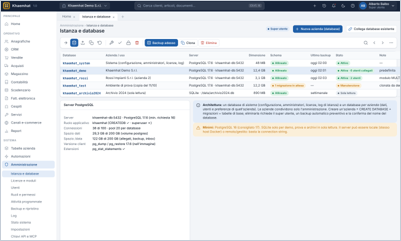
|
||||
*Mockup 078 — elenco dei database dell'istanza (sistema e aziende) con motore, dimensione, stato dello schema, ultimo backup e stato; sotto, le informazioni sul server PostgreSQL (anteprima ridotta).*
|
||||
|
||||
|
||||
@@ -1,8 +1,13 @@
|
||||
# Attività programmate
|
||||
|
||||
> **Stato:** bozza · **Ultima revisione:** 2026-11-10 · **Versione software:** non ancora rilasciata (milestone M2 e M12)
|
||||
> **Stato:** parziale · **Ultima revisione:** 2026-11-11 · **Versione software:** 0.2.0 (milestone M2 e M12)
|
||||
> **Modulo di licenza:** CORE (procedure oltre quelle di sistema: AUTO; report pianificati: REPORT) · **Livello richiesto:** amministratore · **Specifica:** SPEC §9, §11.12, §11.13, §12.5
|
||||
|
||||
> **Nella versione 0.2.0** c'è il motore: espressioni cron a 5 campi con fuso orario, lock per attività (una sola
|
||||
> esecuzione anche con più istanze), timeout, tentativi, storico delle esecuzioni e notifica agli amministratori
|
||||
> quando un'attività fallisce. Girano i tre job di sistema (pulizia sessioni, controllo licenza, retention del log).
|
||||
> La schermata e le attività create dagli utenti arrivano in M12.
|
||||
|
||||
## A cosa serve
|
||||
|
||||
Le **attività programmate** fanno lavorare Khaemhat da solo a orari stabiliti: backup notturni, fatturazione
|
||||
@@ -132,6 +137,14 @@ il dettaglio dell'ultima. Le esecuzioni sono registrate nel database di sistema.
|
||||
|
||||
## Job di sistema
|
||||
|
||||
Nella versione 0.2.0 i job di sistema sono questi (orari nel fuso `Europe/Rome`):
|
||||
|
||||
| Codice | Cosa fa | Quando |
|
||||
|---|---|---|
|
||||
| `system.sessions-cleanup` | elimina le sessioni scadute o revocate da più di 30 giorni, nel database di sistema e in ogni azienda non disattivata | al minuto 15 di ogni ora |
|
||||
| `system.license-check` | ricalcola la licenza; avvisa gli amministratori a 30, 14, 7, 3 e 1 giorno dalla scadenza e quando è scaduta | ogni ora |
|
||||
| `system.log-retention` | elimina gli eventi di log più vecchi della retention del loro livello | ogni notte alle 03:30 |
|
||||
|
||||
Oltre alle attività degli amministratori, Khaemhat esegue sempre alcuni **job di sistema**: pulizia (log e sessioni
|
||||
secondo la retention), controllo della licenza, aggiornamento dei cambi BCE, lettura dell'inbox e dei canali SDI,
|
||||
coda delle e-mail, verifica delle giacenze, backup. Le attività di sistema predefinite sono create con le tabelle di
|
||||
|
||||
@@ -1,6 +1,6 @@
|
||||
# Changelog
|
||||
|
||||
> **Stato:** completa per 0.0.1 · **Ultima revisione:** 2026-11-11
|
||||
> **Stato:** completa per 0.3.0 · **Ultima revisione:** 2026-11-11
|
||||
|
||||
Le novità di ogni versione sono nel file
|
||||
[`CHANGELOG.md`](https://gitea.encke-hake.ts.net/BalboSoft/Khaemhat/src/branch/main/CHANGELOG.md) del repository
|
||||
@@ -11,11 +11,14 @@ Le novità di ogni versione sono nel file
|
||||
|
||||
| Versione | Data | Contenuto |
|
||||
|---|---|---|
|
||||
| 0.3.0 | 2026-11-11 | M3 — Framework UI: la finestra di Khaemhat con menu, schede e barra di stato, la dashboard a widget, *Il mio profilo* con temi e colori, ricerca globale, aiuto in app, notifiche, componenti per maschere e liste, allegati e anteprima di stampa (provati su un documento di prova, le maschere gestionali arrivano da 0.4.0). |
|
||||
| 0.2.0 | 2026-11-11 | M2 — Sistema e sicurezza: avvio da variabili d'ambiente, super utente e prima azienda, accesso con password e verifica in due passaggi, utenti, ruoli e permessi, licenze e moduli con codici di prova, log per sezioni, attività programmate. |
|
||||
| 0.1.0 | 2026-11-11 | M1 — Strato dati: accesso ai database SQLite e PostgreSQL, migrazioni dello schema, registro delle aziende, cifratura dei dati riservati. Nessuna funzione visibile nell'interfaccia. |
|
||||
| 0.0.1 | 2026-11-11 | M0 — Bootstrap: struttura del codice, immagine Docker con pagina "in costruzione" ed endpoint di salute, compose, CI e rilascio su Gitea Actions. Nessuna funzione gestionale ancora. |
|
||||
| *preparazione* | 2026-11-10 | Documentazione, specifica, mockup, wiki e pianificazione su Gitea. Nessun software. |
|
||||
|
||||
Ogni immagine Docker pubblicata ha lo stesso numero di versione del tag git (senza la `v` iniziale), ad esempio
|
||||
`gitea.encke-hake.ts.net/balbosoft/khaemhat:0.1.0`. Prima di aggiornare leggi [Aggiornamento](Aggiornamento).
|
||||
`gitea.encke-hake.ts.net/balbosoft/khaemhat:0.3.0`. Prima di aggiornare leggi [Aggiornamento](Aggiornamento).
|
||||
|
||||
## Pagine correlate
|
||||
|
||||
|
||||
@@ -1,6 +1,6 @@
|
||||
# Dashboard
|
||||
|
||||
> **Stato:** bozza · **Ultima revisione:** 2026-11-10 · **Versione software:** non ancora rilasciata (milestone M3)
|
||||
> **Stato:** completa · **Ultima revisione:** 2026-11-11 · **Versione software:** 0.3.0 (milestone M3)
|
||||
> **Modulo di licenza:** CORE (alcuni widget richiedono il modulo dell'area, ad esempio CRM) · **Specifica:** SPEC §10.3, §11.12
|
||||
|
||||
La **dashboard** è la pagina *Home*: una griglia di **widget** che riassume che cosa c'è da fare oggi, che cosa è
|
||||
@@ -17,17 +17,33 @@ diversamente in *Pagina iniziale*.
|
||||
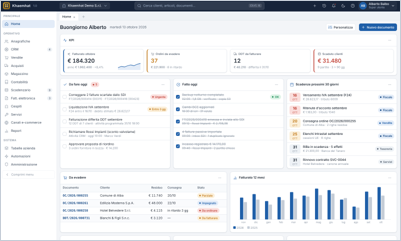
|
||||
*Mockup 004 — dashboard con saluto e data, KPI, Da fare oggi, Fatto oggi, Scadenze prossimi 30 giorni, Da evadere, Fatturato 12 mesi (anteprima ridotta).*
|
||||
|
||||

|
||||
*Khaemhat 0.3.0 — la dashboard predefinita di un super utente. Indicatori, Da evadere e Fatturato 12 mesi si accendono quando arrivano i dati (vendite, M5).*
|
||||
|
||||

|
||||
*Mockup 005 — la stessa dashboard in tema scuro (anteprima ridotta).*
|
||||
|
||||

|
||||
*Khaemhat 0.3.0 — la stessa dashboard in tema scuro.*
|
||||
|
||||

|
||||
*Mockup 006 — modalità Personalizza: widget con bordo tratteggiato e pannello laterale con pagina iniziale ed elenco dei widget attivabili (anteprima ridotta).*
|
||||
|
||||
In testa alla pagina: il saluto (*Buongiorno Alberto*) con la data, a destra **Personalizza** e **Nuovo documento**.
|
||||

|
||||
*Khaemhat 0.3.0 — Personalizza: widget con bordo tratteggiato e comandi di spostamento e larghezza, pannello con pagina iniziale ed elenco dei widget.*
|
||||
|
||||
In testa alla pagina: il saluto (*Buongiorno Alberto*, *Buon pomeriggio*, *Buonasera*) con la data, a destra
|
||||
**Personalizza**. Il pulsante **Nuovo documento** arriva con le vendite (M5).
|
||||
|
||||
## Widget disponibili
|
||||
|
||||
La griglia ha 12 colonne; ogni widget può occupare 3, 4, 6, 8 o 12 colonne.
|
||||
La griglia ha 12 colonne; ogni widget può occupare 3, 4, 6, 8 o 12 colonne (sotto i 1000 px di larghezza ogni
|
||||
widget prende tutta la riga).
|
||||
|
||||
Nella versione 0.3.0 hanno già dati **Da fare oggi**, **Fatto oggi**, **Scadenze 30 giorni**, **Promemoria
|
||||
personali**, **Scorciatoie** e **Stato del sistema**. Gli altri si possono già accendere, mettere in ordine e
|
||||
dimensionare: finché il loro modulo non c'è dicono con quale versione arrivano i dati (*Vendite* M5, *Acquisti e
|
||||
magazzino* M6, *CRM* M11), senza numeri finti.
|
||||
|
||||
| Widget | Cosa mostra | Note |
|
||||
|---|---|---|
|
||||
@@ -43,38 +59,63 @@ La griglia ha 12 colonne; ogni widget può occupare 3, 4, 6, 8 o 12 colonne.
|
||||
| **Sottoscorta** | articoli sotto la scorta minima | |
|
||||
| **Pipeline CRM** | valore delle opportunità per fase | richiede il modulo CRM |
|
||||
| **Ultimi documenti** | ultimi documenti aperti o creati | |
|
||||
| **Stato sistema** | stato dell'istanza (database, backup, scheduler) | solo amministratori |
|
||||
| **Stato del sistema** | versione, database, cache, licenza, aziende aperte, attività programmate di oggi, ognuno con un pallino verde, giallo o rosso | solo account di istanza |
|
||||
|
||||
Ogni widget ha in alto a destra un menu **⋯** con le azioni proprie (ad esempio aggiornare o aprire l'elenco
|
||||
completo). I dati rispettano i permessi: un utente che non vede costi e margini non li trova nemmeno nei widget.
|
||||
Ogni widget ha in alto a destra le sue azioni: il numero di righe nelle liste, la matita delle **Scorciatoie** (scegli
|
||||
fino a 12 pagine fra quelle che puoi aprire), il cestino dei **Promemoria** che toglie quelli spuntati. Un clic su una
|
||||
riga di *Da fare oggi*, *Fatto oggi* o *Scadenze* apre la pagina giusta. I dati rispettano i permessi: un utente che
|
||||
non vede costi e margini non li trova nemmeno nei widget.
|
||||
|
||||
Nella versione 0.3.0 le righe vengono da:
|
||||
|
||||
| Widget | Righe |
|
||||
|---|---|
|
||||
| Da fare oggi | licenza scaduta, in tolleranza o in scadenza entro 7 giorni (account di istanza); avvisi non letti di livello *attenzione* o *errore*; attività programmate la cui ultima esecuzione di oggi non è riuscita (account di istanza) |
|
||||
| Fatto oggi | attività programmate riuscite oggi, una riga per attività con il numero di esecuzioni e l'ora dell'ultima |
|
||||
| Scadenze 30 giorni | fine della prova o scadenza della licenza (account di istanza) |
|
||||
|
||||
I moduli delle prossime versioni aggiungono le loro righe (scarti SDI, liquidazioni, incassi, ordini da evadere…).
|
||||
Se una fonte non risponde, il widget mostra le altre e l'errore finisce nel [log](Log).
|
||||
|
||||
I **promemoria** si scrivono nel campo in fondo al widget e si aggiungono con Invio (al massimo 20, di 300 caratteri
|
||||
ciascuno); la casella li segna come fatti, la **×** li toglie.
|
||||
|
||||
## Come si personalizza
|
||||
|
||||
1. Premi **Personalizza** in alto a destra. I widget si contornano con un bordo tratteggiato e si apre il pannello
|
||||
laterale **Personalizza dashboard**.
|
||||
2. Nel pannello, sezione **Widget (trascina per ordinare)**, attiva o disattiva ciascun widget con l'interruttore e
|
||||
trascinalo per cambiarne l'ordine.
|
||||
3. Sulla griglia trascina i widget per spostarli e ridimensionali (3, 4, 6, 8 o 12 colonne).
|
||||
4. Imposta, se vuoi, il periodo dei KPI.
|
||||
5. Chiudi il pannello: la disposizione è salvata.
|
||||
laterale **Personalizza dashboard**; la pagina resta utilizzabile e, sugli schermi larghi almeno 1280 px, si
|
||||
stringe per lasciare spazio al pannello.
|
||||
2. Nel pannello, sezione **Widget**, accendi o spegni ciascun widget con l'interruttore; per quelli accesi scegli la
|
||||
larghezza (*Un quarto*, *Un terzo*, *Metà*, *Due terzi*, *Tutta la riga*) e spostali con le frecce. Un widget
|
||||
acceso si aggiunge in fondo.
|
||||
3. Sulla griglia trascina un widget sopra un altro per prenderne il posto. Ogni widget ha anche i pulsanti
|
||||
**‹ ›** (sposta prima o dopo), **− +** (più stretto o più largo) e **×** (nascondi): tutto si fa anche da tastiera.
|
||||
4. **Ripristina** cancella la tua disposizione: torna quella predefinita del tuo ruolo o, se non c'è, quella di
|
||||
Khaemhat. **Fine** (o Esc) chiude il pannello.
|
||||
|
||||
Disposizione e scelte sono salvate nelle tue preferenze (sul database dell'azienda): le ritrovi su ogni dispositivo.
|
||||
Ogni modifica si salva subito nelle tue preferenze: la ritrovi su ogni dispositivo. Il pannello dice da dove viene la
|
||||
disposizione che stai usando (tua, del ruolo o di Khaemhat).
|
||||
|
||||
## Pagina iniziale e dashboard disattivabile
|
||||
|
||||
La dashboard si può **spegnere**. Nel pannello *Personalizza* (sezione **Pagina iniziale**) o in
|
||||
[Il mio profilo → Pagina iniziale](Preferenze-utente) scegli:
|
||||
|
||||
- **All'accesso apri**: *Dashboard*, oppure l'*ultima scheda aperta*, un *radar* (ad esempio *Clienti*), la *prima
|
||||
nota*, l'*agenda CRM*…
|
||||
- **Pagina da aprire**: *La pagina iniziale* (la dashboard), l'*ultima scheda aperta* o una delle pagine che puoi
|
||||
aprire (ad esempio *Clienti*).
|
||||
- **Mostra la dashboard**: se disattivato, la voce *Home* non mostra più i widget e all'accesso si apre la pagina
|
||||
scelta.
|
||||
|
||||
## Layout per ruolo
|
||||
|
||||
Gli amministratori possono definire un **layout predefinito per ruolo** (ad esempio un layout per *Vendite*, uno per
|
||||
*Contabilità*): un nuovo utente parte dal layout del proprio ruolo e può poi modificarlo per sé. La maschera di
|
||||
gestione dei layout per ruolo sarà definita in sviluppo (vedi [Utenti e permessi](Utenti-e-permessi)).
|
||||
Chi ha il permesso **Modificare le impostazioni dell'azienda** (`company.settings.write`, ad esempio il ruolo
|
||||
*Amministrazione*) trova in fondo al pannello la sezione **Predefinito per ruolo**: sceglie un ruolo e preme **Usa
|
||||
questo layout per il ruolo** per dargli la disposizione che ha sulla pagina in quel momento; **Togli il predefinito**
|
||||
lo riporta a quello di Khaemhat. I ruoli che hanno un predefinito sono segnati nell'elenco.
|
||||
|
||||
Chi non ha mai personalizzato la dashboard parte dal predefinito del suo ruolo (se ha più ruoli, il primo assegnato
|
||||
che ne ha uno); appena cambia qualcosa la disposizione diventa sua. I predefiniti dei ruoli sono impostazioni
|
||||
dell'azienda: ogni azienda ha i suoi. La sezione compare solo quando lavori in un'azienda.
|
||||
|
||||
## Permessi e licenza
|
||||
|
||||
@@ -85,9 +126,10 @@ se l'utente ha i permessi di lettura su quei dati; *Stato sistema* è riservato
|
||||
|
||||
- **Un widget non compare nell'elenco.** Il modulo relativo (ad esempio CRM) non è licenziato o non hai il permesso
|
||||
di vederne i dati.
|
||||
- **Voglio tornare alla disposizione iniziale.** Un comando per ripristinare il layout del ruolo non è ancora
|
||||
definito nella specifica; sarà deciso in sviluppo e documentato qui. Nel frattempo riattiva o riordina i widget
|
||||
da *Personalizza*.
|
||||
- **Voglio tornare alla disposizione iniziale.** *Personalizza* → **Ripristina**: torna il predefinito del tuo ruolo
|
||||
o quello di Khaemhat.
|
||||
- **Ho spento la dashboard e voglio riaccenderla.** La *Home* mostra in alto **Mostra la dashboard**; in alternativa
|
||||
[Il mio profilo → Pagina iniziale](Preferenze-utente).
|
||||
- **"Da fare oggi" mostra cose che non riguardano il mio lavoro.** L'elenco segue i tuoi permessi; se vedi voci non
|
||||
pertinenti, chiedi all'amministratore di verificare il tuo ruolo.
|
||||
|
||||
|
||||
@@ -1,6 +1,6 @@
|
||||
# Design UI
|
||||
|
||||
> **Stato:** bozza · **Ultima revisione:** 2026-11-10 · **Versione software:** non ancora rilasciata (milestone M3)
|
||||
> **Stato:** completa · **Ultima revisione:** 2026-11-11 · **Versione software:** 0.3.0 (milestone M3)
|
||||
> **Pagina per chi sviluppa** · **Specifica:** SPEC §10 (in particolare §10.1, §10.6, §10.7, §10.8), Appendice A
|
||||
|
||||
Questa pagina è il riferimento visivo per chi sviluppa l'interfaccia di Khaemhat: come si usano i mockup, i token di
|
||||
@@ -31,7 +31,18 @@ Regole vincolanti (SPEC §10.1):
|
||||
|
||||
Solo 23 schermate sono disponibili in alta risoluzione; per le altre si lavora dalla miniatura, da `mockup.css` e
|
||||
dalla descrizione in SPEC §10-§12 (emendamento E4 in `CLAUDE.md`). Gli screenshot reali in `docs/wiki/img/`
|
||||
sostituiscono progressivamente i mockup nelle pagine della wiki.
|
||||
affiancano i mockup nelle pagine della wiki: dalla versione 0.3.0 ci sono la shell, la dashboard, il profilo, l'aiuto,
|
||||
le notifiche, il documento di prova con allegati e storico e l'anteprima di stampa.
|
||||
|
||||
Gli screenshot si rifanno su un'istanza nuova (database SQLite vuoto, azienda DEMO, tema chiaro, finestra
|
||||
1440x900, telefono 390x844), così non mostrano dati o notifiche di prova; i nomi dei file sono quelli usati dalle
|
||||
pagine, ad esempio `interfaccia-home.png` o `allegati-pannello.png`.
|
||||
|
||||
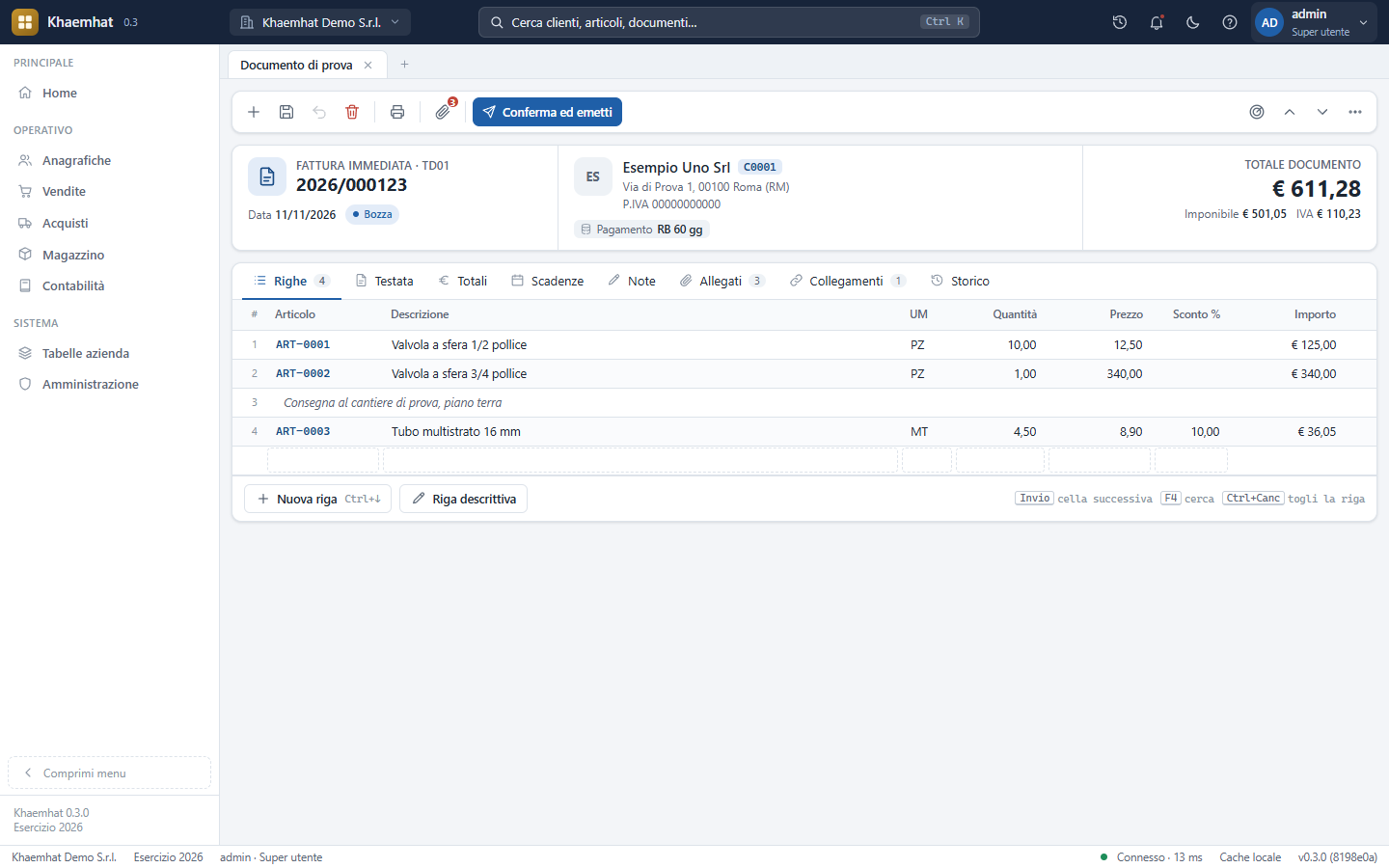
|
||||
*Khaemhat 0.3.0 — i mattoni di 020 e 021 dal vero: toolbar a icone, intestazione documento, schede interne, griglia delle righe.*
|
||||
|
||||

|
||||
*Khaemhat 0.3.0 — la dashboard con tema scuro e accento Nilo.*
|
||||
|
||||
## Token di design
|
||||
|
||||
@@ -91,8 +102,8 @@ Altre preferenze di presentazione: dimensione del testo, carattere numerico tabe
|
||||
`AccentColor`, `Density`, `MenuState`). `ThemeService` e `MenuStateService` applicano gli attributi senza ricaricare
|
||||
la pagina.
|
||||
|
||||
`mockup.css` **non contiene ancora i valori del tema alto contrasto**: vanno definiti in `tokens.css` rispettando il
|
||||
contrasto AAA, con gli stessi nomi di token, e documentati in questa pagina.
|
||||
`mockup.css` non contiene i valori del tema **alto contrasto**: sono definiti in `tokens.css` con gli stessi nomi di
|
||||
token (testo nero su bianco, bordi neri, un solo accento blu scuro per tutti gli accenti), per il contrasto AAA.
|
||||
|
||||
## Classi dei mockup e componenti `Kh*`
|
||||
|
||||
@@ -154,6 +165,20 @@ radar, `Ctrl+Invio` apre, creazione al volo; `KhGrid` con colonne tipizzate, ord
|
||||
server, virtualizzazione, selezione multipla, editing inline, riga dei totali, layout colonne salvato, export,
|
||||
evidenziazioni, menu di riga.
|
||||
|
||||
## File CSS
|
||||
|
||||
| File | Contenuto |
|
||||
|---|---|
|
||||
| `css/tokens.css` | token `--kh-*` di `mockup.css`, temi (automatico, chiaro, scuro, alto contrasto), accenti, densità, dimensioni del testo; generato da `mockup.css` |
|
||||
| `css/components.css` | classi dei mockup (shell, toolbar, pannelli, campi, griglie, badge, dialoghi…), riprese da `mockup.css` |
|
||||
| `css/interactive.css` | ciò che i mockup statici non hanno: reset dei pulsanti, focus, suggerimenti, menu a comparsa, schede, notifiche a scomparsa, interruttori `data-*` |
|
||||
| `css/print.css` | stampa sempre in chiaro, shell nascosta |
|
||||
| `app.css` | pagine costruite finora (accesso, home, profilo, messaggi) |
|
||||
|
||||
Gli attributi sull'elemento `<html>` comandano l'aspetto: `data-theme` (`auto`, `light`, `dark`, `high-contrast`),
|
||||
`data-accent`, `data-density`, `data-text-size` (`100`, `110`, `120`), `data-tabular`, `data-motion`,
|
||||
`data-tooltips`, `data-row-hover`. Il server li scrive dalle preferenze dell'utente; il profilo li cambia dal vivo.
|
||||
|
||||
## Shell
|
||||
|
||||
- Griglia: barra superiore 46 px, area centrale, barra di stato 24 px; menu 228 px (60 px compresso).
|
||||
@@ -162,7 +187,9 @@ evidenziazioni, menu di riga.
|
||||
- **Menu**: sezioni in maiuscoletto (`.sec`), voce attiva su `--kh-accent-soft`; compresso: solo icone 20 px, barretta
|
||||
d'accento a sinistra della voce attiva, sottomenu in `.flyout` (min 190 px, ombra grande). Pulsante **Comprimi
|
||||
menu** tratteggiato in fondo. Sotto 1100 px parte compresso; stato salvato per utente.
|
||||
- **Schede** (`.wtab`): altezza 30 px, massimo 260 px di larghezza, pallino `--kh-warn` se modificata.
|
||||
- **Schede** (`.wtab`): altezza 30 px, massimo 260 px di larghezza, pallino `--kh-warn` se modificata. Ogni pagina
|
||||
imposta il titolo della sua scheda con `<KhPageTitle Text="..." Icon="..." />` e segnala le modifiche con il
|
||||
`KhTab` in cascata (`Tab?.SetModified(true)`).
|
||||
- **Barra di stato**: testo 11.5 px, pallino `--kh-ok` per la connessione.
|
||||
|
||||
Dettagli d'uso in [Interfaccia e scorciatoie](Interfaccia-e-scorciatoie).
|
||||
@@ -211,17 +238,26 @@ dal testo. Nessuna libreria di icone esterna. L'icona dell'applicazione è descr
|
||||
**nessun font scaricato**, nessuna CDN.
|
||||
- **Focus sempre visibile**, etichette collegate ai campi (`<label for>`), contrasto **AA** (AAA nel tema alto
|
||||
contrasto), tutto operabile da tastiera.
|
||||
- Desktop-first, usabile da tablet a partire da **768 px**.
|
||||
- **Testi**: nessun testo hard-coded nei componenti (verificato da un test di architettura); `ITexts` risolve chiavi
|
||||
come `Sales.Invoice.Title` da `Resources/it-IT/*.json`.
|
||||
- Desktop-first, usabile da tablet a partire da **768 px** e su telefono con la barra superiore a sole icone (vedi [Interfaccia e scorciatoie](Interfaccia-e-scorciatoie)).
|
||||
- **Nomi di classe unici**: una classe dei mockup ha un solo significato. Se un componente ha bisogno di una variante, usa un nome nuovo (`kh-…`) invece di riusarne uno esistente: in 0.3.0 `.tl` (timeline) e `.kh-choices` usati in due sensi diversi spostavano l'etichetta del totale documento e le schede dei temi.
|
||||
- **Testi**: nessun testo hard-coded nei componenti; `ITexts` (iniettato in ogni componente come `T`) risolve chiavi
|
||||
come `Shell.Menu.Parties` da `src/Khaemhat.Web/Resources/it-IT/*.json` (risorse incorporate). Gli oggetti annidati
|
||||
danno le chiavi puntate, la proprietà `_` dà il testo all'oggetto che ha figli, una chiave doppia blocca l'avvio e
|
||||
una mancante appare come `[chiave]`. Uso: `@T["Pages.Profile.Title"]`, `@T.Format("Pages.Home.Coming", "M4")`,
|
||||
`T.Money(1234.5m)`, `T.Date(...)`. Due test lo garantiscono: nessun testo letterale fra i tag e negli attributi
|
||||
`title`, `placeholder`, `alt`, `aria-label`, `label` dei `.razor`, e ogni chiave usata esiste (ADR 0020).
|
||||
- **Formati**: `CultureInfo("it-IT")` per numeri, importi e date; date memorizzate in UTC e mostrate nel fuso
|
||||
`Europe/Rome`.
|
||||
|
||||
## Stampa
|
||||
|
||||
Le stampe e i PDF sono **sempre in tema chiaro** (`print.css`), indipendentemente dal tema dell'utente. L'anteprima
|
||||
usa `.paper` (pagina bianca larga 794 px, cioè un A4 a 96 dpi, margini 40/44 px, tabelle con intestazione in
|
||||
maiuscoletto e bordo inferiore marcato).
|
||||
Le stampe e i PDF sono **sempre in tema chiaro** (`print.css`), indipendentemente dal tema dell'utente. L'anteprima di
|
||||
stampa (`KhPrintPreview`, mockup 025) mostra il documento come foglio `.kh-sheet` largo 210 mm e alto almeno 297 mm,
|
||||
con ingrandimento 75/100/125%; `@media print` nasconde tutto tranne il foglio e imposta `@page` A4 senza margini.
|
||||
La classe `.paper` di `mockup.css` resta per le anteprime piccole dentro le pagine.
|
||||
|
||||

|
||||
*Khaemhat 0.3.0 — l'anteprima di stampa del documento di prova.*
|
||||
|
||||
## Regola di aggiornamento
|
||||
|
||||
|
||||
@@ -189,6 +189,7 @@ obbligatoria, termina con un messaggio che indica quale.
|
||||
| `KHAEMHAT_SEED_DEMO` | no | `false` | dati di esempio, solo su database vuoto |
|
||||
| `KHAEMHAT_UPDATE_FEED` | no | `https://gitea.encke-hake.ts.net/api/v1/packages/BalboSoft?type=container&q=khaemhat` | API dei pacchetti Gitea per il controllo aggiornamenti |
|
||||
| `KHAEMHAT_UPDATE_TOKEN` | no | token Gitea in sola lettura | solo se il pacchetto non è pubblico |
|
||||
| `KHAEMHAT_HELP_URL` | no | `https://gitea.encke-hake.ts.net/BalboSoft/Khaemhat/wiki/` | wiki online aperta da **Apri nel wiki** nell'aiuto; l'aiuto (F1) usa la copia della wiki contenuta nell'immagine e funziona anche senza Internet |
|
||||
| `TZ` | no | `Europe/Rome` | fuso orario |
|
||||
| `PUID` / `PGID` | no | `1654` / `1654` (Unraid: `99` / `100`) | utente e gruppo proprietari dei file in `/data`; l'applicazione non gira mai come root |
|
||||
|
||||
|
||||
@@ -1,6 +1,6 @@
|
||||
# Interfaccia e scorciatoie
|
||||
|
||||
> **Stato:** bozza · **Ultima revisione:** 2026-11-10 · **Versione software:** non ancora rilasciata (milestone M3)
|
||||
> **Stato:** completa · **Ultima revisione:** 2026-11-11 · **Versione software:** 0.3.0 (milestone M3)
|
||||
> **Modulo di licenza:** CORE · **Specifica:** SPEC §10.2, §10.4, §10.5, §10.7, §17 (aiuto in app)
|
||||
|
||||
Questa pagina descrive come è fatta la finestra di Khaemhat e come ci si muove: barra superiore, menu laterale,
|
||||
@@ -15,6 +15,9 @@ scorciatoia nel suggerimento che compare al passaggio del mouse.
|
||||

|
||||
*Mockup 013 — la finestra con il menu laterale compresso: barra superiore, sottomenu Anagrafiche a comparsa, schede aperte, radar dei clienti e barra di stato.*
|
||||
|
||||

|
||||
*Khaemhat 0.3.0 — la finestra con il menu espanso: barra superiore, menu, scheda Home con la dashboard predefinita e barra di stato.*
|
||||
|
||||
| Zona | Dove | Contenuto |
|
||||
|---|---|---|
|
||||
| Barra superiore | in alto, scura | marchio e versione, azienda, ricerca globale, nuovo, recenti, notifiche, tema, aiuto, utente |
|
||||
@@ -66,9 +69,15 @@ Si passa da uno stato all'altro con il pulsante **Comprimi menu** in fondo al me
|
||||
**ricordato per utente** (anche fra dispositivi diversi); sotto i 1100 px di larghezza della finestra il menu parte
|
||||
compresso. Lo stato iniziale si sceglie anche in [Preferenze utente](Preferenze-utente).
|
||||
|
||||
Le aree che arrivano con le prossime versioni sono già nel menu, se la licenza e i permessi le concedono: aprendole
|
||||
compare una pagina che dice con quale milestone arrivano e quali voci conterranno.
|
||||
|
||||
|
||||
*Mockup 007 — dashboard con il menu compresso a sole icone e accento Turchese (anteprima ridotta).*
|
||||
|
||||
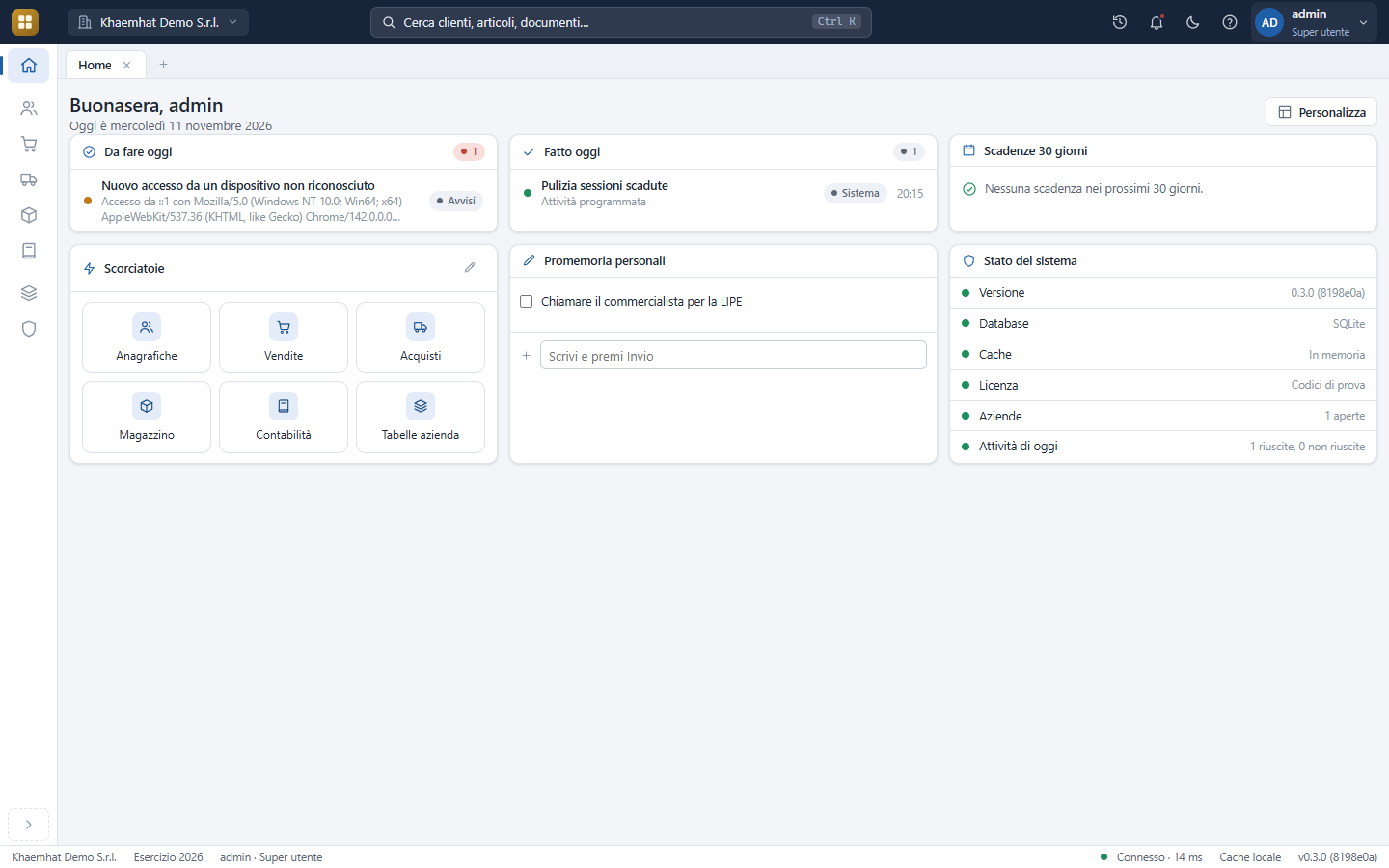
|
||||
*Khaemhat 0.3.0 — lo stesso menu compresso a sole icone; la freccia in basso lo riapre.*
|
||||
|
||||
## Area a schede
|
||||
|
||||
Ogni maschera aperta (un radar, un documento, una scheda anagrafica, una procedura) diventa una **scheda** in alto.
|
||||
@@ -76,9 +85,23 @@ Le schede restano "vive": passando da una all'altra non si perde nulla di quanto
|
||||
|
||||
- Un **pallino arancione** accanto al titolo indica modifiche non salvate.
|
||||
- Chiudendo una scheda con modifiche non salvate Khaemhat chiede conferma.
|
||||
- Si possono tenere aperte al massimo **12 schede**; il comportamento all'apertura della tredicesima sarà definito in
|
||||
sviluppo.
|
||||
- `Ctrl+W` chiude la scheda attiva, `Ctrl+Tab` passa alla successiva; il pulsante `+` apre una nuova scheda.
|
||||
- Si possono tenere aperte al massimo **12 schede**. Aprendone una tredicesima si chiude da sola quella usata meno di
|
||||
recente fra quelle **senza modifiche**; se tutte hanno modifiche da salvare, Khaemhat lo dice e non apre la nuova.
|
||||
- Aprire una pagina già aperta porta alla sua scheda invece di crearne un'altra.
|
||||
- `Ctrl+W` (o `Alt+W`) chiude la scheda attiva, `Ctrl+Tab` (o `Alt+PagGiù`) passa alla successiva,
|
||||
`Ctrl+Maiusc+Tab` (o `Alt+PagSu`) alla precedente; il pulsante `+` apre la ricerca per aprire una nuova pagina.
|
||||
Molti browser tengono per sé `Ctrl+W` e `Ctrl+Tab`: le varianti con `Alt` funzionano sempre.
|
||||
- Il titolo della finestra del browser segue la scheda attiva.
|
||||
|
||||
## Su tablet e telefono
|
||||
|
||||
La finestra è pensata per lo schermo di un computer, ma resta usabile su tablet (dai 768 px) e su telefono. Sotto i
|
||||
1.100 px la barra superiore nasconde il nome dell'utente, sotto i 900 px il testo della ricerca; sul telefono il
|
||||
menu laterale resta a sole icone, la barra superiore mostra solo le icone (il nome dell'azienda resta letto dagli
|
||||
screen reader) e la barra di stato mostra solo connessione, cache e versione.
|
||||
|
||||

|
||||
*Khaemhat 0.3.0 — la Home su un telefono largo 390 px.*
|
||||
|
||||
## Barra di stato
|
||||
|
||||
@@ -91,6 +114,13 @@ e la **versione** del software con il commit (es. `v1.0.0 (a3f9c1e)`).
|
||||

|
||||
*Mockup 009 — ricerca "rossi": risultati raggruppati per clienti, articoli, documenti, contabilità e azioni (anteprima ridotta).*
|
||||
|
||||
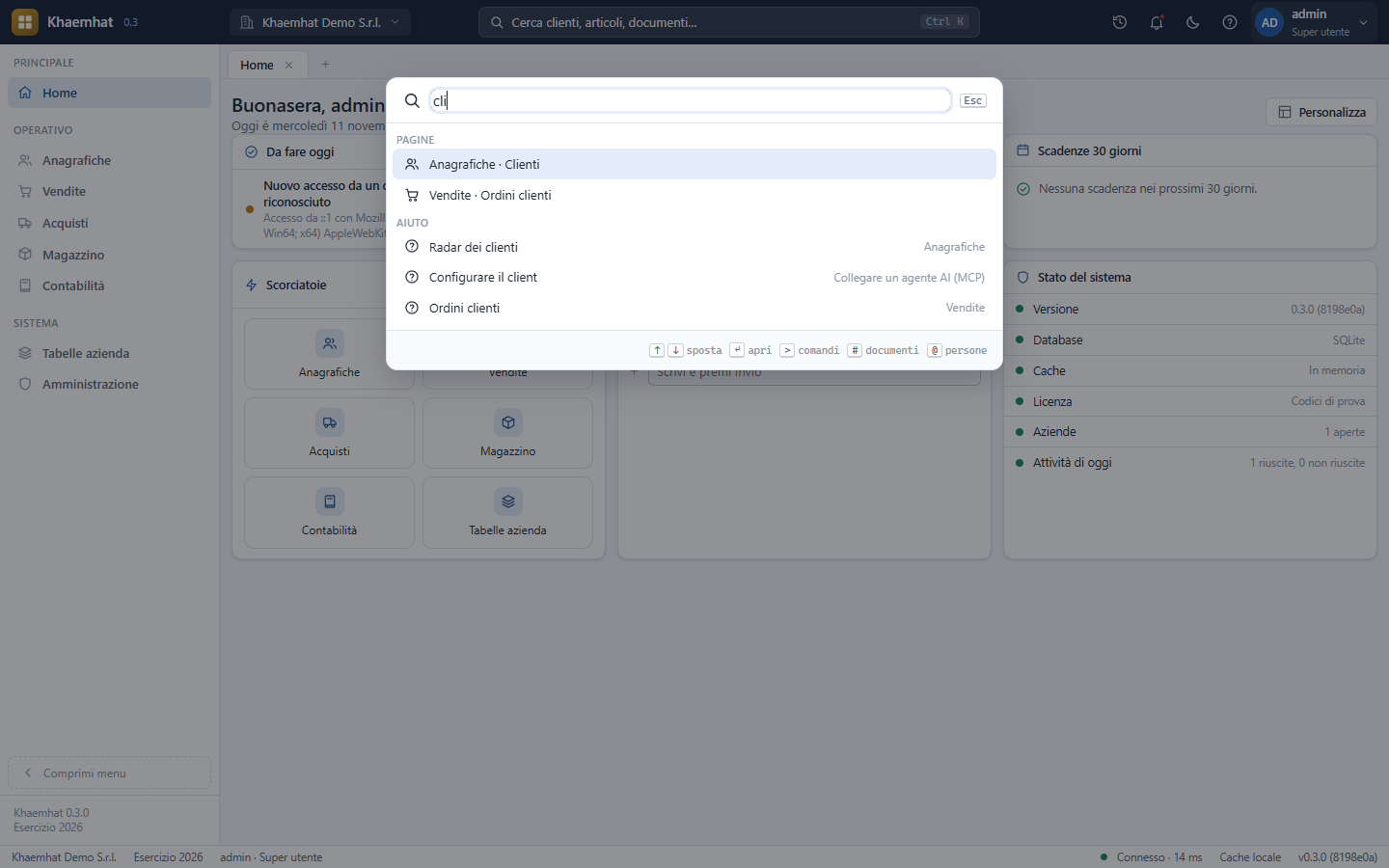
|
||||
*Khaemhat 0.3.0 — la ricerca "cli": pagine del menu e pagine dell'aiuto. Clienti, articoli e documenti si aggiungono con i rispettivi moduli.*
|
||||
|
||||
> **In questa versione** la ricerca trova le **pagine** del menu, i **comandi** (tema, menu, profilo, sessioni,
|
||||
> scorciatoie) e le **pagine dell'aiuto** (titoli e sezioni, che si aprono al punto giusto). Clienti, articoli e
|
||||
> documenti si aggiungono con le milestone che li introducono: per ora `#` e `@` dicono con quali moduli arrivano.
|
||||
|
||||
Premi `Ctrl+K` (o fai clic sulla casella di ricerca) e digita. I risultati arrivano mentre scrivi, raggruppati per
|
||||
tipo: **clienti e fornitori**, **articoli**, **documenti**, **registrazioni e conti** contabili, **azioni** (ad
|
||||
esempio *Nuova fattura per Rossi Impianti*, *Registra incasso*, *Scheda cliente a 360°*).
|
||||
@@ -103,40 +133,58 @@ esempio *Nuova fattura per Rossi Impianti*, *Registra incasso*, *Scheda cliente
|
||||
| `@` | persone (contatti, utenti) | `@ verdi` |
|
||||
|
||||
Con le frecce `↑` `↓` ti sposti tra i risultati, con `Invio` apri quello evidenziato; il piede della finestra ricorda
|
||||
anche l'apertura in una nuova scheda (`Ctrl+Invio`) e i prefissi. `Esc` chiude.
|
||||
i prefissi. `Esc` chiude. Pagine e comandi compaiono subito; gli altri risultati arrivano un attimo dopo che hai
|
||||
smesso di scrivere, da almeno due caratteri.
|
||||
|
||||
## Notifiche
|
||||
|
||||

|
||||
*Mockup 010 — pannello laterale delle notifiche con filtri e azioni (anteprima ridotta).*
|
||||
|
||||

|
||||
*Khaemhat 0.3.0 — il pannello delle notifiche con i filtri Tutte e Non lette e il pulsante Segna tutte come lette.*
|
||||
|
||||
La campanella apre un pannello laterale con le notifiche in app. Le notifiche nascono da automazioni, attività
|
||||
programmate, SDI (scarti, notifiche), scadenze, magazzino (sottoscorta) e sicurezza (ad esempio un accesso da un
|
||||
dispositivo sconosciuto). Ogni voce ha icona, titolo, dettaglio e, se serve, un'etichetta d'urgenza (*Nuova*, *Da
|
||||
gestire*, *Verifica*); un clic apre il documento o la maschera collegata.
|
||||
|
||||
In alto i filtri **Tutte**, **Non lette**, **Errori**; in basso **Segna tutte come lette** e **Impostazioni notifiche**
|
||||
(che porta alla scheda *Notifiche* di [Il mio profilo](Preferenze-utente), dove si attiva anche il riepilogo via
|
||||
e-mail).
|
||||
In alto i filtri **Tutte** e **Non lette**, con il numero di voci; in basso **Segna tutte come lette**. Ogni voce ha
|
||||
il segno di spunta per segnarla come letta; il clic sul titolo la segna e apre la maschera collegata. Il numero
|
||||
sulla campanella si aggiorna da solo ogni minuto.
|
||||
|
||||
Chi legge una notifica rivolta a tutti la segna come letta **solo per sé**: per i colleghi resta da leggere. Gli
|
||||
account di istanza vedono le notifiche di sistema (backup, attività programmate, licenza), gli utenti aziendali
|
||||
quelle della propria azienda. Il pannello mostra le ultime 100 notifiche.
|
||||
|
||||
> **In questa versione** mancano il filtro *Errori* e *Impostazioni notifiche* (riepilogo via e-mail), che arrivano
|
||||
> con le automazioni.
|
||||
|
||||
## Aiuto in app (F1)
|
||||
|
||||

|
||||
*Mockup 011 — l'aiuto della maschera Fatture: indice delle pagine a sinistra, pagina wiki con stato e revisione a destra.*
|
||||
|
||||

|
||||
*Khaemhat 0.3.0 — l'aiuto di questa pagina: indice a sinistra, pagina della wiki a destra, Apri nel wiki e Segnala un problema in alto.*
|
||||
|
||||
`F1` o il pulsante `?` aprono, in una nuova scheda, **la pagina wiki della maschera** su cui stai lavorando (ogni
|
||||
maschera ha il proprio collegamento). La pagina mostra in testa lo stato (*bozza*, *completa*), la revisione e la data
|
||||
di aggiornamento; a sinistra c'è l'indice delle pagine. In alto a destra: **Apri nel wiki** (apre la wiki completa
|
||||
nel browser) e **Segnala un problema**.
|
||||
nel browser) e **Segnala un problema** (apre una nuova segnalazione nel repository della wiki).
|
||||
|
||||
L'indirizzo della wiki è configurabile; per le installazioni senza accesso a Internet Khaemhat serve una copia della
|
||||
wiki all'indirizzo `/help` della propria istanza.
|
||||
L'aiuto è una **copia della wiki contenuta nell'immagine Docker**, all'indirizzo `/aiuto` dell'istanza (`/help` porta
|
||||
lì): funziona anche senza Internet e corrisponde sempre alla versione installata, immagini comprese. La variabile
|
||||
`KHAEMHAT_HELP_URL` cambia solo la wiki aperta da *Apri nel wiki* (vedi [Installazione Docker](Installazione-Docker)).
|
||||
|
||||
## Toolbar a icone
|
||||
|
||||

|
||||
*Mockup 020 — fattura di vendita: toolbar a icone con il suggerimento "Salva Ctrl+S", azioni contestuali, intestazione documento e righe (anteprima ridotta).*
|
||||
|
||||

|
||||
*Khaemhat 0.3.0 — il documento di prova degli sviluppatori: toolbar a icone, intestazione a tre blocchi, schede interne e righe modificabili.*
|
||||
|
||||
Ogni maschera ha una toolbar su **una sola riga**, con i comandi standard **solo icona** (senza etichetta). Passando
|
||||
con il mouse compare il suggerimento con nome e scorciatoia (disattivabile in [Preferenze utente](Preferenze-utente)).
|
||||
|
||||
@@ -183,6 +231,11 @@ anagrafiche hanno la stessa struttura:
|
||||
(oppure revisioni o partite, secondo il documento) e **totali**.
|
||||
6. Gli errori di validazione compaiono accanto al campo e in un riepilogo. Un documento emesso è **in sola lettura**:
|
||||
campi e azioni non più ammesse sono disattivati.
|
||||
7. La scheda **Storico** elenca chi ha creato e modificato il record e quando, con i valori di prima (barrati) e
|
||||
quelli nuovi; serve il permesso di lettura del record.
|
||||
|
||||

|
||||
*Khaemhat 0.3.0 — la scheda Storico del documento di prova (modifiche di esempio).*
|
||||
|
||||
## Radar
|
||||
|
||||
@@ -239,13 +292,18 @@ azioni di riga. Gli sconti accettano la forma a cascata (`5+2`).
|
||||
|
||||
| Digiti | Ottieni |
|
||||
|---|---|
|
||||
| `T` | la data di oggi |
|
||||
| `F` | la fine del mese (il riferimento esatto, data del campo o mese corrente, sarà fissato in sviluppo) |
|
||||
| `+` / `-` | un giorno avanti / indietro |
|
||||
| `T` oppure `O` | la data di oggi |
|
||||
| `F` | la fine del mese della data già nel campo (del mese corrente se il campo è vuoto) |
|
||||
| `I` | l'inizio dello stesso mese |
|
||||
| `+` / `-` | un giorno avanti / indietro rispetto alla data nel campo (o a oggi) |
|
||||
| `+30` / `-7` | trenta giorni avanti, sette indietro |
|
||||
| `15` | il 15 del mese corrente |
|
||||
| `1503` oppure `15/3` | il 15 marzo dell'anno corrente |
|
||||
| `150326` oppure `15.3.26` | il 15 marzo 2026 |
|
||||
|
||||
**Numeri e importi** (formato italiano: virgola per i decimali, punto per le migliaia): si può scrivere un
|
||||
**calcolo** che inizia con `=`, ad esempio `=10*3` diventa `30`. Altre abbreviazioni eventuali saranno definite in
|
||||
sviluppo e documentate qui.
|
||||
**calcolo** che inizia con `=`, ad esempio `=10*3` diventa `30`: valgono le quattro operazioni, le parentesi e il
|
||||
segno meno davanti a un numero, sempre con la virgola per i decimali (`=(12,5+3)*2` diventa `31`).
|
||||
|
||||
## Tabella completa delle scorciatoie
|
||||
|
||||
@@ -254,9 +312,10 @@ sviluppo e documentate qui.
|
||||
| `Ctrl+K` | ricerca globale | ovunque |
|
||||
| `F1` | aiuto della maschera corrente | ovunque |
|
||||
| `Ctrl+B` | comprime / espande il menu laterale | ovunque |
|
||||
| `Ctrl+W` | chiude la scheda attiva | ovunque |
|
||||
| `Ctrl+Tab` | passa alla scheda successiva | ovunque |
|
||||
| `Ctrl+N` | nuovo record / documento | maschere e radar |
|
||||
| `Ctrl+W` o `Alt+W` | chiude la scheda attiva | ovunque |
|
||||
| `Ctrl+Tab` o `Alt+PagGiù` | passa alla scheda successiva | ovunque |
|
||||
| `Ctrl+Maiusc+Tab` o `Alt+PagSu` | passa alla scheda precedente | ovunque |
|
||||
| `Ctrl+N` o `Alt+N` | nuovo record / documento | maschere e radar |
|
||||
| `Ctrl+S` | salva | maschere |
|
||||
| `Esc` | annulla le modifiche / chiude la finestra aperta | maschere, finestre |
|
||||
| `Ctrl+Canc` | elimina il record (se ammesso) | maschere |
|
||||
@@ -271,11 +330,11 @@ sviluppo e documentate qui.
|
||||
| `Tab` | cella o filtro successivo | griglia righe, finestra F4 |
|
||||
| `Spazio` | seleziona la riga | radar |
|
||||
| `Ctrl+D` | quadra la registrazione | prima nota (vedi [Contabilità](Contabilita)) |
|
||||
| `T`, `F`, `+`, `-` | oggi, fine mese, giorno dopo/prima | campi data |
|
||||
| `T` (`O`), `F`, `I`, `+`, `-`, `+n` | oggi, fine mese, inizio mese, giorno dopo/prima, n giorni | campi data |
|
||||
| `=` | calcolo inline (`=10*3`) | campi numerici |
|
||||
|
||||
Le scorciatoie personali si potranno adattare nelle preferenze utente (§11.12 della specifica); l'interfaccia di
|
||||
personalizzazione sarà definita in sviluppo.
|
||||
L'elenco è anche in **Il mio profilo → Scorciatoie** ([Preferenze utente](Preferenze-utente)). Le varianti con `Alt`
|
||||
esistono perché i browser non passano alla pagina `Ctrl+W`, `Ctrl+Tab` e `Ctrl+N` (ADR 0020).
|
||||
|
||||
## Permessi e licenza
|
||||
|
||||
@@ -289,6 +348,7 @@ un permesso negato.
|
||||
amministratore.
|
||||
- **Ho chiuso una scheda per sbaglio.** Se c'erano modifiche non salvate Khaemhat ti ha chiesto conferma; il
|
||||
documento salvato si ritrova con **Recenti** o con `Ctrl+K`.
|
||||
- **`Ctrl+W` chiude il browser invece della scheda.** È il browser che tiene per sé la combinazione: usa `Alt+W`.
|
||||
- **Il menu si è compresso da solo.** Sotto i 1100 px di larghezza il menu parte compresso; allarga la finestra o
|
||||
premi `Ctrl+B`.
|
||||
|
||||
|
||||
@@ -1,8 +1,13 @@
|
||||
# Istanza e database
|
||||
|
||||
> **Stato:** bozza · **Ultima revisione:** 2026-11-10 · **Versione software:** non ancora rilasciata (milestone M2 e M12)
|
||||
> **Stato:** parziale · **Ultima revisione:** 2026-11-11 · **Versione software:** 0.2.0 (milestone M2 e M12)
|
||||
> **Modulo di licenza:** CORE (aziende oltre la prima: MULTI) · **Livello richiesto:** amministratore; azioni distruttive solo super utente · **Specifica:** SPEC §5.3, §5.4, §7.1, §12.1, §13
|
||||
|
||||
> **Nella versione 0.2.0** ci sono la creazione della prima azienda al primo avvio, la creazione e il collegamento
|
||||
> di altre aziende (dal codice, con il modulo MULTI), gli stati *attiva / manutenzione / sola lettura / disattivata*
|
||||
> con le sessioni chiuse quando un'azienda va in manutenzione e il contesto azienda per pagine e API (header
|
||||
> `X-Company`). Le schermate descritte qui arrivano in M12.
|
||||
|
||||
## A cosa serve
|
||||
|
||||
Un'installazione di Khaemhat (una **istanza**, cioè un container) può servire più aziende. Ogni azienda ha il
|
||||
|
||||
@@ -1,8 +1,13 @@
|
||||
# Licenze e moduli
|
||||
|
||||
> **Stato:** bozza · **Ultima revisione:** 2026-11-10 · **Versione software:** non ancora rilasciata (milestone M2)
|
||||
> **Stato:** parziale · **Ultima revisione:** 2026-11-11 · **Versione software:** 0.2.0 (milestone M2)
|
||||
> **Modulo di licenza:** CORE · **Livello richiesto:** super utente (attivazione); amministratore (consultazione) · **Specifica:** SPEC §1.8, §6, §8, §12.2
|
||||
|
||||
> **Nella versione 0.2.0** ci sono verifica e applicazione della licenza: trial di 60 giorni, file `.khl` firmati
|
||||
> (ECDSA P-256) da `KHAEMHAT_LICENSE` o caricati, codici di attivazione dei moduli, modalità test con i codici
|
||||
> fittizi, controllo orario della scadenza con notifiche, limite di aziende e di utenti contemporanei. La schermata
|
||||
> **Licenze e moduli** arriva in M12.
|
||||
|
||||
## A cosa serve
|
||||
|
||||
Khaemhat è diviso in **moduli** attivabili con licenza. La pagina **Licenze e moduli** mostra la licenza
|
||||
|
||||
@@ -1,8 +1,13 @@
|
||||
# Log
|
||||
|
||||
> **Stato:** bozza · **Ultima revisione:** 2026-11-10 · **Versione software:** non ancora rilasciata (milestone M2)
|
||||
> **Stato:** parziale · **Ultima revisione:** 2026-11-11 · **Versione software:** 0.2.0 (milestone M2)
|
||||
> **Modulo di licenza:** CORE · **Livello richiesto:** amministratore · **Specifica:** SPEC §7.3, §9.5, §12.7
|
||||
|
||||
> **Nella versione 0.2.0** il log è scritto nel database di sistema (`sys_log`) con sezione, livello, utente,
|
||||
> azienda e identificativo di traccia (header `X-Trace-Id`), oltre che su console in JSON; la retention per livello
|
||||
> gira ogni notte. La schermata **Log** con filtri e regole di avviso arriva in M12: fino ad allora si legge il log
|
||||
> del container.
|
||||
|
||||
## A cosa serve
|
||||
|
||||
Il **log applicativo** registra ciò che succede in Khaemhat: accessi, documenti emessi, invii SDI, backup,
|
||||
|
||||
@@ -1,12 +1,13 @@
|
||||
# Modello dati
|
||||
|
||||
> **Stato:** bozza · **Ultima revisione:** 2026-11-10 · **Versione software:** non ancora rilasciata (milestone M1 e seguenti)
|
||||
> **Stato:** bozza · **Ultima revisione:** 2026-11-11 · **Versione software:** 0.1.0 (strato dati, M1); le tabelle funzionali arrivano con le milestone successive
|
||||
> **Specifica:** SPEC §5, §11, §13, §14
|
||||
|
||||
Come Khaemhat organizza i dati, in sintesi. L'elenco completo di tabelle e colonne è in
|
||||
[docs/DATA-MODEL.md](https://gitea.encke-hake.ts.net/BalboSoft/Khaemhat/src/branch/main/docs/DATA-MODEL.md): oggi è
|
||||
la versione **pianificata**; dalla milestone M1 sarà generato automaticamente dal codice, quindi sempre allineato al
|
||||
programma.
|
||||
[docs/DATA-MODEL.md](https://gitea.encke-hake.ts.net/BalboSoft/Khaemhat/src/branch/main/docs/DATA-MODEL.md). La sua
|
||||
sezione *Schema attuale* è **generata automaticamente** dalle migrazioni del programma, quindi è sempre allineata a
|
||||
ciò che il programma crea davvero nei database; le altre sezioni descrivono le tabelle **pianificate**, che compaiono
|
||||
nello schema attuale man mano che le milestone le realizzano.
|
||||
|
||||
## Due tipi di database
|
||||
|
||||
@@ -62,8 +63,11 @@ settimana).
|
||||
|
||||
Quando una nuova versione cambia la struttura dei dati, Khaemhat applica da solo le **migrazioni**: il database di
|
||||
sistema all'avvio, le aziende all'avvio o dal pannello **Amministrazione → Istanza e database**, mettendo l'azienda in
|
||||
manutenzione per il tempo necessario. Non è possibile tornare a una versione precedente dello schema: per questo prima
|
||||
di ogni aggiornamento conviene un backup ([Aggiornamento](Aggiornamento), [Backup-e-ripristino](Backup-e-ripristino)).
|
||||
manutenzione per il tempo necessario. Ogni migrazione è applicata
|
||||
per intero o per niente, e più copie del programma avviate insieme non la applicano due volte. Non è possibile
|
||||
tornare a una versione precedente dello schema: se il database contiene una migrazione che il programma non conosce
|
||||
(per esempio dopo aver rimesso un'immagine più vecchia) Khaemhat si rifiuta di partire invece di rischiare i dati.
|
||||
Per questo prima di ogni aggiornamento conviene un backup ([Aggiornamento](Aggiornamento), [Backup-e-ripristino](Backup-e-ripristino)).
|
||||
|
||||
## Pagine correlate
|
||||
|
||||
|
||||
@@ -1,6 +1,6 @@
|
||||
# Preferenze utente (Il mio profilo)
|
||||
|
||||
> **Stato:** bozza · **Ultima revisione:** 2026-11-10 · **Versione software:** non ancora rilasciata (milestone M3)
|
||||
> **Stato:** completa · **Ultima revisione:** 2026-11-11 · **Versione software:** 0.3.0 (milestone M3)
|
||||
> **Modulo di licenza:** CORE · **Specifica:** SPEC §7.3, §10.6, §11.12 (preferenze), §12 (Il mio profilo)
|
||||
|
||||
**Il mio profilo** raccoglie tutto ciò che riguarda te come utente: aspetto dell'interfaccia (tema, colore di
|
||||
@@ -9,25 +9,32 @@ salvati e notifiche. Ogni utente può modificare il proprio profilo senza permes
|
||||
|
||||
## Dove si trova
|
||||
|
||||
Menu utente in alto a destra (iniziali e nome) → **Il mio profilo**. Il percorso mostrato nella maschera è
|
||||
*Utente → Preferenze*.
|
||||
Menu utente in alto a destra (iniziali e nome) → **Il mio profilo**, **Aspetto e colori** o **Sessioni attive**;
|
||||
oppure `Ctrl+K` e il comando corrispondente. L'indirizzo è `/profilo`, con `?scheda=aspetto`, `pagina-iniziale`,
|
||||
`sessioni` o `scorciatoie` per aprire direttamente una scheda.
|
||||
|
||||

|
||||
*Mockup 008 — scheda Aspetto con tema Scuro (notturno) e accento Ocra selezionati; a destra l'anteprima dal vivo.*
|
||||
|
||||

|
||||
*Khaemhat 0.3.0 — la scheda Aspetto con tema Automatico e accento Nilo, i valori di partenza. Ogni scelta si applica subito alla finestra.*
|
||||
|
||||
## Schede della maschera
|
||||
|
||||
| Scheda | Contenuto |
|
||||
|---|---|
|
||||
| **Aspetto** | tema, colore di accento, densità, dimensione testo, menu laterale, suggerimenti, animazioni |
|
||||
| **Dati personali** | nome, e-mail e altri dati del tuo utente |
|
||||
| **Password e 2FA** | cambio password, attivazione della verifica in due passaggi |
|
||||
| **Sessioni** | dispositivi collegati con il tuo utente (il numero accanto al titolo indica quante sono) |
|
||||
| **Pagina iniziale** | cosa aprire all'accesso, dashboard sì/no |
|
||||
| **Layout salvati** | filtri e disposizioni di colonne memorizzati nei radar e nelle griglie |
|
||||
| **Notifiche** | quali notifiche ricevere e il riepilogo via e-mail |
|
||||
| Scheda | Contenuto | Disponibile |
|
||||
|---|---|---|
|
||||
| **Aspetto** | tema, colore di accento, densità, dimensione testo, menu laterale, suggerimenti, animazioni | 0.3.0 |
|
||||
| **Pagina iniziale** | cosa aprire all'accesso, dashboard sì/no | 0.3.0 |
|
||||
| **Sessioni** | dispositivi collegati con il tuo utente, chiusura | 0.3.0 |
|
||||
| **Scorciatoie** | l'elenco delle scorciatoie da tastiera | 0.3.0 |
|
||||
| **Dati personali** | nome, e-mail e altri dati del tuo utente | 0.3.0 |
|
||||
| **Password e 2FA** | cambio password, attivazione della verifica in due passaggi | 0.3.0 |
|
||||
| **Layout salvati** | filtri e disposizioni di colonne memorizzati nei radar e nelle griglie | non ancora |
|
||||
| **Notifiche** | quali notifiche ricevere e il riepilogo via e-mail | non ancora |
|
||||
|
||||
In alto a destra: **Ripristina** (torna ai valori predefiniti) e **Salva**.
|
||||
In alto a destra: **Valori predefiniti**, **Annulla le modifiche** e **Salva**. Ogni scelta si vede **subito** sulla
|
||||
pagina; solo **Salva** la conserva. Finché non salvi, la scheda mostra il pallino delle modifiche; chiudendola senza
|
||||
salvare torna l'aspetto di prima.
|
||||
|
||||
## Aspetto
|
||||
|
||||
@@ -35,12 +42,13 @@ In alto a destra: **Ripristina** (torna ai valori predefiniti) e **Salva**.
|
||||
|
||||
| Tema | Descrizione |
|
||||
|---|---|
|
||||
| **Chiaro** | sfondo chiaro, barra superiore scura (predefinito) |
|
||||
| **Automatico** | segue l'impostazione chiaro/scuro del sistema operativo (predefinito) |
|
||||
| **Chiaro** | sfondo chiaro, barra superiore scura |
|
||||
| **Scuro (notturno)** | sfondi scuri e colori attenuati, per lavorare con poca luce |
|
||||
| **Automatico** | segue l'impostazione chiaro/scuro del sistema operativo |
|
||||
| **Alto contrasto** | contrasto massimo per chi ha esigenze visive (livello AAA) |
|
||||
|
||||
Prima dell'accesso (pagina di login) vale il tema del sistema operativo. Le **stampe e i PDF sono sempre in tema
|
||||
Prima dell'accesso (pagina di login) vale il tema del sistema operativo. Dopo l'accesso il tema scelto è già nella
|
||||
pagina che arriva dal server, senza lampeggi. Le **stampe e i PDF sono sempre in tema
|
||||
chiaro**, qualunque sia il tema scelto.
|
||||
|
||||
Il cambio tema rapido (sole/luna) nella barra superiore passa tra chiaro e scuro senza aprire il profilo.
|
||||
@@ -68,9 +76,9 @@ I valori esatti dei colori sono nella pagina [Design UI](Design-UI).
|
||||
| Impostazione | Valori |
|
||||
|---|---|
|
||||
| **Densità** | *Comoda* (righe da 30 px, predefinita) o *Compatta* (righe da 26 px, testo e spaziature più piccoli): con la compatta in una griglia stanno più righe |
|
||||
| **Dimensione testo** | *Normale* (13 px) e altre misure che saranno definite in sviluppo |
|
||||
| **Menu laterale** | *Espanso (ricorda l'ultimo stato)* o compresso all'avvio |
|
||||
| **Carattere numerico tabellare** | cifre di larghezza fissa negli importi, così le colonne restano allineate |
|
||||
| **Dimensione testo** | *100%* (13 px, predefinita), *110%*, *120%* |
|
||||
| **Menu laterale** | *Automatico* (compresso sotto i 1100 px, poi ricorda l'ultimo stato), *Espanso*, *Compresso* |
|
||||
| **Numeri tabellari** | cifre di larghezza fissa negli importi, così le colonne restano allineate (attivo) |
|
||||
|
||||
Interruttori:
|
||||
|
||||
@@ -78,8 +86,8 @@ Interruttori:
|
||||
- **Evidenzia riga sotto il cursore nelle griglie**.
|
||||
- **Animazioni ridotte** — riduce transizioni e movimenti.
|
||||
|
||||
Il riquadro **Anteprima** a destra mostra subito l'effetto delle scelte su una toolbar, alcuni campi, una griglia e
|
||||
i badge di stato (*Bozza*, *Confermato*, *Emessa*, *Attenzione*, *Scartata*).
|
||||
Al posto del riquadro **Anteprima** del mockup, l'anteprima è la pagina stessa: ogni scelta si applica subito a
|
||||
tutta l'interfaccia.
|
||||
|
||||
## Dati personali
|
||||
|
||||
@@ -99,34 +107,39 @@ non si cambiano da qui: li assegna un amministratore ([Utenti e permessi](Utenti
|
||||
|
||||
## Sessioni
|
||||
|
||||
Elenco delle sessioni aperte con il tuo utente: dispositivo, indirizzo IP, data di inizio e ultima attività. Puoi
|
||||
**chiudere** (revocare) una sessione che non riconosci. Un accesso da un **nuovo dispositivo** genera una notifica
|
||||
Elenco delle sessioni aperte con il tuo utente: dispositivo (browser e sistema), indirizzo IP, azienda, data di
|
||||
accesso e ultima attività; la sessione da cui stai lavorando è segnata come *Questa sessione*. Puoi **chiudere**
|
||||
(revocare) una sessione che non riconosci, o **chiuderle tutte tranne questa**: il dispositivo dovrà accedere di
|
||||
nuovo alla richiesta successiva. Un accesso da un **nuovo dispositivo** genera una notifica
|
||||
di sicurezza. Le sessioni scadono dopo un periodo di inattività (scadenza scorrevole) e contano nel numero di utenti
|
||||
contemporanei previsto dalla licenza.
|
||||
|
||||
## Pagina iniziale
|
||||
|
||||
- **All'accesso apri**: *Dashboard*, *ultima scheda aperta*, un *radar* (ad esempio Clienti), la *prima nota*,
|
||||
l'*agenda*…
|
||||
- **All'accesso apri**: *la pagina iniziale*, *le schede aperte l'ultima volta* (si riapre quella attiva), oppure
|
||||
*una pagina a scelta* fra quelle del menu che puoi aprire.
|
||||
- **Mostra la dashboard**: sì/no. Vedi [Dashboard](Dashboard).
|
||||
|
||||
## Layout salvati
|
||||
|
||||
Qui trovi i **filtri salvati** (stella nei radar) e le **disposizioni delle colonne** delle griglie che hai
|
||||
memorizzato, con la possibilità di eliminarli (le altre operazioni, come rinomina o scelta del predefinito, saranno
|
||||
definite in sviluppo). Il numero accanto al titolo della scheda indica quanti sono.
|
||||
La scheda raccoglierà i **filtri salvati** (stella nei radar) e le **disposizioni delle colonne** delle griglie che
|
||||
hai memorizzato, con la possibilità di eliminarli. **In questa versione** filtri e colonne si salvano e si eliminano
|
||||
direttamente dal radar e dalla griglia; la scheda nel profilo arriva con le prime maschere che li usano davvero
|
||||
(anagrafiche, M4).
|
||||
|
||||
## Notifiche
|
||||
|
||||
Scegli quali notifiche ricevere in app (documenti, SDI, scadenze, magazzino, sicurezza, attività programmate…) e se
|
||||
ricevere anche un **riepilogo via e-mail** (digest). L'elenco preciso delle categorie e quali di esse siano
|
||||
obbligatorie saranno definiti in sviluppo. Vedi anche
|
||||
La scheda permetterà di scegliere quali notifiche ricevere in app (documenti, SDI, scadenze, magazzino, sicurezza,
|
||||
attività programmate…) e se ricevere anche un **riepilogo via e-mail** (digest). **In questa versione** arrivano
|
||||
tutte le notifiche previste per il tuo ruolo e non c'è il riepilogo via e-mail: categorie e scelte arrivano con
|
||||
l'invio delle e-mail (M5). Vedi anche
|
||||
[Interfaccia e scorciatoie](Interfaccia-e-scorciatoie) (pannello notifiche).
|
||||
|
||||
## Dove sono salvate le preferenze
|
||||
|
||||
Le preferenze sono salvate **nel database dell'azienda** e valgono su ogni dispositivo da cui accedi. Le preferenze
|
||||
esistono su tre livelli:
|
||||
Le preferenze sono salvate **nel database**, non nel browser, e valgono su ogni dispositivo da cui accedi: per gli
|
||||
utenti aziendali nel database dell'azienda (tabella `user_settings`), per gli account di istanza (super utente,
|
||||
amministratori) nel database di sistema (`sys_user_settings`). Le preferenze esistono su tre livelli:
|
||||
|
||||
| Livello | Esempi | Chi le cambia |
|
||||
|---|---|---|
|
||||
|
||||
@@ -1,6 +1,6 @@
|
||||
# Primi passi
|
||||
|
||||
> **Stato:** bozza · **Ultima revisione:** 2026-11-10 · **Versione software:** non ancora rilasciata (milestone M2-M5)
|
||||
> **Stato:** parziale (passi 1-4 completi) · **Ultima revisione:** 2026-11-11 · **Versione software:** 0.2.0 (passi 1-4), passi successivi M3-M5
|
||||
> **Modulo di licenza:** CORE · **Livello richiesto:** super utente, poi amministratore · **Specifica:** SPEC §5.4, §7, §8, §12, §14
|
||||
|
||||
Questa pagina accompagna chi ha appena installato Khaemhat dal primo avvio del container fino alla prima fattura
|
||||
@@ -57,15 +57,20 @@ disattivata al primo cambio password.
|
||||
*Mockup 001 — pagina di accesso: a sinistra marca e funzioni principali, a destra il modulo con azienda, nome utente,
|
||||
password e l'avviso della modalità Trial (anteprima ridotta).*
|
||||
|
||||
1. Nel campo **Azienda** scegli la prima azienda (quella creata dal container, ad esempio *Khaemhat Demo S.r.l.*).
|
||||
1. Nel campo **Azienda** lascia la prima azienda, già proposta (quella creata dal container, ad esempio
|
||||
*Khaemhat Demo S.r.l.*). Il super utente e gli amministratori possono anche scegliere **Nessuna (account di
|
||||
istanza)** per lavorare solo sulle pagine di amministrazione dell'istanza.
|
||||
2. In **Nome utente** scrivi il nome del super utente (`KHAEMHAT_SUPERUSER`, predefinito `root`).
|
||||
3. In **Password** scrivi la password iniziale (`KHAEMHAT_SUPERUSER_PASSWORD`).
|
||||
4. Spunta **Ricordami su questo dispositivo** solo su un computer personale.
|
||||
5. Premi **Accedi**.
|
||||
|
||||
Il riquadro giallo in fondo al modulo ricorda che l'istanza è in **modalità Trial** finché non attivi una licenza
|
||||
(passo 6). Il collegamento **Password dimenticata?** invia un link monouso all'indirizzo e-mail registrato; funziona
|
||||
solo dopo aver configurato la posta (SMTP) in **Amministrazione → Impostazioni**.
|
||||
(passo 6). Il collegamento **Password dimenticata?** invia un link monouso all'indirizzo e-mail registrato; arriva con
|
||||
la posta (SMTP) in una milestone successiva: nella versione 0.2.0 non è ancora presente.
|
||||
|
||||
Dopo 5 tentativi sbagliati l'account resta bloccato per 15 minuti; da uno stesso indirizzo IP sono accettati al
|
||||
massimo 10 invii al minuto del modulo di accesso.
|
||||
|
||||
## Passo 3 — Cambio password obbligatorio
|
||||
|
||||
@@ -74,11 +79,15 @@ solo dopo aver configurato la posta (SMTP) in **Amministrazione → Impostazioni
|
||||
*Mockup 003 — cambio password al primo accesso, con indicatore di robustezza e avviso che la password del container
|
||||
viene disattivata (anteprima ridotta).*
|
||||
|
||||
1. In **Password attuale (provvisoria)** riscrivi la password iniziale.
|
||||
1. In **Password attuale o provvisoria** riscrivi la password iniziale.
|
||||
2. In **Nuova password** scrivi la nuova password. La regola predefinita chiede almeno **10 caratteri** e **3 classi**
|
||||
(lettere, numeri, simboli) e non ammette nessuna delle ultime 5 password usate.
|
||||
3. Ripetila in **Conferma nuova password** e controlla la barra **Robustezza**.
|
||||
4. Premi **Imposta password e continua**.
|
||||
(minuscole, maiuscole, numeri, simboli), non deve contenere il nome utente e non ammette nessuna delle ultime 5
|
||||
password usate.
|
||||
3. Ripetila in **Ripeti la nuova password**.
|
||||
4. Premi **Salva e continua**.
|
||||
|
||||
Nella versione 0.2.0 la pagina è più essenziale del mockup 003: l'indicatore di robustezza arriva con l'interfaccia
|
||||
completa (M3).
|
||||
|
||||
Da questo momento la password scritta nelle variabili del container non vale più. Puoi toglierla dal file `.env` o
|
||||
dal template: non viene più letta.
|
||||
@@ -87,12 +96,15 @@ dal template: non viene più letta.
|
||||
|
||||
Per il super utente e per gli amministratori la verifica in due passaggi è **obbligatoria** (SPEC §7.3). Al primo
|
||||
accesso Khaemhat chiede di collegare un'app di autenticazione (qualunque app compatibile con lo standard TOTP,
|
||||
RFC 6238). La schermata di attivazione non è tra i mockup: il formato esatto (chiave testuale e/o codice QR) sarà
|
||||
definito in sviluppo.
|
||||
RFC 6238). La schermata **Configura la verifica in due passaggi** non è tra i mockup (ADR 0019): mostra la chiave
|
||||
in gruppi di quattro caratteri e il collegamento **Apri nell'app di autenticazione** (`otpauth://`), utile sul
|
||||
telefono. Non c'è un codice QR, perché generarlo richiederebbe una libreria esterna (SPEC §1.2).
|
||||
|
||||
1. Apri l'app di autenticazione sul telefono e aggiungi un nuovo account con la chiave mostrata da Khaemhat.
|
||||
2. Scrivi in Khaemhat il codice a 6 cifre generato dall'app per confermare il collegamento.
|
||||
3. Conserva in un luogo sicuro le eventuali informazioni di recupero proposte.
|
||||
1. Apri l'app di autenticazione (Google Authenticator, Microsoft Authenticator, Aegis, 2FAS…) e aggiungi un nuovo
|
||||
account scrivendo la chiave mostrata da Khaemhat, oppure tocca **Apri nell'app di autenticazione** dal telefono.
|
||||
2. In **Primo codice dell'app** scrivi le 6 cifre generate dall'app e premi **Attiva**.
|
||||
3. Khaemhat mostra **10 codici di recupero**: copiali in un luogo sicuro. Ognuno vale una volta sola al posto del
|
||||
codice dell'app e non verrà mostrato di nuovo. Poi premi **Ho salvato i codici, continua**.
|
||||
|
||||
|
||||
|
||||
@@ -102,8 +114,10 @@ ogni 30 secondi (anteprima ridotta).*
|
||||
Agli accessi successivi, dopo la password, compare la schermata **Verifica in due passaggi**: scrivi le 6 cifre
|
||||
mostrate dall'app e premi **Verifica**. Il codice cambia ogni 30 secondi.
|
||||
|
||||
Al posto delle 6 cifre puoi scrivere uno dei codici di recupero.
|
||||
|
||||
> **Attenzione.** Se perdi il telefono con l'app e sei il super utente, nessun altro può reimpostare il tuo accesso
|
||||
> dall'interfaccia. Tieni una copia sicura della chiave TOTP o delle informazioni di recupero.
|
||||
> dall'interfaccia. Tieni al sicuro i codici di recupero.
|
||||
|
||||
## Passo 5 — Creare un amministratore
|
||||
|
||||
|
||||
@@ -1,6 +1,6 @@
|
||||
# Roadmap
|
||||
|
||||
> **Stato:** bozza · **Ultima revisione:** 2026-11-10 · **Specifica:** SPEC §20
|
||||
> **Stato:** bozza · **Ultima revisione:** 2026-11-11 · **Specifica:** SPEC §20
|
||||
|
||||
Khaemhat si costruisce in **15 milestone**. Ogni milestone si chiude con un tag di versione, un'immagine Docker nel
|
||||
registro pacchetti di Gitea e la wiki delle funzioni consegnate portata da *bozza* a *completa*.
|
||||
@@ -10,6 +10,8 @@ Il lavoro di dettaglio è nelle issue di Gitea, raggruppate per
|
||||
[progetti](https://gitea.encke-hake.ts.net/BalboSoft/Khaemhat/projects) *Khaemhat 1.0 — Sviluppo* e
|
||||
*Khaemhat 1.1+ — Fase 2*.
|
||||
|
||||
**Completate:** M0 (0.0.1), M1 (0.1.0), M2 (0.2.0), M3 (0.3.0). **In corso:** M4.
|
||||
|
||||
| # | Milestone | Contenuto principale | Versione |
|
||||
|---|---|---|---|
|
||||
| M0 | Bootstrap | Soluzione e progetti, regole di build e allowlist, Dockerfile e compose con pagina "in costruzione", `/health`, Gitea Actions (`ci.yml`, `release.yml`, `wiki.yml`), script, ADR | 0.0.1 |
|
||||
|
||||
@@ -1,8 +1,14 @@
|
||||
# Utenti e permessi
|
||||
|
||||
> **Stato:** bozza · **Ultima revisione:** 2026-11-10 · **Versione software:** non ancora rilasciata (milestone M2)
|
||||
> **Stato:** parziale · **Ultima revisione:** 2026-11-11 · **Versione software:** 0.2.0 (milestone M2)
|
||||
> **Modulo di licenza:** CORE · **Livello richiesto:** amministratore (amministratori: solo super utente) · **Permessi principali:** `company.users.manage` · **Specifica:** SPEC §7, §12.3, §12.4
|
||||
|
||||
> **Nella versione 0.2.0** ci sono il motore e l'accesso: i tre livelli, gli account di istanza e gli utenti di
|
||||
> azienda, password con storico e blocco, verifica in due passaggi con codici di recupero, sessioni revocabili, ruoli
|
||||
> predefiniti e permessi `modulo.area.azione` con override, controlli sulle pagine (`[RequirePermission]`,
|
||||
> `[RequireLevel]`, `[RequireModule]`). Le schermate **Utenti** e **Ruoli e permessi** descritte qui arrivano in M12:
|
||||
> fino ad allora gli utenti si gestiscono solo con il super utente creato dal container.
|
||||
|
||||
## A cosa serve
|
||||
|
||||
Queste due pagine stabiliscono **chi entra** in Khaemhat e **cosa può fare**:
|
||||
|
||||

|
After Width: | Height: | Size: 122 KiB |

|
After Width: | Height: | Size: 119 KiB |

|
After Width: | Height: | Size: 84 KiB |

|
After Width: | Height: | Size: 159 KiB |

|
After Width: | Height: | Size: 93 KiB |

|
After Width: | Height: | Size: 89 KiB |

|
After Width: | Height: | Size: 215 KiB |

|
After Width: | Height: | Size: 89 KiB |

|
After Width: | Height: | Size: 74 KiB |

|
After Width: | Height: | Size: 54 KiB |

|
After Width: | Height: | Size: 98 KiB |

|
After Width: | Height: | Size: 101 KiB |

|
After Width: | Height: | Size: 99 KiB |

|
After Width: | Height: | Size: 93 KiB |
@@ -1,9 +1,10 @@
|
||||
#!/usr/bin/env bash
|
||||
# Regenerates docs/DATA-MODEL.md from the entity maps (SPEC §18).
|
||||
# scripts/gen-datamodel.sh
|
||||
# Stub: completed in milestone M1 (SPEC §20). Until then it explains what it will do and exits with an error.
|
||||
# Regenerates the generated section of docs/DATA-MODEL.md from the migrations (SPEC §18).
|
||||
# scripts/gen-datamodel.sh rewrite the section
|
||||
# scripts/gen-datamodel.sh --check only verify it is up to date (exit 1 if not)
|
||||
set -euo pipefail
|
||||
|
||||
echo "gen-datamodel.sh: non ancora disponibile, arriva con la milestone M1." >&2
|
||||
echo "Uso previsto: scripts/gen-datamodel.sh" >&2
|
||||
exit 1
|
||||
root="$(cd "$(dirname "${BASH_SOURCE[0]}")/.." && pwd)"
|
||||
cd "$root"
|
||||
|
||||
dotnet run --project tools/Khaemhat.DataModelTool -c Release -- "$@" docs/DATA-MODEL.md
|
||||
@@ -1,9 +1,88 @@
|
||||
#!/usr/bin/env bash
|
||||
# Creates a new numbered migration for the system or company schema (SPEC §5.3).
|
||||
# scripts/new-migration.sh <system|company> <descrizione-breve>
|
||||
# Stub: completed in milestone M1 (SPEC §20). Until then it explains what it will do and exits with an error.
|
||||
# scripts/new-migration.sh <system|company> <nome_snake_case> [cartella] [modulo]
|
||||
# Example: scripts/new-migration.sh system create_sys_users
|
||||
# The version is today's date plus the next free number of the day across the repository (yyyymmdd_nnn); the
|
||||
# class is M<yyyymmdd>_<nnn>_<NomePascal> in the given folder (default: the system or company migrations folder).
|
||||
set -euo pipefail
|
||||
|
||||
echo "new-migration.sh: non ancora disponibile, arriva con la milestone M1." >&2
|
||||
echo "Uso previsto: scripts/new-migration.sh <system|company> <descrizione-breve>" >&2
|
||||
exit 1
|
||||
root="$(cd "$(dirname "${BASH_SOURCE[0]}")/.." && pwd)"
|
||||
cd "$root"
|
||||
|
||||
usage() {
|
||||
echo "Uso: scripts/new-migration.sh <system|company> <nome_snake_case> [cartella] [modulo]" >&2
|
||||
exit 2
|
||||
}
|
||||
|
||||
[ $# -ge 2 ] || usage
|
||||
target="$1"
|
||||
name="$2"
|
||||
module="${4:-core}"
|
||||
case "$target" in
|
||||
system) dir="${3:-src/Khaemhat.Data/SystemDatabase/Migrations}"; attribute_target="MigrationTarget.System" ;;
|
||||
company) dir="${3:-src/Khaemhat.Application/Migrations}"; attribute_target="MigrationTarget.Company" ;;
|
||||
*) usage ;;
|
||||
esac
|
||||
|
||||
if ! [[ "$name" =~ ^[a-z][a-z0-9_]{0,62}$ ]]; then
|
||||
echo "Il nome deve essere snake_case (lettere minuscole, cifre, _): $name" >&2
|
||||
exit 2
|
||||
fi
|
||||
|
||||
if ! [[ "$module" =~ ^[a-z][a-z0-9_]{0,39}$ ]]; then
|
||||
echo "Il modulo deve essere snake_case: $module" >&2
|
||||
exit 2
|
||||
fi
|
||||
|
||||
if [[ "$dir" != src/* ]]; then
|
||||
echo "La cartella deve stare sotto src/: $dir" >&2
|
||||
exit 2
|
||||
fi
|
||||
|
||||
day="$(date +%Y%m%d)"
|
||||
last="$(grep -rhoE "\[Migration\(${day}_[0-9]{3}" src --include='*.cs' 2>/dev/null | sed -E 's/.*_([0-9]{3})$/\1/' | sort -n | tail -1 || true)"
|
||||
next=$(printf '%03d' $((10#${last:-0} + 1)))
|
||||
pascal="$(echo "$name" | awk -F_ '{ for (i = 1; i <= NF; i++) printf "%s%s", toupper(substr($i, 1, 1)), substr($i, 2) }')"
|
||||
class="M${day}_${next}_${pascal}"
|
||||
namespace="$(echo "${dir#src/}" | tr '/' '.')"
|
||||
file="$dir/$class.cs"
|
||||
|
||||
mkdir -p "$dir"
|
||||
if [ -e "$file" ]; then
|
||||
echo "Esiste già: $file" >&2
|
||||
exit 1
|
||||
fi
|
||||
|
||||
if [ "$attribute_target" = "MigrationTarget.Company" ]; then
|
||||
target_argument=""
|
||||
else
|
||||
target_argument=", Target = $attribute_target"
|
||||
fi
|
||||
|
||||
if [ "$module" = "core" ]; then
|
||||
module_argument=""
|
||||
else
|
||||
module_argument=", Module = \"$module\""
|
||||
fi
|
||||
|
||||
cat > "$file" <<CS
|
||||
using Khaemhat.Data.Migrations;
|
||||
using Khaemhat.Data.Schema;
|
||||
|
||||
namespace $namespace;
|
||||
|
||||
/// <summary>TODO: what this migration changes and why (SPEC section).</summary>
|
||||
[Migration(${day}_${next}, "$name"$target_argument$module_argument)]
|
||||
public sealed class $class : IMigration
|
||||
{
|
||||
/// <inheritdoc />
|
||||
public void Up(ISchemaBuilder schema)
|
||||
{
|
||||
ArgumentNullException.ThrowIfNull(schema);
|
||||
// schema.CreateTable("table_name", t => { t.Id(); t.AuditColumns(); });
|
||||
}
|
||||
}
|
||||
CS
|
||||
|
||||
echo "Creata $file (versione ${day}_${next}, modulo $module)."
|
||||
echo "Dopo averla scritta: aggiornare la mappa dell'entità, eseguire scripts/gen-datamodel.sh e i test."
|
||||
@@ -0,0 +1,124 @@
|
||||
using System.Diagnostics;
|
||||
using System.Globalization;
|
||||
using System.Reflection;
|
||||
using System.Text.Json;
|
||||
using Khaemhat.Core.Entities;
|
||||
using Khaemhat.Core.Instance;
|
||||
using Khaemhat.Data;
|
||||
using Khaemhat.Data.Querying;
|
||||
|
||||
namespace Khaemhat.Application.Audit;
|
||||
|
||||
/// <summary>What happened to a record.</summary>
|
||||
public enum AuditAction
|
||||
{
|
||||
/// <summary>Created.</summary>
|
||||
Insert = 0,
|
||||
|
||||
/// <summary>Changed.</summary>
|
||||
Update = 1,
|
||||
|
||||
/// <summary>Deleted.</summary>
|
||||
Delete = 2,
|
||||
}
|
||||
|
||||
/// <summary>
|
||||
/// The history of the records of a company (SPEC §7.4): every insert, update and delete of master data, documents,
|
||||
/// entries and settings writes a row in the company's <c>audit_log</c>, in the same unit of work as the change, with the
|
||||
/// changed fields as JSON <c>{"Field": [old, new]}</c>. Audit columns and secrets are never written.
|
||||
/// </summary>
|
||||
public sealed class AuditTrail(TimeProvider clock)
|
||||
{
|
||||
private static readonly HashSet<string> Skipped = new(StringComparer.Ordinal)
|
||||
{
|
||||
nameof(IAuditable.CreatedAt), nameof(IAuditable.CreatedBy), nameof(IAuditable.UpdatedAt), nameof(IAuditable.UpdatedBy), "RowVersion",
|
||||
"PasswordHash", "PasswordHistory", "TotpSecret", "TotpRecoveryCodes", "RecoveryTokenHash", "TokenHash", "ConnectionString",
|
||||
};
|
||||
|
||||
/// <summary>Writes the history row of a change, inside the caller's unit of work.</summary>
|
||||
/// <typeparam name="T">The entity type.</typeparam>
|
||||
/// <param name="unitOfWork">The company unit of work holding the change.</param>
|
||||
/// <param name="action">What happened.</param>
|
||||
/// <param name="entityId">The record.</param>
|
||||
/// <param name="before">The record before (updates and deletes).</param>
|
||||
/// <param name="after">The record after (inserts and updates).</param>
|
||||
/// <param name="userName">Who did it.</param>
|
||||
/// <param name="cancellationToken">Cancellation.</param>
|
||||
/// <returns><see langword="true"/> when a row was written (an update that changes nothing writes none).</returns>
|
||||
public async Task<bool> RecordAsync<T>(
|
||||
IUnitOfWork unitOfWork, AuditAction action, object entityId, T? before, T? after, string? userName, CancellationToken cancellationToken = default)
|
||||
where T : class
|
||||
{
|
||||
ArgumentNullException.ThrowIfNull(unitOfWork);
|
||||
ArgumentNullException.ThrowIfNull(entityId);
|
||||
var diff = Diff(before, after);
|
||||
if (action == AuditAction.Update && diff.Count == 0)
|
||||
{
|
||||
return false;
|
||||
}
|
||||
|
||||
await unitOfWork.Repository<AuditEntry, long>().InsertAsync(
|
||||
new AuditEntry
|
||||
{
|
||||
At = clock.GetUtcNow().UtcDateTime,
|
||||
Entity = typeof(T).Name,
|
||||
EntityId = Convert.ToString(entityId, CultureInfo.InvariantCulture) ?? string.Empty,
|
||||
Action = action.ToString(),
|
||||
UserName = userName,
|
||||
Diff = JsonSerializer.Serialize(diff),
|
||||
TraceId = Activity.Current?.TraceId.ToString(),
|
||||
},
|
||||
cancellationToken).ConfigureAwait(false);
|
||||
return true;
|
||||
}
|
||||
|
||||
/// <summary>The history of a record, newest first (the "Storico" panel).</summary>
|
||||
/// <param name="unitOfWork">A company unit of work.</param>
|
||||
/// <param name="entity">The entity name.</param>
|
||||
/// <param name="entityId">The record.</param>
|
||||
/// <param name="cancellationToken">Cancellation.</param>
|
||||
/// <returns>The rows.</returns>
|
||||
public static async Task<IReadOnlyList<AuditEntry>> HistoryAsync(IUnitOfWork unitOfWork, string entity, string entityId, CancellationToken cancellationToken = default)
|
||||
{
|
||||
ArgumentNullException.ThrowIfNull(unitOfWork);
|
||||
return (await unitOfWork.Repository<AuditEntry, long>().ListAsync(
|
||||
Query.For<AuditEntry>().Where(a => a.Entity == entity && a.EntityId == entityId).OrderByDescending(a => a.Id), cancellationToken).ConfigureAwait(false)).Items;
|
||||
}
|
||||
|
||||
/// <summary>The changed fields between two versions of a record.</summary>
|
||||
/// <typeparam name="T">The entity type.</typeparam>
|
||||
/// <param name="before">The old version, or <see langword="null"/>.</param>
|
||||
/// <param name="after">The new version, or <see langword="null"/>.</param>
|
||||
/// <returns>Field name to <c>[old, new]</c>.</returns>
|
||||
public static IReadOnlyDictionary<string, object?[]> Diff<T>(T? before, T? after)
|
||||
where T : class
|
||||
{
|
||||
var result = new SortedDictionary<string, object?[]>(StringComparer.Ordinal);
|
||||
foreach (var property in typeof(T).GetProperties(BindingFlags.Public | BindingFlags.Instance))
|
||||
{
|
||||
if (!property.CanRead || property.GetIndexParameters().Length > 0 || Skipped.Contains(property.Name))
|
||||
{
|
||||
continue;
|
||||
}
|
||||
|
||||
var old = before is null ? null : Simple(property.GetValue(before));
|
||||
var current = after is null ? null : Simple(property.GetValue(after));
|
||||
if (!Equals(old, current))
|
||||
{
|
||||
result[property.Name] = [old, current];
|
||||
}
|
||||
}
|
||||
|
||||
return result;
|
||||
}
|
||||
|
||||
private static object? Simple(object? value) => value switch
|
||||
{
|
||||
null => null,
|
||||
string or bool or int or long or decimal or double => value,
|
||||
DateTime date => date.ToString("O", CultureInfo.InvariantCulture),
|
||||
Enum e => e.ToString(),
|
||||
IFormattable formattable => formattable.ToString(null, CultureInfo.InvariantCulture),
|
||||
_ => value.ToString(),
|
||||
};
|
||||
}
|
||||
@@ -0,0 +1,103 @@
|
||||
using System.Text.Json;
|
||||
using Khaemhat.Application.Security;
|
||||
using Khaemhat.Core.Instance;
|
||||
using Khaemhat.Data;
|
||||
|
||||
namespace Khaemhat.Application.Audit;
|
||||
|
||||
/// <summary>A changed field in the history of a record.</summary>
|
||||
/// <param name="Field">The field name.</param>
|
||||
/// <param name="Before">The old value as text; <see langword="null"/> when empty.</param>
|
||||
/// <param name="After">The new value as text; <see langword="null"/> when empty.</param>
|
||||
public sealed record AuditChange(string Field, string? Before, string? After);
|
||||
|
||||
/// <summary>A row of the history of a record (the <i>Storico</i> tab, <c>KhAuditList</c>).</summary>
|
||||
/// <param name="Id">The row.</param>
|
||||
/// <param name="At">When (UTC).</param>
|
||||
/// <param name="Action">What happened.</param>
|
||||
/// <param name="UserName">Who did it.</param>
|
||||
/// <param name="Changes">The changed fields.</param>
|
||||
public sealed record AuditItem(long Id, DateTime At, AuditAction Action, string? UserName, IReadOnlyList<AuditChange> Changes);
|
||||
|
||||
/// <summary>Reads the history written by <see cref="AuditTrail"/> for the interface (SPEC §7.4).</summary>
|
||||
/// <param name="factory">The units of work.</param>
|
||||
/// <param name="permissions">The permissions.</param>
|
||||
public sealed class AuditTrailService(IUnitOfWorkFactory factory, PermissionService permissions)
|
||||
{
|
||||
/// <summary>The most rows shown.</summary>
|
||||
public const int MaxItems = 200;
|
||||
|
||||
/// <summary>The history of a record, newest first.</summary>
|
||||
/// <param name="actor">Who asks.</param>
|
||||
/// <param name="companyCode">The company.</param>
|
||||
/// <param name="entity">The entity, as written by the audit trail (the type name, such as <c>Attachment</c>).</param>
|
||||
/// <param name="entityId">The record.</param>
|
||||
/// <param name="readPermission">The permission that lets the actor read the record.</param>
|
||||
/// <param name="cancellationToken">Cancellation.</param>
|
||||
/// <returns>At most <see cref="MaxItems"/> rows.</returns>
|
||||
public async Task<IReadOnlyList<AuditItem>> HistoryAsync(
|
||||
Actor actor, string companyCode, string entity, string entityId, string readPermission, CancellationToken cancellationToken = default)
|
||||
{
|
||||
ArgumentNullException.ThrowIfNull(actor);
|
||||
var company = CompanyCodes.Normalize(companyCode);
|
||||
if (!actor.IsInstanceAccount && !string.Equals(actor.CompanyCode, company, StringComparison.Ordinal))
|
||||
{
|
||||
throw new AccessDeniedException(SecurityErrors.PermissionDenied, "A company user works only in its own company.");
|
||||
}
|
||||
|
||||
await permissions.DemandAsync(actor, readPermission, cancellationToken).ConfigureAwait(false);
|
||||
await using var unitOfWork = await factory.CreateAsync(DatabaseScope.Company(company), cancellationToken).ConfigureAwait(false);
|
||||
var rows = await AuditTrail.HistoryAsync(unitOfWork, entity, entityId, cancellationToken).ConfigureAwait(false);
|
||||
return [.. rows.Take(MaxItems).Select(Item)];
|
||||
}
|
||||
|
||||
/// <summary>A row of the history, with the changes read from their JSON.</summary>
|
||||
/// <param name="entry">The row.</param>
|
||||
/// <returns>The item.</returns>
|
||||
public static AuditItem Item(AuditEntry entry)
|
||||
{
|
||||
ArgumentNullException.ThrowIfNull(entry);
|
||||
var action = Enum.TryParse<AuditAction>(entry.Action, out var parsed) ? parsed : AuditAction.Update;
|
||||
return new AuditItem(entry.Id, entry.At, action, entry.UserName, Changes(entry.Diff));
|
||||
}
|
||||
|
||||
private static List<AuditChange> Changes(string? diff)
|
||||
{
|
||||
var changes = new List<AuditChange>();
|
||||
if (string.IsNullOrWhiteSpace(diff))
|
||||
{
|
||||
return changes;
|
||||
}
|
||||
|
||||
try
|
||||
{
|
||||
using var document = JsonDocument.Parse(diff);
|
||||
if (document.RootElement.ValueKind != JsonValueKind.Object)
|
||||
{
|
||||
return changes;
|
||||
}
|
||||
|
||||
foreach (var field in document.RootElement.EnumerateObject())
|
||||
{
|
||||
var values = field.Value.ValueKind == JsonValueKind.Array ? field.Value.EnumerateArray().ToList() : [];
|
||||
changes.Add(new AuditChange(field.Name, Text(values.ElementAtOrDefault(0)), Text(values.ElementAtOrDefault(1))));
|
||||
}
|
||||
}
|
||||
catch (JsonException)
|
||||
{
|
||||
// A row written by hand or damaged: show the action without the fields.
|
||||
}
|
||||
|
||||
return changes;
|
||||
}
|
||||
|
||||
private static string? Text(JsonElement value) => value.ValueKind switch
|
||||
{
|
||||
JsonValueKind.Undefined or JsonValueKind.Null => null,
|
||||
JsonValueKind.String => value.GetString() is { Length: > 0 } text ? text : null,
|
||||
JsonValueKind.True => "true",
|
||||
JsonValueKind.False => "false",
|
||||
JsonValueKind.Number => value.GetRawText(),
|
||||
_ => value.GetRawText(),
|
||||
};
|
||||
}
|
||||
@@ -0,0 +1,122 @@
|
||||
using System.Globalization;
|
||||
using System.Security.Cryptography;
|
||||
using System.Text;
|
||||
using System.Text.Json;
|
||||
using Khaemhat.Core.Instance;
|
||||
using Khaemhat.Data;
|
||||
using Khaemhat.Data.Querying;
|
||||
|
||||
namespace Khaemhat.Application.Audit;
|
||||
|
||||
/// <summary>A security or instance action to record.</summary>
|
||||
/// <param name="Action">The action code, for example <c>login.succeeded</c>, <c>user.created</c>, <c>license.activated</c>.</param>
|
||||
/// <param name="UserName">Who acted.</param>
|
||||
/// <param name="CompanyCode">The company concerned.</param>
|
||||
/// <param name="Target">What the action was about.</param>
|
||||
/// <param name="Details">Further details, serialized as JSON (never secrets).</param>
|
||||
/// <param name="IpAddress">The client address.</param>
|
||||
public sealed record SecurityEvent(
|
||||
string Action, string? UserName, string? CompanyCode = null, string? Target = null, object? Details = null, string? IpAddress = null);
|
||||
|
||||
/// <summary>Writes <c>sys_security_audit</c>.</summary>
|
||||
public interface ISecurityAuditLog
|
||||
{
|
||||
/// <summary>Records an action.</summary>
|
||||
/// <param name="securityEvent">The action.</param>
|
||||
/// <param name="cancellationToken">Cancellation.</param>
|
||||
/// <returns>A task.</returns>
|
||||
Task WriteAsync(SecurityEvent securityEvent, CancellationToken cancellationToken = default);
|
||||
}
|
||||
|
||||
/// <summary>
|
||||
/// The immutable security audit (SPEC §7.3): rows are only inserted, each with the SHA-256 of its content chained to
|
||||
/// the previous row, under an application lock so that two writers never fork the chain. <see cref="VerifyAsync"/>
|
||||
/// finds a changed or removed row.
|
||||
/// </summary>
|
||||
/// <param name="factory">Opens the system database.</param>
|
||||
/// <param name="clock">The clock.</param>
|
||||
public sealed class SecurityAuditLog(IUnitOfWorkFactory factory, TimeProvider clock) : ISecurityAuditLog
|
||||
{
|
||||
private const string LockKey = "security-audit";
|
||||
|
||||
/// <inheritdoc />
|
||||
public async Task WriteAsync(SecurityEvent securityEvent, CancellationToken cancellationToken = default)
|
||||
{
|
||||
ArgumentNullException.ThrowIfNull(securityEvent);
|
||||
var entry = new SecurityAuditEntry
|
||||
{
|
||||
At = Truncate(clock.GetUtcNow().UtcDateTime),
|
||||
Action = Clip(securityEvent.Action, 100)!,
|
||||
UserName = Clip(securityEvent.UserName, 100),
|
||||
CompanyCode = Clip(securityEvent.CompanyCode, 20),
|
||||
Target = Clip(securityEvent.Target, 200),
|
||||
IpAddress = Clip(securityEvent.IpAddress, 64),
|
||||
Details = securityEvent.Details is null ? null : JsonSerializer.Serialize(securityEvent.Details),
|
||||
};
|
||||
|
||||
await using var unitOfWork = await factory.CreateAsync(DatabaseScope.System, cancellationToken).ConfigureAwait(false);
|
||||
await unitOfWork.InTransactionAsync(
|
||||
async ct =>
|
||||
{
|
||||
await unitOfWork.AcquireLockAsync(LockKey, ct).ConfigureAwait(false);
|
||||
var repository = unitOfWork.Repository<SecurityAuditEntry, long>();
|
||||
var last = await repository.FindAsync(Query.For<SecurityAuditEntry>().OrderByDescending(e => e.Id).Take(1), ct).ConfigureAwait(false);
|
||||
entry.PreviousHash = last?.Hash ?? string.Empty;
|
||||
entry.Hash = ComputeHash(entry);
|
||||
await repository.InsertAsync(entry, ct).ConfigureAwait(false);
|
||||
},
|
||||
cancellationToken).ConfigureAwait(false);
|
||||
}
|
||||
|
||||
/// <summary>Checks the whole chain.</summary>
|
||||
/// <param name="cancellationToken">Cancellation.</param>
|
||||
/// <returns>The identifier of the first row that does not match, or <see langword="null"/> when the chain is intact.</returns>
|
||||
public async Task<long?> VerifyAsync(CancellationToken cancellationToken = default)
|
||||
{
|
||||
await using var unitOfWork = await factory.CreateAsync(DatabaseScope.System, cancellationToken).ConfigureAwait(false);
|
||||
var previous = string.Empty;
|
||||
const int PageSize = 1000;
|
||||
for (var offset = 0; ; offset += PageSize)
|
||||
{
|
||||
var page = await unitOfWork.Repository<SecurityAuditEntry, long>()
|
||||
.ListAsync(Query.For<SecurityAuditEntry>().OrderBy(e => e.Id).Page(offset, PageSize), cancellationToken).ConfigureAwait(false);
|
||||
foreach (var entry in page.Items)
|
||||
{
|
||||
if (entry.PreviousHash != previous || entry.Hash != ComputeHash(entry))
|
||||
{
|
||||
return entry.Id;
|
||||
}
|
||||
|
||||
previous = entry.Hash;
|
||||
}
|
||||
|
||||
if (page.Items.Count < PageSize)
|
||||
{
|
||||
return null;
|
||||
}
|
||||
}
|
||||
}
|
||||
|
||||
/// <summary>The hash of a row: every field and the previous hash, separated so that fields cannot run into each other.</summary>
|
||||
/// <param name="entry">The row.</param>
|
||||
/// <returns>64 hexadecimal digits.</returns>
|
||||
public static string ComputeHash(SecurityAuditEntry entry)
|
||||
{
|
||||
ArgumentNullException.ThrowIfNull(entry);
|
||||
var content = string.Join(
|
||||
'\u001F',
|
||||
entry.PreviousHash,
|
||||
DateTime.SpecifyKind(entry.At, DateTimeKind.Utc).ToString("yyyy-MM-ddTHH:mm:ss.ffffffZ", CultureInfo.InvariantCulture),
|
||||
entry.Action,
|
||||
entry.UserName ?? string.Empty,
|
||||
entry.CompanyCode ?? string.Empty,
|
||||
entry.IpAddress ?? string.Empty,
|
||||
entry.Target ?? string.Empty,
|
||||
entry.Details ?? string.Empty);
|
||||
return Convert.ToHexStringLower(SHA256.HashData(Encoding.UTF8.GetBytes(content)));
|
||||
}
|
||||
|
||||
private static DateTime Truncate(DateTime value) => DateTime.SpecifyKind(new DateTime(value.Ticks - (value.Ticks % 10)), DateTimeKind.Utc);
|
||||
|
||||
private static string? Clip(string? value, int length) => value is null || value.Length <= length ? value : value[..length];
|
||||
}
|
||||
@@ -0,0 +1,116 @@
|
||||
namespace Khaemhat.Application.Configuration;
|
||||
|
||||
/// <summary>
|
||||
/// Reads the <c>KHAEMHAT_*</c> variables of SPEC §6 into <see cref="KhaemhatOptions"/>, applying the <c>_FILE</c>
|
||||
/// rule of ADR 0014 to the sensitive ones: when <c>X_FILE</c> is set, the value of <c>X</c> is the content of that file
|
||||
/// without the final line break; setting both is a configuration error, and so is a file that cannot be read.
|
||||
/// Problems are collected in <see cref="KhaemhatOptions.ReadErrors"/>; values never appear in messages.
|
||||
/// </summary>
|
||||
public sealed class EnvironmentConfigurationReader
|
||||
{
|
||||
/// <summary>The variables that accept a <c>_FILE</c> variant (ADR 0014).</summary>
|
||||
public static readonly IReadOnlySet<string> FileVariables = new HashSet<string>(StringComparer.Ordinal)
|
||||
{
|
||||
"KHAEMHAT_SYSTEM_DB", "KHAEMHAT_DB_SERVER", "KHAEMHAT_SECRET_KEY", "KHAEMHAT_SECRET_KEY_NEW",
|
||||
"KHAEMHAT_SUPERUSER", "KHAEMHAT_SUPERUSER_PASSWORD", "KHAEMHAT_SUPERUSER_EMAIL", "KHAEMHAT_LICENSE",
|
||||
"KHAEMHAT_REDIS", "KHAEMHAT_SMTP_PASSWORD", "KHAEMHAT_UPDATE_TOKEN",
|
||||
};
|
||||
|
||||
private readonly Func<string, string?> _lookup;
|
||||
private readonly Func<string, string> _readFile;
|
||||
|
||||
/// <summary>Creates a reader.</summary>
|
||||
/// <param name="lookup">Returns a variable, or <see langword="null"/> when unset (the host configuration: environment and command line).</param>
|
||||
/// <param name="readFile">Reads a secret file; the default reads from disk.</param>
|
||||
public EnvironmentConfigurationReader(Func<string, string?> lookup, Func<string, string>? readFile = null)
|
||||
{
|
||||
ArgumentNullException.ThrowIfNull(lookup);
|
||||
_lookup = lookup;
|
||||
_readFile = readFile ?? File.ReadAllText;
|
||||
}
|
||||
|
||||
/// <summary>Reads every variable.</summary>
|
||||
/// <returns>The options, with the reading problems in <see cref="KhaemhatOptions.ReadErrors"/>.</returns>
|
||||
public KhaemhatOptions Read()
|
||||
{
|
||||
var errors = new List<string>();
|
||||
string? Get(string name) => Value(name, errors);
|
||||
|
||||
return new KhaemhatOptions
|
||||
{
|
||||
SystemDb = Get("KHAEMHAT_SYSTEM_DB"),
|
||||
DbServer = Get("KHAEMHAT_DB_SERVER"),
|
||||
SecretKey = Get("KHAEMHAT_SECRET_KEY"),
|
||||
RotationSecretKey = Get("KHAEMHAT_SECRET_KEY_NEW"),
|
||||
SuperUser = Get("KHAEMHAT_SUPERUSER"),
|
||||
SuperUserPassword = Get("KHAEMHAT_SUPERUSER_PASSWORD"),
|
||||
SuperUserEmail = Get("KHAEMHAT_SUPERUSER_EMAIL"),
|
||||
CompanyCode = Get("KHAEMHAT_COMPANY_CODE"),
|
||||
CompanyName = Get("KHAEMHAT_COMPANY_NAME"),
|
||||
Country = Get("KHAEMHAT_COUNTRY") ?? "IT",
|
||||
LicenseMode = Get("KHAEMHAT_LICENSE_MODE") ?? "production",
|
||||
License = Get("KHAEMHAT_LICENSE"),
|
||||
Redis = Get("KHAEMHAT_REDIS"),
|
||||
DataDir = Get("KHAEMHAT_DATA_DIR") ?? "/data",
|
||||
Urls = Get("KHAEMHAT_URLS"),
|
||||
PublicUrl = Get("KHAEMHAT_PUBLIC_URL"),
|
||||
SmtpHost = Get("KHAEMHAT_SMTP_HOST"),
|
||||
SmtpPort = Get("KHAEMHAT_SMTP_PORT"),
|
||||
SmtpUser = Get("KHAEMHAT_SMTP_USER"),
|
||||
SmtpPassword = Get("KHAEMHAT_SMTP_PASSWORD"),
|
||||
SmtpFrom = Get("KHAEMHAT_SMTP_FROM"),
|
||||
SmtpSecurity = Get("KHAEMHAT_SMTP_SECURITY"),
|
||||
LogLevel = Get("KHAEMHAT_LOG_LEVEL"),
|
||||
SeedBase = Get("KHAEMHAT_SEED_BASE"),
|
||||
SeedDemo = Get("KHAEMHAT_SEED_DEMO"),
|
||||
UpdateFeed = Get("KHAEMHAT_UPDATE_FEED"),
|
||||
UpdateToken = Get("KHAEMHAT_UPDATE_TOKEN"),
|
||||
HelpUrl = Get("KHAEMHAT_HELP_URL"),
|
||||
TimeZone = Get("TZ"),
|
||||
ReadErrors = errors,
|
||||
};
|
||||
}
|
||||
|
||||
private string? Value(string name, List<string> errors)
|
||||
{
|
||||
var direct = Normalize(_lookup(name));
|
||||
if (!FileVariables.Contains(name))
|
||||
{
|
||||
return direct;
|
||||
}
|
||||
|
||||
var path = Normalize(_lookup(name + "_FILE"));
|
||||
if (path is null)
|
||||
{
|
||||
return direct;
|
||||
}
|
||||
|
||||
if (direct is not null)
|
||||
{
|
||||
errors.Add($"{name} and {name}_FILE are both set: keep only one of them.");
|
||||
return null;
|
||||
}
|
||||
|
||||
try
|
||||
{
|
||||
return Normalize(TrimFinalLineBreak(_readFile(path)));
|
||||
}
|
||||
catch (Exception ex) when (ex is IOException or UnauthorizedAccessException or ArgumentException or NotSupportedException)
|
||||
{
|
||||
errors.Add($"{name}_FILE points to a file that cannot be read ({ex.GetType().Name}): check the path and the permissions of the secret.");
|
||||
return null;
|
||||
}
|
||||
}
|
||||
|
||||
private static string? Normalize(string? value) => string.IsNullOrWhiteSpace(value) ? null : value;
|
||||
|
||||
private static string TrimFinalLineBreak(string value)
|
||||
{
|
||||
if (value.EndsWith("\r\n", StringComparison.Ordinal))
|
||||
{
|
||||
return value[..^2];
|
||||
}
|
||||
|
||||
return value.EndsWith('\n') ? value[..^1] : value;
|
||||
}
|
||||
}
|
||||
@@ -0,0 +1,367 @@
|
||||
using System.Globalization;
|
||||
using System.Net.Mail;
|
||||
using Khaemhat.Application.Security;
|
||||
using Khaemhat.Data;
|
||||
using Microsoft.Extensions.Logging;
|
||||
|
||||
namespace Khaemhat.Application.Configuration;
|
||||
|
||||
/// <summary>How the licences behave (<c>KHAEMHAT_LICENSE_MODE</c>).</summary>
|
||||
public enum LicenseMode
|
||||
{
|
||||
/// <summary>Only signed licences count.</summary>
|
||||
Production = 0,
|
||||
|
||||
/// <summary>The fictitious codes of SPEC §8.3 are accepted too. Never in production.</summary>
|
||||
Test = 1,
|
||||
}
|
||||
|
||||
/// <summary>The connection security of the mail server.</summary>
|
||||
public enum SmtpSecurity
|
||||
{
|
||||
/// <summary>STARTTLS on a plain connection (port 587).</summary>
|
||||
StartTls = 0,
|
||||
|
||||
/// <summary>TLS from the start (port 465).</summary>
|
||||
Ssl = 1,
|
||||
|
||||
/// <summary>No encryption: only for a local relay.</summary>
|
||||
None = 2,
|
||||
}
|
||||
|
||||
/// <summary>A configuration that does not let the instance start. The message lists every problem, never a value.</summary>
|
||||
public sealed class ConfigurationException : Exception
|
||||
{
|
||||
/// <summary>Creates the exception.</summary>
|
||||
public ConfigurationException()
|
||||
: this([])
|
||||
{
|
||||
}
|
||||
|
||||
/// <summary>Creates the exception.</summary>
|
||||
/// <param name="message">The message.</param>
|
||||
public ConfigurationException(string message)
|
||||
: base(message) => Errors = [message];
|
||||
|
||||
/// <summary>Creates the exception.</summary>
|
||||
/// <param name="message">The message.</param>
|
||||
/// <param name="innerException">The cause.</param>
|
||||
public ConfigurationException(string message, Exception innerException)
|
||||
: base(message, innerException) => Errors = [message];
|
||||
|
||||
/// <summary>Creates the exception from a list of problems.</summary>
|
||||
/// <param name="errors">The problems.</param>
|
||||
public ConfigurationException(IReadOnlyList<string> errors)
|
||||
: base(Describe(errors)) => Errors = errors;
|
||||
|
||||
/// <summary>The problems, one per line of the message.</summary>
|
||||
public IReadOnlyList<string> Errors { get; }
|
||||
|
||||
private static string Describe(IReadOnlyList<string> errors) =>
|
||||
"Khaemhat cannot start: the configuration is not valid (see docs/DEPLOY.md and the wiki page Installazione-Docker)."
|
||||
+ string.Concat((errors ?? []).Select(e => Environment.NewLine + " - " + e));
|
||||
}
|
||||
|
||||
/// <summary>
|
||||
/// The instance configuration of SPEC §6, read from the environment by <see cref="EnvironmentConfigurationReader"/>.
|
||||
/// Values stay in memory: nothing is written to disk. <see cref="Validate"/> checks everything before the host starts;
|
||||
/// the typed accessors (<see cref="SystemDatabase"/>, <see cref="Mode"/>...) are meant for a validated instance.
|
||||
/// </summary>
|
||||
public sealed class KhaemhatOptions
|
||||
{
|
||||
/// <summary><c>KHAEMHAT_SYSTEM_DB</c>: the system database URL (required).</summary>
|
||||
public string? SystemDb { get; init; }
|
||||
|
||||
/// <summary><c>KHAEMHAT_DB_SERVER</c>: the PostgreSQL server where company databases are created.</summary>
|
||||
public string? DbServer { get; init; }
|
||||
|
||||
/// <summary><c>KHAEMHAT_SECRET_KEY</c>: base64 of at least 32 bytes (required).</summary>
|
||||
public string? SecretKey { get; init; }
|
||||
|
||||
/// <summary><c>KHAEMHAT_SECRET_KEY_NEW</c>: the new key during a rotation (SPEC §12.9).</summary>
|
||||
public string? RotationSecretKey { get; init; }
|
||||
|
||||
/// <summary><c>KHAEMHAT_SUPERUSER</c>: the super user name, read only while <c>sys_users</c> is empty.</summary>
|
||||
public string? SuperUser { get; init; }
|
||||
|
||||
/// <summary><c>KHAEMHAT_SUPERUSER_PASSWORD</c>: its first password, to change at the first access.</summary>
|
||||
public string? SuperUserPassword { get; init; }
|
||||
|
||||
/// <summary><c>KHAEMHAT_SUPERUSER_EMAIL</c>: its e-mail address.</summary>
|
||||
public string? SuperUserEmail { get; init; }
|
||||
|
||||
/// <summary><c>KHAEMHAT_COMPANY_CODE</c>: the first company, read only while <c>sys_companies</c> is empty.</summary>
|
||||
public string? CompanyCode { get; init; }
|
||||
|
||||
/// <summary><c>KHAEMHAT_COMPANY_NAME</c>: its name.</summary>
|
||||
public string? CompanyName { get; init; }
|
||||
|
||||
/// <summary><c>KHAEMHAT_COUNTRY</c>: the fiscal package of the first company (default <c>IT</c>).</summary>
|
||||
public string Country { get; init; } = "IT";
|
||||
|
||||
/// <summary><c>KHAEMHAT_LICENSE_MODE</c>: <c>production</c> (default) or <c>test</c>.</summary>
|
||||
public string LicenseMode { get; init; } = "production";
|
||||
|
||||
/// <summary><c>KHAEMHAT_LICENSE</c>: the text of a <c>.khl</c> licence; absent means Trial.</summary>
|
||||
public string? License { get; init; }
|
||||
|
||||
/// <summary><c>KHAEMHAT_REDIS</c>: <c>redis://</c> or <c>rediss://</c>; absent means in-memory cache.</summary>
|
||||
public string? Redis { get; init; }
|
||||
|
||||
/// <summary><c>KHAEMHAT_DATA_DIR</c>: the only folder the instance writes to (default <c>/data</c>).</summary>
|
||||
public string DataDir { get; init; } = "/data";
|
||||
|
||||
/// <summary><c>KHAEMHAT_URLS</c>: the listening addresses.</summary>
|
||||
public string? Urls { get; init; }
|
||||
|
||||
/// <summary><c>KHAEMHAT_PUBLIC_URL</c>: the address users reach, for links in e-mails.</summary>
|
||||
public string? PublicUrl { get; init; }
|
||||
|
||||
/// <summary><c>KHAEMHAT_SMTP_HOST</c>.</summary>
|
||||
public string? SmtpHost { get; init; }
|
||||
|
||||
/// <summary><c>KHAEMHAT_SMTP_PORT</c>.</summary>
|
||||
public string? SmtpPort { get; init; }
|
||||
|
||||
/// <summary><c>KHAEMHAT_SMTP_USER</c>.</summary>
|
||||
public string? SmtpUser { get; init; }
|
||||
|
||||
/// <summary><c>KHAEMHAT_SMTP_PASSWORD</c>.</summary>
|
||||
public string? SmtpPassword { get; init; }
|
||||
|
||||
/// <summary><c>KHAEMHAT_SMTP_FROM</c>.</summary>
|
||||
public string? SmtpFrom { get; init; }
|
||||
|
||||
/// <summary><c>KHAEMHAT_SMTP_SECURITY</c>: <c>starttls</c> (default), <c>ssl</c> or <c>none</c>.</summary>
|
||||
public string? SmtpSecurity { get; init; }
|
||||
|
||||
/// <summary><c>KHAEMHAT_LOG_LEVEL</c>: the minimum level on stdout.</summary>
|
||||
public string? LogLevel { get; init; }
|
||||
|
||||
/// <summary><c>KHAEMHAT_SEED_BASE</c>: load the base tables when a company is created (default true).</summary>
|
||||
public string? SeedBase { get; init; }
|
||||
|
||||
/// <summary><c>KHAEMHAT_SEED_DEMO</c>: load the demo data into an empty company (default false).</summary>
|
||||
public string? SeedDemo { get; init; }
|
||||
|
||||
/// <summary><c>KHAEMHAT_UPDATE_FEED</c>: the package list read by the update check.</summary>
|
||||
public string? UpdateFeed { get; init; }
|
||||
|
||||
/// <summary><c>KHAEMHAT_UPDATE_TOKEN</c>: a read-only token for the feed.</summary>
|
||||
public string? UpdateToken { get; init; }
|
||||
|
||||
/// <summary>
|
||||
/// <c>KHAEMHAT_HELP_URL</c>: the online wiki opened by "Apri nel wiki" (default the project wiki). The help itself
|
||||
/// is the copy of the wiki shipped in the image, so it works offline.
|
||||
/// </summary>
|
||||
public string? HelpUrl { get; init; }
|
||||
|
||||
/// <summary><c>TZ</c>: the time zone of the container.</summary>
|
||||
public string? TimeZone { get; init; }
|
||||
|
||||
/// <summary>The problems met while reading (both <c>X</c> and <c>X_FILE</c>, unreadable files).</summary>
|
||||
public IReadOnlyList<string> ReadErrors { get; init; } = [];
|
||||
|
||||
/// <summary>The system database, parsed.</summary>
|
||||
public DatabaseUrl SystemDatabase => DatabaseUrl.Parse(SystemDb ?? throw new ConfigurationException("KHAEMHAT_SYSTEM_DB is not set."));
|
||||
|
||||
/// <summary>
|
||||
/// Where company databases are created: <see cref="DbServer"/> when set, otherwise the server (PostgreSQL) or the
|
||||
/// folder (SQLite) of the system database.
|
||||
/// </summary>
|
||||
public DatabaseUrl CompanyServer => DbServer is { } server ? DatabaseUrl.Parse(server) : SystemDatabase;
|
||||
|
||||
/// <summary>The licence mode, parsed.</summary>
|
||||
public LicenseMode Mode => string.Equals(LicenseMode, "test", StringComparison.OrdinalIgnoreCase)
|
||||
? Configuration.LicenseMode.Test
|
||||
: Configuration.LicenseMode.Production;
|
||||
|
||||
/// <summary>Whether base data is loaded into new companies.</summary>
|
||||
public bool SeedBaseEnabled => ParseBool(SeedBase) ?? true;
|
||||
|
||||
/// <summary>Whether demo data is loaded into new, empty companies.</summary>
|
||||
public bool SeedDemoEnabled => ParseBool(SeedDemo) ?? false;
|
||||
|
||||
/// <summary>The SMTP port, defaulting by security mode.</summary>
|
||||
public int SmtpPortNumber => int.TryParse(SmtpPort, NumberStyles.None, CultureInfo.InvariantCulture, out var port)
|
||||
? port
|
||||
: SmtpSecurityMode == Configuration.SmtpSecurity.Ssl ? 465 : 587;
|
||||
|
||||
/// <summary>The SMTP security, parsed.</summary>
|
||||
public SmtpSecurity SmtpSecurityMode => SmtpSecurity?.ToUpperInvariant() switch
|
||||
{
|
||||
"SSL" or "TLS" => Configuration.SmtpSecurity.Ssl,
|
||||
"NONE" => Configuration.SmtpSecurity.None,
|
||||
_ => Configuration.SmtpSecurity.StartTls,
|
||||
};
|
||||
|
||||
/// <summary>
|
||||
/// Checks the whole configuration. Messages name the variable and the expected form, never its value.
|
||||
/// The variables needed only at first start (super user, first company) are checked by the bootstrap, which knows
|
||||
/// whether the tables are still empty; here only their form is checked when they are set.
|
||||
/// </summary>
|
||||
/// <returns>The problems; empty when the instance can start.</returns>
|
||||
public IReadOnlyList<string> Validate()
|
||||
{
|
||||
var errors = new List<string>(ReadErrors);
|
||||
|
||||
if (SystemDb is null)
|
||||
{
|
||||
if (!ReadErrors.Any(e => e.StartsWith("KHAEMHAT_SYSTEM_DB", StringComparison.Ordinal)))
|
||||
{
|
||||
errors.Add("KHAEMHAT_SYSTEM_DB is required: postgres://user:password@host:5432/khaemhat_system or sqlite:///data/system.db.");
|
||||
}
|
||||
}
|
||||
else if (!DatabaseUrl.TryParse(SystemDb, out _))
|
||||
{
|
||||
errors.Add("KHAEMHAT_SYSTEM_DB is not a valid database URL: use postgres://user:password@host:5432/khaemhat_system or sqlite:///data/system.db.");
|
||||
}
|
||||
|
||||
if (DbServer is not null && (!DatabaseUrl.TryParse(DbServer, out var server) || server.Engine != DbEngine.PostgreSql))
|
||||
{
|
||||
errors.Add("KHAEMHAT_DB_SERVER must be a PostgreSQL server URL: postgres://user:password@host:5432/ (a role with CREATEDB).");
|
||||
}
|
||||
|
||||
CheckKey("KHAEMHAT_SECRET_KEY", SecretKey, required: true, errors);
|
||||
CheckKey("KHAEMHAT_SECRET_KEY_NEW", RotationSecretKey, required: false, errors);
|
||||
|
||||
if (SuperUser is not null && !UserNames.IsValid(SuperUser))
|
||||
{
|
||||
errors.Add("KHAEMHAT_SUPERUSER must be 3 to 50 characters: letters, digits, dot, dash or underscore.");
|
||||
}
|
||||
|
||||
if (SuperUserEmail is not null && !IsEmail(SuperUserEmail))
|
||||
{
|
||||
errors.Add("KHAEMHAT_SUPERUSER_EMAIL is not a valid e-mail address.");
|
||||
}
|
||||
|
||||
if (CompanyCode is not null && !CompanyCodes.IsValid(CompanyCode.Trim().ToUpperInvariant()))
|
||||
{
|
||||
errors.Add("KHAEMHAT_COMPANY_CODE must be 1 to 20 characters: letters, digits or underscore, starting with a letter.");
|
||||
}
|
||||
|
||||
if (CompanyName is { Length: > 200 })
|
||||
{
|
||||
errors.Add("KHAEMHAT_COMPANY_NAME is longer than 200 characters.");
|
||||
}
|
||||
|
||||
if (!string.Equals(Country, "IT", StringComparison.OrdinalIgnoreCase))
|
||||
{
|
||||
errors.Add("KHAEMHAT_COUNTRY: the only fiscal package available is IT.");
|
||||
}
|
||||
|
||||
if (!string.Equals(LicenseMode, "production", StringComparison.OrdinalIgnoreCase)
|
||||
&& !string.Equals(LicenseMode, "test", StringComparison.OrdinalIgnoreCase))
|
||||
{
|
||||
errors.Add("KHAEMHAT_LICENSE_MODE must be production or test.");
|
||||
}
|
||||
|
||||
if (Redis is not null && !(Uri.TryCreate(Redis, UriKind.Absolute, out var redis) && redis.Scheme is "redis" or "rediss"))
|
||||
{
|
||||
errors.Add("KHAEMHAT_REDIS must be redis://[:password@]host:6379/0 or rediss:// for TLS.");
|
||||
}
|
||||
|
||||
if (string.IsNullOrWhiteSpace(DataDir) || !Path.IsPathFullyQualified(DataDir))
|
||||
{
|
||||
errors.Add("KHAEMHAT_DATA_DIR must be an absolute path (default /data).");
|
||||
}
|
||||
|
||||
if (PublicUrl is not null && !IsHttpUrl(PublicUrl))
|
||||
{
|
||||
errors.Add("KHAEMHAT_PUBLIC_URL must be an absolute http or https address, for example https://gestionale.example.com.");
|
||||
}
|
||||
|
||||
if (HelpUrl is not null && !IsHttpUrl(HelpUrl))
|
||||
{
|
||||
errors.Add("KHAEMHAT_HELP_URL must be an absolute http or https address, for example https://gitea.example.com/owner/khaemhat/wiki/.");
|
||||
}
|
||||
|
||||
if (SmtpPort is not null && !(int.TryParse(SmtpPort, NumberStyles.None, CultureInfo.InvariantCulture, out var port) && port is > 0 and < 65536))
|
||||
{
|
||||
errors.Add("KHAEMHAT_SMTP_PORT must be a port number between 1 and 65535.");
|
||||
}
|
||||
|
||||
if (SmtpSecurity is not null && SmtpSecurity.ToUpperInvariant() is not ("STARTTLS" or "SSL" or "TLS" or "NONE"))
|
||||
{
|
||||
errors.Add("KHAEMHAT_SMTP_SECURITY must be starttls, ssl or none.");
|
||||
}
|
||||
|
||||
if (SmtpFrom is not null && !IsEmail(SmtpFrom))
|
||||
{
|
||||
errors.Add("KHAEMHAT_SMTP_FROM is not a valid e-mail address.");
|
||||
}
|
||||
|
||||
if (LogLevel is not null && !(Enum.TryParse<LogLevel>(LogLevel, ignoreCase: true, out var level) && Enum.IsDefined(level)))
|
||||
{
|
||||
errors.Add("KHAEMHAT_LOG_LEVEL must be Trace, Debug, Information, Warning, Error, Critical or None.");
|
||||
}
|
||||
|
||||
if (SeedBase is not null && ParseBool(SeedBase) is null)
|
||||
{
|
||||
errors.Add("KHAEMHAT_SEED_BASE must be true or false.");
|
||||
}
|
||||
|
||||
if (SeedDemo is not null && ParseBool(SeedDemo) is null)
|
||||
{
|
||||
errors.Add("KHAEMHAT_SEED_DEMO must be true or false.");
|
||||
}
|
||||
|
||||
if (UpdateFeed is not null && !IsHttpUrl(UpdateFeed))
|
||||
{
|
||||
errors.Add("KHAEMHAT_UPDATE_FEED must be an absolute http or https address.");
|
||||
}
|
||||
|
||||
if (TimeZone is not null && !TimeZoneInfo.TryFindSystemTimeZoneById(TimeZone, out _))
|
||||
{
|
||||
errors.Add("TZ is not a known time zone, for example Europe/Rome.");
|
||||
}
|
||||
|
||||
return errors;
|
||||
}
|
||||
|
||||
/// <summary>Throws when <see cref="Validate"/> finds problems.</summary>
|
||||
/// <exception cref="ConfigurationException">The configuration is not valid.</exception>
|
||||
public void EnsureValid()
|
||||
{
|
||||
var errors = Validate();
|
||||
if (errors.Count > 0)
|
||||
{
|
||||
throw new ConfigurationException(errors);
|
||||
}
|
||||
}
|
||||
|
||||
private static void CheckKey(string name, string? value, bool required, List<string> errors)
|
||||
{
|
||||
if (value is null)
|
||||
{
|
||||
if (required)
|
||||
{
|
||||
errors.Add($"{name} is required: the base64 of at least 32 random bytes (for example: openssl rand -base64 32).");
|
||||
}
|
||||
|
||||
return;
|
||||
}
|
||||
|
||||
try
|
||||
{
|
||||
_ = Infrastructure.Security.SecretKey.FromBase64(value);
|
||||
}
|
||||
catch (FormatException ex)
|
||||
{
|
||||
errors.Add(ex.Message.Replace("KHAEMHAT_SECRET_KEY", name, StringComparison.Ordinal));
|
||||
}
|
||||
}
|
||||
|
||||
private static bool? ParseBool(string? value) => value?.Trim().ToUpperInvariant() switch
|
||||
{
|
||||
null => null,
|
||||
"TRUE" or "1" or "YES" or "SI" => true,
|
||||
"FALSE" or "0" or "NO" => false,
|
||||
_ => null,
|
||||
};
|
||||
|
||||
private static bool IsHttpUrl(string value) =>
|
||||
Uri.TryCreate(value, UriKind.Absolute, out var uri) && (uri.Scheme == Uri.UriSchemeHttp || uri.Scheme == Uri.UriSchemeHttps);
|
||||
|
||||
private static bool IsEmail(string value) => MailAddress.TryCreate(value, out var address) && address.Address == value.Trim();
|
||||
}
|
||||
@@ -0,0 +1,186 @@
|
||||
using Khaemhat.Application.Security;
|
||||
using Microsoft.Extensions.Logging;
|
||||
|
||||
namespace Khaemhat.Application.Dashboard;
|
||||
|
||||
/// <summary>The colour of a line in a dashboard list.</summary>
|
||||
public enum FeedTone
|
||||
{
|
||||
/// <summary>Nothing special.</summary>
|
||||
Neutral = 0,
|
||||
|
||||
/// <summary>Information.</summary>
|
||||
Info = 1,
|
||||
|
||||
/// <summary>Done, fine.</summary>
|
||||
Ok = 2,
|
||||
|
||||
/// <summary>Needs attention.</summary>
|
||||
Warning = 3,
|
||||
|
||||
/// <summary>Something went wrong.</summary>
|
||||
Error = 4,
|
||||
}
|
||||
|
||||
/// <summary>
|
||||
/// A line of <em>Da fare oggi</em>, <em>Fatto oggi</em> or <em>Scadenze</em>. The texts are already in the user's
|
||||
/// language; <see cref="AreaKey"/> is the text key of the area label (Sistema, Vendite, Fiscale…).
|
||||
/// </summary>
|
||||
/// <param name="Id">A stable id, unique within the list.</param>
|
||||
/// <param name="Text">What it is.</param>
|
||||
/// <param name="AreaKey">The text key of the area.</param>
|
||||
/// <param name="Tone">The colour.</param>
|
||||
public sealed record FeedItem(string Id, string Text, string AreaKey, FeedTone Tone = FeedTone.Neutral)
|
||||
{
|
||||
/// <summary>A second line, if any.</summary>
|
||||
public string? Detail { get; init; }
|
||||
|
||||
/// <summary>When: the time for what was done, the date for a deadline.</summary>
|
||||
public DateTimeOffset? When { get; init; }
|
||||
|
||||
/// <summary>Where it opens, a local address.</summary>
|
||||
public string? Href { get; init; }
|
||||
|
||||
/// <summary>Higher first, for the things to do.</summary>
|
||||
public int Priority { get; init; }
|
||||
}
|
||||
|
||||
/// <summary>Who asks and when.</summary>
|
||||
/// <param name="Actor">The user.</param>
|
||||
/// <param name="Now">The local time now.</param>
|
||||
public sealed record FeedContext(Actor Actor, DateTimeOffset Now)
|
||||
{
|
||||
/// <summary>Today, local.</summary>
|
||||
public DateOnly Today => DateOnly.FromDateTime(Now.DateTime);
|
||||
|
||||
/// <summary>The start of today, local.</summary>
|
||||
public DateTimeOffset StartOfToday => new(Now.Date, Now.Offset);
|
||||
}
|
||||
|
||||
/// <summary>A source of things to do today (rejected SDI invoices, VAT settlements, procedures waiting… as the modules come).</summary>
|
||||
public interface ITodoSource
|
||||
{
|
||||
/// <summary>The things to do.</summary>
|
||||
/// <param name="context">Who and when.</param>
|
||||
/// <param name="cancellationToken">Cancellation.</param>
|
||||
/// <returns>The lines.</returns>
|
||||
Task<IReadOnlyList<FeedItem>> GetAsync(FeedContext context, CancellationToken cancellationToken);
|
||||
}
|
||||
|
||||
/// <summary>A source of things done today (documents issued, collections, backups, scheduled tasks…).</summary>
|
||||
public interface IDoneSource
|
||||
{
|
||||
/// <summary>The things done.</summary>
|
||||
/// <param name="context">Who and when.</param>
|
||||
/// <param name="cancellationToken">Cancellation.</param>
|
||||
/// <returns>The lines.</returns>
|
||||
Task<IReadOnlyList<FeedItem>> GetAsync(FeedContext context, CancellationToken cancellationToken);
|
||||
}
|
||||
|
||||
/// <summary>A source of deadlines (fiscal, sales, treasury, contracts…).</summary>
|
||||
public interface IDeadlineSource
|
||||
{
|
||||
/// <summary>The deadlines from today up to the horizon.</summary>
|
||||
/// <param name="context">Who and when.</param>
|
||||
/// <param name="until">The last day included.</param>
|
||||
/// <param name="cancellationToken">Cancellation.</param>
|
||||
/// <returns>The lines, with <see cref="FeedItem.When"/> set.</returns>
|
||||
Task<IReadOnlyList<FeedItem>> GetAsync(FeedContext context, DateOnly until, CancellationToken cancellationToken);
|
||||
}
|
||||
|
||||
/// <summary>
|
||||
/// Runs every source of one kind and merges what they say. A source that fails is logged and left out: one broken
|
||||
/// module must not empty the whole dashboard.
|
||||
/// </summary>
|
||||
public abstract class FeedAggregator
|
||||
{
|
||||
/// <summary>The most lines a widget shows.</summary>
|
||||
public const int MaxItems = 50;
|
||||
|
||||
/// <summary>Runs the sources one after the other (they share the database connections of the scope).</summary>
|
||||
/// <param name="sources">The calls.</param>
|
||||
/// <param name="logger">Where failures go.</param>
|
||||
/// <param name="cancellationToken">Cancellation.</param>
|
||||
/// <returns>All the lines.</returns>
|
||||
protected static async Task<List<FeedItem>> CollectAsync(
|
||||
IEnumerable<(string Name, Func<Task<IReadOnlyList<FeedItem>>> Call)> sources, ILogger logger, CancellationToken cancellationToken)
|
||||
{
|
||||
ArgumentNullException.ThrowIfNull(sources);
|
||||
var items = new List<FeedItem>();
|
||||
foreach (var (name, call) in sources)
|
||||
{
|
||||
cancellationToken.ThrowIfCancellationRequested();
|
||||
try
|
||||
{
|
||||
items.AddRange(await call().ConfigureAwait(false));
|
||||
}
|
||||
catch (Exception ex) when (ex is not OperationCanceledException)
|
||||
{
|
||||
logger.LogWarning(ex, "Dashboard source {Source} failed and was left out.", name);
|
||||
}
|
||||
}
|
||||
|
||||
return items;
|
||||
}
|
||||
}
|
||||
|
||||
/// <summary>What to do today, the most urgent first.</summary>
|
||||
/// <param name="sources">The sources.</param>
|
||||
/// <param name="clock">The clock.</param>
|
||||
/// <param name="logger">The log.</param>
|
||||
public sealed class TodoAggregator(IEnumerable<ITodoSource> sources, TimeProvider clock, ILogger<TodoAggregator> logger) : FeedAggregator
|
||||
{
|
||||
/// <summary>The things to do.</summary>
|
||||
/// <param name="actor">The user.</param>
|
||||
/// <param name="cancellationToken">Cancellation.</param>
|
||||
/// <returns>Higher priority first, then the oldest.</returns>
|
||||
public async Task<IReadOnlyList<FeedItem>> GetAsync(Actor actor, CancellationToken cancellationToken = default)
|
||||
{
|
||||
var context = new FeedContext(actor, clock.GetLocalNow());
|
||||
var items = await CollectAsync(sources.Select(s => (s.GetType().Name, (Func<Task<IReadOnlyList<FeedItem>>>)(() => s.GetAsync(context, cancellationToken)))), logger, cancellationToken).ConfigureAwait(false);
|
||||
return [.. items.OrderByDescending(i => i.Priority).ThenBy(i => i.When ?? DateTimeOffset.MaxValue).Take(MaxItems)];
|
||||
}
|
||||
}
|
||||
|
||||
/// <summary>What was done today, the latest first.</summary>
|
||||
/// <param name="sources">The sources.</param>
|
||||
/// <param name="clock">The clock.</param>
|
||||
/// <param name="logger">The log.</param>
|
||||
public sealed class DoneAggregator(IEnumerable<IDoneSource> sources, TimeProvider clock, ILogger<DoneAggregator> logger) : FeedAggregator
|
||||
{
|
||||
/// <summary>The things done today.</summary>
|
||||
/// <param name="actor">The user.</param>
|
||||
/// <param name="cancellationToken">Cancellation.</param>
|
||||
/// <returns>The latest first.</returns>
|
||||
public async Task<IReadOnlyList<FeedItem>> GetAsync(Actor actor, CancellationToken cancellationToken = default)
|
||||
{
|
||||
var context = new FeedContext(actor, clock.GetLocalNow());
|
||||
var items = await CollectAsync(sources.Select(s => (s.GetType().Name, (Func<Task<IReadOnlyList<FeedItem>>>)(() => s.GetAsync(context, cancellationToken)))), logger, cancellationToken).ConfigureAwait(false);
|
||||
return [.. items.OrderByDescending(i => i.When ?? DateTimeOffset.MinValue).Take(MaxItems)];
|
||||
}
|
||||
}
|
||||
|
||||
/// <summary>The deadlines of the next days, the nearest first.</summary>
|
||||
/// <param name="sources">The sources.</param>
|
||||
/// <param name="clock">The clock.</param>
|
||||
/// <param name="logger">The log.</param>
|
||||
public sealed class DeadlineAggregator(IEnumerable<IDeadlineSource> sources, TimeProvider clock, ILogger<DeadlineAggregator> logger) : FeedAggregator
|
||||
{
|
||||
/// <summary>How far the widget looks ahead.</summary>
|
||||
public const int HorizonDays = 30;
|
||||
|
||||
/// <summary>The deadlines from today to <see cref="HorizonDays"/> days ahead.</summary>
|
||||
/// <param name="actor">The user.</param>
|
||||
/// <param name="cancellationToken">Cancellation.</param>
|
||||
/// <returns>The nearest first.</returns>
|
||||
public async Task<IReadOnlyList<FeedItem>> GetAsync(Actor actor, CancellationToken cancellationToken = default)
|
||||
{
|
||||
var context = new FeedContext(actor, clock.GetLocalNow());
|
||||
var until = context.Today.AddDays(HorizonDays);
|
||||
var items = await CollectAsync(sources.Select(s => (s.GetType().Name, (Func<Task<IReadOnlyList<FeedItem>>>)(() => s.GetAsync(context, until, cancellationToken)))), logger, cancellationToken).ConfigureAwait(false);
|
||||
return [.. items
|
||||
.Where(i => i.When is { } when && DateOnly.FromDateTime(when.DateTime) >= context.Today && DateOnly.FromDateTime(when.DateTime) <= until)
|
||||
.OrderBy(i => i.When)
|
||||
.Take(MaxItems)];
|
||||
}
|
||||
}
|
||||
@@ -0,0 +1,166 @@
|
||||
using System.Text.Json;
|
||||
using System.Text.Json.Nodes;
|
||||
|
||||
namespace Khaemhat.Application.Dashboard;
|
||||
|
||||
/// <summary>A widget on the dashboard: which one and how wide.</summary>
|
||||
/// <param name="Id">The widget id (<see cref="WidgetIds"/>).</param>
|
||||
/// <param name="Width">The width in columns of twelve: 3, 4, 6, 8 or 12.</param>
|
||||
public sealed record WidgetPlacement(string Id, int Width);
|
||||
|
||||
/// <summary>
|
||||
/// The widgets shown, in order, with their width (SPEC §10.3). A widget that is not in the list is switched off.
|
||||
/// Kept as JSON in <c>user_settings</c> (<c>dashboard.layout</c>) and, as the default of a role, in
|
||||
/// <c>company_settings</c>: <c>{"v":1,"widgets":[{"id":"todo","w":4}]}</c>.
|
||||
/// </summary>
|
||||
/// <param name="Widgets">The widgets in order.</param>
|
||||
public sealed record DashboardLayout(IReadOnlyList<WidgetPlacement> Widgets)
|
||||
{
|
||||
/// <summary>The most widgets a layout keeps.</summary>
|
||||
public const int MaxWidgets = 30;
|
||||
|
||||
private const int Version = 1;
|
||||
|
||||
/// <summary>Whether a widget is shown.</summary>
|
||||
/// <param name="id">The widget id.</param>
|
||||
/// <returns><see langword="true"/> when it is in the layout.</returns>
|
||||
public bool Contains(string id) => Widgets.Any(w => w.Id == id);
|
||||
|
||||
/// <summary>The width of a widget, or its default when not shown.</summary>
|
||||
/// <param name="id">The widget id.</param>
|
||||
/// <returns>The width.</returns>
|
||||
public int WidthOf(string id) =>
|
||||
Widgets.FirstOrDefault(w => w.Id == id)?.Width ?? WidgetCatalog.Find(id)?.DefaultWidth ?? 4;
|
||||
|
||||
/// <summary>Reads a layout saved as JSON.</summary>
|
||||
/// <param name="json">The JSON, or <see langword="null"/>.</param>
|
||||
/// <returns>The layout without unknown widgets, duplicates or invalid widths; <see langword="null"/> when there
|
||||
/// is none or it cannot be read.</returns>
|
||||
public static DashboardLayout? Parse(string? json)
|
||||
{
|
||||
if (string.IsNullOrWhiteSpace(json))
|
||||
{
|
||||
return null;
|
||||
}
|
||||
|
||||
try
|
||||
{
|
||||
if (JsonNode.Parse(json) is not JsonObject root || root["widgets"] is not JsonArray array)
|
||||
{
|
||||
return null;
|
||||
}
|
||||
|
||||
var widgets = new List<WidgetPlacement>();
|
||||
foreach (var node in array)
|
||||
{
|
||||
if (node is JsonObject item && item["id"]?.GetValueKind() == JsonValueKind.String)
|
||||
{
|
||||
var width = item["w"]?.GetValueKind() == JsonValueKind.Number ? item["w"]!.GetValue<int>() : 0;
|
||||
widgets.Add(new WidgetPlacement(item["id"]!.GetValue<string>(), width));
|
||||
}
|
||||
}
|
||||
|
||||
return new DashboardLayout(widgets).Normalize();
|
||||
}
|
||||
catch (Exception ex) when (ex is JsonException or FormatException or InvalidOperationException)
|
||||
{
|
||||
return null;
|
||||
}
|
||||
}
|
||||
|
||||
/// <summary>The layout as JSON.</summary>
|
||||
/// <returns>The JSON.</returns>
|
||||
public string ToJson()
|
||||
{
|
||||
var array = new JsonArray();
|
||||
foreach (var widget in Normalize().Widgets)
|
||||
{
|
||||
array.Add(new JsonObject { ["id"] = widget.Id, ["w"] = widget.Width });
|
||||
}
|
||||
|
||||
return new JsonObject { ["v"] = Version, ["widgets"] = array }.ToJsonString();
|
||||
}
|
||||
|
||||
/// <summary>Drops unknown widgets and repeated ones and snaps the widths to the allowed ones.</summary>
|
||||
/// <returns>The clean layout.</returns>
|
||||
public DashboardLayout Normalize()
|
||||
{
|
||||
var seen = new HashSet<string>(StringComparer.Ordinal);
|
||||
var widgets = new List<WidgetPlacement>();
|
||||
foreach (var widget in Widgets)
|
||||
{
|
||||
if (WidgetCatalog.Find(widget.Id) is { } definition && seen.Add(widget.Id) && widgets.Count < MaxWidgets)
|
||||
{
|
||||
widgets.Add(new WidgetPlacement(definition.Id, widget.Width <= 0 ? definition.DefaultWidth : WidgetDefinition.Snap(widget.Width)));
|
||||
}
|
||||
}
|
||||
|
||||
return new DashboardLayout(widgets);
|
||||
}
|
||||
|
||||
/// <summary>Only the widgets that pass a test, such as those the user may see.</summary>
|
||||
/// <param name="keep">The test.</param>
|
||||
/// <returns>The layout.</returns>
|
||||
public DashboardLayout Where(Func<string, bool> keep)
|
||||
{
|
||||
ArgumentNullException.ThrowIfNull(keep);
|
||||
return new DashboardLayout([.. Widgets.Where(w => keep(w.Id))]);
|
||||
}
|
||||
|
||||
/// <summary>Shows a widget at the end, or hides it.</summary>
|
||||
/// <param name="id">The widget id.</param>
|
||||
/// <param name="visible">Whether to show it.</param>
|
||||
/// <returns>The layout.</returns>
|
||||
public DashboardLayout Toggle(string id, bool visible)
|
||||
{
|
||||
if (visible == Contains(id) || WidgetCatalog.Find(id) is not { } definition)
|
||||
{
|
||||
return this;
|
||||
}
|
||||
|
||||
return visible
|
||||
? new DashboardLayout([.. Widgets, new WidgetPlacement(id, definition.DefaultWidth)])
|
||||
: new DashboardLayout([.. Widgets.Where(w => w.Id != id)]);
|
||||
}
|
||||
|
||||
/// <summary>Changes the width of a widget.</summary>
|
||||
/// <param name="id">The widget id.</param>
|
||||
/// <param name="width">The new width (snapped to the allowed ones).</param>
|
||||
/// <returns>The layout.</returns>
|
||||
public DashboardLayout Resize(string id, int width) =>
|
||||
new([.. Widgets.Select(w => w.Id == id ? w with { Width = WidgetDefinition.Snap(width) } : w)]);
|
||||
|
||||
/// <summary>Moves a widget by some places.</summary>
|
||||
/// <param name="id">The widget id.</param>
|
||||
/// <param name="offset">-1 before the previous one, +1 after the next one.</param>
|
||||
/// <returns>The layout.</returns>
|
||||
public DashboardLayout Move(string id, int offset)
|
||||
{
|
||||
var index = Widgets.ToList().FindIndex(w => w.Id == id);
|
||||
return index < 0 ? this : MoveTo(id, Math.Clamp(index + offset, 0, Widgets.Count - 1));
|
||||
}
|
||||
|
||||
/// <summary>Moves a widget to a position, as dropping it on another widget does.</summary>
|
||||
/// <param name="id">The widget id.</param>
|
||||
/// <param name="index">The new position.</param>
|
||||
/// <returns>The layout.</returns>
|
||||
public DashboardLayout MoveTo(string id, int index)
|
||||
{
|
||||
var list = Widgets.ToList();
|
||||
var from = list.FindIndex(w => w.Id == id);
|
||||
if (from < 0)
|
||||
{
|
||||
return this;
|
||||
}
|
||||
|
||||
var widget = list[from];
|
||||
list.RemoveAt(from);
|
||||
list.Insert(Math.Clamp(index, 0, list.Count), widget);
|
||||
return new DashboardLayout(list);
|
||||
}
|
||||
|
||||
/// <summary>Whether two layouts show the same widgets in the same order and widths.</summary>
|
||||
/// <param name="other">The other layout.</param>
|
||||
/// <returns><see langword="true"/> when they look the same.</returns>
|
||||
public bool SameAs(DashboardLayout? other) => other is not null && Widgets.SequenceEqual(other.Widgets);
|
||||
}
|
||||
@@ -0,0 +1,284 @@
|
||||
using System.Text.Json;
|
||||
using System.Text.Json.Nodes;
|
||||
using Khaemhat.Application.Instance;
|
||||
using Khaemhat.Application.Licensing;
|
||||
using Khaemhat.Application.Preferences;
|
||||
using Khaemhat.Application.Security;
|
||||
using Khaemhat.Core.Security;
|
||||
using Khaemhat.Data;
|
||||
using Khaemhat.Data.Querying;
|
||||
|
||||
namespace Khaemhat.Application.Dashboard;
|
||||
|
||||
/// <summary>Where the layout shown comes from.</summary>
|
||||
public enum DashboardLayoutSource
|
||||
{
|
||||
/// <summary>The built-in layout of <see cref="WidgetCatalog.BuiltIn"/>.</summary>
|
||||
BuiltIn = 0,
|
||||
|
||||
/// <summary>The default of one of the user's roles.</summary>
|
||||
Role = 1,
|
||||
|
||||
/// <summary>The user's own layout.</summary>
|
||||
User = 2,
|
||||
}
|
||||
|
||||
/// <summary>The dashboard of a user: the layout and where it comes from.</summary>
|
||||
/// <param name="Layout">The widgets the user may see, in order.</param>
|
||||
/// <param name="Source">Where it comes from.</param>
|
||||
/// <param name="RoleCode">The role whose default is used, when <see cref="Source"/> is <see cref="DashboardLayoutSource.Role"/>.</param>
|
||||
public sealed record DashboardView(DashboardLayout Layout, DashboardLayoutSource Source, string? RoleCode = null);
|
||||
|
||||
/// <summary>A personal reminder of the dashboard.</summary>
|
||||
/// <param name="Text">What to remember.</param>
|
||||
/// <param name="Done">Whether it is ticked.</param>
|
||||
public sealed record PersonalNote(string Text, bool Done);
|
||||
|
||||
/// <summary>
|
||||
/// The dashboard of SPEC §10.3: which widgets a user may see, the layout to show (the user's own, else the default
|
||||
/// of one of their roles, else the built-in one), the personal reminders and the shortcuts. Everything belongs to the
|
||||
/// user in <c>user_settings</c>; the role defaults belong to the company in <c>company_settings</c>.
|
||||
/// </summary>
|
||||
/// <param name="settings">The user's settings.</param>
|
||||
/// <param name="company">The company's settings.</param>
|
||||
/// <param name="factory">Opens the company database, for the roles of a user.</param>
|
||||
/// <param name="permissions">The user's permissions.</param>
|
||||
/// <param name="licenses">The licensed modules.</param>
|
||||
public sealed class DashboardService(
|
||||
UserSettingsService settings,
|
||||
CompanySettingsService company,
|
||||
IUnitOfWorkFactory factory,
|
||||
PermissionService permissions,
|
||||
ILicenseGate licenses)
|
||||
{
|
||||
/// <summary>The key of the user's layout.</summary>
|
||||
public const string LayoutKey = "dashboard.layout";
|
||||
|
||||
/// <summary>The key of the personal reminders.</summary>
|
||||
public const string NotesKey = "dashboard.notes";
|
||||
|
||||
/// <summary>The key of the shortcuts.</summary>
|
||||
public const string ShortcutsKey = "dashboard.shortcuts";
|
||||
|
||||
/// <summary>The start of the keys of the role defaults in <c>company_settings</c>.</summary>
|
||||
public const string RolePrefix = "dashboard.layout.role.";
|
||||
|
||||
/// <summary>The most reminders kept.</summary>
|
||||
public const int MaxNotes = 20;
|
||||
|
||||
/// <summary>The longest reminder.</summary>
|
||||
public const int MaxNoteLength = 300;
|
||||
|
||||
/// <summary>The most shortcuts kept.</summary>
|
||||
public const int MaxShortcuts = 12;
|
||||
|
||||
/// <summary>The key of the default layout of a role.</summary>
|
||||
/// <param name="roleCode">The role code.</param>
|
||||
/// <returns>The key.</returns>
|
||||
public static string RoleKey(string roleCode) => RolePrefix + roleCode;
|
||||
|
||||
/// <summary>The widgets a user may see: licensed module, permission, administrators only.</summary>
|
||||
/// <param name="actor">The user.</param>
|
||||
/// <param name="cancellationToken">Cancellation.</param>
|
||||
/// <returns>The widgets in catalog order.</returns>
|
||||
public async Task<IReadOnlyList<WidgetDefinition>> AvailableAsync(Actor actor, CancellationToken cancellationToken = default)
|
||||
{
|
||||
ArgumentNullException.ThrowIfNull(actor);
|
||||
var granted = await permissions.GetAsync(actor, cancellationToken).ConfigureAwait(false);
|
||||
return [.. WidgetCatalog.All.Where(w =>
|
||||
licenses.IsModuleActive(w.Module)
|
||||
&& (!w.InstanceOnly || actor.IsInstanceAccount)
|
||||
&& (w.Permission is null || granted.Allows(w.Permission)))];
|
||||
}
|
||||
|
||||
/// <summary>The dashboard to show.</summary>
|
||||
/// <param name="actor">The user.</param>
|
||||
/// <param name="cancellationToken">Cancellation.</param>
|
||||
/// <returns>The layout, limited to the widgets the user may see, and where it comes from.</returns>
|
||||
public async Task<DashboardView> GetAsync(Actor actor, CancellationToken cancellationToken = default)
|
||||
{
|
||||
ArgumentNullException.ThrowIfNull(actor);
|
||||
var available = (await AvailableAsync(actor, cancellationToken).ConfigureAwait(false)).Select(w => w.Id).ToHashSet(StringComparer.Ordinal);
|
||||
if (DashboardLayout.Parse(await settings.GetAsync(actor, LayoutKey, cancellationToken).ConfigureAwait(false)) is { } own)
|
||||
{
|
||||
return new DashboardView(own.Where(available.Contains), DashboardLayoutSource.User);
|
||||
}
|
||||
|
||||
if (await RoleDefaultAsync(actor, cancellationToken).ConfigureAwait(false) is { } fromRole)
|
||||
{
|
||||
return new DashboardView(fromRole.Layout.Where(available.Contains), DashboardLayoutSource.Role, fromRole.RoleCode);
|
||||
}
|
||||
|
||||
return new DashboardView(WidgetCatalog.BuiltIn.Where(available.Contains), DashboardLayoutSource.BuiltIn);
|
||||
}
|
||||
|
||||
/// <summary>Saves the user's layout.</summary>
|
||||
/// <param name="actor">The user.</param>
|
||||
/// <param name="layout">The layout.</param>
|
||||
/// <param name="cancellationToken">Cancellation.</param>
|
||||
/// <returns>A task.</returns>
|
||||
public Task SaveAsync(Actor actor, DashboardLayout layout, CancellationToken cancellationToken = default)
|
||||
{
|
||||
ArgumentNullException.ThrowIfNull(layout);
|
||||
return settings.SetAsync(actor, LayoutKey, layout.ToJson(), cancellationToken);
|
||||
}
|
||||
|
||||
/// <summary>Forgets the user's layout: the role default or the built-in one comes back.</summary>
|
||||
/// <param name="actor">The user.</param>
|
||||
/// <param name="cancellationToken">Cancellation.</param>
|
||||
/// <returns>A task.</returns>
|
||||
public Task ResetAsync(Actor actor, CancellationToken cancellationToken = default) =>
|
||||
settings.SetAsync(actor, LayoutKey, null, cancellationToken);
|
||||
|
||||
/// <summary>The roles of the company with their default layout, if they have one.</summary>
|
||||
/// <param name="companyCode">The company.</param>
|
||||
/// <param name="cancellationToken">Cancellation.</param>
|
||||
/// <returns>The roles in name order.</returns>
|
||||
public async Task<IReadOnlyList<(Role Role, DashboardLayout? Layout)>> RoleDefaultsAsync(string companyCode, CancellationToken cancellationToken = default)
|
||||
{
|
||||
ArgumentException.ThrowIfNullOrWhiteSpace(companyCode);
|
||||
var defaults = await company.GetAllAsync(companyCode, RolePrefix, cancellationToken).ConfigureAwait(false);
|
||||
await using var unitOfWork = await factory.CreateAsync(DatabaseScope.Company(companyCode), cancellationToken).ConfigureAwait(false);
|
||||
var roles = (await unitOfWork.Repository<Role, long>().ListAsync(Query.For<Role>(), cancellationToken).ConfigureAwait(false)).Items;
|
||||
return [.. roles.OrderBy(r => r.Name, StringComparer.CurrentCulture)
|
||||
.Select(r => (r, defaults.TryGetValue(RoleKey(r.Code), out var json) ? DashboardLayout.Parse(json) : null))];
|
||||
}
|
||||
|
||||
/// <summary>Sets or removes (<see langword="null"/>) the default layout of a role.</summary>
|
||||
/// <param name="actor">Who sets it: needs <c>company.settings.write</c>.</param>
|
||||
/// <param name="companyCode">The company.</param>
|
||||
/// <param name="roleCode">The role.</param>
|
||||
/// <param name="layout">The layout, or <see langword="null"/>.</param>
|
||||
/// <param name="cancellationToken">Cancellation.</param>
|
||||
/// <returns>A task.</returns>
|
||||
public Task SaveRoleDefaultAsync(Actor actor, string companyCode, string roleCode, DashboardLayout? layout, CancellationToken cancellationToken = default)
|
||||
{
|
||||
ArgumentException.ThrowIfNullOrWhiteSpace(roleCode);
|
||||
return company.SetAsync(actor, companyCode, RoleKey(roleCode), layout?.ToJson(), cancellationToken);
|
||||
}
|
||||
|
||||
/// <summary>The personal reminders.</summary>
|
||||
/// <param name="actor">The user.</param>
|
||||
/// <param name="cancellationToken">Cancellation.</param>
|
||||
/// <returns>The reminders in order.</returns>
|
||||
public async Task<IReadOnlyList<PersonalNote>> GetNotesAsync(Actor actor, CancellationToken cancellationToken = default)
|
||||
{
|
||||
var json = await settings.GetAsync(actor, NotesKey, cancellationToken).ConfigureAwait(false);
|
||||
var notes = new List<PersonalNote>();
|
||||
foreach (var node in ReadArray(json))
|
||||
{
|
||||
if (node is JsonObject item && item["t"]?.GetValueKind() == JsonValueKind.String)
|
||||
{
|
||||
notes.Add(new PersonalNote(item["t"]!.GetValue<string>(), item["d"]?.GetValueKind() == JsonValueKind.True));
|
||||
}
|
||||
}
|
||||
|
||||
return CleanNotes(notes);
|
||||
}
|
||||
|
||||
/// <summary>Saves the personal reminders (at most <see cref="MaxNotes"/>, each up to <see cref="MaxNoteLength"/> characters).</summary>
|
||||
/// <param name="actor">The user.</param>
|
||||
/// <param name="notes">The reminders.</param>
|
||||
/// <param name="cancellationToken">Cancellation.</param>
|
||||
/// <returns>A task.</returns>
|
||||
public Task SaveNotesAsync(Actor actor, IReadOnlyList<PersonalNote> notes, CancellationToken cancellationToken = default)
|
||||
{
|
||||
ArgumentNullException.ThrowIfNull(notes);
|
||||
var array = new JsonArray();
|
||||
foreach (var note in CleanNotes(notes))
|
||||
{
|
||||
array.Add(new JsonObject { ["t"] = note.Text, ["d"] = note.Done });
|
||||
}
|
||||
|
||||
return settings.SetAsync(actor, NotesKey, array.Count == 0 ? null : array.ToJsonString(), cancellationToken);
|
||||
}
|
||||
|
||||
/// <summary>The addresses of the shortcut buttons.</summary>
|
||||
/// <param name="actor">The user.</param>
|
||||
/// <param name="cancellationToken">Cancellation.</param>
|
||||
/// <returns>The addresses in order; <see langword="null"/> when the user never chose them.</returns>
|
||||
public async Task<IReadOnlyList<string>?> GetShortcutsAsync(Actor actor, CancellationToken cancellationToken = default)
|
||||
{
|
||||
var json = await settings.GetAsync(actor, ShortcutsKey, cancellationToken).ConfigureAwait(false);
|
||||
if (json is null)
|
||||
{
|
||||
return null;
|
||||
}
|
||||
|
||||
return CleanShortcuts(ReadArray(json).Where(n => n?.GetValueKind() == JsonValueKind.String).Select(n => n!.GetValue<string>()));
|
||||
}
|
||||
|
||||
/// <summary>Saves the shortcut buttons (local addresses only, at most <see cref="MaxShortcuts"/>).</summary>
|
||||
/// <param name="actor">The user.</param>
|
||||
/// <param name="paths">The addresses.</param>
|
||||
/// <param name="cancellationToken">Cancellation.</param>
|
||||
/// <returns>A task.</returns>
|
||||
public Task SaveShortcutsAsync(Actor actor, IReadOnlyList<string> paths, CancellationToken cancellationToken = default)
|
||||
{
|
||||
ArgumentNullException.ThrowIfNull(paths);
|
||||
var array = new JsonArray();
|
||||
foreach (var path in CleanShortcuts(paths))
|
||||
{
|
||||
array.Add(path);
|
||||
}
|
||||
|
||||
return settings.SetAsync(actor, ShortcutsKey, array.ToJsonString(), cancellationToken);
|
||||
}
|
||||
|
||||
private static List<PersonalNote> CleanNotes(IEnumerable<PersonalNote> notes) =>
|
||||
[
|
||||
.. notes.Select(n => n with { Text = (n.Text ?? string.Empty).Trim() })
|
||||
.Where(n => n.Text.Length > 0)
|
||||
.Select(n => n.Text.Length > MaxNoteLength ? n with { Text = n.Text[..MaxNoteLength] } : n)
|
||||
.Take(MaxNotes),
|
||||
];
|
||||
|
||||
private static List<string> CleanShortcuts(IEnumerable<string> paths) =>
|
||||
[.. paths.Where(UserPreferences.IsLocalPath).Distinct(StringComparer.OrdinalIgnoreCase).Take(MaxShortcuts)];
|
||||
|
||||
private static JsonArray ReadArray(string? json)
|
||||
{
|
||||
if (string.IsNullOrWhiteSpace(json))
|
||||
{
|
||||
return [];
|
||||
}
|
||||
|
||||
try
|
||||
{
|
||||
return JsonNode.Parse(json) as JsonArray ?? [];
|
||||
}
|
||||
catch (JsonException)
|
||||
{
|
||||
return [];
|
||||
}
|
||||
}
|
||||
|
||||
// The default of the first of the user's roles (in role order) that has one. Instance accounts have no roles.
|
||||
private async Task<(DashboardLayout Layout, string RoleCode)?> RoleDefaultAsync(Actor actor, CancellationToken cancellationToken)
|
||||
{
|
||||
if (actor.CompanyCode is not { } companyCode || actor.CompanyUserId is not { } userId)
|
||||
{
|
||||
return null;
|
||||
}
|
||||
|
||||
var defaults = await company.GetAllAsync(companyCode, RolePrefix, cancellationToken).ConfigureAwait(false);
|
||||
if (defaults.Count == 0)
|
||||
{
|
||||
return null;
|
||||
}
|
||||
|
||||
await using var unitOfWork = await factory.CreateAsync(DatabaseScope.Company(companyCode), cancellationToken).ConfigureAwait(false);
|
||||
var roleIds = (await unitOfWork.Repository<UserRole, long>().ListAsync(Query.For<UserRole>().Where(r => r.UserId == userId), cancellationToken).ConfigureAwait(false))
|
||||
.Items.Select(r => r.RoleId).ToHashSet();
|
||||
var roles = (await unitOfWork.Repository<Role, long>().ListAsync(Query.For<Role>(), cancellationToken).ConfigureAwait(false)).Items;
|
||||
foreach (var role in roles.Where(r => roleIds.Contains(r.Id)).OrderBy(r => r.Id))
|
||||
{
|
||||
if (defaults.TryGetValue(RoleKey(role.Code), out var json) && DashboardLayout.Parse(json) is { } layout)
|
||||
{
|
||||
return (layout, role.Code);
|
||||
}
|
||||
}
|
||||
|
||||
return null;
|
||||
}
|
||||
}
|
||||
@@ -0,0 +1,177 @@
|
||||
using System.Globalization;
|
||||
using Khaemhat.Application.Licensing;
|
||||
using Khaemhat.Application.Localization;
|
||||
using Khaemhat.Application.Notifications;
|
||||
using Khaemhat.Application.Preferences;
|
||||
using Khaemhat.Core.Instance;
|
||||
using Khaemhat.Data;
|
||||
using Khaemhat.Data.Querying;
|
||||
|
||||
namespace Khaemhat.Application.Dashboard;
|
||||
|
||||
/// <summary>Text keys of the dashboard areas (the label at the side of a line).</summary>
|
||||
public static class FeedAreas
|
||||
{
|
||||
/// <summary>System and administration.</summary>
|
||||
public const string System = "Dashboard.Areas.System";
|
||||
|
||||
/// <summary>Messages for the user.</summary>
|
||||
public const string Notifications = "Dashboard.Areas.Notifications";
|
||||
}
|
||||
|
||||
/// <summary>
|
||||
/// The licence on the dashboard of the administrators: the expiry among the deadlines, and renewing it among the
|
||||
/// things to do once it is near, in grace or expired.
|
||||
/// </summary>
|
||||
/// <param name="licenses">The licence in force.</param>
|
||||
/// <param name="texts">The texts.</param>
|
||||
public sealed class LicenseFeedSource(ILicenseGate licenses, ITexts texts) : ITodoSource, IDeadlineSource
|
||||
{
|
||||
/// <summary>Days before the expiry when renewing becomes a thing to do.</summary>
|
||||
public const int RenewDays = 7;
|
||||
|
||||
private const string Href = "/amministrazione/licenze";
|
||||
|
||||
/// <inheritdoc />
|
||||
public Task<IReadOnlyList<FeedItem>> GetAsync(FeedContext context, CancellationToken cancellationToken)
|
||||
{
|
||||
ArgumentNullException.ThrowIfNull(context);
|
||||
var license = licenses.Current;
|
||||
if (!context.Actor.IsInstanceAccount || license.IsTestMode)
|
||||
{
|
||||
return Task.FromResult<IReadOnlyList<FeedItem>>([]);
|
||||
}
|
||||
|
||||
var days = license.DaysLeft(context.Now.UtcDateTime);
|
||||
FeedItem? item = license.Status switch
|
||||
{
|
||||
LicenseStatus.Expired => new FeedItem("license", texts["Dashboard.Feed.LicenseExpired"], FeedAreas.System, FeedTone.Error) { Priority = 100, Href = Href },
|
||||
LicenseStatus.Grace => new FeedItem("license", texts["Dashboard.Feed.LicenseGrace"], FeedAreas.System, FeedTone.Error) { Priority = 90, Href = Href },
|
||||
_ when days is { } left && left <= RenewDays => new FeedItem("license", texts.Format("Dashboard.Feed.LicenseRenew", left), FeedAreas.System, FeedTone.Warning)
|
||||
{
|
||||
Priority = 50,
|
||||
Href = Href,
|
||||
},
|
||||
_ => null,
|
||||
};
|
||||
return Task.FromResult<IReadOnlyList<FeedItem>>(item is null ? [] : [item]);
|
||||
}
|
||||
|
||||
/// <inheritdoc />
|
||||
public Task<IReadOnlyList<FeedItem>> GetAsync(FeedContext context, DateOnly until, CancellationToken cancellationToken)
|
||||
{
|
||||
ArgumentNullException.ThrowIfNull(context);
|
||||
var license = licenses.Current;
|
||||
if (!context.Actor.IsInstanceAccount || license.IsTestMode || license.ExpiresAt is not { } expires || license.Status != LicenseStatus.Valid)
|
||||
{
|
||||
return Task.FromResult<IReadOnlyList<FeedItem>>([]);
|
||||
}
|
||||
|
||||
var when = new DateTimeOffset(DateTime.SpecifyKind(expires, DateTimeKind.Utc)).ToOffset(context.Now.Offset);
|
||||
if (DateOnly.FromDateTime(when.DateTime) > until)
|
||||
{
|
||||
return Task.FromResult<IReadOnlyList<FeedItem>>([]);
|
||||
}
|
||||
|
||||
var key = license.Kind == LicenseKind.Trial ? "Dashboard.Feed.TrialEnds" : "Dashboard.Feed.LicenseEnds";
|
||||
var near = license.DaysLeft(context.Now.UtcDateTime) <= RenewDays;
|
||||
return Task.FromResult<IReadOnlyList<FeedItem>>(
|
||||
[
|
||||
new FeedItem("license-expiry", texts[key], FeedAreas.System, near ? FeedTone.Warning : FeedTone.Info) { When = when, Href = Href },
|
||||
]);
|
||||
}
|
||||
}
|
||||
|
||||
/// <summary>The unread warnings and errors addressed to the user, until they are read.</summary>
|
||||
/// <param name="notifications">The notifications.</param>
|
||||
public sealed class NotificationTodoSource(NotificationDispatcher notifications) : ITodoSource
|
||||
{
|
||||
/// <inheritdoc />
|
||||
public async Task<IReadOnlyList<FeedItem>> GetAsync(FeedContext context, CancellationToken cancellationToken)
|
||||
{
|
||||
ArgumentNullException.ThrowIfNull(context);
|
||||
var unread = await notifications.InboxAsync(context.Actor, unreadOnly: true, cancellationToken).ConfigureAwait(false);
|
||||
|
||||
return [.. unread
|
||||
.Where(n => n.Severity >= NotificationSeverity.Warning)
|
||||
.Select(n => new FeedItem("notification-" + n.Id.ToString(CultureInfo.InvariantCulture), n.Title, FeedAreas.Notifications,
|
||||
n.Severity == NotificationSeverity.Warning ? FeedTone.Warning : FeedTone.Error)
|
||||
{
|
||||
Detail = n.Body,
|
||||
Href = UserPreferences.IsLocalPath(n.Link) ? n.Link : null,
|
||||
Priority = n.Severity == NotificationSeverity.Warning ? 60 : 80,
|
||||
When = new DateTimeOffset(DateTime.SpecifyKind(n.CreatedAt, DateTimeKind.Utc)).ToOffset(context.Now.Offset),
|
||||
})];
|
||||
}
|
||||
}
|
||||
|
||||
/// <summary>
|
||||
/// The scheduled tasks of today for the administrators: those that ran fine among the things done (one line per task),
|
||||
/// those that failed among the things to do.
|
||||
/// </summary>
|
||||
/// <param name="factory">Opens the system database.</param>
|
||||
/// <param name="texts">The texts.</param>
|
||||
public sealed class JobRunFeedSource(IUnitOfWorkFactory factory, ITexts texts) : IDoneSource, ITodoSource
|
||||
{
|
||||
private const string Href = "/amministrazione/attivita";
|
||||
|
||||
/// <inheritdoc />
|
||||
async Task<IReadOnlyList<FeedItem>> IDoneSource.GetAsync(FeedContext context, CancellationToken cancellationToken)
|
||||
{
|
||||
ArgumentNullException.ThrowIfNull(context);
|
||||
if (!context.Actor.IsInstanceAccount)
|
||||
{
|
||||
return [];
|
||||
}
|
||||
|
||||
var (runs, names) = await TodayAsync(context, cancellationToken).ConfigureAwait(false);
|
||||
return [.. runs
|
||||
.Where(r => r.Outcome == JobOutcome.Succeeded)
|
||||
.GroupBy(r => r.TaskCode, StringComparer.Ordinal)
|
||||
.Select(g =>
|
||||
{
|
||||
var last = g.MaxBy(r => r.FinishedAt ?? r.StartedAt)!;
|
||||
var when = Local(last.FinishedAt ?? last.StartedAt, context);
|
||||
// The widget shows the time of the last run at the side: the detail says how many.
|
||||
var detail = g.Count() == 1 ? texts["Dashboard.Feed.JobRanOnce"] : texts.Format("Dashboard.Feed.JobRanTimes", g.Count());
|
||||
return new FeedItem("job-" + g.Key, names.GetValueOrDefault(g.Key, g.Key), FeedAreas.System, FeedTone.Ok) { Detail = detail, When = when, Href = Href };
|
||||
})];
|
||||
}
|
||||
|
||||
/// <inheritdoc />
|
||||
async Task<IReadOnlyList<FeedItem>> ITodoSource.GetAsync(FeedContext context, CancellationToken cancellationToken)
|
||||
{
|
||||
ArgumentNullException.ThrowIfNull(context);
|
||||
if (!context.Actor.IsInstanceAccount)
|
||||
{
|
||||
return [];
|
||||
}
|
||||
|
||||
var (runs, names) = await TodayAsync(context, cancellationToken).ConfigureAwait(false);
|
||||
|
||||
// A task that failed and has not succeeded since is still a thing to do.
|
||||
return [.. runs
|
||||
.GroupBy(r => r.TaskCode, StringComparer.Ordinal)
|
||||
.Select(g => g.MaxBy(r => r.StartedAt)!)
|
||||
.Where(r => r.Outcome == JobOutcome.Failed)
|
||||
.Select(r => new FeedItem("job-failed-" + r.TaskCode, texts.Format("Dashboard.Feed.JobFailed", names.GetValueOrDefault(r.TaskCode, r.TaskCode)), FeedAreas.System, FeedTone.Error)
|
||||
{
|
||||
Detail = r.Message,
|
||||
When = Local(r.StartedAt, context),
|
||||
Href = Href,
|
||||
Priority = 70,
|
||||
})];
|
||||
}
|
||||
|
||||
private static DateTimeOffset Local(DateTime utc, FeedContext context) =>
|
||||
new DateTimeOffset(DateTime.SpecifyKind(utc, DateTimeKind.Utc)).ToOffset(context.Now.Offset);
|
||||
|
||||
private async Task<(IReadOnlyList<JobRun> Runs, IReadOnlyDictionary<string, string> Names)> TodayAsync(FeedContext context, CancellationToken cancellationToken)
|
||||
{
|
||||
var since = context.StartOfToday.UtcDateTime;
|
||||
await using var unitOfWork = await factory.CreateAsync(DatabaseScope.System, cancellationToken).ConfigureAwait(false);
|
||||
var runs = (await unitOfWork.Repository<JobRun, long>().ListAsync(Query.For<JobRun>().Where(r => r.StartedAt >= since), cancellationToken).ConfigureAwait(false)).Items;
|
||||
var tasks = (await unitOfWork.Repository<ScheduledTask, long>().ListAsync(Query.For<ScheduledTask>(), cancellationToken).ConfigureAwait(false)).Items;
|
||||
return (runs, tasks.ToDictionary(t => t.Code, t => t.Name, StringComparer.Ordinal));
|
||||
}
|
||||
}
|
||||
@@ -0,0 +1,42 @@
|
||||
using Khaemhat.Application.Instance;
|
||||
using Khaemhat.Core.Instance;
|
||||
using Khaemhat.Data;
|
||||
using Khaemhat.Data.Companies;
|
||||
using Khaemhat.Data.Querying;
|
||||
|
||||
namespace Khaemhat.Application.Dashboard;
|
||||
|
||||
/// <summary>What the <em>Stato del sistema</em> widget shows besides version, cache and licence.</summary>
|
||||
/// <param name="Engine">The database engine.</param>
|
||||
/// <param name="Companies">The companies that are not disabled.</param>
|
||||
/// <param name="FailedCompanies">Those that failed to open at start-up.</param>
|
||||
/// <param name="JobsSucceeded">Scheduled task runs of today that succeeded.</param>
|
||||
/// <param name="JobsFailed">Those that failed.</param>
|
||||
public sealed record SystemStatus(DbEngine Engine, int Companies, int FailedCompanies, int JobsSucceeded, int JobsFailed);
|
||||
|
||||
/// <summary>Reads the state of the instance for the administrators' widget.</summary>
|
||||
/// <param name="factory">Opens the system database.</param>
|
||||
/// <param name="system">The system database.</param>
|
||||
/// <param name="companies">The companies.</param>
|
||||
/// <param name="bootstrap">What happened at start-up.</param>
|
||||
/// <param name="clock">The clock.</param>
|
||||
public sealed class SystemStatusService(IUnitOfWorkFactory factory, DatabaseTarget system, ICompanyRegistry companies, BootstrapState bootstrap, TimeProvider clock)
|
||||
{
|
||||
/// <summary>The state now.</summary>
|
||||
/// <param name="cancellationToken">Cancellation.</param>
|
||||
/// <returns>The state.</returns>
|
||||
public async Task<SystemStatus> GetAsync(CancellationToken cancellationToken = default)
|
||||
{
|
||||
var all = await companies.ListAsync(cancellationToken).ConfigureAwait(false);
|
||||
var now = clock.GetLocalNow();
|
||||
var since = new DateTimeOffset(now.Date, now.Offset).UtcDateTime;
|
||||
await using var unitOfWork = await factory.CreateAsync(DatabaseScope.System, cancellationToken).ConfigureAwait(false);
|
||||
var runs = (await unitOfWork.Repository<JobRun, long>().ListAsync(Query.For<JobRun>().Where(r => r.StartedAt >= since), cancellationToken).ConfigureAwait(false)).Items;
|
||||
return new SystemStatus(
|
||||
system.Engine,
|
||||
all.Count(c => c.Status != CompanyStatus.Disabled),
|
||||
bootstrap.FailedCompanies.Count,
|
||||
runs.Count(r => r.Outcome == JobOutcome.Succeeded),
|
||||
runs.Count(r => r.Outcome == JobOutcome.Failed));
|
||||
}
|
||||
}
|
||||
@@ -0,0 +1,132 @@
|
||||
using Khaemhat.Application.Modules;
|
||||
|
||||
namespace Khaemhat.Application.Dashboard;
|
||||
|
||||
/// <summary>
|
||||
/// A widget of the dashboard (SPEC §10.3, mockup 004): what it is, how wide it starts and who may see it. The
|
||||
/// <see cref="Milestone"/> of a widget whose data comes from a later module says where its data will come from; until
|
||||
/// then the widget shows that instead of invented numbers.
|
||||
/// </summary>
|
||||
/// <param name="Id">The id, kept in the layouts.</param>
|
||||
/// <param name="TitleKey">The text key of the title.</param>
|
||||
/// <param name="Icon">The icon.</param>
|
||||
/// <param name="DefaultWidth">The starting width in columns of twelve.</param>
|
||||
/// <param name="Module">The licensed module it needs.</param>
|
||||
/// <param name="Permission">The permission it needs, if any.</param>
|
||||
/// <param name="InstanceOnly">Only for administrators of the instance.</param>
|
||||
/// <param name="Milestone">The milestone that brings its data, if still to come.</param>
|
||||
public sealed record WidgetDefinition(
|
||||
string Id,
|
||||
string TitleKey,
|
||||
string Icon,
|
||||
int DefaultWidth,
|
||||
string Module,
|
||||
string? Permission = null,
|
||||
bool InstanceOnly = false,
|
||||
string? Milestone = null)
|
||||
{
|
||||
/// <summary>The widths a widget can take, in columns of twelve.</summary>
|
||||
public static readonly IReadOnlyList<int> Widths = [3, 4, 6, 8, 12];
|
||||
|
||||
/// <summary>The text key of the description shown in the customize panel.</summary>
|
||||
public string DescriptionKey => TitleKey[..TitleKey.LastIndexOf('.')] + ".Description";
|
||||
|
||||
/// <summary>The nearest allowed width.</summary>
|
||||
/// <param name="width">Any number.</param>
|
||||
/// <returns>One of <see cref="Widths"/>.</returns>
|
||||
public static int Snap(int width) => Widths.OrderBy(w => Math.Abs(w - width)).ThenByDescending(w => w).First();
|
||||
|
||||
/// <summary>The next width up or down, staying at the ends.</summary>
|
||||
/// <param name="width">The current width.</param>
|
||||
/// <param name="step">+1 wider, -1 narrower.</param>
|
||||
/// <returns>The width.</returns>
|
||||
public static int Step(int width, int step)
|
||||
{
|
||||
var index = Math.Clamp(Widths.ToList().IndexOf(Snap(width)) + Math.Sign(step), 0, Widths.Count - 1);
|
||||
return Widths[index];
|
||||
}
|
||||
}
|
||||
|
||||
/// <summary>The ids of the widgets.</summary>
|
||||
public static class WidgetIds
|
||||
{
|
||||
/// <summary>Indicators chosen by the user.</summary>
|
||||
public const string Kpi = "kpi";
|
||||
|
||||
/// <summary>What to do today.</summary>
|
||||
public const string Todo = "todo";
|
||||
|
||||
/// <summary>What was done today.</summary>
|
||||
public const string Done = "done";
|
||||
|
||||
/// <summary>Deadlines of the next 30 days.</summary>
|
||||
public const string Deadlines = "deadlines";
|
||||
|
||||
/// <summary>Orders and delivery notes still to fulfil.</summary>
|
||||
public const string ToFulfil = "to-fulfil";
|
||||
|
||||
/// <summary>Revenue of the last 12 months.</summary>
|
||||
public const string Revenue = "revenue";
|
||||
|
||||
/// <summary>CRM activities.</summary>
|
||||
public const string CrmActivities = "crm-activities";
|
||||
|
||||
/// <summary>Personal reminders.</summary>
|
||||
public const string Notes = "notes";
|
||||
|
||||
/// <summary>Shortcut buttons.</summary>
|
||||
public const string Shortcuts = "shortcuts";
|
||||
|
||||
/// <summary>Items under the minimum stock.</summary>
|
||||
public const string Understock = "understock";
|
||||
|
||||
/// <summary>The CRM pipeline.</summary>
|
||||
public const string Pipeline = "pipeline";
|
||||
|
||||
/// <summary>The last documents.</summary>
|
||||
public const string RecentDocuments = "recent-documents";
|
||||
|
||||
/// <summary>State of the system (administrators).</summary>
|
||||
public const string SystemStatus = "system";
|
||||
}
|
||||
|
||||
/// <summary>Every widget, in the order of the customize panel (SPEC §10.3).</summary>
|
||||
public static class WidgetCatalog
|
||||
{
|
||||
/// <summary>The widgets.</summary>
|
||||
public static IReadOnlyList<WidgetDefinition> All { get; } =
|
||||
[
|
||||
new(WidgetIds.Kpi, "Dashboard.Widgets.Kpi.Title", "chart", 12, ModuleCodes.Core, "sales.invoice.read", Milestone: "M5"),
|
||||
new(WidgetIds.Todo, "Dashboard.Widgets.Todo.Title", "check-circle", 4, ModuleCodes.Core),
|
||||
new(WidgetIds.Done, "Dashboard.Widgets.Done.Title", "check", 4, ModuleCodes.Core),
|
||||
new(WidgetIds.Deadlines, "Dashboard.Widgets.Deadlines.Title", "calendar", 4, ModuleCodes.Core),
|
||||
new(WidgetIds.ToFulfil, "Dashboard.Widgets.ToFulfil.Title", "truck", 8, ModuleCodes.Core, "sales.order.read", Milestone: "M5"),
|
||||
new(WidgetIds.Revenue, "Dashboard.Widgets.Revenue.Title", "chart", 4, ModuleCodes.Core, "sales.invoice.read", Milestone: "M5"),
|
||||
new(WidgetIds.CrmActivities, "Dashboard.Widgets.CrmActivities.Title", "target", 6, ModuleCodes.Crm, "crm.lead.read", Milestone: "M11"),
|
||||
new(WidgetIds.Notes, "Dashboard.Widgets.Notes.Title", "edit", 4, ModuleCodes.Core),
|
||||
new(WidgetIds.Shortcuts, "Dashboard.Widgets.Shortcuts.Title", "zap", 4, ModuleCodes.Core),
|
||||
new(WidgetIds.Understock, "Dashboard.Widgets.Understock.Title", "box", 6, ModuleCodes.Core, "inventory.stock.read", Milestone: "M6"),
|
||||
new(WidgetIds.Pipeline, "Dashboard.Widgets.Pipeline.Title", "target", 6, ModuleCodes.Crm, "crm.lead.read", Milestone: "M11"),
|
||||
new(WidgetIds.RecentDocuments, "Dashboard.Widgets.RecentDocuments.Title", "file", 6, ModuleCodes.Core, "sales.invoice.read", Milestone: "M5"),
|
||||
new(WidgetIds.SystemStatus, "Dashboard.Widgets.System.Title", "shield", 4, ModuleCodes.Core, InstanceOnly: true),
|
||||
];
|
||||
|
||||
/// <summary>
|
||||
/// The layout of whoever never customized it and has no default from a role: the widgets that already have data.
|
||||
/// Those that wait for a later module stay in the panel, ready to be switched on.
|
||||
/// </summary>
|
||||
public static DashboardLayout BuiltIn { get; } = new(
|
||||
[
|
||||
new(WidgetIds.Todo, 4),
|
||||
new(WidgetIds.Done, 4),
|
||||
new(WidgetIds.Deadlines, 4),
|
||||
new(WidgetIds.Shortcuts, 4),
|
||||
new(WidgetIds.Notes, 4),
|
||||
new(WidgetIds.SystemStatus, 4),
|
||||
]);
|
||||
|
||||
/// <summary>Finds a widget.</summary>
|
||||
/// <param name="id">The id.</param>
|
||||
/// <returns>The widget, or <see langword="null"/>.</returns>
|
||||
public static WidgetDefinition? Find(string? id) => All.FirstOrDefault(w => string.Equals(w.Id, id, StringComparison.Ordinal));
|
||||
}
|
||||
@@ -0,0 +1,732 @@
|
||||
using System.Data.Common;
|
||||
using System.Globalization;
|
||||
using System.Text.RegularExpressions;
|
||||
using Khaemhat.Application.Audit;
|
||||
using Khaemhat.Application.Instance;
|
||||
using Khaemhat.Application.Security;
|
||||
using Khaemhat.Core.Files;
|
||||
using Khaemhat.Data;
|
||||
using Khaemhat.Data.Querying;
|
||||
using Khaemhat.Infrastructure.Files;
|
||||
|
||||
namespace Khaemhat.Application.Files;
|
||||
|
||||
/// <summary>An attachment as the interface shows it.</summary>
|
||||
/// <param name="Id">The identifier.</param>
|
||||
/// <param name="Entity">The entity of the owning record.</param>
|
||||
/// <param name="EntityId">The owning record.</param>
|
||||
/// <param name="Kind">Uploaded, generated, e-invoice or notification.</param>
|
||||
/// <param name="Name">The name.</param>
|
||||
/// <param name="FileName">The download name, with the version suffix from v2 (<c>fattura_v2.pdf</c>).</param>
|
||||
/// <param name="Mime">The media type.</param>
|
||||
/// <param name="Size">The size in bytes.</param>
|
||||
/// <param name="Sha256">The SHA-256 of the content.</param>
|
||||
/// <param name="Version">The version, from 1.</param>
|
||||
/// <param name="GeneratedBy">The generator code (generated files).</param>
|
||||
/// <param name="Locked">Whether it is locked (cannot be deleted).</param>
|
||||
/// <param name="IsLatest">Whether it is the latest version of its series.</param>
|
||||
/// <param name="CreatedAt">When it was uploaded or generated (UTC).</param>
|
||||
/// <param name="CreatedBy">Who uploaded or generated it.</param>
|
||||
/// <param name="DeletedAt">When it was moved to the trash; <see langword="null"/> if in use.</param>
|
||||
public sealed record AttachmentView(
|
||||
long Id, string Entity, long EntityId, AttachmentKind Kind, string Name, string FileName, string Mime, long Size, string Sha256,
|
||||
int Version, string? GeneratedBy, bool Locked, bool IsLatest, DateTime CreatedAt, string? CreatedBy, DateTime? DeletedAt)
|
||||
{
|
||||
/// <summary>How the interface can preview the file.</summary>
|
||||
public AttachmentPreview Preview => MediaTypes.PreviewOf(Mime);
|
||||
|
||||
/// <summary>The version label, <c>v1</c>, <c>v2</c>...</summary>
|
||||
public string VersionLabel => "v" + Version.ToString(CultureInfo.InvariantCulture);
|
||||
|
||||
/// <summary>The view of a row.</summary>
|
||||
/// <param name="row">The row.</param>
|
||||
/// <param name="isLatest">Whether it is the latest of its series.</param>
|
||||
/// <returns>The view.</returns>
|
||||
public static AttachmentView From(Attachment row, bool isLatest)
|
||||
{
|
||||
ArgumentNullException.ThrowIfNull(row);
|
||||
return new AttachmentView(
|
||||
row.Id, row.Entity, row.EntityId, row.Kind, row.Name, MediaTypes.VersionedFileName(row.Name, row.Version), row.Mime, row.Size, row.Sha256,
|
||||
row.Version, row.GeneratedBy, row.Locked, isLatest, row.CreatedAt, row.UserName ?? row.CreatedBy, row.DeletedAt);
|
||||
}
|
||||
}
|
||||
|
||||
/// <summary>An open attachment: its description and its content. Dispose it to close the file.</summary>
|
||||
/// <param name="attachment">The attachment.</param>
|
||||
/// <param name="content">The content, a read-only seekable stream.</param>
|
||||
public sealed class AttachmentContent(AttachmentView attachment, Stream content) : IAsyncDisposable, IDisposable
|
||||
{
|
||||
/// <summary>The attachment.</summary>
|
||||
public AttachmentView Attachment { get; } = attachment;
|
||||
|
||||
/// <summary>The content.</summary>
|
||||
public Stream Content { get; } = content;
|
||||
|
||||
/// <inheritdoc />
|
||||
public ValueTask DisposeAsync() => Content.DisposeAsync();
|
||||
|
||||
/// <inheritdoc />
|
||||
public void Dispose() => Content.Dispose();
|
||||
}
|
||||
|
||||
/// <summary>A file to attach that is not uploaded by a user: an e-invoice, a notification, a file from a procedure.</summary>
|
||||
/// <param name="Kind">The kind.</param>
|
||||
/// <param name="FileName">The file name.</param>
|
||||
/// <param name="Mime">The media type; from the extension when <see langword="null"/>.</param>
|
||||
/// <param name="GeneratedBy">The procedure that produced it: the versions count per this code when set, per name otherwise.</param>
|
||||
/// <param name="Locked">Whether it is locked from the start (for example the XML sent to the SDI).</param>
|
||||
public sealed record AttachmentFile(AttachmentKind Kind, string FileName, string? Mime = null, string? GeneratedBy = null, bool Locked = false);
|
||||
|
||||
/// <summary>
|
||||
/// The attachments of the company records (SPEC §9.4; wiki <i>Allegati e file</i>): upload, generated files with
|
||||
/// versions, list, download, ZIP of all, lock, trash and restore. An attachment belongs to exactly one record
|
||||
/// (<c>entity</c> + <c>entity_id</c>); its bytes are in the <see cref="IFileStore"/>, its row in <c>attachments</c>,
|
||||
/// and every change writes the history (<see cref="AuditTrail"/>).
|
||||
/// </summary>
|
||||
/// <remarks>
|
||||
/// Permissions: reading needs <c>attachments.read</c>, uploading, generating and locking <c>attachments.write</c>,
|
||||
/// deleting and restoring <c>attachments.delete</c>. The permission on the owning record is checked by the caller (the
|
||||
/// document service or page), which knows it. A company user works only in its own company. Deleting moves to the
|
||||
/// company trash; <see cref="PurgeTrashAsync"/> removes rows and files 30 days later.
|
||||
/// </remarks>
|
||||
public sealed partial class AttachmentService
|
||||
{
|
||||
/// <summary>Permission to see and download attachments.</summary>
|
||||
public const string ReadPermission = "attachments.read";
|
||||
|
||||
/// <summary>Permission to upload and generate attachments.</summary>
|
||||
public const string WritePermission = "attachments.write";
|
||||
|
||||
/// <summary>Permission to delete and restore attachments.</summary>
|
||||
public const string DeletePermission = "attachments.delete";
|
||||
|
||||
/// <summary>The instance setting with the largest upload in MB (default 25).</summary>
|
||||
public const string MaxUploadSetting = "files.max-upload-mb";
|
||||
|
||||
/// <summary>The instance setting with the space each company may use in MB (default: no quota).</summary>
|
||||
public const string CompanyQuotaSetting = "files.company-quota-mb";
|
||||
|
||||
/// <summary>Error: no such attachment (or not in this company).</summary>
|
||||
public const string NotFoundError = "attachments.not_found";
|
||||
|
||||
/// <summary>Error: the attachment is locked.</summary>
|
||||
public const string LockedError = "attachments.locked";
|
||||
|
||||
/// <summary>Error: the file is larger than the limit.</summary>
|
||||
public const string TooLargeError = "attachments.file_too_large";
|
||||
|
||||
/// <summary>Error: the company has no space left.</summary>
|
||||
public const string QuotaError = "attachments.quota_exceeded";
|
||||
|
||||
/// <summary>Error: the scanner rejected the file.</summary>
|
||||
public const string RejectedError = "attachments.file_rejected";
|
||||
|
||||
/// <summary>Error: the entity or record is not valid.</summary>
|
||||
public const string InvalidOwnerError = "attachments.owner_invalid";
|
||||
|
||||
/// <summary>Error: the file is empty.</summary>
|
||||
public const string EmptyError = "attachments.file_empty";
|
||||
|
||||
/// <summary>How long attachments stay in the trash.</summary>
|
||||
public static readonly TimeSpan TrashRetention = TimeSpan.FromDays(30);
|
||||
|
||||
private const int MaxVersionAttempts = 3;
|
||||
private const long Megabyte = 1024 * 1024;
|
||||
|
||||
private readonly IUnitOfWorkFactory _factory;
|
||||
private readonly IFileStore _store;
|
||||
private readonly PermissionService _permissions;
|
||||
private readonly AuditTrail _audit;
|
||||
private readonly SystemSettingsStore _settings;
|
||||
private readonly FileStoreOptions _options;
|
||||
private readonly TimeProvider _clock;
|
||||
|
||||
/// <summary>Creates the service.</summary>
|
||||
/// <param name="factory">Opens the company databases.</param>
|
||||
/// <param name="store">The file store.</param>
|
||||
/// <param name="permissions">Checks permissions.</param>
|
||||
/// <param name="audit">Writes the history.</param>
|
||||
/// <param name="settings">Reads the limits set by the administrators.</param>
|
||||
/// <param name="options">The default limits.</param>
|
||||
/// <param name="clock">The clock (trash dates).</param>
|
||||
public AttachmentService(
|
||||
IUnitOfWorkFactory factory, IFileStore store, PermissionService permissions, AuditTrail audit, SystemSettingsStore settings, FileStoreOptions options, TimeProvider clock)
|
||||
{
|
||||
ArgumentNullException.ThrowIfNull(factory);
|
||||
ArgumentNullException.ThrowIfNull(store);
|
||||
ArgumentNullException.ThrowIfNull(permissions);
|
||||
ArgumentNullException.ThrowIfNull(audit);
|
||||
ArgumentNullException.ThrowIfNull(settings);
|
||||
ArgumentNullException.ThrowIfNull(options);
|
||||
ArgumentNullException.ThrowIfNull(clock);
|
||||
_factory = factory;
|
||||
_store = store;
|
||||
_permissions = permissions;
|
||||
_audit = audit;
|
||||
_settings = settings;
|
||||
_options = options;
|
||||
_clock = clock;
|
||||
}
|
||||
|
||||
/// <summary>The limits in force: the instance settings, else the store defaults (25 MB, no quota).</summary>
|
||||
/// <param name="cancellationToken">Cancellation.</param>
|
||||
/// <returns>The limits for uploads.</returns>
|
||||
public async Task<FileLimits> GetLimitsAsync(CancellationToken cancellationToken = default)
|
||||
{
|
||||
var max = await ReadMegabytesAsync(MaxUploadSetting, cancellationToken).ConfigureAwait(false) ?? _options.MaxFileBytes;
|
||||
var quota = await ReadMegabytesAsync(CompanyQuotaSetting, cancellationToken).ConfigureAwait(false) ?? _options.CompanyQuotaBytes;
|
||||
return new FileLimits(max, quota);
|
||||
}
|
||||
|
||||
/// <summary>Uploads a file to a record (streaming; the size limit and the quota apply).</summary>
|
||||
/// <param name="actor">Who uploads.</param>
|
||||
/// <param name="companyCode">The company.</param>
|
||||
/// <param name="entity">The entity of the record, for example <c>sales.invoice</c>.</param>
|
||||
/// <param name="entityId">The record.</param>
|
||||
/// <param name="fileName">The file name as received.</param>
|
||||
/// <param name="declaredMime">The type declared by the client (used only when the extension is unknown).</param>
|
||||
/// <param name="content">The content.</param>
|
||||
/// <param name="cancellationToken">Cancellation.</param>
|
||||
/// <returns>The new attachment; a file with the same name as an existing one becomes its next version.</returns>
|
||||
/// <exception cref="AccessDeniedException">The actor may not upload.</exception>
|
||||
/// <exception cref="ValidationFailedException">The file is empty, too large, over quota or rejected.</exception>
|
||||
public async Task<AttachmentView> UploadAsync(
|
||||
Actor actor, string companyCode, string entity, long entityId, string fileName, string? declaredMime, Stream content, CancellationToken cancellationToken = default)
|
||||
{
|
||||
ArgumentNullException.ThrowIfNull(content);
|
||||
var company = await DemandAsync(actor, companyCode, WritePermission, cancellationToken).ConfigureAwait(false);
|
||||
CheckOwner(entity, entityId);
|
||||
var limits = await GetLimitsAsync(cancellationToken).ConfigureAwait(false);
|
||||
var stored = await StoreAsync(company, limits, (target, ct) => content.CopyToAsync(target, ct), cancellationToken).ConfigureAwait(false);
|
||||
var name = MediaTypes.CleanFileName(fileName);
|
||||
return await RecordAsync(actor, company, entity, entityId, new AttachmentFile(AttachmentKind.Uploaded, name, MediaTypes.Resolve(name, declaredMime)), stored, cancellationToken).ConfigureAwait(false);
|
||||
}
|
||||
|
||||
/// <summary>
|
||||
/// Adds a file produced by Khaemhat, written by <paramref name="write"/> straight into the store. Each call adds
|
||||
/// the next version of the series of <see cref="AttachmentFile.GeneratedBy"/> (or of the name): this is "Rigenera".
|
||||
/// </summary>
|
||||
/// <param name="actor">Who generates.</param>
|
||||
/// <param name="companyCode">The company.</param>
|
||||
/// <param name="entity">The entity of the record.</param>
|
||||
/// <param name="entityId">The record.</param>
|
||||
/// <param name="file">Kind, name, type, generator, lock.</param>
|
||||
/// <param name="write">Writes the content to the stream it receives (write-only, not seekable).</param>
|
||||
/// <param name="cancellationToken">Cancellation.</param>
|
||||
/// <returns>The new attachment.</returns>
|
||||
/// <exception cref="AccessDeniedException">The actor may not add attachments.</exception>
|
||||
/// <exception cref="ValidationFailedException">The company has no space left, or the file is empty.</exception>
|
||||
public async Task<AttachmentView> AddAsync(
|
||||
Actor actor, string companyCode, string entity, long entityId, AttachmentFile file, Func<Stream, CancellationToken, Task> write, CancellationToken cancellationToken = default)
|
||||
{
|
||||
ArgumentNullException.ThrowIfNull(file);
|
||||
ArgumentNullException.ThrowIfNull(write);
|
||||
var company = await DemandAsync(actor, companyCode, WritePermission, cancellationToken).ConfigureAwait(false);
|
||||
CheckOwner(entity, entityId);
|
||||
if (file.GeneratedBy is { } generator && (generator.Length is 0 or > 100))
|
||||
{
|
||||
throw new ValidationFailedException([InvalidOwnerError]);
|
||||
}
|
||||
|
||||
// Files made by Khaemhat are bounded by their generator: only the quota applies.
|
||||
var limits = await GetLimitsAsync(cancellationToken).ConfigureAwait(false);
|
||||
var stored = await StoreAsync(company, new FileLimits(0, limits.QuotaBytes), write, cancellationToken).ConfigureAwait(false);
|
||||
var name = MediaTypes.CleanFileName(file.FileName);
|
||||
var normalized = file with { FileName = name, Mime = MediaTypes.Resolve(name, file.Mime) };
|
||||
return await RecordAsync(actor, company, entity, entityId, normalized, stored, cancellationToken).ConfigureAwait(false);
|
||||
}
|
||||
|
||||
/// <summary>The attachments of a record, newest first (trash excluded).</summary>
|
||||
/// <param name="actor">Who reads.</param>
|
||||
/// <param name="companyCode">The company.</param>
|
||||
/// <param name="entity">The entity.</param>
|
||||
/// <param name="entityId">The record.</param>
|
||||
/// <param name="includeOlderVersions">Whether to list the earlier versions too (marked not <see cref="AttachmentView.IsLatest"/>).</param>
|
||||
/// <param name="cancellationToken">Cancellation.</param>
|
||||
/// <returns>The attachments.</returns>
|
||||
public async Task<IReadOnlyList<AttachmentView>> ListAsync(
|
||||
Actor actor, string companyCode, string entity, long entityId, bool includeOlderVersions = false, CancellationToken cancellationToken = default)
|
||||
{
|
||||
var company = await DemandAsync(actor, companyCode, ReadPermission, cancellationToken).ConfigureAwait(false);
|
||||
return Views(await ListRowsAsync(company, entity, entityId, cancellationToken).ConfigureAwait(false), includeOlderVersions);
|
||||
}
|
||||
|
||||
/// <summary>How many attachments a record has (latest versions only): the number on the toolbar icon.</summary>
|
||||
/// <param name="actor">Who reads.</param>
|
||||
/// <param name="companyCode">The company.</param>
|
||||
/// <param name="entity">The entity.</param>
|
||||
/// <param name="entityId">The record.</param>
|
||||
/// <param name="cancellationToken">Cancellation.</param>
|
||||
/// <returns>The count.</returns>
|
||||
public async Task<int> CountAsync(Actor actor, string companyCode, string entity, long entityId, CancellationToken cancellationToken = default) =>
|
||||
(await ListAsync(actor, companyCode, entity, entityId, false, cancellationToken).ConfigureAwait(false)).Count;
|
||||
|
||||
/// <summary>One attachment, in use or in the trash.</summary>
|
||||
/// <param name="actor">Who reads.</param>
|
||||
/// <param name="companyCode">The company.</param>
|
||||
/// <param name="attachmentId">The attachment.</param>
|
||||
/// <param name="cancellationToken">Cancellation.</param>
|
||||
/// <returns>The attachment, or <see langword="null"/>.</returns>
|
||||
public async Task<AttachmentView?> GetAsync(Actor actor, string companyCode, long attachmentId, CancellationToken cancellationToken = default)
|
||||
{
|
||||
var company = await DemandAsync(actor, companyCode, ReadPermission, cancellationToken).ConfigureAwait(false);
|
||||
return (await LoadAsync(company, attachmentId, cancellationToken).ConfigureAwait(false))?.View;
|
||||
}
|
||||
|
||||
/// <summary>Opens an attachment for download or preview.</summary>
|
||||
/// <param name="actor">Who reads.</param>
|
||||
/// <param name="companyCode">The company.</param>
|
||||
/// <param name="attachmentId">The attachment.</param>
|
||||
/// <param name="cancellationToken">Cancellation.</param>
|
||||
/// <returns>The attachment and its content; dispose it.</returns>
|
||||
/// <exception cref="KeyNotFoundException">No such attachment in use, or its file is missing.</exception>
|
||||
public async Task<AttachmentContent> OpenAsync(Actor actor, string companyCode, long attachmentId, CancellationToken cancellationToken = default)
|
||||
{
|
||||
var company = await DemandAsync(actor, companyCode, ReadPermission, cancellationToken).ConfigureAwait(false);
|
||||
var loaded = await LoadAsync(company, attachmentId, cancellationToken).ConfigureAwait(false);
|
||||
if (loaded is not { } found || found.Row.DeletedAt is not null)
|
||||
{
|
||||
throw new KeyNotFoundException(NotFoundError);
|
||||
}
|
||||
|
||||
var (row, view) = found;
|
||||
|
||||
try
|
||||
{
|
||||
return new AttachmentContent(view, _store.OpenRead(company, row.StorageKey));
|
||||
}
|
||||
catch (FileStoreException ex) when (ex.Code == FileStoreException.NotFound)
|
||||
{
|
||||
throw new KeyNotFoundException(NotFoundError, ex);
|
||||
}
|
||||
}
|
||||
|
||||
/// <summary>
|
||||
/// Writes a ZIP with the latest version of every attachment of a record ("Scarica tutto"), streaming: the output
|
||||
/// can be the HTTP response.
|
||||
/// </summary>
|
||||
/// <param name="actor">Who downloads.</param>
|
||||
/// <param name="companyCode">The company.</param>
|
||||
/// <param name="entity">The entity.</param>
|
||||
/// <param name="entityId">The record.</param>
|
||||
/// <param name="output">The stream that receives the ZIP; it is left open.</param>
|
||||
/// <param name="cancellationToken">Cancellation.</param>
|
||||
/// <returns>How many files were written.</returns>
|
||||
public async Task<int> WriteZipAsync(Actor actor, string companyCode, string entity, long entityId, Stream output, CancellationToken cancellationToken = default)
|
||||
{
|
||||
ArgumentNullException.ThrowIfNull(output);
|
||||
var company = await DemandAsync(actor, companyCode, ReadPermission, cancellationToken).ConfigureAwait(false);
|
||||
var rows = await ListRowsAsync(company, entity, entityId, cancellationToken).ConfigureAwait(false);
|
||||
var keys = rows.ToDictionary(r => r.Id, r => r.StorageKey);
|
||||
await using var zip = await ZipStreamWriter.CreateAsync(output, leaveOpen: true, cancellationToken).ConfigureAwait(false);
|
||||
foreach (var attachment in Views(rows, includeOlderVersions: false))
|
||||
{
|
||||
var key = keys[attachment.Id];
|
||||
if (!_store.Exists(company, key))
|
||||
{
|
||||
continue;
|
||||
}
|
||||
|
||||
var content = _store.OpenRead(company, key);
|
||||
await using (content.ConfigureAwait(false))
|
||||
{
|
||||
var level = attachment.Mime is "image/jpeg" or "image/png" or MediaTypes.Zip or MediaTypes.Xlsx
|
||||
? System.IO.Compression.CompressionLevel.NoCompression
|
||||
: System.IO.Compression.CompressionLevel.Optimal;
|
||||
await zip.AddAsync(attachment.FileName, content, new DateTimeOffset(DateTime.SpecifyKind(attachment.CreatedAt, DateTimeKind.Utc)), level, cancellationToken).ConfigureAwait(false);
|
||||
}
|
||||
}
|
||||
|
||||
return zip.Count;
|
||||
}
|
||||
|
||||
/// <summary>Locks an attachment: from now on it cannot be deleted (for example the XML sent to the SDI). Locks are permanent.</summary>
|
||||
/// <param name="actor">Who locks.</param>
|
||||
/// <param name="companyCode">The company.</param>
|
||||
/// <param name="attachmentId">The attachment.</param>
|
||||
/// <param name="cancellationToken">Cancellation.</param>
|
||||
/// <returns>A task.</returns>
|
||||
public Task LockAsync(Actor actor, string companyCode, long attachmentId, CancellationToken cancellationToken = default) =>
|
||||
ChangeAsync(
|
||||
actor, companyCode, attachmentId, WritePermission,
|
||||
row =>
|
||||
{
|
||||
if (row.Locked)
|
||||
{
|
||||
return false;
|
||||
}
|
||||
|
||||
row.Locked = true;
|
||||
return true;
|
||||
},
|
||||
cancellationToken);
|
||||
|
||||
/// <summary>Moves one attachment to the company trash (restorable for 30 days).</summary>
|
||||
/// <param name="actor">Who deletes.</param>
|
||||
/// <param name="companyCode">The company.</param>
|
||||
/// <param name="attachmentId">The attachment.</param>
|
||||
/// <param name="cancellationToken">Cancellation.</param>
|
||||
/// <returns>A task.</returns>
|
||||
/// <exception cref="ValidationFailedException">The attachment is locked (<see cref="LockedError"/>).</exception>
|
||||
public Task DeleteAsync(Actor actor, string companyCode, long attachmentId, CancellationToken cancellationToken = default)
|
||||
{
|
||||
var now = _clock.GetUtcNow().UtcDateTime;
|
||||
return ChangeAsync(
|
||||
actor, companyCode, attachmentId, DeletePermission,
|
||||
row =>
|
||||
{
|
||||
if (row.Locked)
|
||||
{
|
||||
throw new ValidationFailedException([LockedError]);
|
||||
}
|
||||
|
||||
if (row.DeletedAt is not null)
|
||||
{
|
||||
return false;
|
||||
}
|
||||
|
||||
row.DeletedAt = now;
|
||||
return true;
|
||||
},
|
||||
cancellationToken);
|
||||
}
|
||||
|
||||
/// <summary>Takes an attachment back from the trash.</summary>
|
||||
/// <param name="actor">Who restores.</param>
|
||||
/// <param name="companyCode">The company.</param>
|
||||
/// <param name="attachmentId">The attachment.</param>
|
||||
/// <param name="cancellationToken">Cancellation.</param>
|
||||
/// <returns>A task.</returns>
|
||||
public Task RestoreAsync(Actor actor, string companyCode, long attachmentId, CancellationToken cancellationToken = default) =>
|
||||
ChangeAsync(
|
||||
actor, companyCode, attachmentId, DeletePermission,
|
||||
row =>
|
||||
{
|
||||
if (row.DeletedAt is null)
|
||||
{
|
||||
return false;
|
||||
}
|
||||
|
||||
row.DeletedAt = null;
|
||||
return true;
|
||||
},
|
||||
cancellationToken);
|
||||
|
||||
/// <summary>
|
||||
/// Moves every attachment of a record to the trash: call it in the deletion of the record (the caller has checked
|
||||
/// that the record may be deleted). Refused when an attachment is locked: a record with a sent e-invoice cannot go.
|
||||
/// </summary>
|
||||
/// <param name="actor">Who deletes the record.</param>
|
||||
/// <param name="companyCode">The company.</param>
|
||||
/// <param name="entity">The entity.</param>
|
||||
/// <param name="entityId">The record.</param>
|
||||
/// <param name="cancellationToken">Cancellation.</param>
|
||||
/// <returns>How many attachments were moved.</returns>
|
||||
/// <exception cref="ValidationFailedException">An attachment is locked (<see cref="LockedError"/>).</exception>
|
||||
public Task<int> TrashForEntityAsync(Actor actor, string companyCode, string entity, long entityId, CancellationToken cancellationToken = default) =>
|
||||
ChangeEntityAsync(actor, companyCode, entity, entityId, toTrash: true, cancellationToken);
|
||||
|
||||
/// <summary>Takes back from the trash every attachment of a record (the record was restored).</summary>
|
||||
/// <param name="actor">Who restores.</param>
|
||||
/// <param name="companyCode">The company.</param>
|
||||
/// <param name="entity">The entity.</param>
|
||||
/// <param name="entityId">The record.</param>
|
||||
/// <param name="cancellationToken">Cancellation.</param>
|
||||
/// <returns>How many attachments were restored.</returns>
|
||||
public Task<int> RestoreForEntityAsync(Actor actor, string companyCode, string entity, long entityId, CancellationToken cancellationToken = default) =>
|
||||
ChangeEntityAsync(actor, companyCode, entity, entityId, toTrash: false, cancellationToken);
|
||||
|
||||
/// <summary>The company trash, most recently deleted first.</summary>
|
||||
/// <param name="actor">Who looks (needs <c>attachments.delete</c>).</param>
|
||||
/// <param name="companyCode">The company.</param>
|
||||
/// <param name="cancellationToken">Cancellation.</param>
|
||||
/// <returns>The attachments in the trash.</returns>
|
||||
public async Task<IReadOnlyList<AttachmentView>> ListTrashAsync(Actor actor, string companyCode, CancellationToken cancellationToken = default)
|
||||
{
|
||||
var company = await DemandAsync(actor, companyCode, DeletePermission, cancellationToken).ConfigureAwait(false);
|
||||
await using var unitOfWork = await _factory.CreateAsync(DatabaseScope.Company(company), cancellationToken).ConfigureAwait(false);
|
||||
var rows = (await unitOfWork.Repository<Attachment, long>().ListAsync(
|
||||
Query.For<Attachment>().Where(a => a.DeletedAt != null).OrderByDescending(a => a.DeletedAt).Take(1000), cancellationToken).ConfigureAwait(false)).Items;
|
||||
return rows.Select(r => AttachmentView.From(r, isLatest: false)).ToList();
|
||||
}
|
||||
|
||||
/// <summary>The space the company uses in the file store, with the quota in force.</summary>
|
||||
/// <param name="actor">Who looks.</param>
|
||||
/// <param name="companyCode">The company.</param>
|
||||
/// <param name="cancellationToken">Cancellation.</param>
|
||||
/// <returns>The usage.</returns>
|
||||
public async Task<FileUsage> GetUsageAsync(Actor actor, string companyCode, CancellationToken cancellationToken = default)
|
||||
{
|
||||
var company = await DemandAsync(actor, companyCode, ReadPermission, cancellationToken).ConfigureAwait(false);
|
||||
var limits = await GetLimitsAsync(cancellationToken).ConfigureAwait(false);
|
||||
return await _store.GetUsageAsync(company, limits.QuotaBytes, cancellationToken).ConfigureAwait(false);
|
||||
}
|
||||
|
||||
/// <summary>
|
||||
/// Removes for good the attachments in the trash for more than 30 days, rows and files, and the partial files of
|
||||
/// interrupted uploads. Run by the scheduled job <see cref="AttachmentTrashPurgeJob"/>.
|
||||
/// </summary>
|
||||
/// <param name="companyCode">The company.</param>
|
||||
/// <param name="cancellationToken">Cancellation.</param>
|
||||
/// <returns>How many attachments were removed.</returns>
|
||||
public async Task<int> PurgeTrashAsync(string companyCode, CancellationToken cancellationToken = default)
|
||||
{
|
||||
var company = CompanyCodes.Normalize(companyCode);
|
||||
var limit = _clock.GetUtcNow().UtcDateTime - TrashRetention;
|
||||
await using var unitOfWork = await _factory.CreateAsync(DatabaseScope.Company(company), cancellationToken).ConfigureAwait(false);
|
||||
var repository = unitOfWork.Repository<Attachment, long>();
|
||||
var rows = (await repository.ListAsync(Query.For<Attachment>().Where(a => a.DeletedAt != null && a.DeletedAt < limit), cancellationToken).ConfigureAwait(false)).Items;
|
||||
var removed = 0;
|
||||
foreach (var row in rows)
|
||||
{
|
||||
await unitOfWork.InTransactionAsync(
|
||||
async ct =>
|
||||
{
|
||||
await repository.DeleteAsync(row.Id, ct).ConfigureAwait(false);
|
||||
await _audit.RecordAsync(unitOfWork, AuditAction.Delete, row.Id, row, null, Actor.System.UserName, ct).ConfigureAwait(false);
|
||||
},
|
||||
cancellationToken).ConfigureAwait(false);
|
||||
|
||||
// The row is gone: the file follows (a file left behind by a crash here is only wasted space).
|
||||
if (!await StorageKeyInUseAsync(repository, row.StorageKey, cancellationToken).ConfigureAwait(false))
|
||||
{
|
||||
_store.Delete(company, row.StorageKey);
|
||||
}
|
||||
|
||||
removed++;
|
||||
}
|
||||
|
||||
_store.DeleteAbandonedParts(company, TimeSpan.FromDays(1));
|
||||
return removed;
|
||||
}
|
||||
|
||||
private static List<AttachmentView> Views(IReadOnlyList<Attachment> rows, bool includeOlderVersions)
|
||||
{
|
||||
var latest = rows.GroupBy(r => r.VersionKey, StringComparer.Ordinal).ToDictionary(g => g.Key, g => g.Max(r => r.Version), StringComparer.Ordinal);
|
||||
return rows
|
||||
.Select(r => AttachmentView.From(r, r.Version == latest[r.VersionKey]))
|
||||
.Where(v => includeOlderVersions || v.IsLatest)
|
||||
.ToList();
|
||||
}
|
||||
|
||||
private static void CheckOwner(string entity, long entityId)
|
||||
{
|
||||
if (entity is null || entity.Length > 100 || !EntityPattern().IsMatch(entity) || entityId <= 0)
|
||||
{
|
||||
throw new ValidationFailedException([InvalidOwnerError]);
|
||||
}
|
||||
}
|
||||
|
||||
private static string VersionKeyOf(AttachmentFile file) =>
|
||||
file.GeneratedBy is { } generator ? "gen:" + generator : "name:" + file.FileName.ToLowerInvariant();
|
||||
|
||||
private static async Task<bool> IsLatestAsync(IUnitOfWork unitOfWork, Attachment row, CancellationToken cancellationToken)
|
||||
{
|
||||
var (entity, id, key, version) = (row.Entity, row.EntityId, row.VersionKey, row.Version);
|
||||
return await unitOfWork.Repository<Attachment, long>().CountAsync(
|
||||
Query.For<Attachment>().Where(a => a.Entity == entity && a.EntityId == id && a.VersionKey == key && a.Version > version),
|
||||
cancellationToken).ConfigureAwait(false) == 0;
|
||||
}
|
||||
|
||||
private static async Task<bool> StorageKeyInUseAsync(IRepository<Attachment, long> repository, string key, CancellationToken cancellationToken) =>
|
||||
await repository.CountAsync(Query.For<Attachment>().Where(a => a.StorageKey == key), cancellationToken).ConfigureAwait(false) > 0;
|
||||
|
||||
[GeneratedRegex("^[a-z][a-z0-9_]*(\\.[a-z][a-z0-9_-]*)*$", RegexOptions.CultureInvariant)]
|
||||
private static partial Regex EntityPattern();
|
||||
|
||||
private async Task<string> DemandAsync(Actor actor, string companyCode, string permission, CancellationToken cancellationToken)
|
||||
{
|
||||
ArgumentNullException.ThrowIfNull(actor);
|
||||
var company = CompanyCodes.Normalize(companyCode);
|
||||
if (!actor.IsInstanceAccount && !string.Equals(actor.CompanyCode, company, StringComparison.Ordinal))
|
||||
{
|
||||
throw new AccessDeniedException(SecurityErrors.PermissionDenied, "A company user works only in its own company.");
|
||||
}
|
||||
|
||||
await _permissions.DemandAsync(actor, permission, cancellationToken).ConfigureAwait(false);
|
||||
return company;
|
||||
}
|
||||
|
||||
private async Task<long?> ReadMegabytesAsync(string key, CancellationToken cancellationToken)
|
||||
{
|
||||
var value = await _settings.GetAsync(key, cancellationToken).ConfigureAwait(false);
|
||||
return long.TryParse(value, NumberStyles.Integer, CultureInfo.InvariantCulture, out var megabytes) && megabytes >= 0 ? megabytes * Megabyte : null;
|
||||
}
|
||||
|
||||
private async Task<StoredFile> StoreAsync(string company, FileLimits limits, Func<Stream, CancellationToken, Task> write, CancellationToken cancellationToken)
|
||||
{
|
||||
try
|
||||
{
|
||||
await using var writer = await _store.CreateAsync(company, limits, cancellationToken).ConfigureAwait(false);
|
||||
await write(writer.Content, cancellationToken).ConfigureAwait(false);
|
||||
if (writer.Content.Length == 0)
|
||||
{
|
||||
throw new ValidationFailedException([EmptyError]);
|
||||
}
|
||||
|
||||
return await writer.CommitAsync(cancellationToken).ConfigureAwait(false);
|
||||
}
|
||||
catch (FileStoreException ex)
|
||||
{
|
||||
var code = ex.Code switch
|
||||
{
|
||||
FileStoreException.TooLarge => TooLargeError,
|
||||
FileStoreException.QuotaExceeded => QuotaError,
|
||||
_ => RejectedError,
|
||||
};
|
||||
throw new ValidationFailedException(code, ex);
|
||||
}
|
||||
}
|
||||
|
||||
private async Task<AttachmentView> RecordAsync(
|
||||
Actor actor, string company, string entity, long entityId, AttachmentFile file, StoredFile stored, CancellationToken cancellationToken)
|
||||
{
|
||||
var key = VersionKeyOf(file);
|
||||
try
|
||||
{
|
||||
for (var attempt = 1; ; attempt++)
|
||||
{
|
||||
try
|
||||
{
|
||||
return await InsertAsync(actor, company, entity, entityId, file, key, stored, cancellationToken).ConfigureAwait(false);
|
||||
}
|
||||
catch (DbException) when (attempt < MaxVersionAttempts)
|
||||
{
|
||||
// Two versions of the same series at once: the unique index refused one; take the next number.
|
||||
}
|
||||
}
|
||||
}
|
||||
catch
|
||||
{
|
||||
_store.Delete(company, stored.Key);
|
||||
throw;
|
||||
}
|
||||
}
|
||||
|
||||
private async Task<AttachmentView> InsertAsync(
|
||||
Actor actor, string company, string entity, long entityId, AttachmentFile file, string key, StoredFile stored, CancellationToken cancellationToken)
|
||||
{
|
||||
await using var unitOfWork = await _factory.CreateAsync(DatabaseScope.Company(company), cancellationToken).ConfigureAwait(false);
|
||||
var repository = unitOfWork.Repository<Attachment, long>();
|
||||
Attachment? row = null;
|
||||
await unitOfWork.InTransactionAsync(
|
||||
async ct =>
|
||||
{
|
||||
var last = await repository.FindAsync(
|
||||
Query.For<Attachment>().Where(a => a.Entity == entity && a.EntityId == entityId && a.VersionKey == key).OrderByDescending(a => a.Version).Take(1),
|
||||
ct).ConfigureAwait(false);
|
||||
row = new Attachment
|
||||
{
|
||||
Entity = entity,
|
||||
EntityId = entityId,
|
||||
Kind = file.Kind,
|
||||
Name = file.FileName,
|
||||
Mime = file.Mime ?? MediaTypes.OctetStream,
|
||||
Size = stored.Size,
|
||||
Sha256 = stored.Sha256,
|
||||
Version = (last?.Version ?? 0) + 1,
|
||||
VersionKey = key,
|
||||
GeneratedBy = file.GeneratedBy,
|
||||
StorageKey = stored.Key,
|
||||
UserName = actor.UserName.Length > 100 ? actor.UserName[..100] : actor.UserName,
|
||||
Locked = file.Locked,
|
||||
};
|
||||
await repository.InsertAsync(row, ct).ConfigureAwait(false);
|
||||
await _audit.RecordAsync(unitOfWork, AuditAction.Insert, row.Id, null, row, actor.UserName, ct).ConfigureAwait(false);
|
||||
},
|
||||
cancellationToken).ConfigureAwait(false);
|
||||
return AttachmentView.From(row!, isLatest: true);
|
||||
}
|
||||
|
||||
private async Task ChangeAsync(Actor actor, string companyCode, long attachmentId, string permission, Func<Attachment, bool> change, CancellationToken cancellationToken)
|
||||
{
|
||||
var company = await DemandAsync(actor, companyCode, permission, cancellationToken).ConfigureAwait(false);
|
||||
await using var unitOfWork = await _factory.CreateAsync(DatabaseScope.Company(company), cancellationToken).ConfigureAwait(false);
|
||||
var repository = unitOfWork.Repository<Attachment, long>();
|
||||
await unitOfWork.InTransactionAsync(
|
||||
async ct =>
|
||||
{
|
||||
var row = await repository.GetAsync(attachmentId, ct).ConfigureAwait(false) ?? throw new KeyNotFoundException(NotFoundError);
|
||||
var before = Copy(row);
|
||||
if (change(row))
|
||||
{
|
||||
await repository.UpdateAsync(row, ct).ConfigureAwait(false);
|
||||
await _audit.RecordAsync(unitOfWork, AuditAction.Update, row.Id, before, row, actor.UserName, ct).ConfigureAwait(false);
|
||||
}
|
||||
},
|
||||
cancellationToken).ConfigureAwait(false);
|
||||
}
|
||||
|
||||
private async Task<int> ChangeEntityAsync(Actor actor, string companyCode, string entity, long entityId, bool toTrash, CancellationToken cancellationToken)
|
||||
{
|
||||
ArgumentNullException.ThrowIfNull(actor);
|
||||
var company = CompanyCodes.Normalize(companyCode);
|
||||
if (!actor.IsInstanceAccount && !string.Equals(actor.CompanyCode, company, StringComparison.Ordinal))
|
||||
{
|
||||
throw new AccessDeniedException(SecurityErrors.PermissionDenied, "A company user works only in its own company.");
|
||||
}
|
||||
|
||||
CheckOwner(entity, entityId);
|
||||
var now = _clock.GetUtcNow().UtcDateTime;
|
||||
var changed = 0;
|
||||
await using var unitOfWork = await _factory.CreateAsync(DatabaseScope.Company(company), cancellationToken).ConfigureAwait(false);
|
||||
var repository = unitOfWork.Repository<Attachment, long>();
|
||||
await unitOfWork.InTransactionAsync(
|
||||
async ct =>
|
||||
{
|
||||
var query = toTrash
|
||||
? Query.For<Attachment>().Where(a => a.Entity == entity && a.EntityId == entityId && a.DeletedAt == null)
|
||||
: Query.For<Attachment>().Where(a => a.Entity == entity && a.EntityId == entityId && a.DeletedAt != null);
|
||||
var rows = (await repository.ListAsync(query, ct).ConfigureAwait(false)).Items;
|
||||
if (toTrash && rows.Any(r => r.Locked))
|
||||
{
|
||||
throw new ValidationFailedException([LockedError]);
|
||||
}
|
||||
|
||||
foreach (var row in rows)
|
||||
{
|
||||
var before = Copy(row);
|
||||
row.DeletedAt = toTrash ? now : null;
|
||||
await repository.UpdateAsync(row, ct).ConfigureAwait(false);
|
||||
await _audit.RecordAsync(unitOfWork, AuditAction.Update, row.Id, before, row, actor.UserName, ct).ConfigureAwait(false);
|
||||
changed++;
|
||||
}
|
||||
},
|
||||
cancellationToken).ConfigureAwait(false);
|
||||
return changed;
|
||||
}
|
||||
|
||||
private async Task<IReadOnlyList<Attachment>> ListRowsAsync(string company, string entity, long entityId, CancellationToken cancellationToken)
|
||||
{
|
||||
await using var unitOfWork = await _factory.CreateAsync(DatabaseScope.Company(company), cancellationToken).ConfigureAwait(false);
|
||||
return (await unitOfWork.Repository<Attachment, long>().ListAsync(
|
||||
Query.For<Attachment>().Where(a => a.Entity == entity && a.EntityId == entityId && a.DeletedAt == null).OrderByDescending(a => a.Id),
|
||||
cancellationToken).ConfigureAwait(false)).Items;
|
||||
}
|
||||
|
||||
private async Task<(Attachment Row, AttachmentView View)?> LoadAsync(string company, long attachmentId, CancellationToken cancellationToken)
|
||||
{
|
||||
await using var unitOfWork = await _factory.CreateAsync(DatabaseScope.Company(company), cancellationToken).ConfigureAwait(false);
|
||||
var row = await unitOfWork.Repository<Attachment, long>().GetAsync(attachmentId, cancellationToken).ConfigureAwait(false);
|
||||
return row is null ? null : (row, AttachmentView.From(row, await IsLatestAsync(unitOfWork, row, cancellationToken).ConfigureAwait(false)));
|
||||
}
|
||||
|
||||
private static Attachment Copy(Attachment row) => new()
|
||||
{
|
||||
Id = row.Id,
|
||||
Entity = row.Entity,
|
||||
EntityId = row.EntityId,
|
||||
Kind = row.Kind,
|
||||
Name = row.Name,
|
||||
Mime = row.Mime,
|
||||
Size = row.Size,
|
||||
Sha256 = row.Sha256,
|
||||
Version = row.Version,
|
||||
VersionKey = row.VersionKey,
|
||||
GeneratedBy = row.GeneratedBy,
|
||||
StorageKey = row.StorageKey,
|
||||
UserName = row.UserName,
|
||||
Locked = row.Locked,
|
||||
DeletedAt = row.DeletedAt,
|
||||
};
|
||||
}
|
||||
@@ -0,0 +1,36 @@
|
||||
using System.Globalization;
|
||||
using Khaemhat.Application.Jobs;
|
||||
using Khaemhat.Core.Instance;
|
||||
using Khaemhat.Data.Companies;
|
||||
|
||||
namespace Khaemhat.Application.Files;
|
||||
|
||||
/// <summary>
|
||||
/// Empties the company trash of attachments (SPEC §9.4): every night, in every company that is not disabled, removes
|
||||
/// rows and files deleted more than 30 days ago and the partial files of interrupted uploads.
|
||||
/// </summary>
|
||||
/// <param name="attachments">The attachments.</param>
|
||||
/// <param name="companies">The companies.</param>
|
||||
public sealed class AttachmentTrashPurgeJob(AttachmentService attachments, ICompanyRegistry companies) : IScheduledJob
|
||||
{
|
||||
/// <summary>The job type.</summary>
|
||||
public const string JobType = "system.attachments-trash";
|
||||
|
||||
/// <inheritdoc />
|
||||
public string Type => JobType;
|
||||
|
||||
/// <inheritdoc />
|
||||
public async Task<string?> RunAsync(JobContext context, CancellationToken cancellationToken)
|
||||
{
|
||||
var removed = 0;
|
||||
foreach (var company in await companies.ListAsync(cancellationToken).ConfigureAwait(false))
|
||||
{
|
||||
if (company.Status is not CompanyStatus.Disabled)
|
||||
{
|
||||
removed += await attachments.PurgeTrashAsync(company.Code, cancellationToken).ConfigureAwait(false);
|
||||
}
|
||||
}
|
||||
|
||||
return string.Create(CultureInfo.InvariantCulture, $"{removed} allegati eliminati dal cestino.");
|
||||
}
|
||||
}
|
||||
@@ -0,0 +1,238 @@
|
||||
using System.Globalization;
|
||||
using Khaemhat.Infrastructure.Files;
|
||||
|
||||
namespace Khaemhat.Application.Files;
|
||||
|
||||
/// <summary>
|
||||
/// The <i>documento di prova</i> of issue #34: a clearly fictitious document (entity <see cref="Entity"/>) used to try
|
||||
/// attachments, generation, versions and print preview before the real documents exist (M5). Every value is invented.
|
||||
/// </summary>
|
||||
public static class DemoDocument
|
||||
{
|
||||
/// <summary>The entity of the test document.</summary>
|
||||
public const string Entity = "demo.document";
|
||||
|
||||
/// <summary>The title printed on the test document.</summary>
|
||||
public const string Title = "Documento di prova";
|
||||
|
||||
/// <summary>The fictitious lines: code, description, quantity, unit price.</summary>
|
||||
public static IReadOnlyList<(string Code, string Description, decimal Quantity, decimal UnitPrice)> Lines { get; } =
|
||||
[
|
||||
("PROVA-001", "Articolo di prova – vite inventata", 10m, 1.25m),
|
||||
("PROVA-002", "Servizio fittizio di consulenza (non reale)", 2m, 480m),
|
||||
("PROVA-003", "Materiale d'esempio: cavo €uro-test 3×1,5", 25.5m, 3.9m),
|
||||
("PROVA-004", "Riga con accenti: perché, città, più, così", 1m, 1234.56m),
|
||||
("PROVA-005", "Sconto finto", 1m, -50m),
|
||||
];
|
||||
|
||||
/// <summary>The headers of the line table.</summary>
|
||||
public static IReadOnlyList<string> Headers { get; } = ["Codice", "Descrizione", "Quantità", "Prezzo unitario", "Importo"];
|
||||
|
||||
/// <summary>The amount of a line.</summary>
|
||||
/// <param name="line">The line.</param>
|
||||
/// <returns>Quantity times unit price, rounded to cents.</returns>
|
||||
public static decimal Amount((string Code, string Description, decimal Quantity, decimal UnitPrice) line) =>
|
||||
Math.Round(line.Quantity * line.UnitPrice, 2, MidpointRounding.AwayFromZero);
|
||||
|
||||
/// <summary>The total of the lines.</summary>
|
||||
public static decimal Total => Lines.Sum(Amount);
|
||||
|
||||
/// <summary>An amount in euro as Italians write it: <c>€ 1.234,56</c>.</summary>
|
||||
/// <param name="value">The amount.</param>
|
||||
/// <param name="culture">The culture (it-IT).</param>
|
||||
/// <returns>The text.</returns>
|
||||
public static string Euro(decimal value, CultureInfo culture) =>
|
||||
(value < 0 ? "-€ " : "€ ") + Math.Abs(value).ToString("N2", culture);
|
||||
|
||||
/// <summary>The file name stem for a record.</summary>
|
||||
/// <param name="context">The record.</param>
|
||||
/// <returns>For example <c>documento-di-prova-7</c>.</returns>
|
||||
public static string Stem(FileGenerationContext context)
|
||||
{
|
||||
ArgumentNullException.ThrowIfNull(context);
|
||||
return "documento-di-prova-" + context.EntityId.ToString(CultureInfo.InvariantCulture);
|
||||
}
|
||||
}
|
||||
|
||||
/// <summary>The test PDF of the test document: title, a paragraph and the table of lines with amounts aligned right.</summary>
|
||||
public sealed class DemoPdfGenerator : IFileGenerator
|
||||
{
|
||||
/// <summary>The generator code.</summary>
|
||||
public const string GeneratorCode = "demo.test-pdf";
|
||||
|
||||
/// <inheritdoc />
|
||||
public string Code => GeneratorCode;
|
||||
|
||||
/// <inheritdoc />
|
||||
public string TitleKey => "files.generators.demo_pdf";
|
||||
|
||||
/// <inheritdoc />
|
||||
public string MediaType => PdfWriter.MediaType;
|
||||
|
||||
/// <inheritdoc />
|
||||
public string Extension => ".pdf";
|
||||
|
||||
/// <inheritdoc />
|
||||
public bool Supports(string entity) => entity == DemoDocument.Entity;
|
||||
|
||||
/// <inheritdoc />
|
||||
public string FileName(FileGenerationContext context) => DemoDocument.Stem(context) + Extension;
|
||||
|
||||
/// <inheritdoc />
|
||||
public async Task GenerateAsync(FileGenerationContext context, Stream output, CancellationToken cancellationToken)
|
||||
{
|
||||
ArgumentNullException.ThrowIfNull(context);
|
||||
var culture = context.Culture;
|
||||
var accent = PdfColor.FromHex("#1F5F8B");
|
||||
var muted = PdfColor.Gray(110);
|
||||
var info = new PdfDocumentInfo
|
||||
{
|
||||
Title = DemoDocument.Title + " n. " + context.EntityId.ToString(CultureInfo.InvariantCulture),
|
||||
Author = context.CompanyCode,
|
||||
Subject = "Documento fittizio per provare la generazione dei file",
|
||||
CreationDate = new DateTimeOffset(DateTime.SpecifyKind(context.Now, DateTimeKind.Utc)),
|
||||
};
|
||||
|
||||
await using var pdf = new PdfWriter(output, info, leaveOpen: true);
|
||||
var page = await pdf.AddPageAsync(cancellationToken: cancellationToken).ConfigureAwait(false);
|
||||
const double left = 50;
|
||||
var right = page.Width - 50;
|
||||
var y = page.Height - 70;
|
||||
|
||||
page.DrawText(DemoDocument.Title, left, y, PdfFont.HelveticaBold, 20, accent);
|
||||
page.DrawTextRight("n. " + context.EntityId.ToString(CultureInfo.InvariantCulture) + " del " + context.Now.ToString("d", culture), right, y, PdfFont.Helvetica, 10, muted);
|
||||
y -= 12;
|
||||
page.DrawLine(left, y, right, y, 1, accent);
|
||||
y -= 22;
|
||||
y = page.DrawParagraph(
|
||||
"Questo è un documento di prova generato da Khaemhat: azienda " + context.CompanyCode + ", generato da " + context.Actor.UserName
|
||||
+ ". Righe, prezzi e importi sono inventati e servono solo a provare stampa, allegati e versioni (v1, v2…).",
|
||||
left, y, right - left, PdfFont.Helvetica, 10, 13);
|
||||
y -= 16;
|
||||
|
||||
// Table: code, description, quantity, unit price, amount (the last three aligned right).
|
||||
double[] edges = [left, left + 75, right - 205, right - 135, right - 65, right];
|
||||
page.DrawRectangle(left, y - 6, right - left, 18, fill: PdfColor.Gray(235));
|
||||
for (var i = 0; i < DemoDocument.Headers.Count; i++)
|
||||
{
|
||||
if (i < 2)
|
||||
{
|
||||
page.DrawText(DemoDocument.Headers[i], edges[i] + 4, y, PdfFont.HelveticaBold, 9);
|
||||
}
|
||||
else
|
||||
{
|
||||
page.DrawTextRight(DemoDocument.Headers[i], edges[i + 1] - 4, y, PdfFont.HelveticaBold, 9);
|
||||
}
|
||||
}
|
||||
|
||||
y -= 20;
|
||||
foreach (var line in DemoDocument.Lines)
|
||||
{
|
||||
page.DrawText(line.Code, edges[0] + 4, y, PdfFont.Courier, 9);
|
||||
page.DrawText(PdfTextLayout.Fit(line.Description, PdfFont.Helvetica, 9, edges[2] - edges[1] - 8), edges[1] + 4, y, PdfFont.Helvetica, 9);
|
||||
page.DrawTextRight(line.Quantity.ToString("#,##0.##", culture), edges[3] - 4, y, PdfFont.Helvetica, 9);
|
||||
page.DrawTextRight(DemoDocument.Euro(line.UnitPrice, culture), edges[4] - 4, y, PdfFont.Helvetica, 9);
|
||||
page.DrawTextRight(DemoDocument.Euro(DemoDocument.Amount(line), culture), edges[5] - 4, y, PdfFont.Helvetica, 9);
|
||||
y -= 6;
|
||||
page.DrawLine(left, y, right, y, 0.25, PdfColor.Gray(200));
|
||||
y -= 12;
|
||||
}
|
||||
|
||||
y -= 4;
|
||||
page.DrawText("Totale", edges[3] + 4, y, PdfFont.HelveticaBold, 11);
|
||||
page.DrawTextRight(DemoDocument.Euro(DemoDocument.Total, culture), right - 4, y, PdfFont.HelveticaBold, 11, accent);
|
||||
|
||||
page.DrawText("Documento fittizio – nessun valore fiscale", left, 40, PdfFont.HelveticaOblique, 8, muted);
|
||||
page.DrawTextRight("Pagina 1", right, 40, PdfFont.Helvetica, 8, muted);
|
||||
await pdf.CloseAsync(cancellationToken).ConfigureAwait(false);
|
||||
}
|
||||
}
|
||||
|
||||
/// <summary>The lines of the test document as CSV (Italian Excel: <c>;</c>, decimal comma, BOM).</summary>
|
||||
public sealed class DemoCsvGenerator : IFileGenerator
|
||||
{
|
||||
/// <summary>The generator code.</summary>
|
||||
public const string GeneratorCode = "demo.test-csv";
|
||||
|
||||
/// <inheritdoc />
|
||||
public string Code => GeneratorCode;
|
||||
|
||||
/// <inheritdoc />
|
||||
public string TitleKey => "files.generators.demo_csv";
|
||||
|
||||
/// <inheritdoc />
|
||||
public string MediaType => MediaTypes.Csv;
|
||||
|
||||
/// <inheritdoc />
|
||||
public string Extension => ".csv";
|
||||
|
||||
/// <inheritdoc />
|
||||
public bool Supports(string entity) => entity == DemoDocument.Entity;
|
||||
|
||||
/// <inheritdoc />
|
||||
public string FileName(FileGenerationContext context) => DemoDocument.Stem(context) + "-righe" + Extension;
|
||||
|
||||
/// <inheritdoc />
|
||||
public async Task GenerateAsync(FileGenerationContext context, Stream output, CancellationToken cancellationToken)
|
||||
{
|
||||
await using var csv = new CsvWriter(output, CsvOptions.Italian, leaveOpen: true);
|
||||
await csv.WriteRowAsync(DemoDocument.Headers, cancellationToken).ConfigureAwait(false);
|
||||
foreach (var line in DemoDocument.Lines)
|
||||
{
|
||||
await csv.WriteRowAsync([line.Code, line.Description, line.Quantity, line.UnitPrice, DemoDocument.Amount(line)], cancellationToken).ConfigureAwait(false);
|
||||
}
|
||||
|
||||
await csv.FlushAsync(cancellationToken).ConfigureAwait(false);
|
||||
}
|
||||
}
|
||||
|
||||
/// <summary>The lines of the test document as an XLSX sheet with bold header and euro amounts.</summary>
|
||||
public sealed class DemoXlsxGenerator : IFileGenerator
|
||||
{
|
||||
/// <summary>The generator code.</summary>
|
||||
public const string GeneratorCode = "demo.test-xlsx";
|
||||
|
||||
/// <inheritdoc />
|
||||
public string Code => GeneratorCode;
|
||||
|
||||
/// <inheritdoc />
|
||||
public string TitleKey => "files.generators.demo_xlsx";
|
||||
|
||||
/// <inheritdoc />
|
||||
public string MediaType => XlsxWriter.MediaType;
|
||||
|
||||
/// <inheritdoc />
|
||||
public string Extension => ".xlsx";
|
||||
|
||||
/// <inheritdoc />
|
||||
public bool Supports(string entity) => entity == DemoDocument.Entity;
|
||||
|
||||
/// <inheritdoc />
|
||||
public string FileName(FileGenerationContext context) => DemoDocument.Stem(context) + "-righe" + Extension;
|
||||
|
||||
/// <inheritdoc />
|
||||
public async Task GenerateAsync(FileGenerationContext context, Stream output, CancellationToken cancellationToken)
|
||||
{
|
||||
var xlsx = await XlsxWriter.CreateAsync(output, leaveOpen: true, cancellationToken: cancellationToken).ConfigureAwait(false);
|
||||
await using (xlsx.ConfigureAwait(false))
|
||||
{
|
||||
await xlsx.StartSheetAsync(
|
||||
"Righe",
|
||||
[
|
||||
new XlsxColumn(DemoDocument.Headers[0], 14),
|
||||
new XlsxColumn(DemoDocument.Headers[1], 48),
|
||||
new XlsxColumn(DemoDocument.Headers[2], 12, XlsxFormat.TwoDecimals),
|
||||
new XlsxColumn(DemoDocument.Headers[3], 16, XlsxFormat.Euro),
|
||||
new XlsxColumn(DemoDocument.Headers[4], 16, XlsxFormat.Euro),
|
||||
],
|
||||
cancellationToken).ConfigureAwait(false);
|
||||
foreach (var line in DemoDocument.Lines)
|
||||
{
|
||||
await xlsx.WriteRowAsync([line.Code, line.Description, line.Quantity, line.UnitPrice, DemoDocument.Amount(line)], cancellationToken).ConfigureAwait(false);
|
||||
}
|
||||
|
||||
await xlsx.WriteRowAsync([null, "Totale", null, null, DemoDocument.Total], cancellationToken).ConfigureAwait(false);
|
||||
await xlsx.CompleteAsync(cancellationToken).ConfigureAwait(false);
|
||||
}
|
||||
}
|
||||
}
|
||||
@@ -0,0 +1,165 @@
|
||||
using System.Globalization;
|
||||
using Khaemhat.Application.Security;
|
||||
using Khaemhat.Core.Files;
|
||||
using Khaemhat.Data;
|
||||
|
||||
namespace Khaemhat.Application.Files;
|
||||
|
||||
/// <summary>What a generator receives besides the output stream.</summary>
|
||||
/// <param name="Actor">Who asked for the file (the generator reads data on its behalf).</param>
|
||||
/// <param name="CompanyCode">The company.</param>
|
||||
/// <param name="Entity">The entity of the record, for example <c>sales.invoice</c>.</param>
|
||||
/// <param name="EntityId">The record.</param>
|
||||
/// <param name="Culture">The culture of numbers, dates and texts (it-IT).</param>
|
||||
/// <param name="Now">When the file is generated (UTC).</param>
|
||||
public sealed record FileGenerationContext(Actor Actor, string CompanyCode, string Entity, long EntityId, CultureInfo Culture, DateTime Now);
|
||||
|
||||
/// <summary>
|
||||
/// An output of the <i>Genera file</i> section (SPEC §9.4): print PDF, XML FatturaPA, rows in XLSX/CSV, courtesy ZIP...
|
||||
/// Modules register theirs as <see cref="IFileGenerator"/> singletons; <see cref="FileGenerationService"/> runs them.
|
||||
/// </summary>
|
||||
public interface IFileGenerator
|
||||
{
|
||||
/// <summary>The unique code, also written in <c>attachments.generated_by</c> (versions count per code), for example <c>sales.invoice.pdf</c>.</summary>
|
||||
string Code { get; }
|
||||
|
||||
/// <summary>The text key of the label shown in the interface (Italian text in the Web resources).</summary>
|
||||
string TitleKey { get; }
|
||||
|
||||
/// <summary>The media type of the output.</summary>
|
||||
string MediaType { get; }
|
||||
|
||||
/// <summary>The extension of the output, with the dot (<c>.pdf</c>).</summary>
|
||||
string Extension { get; }
|
||||
|
||||
/// <summary>Whether the generator applies to records of an entity.</summary>
|
||||
/// <param name="entity">The entity.</param>
|
||||
/// <returns><see langword="true"/> if it does.</returns>
|
||||
bool Supports(string entity);
|
||||
|
||||
/// <summary>The file name for a record, with extension (for example <c>Fattura-2026-15.pdf</c>).</summary>
|
||||
/// <param name="context">The record.</param>
|
||||
/// <returns>The file name.</returns>
|
||||
string FileName(FileGenerationContext context);
|
||||
|
||||
/// <summary>Writes the file. The stream is write-only and not seekable; write with asynchronous calls.</summary>
|
||||
/// <param name="context">The record.</param>
|
||||
/// <param name="output">The stream that receives the file; do not close it.</param>
|
||||
/// <param name="cancellationToken">Cancellation.</param>
|
||||
/// <returns>A task.</returns>
|
||||
Task GenerateAsync(FileGenerationContext context, Stream output, CancellationToken cancellationToken);
|
||||
}
|
||||
|
||||
/// <summary>The registered generators, by code.</summary>
|
||||
public sealed class FileGeneratorRegistry
|
||||
{
|
||||
private readonly Dictionary<string, IFileGenerator> _byCode;
|
||||
|
||||
/// <summary>Creates the registry.</summary>
|
||||
/// <param name="generators">The generators (codes must be unique).</param>
|
||||
public FileGeneratorRegistry(IEnumerable<IFileGenerator> generators)
|
||||
{
|
||||
ArgumentNullException.ThrowIfNull(generators);
|
||||
_byCode = new Dictionary<string, IFileGenerator>(StringComparer.Ordinal);
|
||||
foreach (var generator in generators)
|
||||
{
|
||||
if (!_byCode.TryAdd(generator.Code, generator))
|
||||
{
|
||||
throw new InvalidOperationException($"Two file generators have code {generator.Code}.");
|
||||
}
|
||||
}
|
||||
}
|
||||
|
||||
/// <summary>Every generator, by code.</summary>
|
||||
public IReadOnlyCollection<IFileGenerator> All => _byCode.Values;
|
||||
|
||||
/// <summary>The generator with a code.</summary>
|
||||
/// <param name="code">The code.</param>
|
||||
/// <returns>The generator, or <see langword="null"/>.</returns>
|
||||
public IFileGenerator? Find(string code) => _byCode.GetValueOrDefault(code);
|
||||
|
||||
/// <summary>The generators that apply to an entity, by code.</summary>
|
||||
/// <param name="entity">The entity.</param>
|
||||
/// <returns>The generators.</returns>
|
||||
public IReadOnlyList<IFileGenerator> For(string entity) =>
|
||||
_byCode.Values.Where(g => g.Supports(entity)).OrderBy(g => g.Code, StringComparer.Ordinal).ToList();
|
||||
}
|
||||
|
||||
/// <summary>
|
||||
/// Runs the generators (SPEC §9.4): <see cref="GenerateAsync"/> writes the file straight into the file store and
|
||||
/// records it as a generated attachment of the record, with the next version (<c>v1</c>, <c>v2</c>... "Rigenera");
|
||||
/// <see cref="WriteAsync"/> writes it to any stream without keeping it (print preview, direct download).
|
||||
/// </summary>
|
||||
/// <param name="registry">The generators.</param>
|
||||
/// <param name="attachments">Records the generated files.</param>
|
||||
/// <param name="permissions">Checks permissions for <see cref="WriteAsync"/>.</param>
|
||||
/// <param name="clock">The clock.</param>
|
||||
public sealed class FileGenerationService(FileGeneratorRegistry registry, AttachmentService attachments, PermissionService permissions, TimeProvider clock)
|
||||
{
|
||||
/// <summary>Error: no generator with that code applies to the record.</summary>
|
||||
public const string UnknownGeneratorError = "attachments.generator_unknown";
|
||||
|
||||
private static readonly CultureInfo Italian = CultureInfo.GetCultureInfo("it-IT");
|
||||
|
||||
/// <summary>The generators that apply to an entity (the <i>Genera file</i> list).</summary>
|
||||
/// <param name="entity">The entity.</param>
|
||||
/// <returns>The generators.</returns>
|
||||
public IReadOnlyList<IFileGenerator> AvailableFor(string entity) => registry.For(entity);
|
||||
|
||||
/// <summary>Generates a file and attaches it to the record as the next version of the generator's series.</summary>
|
||||
/// <param name="actor">Who generates (needs <c>attachments.write</c>).</param>
|
||||
/// <param name="companyCode">The company.</param>
|
||||
/// <param name="entity">The entity.</param>
|
||||
/// <param name="entityId">The record.</param>
|
||||
/// <param name="generatorCode">The generator.</param>
|
||||
/// <param name="cancellationToken">Cancellation.</param>
|
||||
/// <returns>The new attachment.</returns>
|
||||
/// <exception cref="ValidationFailedException">No such generator for the entity (<see cref="UnknownGeneratorError"/>).</exception>
|
||||
public Task<AttachmentView> GenerateAsync(
|
||||
Actor actor, string companyCode, string entity, long entityId, string generatorCode, CancellationToken cancellationToken = default)
|
||||
{
|
||||
ArgumentNullException.ThrowIfNull(actor);
|
||||
var generator = Resolve(entity, generatorCode);
|
||||
var context = Context(actor, companyCode, entity, entityId);
|
||||
var file = new AttachmentFile(AttachmentKind.Generated, generator.FileName(context), generator.MediaType, generator.Code);
|
||||
return attachments.AddAsync(actor, companyCode, entity, entityId, file, (output, ct) => generator.GenerateAsync(context, output, ct), cancellationToken);
|
||||
}
|
||||
|
||||
/// <summary>Generates a file into a stream without attaching it (print preview, report download).</summary>
|
||||
/// <param name="actor">Who asks (needs <c>attachments.read</c>).</param>
|
||||
/// <param name="companyCode">The company.</param>
|
||||
/// <param name="entity">The entity.</param>
|
||||
/// <param name="entityId">The record.</param>
|
||||
/// <param name="generatorCode">The generator.</param>
|
||||
/// <param name="output">The stream; left open.</param>
|
||||
/// <param name="cancellationToken">Cancellation.</param>
|
||||
/// <returns>The file name and media type of what was written.</returns>
|
||||
public async Task<(string FileName, string MediaType)> WriteAsync(
|
||||
Actor actor, string companyCode, string entity, long entityId, string generatorCode, Stream output, CancellationToken cancellationToken = default)
|
||||
{
|
||||
ArgumentNullException.ThrowIfNull(actor);
|
||||
ArgumentNullException.ThrowIfNull(output);
|
||||
var generator = Resolve(entity, generatorCode);
|
||||
if (!actor.IsInstanceAccount && !string.Equals(actor.CompanyCode, CompanyCodes.Normalize(companyCode), StringComparison.Ordinal))
|
||||
{
|
||||
throw new AccessDeniedException(SecurityErrors.PermissionDenied, "A company user works only in its own company.");
|
||||
}
|
||||
|
||||
await permissions.DemandAsync(actor, AttachmentService.ReadPermission, cancellationToken).ConfigureAwait(false);
|
||||
var context = Context(actor, companyCode, entity, entityId);
|
||||
await generator.GenerateAsync(context, output, cancellationToken).ConfigureAwait(false);
|
||||
return (MediaTypes.CleanFileName(generator.FileName(context)), generator.MediaType);
|
||||
}
|
||||
|
||||
private IFileGenerator Resolve(string entity, string generatorCode)
|
||||
{
|
||||
ArgumentNullException.ThrowIfNull(entity);
|
||||
ArgumentNullException.ThrowIfNull(generatorCode);
|
||||
return registry.Find(generatorCode) is { } generator && generator.Supports(entity)
|
||||
? generator
|
||||
: throw new ValidationFailedException([UnknownGeneratorError]);
|
||||
}
|
||||
|
||||
private FileGenerationContext Context(Actor actor, string companyCode, string entity, long entityId) =>
|
||||
new(actor, CompanyCodes.Normalize(companyCode), entity, entityId, Italian, clock.GetUtcNow().UtcDateTime);
|
||||
}
|
||||
@@ -0,0 +1,355 @@
|
||||
using System.Globalization;
|
||||
using System.IO.Compression;
|
||||
using System.Text;
|
||||
using System.Xml;
|
||||
|
||||
namespace Khaemhat.Application.Files;
|
||||
|
||||
/// <summary>What the preview of a text or table file shows (mockup 024: XML, CSV, XLSX).</summary>
|
||||
/// <param name="Kind">The kind of preview.</param>
|
||||
/// <param name="Text">The text (XML, plain text), possibly cut.</param>
|
||||
/// <param name="Rows">The cells (CSV, XLSX), possibly cut.</param>
|
||||
/// <param name="Truncated">Whether the file goes on after what is shown.</param>
|
||||
public sealed record FilePreview(AttachmentPreview Kind, string? Text, IReadOnlyList<IReadOnlyList<string>>? Rows, bool Truncated)
|
||||
{
|
||||
/// <summary>The most characters of text shown.</summary>
|
||||
public const int MaxChars = 200_000;
|
||||
|
||||
/// <summary>The most rows of a table shown.</summary>
|
||||
public const int MaxRows = 200;
|
||||
|
||||
/// <summary>The most columns of a table shown.</summary>
|
||||
public const int MaxColumns = 40;
|
||||
|
||||
/// <summary>Reads the preview of a file; PDF and images are shown by the browser and give no text.</summary>
|
||||
/// <param name="kind">The kind, from the media type.</param>
|
||||
/// <param name="content">The content, readable.</param>
|
||||
/// <param name="culture">The culture for numbers of spreadsheets.</param>
|
||||
/// <param name="cancellationToken">Cancellation.</param>
|
||||
/// <returns>The preview; with neither text nor rows when the file cannot be read.</returns>
|
||||
public static async Task<FilePreview> ReadAsync(AttachmentPreview kind, Stream content, CultureInfo culture, CancellationToken cancellationToken = default)
|
||||
{
|
||||
ArgumentNullException.ThrowIfNull(content);
|
||||
ArgumentNullException.ThrowIfNull(culture);
|
||||
try
|
||||
{
|
||||
return kind switch
|
||||
{
|
||||
AttachmentPreview.Xml or AttachmentPreview.Text => await TextAsync(kind, content, cancellationToken).ConfigureAwait(false),
|
||||
AttachmentPreview.Csv => await CsvAsync(content, cancellationToken).ConfigureAwait(false),
|
||||
AttachmentPreview.Xlsx => await XlsxAsync(content, culture, cancellationToken).ConfigureAwait(false),
|
||||
_ => new FilePreview(kind, null, null, false),
|
||||
};
|
||||
}
|
||||
catch (Exception ex) when (ex is InvalidDataException or XmlException or IOException)
|
||||
{
|
||||
return new FilePreview(kind, null, null, false);
|
||||
}
|
||||
}
|
||||
|
||||
private static async Task<(string Text, bool Truncated)> ReadTextAsync(Stream content, CancellationToken cancellationToken)
|
||||
{
|
||||
using var reader = new StreamReader(content, Encoding.UTF8, detectEncodingFromByteOrderMarks: true, leaveOpen: true);
|
||||
var buffer = new char[MaxChars + 1];
|
||||
var read = 0;
|
||||
while (read < buffer.Length)
|
||||
{
|
||||
var n = await reader.ReadAsync(buffer.AsMemory(read), cancellationToken).ConfigureAwait(false);
|
||||
if (n == 0)
|
||||
{
|
||||
break;
|
||||
}
|
||||
|
||||
read += n;
|
||||
}
|
||||
|
||||
return read > MaxChars ? (new string(buffer, 0, MaxChars), true) : (new string(buffer, 0, read), false);
|
||||
}
|
||||
|
||||
private static async Task<FilePreview> TextAsync(AttachmentPreview kind, Stream content, CancellationToken cancellationToken)
|
||||
{
|
||||
var (text, truncated) = await ReadTextAsync(content, cancellationToken).ConfigureAwait(false);
|
||||
return new FilePreview(kind, text, null, truncated);
|
||||
}
|
||||
|
||||
private static async Task<FilePreview> CsvAsync(Stream content, CancellationToken cancellationToken)
|
||||
{
|
||||
var (text, truncated) = await ReadTextAsync(content, cancellationToken).ConfigureAwait(false);
|
||||
var rows = Csv(text, out var more);
|
||||
return new FilePreview(AttachmentPreview.Csv, null, rows, truncated || more);
|
||||
}
|
||||
|
||||
/// <summary>Splits CSV text into cells: separator <c>;</c> or <c>,</c> (the more frequent in the first line), quotes as RFC 4180.</summary>
|
||||
/// <param name="text">The text.</param>
|
||||
/// <param name="truncated">Whether there were more rows than <see cref="MaxRows"/>.</param>
|
||||
/// <returns>The rows.</returns>
|
||||
public static List<IReadOnlyList<string>> Csv(string text, out bool truncated)
|
||||
{
|
||||
ArgumentNullException.ThrowIfNull(text);
|
||||
var firstLine = text.AsSpan(0, Math.Max(0, text.IndexOf('\n') is var nl and >= 0 ? nl : text.Length));
|
||||
var separator = firstLine.Count(';') >= firstLine.Count(',') ? ';' : ',';
|
||||
var rows = new List<IReadOnlyList<string>>();
|
||||
var row = new List<string>();
|
||||
var cell = new StringBuilder();
|
||||
var quoted = false;
|
||||
truncated = false;
|
||||
for (var i = 0; i < text.Length; i++)
|
||||
{
|
||||
var c = text[i];
|
||||
if (quoted)
|
||||
{
|
||||
if (c == '"' && i + 1 < text.Length && text[i + 1] == '"')
|
||||
{
|
||||
cell.Append('"');
|
||||
i++;
|
||||
}
|
||||
else if (c == '"')
|
||||
{
|
||||
quoted = false;
|
||||
}
|
||||
else
|
||||
{
|
||||
cell.Append(c);
|
||||
}
|
||||
}
|
||||
else if (c == '"' && cell.Length == 0)
|
||||
{
|
||||
quoted = true;
|
||||
}
|
||||
else if (c == separator)
|
||||
{
|
||||
AddCell();
|
||||
}
|
||||
else if (c == '\n')
|
||||
{
|
||||
if (!EndRow())
|
||||
{
|
||||
truncated = true;
|
||||
return rows;
|
||||
}
|
||||
}
|
||||
else if (c != '\r' && c != '')
|
||||
{
|
||||
cell.Append(c);
|
||||
}
|
||||
}
|
||||
|
||||
if (cell.Length > 0 || row.Count > 0)
|
||||
{
|
||||
EndRow();
|
||||
}
|
||||
|
||||
return rows;
|
||||
|
||||
void AddCell()
|
||||
{
|
||||
if (row.Count < MaxColumns)
|
||||
{
|
||||
row.Add(cell.ToString());
|
||||
}
|
||||
|
||||
cell.Clear();
|
||||
}
|
||||
|
||||
bool EndRow()
|
||||
{
|
||||
AddCell();
|
||||
if (rows.Count == MaxRows)
|
||||
{
|
||||
return false;
|
||||
}
|
||||
|
||||
rows.Add([.. row]);
|
||||
row.Clear();
|
||||
return true;
|
||||
}
|
||||
}
|
||||
|
||||
private static async Task<FilePreview> XlsxAsync(Stream content, CultureInfo culture, CancellationToken cancellationToken)
|
||||
{
|
||||
// ZipArchive needs a seekable stream; attachments are files, generated content is copied first.
|
||||
var source = content;
|
||||
MemoryStream? copy = null;
|
||||
if (!content.CanSeek)
|
||||
{
|
||||
copy = new MemoryStream();
|
||||
await content.CopyToAsync(copy, cancellationToken).ConfigureAwait(false);
|
||||
copy.Position = 0;
|
||||
source = copy;
|
||||
}
|
||||
|
||||
try
|
||||
{
|
||||
using var zip = new ZipArchive(source, ZipArchiveMode.Read, leaveOpen: true);
|
||||
var shared = zip.GetEntry("xl/sharedStrings.xml") is { } strings ? SharedStrings(strings) : [];
|
||||
var sheet = zip.GetEntry("xl/worksheets/sheet1.xml")
|
||||
?? zip.Entries.Where(e => e.FullName.StartsWith("xl/worksheets/", StringComparison.Ordinal) && e.FullName.EndsWith(".xml", StringComparison.Ordinal))
|
||||
.OrderBy(e => e.FullName, StringComparer.Ordinal).FirstOrDefault();
|
||||
if (sheet is null)
|
||||
{
|
||||
return new FilePreview(AttachmentPreview.Xlsx, null, null, false);
|
||||
}
|
||||
|
||||
var rows = Sheet(sheet, shared, culture, out var truncated);
|
||||
return new FilePreview(AttachmentPreview.Xlsx, null, rows, truncated);
|
||||
}
|
||||
finally
|
||||
{
|
||||
if (copy is not null)
|
||||
{
|
||||
await copy.DisposeAsync().ConfigureAwait(false);
|
||||
}
|
||||
}
|
||||
}
|
||||
|
||||
private static XmlReader Reader(ZipArchiveEntry entry) =>
|
||||
XmlReader.Create(entry.Open(), new XmlReaderSettings { DtdProcessing = DtdProcessing.Prohibit, XmlResolver = null, IgnoreWhitespace = false, CloseInput = true });
|
||||
|
||||
private static List<string> SharedStrings(ZipArchiveEntry entry)
|
||||
{
|
||||
var strings = new List<string>();
|
||||
using var reader = Reader(entry);
|
||||
StringBuilder? current = null;
|
||||
while (reader.Read())
|
||||
{
|
||||
if (reader.NodeType == XmlNodeType.Element && reader.LocalName == "si")
|
||||
{
|
||||
current = new StringBuilder();
|
||||
if (reader.IsEmptyElement)
|
||||
{
|
||||
strings.Add(string.Empty);
|
||||
current = null;
|
||||
}
|
||||
}
|
||||
else if (reader.NodeType == XmlNodeType.Element && reader.LocalName == "t" && current is not null)
|
||||
{
|
||||
current.Append(reader.ReadElementContentAsString());
|
||||
}
|
||||
else if (reader.NodeType == XmlNodeType.EndElement && reader.LocalName == "si" && current is not null)
|
||||
{
|
||||
strings.Add(current.ToString());
|
||||
current = null;
|
||||
}
|
||||
}
|
||||
|
||||
return strings;
|
||||
}
|
||||
|
||||
private static List<IReadOnlyList<string>> Sheet(ZipArchiveEntry entry, List<string> shared, CultureInfo culture, out bool truncated)
|
||||
{
|
||||
var rows = new List<IReadOnlyList<string>>();
|
||||
truncated = false;
|
||||
using var reader = Reader(entry);
|
||||
List<string>? row = null;
|
||||
while (reader.Read())
|
||||
{
|
||||
if (reader.NodeType == XmlNodeType.Element && reader.LocalName == "row")
|
||||
{
|
||||
if (rows.Count == MaxRows)
|
||||
{
|
||||
truncated = true;
|
||||
break;
|
||||
}
|
||||
|
||||
// Empty rows in between keep their place.
|
||||
if (int.TryParse(reader.GetAttribute("r"), NumberStyles.Integer, CultureInfo.InvariantCulture, out var number))
|
||||
{
|
||||
while (rows.Count < Math.Min(number - 1, MaxRows))
|
||||
{
|
||||
rows.Add([]);
|
||||
}
|
||||
}
|
||||
|
||||
row = [];
|
||||
if (reader.IsEmptyElement)
|
||||
{
|
||||
rows.Add(row);
|
||||
row = null;
|
||||
}
|
||||
}
|
||||
else if (reader.NodeType == XmlNodeType.Element && reader.LocalName == "c" && row is not null)
|
||||
{
|
||||
var column = Column(reader.GetAttribute("r")) ?? row.Count;
|
||||
var type = reader.GetAttribute("t");
|
||||
var value = reader.IsEmptyElement ? string.Empty : Cell(reader, type, shared, culture);
|
||||
if (column < MaxColumns)
|
||||
{
|
||||
while (row.Count < column)
|
||||
{
|
||||
row.Add(string.Empty);
|
||||
}
|
||||
|
||||
row.Add(value);
|
||||
}
|
||||
}
|
||||
else if (reader.NodeType == XmlNodeType.EndElement && reader.LocalName == "row" && row is not null)
|
||||
{
|
||||
rows.Add(row);
|
||||
row = null;
|
||||
}
|
||||
}
|
||||
|
||||
return rows;
|
||||
}
|
||||
|
||||
// Reads the content of a <c> element, leaving the reader on its end.
|
||||
private static string Cell(XmlReader reader, string? type, List<string> shared, CultureInfo culture)
|
||||
{
|
||||
var depth = reader.Depth;
|
||||
var text = new StringBuilder();
|
||||
string? value = null;
|
||||
while (reader.Read() && !(reader.NodeType == XmlNodeType.EndElement && reader.Depth == depth))
|
||||
{
|
||||
if (reader.NodeType == XmlNodeType.Element && reader.LocalName == "v")
|
||||
{
|
||||
value = reader.ReadElementContentAsString();
|
||||
if (reader.NodeType == XmlNodeType.EndElement && reader.Depth == depth)
|
||||
{
|
||||
break;
|
||||
}
|
||||
}
|
||||
else if (reader.NodeType == XmlNodeType.Element && reader.LocalName == "t")
|
||||
{
|
||||
text.Append(reader.ReadElementContentAsString());
|
||||
if (reader.NodeType == XmlNodeType.EndElement && reader.Depth == depth)
|
||||
{
|
||||
break;
|
||||
}
|
||||
}
|
||||
}
|
||||
|
||||
return type switch
|
||||
{
|
||||
"s" => int.TryParse(value, NumberStyles.Integer, CultureInfo.InvariantCulture, out var index) && index >= 0 && index < shared.Count ? shared[index] : string.Empty,
|
||||
"inlineStr" => text.ToString(),
|
||||
"b" or "str" or "e" => value ?? string.Empty,
|
||||
_ => decimal.TryParse(value, NumberStyles.Float, CultureInfo.InvariantCulture, out var number) ? number.ToString("G", culture) : value ?? string.Empty,
|
||||
};
|
||||
}
|
||||
|
||||
// "BC12" -> 54 (zero-based column).
|
||||
private static int? Column(string? reference)
|
||||
{
|
||||
if (string.IsNullOrEmpty(reference))
|
||||
{
|
||||
return null;
|
||||
}
|
||||
|
||||
var column = 0;
|
||||
var letters = 0;
|
||||
foreach (var c in reference)
|
||||
{
|
||||
if (c is >= 'A' and <= 'Z')
|
||||
{
|
||||
column = (column * 26) + (c - 'A' + 1);
|
||||
letters++;
|
||||
}
|
||||
else
|
||||
{
|
||||
break;
|
||||
}
|
||||
}
|
||||
|
||||
return letters is 0 or > 3 ? null : column - 1;
|
||||
}
|
||||
}
|
||||
@@ -0,0 +1,157 @@
|
||||
using System.Text;
|
||||
|
||||
namespace Khaemhat.Application.Files;
|
||||
|
||||
/// <summary>How the interface can show a file in the preview (SPEC §9.4: PDF, images, XML, CSV/XLSX).</summary>
|
||||
public enum AttachmentPreview
|
||||
{
|
||||
/// <summary>No preview: the file can only be downloaded.</summary>
|
||||
None = 0,
|
||||
|
||||
/// <summary>The integrated PDF viewer.</summary>
|
||||
Pdf = 1,
|
||||
|
||||
/// <summary>An image, at full size with zoom.</summary>
|
||||
Image = 2,
|
||||
|
||||
/// <summary>XML, formatted and indented.</summary>
|
||||
Xml = 3,
|
||||
|
||||
/// <summary>CSV, as a grid.</summary>
|
||||
Csv = 4,
|
||||
|
||||
/// <summary>XLSX, as a grid.</summary>
|
||||
Xlsx = 5,
|
||||
|
||||
/// <summary>Plain text.</summary>
|
||||
Text = 6,
|
||||
}
|
||||
|
||||
/// <summary>
|
||||
/// Media types and file names of attachments. The media type is taken from the extension when it is known (the type
|
||||
/// declared by a browser is not trusted), and file names are cleaned so they are safe on every file system and in a
|
||||
/// ZIP.
|
||||
/// </summary>
|
||||
public static class MediaTypes
|
||||
{
|
||||
/// <summary>The type of unknown content.</summary>
|
||||
public const string OctetStream = "application/octet-stream";
|
||||
|
||||
/// <summary>PDF.</summary>
|
||||
public const string Pdf = "application/pdf";
|
||||
|
||||
/// <summary>CSV.</summary>
|
||||
public const string Csv = "text/csv";
|
||||
|
||||
/// <summary>XLSX.</summary>
|
||||
public const string Xlsx = "application/vnd.openxmlformats-officedocument.spreadsheetml.sheet";
|
||||
|
||||
/// <summary>ZIP.</summary>
|
||||
public const string Zip = "application/zip";
|
||||
|
||||
/// <summary>XML.</summary>
|
||||
public const string Xml = "application/xml";
|
||||
|
||||
/// <summary>The longest file name kept.</summary>
|
||||
public const int MaxFileNameLength = 255;
|
||||
|
||||
private static readonly Dictionary<string, string> ByExtension = new(StringComparer.OrdinalIgnoreCase)
|
||||
{
|
||||
[".pdf"] = Pdf,
|
||||
[".xml"] = Xml,
|
||||
[".p7m"] = "application/pkcs7-mime",
|
||||
[".csv"] = Csv,
|
||||
[".txt"] = "text/plain",
|
||||
[".json"] = "application/json",
|
||||
[".xlsx"] = Xlsx,
|
||||
[".xls"] = "application/vnd.ms-excel",
|
||||
[".ods"] = "application/vnd.oasis.opendocument.spreadsheet",
|
||||
[".docx"] = "application/vnd.openxmlformats-officedocument.wordprocessingml.document",
|
||||
[".doc"] = "application/msword",
|
||||
[".odt"] = "application/vnd.oasis.opendocument.text",
|
||||
[".zip"] = Zip,
|
||||
[".jpg"] = "image/jpeg",
|
||||
[".jpeg"] = "image/jpeg",
|
||||
[".png"] = "image/png",
|
||||
[".gif"] = "image/gif",
|
||||
[".webp"] = "image/webp",
|
||||
[".tif"] = "image/tiff",
|
||||
[".tiff"] = "image/tiff",
|
||||
[".eml"] = "message/rfc822",
|
||||
};
|
||||
|
||||
/// <summary>The media type of a file: from its extension when known, else the declared type when well formed.</summary>
|
||||
/// <param name="fileName">The file name.</param>
|
||||
/// <param name="declared">The type declared by the client, if any.</param>
|
||||
/// <returns>The media type.</returns>
|
||||
public static string Resolve(string fileName, string? declared = null)
|
||||
{
|
||||
if (ByExtension.TryGetValue(Path.GetExtension(fileName ?? string.Empty), out var known))
|
||||
{
|
||||
return known;
|
||||
}
|
||||
|
||||
return IsWellFormed(declared) ? declared!.Trim().ToLowerInvariant() : OctetStream;
|
||||
}
|
||||
|
||||
/// <summary>How a file can be previewed.</summary>
|
||||
/// <param name="mime">The media type.</param>
|
||||
/// <returns>The preview.</returns>
|
||||
public static AttachmentPreview PreviewOf(string? mime) => mime switch
|
||||
{
|
||||
Pdf => AttachmentPreview.Pdf,
|
||||
"image/jpeg" or "image/png" or "image/gif" or "image/webp" => AttachmentPreview.Image,
|
||||
Xml or "text/xml" => AttachmentPreview.Xml,
|
||||
Csv => AttachmentPreview.Csv,
|
||||
Xlsx => AttachmentPreview.Xlsx,
|
||||
"text/plain" or "application/json" => AttachmentPreview.Text,
|
||||
_ => AttachmentPreview.None,
|
||||
};
|
||||
|
||||
/// <summary>
|
||||
/// Cleans a file name: no folders, no control characters or characters Windows refuses, at most 255 characters
|
||||
/// keeping the extension; <c>file</c> when nothing is left.
|
||||
/// </summary>
|
||||
/// <param name="fileName">The name as received.</param>
|
||||
/// <returns>The clean name.</returns>
|
||||
public static string CleanFileName(string? fileName)
|
||||
{
|
||||
var name = (fileName ?? string.Empty).Replace('\\', '/');
|
||||
name = name[(name.LastIndexOf('/') + 1)..];
|
||||
var builder = new StringBuilder(name.Length);
|
||||
foreach (var c in name)
|
||||
{
|
||||
builder.Append(char.IsControl(c) || c is ':' or '*' or '?' or '"' or '<' or '>' or '|' ? '_' : c);
|
||||
}
|
||||
|
||||
var clean = builder.ToString().Trim().TrimEnd('.').Trim();
|
||||
if (clean.Length > MaxFileNameLength)
|
||||
{
|
||||
var extension = Path.GetExtension(clean);
|
||||
extension = extension.Length > 20 ? string.Empty : extension;
|
||||
clean = clean[..(MaxFileNameLength - extension.Length)] + extension;
|
||||
}
|
||||
|
||||
return clean.Length == 0 || clean is "." or ".." ? "file" : clean;
|
||||
}
|
||||
|
||||
/// <summary>The download name of a version: <c>name.pdf</c> for v1, <c>name_v2.pdf</c> after.</summary>
|
||||
/// <param name="name">The attachment name.</param>
|
||||
/// <param name="version">The version.</param>
|
||||
/// <returns>The file name.</returns>
|
||||
public static string VersionedFileName(string name, int version)
|
||||
{
|
||||
ArgumentNullException.ThrowIfNull(name);
|
||||
if (version <= 1)
|
||||
{
|
||||
return name;
|
||||
}
|
||||
|
||||
var extension = Path.GetExtension(name);
|
||||
return name[..^extension.Length] + "_v" + version.ToString(System.Globalization.CultureInfo.InvariantCulture) + extension;
|
||||
}
|
||||
|
||||
private static bool IsWellFormed(string? mime) =>
|
||||
mime is { Length: > 2 and <= 150 } && mime.Count(c => c == '/') == 1
|
||||
&& mime.Trim().All(c => char.IsAsciiLetterOrDigit(c) || c is '/' or '.' or '+' or '-');
|
||||
}
|
||||
@@ -0,0 +1,116 @@
|
||||
using Khaemhat.Application.Security;
|
||||
using Khaemhat.Core.Instance;
|
||||
using Khaemhat.Data;
|
||||
using Khaemhat.Data.Companies;
|
||||
|
||||
namespace Khaemhat.Application.Instance;
|
||||
|
||||
/// <summary>The outcome of choosing the company a request or a circuit works in.</summary>
|
||||
public enum CompanyAccess
|
||||
{
|
||||
/// <summary>The company can be used.</summary>
|
||||
Granted = 0,
|
||||
|
||||
/// <summary>No company chosen (an instance account on instance pages).</summary>
|
||||
None = 1,
|
||||
|
||||
/// <summary>The company does not exist.</summary>
|
||||
NotFound = 2,
|
||||
|
||||
/// <summary>A company account asked for another company.</summary>
|
||||
Forbidden = 3,
|
||||
|
||||
/// <summary>The company is in maintenance and the account is not an instance account.</summary>
|
||||
Maintenance = 4,
|
||||
|
||||
/// <summary>The company is disabled.</summary>
|
||||
Disabled = 5,
|
||||
}
|
||||
|
||||
/// <summary>The company of the current request or Blazor circuit (SPEC §5.4).</summary>
|
||||
/// <param name="Access">Whether the company can be used.</param>
|
||||
/// <param name="Company">The company, when it exists.</param>
|
||||
public sealed record CompanyContextResult(CompanyAccess Access, Company? Company)
|
||||
{
|
||||
/// <summary>No company.</summary>
|
||||
public static CompanyContextResult None { get; } = new(CompanyAccess.None, null);
|
||||
|
||||
/// <summary>The company code, when granted.</summary>
|
||||
public string? Code => Access == CompanyAccess.Granted ? Company!.Code : null;
|
||||
|
||||
/// <summary>Whether writes are refused (company in <see cref="CompanyStatus.ReadOnly"/>).</summary>
|
||||
public bool IsReadOnly => Company?.Status == CompanyStatus.ReadOnly;
|
||||
|
||||
/// <summary>Whether the company is temporarily unavailable (the API answers 503).</summary>
|
||||
public bool IsUnavailable => Access is CompanyAccess.Maintenance or CompanyAccess.Disabled;
|
||||
|
||||
/// <summary>The database scope of the company.</summary>
|
||||
/// <returns>The scope.</returns>
|
||||
/// <exception cref="InvalidOperationException">No company is granted.</exception>
|
||||
public DatabaseScope Scope() =>
|
||||
Access == CompanyAccess.Granted ? DatabaseScope.Company(Company!.Code) : throw new InvalidOperationException("No company is available in this context.");
|
||||
}
|
||||
|
||||
/// <summary>The company the current user works in. Scoped: one per request and one per Blazor circuit.</summary>
|
||||
public interface ICompanyContext
|
||||
{
|
||||
/// <summary>Resolves (once) and returns the company.</summary>
|
||||
/// <param name="cancellationToken">Cancellation.</param>
|
||||
/// <returns>The result.</returns>
|
||||
ValueTask<CompanyContextResult> GetAsync(CancellationToken cancellationToken = default);
|
||||
}
|
||||
|
||||
/// <summary>
|
||||
/// The rules that choose the company (SPEC §1.4, §5.4): company accounts work only in their own company; instance
|
||||
/// accounts choose it (session company, or the <c>X-Company</c> header of an API call). A company in maintenance is open
|
||||
/// only to instance accounts; a disabled company to nobody.
|
||||
/// </summary>
|
||||
/// <param name="companies">The company registry.</param>
|
||||
public sealed class CompanyContextResolver(ICompanyRegistry companies)
|
||||
{
|
||||
/// <summary>The header naming the company of an API call.</summary>
|
||||
public const string Header = "X-Company";
|
||||
|
||||
/// <summary>Chooses the company.</summary>
|
||||
/// <param name="actor">The signed-in user, or <see langword="null"/>.</param>
|
||||
/// <param name="requested">The company asked by the request (header), or <see langword="null"/>.</param>
|
||||
/// <param name="cancellationToken">Cancellation.</param>
|
||||
/// <returns>The result.</returns>
|
||||
public async Task<CompanyContextResult> ResolveAsync(Actor? actor, string? requested, CancellationToken cancellationToken = default)
|
||||
{
|
||||
if (actor is null)
|
||||
{
|
||||
return CompanyContextResult.None;
|
||||
}
|
||||
|
||||
requested = string.IsNullOrWhiteSpace(requested) ? null : requested.Trim().ToUpperInvariant();
|
||||
string? code;
|
||||
if (actor.IsInstanceAccount)
|
||||
{
|
||||
code = requested ?? actor.CompanyCode;
|
||||
}
|
||||
else
|
||||
{
|
||||
if (requested is not null && !string.Equals(requested, actor.CompanyCode, StringComparison.OrdinalIgnoreCase))
|
||||
{
|
||||
return new CompanyContextResult(CompanyAccess.Forbidden, null);
|
||||
}
|
||||
|
||||
code = actor.CompanyCode;
|
||||
}
|
||||
|
||||
if (code is null)
|
||||
{
|
||||
return CompanyContextResult.None;
|
||||
}
|
||||
|
||||
var company = await companies.FindAsync(code, cancellationToken).ConfigureAwait(false);
|
||||
return company switch
|
||||
{
|
||||
null => new CompanyContextResult(CompanyAccess.NotFound, null),
|
||||
{ Status: CompanyStatus.Disabled } => new CompanyContextResult(CompanyAccess.Disabled, company),
|
||||
{ Status: CompanyStatus.Maintenance } when !actor.IsInstanceAccount => new CompanyContextResult(CompanyAccess.Maintenance, company),
|
||||
_ => new CompanyContextResult(CompanyAccess.Granted, company),
|
||||
};
|
||||
}
|
||||
}
|
||||
@@ -0,0 +1,314 @@
|
||||
using Khaemhat.Application.Audit;
|
||||
using Khaemhat.Application.Licensing;
|
||||
using Khaemhat.Application.Security;
|
||||
using Khaemhat.Core.Instance;
|
||||
using Khaemhat.Core.Logging;
|
||||
using Khaemhat.Data;
|
||||
using Khaemhat.Data.Companies;
|
||||
using Khaemhat.Data.Migrations;
|
||||
using Microsoft.Extensions.Logging;
|
||||
|
||||
namespace Khaemhat.Application.Instance;
|
||||
|
||||
/// <summary>Where the databases of the instance are and which migrations they get.</summary>
|
||||
/// <param name="System">The system database (<c>KHAEMHAT_SYSTEM_DB</c>).</param>
|
||||
/// <param name="CompanyServer">Where new company databases are created (<c>KHAEMHAT_DB_SERVER</c>, or next to the system one).</param>
|
||||
/// <param name="SystemMigrations">The migrations of the system database.</param>
|
||||
/// <param name="CompanyMigrations">The migrations of every company database.</param>
|
||||
public sealed record InstanceDatabases(DatabaseUrl System, DatabaseUrl CompanyServer, MigrationCatalog SystemMigrations, MigrationCatalog CompanyMigrations);
|
||||
|
||||
/// <summary>A company to create.</summary>
|
||||
/// <param name="Code">The code (database <c>khaemhat_<code></c>).</param>
|
||||
/// <param name="Name">The company name.</param>
|
||||
/// <param name="IsDefault">Whether it becomes the default company.</param>
|
||||
/// <param name="Notes">Notes for administrators.</param>
|
||||
/// <param name="SeedDemo">Whether to load the demo data.</param>
|
||||
public sealed record NewCompany(string Code, string Name, bool IsDefault = false, string? Notes = null, bool SeedDemo = false);
|
||||
|
||||
/// <summary>
|
||||
/// Fills a new or migrated company database. Modules register their own: base data at creation (plan of accounts, VAT
|
||||
/// codes) and demo data when asked (SPEC §5.5). Seeders must be idempotent: they run again at every start.
|
||||
/// </summary>
|
||||
public interface ICompanySeeder
|
||||
{
|
||||
/// <summary>The order among seeders (lower first).</summary>
|
||||
int Order { get; }
|
||||
|
||||
/// <summary>Fills the database.</summary>
|
||||
/// <param name="companyCode">The company.</param>
|
||||
/// <param name="context">What to load.</param>
|
||||
/// <param name="cancellationToken">Cancellation.</param>
|
||||
/// <returns>A task.</returns>
|
||||
Task SeedAsync(string companyCode, CompanySeedContext context, CancellationToken cancellationToken = default);
|
||||
}
|
||||
|
||||
/// <summary>What a seeder is asked to load.</summary>
|
||||
/// <param name="IsNew">Whether the database was just created.</param>
|
||||
/// <param name="Base">Whether the base data is wanted (<c>KHAEMHAT_SEED_BASE</c>).</param>
|
||||
/// <param name="Demo">Whether the demo data is wanted.</param>
|
||||
public sealed record CompanySeedContext(bool IsNew, bool Base, bool Demo);
|
||||
|
||||
/// <summary>The predefined roles of SPEC §7.2, kept equal to their templates in every company.</summary>
|
||||
/// <param name="roles">The role service.</param>
|
||||
public sealed class PredefinedRolesSeeder(RoleService roles) : ICompanySeeder
|
||||
{
|
||||
/// <inheritdoc />
|
||||
public int Order => 0;
|
||||
|
||||
/// <inheritdoc />
|
||||
public Task SeedAsync(string companyCode, CompanySeedContext context, CancellationToken cancellationToken = default) =>
|
||||
roles.SyncPredefinedRolesAsync(companyCode, cancellationToken);
|
||||
}
|
||||
|
||||
/// <summary>
|
||||
/// Creates, attaches and migrates company databases (SPEC §5.4, §12.1; mockup 080). Creating a company is an
|
||||
/// instance administration task: super user or administrators. The number of companies is limited by the licence
|
||||
/// (module MULTI).
|
||||
/// </summary>
|
||||
public sealed class CompanyService
|
||||
{
|
||||
private readonly ICompanyRegistry _registry;
|
||||
private readonly DbProviderCatalog _providers;
|
||||
private readonly MigrationRunner _migrations;
|
||||
private readonly InstanceDatabases _databases;
|
||||
private readonly ILicenseGate _licenses;
|
||||
private readonly SessionStore _sessions;
|
||||
private readonly ISecurityAuditLog _audit;
|
||||
private readonly IReadOnlyList<ICompanySeeder> _seeders;
|
||||
private readonly ILogger<CompanyService> _logger;
|
||||
|
||||
/// <summary>Creates the service.</summary>
|
||||
/// <param name="registry">The company registry.</param>
|
||||
/// <param name="providers">The database providers.</param>
|
||||
/// <param name="migrations">Applies migrations.</param>
|
||||
/// <param name="databases">Where databases are.</param>
|
||||
/// <param name="licenses">The licence in force.</param>
|
||||
/// <param name="sessions">The sessions (revoked when a company goes into maintenance).</param>
|
||||
/// <param name="audit">The security audit.</param>
|
||||
/// <param name="seeders">The seeders of the modules.</param>
|
||||
/// <param name="logger">The log.</param>
|
||||
public CompanyService(
|
||||
ICompanyRegistry registry, DbProviderCatalog providers, MigrationRunner migrations, InstanceDatabases databases, ILicenseGate licenses,
|
||||
SessionStore sessions, ISecurityAuditLog audit, IEnumerable<ICompanySeeder> seeders, ILogger<CompanyService> logger)
|
||||
{
|
||||
ArgumentNullException.ThrowIfNull(registry);
|
||||
ArgumentNullException.ThrowIfNull(providers);
|
||||
ArgumentNullException.ThrowIfNull(migrations);
|
||||
ArgumentNullException.ThrowIfNull(databases);
|
||||
ArgumentNullException.ThrowIfNull(licenses);
|
||||
ArgumentNullException.ThrowIfNull(sessions);
|
||||
ArgumentNullException.ThrowIfNull(audit);
|
||||
ArgumentNullException.ThrowIfNull(seeders);
|
||||
ArgumentNullException.ThrowIfNull(logger);
|
||||
_registry = registry;
|
||||
_providers = providers;
|
||||
_migrations = migrations;
|
||||
_databases = databases;
|
||||
_licenses = licenses;
|
||||
_sessions = sessions;
|
||||
_audit = audit;
|
||||
_seeders = [.. seeders.OrderBy(s => s.Order)];
|
||||
_logger = logger;
|
||||
}
|
||||
|
||||
/// <summary>The companies of the instance.</summary>
|
||||
/// <param name="cancellationToken">Cancellation.</param>
|
||||
/// <returns>The companies by code.</returns>
|
||||
public Task<IReadOnlyList<Company>> ListAsync(CancellationToken cancellationToken = default) => _registry.ListAsync(cancellationToken);
|
||||
|
||||
/// <summary>
|
||||
/// Creates a company: a new database <c>khaemhat_<code></c> on the company server, registered, migrated and
|
||||
/// filled by the seeders.
|
||||
/// </summary>
|
||||
/// <param name="actor">Who acts: an instance account.</param>
|
||||
/// <param name="company">The company.</param>
|
||||
/// <param name="cancellationToken">Cancellation.</param>
|
||||
/// <returns>The registered company.</returns>
|
||||
/// <exception cref="AccessDeniedException">The actor is not an instance account, or the licence allows no more companies.</exception>
|
||||
public async Task<Company> CreateAsync(Actor actor, NewCompany company, CancellationToken cancellationToken = default)
|
||||
{
|
||||
ArgumentNullException.ThrowIfNull(actor);
|
||||
ArgumentNullException.ThrowIfNull(company);
|
||||
RequireInstanceAdministrator(actor);
|
||||
var code = Validate(company.Code, company.Name);
|
||||
await RequireRoomAsync(cancellationToken).ConfigureAwait(false);
|
||||
|
||||
var url = _databases.CompanyServer.WithDatabase(CompanyCodes.DatabaseName(code));
|
||||
var target = _providers.Resolve(url);
|
||||
if (!url.IsInMemory && await target.Provider.DatabaseExistsAsync(target.ConnectionString, cancellationToken).ConfigureAwait(false))
|
||||
{
|
||||
throw new ValidationFailedException([$"Il database {url.DatabaseName} esiste già: usa «Collega database esistente»."]);
|
||||
}
|
||||
|
||||
await target.Provider.EnsureDatabaseExistsAsync(target.ConnectionString, cancellationToken).ConfigureAwait(false);
|
||||
var registered = await _registry.RegisterAsync(new CompanyRegistration(code, company.Name, url, company.IsDefault, company.Notes), cancellationToken)
|
||||
.ConfigureAwait(false);
|
||||
await PrepareAsync(registered, new CompanySeedContext(IsNew: true, Base: true, Demo: company.SeedDemo), cancellationToken).ConfigureAwait(false);
|
||||
await _audit.WriteAsync(new SecurityEvent("company.created", actor.UserName, Target: code), cancellationToken).ConfigureAwait(false);
|
||||
return registered;
|
||||
}
|
||||
|
||||
/// <summary>
|
||||
/// Attaches an existing company database (restored from a backup or moved from another instance) and migrates it.
|
||||
/// </summary>
|
||||
/// <param name="actor">Who acts: an instance account.</param>
|
||||
/// <param name="code">The company code.</param>
|
||||
/// <param name="name">The company name.</param>
|
||||
/// <param name="database">Where the database is.</param>
|
||||
/// <param name="cancellationToken">Cancellation.</param>
|
||||
/// <returns>The registered company.</returns>
|
||||
public async Task<Company> AttachAsync(Actor actor, string code, string name, DatabaseUrl database, CancellationToken cancellationToken = default)
|
||||
{
|
||||
ArgumentNullException.ThrowIfNull(actor);
|
||||
ArgumentNullException.ThrowIfNull(database);
|
||||
RequireInstanceAdministrator(actor);
|
||||
var normalized = Validate(code, name);
|
||||
await RequireRoomAsync(cancellationToken).ConfigureAwait(false);
|
||||
|
||||
var target = _providers.Resolve(database);
|
||||
if (!await target.Provider.DatabaseExistsAsync(target.ConnectionString, cancellationToken).ConfigureAwait(false))
|
||||
{
|
||||
throw new ValidationFailedException(["Il database indicato non esiste o non è raggiungibile."]);
|
||||
}
|
||||
|
||||
var registered = await _registry.RegisterAsync(new CompanyRegistration(normalized, name, database), cancellationToken).ConfigureAwait(false);
|
||||
await PrepareAsync(registered, new CompanySeedContext(IsNew: false, Base: false, Demo: false), cancellationToken).ConfigureAwait(false);
|
||||
await _audit.WriteAsync(new SecurityEvent("company.attached", actor.UserName, Target: normalized), cancellationToken).ConfigureAwait(false);
|
||||
return registered;
|
||||
}
|
||||
|
||||
/// <summary>
|
||||
/// Changes the state of a company. Maintenance and disabling sign out its users at once; instance accounts can still
|
||||
/// open a company in maintenance.
|
||||
/// </summary>
|
||||
/// <param name="actor">Who acts: an instance account.</param>
|
||||
/// <param name="code">The company.</param>
|
||||
/// <param name="status">The new state.</param>
|
||||
/// <param name="cancellationToken">Cancellation.</param>
|
||||
/// <returns>A task.</returns>
|
||||
public async Task SetStatusAsync(Actor actor, string code, CompanyStatus status, CancellationToken cancellationToken = default)
|
||||
{
|
||||
ArgumentNullException.ThrowIfNull(actor);
|
||||
RequireInstanceAdministrator(actor);
|
||||
await _registry.SetStatusAsync(code, status, cancellationToken).ConfigureAwait(false);
|
||||
if (status is CompanyStatus.Maintenance or CompanyStatus.Disabled)
|
||||
{
|
||||
var revoked = await _sessions.RevokeCompanyAsync(code, "company-" + status.ToString().ToLowerInvariant(), cancellationToken).ConfigureAwait(false);
|
||||
_logger.LogInformation("Company {Company} is now {Status}: {Count} sessions closed.", code, status, revoked);
|
||||
}
|
||||
|
||||
await _audit.WriteAsync(
|
||||
new SecurityEvent("company.status", actor.UserName, Target: CompanyCodes.Normalize(code), Details: status.ToString()), cancellationToken).ConfigureAwait(false);
|
||||
}
|
||||
|
||||
/// <summary>
|
||||
/// Migrates every company that is not disabled and runs the seeders again (at each start). A company whose
|
||||
/// migration fails is put in maintenance and logged; the others go on.
|
||||
/// </summary>
|
||||
/// <param name="seedDemo">Whether demo data is wanted (<c>KHAEMHAT_SEED_DEMO</c>).</param>
|
||||
/// <param name="cancellationToken">Cancellation.</param>
|
||||
/// <returns>The companies that failed.</returns>
|
||||
public async Task<IReadOnlyList<string>> PrepareAllAsync(bool seedDemo, CancellationToken cancellationToken = default)
|
||||
{
|
||||
var failed = new List<string>();
|
||||
foreach (var company in await _registry.ListAsync(cancellationToken).ConfigureAwait(false))
|
||||
{
|
||||
if (company.Status == CompanyStatus.Disabled)
|
||||
{
|
||||
continue;
|
||||
}
|
||||
|
||||
try
|
||||
{
|
||||
await PrepareAsync(company, new CompanySeedContext(IsNew: false, Base: false, Demo: seedDemo), cancellationToken).ConfigureAwait(false);
|
||||
}
|
||||
catch (Exception ex) when (ex is not OperationCanceledException)
|
||||
{
|
||||
failed.Add(company.Code);
|
||||
using (_logger.BeginScope(LogSections.Scope(LogSection.Migrations)))
|
||||
{
|
||||
_logger.LogError(ex, "Company {Company} could not be migrated: it is put in maintenance.", company.Code);
|
||||
}
|
||||
|
||||
await _registry.SetStatusAsync(company.Code, CompanyStatus.Maintenance, cancellationToken).ConfigureAwait(false);
|
||||
}
|
||||
}
|
||||
|
||||
return failed;
|
||||
}
|
||||
|
||||
private async Task PrepareAsync(Company company, CompanySeedContext context, CancellationToken cancellationToken)
|
||||
{
|
||||
var target = await _registry.ResolveAsync(company.Code, cancellationToken).ConfigureAwait(false);
|
||||
var report = await _migrations.RunAsync(target, _databases.CompanyMigrations, cancellationToken).ConfigureAwait(false);
|
||||
LogMigrations(_logger, report, company.Code);
|
||||
foreach (var seeder in _seeders)
|
||||
{
|
||||
await seeder.SeedAsync(company.Code, context, cancellationToken).ConfigureAwait(false);
|
||||
}
|
||||
}
|
||||
|
||||
/// <summary>Writes a migration report in the section <i>Migrazioni</i>.</summary>
|
||||
/// <param name="logger">The log.</param>
|
||||
/// <param name="report">The report.</param>
|
||||
/// <param name="companyCode">The company, or <see langword="null"/> for the system database.</param>
|
||||
public static void LogMigrations(ILogger logger, MigrationReport report, string? companyCode)
|
||||
{
|
||||
ArgumentNullException.ThrowIfNull(logger);
|
||||
ArgumentNullException.ThrowIfNull(report);
|
||||
using var section = logger.BeginScope(LogSections.Scope(LogSection.Migrations));
|
||||
using var company = logger.BeginScope(new Dictionary<string, object?> { [LogSections.CompanyKey] = companyCode });
|
||||
foreach (var (migration, duration) in report.Applied)
|
||||
{
|
||||
logger.LogInformation("Migration {Migration} applied to {Database} in {Milliseconds} ms.", migration.ToString(), report.Database, (long)duration.TotalMilliseconds);
|
||||
}
|
||||
|
||||
foreach (var warning in report.Warnings)
|
||||
{
|
||||
logger.LogWarning("Database {Database}: {Warning}", report.Database, warning);
|
||||
}
|
||||
|
||||
if (report.Applied.Count == 0)
|
||||
{
|
||||
logger.LogDebug("Database {Database} is up to date ({Count} migrations).", report.Database, report.AlreadyApplied);
|
||||
}
|
||||
}
|
||||
|
||||
private static string Validate(string code, string name)
|
||||
{
|
||||
var errors = new List<string>();
|
||||
if (!CompanyCodes.IsValid((code ?? string.Empty).Trim().ToUpperInvariant()))
|
||||
{
|
||||
errors.Add("Il codice azienda deve avere da 1 a 20 caratteri tra lettere, cifre e trattino basso.");
|
||||
}
|
||||
|
||||
if (string.IsNullOrWhiteSpace(name) || name.Trim().Length > 200)
|
||||
{
|
||||
errors.Add("La ragione sociale è obbligatoria (al massimo 200 caratteri).");
|
||||
}
|
||||
|
||||
return errors.Count > 0 ? throw new ValidationFailedException(errors) : CompanyCodes.Normalize(code!);
|
||||
}
|
||||
|
||||
private async Task RequireRoomAsync(CancellationToken cancellationToken)
|
||||
{
|
||||
var limit = _licenses.Current.MaxCompanies;
|
||||
var count = (await _registry.ListAsync(cancellationToken).ConfigureAwait(false)).Count;
|
||||
if (count >= limit)
|
||||
{
|
||||
throw new AccessDeniedException(
|
||||
SecurityErrors.LicenseLimitReached,
|
||||
limit <= 1
|
||||
? "La licenza consente una sola azienda: per gestirne altre serve il modulo Multi-azienda (MULTI)."
|
||||
: $"La licenza consente al massimo {limit} aziende.");
|
||||
}
|
||||
}
|
||||
|
||||
private static void RequireInstanceAdministrator(Actor actor)
|
||||
{
|
||||
if (!actor.IsInstanceAccount)
|
||||
{
|
||||
throw new AccessDeniedException(SecurityErrors.LevelTooLow, "Solo gli account di istanza possono gestire le aziende.");
|
||||
}
|
||||
}
|
||||
}
|
||||
@@ -0,0 +1,126 @@
|
||||
using Khaemhat.Application.Security;
|
||||
using Khaemhat.Core.Instance;
|
||||
using Khaemhat.Data;
|
||||
using Khaemhat.Data.Querying;
|
||||
|
||||
namespace Khaemhat.Application.Instance;
|
||||
|
||||
/// <summary>
|
||||
/// Reads and writes the preferences of a company as a whole (<c>company_settings</c>, SPEC §11.12): the default
|
||||
/// dashboard of each role today, the company options of the later modules tomorrow. Reading is open to the company
|
||||
/// code (the callers check what they show); writing needs <c>company.settings.write</c>.
|
||||
/// </summary>
|
||||
/// <param name="factory">Opens the databases.</param>
|
||||
/// <param name="permissions">Checks the permission to write.</param>
|
||||
public sealed class CompanySettingsService(IUnitOfWorkFactory factory, PermissionService permissions)
|
||||
{
|
||||
/// <summary>The permission to change the settings.</summary>
|
||||
public const string WritePermission = "company.settings.write";
|
||||
|
||||
/// <summary>The longest value accepted (layouts are JSON).</summary>
|
||||
public const int MaxValueLength = 64 * 1024;
|
||||
|
||||
/// <summary>Reads the settings of a company, all or those whose key starts with a prefix.</summary>
|
||||
/// <param name="companyCode">The company.</param>
|
||||
/// <param name="prefix">The start of the keys, or <see langword="null"/> for all.</param>
|
||||
/// <param name="cancellationToken">Cancellation.</param>
|
||||
/// <returns>The values by key.</returns>
|
||||
public async Task<IReadOnlyDictionary<string, string?>> GetAllAsync(string companyCode, string? prefix = null, CancellationToken cancellationToken = default)
|
||||
{
|
||||
ArgumentException.ThrowIfNullOrWhiteSpace(companyCode);
|
||||
await using var unitOfWork = await factory.CreateAsync(DatabaseScope.Company(companyCode), cancellationToken).ConfigureAwait(false);
|
||||
var rows = await ListAsync(unitOfWork, cancellationToken).ConfigureAwait(false);
|
||||
return rows.Where(r => prefix is null || r.Key.StartsWith(prefix, StringComparison.Ordinal))
|
||||
.ToDictionary(r => r.Key, r => r.Value, StringComparer.Ordinal);
|
||||
}
|
||||
|
||||
/// <summary>Reads one setting.</summary>
|
||||
/// <param name="companyCode">The company.</param>
|
||||
/// <param name="key">The key.</param>
|
||||
/// <param name="cancellationToken">Cancellation.</param>
|
||||
/// <returns>The value, or <see langword="null"/>.</returns>
|
||||
public async Task<string?> GetAsync(string companyCode, string key, CancellationToken cancellationToken = default)
|
||||
{
|
||||
ArgumentException.ThrowIfNullOrWhiteSpace(key);
|
||||
var all = await GetAllAsync(companyCode, key, cancellationToken).ConfigureAwait(false);
|
||||
return all.TryGetValue(key, out var value) ? value : null;
|
||||
}
|
||||
|
||||
/// <summary>Writes one setting; <see langword="null"/> removes it.</summary>
|
||||
/// <param name="actor">Who writes: needs <see cref="WritePermission"/> in that company.</param>
|
||||
/// <param name="companyCode">The company.</param>
|
||||
/// <param name="key">The key.</param>
|
||||
/// <param name="value">The value.</param>
|
||||
/// <param name="cancellationToken">Cancellation.</param>
|
||||
/// <returns>A task.</returns>
|
||||
public Task SetAsync(Actor actor, string companyCode, string key, string? value, CancellationToken cancellationToken = default) =>
|
||||
SetManyAsync(actor, companyCode, new Dictionary<string, string?>(StringComparer.Ordinal) { [key] = value }, cancellationToken);
|
||||
|
||||
/// <summary>Writes several settings in one transaction; <see langword="null"/> values remove the key.</summary>
|
||||
/// <param name="actor">Who writes: needs <see cref="WritePermission"/> in that company.</param>
|
||||
/// <param name="companyCode">The company.</param>
|
||||
/// <param name="values">The values by key.</param>
|
||||
/// <param name="cancellationToken">Cancellation.</param>
|
||||
/// <returns>A task.</returns>
|
||||
/// <exception cref="AccessDeniedException">The actor may not change this company's settings.</exception>
|
||||
public async Task SetManyAsync(Actor actor, string companyCode, IReadOnlyDictionary<string, string?> values, CancellationToken cancellationToken = default)
|
||||
{
|
||||
ArgumentNullException.ThrowIfNull(actor);
|
||||
ArgumentException.ThrowIfNullOrWhiteSpace(companyCode);
|
||||
ArgumentNullException.ThrowIfNull(values);
|
||||
if (!actor.IsInstanceAccount && !string.Equals(actor.CompanyCode, companyCode, StringComparison.OrdinalIgnoreCase))
|
||||
{
|
||||
throw new AccessDeniedException("Settings of another company.");
|
||||
}
|
||||
|
||||
await permissions.DemandAsync(actor, WritePermission, cancellationToken).ConfigureAwait(false);
|
||||
foreach (var (key, value) in values)
|
||||
{
|
||||
if (string.IsNullOrWhiteSpace(key) || key.Length > 200)
|
||||
{
|
||||
throw new ValidationFailedException("settings.key_invalid");
|
||||
}
|
||||
|
||||
if (value is { Length: > MaxValueLength })
|
||||
{
|
||||
throw new ValidationFailedException("settings.value_too_long");
|
||||
}
|
||||
}
|
||||
|
||||
if (values.Count == 0)
|
||||
{
|
||||
return;
|
||||
}
|
||||
|
||||
await using var unitOfWork = await factory.CreateAsync(DatabaseScope.Company(companyCode), cancellationToken).ConfigureAwait(false);
|
||||
await unitOfWork.InTransactionAsync(ct => WriteAsync(unitOfWork, values, ct), cancellationToken).ConfigureAwait(false);
|
||||
}
|
||||
|
||||
private static async Task<IReadOnlyList<CompanySetting>> ListAsync(IUnitOfWork unitOfWork, CancellationToken cancellationToken) =>
|
||||
(await unitOfWork.Repository<CompanySetting, long>().ListAsync(Query.For<CompanySetting>(), cancellationToken).ConfigureAwait(false)).Items;
|
||||
|
||||
private static async Task WriteAsync(IUnitOfWork unitOfWork, IReadOnlyDictionary<string, string?> values, CancellationToken cancellationToken)
|
||||
{
|
||||
var repository = unitOfWork.Repository<CompanySetting, long>();
|
||||
var existing = (await ListAsync(unitOfWork, cancellationToken).ConfigureAwait(false)).ToDictionary(r => r.Key, StringComparer.Ordinal);
|
||||
foreach (var (key, value) in values)
|
||||
{
|
||||
if (existing.TryGetValue(key, out var row))
|
||||
{
|
||||
if (value is null)
|
||||
{
|
||||
await repository.DeleteAsync(row.Id, cancellationToken).ConfigureAwait(false);
|
||||
}
|
||||
else if (!string.Equals(row.Value, value, StringComparison.Ordinal))
|
||||
{
|
||||
row.Value = value;
|
||||
await repository.UpdateAsync(row, cancellationToken).ConfigureAwait(false);
|
||||
}
|
||||
}
|
||||
else if (value is not null)
|
||||
{
|
||||
await repository.InsertAsync(new CompanySetting { Key = key, Value = value }, cancellationToken).ConfigureAwait(false);
|
||||
}
|
||||
}
|
||||
}
|
||||
}
|
||||
@@ -0,0 +1,264 @@
|
||||
using System.Globalization;
|
||||
using Khaemhat.Application.Configuration;
|
||||
using Khaemhat.Application.Licensing;
|
||||
using Khaemhat.Application.Security;
|
||||
using Khaemhat.Core.Logging;
|
||||
using Khaemhat.Data;
|
||||
using Khaemhat.Data.Migrations;
|
||||
using Khaemhat.Infrastructure.Logging;
|
||||
using Microsoft.Extensions.Logging;
|
||||
|
||||
namespace Khaemhat.Application.Instance;
|
||||
|
||||
/// <summary>Where the start of the instance is.</summary>
|
||||
public enum BootstrapPhase
|
||||
{
|
||||
/// <summary>Migrations and first-start setup in progress: <c>/health/ready</c> answers 503.</summary>
|
||||
Starting = 0,
|
||||
|
||||
/// <summary>Ready to serve.</summary>
|
||||
Ready = 1,
|
||||
|
||||
/// <summary>The start failed; the process is stopping.</summary>
|
||||
Failed = 2,
|
||||
}
|
||||
|
||||
/// <summary>The start state, read by the readiness endpoint and the middleware.</summary>
|
||||
public sealed class BootstrapState
|
||||
{
|
||||
private volatile BootstrapPhase _phase;
|
||||
|
||||
/// <summary>The phase.</summary>
|
||||
public BootstrapPhase Phase => _phase;
|
||||
|
||||
/// <summary>Whether the instance serves requests.</summary>
|
||||
public bool IsReady => _phase == BootstrapPhase.Ready;
|
||||
|
||||
/// <summary>Why the start failed (no secrets).</summary>
|
||||
public string? Error { get; private set; }
|
||||
|
||||
/// <summary>Companies put in maintenance because their migration failed.</summary>
|
||||
public IReadOnlyList<string> FailedCompanies { get; private set; } = [];
|
||||
|
||||
/// <summary>Marks the start as completed.</summary>
|
||||
/// <param name="failedCompanies">The companies that could not be migrated.</param>
|
||||
public void MarkReady(IReadOnlyList<string> failedCompanies)
|
||||
{
|
||||
FailedCompanies = failedCompanies ?? [];
|
||||
_phase = BootstrapPhase.Ready;
|
||||
}
|
||||
|
||||
/// <summary>Marks the start as failed.</summary>
|
||||
/// <param name="error">Why.</param>
|
||||
public void MarkFailed(string error)
|
||||
{
|
||||
Error = error;
|
||||
_phase = BootstrapPhase.Failed;
|
||||
}
|
||||
}
|
||||
|
||||
/// <summary>
|
||||
/// The start sequence (SPEC §5.3, §7.1, §8, §23): migrate the system database, start writing the log there, fix the
|
||||
/// instance identifier and the trial start, seed the role templates, compute the licence, create the super user and the
|
||||
/// first company from the variables when the tables are empty, then migrate every company. Every step is idempotent: a
|
||||
/// second start, or two instances starting together, change nothing.
|
||||
/// </summary>
|
||||
public sealed class StartupOrchestrator
|
||||
{
|
||||
private readonly InstanceDatabases _databases;
|
||||
private readonly DbProviderCatalog _providers;
|
||||
private readonly MigrationRunner _migrations;
|
||||
private readonly SystemSettingsStore _settings;
|
||||
private readonly RoleService _roles;
|
||||
private readonly ILicenseGate _licenses;
|
||||
private readonly SystemUserService _systemUsers;
|
||||
private readonly CompanyService _companies;
|
||||
private readonly KhaemhatOptions _options;
|
||||
private readonly IUnitOfWorkFactory _factory;
|
||||
private readonly DbLogSink? _logSink;
|
||||
private readonly BootstrapState _state;
|
||||
private readonly TimeProvider _clock;
|
||||
private readonly ILogger<StartupOrchestrator> _logger;
|
||||
private bool _systemReady;
|
||||
|
||||
/// <summary>Creates the orchestrator.</summary>
|
||||
/// <param name="databases">Where databases are.</param>
|
||||
/// <param name="providers">The providers.</param>
|
||||
/// <param name="migrations">Applies migrations.</param>
|
||||
/// <param name="settings">The instance settings.</param>
|
||||
/// <param name="roles">The role templates.</param>
|
||||
/// <param name="licenses">The licence.</param>
|
||||
/// <param name="systemUsers">The instance accounts.</param>
|
||||
/// <param name="companies">The companies.</param>
|
||||
/// <param name="options">The variables.</param>
|
||||
/// <param name="factory">Opens the databases.</param>
|
||||
/// <param name="logSink">The database log, started once the system database is ready (absent in some tests).</param>
|
||||
/// <param name="state">The start state.</param>
|
||||
/// <param name="clock">The clock.</param>
|
||||
/// <param name="logger">The log.</param>
|
||||
public StartupOrchestrator(
|
||||
InstanceDatabases databases, DbProviderCatalog providers, MigrationRunner migrations, SystemSettingsStore settings, RoleService roles,
|
||||
ILicenseGate licenses, SystemUserService systemUsers, CompanyService companies, KhaemhatOptions options, IUnitOfWorkFactory factory,
|
||||
DbLogSink? logSink, BootstrapState state, TimeProvider clock, ILogger<StartupOrchestrator> logger)
|
||||
{
|
||||
ArgumentNullException.ThrowIfNull(databases);
|
||||
ArgumentNullException.ThrowIfNull(providers);
|
||||
ArgumentNullException.ThrowIfNull(migrations);
|
||||
ArgumentNullException.ThrowIfNull(settings);
|
||||
ArgumentNullException.ThrowIfNull(roles);
|
||||
ArgumentNullException.ThrowIfNull(licenses);
|
||||
ArgumentNullException.ThrowIfNull(systemUsers);
|
||||
ArgumentNullException.ThrowIfNull(companies);
|
||||
ArgumentNullException.ThrowIfNull(options);
|
||||
ArgumentNullException.ThrowIfNull(factory);
|
||||
ArgumentNullException.ThrowIfNull(state);
|
||||
ArgumentNullException.ThrowIfNull(clock);
|
||||
ArgumentNullException.ThrowIfNull(logger);
|
||||
_databases = databases;
|
||||
_providers = providers;
|
||||
_migrations = migrations;
|
||||
_settings = settings;
|
||||
_roles = roles;
|
||||
_licenses = licenses;
|
||||
_systemUsers = systemUsers;
|
||||
_companies = companies;
|
||||
_options = options;
|
||||
_factory = factory;
|
||||
_logSink = logSink;
|
||||
_state = state;
|
||||
_clock = clock;
|
||||
_logger = logger;
|
||||
}
|
||||
|
||||
/// <summary>
|
||||
/// Creates (when missing) and migrates the system database, then starts writing the log there. It runs before the
|
||||
/// host starts serving, because DataProtection and sessions read the system database from the first request.
|
||||
/// </summary>
|
||||
/// <param name="cancellationToken">Cancellation (host stopping).</param>
|
||||
/// <returns>A task.</returns>
|
||||
public async Task PrepareSystemDatabaseAsync(CancellationToken cancellationToken = default)
|
||||
{
|
||||
if (_systemReady)
|
||||
{
|
||||
return;
|
||||
}
|
||||
|
||||
using var section = _logger.BeginScope(LogSections.Scope(LogSection.System));
|
||||
var system = _providers.Resolve(_databases.System);
|
||||
await system.Provider.EnsureDatabaseExistsAsync(system.ConnectionString, cancellationToken).ConfigureAwait(false);
|
||||
var report = await _migrations.RunAsync(system, _databases.SystemMigrations, cancellationToken).ConfigureAwait(false);
|
||||
CompanyService.LogMigrations(_logger, report, null);
|
||||
_logSink?.Start(_factory);
|
||||
_systemReady = true;
|
||||
}
|
||||
|
||||
/// <summary>Runs the start sequence and marks the state ready.</summary>
|
||||
/// <param name="cancellationToken">Cancellation (host stopping).</param>
|
||||
/// <returns>A task.</returns>
|
||||
/// <exception cref="ConfigurationException">First start without the variables it needs.</exception>
|
||||
public async Task RunAsync(CancellationToken cancellationToken = default)
|
||||
{
|
||||
// 1. System database: created when missing (SQLite file, PostgreSQL database if the role may), then migrated.
|
||||
await PrepareSystemDatabaseAsync(cancellationToken).ConfigureAwait(false);
|
||||
using var section = _logger.BeginScope(LogSections.Scope(LogSection.System));
|
||||
|
||||
// 2. Instance identity and trial start, fixed at the first start and never changed.
|
||||
await _settings.GetOrAddAsync(SystemSettingsStore.InstanceIdKey, Guid.NewGuid().ToString("D"), cancellationToken).ConfigureAwait(false);
|
||||
await _settings.GetOrAddAsync(
|
||||
SystemSettingsStore.TrialStartedKey, _clock.GetUtcNow().UtcDateTime.ToString("O", CultureInfo.InvariantCulture), cancellationToken).ConfigureAwait(false);
|
||||
|
||||
// 3. Role templates and licence.
|
||||
await _roles.SeedTemplatesAsync(cancellationToken).ConfigureAwait(false);
|
||||
var license = await _licenses.RefreshAsync(cancellationToken).ConfigureAwait(false);
|
||||
_logger.LogInformation(
|
||||
"License: {Kind} {Status}, modules {Modules}, {Users} concurrent users, {Companies} companies.",
|
||||
license.Kind, license.Status, string.Join(',', license.Modules.Order(StringComparer.Ordinal)), license.MaxConcurrentUsers, license.MaxCompanies);
|
||||
|
||||
// 4. Super user, only when there is no instance account at all.
|
||||
if (!await _systemUsers.AnyAsync(cancellationToken).ConfigureAwait(false))
|
||||
{
|
||||
await CreateSuperUserAsync(cancellationToken).ConfigureAwait(false);
|
||||
}
|
||||
|
||||
// 5. First company, only when the registry is empty.
|
||||
if ((await _companies.ListAsync(cancellationToken).ConfigureAwait(false)).Count == 0)
|
||||
{
|
||||
await CreateFirstCompanyAsync(cancellationToken).ConfigureAwait(false);
|
||||
}
|
||||
|
||||
// 6. Every company migrated and seeded again.
|
||||
var failed = await _companies.PrepareAllAsync(_options.SeedDemoEnabled, cancellationToken).ConfigureAwait(false);
|
||||
_state.MarkReady(failed);
|
||||
_logger.LogInformation("Khaemhat is ready.");
|
||||
}
|
||||
|
||||
private async Task CreateSuperUserAsync(CancellationToken cancellationToken)
|
||||
{
|
||||
var missing = new List<string>();
|
||||
if (_options.SuperUser is null)
|
||||
{
|
||||
missing.Add("KHAEMHAT_SUPERUSER is required at the first start: the user name of the super user.");
|
||||
}
|
||||
|
||||
if (_options.SuperUserPassword is null)
|
||||
{
|
||||
missing.Add("KHAEMHAT_SUPERUSER_PASSWORD (or KHAEMHAT_SUPERUSER_PASSWORD_FILE) is required at the first start: the first password of the super user.");
|
||||
}
|
||||
|
||||
if (missing.Count > 0)
|
||||
{
|
||||
throw new ConfigurationException(missing);
|
||||
}
|
||||
|
||||
try
|
||||
{
|
||||
var user = await _systemUsers.CreateSuperUserAsync(
|
||||
new NewSystemUser(_options.SuperUser!, _options.SuperUser!, _options.SuperUserEmail), _options.SuperUserPassword!, cancellationToken).ConfigureAwait(false);
|
||||
_logger.LogInformation("Super user {UserName} created: change the password and set up the two-step verification at the first access.", user.UserName);
|
||||
}
|
||||
catch (ValidationFailedException ex)
|
||||
{
|
||||
throw new ConfigurationException([.. ex.Errors.Select(e => "KHAEMHAT_SUPERUSER_PASSWORD does not satisfy the password policy: " + e)]);
|
||||
}
|
||||
catch (InvalidOperationException)
|
||||
{
|
||||
// Another instance created it a moment ago.
|
||||
}
|
||||
}
|
||||
|
||||
private async Task CreateFirstCompanyAsync(CancellationToken cancellationToken)
|
||||
{
|
||||
var code = _options.CompanyCode?.Trim().ToUpperInvariant();
|
||||
if (code is null)
|
||||
{
|
||||
_logger.LogWarning("No company exists and KHAEMHAT_COMPANY_CODE is not set: create the first company from Amministrazione > Aziende.");
|
||||
return;
|
||||
}
|
||||
|
||||
try
|
||||
{
|
||||
var name = string.IsNullOrWhiteSpace(_options.CompanyName) ? code : _options.CompanyName.Trim();
|
||||
var url = _databases.CompanyServer.WithDatabase(CompanyCodes.DatabaseName(code));
|
||||
var target = _providers.Resolve(url);
|
||||
if (!url.IsInMemory && await target.Provider.DatabaseExistsAsync(target.ConnectionString, cancellationToken).ConfigureAwait(false))
|
||||
{
|
||||
// The system database was recreated but the company one survived: attach it instead of refusing.
|
||||
await _companies.AttachAsync(Actor.System, code, name, url, cancellationToken).ConfigureAwait(false);
|
||||
_logger.LogWarning("Company database {Database} already existed: attached as company {Company}.", url.DatabaseName, code);
|
||||
return;
|
||||
}
|
||||
|
||||
await _companies.CreateAsync(Actor.System, new NewCompany(code, name, IsDefault: true, SeedDemo: _options.SeedDemoEnabled), cancellationToken)
|
||||
.ConfigureAwait(false);
|
||||
_logger.LogInformation("Company {Company} created.", code);
|
||||
}
|
||||
catch (InvalidOperationException)
|
||||
{
|
||||
// Another instance registered it a moment ago; anything else is a real failure.
|
||||
if ((await _companies.ListAsync(cancellationToken).ConfigureAwait(false)).Count == 0)
|
||||
{
|
||||
throw;
|
||||
}
|
||||
}
|
||||
}
|
||||
}
|
||||
@@ -0,0 +1,82 @@
|
||||
using Khaemhat.Core.Instance;
|
||||
using Khaemhat.Core.Security;
|
||||
using Khaemhat.Data;
|
||||
using Khaemhat.Data.Querying;
|
||||
|
||||
namespace Khaemhat.Application.Instance;
|
||||
|
||||
/// <summary>
|
||||
/// Instance settings in <c>sys_settings</c>. Secret values are encrypted with the instance key and the purpose
|
||||
/// <c>setting:<key></c>.
|
||||
/// </summary>
|
||||
/// <param name="factory">Opens the system database.</param>
|
||||
/// <param name="protector">Encrypts secret values.</param>
|
||||
public sealed class SystemSettingsStore(IUnitOfWorkFactory factory, ISecretProtector protector)
|
||||
{
|
||||
/// <summary>The identifier of the instance, created at first start.</summary>
|
||||
public const string InstanceIdKey = "instance.id";
|
||||
|
||||
/// <summary>When the trial started (ISO 8601 UTC), set at first start.</summary>
|
||||
public const string TrialStartedKey = "license.trial-started-at";
|
||||
|
||||
/// <summary>Reads a setting.</summary>
|
||||
/// <param name="key">The key.</param>
|
||||
/// <param name="cancellationToken">Cancellation.</param>
|
||||
/// <returns>The value (decrypted when secret), or <see langword="null"/>.</returns>
|
||||
public async Task<string?> GetAsync(string key, CancellationToken cancellationToken = default)
|
||||
{
|
||||
ArgumentException.ThrowIfNullOrWhiteSpace(key);
|
||||
await using var unitOfWork = await factory.CreateAsync(DatabaseScope.System, cancellationToken).ConfigureAwait(false);
|
||||
var setting = await unitOfWork.Repository<SystemSetting, long>().FindAsync(Query.For<SystemSetting>().Where(s => s.Key == key), cancellationToken)
|
||||
.ConfigureAwait(false);
|
||||
if (setting?.Value is null)
|
||||
{
|
||||
return null;
|
||||
}
|
||||
|
||||
return setting.IsSecret ? protector.Unprotect(setting.Value, Purpose(key)) : setting.Value;
|
||||
}
|
||||
|
||||
/// <summary>Writes a setting.</summary>
|
||||
/// <param name="key">The key.</param>
|
||||
/// <param name="value">The value.</param>
|
||||
/// <param name="secret">Whether to encrypt it.</param>
|
||||
/// <param name="cancellationToken">Cancellation.</param>
|
||||
/// <returns>A task.</returns>
|
||||
public async Task SetAsync(string key, string? value, bool secret = false, CancellationToken cancellationToken = default)
|
||||
{
|
||||
ArgumentException.ThrowIfNullOrWhiteSpace(key);
|
||||
await using var unitOfWork = await factory.CreateAsync(DatabaseScope.System, cancellationToken).ConfigureAwait(false);
|
||||
var settings = unitOfWork.Repository<SystemSetting, long>();
|
||||
var stored = value is null || !secret ? value : protector.Protect(value, Purpose(key));
|
||||
var setting = await settings.FindAsync(Query.For<SystemSetting>().Where(s => s.Key == key), cancellationToken).ConfigureAwait(false);
|
||||
if (setting is null)
|
||||
{
|
||||
await settings.InsertAsync(new SystemSetting { Key = key, Value = stored, IsSecret = secret }, cancellationToken).ConfigureAwait(false);
|
||||
return;
|
||||
}
|
||||
|
||||
setting.Value = stored;
|
||||
setting.IsSecret = secret;
|
||||
await settings.UpdateAsync(setting, cancellationToken).ConfigureAwait(false);
|
||||
}
|
||||
|
||||
/// <summary>Writes a setting only if it does not exist yet (bootstrap values such as the instance id).</summary>
|
||||
/// <param name="key">The key.</param>
|
||||
/// <param name="value">The value.</param>
|
||||
/// <param name="cancellationToken">Cancellation.</param>
|
||||
/// <returns>The value now stored.</returns>
|
||||
public async Task<string> GetOrAddAsync(string key, string value, CancellationToken cancellationToken = default)
|
||||
{
|
||||
var existing = await GetAsync(key, cancellationToken).ConfigureAwait(false);
|
||||
if (existing is not null)
|
||||
{
|
||||
return existing;
|
||||
}
|
||||
|
||||
await SetAsync(key, value, secret: false, cancellationToken).ConfigureAwait(false);
|
||||
return value;
|
||||
}
|
||||
|
||||
private static string Purpose(string key) => "setting:" + key;
|
||||
}
|
||||
@@ -0,0 +1,362 @@
|
||||
using System.Diagnostics;
|
||||
using Khaemhat.Application.Instance;
|
||||
using Khaemhat.Application.Notifications;
|
||||
using Khaemhat.Core.Instance;
|
||||
using Khaemhat.Core.Logging;
|
||||
using Khaemhat.Core.Scheduling;
|
||||
using Khaemhat.Data;
|
||||
using Khaemhat.Data.Querying;
|
||||
using Microsoft.Extensions.Hosting;
|
||||
using Microsoft.Extensions.Logging;
|
||||
|
||||
namespace Khaemhat.Application.Jobs;
|
||||
|
||||
/// <summary>What a job run receives.</summary>
|
||||
/// <param name="Task">The task (code, company, parameters).</param>
|
||||
/// <param name="Attempt">The attempt number, from 1.</param>
|
||||
/// <param name="TraceId">The trace identifier of the run, also in the log.</param>
|
||||
public sealed record JobContext(ScheduledTask Task, int Attempt, string TraceId);
|
||||
|
||||
/// <summary>
|
||||
/// A kind of job the scheduler can run (SPEC §9.4). Modules register theirs (e-mail import, SDI polling, reminders,
|
||||
/// backups); <see cref="Type"/> is what <c>sys_scheduled_tasks.job_type</c> names.
|
||||
/// </summary>
|
||||
public interface IScheduledJob
|
||||
{
|
||||
/// <summary>The job type.</summary>
|
||||
string Type { get; }
|
||||
|
||||
/// <summary>Runs the job. The token is cancelled at the task timeout or at shutdown.</summary>
|
||||
/// <param name="context">The run.</param>
|
||||
/// <param name="cancellationToken">Cancellation.</param>
|
||||
/// <returns>A message for the run history, or <see langword="null"/>.</returns>
|
||||
Task<string?> RunAsync(JobContext context, CancellationToken cancellationToken);
|
||||
}
|
||||
|
||||
/// <summary>A task created at start when missing.</summary>
|
||||
/// <param name="Code">The task code.</param>
|
||||
/// <param name="Name">The name shown.</param>
|
||||
/// <param name="JobType">The job type.</param>
|
||||
/// <param name="Cron">When it runs.</param>
|
||||
/// <param name="TimeoutSeconds">Its timeout.</param>
|
||||
public sealed record SystemTaskDefinition(string Code, string Name, string JobType, string Cron, int TimeoutSeconds = 600);
|
||||
|
||||
/// <summary>
|
||||
/// The scheduler (SPEC §9.4; mockup 083): reads <c>sys_scheduled_tasks</c>, runs the due ones with a lock in
|
||||
/// <c>sys_job_locks</c> (so two instances never run the same task together), applies timeout and retries, writes
|
||||
/// <c>sys_job_runs</c> and the section <i>Attività programmate</i> of the log, and notifies the instance accounts when a
|
||||
/// task fails for good.
|
||||
/// </summary>
|
||||
public sealed class JobScheduler
|
||||
{
|
||||
/// <summary>The system tasks (M2, attachments trash from M3).</summary>
|
||||
public static readonly IReadOnlyList<SystemTaskDefinition> SystemTasks =
|
||||
[
|
||||
new("system.sessions-cleanup", "Pulizia sessioni scadute", SessionCleanupJob.JobType, "15 * * * *", 300),
|
||||
new("system.license-check", "Verifica licenza", LicenseCheckJob.JobType, "0 * * * *", 120),
|
||||
new("system.log-retention", "Conservazione del log", LogRetentionJob.JobType, "30 3 * * *", 1800),
|
||||
new("system.attachments-trash", "Svuotamento cestino allegati", Files.AttachmentTrashPurgeJob.JobType, "45 3 * * *", 1800),
|
||||
];
|
||||
|
||||
private readonly IUnitOfWorkFactory _factory;
|
||||
private readonly Dictionary<string, IScheduledJob> _jobs;
|
||||
private readonly NotificationDispatcher _notifications;
|
||||
private readonly TimeProvider _clock;
|
||||
private readonly ILogger<JobScheduler> _logger;
|
||||
private readonly string _owner = Environment.MachineName + ":" + Environment.ProcessId;
|
||||
|
||||
/// <summary>Creates the scheduler.</summary>
|
||||
/// <param name="factory">Opens the system database.</param>
|
||||
/// <param name="jobs">The job types.</param>
|
||||
/// <param name="notifications">Notifies failures.</param>
|
||||
/// <param name="clock">The clock.</param>
|
||||
/// <param name="logger">The log.</param>
|
||||
public JobScheduler(IUnitOfWorkFactory factory, IEnumerable<IScheduledJob> jobs, NotificationDispatcher notifications, TimeProvider clock, ILogger<JobScheduler> logger)
|
||||
{
|
||||
ArgumentNullException.ThrowIfNull(factory);
|
||||
ArgumentNullException.ThrowIfNull(jobs);
|
||||
ArgumentNullException.ThrowIfNull(notifications);
|
||||
ArgumentNullException.ThrowIfNull(clock);
|
||||
ArgumentNullException.ThrowIfNull(logger);
|
||||
_factory = factory;
|
||||
_jobs = jobs.ToDictionary(j => j.Type, StringComparer.Ordinal);
|
||||
_notifications = notifications;
|
||||
_clock = clock;
|
||||
_logger = logger;
|
||||
}
|
||||
|
||||
/// <summary>Creates the system tasks that are missing and computes the next run of every task without one.</summary>
|
||||
/// <param name="cancellationToken">Cancellation.</param>
|
||||
/// <returns>A task.</returns>
|
||||
public async Task EnsureSystemTasksAsync(CancellationToken cancellationToken = default)
|
||||
{
|
||||
var now = _clock.GetUtcNow().UtcDateTime;
|
||||
await using var unitOfWork = await _factory.CreateAsync(DatabaseScope.System, cancellationToken).ConfigureAwait(false);
|
||||
var tasks = unitOfWork.Repository<ScheduledTask, long>();
|
||||
await unitOfWork.InTransactionAsync(
|
||||
async ct =>
|
||||
{
|
||||
await unitOfWork.AcquireLockAsync("scheduler-setup", ct).ConfigureAwait(false);
|
||||
foreach (var definition in SystemTasks)
|
||||
{
|
||||
var code = definition.Code;
|
||||
if (await tasks.CountAsync(Query.For<ScheduledTask>().Where(t => t.Code == code), ct).ConfigureAwait(false) == 0)
|
||||
{
|
||||
var task = new ScheduledTask
|
||||
{
|
||||
Code = code,
|
||||
Name = definition.Name,
|
||||
JobType = definition.JobType,
|
||||
Cron = definition.Cron,
|
||||
TimeoutSeconds = definition.TimeoutSeconds,
|
||||
IsSystem = true,
|
||||
};
|
||||
task.NextRunAt = Next(task, now);
|
||||
await tasks.InsertAsync(task, ct).ConfigureAwait(false);
|
||||
}
|
||||
}
|
||||
},
|
||||
cancellationToken).ConfigureAwait(false);
|
||||
}
|
||||
|
||||
/// <summary>Runs every enabled task that is due, one after the other.</summary>
|
||||
/// <param name="cancellationToken">Cancellation (shutdown).</param>
|
||||
/// <returns>How many tasks ran.</returns>
|
||||
public async Task<int> RunDueAsync(CancellationToken cancellationToken = default)
|
||||
{
|
||||
var now = _clock.GetUtcNow().UtcDateTime;
|
||||
IReadOnlyList<ScheduledTask> due;
|
||||
await using (var unitOfWork = await _factory.CreateAsync(DatabaseScope.System, cancellationToken).ConfigureAwait(false))
|
||||
{
|
||||
due = (await unitOfWork.Repository<ScheduledTask, long>().ListAsync(
|
||||
Query.For<ScheduledTask>().Where(t => t.IsEnabled && t.NextRunAt != null && t.NextRunAt <= now).OrderBy(t => t.NextRunAt), cancellationToken)
|
||||
.ConfigureAwait(false)).Items;
|
||||
}
|
||||
|
||||
var count = 0;
|
||||
foreach (var task in due)
|
||||
{
|
||||
cancellationToken.ThrowIfCancellationRequested();
|
||||
if (await RunAsync(task.Code, cancellationToken).ConfigureAwait(false) is not JobOutcome.Skipped)
|
||||
{
|
||||
count++;
|
||||
}
|
||||
}
|
||||
|
||||
return count;
|
||||
}
|
||||
|
||||
/// <summary>Runs a task now (also "Esegui ora" from the administration page).</summary>
|
||||
/// <param name="code">The task code.</param>
|
||||
/// <param name="cancellationToken">Cancellation.</param>
|
||||
/// <returns>The outcome; <see cref="JobOutcome.Skipped"/> when another run holds the lock.</returns>
|
||||
public async Task<JobOutcome> RunAsync(string code, CancellationToken cancellationToken = default)
|
||||
{
|
||||
ScheduledTask? task;
|
||||
await using (var unitOfWork = await _factory.CreateAsync(DatabaseScope.System, cancellationToken).ConfigureAwait(false))
|
||||
{
|
||||
task = await unitOfWork.Repository<ScheduledTask, long>().FindAsync(Query.For<ScheduledTask>().Where(t => t.Code == code), cancellationToken).ConfigureAwait(false);
|
||||
}
|
||||
|
||||
if (task is null)
|
||||
{
|
||||
throw new KeyNotFoundException($"No scheduled task has code {code}.");
|
||||
}
|
||||
|
||||
var timeout = TimeSpan.FromSeconds(Math.Max(1, task.TimeoutSeconds));
|
||||
if (!await TryLockAsync(task.Code, timeout, cancellationToken).ConfigureAwait(false))
|
||||
{
|
||||
return JobOutcome.Skipped;
|
||||
}
|
||||
|
||||
try
|
||||
{
|
||||
return await RunLockedAsync(task, timeout, cancellationToken).ConfigureAwait(false);
|
||||
}
|
||||
finally
|
||||
{
|
||||
await UnlockAsync(task.Code).ConfigureAwait(false);
|
||||
}
|
||||
}
|
||||
|
||||
private async Task<JobOutcome> RunLockedAsync(ScheduledTask task, TimeSpan timeout, CancellationToken cancellationToken)
|
||||
{
|
||||
using var section = _logger.BeginScope(LogSections.Scope(LogSection.ScheduledJobs));
|
||||
var outcome = JobOutcome.Failed;
|
||||
string? message = null;
|
||||
for (var attempt = 1; attempt <= task.MaxRetries + 1; attempt++)
|
||||
{
|
||||
var traceId = ActivityTraceId.CreateRandom().ToString();
|
||||
using var scope = _logger.BeginScope(new Dictionary<string, object?> { [LogSections.TraceIdKey] = traceId, [LogSections.CompanyKey] = task.CompanyCode });
|
||||
var run = new JobRun { TaskCode = task.Code, StartedAt = _clock.GetUtcNow().UtcDateTime, Outcome = JobOutcome.Running, Attempt = attempt, TraceId = traceId };
|
||||
run.Id = await SaveRunAsync(run, insert: true, cancellationToken).ConfigureAwait(false);
|
||||
(outcome, message) = await ExecuteAsync(task, new JobContext(task, attempt, traceId), timeout, cancellationToken).ConfigureAwait(false);
|
||||
run.Outcome = outcome;
|
||||
run.Message = message is { Length: > 2000 } ? message[..2000] : message;
|
||||
run.FinishedAt = _clock.GetUtcNow().UtcDateTime;
|
||||
await SaveRunAsync(run, insert: false, CancellationToken.None).ConfigureAwait(false);
|
||||
if (outcome == JobOutcome.Succeeded || cancellationToken.IsCancellationRequested)
|
||||
{
|
||||
break;
|
||||
}
|
||||
}
|
||||
|
||||
await FinishAsync(task, outcome, cancellationToken).ConfigureAwait(false);
|
||||
if (outcome is JobOutcome.Failed or JobOutcome.TimedOut)
|
||||
{
|
||||
await _notifications.NotifyInstanceAsync(
|
||||
new NotificationMessage("jobs", NotificationSeverity.Error, $"Attività «{task.Name}» non riuscita", message, "/amministrazione/attivita"),
|
||||
cancellationToken: CancellationToken.None).ConfigureAwait(false);
|
||||
}
|
||||
|
||||
return outcome;
|
||||
}
|
||||
|
||||
private async Task<(JobOutcome Outcome, string? Message)> ExecuteAsync(ScheduledTask task, JobContext context, TimeSpan timeout, CancellationToken cancellationToken)
|
||||
{
|
||||
if (!_jobs.TryGetValue(task.JobType, out var job))
|
||||
{
|
||||
_logger.LogError("Task {Task}: job type {JobType} is not known.", task.Code, task.JobType);
|
||||
return (JobOutcome.Failed, "Tipo di attività sconosciuto: " + task.JobType);
|
||||
}
|
||||
|
||||
using var timeoutSource = CancellationTokenSource.CreateLinkedTokenSource(cancellationToken);
|
||||
timeoutSource.CancelAfter(timeout);
|
||||
var started = Stopwatch.GetTimestamp();
|
||||
try
|
||||
{
|
||||
var message = await job.RunAsync(context, timeoutSource.Token).ConfigureAwait(false);
|
||||
_logger.LogInformation("Task {Task} completed in {Milliseconds} ms. {Message}", task.Code, (long)Stopwatch.GetElapsedTime(started).TotalMilliseconds, message);
|
||||
return (JobOutcome.Succeeded, message);
|
||||
}
|
||||
catch (OperationCanceledException) when (!cancellationToken.IsCancellationRequested)
|
||||
{
|
||||
_logger.LogError("Task {Task} stopped after the timeout of {Seconds} s (attempt {Attempt}).", task.Code, (int)timeout.TotalSeconds, context.Attempt);
|
||||
return (JobOutcome.TimedOut, $"Interrotta dopo {(int)timeout.TotalSeconds} secondi.");
|
||||
}
|
||||
catch (Exception ex) when (ex is not OperationCanceledException)
|
||||
{
|
||||
_logger.LogError(ex, "Task {Task} failed (attempt {Attempt}).", task.Code, context.Attempt);
|
||||
return (JobOutcome.Failed, ex.Message);
|
||||
}
|
||||
}
|
||||
|
||||
private async Task FinishAsync(ScheduledTask task, JobOutcome outcome, CancellationToken cancellationToken)
|
||||
{
|
||||
var now = _clock.GetUtcNow().UtcDateTime;
|
||||
await using var unitOfWork = await _factory.CreateAsync(DatabaseScope.System, CancellationToken.None).ConfigureAwait(false);
|
||||
var tasks = unitOfWork.Repository<ScheduledTask, long>();
|
||||
var current = await tasks.GetAsync(task.Id, CancellationToken.None).ConfigureAwait(false);
|
||||
if (current is null)
|
||||
{
|
||||
return;
|
||||
}
|
||||
|
||||
current.LastRunAt = now;
|
||||
current.LastOutcome = outcome;
|
||||
current.NextRunAt = Next(current, now);
|
||||
await tasks.UpdateAsync(current, cancellationToken.IsCancellationRequested ? CancellationToken.None : cancellationToken).ConfigureAwait(false);
|
||||
}
|
||||
|
||||
private async Task<long> SaveRunAsync(JobRun run, bool insert, CancellationToken cancellationToken)
|
||||
{
|
||||
await using var unitOfWork = await _factory.CreateAsync(DatabaseScope.System, cancellationToken).ConfigureAwait(false);
|
||||
var runs = unitOfWork.Repository<JobRun, long>();
|
||||
if (insert)
|
||||
{
|
||||
return await runs.InsertAsync(run, cancellationToken).ConfigureAwait(false);
|
||||
}
|
||||
|
||||
await runs.UpdateAsync(run, cancellationToken).ConfigureAwait(false);
|
||||
return run.Id;
|
||||
}
|
||||
|
||||
// A lock row per task; an expired lock (a process that died) is taken over.
|
||||
private async Task<bool> TryLockAsync(string code, TimeSpan timeout, CancellationToken cancellationToken)
|
||||
{
|
||||
var now = _clock.GetUtcNow().UtcDateTime;
|
||||
await using var unitOfWork = await _factory.CreateAsync(DatabaseScope.System, cancellationToken).ConfigureAwait(false);
|
||||
var locks = unitOfWork.Repository<JobLock, string>();
|
||||
var acquired = false;
|
||||
await unitOfWork.InTransactionAsync(
|
||||
async ct =>
|
||||
{
|
||||
await unitOfWork.AcquireLockAsync("job-locks", ct).ConfigureAwait(false);
|
||||
var existing = await locks.GetAsync(code, ct).ConfigureAwait(false);
|
||||
if (existing is not null && existing.ExpiresAt > now)
|
||||
{
|
||||
return;
|
||||
}
|
||||
|
||||
if (existing is not null)
|
||||
{
|
||||
await locks.DeleteAsync(code, ct).ConfigureAwait(false);
|
||||
}
|
||||
|
||||
await locks.InsertAsync(new JobLock { Id = code, Owner = _owner, AcquiredAt = now, ExpiresAt = now + timeout + TimeSpan.FromMinutes(1) }, ct).ConfigureAwait(false);
|
||||
acquired = true;
|
||||
},
|
||||
cancellationToken).ConfigureAwait(false);
|
||||
return acquired;
|
||||
}
|
||||
|
||||
private async Task UnlockAsync(string code)
|
||||
{
|
||||
await using var unitOfWork = await _factory.CreateAsync(DatabaseScope.System, CancellationToken.None).ConfigureAwait(false);
|
||||
var owner = _owner;
|
||||
await unitOfWork.ExecuteAsync(
|
||||
SqlFragment.Of($"DELETE FROM {SqlFragment.Identifier("sys_job_locks")} WHERE id = {code} AND owner = {owner}"), CancellationToken.None).ConfigureAwait(false);
|
||||
}
|
||||
|
||||
private DateTime? Next(ScheduledTask task, DateTime now)
|
||||
{
|
||||
if (!CronExpression.TryParse(task.Cron, out var cron, out _))
|
||||
{
|
||||
_logger.LogError("Task {Task}: the cron expression '{Cron}' is not valid; the task will not run.", task.Code, task.Cron);
|
||||
return null;
|
||||
}
|
||||
|
||||
var zone = TimeZoneInfo.TryFindSystemTimeZoneById(task.TimeZone, out var found) ? found : TimeZoneInfo.Utc;
|
||||
return cron.NextAfter(now, zone);
|
||||
}
|
||||
}
|
||||
|
||||
/// <summary>Runs the scheduler every 30 seconds once the instance is ready.</summary>
|
||||
/// <param name="scheduler">The scheduler.</param>
|
||||
/// <param name="state">The start state.</param>
|
||||
/// <param name="logger">The log.</param>
|
||||
public sealed class JobSchedulerService(JobScheduler scheduler, BootstrapState state, ILogger<JobSchedulerService> logger) : BackgroundService
|
||||
{
|
||||
/// <summary>How often due tasks are looked for.</summary>
|
||||
public static readonly TimeSpan Interval = TimeSpan.FromSeconds(30);
|
||||
|
||||
/// <inheritdoc />
|
||||
protected override async Task ExecuteAsync(CancellationToken stoppingToken)
|
||||
{
|
||||
while (!state.IsReady)
|
||||
{
|
||||
if (state.Phase == BootstrapPhase.Failed)
|
||||
{
|
||||
return;
|
||||
}
|
||||
|
||||
await Task.Delay(TimeSpan.FromSeconds(1), stoppingToken).ConfigureAwait(false);
|
||||
}
|
||||
|
||||
await scheduler.EnsureSystemTasksAsync(stoppingToken).ConfigureAwait(false);
|
||||
using var timer = new PeriodicTimer(Interval);
|
||||
do
|
||||
{
|
||||
try
|
||||
{
|
||||
await scheduler.RunDueAsync(stoppingToken).ConfigureAwait(false);
|
||||
}
|
||||
catch (Exception ex) when (ex is not OperationCanceledException)
|
||||
{
|
||||
using var section = logger.BeginScope(LogSections.Scope(LogSection.ScheduledJobs));
|
||||
logger.LogError(ex, "The scheduler could not read the tasks.");
|
||||
}
|
||||
}
|
||||
while (await timer.WaitForNextTickAsync(stoppingToken).ConfigureAwait(false));
|
||||
}
|
||||
}
|
||||
@@ -0,0 +1,119 @@
|
||||
using System.Globalization;
|
||||
using Khaemhat.Application.Licensing;
|
||||
using Khaemhat.Application.Notifications;
|
||||
using Khaemhat.Application.Security;
|
||||
using Khaemhat.Core.Instance;
|
||||
using Khaemhat.Data;
|
||||
using Khaemhat.Data.Companies;
|
||||
|
||||
namespace Khaemhat.Application.Jobs;
|
||||
|
||||
/// <summary>Deletes sessions expired or revoked more than 30 days ago, in the system database and in every company.</summary>
|
||||
/// <param name="sessions">The sessions.</param>
|
||||
/// <param name="companies">The companies.</param>
|
||||
public sealed class SessionCleanupJob(SessionStore sessions, ICompanyRegistry companies) : IScheduledJob
|
||||
{
|
||||
/// <summary>The job type.</summary>
|
||||
public const string JobType = "system.sessions-cleanup";
|
||||
|
||||
/// <summary>How long ended sessions stay for the history.</summary>
|
||||
public static readonly TimeSpan Keep = TimeSpan.FromDays(30);
|
||||
|
||||
/// <inheritdoc />
|
||||
public string Type => JobType;
|
||||
|
||||
/// <inheritdoc />
|
||||
public async Task<string?> RunAsync(JobContext context, CancellationToken cancellationToken)
|
||||
{
|
||||
var deleted = await sessions.PurgeAsync(DatabaseScope.System, Keep, cancellationToken).ConfigureAwait(false);
|
||||
foreach (var company in await companies.ListAsync(cancellationToken).ConfigureAwait(false))
|
||||
{
|
||||
if (company.Status is not CompanyStatus.Disabled)
|
||||
{
|
||||
deleted += await sessions.PurgeAsync(DatabaseScope.Company(company.Code), Keep, cancellationToken).ConfigureAwait(false);
|
||||
}
|
||||
}
|
||||
|
||||
return string.Create(CultureInfo.InvariantCulture, $"{deleted} sessioni eliminate.");
|
||||
}
|
||||
}
|
||||
|
||||
/// <summary>
|
||||
/// Computes the licence again every hour (SPEC §8.2) and notifies the instance accounts when it is about to expire or
|
||||
/// has expired.
|
||||
/// </summary>
|
||||
/// <param name="licenses">The licence.</param>
|
||||
/// <param name="notifications">The notifications.</param>
|
||||
/// <param name="clock">The clock.</param>
|
||||
public sealed class LicenseCheckJob(ILicenseGate licenses, NotificationDispatcher notifications, TimeProvider clock) : IScheduledJob
|
||||
{
|
||||
/// <summary>The job type.</summary>
|
||||
public const string JobType = "system.license-check";
|
||||
|
||||
/// <inheritdoc />
|
||||
public string Type => JobType;
|
||||
|
||||
/// <inheritdoc />
|
||||
public async Task<string?> RunAsync(JobContext context, CancellationToken cancellationToken)
|
||||
{
|
||||
var state = await licenses.RefreshAsync(cancellationToken).ConfigureAwait(false);
|
||||
var now = clock.GetUtcNow().UtcDateTime;
|
||||
var days = state.DaysLeft(now);
|
||||
if (state.Status != LicenseStatus.Valid)
|
||||
{
|
||||
await notifications.NotifyInstanceAsync(
|
||||
new NotificationMessage("licenses", NotificationSeverity.Error, "Licenza scaduta", "Rinnova la licenza da Amministrazione > Licenze e moduli.", "/amministrazione/licenze"),
|
||||
cancellationToken: cancellationToken).ConfigureAwait(false);
|
||||
}
|
||||
else if (days is 30 or 14 or 7 or 3 or 1 && now.Hour == 9)
|
||||
{
|
||||
await notifications.NotifyInstanceAsync(
|
||||
new NotificationMessage("licenses", NotificationSeverity.Warning, $"La licenza scade tra {days} giorni", null, "/amministrazione/licenze"),
|
||||
cancellationToken: cancellationToken).ConfigureAwait(false);
|
||||
}
|
||||
|
||||
return $"{state.Kind} {state.Status}, moduli {string.Join(',', state.Modules.Order(StringComparer.Ordinal))}.";
|
||||
}
|
||||
}
|
||||
|
||||
/// <summary>
|
||||
/// Deletes old log events (SPEC §9.5): debug and trace after 7 days, information after 90, warnings after 180, errors
|
||||
/// and critical events after 365.
|
||||
/// </summary>
|
||||
/// <param name="factory">Opens the system database.</param>
|
||||
/// <param name="clock">The clock.</param>
|
||||
public sealed class LogRetentionJob(IUnitOfWorkFactory factory, TimeProvider clock) : IScheduledJob
|
||||
{
|
||||
/// <summary>The job type.</summary>
|
||||
public const string JobType = "system.log-retention";
|
||||
|
||||
/// <summary>How many days each level is kept.</summary>
|
||||
public static readonly IReadOnlyDictionary<string, int> RetentionDays = new Dictionary<string, int>(StringComparer.Ordinal)
|
||||
{
|
||||
["Trace"] = 7,
|
||||
["Debug"] = 7,
|
||||
["Information"] = 90,
|
||||
["Warning"] = 180,
|
||||
["Error"] = 365,
|
||||
["Critical"] = 365,
|
||||
};
|
||||
|
||||
/// <inheritdoc />
|
||||
public string Type => JobType;
|
||||
|
||||
/// <inheritdoc />
|
||||
public async Task<string?> RunAsync(JobContext context, CancellationToken cancellationToken)
|
||||
{
|
||||
var now = clock.GetUtcNow().UtcDateTime;
|
||||
var deleted = 0;
|
||||
await using var unitOfWork = await factory.CreateAsync(DatabaseScope.System, cancellationToken).ConfigureAwait(false);
|
||||
foreach (var (level, days) in RetentionDays)
|
||||
{
|
||||
var limit = now.AddDays(-days);
|
||||
deleted += await unitOfWork.ExecuteAsync(
|
||||
SqlFragment.Of($"DELETE FROM {SqlFragment.Identifier("sys_log")} WHERE level = {level} AND at < {limit}"), cancellationToken).ConfigureAwait(false);
|
||||
}
|
||||
|
||||
return string.Create(CultureInfo.InvariantCulture, $"{deleted} eventi eliminati.");
|
||||
}
|
||||
}
|
||||
@@ -4,6 +4,11 @@
|
||||
<RootNamespace>Khaemhat.Application</RootNamespace>
|
||||
</PropertyGroup>
|
||||
|
||||
<!-- The ASP.NET Core shared framework (logging, options, DataProtection, hosting): part of .NET, not a package. -->
|
||||
<ItemGroup>
|
||||
<FrameworkReference Include="Microsoft.AspNetCore.App" />
|
||||
</ItemGroup>
|
||||
|
||||
<ItemGroup>
|
||||
<ProjectReference Include="../Khaemhat.Core/Khaemhat.Core.csproj" />
|
||||
<ProjectReference Include="../Khaemhat.Data/Khaemhat.Data.csproj" />
|
||||
|
||||
@@ -0,0 +1,384 @@
|
||||
using System.Globalization;
|
||||
using Khaemhat.Application.Audit;
|
||||
using Khaemhat.Application.Configuration;
|
||||
using Khaemhat.Application.Instance;
|
||||
using Khaemhat.Application.Modules;
|
||||
using Khaemhat.Application.Security;
|
||||
using Khaemhat.Core.Instance;
|
||||
using Khaemhat.Data;
|
||||
using Khaemhat.Data.Querying;
|
||||
using Khaemhat.Infrastructure.Licensing;
|
||||
using Microsoft.Extensions.Logging;
|
||||
|
||||
namespace Khaemhat.Application.Licensing;
|
||||
|
||||
/// <summary>The licence in force and the modules it activates.</summary>
|
||||
public interface ILicenseGate
|
||||
{
|
||||
/// <summary>The licence computed at the last refresh.</summary>
|
||||
LicenseState Current { get; }
|
||||
|
||||
/// <summary>Whether a module is licensed.</summary>
|
||||
/// <param name="moduleCode">The module code.</param>
|
||||
/// <returns><see langword="true"/> if active.</returns>
|
||||
bool IsModuleActive(string moduleCode);
|
||||
|
||||
/// <summary>Recomputes the licence from the database and the environment.</summary>
|
||||
/// <param name="cancellationToken">Cancellation.</param>
|
||||
/// <returns>The new state.</returns>
|
||||
Task<LicenseState> RefreshAsync(CancellationToken cancellationToken = default);
|
||||
}
|
||||
|
||||
/// <summary>Where the gate reads the licence from the environment.</summary>
|
||||
/// <param name="EnvironmentLicense">The text of <c>KHAEMHAT_LICENSE</c>, if set.</param>
|
||||
/// <param name="Mode">The licence mode.</param>
|
||||
public sealed record LicenseSettings(string? EnvironmentLicense, LicenseMode Mode);
|
||||
|
||||
/// <summary>
|
||||
/// Computes the licence (SPEC §8): the best signed licence (environment or installed) bound to this instance, else the
|
||||
/// trial; plus the module activation codes; plus, in test mode only, the fictitious codes. Every signature is checked
|
||||
/// again at each refresh, so a row changed in the database does not grant anything.
|
||||
/// </summary>
|
||||
public sealed class LicenseGate : ILicenseGate
|
||||
{
|
||||
private readonly IUnitOfWorkFactory _factory;
|
||||
private readonly SystemSettingsStore _settings;
|
||||
private readonly LicenseVerifier _verifier;
|
||||
private readonly LicenseSettings _licenseSettings;
|
||||
private readonly TimeProvider _clock;
|
||||
private readonly ILogger<LicenseGate> _logger;
|
||||
private volatile LicenseState _current;
|
||||
|
||||
/// <summary>Creates the gate. Until the first refresh the state is the trial.</summary>
|
||||
/// <param name="factory">Opens the system database.</param>
|
||||
/// <param name="settings">The instance settings.</param>
|
||||
/// <param name="verifier">Checks signatures.</param>
|
||||
/// <param name="licenseSettings">The environment licence and mode.</param>
|
||||
/// <param name="clock">The clock.</param>
|
||||
/// <param name="logger">The log.</param>
|
||||
public LicenseGate(
|
||||
IUnitOfWorkFactory factory, SystemSettingsStore settings, LicenseVerifier verifier, LicenseSettings licenseSettings,
|
||||
TimeProvider clock, ILogger<LicenseGate> logger)
|
||||
{
|
||||
ArgumentNullException.ThrowIfNull(factory);
|
||||
ArgumentNullException.ThrowIfNull(settings);
|
||||
ArgumentNullException.ThrowIfNull(verifier);
|
||||
ArgumentNullException.ThrowIfNull(licenseSettings);
|
||||
ArgumentNullException.ThrowIfNull(clock);
|
||||
ArgumentNullException.ThrowIfNull(logger);
|
||||
_factory = factory;
|
||||
_settings = settings;
|
||||
_verifier = verifier;
|
||||
_licenseSettings = licenseSettings;
|
||||
_clock = clock;
|
||||
_logger = logger;
|
||||
var now = clock.GetUtcNow().UtcDateTime;
|
||||
_current = Trial(now, now, 0, [], 0, licenseSettings.Mode == LicenseMode.Test);
|
||||
}
|
||||
|
||||
/// <inheritdoc />
|
||||
public LicenseState Current => _current;
|
||||
|
||||
/// <summary>The instance identifier read at the last refresh.</summary>
|
||||
public string? InstanceId { get; private set; }
|
||||
|
||||
/// <inheritdoc />
|
||||
public bool IsModuleActive(string moduleCode) => _current.Includes(moduleCode);
|
||||
|
||||
/// <inheritdoc />
|
||||
public async Task<LicenseState> RefreshAsync(CancellationToken cancellationToken = default)
|
||||
{
|
||||
var now = _clock.GetUtcNow().UtcDateTime;
|
||||
var testMode = _licenseSettings.Mode == LicenseMode.Test;
|
||||
InstanceId = await _settings.GetAsync(SystemSettingsStore.InstanceIdKey, cancellationToken).ConfigureAwait(false);
|
||||
var trialStart = DateTime.TryParse(
|
||||
await _settings.GetAsync(SystemSettingsStore.TrialStartedKey, cancellationToken).ConfigureAwait(false),
|
||||
CultureInfo.InvariantCulture,
|
||||
DateTimeStyles.AdjustToUniversal | DateTimeStyles.AssumeUniversal,
|
||||
out var started) ? started : now;
|
||||
|
||||
IReadOnlyList<LicenseRecord> records;
|
||||
await using (var unitOfWork = await _factory.CreateAsync(DatabaseScope.System, cancellationToken).ConfigureAwait(false))
|
||||
{
|
||||
records = (await unitOfWork.Repository<LicenseRecord, long>()
|
||||
.ListAsync(Query.For<LicenseRecord>().Where(r => r.IsActive).OrderBy(r => r.Id), cancellationToken).ConfigureAwait(false)).Items;
|
||||
}
|
||||
|
||||
var documents = records.Where(r => r.Source == LicenseSource.File).Select(r => r.Payload).ToList();
|
||||
if (_licenseSettings.EnvironmentLicense is { } environment)
|
||||
{
|
||||
documents.Insert(0, environment);
|
||||
}
|
||||
|
||||
var license = documents
|
||||
.Select(text => _verifier.Verify(text).Document)
|
||||
.Where(d => d is not null && (d.InstanceId is null || string.Equals(d.InstanceId, InstanceId, StringComparison.OrdinalIgnoreCase)))
|
||||
.OrderByDescending(d => d!.ExpiresAt ?? DateTime.MaxValue)
|
||||
.FirstOrDefault();
|
||||
|
||||
var extraModules = new HashSet<string>(StringComparer.Ordinal);
|
||||
foreach (var record in records.Where(r => r.Source == LicenseSource.ActivationCode))
|
||||
{
|
||||
var (code, _) = _verifier.VerifyActivationCode(record.Payload);
|
||||
if (code is not null && code.ExpiresAt > now && (InstanceId is null || code.IsFor(InstanceId)))
|
||||
{
|
||||
extraModules.Add(code.Module);
|
||||
}
|
||||
}
|
||||
|
||||
var testUsers = 0;
|
||||
var trialExtension = 0;
|
||||
if (testMode)
|
||||
{
|
||||
foreach (var test in records.Where(r => r.Source == LicenseSource.TestCode).Select(r => TestLicenseCatalog.Find(r.Payload)).OfType<TestCode>())
|
||||
{
|
||||
extraModules.UnionWith(test.Modules);
|
||||
testUsers = Math.Max(testUsers, test.ConcurrentUsers);
|
||||
trialExtension += test.TrialExtensionDays;
|
||||
}
|
||||
}
|
||||
|
||||
var state = license is null
|
||||
? Trial(now, trialStart, trialExtension, extraModules, testUsers, testMode)
|
||||
: Licensed(now, license, extraModules, testUsers, testMode);
|
||||
if (state.Status != _current.Status || state.Kind != _current.Kind)
|
||||
{
|
||||
_logger.LogInformation("Licence {Kind} {Status}: modules {Modules}, {Users} users.", state.Kind, state.Status, string.Join(',', state.Modules), state.MaxConcurrentUsers);
|
||||
}
|
||||
|
||||
_current = state;
|
||||
return state;
|
||||
}
|
||||
|
||||
private static LicenseState Trial(DateTime now, DateTime trialStart, int extensionDays, IEnumerable<string> extra, int testUsers, bool testMode)
|
||||
{
|
||||
var modules = new HashSet<string>(LicenseState.TrialModules, StringComparer.Ordinal);
|
||||
modules.UnionWith(extra);
|
||||
var expires = trialStart + LicenseState.TrialLength + TimeSpan.FromDays(extensionDays);
|
||||
return new LicenseState
|
||||
{
|
||||
Kind = LicenseKind.Trial,
|
||||
Status = now <= expires ? LicenseStatus.Valid : LicenseStatus.Expired,
|
||||
Modules = modules,
|
||||
MaxConcurrentUsers = Math.Max(LicenseState.TrialUsers, testUsers),
|
||||
MaxCompanies = modules.Contains(ModuleCodes.MultiCompany) ? int.MaxValue : 1,
|
||||
ExpiresAt = expires,
|
||||
GraceEndsAt = expires,
|
||||
IsTestMode = testMode,
|
||||
};
|
||||
}
|
||||
|
||||
private static LicenseState Licensed(DateTime now, LicenseDocument license, IEnumerable<string> extra, int testUsers, bool testMode)
|
||||
{
|
||||
var modules = new HashSet<string>(license.Modules.Select(m => m.Trim().ToUpperInvariant()), StringComparer.Ordinal) { ModuleCodes.Core };
|
||||
modules.UnionWith(extra);
|
||||
var graceEnds = license.ExpiresAt?.AddDays(license.GracePeriodDays);
|
||||
var status = license.ExpiresAt is not { } expires || now <= expires
|
||||
? LicenseStatus.Valid
|
||||
: now <= graceEnds ? LicenseStatus.Grace : LicenseStatus.Expired;
|
||||
return new LicenseState
|
||||
{
|
||||
Kind = LicenseKind.Licensed,
|
||||
Status = status,
|
||||
Licensee = license.Licensee,
|
||||
Modules = modules,
|
||||
MaxConcurrentUsers = Math.Max(license.MaxConcurrentUsers, testUsers),
|
||||
MaxCompanies = modules.Contains(ModuleCodes.MultiCompany) ? (license.MaxCompanies > 1 ? license.MaxCompanies : int.MaxValue) : 1,
|
||||
ExpiresAt = license.ExpiresAt,
|
||||
GraceEndsAt = graceEnds,
|
||||
IsTestMode = testMode,
|
||||
};
|
||||
}
|
||||
}
|
||||
|
||||
/// <summary>The outcome of an activation.</summary>
|
||||
/// <param name="Succeeded">Whether the licence or code was installed.</param>
|
||||
/// <param name="Outcome">The outcome code: <c>ok</c> or one of <see cref="LicenseErrors"/>.</param>
|
||||
/// <param name="State">The licence in force afterwards.</param>
|
||||
public sealed record ActivationResult(bool Succeeded, string Outcome, LicenseState State);
|
||||
|
||||
/// <summary>Installs and removes licences (SPEC §8.2). Today offline; a remote activation server may come later.</summary>
|
||||
public interface ILicenseActivationService
|
||||
{
|
||||
/// <summary>Installs a <c>.khl</c> licence, a module activation code or, in test mode, a fictitious code.</summary>
|
||||
/// <param name="actor">Who acts: only the super user.</param>
|
||||
/// <param name="input">The licence text or the code.</param>
|
||||
/// <param name="cancellationToken">Cancellation.</param>
|
||||
/// <returns>The outcome.</returns>
|
||||
Task<ActivationResult> ActivateAsync(Actor actor, string input, CancellationToken cancellationToken = default);
|
||||
|
||||
/// <summary>Removes an installed licence or code (it stays in the history).</summary>
|
||||
/// <param name="actor">Who acts: only the super user.</param>
|
||||
/// <param name="licenseId">The row of <c>sys_licenses</c>.</param>
|
||||
/// <param name="cancellationToken">Cancellation.</param>
|
||||
/// <returns>The licence in force afterwards.</returns>
|
||||
Task<LicenseState> DeactivateAsync(Actor actor, long licenseId, CancellationToken cancellationToken = default);
|
||||
}
|
||||
|
||||
/// <summary>Activation checked locally with the public key: no network involved.</summary>
|
||||
public sealed class OfflineActivationService(
|
||||
IUnitOfWorkFactory factory, LicenseGate gate, LicenseVerifier verifier, LicenseSettings settings, ModuleRegistry modules,
|
||||
ISecurityAuditLog audit, TimeProvider clock) : ILicenseActivationService
|
||||
{
|
||||
/// <inheritdoc />
|
||||
public async Task<ActivationResult> ActivateAsync(Actor actor, string input, CancellationToken cancellationToken = default)
|
||||
{
|
||||
ArgumentNullException.ThrowIfNull(actor);
|
||||
RequireSuperUser(actor);
|
||||
var text = (input ?? string.Empty).Trim();
|
||||
var now = clock.GetUtcNow().UtcDateTime;
|
||||
if (gate.InstanceId is null)
|
||||
{
|
||||
await gate.RefreshAsync(cancellationToken).ConfigureAwait(false);
|
||||
}
|
||||
|
||||
var (record, outcome) = Prepare(text, now);
|
||||
await using (var unitOfWork = await factory.CreateAsync(DatabaseScope.System, cancellationToken).ConfigureAwait(false))
|
||||
{
|
||||
await unitOfWork.InTransactionAsync(
|
||||
async ct =>
|
||||
{
|
||||
if (record is not null)
|
||||
{
|
||||
var licenses = unitOfWork.Repository<LicenseRecord, long>();
|
||||
if (record.Source == LicenseSource.File)
|
||||
{
|
||||
// A new instance licence replaces the previous one; codes stay.
|
||||
foreach (var old in (await licenses.ListAsync(
|
||||
Query.For<LicenseRecord>().Where(r => r.IsActive && r.Source == LicenseSource.File), ct).ConfigureAwait(false)).Items)
|
||||
{
|
||||
old.IsActive = false;
|
||||
await licenses.UpdateAsync(old, ct).ConfigureAwait(false);
|
||||
}
|
||||
}
|
||||
|
||||
await licenses.InsertAsync(record, ct).ConfigureAwait(false);
|
||||
}
|
||||
|
||||
await unitOfWork.Repository<LicenseActivation, long>().InsertAsync(
|
||||
new LicenseActivation
|
||||
{
|
||||
Action = record is null ? "rejected" : "activated",
|
||||
Source = record?.Source ?? SourceOf(text),
|
||||
Modules = record?.Modules,
|
||||
Outcome = outcome,
|
||||
},
|
||||
ct).ConfigureAwait(false);
|
||||
},
|
||||
cancellationToken).ConfigureAwait(false);
|
||||
}
|
||||
|
||||
await audit.WriteAsync(
|
||||
new SecurityEvent(record is null ? "license.rejected" : "license.activated", actor.UserName, Target: record?.Modules, Details: new { outcome }),
|
||||
cancellationToken).ConfigureAwait(false);
|
||||
var state = await gate.RefreshAsync(cancellationToken).ConfigureAwait(false);
|
||||
return new ActivationResult(record is not null, outcome, state);
|
||||
}
|
||||
|
||||
/// <inheritdoc />
|
||||
public async Task<LicenseState> DeactivateAsync(Actor actor, long licenseId, CancellationToken cancellationToken = default)
|
||||
{
|
||||
ArgumentNullException.ThrowIfNull(actor);
|
||||
RequireSuperUser(actor);
|
||||
string? modules;
|
||||
await using (var unitOfWork = await factory.CreateAsync(DatabaseScope.System, cancellationToken).ConfigureAwait(false))
|
||||
{
|
||||
var licenses = unitOfWork.Repository<LicenseRecord, long>();
|
||||
var record = await licenses.GetAsync(licenseId, cancellationToken).ConfigureAwait(false)
|
||||
?? throw new KeyNotFoundException("No installed licence has this identifier.");
|
||||
record.IsActive = false;
|
||||
modules = record.Modules;
|
||||
await licenses.UpdateAsync(record, cancellationToken).ConfigureAwait(false);
|
||||
await unitOfWork.Repository<LicenseActivation, long>().InsertAsync(
|
||||
new LicenseActivation { Action = "deactivated", Source = record.Source, Modules = record.Modules, Outcome = "ok" }, cancellationToken)
|
||||
.ConfigureAwait(false);
|
||||
}
|
||||
|
||||
await audit.WriteAsync(new SecurityEvent("license.deactivated", actor.UserName, Target: modules), cancellationToken).ConfigureAwait(false);
|
||||
return await gate.RefreshAsync(cancellationToken).ConfigureAwait(false);
|
||||
}
|
||||
|
||||
private (LicenseRecord? Record, string Outcome) Prepare(string text, DateTime now)
|
||||
{
|
||||
if (TestLicenseCatalog.LooksLikeTestCode(text))
|
||||
{
|
||||
if (settings.Mode != LicenseMode.Test)
|
||||
{
|
||||
return (null, LicenseErrors.TestOnly);
|
||||
}
|
||||
|
||||
var test = TestLicenseCatalog.Find(text);
|
||||
return test is null
|
||||
? (null, LicenseErrors.FormatInvalid)
|
||||
: (new LicenseRecord { Source = LicenseSource.TestCode, Payload = text.ToUpperInvariant(), Modules = string.Join(',', test.Modules), Licensee = "Test" }, "ok");
|
||||
}
|
||||
|
||||
if (text.StartsWith(ModuleActivationCode.Prefix + "-", StringComparison.OrdinalIgnoreCase))
|
||||
{
|
||||
var (code, error) = verifier.VerifyActivationCode(text);
|
||||
if (code is null)
|
||||
{
|
||||
return (null, error!);
|
||||
}
|
||||
|
||||
if (modules.FindModule(code.Module) is null)
|
||||
{
|
||||
return (null, LicenseErrors.UnknownModule);
|
||||
}
|
||||
|
||||
if (code.ExpiresAt <= now)
|
||||
{
|
||||
return (null, LicenseErrors.Expired);
|
||||
}
|
||||
|
||||
if (gate.InstanceId is { } instance && !code.IsFor(instance))
|
||||
{
|
||||
return (null, LicenseErrors.WrongInstance);
|
||||
}
|
||||
|
||||
return (new LicenseRecord { Source = LicenseSource.ActivationCode, Payload = text.ToUpperInvariant(), Modules = code.Module, ExpiresAt = code.ExpiresAt }, "ok");
|
||||
}
|
||||
|
||||
var verification = verifier.Verify(text);
|
||||
if (verification.Document is not { } document)
|
||||
{
|
||||
return (null, verification.Error!);
|
||||
}
|
||||
|
||||
if (document.InstanceId is not null && !string.Equals(document.InstanceId, gate.InstanceId, StringComparison.OrdinalIgnoreCase))
|
||||
{
|
||||
return (null, LicenseErrors.WrongInstance);
|
||||
}
|
||||
|
||||
if (document.ExpiresAt is { } expires && expires.AddDays(document.GracePeriodDays) <= now)
|
||||
{
|
||||
return (null, LicenseErrors.Expired);
|
||||
}
|
||||
|
||||
return (new LicenseRecord
|
||||
{
|
||||
Source = LicenseSource.File,
|
||||
Payload = text,
|
||||
Licensee = document.Licensee.Length > 200 ? document.Licensee[..200] : document.Licensee,
|
||||
Modules = string.Join(',', document.Modules),
|
||||
MaxConcurrentUsers = document.MaxConcurrentUsers,
|
||||
MaxCompanies = document.MaxCompanies,
|
||||
IssuedAt = document.IssuedAt,
|
||||
ExpiresAt = document.ExpiresAt,
|
||||
GracePeriodDays = document.GracePeriodDays,
|
||||
}, "ok");
|
||||
}
|
||||
|
||||
private static LicenseSource SourceOf(string text) =>
|
||||
TestLicenseCatalog.LooksLikeTestCode(text) ? LicenseSource.TestCode
|
||||
: text.StartsWith(ModuleActivationCode.Prefix + "-", StringComparison.OrdinalIgnoreCase) ? LicenseSource.ActivationCode
|
||||
: LicenseSource.File;
|
||||
|
||||
private static void RequireSuperUser(Actor actor)
|
||||
{
|
||||
if (!actor.IsSuperUser)
|
||||
{
|
||||
throw new AccessDeniedException(SecurityErrors.LevelTooLow, "Only the super user activates licences and modules.");
|
||||
}
|
||||
}
|
||||
}
|
||||
@@ -0,0 +1,136 @@
|
||||
using Khaemhat.Application.Modules;
|
||||
|
||||
namespace Khaemhat.Application.Licensing;
|
||||
|
||||
/// <summary>Where the instance stands with its licence.</summary>
|
||||
public enum LicenseStatus
|
||||
{
|
||||
/// <summary>Valid.</summary>
|
||||
Valid = 0,
|
||||
|
||||
/// <summary>Expired but within the grace period: everything works, with a banner.</summary>
|
||||
Grace = 1,
|
||||
|
||||
/// <summary>Expired beyond the grace period: read-only with a banner (SPEC §8.2).</summary>
|
||||
Expired = 2,
|
||||
}
|
||||
|
||||
/// <summary>What kind of licence is in force.</summary>
|
||||
public enum LicenseKind
|
||||
{
|
||||
/// <summary>No licence: CORE and ACCT, 3 users, 60 days.</summary>
|
||||
Trial = 0,
|
||||
|
||||
/// <summary>A signed licence.</summary>
|
||||
Licensed = 1,
|
||||
}
|
||||
|
||||
/// <summary>The licence in force, computed by <see cref="LicenseGate"/>. Immutable.</summary>
|
||||
public sealed record LicenseState
|
||||
{
|
||||
/// <summary>The trial modules (SPEC §6).</summary>
|
||||
public static readonly IReadOnlyList<string> TrialModules = [ModuleCodes.Core, ModuleCodes.Accounting];
|
||||
|
||||
/// <summary>The trial users.</summary>
|
||||
public const int TrialUsers = 3;
|
||||
|
||||
/// <summary>The trial length.</summary>
|
||||
public static readonly TimeSpan TrialLength = TimeSpan.FromDays(60);
|
||||
|
||||
/// <summary>The licence kind.</summary>
|
||||
public LicenseKind Kind { get; init; }
|
||||
|
||||
/// <summary>The status.</summary>
|
||||
public LicenseStatus Status { get; init; }
|
||||
|
||||
/// <summary>The holder.</summary>
|
||||
public string? Licensee { get; init; }
|
||||
|
||||
/// <summary>The active modules.</summary>
|
||||
public IReadOnlySet<string> Modules { get; init; } = new HashSet<string>(StringComparer.Ordinal);
|
||||
|
||||
/// <summary>The concurrent users allowed across all companies.</summary>
|
||||
public int MaxConcurrentUsers { get; init; }
|
||||
|
||||
/// <summary>The companies allowed.</summary>
|
||||
public int MaxCompanies { get; init; }
|
||||
|
||||
/// <summary>When the licence (or the trial) expires.</summary>
|
||||
public DateTime? ExpiresAt { get; init; }
|
||||
|
||||
/// <summary>When the grace period ends.</summary>
|
||||
public DateTime? GraceEndsAt { get; init; }
|
||||
|
||||
/// <summary>Whether the fictitious codes are accepted (<c>KHAEMHAT_LICENSE_MODE=test</c>): the interface shows a banner.</summary>
|
||||
public bool IsTestMode { get; init; }
|
||||
|
||||
/// <summary>Whether data can only be read.</summary>
|
||||
public bool IsReadOnly => Status == LicenseStatus.Expired;
|
||||
|
||||
/// <summary>Whether a module is active.</summary>
|
||||
/// <param name="module">The module code.</param>
|
||||
/// <returns><see langword="true"/> if licensed.</returns>
|
||||
public bool Includes(string module) => Modules.Contains(module);
|
||||
|
||||
/// <summary>Days left before the expiry (0 when expired), or <see langword="null"/> without expiry.</summary>
|
||||
/// <param name="now">The current time.</param>
|
||||
/// <returns>The days.</returns>
|
||||
public int? DaysLeft(DateTime now) => ExpiresAt is { } expires ? Math.Max(0, (int)Math.Ceiling((expires - now).TotalDays)) : null;
|
||||
}
|
||||
|
||||
/// <summary>
|
||||
/// The fictitious licence codes of SPEC §8.3, valid only with <c>KHAEMHAT_LICENSE_MODE=test</c>. Outside test mode they
|
||||
/// are refused with <c>license_test_only</c>. Automated tests use <see cref="All"/>.
|
||||
/// </summary>
|
||||
public static class TestLicenseCatalog
|
||||
{
|
||||
/// <summary>Every module.</summary>
|
||||
public const string All = "KH-TEST-ALL-0000-9999";
|
||||
|
||||
/// <summary>25 concurrent users.</summary>
|
||||
public const string Users25 = "KH-TEST-USERS-0025-0014";
|
||||
|
||||
/// <summary>60 more days of trial.</summary>
|
||||
public const string TrialExtension = "KH-TEST-TRIAL-0060-0015";
|
||||
|
||||
private static readonly Dictionary<string, TestCode> Codes = new(StringComparer.Ordinal)
|
||||
{
|
||||
["KH-TEST-CORE-0000-0001"] = Module(ModuleCodes.Core),
|
||||
["KH-TEST-ACCT-0000-0002"] = Module(ModuleCodes.Accounting),
|
||||
["KH-TEST-ASSET-0000-0003"] = Module(ModuleCodes.Assets),
|
||||
["KH-TEST-FIN-0000-0004"] = Module(ModuleCodes.Finance),
|
||||
["KH-TEST-EINV-0000-0005"] = Module(ModuleCodes.EInvoicing),
|
||||
["KH-TEST-INTRA-0000-0006"] = Module(ModuleCodes.Intrastat),
|
||||
["KH-TEST-CRM-0000-0007"] = Module(ModuleCodes.Crm),
|
||||
["KH-TEST-SVC-0000-0008"] = Module(ModuleCodes.Services),
|
||||
["KH-TEST-CHAN-0000-0009"] = Module(ModuleCodes.Channels),
|
||||
["KH-TEST-AUTO-0000-0010"] = Module(ModuleCodes.Automation),
|
||||
["KH-TEST-API-0000-0011"] = Module(ModuleCodes.Api),
|
||||
["KH-TEST-MULTI-0000-0012"] = Module(ModuleCodes.MultiCompany),
|
||||
["KH-TEST-REPORT-0000-0013"] = Module(ModuleCodes.Reports),
|
||||
[All] = new TestCode([.. BuiltInModules.All.Select(m => m.Code)], 0, 0),
|
||||
[Users25] = new TestCode([], 25, 0),
|
||||
[TrialExtension] = new TestCode([], 0, 60),
|
||||
};
|
||||
|
||||
/// <summary>Every code.</summary>
|
||||
public static IReadOnlyCollection<string> AllCodes => Codes.Keys;
|
||||
|
||||
/// <summary>Whether the text looks like a fictitious code (to refuse it with the right error outside test mode).</summary>
|
||||
/// <param name="text">The text.</param>
|
||||
/// <returns><see langword="true"/> if it starts with <c>KH-TEST-</c>.</returns>
|
||||
public static bool LooksLikeTestCode(string? text) => text?.Trim().StartsWith("KH-TEST-", StringComparison.OrdinalIgnoreCase) == true;
|
||||
|
||||
/// <summary>Finds a code.</summary>
|
||||
/// <param name="code">The code.</param>
|
||||
/// <returns>The effect, or <see langword="null"/> when unknown.</returns>
|
||||
public static TestCode? Find(string code) => Codes.GetValueOrDefault(code.Trim().ToUpperInvariant());
|
||||
|
||||
private static TestCode Module(string module) => new([module], 0, 0);
|
||||
}
|
||||
|
||||
/// <summary>The effect of a fictitious code.</summary>
|
||||
/// <param name="Modules">The modules it activates.</param>
|
||||
/// <param name="ConcurrentUsers">The users it grants (0 = no change).</param>
|
||||
/// <param name="TrialExtensionDays">The days it adds to the trial.</param>
|
||||
public sealed record TestCode(IReadOnlyList<string> Modules, int ConcurrentUsers, int TrialExtensionDays);
|
||||
@@ -0,0 +1,189 @@
|
||||
using System.Collections.Frozen;
|
||||
using System.Globalization;
|
||||
using System.Reflection;
|
||||
using System.Text.Json;
|
||||
|
||||
namespace Khaemhat.Application.Localization;
|
||||
|
||||
/// <summary>
|
||||
/// The texts of the interface (SPEC §1.9, §10.8): keys such as <c>Shell.Menu.Home</c> resolved from
|
||||
/// <c>Resources/<culture>/*.json</c>. Components never contain literal texts; they ask this service.
|
||||
/// </summary>
|
||||
public interface ITexts
|
||||
{
|
||||
/// <summary>The culture of the texts and of number and date formats.</summary>
|
||||
CultureInfo Culture { get; }
|
||||
|
||||
/// <summary>The text of a key; a missing key gives <c>[key]</c>, visible in the page and caught by the tests.</summary>
|
||||
/// <param name="key">The key, <c>Area.Entity.Text</c>.</param>
|
||||
/// <returns>The text.</returns>
|
||||
string this[string key] { get; }
|
||||
|
||||
/// <summary>The text of a key with <see cref="string.Format(IFormatProvider, string, object[])"/> placeholders filled in the culture.</summary>
|
||||
/// <param name="key">The key.</param>
|
||||
/// <param name="args">The values for <c>{0}</c>, <c>{1}</c>...</param>
|
||||
/// <returns>The text.</returns>
|
||||
string Format(string key, params object?[] args);
|
||||
|
||||
/// <summary>Whether a key exists.</summary>
|
||||
/// <param name="key">The key.</param>
|
||||
/// <returns><see langword="true"/> when it has a text.</returns>
|
||||
bool Contains(string key);
|
||||
|
||||
/// <summary>Every key, for the tests and the documentation.</summary>
|
||||
IReadOnlyCollection<string> Keys { get; }
|
||||
}
|
||||
|
||||
/// <summary>
|
||||
/// Reads the texts from JSON files. Nested objects become dotted keys: <c>{"Shell": {"Menu": {"Home": "Home"}}}</c>
|
||||
/// gives <c>Shell.Menu.Home</c>; the property <c>_</c> gives a text to an object that also has children. The file
|
||||
/// name is not part of the key; two files defining the same key are an error.
|
||||
/// </summary>
|
||||
public sealed class JsonTextProvider : ITexts
|
||||
{
|
||||
/// <summary>The prefix of the embedded resources holding the texts: <c>texts/it-IT/Shell.json</c>.</summary>
|
||||
public const string ResourcePrefix = "texts/";
|
||||
|
||||
private readonly FrozenDictionary<string, string> _texts;
|
||||
|
||||
/// <summary>Creates the provider from JSON documents.</summary>
|
||||
/// <param name="culture">The culture.</param>
|
||||
/// <param name="documents">The documents, by name (used in error messages).</param>
|
||||
public JsonTextProvider(CultureInfo culture, IEnumerable<KeyValuePair<string, string>> documents)
|
||||
{
|
||||
ArgumentNullException.ThrowIfNull(culture);
|
||||
ArgumentNullException.ThrowIfNull(documents);
|
||||
Culture = culture;
|
||||
var texts = new Dictionary<string, string>(StringComparer.Ordinal);
|
||||
foreach (var (name, json) in documents)
|
||||
{
|
||||
using var document = JsonDocument.Parse(json, new JsonDocumentOptions { CommentHandling = JsonCommentHandling.Skip, AllowTrailingCommas = true });
|
||||
if (document.RootElement.ValueKind != JsonValueKind.Object)
|
||||
{
|
||||
throw new InvalidDataException($"The texts file {name} must contain an object.");
|
||||
}
|
||||
|
||||
Flatten(document.RootElement, string.Empty, name, texts);
|
||||
}
|
||||
|
||||
_texts = texts.ToFrozenDictionary(StringComparer.Ordinal);
|
||||
}
|
||||
|
||||
/// <inheritdoc />
|
||||
public CultureInfo Culture { get; }
|
||||
|
||||
/// <inheritdoc />
|
||||
public IReadOnlyCollection<string> Keys => _texts.Keys;
|
||||
|
||||
/// <inheritdoc />
|
||||
public string this[string key] => key is not null && _texts.TryGetValue(key, out var text) ? text : "[" + key + "]";
|
||||
|
||||
/// <summary>Loads the texts of a culture from the embedded resources of an assembly (<see cref="ResourcePrefix"/>).</summary>
|
||||
/// <param name="assembly">The assembly, usually the web project.</param>
|
||||
/// <param name="culture">The culture, for example <c>it-IT</c>.</param>
|
||||
/// <returns>The provider.</returns>
|
||||
public static JsonTextProvider FromAssembly(Assembly assembly, CultureInfo culture)
|
||||
{
|
||||
ArgumentNullException.ThrowIfNull(assembly);
|
||||
ArgumentNullException.ThrowIfNull(culture);
|
||||
var prefix = ResourcePrefix + culture.Name + "/";
|
||||
var documents = new List<KeyValuePair<string, string>>();
|
||||
foreach (var resource in assembly.GetManifestResourceNames().Order(StringComparer.Ordinal))
|
||||
{
|
||||
var name = resource.Replace('\\', '/');
|
||||
if (!name.StartsWith(prefix, StringComparison.OrdinalIgnoreCase) || !name.EndsWith(".json", StringComparison.OrdinalIgnoreCase))
|
||||
{
|
||||
continue;
|
||||
}
|
||||
|
||||
using var stream = assembly.GetManifestResourceStream(resource)!;
|
||||
using var reader = new StreamReader(stream);
|
||||
documents.Add(new(name, reader.ReadToEnd()));
|
||||
}
|
||||
|
||||
if (documents.Count == 0)
|
||||
{
|
||||
throw new InvalidOperationException($"No texts for {culture.Name} in {assembly.GetName().Name}.");
|
||||
}
|
||||
|
||||
return new JsonTextProvider(culture, documents);
|
||||
}
|
||||
|
||||
/// <inheritdoc />
|
||||
public string Format(string key, params object?[] args) => string.Format(Culture, this[key], args);
|
||||
|
||||
/// <inheritdoc />
|
||||
public bool Contains(string key) => key is not null && _texts.ContainsKey(key);
|
||||
|
||||
private static void Flatten(JsonElement element, string prefix, string file, Dictionary<string, string> texts)
|
||||
{
|
||||
foreach (var property in element.EnumerateObject())
|
||||
{
|
||||
// "_" gives a text to the object itself: {"Menu": {"Parties": {"_": "Anagrafiche", "Customers": "Clienti"}}}.
|
||||
var key = property.Name == "_" && prefix.Length > 0 ? prefix : prefix.Length == 0 ? property.Name : prefix + "." + property.Name;
|
||||
switch (property.Value.ValueKind)
|
||||
{
|
||||
case JsonValueKind.Object:
|
||||
Flatten(property.Value, key, file, texts);
|
||||
break;
|
||||
case JsonValueKind.String:
|
||||
if (!texts.TryAdd(key, property.Value.GetString()!))
|
||||
{
|
||||
throw new InvalidDataException($"The text {key} is defined twice ({file}).");
|
||||
}
|
||||
|
||||
break;
|
||||
default:
|
||||
throw new InvalidDataException($"The text {key} in {file} must be a string or an object.");
|
||||
}
|
||||
}
|
||||
}
|
||||
}
|
||||
|
||||
/// <summary>Number, money and date formats of the interface, in the culture of <see cref="ITexts"/> (SPEC §10.8).</summary>
|
||||
public static class TextFormats
|
||||
{
|
||||
/// <summary>An amount in euro: <c>€ 1.234,50</c>.</summary>
|
||||
/// <param name="texts">The texts.</param>
|
||||
/// <param name="amount">The amount.</param>
|
||||
/// <returns>The text.</returns>
|
||||
public static string Money(this ITexts texts, decimal amount)
|
||||
{
|
||||
ArgumentNullException.ThrowIfNull(texts);
|
||||
return "€ " + amount.ToString("#,##0.00", texts.Culture);
|
||||
}
|
||||
|
||||
/// <summary>A number with a fixed count of decimals: <c>1.234,5</c>.</summary>
|
||||
/// <param name="texts">The texts.</param>
|
||||
/// <param name="value">The value.</param>
|
||||
/// <param name="decimals">The decimals.</param>
|
||||
/// <returns>The text.</returns>
|
||||
public static string Number(this ITexts texts, decimal value, int decimals = 0)
|
||||
{
|
||||
ArgumentNullException.ThrowIfNull(texts);
|
||||
return value.ToString("N" + decimals.ToString(CultureInfo.InvariantCulture), texts.Culture);
|
||||
}
|
||||
|
||||
/// <summary>A date: <c>13/10/2026</c>.</summary>
|
||||
/// <param name="texts">The texts.</param>
|
||||
/// <param name="date">The date.</param>
|
||||
/// <returns>The text.</returns>
|
||||
public static string Date(this ITexts texts, DateOnly date)
|
||||
{
|
||||
ArgumentNullException.ThrowIfNull(texts);
|
||||
return date.ToString("dd/MM/yyyy", texts.Culture);
|
||||
}
|
||||
|
||||
/// <summary>A date and time in the given time zone: <c>13/10/2026 14:05</c>.</summary>
|
||||
/// <param name="texts">The texts.</param>
|
||||
/// <param name="utc">The moment, in UTC.</param>
|
||||
/// <param name="zone">The time zone of the user.</param>
|
||||
/// <returns>The text.</returns>
|
||||
public static string DateTime(this ITexts texts, DateTime utc, TimeZoneInfo zone)
|
||||
{
|
||||
ArgumentNullException.ThrowIfNull(texts);
|
||||
ArgumentNullException.ThrowIfNull(zone);
|
||||
var local = TimeZoneInfo.ConvertTimeFromUtc(System.DateTime.SpecifyKind(utc, DateTimeKind.Utc), zone);
|
||||
return local.ToString("dd/MM/yyyy HH:mm", texts.Culture);
|
||||
}
|
||||
}
|
||||
@@ -0,0 +1,152 @@
|
||||
namespace Khaemhat.Application.Modules;
|
||||
|
||||
/// <summary>
|
||||
/// The modules of SPEC §8.1 with their permissions. Codes follow <c>area.entity.action</c>; the area is functional
|
||||
/// (<c>sales</c>, <c>ledger</c>...) while <see cref="PermissionDefinition.Module"/> is the licence code.
|
||||
/// </summary>
|
||||
public static class BuiltInModules
|
||||
{
|
||||
/// <summary>Every module, in the order of SPEC §8.1.</summary>
|
||||
public static IReadOnlyList<IModule> All { get; } =
|
||||
[
|
||||
Module(ModuleCodes.Core, "Base",
|
||||
("company.users.manage", "Gestire utenti e ruoli dell'azienda"),
|
||||
("company.settings.read", "Vedere le impostazioni dell'azienda"),
|
||||
("company.settings.write", "Modificare le impostazioni dell'azienda"),
|
||||
("parties.party.read", "Vedere anagrafiche"),
|
||||
("parties.party.write", "Creare e modificare anagrafiche"),
|
||||
("parties.party.delete", "Eliminare anagrafiche"),
|
||||
("parties.party.export", "Esportare anagrafiche"),
|
||||
("items.item.read", "Vedere articoli e listini"),
|
||||
("items.item.write", "Creare e modificare articoli e listini"),
|
||||
("items.item.delete", "Eliminare articoli"),
|
||||
("items.cost.read", "Vedere costi e margini degli articoli"),
|
||||
("sales.quote.read", "Vedere preventivi"),
|
||||
("sales.quote.write", "Creare e modificare preventivi"),
|
||||
("sales.order.read", "Vedere ordini cliente"),
|
||||
("sales.order.write", "Creare e modificare ordini cliente"),
|
||||
("sales.delivery.read", "Vedere DDT di vendita"),
|
||||
("sales.delivery.write", "Creare e modificare DDT di vendita"),
|
||||
("sales.invoice.read", "Vedere fatture di vendita"),
|
||||
("sales.invoice.write", "Creare e modificare fatture in bozza"),
|
||||
("sales.invoice.issue", "Emettere fatture di vendita"),
|
||||
("sales.invoice.delete", "Eliminare fatture in bozza"),
|
||||
("sales.invoice.print", "Stampare fatture di vendita"),
|
||||
("sales.invoice.export", "Esportare fatture di vendita"),
|
||||
("purchases.order.read", "Vedere ordini fornitore"),
|
||||
("purchases.order.write", "Creare e modificare ordini fornitore"),
|
||||
("purchases.invoice.read", "Vedere fatture di acquisto"),
|
||||
("purchases.invoice.write", "Registrare fatture di acquisto"),
|
||||
("inventory.stock.read", "Vedere giacenze"),
|
||||
("inventory.entry.read", "Vedere movimenti di magazzino"),
|
||||
("inventory.entry.write", "Creare movimenti di magazzino in bozza"),
|
||||
("inventory.entry.post", "Confermare movimenti di magazzino"),
|
||||
("attachments.read", "Vedere e scaricare allegati"),
|
||||
("attachments.write", "Caricare e generare allegati"),
|
||||
("attachments.delete", "Eliminare allegati"),
|
||||
("reports.report.read", "Vedere i report di base")),
|
||||
Module(ModuleCodes.Accounting, "Contabilità",
|
||||
("ledger.account.read", "Vedere il piano dei conti"),
|
||||
("ledger.account.write", "Modificare il piano dei conti"),
|
||||
("ledger.entry.read", "Vedere la prima nota"),
|
||||
("ledger.entry.write", "Registrare in prima nota"),
|
||||
("ledger.entry.finalize", "Rendere definitive le registrazioni"),
|
||||
("ledger.entry.reopen", "Riaprire registrazioni definitive"),
|
||||
("ledger.year.close", "Chiudere l'esercizio"),
|
||||
("vat.register.read", "Vedere i registri IVA"),
|
||||
("vat.settlement.read", "Vedere le liquidazioni IVA"),
|
||||
("vat.settlement.confirm", "Confermare le liquidazioni IVA")),
|
||||
Module(ModuleCodes.Assets, "Cespiti",
|
||||
("assets.asset.read", "Vedere i cespiti"),
|
||||
("assets.asset.write", "Gestire i cespiti"),
|
||||
("assets.depreciation.post", "Registrare gli ammortamenti")),
|
||||
Module(ModuleCodes.Finance, "Tesoreria",
|
||||
("finance.schedule.read", "Vedere lo scadenzario"),
|
||||
("finance.schedule.write", "Modificare lo scadenzario"),
|
||||
("finance.payment.read", "Vedere incassi e pagamenti"),
|
||||
("finance.payment.write", "Registrare incassi e pagamenti"),
|
||||
("finance.bank.reconcile", "Riconciliare i movimenti bancari")),
|
||||
Module(ModuleCodes.EInvoicing, "Fatturazione elettronica",
|
||||
("einvoice.document.read", "Vedere i documenti elettronici"),
|
||||
("einvoice.document.send", "Inviare documenti allo SDI"),
|
||||
("einvoice.inbox.read", "Vedere le fatture ricevute"),
|
||||
("einvoice.inbox.import", "Importare le fatture ricevute")),
|
||||
Module(ModuleCodes.Intrastat, "Intrastat",
|
||||
("intrastat.list.read", "Vedere gli elenchi Intrastat"),
|
||||
("intrastat.list.write", "Compilare gli elenchi Intrastat"),
|
||||
("intrastat.list.export", "Esportare il file per le Dogane")),
|
||||
Module(ModuleCodes.Crm, "CRM",
|
||||
("crm.lead.read", "Vedere i lead"),
|
||||
("crm.lead.write", "Gestire i lead"),
|
||||
("crm.opportunity.read", "Vedere le opportunità"),
|
||||
("crm.opportunity.write", "Gestire le opportunità"),
|
||||
("crm.activity.read", "Vedere attività e agenda"),
|
||||
("crm.activity.write", "Gestire attività e agenda"),
|
||||
("crm.campaign.read", "Vedere le campagne"),
|
||||
("crm.campaign.write", "Gestire le campagne"),
|
||||
("crm.ticket.read", "Vedere i ticket"),
|
||||
("crm.ticket.write", "Gestire i ticket")),
|
||||
Module(ModuleCodes.Services, "Servizi",
|
||||
("services.contract.read", "Vedere i contratti di assistenza"),
|
||||
("services.contract.write", "Gestire i contratti di assistenza"),
|
||||
("services.intervention.read", "Vedere gli interventi"),
|
||||
("services.intervention.write", "Gestire interventi e rapportini")),
|
||||
Module(ModuleCodes.Channels, "Canali e-commerce",
|
||||
("channels.channel.read", "Vedere i canali"),
|
||||
("channels.channel.write", "Configurare i canali"),
|
||||
("channels.order.import", "Importare gli ordini web")),
|
||||
Module(ModuleCodes.Automation, "Automazioni",
|
||||
("automation.rule.read", "Vedere le regole"),
|
||||
("automation.rule.write", "Gestire le regole"),
|
||||
("automation.procedure.run", "Eseguire le procedure")),
|
||||
Module(ModuleCodes.Api, "Integrazioni",
|
||||
("api.key.manage", "Gestire le chiavi API dell'azienda"),
|
||||
("api.webhook.manage", "Gestire i webhook")),
|
||||
Module(ModuleCodes.MultiCompany, "Multi-azienda"),
|
||||
Module(ModuleCodes.Reports, "Report avanzati",
|
||||
("reports.advanced.read", "Vedere i report avanzati"),
|
||||
("reports.schedule.write", "Pianificare report via e-mail"),
|
||||
("reports.accountant.export", "Esportare i dati per il commercialista")),
|
||||
];
|
||||
|
||||
private static ModuleDefinition Module(string code, string name, params (string Code, string Description)[] permissions) =>
|
||||
new(code, name, [.. permissions.Select(p => new PermissionDefinition(p.Code, code, p.Description))]);
|
||||
}
|
||||
|
||||
/// <summary>A predefined role (SPEC §7.2): kept in <c>sys_roles_templates</c> and copied into each company.</summary>
|
||||
/// <param name="Code">The role code.</param>
|
||||
/// <param name="Name">The name shown.</param>
|
||||
/// <param name="Description">What the role is for.</param>
|
||||
/// <param name="Permissions">The permission patterns.</param>
|
||||
public sealed record RoleTemplateDefinition(string Code, string Name, string Description, IReadOnlyList<string> Permissions);
|
||||
|
||||
/// <summary>The eight predefined roles of SPEC §7.2.</summary>
|
||||
public static class PredefinedRoles
|
||||
{
|
||||
/// <summary>The administration role: every permission.</summary>
|
||||
public const string Administration = "ADMIN";
|
||||
|
||||
/// <summary>The read-only role.</summary>
|
||||
public const string ReadOnly = "READONLY";
|
||||
|
||||
/// <summary>The roles, in display order.</summary>
|
||||
public static IReadOnlyList<RoleTemplateDefinition> All { get; } =
|
||||
[
|
||||
new(Administration, "Amministrazione", "Tutte le funzioni dell'azienda, compresi utenti e impostazioni.", ["*"]),
|
||||
new("ACCOUNTING", "Contabilità", "Contabilità, IVA, cespiti, tesoreria, fatturazione elettronica e Intrastat.",
|
||||
["ledger.*", "vat.*", "assets.*", "finance.*", "einvoice.*", "intrastat.*", "parties.party.read", "sales.invoice.read",
|
||||
"purchases.invoice.*", "reports.report.read", "attachments.read", "attachments.write"]),
|
||||
new("SALES", "Vendite", "Preventivi, ordini, DDT e fatture di vendita; anagrafiche clienti.",
|
||||
["sales.*", "parties.*", "items.item.read", "inventory.stock.read", "crm.lead.read", "crm.opportunity.read",
|
||||
"reports.report.read", "attachments.read", "attachments.write"]),
|
||||
new("PURCHASES", "Acquisti", "Ordini e fatture fornitore, anagrafiche e articoli.",
|
||||
["purchases.*", "parties.*", "items.*", "inventory.stock.read", "reports.report.read", "attachments.read", "attachments.write"]),
|
||||
new("WAREHOUSE", "Magazzino", "Movimenti, giacenze e DDT.",
|
||||
["inventory.*", "items.item.read", "items.item.write", "sales.delivery.*", "purchases.order.read", "attachments.read"]),
|
||||
new("CRM", "CRM", "Lead, opportunità, attività, campagne e ticket.",
|
||||
["crm.*", "parties.*", "sales.quote.*", "attachments.read", "attachments.write"]),
|
||||
new("SERVICES", "Servizi", "Contratti di assistenza, interventi e ticket.",
|
||||
["services.*", "parties.party.read", "items.item.read", "crm.ticket.*", "attachments.read", "attachments.write"]),
|
||||
new(ReadOnly, "Sola lettura", "Vede tutto ciò che la licenza comprende, senza modificare nulla.", ["*.read"]),
|
||||
];
|
||||
}
|
||||
@@ -0,0 +1,166 @@
|
||||
namespace Khaemhat.Application.Modules;
|
||||
|
||||
/// <summary>The module codes of SPEC §8.1, which are also the licence codes.</summary>
|
||||
public static class ModuleCodes
|
||||
{
|
||||
/// <summary>Base: parties, items, documents, warehouse, administration.</summary>
|
||||
public const string Core = "CORE";
|
||||
|
||||
/// <summary>Accounting and VAT.</summary>
|
||||
public const string Accounting = "ACCT";
|
||||
|
||||
/// <summary>Fixed assets.</summary>
|
||||
public const string Assets = "ASSET";
|
||||
|
||||
/// <summary>Treasury.</summary>
|
||||
public const string Finance = "FIN";
|
||||
|
||||
/// <summary>Electronic invoicing.</summary>
|
||||
public const string EInvoicing = "EINV";
|
||||
|
||||
/// <summary>Intrastat.</summary>
|
||||
public const string Intrastat = "INTRA";
|
||||
|
||||
/// <summary>CRM.</summary>
|
||||
public const string Crm = "CRM";
|
||||
|
||||
/// <summary>Services.</summary>
|
||||
public const string Services = "SVC";
|
||||
|
||||
/// <summary>E-commerce channels.</summary>
|
||||
public const string Channels = "CHAN";
|
||||
|
||||
/// <summary>Automations.</summary>
|
||||
public const string Automation = "AUTO";
|
||||
|
||||
/// <summary>API, MCP and webhooks.</summary>
|
||||
public const string Api = "API";
|
||||
|
||||
/// <summary>Companies beyond the first.</summary>
|
||||
public const string MultiCompany = "MULTI";
|
||||
|
||||
/// <summary>Advanced reports.</summary>
|
||||
public const string Reports = "REPORT";
|
||||
}
|
||||
|
||||
/// <summary>A permission a module declares: a code <c>module.entity.action</c> (SPEC §7.2).</summary>
|
||||
/// <param name="Code">The code, for example <c>sales.invoice.issue</c>.</param>
|
||||
/// <param name="Module">The licence code of the module that owns it.</param>
|
||||
/// <param name="Description">What it allows, in Italian (shown in the permission matrix).</param>
|
||||
public sealed record PermissionDefinition(string Code, string Module, string Description);
|
||||
|
||||
/// <summary>A functional module (SPEC §8.1): its licence code, its name and the permissions it declares.</summary>
|
||||
public interface IModule
|
||||
{
|
||||
/// <summary>The licence code.</summary>
|
||||
string Code { get; }
|
||||
|
||||
/// <summary>The name shown in the interface.</summary>
|
||||
string Name { get; }
|
||||
|
||||
/// <summary>The permissions.</summary>
|
||||
IReadOnlyList<PermissionDefinition> Permissions { get; }
|
||||
}
|
||||
|
||||
/// <summary>A module declared in code.</summary>
|
||||
/// <param name="Code">The licence code.</param>
|
||||
/// <param name="Name">The name shown.</param>
|
||||
/// <param name="Permissions">The permissions.</param>
|
||||
public sealed record ModuleDefinition(string Code, string Name, IReadOnlyList<PermissionDefinition> Permissions) : IModule;
|
||||
|
||||
/// <summary>
|
||||
/// The modules of the product and their permissions. The list is static: what the licence does not include stays
|
||||
/// declared but is filtered by <c>ILicenseGate</c> (menus hidden, permissions denied with
|
||||
/// <c>module_not_licensed</c>). Each milestone adds the permissions of the screens it delivers.
|
||||
/// </summary>
|
||||
public sealed class ModuleRegistry
|
||||
{
|
||||
private readonly Dictionary<string, IModule> _modules;
|
||||
private readonly Dictionary<string, PermissionDefinition> _permissions;
|
||||
|
||||
/// <summary>Creates a registry.</summary>
|
||||
/// <param name="modules">The modules.</param>
|
||||
/// <exception cref="InvalidOperationException">Two modules share a code, or two permissions share a code.</exception>
|
||||
public ModuleRegistry(IEnumerable<IModule> modules)
|
||||
{
|
||||
ArgumentNullException.ThrowIfNull(modules);
|
||||
_modules = new Dictionary<string, IModule>(StringComparer.Ordinal);
|
||||
_permissions = new Dictionary<string, PermissionDefinition>(StringComparer.Ordinal);
|
||||
foreach (var module in modules)
|
||||
{
|
||||
if (!_modules.TryAdd(module.Code, module))
|
||||
{
|
||||
throw new InvalidOperationException($"Module {module.Code} is declared twice.");
|
||||
}
|
||||
|
||||
foreach (var permission in module.Permissions)
|
||||
{
|
||||
if (!PermissionPattern.IsCode(permission.Code) || permission.Module != module.Code)
|
||||
{
|
||||
throw new InvalidOperationException($"Permission {permission.Code} of {module.Code} is not a module.entity.action code of that module.");
|
||||
}
|
||||
|
||||
if (!_permissions.TryAdd(permission.Code, permission))
|
||||
{
|
||||
throw new InvalidOperationException($"Permission {permission.Code} is declared twice.");
|
||||
}
|
||||
}
|
||||
}
|
||||
}
|
||||
|
||||
/// <summary>The registry of the product modules.</summary>
|
||||
public static ModuleRegistry Default { get; } = new(BuiltInModules.All);
|
||||
|
||||
/// <summary>The modules, in the order of SPEC §8.1.</summary>
|
||||
public IReadOnlyCollection<IModule> Modules => _modules.Values;
|
||||
|
||||
/// <summary>Every permission.</summary>
|
||||
public IReadOnlyCollection<PermissionDefinition> Permissions => _permissions.Values;
|
||||
|
||||
/// <summary>Finds a module.</summary>
|
||||
/// <param name="code">The licence code.</param>
|
||||
/// <returns>The module, or <see langword="null"/>.</returns>
|
||||
public IModule? FindModule(string code) => _modules.GetValueOrDefault(code);
|
||||
|
||||
/// <summary>Finds a permission.</summary>
|
||||
/// <param name="code">The permission code.</param>
|
||||
/// <returns>The permission, or <see langword="null"/>.</returns>
|
||||
public PermissionDefinition? FindPermission(string code) => _permissions.GetValueOrDefault(code);
|
||||
|
||||
/// <summary>The permissions a pattern grants (<c>*</c>, <c>sales.*</c>, <c>*.read</c> or a code).</summary>
|
||||
/// <param name="pattern">The pattern.</param>
|
||||
/// <returns>The matching permissions.</returns>
|
||||
public IEnumerable<PermissionDefinition> Expand(string pattern) => _permissions.Values.Where(p => PermissionPattern.Matches(pattern, p.Code));
|
||||
}
|
||||
|
||||
/// <summary>Permission codes and the patterns used by roles: <c>*</c>, <c>module.*</c>, <c>*.action</c> or an exact code.</summary>
|
||||
public static class PermissionPattern
|
||||
{
|
||||
/// <summary>Whether <paramref name="code"/> has the form <c>module.entity.action</c> (two or three lower-case segments).</summary>
|
||||
/// <param name="code">The code.</param>
|
||||
/// <returns><see langword="true"/> if valid.</returns>
|
||||
public static bool IsCode(string? code) =>
|
||||
code is not null && code.Split('.') is { Length: 2 or 3 } parts
|
||||
&& parts.All(p => p.Length > 0 && p.All(c => c is (>= 'a' and <= 'z') or (>= '0' and <= '9') or '_'));
|
||||
|
||||
/// <summary>Whether a pattern grants a permission code.</summary>
|
||||
/// <param name="pattern">The pattern.</param>
|
||||
/// <param name="code">The permission code.</param>
|
||||
/// <returns><see langword="true"/> if it matches.</returns>
|
||||
public static bool Matches(string pattern, string code)
|
||||
{
|
||||
ArgumentNullException.ThrowIfNull(pattern);
|
||||
ArgumentNullException.ThrowIfNull(code);
|
||||
if (pattern == "*" || pattern == code)
|
||||
{
|
||||
return true;
|
||||
}
|
||||
|
||||
if (pattern.EndsWith(".*", StringComparison.Ordinal))
|
||||
{
|
||||
return code.StartsWith(pattern[..^1], StringComparison.Ordinal);
|
||||
}
|
||||
|
||||
return pattern.StartsWith("*.", StringComparison.Ordinal) && code.EndsWith(pattern[1..], StringComparison.Ordinal);
|
||||
}
|
||||
}
|
||||
@@ -0,0 +1,201 @@
|
||||
using Khaemhat.Application.Security;
|
||||
using Khaemhat.Core.Instance;
|
||||
using Khaemhat.Data;
|
||||
using Khaemhat.Data.Querying;
|
||||
using Microsoft.Extensions.Logging;
|
||||
|
||||
namespace Khaemhat.Application.Notifications;
|
||||
|
||||
/// <summary>A notification to deliver.</summary>
|
||||
/// <param name="Category">The area: <c>security</c>, <c>jobs</c>, <c>system</c>, <c>licenses</c>...</param>
|
||||
/// <param name="Severity">The weight.</param>
|
||||
/// <param name="Title">The title.</param>
|
||||
/// <param name="Body">The text.</param>
|
||||
/// <param name="Link">A link inside the application.</param>
|
||||
public sealed record NotificationMessage(string Category, NotificationSeverity Severity, string Title, string? Body = null, string? Link = null);
|
||||
|
||||
/// <summary>A notification as its recipient sees it.</summary>
|
||||
/// <param name="Id">The id.</param>
|
||||
/// <param name="Category">The area.</param>
|
||||
/// <param name="Severity">The weight.</param>
|
||||
/// <param name="Title">The title.</param>
|
||||
/// <param name="Body">The text.</param>
|
||||
/// <param name="Link">A link inside the application.</param>
|
||||
/// <param name="CreatedAt">When it was sent (UTC).</param>
|
||||
/// <param name="Read">Whether this user read it.</param>
|
||||
/// <param name="Personal">Addressed to this user only, not to everyone.</param>
|
||||
public sealed record InboxItem(long Id, string Category, NotificationSeverity Severity, string Title, string? Body, string? Link, DateTime CreatedAt, bool Read, bool Personal);
|
||||
|
||||
/// <summary>
|
||||
/// Delivers in-app notifications (SPEC §9; mockup 010): to instance accounts in <c>sys_notifications</c>, to company
|
||||
/// users in the company's <c>notifications</c>. A notification without recipient goes to everyone in the scope.
|
||||
/// Delivery never breaks the caller: a failure is logged.
|
||||
/// </summary>
|
||||
/// <param name="factory">Opens the databases.</param>
|
||||
/// <param name="clock">The clock.</param>
|
||||
/// <param name="logger">The log.</param>
|
||||
public sealed class NotificationDispatcher(IUnitOfWorkFactory factory, TimeProvider clock, ILogger<NotificationDispatcher> logger)
|
||||
{
|
||||
/// <summary>Notifies instance accounts.</summary>
|
||||
/// <param name="message">The notification.</param>
|
||||
/// <param name="recipientUserId">One account, or <see langword="null"/> for all of them.</param>
|
||||
/// <param name="cancellationToken">Cancellation.</param>
|
||||
/// <returns>A task.</returns>
|
||||
public async Task NotifyInstanceAsync(NotificationMessage message, long? recipientUserId = null, CancellationToken cancellationToken = default)
|
||||
{
|
||||
ArgumentNullException.ThrowIfNull(message);
|
||||
try
|
||||
{
|
||||
await using var unitOfWork = await factory.CreateAsync(DatabaseScope.System, cancellationToken).ConfigureAwait(false);
|
||||
await unitOfWork.Repository<SystemNotification, long>().InsertAsync(Fill(new SystemNotification(), message, recipientUserId), cancellationToken).ConfigureAwait(false);
|
||||
}
|
||||
catch (Exception ex) when (ex is not OperationCanceledException)
|
||||
{
|
||||
logger.LogError(ex, "Notification {Title} not delivered to instance accounts.", message.Title);
|
||||
}
|
||||
}
|
||||
|
||||
/// <summary>Notifies the users of a company.</summary>
|
||||
/// <param name="companyCode">The company.</param>
|
||||
/// <param name="message">The notification.</param>
|
||||
/// <param name="recipientUserId">One user, or <see langword="null"/> for all of them.</param>
|
||||
/// <param name="cancellationToken">Cancellation.</param>
|
||||
/// <returns>A task.</returns>
|
||||
public async Task NotifyCompanyAsync(string companyCode, NotificationMessage message, long? recipientUserId = null, CancellationToken cancellationToken = default)
|
||||
{
|
||||
ArgumentNullException.ThrowIfNull(message);
|
||||
try
|
||||
{
|
||||
await using var unitOfWork = await factory.CreateAsync(DatabaseScope.Company(companyCode), cancellationToken).ConfigureAwait(false);
|
||||
await unitOfWork.Repository<Notification, long>().InsertAsync(Fill(new Notification(), message, recipientUserId), cancellationToken).ConfigureAwait(false);
|
||||
}
|
||||
catch (Exception ex) when (ex is not OperationCanceledException)
|
||||
{
|
||||
logger.LogError(ex, "Notification {Title} not delivered to company {Company}.", message.Title, companyCode);
|
||||
}
|
||||
}
|
||||
|
||||
/// <summary>The most notifications a user sees: the newest ones.</summary>
|
||||
public const int InboxSize = 100;
|
||||
|
||||
/// <summary>The notifications of a user, newest first (mockup 010).</summary>
|
||||
/// <param name="actor">The user: instance accounts read the system ones, company users those of their company.</param>
|
||||
/// <param name="unreadOnly">Only those not read yet.</param>
|
||||
/// <param name="cancellationToken">Cancellation.</param>
|
||||
/// <returns>The notifications, at most <see cref="InboxSize"/>.</returns>
|
||||
public Task<IReadOnlyList<InboxItem>> InboxAsync(Actor actor, bool unreadOnly = false, CancellationToken cancellationToken = default) =>
|
||||
ScopeOf(actor) switch
|
||||
{
|
||||
({ } scope, { } user, true) => InboxAsync<SystemNotification, SystemNotificationRead>(scope, user, unreadOnly, cancellationToken),
|
||||
({ } scope, { } user, false) => InboxAsync<Notification, NotificationRead>(scope, user, unreadOnly, cancellationToken),
|
||||
_ => Task.FromResult<IReadOnlyList<InboxItem>>([]),
|
||||
};
|
||||
|
||||
/// <summary>Marks a notification as read by the user. A notification for everyone stays unread for the others.</summary>
|
||||
/// <param name="actor">The user.</param>
|
||||
/// <param name="notificationId">The notification.</param>
|
||||
/// <param name="cancellationToken">Cancellation.</param>
|
||||
/// <returns>A task.</returns>
|
||||
public Task MarkReadAsync(Actor actor, long notificationId, CancellationToken cancellationToken = default) =>
|
||||
MarkAsync(actor, [notificationId], cancellationToken);
|
||||
|
||||
/// <summary>Marks every notification of the user as read.</summary>
|
||||
/// <param name="actor">The user.</param>
|
||||
/// <param name="cancellationToken">Cancellation.</param>
|
||||
/// <returns>A task.</returns>
|
||||
public async Task MarkAllReadAsync(Actor actor, CancellationToken cancellationToken = default)
|
||||
{
|
||||
var unread = await InboxAsync(actor, unreadOnly: true, cancellationToken).ConfigureAwait(false);
|
||||
await MarkAsync(actor, [.. unread.Select(n => n.Id)], cancellationToken).ConfigureAwait(false);
|
||||
}
|
||||
|
||||
private Task MarkAsync(Actor actor, IReadOnlyList<long> ids, CancellationToken cancellationToken) =>
|
||||
ids.Count == 0
|
||||
? Task.CompletedTask
|
||||
: ScopeOf(actor) switch
|
||||
{
|
||||
({ } scope, { } user, true) => MarkAsync<SystemNotification, SystemNotificationRead>(scope, user, ids, cancellationToken),
|
||||
({ } scope, { } user, false) => MarkAsync<Notification, NotificationRead>(scope, user, ids, cancellationToken),
|
||||
_ => Task.CompletedTask,
|
||||
};
|
||||
|
||||
private static (DatabaseScope? Scope, long? User, bool System) ScopeOf(Actor actor)
|
||||
{
|
||||
ArgumentNullException.ThrowIfNull(actor);
|
||||
return actor switch
|
||||
{
|
||||
{ SystemUserId: { } id } => (DatabaseScope.System, id, true),
|
||||
{ CompanyUserId: { } id, CompanyCode: { } company } => (DatabaseScope.Company(company), id, false),
|
||||
_ => (null, null, false),
|
||||
};
|
||||
}
|
||||
|
||||
private async Task<IReadOnlyList<InboxItem>> InboxAsync<TNotification, TRead>(DatabaseScope scope, long userId, bool unreadOnly, CancellationToken cancellationToken)
|
||||
where TNotification : NotificationRecord, new()
|
||||
where TRead : NotificationReadRecord, new()
|
||||
{
|
||||
await using var unitOfWork = await factory.CreateAsync(scope, cancellationToken).ConfigureAwait(false);
|
||||
var notifications = (await unitOfWork.Repository<TNotification, long>().ListAsync(
|
||||
Query.For<TNotification>().Where(n => n.RecipientUserId == null || n.RecipientUserId == userId).OrderByDescending(n => n.Id).Take(InboxSize),
|
||||
cancellationToken).ConfigureAwait(false)).Items;
|
||||
var everyone = notifications.Where(n => n.RecipientUserId == null).Select(n => n.Id).ToList();
|
||||
var read = everyone.Count == 0
|
||||
? []
|
||||
: (await unitOfWork.Repository<TRead, long>().ListAsync(
|
||||
Query.For<TRead>().Where(r => r.UserId == userId && everyone.Contains(r.NotificationId)), cancellationToken).ConfigureAwait(false)).Items
|
||||
.Select(r => r.NotificationId).ToHashSet();
|
||||
return [.. notifications
|
||||
.Select(n => new InboxItem(n.Id, n.Category, n.Severity, n.Title, n.Body, n.Link, n.CreatedAt,
|
||||
n.RecipientUserId is null ? read.Contains(n.Id) : n.ReadAt is not null, n.RecipientUserId is not null))
|
||||
.Where(n => !unreadOnly || !n.Read)];
|
||||
}
|
||||
|
||||
private async Task MarkAsync<TNotification, TRead>(DatabaseScope scope, long userId, IReadOnlyList<long> ids, CancellationToken cancellationToken)
|
||||
where TNotification : NotificationRecord, new()
|
||||
where TRead : NotificationReadRecord, new()
|
||||
{
|
||||
await using var unitOfWork = await factory.CreateAsync(scope, cancellationToken).ConfigureAwait(false);
|
||||
var list = ids.ToList();
|
||||
var repository = unitOfWork.Repository<TNotification, long>();
|
||||
var notifications = (await repository.ListAsync(
|
||||
Query.For<TNotification>().Where(n => list.Contains(n.Id) && (n.RecipientUserId == null || n.RecipientUserId == userId)), cancellationToken).ConfigureAwait(false)).Items;
|
||||
var reads = unitOfWork.Repository<TRead, long>();
|
||||
var already = (await reads.ListAsync(Query.For<TRead>().Where(r => r.UserId == userId && list.Contains(r.NotificationId)), cancellationToken).ConfigureAwait(false)).Items
|
||||
.Select(r => r.NotificationId).ToHashSet();
|
||||
var now = clock.GetUtcNow().UtcDateTime;
|
||||
await unitOfWork.InTransactionAsync(
|
||||
async ct =>
|
||||
{
|
||||
foreach (var notification in notifications)
|
||||
{
|
||||
if (notification.RecipientUserId is null)
|
||||
{
|
||||
if (already.Add(notification.Id))
|
||||
{
|
||||
await reads.InsertAsync(new TRead { NotificationId = notification.Id, UserId = userId }, ct).ConfigureAwait(false);
|
||||
}
|
||||
}
|
||||
else if (notification.ReadAt is null)
|
||||
{
|
||||
notification.ReadAt = now;
|
||||
await repository.UpdateAsync(notification, ct).ConfigureAwait(false);
|
||||
}
|
||||
}
|
||||
},
|
||||
cancellationToken).ConfigureAwait(false);
|
||||
}
|
||||
|
||||
private static T Fill<T>(T notification, NotificationMessage message, long? recipient)
|
||||
where T : NotificationRecord
|
||||
{
|
||||
notification.RecipientUserId = recipient;
|
||||
notification.Category = Clip(message.Category, 40);
|
||||
notification.Severity = message.Severity;
|
||||
notification.Title = Clip(message.Title, 200);
|
||||
notification.Body = message.Body;
|
||||
notification.Link = message.Link is null ? null : Clip(message.Link, 400);
|
||||
return notification;
|
||||
}
|
||||
|
||||
private static string Clip(string value, int length) => value.Length <= length ? value : value[..length];
|
||||
}
|
||||
@@ -0,0 +1,241 @@
|
||||
using System.Globalization;
|
||||
|
||||
namespace Khaemhat.Application.Preferences;
|
||||
|
||||
/// <summary>The colour theme (SPEC §10.6). <see cref="Auto"/> follows the operating system.</summary>
|
||||
public enum ThemeMode
|
||||
{
|
||||
/// <summary>Follows the operating system.</summary>
|
||||
Auto = 0,
|
||||
|
||||
/// <summary>Light.</summary>
|
||||
Light = 1,
|
||||
|
||||
/// <summary>Dark ("notturno").</summary>
|
||||
Dark = 2,
|
||||
|
||||
/// <summary>High contrast (AAA).</summary>
|
||||
HighContrast = 3,
|
||||
}
|
||||
|
||||
/// <summary>The row height and spacing of lists and forms.</summary>
|
||||
public enum Density
|
||||
{
|
||||
/// <summary>The default spacing.</summary>
|
||||
Comfortable = 0,
|
||||
|
||||
/// <summary>Shorter rows and smaller gaps.</summary>
|
||||
Compact = 1,
|
||||
}
|
||||
|
||||
/// <summary>What the user sees after signing in (SPEC §10.3).</summary>
|
||||
public enum StartPage
|
||||
{
|
||||
/// <summary>The dashboard.</summary>
|
||||
Dashboard = 0,
|
||||
|
||||
/// <summary>The tab that was active at the last sign-out.</summary>
|
||||
LastTab = 1,
|
||||
|
||||
/// <summary>A page chosen by the user (<see cref="UserPreferences.StartPath"/>).</summary>
|
||||
Page = 2,
|
||||
}
|
||||
|
||||
/// <summary>
|
||||
/// The interface preferences of a user (SPEC §10.6, mockup 008), stored as key/value pairs in <c>user_settings</c>
|
||||
/// (company users) or <c>sys_user_settings</c> (instance accounts).
|
||||
/// </summary>
|
||||
public sealed record UserPreferences
|
||||
{
|
||||
/// <summary>The eight accents of <c>mockup.css</c>; <c>nilo</c> is the default.</summary>
|
||||
public static readonly IReadOnlyList<string> Accents = ["nilo", "lapislazzuli", "malachite", "turchese", "ocra", "corniola", "ametista", "grafite"];
|
||||
|
||||
/// <summary>The text sizes offered, in percent of the base size.</summary>
|
||||
public static readonly IReadOnlyList<int> TextSizes = [100, 110, 120];
|
||||
|
||||
/// <summary>The preferences of a new user.</summary>
|
||||
public static UserPreferences Default { get; } = new();
|
||||
|
||||
/// <summary>The theme.</summary>
|
||||
public ThemeMode Theme { get; init; } = ThemeMode.Auto;
|
||||
|
||||
/// <summary>The accent, one of <see cref="Accents"/>.</summary>
|
||||
public string Accent { get; init; } = "nilo";
|
||||
|
||||
/// <summary>The density.</summary>
|
||||
public Density Density { get; init; } = Density.Comfortable;
|
||||
|
||||
/// <summary>The text size in percent, one of <see cref="TextSizes"/>.</summary>
|
||||
public int TextSize { get; init; } = 100;
|
||||
|
||||
/// <summary>Whether numbers use tabular figures everywhere (grids always do).</summary>
|
||||
public bool TabularNumbers { get; init; } = true;
|
||||
|
||||
/// <summary>Whether animations and transitions are turned off.</summary>
|
||||
public bool ReducedMotion { get; init; }
|
||||
|
||||
/// <summary>Whether tooltips appear on hover.</summary>
|
||||
public bool Tooltips { get; init; } = true;
|
||||
|
||||
/// <summary>Whether the grid row under the pointer is highlighted.</summary>
|
||||
public bool RowHover { get; init; } = true;
|
||||
|
||||
/// <summary>Whether the side menu is collapsed; <see langword="null"/> lets the window width decide (collapsed under 1100 px).</summary>
|
||||
public bool? MenuCollapsed { get; init; }
|
||||
|
||||
/// <summary>Whether the dashboard is shown on the home page.</summary>
|
||||
public bool ShowDashboard { get; init; } = true;
|
||||
|
||||
/// <summary>The page opened after signing in.</summary>
|
||||
public StartPage StartPage { get; init; } = StartPage.Dashboard;
|
||||
|
||||
/// <summary>The address opened when <see cref="StartPage"/> is <see cref="Preferences.StartPage.Page"/>.</summary>
|
||||
public string? StartPath { get; init; }
|
||||
|
||||
/// <summary>The value of <c>data-theme</c> on the root element.</summary>
|
||||
public string ThemeAttribute => ThemeName(Theme);
|
||||
|
||||
/// <summary>The value of <c>data-density</c> on the root element.</summary>
|
||||
public string DensityAttribute => Density == Density.Compact ? "compact" : "comfortable";
|
||||
|
||||
/// <summary>The attribute value of a theme.</summary>
|
||||
/// <param name="theme">The theme.</param>
|
||||
/// <returns><c>auto</c>, <c>light</c>, <c>dark</c> or <c>high-contrast</c>.</returns>
|
||||
public static string ThemeName(ThemeMode theme) => theme switch
|
||||
{
|
||||
ThemeMode.Light => "light",
|
||||
ThemeMode.Dark => "dark",
|
||||
ThemeMode.HighContrast => "high-contrast",
|
||||
_ => "auto",
|
||||
};
|
||||
|
||||
/// <summary>Reads a theme name; unknown values give <see cref="ThemeMode.Auto"/>.</summary>
|
||||
/// <param name="value">The name.</param>
|
||||
/// <returns>The theme.</returns>
|
||||
public static ThemeMode ParseTheme(string? value) => value switch
|
||||
{
|
||||
"light" => ThemeMode.Light,
|
||||
"dark" => ThemeMode.Dark,
|
||||
"high-contrast" => ThemeMode.HighContrast,
|
||||
_ => ThemeMode.Auto,
|
||||
};
|
||||
|
||||
/// <summary>Reads the preferences from stored values; missing or invalid values keep the default.</summary>
|
||||
/// <param name="values">The stored values by key.</param>
|
||||
/// <returns>The preferences.</returns>
|
||||
public static UserPreferences FromSettings(IReadOnlyDictionary<string, string?> values)
|
||||
{
|
||||
ArgumentNullException.ThrowIfNull(values);
|
||||
var d = Default;
|
||||
return new UserPreferences
|
||||
{
|
||||
Theme = values.TryGetValue(PreferenceKeys.Theme, out var theme) ? ParseTheme(theme) : d.Theme,
|
||||
Accent = values.TryGetValue(PreferenceKeys.Accent, out var accent) && accent is not null && Accents.Contains(accent) ? accent : d.Accent,
|
||||
Density = values.TryGetValue(PreferenceKeys.Density, out var density) && density == "compact" ? Density.Compact : d.Density,
|
||||
TextSize = values.TryGetValue(PreferenceKeys.TextSize, out var size)
|
||||
&& int.TryParse(size, NumberStyles.None, CultureInfo.InvariantCulture, out var s) && TextSizes.Contains(s) ? s : d.TextSize,
|
||||
TabularNumbers = Bool(values, PreferenceKeys.TabularNumbers) ?? d.TabularNumbers,
|
||||
ReducedMotion = Bool(values, PreferenceKeys.ReducedMotion) ?? d.ReducedMotion,
|
||||
Tooltips = Bool(values, PreferenceKeys.Tooltips) ?? d.Tooltips,
|
||||
RowHover = Bool(values, PreferenceKeys.RowHover) ?? d.RowHover,
|
||||
MenuCollapsed = Bool(values, PreferenceKeys.MenuCollapsed),
|
||||
ShowDashboard = Bool(values, PreferenceKeys.ShowDashboard) ?? d.ShowDashboard,
|
||||
StartPage = values.TryGetValue(PreferenceKeys.StartPage, out var start)
|
||||
? start switch
|
||||
{
|
||||
"last-tab" => StartPage.LastTab,
|
||||
"page" => StartPage.Page,
|
||||
_ => StartPage.Dashboard,
|
||||
}
|
||||
: d.StartPage,
|
||||
StartPath = values.TryGetValue(PreferenceKeys.StartPath, out var path) && IsLocalPath(path) ? path : null,
|
||||
};
|
||||
}
|
||||
|
||||
/// <summary>The values to store.</summary>
|
||||
/// <returns>The values by key; <see langword="null"/> removes the key.</returns>
|
||||
public IReadOnlyDictionary<string, string?> ToSettings() => new Dictionary<string, string?>(StringComparer.Ordinal)
|
||||
{
|
||||
[PreferenceKeys.Theme] = ThemeAttribute,
|
||||
[PreferenceKeys.Accent] = Accents.Contains(Accent) ? Accent : Default.Accent,
|
||||
[PreferenceKeys.Density] = DensityAttribute,
|
||||
[PreferenceKeys.TextSize] = TextSize.ToString(CultureInfo.InvariantCulture),
|
||||
[PreferenceKeys.TabularNumbers] = Text(TabularNumbers),
|
||||
[PreferenceKeys.ReducedMotion] = Text(ReducedMotion),
|
||||
[PreferenceKeys.Tooltips] = Text(Tooltips),
|
||||
[PreferenceKeys.RowHover] = Text(RowHover),
|
||||
[PreferenceKeys.MenuCollapsed] = MenuCollapsed is { } collapsed ? Text(collapsed) : null,
|
||||
[PreferenceKeys.ShowDashboard] = Text(ShowDashboard),
|
||||
[PreferenceKeys.StartPage] = StartPage switch
|
||||
{
|
||||
StartPage.LastTab => "last-tab",
|
||||
StartPage.Page => "page",
|
||||
_ => "dashboard",
|
||||
},
|
||||
[PreferenceKeys.StartPath] = IsLocalPath(StartPath) ? StartPath : null,
|
||||
};
|
||||
|
||||
/// <summary>Whether an address is a path inside the application (no scheme, no host): the start page cannot leave the site.</summary>
|
||||
/// <param name="path">The address.</param>
|
||||
/// <returns><see langword="true"/> for <c>/something</c>.</returns>
|
||||
public static bool IsLocalPath(string? path) =>
|
||||
path is { Length: > 0 and <= 400 }
|
||||
&& path[0] == '/'
|
||||
&& (path.Length == 1 || (path[1] != '/' && path[1] != '\\'))
|
||||
&& !path.Contains("://", StringComparison.Ordinal);
|
||||
|
||||
private static bool? Bool(IReadOnlyDictionary<string, string?> values, string key) =>
|
||||
values.TryGetValue(key, out var value)
|
||||
? value switch
|
||||
{
|
||||
"true" => true,
|
||||
"false" => false,
|
||||
_ => null,
|
||||
}
|
||||
: null;
|
||||
|
||||
private static string Text(bool value) => value ? "true" : "false";
|
||||
}
|
||||
|
||||
/// <summary>The keys of <see cref="UserPreferences"/> in <c>user_settings</c>.</summary>
|
||||
public static class PreferenceKeys
|
||||
{
|
||||
/// <summary>Theme.</summary>
|
||||
public const string Theme = "ui.theme";
|
||||
|
||||
/// <summary>Accent.</summary>
|
||||
public const string Accent = "ui.accent";
|
||||
|
||||
/// <summary>Density.</summary>
|
||||
public const string Density = "ui.density";
|
||||
|
||||
/// <summary>Text size.</summary>
|
||||
public const string TextSize = "ui.text-size";
|
||||
|
||||
/// <summary>Tabular numbers.</summary>
|
||||
public const string TabularNumbers = "ui.tabular-numbers";
|
||||
|
||||
/// <summary>Reduced motion.</summary>
|
||||
public const string ReducedMotion = "ui.reduced-motion";
|
||||
|
||||
/// <summary>Tooltips.</summary>
|
||||
public const string Tooltips = "ui.tooltips";
|
||||
|
||||
/// <summary>Row highlight in grids.</summary>
|
||||
public const string RowHover = "ui.row-hover";
|
||||
|
||||
/// <summary>Menu state.</summary>
|
||||
public const string MenuCollapsed = "ui.menu-collapsed";
|
||||
|
||||
/// <summary>Dashboard on or off.</summary>
|
||||
public const string ShowDashboard = "home.show-dashboard";
|
||||
|
||||
/// <summary>Start page.</summary>
|
||||
public const string StartPage = "home.start-page";
|
||||
|
||||
/// <summary>Start address.</summary>
|
||||
public const string StartPath = "home.start-path";
|
||||
|
||||
/// <summary>The open tabs at the last sign-out (JSON array of addresses).</summary>
|
||||
public const string OpenTabs = "ui.open-tabs";
|
||||
}
|
||||
@@ -0,0 +1,147 @@
|
||||
using Khaemhat.Application.Security;
|
||||
using Khaemhat.Core.Instance;
|
||||
using Khaemhat.Data;
|
||||
using Khaemhat.Data.Querying;
|
||||
|
||||
namespace Khaemhat.Application.Preferences;
|
||||
|
||||
/// <summary>
|
||||
/// Reads and writes the preferences of the signed-in user (SPEC §10.6). Instance accounts keep theirs in the system
|
||||
/// database, so they follow them in every company; company users keep them in the company database.
|
||||
/// </summary>
|
||||
/// <param name="factory">Opens the databases.</param>
|
||||
public sealed class UserSettingsService(IUnitOfWorkFactory factory)
|
||||
{
|
||||
/// <summary>The longest value accepted (dashboard and grid layouts are JSON).</summary>
|
||||
public const int MaxValueLength = 64 * 1024;
|
||||
|
||||
/// <summary>Reads every preference of the actor.</summary>
|
||||
/// <param name="actor">The signed-in user.</param>
|
||||
/// <param name="cancellationToken">Cancellation.</param>
|
||||
/// <returns>The values by key; empty for the instance itself.</returns>
|
||||
public async Task<IReadOnlyDictionary<string, string?>> GetAllAsync(Actor actor, CancellationToken cancellationToken = default)
|
||||
{
|
||||
ArgumentNullException.ThrowIfNull(actor);
|
||||
if (Owner(actor) is not { } owner)
|
||||
{
|
||||
return new Dictionary<string, string?>(StringComparer.Ordinal);
|
||||
}
|
||||
|
||||
await using var unitOfWork = await factory.CreateAsync(owner.Scope, cancellationToken).ConfigureAwait(false);
|
||||
IReadOnlyList<UserSettingRecord> rows = owner.Scope.IsSystem
|
||||
? await ListAsync<SystemUserSetting>(unitOfWork, owner.UserId, cancellationToken).ConfigureAwait(false)
|
||||
: await ListAsync<UserSetting>(unitOfWork, owner.UserId, cancellationToken).ConfigureAwait(false);
|
||||
return rows.ToDictionary(r => r.Key, r => r.Value, StringComparer.Ordinal);
|
||||
}
|
||||
|
||||
/// <summary>Reads one preference.</summary>
|
||||
/// <param name="actor">The signed-in user.</param>
|
||||
/// <param name="key">The key.</param>
|
||||
/// <param name="cancellationToken">Cancellation.</param>
|
||||
/// <returns>The value, or <see langword="null"/>.</returns>
|
||||
public async Task<string?> GetAsync(Actor actor, string key, CancellationToken cancellationToken = default)
|
||||
{
|
||||
ArgumentException.ThrowIfNullOrWhiteSpace(key);
|
||||
var all = await GetAllAsync(actor, cancellationToken).ConfigureAwait(false);
|
||||
return all.TryGetValue(key, out var value) ? value : null;
|
||||
}
|
||||
|
||||
/// <summary>Writes one preference; <see langword="null"/> removes it.</summary>
|
||||
/// <param name="actor">The signed-in user.</param>
|
||||
/// <param name="key">The key.</param>
|
||||
/// <param name="value">The value.</param>
|
||||
/// <param name="cancellationToken">Cancellation.</param>
|
||||
/// <returns>A task.</returns>
|
||||
public Task SetAsync(Actor actor, string key, string? value, CancellationToken cancellationToken = default) =>
|
||||
SetManyAsync(actor, new Dictionary<string, string?>(StringComparer.Ordinal) { [key] = value }, cancellationToken);
|
||||
|
||||
/// <summary>Writes several preferences in one transaction; <see langword="null"/> values remove the key.</summary>
|
||||
/// <param name="actor">The signed-in user.</param>
|
||||
/// <param name="values">The values by key.</param>
|
||||
/// <param name="cancellationToken">Cancellation.</param>
|
||||
/// <returns>A task.</returns>
|
||||
public async Task SetManyAsync(Actor actor, IReadOnlyDictionary<string, string?> values, CancellationToken cancellationToken = default)
|
||||
{
|
||||
ArgumentNullException.ThrowIfNull(actor);
|
||||
ArgumentNullException.ThrowIfNull(values);
|
||||
foreach (var (key, value) in values)
|
||||
{
|
||||
if (string.IsNullOrWhiteSpace(key) || key.Length > 200)
|
||||
{
|
||||
throw new ValidationFailedException("settings.key_invalid");
|
||||
}
|
||||
|
||||
if (value is { Length: > MaxValueLength })
|
||||
{
|
||||
throw new ValidationFailedException("settings.value_too_long");
|
||||
}
|
||||
}
|
||||
|
||||
if (Owner(actor) is not { } owner || values.Count == 0)
|
||||
{
|
||||
return;
|
||||
}
|
||||
|
||||
await using var unitOfWork = await factory.CreateAsync(owner.Scope, cancellationToken).ConfigureAwait(false);
|
||||
await unitOfWork.InTransactionAsync(
|
||||
ct => owner.Scope.IsSystem
|
||||
? WriteAsync<SystemUserSetting>(unitOfWork, owner.UserId, values, ct)
|
||||
: WriteAsync<UserSetting>(unitOfWork, owner.UserId, values, ct),
|
||||
cancellationToken).ConfigureAwait(false);
|
||||
}
|
||||
|
||||
/// <summary>Reads the interface preferences.</summary>
|
||||
/// <param name="actor">The signed-in user.</param>
|
||||
/// <param name="cancellationToken">Cancellation.</param>
|
||||
/// <returns>The preferences, with defaults for what was never set.</returns>
|
||||
public async Task<UserPreferences> GetPreferencesAsync(Actor actor, CancellationToken cancellationToken = default) =>
|
||||
UserPreferences.FromSettings(await GetAllAsync(actor, cancellationToken).ConfigureAwait(false));
|
||||
|
||||
/// <summary>Writes the interface preferences.</summary>
|
||||
/// <param name="actor">The signed-in user.</param>
|
||||
/// <param name="preferences">The preferences.</param>
|
||||
/// <param name="cancellationToken">Cancellation.</param>
|
||||
/// <returns>A task.</returns>
|
||||
public Task SavePreferencesAsync(Actor actor, UserPreferences preferences, CancellationToken cancellationToken = default)
|
||||
{
|
||||
ArgumentNullException.ThrowIfNull(preferences);
|
||||
return SetManyAsync(actor, preferences.ToSettings(), cancellationToken);
|
||||
}
|
||||
|
||||
private static (DatabaseScope Scope, long UserId)? Owner(Actor actor) => actor switch
|
||||
{
|
||||
{ SystemUserId: { } id } => (DatabaseScope.System, id),
|
||||
{ CompanyUserId: { } id, CompanyCode: { } code } => (DatabaseScope.Company(code), id),
|
||||
_ => null,
|
||||
};
|
||||
|
||||
private static async Task<IReadOnlyList<T>> ListAsync<T>(IUnitOfWork unitOfWork, long userId, CancellationToken cancellationToken)
|
||||
where T : UserSettingRecord, new() =>
|
||||
(await unitOfWork.Repository<T, long>().ListAsync(Query.For<T>().Where(s => s.UserId == userId), cancellationToken).ConfigureAwait(false)).Items;
|
||||
|
||||
private static async Task WriteAsync<T>(IUnitOfWork unitOfWork, long userId, IReadOnlyDictionary<string, string?> values, CancellationToken cancellationToken)
|
||||
where T : UserSettingRecord, new()
|
||||
{
|
||||
var repository = unitOfWork.Repository<T, long>();
|
||||
var existing = (await ListAsync<T>(unitOfWork, userId, cancellationToken).ConfigureAwait(false)).ToDictionary(r => r.Key, StringComparer.Ordinal);
|
||||
foreach (var (key, value) in values)
|
||||
{
|
||||
if (existing.TryGetValue(key, out var row))
|
||||
{
|
||||
if (value is null)
|
||||
{
|
||||
await repository.DeleteAsync(row.Id, cancellationToken).ConfigureAwait(false);
|
||||
}
|
||||
else if (!string.Equals(row.Value, value, StringComparison.Ordinal))
|
||||
{
|
||||
row.Value = value;
|
||||
await repository.UpdateAsync(row, cancellationToken).ConfigureAwait(false);
|
||||
}
|
||||
}
|
||||
else if (value is not null)
|
||||
{
|
||||
await repository.InsertAsync(new T { UserId = userId, Key = key, Value = value }, cancellationToken).ConfigureAwait(false);
|
||||
}
|
||||
}
|
||||
}
|
||||
}
|
||||
@@ -0,0 +1,54 @@
|
||||
namespace Khaemhat.Application.Querying;
|
||||
|
||||
/// <summary>
|
||||
/// A <see cref="ListSource{T}"/> over rows kept in memory (small tables, catalogs, tests). The rows a request selects
|
||||
/// are kept until the search, filters or ordering change, so scrolling through the pages of 100,000 rows only cuts
|
||||
/// slices.
|
||||
/// </summary>
|
||||
/// <typeparam name="T">The row type.</typeparam>
|
||||
/// <param name="rows">The rows.</param>
|
||||
/// <param name="fields">The fields.</param>
|
||||
public sealed class InMemoryListSource<T>(IReadOnlyList<T> rows, ListFields<T> fields)
|
||||
where T : class
|
||||
{
|
||||
private readonly Lock _lock = new();
|
||||
private (ListQuery Query, IReadOnlyList<T> Rows)? _last;
|
||||
|
||||
/// <summary>The fields.</summary>
|
||||
public ListFields<T> Fields => fields;
|
||||
|
||||
/// <summary>Answers a request.</summary>
|
||||
/// <param name="query">The request.</param>
|
||||
/// <param name="cancellationToken">Cancellation.</param>
|
||||
/// <returns>The page.</returns>
|
||||
public Task<ListPage<T>> QueryAsync(ListQuery query, CancellationToken cancellationToken)
|
||||
{
|
||||
ArgumentNullException.ThrowIfNull(query);
|
||||
cancellationToken.ThrowIfCancellationRequested();
|
||||
return Task.FromResult(fields.Page(Selected(query), query));
|
||||
}
|
||||
|
||||
/// <summary>Every row a request selects, in order, for exports.</summary>
|
||||
/// <param name="query">The request; its page is ignored.</param>
|
||||
/// <returns>The rows.</returns>
|
||||
public IReadOnlyList<T> All(ListQuery query) => Selected(query);
|
||||
|
||||
private IReadOnlyList<T> Selected(ListQuery query)
|
||||
{
|
||||
lock (_lock)
|
||||
{
|
||||
if (_last is { } last && last.Query.SameRows(query))
|
||||
{
|
||||
return last.Rows;
|
||||
}
|
||||
}
|
||||
|
||||
var selected = fields.Select(rows, query);
|
||||
lock (_lock)
|
||||
{
|
||||
_last = (query, selected);
|
||||
}
|
||||
|
||||
return selected;
|
||||
}
|
||||
}
|
||||
@@ -0,0 +1,446 @@
|
||||
using System.Globalization;
|
||||
using System.Linq.Expressions;
|
||||
using System.Reflection;
|
||||
using Khaemhat.Data.Querying;
|
||||
|
||||
namespace Khaemhat.Application.Querying;
|
||||
|
||||
/// <summary>
|
||||
/// The fields a list can search, filter, order and total, each bound to a property of the row. One description serves
|
||||
/// both sides: <see cref="Apply(Query{T}, ListQuery)"/> adds conditions, ordering and page to a repository query (SQL,
|
||||
/// case-insensitive LIKE for texts), <see cref="Apply(IEnumerable{T}, ListQuery)"/> runs the same request on rows in
|
||||
/// memory.
|
||||
/// </summary>
|
||||
/// <typeparam name="T">The row type.</typeparam>
|
||||
public sealed class ListFields<T>
|
||||
where T : class
|
||||
{
|
||||
private readonly Dictionary<string, ListField<T>> _fields = new(StringComparer.Ordinal);
|
||||
private readonly List<ListField<T>> _ordered = [];
|
||||
|
||||
/// <summary>The fields, in the order added.</summary>
|
||||
public IReadOnlyList<ListField<T>> Fields => _ordered;
|
||||
|
||||
/// <summary>The ordering used when the request has none, so that pages do not overlap.</summary>
|
||||
public IReadOnlyList<ListSort> DefaultSort { get; private set; } = [];
|
||||
|
||||
/// <summary>Adds a field.</summary>
|
||||
/// <typeparam name="TValue">The type of the property.</typeparam>
|
||||
/// <param name="id">The id used in filters and orderings.</param>
|
||||
/// <param name="selector">The property.</param>
|
||||
/// <param name="searchable">Whether the search box looks in it (texts only).</param>
|
||||
/// <param name="total">Whether the page carries its sum (numbers only).</param>
|
||||
/// <returns>This, to chain.</returns>
|
||||
public ListFields<T> Add<TValue>(string id, Expression<Func<T, TValue>> selector, bool searchable = false, bool total = false)
|
||||
{
|
||||
ArgumentException.ThrowIfNullOrWhiteSpace(id);
|
||||
ArgumentNullException.ThrowIfNull(selector);
|
||||
if (searchable && typeof(TValue) != typeof(string))
|
||||
{
|
||||
throw new ArgumentException($"Only text fields can be searched: {id}.", nameof(searchable));
|
||||
}
|
||||
|
||||
if (total && ListField<T, TValue>.Numeric is null)
|
||||
{
|
||||
throw new ArgumentException($"Only number fields can be totalled: {id}.", nameof(total));
|
||||
}
|
||||
|
||||
var field = new ListField<T, TValue>(id, selector, searchable, total);
|
||||
_fields.Add(id, field);
|
||||
_ordered.Add(field);
|
||||
return this;
|
||||
}
|
||||
|
||||
/// <summary>Sets the ordering used when the request has none.</summary>
|
||||
/// <param name="sort">The ordering; the last field should be unique (the code or the id).</param>
|
||||
/// <returns>This, to chain.</returns>
|
||||
public ListFields<T> OrderByDefault(params ListSort[] sort)
|
||||
{
|
||||
foreach (var item in sort)
|
||||
{
|
||||
_ = Get(item.Field);
|
||||
}
|
||||
|
||||
DefaultSort = sort;
|
||||
return this;
|
||||
}
|
||||
|
||||
/// <summary>A field by id.</summary>
|
||||
/// <param name="id">The id.</param>
|
||||
/// <returns>The field, or <see langword="null"/>.</returns>
|
||||
public ListField<T>? Find(string id) => _fields.GetValueOrDefault(id);
|
||||
|
||||
/// <summary>Whether a filter can be applied: known field, operator fit for its type, readable values.</summary>
|
||||
/// <param name="filter">The filter, for example one read from the saved filters.</param>
|
||||
/// <returns>Whether it is valid.</returns>
|
||||
public bool IsValid(ListFilter filter)
|
||||
{
|
||||
try
|
||||
{
|
||||
_ = Condition(Expression.Parameter(typeof(T), "x"), filter, inMemory: true);
|
||||
return true;
|
||||
}
|
||||
catch (ArgumentException)
|
||||
{
|
||||
return false;
|
||||
}
|
||||
}
|
||||
|
||||
/// <summary>Adds the conditions, the ordering and the page of a request to a repository query.</summary>
|
||||
/// <param name="query">The query, possibly with conditions of its own (the company, the state...).</param>
|
||||
/// <param name="list">The request.</param>
|
||||
/// <returns>The query.</returns>
|
||||
public Query<T> Apply(Query<T> query, ListQuery list)
|
||||
{
|
||||
ArgumentNullException.ThrowIfNull(query);
|
||||
ArgumentNullException.ThrowIfNull(list);
|
||||
if (Predicate(list, inMemory: false) is { } predicate)
|
||||
{
|
||||
query = query.Where(predicate);
|
||||
}
|
||||
|
||||
foreach (var sort in SortOf(list))
|
||||
{
|
||||
query = Get(sort.Field).OrderQuery(query, sort.Descending);
|
||||
}
|
||||
|
||||
return query.Page(Math.Max(0, list.Offset), Math.Clamp(list.Limit, 1, ListQuery.MaxLimit));
|
||||
}
|
||||
|
||||
/// <summary>Runs a request on rows in memory: filters, totals, ordering and page.</summary>
|
||||
/// <param name="source">The rows.</param>
|
||||
/// <param name="list">The request.</param>
|
||||
/// <returns>The page.</returns>
|
||||
public ListPage<T> Apply(IEnumerable<T> source, ListQuery list)
|
||||
{
|
||||
var rows = Select(source, list);
|
||||
return Page(rows, list);
|
||||
}
|
||||
|
||||
/// <summary>The rows a request selects, filtered and ordered, without paging (for exports and caches).</summary>
|
||||
/// <param name="source">The rows.</param>
|
||||
/// <param name="list">The request.</param>
|
||||
/// <returns>The rows.</returns>
|
||||
public IReadOnlyList<T> Select(IEnumerable<T> source, ListQuery list)
|
||||
{
|
||||
ArgumentNullException.ThrowIfNull(source);
|
||||
ArgumentNullException.ThrowIfNull(list);
|
||||
if (Predicate(list, inMemory: true) is { } predicate)
|
||||
{
|
||||
source = source.Where(predicate.Compile());
|
||||
}
|
||||
|
||||
IOrderedEnumerable<T>? ordered = null;
|
||||
foreach (var sort in SortOf(list))
|
||||
{
|
||||
ordered = Get(sort.Field).OrderMemory(source, ordered, sort.Descending);
|
||||
}
|
||||
|
||||
return [.. ordered ?? source];
|
||||
}
|
||||
|
||||
/// <summary>A page of rows already selected and ordered by <see cref="Select"/>, with the totals.</summary>
|
||||
/// <param name="rows">The rows.</param>
|
||||
/// <param name="list">The request.</param>
|
||||
/// <returns>The page.</returns>
|
||||
public ListPage<T> Page(IReadOnlyList<T> rows, ListQuery list)
|
||||
{
|
||||
ArgumentNullException.ThrowIfNull(rows);
|
||||
ArgumentNullException.ThrowIfNull(list);
|
||||
var totals = _ordered.Where(f => f.Total).ToDictionary(f => f.Id, f => f.Sum(rows), StringComparer.Ordinal);
|
||||
var limit = Math.Clamp(list.Limit, 1, ListQuery.MaxLimit);
|
||||
IReadOnlyList<T> items = [.. rows.Skip(Math.Max(0, list.Offset)).Take(limit)];
|
||||
return new ListPage<T>(items, rows.Count, totals);
|
||||
}
|
||||
|
||||
/// <summary>The condition of a request (search and filters), or <see langword="null"/> when it selects everything.</summary>
|
||||
/// <param name="list">The request.</param>
|
||||
/// <param name="inMemory">Whether for rows in memory (texts compared ignoring case) or for SQL.</param>
|
||||
/// <returns>The predicate.</returns>
|
||||
public Expression<Func<T, bool>>? Predicate(ListQuery list, bool inMemory)
|
||||
{
|
||||
ArgumentNullException.ThrowIfNull(list);
|
||||
var row = Expression.Parameter(typeof(T), "x");
|
||||
var parts = new List<Expression>();
|
||||
|
||||
var search = list.Search?.Trim();
|
||||
if (!string.IsNullOrEmpty(search))
|
||||
{
|
||||
// Every word must appear in some searchable field: "rossi torino" finds Rossi of Torino.
|
||||
foreach (var word in search.Split(' ', StringSplitOptions.RemoveEmptyEntries).Take(8))
|
||||
{
|
||||
var any = _ordered.Where(f => f.Searchable).Select(f => f.Search(row, word, inMemory)).Aggregate((Expression?)null, (a, b) => a is null ? b : Expression.OrElse(a, b));
|
||||
if (any is not null)
|
||||
{
|
||||
parts.Add(any);
|
||||
}
|
||||
}
|
||||
}
|
||||
|
||||
parts.AddRange(list.Filters.Select(filter => Condition(row, filter, inMemory)));
|
||||
return parts.Count == 0 ? null : Expression.Lambda<Func<T, bool>>(parts.Aggregate(Expression.AndAlso), row);
|
||||
}
|
||||
|
||||
private Expression Condition(ParameterExpression row, ListFilter filter, bool inMemory) =>
|
||||
(Find(filter.Field) ?? throw new ArgumentException($"Unknown field: {filter.Field}.", nameof(filter))).Condition(row, filter, inMemory);
|
||||
|
||||
private ListField<T> Get(string id) => Find(id) ?? throw new ArgumentException($"Unknown field: {id}.", nameof(id));
|
||||
|
||||
private List<ListSort> SortOf(ListQuery list)
|
||||
{
|
||||
var sort = list.Sort.Where(s => _fields.ContainsKey(s.Field)).ToList();
|
||||
foreach (var fallback in DefaultSort)
|
||||
{
|
||||
if (!sort.Any(s => s.Field == fallback.Field))
|
||||
{
|
||||
sort.Add(fallback);
|
||||
}
|
||||
}
|
||||
|
||||
return sort;
|
||||
}
|
||||
}
|
||||
|
||||
/// <summary>A field of a <see cref="ListFields{T}"/>.</summary>
|
||||
/// <typeparam name="T">The row type.</typeparam>
|
||||
public abstract class ListField<T>
|
||||
where T : class
|
||||
{
|
||||
private protected ListField(string id, Type valueType, bool searchable, bool total)
|
||||
{
|
||||
Id = id;
|
||||
ValueType = valueType;
|
||||
Searchable = searchable;
|
||||
Total = total;
|
||||
}
|
||||
|
||||
/// <summary>The id.</summary>
|
||||
public string Id { get; }
|
||||
|
||||
/// <summary>The type of the property (nullable included).</summary>
|
||||
public Type ValueType { get; }
|
||||
|
||||
/// <summary>Whether the search box looks in it.</summary>
|
||||
public bool Searchable { get; }
|
||||
|
||||
/// <summary>Whether the page carries its sum.</summary>
|
||||
public bool Total { get; }
|
||||
|
||||
/// <summary>The value of the field in a row.</summary>
|
||||
/// <param name="row">The row.</param>
|
||||
/// <returns>The value.</returns>
|
||||
public abstract object? ValueOf(T row);
|
||||
|
||||
internal abstract Expression Condition(ParameterExpression row, ListFilter filter, bool inMemory);
|
||||
|
||||
internal abstract Expression Search(ParameterExpression row, string text, bool inMemory);
|
||||
|
||||
internal abstract Query<T> OrderQuery(Query<T> query, bool descending);
|
||||
|
||||
internal abstract IOrderedEnumerable<T> OrderMemory(IEnumerable<T> source, IOrderedEnumerable<T>? ordered, bool descending);
|
||||
|
||||
internal abstract decimal Sum(IEnumerable<T> rows);
|
||||
}
|
||||
|
||||
/// <summary>A field bound to a property of type <typeparamref name="TValue"/>.</summary>
|
||||
/// <typeparam name="T">The row type.</typeparam>
|
||||
/// <typeparam name="TValue">The property type.</typeparam>
|
||||
internal sealed class ListField<T, TValue> : ListField<T>
|
||||
where T : class
|
||||
{
|
||||
private static readonly MethodInfo ContainsIgnoreCase = typeof(string).GetMethod(nameof(string.Contains), [typeof(string), typeof(StringComparison)])!;
|
||||
private static readonly MethodInfo StartsIgnoreCase = typeof(string).GetMethod(nameof(string.StartsWith), [typeof(string), typeof(StringComparison)])!;
|
||||
private static readonly MethodInfo ContainsText = typeof(string).GetMethod(nameof(string.Contains), [typeof(string)])!;
|
||||
private static readonly MethodInfo StartsText = typeof(string).GetMethod(nameof(string.StartsWith), [typeof(string)])!;
|
||||
private static readonly MethodInfo EnumerableContains = typeof(Enumerable).GetMethods()
|
||||
.Single(m => m.Name == nameof(Enumerable.Contains) && m.GetParameters().Length == 2).MakeGenericMethod(typeof(TValue));
|
||||
|
||||
private static readonly Type Underlying = Nullable.GetUnderlyingType(typeof(TValue)) ?? typeof(TValue);
|
||||
private readonly Expression<Func<T, TValue>> _selector;
|
||||
private readonly Func<T, TValue> _compiled;
|
||||
|
||||
public ListField(string id, Expression<Func<T, TValue>> selector, bool searchable, bool total)
|
||||
: base(id, typeof(TValue), searchable, total)
|
||||
{
|
||||
_selector = selector;
|
||||
_compiled = selector.Compile();
|
||||
}
|
||||
|
||||
/// <summary>Converts a value to decimal for the totals, or <see langword="null"/> when the type is not a number.</summary>
|
||||
public static Func<TValue, decimal?>? Numeric { get; } = Underlying switch
|
||||
{
|
||||
var t when t == typeof(decimal) => v => v is null ? null : (decimal)(object)v,
|
||||
var t when t == typeof(int) => v => v is null ? null : (int)(object)v,
|
||||
var t when t == typeof(long) => v => v is null ? null : (long)(object)v,
|
||||
var t when t == typeof(double) => v => v is null ? null : (decimal)(double)(object)v,
|
||||
_ => null,
|
||||
};
|
||||
|
||||
private static bool IsText => typeof(TValue) == typeof(string);
|
||||
|
||||
private static bool IsOrdered => !IsText && Underlying != typeof(bool) && !Underlying.IsEnum && typeof(IComparable).IsAssignableFrom(Underlying);
|
||||
|
||||
public override object? ValueOf(T row) => _compiled(row);
|
||||
|
||||
internal override Expression Search(ParameterExpression row, string text, bool inMemory) =>
|
||||
TextCall(Member(row), inMemory ? ContainsIgnoreCase : ContainsText, text, inMemory);
|
||||
|
||||
internal override Expression Condition(ParameterExpression row, ListFilter filter, bool inMemory)
|
||||
{
|
||||
var member = Member(row);
|
||||
var values = filter.Values ?? [];
|
||||
switch (filter.Operator)
|
||||
{
|
||||
case ListFilterOperator.IsEmpty or ListFilterOperator.IsNotEmpty:
|
||||
Expression empty = IsText
|
||||
? Expression.Call(typeof(string).GetMethod(nameof(string.IsNullOrEmpty))!, member)
|
||||
: typeof(TValue).IsValueType && Nullable.GetUnderlyingType(typeof(TValue)) is null
|
||||
? Expression.Constant(false)
|
||||
: Expression.Equal(member, Expression.Constant(null, typeof(TValue)));
|
||||
return filter.Operator == ListFilterOperator.IsEmpty ? empty : Expression.Not(empty);
|
||||
|
||||
case ListFilterOperator.Contains or ListFilterOperator.StartsWith:
|
||||
Require(IsText, filter);
|
||||
var method = filter.Operator == ListFilterOperator.Contains
|
||||
? (inMemory ? ContainsIgnoreCase : ContainsText)
|
||||
: (inMemory ? StartsIgnoreCase : StartsText);
|
||||
return TextCall(member, method, Single(values, filter), inMemory);
|
||||
|
||||
case ListFilterOperator.In:
|
||||
Require(values.Count > 0, filter);
|
||||
var array = values.Select(v => Convert(v, filter)).ToArray();
|
||||
return Expression.Call(EnumerableContains, Expression.Constant(array, typeof(TValue[])), member);
|
||||
|
||||
case ListFilterOperator.Between:
|
||||
Require(IsOrdered && values.Count == 2, filter);
|
||||
return Expression.AndAlso(
|
||||
Expression.GreaterThanOrEqual(member, Value(values[0], filter)),
|
||||
Expression.LessThanOrEqual(member, Value(values[1], filter)));
|
||||
|
||||
case ListFilterOperator.Equals:
|
||||
return Equal(member, Single(values, filter), filter, inMemory);
|
||||
|
||||
case ListFilterOperator.NotEquals:
|
||||
return Expression.Not(Equal(member, Single(values, filter), filter, inMemory));
|
||||
|
||||
case ListFilterOperator.GreaterThan or ListFilterOperator.GreaterOrEqual or ListFilterOperator.LessThan or ListFilterOperator.LessOrEqual:
|
||||
Require(IsOrdered, filter);
|
||||
var value = Value(Single(values, filter), filter);
|
||||
return filter.Operator switch
|
||||
{
|
||||
ListFilterOperator.GreaterThan => Expression.GreaterThan(member, value),
|
||||
ListFilterOperator.GreaterOrEqual => Expression.GreaterThanOrEqual(member, value),
|
||||
ListFilterOperator.LessThan => Expression.LessThan(member, value),
|
||||
_ => Expression.LessThanOrEqual(member, value),
|
||||
};
|
||||
|
||||
default:
|
||||
throw new ArgumentException($"Unknown operator {filter.Operator} on {Id}.", nameof(filter));
|
||||
}
|
||||
}
|
||||
|
||||
internal override Query<T> OrderQuery(Query<T> query, bool descending) =>
|
||||
descending ? query.OrderByDescending(_selector) : query.OrderBy(_selector);
|
||||
|
||||
internal override IOrderedEnumerable<T> OrderMemory(IEnumerable<T> source, IOrderedEnumerable<T>? ordered, bool descending)
|
||||
{
|
||||
var comparer = IsText ? (IComparer<TValue>)(object)StringComparer.CurrentCultureIgnoreCase : Comparer<TValue>.Default;
|
||||
return (ordered, descending) switch
|
||||
{
|
||||
(null, false) => source.OrderBy(_compiled, comparer),
|
||||
(null, true) => source.OrderByDescending(_compiled, comparer),
|
||||
(_, false) => ordered.ThenBy(_compiled, comparer),
|
||||
_ => ordered.ThenByDescending(_compiled, comparer),
|
||||
};
|
||||
}
|
||||
|
||||
internal override decimal Sum(IEnumerable<T> rows)
|
||||
{
|
||||
var numeric = Numeric ?? throw new InvalidOperationException($"{Id} is not a number.");
|
||||
return rows.Sum(r => numeric(_compiled(r)) ?? 0m);
|
||||
}
|
||||
|
||||
private static object? ConvertText(string text)
|
||||
{
|
||||
if (IsText)
|
||||
{
|
||||
return text;
|
||||
}
|
||||
|
||||
var c = CultureInfo.InvariantCulture;
|
||||
return Underlying switch
|
||||
{
|
||||
var t when t == typeof(bool) => bool.Parse(text),
|
||||
var t when t == typeof(int) => int.Parse(text, NumberStyles.Integer, c),
|
||||
var t when t == typeof(long) => long.Parse(text, NumberStyles.Integer, c),
|
||||
var t when t == typeof(decimal) => decimal.Parse(text, NumberStyles.Number, c),
|
||||
var t when t == typeof(double) => double.Parse(text, NumberStyles.Float, c),
|
||||
var t when t == typeof(DateOnly) => DateOnly.ParseExact(text, "yyyy-MM-dd", c),
|
||||
var t when t == typeof(DateTime) => DateTime.Parse(text, c, DateTimeStyles.RoundtripKind),
|
||||
var t when t == typeof(DateTimeOffset) => DateTimeOffset.Parse(text, c, DateTimeStyles.RoundtripKind),
|
||||
var t when t == typeof(Guid) => Guid.Parse(text),
|
||||
var t when t.IsEnum => Enum.Parse(t, text, ignoreCase: false),
|
||||
_ => throw new FormatException("Unsupported type " + Underlying.Name),
|
||||
};
|
||||
}
|
||||
|
||||
private Expression Member(ParameterExpression row) => new Rebind(_selector.Parameters[0], row).Visit(_selector.Body);
|
||||
|
||||
private Expression Equal(Expression member, string text, ListFilter filter, bool inMemory)
|
||||
{
|
||||
if (IsText && inMemory)
|
||||
{
|
||||
// Texts are equal ignoring case, as LIKE without wildcards would be.
|
||||
var equals = typeof(string).GetMethod(nameof(string.Equals), [typeof(string), typeof(string), typeof(StringComparison)])!;
|
||||
return Expression.Call(equals, member, Expression.Constant(text), Expression.Constant(StringComparison.OrdinalIgnoreCase));
|
||||
}
|
||||
|
||||
return Expression.Equal(member, Value(text, filter));
|
||||
}
|
||||
|
||||
private static Expression TextCall(Expression member, MethodInfo method, string text, bool inMemory)
|
||||
{
|
||||
if (!inMemory)
|
||||
{
|
||||
return Expression.Call(member, method, Expression.Constant(text));
|
||||
}
|
||||
|
||||
// Null texts never match in memory, as in SQL.
|
||||
return Expression.AndAlso(
|
||||
Expression.NotEqual(member, Expression.Constant(null, typeof(string))),
|
||||
Expression.Call(member, method, Expression.Constant(text), Expression.Constant(StringComparison.OrdinalIgnoreCase)));
|
||||
}
|
||||
|
||||
private ConstantExpression Value(string text, ListFilter filter) => Expression.Constant(Convert(text, filter), typeof(TValue));
|
||||
|
||||
private TValue Convert(string text, ListFilter filter)
|
||||
{
|
||||
try
|
||||
{
|
||||
return (TValue)ConvertText(text)!;
|
||||
}
|
||||
catch (Exception e) when (e is FormatException or OverflowException or ArgumentException or InvalidCastException)
|
||||
{
|
||||
throw new ArgumentException($"Value '{text}' is not valid for {Id}.", nameof(filter), e);
|
||||
}
|
||||
}
|
||||
|
||||
private string Single(IReadOnlyList<string> values, ListFilter filter)
|
||||
{
|
||||
Require(values.Count == 1, filter);
|
||||
return values[0];
|
||||
}
|
||||
|
||||
private void Require(bool condition, ListFilter filter)
|
||||
{
|
||||
if (!condition)
|
||||
{
|
||||
throw new ArgumentException($"{filter.Operator} with {filter.Values?.Count ?? 0} values is not valid on {Id}.", nameof(filter));
|
||||
}
|
||||
}
|
||||
|
||||
private sealed class Rebind(ParameterExpression from, ParameterExpression to) : ExpressionVisitor
|
||||
{
|
||||
protected override Expression VisitParameter(ParameterExpression node) => node == from ? to : base.VisitParameter(node);
|
||||
}
|
||||
}
|
||||
@@ -0,0 +1,156 @@
|
||||
using System.Globalization;
|
||||
|
||||
namespace Khaemhat.Application.Querying;
|
||||
|
||||
/// <summary>How a filter compares a field with its values (SPEC §10.7 <c>KhGrid</c>, <c>KhRadar</c>).</summary>
|
||||
public enum ListFilterOperator
|
||||
{
|
||||
/// <summary>Equal to the value.</summary>
|
||||
Equals = 0,
|
||||
|
||||
/// <summary>Different from the value.</summary>
|
||||
NotEquals = 1,
|
||||
|
||||
/// <summary>Text containing the value, ignoring case.</summary>
|
||||
Contains = 2,
|
||||
|
||||
/// <summary>Text starting with the value, ignoring case.</summary>
|
||||
StartsWith = 3,
|
||||
|
||||
/// <summary>Greater than the value.</summary>
|
||||
GreaterThan = 4,
|
||||
|
||||
/// <summary>Greater than or equal to the value.</summary>
|
||||
GreaterOrEqual = 5,
|
||||
|
||||
/// <summary>Less than the value.</summary>
|
||||
LessThan = 6,
|
||||
|
||||
/// <summary>Less than or equal to the value.</summary>
|
||||
LessOrEqual = 7,
|
||||
|
||||
/// <summary>Between the first and the second value, both included.</summary>
|
||||
Between = 8,
|
||||
|
||||
/// <summary>One of the values.</summary>
|
||||
In = 9,
|
||||
|
||||
/// <summary>Empty (null, or an empty text).</summary>
|
||||
IsEmpty = 10,
|
||||
|
||||
/// <summary>Not empty.</summary>
|
||||
IsNotEmpty = 11,
|
||||
}
|
||||
|
||||
/// <summary>
|
||||
/// A filter on a field. The values are invariant texts (<c>2026-11-30</c>, <c>1234.5</c>, <c>true</c>, the name of an
|
||||
/// enum value), so a filter can be saved in the user settings and read back unchanged.
|
||||
/// </summary>
|
||||
/// <param name="Field">The field id.</param>
|
||||
/// <param name="Operator">The comparison.</param>
|
||||
/// <param name="Values">The values: none for the empty checks, two for <see cref="ListFilterOperator.Between"/>.</param>
|
||||
public sealed record ListFilter(string Field, ListFilterOperator Operator, IReadOnlyList<string> Values)
|
||||
{
|
||||
/// <summary>A filter with its values.</summary>
|
||||
/// <param name="field">The field id.</param>
|
||||
/// <param name="op">The comparison.</param>
|
||||
/// <param name="values">The values.</param>
|
||||
/// <returns>The filter.</returns>
|
||||
public static ListFilter Of(string field, ListFilterOperator op, params string[] values) => new(field, op, values);
|
||||
|
||||
/// <summary>The invariant text of a value, as filters keep it.</summary>
|
||||
/// <param name="value">The value.</param>
|
||||
/// <returns>The text.</returns>
|
||||
public static string Text(object? value) => value switch
|
||||
{
|
||||
null => string.Empty,
|
||||
DateOnly d => d.ToString("yyyy-MM-dd", CultureInfo.InvariantCulture),
|
||||
DateTime d => d.ToString("O", CultureInfo.InvariantCulture),
|
||||
DateTimeOffset d => d.ToString("O", CultureInfo.InvariantCulture),
|
||||
bool b => b ? "true" : "false",
|
||||
IFormattable f => f.ToString(null, CultureInfo.InvariantCulture),
|
||||
_ => value.ToString() ?? string.Empty,
|
||||
};
|
||||
|
||||
/// <inheritdoc />
|
||||
public bool Equals(ListFilter? other) =>
|
||||
other is not null && Field == other.Field && Operator == other.Operator && Values.SequenceEqual(other.Values);
|
||||
|
||||
/// <inheritdoc />
|
||||
public override int GetHashCode()
|
||||
{
|
||||
var hash = new HashCode();
|
||||
hash.Add(Field);
|
||||
hash.Add(Operator);
|
||||
foreach (var value in Values)
|
||||
{
|
||||
hash.Add(value);
|
||||
}
|
||||
|
||||
return hash.ToHashCode();
|
||||
}
|
||||
}
|
||||
|
||||
/// <summary>An ordering on a field.</summary>
|
||||
/// <param name="Field">The field id.</param>
|
||||
/// <param name="Descending">Whether from the largest.</param>
|
||||
public sealed record ListSort(string Field, bool Descending = false);
|
||||
|
||||
/// <summary>
|
||||
/// What a list or radar asks its source: the text typed in the search box, the filters, the ordering and the page.
|
||||
/// The source answers with a <see cref="ListPage{T}"/>; with <see cref="ListFields{T}"/> the same request becomes SQL for
|
||||
/// a repository or runs on rows in memory.
|
||||
/// </summary>
|
||||
public sealed record ListQuery
|
||||
{
|
||||
/// <summary>The largest page a source returns.</summary>
|
||||
public const int MaxLimit = 1000;
|
||||
|
||||
/// <summary>The text of the search box: every searchable field is checked.</summary>
|
||||
public string? Search { get; init; }
|
||||
|
||||
/// <summary>The filters, all of which must hold.</summary>
|
||||
public IReadOnlyList<ListFilter> Filters { get; init; } = [];
|
||||
|
||||
/// <summary>The ordering, first field first.</summary>
|
||||
public IReadOnlyList<ListSort> Sort { get; init; } = [];
|
||||
|
||||
/// <summary>The rows to skip.</summary>
|
||||
public int Offset { get; init; }
|
||||
|
||||
/// <summary>The rows to return, at most <see cref="MaxLimit"/>.</summary>
|
||||
public int Limit { get; init; } = 50;
|
||||
|
||||
/// <summary>The same request for another page.</summary>
|
||||
/// <param name="offset">The rows to skip.</param>
|
||||
/// <param name="limit">The rows to return.</param>
|
||||
/// <returns>The request.</returns>
|
||||
public ListQuery WithPage(int offset, int limit) => this with { Offset = Math.Max(0, offset), Limit = Math.Clamp(limit, 1, MaxLimit) };
|
||||
|
||||
/// <summary>Whether two requests select and order the same rows, whatever the page.</summary>
|
||||
/// <param name="other">The other request.</param>
|
||||
/// <returns>Whether they match.</returns>
|
||||
public bool SameRows(ListQuery? other) =>
|
||||
other is not null && string.Equals(Search?.Trim(), other.Search?.Trim(), StringComparison.OrdinalIgnoreCase)
|
||||
&& Filters.SequenceEqual(other.Filters) && Sort.SequenceEqual(other.Sort);
|
||||
}
|
||||
|
||||
/// <summary>A page of rows with the count and the totals of every row the request selects (not only the page).</summary>
|
||||
/// <typeparam name="T">The row type.</typeparam>
|
||||
/// <param name="Items">The rows of the page.</param>
|
||||
/// <param name="Total">The rows selected.</param>
|
||||
/// <param name="Totals">The sums by field id, for the totals row of the grid.</param>
|
||||
public sealed record ListPage<T>(IReadOnlyList<T> Items, long Total, IReadOnlyDictionary<string, decimal> Totals)
|
||||
{
|
||||
/// <summary>No rows.</summary>
|
||||
#pragma warning disable CA1000 // An empty page of the same row type is the natural default.
|
||||
public static ListPage<T> Empty { get; } = new([], 0, new Dictionary<string, decimal>());
|
||||
#pragma warning restore CA1000
|
||||
}
|
||||
|
||||
/// <summary>Where a grid or radar reads its rows.</summary>
|
||||
/// <typeparam name="T">The row type.</typeparam>
|
||||
/// <param name="query">The request.</param>
|
||||
/// <param name="cancellationToken">Cancellation, when a newer request replaces this one.</param>
|
||||
/// <returns>The page.</returns>
|
||||
public delegate Task<ListPage<T>> ListSource<T>(ListQuery query, CancellationToken cancellationToken);
|
||||
@@ -0,0 +1,133 @@
|
||||
using Khaemhat.Application.Security;
|
||||
using Microsoft.Extensions.Logging;
|
||||
|
||||
namespace Khaemhat.Application.Search;
|
||||
|
||||
/// <summary>What the search looks for, from the first character of the query (SPEC §10.2, mockup 009).</summary>
|
||||
public enum SearchScope
|
||||
{
|
||||
/// <summary>Everything: pages, records, help.</summary>
|
||||
All,
|
||||
|
||||
/// <summary><c>></c>: only the commands.</summary>
|
||||
Commands,
|
||||
|
||||
/// <summary><c>#</c>: only the documents.</summary>
|
||||
Documents,
|
||||
|
||||
/// <summary><c>@</c>: only the people.</summary>
|
||||
People,
|
||||
}
|
||||
|
||||
/// <summary>A search, split into scope and words.</summary>
|
||||
/// <param name="Scope">What it looks for.</param>
|
||||
/// <param name="Text">The words, without the prefix.</param>
|
||||
public sealed record SearchQuery(SearchScope Scope, string Text)
|
||||
{
|
||||
/// <summary>The fewest characters before records are searched.</summary>
|
||||
public const int MinimumLength = 2;
|
||||
|
||||
/// <summary>The words of the query.</summary>
|
||||
public IReadOnlyList<string> Words { get; } = Text.Split(' ', StringSplitOptions.RemoveEmptyEntries | StringSplitOptions.TrimEntries);
|
||||
|
||||
/// <summary>Reads what the user typed.</summary>
|
||||
/// <param name="input">The text of the search box.</param>
|
||||
/// <returns>The query.</returns>
|
||||
public static SearchQuery Parse(string? input)
|
||||
{
|
||||
var text = (input ?? string.Empty).Trim();
|
||||
var scope = text.Length == 0 ? SearchScope.All : text[0] switch
|
||||
{
|
||||
'>' => SearchScope.Commands,
|
||||
'#' => SearchScope.Documents,
|
||||
'@' => SearchScope.People,
|
||||
_ => SearchScope.All,
|
||||
};
|
||||
return new SearchQuery(scope, scope == SearchScope.All ? text : text[1..].Trim());
|
||||
}
|
||||
|
||||
/// <summary>Whether a text contains every word, ignoring case.</summary>
|
||||
/// <param name="value">The text.</param>
|
||||
/// <returns><see langword="true"/> if it does; always for an empty query.</returns>
|
||||
public bool Matches(string? value) =>
|
||||
Words.Count == 0 || (value is not null && Words.All(w => value.Contains(w, StringComparison.CurrentCultureIgnoreCase)));
|
||||
}
|
||||
|
||||
/// <summary>A search result.</summary>
|
||||
/// <param name="Group">The text key of the group shown above it, such as <c>Shell.Search.Help</c>.</param>
|
||||
/// <param name="Icon">The icon.</param>
|
||||
/// <param name="Title">The title.</param>
|
||||
/// <param name="Detail">A second line, such as the page a heading belongs to.</param>
|
||||
/// <param name="Href">Where it opens, relative to the application.</param>
|
||||
public sealed record SearchHit(string Group, string Icon, string Title, string? Detail, string Href);
|
||||
|
||||
/// <summary>A source of search results: each module adds its own (parties, items, documents, accounts...).</summary>
|
||||
public interface ISearchProvider
|
||||
{
|
||||
/// <summary>The scopes it answers: <see cref="SearchScope.All"/> and, for example, <see cref="SearchScope.Documents"/>.</summary>
|
||||
IReadOnlyCollection<SearchScope> Scopes { get; }
|
||||
|
||||
/// <summary>Searches.</summary>
|
||||
/// <param name="actor">Who searches: results respect permissions and company.</param>
|
||||
/// <param name="query">The query, at least <see cref="SearchQuery.MinimumLength"/> characters.</param>
|
||||
/// <param name="cancellationToken">Cancellation: the user typed something else.</param>
|
||||
/// <returns>At most <see cref="GlobalSearchService.PerProvider"/> results, best first.</returns>
|
||||
Task<IReadOnlyList<SearchHit>> SearchAsync(Actor actor, SearchQuery query, CancellationToken cancellationToken);
|
||||
}
|
||||
|
||||
/// <summary>
|
||||
/// The records part of the global search (SPEC §10.2): asks every provider of the scope, in parallel, and puts the
|
||||
/// results together. A provider that fails or is slow is left out, the others are shown.
|
||||
/// </summary>
|
||||
public sealed class GlobalSearchService(IEnumerable<ISearchProvider> providers, ILogger<GlobalSearchService> logger)
|
||||
{
|
||||
/// <summary>The most results of one provider.</summary>
|
||||
public const int PerProvider = 8;
|
||||
|
||||
private static readonly TimeSpan Timeout = TimeSpan.FromSeconds(3);
|
||||
|
||||
private readonly ISearchProvider[] _providers = [.. providers];
|
||||
|
||||
/// <summary>Whether something answers a scope: without, the search says what it will find in a later version.</summary>
|
||||
/// <param name="scope">The scope.</param>
|
||||
/// <returns><see langword="true"/> if a provider does.</returns>
|
||||
public bool Covers(SearchScope scope) => _providers.Any(p => p.Scopes.Contains(scope));
|
||||
|
||||
/// <summary>Searches the records.</summary>
|
||||
/// <param name="actor">Who searches.</param>
|
||||
/// <param name="query">The query.</param>
|
||||
/// <param name="cancellationToken">Cancellation.</param>
|
||||
/// <returns>The results, grouped by provider in registration order.</returns>
|
||||
public async Task<IReadOnlyList<SearchHit>> SearchAsync(Actor actor, SearchQuery query, CancellationToken cancellationToken = default)
|
||||
{
|
||||
ArgumentNullException.ThrowIfNull(actor);
|
||||
ArgumentNullException.ThrowIfNull(query);
|
||||
if (query.Scope == SearchScope.Commands || query.Text.Length < SearchQuery.MinimumLength)
|
||||
{
|
||||
return [];
|
||||
}
|
||||
|
||||
var results = await Task.WhenAll(_providers.Where(p => p.Scopes.Contains(query.Scope)).Select(p => AskAsync(p, actor, query, cancellationToken))).ConfigureAwait(false);
|
||||
return [.. results.SelectMany(r => r)];
|
||||
}
|
||||
|
||||
private async Task<IReadOnlyList<SearchHit>> AskAsync(ISearchProvider provider, Actor actor, SearchQuery query, CancellationToken cancellationToken)
|
||||
{
|
||||
using var timeout = CancellationTokenSource.CreateLinkedTokenSource(cancellationToken);
|
||||
timeout.CancelAfter(Timeout);
|
||||
try
|
||||
{
|
||||
return [.. (await provider.SearchAsync(actor, query, timeout.Token).ConfigureAwait(false)).Take(PerProvider)];
|
||||
}
|
||||
catch (OperationCanceledException) when (!cancellationToken.IsCancellationRequested)
|
||||
{
|
||||
logger.LogWarning("Search provider {Provider} took longer than {Timeout} and was left out", provider.GetType().Name, Timeout);
|
||||
return [];
|
||||
}
|
||||
catch (Exception ex) when (ex is not OperationCanceledException)
|
||||
{
|
||||
logger.LogError(ex, "Search provider {Provider} failed", provider.GetType().Name);
|
||||
return [];
|
||||
}
|
||||
}
|
||||
}
|
||||
@@ -0,0 +1,380 @@
|
||||
using System.Text.Json;
|
||||
using Khaemhat.Core.Security;
|
||||
using Khaemhat.Infrastructure.Security;
|
||||
|
||||
namespace Khaemhat.Application.Security;
|
||||
|
||||
/// <summary>The outcome of a password check at sign-in.</summary>
|
||||
/// <param name="Succeeded">Whether the password was right and the account may go on.</param>
|
||||
/// <param name="Error">The error code when it did not succeed (<see cref="SecurityErrors"/>).</param>
|
||||
/// <param name="MustChangePassword">The password must be changed before entering.</param>
|
||||
public sealed record PasswordCheck(bool Succeeded, string? Error, bool MustChangePassword)
|
||||
{
|
||||
/// <summary>A failure.</summary>
|
||||
/// <param name="error">The error code.</param>
|
||||
/// <returns>The outcome.</returns>
|
||||
public static PasswordCheck Fail(string error) => new(false, error, false);
|
||||
}
|
||||
|
||||
/// <summary>
|
||||
/// The credential rules shared by instance accounts and company users (SPEC §7.3): password check with lockout,
|
||||
/// password change with policy and history, temporary passwords, recovery tokens, TOTP and recovery codes.
|
||||
/// The methods change the account in memory; the caller saves it.
|
||||
/// </summary>
|
||||
public sealed class AccountSecurity
|
||||
{
|
||||
private const string SecretPurpose = "account:totp";
|
||||
private readonly PasswordPolicy _policy;
|
||||
private readonly ISecretProtector _protector;
|
||||
private readonly TimeProvider _clock;
|
||||
|
||||
/// <summary>Creates the service.</summary>
|
||||
/// <param name="policy">The password policy.</param>
|
||||
/// <param name="protector">Encrypts TOTP secrets.</param>
|
||||
/// <param name="clock">The clock.</param>
|
||||
public AccountSecurity(PasswordPolicy policy, ISecretProtector protector, TimeProvider clock)
|
||||
{
|
||||
ArgumentNullException.ThrowIfNull(policy);
|
||||
ArgumentNullException.ThrowIfNull(protector);
|
||||
ArgumentNullException.ThrowIfNull(clock);
|
||||
_policy = policy;
|
||||
_protector = protector;
|
||||
_clock = clock;
|
||||
}
|
||||
|
||||
/// <summary>The policy settings.</summary>
|
||||
public SecurityPolicyOptions Options => _policy.Options;
|
||||
|
||||
private DateTime Now => _clock.GetUtcNow().UtcDateTime;
|
||||
|
||||
/// <summary>Checks the password typed at sign-in, counting failures and locking the account after too many.</summary>
|
||||
/// <param name="account">The account.</param>
|
||||
/// <param name="password">The password typed.</param>
|
||||
/// <returns>The outcome.</returns>
|
||||
public PasswordCheck CheckPassword(IAccount account, string password)
|
||||
{
|
||||
ArgumentNullException.ThrowIfNull(account);
|
||||
ArgumentNullException.ThrowIfNull(password);
|
||||
var now = Now;
|
||||
if (!account.IsActive)
|
||||
{
|
||||
return PasswordCheck.Fail(SecurityErrors.AccountDisabled);
|
||||
}
|
||||
|
||||
if (account.LockedUntil is { } locked && locked > now)
|
||||
{
|
||||
return PasswordCheck.Fail(SecurityErrors.AccountLocked);
|
||||
}
|
||||
|
||||
var verification = PasswordHasher.Verify(account.PasswordHash, password);
|
||||
if (verification == PasswordVerification.Failed)
|
||||
{
|
||||
account.FailedLoginCount++;
|
||||
if (account.FailedLoginCount >= Options.MaxFailedAttempts)
|
||||
{
|
||||
account.LockedUntil = now + Options.LockoutDuration;
|
||||
account.FailedLoginCount = 0;
|
||||
return PasswordCheck.Fail(SecurityErrors.AccountLocked);
|
||||
}
|
||||
|
||||
return PasswordCheck.Fail(SecurityErrors.InvalidCredentials);
|
||||
}
|
||||
|
||||
account.FailedLoginCount = 0;
|
||||
account.LockedUntil = null;
|
||||
if (account.TemporaryPasswordExpiresAt is { } expires && expires <= now)
|
||||
{
|
||||
return PasswordCheck.Fail(SecurityErrors.TemporaryPasswordExpired);
|
||||
}
|
||||
|
||||
if (verification == PasswordVerification.SucceededRehashNeeded)
|
||||
{
|
||||
account.PasswordHash = PasswordHasher.Hash(password, Options.HashIterations);
|
||||
}
|
||||
|
||||
var expired = Options.ExpiryDays is { } days && account.PasswordChangedAt is { } changed && changed.AddDays(days) <= now;
|
||||
return new PasswordCheck(true, null, account.MustChangePassword || expired);
|
||||
}
|
||||
|
||||
/// <summary>Records a completed sign-in.</summary>
|
||||
/// <param name="account">The account.</param>
|
||||
public void RecordSignIn(IAccount account)
|
||||
{
|
||||
ArgumentNullException.ThrowIfNull(account);
|
||||
account.LastLoginAt = Now;
|
||||
}
|
||||
|
||||
/// <summary>Sets a new password chosen by the user, after checking policy and history.</summary>
|
||||
/// <param name="account">The account.</param>
|
||||
/// <param name="newPassword">The new password.</param>
|
||||
/// <returns>The error codes; empty when the password was set.</returns>
|
||||
public IReadOnlyList<string> ChangePassword(IAccount account, string newPassword)
|
||||
{
|
||||
ArgumentNullException.ThrowIfNull(account);
|
||||
ArgumentNullException.ThrowIfNull(newPassword);
|
||||
var errors = new List<string>(_policy.Check(newPassword, account.UserName));
|
||||
if (errors.Count == 0 && IsReused(account, newPassword))
|
||||
{
|
||||
errors.Add(SecurityErrors.PasswordReused);
|
||||
}
|
||||
|
||||
if (errors.Count == 0)
|
||||
{
|
||||
Store(account, newPassword, temporary: false);
|
||||
}
|
||||
|
||||
return errors;
|
||||
}
|
||||
|
||||
/// <summary>
|
||||
/// Sets a password without the history check: the first password of the super user, or a temporary password made by
|
||||
/// an administrator. Both must be changed at the next sign-in.
|
||||
/// </summary>
|
||||
/// <param name="account">The account.</param>
|
||||
/// <param name="password">The password.</param>
|
||||
/// <param name="temporary">Whether it expires after <see cref="SecurityPolicyOptions.TemporaryPasswordLifetime"/>.</param>
|
||||
/// <returns>The policy error codes; empty when the password was set.</returns>
|
||||
public IReadOnlyList<string> SetInitialPassword(IAccount account, string password, bool temporary)
|
||||
{
|
||||
ArgumentNullException.ThrowIfNull(account);
|
||||
ArgumentNullException.ThrowIfNull(password);
|
||||
var errors = _policy.Check(password, account.UserName);
|
||||
if (errors.Count == 0)
|
||||
{
|
||||
Store(account, password, temporary);
|
||||
account.MustChangePassword = true;
|
||||
}
|
||||
|
||||
return errors;
|
||||
}
|
||||
|
||||
/// <summary>Creates a temporary password that satisfies the policy and sets it.</summary>
|
||||
/// <param name="account">The account.</param>
|
||||
/// <returns>The password to give to the user, once.</returns>
|
||||
public string IssueTemporaryPassword(IAccount account)
|
||||
{
|
||||
ArgumentNullException.ThrowIfNull(account);
|
||||
|
||||
// Two readable groups plus a lower-case suffix and a symbol: four classes, 14 characters.
|
||||
var password = SecureTokenGenerator.CreateReadableCode(2) + "-" + SecureTokenGenerator.CreateReadableCode(1).ToLowerInvariant();
|
||||
Store(account, password, temporary: true);
|
||||
account.MustChangePassword = true;
|
||||
return password;
|
||||
}
|
||||
|
||||
/// <summary>Creates a single-use recovery token, valid for <see cref="SecurityPolicyOptions.RecoveryTokenLifetime"/>.</summary>
|
||||
/// <param name="account">The account.</param>
|
||||
/// <returns>The token to send by e-mail; only its hash is stored.</returns>
|
||||
public string IssueRecoveryToken(IAccount account)
|
||||
{
|
||||
ArgumentNullException.ThrowIfNull(account);
|
||||
var token = SecureTokenGenerator.Create();
|
||||
account.RecoveryTokenHash = SecureTokenGenerator.Hash(token);
|
||||
account.RecoveryTokenExpiresAt = Now + Options.RecoveryTokenLifetime;
|
||||
return token;
|
||||
}
|
||||
|
||||
/// <summary>Uses a recovery token to set a new password. The token stops working whatever the outcome of the policy.</summary>
|
||||
/// <param name="account">The account.</param>
|
||||
/// <param name="token">The token from the e-mail.</param>
|
||||
/// <param name="newPassword">The new password.</param>
|
||||
/// <returns>The error codes; empty when the password was set.</returns>
|
||||
public IReadOnlyList<string> RedeemRecoveryToken(IAccount account, string token, string newPassword)
|
||||
{
|
||||
ArgumentNullException.ThrowIfNull(account);
|
||||
ArgumentNullException.ThrowIfNull(token);
|
||||
var valid = account.RecoveryTokenExpiresAt is { } expires && expires > Now
|
||||
&& SecureTokenGenerator.HashesEqual(account.RecoveryTokenHash, SecureTokenGenerator.Hash(token));
|
||||
if (!valid)
|
||||
{
|
||||
return [SecurityErrors.RecoveryTokenInvalid];
|
||||
}
|
||||
|
||||
var errors = ChangePassword(account, newPassword);
|
||||
if (errors.Count == 0)
|
||||
{
|
||||
account.RecoveryTokenHash = null;
|
||||
account.RecoveryTokenExpiresAt = null;
|
||||
account.LockedUntil = null;
|
||||
account.FailedLoginCount = 0;
|
||||
}
|
||||
|
||||
return errors;
|
||||
}
|
||||
|
||||
/// <summary>Starts the TOTP setup: a new secret, stored encrypted and not yet active.</summary>
|
||||
/// <param name="account">The account.</param>
|
||||
/// <returns>The secret in base32, to show once with <see cref="TotpGenerator.ProvisioningUri"/>.</returns>
|
||||
public string BeginTotpSetup(IAccount account)
|
||||
{
|
||||
ArgumentNullException.ThrowIfNull(account);
|
||||
var secret = TotpGenerator.CreateSecret();
|
||||
account.TotpSecret = _protector.Protect(secret, SecretPurpose);
|
||||
account.TotpEnabled = false;
|
||||
account.TotpLastStep = null;
|
||||
return secret;
|
||||
}
|
||||
|
||||
/// <summary>The secret of a setup started and not yet confirmed, so that reloading the page shows the same one.</summary>
|
||||
/// <param name="account">The account.</param>
|
||||
/// <returns>The secret in base32, or <see langword="null"/> when no setup is pending.</returns>
|
||||
public string? PendingTotpSecret(IAccount account)
|
||||
{
|
||||
ArgumentNullException.ThrowIfNull(account);
|
||||
return account is { TotpEnabled: false, TotpSecret: { } secret } ? _protector.Unprotect(secret, SecretPurpose) : null;
|
||||
}
|
||||
|
||||
/// <summary>Completes the TOTP setup with a first code from the app, and creates the recovery codes.</summary>
|
||||
/// <param name="account">The account.</param>
|
||||
/// <param name="code">The code shown by the app.</param>
|
||||
/// <returns>The ten recovery codes to show once; <see langword="null"/> if the code is wrong.</returns>
|
||||
public IReadOnlyList<string>? ConfirmTotpSetup(IAccount account, string code)
|
||||
{
|
||||
ArgumentNullException.ThrowIfNull(account);
|
||||
if (account.TotpSecret is null || !VerifyCode(account, code))
|
||||
{
|
||||
return null;
|
||||
}
|
||||
|
||||
account.TotpEnabled = true;
|
||||
return NewRecoveryCodes(account);
|
||||
}
|
||||
|
||||
/// <summary>Replaces the recovery codes with ten new ones; the old ones stop working.</summary>
|
||||
/// <param name="account">The account.</param>
|
||||
/// <returns>The new codes, to show once.</returns>
|
||||
public static IReadOnlyList<string> NewRecoveryCodes(IAccount account)
|
||||
{
|
||||
ArgumentNullException.ThrowIfNull(account);
|
||||
var codes = Enumerable.Range(0, 10).Select(_ => SecureTokenGenerator.CreateReadableCode(2)).ToList();
|
||||
account.TotpRecoveryCodes = JsonSerializer.Serialize(codes.Select(c => SecureTokenGenerator.Hash(c)).ToList());
|
||||
return codes;
|
||||
}
|
||||
|
||||
/// <summary>How many recovery codes are still unused.</summary>
|
||||
/// <param name="account">The account.</param>
|
||||
/// <returns>The number of codes left.</returns>
|
||||
public static int RecoveryCodesLeft(IAccount account)
|
||||
{
|
||||
ArgumentNullException.ThrowIfNull(account);
|
||||
return account.TotpEnabled ? Deserialize(account.TotpRecoveryCodes).Count : 0;
|
||||
}
|
||||
|
||||
/// <summary>Checks the current password without counting failures (profile changes that ask for it again).</summary>
|
||||
/// <param name="account">The account.</param>
|
||||
/// <param name="password">The password typed.</param>
|
||||
/// <returns>Whether it is right.</returns>
|
||||
public static bool IsCurrentPassword(IAccount account, string password)
|
||||
{
|
||||
ArgumentNullException.ThrowIfNull(account);
|
||||
ArgumentNullException.ThrowIfNull(password);
|
||||
return account.PasswordHash is not null && PasswordHasher.Verify(account.PasswordHash, password) != PasswordVerification.Failed;
|
||||
}
|
||||
|
||||
/// <summary>Checks a TOTP code at sign-in. A code is never accepted twice.</summary>
|
||||
/// <param name="account">The account.</param>
|
||||
/// <param name="code">The code.</param>
|
||||
/// <returns>Whether the code is valid.</returns>
|
||||
public bool VerifyTotp(IAccount account, string code)
|
||||
{
|
||||
ArgumentNullException.ThrowIfNull(account);
|
||||
return account.TotpEnabled && account.TotpSecret is not null && VerifyCode(account, code);
|
||||
}
|
||||
|
||||
/// <summary>Uses one of the recovery codes in place of a TOTP code. Each code works once.</summary>
|
||||
/// <param name="account">The account.</param>
|
||||
/// <param name="code">The recovery code.</param>
|
||||
/// <returns>Whether the code was valid.</returns>
|
||||
public static bool UseRecoveryCode(IAccount account, string code)
|
||||
{
|
||||
ArgumentNullException.ThrowIfNull(account);
|
||||
ArgumentNullException.ThrowIfNull(code);
|
||||
var hashes = Deserialize(account.TotpRecoveryCodes);
|
||||
var hash = SecureTokenGenerator.Hash(code.Trim().ToUpperInvariant());
|
||||
var index = hashes.FindIndex(h => SecureTokenGenerator.HashesEqual(h, hash));
|
||||
if (!account.TotpEnabled || index < 0)
|
||||
{
|
||||
return false;
|
||||
}
|
||||
|
||||
hashes.RemoveAt(index);
|
||||
account.TotpRecoveryCodes = JsonSerializer.Serialize(hashes);
|
||||
return true;
|
||||
}
|
||||
|
||||
/// <summary>Turns the two-step verification off (an administrator resetting a lost phone).</summary>
|
||||
/// <param name="account">The account.</param>
|
||||
public static void ResetTotp(IAccount account)
|
||||
{
|
||||
ArgumentNullException.ThrowIfNull(account);
|
||||
account.TotpEnabled = false;
|
||||
account.TotpSecret = null;
|
||||
account.TotpLastStep = null;
|
||||
account.TotpRecoveryCodes = null;
|
||||
}
|
||||
|
||||
private bool VerifyCode(IAccount account, string code)
|
||||
{
|
||||
string secret;
|
||||
try
|
||||
{
|
||||
secret = _protector.Unprotect(account.TotpSecret!, SecretPurpose);
|
||||
}
|
||||
catch (SecretProtectionException)
|
||||
{
|
||||
return false;
|
||||
}
|
||||
|
||||
var step = TotpGenerator.Verify(secret, code, _clock.GetUtcNow(), account.TotpLastStep);
|
||||
if (step is null)
|
||||
{
|
||||
return false;
|
||||
}
|
||||
|
||||
account.TotpLastStep = step;
|
||||
return true;
|
||||
}
|
||||
|
||||
private bool IsReused(IAccount account, string password)
|
||||
{
|
||||
if (PasswordHasher.Verify(account.PasswordHash, password) != PasswordVerification.Failed)
|
||||
{
|
||||
return true;
|
||||
}
|
||||
|
||||
return Deserialize(account.PasswordHistory).Take(Options.HistorySize)
|
||||
.Any(h => PasswordHasher.Verify(h, password) != PasswordVerification.Failed);
|
||||
}
|
||||
|
||||
private void Store(IAccount account, string password, bool temporary)
|
||||
{
|
||||
if (account.PasswordHash is not null)
|
||||
{
|
||||
var history = Deserialize(account.PasswordHistory);
|
||||
history.Insert(0, account.PasswordHash);
|
||||
account.PasswordHistory = JsonSerializer.Serialize(history.Take(Math.Max(Options.HistorySize - 1, 0)).ToList());
|
||||
}
|
||||
|
||||
account.PasswordHash = PasswordHasher.Hash(password, Options.HashIterations);
|
||||
account.PasswordChangedAt = Now;
|
||||
account.MustChangePassword = false;
|
||||
account.TemporaryPasswordExpiresAt = temporary ? Now + Options.TemporaryPasswordLifetime : null;
|
||||
}
|
||||
|
||||
private static List<string> Deserialize(string? json)
|
||||
{
|
||||
if (string.IsNullOrWhiteSpace(json))
|
||||
{
|
||||
return [];
|
||||
}
|
||||
|
||||
try
|
||||
{
|
||||
return JsonSerializer.Deserialize<List<string>>(json) ?? [];
|
||||
}
|
||||
catch (JsonException)
|
||||
{
|
||||
return [];
|
||||
}
|
||||
}
|
||||
}
|
||||
@@ -0,0 +1,85 @@
|
||||
using Khaemhat.Core.Security;
|
||||
|
||||
namespace Khaemhat.Application.Security;
|
||||
|
||||
/// <summary>
|
||||
/// Who performs an action: an instance account (super user or administrator) or a company user. Services check the
|
||||
/// actor; the interface only hides what the actor cannot do.
|
||||
/// </summary>
|
||||
/// <param name="UserName">The user name, written in the audit columns and logs.</param>
|
||||
/// <param name="Level">The level.</param>
|
||||
/// <param name="SystemUserId">The instance account, for super user and administrators.</param>
|
||||
/// <param name="CompanyUserId">The company user (or the user an administrator is linked to).</param>
|
||||
/// <param name="CompanyCode">The company the actor works in.</param>
|
||||
public sealed record Actor(string UserName, UserLevel Level, long? SystemUserId, long? CompanyUserId, string? CompanyCode)
|
||||
{
|
||||
/// <summary>The instance itself: bootstrap, scheduled jobs.</summary>
|
||||
public static Actor System { get; } = new("system", UserLevel.SuperUser, null, null, null);
|
||||
|
||||
/// <summary>Whether the actor is an instance account.</summary>
|
||||
public bool IsInstanceAccount => Level >= UserLevel.Administrator;
|
||||
|
||||
/// <summary>Whether the actor is the super user.</summary>
|
||||
public bool IsSuperUser => Level == UserLevel.SuperUser;
|
||||
}
|
||||
|
||||
/// <summary>An action the actor may not perform. <see cref="Code"/> is one of <see cref="SecurityErrors"/>.</summary>
|
||||
public sealed class AccessDeniedException : Exception
|
||||
{
|
||||
/// <summary>Creates the exception.</summary>
|
||||
public AccessDeniedException()
|
||||
: this(SecurityErrors.PermissionDenied, "Access denied.")
|
||||
{
|
||||
}
|
||||
|
||||
/// <summary>Creates the exception.</summary>
|
||||
/// <param name="message">The message.</param>
|
||||
public AccessDeniedException(string message)
|
||||
: this(SecurityErrors.PermissionDenied, message)
|
||||
{
|
||||
}
|
||||
|
||||
/// <summary>Creates the exception.</summary>
|
||||
/// <param name="message">The message.</param>
|
||||
/// <param name="innerException">The cause.</param>
|
||||
public AccessDeniedException(string message, Exception innerException)
|
||||
: base(message, innerException) => Code = SecurityErrors.PermissionDenied;
|
||||
|
||||
/// <summary>Creates the exception.</summary>
|
||||
/// <param name="code">The error code.</param>
|
||||
/// <param name="message">The message.</param>
|
||||
public AccessDeniedException(string code, string message)
|
||||
: base(message) => Code = code;
|
||||
|
||||
/// <summary>The error code.</summary>
|
||||
public string Code { get; }
|
||||
}
|
||||
|
||||
/// <summary>A request the rules refuse (policy, duplicates); <see cref="Errors"/> holds error codes for the interface.</summary>
|
||||
public sealed class ValidationFailedException : Exception
|
||||
{
|
||||
/// <summary>Creates the exception.</summary>
|
||||
public ValidationFailedException()
|
||||
: this([])
|
||||
{
|
||||
}
|
||||
|
||||
/// <summary>Creates the exception.</summary>
|
||||
/// <param name="message">The message.</param>
|
||||
public ValidationFailedException(string message)
|
||||
: base(message) => Errors = [message];
|
||||
|
||||
/// <summary>Creates the exception.</summary>
|
||||
/// <param name="message">The message.</param>
|
||||
/// <param name="innerException">The cause.</param>
|
||||
public ValidationFailedException(string message, Exception innerException)
|
||||
: base(message, innerException) => Errors = [message];
|
||||
|
||||
/// <summary>Creates the exception.</summary>
|
||||
/// <param name="errors">The error codes.</param>
|
||||
public ValidationFailedException(IReadOnlyList<string> errors)
|
||||
: base("The request is not valid: " + string.Join(", ", errors ?? [])) => Errors = errors ?? [];
|
||||
|
||||
/// <summary>The error codes.</summary>
|
||||
public IReadOnlyList<string> Errors { get; }
|
||||
}
|
||||
@@ -0,0 +1,165 @@
|
||||
using System.Text.RegularExpressions;
|
||||
using Khaemhat.Infrastructure.Security;
|
||||
|
||||
namespace Khaemhat.Application.Security;
|
||||
|
||||
/// <summary>Sign-in names: 3 to 50 characters, letters, digits, dot, dash and underscore; compared in lower case.</summary>
|
||||
public static partial class UserNames
|
||||
{
|
||||
/// <summary>Whether a name has the allowed form.</summary>
|
||||
/// <param name="name">The name.</param>
|
||||
/// <returns><see langword="true"/> if valid.</returns>
|
||||
public static bool IsValid(string? name) => name is not null && Pattern().IsMatch(name.Trim());
|
||||
|
||||
/// <summary>The stored form: trimmed, lower case.</summary>
|
||||
/// <param name="name">The name.</param>
|
||||
/// <returns>The normalized name.</returns>
|
||||
/// <exception cref="ArgumentException">The name is not valid.</exception>
|
||||
public static string Normalize(string name)
|
||||
{
|
||||
ArgumentNullException.ThrowIfNull(name);
|
||||
return IsValid(name)
|
||||
? name.Trim().ToLowerInvariant()
|
||||
: throw new ArgumentException("A user name has 3 to 50 characters: letters, digits, dot, dash or underscore.", nameof(name));
|
||||
}
|
||||
|
||||
[GeneratedRegex(@"^[A-Za-z0-9][A-Za-z0-9._\-]{2,49}$", RegexOptions.CultureInvariant)]
|
||||
private static partial Regex Pattern();
|
||||
}
|
||||
|
||||
/// <summary>The security settings of accounts (SPEC §7.3). The defaults are those of the specification.</summary>
|
||||
public sealed record SecurityPolicyOptions
|
||||
{
|
||||
/// <summary>Minimum password length.</summary>
|
||||
public int MinimumLength { get; init; } = 10;
|
||||
|
||||
/// <summary>Minimum character classes among lower case, upper case, digits and symbols.</summary>
|
||||
public int MinimumClasses { get; init; } = 3;
|
||||
|
||||
/// <summary>How many previous passwords cannot be reused.</summary>
|
||||
public int HistorySize { get; init; } = 5;
|
||||
|
||||
/// <summary>Days after which a password must be changed; <see langword="null"/> for no expiry.</summary>
|
||||
public int? ExpiryDays { get; init; }
|
||||
|
||||
/// <summary>Failed sign-ins before the account is locked.</summary>
|
||||
public int MaxFailedAttempts { get; init; } = 5;
|
||||
|
||||
/// <summary>How long a locked account stays locked.</summary>
|
||||
public TimeSpan LockoutDuration { get; init; } = TimeSpan.FromMinutes(15);
|
||||
|
||||
/// <summary>How long a temporary password works.</summary>
|
||||
public TimeSpan TemporaryPasswordLifetime { get; init; } = TimeSpan.FromHours(72);
|
||||
|
||||
/// <summary>How long a password-recovery link works.</summary>
|
||||
public TimeSpan RecoveryTokenLifetime { get; init; } = TimeSpan.FromMinutes(30);
|
||||
|
||||
/// <summary>The sliding lifetime of a session.</summary>
|
||||
public TimeSpan SessionLifetime { get; init; } = TimeSpan.FromMinutes(480);
|
||||
|
||||
/// <summary>The lifetime of a session with "remember me on this device".</summary>
|
||||
public TimeSpan PersistentSessionLifetime { get; init; } = TimeSpan.FromDays(14);
|
||||
|
||||
/// <summary>The time to complete a pending sign-in step (TOTP, password change).</summary>
|
||||
public TimeSpan PendingStepLifetime { get; init; } = TimeSpan.FromMinutes(10);
|
||||
|
||||
/// <summary>Whether company users must use the two-step verification.</summary>
|
||||
public bool TotpRequiredForUsers { get; init; }
|
||||
|
||||
/// <summary>PBKDF2 iterations; lowered only by tests.</summary>
|
||||
public int HashIterations { get; init; } = PasswordHasher.Iterations;
|
||||
}
|
||||
|
||||
/// <summary>Checks new passwords against the policy.</summary>
|
||||
/// <param name="options">The policy.</param>
|
||||
public sealed class PasswordPolicy(SecurityPolicyOptions options)
|
||||
{
|
||||
/// <summary>The policy settings.</summary>
|
||||
public SecurityPolicyOptions Options { get; } = options ?? throw new ArgumentNullException(nameof(options));
|
||||
|
||||
/// <summary>Checks the form of a password.</summary>
|
||||
/// <param name="password">The new password.</param>
|
||||
/// <param name="userName">The user name, which the password must not contain.</param>
|
||||
/// <returns>Error codes: <c>password_too_short</c>, <c>password_too_simple</c>, <c>password_contains_user_name</c>.</returns>
|
||||
public IReadOnlyList<string> Check(string password, string? userName)
|
||||
{
|
||||
ArgumentNullException.ThrowIfNull(password);
|
||||
var errors = new List<string>();
|
||||
if (password.Length < Options.MinimumLength)
|
||||
{
|
||||
errors.Add(SecurityErrors.PasswordTooShort);
|
||||
}
|
||||
|
||||
var classes = (password.Any(char.IsLower) ? 1 : 0) + (password.Any(char.IsUpper) ? 1 : 0)
|
||||
+ (password.Any(char.IsDigit) ? 1 : 0) + (password.Any(c => !char.IsLetterOrDigit(c)) ? 1 : 0);
|
||||
if (classes < Options.MinimumClasses)
|
||||
{
|
||||
errors.Add(SecurityErrors.PasswordTooSimple);
|
||||
}
|
||||
|
||||
if (userName is { Length: >= 3 } && password.Contains(userName, StringComparison.OrdinalIgnoreCase))
|
||||
{
|
||||
errors.Add(SecurityErrors.PasswordContainsUserName);
|
||||
}
|
||||
|
||||
return errors;
|
||||
}
|
||||
}
|
||||
|
||||
/// <summary>The error codes of the security services; the interface turns them into Italian messages.</summary>
|
||||
public static class SecurityErrors
|
||||
{
|
||||
/// <summary>Wrong user, company or password (never says which).</summary>
|
||||
public const string InvalidCredentials = "invalid_credentials";
|
||||
|
||||
/// <summary>Too many failed attempts: the account is locked for a while.</summary>
|
||||
public const string AccountLocked = "account_locked";
|
||||
|
||||
/// <summary>The account is disabled.</summary>
|
||||
public const string AccountDisabled = "account_disabled";
|
||||
|
||||
/// <summary>The temporary password has expired.</summary>
|
||||
public const string TemporaryPasswordExpired = "temporary_password_expired";
|
||||
|
||||
/// <summary>The password is shorter than the policy.</summary>
|
||||
public const string PasswordTooShort = "password_too_short";
|
||||
|
||||
/// <summary>The password uses too few character classes.</summary>
|
||||
public const string PasswordTooSimple = "password_too_simple";
|
||||
|
||||
/// <summary>The password contains the user name.</summary>
|
||||
public const string PasswordContainsUserName = "password_contains_user_name";
|
||||
|
||||
/// <summary>The password was used recently.</summary>
|
||||
public const string PasswordReused = "password_reused";
|
||||
|
||||
/// <summary>The current password is wrong.</summary>
|
||||
public const string CurrentPasswordWrong = "current_password_wrong";
|
||||
|
||||
/// <summary>The TOTP code is wrong or already used.</summary>
|
||||
public const string TotpInvalid = "totp_invalid";
|
||||
|
||||
/// <summary>The recovery token is wrong, used or expired.</summary>
|
||||
public const string RecoveryTokenInvalid = "recovery_token_invalid";
|
||||
|
||||
/// <summary>Too many attempts from this address.</summary>
|
||||
public const string RateLimited = "rate_limited";
|
||||
|
||||
/// <summary>The licence allows no more concurrent users.</summary>
|
||||
public const string ConcurrentUsersExceeded = "concurrent_users_exceeded";
|
||||
|
||||
/// <summary>The level of the account does not allow the action.</summary>
|
||||
public const string LevelTooLow = "level_too_low";
|
||||
|
||||
/// <summary>The permission is missing.</summary>
|
||||
public const string PermissionDenied = "permission_denied";
|
||||
|
||||
/// <summary>The module is not in the licence.</summary>
|
||||
public const string ModuleNotLicensed = "module_not_licensed";
|
||||
|
||||
/// <summary>The company is in maintenance or disabled.</summary>
|
||||
public const string CompanyUnavailable = "company_unavailable";
|
||||
|
||||
/// <summary>The licence allows no more of something (companies, users).</summary>
|
||||
public const string LicenseLimitReached = "license_limit_reached";
|
||||
}
|
||||
@@ -0,0 +1,175 @@
|
||||
using Khaemhat.Application.Licensing;
|
||||
using Khaemhat.Application.Modules;
|
||||
using Khaemhat.Core.Caching;
|
||||
using Khaemhat.Core.Security;
|
||||
using Khaemhat.Data;
|
||||
using Khaemhat.Data.Querying;
|
||||
|
||||
namespace Khaemhat.Application.Security;
|
||||
|
||||
/// <summary>The per-user flags of SPEC §7.2.</summary>
|
||||
/// <param name="OwnCustomersOnly">Sees only the customers assigned to the user.</param>
|
||||
/// <param name="CanSeeCosts">Sees costs and margins.</param>
|
||||
/// <param name="CanExport">Can export.</param>
|
||||
/// <param name="CanUseApi">Can use the API.</param>
|
||||
public sealed record UserFlags(bool OwnCustomersOnly, bool CanSeeCosts, bool CanExport, bool CanUseApi)
|
||||
{
|
||||
/// <summary>Everything allowed: instance accounts.</summary>
|
||||
public static UserFlags Unrestricted { get; } = new(false, true, true, true);
|
||||
}
|
||||
|
||||
/// <summary>What a user may do in a company, before the licence is applied. Cached per user.</summary>
|
||||
/// <param name="AllAccess">Instance accounts: every permission.</param>
|
||||
/// <param name="Granted">The patterns granted by roles and overrides.</param>
|
||||
/// <param name="Denied">The patterns denied by overrides (they win).</param>
|
||||
/// <param name="Flags">The per-user flags.</param>
|
||||
public sealed record EffectivePermissions(bool AllAccess, IReadOnlyList<string> Granted, IReadOnlyList<string> Denied, UserFlags Flags)
|
||||
{
|
||||
/// <summary>Every permission.</summary>
|
||||
public static EffectivePermissions All { get; } = new(true, ["*"], [], UserFlags.Unrestricted);
|
||||
|
||||
/// <summary>No permission.</summary>
|
||||
public static EffectivePermissions None { get; } = new(false, [], [], new UserFlags(true, false, false, false));
|
||||
|
||||
/// <summary>Whether the roles and overrides allow a code (the licence is checked by <see cref="PermissionService"/>).</summary>
|
||||
/// <param name="code">The permission code.</param>
|
||||
/// <returns><see langword="true"/> if allowed.</returns>
|
||||
public bool Allows(string code) =>
|
||||
AllAccess || (!Denied.Any(d => PermissionPattern.Matches(d, code)) && Granted.Any(g => PermissionPattern.Matches(g, code)));
|
||||
}
|
||||
|
||||
/// <summary>The outcome of a permission check: <see cref="Error"/> is <c>permission_denied</c>, <c>module_not_licensed</c> or <c>license_read_only</c>.</summary>
|
||||
/// <param name="Allowed">Whether the action is allowed.</param>
|
||||
/// <param name="Error">The reason otherwise.</param>
|
||||
public sealed record PermissionCheck(bool Allowed, string? Error)
|
||||
{
|
||||
/// <summary>Allowed.</summary>
|
||||
public static PermissionCheck Ok { get; } = new(true, null);
|
||||
}
|
||||
|
||||
/// <summary>
|
||||
/// Resolves permissions (SPEC §7.2): instance accounts have every permission; company users have the union of their
|
||||
/// roles plus granted overrides, minus denied overrides. A module outside the licence is denied with
|
||||
/// <c>module_not_licensed</c>; past the licence grace only <c>.read</c> permissions remain. Results are cached per user
|
||||
/// under <c>kh:{company}:permissions:</c> and invalidated when roles or users change.
|
||||
/// </summary>
|
||||
public sealed class PermissionService(IUnitOfWorkFactory factory, ICacheProvider cache, ILicenseGate licenses, ModuleRegistry modules)
|
||||
{
|
||||
/// <summary>The error when the licence is expired beyond the grace period.</summary>
|
||||
public const string LicenseReadOnly = "license_read_only";
|
||||
|
||||
private const string Area = "permissions";
|
||||
private static readonly TimeSpan CacheTime = TimeSpan.FromMinutes(10);
|
||||
|
||||
/// <summary>The permissions of an actor in its company.</summary>
|
||||
/// <param name="actor">The actor.</param>
|
||||
/// <param name="cancellationToken">Cancellation.</param>
|
||||
/// <returns>The permissions.</returns>
|
||||
public async Task<EffectivePermissions> GetAsync(Actor actor, CancellationToken cancellationToken = default)
|
||||
{
|
||||
ArgumentNullException.ThrowIfNull(actor);
|
||||
if (actor.IsInstanceAccount)
|
||||
{
|
||||
return EffectivePermissions.All;
|
||||
}
|
||||
|
||||
if (actor.CompanyCode is not { } company || actor.CompanyUserId is not { } userId)
|
||||
{
|
||||
return EffectivePermissions.None;
|
||||
}
|
||||
|
||||
return await cache.GetOrCreateAsync(
|
||||
CacheKeys.For(company, Area, userId.ToString(System.Globalization.CultureInfo.InvariantCulture)),
|
||||
ct => new ValueTask<EffectivePermissions>(LoadAsync(company, userId, ct)),
|
||||
CacheTime,
|
||||
cancellationToken).ConfigureAwait(false);
|
||||
}
|
||||
|
||||
/// <summary>Checks one permission, licence included.</summary>
|
||||
/// <param name="actor">The actor.</param>
|
||||
/// <param name="code">The permission code.</param>
|
||||
/// <param name="cancellationToken">Cancellation.</param>
|
||||
/// <returns>The outcome.</returns>
|
||||
public async Task<PermissionCheck> CheckAsync(Actor actor, string code, CancellationToken cancellationToken = default)
|
||||
{
|
||||
ArgumentNullException.ThrowIfNull(code);
|
||||
if (modules.FindPermission(code) is not { } definition)
|
||||
{
|
||||
return new PermissionCheck(false, SecurityErrors.PermissionDenied);
|
||||
}
|
||||
|
||||
if (!licenses.IsModuleActive(definition.Module))
|
||||
{
|
||||
return new PermissionCheck(false, SecurityErrors.ModuleNotLicensed);
|
||||
}
|
||||
|
||||
if (licenses.Current.IsReadOnly && !code.EndsWith(".read", StringComparison.Ordinal))
|
||||
{
|
||||
return new PermissionCheck(false, LicenseReadOnly);
|
||||
}
|
||||
|
||||
var permissions = await GetAsync(actor, cancellationToken).ConfigureAwait(false);
|
||||
return permissions.Allows(code) ? PermissionCheck.Ok : new PermissionCheck(false, SecurityErrors.PermissionDenied);
|
||||
}
|
||||
|
||||
/// <summary>Throws when the actor may not perform the action.</summary>
|
||||
/// <param name="actor">The actor.</param>
|
||||
/// <param name="code">The permission code.</param>
|
||||
/// <param name="cancellationToken">Cancellation.</param>
|
||||
/// <returns>A task.</returns>
|
||||
/// <exception cref="AccessDeniedException">The permission is missing or the module is not licensed.</exception>
|
||||
public async Task DemandAsync(Actor actor, string code, CancellationToken cancellationToken = default)
|
||||
{
|
||||
var check = await CheckAsync(actor, code, cancellationToken).ConfigureAwait(false);
|
||||
if (!check.Allowed)
|
||||
{
|
||||
throw new AccessDeniedException(check.Error!, $"Permission {code} is not granted.");
|
||||
}
|
||||
}
|
||||
|
||||
/// <summary>Whether the actor holds every permission a set of patterns would grant (roles are never above one's own).</summary>
|
||||
/// <param name="actor">The actor.</param>
|
||||
/// <param name="patterns">The patterns.</param>
|
||||
/// <param name="cancellationToken">Cancellation.</param>
|
||||
/// <returns><see langword="true"/> when nothing in the patterns exceeds the actor.</returns>
|
||||
public async Task<bool> CoversAsync(Actor actor, IEnumerable<string> patterns, CancellationToken cancellationToken = default)
|
||||
{
|
||||
ArgumentNullException.ThrowIfNull(patterns);
|
||||
var own = await GetAsync(actor, cancellationToken).ConfigureAwait(false);
|
||||
return own.AllAccess || patterns.SelectMany(modules.Expand).All(p => own.Allows(p.Code));
|
||||
}
|
||||
|
||||
/// <summary>Forgets the cached permissions of a company, here and on the other instances.</summary>
|
||||
/// <param name="companyCode">The company.</param>
|
||||
/// <param name="cancellationToken">Cancellation.</param>
|
||||
/// <returns>A task.</returns>
|
||||
public ValueTask InvalidateAsync(string companyCode, CancellationToken cancellationToken = default) =>
|
||||
cache.PublishInvalidationAsync(CacheKeys.Prefix(CompanyCodes.Normalize(companyCode), Area), cancellationToken);
|
||||
|
||||
private async Task<EffectivePermissions> LoadAsync(string company, long userId, CancellationToken cancellationToken)
|
||||
{
|
||||
await using var unitOfWork = await factory.CreateAsync(DatabaseScope.Company(company), cancellationToken).ConfigureAwait(false);
|
||||
var user = await unitOfWork.Repository<CompanyUser, long>().GetAsync(userId, cancellationToken).ConfigureAwait(false);
|
||||
if (user is not { IsActive: true })
|
||||
{
|
||||
return EffectivePermissions.None;
|
||||
}
|
||||
|
||||
var roleIds = (await unitOfWork.Repository<UserRole, long>()
|
||||
.ListAsync(Query.For<UserRole>().Where(r => r.UserId == userId), cancellationToken).ConfigureAwait(false)).Items.Select(r => r.RoleId).ToArray();
|
||||
var granted = roleIds.Length == 0
|
||||
? []
|
||||
: (await unitOfWork.Repository<RoleGrant, long>()
|
||||
.ListAsync(Query.For<RoleGrant>().Where(g => roleIds.Contains(g.RoleId)), cancellationToken).ConfigureAwait(false)).Items
|
||||
.Select(g => g.Permission).ToList();
|
||||
var overrides = (await unitOfWork.Repository<UserPermissionOverride, long>()
|
||||
.ListAsync(Query.For<UserPermissionOverride>().Where(o => o.UserId == userId), cancellationToken).ConfigureAwait(false)).Items;
|
||||
granted.AddRange(overrides.Where(o => o.Allowed).Select(o => o.Permission));
|
||||
var denied = overrides.Where(o => !o.Allowed).Select(o => o.Permission).ToList();
|
||||
return new EffectivePermissions(
|
||||
false,
|
||||
[.. granted.Distinct(StringComparer.Ordinal)],
|
||||
denied,
|
||||
new UserFlags(user.OwnCustomersOnly, user.CanSeeCosts, user.CanExport, user.CanUseApi));
|
||||
}
|
||||
}
|
||||
@@ -0,0 +1,270 @@
|
||||
using System.Net.Mail;
|
||||
using Khaemhat.Application.Audit;
|
||||
using Khaemhat.Core.Security;
|
||||
using Khaemhat.Infrastructure.Security;
|
||||
|
||||
namespace Khaemhat.Application.Security;
|
||||
|
||||
/// <summary>What the profile page shows about the signed-in account (SPEC §12, mockup 008).</summary>
|
||||
/// <param name="UserName">The sign-in name.</param>
|
||||
/// <param name="DisplayName">The name shown in the interface.</param>
|
||||
/// <param name="Email">The e-mail address.</param>
|
||||
/// <param name="IsInstanceAccount">Whether it is an instance account (super user or administrator).</param>
|
||||
/// <param name="TotpEnabled">Whether the two-step verification is active.</param>
|
||||
/// <param name="TotpRequired">Whether the two-step verification is mandatory, so it cannot be turned off.</param>
|
||||
/// <param name="RecoveryCodesLeft">Unused recovery codes.</param>
|
||||
/// <param name="HasPassword">Whether the account signs in with a password (technical users do not).</param>
|
||||
/// <param name="PasswordChangedAt">When the password was last set (UTC).</param>
|
||||
/// <param name="LastLoginAt">The last successful sign-in (UTC).</param>
|
||||
public sealed record ProfileInfo(
|
||||
string UserName,
|
||||
string DisplayName,
|
||||
string? Email,
|
||||
bool IsInstanceAccount,
|
||||
bool TotpEnabled,
|
||||
bool TotpRequired,
|
||||
int RecoveryCodesLeft,
|
||||
bool HasPassword,
|
||||
DateTime? PasswordChangedAt,
|
||||
DateTime? LastLoginAt);
|
||||
|
||||
/// <summary>
|
||||
/// The changes users make to their own account from the profile (SPEC §12, issue #31): name and e-mail, password,
|
||||
/// two-step verification and recovery codes. Unlike <see cref="SignInService"/> it works from the session owner, not
|
||||
/// from the cookie, because the profile runs in the interactive circuit where the cookie cannot be read. Every change is
|
||||
/// recorded in <c>sys_security_audit</c>; a password change closes the other sessions of the account.
|
||||
/// </summary>
|
||||
/// <param name="systemUsers">Instance accounts.</param>
|
||||
/// <param name="companyUsers">Company users.</param>
|
||||
/// <param name="security">Credential rules.</param>
|
||||
/// <param name="sessions">Sessions.</param>
|
||||
/// <param name="audit">The security audit.</param>
|
||||
public sealed class ProfileService(
|
||||
SystemUserService systemUsers,
|
||||
UserService companyUsers,
|
||||
AccountSecurity security,
|
||||
SessionStore sessions,
|
||||
ISecurityAuditLog audit)
|
||||
{
|
||||
/// <summary>The longest display name accepted.</summary>
|
||||
public const int DisplayNameMaxLength = 100;
|
||||
|
||||
/// <summary>The display name is empty or too long.</summary>
|
||||
public const string DisplayNameInvalid = "display_name_invalid";
|
||||
|
||||
/// <summary>The e-mail address is not valid.</summary>
|
||||
public const string EmailInvalid = "email_invalid";
|
||||
|
||||
/// <summary>The two-step verification is mandatory for the account and cannot be turned off.</summary>
|
||||
public const string TotpRequiredError = "totp_required";
|
||||
|
||||
/// <summary>Reads the account of a session owner.</summary>
|
||||
/// <param name="owner">The session owner.</param>
|
||||
/// <param name="cancellationToken">Cancellation.</param>
|
||||
/// <returns>The profile, or <see langword="null"/> when the account no longer exists or is disabled.</returns>
|
||||
public async Task<ProfileInfo?> GetAsync(SessionOwner owner, CancellationToken cancellationToken = default)
|
||||
{
|
||||
var account = await LoadAsync(owner, cancellationToken).ConfigureAwait(false);
|
||||
return account is null ? null : InfoOf(account, owner);
|
||||
}
|
||||
|
||||
/// <summary>Changes name and e-mail.</summary>
|
||||
/// <param name="owner">The session owner.</param>
|
||||
/// <param name="displayName">The new name.</param>
|
||||
/// <param name="email">The new e-mail, or empty to remove it.</param>
|
||||
/// <param name="cancellationToken">Cancellation.</param>
|
||||
/// <returns>The error codes; empty when saved.</returns>
|
||||
public async Task<IReadOnlyList<string>> UpdateAsync(SessionOwner owner, string? displayName, string? email, CancellationToken cancellationToken = default)
|
||||
{
|
||||
var name = displayName?.Trim() ?? string.Empty;
|
||||
var mail = string.IsNullOrWhiteSpace(email) ? null : email.Trim();
|
||||
var errors = new List<string>();
|
||||
if (name.Length is 0 or > DisplayNameMaxLength)
|
||||
{
|
||||
errors.Add(DisplayNameInvalid);
|
||||
}
|
||||
|
||||
if (mail is not null && !IsEmail(mail))
|
||||
{
|
||||
errors.Add(EmailInvalid);
|
||||
}
|
||||
|
||||
if (errors.Count > 0)
|
||||
{
|
||||
return errors;
|
||||
}
|
||||
|
||||
var account = await RequireAsync(owner, cancellationToken).ConfigureAwait(false);
|
||||
account.DisplayName = name;
|
||||
account.Email = mail;
|
||||
await SaveAsync(account, owner, cancellationToken).ConfigureAwait(false);
|
||||
await AuditAsync("user.profile-updated", account, owner, cancellationToken).ConfigureAwait(false);
|
||||
return [];
|
||||
}
|
||||
|
||||
/// <summary>Changes the password, checking the current one, and closes every other session of the account.</summary>
|
||||
/// <param name="owner">The session owner.</param>
|
||||
/// <param name="currentSessionId">The session that stays open.</param>
|
||||
/// <param name="currentPassword">The current password.</param>
|
||||
/// <param name="newPassword">The new password.</param>
|
||||
/// <param name="cancellationToken">Cancellation.</param>
|
||||
/// <returns>The error codes (<see cref="SecurityErrors"/>); empty when changed.</returns>
|
||||
public async Task<IReadOnlyList<string>> ChangePasswordAsync(
|
||||
SessionOwner owner, long? currentSessionId, string currentPassword, string newPassword, CancellationToken cancellationToken = default)
|
||||
{
|
||||
ArgumentNullException.ThrowIfNull(currentPassword);
|
||||
ArgumentNullException.ThrowIfNull(newPassword);
|
||||
var account = await RequireAsync(owner, cancellationToken).ConfigureAwait(false);
|
||||
if (!AccountSecurity.IsCurrentPassword(account, currentPassword))
|
||||
{
|
||||
await AuditAsync("user.password-change-refused", account, owner, cancellationToken).ConfigureAwait(false);
|
||||
return [SecurityErrors.CurrentPasswordWrong];
|
||||
}
|
||||
|
||||
var errors = security.ChangePassword(account, newPassword);
|
||||
if (errors.Count > 0)
|
||||
{
|
||||
return errors;
|
||||
}
|
||||
|
||||
await SaveAsync(account, owner, cancellationToken).ConfigureAwait(false);
|
||||
await sessions.RevokeAllAsync(owner, "password_changed", currentSessionId, cancellationToken).ConfigureAwait(false);
|
||||
await AuditAsync("user.password-changed", account, owner, cancellationToken).ConfigureAwait(false);
|
||||
return [];
|
||||
}
|
||||
|
||||
/// <summary>Starts turning on the two-step verification; reloading the page shows the same secret.</summary>
|
||||
/// <param name="owner">The session owner.</param>
|
||||
/// <param name="companyCode">The company of the session, shown in the label of the authenticator app.</param>
|
||||
/// <param name="cancellationToken">Cancellation.</param>
|
||||
/// <returns>The secret to show, or <see langword="null"/> when the verification is already active.</returns>
|
||||
public async Task<TotpSetup?> BeginTotpSetupAsync(SessionOwner owner, string? companyCode, CancellationToken cancellationToken = default)
|
||||
{
|
||||
var account = await RequireAsync(owner, cancellationToken).ConfigureAwait(false);
|
||||
if (account.TotpEnabled)
|
||||
{
|
||||
return null;
|
||||
}
|
||||
|
||||
var secret = security.PendingTotpSecret(account);
|
||||
if (secret is null)
|
||||
{
|
||||
secret = security.BeginTotpSetup(account);
|
||||
await SaveAsync(account, owner, cancellationToken).ConfigureAwait(false);
|
||||
}
|
||||
|
||||
var label = companyCode is null ? account.UserName : account.UserName + "@" + companyCode;
|
||||
return new TotpSetup(secret, TotpGenerator.ProvisioningUri(secret, label));
|
||||
}
|
||||
|
||||
/// <summary>Completes turning on the two-step verification with the first code from the app.</summary>
|
||||
/// <param name="owner">The session owner.</param>
|
||||
/// <param name="code">The code.</param>
|
||||
/// <param name="cancellationToken">Cancellation.</param>
|
||||
/// <returns>The ten recovery codes to show once, or <see langword="null"/> when the code is wrong.</returns>
|
||||
public async Task<IReadOnlyList<string>?> ConfirmTotpSetupAsync(SessionOwner owner, string code, CancellationToken cancellationToken = default)
|
||||
{
|
||||
ArgumentNullException.ThrowIfNull(code);
|
||||
var account = await RequireAsync(owner, cancellationToken).ConfigureAwait(false);
|
||||
if (account.TotpEnabled)
|
||||
{
|
||||
return null;
|
||||
}
|
||||
|
||||
var codes = security.ConfirmTotpSetup(account, code.Trim());
|
||||
if (codes is null)
|
||||
{
|
||||
return null;
|
||||
}
|
||||
|
||||
await SaveAsync(account, owner, cancellationToken).ConfigureAwait(false);
|
||||
await AuditAsync("user.totp-enabled", account, owner, cancellationToken).ConfigureAwait(false);
|
||||
return codes;
|
||||
}
|
||||
|
||||
/// <summary>Replaces the recovery codes, asking the password again.</summary>
|
||||
/// <param name="owner">The session owner.</param>
|
||||
/// <param name="password">The current password.</param>
|
||||
/// <param name="cancellationToken">Cancellation.</param>
|
||||
/// <returns>The new codes, or <see langword="null"/> when the password is wrong or the verification is off.</returns>
|
||||
public async Task<IReadOnlyList<string>?> RenewRecoveryCodesAsync(SessionOwner owner, string password, CancellationToken cancellationToken = default)
|
||||
{
|
||||
ArgumentNullException.ThrowIfNull(password);
|
||||
var account = await RequireAsync(owner, cancellationToken).ConfigureAwait(false);
|
||||
if (!account.TotpEnabled || !AccountSecurity.IsCurrentPassword(account, password))
|
||||
{
|
||||
return null;
|
||||
}
|
||||
|
||||
var codes = AccountSecurity.NewRecoveryCodes(account);
|
||||
await SaveAsync(account, owner, cancellationToken).ConfigureAwait(false);
|
||||
await AuditAsync("user.recovery-codes-renewed", account, owner, cancellationToken).ConfigureAwait(false);
|
||||
return codes;
|
||||
}
|
||||
|
||||
/// <summary>Turns the two-step verification off, asking the password again; refused when it is mandatory.</summary>
|
||||
/// <param name="owner">The session owner.</param>
|
||||
/// <param name="password">The current password.</param>
|
||||
/// <param name="cancellationToken">Cancellation.</param>
|
||||
/// <returns>The error codes; empty when turned off.</returns>
|
||||
public async Task<IReadOnlyList<string>> DisableTotpAsync(SessionOwner owner, string password, CancellationToken cancellationToken = default)
|
||||
{
|
||||
ArgumentNullException.ThrowIfNull(password);
|
||||
var account = await RequireAsync(owner, cancellationToken).ConfigureAwait(false);
|
||||
if (IsTotpRequired(account, owner))
|
||||
{
|
||||
return [TotpRequiredError];
|
||||
}
|
||||
|
||||
if (!AccountSecurity.IsCurrentPassword(account, password))
|
||||
{
|
||||
return [SecurityErrors.CurrentPasswordWrong];
|
||||
}
|
||||
|
||||
AccountSecurity.ResetTotp(account);
|
||||
await SaveAsync(account, owner, cancellationToken).ConfigureAwait(false);
|
||||
await AuditAsync("user.totp-disabled", account, owner, cancellationToken).ConfigureAwait(false);
|
||||
return [];
|
||||
}
|
||||
|
||||
private static bool IsEmail(string value) =>
|
||||
value.Length <= 254 && MailAddress.TryCreate(value, out var address) && address.Address == value && value.Contains('.', StringComparison.Ordinal);
|
||||
|
||||
private bool IsTotpRequired(IAccount account, SessionOwner owner) =>
|
||||
owner.IsInstanceAccount || account is CompanyUser { TotpRequired: true } || security.Options.TotpRequiredForUsers;
|
||||
|
||||
private ProfileInfo InfoOf(IAccount account, SessionOwner owner) => new(
|
||||
account.UserName,
|
||||
account.DisplayName,
|
||||
account.Email,
|
||||
owner.IsInstanceAccount,
|
||||
account.TotpEnabled,
|
||||
IsTotpRequired(account, owner),
|
||||
AccountSecurity.RecoveryCodesLeft(account),
|
||||
account.PasswordHash is not null,
|
||||
account.PasswordChangedAt,
|
||||
account.LastLoginAt);
|
||||
|
||||
private async Task<IAccount?> LoadAsync(SessionOwner owner, CancellationToken cancellationToken)
|
||||
{
|
||||
ArgumentNullException.ThrowIfNull(owner);
|
||||
IAccount? account = owner.IsInstanceAccount
|
||||
? await systemUsers.GetAsync(owner.UserId, cancellationToken).ConfigureAwait(false)
|
||||
: await companyUsers.GetAsync(owner.CompanyDatabase!, owner.UserId, cancellationToken).ConfigureAwait(false);
|
||||
return account is { IsActive: true } ? account : null;
|
||||
}
|
||||
|
||||
private async Task<IAccount> RequireAsync(SessionOwner owner, CancellationToken cancellationToken) =>
|
||||
await LoadAsync(owner, cancellationToken).ConfigureAwait(false)
|
||||
?? throw new AccessDeniedException(SecurityErrors.InvalidCredentials, "The account no longer exists or is disabled.");
|
||||
|
||||
private Task SaveAsync(IAccount account, SessionOwner owner, CancellationToken cancellationToken) => account switch
|
||||
{
|
||||
SystemUser system => systemUsers.SaveAsync(system, cancellationToken),
|
||||
CompanyUser user => companyUsers.SaveAsync(owner.CompanyDatabase!, user, cancellationToken),
|
||||
_ => throw new InvalidOperationException("Unknown account type."),
|
||||
};
|
||||
|
||||
private Task AuditAsync(string action, IAccount account, SessionOwner owner, CancellationToken cancellationToken) =>
|
||||
audit.WriteAsync(new SecurityEvent(action, account.UserName, owner.CompanyDatabase), cancellationToken);
|
||||
}
|
||||
@@ -0,0 +1,238 @@
|
||||
using System.Text.Json;
|
||||
using Khaemhat.Application.Audit;
|
||||
using Khaemhat.Application.Modules;
|
||||
using Khaemhat.Core.Security;
|
||||
using Khaemhat.Data;
|
||||
using Khaemhat.Data.Querying;
|
||||
|
||||
namespace Khaemhat.Application.Security;
|
||||
|
||||
/// <summary>A role with its permission patterns.</summary>
|
||||
/// <param name="Role">The role.</param>
|
||||
/// <param name="Permissions">The patterns.</param>
|
||||
public sealed record RoleWithPermissions(Role Role, IReadOnlyList<string> Permissions);
|
||||
|
||||
/// <summary>
|
||||
/// Roles (SPEC §7.2): the eight predefined roles live as templates in <c>sys_roles_templates</c> and are copied into each
|
||||
/// company, where they can be cloned but not changed. Users with <c>company.users.manage</c> manage roles never above
|
||||
/// their own permissions.
|
||||
/// </summary>
|
||||
public sealed class RoleService(IUnitOfWorkFactory factory, PermissionService permissions, ISecurityAuditLog audit)
|
||||
{
|
||||
/// <summary>Writes or updates the predefined templates in the system database (bootstrap and every start).</summary>
|
||||
/// <param name="cancellationToken">Cancellation.</param>
|
||||
/// <returns>A task.</returns>
|
||||
public async Task SeedTemplatesAsync(CancellationToken cancellationToken = default)
|
||||
{
|
||||
await using var unitOfWork = await factory.CreateAsync(DatabaseScope.System, cancellationToken).ConfigureAwait(false);
|
||||
var templates = unitOfWork.Repository<RoleTemplate, long>();
|
||||
var existing = (await templates.ListAsync(Query.For<RoleTemplate>(), cancellationToken).ConfigureAwait(false)).Items
|
||||
.ToDictionary(t => t.Code, StringComparer.Ordinal);
|
||||
await unitOfWork.InTransactionAsync(
|
||||
async ct =>
|
||||
{
|
||||
var order = 0;
|
||||
foreach (var definition in PredefinedRoles.All)
|
||||
{
|
||||
var json = JsonSerializer.Serialize(definition.Permissions);
|
||||
order += 10;
|
||||
if (!existing.TryGetValue(definition.Code, out var template))
|
||||
{
|
||||
await templates.InsertAsync(
|
||||
new RoleTemplate { Code = definition.Code, Name = definition.Name, Description = definition.Description, Permissions = json, SortOrder = order },
|
||||
ct).ConfigureAwait(false);
|
||||
}
|
||||
else if (template.Permissions != json || template.Name != definition.Name || template.Description != definition.Description)
|
||||
{
|
||||
template.Name = definition.Name;
|
||||
template.Description = definition.Description;
|
||||
template.Permissions = json;
|
||||
template.SortOrder = order;
|
||||
await templates.UpdateAsync(template, ct).ConfigureAwait(false);
|
||||
}
|
||||
}
|
||||
},
|
||||
cancellationToken).ConfigureAwait(false);
|
||||
}
|
||||
|
||||
/// <summary>
|
||||
/// Copies the templates into a company: missing predefined roles are created, existing ones are brought in line
|
||||
/// with their template (they are not modifiable, so the template wins).
|
||||
/// </summary>
|
||||
/// <param name="companyCode">The company.</param>
|
||||
/// <param name="cancellationToken">Cancellation.</param>
|
||||
/// <returns>A task.</returns>
|
||||
public async Task SyncPredefinedRolesAsync(string companyCode, CancellationToken cancellationToken = default)
|
||||
{
|
||||
IReadOnlyList<RoleTemplate> templates;
|
||||
await using (var system = await factory.CreateAsync(DatabaseScope.System, cancellationToken).ConfigureAwait(false))
|
||||
{
|
||||
templates = (await system.Repository<RoleTemplate, long>().ListAsync(Query.For<RoleTemplate>().OrderBy(t => t.SortOrder), cancellationToken)
|
||||
.ConfigureAwait(false)).Items;
|
||||
}
|
||||
|
||||
await using var unitOfWork = await factory.CreateAsync(DatabaseScope.Company(companyCode), cancellationToken).ConfigureAwait(false);
|
||||
var roles = unitOfWork.Repository<Role, long>();
|
||||
var grants = unitOfWork.Repository<RoleGrant, long>();
|
||||
await unitOfWork.InTransactionAsync(
|
||||
async ct =>
|
||||
{
|
||||
foreach (var template in templates)
|
||||
{
|
||||
var code = template.Code;
|
||||
var role = await roles.FindAsync(Query.For<Role>().Where(r => r.Code == code), ct).ConfigureAwait(false);
|
||||
if (role is null)
|
||||
{
|
||||
role = new Role { Code = code, Name = template.Name, Description = template.Description, IsPredefined = true, TemplateCode = code };
|
||||
role.Id = await roles.InsertAsync(role, ct).ConfigureAwait(false);
|
||||
}
|
||||
else if (!role.IsPredefined)
|
||||
{
|
||||
continue;
|
||||
}
|
||||
|
||||
var wanted = JsonSerializer.Deserialize<List<string>>(template.Permissions) ?? [];
|
||||
await ReplaceGrantsAsync(grants, role.Id, wanted, ct).ConfigureAwait(false);
|
||||
}
|
||||
},
|
||||
cancellationToken).ConfigureAwait(false);
|
||||
await permissions.InvalidateAsync(companyCode, cancellationToken).ConfigureAwait(false);
|
||||
}
|
||||
|
||||
/// <summary>The roles of a company with their permissions.</summary>
|
||||
/// <param name="companyCode">The company.</param>
|
||||
/// <param name="cancellationToken">Cancellation.</param>
|
||||
/// <returns>The roles, predefined first.</returns>
|
||||
public async Task<IReadOnlyList<RoleWithPermissions>> ListAsync(string companyCode, CancellationToken cancellationToken = default)
|
||||
{
|
||||
await using var unitOfWork = await factory.CreateAsync(DatabaseScope.Company(companyCode), cancellationToken).ConfigureAwait(false);
|
||||
var roles = (await unitOfWork.Repository<Role, long>().ListAsync(Query.For<Role>().OrderByDescending(r => r.IsPredefined).OrderBy(r => r.Name), cancellationToken)
|
||||
.ConfigureAwait(false)).Items;
|
||||
var grants = (await unitOfWork.Repository<RoleGrant, long>().ListAsync(Query.For<RoleGrant>(), cancellationToken).ConfigureAwait(false)).Items
|
||||
.ToLookup(g => g.RoleId);
|
||||
return [.. roles.Select(r => new RoleWithPermissions(r, [.. grants[r.Id].Select(g => g.Permission).Order(StringComparer.Ordinal)]))];
|
||||
}
|
||||
|
||||
/// <summary>Clones a role into a new, modifiable one.</summary>
|
||||
/// <param name="actor">Who acts.</param>
|
||||
/// <param name="companyCode">The company.</param>
|
||||
/// <param name="sourceCode">The role to clone.</param>
|
||||
/// <param name="newCode">The new code.</param>
|
||||
/// <param name="newName">The new name.</param>
|
||||
/// <param name="cancellationToken">Cancellation.</param>
|
||||
/// <returns>The new role.</returns>
|
||||
public async Task<Role> CloneAsync(Actor actor, string companyCode, string sourceCode, string newCode, string newName, CancellationToken cancellationToken = default)
|
||||
{
|
||||
await DemandManageAsync(actor, companyCode, cancellationToken).ConfigureAwait(false);
|
||||
ArgumentException.ThrowIfNullOrWhiteSpace(newName);
|
||||
var code = NormalizeCode(newCode);
|
||||
await using var unitOfWork = await factory.CreateAsync(DatabaseScope.Company(companyCode), cancellationToken).ConfigureAwait(false);
|
||||
var roles = unitOfWork.Repository<Role, long>();
|
||||
var grants = unitOfWork.Repository<RoleGrant, long>();
|
||||
var source = await roles.FindAsync(Query.For<Role>().Where(r => r.Code == sourceCode), cancellationToken).ConfigureAwait(false)
|
||||
?? throw new KeyNotFoundException($"No role has code {sourceCode}.");
|
||||
var sourceId = source.Id;
|
||||
var patterns = (await grants.ListAsync(Query.For<RoleGrant>().Where(g => g.RoleId == sourceId), cancellationToken).ConfigureAwait(false)).Items
|
||||
.Select(g => g.Permission).ToList();
|
||||
if (!await permissions.CoversAsync(actor, patterns, cancellationToken).ConfigureAwait(false))
|
||||
{
|
||||
throw new AccessDeniedException(SecurityErrors.PermissionDenied, "A role cannot grant more than the permissions of who creates it.");
|
||||
}
|
||||
|
||||
var role = new Role { Code = code, Name = newName.Trim(), Description = source.Description, IsPredefined = false, TemplateCode = source.Code };
|
||||
await unitOfWork.InTransactionAsync(
|
||||
async ct =>
|
||||
{
|
||||
if (await roles.CountAsync(Query.For<Role>().Where(r => r.Code == code), ct).ConfigureAwait(false) > 0)
|
||||
{
|
||||
throw new ValidationFailedException(["role_code_taken"]);
|
||||
}
|
||||
|
||||
role.Id = await roles.InsertAsync(role, ct).ConfigureAwait(false);
|
||||
await ReplaceGrantsAsync(grants, role.Id, patterns, ct).ConfigureAwait(false);
|
||||
},
|
||||
cancellationToken).ConfigureAwait(false);
|
||||
await audit.WriteAsync(new SecurityEvent("role.cloned", actor.UserName, companyCode, code, new { from = source.Code }), cancellationToken).ConfigureAwait(false);
|
||||
return role;
|
||||
}
|
||||
|
||||
/// <summary>Sets the permissions of a cloned role. Predefined roles are refused.</summary>
|
||||
/// <param name="actor">Who acts.</param>
|
||||
/// <param name="companyCode">The company.</param>
|
||||
/// <param name="roleCode">The role.</param>
|
||||
/// <param name="patterns">The new permission patterns.</param>
|
||||
/// <param name="cancellationToken">Cancellation.</param>
|
||||
/// <returns>A task.</returns>
|
||||
public async Task SetPermissionsAsync(Actor actor, string companyCode, string roleCode, IReadOnlyList<string> patterns, CancellationToken cancellationToken = default)
|
||||
{
|
||||
ArgumentNullException.ThrowIfNull(patterns);
|
||||
await DemandManageAsync(actor, companyCode, cancellationToken).ConfigureAwait(false);
|
||||
if (patterns.Any(p => p != "*" && !PermissionPattern.IsCode(p.Replace("*", "x", StringComparison.Ordinal))))
|
||||
{
|
||||
throw new ValidationFailedException(["permission_invalid"]);
|
||||
}
|
||||
|
||||
if (!await permissions.CoversAsync(actor, patterns, cancellationToken).ConfigureAwait(false))
|
||||
{
|
||||
throw new AccessDeniedException(SecurityErrors.PermissionDenied, "A role cannot grant more than the permissions of who changes it.");
|
||||
}
|
||||
|
||||
await using var unitOfWork = await factory.CreateAsync(DatabaseScope.Company(companyCode), cancellationToken).ConfigureAwait(false);
|
||||
var role = await unitOfWork.Repository<Role, long>().FindAsync(Query.For<Role>().Where(r => r.Code == roleCode), cancellationToken).ConfigureAwait(false)
|
||||
?? throw new KeyNotFoundException($"No role has code {roleCode}.");
|
||||
if (role.IsPredefined)
|
||||
{
|
||||
throw new ValidationFailedException(["role_predefined"]);
|
||||
}
|
||||
|
||||
await unitOfWork.InTransactionAsync(ct => ReplaceGrantsAsync(unitOfWork.Repository<RoleGrant, long>(), role.Id, patterns, ct), cancellationToken).ConfigureAwait(false);
|
||||
await permissions.InvalidateAsync(companyCode, cancellationToken).ConfigureAwait(false);
|
||||
await audit.WriteAsync(new SecurityEvent("role.permissions-changed", actor.UserName, companyCode, roleCode, new { patterns }), cancellationToken).ConfigureAwait(false);
|
||||
}
|
||||
|
||||
/// <summary>Checks that the actor may manage users and roles of a company.</summary>
|
||||
/// <param name="actor">The actor.</param>
|
||||
/// <param name="companyCode">The company.</param>
|
||||
/// <param name="cancellationToken">Cancellation.</param>
|
||||
/// <returns>A task.</returns>
|
||||
/// <exception cref="AccessDeniedException">The actor may not.</exception>
|
||||
internal async Task DemandManageAsync(Actor actor, string companyCode, CancellationToken cancellationToken)
|
||||
{
|
||||
ArgumentNullException.ThrowIfNull(actor);
|
||||
if (actor.IsInstanceAccount)
|
||||
{
|
||||
return;
|
||||
}
|
||||
|
||||
if (!string.Equals(actor.CompanyCode, CompanyCodes.Normalize(companyCode), StringComparison.Ordinal))
|
||||
{
|
||||
throw new AccessDeniedException(SecurityErrors.PermissionDenied, "A company user works only in its own company.");
|
||||
}
|
||||
|
||||
await permissions.DemandAsync(actor, "company.users.manage", cancellationToken).ConfigureAwait(false);
|
||||
}
|
||||
|
||||
private static string NormalizeCode(string code)
|
||||
{
|
||||
ArgumentNullException.ThrowIfNull(code);
|
||||
var normalized = code.Trim().ToUpperInvariant();
|
||||
return normalized.Length is >= 2 and <= 50 && normalized.All(c => char.IsAsciiLetterOrDigit(c) || c == '_')
|
||||
? normalized
|
||||
: throw new ValidationFailedException(["role_code_invalid"]);
|
||||
}
|
||||
|
||||
private static async Task ReplaceGrantsAsync(IRepository<RoleGrant, long> grants, long roleId, IEnumerable<string> patterns, CancellationToken cancellationToken)
|
||||
{
|
||||
var current = (await grants.ListAsync(Query.For<RoleGrant>().Where(g => g.RoleId == roleId), cancellationToken).ConfigureAwait(false)).Items;
|
||||
var wanted = patterns.Distinct(StringComparer.Ordinal).ToHashSet(StringComparer.Ordinal);
|
||||
foreach (var grant in current.Where(g => !wanted.Contains(g.Permission)))
|
||||
{
|
||||
await grants.DeleteAsync(grant.Id, cancellationToken).ConfigureAwait(false);
|
||||
}
|
||||
|
||||
foreach (var pattern in wanted.Except(current.Select(g => g.Permission)))
|
||||
{
|
||||
await grants.InsertAsync(new RoleGrant { RoleId = roleId, Permission = pattern }, cancellationToken).ConfigureAwait(false);
|
||||
}
|
||||
}
|
||||
}
|
||||
@@ -0,0 +1,468 @@
|
||||
using Khaemhat.Core.Caching;
|
||||
using Khaemhat.Core.Security;
|
||||
using Khaemhat.Data;
|
||||
using Khaemhat.Data.Companies;
|
||||
using Khaemhat.Data.Querying;
|
||||
using Khaemhat.Infrastructure.Security;
|
||||
|
||||
namespace Khaemhat.Application.Security;
|
||||
|
||||
/// <summary>
|
||||
/// Who a session belongs to: an instance account (<c>sys_sessions</c>) or a user of a company (<c>user_sessions</c> in
|
||||
/// that company's database).
|
||||
/// </summary>
|
||||
/// <param name="CompanyDatabase">The company whose database holds the user; <see langword="null"/> for instance accounts.</param>
|
||||
/// <param name="UserId">The account.</param>
|
||||
public sealed record SessionOwner(string? CompanyDatabase, long UserId)
|
||||
{
|
||||
/// <summary>Whether the owner is an instance account.</summary>
|
||||
public bool IsInstanceAccount => CompanyDatabase is null;
|
||||
}
|
||||
|
||||
/// <summary>What a valid session says about its user, resolved at each request and cached briefly.</summary>
|
||||
/// <param name="SessionId">The session row.</param>
|
||||
/// <param name="Owner">The owner.</param>
|
||||
/// <param name="State">The sign-in state.</param>
|
||||
/// <param name="UserName">The user name.</param>
|
||||
/// <param name="DisplayName">The name shown.</param>
|
||||
/// <param name="Level">The level.</param>
|
||||
/// <param name="CompanyCode">The company the session works in.</param>
|
||||
/// <param name="LinkedUserId">For administrators linked to a user of <paramref name="CompanyCode"/>: that user.</param>
|
||||
/// <param name="ExpiresAt">When the session expires unless used.</param>
|
||||
/// <param name="Persistent">Whether the cookie survives the browser.</param>
|
||||
public sealed record SessionIdentity(
|
||||
long SessionId, SessionOwner Owner, SessionState State, string UserName, string DisplayName, UserLevel Level,
|
||||
string? CompanyCode, long? LinkedUserId, DateTime ExpiresAt, bool Persistent)
|
||||
{
|
||||
/// <summary>The actor for the services.</summary>
|
||||
/// <returns>The actor.</returns>
|
||||
public Actor ToActor() => Owner.IsInstanceAccount
|
||||
? new Actor(UserName, Level, Owner.UserId, LinkedUserId, CompanyCode)
|
||||
: new Actor(UserName, UserLevel.Standard, null, Owner.UserId, CompanyCode);
|
||||
}
|
||||
|
||||
/// <summary>A session as listed to its user or to administrators.</summary>
|
||||
/// <param name="Id">The session row.</param>
|
||||
/// <param name="CreatedAt">The sign-in time.</param>
|
||||
/// <param name="LastSeenAt">The last request.</param>
|
||||
/// <param name="IpAddress">The client address.</param>
|
||||
/// <param name="UserAgent">The browser.</param>
|
||||
/// <param name="CompanyCode">The company.</param>
|
||||
public sealed record SessionSummary(long Id, DateTime CreatedAt, DateTime LastSeenAt, string? IpAddress, string? UserAgent, string? CompanyCode);
|
||||
|
||||
/// <summary>
|
||||
/// Sign-in sessions (SPEC §7.3). The cookie value is <c><scope>.<token></c>: the scope says which database
|
||||
/// holds the row (<c>_</c> for the system database, otherwise the company code) and the token is 256 random bits, of which
|
||||
/// only the SHA-256 hash is stored. Expiry is sliding; revocation takes effect at the next request.
|
||||
/// </summary>
|
||||
public sealed class SessionStore
|
||||
{
|
||||
private const string SystemScope = "_";
|
||||
private const string CacheArea = "sessions";
|
||||
private static readonly TimeSpan TouchInterval = TimeSpan.FromMinutes(1);
|
||||
private static readonly TimeSpan CacheTime = TimeSpan.FromSeconds(30);
|
||||
|
||||
private readonly IUnitOfWorkFactory _factory;
|
||||
private readonly ICompanyRegistry _companies;
|
||||
private readonly ICacheProvider _cache;
|
||||
private readonly SecurityPolicyOptions _policy;
|
||||
private readonly TimeProvider _clock;
|
||||
|
||||
/// <summary>Creates the store.</summary>
|
||||
/// <param name="factory">Opens the databases.</param>
|
||||
/// <param name="companies">The company registry.</param>
|
||||
/// <param name="cache">The cache of resolved sessions.</param>
|
||||
/// <param name="policy">Session lifetimes.</param>
|
||||
/// <param name="clock">The clock.</param>
|
||||
public SessionStore(IUnitOfWorkFactory factory, ICompanyRegistry companies, ICacheProvider cache, SecurityPolicyOptions policy, TimeProvider clock)
|
||||
{
|
||||
ArgumentNullException.ThrowIfNull(factory);
|
||||
ArgumentNullException.ThrowIfNull(companies);
|
||||
ArgumentNullException.ThrowIfNull(cache);
|
||||
ArgumentNullException.ThrowIfNull(policy);
|
||||
ArgumentNullException.ThrowIfNull(clock);
|
||||
_factory = factory;
|
||||
_companies = companies;
|
||||
_cache = cache;
|
||||
_policy = policy;
|
||||
_clock = clock;
|
||||
}
|
||||
|
||||
private DateTime Now => DateTime.SpecifyKind(Data.Execution.DataAccessContext.Truncate(_clock.GetUtcNow().UtcDateTime), DateTimeKind.Utc);
|
||||
|
||||
/// <summary>Creates a session.</summary>
|
||||
/// <param name="owner">The owner.</param>
|
||||
/// <param name="state">The sign-in state.</param>
|
||||
/// <param name="companyCode">The company the session works in.</param>
|
||||
/// <param name="ipAddress">The client address.</param>
|
||||
/// <param name="userAgent">The browser.</param>
|
||||
/// <param name="persistent">"Remember me on this device".</param>
|
||||
/// <param name="cancellationToken">Cancellation.</param>
|
||||
/// <returns>The cookie value.</returns>
|
||||
public async Task<string> CreateAsync(
|
||||
SessionOwner owner, SessionState state, string? companyCode, string? ipAddress, string? userAgent, bool persistent, CancellationToken cancellationToken = default)
|
||||
{
|
||||
ArgumentNullException.ThrowIfNull(owner);
|
||||
var token = SecureTokenGenerator.Create();
|
||||
var now = Now;
|
||||
SessionRecord session = owner.IsInstanceAccount ? new SystemSession() : new UserSession();
|
||||
session.TokenHash = SecureTokenGenerator.Hash(token);
|
||||
session.UserId = owner.UserId;
|
||||
session.State = state;
|
||||
session.CompanyCode = companyCode;
|
||||
session.IpAddress = Clip(ipAddress, 64);
|
||||
session.UserAgent = Clip(userAgent, 400);
|
||||
session.Persistent = persistent;
|
||||
session.LastSeenAt = now;
|
||||
session.ExpiresAt = now + Lifetime(state, persistent);
|
||||
|
||||
await using var unitOfWork = await OpenAsync(owner, cancellationToken).ConfigureAwait(false);
|
||||
if (session is SystemSession system)
|
||||
{
|
||||
await unitOfWork.Repository<SystemSession, long>().InsertAsync(system, cancellationToken).ConfigureAwait(false);
|
||||
}
|
||||
else
|
||||
{
|
||||
await unitOfWork.Repository<UserSession, long>().InsertAsync((UserSession)session, cancellationToken).ConfigureAwait(false);
|
||||
}
|
||||
|
||||
return (owner.CompanyDatabase ?? SystemScope) + "." + token;
|
||||
}
|
||||
|
||||
/// <summary>Finds the valid session of a cookie (not revoked, not expired) and slides its expiry.</summary>
|
||||
/// <param name="cookie">The cookie value.</param>
|
||||
/// <param name="cancellationToken">Cancellation.</param>
|
||||
/// <returns>The session row and owner, or <see langword="null"/>.</returns>
|
||||
public async Task<(SessionRecord Session, SessionOwner Owner)?> FindAsync(string? cookie, CancellationToken cancellationToken = default)
|
||||
{
|
||||
if (!TryParse(cookie, out var owner, out var hash))
|
||||
{
|
||||
return null;
|
||||
}
|
||||
|
||||
await using var unitOfWork = await OpenAsync(owner, cancellationToken).ConfigureAwait(false);
|
||||
var session = owner.IsInstanceAccount
|
||||
? await unitOfWork.Repository<SystemSession, long>().FindAsync(Query.For<SystemSession>().Where(s => s.TokenHash == hash), cancellationToken).ConfigureAwait(false)
|
||||
: (SessionRecord?)await unitOfWork.Repository<UserSession, long>().FindAsync(Query.For<UserSession>().Where(s => s.TokenHash == hash), cancellationToken).ConfigureAwait(false);
|
||||
var now = Now;
|
||||
if (session is null || session.RevokedAt is not null || session.ExpiresAt <= now)
|
||||
{
|
||||
return null;
|
||||
}
|
||||
|
||||
if (now - session.LastSeenAt >= TouchInterval)
|
||||
{
|
||||
session.LastSeenAt = now;
|
||||
session.ExpiresAt = now + Lifetime(session.State, session.Persistent);
|
||||
await SaveAsync(unitOfWork, session, cancellationToken).ConfigureAwait(false);
|
||||
}
|
||||
|
||||
return (session, owner with { UserId = session.UserId });
|
||||
}
|
||||
|
||||
/// <summary>Moves a session to another sign-in state and gives it a new token (the old cookie stops working).</summary>
|
||||
/// <param name="cookie">The current cookie value.</param>
|
||||
/// <param name="state">The new state.</param>
|
||||
/// <param name="cancellationToken">Cancellation.</param>
|
||||
/// <returns>The new cookie value, or <see langword="null"/> when the session is not valid.</returns>
|
||||
public async Task<string?> AdvanceAsync(string cookie, SessionState state, CancellationToken cancellationToken = default)
|
||||
{
|
||||
if (await FindAsync(cookie, cancellationToken).ConfigureAwait(false) is not var (session, owner))
|
||||
{
|
||||
return null;
|
||||
}
|
||||
|
||||
var token = SecureTokenGenerator.Create();
|
||||
var now = Now;
|
||||
session.TokenHash = SecureTokenGenerator.Hash(token);
|
||||
session.State = state;
|
||||
session.LastSeenAt = now;
|
||||
session.ExpiresAt = now + Lifetime(state, session.Persistent);
|
||||
await using var unitOfWork = await OpenAsync(owner, cancellationToken).ConfigureAwait(false);
|
||||
await SaveAsync(unitOfWork, session, cancellationToken).ConfigureAwait(false);
|
||||
await ForgetAsync(cookie, cancellationToken).ConfigureAwait(false);
|
||||
return (owner.CompanyDatabase ?? SystemScope) + "." + token;
|
||||
}
|
||||
|
||||
/// <summary>Changes the company a session of an instance account works in.</summary>
|
||||
/// <param name="cookie">The cookie value.</param>
|
||||
/// <param name="companyCode">The company, or <see langword="null"/>.</param>
|
||||
/// <param name="cancellationToken">Cancellation.</param>
|
||||
/// <returns>A task.</returns>
|
||||
public async Task SetCompanyAsync(string cookie, string? companyCode, CancellationToken cancellationToken = default)
|
||||
{
|
||||
if (await FindAsync(cookie, cancellationToken).ConfigureAwait(false) is not var (session, owner) || !owner.IsInstanceAccount)
|
||||
{
|
||||
throw new AccessDeniedException(SecurityErrors.PermissionDenied, "Only instance accounts choose the company.");
|
||||
}
|
||||
|
||||
session.CompanyCode = companyCode is null ? null : CompanyCodes.Normalize(companyCode);
|
||||
await using var unitOfWork = await OpenAsync(owner, cancellationToken).ConfigureAwait(false);
|
||||
await SaveAsync(unitOfWork, session, cancellationToken).ConfigureAwait(false);
|
||||
await ForgetAsync(cookie, cancellationToken).ConfigureAwait(false);
|
||||
}
|
||||
|
||||
/// <summary>Revokes the session of a cookie (sign-out).</summary>
|
||||
/// <param name="cookie">The cookie value.</param>
|
||||
/// <param name="reason">Why.</param>
|
||||
/// <param name="cancellationToken">Cancellation.</param>
|
||||
/// <returns>The owner of the revoked session, or <see langword="null"/>.</returns>
|
||||
public async Task<SessionOwner?> RevokeAsync(string? cookie, string reason, CancellationToken cancellationToken = default)
|
||||
{
|
||||
if (await FindAsync(cookie, cancellationToken).ConfigureAwait(false) is not var (session, owner))
|
||||
{
|
||||
return null;
|
||||
}
|
||||
|
||||
await RevokeAsync(owner, session.Id, reason, cancellationToken).ConfigureAwait(false);
|
||||
await ForgetAsync(cookie!, cancellationToken).ConfigureAwait(false);
|
||||
return owner;
|
||||
}
|
||||
|
||||
/// <summary>Revokes one session of an owner (from the list of sessions).</summary>
|
||||
/// <param name="owner">The owner.</param>
|
||||
/// <param name="sessionId">The session row.</param>
|
||||
/// <param name="reason">Why.</param>
|
||||
/// <param name="cancellationToken">Cancellation.</param>
|
||||
/// <returns>Whether a session was revoked.</returns>
|
||||
public async Task<bool> RevokeAsync(SessionOwner owner, long sessionId, string reason, CancellationToken cancellationToken = default)
|
||||
{
|
||||
ArgumentNullException.ThrowIfNull(owner);
|
||||
var revoked = await RevokeWhereAsync(owner, s => s.Id == sessionId && s.UserId == owner.UserId, reason, cancellationToken).ConfigureAwait(false);
|
||||
return revoked > 0;
|
||||
}
|
||||
|
||||
/// <summary>Revokes every session of an owner, except one (password change, administrator action).</summary>
|
||||
/// <param name="owner">The owner.</param>
|
||||
/// <param name="reason">Why.</param>
|
||||
/// <param name="exceptSessionId">The session to keep.</param>
|
||||
/// <param name="cancellationToken">Cancellation.</param>
|
||||
/// <returns>The number of sessions revoked.</returns>
|
||||
public Task<int> RevokeAllAsync(SessionOwner owner, string reason, long? exceptSessionId = null, CancellationToken cancellationToken = default)
|
||||
{
|
||||
ArgumentNullException.ThrowIfNull(owner);
|
||||
var keep = exceptSessionId ?? 0;
|
||||
return RevokeWhereAsync(owner, s => s.UserId == owner.UserId && s.Id != keep, reason, cancellationToken);
|
||||
}
|
||||
|
||||
/// <summary>
|
||||
/// Revokes every session of the users of a company (maintenance, disabling): instance accounts keep theirs, also when
|
||||
/// they work in that company.
|
||||
/// </summary>
|
||||
/// <param name="companyCode">The company.</param>
|
||||
/// <param name="reason">Why.</param>
|
||||
/// <param name="cancellationToken">Cancellation.</param>
|
||||
/// <returns>The number of sessions revoked.</returns>
|
||||
public async Task<int> RevokeCompanyAsync(string companyCode, string reason, CancellationToken cancellationToken = default)
|
||||
{
|
||||
var now = Now;
|
||||
var why = Clip(reason, 100);
|
||||
int count;
|
||||
await using (var unitOfWork = await _factory.CreateAsync(DatabaseScope.Company(companyCode), cancellationToken).ConfigureAwait(false))
|
||||
{
|
||||
count = await unitOfWork.ExecuteAsync(
|
||||
SqlFragment.Of($"UPDATE {SqlFragment.Identifier("user_sessions")} SET revoked_at = {now}, revoked_reason = {why} WHERE revoked_at IS NULL"),
|
||||
cancellationToken).ConfigureAwait(false);
|
||||
}
|
||||
|
||||
if (count > 0)
|
||||
{
|
||||
await _cache.PublishInvalidationAsync(CacheKeys.Prefix(null, CacheArea), cancellationToken).ConfigureAwait(false);
|
||||
}
|
||||
|
||||
return count;
|
||||
}
|
||||
|
||||
/// <summary>Whether a signed-in session is still valid (the periodic check of open Blazor circuits).</summary>
|
||||
/// <param name="owner">The owner.</param>
|
||||
/// <param name="sessionId">The session row.</param>
|
||||
/// <param name="cancellationToken">Cancellation.</param>
|
||||
/// <returns><see langword="true"/> while the session is active, not revoked and not expired.</returns>
|
||||
public async Task<bool> IsActiveAsync(SessionOwner owner, long sessionId, CancellationToken cancellationToken = default)
|
||||
{
|
||||
ArgumentNullException.ThrowIfNull(owner);
|
||||
var now = Now;
|
||||
await using var unitOfWork = await OpenAsync(owner, cancellationToken).ConfigureAwait(false);
|
||||
var userId = owner.UserId;
|
||||
return owner.IsInstanceAccount
|
||||
? await unitOfWork.Repository<SystemSession, long>().CountAsync(
|
||||
Query.For<SystemSession>().Where(s => s.Id == sessionId && s.UserId == userId && s.RevokedAt == null && s.ExpiresAt > now && s.State == SessionState.Active),
|
||||
cancellationToken).ConfigureAwait(false) > 0
|
||||
: await unitOfWork.Repository<UserSession, long>().CountAsync(
|
||||
Query.For<UserSession>().Where(s => s.Id == sessionId && s.UserId == userId && s.RevokedAt == null && s.ExpiresAt > now && s.State == SessionState.Active),
|
||||
cancellationToken).ConfigureAwait(false) > 0;
|
||||
}
|
||||
|
||||
/// <summary>The active sessions of an owner.</summary>
|
||||
/// <param name="owner">The owner.</param>
|
||||
/// <param name="cancellationToken">Cancellation.</param>
|
||||
/// <returns>The sessions, most recent first.</returns>
|
||||
public async Task<IReadOnlyList<SessionSummary>> ListAsync(SessionOwner owner, CancellationToken cancellationToken = default)
|
||||
{
|
||||
ArgumentNullException.ThrowIfNull(owner);
|
||||
var now = Now;
|
||||
var userId = owner.UserId;
|
||||
await using var unitOfWork = await OpenAsync(owner, cancellationToken).ConfigureAwait(false);
|
||||
IEnumerable<SessionRecord> sessions = owner.IsInstanceAccount
|
||||
? (await unitOfWork.Repository<SystemSession, long>().ListAsync(
|
||||
Query.For<SystemSession>().Where(s => s.UserId == userId && s.RevokedAt == null && s.ExpiresAt > now).OrderByDescending(s => s.LastSeenAt), cancellationToken)
|
||||
.ConfigureAwait(false)).Items
|
||||
: (await unitOfWork.Repository<UserSession, long>().ListAsync(
|
||||
Query.For<UserSession>().Where(s => s.UserId == userId && s.RevokedAt == null && s.ExpiresAt > now).OrderByDescending(s => s.LastSeenAt), cancellationToken)
|
||||
.ConfigureAwait(false)).Items;
|
||||
return [.. sessions.Select(s => new SessionSummary(s.Id, s.CreatedAt, s.LastSeenAt, s.IpAddress, s.UserAgent, s.CompanyCode))];
|
||||
}
|
||||
|
||||
/// <summary>Whether an owner has signed in before from the same browser (to warn about new devices).</summary>
|
||||
/// <param name="owner">The owner.</param>
|
||||
/// <param name="userAgent">The browser.</param>
|
||||
/// <param name="exceptSessionId">The session just created.</param>
|
||||
/// <param name="cancellationToken">Cancellation.</param>
|
||||
/// <returns><see langword="true"/> if a previous session used the same browser.</returns>
|
||||
public async Task<bool> IsKnownDeviceAsync(SessionOwner owner, string? userAgent, long exceptSessionId, CancellationToken cancellationToken = default)
|
||||
{
|
||||
ArgumentNullException.ThrowIfNull(owner);
|
||||
var agent = Clip(userAgent, 400);
|
||||
var userId = owner.UserId;
|
||||
await using var unitOfWork = await OpenAsync(owner, cancellationToken).ConfigureAwait(false);
|
||||
return owner.IsInstanceAccount
|
||||
? await unitOfWork.Repository<SystemSession, long>().CountAsync(
|
||||
Query.For<SystemSession>().Where(s => s.UserId == userId && s.UserAgent == agent && s.Id != exceptSessionId && s.State == SessionState.Active), cancellationToken)
|
||||
.ConfigureAwait(false) > 0
|
||||
: await unitOfWork.Repository<UserSession, long>().CountAsync(
|
||||
Query.For<UserSession>().Where(s => s.UserId == userId && s.UserAgent == agent && s.Id != exceptSessionId && s.State == SessionState.Active), cancellationToken)
|
||||
.ConfigureAwait(false) > 0;
|
||||
}
|
||||
|
||||
/// <summary>
|
||||
/// The users with an active session across the system database and every company (the concurrent-user limit of the
|
||||
/// licence, SPEC §7.3).
|
||||
/// </summary>
|
||||
/// <param name="cancellationToken">Cancellation.</param>
|
||||
/// <returns>The owners with at least one active session.</returns>
|
||||
public async Task<IReadOnlySet<SessionOwner>> ActiveOwnersAsync(CancellationToken cancellationToken = default)
|
||||
{
|
||||
var now = Now;
|
||||
var owners = new HashSet<SessionOwner>();
|
||||
await using (var system = await _factory.CreateAsync(DatabaseScope.System, cancellationToken).ConfigureAwait(false))
|
||||
{
|
||||
var rows = await system.QueryAsync<long>(
|
||||
SqlFragment.Of($"SELECT DISTINCT user_id FROM {SqlFragment.Identifier("sys_sessions")} WHERE revoked_at IS NULL AND expires_at > {now} AND state = {nameof(SessionState.Active)}"),
|
||||
cancellationToken).ConfigureAwait(false);
|
||||
owners.UnionWith(rows.Select(id => new SessionOwner(null, id)));
|
||||
}
|
||||
|
||||
foreach (var company in await _companies.ListAsync(cancellationToken).ConfigureAwait(false))
|
||||
{
|
||||
if (company.Status is Core.Instance.CompanyStatus.Disabled)
|
||||
{
|
||||
continue;
|
||||
}
|
||||
|
||||
await using var unitOfWork = await _factory.CreateAsync(DatabaseScope.Company(company.Code), cancellationToken).ConfigureAwait(false);
|
||||
var rows = await unitOfWork.QueryAsync<long>(
|
||||
SqlFragment.Of($"SELECT DISTINCT user_id FROM {SqlFragment.Identifier("user_sessions")} WHERE revoked_at IS NULL AND expires_at > {now} AND state = {nameof(SessionState.Active)}"),
|
||||
cancellationToken).ConfigureAwait(false);
|
||||
owners.UnionWith(rows.Select(id => new SessionOwner(company.Code, id)));
|
||||
}
|
||||
|
||||
return owners;
|
||||
}
|
||||
|
||||
/// <summary>Deletes sessions expired or revoked more than <paramref name="age"/> ago (the cleanup job).</summary>
|
||||
/// <param name="scope">The database.</param>
|
||||
/// <param name="age">How long to keep them for the history.</param>
|
||||
/// <param name="cancellationToken">Cancellation.</param>
|
||||
/// <returns>The rows deleted.</returns>
|
||||
public async Task<int> PurgeAsync(DatabaseScope scope, TimeSpan age, CancellationToken cancellationToken = default)
|
||||
{
|
||||
ArgumentNullException.ThrowIfNull(scope);
|
||||
var limit = Now - age;
|
||||
var table = scope.IsSystem ? "sys_sessions" : "user_sessions";
|
||||
await using var unitOfWork = await _factory.CreateAsync(scope, cancellationToken).ConfigureAwait(false);
|
||||
return await unitOfWork.ExecuteAsync(
|
||||
SqlFragment.Of($"DELETE FROM {SqlFragment.Identifier(table)} WHERE expires_at < {limit} OR revoked_at < {limit}"), cancellationToken).ConfigureAwait(false);
|
||||
}
|
||||
|
||||
/// <summary>The cache key of a cookie's resolved identity.</summary>
|
||||
/// <param name="cookie">The cookie value.</param>
|
||||
/// <returns>The key.</returns>
|
||||
public static string CacheKey(string cookie) => CacheKeys.For(null, CacheArea, SecureTokenGenerator.Hash(cookie ?? string.Empty));
|
||||
|
||||
/// <summary>Forgets the cached identity of a cookie.</summary>
|
||||
/// <param name="cookie">The cookie value.</param>
|
||||
/// <param name="cancellationToken">Cancellation.</param>
|
||||
/// <returns>A task.</returns>
|
||||
public ValueTask ForgetAsync(string cookie, CancellationToken cancellationToken = default) => _cache.RemoveAsync(CacheKey(cookie), cancellationToken);
|
||||
|
||||
/// <summary>How long a resolved identity may stay cached (revocations by id also clear the whole area).</summary>
|
||||
public static TimeSpan IdentityCacheTime => CacheTime;
|
||||
|
||||
private async Task<int> RevokeWhereAsync(SessionOwner owner, System.Linq.Expressions.Expression<Func<SessionRecord, bool>> filter, string reason, CancellationToken cancellationToken)
|
||||
{
|
||||
var now = Now;
|
||||
var predicate = filter.Compile();
|
||||
await using var unitOfWork = await OpenAsync(owner, cancellationToken).ConfigureAwait(false);
|
||||
var userId = owner.UserId;
|
||||
IEnumerable<SessionRecord> sessions = owner.IsInstanceAccount
|
||||
? (await unitOfWork.Repository<SystemSession, long>().ListAsync(Query.For<SystemSession>().Where(s => s.UserId == userId && s.RevokedAt == null), cancellationToken).ConfigureAwait(false)).Items
|
||||
: (await unitOfWork.Repository<UserSession, long>().ListAsync(Query.For<UserSession>().Where(s => s.UserId == userId && s.RevokedAt == null), cancellationToken).ConfigureAwait(false)).Items;
|
||||
var count = 0;
|
||||
foreach (var session in sessions.Where(predicate))
|
||||
{
|
||||
session.RevokedAt = now;
|
||||
session.RevokedReason = Clip(reason, 100);
|
||||
await SaveAsync(unitOfWork, session, cancellationToken).ConfigureAwait(false);
|
||||
count++;
|
||||
}
|
||||
|
||||
if (count > 0)
|
||||
{
|
||||
// The identity cache is keyed by cookie, which is unknown here: drop the whole area (entries live 30 seconds).
|
||||
await _cache.PublishInvalidationAsync(CacheKeys.Prefix(null, CacheArea), cancellationToken).ConfigureAwait(false);
|
||||
}
|
||||
|
||||
return count;
|
||||
}
|
||||
|
||||
private static async Task SaveAsync(IUnitOfWork unitOfWork, SessionRecord session, CancellationToken cancellationToken)
|
||||
{
|
||||
if (session is SystemSession system)
|
||||
{
|
||||
await unitOfWork.Repository<SystemSession, long>().UpdateAsync(system, cancellationToken).ConfigureAwait(false);
|
||||
}
|
||||
else
|
||||
{
|
||||
await unitOfWork.Repository<UserSession, long>().UpdateAsync((UserSession)session, cancellationToken).ConfigureAwait(false);
|
||||
}
|
||||
}
|
||||
|
||||
private TimeSpan Lifetime(SessionState state, bool persistent) =>
|
||||
state != SessionState.Active ? _policy.PendingStepLifetime : persistent ? _policy.PersistentSessionLifetime : _policy.SessionLifetime;
|
||||
|
||||
private Task<IUnitOfWork> OpenAsync(SessionOwner owner, CancellationToken cancellationToken) =>
|
||||
_factory.CreateAsync(owner.IsInstanceAccount ? DatabaseScope.System : DatabaseScope.Company(owner.CompanyDatabase!), cancellationToken);
|
||||
|
||||
private static bool TryParse(string? cookie, out SessionOwner owner, out string hash)
|
||||
{
|
||||
owner = new SessionOwner(null, 0);
|
||||
hash = string.Empty;
|
||||
var dot = cookie?.IndexOf('.', StringComparison.Ordinal) ?? -1;
|
||||
if (dot <= 0 || cookie!.Length - dot < 40)
|
||||
{
|
||||
return false;
|
||||
}
|
||||
|
||||
var scope = cookie[..dot];
|
||||
if (scope != SystemScope && !CompanyCodes.IsValid(scope))
|
||||
{
|
||||
return false;
|
||||
}
|
||||
|
||||
owner = new SessionOwner(scope == SystemScope ? null : scope, 0);
|
||||
hash = SecureTokenGenerator.Hash(cookie[(dot + 1)..]);
|
||||
return true;
|
||||
}
|
||||
|
||||
private static string? Clip(string? value, int length) => value is null || value.Length <= length ? value : value[..length];
|
||||
}
|
||||
@@ -0,0 +1,416 @@
|
||||
using Khaemhat.Application.Audit;
|
||||
using Khaemhat.Application.Licensing;
|
||||
using Khaemhat.Application.Notifications;
|
||||
using Khaemhat.Core.Instance;
|
||||
using Khaemhat.Core.Security;
|
||||
using Khaemhat.Data;
|
||||
using Khaemhat.Data.Companies;
|
||||
using Khaemhat.Infrastructure.Security;
|
||||
using Microsoft.Extensions.Logging;
|
||||
|
||||
namespace Khaemhat.Application.Security;
|
||||
|
||||
/// <summary>A sign-in attempt from the login page (mockup 001).</summary>
|
||||
/// <param name="CompanyCode">The company chosen; instance accounts may leave it empty.</param>
|
||||
/// <param name="UserName">The user name.</param>
|
||||
/// <param name="Password">The password.</param>
|
||||
/// <param name="Persistent">"Remember me on this device".</param>
|
||||
/// <param name="IpAddress">The client address.</param>
|
||||
/// <param name="UserAgent">The browser.</param>
|
||||
public sealed record SignInRequest(string? CompanyCode, string UserName, string Password, bool Persistent, string? IpAddress, string? UserAgent);
|
||||
|
||||
/// <summary>The outcome of a sign-in step.</summary>
|
||||
/// <param name="Succeeded">Whether the step succeeded.</param>
|
||||
/// <param name="Error">The error code otherwise (<see cref="SecurityErrors"/>).</param>
|
||||
/// <param name="Cookie">The new cookie value to set.</param>
|
||||
/// <param name="State">The state reached: the page to show next.</param>
|
||||
public sealed record SignInResult(bool Succeeded, string? Error, string? Cookie, SessionState? State)
|
||||
{
|
||||
/// <summary>A failure.</summary>
|
||||
/// <param name="error">The error code.</param>
|
||||
/// <returns>The outcome.</returns>
|
||||
public static SignInResult Fail(string error) => new(false, error, null, null);
|
||||
}
|
||||
|
||||
/// <summary>The data of a TOTP setup, shown once.</summary>
|
||||
/// <param name="Secret">The secret in base32, for manual entry.</param>
|
||||
/// <param name="ProvisioningUri">The <c>otpauth://</c> address.</param>
|
||||
public sealed record TotpSetup(string Secret, string ProvisioningUri);
|
||||
|
||||
/// <summary>
|
||||
/// The sign-in flow (SPEC §7.3; mockups 001-003): password with lockout, then the two-step verification (mandatory for
|
||||
/// instance accounts), then the forced password change, each step on a session in a pending state whose token is
|
||||
/// renewed at every step. Instance accounts are found in the system database first; otherwise the company user.
|
||||
/// Every outcome is recorded in <c>sys_security_audit</c>; the error never says whether the user exists.
|
||||
/// </summary>
|
||||
public sealed class SignInService(
|
||||
SystemUserService systemUsers,
|
||||
UserService companyUsers,
|
||||
ICompanyRegistry companies,
|
||||
AccountSecurity security,
|
||||
SessionStore sessions,
|
||||
ILicenseGate licenses,
|
||||
NotificationDispatcher notifications,
|
||||
ISecurityAuditLog audit,
|
||||
ILogger<SignInService> logger)
|
||||
{
|
||||
/// <summary>Checks company, user and password and opens a session in the first state.</summary>
|
||||
/// <param name="request">The attempt.</param>
|
||||
/// <param name="cancellationToken">Cancellation.</param>
|
||||
/// <returns>The outcome and the cookie.</returns>
|
||||
public async Task<SignInResult> SignInAsync(SignInRequest request, CancellationToken cancellationToken = default)
|
||||
{
|
||||
ArgumentNullException.ThrowIfNull(request);
|
||||
var companyCode = string.IsNullOrWhiteSpace(request.CompanyCode) ? null : request.CompanyCode.Trim().ToUpperInvariant();
|
||||
if (companyCode is not null && !CompanyCodes.IsValid(companyCode))
|
||||
{
|
||||
return SignInResult.Fail(SecurityErrors.InvalidCredentials);
|
||||
}
|
||||
|
||||
var company = companyCode is null ? null : await companies.FindAsync(companyCode, cancellationToken).ConfigureAwait(false);
|
||||
if (companyCode is not null && company is null)
|
||||
{
|
||||
await AuditAsync("login.failed", request.UserName, companyCode, request, new { reason = "company_unknown" }, cancellationToken).ConfigureAwait(false);
|
||||
return SignInResult.Fail(SecurityErrors.InvalidCredentials);
|
||||
}
|
||||
|
||||
var instanceAccount = await systemUsers.FindByNameAsync(request.UserName, cancellationToken).ConfigureAwait(false);
|
||||
if (instanceAccount is not null)
|
||||
{
|
||||
return await CompleteAsync(instanceAccount, new SessionOwner(null, instanceAccount.Id), company?.Code, request,
|
||||
ct => systemUsers.SaveAsync(instanceAccount, ct), cancellationToken).ConfigureAwait(false);
|
||||
}
|
||||
|
||||
if (company is null)
|
||||
{
|
||||
await AuditAsync("login.failed", request.UserName, null, request, new { reason = "company_missing" }, cancellationToken).ConfigureAwait(false);
|
||||
return SignInResult.Fail(SecurityErrors.InvalidCredentials);
|
||||
}
|
||||
|
||||
if (company.Status is CompanyStatus.Maintenance or CompanyStatus.Disabled)
|
||||
{
|
||||
return SignInResult.Fail(SecurityErrors.CompanyUnavailable);
|
||||
}
|
||||
|
||||
var user = await companyUsers.FindByNameAsync(company.Code, request.UserName, cancellationToken).ConfigureAwait(false);
|
||||
if (user is null || user.Kind == UserKind.Technical)
|
||||
{
|
||||
// Hash anyway, so that an unknown user takes as long as a wrong password.
|
||||
_ = PasswordHasher.Verify(DummyHash.Value, request.Password);
|
||||
await AuditAsync("login.failed", request.UserName, company.Code, request, new { reason = "user_unknown" }, cancellationToken).ConfigureAwait(false);
|
||||
return SignInResult.Fail(SecurityErrors.InvalidCredentials);
|
||||
}
|
||||
|
||||
return await CompleteAsync(user, new SessionOwner(company.Code, user.Id), company.Code, request,
|
||||
ct => companyUsers.SaveAsync(company.Code, user, ct), cancellationToken).ConfigureAwait(false);
|
||||
}
|
||||
|
||||
/// <summary>Checks the TOTP code (or a recovery code) of a session waiting for it.</summary>
|
||||
/// <param name="cookie">The cookie value.</param>
|
||||
/// <param name="code">The code.</param>
|
||||
/// <param name="cancellationToken">Cancellation.</param>
|
||||
/// <returns>The outcome and the new cookie.</returns>
|
||||
public async Task<SignInResult> VerifyTotpAsync(string cookie, string code, CancellationToken cancellationToken = default)
|
||||
{
|
||||
ArgumentNullException.ThrowIfNull(code);
|
||||
var pending = await LoadPendingAsync(cookie, SessionState.PendingTotp, cancellationToken).ConfigureAwait(false);
|
||||
if (pending is null)
|
||||
{
|
||||
return SignInResult.Fail(SecurityErrors.InvalidCredentials);
|
||||
}
|
||||
|
||||
var (account, owner, save, company) = pending.Value;
|
||||
var valid = code.Contains('-', StringComparison.Ordinal) ? AccountSecurity.UseRecoveryCode(account, code) : security.VerifyTotp(account, code);
|
||||
if (!valid)
|
||||
{
|
||||
account.FailedLoginCount++;
|
||||
var locked = account.FailedLoginCount >= security.Options.MaxFailedAttempts;
|
||||
if (locked)
|
||||
{
|
||||
account.LockedUntil = DateTime.UtcNow + security.Options.LockoutDuration;
|
||||
account.FailedLoginCount = 0;
|
||||
await sessions.RevokeAsync(cookie, "totp_locked", cancellationToken).ConfigureAwait(false);
|
||||
}
|
||||
|
||||
await save(cancellationToken).ConfigureAwait(false);
|
||||
await AuditAsync("login.totp-failed", account.UserName, company, null, null, cancellationToken).ConfigureAwait(false);
|
||||
return SignInResult.Fail(locked ? SecurityErrors.AccountLocked : SecurityErrors.TotpInvalid);
|
||||
}
|
||||
|
||||
account.FailedLoginCount = 0;
|
||||
await save(cancellationToken).ConfigureAwait(false);
|
||||
var next = account.MustChangePassword ? SessionState.PendingPasswordChange : SessionState.Active;
|
||||
return await AdvanceAsync(cookie, next, account, owner, company, cancellationToken).ConfigureAwait(false);
|
||||
}
|
||||
|
||||
/// <summary>Starts the TOTP setup of a session waiting for it, or of a complete session (profile).</summary>
|
||||
/// <param name="cookie">The cookie value.</param>
|
||||
/// <param name="cancellationToken">Cancellation.</param>
|
||||
/// <returns>The secret to show, or <see langword="null"/> when the session is not valid.</returns>
|
||||
public async Task<TotpSetup?> BeginTotpSetupAsync(string cookie, CancellationToken cancellationToken = default)
|
||||
{
|
||||
var pending = await LoadPendingAsync(cookie, null, cancellationToken).ConfigureAwait(false);
|
||||
if (pending is null || pending.Value.Account.TotpEnabled)
|
||||
{
|
||||
return null;
|
||||
}
|
||||
|
||||
var (account, _, save, company) = pending.Value;
|
||||
var secret = security.PendingTotpSecret(account);
|
||||
if (secret is null)
|
||||
{
|
||||
secret = security.BeginTotpSetup(account);
|
||||
await save(cancellationToken).ConfigureAwait(false);
|
||||
}
|
||||
|
||||
return new TotpSetup(secret, TotpGenerator.ProvisioningUri(secret, company is null ? account.UserName : account.UserName + "@" + company));
|
||||
}
|
||||
|
||||
/// <summary>Completes the TOTP setup with the first code from the app.</summary>
|
||||
/// <param name="cookie">The cookie value.</param>
|
||||
/// <param name="code">The code.</param>
|
||||
/// <param name="cancellationToken">Cancellation.</param>
|
||||
/// <returns>The outcome, the new cookie and the recovery codes to show once.</returns>
|
||||
public async Task<(SignInResult Result, IReadOnlyList<string>? RecoveryCodes)> ConfirmTotpSetupAsync(string cookie, string code, CancellationToken cancellationToken = default)
|
||||
{
|
||||
var pending = await LoadPendingAsync(cookie, null, cancellationToken).ConfigureAwait(false);
|
||||
if (pending is null)
|
||||
{
|
||||
return (SignInResult.Fail(SecurityErrors.InvalidCredentials), null);
|
||||
}
|
||||
|
||||
var (account, owner, save, company) = pending.Value;
|
||||
var codes = security.ConfirmTotpSetup(account, code);
|
||||
if (codes is null)
|
||||
{
|
||||
return (SignInResult.Fail(SecurityErrors.TotpInvalid), null);
|
||||
}
|
||||
|
||||
await save(cancellationToken).ConfigureAwait(false);
|
||||
await AuditAsync("user.totp-enabled", account.UserName, company, null, null, cancellationToken).ConfigureAwait(false);
|
||||
var session = await sessions.FindAsync(cookie, cancellationToken).ConfigureAwait(false);
|
||||
if (session?.Session.State != SessionState.PendingTotpSetup)
|
||||
{
|
||||
return (new SignInResult(true, null, cookie, session?.Session.State), codes);
|
||||
}
|
||||
|
||||
return (await AdvanceAsync(cookie, SessionState.Active, account, owner, company, cancellationToken).ConfigureAwait(false), codes);
|
||||
}
|
||||
|
||||
/// <summary>Changes the password: the forced change of mockup 003, or a change from the profile.</summary>
|
||||
/// <param name="cookie">The cookie value.</param>
|
||||
/// <param name="currentPassword">The current (or temporary) password.</param>
|
||||
/// <param name="newPassword">The new password.</param>
|
||||
/// <param name="cancellationToken">Cancellation.</param>
|
||||
/// <returns>The outcome, with every policy error code joined in <see cref="SignInResult.Error"/>.</returns>
|
||||
public async Task<SignInResult> ChangePasswordAsync(string cookie, string currentPassword, string newPassword, CancellationToken cancellationToken = default)
|
||||
{
|
||||
ArgumentNullException.ThrowIfNull(currentPassword);
|
||||
ArgumentNullException.ThrowIfNull(newPassword);
|
||||
var pending = await LoadPendingAsync(cookie, null, cancellationToken).ConfigureAwait(false);
|
||||
if (pending is null)
|
||||
{
|
||||
return SignInResult.Fail(SecurityErrors.InvalidCredentials);
|
||||
}
|
||||
|
||||
var (account, owner, save, company) = pending.Value;
|
||||
if (PasswordHasher.Verify(account.PasswordHash, currentPassword) == PasswordVerification.Failed)
|
||||
{
|
||||
return SignInResult.Fail(SecurityErrors.CurrentPasswordWrong);
|
||||
}
|
||||
|
||||
var errors = security.ChangePassword(account, newPassword);
|
||||
if (errors.Count > 0)
|
||||
{
|
||||
return SignInResult.Fail(string.Join(',', errors));
|
||||
}
|
||||
|
||||
await save(cancellationToken).ConfigureAwait(false);
|
||||
var current = await sessions.FindAsync(cookie, cancellationToken).ConfigureAwait(false);
|
||||
await sessions.RevokeAllAsync(owner, "password_changed", current?.Session.Id, cancellationToken).ConfigureAwait(false);
|
||||
await AuditAsync("user.password-changed", account.UserName, company, null, null, cancellationToken).ConfigureAwait(false);
|
||||
if (current?.Session.State != SessionState.PendingPasswordChange)
|
||||
{
|
||||
return new SignInResult(true, null, cookie, current?.Session.State);
|
||||
}
|
||||
|
||||
var next = NeedsTotpSetup(account, owner) ? SessionState.PendingTotpSetup : SessionState.Active;
|
||||
return await AdvanceAsync(cookie, next, account, owner, company, cancellationToken).ConfigureAwait(false);
|
||||
}
|
||||
|
||||
/// <summary>Signs out: the session is revoked.</summary>
|
||||
/// <param name="cookie">The cookie value.</param>
|
||||
/// <param name="cancellationToken">Cancellation.</param>
|
||||
/// <returns>A task.</returns>
|
||||
public async Task SignOutAsync(string? cookie, CancellationToken cancellationToken = default)
|
||||
{
|
||||
var identity = await ResolveAsync(cookie, cancellationToken).ConfigureAwait(false);
|
||||
var owner = await sessions.RevokeAsync(cookie, "sign_out", cancellationToken).ConfigureAwait(false);
|
||||
if (owner is not null)
|
||||
{
|
||||
var userName = identity?.UserName ?? owner.UserId.ToString(System.Globalization.CultureInfo.InvariantCulture);
|
||||
await AuditAsync("logout", userName, identity?.CompanyCode ?? owner.CompanyDatabase, null, null, cancellationToken).ConfigureAwait(false);
|
||||
}
|
||||
}
|
||||
|
||||
/// <summary>Resolves the identity of a cookie for the authentication handler.</summary>
|
||||
/// <param name="cookie">The cookie value.</param>
|
||||
/// <param name="cancellationToken">Cancellation.</param>
|
||||
/// <returns>The identity, or <see langword="null"/> when the session is not valid or the account cannot sign in anymore.</returns>
|
||||
public async Task<SessionIdentity?> ResolveAsync(string? cookie, CancellationToken cancellationToken = default)
|
||||
{
|
||||
if (await sessions.FindAsync(cookie, cancellationToken).ConfigureAwait(false) is not var (session, owner))
|
||||
{
|
||||
return null;
|
||||
}
|
||||
|
||||
if (owner.IsInstanceAccount)
|
||||
{
|
||||
var account = await systemUsers.GetAsync(owner.UserId, cancellationToken).ConfigureAwait(false);
|
||||
if (account is not { IsActive: true })
|
||||
{
|
||||
return null;
|
||||
}
|
||||
|
||||
var linked = account.LinkedCompanyCode is not null && account.LinkedCompanyCode == session.CompanyCode ? account.LinkedUserId : null;
|
||||
return new SessionIdentity(session.Id, owner, session.State, account.UserName, account.DisplayName, account.Level, session.CompanyCode, linked, session.ExpiresAt, session.Persistent);
|
||||
}
|
||||
|
||||
var company = await companies.FindAsync(owner.CompanyDatabase!, cancellationToken).ConfigureAwait(false);
|
||||
if (company is null || company.Status is CompanyStatus.Maintenance or CompanyStatus.Disabled)
|
||||
{
|
||||
return null;
|
||||
}
|
||||
|
||||
var user = await companyUsers.GetAsync(owner.CompanyDatabase!, owner.UserId, cancellationToken).ConfigureAwait(false);
|
||||
return user is { IsActive: true }
|
||||
? new SessionIdentity(session.Id, owner, session.State, user.UserName, user.DisplayName, UserLevel.Standard, company.Code, null, session.ExpiresAt, session.Persistent)
|
||||
: null;
|
||||
}
|
||||
|
||||
private async Task<SignInResult> CompleteAsync(
|
||||
IAccount account, SessionOwner owner, string? companyCode, SignInRequest request, Func<CancellationToken, Task> save, CancellationToken cancellationToken)
|
||||
{
|
||||
var check = security.CheckPassword(account, request.Password);
|
||||
await save(cancellationToken).ConfigureAwait(false);
|
||||
if (!check.Succeeded)
|
||||
{
|
||||
await AuditAsync("login.failed", account.UserName, companyCode, request, new { reason = check.Error }, cancellationToken).ConfigureAwait(false);
|
||||
return SignInResult.Fail(check.Error!);
|
||||
}
|
||||
|
||||
await licenses.RefreshAsync(cancellationToken).ConfigureAwait(false);
|
||||
var isSuperUser = account is SystemUser { Level: UserLevel.SuperUser };
|
||||
if (!isSuperUser)
|
||||
{
|
||||
var active = await sessions.ActiveOwnersAsync(cancellationToken).ConfigureAwait(false);
|
||||
if (!active.Contains(owner) && active.Count >= licenses.Current.MaxConcurrentUsers)
|
||||
{
|
||||
await AuditAsync("login.refused", account.UserName, companyCode, request, new { reason = SecurityErrors.ConcurrentUsersExceeded }, cancellationToken).ConfigureAwait(false);
|
||||
return SignInResult.Fail(SecurityErrors.ConcurrentUsersExceeded);
|
||||
}
|
||||
}
|
||||
|
||||
var state = account.TotpEnabled ? SessionState.PendingTotp
|
||||
: check.MustChangePassword ? SessionState.PendingPasswordChange
|
||||
: NeedsTotpSetup(account, owner) ? SessionState.PendingTotpSetup
|
||||
: SessionState.Active;
|
||||
var cookie = await sessions.CreateAsync(owner, state, companyCode, request.IpAddress, request.UserAgent, request.Persistent, cancellationToken).ConfigureAwait(false);
|
||||
await AuditAsync("login.password-accepted", account.UserName, companyCode, request, new { next = state.ToString() }, cancellationToken).ConfigureAwait(false);
|
||||
if (state == SessionState.Active)
|
||||
{
|
||||
await OnActiveAsync(cookie, account, owner, companyCode, save, cancellationToken).ConfigureAwait(false);
|
||||
}
|
||||
|
||||
return new SignInResult(true, null, cookie, state);
|
||||
}
|
||||
|
||||
private async Task<SignInResult> AdvanceAsync(string cookie, SessionState next, IAccount account, SessionOwner owner, string? company, CancellationToken cancellationToken)
|
||||
{
|
||||
var newCookie = await sessions.AdvanceAsync(cookie, next, cancellationToken).ConfigureAwait(false);
|
||||
if (newCookie is null)
|
||||
{
|
||||
return SignInResult.Fail(SecurityErrors.InvalidCredentials);
|
||||
}
|
||||
|
||||
if (next == SessionState.Active)
|
||||
{
|
||||
await OnActiveAsync(newCookie, account, owner, company, SaveFor(account, owner), cancellationToken).ConfigureAwait(false);
|
||||
}
|
||||
|
||||
return new SignInResult(true, null, newCookie, next);
|
||||
}
|
||||
|
||||
private async Task OnActiveAsync(string cookie, IAccount account, SessionOwner owner, string? company, Func<CancellationToken, Task> save, CancellationToken cancellationToken)
|
||||
{
|
||||
security.RecordSignIn(account);
|
||||
await save(cancellationToken).ConfigureAwait(false);
|
||||
await AuditAsync("login.succeeded", account.UserName, company, null, null, cancellationToken).ConfigureAwait(false);
|
||||
if (await sessions.FindAsync(cookie, cancellationToken).ConfigureAwait(false) is var (session, _)
|
||||
&& !await sessions.IsKnownDeviceAsync(owner, session.UserAgent, session.Id, cancellationToken).ConfigureAwait(false))
|
||||
{
|
||||
var message = new NotificationMessage(
|
||||
"security",
|
||||
NotificationSeverity.Warning,
|
||||
"Nuovo accesso da un dispositivo non riconosciuto",
|
||||
$"Accesso da {session.IpAddress ?? "indirizzo sconosciuto"} con {session.UserAgent ?? "browser sconosciuto"}. Se non sei stato tu, cambia la password e chiudi le sessioni dal profilo.",
|
||||
"/profilo/sessioni");
|
||||
if (owner.IsInstanceAccount)
|
||||
{
|
||||
await notifications.NotifyInstanceAsync(message, owner.UserId, cancellationToken).ConfigureAwait(false);
|
||||
}
|
||||
else
|
||||
{
|
||||
await notifications.NotifyCompanyAsync(owner.CompanyDatabase!, message, owner.UserId, cancellationToken).ConfigureAwait(false);
|
||||
}
|
||||
}
|
||||
}
|
||||
|
||||
private bool NeedsTotpSetup(IAccount account, SessionOwner owner) =>
|
||||
!account.TotpEnabled && (owner.IsInstanceAccount || account is CompanyUser { TotpRequired: true } || security.Options.TotpRequiredForUsers);
|
||||
|
||||
private Func<CancellationToken, Task> SaveFor(IAccount account, SessionOwner owner) => account switch
|
||||
{
|
||||
SystemUser system => ct => systemUsers.SaveAsync(system, ct),
|
||||
CompanyUser user => ct => companyUsers.SaveAsync(owner.CompanyDatabase!, user, ct),
|
||||
_ => throw new InvalidOperationException("Unknown account type."),
|
||||
};
|
||||
|
||||
private async Task<(IAccount Account, SessionOwner Owner, Func<CancellationToken, Task> Save, string? Company)?> LoadPendingAsync(
|
||||
string? cookie, SessionState? expected, CancellationToken cancellationToken)
|
||||
{
|
||||
if (await sessions.FindAsync(cookie, cancellationToken).ConfigureAwait(false) is not var (session, owner)
|
||||
|| (expected is not null && session.State != expected))
|
||||
{
|
||||
return null;
|
||||
}
|
||||
|
||||
IAccount? account = owner.IsInstanceAccount
|
||||
? await systemUsers.GetAsync(owner.UserId, cancellationToken).ConfigureAwait(false)
|
||||
: await companyUsers.GetAsync(owner.CompanyDatabase!, owner.UserId, cancellationToken).ConfigureAwait(false);
|
||||
if (account is not { IsActive: true })
|
||||
{
|
||||
return null;
|
||||
}
|
||||
|
||||
return (account, owner, SaveFor(account, owner), session.CompanyCode);
|
||||
}
|
||||
|
||||
private async Task AuditAsync(string action, string? userName, string? company, SignInRequest? request, object? details, CancellationToken cancellationToken)
|
||||
{
|
||||
try
|
||||
{
|
||||
await audit.WriteAsync(new SecurityEvent(action, userName, company, null, details, request?.IpAddress), cancellationToken).ConfigureAwait(false);
|
||||
}
|
||||
catch (Exception ex) when (ex is not OperationCanceledException)
|
||||
{
|
||||
logger.LogError(ex, "Security audit {Action} not written.", action);
|
||||
}
|
||||
}
|
||||
|
||||
/// <summary>A hash of a random password, compared when the user does not exist so the timing stays the same.</summary>
|
||||
private static class DummyHash
|
||||
{
|
||||
public static readonly string Value = PasswordHasher.Hash(SecureTokenGenerator.Create());
|
||||
}
|
||||
}
|
||||
@@ -0,0 +1,297 @@
|
||||
using Khaemhat.Application.Audit;
|
||||
using Khaemhat.Core.Security;
|
||||
using Khaemhat.Data;
|
||||
using Khaemhat.Data.Querying;
|
||||
|
||||
namespace Khaemhat.Application.Security;
|
||||
|
||||
/// <summary>A new instance account.</summary>
|
||||
/// <param name="UserName">The sign-in name.</param>
|
||||
/// <param name="DisplayName">The name shown.</param>
|
||||
/// <param name="Email">The e-mail address.</param>
|
||||
public sealed record NewSystemUser(string UserName, string DisplayName, string? Email);
|
||||
|
||||
/// <summary>
|
||||
/// Instance accounts (<c>sys_users</c>, SPEC §7.1): one super user, created at first start and never deleted or
|
||||
/// demoted; administrators, created and managed only by the super user. An administrator manages only its own profile.
|
||||
/// </summary>
|
||||
public sealed class SystemUserService
|
||||
{
|
||||
private readonly IUnitOfWorkFactory _factory;
|
||||
private readonly AccountSecurity _security;
|
||||
private readonly ISecurityAuditLog _audit;
|
||||
|
||||
/// <summary>Creates the service.</summary>
|
||||
/// <param name="factory">Opens the system database.</param>
|
||||
/// <param name="security">The credential rules.</param>
|
||||
/// <param name="audit">The security audit.</param>
|
||||
public SystemUserService(IUnitOfWorkFactory factory, AccountSecurity security, ISecurityAuditLog audit)
|
||||
{
|
||||
ArgumentNullException.ThrowIfNull(factory);
|
||||
ArgumentNullException.ThrowIfNull(security);
|
||||
ArgumentNullException.ThrowIfNull(audit);
|
||||
_factory = factory;
|
||||
_security = security;
|
||||
_audit = audit;
|
||||
}
|
||||
|
||||
/// <summary>Whether any instance account exists (the bootstrap reads the variables only when none does).</summary>
|
||||
/// <param name="cancellationToken">Cancellation.</param>
|
||||
/// <returns><see langword="true"/> when <c>sys_users</c> has rows.</returns>
|
||||
public async Task<bool> AnyAsync(CancellationToken cancellationToken = default)
|
||||
{
|
||||
await using var unitOfWork = await _factory.CreateAsync(DatabaseScope.System, cancellationToken).ConfigureAwait(false);
|
||||
return await unitOfWork.Repository<SystemUser, long>().CountAsync(Query.For<SystemUser>(), cancellationToken).ConfigureAwait(false) > 0;
|
||||
}
|
||||
|
||||
/// <summary>Lists the instance accounts.</summary>
|
||||
/// <param name="cancellationToken">Cancellation.</param>
|
||||
/// <returns>The accounts, super user first.</returns>
|
||||
public async Task<IReadOnlyList<SystemUser>> ListAsync(CancellationToken cancellationToken = default)
|
||||
{
|
||||
await using var unitOfWork = await _factory.CreateAsync(DatabaseScope.System, cancellationToken).ConfigureAwait(false);
|
||||
var page = await unitOfWork.Repository<SystemUser, long>()
|
||||
.ListAsync(Query.For<SystemUser>().OrderByDescending(u => u.Level).OrderBy(u => u.UserName), cancellationToken).ConfigureAwait(false);
|
||||
return page.Items;
|
||||
}
|
||||
|
||||
/// <summary>Finds an account by sign-in name.</summary>
|
||||
/// <param name="userName">The name, in any case.</param>
|
||||
/// <param name="cancellationToken">Cancellation.</param>
|
||||
/// <returns>The account, or <see langword="null"/>.</returns>
|
||||
public async Task<SystemUser?> FindByNameAsync(string userName, CancellationToken cancellationToken = default)
|
||||
{
|
||||
if (!UserNames.IsValid(userName))
|
||||
{
|
||||
return null;
|
||||
}
|
||||
|
||||
var name = UserNames.Normalize(userName);
|
||||
await using var unitOfWork = await _factory.CreateAsync(DatabaseScope.System, cancellationToken).ConfigureAwait(false);
|
||||
return await unitOfWork.Repository<SystemUser, long>().FindAsync(Query.For<SystemUser>().Where(u => u.UserName == name), cancellationToken)
|
||||
.ConfigureAwait(false);
|
||||
}
|
||||
|
||||
/// <summary>Finds an account.</summary>
|
||||
/// <param name="id">The identifier.</param>
|
||||
/// <param name="cancellationToken">Cancellation.</param>
|
||||
/// <returns>The account, or <see langword="null"/>.</returns>
|
||||
public async Task<SystemUser?> GetAsync(long id, CancellationToken cancellationToken = default)
|
||||
{
|
||||
await using var unitOfWork = await _factory.CreateAsync(DatabaseScope.System, cancellationToken).ConfigureAwait(false);
|
||||
return await unitOfWork.Repository<SystemUser, long>().GetAsync(id, cancellationToken).ConfigureAwait(false);
|
||||
}
|
||||
|
||||
/// <summary>
|
||||
/// Creates the super user at first start, from <c>KHAEMHAT_SUPERUSER*</c>. Refused when a super user exists.
|
||||
/// The password must be changed at the first access and the two-step verification set up.
|
||||
/// </summary>
|
||||
/// <param name="account">The account.</param>
|
||||
/// <param name="password">The first password.</param>
|
||||
/// <param name="cancellationToken">Cancellation.</param>
|
||||
/// <returns>The account.</returns>
|
||||
/// <exception cref="ValidationFailedException">The password does not satisfy the policy.</exception>
|
||||
public async Task<SystemUser> CreateSuperUserAsync(NewSystemUser account, string password, CancellationToken cancellationToken = default)
|
||||
{
|
||||
ArgumentNullException.ThrowIfNull(account);
|
||||
var user = NewAccount(account, UserLevel.SuperUser);
|
||||
var errors = _security.SetInitialPassword(user, password, temporary: false);
|
||||
if (errors.Count > 0)
|
||||
{
|
||||
throw new ValidationFailedException(errors);
|
||||
}
|
||||
|
||||
await using var unitOfWork = await _factory.CreateAsync(DatabaseScope.System, cancellationToken).ConfigureAwait(false);
|
||||
var users = unitOfWork.Repository<SystemUser, long>();
|
||||
await unitOfWork.InTransactionAsync(
|
||||
async ct =>
|
||||
{
|
||||
await unitOfWork.AcquireLockAsync("sys-users", ct).ConfigureAwait(false);
|
||||
if (await users.CountAsync(Query.For<SystemUser>().Where(u => u.Level == UserLevel.SuperUser), ct).ConfigureAwait(false) > 0)
|
||||
{
|
||||
throw new InvalidOperationException("The super user already exists.");
|
||||
}
|
||||
|
||||
await users.InsertAsync(user, ct).ConfigureAwait(false);
|
||||
},
|
||||
cancellationToken).ConfigureAwait(false);
|
||||
|
||||
await _audit.WriteAsync(new SecurityEvent("user.superuser-created", Actor.System.UserName, Target: user.UserName), cancellationToken).ConfigureAwait(false);
|
||||
return user;
|
||||
}
|
||||
|
||||
/// <summary>Creates an administrator with a temporary password. Only the super user may.</summary>
|
||||
/// <param name="actor">Who acts.</param>
|
||||
/// <param name="account">The account.</param>
|
||||
/// <param name="cancellationToken">Cancellation.</param>
|
||||
/// <returns>The account and its temporary password, to give once.</returns>
|
||||
public async Task<(SystemUser User, string TemporaryPassword)> CreateAdministratorAsync(
|
||||
Actor actor, NewSystemUser account, CancellationToken cancellationToken = default)
|
||||
{
|
||||
ArgumentNullException.ThrowIfNull(actor);
|
||||
ArgumentNullException.ThrowIfNull(account);
|
||||
RequireSuperUser(actor);
|
||||
var user = NewAccount(account, UserLevel.Administrator);
|
||||
var password = _security.IssueTemporaryPassword(user);
|
||||
|
||||
await using var unitOfWork = await _factory.CreateAsync(DatabaseScope.System, cancellationToken).ConfigureAwait(false);
|
||||
var users = unitOfWork.Repository<SystemUser, long>();
|
||||
await unitOfWork.InTransactionAsync(
|
||||
async ct =>
|
||||
{
|
||||
if (await users.CountAsync(Query.For<SystemUser>().Where(u => u.UserName == user.UserName), ct).ConfigureAwait(false) > 0)
|
||||
{
|
||||
throw new ValidationFailedException(["user_name_taken"]);
|
||||
}
|
||||
|
||||
await users.InsertAsync(user, ct).ConfigureAwait(false);
|
||||
},
|
||||
cancellationToken).ConfigureAwait(false);
|
||||
|
||||
await _audit.WriteAsync(new SecurityEvent("user.administrator-created", actor.UserName, Target: user.UserName), cancellationToken).ConfigureAwait(false);
|
||||
return (user, password);
|
||||
}
|
||||
|
||||
/// <summary>Changes name, e-mail and state of an account.</summary>
|
||||
/// <param name="actor">Who acts: the super user, or an administrator on its own profile.</param>
|
||||
/// <param name="id">The account.</param>
|
||||
/// <param name="displayName">The new name.</param>
|
||||
/// <param name="email">The new e-mail.</param>
|
||||
/// <param name="isActive">The new state; the super user cannot be disabled.</param>
|
||||
/// <param name="cancellationToken">Cancellation.</param>
|
||||
/// <returns>A task.</returns>
|
||||
public async Task UpdateAsync(Actor actor, long id, string displayName, string? email, bool isActive, CancellationToken cancellationToken = default)
|
||||
{
|
||||
ArgumentNullException.ThrowIfNull(actor);
|
||||
ArgumentException.ThrowIfNullOrWhiteSpace(displayName);
|
||||
await ChangeAsync(
|
||||
actor,
|
||||
id,
|
||||
"user.updated",
|
||||
user =>
|
||||
{
|
||||
if (user.Level == UserLevel.SuperUser && !isActive)
|
||||
{
|
||||
throw new AccessDeniedException(SecurityErrors.LevelTooLow, "The super user cannot be disabled.");
|
||||
}
|
||||
|
||||
if (!actor.IsSuperUser && user.IsActive != isActive)
|
||||
{
|
||||
throw new AccessDeniedException(SecurityErrors.LevelTooLow, "Only the super user enables or disables administrators.");
|
||||
}
|
||||
|
||||
user.DisplayName = displayName.Trim();
|
||||
user.Email = string.IsNullOrWhiteSpace(email) ? null : email.Trim();
|
||||
user.IsActive = isActive;
|
||||
},
|
||||
allowSelf: true,
|
||||
cancellationToken).ConfigureAwait(false);
|
||||
}
|
||||
|
||||
/// <summary>Gives an administrator a new temporary password. Only the super user may.</summary>
|
||||
/// <param name="actor">Who acts.</param>
|
||||
/// <param name="id">The account.</param>
|
||||
/// <param name="cancellationToken">Cancellation.</param>
|
||||
/// <returns>The temporary password.</returns>
|
||||
public async Task<string> ResetPasswordAsync(Actor actor, long id, CancellationToken cancellationToken = default)
|
||||
{
|
||||
string? password = null;
|
||||
await ChangeAsync(actor, id, "user.password-reset", user => password = _security.IssueTemporaryPassword(user), allowSelf: false, cancellationToken)
|
||||
.ConfigureAwait(false);
|
||||
return password!;
|
||||
}
|
||||
|
||||
/// <summary>Turns off the two-step verification of an administrator who lost the phone. Only the super user may.</summary>
|
||||
/// <param name="actor">Who acts.</param>
|
||||
/// <param name="id">The account.</param>
|
||||
/// <param name="cancellationToken">Cancellation.</param>
|
||||
/// <returns>A task.</returns>
|
||||
public Task ResetTotpAsync(Actor actor, long id, CancellationToken cancellationToken = default) =>
|
||||
ChangeAsync(actor, id, "user.totp-reset", AccountSecurity.ResetTotp, allowSelf: false, cancellationToken);
|
||||
|
||||
/// <summary>Links an administrator to a company user, to work as that user without a second sign-in.</summary>
|
||||
/// <param name="actor">Who acts: the super user, or the administrator itself.</param>
|
||||
/// <param name="id">The administrator.</param>
|
||||
/// <param name="companyCode">The company, or <see langword="null"/> to remove the link.</param>
|
||||
/// <param name="companyUserId">The company user.</param>
|
||||
/// <param name="cancellationToken">Cancellation.</param>
|
||||
/// <returns>A task.</returns>
|
||||
public Task LinkAsync(Actor actor, long id, string? companyCode, long? companyUserId, CancellationToken cancellationToken = default) =>
|
||||
ChangeAsync(
|
||||
actor,
|
||||
id,
|
||||
"user.linked",
|
||||
user =>
|
||||
{
|
||||
user.LinkedCompanyCode = companyCode is null ? null : CompanyCodes.Normalize(companyCode);
|
||||
user.LinkedUserId = companyCode is null ? null : companyUserId;
|
||||
},
|
||||
allowSelf: true,
|
||||
cancellationToken);
|
||||
|
||||
/// <summary>Deletes an administrator. Only the super user may; the super user itself cannot be deleted.</summary>
|
||||
/// <param name="actor">Who acts.</param>
|
||||
/// <param name="id">The account.</param>
|
||||
/// <param name="cancellationToken">Cancellation.</param>
|
||||
/// <returns>A task.</returns>
|
||||
public async Task DeleteAsync(Actor actor, long id, CancellationToken cancellationToken = default)
|
||||
{
|
||||
ArgumentNullException.ThrowIfNull(actor);
|
||||
RequireSuperUser(actor);
|
||||
await using var unitOfWork = await _factory.CreateAsync(DatabaseScope.System, cancellationToken).ConfigureAwait(false);
|
||||
var users = unitOfWork.Repository<SystemUser, long>();
|
||||
var user = await users.GetAsync(id, cancellationToken).ConfigureAwait(false) ?? throw new KeyNotFoundException("No instance account has this identifier.");
|
||||
if (user.Level == UserLevel.SuperUser)
|
||||
{
|
||||
throw new AccessDeniedException(SecurityErrors.LevelTooLow, "The super user cannot be deleted.");
|
||||
}
|
||||
|
||||
await users.DeleteAsync(id, cancellationToken).ConfigureAwait(false);
|
||||
await _audit.WriteAsync(new SecurityEvent("user.deleted", actor.UserName, Target: user.UserName), cancellationToken).ConfigureAwait(false);
|
||||
}
|
||||
|
||||
/// <summary>Saves an account changed by the sign-in flow (failures, lockout, TOTP step, password).</summary>
|
||||
/// <param name="user">The account.</param>
|
||||
/// <param name="cancellationToken">Cancellation.</param>
|
||||
/// <returns>A task.</returns>
|
||||
public async Task SaveAsync(SystemUser user, CancellationToken cancellationToken = default)
|
||||
{
|
||||
ArgumentNullException.ThrowIfNull(user);
|
||||
await using var unitOfWork = await _factory.CreateAsync(DatabaseScope.System, cancellationToken).ConfigureAwait(false);
|
||||
await unitOfWork.Repository<SystemUser, long>().UpdateAsync(user, cancellationToken).ConfigureAwait(false);
|
||||
}
|
||||
|
||||
private static SystemUser NewAccount(NewSystemUser account, UserLevel level) => new()
|
||||
{
|
||||
UserName = UserNames.Normalize(account.UserName),
|
||||
DisplayName = string.IsNullOrWhiteSpace(account.DisplayName) ? account.UserName.Trim() : account.DisplayName.Trim(),
|
||||
Email = string.IsNullOrWhiteSpace(account.Email) ? null : account.Email.Trim(),
|
||||
Level = level,
|
||||
IsActive = true,
|
||||
};
|
||||
|
||||
private static void RequireSuperUser(Actor actor)
|
||||
{
|
||||
if (!actor.IsSuperUser)
|
||||
{
|
||||
throw new AccessDeniedException(SecurityErrors.LevelTooLow, "Only the super user manages administrators.");
|
||||
}
|
||||
}
|
||||
|
||||
private async Task ChangeAsync(Actor actor, long id, string action, Action<SystemUser> change, bool allowSelf, CancellationToken cancellationToken)
|
||||
{
|
||||
ArgumentNullException.ThrowIfNull(actor);
|
||||
var self = actor.SystemUserId == id;
|
||||
if (!actor.IsSuperUser && !(allowSelf && self))
|
||||
{
|
||||
throw new AccessDeniedException(SecurityErrors.LevelTooLow, "Only the super user manages other instance accounts.");
|
||||
}
|
||||
|
||||
await using var unitOfWork = await _factory.CreateAsync(DatabaseScope.System, cancellationToken).ConfigureAwait(false);
|
||||
var users = unitOfWork.Repository<SystemUser, long>();
|
||||
var user = await users.GetAsync(id, cancellationToken).ConfigureAwait(false) ?? throw new KeyNotFoundException("No instance account has this identifier.");
|
||||
change(user);
|
||||
await users.UpdateAsync(user, cancellationToken).ConfigureAwait(false);
|
||||
await _audit.WriteAsync(new SecurityEvent(action, actor.UserName, Target: user.UserName), cancellationToken).ConfigureAwait(false);
|
||||
}
|
||||
}
|
||||
@@ -0,0 +1,274 @@
|
||||
using Khaemhat.Application.Audit;
|
||||
using Khaemhat.Core.Security;
|
||||
using Khaemhat.Data;
|
||||
using Khaemhat.Data.Querying;
|
||||
|
||||
namespace Khaemhat.Application.Security;
|
||||
|
||||
/// <summary>A new company user.</summary>
|
||||
/// <param name="UserName">The sign-in name.</param>
|
||||
/// <param name="DisplayName">The name shown.</param>
|
||||
/// <param name="Email">The e-mail address.</param>
|
||||
/// <param name="Kind">A person or a technical user for the API.</param>
|
||||
/// <param name="Roles">The role codes.</param>
|
||||
/// <param name="Flags">The per-user flags.</param>
|
||||
public sealed record NewCompanyUser(string UserName, string DisplayName, string? Email, UserKind Kind, IReadOnlyList<string> Roles, UserFlags Flags);
|
||||
|
||||
/// <summary>
|
||||
/// Company users (<c>users</c>, SPEC §7.1): created by instance accounts or by company users holding
|
||||
/// <c>company.users.manage</c>, who can never give roles above their own permissions.
|
||||
/// </summary>
|
||||
public sealed class UserService(IUnitOfWorkFactory factory, AccountSecurity security, PermissionService permissions, RoleService roles, ISecurityAuditLog audit)
|
||||
{
|
||||
/// <summary>Lists the users of a company.</summary>
|
||||
/// <param name="companyCode">The company.</param>
|
||||
/// <param name="cancellationToken">Cancellation.</param>
|
||||
/// <returns>The users by name.</returns>
|
||||
public async Task<IReadOnlyList<CompanyUser>> ListAsync(string companyCode, CancellationToken cancellationToken = default)
|
||||
{
|
||||
await using var unitOfWork = await factory.CreateAsync(DatabaseScope.Company(companyCode), cancellationToken).ConfigureAwait(false);
|
||||
return (await unitOfWork.Repository<CompanyUser, long>().ListAsync(Query.For<CompanyUser>().OrderBy(u => u.UserName), cancellationToken).ConfigureAwait(false)).Items;
|
||||
}
|
||||
|
||||
/// <summary>Finds a user by sign-in name.</summary>
|
||||
/// <param name="companyCode">The company.</param>
|
||||
/// <param name="userName">The name, in any case.</param>
|
||||
/// <param name="cancellationToken">Cancellation.</param>
|
||||
/// <returns>The user, or <see langword="null"/>.</returns>
|
||||
public async Task<CompanyUser?> FindByNameAsync(string companyCode, string userName, CancellationToken cancellationToken = default)
|
||||
{
|
||||
if (!UserNames.IsValid(userName))
|
||||
{
|
||||
return null;
|
||||
}
|
||||
|
||||
var name = UserNames.Normalize(userName);
|
||||
await using var unitOfWork = await factory.CreateAsync(DatabaseScope.Company(companyCode), cancellationToken).ConfigureAwait(false);
|
||||
return await unitOfWork.Repository<CompanyUser, long>().FindAsync(Query.For<CompanyUser>().Where(u => u.UserName == name), cancellationToken).ConfigureAwait(false);
|
||||
}
|
||||
|
||||
/// <summary>Finds a user.</summary>
|
||||
/// <param name="companyCode">The company.</param>
|
||||
/// <param name="id">The identifier.</param>
|
||||
/// <param name="cancellationToken">Cancellation.</param>
|
||||
/// <returns>The user, or <see langword="null"/>.</returns>
|
||||
public async Task<CompanyUser?> GetAsync(string companyCode, long id, CancellationToken cancellationToken = default)
|
||||
{
|
||||
await using var unitOfWork = await factory.CreateAsync(DatabaseScope.Company(companyCode), cancellationToken).ConfigureAwait(false);
|
||||
return await unitOfWork.Repository<CompanyUser, long>().GetAsync(id, cancellationToken).ConfigureAwait(false);
|
||||
}
|
||||
|
||||
/// <summary>Creates a user with a temporary password (people) or none (technical users).</summary>
|
||||
/// <param name="actor">Who acts.</param>
|
||||
/// <param name="companyCode">The company.</param>
|
||||
/// <param name="request">The user.</param>
|
||||
/// <param name="cancellationToken">Cancellation.</param>
|
||||
/// <returns>The user and its temporary password (<see langword="null"/> for technical users).</returns>
|
||||
public async Task<(CompanyUser User, string? TemporaryPassword)> CreateAsync(
|
||||
Actor actor, string companyCode, NewCompanyUser request, CancellationToken cancellationToken = default)
|
||||
{
|
||||
ArgumentNullException.ThrowIfNull(request);
|
||||
await roles.DemandManageAsync(actor, companyCode, cancellationToken).ConfigureAwait(false);
|
||||
var user = new CompanyUser
|
||||
{
|
||||
UserName = UserNames.Normalize(request.UserName),
|
||||
DisplayName = string.IsNullOrWhiteSpace(request.DisplayName) ? request.UserName.Trim() : request.DisplayName.Trim(),
|
||||
Email = string.IsNullOrWhiteSpace(request.Email) ? null : request.Email.Trim(),
|
||||
Kind = request.Kind,
|
||||
IsActive = true,
|
||||
OwnCustomersOnly = request.Flags.OwnCustomersOnly,
|
||||
CanSeeCosts = request.Flags.CanSeeCosts,
|
||||
CanExport = request.Flags.CanExport,
|
||||
CanUseApi = request.Kind == UserKind.Technical || request.Flags.CanUseApi,
|
||||
TotpRequired = security.Options.TotpRequiredForUsers,
|
||||
};
|
||||
var password = request.Kind == UserKind.Human ? security.IssueTemporaryPassword(user) : null;
|
||||
|
||||
await using var unitOfWork = await factory.CreateAsync(DatabaseScope.Company(companyCode), cancellationToken).ConfigureAwait(false);
|
||||
var users = unitOfWork.Repository<CompanyUser, long>();
|
||||
await unitOfWork.InTransactionAsync(
|
||||
async ct =>
|
||||
{
|
||||
if (await users.CountAsync(Query.For<CompanyUser>().Where(u => u.UserName == user.UserName), ct).ConfigureAwait(false) > 0)
|
||||
{
|
||||
throw new ValidationFailedException(["user_name_taken"]);
|
||||
}
|
||||
|
||||
user.Id = await users.InsertAsync(user, ct).ConfigureAwait(false);
|
||||
await AssignRolesAsync(unitOfWork, actor, user.Id, request.Roles, ct).ConfigureAwait(false);
|
||||
},
|
||||
cancellationToken).ConfigureAwait(false);
|
||||
|
||||
await audit.WriteAsync(new SecurityEvent("user.created", actor.UserName, companyCode, user.UserName, new { roles = request.Roles, kind = request.Kind.ToString() }), cancellationToken)
|
||||
.ConfigureAwait(false);
|
||||
return (user, password);
|
||||
}
|
||||
|
||||
/// <summary>Replaces the roles of a user.</summary>
|
||||
/// <param name="actor">Who acts.</param>
|
||||
/// <param name="companyCode">The company.</param>
|
||||
/// <param name="userId">The user.</param>
|
||||
/// <param name="roleCodes">The role codes.</param>
|
||||
/// <param name="cancellationToken">Cancellation.</param>
|
||||
/// <returns>A task.</returns>
|
||||
public async Task SetRolesAsync(Actor actor, string companyCode, long userId, IReadOnlyList<string> roleCodes, CancellationToken cancellationToken = default)
|
||||
{
|
||||
await roles.DemandManageAsync(actor, companyCode, cancellationToken).ConfigureAwait(false);
|
||||
await using var unitOfWork = await factory.CreateAsync(DatabaseScope.Company(companyCode), cancellationToken).ConfigureAwait(false);
|
||||
await unitOfWork.InTransactionAsync(ct => AssignRolesAsync(unitOfWork, actor, userId, roleCodes, ct), cancellationToken).ConfigureAwait(false);
|
||||
await permissions.InvalidateAsync(companyCode, cancellationToken).ConfigureAwait(false);
|
||||
await audit.WriteAsync(new SecurityEvent("user.roles-changed", actor.UserName, companyCode, userId.ToString(System.Globalization.CultureInfo.InvariantCulture), new { roles = roleCodes }), cancellationToken)
|
||||
.ConfigureAwait(false);
|
||||
}
|
||||
|
||||
/// <summary>Grants or denies single permissions to a user over its roles. Denials win.</summary>
|
||||
/// <param name="actor">Who acts.</param>
|
||||
/// <param name="companyCode">The company.</param>
|
||||
/// <param name="userId">The user.</param>
|
||||
/// <param name="overrides">Permission code and whether it is allowed.</param>
|
||||
/// <param name="cancellationToken">Cancellation.</param>
|
||||
/// <returns>A task.</returns>
|
||||
public async Task SetOverridesAsync(Actor actor, string companyCode, long userId, IReadOnlyDictionary<string, bool> overrides, CancellationToken cancellationToken = default)
|
||||
{
|
||||
ArgumentNullException.ThrowIfNull(overrides);
|
||||
await roles.DemandManageAsync(actor, companyCode, cancellationToken).ConfigureAwait(false);
|
||||
if (!await permissions.CoversAsync(actor, overrides.Where(o => o.Value).Select(o => o.Key), cancellationToken).ConfigureAwait(false))
|
||||
{
|
||||
throw new AccessDeniedException(SecurityErrors.PermissionDenied, "A user cannot grant permissions it does not hold.");
|
||||
}
|
||||
|
||||
await using var unitOfWork = await factory.CreateAsync(DatabaseScope.Company(companyCode), cancellationToken).ConfigureAwait(false);
|
||||
var repository = unitOfWork.Repository<UserPermissionOverride, long>();
|
||||
await unitOfWork.InTransactionAsync(
|
||||
async ct =>
|
||||
{
|
||||
foreach (var old in (await repository.ListAsync(Query.For<UserPermissionOverride>().Where(o => o.UserId == userId), ct).ConfigureAwait(false)).Items)
|
||||
{
|
||||
await repository.DeleteAsync(old.Id, ct).ConfigureAwait(false);
|
||||
}
|
||||
|
||||
foreach (var (code, allowed) in overrides)
|
||||
{
|
||||
await repository.InsertAsync(new UserPermissionOverride { UserId = userId, Permission = code, Allowed = allowed }, ct).ConfigureAwait(false);
|
||||
}
|
||||
},
|
||||
cancellationToken).ConfigureAwait(false);
|
||||
await permissions.InvalidateAsync(companyCode, cancellationToken).ConfigureAwait(false);
|
||||
await audit.WriteAsync(new SecurityEvent("user.overrides-changed", actor.UserName, companyCode, userId.ToString(System.Globalization.CultureInfo.InvariantCulture), overrides), cancellationToken)
|
||||
.ConfigureAwait(false);
|
||||
}
|
||||
|
||||
/// <summary>Changes name, e-mail, flags and state of a user.</summary>
|
||||
/// <param name="actor">Who acts.</param>
|
||||
/// <param name="companyCode">The company.</param>
|
||||
/// <param name="userId">The user.</param>
|
||||
/// <param name="displayName">The name.</param>
|
||||
/// <param name="email">The e-mail.</param>
|
||||
/// <param name="flags">The flags.</param>
|
||||
/// <param name="isActive">Whether it can sign in.</param>
|
||||
/// <param name="cancellationToken">Cancellation.</param>
|
||||
/// <returns>A task.</returns>
|
||||
public async Task UpdateAsync(
|
||||
Actor actor, string companyCode, long userId, string displayName, string? email, UserFlags flags, bool isActive, CancellationToken cancellationToken = default)
|
||||
{
|
||||
ArgumentNullException.ThrowIfNull(flags);
|
||||
ArgumentException.ThrowIfNullOrWhiteSpace(displayName);
|
||||
await ChangeAsync(actor, companyCode, userId, "user.updated", user =>
|
||||
{
|
||||
user.DisplayName = displayName.Trim();
|
||||
user.Email = string.IsNullOrWhiteSpace(email) ? null : email.Trim();
|
||||
user.OwnCustomersOnly = flags.OwnCustomersOnly;
|
||||
user.CanSeeCosts = flags.CanSeeCosts;
|
||||
user.CanExport = flags.CanExport;
|
||||
user.CanUseApi = user.Kind == UserKind.Technical || flags.CanUseApi;
|
||||
user.IsActive = isActive;
|
||||
}, cancellationToken).ConfigureAwait(false);
|
||||
}
|
||||
|
||||
/// <summary>Gives a user a new temporary password.</summary>
|
||||
/// <param name="actor">Who acts.</param>
|
||||
/// <param name="companyCode">The company.</param>
|
||||
/// <param name="userId">The user.</param>
|
||||
/// <param name="cancellationToken">Cancellation.</param>
|
||||
/// <returns>The temporary password.</returns>
|
||||
public async Task<string> ResetPasswordAsync(Actor actor, string companyCode, long userId, CancellationToken cancellationToken = default)
|
||||
{
|
||||
string? password = null;
|
||||
await ChangeAsync(actor, companyCode, userId, "user.password-reset", user =>
|
||||
{
|
||||
if (user.Kind == UserKind.Technical)
|
||||
{
|
||||
throw new ValidationFailedException(["technical_user_has_no_password"]);
|
||||
}
|
||||
|
||||
password = security.IssueTemporaryPassword(user);
|
||||
}, cancellationToken).ConfigureAwait(false);
|
||||
return password!;
|
||||
}
|
||||
|
||||
/// <summary>Turns off the two-step verification of a user who lost the phone.</summary>
|
||||
/// <param name="actor">Who acts.</param>
|
||||
/// <param name="companyCode">The company.</param>
|
||||
/// <param name="userId">The user.</param>
|
||||
/// <param name="cancellationToken">Cancellation.</param>
|
||||
/// <returns>A task.</returns>
|
||||
public Task ResetTotpAsync(Actor actor, string companyCode, long userId, CancellationToken cancellationToken = default) =>
|
||||
ChangeAsync(actor, companyCode, userId, "user.totp-reset", AccountSecurity.ResetTotp, cancellationToken);
|
||||
|
||||
/// <summary>Saves a user changed by the sign-in flow.</summary>
|
||||
/// <param name="companyCode">The company.</param>
|
||||
/// <param name="user">The user.</param>
|
||||
/// <param name="cancellationToken">Cancellation.</param>
|
||||
/// <returns>A task.</returns>
|
||||
public async Task SaveAsync(string companyCode, CompanyUser user, CancellationToken cancellationToken = default)
|
||||
{
|
||||
ArgumentNullException.ThrowIfNull(user);
|
||||
await using var unitOfWork = await factory.CreateAsync(DatabaseScope.Company(companyCode), cancellationToken).ConfigureAwait(false);
|
||||
await unitOfWork.Repository<CompanyUser, long>().UpdateAsync(user, cancellationToken).ConfigureAwait(false);
|
||||
}
|
||||
|
||||
private async Task ChangeAsync(Actor actor, string companyCode, long userId, string action, Action<CompanyUser> change, CancellationToken cancellationToken)
|
||||
{
|
||||
await roles.DemandManageAsync(actor, companyCode, cancellationToken).ConfigureAwait(false);
|
||||
await using var unitOfWork = await factory.CreateAsync(DatabaseScope.Company(companyCode), cancellationToken).ConfigureAwait(false);
|
||||
var users = unitOfWork.Repository<CompanyUser, long>();
|
||||
var user = await users.GetAsync(userId, cancellationToken).ConfigureAwait(false) ?? throw new KeyNotFoundException("No user has this identifier.");
|
||||
change(user);
|
||||
await users.UpdateAsync(user, cancellationToken).ConfigureAwait(false);
|
||||
await permissions.InvalidateAsync(companyCode, cancellationToken).ConfigureAwait(false);
|
||||
await audit.WriteAsync(new SecurityEvent(action, actor.UserName, companyCode, user.UserName), cancellationToken).ConfigureAwait(false);
|
||||
}
|
||||
|
||||
private async Task AssignRolesAsync(IUnitOfWork unitOfWork, Actor actor, long userId, IReadOnlyList<string> roleCodes, CancellationToken cancellationToken)
|
||||
{
|
||||
var codes = roleCodes.Select(r => r.Trim().ToUpperInvariant()).Distinct(StringComparer.Ordinal).ToArray();
|
||||
var found = codes.Length == 0
|
||||
? []
|
||||
: (await unitOfWork.Repository<Role, long>().ListAsync(Query.For<Role>().Where(r => codes.Contains(r.Code)), cancellationToken).ConfigureAwait(false)).Items;
|
||||
if (found.Count != codes.Length)
|
||||
{
|
||||
throw new ValidationFailedException(["role_unknown"]);
|
||||
}
|
||||
|
||||
var roleIds = found.Select(r => r.Id).ToArray();
|
||||
var patterns = roleIds.Length == 0
|
||||
? []
|
||||
: (await unitOfWork.Repository<RoleGrant, long>().ListAsync(Query.For<RoleGrant>().Where(g => roleIds.Contains(g.RoleId)), cancellationToken).ConfigureAwait(false)).Items
|
||||
.Select(g => g.Permission);
|
||||
if (!await permissions.CoversAsync(actor, patterns, cancellationToken).ConfigureAwait(false))
|
||||
{
|
||||
throw new AccessDeniedException(SecurityErrors.PermissionDenied, "A user cannot assign roles above its own permissions.");
|
||||
}
|
||||
|
||||
var userRoles = unitOfWork.Repository<UserRole, long>();
|
||||
foreach (var old in (await userRoles.ListAsync(Query.For<UserRole>().Where(r => r.UserId == userId), cancellationToken).ConfigureAwait(false)).Items)
|
||||
{
|
||||
await userRoles.DeleteAsync(old.Id, cancellationToken).ConfigureAwait(false);
|
||||
}
|
||||
|
||||
foreach (var roleId in roleIds)
|
||||
{
|
||||
await userRoles.InsertAsync(new UserRole { UserId = userId, RoleId = roleId }, cancellationToken).ConfigureAwait(false);
|
||||
}
|
||||
}
|
||||
}
|
||||
@@ -0,0 +1,80 @@
|
||||
namespace Khaemhat.Core.Caching;
|
||||
|
||||
/// <summary>
|
||||
/// The application cache (SPEC §9): in memory, or Redis when <c>KHAEMHAT_REDIS</c> is set. Values are stored as JSON
|
||||
/// in both cases, so the behaviour is the same with and without Redis. Keys follow <see cref="CacheKeys.For"/>.
|
||||
/// </summary>
|
||||
public interface ICacheProvider
|
||||
{
|
||||
/// <summary>Whether the cache is shared between instances (Redis reachable).</summary>
|
||||
bool IsDistributed { get; }
|
||||
|
||||
/// <summary>Reads a value.</summary>
|
||||
/// <typeparam name="T">The value type.</typeparam>
|
||||
/// <param name="key">The key.</param>
|
||||
/// <param name="cancellationToken">Cancellation.</param>
|
||||
/// <returns>The value, or <see langword="default"/> when missing or expired.</returns>
|
||||
ValueTask<T?> GetAsync<T>(string key, CancellationToken cancellationToken = default);
|
||||
|
||||
/// <summary>Stores a value.</summary>
|
||||
/// <typeparam name="T">The value type.</typeparam>
|
||||
/// <param name="key">The key.</param>
|
||||
/// <param name="value">The value.</param>
|
||||
/// <param name="timeToLive">How long it stays.</param>
|
||||
/// <param name="cancellationToken">Cancellation.</param>
|
||||
/// <returns>A task.</returns>
|
||||
ValueTask SetAsync<T>(string key, T value, TimeSpan timeToLive, CancellationToken cancellationToken = default);
|
||||
|
||||
/// <summary>Removes a value.</summary>
|
||||
/// <param name="key">The key.</param>
|
||||
/// <param name="cancellationToken">Cancellation.</param>
|
||||
/// <returns>A task.</returns>
|
||||
ValueTask RemoveAsync(string key, CancellationToken cancellationToken = default);
|
||||
|
||||
/// <summary>Removes every key that starts with <paramref name="prefix"/>.</summary>
|
||||
/// <param name="prefix">The prefix, for example <c>kh:DEMO:permissions:</c>.</param>
|
||||
/// <param name="cancellationToken">Cancellation.</param>
|
||||
/// <returns>A task.</returns>
|
||||
ValueTask RemoveByPrefixAsync(string prefix, CancellationToken cancellationToken = default);
|
||||
|
||||
/// <summary>Reads a value, or creates and stores it.</summary>
|
||||
/// <typeparam name="T">The value type.</typeparam>
|
||||
/// <param name="key">The key.</param>
|
||||
/// <param name="factory">Creates the value when missing.</param>
|
||||
/// <param name="timeToLive">How long it stays.</param>
|
||||
/// <param name="cancellationToken">Cancellation.</param>
|
||||
/// <returns>The value.</returns>
|
||||
ValueTask<T> GetOrCreateAsync<T>(string key, Func<CancellationToken, ValueTask<T>> factory, TimeSpan timeToLive, CancellationToken cancellationToken = default);
|
||||
|
||||
/// <summary>
|
||||
/// Removes the keys with <paramref name="prefix"/> here and tells the other instances to do the same (Redis pub/sub).
|
||||
/// </summary>
|
||||
/// <param name="prefix">The prefix.</param>
|
||||
/// <param name="cancellationToken">Cancellation.</param>
|
||||
/// <returns>A task.</returns>
|
||||
ValueTask PublishInvalidationAsync(string prefix, CancellationToken cancellationToken = default);
|
||||
}
|
||||
|
||||
/// <summary>Cache keys: <c>kh:{company}:{area}:{key}</c>, with <c>_</c> for the instance (SPEC §9).</summary>
|
||||
public static class CacheKeys
|
||||
{
|
||||
/// <summary>The instance scope.</summary>
|
||||
public const string Instance = "_";
|
||||
|
||||
/// <summary>A key.</summary>
|
||||
/// <param name="company">The company code, or <see langword="null"/> for the instance.</param>
|
||||
/// <param name="area">The area, for example <c>permissions</c>.</param>
|
||||
/// <param name="key">The key inside the area.</param>
|
||||
/// <returns>The full key.</returns>
|
||||
public static string For(string? company, string area, string key) => Prefix(company, area) + key;
|
||||
|
||||
/// <summary>The prefix of an area, for <see cref="ICacheProvider.RemoveByPrefixAsync"/>.</summary>
|
||||
/// <param name="company">The company code, or <see langword="null"/> for the instance.</param>
|
||||
/// <param name="area">The area.</param>
|
||||
/// <returns>The prefix, ending with a colon.</returns>
|
||||
public static string Prefix(string? company, string area)
|
||||
{
|
||||
ArgumentException.ThrowIfNullOrWhiteSpace(area);
|
||||
return "kh:" + (string.IsNullOrEmpty(company) ? Instance : company) + ":" + area + ":";
|
||||
}
|
||||
}
|
||||