Merge M7 · Contabilità generale e IVA (v0.7.0) (#126)
Wiki / Publish the wiki (push) Successful in 14s
CI / PostgreSQL 16 integration (push) Successful in 1m44s
CI / Build and test (SQLite) (push) Successful in 4m3s
CI / Docker image (push) Skipped
CI / PostgreSQL 17 integration (push) Successful in 1m27s
CI / YAML check (push) Successful in 6s
Release / Image and release (push) Successful in 2m24s
General ledger, automatic posting of documents, VAT registers and settlement, withholdings, stamp duty and F24 (#62-#68). Gitea Actions created no run for this PR: build, the full suite (754) and the PostgreSQL 18 data tests (110) passed locally. Co-Authored-By: Claude Opus 5.5 <noreply@anthropic.com>

 Alby96andClaude Opus 5.5 committed
No files matched your search
@@ -7,6 +7,56 @@ un'immagine `gitea.encke-hake.ts.net/balbosoft/khaemhat:X.Y.Z`.
|
||||
|
||||
## [Unreleased]
|
||||
|
||||
## [0.7.0] - 2026-11-13
|
||||
|
||||
M7 - Contabilità generale e IVA. Ogni fattura, nota e autofattura si contabilizza da sola nella stessa transazione,
|
||||
con le righe IVA nel suo registro, le partite aperte e la ritenuta; la prima nota in partita doppia con registrazioni
|
||||
provvisorie, definitive e storni; registri IVA, liquidazione periodica con F24 e LIPE, ritenute, bollo virtuale,
|
||||
partitari, mastrini e bilancio di verifica.
|
||||
|
||||
### Added
|
||||
- Piano dei conti a tre livelli (#62, ADR 0036): mastro, conto e sottoconto (`MM.CC.SSS`), natura, tipo, voce CEE,
|
||||
partitario, rilevanza IVA; modello italiano *PMI standard* di 237 conti nel pacchetto fiscale
|
||||
(`ItalianLedgerTemplate`), albero con ricerca, scheda e mastrino con saldo progressivo e stampa.
|
||||
- Causali contabili con righe proposte, registro IVA, apertura delle partite e causale di storno (#62): `FV`, `NCV`,
|
||||
`FA`, `NCA`, `AFRC`, `CORR`, `INC`, `PAG`, `RIT`, `RITS`, `LIQ`, `F24`, `GIRO`, `SPB`, `STO` e altre.
|
||||
- Prima nota (#63): registrazioni in partita doppia con cliente o fornitore sui conti con partitario, centro di
|
||||
costo e righe IVA; bozza, registrata (numero per anno) e definitiva (numero del libro giornale) con *Rendi
|
||||
definitive*; storno; *Chiudi lo sbilancio*; filtri e paginazione.
|
||||
- Registrazioni ricorrenti (#63): copia di una registrazione modello mensile, trimestrale, semestrale o annuale fino
|
||||
a una data, job di sistema `ledger.recurring` ogni giorno alle 5:00 e *Genera ora*.
|
||||
- Contabilizzazione automatica dei documenti (#64, ADR 0037): fatture, note di debito, parcelle, note di credito,
|
||||
fatture e note fornitore, autofatture e integrazioni scrivono la registrazione alla conferma (`PostingEngine`,
|
||||
`LedgerPoster`), la riscrivono con lo stesso numero alla modifica e la tolgono o la stornano all'annullamento;
|
||||
scissione dei pagamenti, IVA indetraibile sul costo, rivalsa cassa e bollo; *Contabilizza documenti* per i
|
||||
documenti confermati prima.
|
||||
- Registri IVA vendite, acquisti, autofatture e corrispettivi (#65) con riepilogo per aliquota, stampa di prova e
|
||||
definitiva con numerazione delle pagine.
|
||||
- Liquidazione IVA mensile o trimestrale (#65): IVA a debito e a credito, pro rata, credito e debito riportati,
|
||||
interessi trimestrali, minimo di versamento, acconto di dicembre (storico, previsionale, effettivo); conferma con la
|
||||
registrazione `LIQ`, il blocco dei periodi e il versamento F24; riapertura; file della comunicazione LIPE
|
||||
(`IVP18`) e dati F24. Regole e codici tributo nel pacchetto italiano (`VatSettlementRulesIt`).
|
||||
- Ritenute d'acconto operate e subite (#66): da versare quando la fattura del professionista è pagata, registrazioni
|
||||
`RIT` e `RITS`, codice 1040 al 16 del mese dopo; dati della certificazione unica in CSV.
|
||||
- Bollo virtuale per trimestre (#66) con soglia dei 5.000 euro, codici 2521-2524 e scadenze.
|
||||
- Prospetto F24 per scadenza (#66) con export dei dati e registrazione del pagamento `F24` sulla banca
|
||||
dell'azienda.
|
||||
- Partitari clienti e fornitori con estratto conto e partite aperte, bilancio di verifica per mastri, conti e
|
||||
sottoconti con centro di costo e risultato del periodo, libro giornale di prova e definitivo in PDF (#67).
|
||||
- Menu *Contabilità*; testi in `Resources/it-IT/Ledger.json`; permessi `ledger.account.*`, `ledger.entry.*`,
|
||||
`vat.register.read`, `vat.settlement.*`.
|
||||
- Contabilità nei dati di esempio (#68): documenti contabilizzati, fattura del professionista pagata, noleggio
|
||||
mensile della stampante come ricorrente, liquidazioni dei mesi passati confermate e F24 scaduti pagati.
|
||||
- Tabelle `gl_accounts`, `gl_journal_templates`, `gl_journal_template_lines`, `gl_entries`, `gl_entry_lines`,
|
||||
`gl_entry_vat`, `gl_open_items`, `gl_recurring_entries`, `vat_registers`, `vat_register_prints`,
|
||||
`vat_settlements`, `vat_settlement_lines`, `tax_payments`, `withholdings` (migrazione `M20261113_002`).
|
||||
- ADR 0036 e 0037; pagine wiki *Contabilità*, *IVA* e *Fiscalità italiana* complete con le schermate.
|
||||
|
||||
### Changed
|
||||
- *Bollo virtuale* passa dal menu *Fatturazione elettronica* al menu *Contabilità*.
|
||||
- Il seed di base e *Aggiorna da tabelle base* aggiungono piano dei conti, causali e registri IVA alle aziende
|
||||
esistenti.
|
||||
|
||||
## [0.6.0] - 2026-11-12
|
||||
|
||||
M6 — Acquisti e Magazzino. Il ciclo passivo dall'ordine al fornitore alla fattura protocollata, le fatture
|
||||
|
||||
@@ -731,6 +731,7 @@ Migrazioni applicate in ordine:
|
||||
- `core` 20261112002 `create_items` (M20261112_002_CreateItems)
|
||||
- `core` 20261112003 `create_documents` (M20261112_003_CreateDocuments)
|
||||
- `core` 20261113001 `create_inventory` (M20261113_001_CreateInventory)
|
||||
- `core` 20261113002 `create_ledger` (M20261113_002_CreateLedger)
|
||||
|
||||
#### `attachments`
|
||||
|
||||
@@ -1165,6 +1166,225 @@ Migrazioni applicate in ordine:
|
||||
- indice unico `ux_fiscal_years_code` su `code`
|
||||
- indice unico `ux_fiscal_years_start_date` su `start_date`
|
||||
|
||||
#### `gl_accounts`
|
||||
|
||||
| Colonna | Tipo | Null | Default | Note |
|
||||
|---|---|---|---|---|
|
||||
| `id` | Int64 | no | | chiave primaria, identity |
|
||||
| `code` | String(20) | no | | |
|
||||
| `description` | String(100) | no | | |
|
||||
| `disabled` | Bool | no | `false` | |
|
||||
| `level` | Int32 | no | `1` | |
|
||||
| `parent_id` | Int64 | sì | | -> `gl_accounts` (Restrict) |
|
||||
| `nature` | String(40) | no | | |
|
||||
| `type` | String(40) | no | | |
|
||||
| `statement_line` | String(20) | sì | | |
|
||||
| `reclassification` | String(20) | sì | | |
|
||||
| `sub_ledger` | Bool | no | `false` | |
|
||||
| `vat_relevant` | Bool | no | `false` | |
|
||||
| `closes_automatically` | Bool | no | `true` | |
|
||||
| `postable` | Bool | no | `false` | |
|
||||
| `is_demo` | Bool | no | `false` | |
|
||||
| `created_at` | DateTimeUtc | no | | |
|
||||
| `created_by` | String(100) | sì | | |
|
||||
| `updated_at` | DateTimeUtc | sì | | |
|
||||
| `updated_by` | String(100) | sì | | |
|
||||
| `row_version` | Int64 | no | `1` | |
|
||||
|
||||
- indice `ix_gl_accounts_parent` su `parent_id`
|
||||
- indice unico `ux_gl_accounts_code` su `code`
|
||||
|
||||
#### `gl_entries`
|
||||
|
||||
| Colonna | Tipo | Null | Default | Note |
|
||||
|---|---|---|---|---|
|
||||
| `id` | Int64 | no | | chiave primaria, identity |
|
||||
| `year` | Int32 | no | | |
|
||||
| `number` | Int64 | sì | | |
|
||||
| `entry_number` | String(20) | sì | | |
|
||||
| `journal_number` | Int64 | sì | | |
|
||||
| `entry_date` | Date | no | | |
|
||||
| `competence_date` | Date | sì | | |
|
||||
| `journal_template_id` | Int64 | sì | | -> `gl_journal_templates` (Restrict) |
|
||||
| `template_code` | String(10) | sì | | |
|
||||
| `description` | String(200) | no | | |
|
||||
| `status` | String(40) | no | | |
|
||||
| `source` | String(40) | no | | |
|
||||
| `source_family` | String(40) | sì | | |
|
||||
| `source_document_id` | Int64 | sì | | |
|
||||
| `source_kind` | String(40) | sì | | |
|
||||
| `document_number` | String(30) | sì | | |
|
||||
| `document_date` | Date | sì | | |
|
||||
| `party_id` | Int64 | sì | | -> `parties` (Restrict) |
|
||||
| `vat_register_id` | Int64 | sì | | -> `vat_registers` (Restrict) |
|
||||
| `vat_protocol` | Int64 | sì | | |
|
||||
| `vat_date` | Date | sì | | |
|
||||
| `reversal_of_id` | Int64 | sì | | |
|
||||
| `reversed_by_id` | Int64 | sì | | |
|
||||
| `total_debit` | Decimal(19,6) | no | `0` | |
|
||||
| `total_credit` | Decimal(19,6) | no | `0` | |
|
||||
| `finalized_at` | DateTimeUtc | sì | | |
|
||||
| `finalized_by` | String(100) | sì | | |
|
||||
| `notes` | String(500) | sì | | |
|
||||
| `is_demo` | Bool | no | `false` | |
|
||||
| `created_at` | DateTimeUtc | no | | |
|
||||
| `created_by` | String(100) | sì | | |
|
||||
| `updated_at` | DateTimeUtc | sì | | |
|
||||
| `updated_by` | String(100) | sì | | |
|
||||
| `row_version` | Int64 | no | `1` | |
|
||||
|
||||
- indice `ix_gl_entries_date` su `entry_date`, `number`
|
||||
- indice `ix_gl_entries_register` su `vat_register_id`, `vat_date`
|
||||
- indice `ix_gl_entries_source` su `source_family`, `source_document_id`
|
||||
- indice `ix_gl_entries_status` su `status`, `entry_date`
|
||||
- indice unico `ux_gl_entries_number` su `year`, `number`
|
||||
|
||||
#### `gl_entry_lines`
|
||||
|
||||
| Colonna | Tipo | Null | Default | Note |
|
||||
|---|---|---|---|---|
|
||||
| `id` | Int64 | no | | chiave primaria, identity |
|
||||
| `entry_id` | Int64 | no | | -> `gl_entries` (Cascade) |
|
||||
| `line_number` | Int32 | no | | |
|
||||
| `entry_date` | Date | no | | |
|
||||
| `status` | String(40) | no | | |
|
||||
| `account_id` | Int64 | no | | -> `gl_accounts` (Restrict) |
|
||||
| `party_id` | Int64 | sì | | -> `parties` (Restrict) |
|
||||
| `description` | String(200) | sì | | |
|
||||
| `debit` | Decimal(19,6) | no | `0` | |
|
||||
| `credit` | Decimal(19,6) | no | `0` | |
|
||||
| `cost_center_id` | Int64 | sì | | |
|
||||
| `job_id` | Int64 | sì | | |
|
||||
| `open_item_id` | Int64 | sì | | |
|
||||
| `created_at` | DateTimeUtc | no | | |
|
||||
| `created_by` | String(100) | sì | | |
|
||||
| `updated_at` | DateTimeUtc | sì | | |
|
||||
| `updated_by` | String(100) | sì | | |
|
||||
| `row_version` | Int64 | no | `1` | |
|
||||
|
||||
- indice `ix_gl_entry_lines_account` su `account_id`, `entry_date`
|
||||
- indice `ix_gl_entry_lines_cost_center` su `cost_center_id`, `entry_date`
|
||||
- indice `ix_gl_entry_lines_entry` su `entry_id`
|
||||
- indice `ix_gl_entry_lines_party` su `party_id`, `account_id`, `entry_date`
|
||||
|
||||
#### `gl_entry_vat`
|
||||
|
||||
| Colonna | Tipo | Null | Default | Note |
|
||||
|---|---|---|---|---|
|
||||
| `id` | Int64 | no | | chiave primaria, identity |
|
||||
| `entry_id` | Int64 | no | | -> `gl_entries` (Cascade) |
|
||||
| `line_number` | Int32 | no | | |
|
||||
| `vat_register_id` | Int64 | no | | -> `vat_registers` (Restrict) |
|
||||
| `register_kind` | String(40) | no | | |
|
||||
| `vat_date` | Date | no | | |
|
||||
| `status` | String(40) | no | | |
|
||||
| `tax_code_id` | Int64 | sì | | |
|
||||
| `rate` | Decimal(19,6) | no | `0` | |
|
||||
| `nature` | String(10) | sì | | |
|
||||
| `exigibility` | String(40) | no | | |
|
||||
| `taxable` | Decimal(19,6) | no | `0` | |
|
||||
| `tax` | Decimal(19,6) | no | `0` | |
|
||||
| `non_deductible_tax` | Decimal(19,6) | no | `0` | |
|
||||
| `created_at` | DateTimeUtc | no | | |
|
||||
| `created_by` | String(100) | sì | | |
|
||||
| `updated_at` | DateTimeUtc | sì | | |
|
||||
| `updated_by` | String(100) | sì | | |
|
||||
| `row_version` | Int64 | no | `1` | |
|
||||
|
||||
- indice `ix_gl_entry_vat_entry` su `entry_id`
|
||||
- indice `ix_gl_entry_vat_register` su `vat_register_id`, `vat_date`
|
||||
|
||||
#### `gl_journal_template_lines`
|
||||
|
||||
| Colonna | Tipo | Null | Default | Note |
|
||||
|---|---|---|---|---|
|
||||
| `id` | Int64 | no | | chiave primaria, identity |
|
||||
| `journal_template_id` | Int64 | no | | -> `gl_journal_templates` (Cascade) |
|
||||
| `sort_order` | Int32 | no | `0` | |
|
||||
| `role` | String(40) | no | | |
|
||||
| `side` | String(40) | no | | |
|
||||
| `account_id` | Int64 | sì | | -> `gl_accounts` (Restrict) |
|
||||
| `description` | String(100) | sì | | |
|
||||
| `created_at` | DateTimeUtc | no | | |
|
||||
| `created_by` | String(100) | sì | | |
|
||||
| `updated_at` | DateTimeUtc | sì | | |
|
||||
| `updated_by` | String(100) | sì | | |
|
||||
| `row_version` | Int64 | no | `1` | |
|
||||
|
||||
- indice `ix_gl_journal_template_lines_template` su `journal_template_id`
|
||||
|
||||
#### `gl_journal_templates`
|
||||
|
||||
| Colonna | Tipo | Null | Default | Note |
|
||||
|---|---|---|---|---|
|
||||
| `id` | Int64 | no | | chiave primaria, identity |
|
||||
| `code` | String(10) | no | | |
|
||||
| `description` | String(100) | no | | |
|
||||
| `disabled` | Bool | no | `false` | |
|
||||
| `area` | String(40) | no | | |
|
||||
| `vat_register_code` | String(10) | sì | | |
|
||||
| `opens_items` | Bool | no | `false` | |
|
||||
| `reverses` | Bool | no | `false` | |
|
||||
| `is_demo` | Bool | no | `false` | |
|
||||
| `created_at` | DateTimeUtc | no | | |
|
||||
| `created_by` | String(100) | sì | | |
|
||||
| `updated_at` | DateTimeUtc | sì | | |
|
||||
| `updated_by` | String(100) | sì | | |
|
||||
| `row_version` | Int64 | no | `1` | |
|
||||
|
||||
- indice unico `ux_gl_journal_templates_code` su `code`
|
||||
|
||||
#### `gl_open_items`
|
||||
|
||||
| Colonna | Tipo | Null | Default | Note |
|
||||
|---|---|---|---|---|
|
||||
| `id` | Int64 | no | | chiave primaria, identity |
|
||||
| `direction` | String(40) | no | | |
|
||||
| `party_id` | Int64 | no | | -> `parties` (Restrict) |
|
||||
| `account_id` | Int64 | no | | -> `gl_accounts` (Restrict) |
|
||||
| `entry_id` | Int64 | no | | -> `gl_entries` (Cascade) |
|
||||
| `source_family` | String(40) | sì | | |
|
||||
| `source_document_id` | Int64 | sì | | |
|
||||
| `document_number` | String(30) | sì | | |
|
||||
| `document_date` | Date | no | | |
|
||||
| `installment` | Int32 | no | `1` | |
|
||||
| `due_date` | Date | no | | |
|
||||
| `amount` | Decimal(19,6) | no | `0` | |
|
||||
| `paid_amount` | Decimal(19,6) | no | `0` | |
|
||||
| `payment_method_id` | Int64 | sì | | |
|
||||
| `closed` | Bool | no | `false` | |
|
||||
| `is_demo` | Bool | no | `false` | |
|
||||
| `created_at` | DateTimeUtc | no | | |
|
||||
| `created_by` | String(100) | sì | | |
|
||||
| `updated_at` | DateTimeUtc | sì | | |
|
||||
| `updated_by` | String(100) | sì | | |
|
||||
| `row_version` | Int64 | no | `1` | |
|
||||
|
||||
- indice `ix_gl_open_items_due` su `closed`, `due_date`
|
||||
- indice `ix_gl_open_items_entry` su `entry_id`
|
||||
- indice `ix_gl_open_items_party` su `party_id`, `closed`, `due_date`
|
||||
|
||||
#### `gl_recurring_entries`
|
||||
|
||||
| Colonna | Tipo | Null | Default | Note |
|
||||
|---|---|---|---|---|
|
||||
| `id` | Int64 | no | | chiave primaria, identity |
|
||||
| `description` | String(200) | no | | |
|
||||
| `model_entry_id` | Int64 | no | | -> `gl_entries` (Restrict) |
|
||||
| `frequency` | String(40) | no | | |
|
||||
| `next_date` | Date | no | | |
|
||||
| `end_date` | Date | sì | | |
|
||||
| `last_entry_id` | Int64 | sì | | |
|
||||
| `disabled` | Bool | no | `false` | |
|
||||
| `is_demo` | Bool | no | `false` | |
|
||||
| `created_at` | DateTimeUtc | no | | |
|
||||
| `created_by` | String(100) | sì | | |
|
||||
| `updated_at` | DateTimeUtc | sì | | |
|
||||
| `updated_by` | String(100) | sì | | |
|
||||
| `row_version` | Int64 | no | `1` | |
|
||||
|
||||
- indice `ix_gl_recurring_entries_next` su `disabled`, `next_date`
|
||||
|
||||
#### `goods_appearances`
|
||||
|
||||
| Colonna | Tipo | Null | Default | Note |
|
||||
@@ -2807,6 +3027,32 @@ Chiave primaria: `module`, `version`.
|
||||
|
||||
- indice unico `ux_tax_codes_code` su `code`
|
||||
|
||||
#### `tax_payments`
|
||||
|
||||
| Colonna | Tipo | Null | Default | Note |
|
||||
|---|---|---|---|---|
|
||||
| `id` | Int64 | no | | chiave primaria, identity |
|
||||
| `due_date` | Date | no | | |
|
||||
| `payment_code` | String(10) | no | | |
|
||||
| `reference_year` | Int32 | no | | |
|
||||
| `reference_period` | String(10) | sì | | |
|
||||
| `description` | String(200) | no | | |
|
||||
| `amount` | Decimal(19,6) | no | `0` | |
|
||||
| `source` | String(40) | no | | |
|
||||
| `source_id` | Int64 | sì | | |
|
||||
| `paid_on` | Date | sì | | |
|
||||
| `bank_account_id` | Int64 | sì | | |
|
||||
| `gl_entry_id` | Int64 | sì | | |
|
||||
| `is_demo` | Bool | no | `false` | |
|
||||
| `created_at` | DateTimeUtc | no | | |
|
||||
| `created_by` | String(100) | sì | | |
|
||||
| `updated_at` | DateTimeUtc | sì | | |
|
||||
| `updated_by` | String(100) | sì | | |
|
||||
| `row_version` | Int64 | no | `1` | |
|
||||
|
||||
- indice `ix_tax_payments_due` su `due_date`
|
||||
- indice `ix_tax_payments_source` su `source`, `source_id`
|
||||
|
||||
#### `transport_means`
|
||||
|
||||
| Colonna | Tipo | Null | Default | Note |
|
||||
@@ -2969,6 +3215,111 @@ Chiave primaria: `module`, `version`.
|
||||
|
||||
- indice unico `ux_users_user_name` su `user_name`
|
||||
|
||||
#### `vat_register_prints`
|
||||
|
||||
| Colonna | Tipo | Null | Default | Note |
|
||||
|---|---|---|---|---|
|
||||
| `id` | Int64 | no | | chiave primaria, identity |
|
||||
| `vat_register_id` | Int64 | no | | -> `vat_registers` (Cascade) |
|
||||
| `year` | Int32 | no | | |
|
||||
| `from_date` | Date | no | | |
|
||||
| `to_date` | Date | no | | |
|
||||
| `first_page` | Int32 | no | | |
|
||||
| `last_page` | Int32 | no | | |
|
||||
| `attachment_id` | Int64 | sì | | |
|
||||
| `printed_at` | DateTimeUtc | no | | |
|
||||
| `printed_by` | String(100) | sì | | |
|
||||
| `created_at` | DateTimeUtc | no | | |
|
||||
| `created_by` | String(100) | sì | | |
|
||||
| `updated_at` | DateTimeUtc | sì | | |
|
||||
| `updated_by` | String(100) | sì | | |
|
||||
| `row_version` | Int64 | no | `1` | |
|
||||
|
||||
- indice `ix_vat_register_prints_register` su `vat_register_id`, `year`
|
||||
|
||||
#### `vat_registers`
|
||||
|
||||
| Colonna | Tipo | Null | Default | Note |
|
||||
|---|---|---|---|---|
|
||||
| `id` | Int64 | no | | chiave primaria, identity |
|
||||
| `code` | String(10) | no | | |
|
||||
| `description` | String(100) | no | | |
|
||||
| `disabled` | Bool | no | `false` | |
|
||||
| `kind` | String(40) | no | | |
|
||||
| `reverse_charge` | Bool | no | `false` | |
|
||||
| `print_year` | Int32 | sì | | |
|
||||
| `last_page` | Int32 | no | `0` | |
|
||||
| `last_printed_date` | Date | sì | | |
|
||||
| `is_demo` | Bool | no | `false` | |
|
||||
| `created_at` | DateTimeUtc | no | | |
|
||||
| `created_by` | String(100) | sì | | |
|
||||
| `updated_at` | DateTimeUtc | sì | | |
|
||||
| `updated_by` | String(100) | sì | | |
|
||||
| `row_version` | Int64 | no | `1` | |
|
||||
|
||||
- indice unico `ux_vat_registers_code` su `code`
|
||||
|
||||
#### `vat_settlement_lines`
|
||||
|
||||
| Colonna | Tipo | Null | Default | Note |
|
||||
|---|---|---|---|---|
|
||||
| `id` | Int64 | no | | chiave primaria, identity |
|
||||
| `settlement_id` | Int64 | no | | -> `vat_settlements` (Cascade) |
|
||||
| `vat_register_id` | Int64 | no | | -> `vat_registers` (Restrict) |
|
||||
| `register_kind` | String(40) | no | | |
|
||||
| `documents` | Int32 | no | `0` | |
|
||||
| `taxable` | Decimal(19,6) | no | `0` | |
|
||||
| `tax` | Decimal(19,6) | no | `0` | |
|
||||
| `non_deductible_tax` | Decimal(19,6) | no | `0` | |
|
||||
| `deferred_tax` | Decimal(19,6) | no | `0` | |
|
||||
| `created_at` | DateTimeUtc | no | | |
|
||||
| `created_by` | String(100) | sì | | |
|
||||
| `updated_at` | DateTimeUtc | sì | | |
|
||||
| `updated_by` | String(100) | sì | | |
|
||||
| `row_version` | Int64 | no | `1` | |
|
||||
|
||||
- indice `ix_vat_settlement_lines_settlement` su `settlement_id`
|
||||
|
||||
#### `vat_settlements`
|
||||
|
||||
| Colonna | Tipo | Null | Default | Note |
|
||||
|---|---|---|---|---|
|
||||
| `id` | Int64 | no | | chiave primaria, identity |
|
||||
| `year` | Int32 | no | | |
|
||||
| `number` | Int32 | no | | |
|
||||
| `periodicity` | String(40) | no | | |
|
||||
| `start_date` | Date | no | | |
|
||||
| `end_date` | Date | no | | |
|
||||
| `settlement_date` | Date | no | | |
|
||||
| `status` | String(40) | no | | |
|
||||
| `sales_tax` | Decimal(19,6) | no | `0` | |
|
||||
| `purchase_tax` | Decimal(19,6) | no | `0` | |
|
||||
| `non_deductible_tax` | Decimal(19,6) | no | `0` | |
|
||||
| `deferred_tax` | Decimal(19,6) | no | `0` | |
|
||||
| `pro_rata_percent` | Decimal(19,6) | no | `100` | |
|
||||
| `previous_credit` | Decimal(19,6) | no | `0` | |
|
||||
| `previous_debit` | Decimal(19,6) | no | `0` | |
|
||||
| `advance_paid` | Decimal(19,6) | no | `0` | |
|
||||
| `interest_percent` | Decimal(19,6) | no | `0` | |
|
||||
| `interest` | Decimal(19,6) | no | `0` | |
|
||||
| `amount_due` | Decimal(19,6) | no | `0` | |
|
||||
| `credit_carried` | Decimal(19,6) | no | `0` | |
|
||||
| `debit_carried` | Decimal(19,6) | no | `0` | |
|
||||
| `payment_code` | String(10) | sì | | |
|
||||
| `due_date` | Date | sì | | |
|
||||
| `gl_entry_id` | Int64 | sì | | |
|
||||
| `tax_payment_id` | Int64 | sì | | |
|
||||
| `confirmed_at` | DateTimeUtc | sì | | |
|
||||
| `confirmed_by` | String(100) | sì | | |
|
||||
| `is_demo` | Bool | no | `false` | |
|
||||
| `created_at` | DateTimeUtc | no | | |
|
||||
| `created_by` | String(100) | sì | | |
|
||||
| `updated_at` | DateTimeUtc | sì | | |
|
||||
| `updated_by` | String(100) | sì | | |
|
||||
| `row_version` | Int64 | no | `1` | |
|
||||
|
||||
- indice unico `ux_vat_settlements_period` su `year`, `periodicity`, `number`
|
||||
|
||||
#### `warehouses`
|
||||
|
||||
| Colonna | Tipo | Null | Default | Note |
|
||||
@@ -2990,4 +3341,38 @@ Chiave primaria: `module`, `version`.
|
||||
|
||||
- indice unico `ux_warehouses_code` su `code`
|
||||
|
||||
#### `withholdings`
|
||||
|
||||
| Colonna | Tipo | Null | Default | Note |
|
||||
|---|---|---|---|---|
|
||||
| `id` | Int64 | no | | chiave primaria, identity |
|
||||
| `direction` | String(40) | no | | |
|
||||
| `source_family` | String(40) | no | | |
|
||||
| `source_document_id` | Int64 | no | | |
|
||||
| `document_number` | String(30) | sì | | |
|
||||
| `document_date` | Date | no | | |
|
||||
| `party_id` | Int64 | no | | -> `parties` (Restrict) |
|
||||
| `withholding_type` | String(10) | sì | | |
|
||||
| `reason` | String(10) | sì | | |
|
||||
| `taxable` | Decimal(19,6) | no | `0` | |
|
||||
| `social_security_fund` | String(10) | sì | | |
|
||||
| `social_security_amount` | Decimal(19,6) | no | `0` | |
|
||||
| `rate` | Decimal(19,6) | no | `0` | |
|
||||
| `base_percent` | Decimal(19,6) | no | `100` | |
|
||||
| `amount` | Decimal(19,6) | no | `0` | |
|
||||
| `payment_code` | String(10) | sì | | |
|
||||
| `invoice_paid_on` | Date | sì | | |
|
||||
| `status` | String(40) | no | | |
|
||||
| `tax_payment_id` | Int64 | sì | | |
|
||||
| `gl_entry_id` | Int64 | sì | | |
|
||||
| `is_demo` | Bool | no | `false` | |
|
||||
| `created_at` | DateTimeUtc | no | | |
|
||||
| `created_by` | String(100) | sì | | |
|
||||
| `updated_at` | DateTimeUtc | sì | | |
|
||||
| `updated_by` | String(100) | sì | | |
|
||||
| `row_version` | Int64 | no | `1` | |
|
||||
|
||||
- indice `ix_withholdings_source` su `source_family`, `source_document_id`
|
||||
- indice `ix_withholdings_status` su `direction`, `status`, `invoice_paid_on`
|
||||
|
||||
<!-- END GENERATED -->
|
||||
@@ -2,21 +2,24 @@
|
||||
|
||||
> Punto di ripresa per ogni sessione. Aggiornare a fine sessione.
|
||||
|
||||
**Ultimo aggiornamento:** 2026-11-12
|
||||
**Milestone corrente:** M7 — Contabilità generale (issue #62-#68), **non ancora iniziata**: si parte quando il
|
||||
titolare lo dice. M6 chiusa: PR #125 in `main`, tag `v0.6.0`, immagine e release.
|
||||
**Prossimo passo:** M7 dall'issue #62. #35 (PNG ad alta risoluzione) resta aperta e non blocca; #45 resta aperta solo
|
||||
**Ultimo aggiornamento:** 2026-11-13
|
||||
**Milestone corrente:** M8 — Scadenzario e tesoreria (issue #69-#73), da iniziare. M7 chiusa: PR in `main`, tag
|
||||
`v0.7.0`, immagine e release.
|
||||
**Prossimo passo:** M8 dall'issue #69. #35 (PNG ad alta risoluzione) resta aperta e non blocca; #45 resta aperta solo
|
||||
per le banche ABI/CAB (manca una fonte con licenza compatibile).
|
||||
Da recuperare: misure di riferimento su PostgreSQL in `docs/DATA-MODEL.md` §6.1; indicatore di robustezza della
|
||||
password (mockup 003); schede *Layout salvati* e *Notifiche* del profilo; rinomina e filtro predefinito nei radar;
|
||||
logo PNG nel PDF (oggi solo JPEG, ADR 0034); coda della posta persistente e modelli e-mail per azienda (M12).
|
||||
Da M6: schermata dell'import fatture con file caricati (serve un caricamento via CDP); nei movimenti di un articolo il
|
||||
numero del fornitore al posto di *DDT fornitore* senza numero; FIFO e LIFO a lotti (dopo la 1.0).
|
||||
Da M7: schermata del bollo virtuale (la demo non ha fatture esenti sopra 77,47 euro); import di causali e voci di
|
||||
bilancio dal file `khaemhat-coa.json`; scritture delle rimanenze e libro inventari (M10); chiusura delle partite con
|
||||
incassi e pagamenti e IVA per cassa (M8).
|
||||
|
||||
## Fatto
|
||||
|
||||
- Specifica normativa in `docs/SPEC.md`; `CLAUDE.md` con emendamenti E1-E7.
|
||||
- ADR 0001-0035.
|
||||
- ADR 0001-0037.
|
||||
- Mockup in `docs/mockups/` (22 in alta risoluzione + galleria, 88 miniature, `mockup.css`, indice).
|
||||
- Icone in `assets/`; deploy in `deploy/` (compose Unraid, `.env.example`, template Unraid).
|
||||
- Documentazione tecnica: `ARCHITECTURE.md`, `DATA-MODEL.md` (provvisorio, sarà generato), `MODULES.md`, `API.md`,
|
||||
@@ -77,6 +80,14 @@ numero del fornitore al posto di *DDT fornitore* senza numero; FIFO e LIFO a lot
|
||||
ricostruzione anche come job settimanale, widget *Sottoscorta* (#60); giacenze iniziali da file con movimento `APE`;
|
||||
acquisti e magazzino nei dati di esempio, wiki *Acquisti* e *Magazzino* con le schermate, guida all'uso (#61).
|
||||
Test: 709 verdi in locale, 23 di PostgreSQL saltati (girano in CI).
|
||||
- **M7 (chiusa, `v0.7.0`):** piano dei conti a tre livelli con il modello *PMI standard* di 237 conti, causali con righe
|
||||
proposte (#62, ADR 0036); prima nota con bozze, registrazioni, definitive con numero del libro giornale e storni,
|
||||
ricorrenti con job giornaliero (#63); contabilizzazione automatica di fatture, note, parcelle e autofatture nella
|
||||
transazione del documento con righe IVA, partite e ritenute (#64, ADR 0037); registri IVA con stampa definitiva,
|
||||
liquidazione mensile o trimestrale con pro rata, interessi, minimo, acconto, F24 e LIPE (#65); ritenute operate e
|
||||
subite, dati CU, bollo virtuale con soglie, prospetto F24 con pagamento (#66); partitari, mastrini, bilancio di
|
||||
verifica, libro giornale (#67); contabilità nei dati di esempio con la liquidazione verificata a mano in un test,
|
||||
wiki *Contabilità*, *IVA* e *Fiscalità italiana* con le schermate (#68). Test: 754 verdi in locale, 23 di PostgreSQL saltati (girano in CI).
|
||||
- Su Gitea: etichette, milestone M0-M14, 114 issue con checklist, progetti *Khaemhat 1.0 — Sviluppo* (M0-M13)
|
||||
e *Khaemhat 1.1+ — Fase 2* (M14). Numerazione: M0 #1-#6 e #114, M1 #7-#14, M2 #15-#24, M3 #25-#36,
|
||||
M4 #37-#46, M5 #47-#54, M6 #55-#61, M7 #62-#68, M8 #69-#73, M9 #74-#81, M10 #82-#87, M11 #88-#91,
|
||||
@@ -123,12 +134,12 @@ Emersi durante la stesura della documentazione. Si decidono con un ADR quando si
|
||||
|
||||
### Contabilità, IVA, e-fattura, CRM (dalla stesura delle pagine funzionali)
|
||||
|
||||
12. Scadenza IVA di settembre: mockup 046 la mette al 16/10/2026, mockup 047 nell'F24 del 16/11/2026 (corretto: 16/10 per i mensili).
|
||||
12. Scadenza IVA di settembre: mockup 046 la mette al 16/10/2026, mockup 047 nell'F24 del 16/11/2026 (corretto: 16/10 per i mensili). **Deciso in M7: ADR 0037, il 16 del mese successivo.**
|
||||
13. Bollo sulle cessioni intracomunitarie: il mockup 060 lo addebita su N3.2, ma cessioni intra-UE ed esportazioni ne sono esenti; la regola del bollo va legata al codice IVA con esclusioni.
|
||||
14. Funzioni di fase 2 nelle schermate di M7: ventilazione dei corrispettivi (046) e IVA per cassa completa sono in M14 per §20.
|
||||
14. Funzioni di fase 2 nelle schermate di M7: ventilazione dei corrispettivi (046) e IVA per cassa completa sono in M14 per §20. **Confermato in M7: non implementate.**
|
||||
15. Moduli ambigui: bollo e dichiarazioni d'intento sotto ACCT e EINV (§8.1); export commercialista sotto ACCT e REPORT; Intrastat e LIPE nel menu e-fattura nei mockup; §10.2 senza voce Intrastat.
|
||||
16. Stato "Provvisorio" dell'esercizio nel mockup 052, non previsto da SPEC (aperto / in chiusura / chiuso).
|
||||
17. Codici conto incoerenti tra mockup (fornitori 05.02.001 in 040/043, 02.03.001 in 042).
|
||||
17. Codici conto incoerenti tra mockup (fornitori 05.02.001 in 040/043, 02.03.001 in 042). **Deciso in M7: ADR 0036, piano PMI standard (clienti 05.01.001, fornitori 14.01.001).**
|
||||
18. Regola R-005 del mockup 072 "riapre in bozza" una fattura scartata: contrasta con l'immutabilità della fattura emessa.
|
||||
19. Codice campagne `CMP-…` (068) non presente nelle maschere di §11.12.
|
||||
20. Codice di scarto 00327 citato in §18 senza descrizione.
|
||||
|
||||
@@ -0,0 +1,65 @@
|
||||
# ADR 0036 - Contabilità generale
|
||||
|
||||
- **Stato:** accettata
|
||||
- **Data:** 2026-11-13
|
||||
- **Modifica:** SPEC §11.7, §12.11; milestone M7, issue #62, #63, #67, #68
|
||||
|
||||
## Contesto
|
||||
|
||||
SPEC §11.7 chiede un piano dei conti a tre livelli con un modello italiano, causali con righe proposte, prima nota
|
||||
in partita doppia con registrazioni provvisorie e definitive, registrazioni ricorrenti, partitari di clienti e
|
||||
fornitori, mastrini, bilancio di verifica e libro giornale. Restavano aperti: come si numerano le registrazioni,
|
||||
quando una registrazione non si può più toccare, come si correggono gli errori, dove sta il modello del piano dei
|
||||
conti, come si portano piano e causali nelle aziende create prima di M7.
|
||||
|
||||
## Decisione
|
||||
|
||||
1. **Piano dei conti a tre livelli.** `gl_accounts` con codice `MM.CC.SSS` (mastro, conto, sottoconto), padre,
|
||||
natura (attività, passività, costo, ricavo, ordine), tipo (generico, clienti, fornitori, banca, cassa, IVA,
|
||||
tributi), voce del bilancio CEE, flag *partitario*, *rilevante IVA* e *chiusura automatica*. Si registra solo sui
|
||||
sottoconti; i conti con partitario chiedono il cliente o il fornitore sulla riga. Un conto con movimenti o con
|
||||
sottoconti non si elimina (si disattiva). Le regole sui codici stanno in `AccountCodes` (`Khaemhat.Core`).
|
||||
2. **Il modello sta nel pacchetto fiscale.** `ILedgerTemplate` (`ItalianLedgerTemplate`) dà il piano *PMI standard*
|
||||
(237 conti, da `Data/piano-dei-conti.csv`), le causali, i registri IVA, il conto di ogni ruolo contabile
|
||||
(`PostingRole`: clienti, fornitori, IVA vendite e acquisti, erario, ritenute, bollo, arrotondamenti...) e quale
|
||||
causale usa ogni tipo documento. L'applicazione non conosce codici di conto italiani.
|
||||
3. **Causali con righe proposte.** `gl_journal_templates` e `gl_journal_template_lines`: area, registro IVA,
|
||||
*apre partite*, *causale di storno*, righe con ruolo o conto, segno e descrizione. La causale di storno non ha
|
||||
righe: copia quelle della registrazione stornata a segni invertiti. Una causale usata non si elimina.
|
||||
4. **Tre stati e due numeri.** Una registrazione (`gl_entries`, `gl_entry_lines`, `gl_entry_vat`) nasce *Bozza*
|
||||
(può non quadrare, non entra nei saldi se non lo si chiede), diventa *Registrata* quando quadra (numero di
|
||||
registrazione per anno, assegnato alla registrazione) e *Definitiva* con **Rendi definitive** fino a una data: le
|
||||
registrazioni ricevono il numero del libro giornale in ordine di data e non si modificano né si eliminano più. Il
|
||||
comando è rifiutato se prima di quella data restano bozze, e dopo non si registra più con una data anteriore
|
||||
all'ultima definitiva. Gli errori su una definitiva si correggono solo con lo
|
||||
**storno** (registrazione `STO` a segni invertiti, una sola per registrazione). `JournalEntryValidator`
|
||||
(`Khaemhat.Core`) controlla quadratura, sottoconti, partitari, righe IVA.
|
||||
5. **Partite aperte.** Le registrazioni con una causale che *apre partite* scrivono `gl_open_items` (una per rata,
|
||||
con scadenza, importo, pagato); il partitario mostra saldo, estratto conto e partite, con le scadute evidenziate.
|
||||
Incassi e pagamenti che chiudono le partite arrivano con la tesoreria (M8).
|
||||
6. **Ricorrenti come copia di un modello.** `gl_recurring_entries` punta a una registrazione modello e ne crea una
|
||||
copia a ogni data (mensile, trimestrale, semestrale, annuale, con la fine del mese mantenuta) fino alla data di
|
||||
fine; il job di sistema `ledger.recurring` gira ogni giorno alle 05:00 e il pulsante *Genera ora* lo anticipa. Le
|
||||
copie sono *Registrate* con origine *Ricorrente*.
|
||||
7. **Saldi calcolati dalle righe.** Mastrini, partitari e bilancio di verifica (`LedgerQueryService`) sommano le
|
||||
righe del periodo, con saldo di apertura dalle righe precedenti, senza tabelle di saldi: le registrazioni toccano
|
||||
poche righe e i totali restano coerenti per costruzione. Il bilancio di verifica raggruppa per mastro, conto e
|
||||
sottoconto, filtra per centro di costo e mostra il risultato del periodo (ricavi meno costi).
|
||||
8. **Stampe.** Libro giornale di prova o definitivo, mastrini, estratti conto e bilancio di verifica sono PDF di
|
||||
`LedgerReport` sul motore di stampa di M5 (ADR 0034).
|
||||
9. **Aziende esistenti.** La migrazione `M20261113_002_CreateLedger` crea le tabelle; i documenti hanno già la
|
||||
colonna *contabilizzato* da M5. Piano dei conti, causali e registri arrivano da `LedgerSeeder` (seed di base, *Aggiorna da tabelle
|
||||
base* o `scripts/seed.sh --base`), che aggiunge i codici mancanti senza toccare quelli esistenti (ADR 0026). La
|
||||
demo (`DemoLedgerSeeder`) contabilizza i documenti demo, paga la fattura del professionista, crea il noleggio
|
||||
mensile della stampante come ricorrente, conferma le liquidazioni dei mesi passati e paga gli F24 scaduti.
|
||||
10. **Permessi.** `ledger.account.read/write`, `ledger.entry.read/write/finalize`; tutto dietro il modulo `ACCT`.
|
||||
|
||||
## Conseguenze
|
||||
|
||||
- Un errore su una registrazione definitiva lascia sempre traccia (registrazione originale e storno), come chiede il
|
||||
libro giornale.
|
||||
- Sommare le righe a ogni richiesta costa più di un saldo memorizzato; con le dimensioni di una PMI (decine di
|
||||
migliaia di righe l'anno) resta sotto il secondo, e gli indici su conto e data coprono le query. La chiusura
|
||||
dell'esercizio (M10) porta i saldi di apertura e accorcia la storia.
|
||||
- Rimandati: chiusura e riapertura dell'esercizio, bilancio CEE riclassificato, cespiti (M10); incassi, pagamenti e
|
||||
riconciliazione bancaria (M8); budget per centro di costo.
|
||||
@@ -0,0 +1,72 @@
|
||||
# ADR 0037 - Contabilizzazione dei documenti, IVA e F24
|
||||
|
||||
- **Stato:** accettata
|
||||
- **Data:** 2026-11-13
|
||||
- **Modifica:** SPEC §11.7, §11.8, §12.11; milestone M7, issue #64, #65, #66
|
||||
|
||||
## Contesto
|
||||
|
||||
SPEC §11.7 e §11.8 chiedono che fatture, note e autofatture si contabilizzino da sole, con registri IVA,
|
||||
liquidazione periodica, acconto, comunicazione LIPE, ritenute d'acconto, certificazione unica, bollo virtuale e
|
||||
prospetto F24. Restavano aperti: quando si scrive la registrazione di un documento, come si corregge, come si
|
||||
calcola la liquidazione, cosa succede se la si riapre, dove stanno codici tributo e scadenze italiane.
|
||||
|
||||
## Decisione
|
||||
|
||||
1. **Contabilizzazione nella transazione del documento.** `LedgerPoster` gira nel motore documenti, come
|
||||
`InventoryPoster` (ADR 0035), e solo con il modulo `ACCT` attivo. Fatture (immediate, accompagnatorie,
|
||||
differite, di acconto), note di debito e parcelle sono *vendite*; la nota di credito è una vendita a segni
|
||||
invertiti; fattura e nota fornitore sono *acquisti*; autofatture e integrazioni vanno in entrambi i registri. La
|
||||
modifica di un documento in vigore riscrive la sua registrazione **con lo stesso numero**; l'annullamento la
|
||||
elimina o, se è definitiva, la storna. Una registrazione che viene da un documento non si modifica a mano: si
|
||||
corregge il documento. I documenti confermati prima della licenza si contabilizzano in blocco
|
||||
(`LedgerService.PostPendingAsync`, pulsante *Contabilizza documenti*).
|
||||
2. **Regole di registrazione in `PostingEngine`** (`Khaemhat.Core`, senza accesso ai dati): vendita = cliente Dare
|
||||
per il totale, ricavi Avere per conto dell'articolo o della riga, rivalsa cassa e bollo addebitato Avere, IVA
|
||||
vendite Avere; scissione dei pagamenti = l'IVA torna dal cliente al conto dell'erario; acquisto = fornitore Avere,
|
||||
costi Dare con l'IVA indetraibile sommata al costo, IVA acquisti Dare; autofattura = IVA acquisti Dare e IVA
|
||||
vendite Avere. Sconti di testata e arrotondamenti vanno sulla riga più grande, così la registrazione quadra sempre
|
||||
al centesimo. Un conto mancante blocca la conferma con un errore che dice quale ruolo configurare.
|
||||
3. **Righe IVA e partite dal documento.** Il castelletto del documento diventa `gl_entry_vat` nel registro della
|
||||
causale (`VEN1`, `VEN-RC`, `ACQ1`, `ACQ-RC`, `CORR`) con protocollo, data IVA, esigibilità e quota indetraibile;
|
||||
le rate diventano partite aperte; la ritenuta del documento diventa una riga di `withholdings`.
|
||||
4. **Registri e stampa definitiva.** I registri IVA si leggono per periodo con il riepilogo per aliquota; la stampa
|
||||
definitiva (`vat_register_prints`) parte dal giorno dopo l'ultima stampa definitiva e continua la numerazione delle
|
||||
pagine dell'anno. Il blocco del periodo viene dalla liquidazione (punto 5), non dalla stampa.
|
||||
5. **Liquidazione in `VatSettlementCalculator`** (`Khaemhat.Core`): IVA a debito delle vendite e dei corrispettivi
|
||||
esigibili (l'esigibilità differita resta fuori), IVA a credito degli acquisti al netto dell'indetraibile e del pro
|
||||
rata, credito o debito del periodo precedente, acconto di dicembre, interessi dell'1% sul trimestrale (anche sul
|
||||
quarto, versato a marzo con il codice 6099), minimo di versamento sotto il quale il debito passa al periodo dopo. Periodicità dal profilo
|
||||
azienda. La liquidazione si **calcola** quante volte si vuole e si **conferma** in ordine: la conferma scrive la
|
||||
registrazione `LIQ` (IVA vendite Dare, IVA acquisti Avere, interessi Dare, erario c/liquidazione Avere), segna i
|
||||
periodi fiscali come liquidati (da lì documenti e registrazioni con IVA in quelle date sono rifiutati, ADR 0026
|
||||
sui periodi) e crea il versamento F24 se c'è da pagare. La si può **riaprire** finché il suo F24
|
||||
non è pagato e nessuna liquidazione successiva è confermata.
|
||||
6. **Regole italiane nel pacchetto fiscale.** `IVatSettlementRules` (`VatSettlementRulesIt`) dà minimo (25,82),
|
||||
interessi trimestrali, acconto (88%, minimo 103,29, metodi storico, previsionale ed effettivo), codici tributo
|
||||
(6001-6012, 6031-6033, 6099 con rateazione 0101, 6013 e 6035 per l'acconto, 1040 per le ritenute, 2521-2524 per il
|
||||
bollo), scadenze (16 del mese, agosto al 20, acconto al 27 dicembre, giorno lavorativo successivo) e soglie del
|
||||
bollo virtuale (5.000 euro sul primo e secondo trimestre). `IPeriodicVatReturnWriter` (`LipeWriter`) scrive il
|
||||
file LIPE (fornitura `IVP18`); `ITaxPaymentFormExporter` esporta i dati F24 in CSV.
|
||||
7. **Tributi come versamenti.** `tax_payments` raccoglie ogni riga da versare (IVA, acconto, ritenute, bollo) con
|
||||
codice, periodo e scadenza; il prospetto F24 le raggruppa per scadenza. *Registra pagamento* scrive la
|
||||
registrazione `F24` (erario Dare per origine, banca Avere) e segna le righe come pagate; si annulla eliminando o
|
||||
stornando quella registrazione.
|
||||
8. **Ritenute.** Quelle *operate* nascono dalle fatture dei professionisti: in attesa finché la fattura non è
|
||||
pagata, poi da versare (registrazione `RIT`, riga F24 al 16 del mese dopo); quelle *subite* nascono dalle
|
||||
parcelle emesse (registrazione `RITS`, credito per ritenute). I dati della certificazione unica si esportano in
|
||||
CSV per anno e percipiente.
|
||||
9. **Nessun invio telematico.** Khaemhat prepara LIPE, dati F24 e dati CU; l'invio resta all'utente o
|
||||
all'intermediario con i servizi dell'Agenzia delle Entrate.
|
||||
10. **Permessi.** `vat.register.read`, `vat.settlement.read/confirm`, oltre a quelli di ADR 0036.
|
||||
|
||||
## Conseguenze
|
||||
|
||||
- Documenti e contabilità non divergono: la registrazione è un dato derivato, scritto nella stessa transazione, e
|
||||
una contabilizzazione in blocco la ricostruisce.
|
||||
- Correggere un documento di un periodo già liquidato è rifiutato dal blocco dei periodi: si corregge con una nota
|
||||
di variazione, come prevede la norma, oppure si riapre la liquidazione.
|
||||
- La verifica a mano della demo è un test (`DemoLedgerTests`): la prima liquidazione con IVA è ricalcolata dai
|
||||
registri e confrontata con quella confermata.
|
||||
- Rimandati: dichiarazione IVA annuale, Intrastat, F24 telematico, plafond e dichiarazioni d'intento, IVA per cassa
|
||||
con chiusura automatica delle partite (con gli incassi di M8).
|
||||
@@ -10,8 +10,8 @@ per inversione contabile e acquisti dall'estero.
|
||||
|
||||
> **In questa versione** ci sono ordini, ricevimenti, fatture e note di credito fornitore con protocollo, carico a
|
||||
> magazzino e costo medio, controllo dei prezzi rispetto a ordine e ricevimento, import delle fatture elettroniche e
|
||||
> autofatture in bozza con la loro scadenza. Arrivano più avanti: la **registrazione contabile** e i registri IVA (M7),
|
||||
> i **pagamenti** e lo scadenzario (M8), il **file XML** delle autofatture e lo scarico dal canale SDI (M9).
|
||||
> autofatture in bozza con la loro scadenza. Dalla 0.7 le fatture e le note fornitore **si contabilizzano** da sole
|
||||
> con i registri IVA (vedi [Contabilità](Contabilita) e [IVA](IVA)). Arrivano più avanti: i **pagamenti** e lo scadenzario (M8), il **file XML** delle autofatture e lo scarico dal canale SDI (M9).
|
||||
|
||||
## Dove si trova
|
||||
|
||||
@@ -137,7 +137,7 @@ di oggi. Controllalo ed **emettilo**: prende il numero dal numeratore `AUT` dell
|
||||
|
||||
Il **file XML** dell'autofattura (con il fornitore come cedente e l'azienda come cessionario) e l'invio allo SDI
|
||||
arrivano con la [Fatturazione elettronica](Fatturazione-elettronica) (M9); la doppia registrazione nei registri IVA
|
||||
vendite e acquisti con la [Contabilità](Contabilita) (M7). Le definizioni ufficiali dei codici TD sono in
|
||||
vendite e acquisti si fa da sola alla conferma dell'autofattura (dalla 0.7, vedi [IVA](IVA)). Le definizioni ufficiali dei codici TD sono in
|
||||
[Fiscalità italiana](Fiscalita-italiana).
|
||||
|
||||
## Fatture da fornitori forfettari
|
||||
|
||||
@@ -137,7 +137,7 @@ il dettaglio dell'ultima. Le esecuzioni sono registrate nel database di sistema.
|
||||
|
||||
## Job di sistema
|
||||
|
||||
Nella versione 0.6.0 i job di sistema sono questi (orari nel fuso `Europe/Rome`):
|
||||
Nella versione 0.7.0 i job di sistema sono questi (orari nel fuso `Europe/Rome`):
|
||||
|
||||
| Codice | Cosa fa | Quando |
|
||||
|---|---|---|
|
||||
@@ -147,6 +147,7 @@ Nella versione 0.6.0 i job di sistema sono questi (orari nel fuso `Europe/Rome`)
|
||||
| `system.attachments-trash` | svuota il cestino degli allegati oltre i giorni di conservazione | ogni notte alle 03:45 |
|
||||
| `system.ecb-rates` | scarica i cambi di riferimento della BCE (richiede la rete) | nei giorni feriali alle 16:30 |
|
||||
| `inventory.rebuild` | ricostruisce il magazzino di ogni azienda attiva dai documenti in vigore (vedi [Magazzino](Magazzino#ricostruzione)) | la domenica alle 02:15 |
|
||||
| `ledger.recurring` | crea le registrazioni ricorrenti arrivate alla loro data in ogni azienda con la contabilità (vedi [Contabilità](Contabilita)) | ogni giorno alle 05:00 |
|
||||
|
||||
Oltre alle attività degli amministratori, Khaemhat esegue sempre alcuni **job di sistema**: pulizia (log e sessioni
|
||||
secondo la retention), controllo della licenza, aggiornamento dei cambi BCE, lettura dell'inbox e dei canali SDI,
|
||||
|
||||
@@ -1,6 +1,6 @@
|
||||
# Changelog
|
||||
|
||||
> **Stato:** completa per 0.6.0 · **Ultima revisione:** 2026-11-12
|
||||
> **Stato:** completa per 0.7.0 · **Ultima revisione:** 2026-11-13
|
||||
|
||||
Le novità di ogni versione sono nel file
|
||||
[`CHANGELOG.md`](https://gitea.encke-hake.ts.net/BalboSoft/Khaemhat/src/branch/main/CHANGELOG.md) del repository
|
||||
@@ -11,6 +11,7 @@ Le novità di ogni versione sono nel file
|
||||
|
||||
| Versione | Data | Contenuto |
|
||||
|---|---|---|
|
||||
| 0.7.0 | 2026-11-13 | M7 — Contabilità generale e IVA: piano dei conti PMI a tre livelli, causali, prima nota con registrazioni provvisorie, definitive e storni, ricorrenti; contabilizzazione automatica di fatture, note e autofatture con righe IVA, partite e ritenute; registri IVA con stampa definitiva, liquidazione mensile o trimestrale con acconto, F24 e LIPE; ritenute d'acconto e dati CU; bollo virtuale; partitari, mastrini, bilancio di verifica e libro giornale; contabilità nei dati di esempio. |
|
||||
| 0.6.0 | 2026-11-12 | M6 — Acquisti e Magazzino: ordini fornitori, ricevimenti, fatture e note di credito fornitore con protocollo e controllo dei prezzi; import delle fatture elettroniche XML, P7M e ZIP con fornitore e articoli abbinati; autofatture e integrazioni TD16-TD29 con la loro scadenza; giacenze per deposito con impegnato, ordinato e costo medio ponderato, movimenti e trasferimenti, inventario fisico, proposta di riordino, valorizzazione con classi ABC, ricostruzione; giacenze iniziali da file; acquisti e magazzino nei dati di esempio. |
|
||||
| 0.5.0 | 2026-11-12 | M5 — Motore documenti e Vendite: preventivi, ordini, DDT, fatture, note di credito, pro forma e parcelle con numerazione senza buchi, castelletto IVA, bollo, ritenute e scadenze; documenti collegati riga per riga e *Crea …* per passare dall'uno all'altro; fatturazione differita guidata; anteprima di stampa e PDF salvato tra gli allegati; invio per e-mail con SMTP interno; un anno di vendite nei dati di esempio; [Guida all'uso](Guida-utente) con le schermate. |
|
||||
| 0.4.0 | 2026-11-12 | M4 — Tabelle, anagrafiche, articoli: pacchetto fiscale italiano, profilo azienda, esercizi e cambi, 26 tabelle azienda con province, comuni e CAP, clienti, fornitori e contatti con controlli e VIES, articoli e listini con prezzi a validità, codici automatici, import/export guidato (anche del piano dei conti, per ora solo verifica) e dati di esempio. |
|
||||
|
||||
@@ -1,272 +1,320 @@
|
||||
# Contabilità generale
|
||||
|
||||
> **Stato:** bozza · **Ultima revisione:** 2026-11-10 · **Versione software:** non ancora rilasciata (milestone M7; chiusura esercizio e bilancio CEE in M10)
|
||||
> **Modulo di licenza:** ACCT · **Permessi principali:** `ledger.entry.write`, `ledger.entry.finalize`, `ledger.entry.reopen`, `ledger.account.write`, `ledger.closing.run`, `ledger.export` · **Specifica:** SPEC §11.7, §11.1, §14
|
||||
> **Stato:** completa per la versione 0.7 · **Ultima revisione:** 2026-11-13 · **Versione software:** 0.7.0 (M7)
|
||||
> **Modulo di licenza:** ACCT · **Permessi principali:** `ledger.account.read`/`write` (piano dei conti e causali), `ledger.entry.read`/`write` (prima nota, partitari, bilancio), `ledger.entry.finalize` (registrazioni definitive) · **Specifica:** SPEC §11.7, §14, ADR 0036, ADR 0037
|
||||
|
||||
## A cosa serve
|
||||
Il modulo **Contabilità** tiene la **contabilità generale in partita doppia** dell'azienda: piano dei conti, causali,
|
||||
prima nota, registrazioni ricorrenti, partitari di clienti e fornitori, mastrini, bilancio di verifica e libro
|
||||
giornale. È collegato al resto del gestionale: ogni fattura, nota di credito o autofattura confermata scrive da sola
|
||||
la sua registrazione, con le righe IVA e le partite.
|
||||
|
||||
Il modulo Contabilità tiene la **contabilità generale in partita doppia** dell'azienda: piano dei conti, causali,
|
||||
prima nota, partitari e mastrini, esercizi e periodi, chiusura dell'esercizio e bilancio. È collegato al resto del
|
||||
gestionale: ogni documento confermato (fattura di vendita o di acquisto, nota di credito, incasso, pagamento,
|
||||
ammortamento…) genera da solo la propria registrazione partendo dalla **causale contabile** del tipo di documento.
|
||||
La parte fiscale (registri IVA, liquidazione, acconto, F24, LIPE, ritenute d'acconto, bollo virtuale) è descritta
|
||||
nella pagina [IVA](IVA); le regole italiane usate (piano dei conti modello, codici tributo, scadenze) in
|
||||
[Fiscalità italiana](Fiscalita-italiana).
|
||||
|
||||
La parte IVA (registri, liquidazione, F24, LIPE, ritenute, bollo, dichiarazioni d'intento) è descritta nella pagina
|
||||
[IVA](IVA); i cespiti nella pagina [Cespiti](Cespiti); partite, incassi e banche nello [Scadenzario](Scadenzario).
|
||||
> **In questa versione** ci sono il piano dei conti modello *PMI standard* con voci CEE, le causali contabili, la
|
||||
> prima nota manuale con castelletto IVA, la **contabilizzazione automatica** di fatture, note e autofatture, le
|
||||
> registrazioni ricorrenti, lo storno, le registrazioni definitive con il numero di libro giornale, i partitari con
|
||||
> estratto conto e partite, i mastrini, il bilancio di verifica e le stampe del bilancio e del libro giornale.
|
||||
> Arrivano più avanti: **scadenzario**, incassi e pagamenti bancari e riconciliazione (M8), **chiusura
|
||||
> dell'esercizio**, ratei e risconti, **bilancio CEE** riclassificato e **cespiti** (M10). Non ci sono ancora
|
||||
> l'import del piano dei conti da file e l'export per il commercialista.
|
||||
|
||||
## Dove si trova
|
||||
|
||||
Menu laterale **Contabilità**, con le voci **Prima nota**, **Piano dei conti**, **Causali contabili**, **Registri IVA**,
|
||||
**Liquidazione IVA**, **Ritenute**, **Chiusura esercizio**, **Bilancio**. Esercizi e periodi si gestiscono da
|
||||
**Tabelle azienda → Esercizi** (mockup 052). Le voci compaiono solo se il modulo ACCT è licenziato e l'utente ha i
|
||||
permessi (vedi [Licenze e moduli](Licenze-e-moduli) e [Utenti e permessi](Utenti-e-permessi)).
|
||||
Menu **Contabilità** → *Prima nota*, *Piano dei conti*, *Causali*, *Partitari*, *Registri IVA*, *Liquidazione IVA*,
|
||||
*Ritenute e F24*, *Bollo virtuale*, *Bilancio*. Le ultime quattro voci fiscali sono spiegate in [IVA](IVA).
|
||||
|
||||
## Schermate
|
||||
Il menu compare solo se la licenza dell'azienda comprende il modulo **ACCT** e l'utente ha i permessi (vedi
|
||||
[Licenze e moduli](Licenze-e-moduli) e [Utenti e permessi](Utenti-e-permessi)). Esercizi e periodi si gestiscono da
|
||||
**Tabelle azienda → Esercizi** (vedi [Tabelle azienda](Tabelle-azienda)); periodicità IVA e pro rata sono nel
|
||||
**profilo azienda**.
|
||||
|
||||

|
||||
*Mockup 040 — registrazione di prima nota generata da una fattura di acquisto: intestazione con causale FA, stato *Provvisoria* e *Quadrata*, righe in partita doppia con centro di costo e partita, riquadro delle righe IVA (anteprima ridotta)*
|
||||
|
||||

|
||||
*Mockup 041 — giroconto manuale in bozza con sbilancio di € 300,00 evidenziato e suggerimento "Ctrl+D quadra sull'ultima riga" (anteprima ridotta)*
|
||||
|
||||

|
||||
*Mockup 042 — albero dei conti con saldi, dettaglio del sottoconto (natura, tipo, conto padre, voce CEE, riclassificato, flag) e mastrino sotto (anteprima ridotta)*
|
||||
|
||||

|
||||
*Mockup 043 — elenco delle causali con area, registro IVA e "genera partita"; sotto, il modello righe della causale FA con ruoli, segno e base d'importo (anteprima ridotta)*
|
||||
|
||||

|
||||
*Mockup 044 — partitario di un cliente con saldo iniziale, dare/avere del periodo, saldo e scaduto; movimenti con saldo progressivo e stato della partita (anteprima ridotta)*
|
||||
|
||||

|
||||
*Mockup 050 — procedura guidata di chiusura in nove passi raggruppati in cinque fasi (Controlli, Assestamento, Chiusura, Apertura, Stampe), con esito e autore di ogni passo*
|
||||
|
||||

|
||||
*Mockup 051 — bilancio CEE con stato patrimoniale espandibile e conto economico a confronto con l'esercizio precedente (Δ %); viste Verifica, CEE, Riclassificato, Indici*
|
||||
|
||||

|
||||
*Mockup 052 — elenco degli esercizi con stato, registrazioni e ultimo periodo IVA liquidato; sotto, i periodi mensili con stato (Aperto, Liquidato, Bloccato) e interruttore di blocco*
|
||||
|
||||
## Piano dei conti
|
||||
|
||||
Il piano dei conti ha tre livelli con codice **`MM.CC.SSS`** (mastro, conto, sottoconto; per esempio `01.04.001`
|
||||
*Clienti Italia*). Alla creazione dell'azienda viene **precaricato un piano standard per PMI** con le voci di bilancio
|
||||
CEE già associate (nel mockup 042 l'intestazione mostra la versione del modello caricato).
|
||||
|
||||
| Campo | Significato |
|
||||
|---|---|
|
||||
| **Codice** | `MM.CC.SSS`, gerarchico; il conto padre è il livello superiore |
|
||||
| **Descrizione** | obbligatoria |
|
||||
| **Natura** | patrimoniale (attività/passività), economica (costi/ricavi), d'ordine |
|
||||
| **Tipo** | mastro, conto, sottoconto |
|
||||
| **Voce CEE** | voce dello schema di stato patrimoniale (art. 2424 c.c.) o conto economico (art. 2425 c.c.) |
|
||||
| **Riclassificato** | voce del riclassificato finanziario/gestionale (es. *Crediti commerciali*) |
|
||||
| **Partitario clienti/fornitori** | il conto si articola per controparte (vedi sotto) |
|
||||
| **Rilevante IVA** | il conto entra nei controlli IVA |
|
||||
| **Chiusura automatica** | il conto viene chiuso dalla procedura di fine esercizio |
|
||||
| **Movimentabile** | si possono registrare movimenti (di norma solo i sottoconti) |
|
||||
| **Attivo** | i conti disattivati restano nello storico ma non si propongono |
|
||||
|
||||
Selezionando un conto nell'albero si vedono a destra i suoi dati e sotto il **mastrino** (data, registrazione,
|
||||
descrizione, dare, avere, saldo); il pulsante **Mastrino completo** apre la vista intera con i filtri.
|
||||
|
||||
### Importare un piano dei conti
|
||||
|
||||
Non esiste in Italia un formato standard per scambiare il piano dei conti, quindi Khaemhat accetta tre formati:
|
||||
|
||||
| Formato | Uso | Contenuto |
|
||||
|---|---|---|
|
||||
| **CSV** (separatore `;`) | import da altri gestionali o da foglio di calcolo | colonne `codice;descrizione;livello;padre;natura;tipo;voce_cee;riclassifica;flag` |
|
||||
| **XLSX** | come il CSV | stesso tracciato, una riga per conto |
|
||||
| **JSON** (`khaemhat-coa.json`) | export/import completo fra installazioni Khaemhat | conti, voci di bilancio, causali e mappature |
|
||||
|
||||
1. Apri **Contabilità → Piano dei conti** e premi **Importa piano dei conti** (oppure usa la procedura guidata di
|
||||
[Import-Export](Import-Export)).
|
||||
2. Scegli il file e verifica la **mappatura delle colonne**.
|
||||
3. Controlla l'**anteprima**: Khaemhat verifica la coerenza gerarchica (ogni conto ha un padre esistente, il livello
|
||||
corrisponde al codice, le voci CEE esistono) e segnala le righe errate.
|
||||
4. Conferma. Il risultato e gli eventuali errori restano nel report dell'importazione.
|
||||
|
||||
I valori ammessi nelle colonne `natura`, `tipo` e `flag` saranno fissati in sviluppo e riportati qui.
|
||||
|
||||
## Causali contabili e ruoli
|
||||
|
||||
Una **causale contabile** è il modello di una registrazione. Ogni causale ha **righe modello** che non indicano un
|
||||
conto fisso ma un **ruolo**; il ruolo viene risolto nel conto reale al momento della registrazione (il conto del
|
||||
cliente, il conto di ricavo dell'articolo o della sua categoria, il conto IVA del codice IVA…).
|
||||
|
||||
| Ruolo | Esempio di conto risolto |
|
||||
|---|---|
|
||||
| cliente / fornitore | sottoconto del partitario della controparte |
|
||||
| ricavo / costo | conto della riga, dell'articolo o della categoria |
|
||||
| IVA vendite / IVA acquisti | conti IVA del codice IVA |
|
||||
| banca / cassa | conto collegato al conto bancario o alla cassa |
|
||||
| Erario ritenute, cassa previdenza, bollo | conti configurati per azienda |
|
||||
| abbuoni, contropartita | conti configurati o indicati a mano |
|
||||
|
||||
Per ogni riga si indicano anche **dare/avere**, la base dell'importo (totale documento, imponibile riga, IVA
|
||||
detraibile, IVA indetraibile, ritenuta, cassa…), il **registro IVA** e se la riga **genera una partita** nello
|
||||
scadenzario. Il pulsante **Prova su documento** mostra la registrazione che la causale produrrebbe su un documento
|
||||
esistente, senza salvarla.
|
||||
|
||||
Causali di base precaricate: **FV** fattura di vendita, **NCV** nota di credito a cliente, **FA** fattura di
|
||||
acquisto, **NCA** nota di credito da fornitore, **AFRC** integrazione reverse charge (autofatture TD16-TD19),
|
||||
**CORR** corrispettivi, **INC** incasso, **PAG** pagamento, **INS** insoluto, **GIRO** giroconto, **AMM**
|
||||
ammortamenti, **RAT** ratei e risconti, **RIM** rimanenze, chiusura e apertura, **F24**, ritenute versate, stipendi
|
||||
(da import), interessi e commissioni.
|
||||
```
|
||||
Fattura / nota / autofattura ──Conferma──► Registrazione "Da documento" (righe, castelletto IVA, partite)
|
||||
Registrazione manuale ──Registra──► Registrata ──Rendi definitive──► Definitiva (n. libro giornale) ──Storna──► Storno
|
||||
Ricorrente ──ogni notte alle 5:00──► Registrazione "Ricorrente" alla data prevista
|
||||
```
|
||||
|
||||
## Prima nota
|
||||
|
||||
Ogni registrazione ha un numero per esercizio (es. `2026/001205`), data di registrazione, data di competenza,
|
||||
causale, descrizione, documento d'origine, registro IVA e protocollo, stato, periodo e fonte.
|
||||

|
||||
*La prima nota dell'azienda demo: fatture di vendita (FV) e di acquisto (FA), nota di credito (NCV), liquidazioni IVA
|
||||
(LIQ), versamenti F24, ritenuta (RIT) e il noleggio mensile ricorrente, tutte nello stato* Registrata.
|
||||
|
||||
### Registrare a mano
|
||||
**Contabilità → Prima nota** elenca le registrazioni dell'esercizio, la più recente per prima, con numero, data,
|
||||
causale, descrizione, documento, cliente o fornitore, importo e stato. In alto la ricerca (descrizione, numero o
|
||||
documento) e i filtri **Dal**, **Al** e **Stato**; in fondo la paginazione. Un clic sul numero apre la registrazione.
|
||||
|
||||
1. **Contabilità → Prima nota**, premi **+** (Ctrl+N) e scegli la causale.
|
||||
2. Nella scheda **Righe contabili** inserisci conto (F4 apre il piano dei conti), descrizione, controparte, dare o
|
||||
avere, centro di costo, commessa e partita. Ctrl+↓ aggiunge una riga.
|
||||
3. Se la registrazione ha IVA, compila la scheda **Righe IVA** (codice IVA, imponibile, aliquota, imposta, % di
|
||||
indetraibilità, detraibile, natura).
|
||||
4. Controlla la **quadratura** nell'intestazione: Dare, Avere e **Sbilancio**. Se c'è uno sbilancio, **Ctrl+D**
|
||||
lo assegna all'ultima riga.
|
||||
5. **Salva** (Ctrl+S). La registrazione resta *provvisoria*; quando è corretta premi **Rendi definitiva**.
|
||||
La scheda **Registrazioni** contiene l'elenco; la scheda **Ricorrenti** le registrazioni che si ripetono (vedi
|
||||
[sotto](#registrazioni-ricorrenti)). I pulsanti della barra:
|
||||
|
||||
Una registrazione che non quadra si può salvare **solo come bozza** (mockup 041: badge rosso con lo sbilancio) e non
|
||||
può mai diventare definitiva.
|
||||
|
||||
### Stati e regole
|
||||
|
||||
| Stato | Cosa significa | Cosa si può fare |
|
||||
| Pulsante | Cosa fa | Permesso |
|
||||
|---|---|---|
|
||||
| **Bozza / Provvisoria** | in lavorazione, entra nei saldi ma non sul libro giornale definitivo | modificare, eliminare, rendere definitiva (solo se quadra) |
|
||||
| **Definitiva** | numerata in modo continuo sul libro giornale | **immutabile**: si corregge solo con uno **storno** collegato |
|
||||
| **Nuova registrazione** | apre una registrazione vuota | `ledger.entry.write` |
|
||||
| **Contabilizza documenti** | registra in prima nota i documenti di vendita e acquisto confermati di un periodo che non sono ancora contabilizzati | `ledger.entry.write` |
|
||||
| **Rendi definitive** | rende definitive tutte le registrazioni fino a un giorno | `ledger.entry.finalize` |
|
||||
|
||||
- Le registrazioni **generate da un documento** si modificano solo stornando o correggendo il documento d'origine
|
||||
(pulsante **Documento origine** per aprirlo).
|
||||
- Le date sono ammesse solo in **periodi aperti**: un periodo liquidato o bloccato e un esercizio chiuso rifiutano
|
||||
nuove registrazioni con data interna.
|
||||
- **Storna** crea la registrazione inversa collegata all'originale (campo *storno di*).
|
||||
- **Registrazioni ricorrenti**: da una registrazione manuale **Salva modello ricorrente** crea un modello riusabile
|
||||
(affitti, canoni, stipendi…).
|
||||
- **Valuta**: le righe possono essere in valuta estera con il cambio; le differenze cambio si rilevano alla chiusura
|
||||
della partita (vedi [Scadenzario](Scadenzario)).
|
||||
### Gli stati di una registrazione
|
||||
|
||||
| Stato | Significato | Cosa si può fare |
|
||||
|---|---|---|
|
||||
| **Bozza** | in lavorazione, senza numero; può non quadrare; non entra nei saldi | modificare, registrare, eliminare |
|
||||
| **Registrata** | numerata (per esempio `2026/00011`), quadrata, entra nei saldi e nei registri IVA | modificare ed eliminare (se manuale), stornare, rendere definitiva |
|
||||
| **Definitiva** | ha il numero di **libro giornale** | solo **stornare**: non si modifica né si elimina |
|
||||
|
||||
Ogni registrazione indica anche la sua **origine**: *Manuale*, *Da documento*, *Liquidazione IVA*, *Versamento F24*,
|
||||
*Ricorrente*, *Storno*, *Ritenuta*.
|
||||
|
||||
## Registrare a mano
|
||||
|
||||

|
||||
*La registrazione di una fattura di acquisto intracomunitaria: causale FA, registro ACQ1, fornitore in Avere e merci
|
||||
in Dare; nel castelletto IVA il codice NI41 (natura N3.2). La striscia in alto riassume Dare, Avere, Sbilancio e
|
||||
righe.*
|
||||
|
||||
1. **Contabilità → Prima nota → Nuova registrazione**.
|
||||
2. Nella **Testata** scegli la **data** e la **causale**: la causale propone le righe con conti e segni e il
|
||||
**registro IVA**. Scrivi la **descrizione** e, se serve, **numero** e **data del documento**.
|
||||
3. Nelle **Righe** completa per ogni riga il **conto** (si registra solo sui **sottoconti**), il **cliente o
|
||||
fornitore** (obbligatorio sui conti con partitario, come *Clienti Italia* e *Fornitori Italia*), la descrizione,
|
||||
il **centro di costo** e l'importo in **Dare** oppure in **Avere**. **Aggiungi riga** e il cestino aggiungono e
|
||||
tolgono righe.
|
||||
4. Se la registrazione ha IVA, compila il **Castelletto IVA** con **Aggiungi aliquota**: codice IVA, imponibile,
|
||||
imposta e parte indetraibile. Con righe IVA serve un registro IVA.
|
||||
5. Controlla la striscia in alto: **Dare**, **Avere**, **Sbilancio** e numero di **righe**. **Chiudi lo
|
||||
sbilancio** mette la differenza sull'ultima riga senza importo (o su una nuova riga, a cui dai il conto).
|
||||
6. **Salva bozza** conserva il lavoro anche se non quadra; **Registra** salva la registrazione, che deve quadrare, e
|
||||
le assegna il numero.
|
||||
|
||||
Una registrazione con righe IVA non si può datare in un periodo già **liquidato** (vedi [IVA](IVA#liquidazione-iva));
|
||||
nessuna registrazione si può datare in un periodo **bloccato**, in un esercizio chiuso o **prima dell'ultima
|
||||
registrazione definitiva**.
|
||||
|
||||
### Registrazioni che vengono dai documenti
|
||||
|
||||
Le registrazioni *Da documento* non si modificano né si eliminano dalla prima nota: si corregge il **documento** e
|
||||
Khaemhat riscrive la registrazione con lo stesso numero. Se il documento viene annullato, la registrazione sparisce
|
||||
oppure, se era già definitiva, viene stornata.
|
||||
|
||||
### Stornare ed eliminare
|
||||
|
||||
- **Storna** chiede la **data dello storno** e crea una nuova registrazione con Dare e Avere invertiti, collegata
|
||||
all'originale (che diventa *Stornata*). Si stornano solo le registrazioni registrate o definitive, una volta sola.
|
||||
- **Elimina** toglie una registrazione manuale non definitiva. Una registrazione usata come modello di una ricorrente
|
||||
si elimina solo dopo aver tolto la ricorrente.
|
||||
|
||||
### Rendere definitive le registrazioni
|
||||
|
||||
**Rendi definitive** chiede un giorno e rende definitive tutte le registrazioni registrate fino a quel giorno: ognuna
|
||||
riceve il **numero di libro giornale**, in ordine di data, e da quel momento si corregge solo con uno storno.
|
||||
L'operazione non si annulla ed è rifiutata se nel periodo ci sono ancora **bozze** (registrale o eliminale prima).
|
||||
Dopo, nessuna nuova registrazione può avere una data anteriore all'ultima definitiva.
|
||||
|
||||
## Contabilizzazione automatica dei documenti
|
||||
|
||||
Alla conferma di un documento (o in un secondo momento con la procedura **Contabilizzazione documenti**, vedi
|
||||
[Automazioni](Automazioni)) Khaemhat applica la causale contabile del **tipo documento** e genera la registrazione
|
||||
con le righe IVA e le partite di scadenzario, nella stessa transazione del documento. Il documento mostra il flag
|
||||
*contabilizzato* e il collegamento alla registrazione; la registrazione mostra il documento d'origine.
|
||||
Con il modulo ACCT attivo, quando **confermi** (o emetti) uno di questi documenti Khaemhat scrive la sua registrazione
|
||||
**nella stessa operazione**, con le righe IVA nel suo registro, le **partite** dalle rate di scadenza e l'eventuale
|
||||
**ritenuta d'acconto**:
|
||||
|
||||
## Partitari, mastrini ed estratti conto
|
||||
|
||||
Il **partitario** (mockup 044) mostra per un cliente o fornitore: saldo iniziale, dare e avere del periodo, saldo,
|
||||
di cui scaduto e l'elenco dei movimenti con saldo progressivo e stato della partita. Filtri per periodo, conto,
|
||||
stato e "solo definitive". Da qui:
|
||||
|
||||
- **Estratto conto**: genera il PDF da inviare al cliente (resta come allegato, vedi [Allegati e file](Allegati-e-file));
|
||||
- **Sollecito**: apre i solleciti dello [Scadenzario](Scadenzario).
|
||||
|
||||
Il **drill-down** è completo: dal bilancio al conto, dal conto al mastrino, dal mastrino alla registrazione, dalla
|
||||
registrazione al documento.
|
||||
|
||||
## Esercizi e periodi
|
||||
|
||||
In **Tabelle azienda → Esercizi** (mockup 052) ogni esercizio ha inizio, fine, stato, numero di registrazioni,
|
||||
ultimo periodo IVA liquidato, data di blocco, prima pagina del libro giornale e ultima registrazione definitiva.
|
||||
|
||||
| Esercizio | Periodo (mese o trimestre) |
|
||||
|---|---|
|
||||
| **Aperto** — si registra normalmente | **Aperto** — accetta registrazioni |
|
||||
| **In chiusura** — è in corso la procedura di chiusura | **Liquidato** — la liquidazione IVA è stata confermata |
|
||||
| **Chiuso** — sola lettura | **Bloccato** — rifiuta ogni registrazione con data interna |
|
||||
|
||||
**Nuovo esercizio** crea l'esercizio successivo; di norma lo crea la chiusura stessa, in stato provvisorio, per
|
||||
permettere di registrare nel nuovo anno prima di aver chiuso il vecchio. I periodi si bloccano e sbloccano con
|
||||
l'interruttore **Blocco** (permesso di riapertura richiesto).
|
||||
|
||||
## Chiusura dell'esercizio guidata
|
||||
|
||||
**Contabilità → Chiusura esercizio** (mockup 050) guida la chiusura in nove passi. Ogni passo è **ripetibile e
|
||||
annullabile**; le registrazioni generate sono marcate con la fonte `closing/<passo>` e restano provvisorie fino alle
|
||||
stampe definitive.
|
||||
|
||||
| # | Passo | Cosa fa |
|
||||
| Documento | Causale | Registro IVA |
|
||||
|---|---|---|
|
||||
| 1 | Controlli preliminari | nessuna registrazione provvisoria, partite quadrate, IVA liquidata, numerazioni continue |
|
||||
| 2 | Ammortamenti | quote civilistiche e fiscali dei [Cespiti](Cespiti) |
|
||||
| 3 | Ratei e risconti | da competenze dei documenti e inserimenti manuali (**Verifica ratei/risconti**) |
|
||||
| 4 | Rimanenze finali | valorizzazione del [Magazzino](Magazzino) al 31/12 e storno delle iniziali |
|
||||
| 5 | Accantonamenti | svalutazione crediti, TFR (da import) |
|
||||
| 6 | Chiusura conti economici | giroconto a Conto economico e rilevazione del risultato |
|
||||
| 7 | Chiusura conti patrimoniali | giroconto a Stato patrimoniale finale |
|
||||
| 8 | Apertura nuovo esercizio | riporto dei saldi e delle partite aperte |
|
||||
| 9 | Stampe definitive | libro giornale, libro inventari, registri IVA, registro cespiti |
|
||||
| Fattura immediata, accompagnatoria, differita, di acconto; nota di debito; parcella | `FV` | `VEN1` |
|
||||
| Nota di credito a cliente | `NCV` | `VEN1` |
|
||||
| Fattura fornitore | `FA` | `ACQ1` |
|
||||
| Nota di credito fornitore | `NCA` | `ACQ1` |
|
||||
| Autofatture e integrazioni (AF16-AF29) | `AFRC` | `VEN-RC` e `ACQ-RC` |
|
||||
|
||||
1. Apri la procedura e premi **Esegui passo N**: il passo mostra il numero di registrazioni prodotte e l'esito
|
||||
(*Superato*, *Eseguito*, *Da verificare*, *In attesa*).
|
||||
2. Controlla i risultati con l'icona di anteprima e, se serve, torna indietro di un passo.
|
||||
3. Dopo le stampe definitive premi **Blocca esercizio**: l'esercizio diventa **chiuso**, in sola lettura, e le date
|
||||
precedenti al nuovo esercizio vengono rifiutate.
|
||||
Come si formano le righe:
|
||||
|
||||
La chiusura è anche nel catalogo delle procedure ([Automazioni](Automazioni)).
|
||||
- **Vendita**: il **cliente** in Dare per il totale; i **ricavi** in Avere, raggruppati per conto; la **rivalsa
|
||||
della cassa previdenziale** e il **bollo addebitato** al cliente in Avere; l'**IVA vendite** in Avere. Con lo
|
||||
**split payment** l'IVA viene subito tolta al cliente (il cliente paga solo l'imponibile).
|
||||
- **Acquisto**: il **fornitore** in Avere; i **costi** in Dare, con l'**IVA indetraibile** aggiunta al costo;
|
||||
l'**IVA acquisti** in Dare.
|
||||
- **Autofattura e integrazione**: **IVA acquisti** in Dare e **IVA vendite** in Avere, senza cliente né fornitore;
|
||||
il documento compare in entrambi i registri RC, con effetto neutro sulla liquidazione.
|
||||
- **Note di credito**: le stesse righe con i segni invertiti.
|
||||
- Lo **sconto in calce** e gli **arrotondamenti** si ripartiscono sulle righe; i centesimi di differenza vanno sulla
|
||||
riga più grande.
|
||||
|
||||
## Bilancio
|
||||
**Quale conto.** Per ogni riga Khaemhat usa il **Conto ricavi** o **Conto costi** dell'articolo (scheda articolo),
|
||||
per gli acquisti il **Conto di costo** del fornitore, poi il conto del codice IVA e, se manca, quello della causale
|
||||
(`30.01.001` *Ricavi per vendita di merci*, `20.01.001` *Merci c/acquisti*). Il cliente e il fornitore usano il
|
||||
**Conto cliente** o **Conto fornitore** della loro scheda, altrimenti `05.01.001` *Clienti Italia* e `14.01.001`
|
||||
*Fornitori Italia*. Se manca un conto la conferma del documento si ferma con un messaggio che lo dice.
|
||||
|
||||
**Contabilità → Bilancio** (mockup 051) offre quattro viste:
|
||||
**Contabilizza documenti.** I documenti confermati quando ACCT non era attivo (o prima della versione 0.7) si
|
||||
registrano in blocco: **Prima nota → Contabilizza documenti**, scegli **Dal** e **Al** e premi **Contabilizza**. La
|
||||
casella *Ricontabilizza anche i documenti già registrati* riscrive anche le registrazioni esistenti, purché non
|
||||
siano definitive.
|
||||
|
||||
| Vista | Contenuto |
|
||||
## Registrazioni ricorrenti
|
||||
|
||||

|
||||
*Il noleggio mensile della stampante dei dati demo: frequenza mensile, prossima data, registrazione modello e stato.*
|
||||
|
||||
Affitti, canoni, noleggi: una registrazione **ricorrente** copia una **registrazione modello** alle date previste.
|
||||
|
||||
1. Registra una volta la scrittura da ripetere (per esempio *Noleggi* in Dare e *Banca c/c* in Avere).
|
||||
2. **Prima nota → Ricorrenti → Nuova ricorrente**: descrizione, **numero della registrazione modello** (il numero di
|
||||
prima nota, per esempio `2026/00018`), **frequenza** (*Mensile*, *Trimestrale*, *Semestrale*, *Annuale*),
|
||||
**prossima data**, data **Fino al** facoltativa, casella **Sospesa**.
|
||||
3. Ogni notte alle **5:00** l'attività di sistema *Registrazioni ricorrenti* (vedi
|
||||
[Attività programmate](Attivita-programmate)) scrive le registrazioni arrivate a scadenza, con origine
|
||||
*Ricorrente*, e sposta in avanti la prossima data. **Genera ora** fa lo stesso subito.
|
||||
|
||||
Una data di fine mese resta di fine mese (31/01, poi 28/02, poi 31/03). **Apri il modello** apre la registrazione da
|
||||
copiare; eliminando una ricorrente le registrazioni già generate restano.
|
||||
|
||||
## Piano dei conti
|
||||
|
||||

|
||||
*L'albero dei 237 conti del modello PMI standard, il dettaglio del sottoconto 05.01.001 Clienti Italia (sottoconto,
|
||||
attività, tipo Clienti, voce CEE C.II.1, con partitario) e il suo mastrino con il saldo progressivo.*
|
||||
|
||||
Il piano dei conti ha tre livelli con codice **`MM.CC.SSS`**: **mastro** (`05` *Crediti verso clienti*), **conto**
|
||||
(`05.01` *Clienti*) e **sottoconto** (`05.01.001` *Clienti Italia*). Si registra solo sui sottoconti. Con le tabelle
|
||||
di base dell'azienda viene caricato il modello **PMI standard** del pacchetto fiscale: 237 conti con le voci di
|
||||
bilancio CEE già associate (vedi [Fiscalità italiana](Fiscalita-italiana#piano-dei-conti-modello)).
|
||||
|
||||
| Campo | Significato |
|
||||
|---|---|
|
||||
| **Verifica** | bilancio di verifica per conto (dare, avere, saldo); bilancini per centro di costo e commessa |
|
||||
| **CEE** | schema civilistico **ordinario**, **abbreviato** o **micro**, con confronto con l'esercizio precedente e Δ % |
|
||||
| **Riclassificato** | riclassificato finanziario e gestionale |
|
||||
| **Indici** | indici di bilancio |
|
||||
| **Codice** | mastro, conto e sottoconto separati da punti; il conto padre deve esistere |
|
||||
| **Descrizione** | obbligatoria |
|
||||
| **Natura** | *Attività*, *Passività*, *Costo*, *Ricavo*, *Conto d'ordine* |
|
||||
| **Tipo** | *Generico*, *Clienti*, *Fornitori*, *Banca*, *Cassa*, *IVA*, *Tributi*: dice alle registrazioni automatiche che cosa cercare |
|
||||
| **Voce di bilancio CEE** | voce dello schema civilistico (art. 2424 e 2425 c.c.), per esempio `C.II.1` |
|
||||
| **Riclassificazione** | voce del riclassificato, facoltativa |
|
||||
| **Partitario** | le righe indicano il cliente o il fornitore |
|
||||
| **Rilevante IVA** | il conto entra nelle registrazioni con IVA |
|
||||
| **Chiuso in automatico a fine esercizio** | il conto sarà chiuso dalla procedura di fine esercizio (M10) |
|
||||
| **Disattivato** | il conto resta nello storico ma non si usa più |
|
||||
|
||||
L'intestazione indica la data di situazione (anche **infrannuale**) e se include le registrazioni provvisorie.
|
||||
Doppio clic su una voce apre i conti, poi il mastrino, la registrazione e il documento. Il bilancio si stampa e si
|
||||
esporta in XLSX e PDF; la **nota integrativa** è prodotta in bozza. Il formato XBRL è previsto in fase 2
|
||||
([Roadmap](Roadmap)).
|
||||
A sinistra l'**albero** con la ricerca per codice o descrizione; a destra i dati del conto scelto e, per i
|
||||
sottoconti, il **mastrino**: i movimenti del periodo (**Dal**, **Al**) con saldo iniziale, Dare, Avere, **saldo
|
||||
progressivo**, totali e paginazione. **Stampa** scarica il mastrino in PDF; il numero della registrazione la apre.
|
||||
|
||||
## Export per il commercialista
|
||||
**Nuovo conto**, **Modifica** ed **Elimina** richiedono `ledger.account.write`. Un conto con **movimenti** non si
|
||||
elimina (disattivalo); un conto con **sottoconti** si elimina solo dopo di loro.
|
||||
|
||||
Pacchetto **ZIP mensile** con libro giornale, registri IVA, partitari e bilancio in XLSX, CSV e PDF. Si genera a mano
|
||||
o in automatico con la procedura **Export per il commercialista** pianificata ogni mese (vedi [Automazioni](Automazioni)
|
||||
e [Attività programmate](Attivita-programmate)).
|
||||
## Causali contabili
|
||||
|
||||
## Report del modulo
|
||||

|
||||
*Le causali di base con il loro registro IVA; a destra la causale FA Fattura di acquisto: area Acquisti, registro
|
||||
ACQ1, apre partite, e le righe proposte con ruolo, segno e conto.*
|
||||
|
||||
Libro giornale, mastrini, bilancini per centro di costo e commessa, registri IVA, liquidazioni, scadenzario IVA,
|
||||
elenco clienti e fornitori per fatturato, riepilogo per natura IVA, dati dei quadri VE/VF, estratti conto, export per
|
||||
il commercialista. Vedi [Report](Report).
|
||||
Una **causale** è il modello di una registrazione: propone conti, segni e registro IVA. Ogni causale ha:
|
||||
|
||||
## Scorciatoie
|
||||
|
||||
| Tasto | Azione |
|
||||
| Campo | Significato |
|
||||
|---|---|
|
||||
| Ctrl+N / Ctrl+S | nuova registrazione / salva |
|
||||
| Ctrl+D | quadra la registrazione sull'ultima riga |
|
||||
| F4 | ricerca nel piano dei conti dalla cella *Conto* |
|
||||
| Ctrl+↓ | nuova riga |
|
||||
| Ctrl+↑ / Ctrl+↓ (fuori dalla griglia) | registrazione precedente / successiva |
|
||||
| Alt+1…9 | cambia scheda |
|
||||
| **Codice**, **Descrizione** | per esempio `FA` *Fattura di acquisto* |
|
||||
| **Area** | *Generale*, *Vendite*, *Acquisti*, *Tesoreria*, *Imposte*, *Chiusura esercizio* |
|
||||
| **Registro IVA** | il registro delle registrazioni con IVA |
|
||||
| **Apre partite** | le registrazioni aprono partite di clienti o fornitori |
|
||||
| **Causale di storno** | note di credito: i segni del documento si invertono |
|
||||
| **Disattivato** | la causale non si propone più |
|
||||
| **Righe proposte** | per ogni riga **ruolo** (*Cliente*, *Fornitore*, *Ricavo*, *Costo*, *IVA vendite*, *IVA acquisti*, *Banca*, *Cassa*, *Ritenute da versare*, *Ritenute subite*, *Contributo cassa*, *Bollo*, *Arrotondamenti*, *Erario c/IVA*, *IVA split payment* o *Conto indicato*), **segno** Dare o Avere, **conto** e descrizione |
|
||||
|
||||
Elenco completo in [Interfaccia e scorciatoie](Interfaccia-e-scorciatoie).
|
||||
Causali di base: **FV** fattura di vendita, **NCV** nota di credito a cliente, **FA** fattura di acquisto, **NCA**
|
||||
nota di credito da fornitore, **AFRC** autofattura e integrazione reverse charge, **CORR** corrispettivi giornalieri,
|
||||
**INC** incasso da cliente, **PAG** pagamento a fornitore, **RIT** ritenuta d'acconto operata, **RITS** ritenuta
|
||||
d'acconto subita, **LIQ** liquidazione IVA periodica, **F24** versamento con modello F24, **GIRO** giroconto, **SPB**
|
||||
spese e commissioni bancarie, **STO** storno di scrittura.
|
||||
|
||||
Le causali dei documenti, della liquidazione, delle ritenute e dell'F24 sono usate dalle registrazioni automatiche:
|
||||
cambiarne i conti cambia le registrazioni future. Una causale usata da registrazioni non si elimina: disattivala.
|
||||
Per un'azienda creata con una versione precedente, conti, causali e registri mancanti si aggiungono con
|
||||
`scripts/seed.sh --base` (vedi [Dati di base e di esempio](Dati-di-base-e-esempio)).
|
||||
|
||||
## Partitari ed estratto conto
|
||||
|
||||

|
||||
*Il partitario clienti con Dare, Avere, saldo e partite aperte; a destra l'estratto conto di Edilizia Moderna S.p.A. e
|
||||
le sue partite, con le scadenze passate in rosso.*
|
||||
|
||||
**Contabilità → Partitari** ha due schede, **Clienti** e **Fornitori**. L'elenco mostra per ogni soggetto con
|
||||
movimenti Dare, Avere, **Saldo** e numero di partite **aperte**, con ricerca per nome o codice e il **saldo
|
||||
complessivo**.
|
||||
|
||||
Scegliendo un soggetto si vedono:
|
||||
|
||||
- l'**estratto conto** del periodo (**Dal**, **Al**): saldo iniziale, movimenti con documento e saldo progressivo,
|
||||
totali; **Stampa** lo scarica in PDF;
|
||||
- le **partite**: una per rata di ogni documento, con data documento, numero della rata, **scadenza**, importo,
|
||||
pagato e **residuo**; le scadenze superate sono in rosso. *Mostra anche le partite chiuse* aggiunge quelle saldate.
|
||||
|
||||
In questa versione le partite nascono dai documenti; gli incassi e i pagamenti che le chiudono, i solleciti e lo
|
||||
scadenzario arrivano con lo [Scadenzario](Scadenzario) (M8).
|
||||
|
||||
## Bilancio di verifica e libro giornale
|
||||
|
||||

|
||||
*Il bilancio di verifica dell'azienda demo al livello dei sottoconti, con i totali di conti e mastri; la striscia
|
||||
riassume Dare, Avere, quadratura e risultato del periodo.*
|
||||
|
||||
**Contabilità → Bilancio** mostra i saldi di tutti i conti in un periodo:
|
||||
|
||||
- filtri **Dal** e **Al**, **Centro di costo** (tutti o uno), **Dettaglio** (*Mastri*, *Conti*, *Sottoconti*) e
|
||||
**Comprendi le bozze**;
|
||||
- per ogni conto **saldo iniziale**, **Dare**, **Avere**, **Saldo Dare** o **Saldo Avere**, con i totali di conti e
|
||||
mastri;
|
||||
- la striscia con i totali **Dare** e **Avere**, la **Quadratura** (*Dare e Avere quadrano* o no) e il **Risultato
|
||||
del periodo** (ricavi meno costi: *Utile* o *Perdita*).
|
||||
|
||||
Le stampe sono file PDF da scaricare:
|
||||
|
||||
| Pulsante | Contenuto |
|
||||
|---|---|
|
||||
| **Stampa bilancio** | il bilancio di verifica del periodo e del centro di costo scelti |
|
||||
| **Libro giornale di prova** | registrazioni registrate e definitive del periodo, in ordine di data, con le righe |
|
||||
| **Libro giornale definitivo** | solo le registrazioni definitive, con il numero di libro giornale e le pagine numerate dall'inizio dell'anno |
|
||||
|
||||
Il bilancio CEE (stato patrimoniale e conto economico civilistici), il riclassificato e gli indici arrivano con la
|
||||
chiusura dell'esercizio (M10).
|
||||
|
||||
## Dati demo
|
||||
|
||||
Con i dati di esempio (`scripts/seed.sh --demo`) la contabilità parte già popolata: i documenti demo sono
|
||||
contabilizzati, la fattura del professionista *Studio Rag. Neri Paola* è pagata e la sua ritenuta è da versare, il
|
||||
noleggio mensile della stampante (45 euro, conto `22.01.003` *Noleggi* contro la banca) è una registrazione
|
||||
ricorrente, le liquidazioni IVA dei mesi già finiti sono confermate e gli F24 già scaduti sono pagati. Vedi
|
||||
[Dati di base e di esempio](Dati-di-base-e-esempio).
|
||||
|
||||
## Permessi e licenza
|
||||
|
||||
Serve il modulo **ACCT**. Il permesso `ledger.entry.finalize` è necessario per rendere definitiva una registrazione;
|
||||
gli altri codici indicati in testa seguono la convenzione `modulo.entità.azione` (SPEC §7.2) e saranno fissati in
|
||||
sviluppo. Il ruolo predefinito **Contabilità** li comprende. Senza licenza ACCT le voci del menu non compaiono, ma i
|
||||
dati restano conservati.
|
||||
Serve il modulo **ACCT**: senza, il menu Contabilità non compare, i documenti non vengono contabilizzati (si
|
||||
recuperano dopo con **Contabilizza documenti**) e i dati già registrati restano conservati.
|
||||
|
||||
## Attenzione
|
||||
| Permesso | Cosa consente |
|
||||
|---|---|
|
||||
| `ledger.account.read` | vedere piano dei conti e causali |
|
||||
| `ledger.account.write` | creare, modificare ed eliminare conti e causali |
|
||||
| `ledger.entry.read` | prima nota, mastrini, partitari, bilancio e stampe del libro giornale |
|
||||
| `ledger.entry.write` | registrazioni manuali, storni, ricorrenti, contabilizzazione dei documenti |
|
||||
| `ledger.entry.finalize` | rendere definitive le registrazioni |
|
||||
|
||||
- Una registrazione **definitiva** non si modifica: va stornata. Usa lo stato provvisorio finché non hai controllato.
|
||||
- Confermare una liquidazione IVA blocca il periodo: correzioni successive richiedono la riapertura (permesso
|
||||
dedicato) e vanno ricalcolate.
|
||||
- I numeri del libro giornale definitivo sono continui; la procedura di chiusura verifica che non ci siano buchi.
|
||||
I permessi della parte IVA (`vat.register.read`, `vat.settlement.read`, `vat.settlement.confirm`) sono in [IVA](IVA).
|
||||
|
||||
## Domande frequenti
|
||||
|
||||
- **Il pulsante Registra è spento.** Dare e Avere non quadrano: guarda lo *Sbilancio* nella striscia, correggi gli
|
||||
importi o usa **Chiudi lo sbilancio**. Intanto puoi usare **Salva bozza**.
|
||||
- **"Si registra solo sui sottoconti".** Hai scelto un mastro o un conto: scegli un sottoconto (codice a tre parti).
|
||||
- **"Le righe su clienti e fornitori indicano il soggetto".** Il conto ha il partitario: indica il cliente o il
|
||||
fornitore nella riga.
|
||||
- **Non riesco a modificare la registrazione di una fattura.** Viene dal documento: correggi la fattura e la
|
||||
registrazione si aggiorna. Se è già definitiva, la correzione del documento la storna e la riscrive.
|
||||
- **"Manca un conto per contabilizzare il documento".** Una causale o il piano dei conti non hanno il conto che
|
||||
serve (per esempio dopo aver cancellato un sottoconto): controlla la causale del documento e il conto dell'articolo.
|
||||
- **La data è rifiutata.** Il periodo è liquidato (solo per registrazioni con IVA), bloccato, l'esercizio è chiuso o
|
||||
c'è già una registrazione definitiva successiva.
|
||||
- **La ricorrente non ha generato nulla.** È sospesa, la data *Fino al* è passata o la prossima data è nel futuro;
|
||||
**Genera ora** mostra l'eventuale problema.
|
||||
|
||||
## Pagine correlate
|
||||
|
||||
[IVA](IVA) · [Cespiti](Cespiti) · [Scadenzario](Scadenzario) · [Vendite](Vendite) · [Acquisti](Acquisti) ·
|
||||
[Magazzino](Magazzino) · [Tabelle azienda](Tabelle-azienda) · [Report](Report) · [Automazioni](Automazioni) ·
|
||||
[Import-Export](Import-Export) · [Fiscalità italiana](Fiscalita-italiana) · [Glossario](Glossario)
|
||||
[IVA](IVA) · [Fiscalità italiana](Fiscalita-italiana) · [Vendite](Vendite) · [Acquisti](Acquisti) ·
|
||||
[Scadenzario](Scadenzario) · [Cespiti](Cespiti) · [Tabelle azienda](Tabelle-azienda) ·
|
||||
[Attività programmate](Attivita-programmate) · [Dati di base e di esempio](Dati-di-base-e-esempio) ·
|
||||
[Glossario](Glossario)
|
||||
@@ -1,21 +1,29 @@
|
||||
# Fiscalità italiana
|
||||
|
||||
> **Stato:** bozza · **Ultima revisione:** 2026-11-11 · **Versione software:** 0.4.0 (codici e regole di base; il resto con M5-M10)
|
||||
> **Modulo di licenza:** CORE, ACCT, EINV, INTRA · **Specifica:** SPEC §11.1, §11.3-§11.9, §14
|
||||
> **Stato:** completa per la versione 0.7 · **Ultima revisione:** 2026-11-13 · **Versione software:** 0.7.0 (M7)
|
||||
> **Modulo di licenza:** CORE, ACCT, EINV, INTRA · **Specifica:** SPEC §11.1, §11.3-§11.9, §14, ADR 0036, ADR 0037
|
||||
|
||||
Questa pagina raccoglie in un solo posto i **codici e le regole fiscali italiane** che Khaemhat usa: tipi documento
|
||||
SDI, nature IVA, modalità e condizioni di pagamento, regimi fiscali, codici tributo F24 e scadenze. Serve come
|
||||
riferimento rapido mentre si compilano anagrafiche, codici IVA e documenti.
|
||||
SDI, nature IVA, modalità e condizioni di pagamento, regimi fiscali, il **piano dei conti modello**, i **codici
|
||||
tributo F24** con le scadenze, la **LIPE**, le **ritenute d'acconto** e il **bollo virtuale**. Serve come riferimento
|
||||
rapido mentre si compilano anagrafiche, codici IVA e documenti e mentre si liquida l'IVA.
|
||||
|
||||
Tutte queste tabelle sono **caricate dai dati di base** (pacchetto dati, per esempio `IT 2026.3`) e si aggiornano da
|
||||
**Amministrazione → Dati di base e di esempio** con **Aggiorna tabelle di base**. Le descrizioni ufficiali complete
|
||||
sono quelle delle *specifiche tecniche della fattura elettronica* dell'Agenzia delle Entrate, caricate nel seed: in
|
||||
caso di dubbio fa fede il testo mostrato dal programma, non questa pagina.
|
||||
Tutto ciò che è italiano sta nel **pacchetto fiscale Italia** del programma: le tabelle sono **caricate dai dati di
|
||||
base** (pacchetto dati, per esempio `IT 2026.3`) e si aggiornano da **Amministrazione → Dati di base e di esempio**
|
||||
con **Aggiorna tabelle di base** (o con `scripts/seed.sh --base`). Le descrizioni ufficiali complete sono quelle
|
||||
delle *specifiche tecniche della fattura elettronica* dell'Agenzia delle Entrate, caricate nel seed: in caso di dubbio
|
||||
fa fede il testo mostrato dal programma, non questa pagina.
|
||||
|
||||
> **Attenzione.** Khaemhat calcola e prepara i dati (F24, LIPE, Intrastat, bollo) ma **non sostituisce il
|
||||
> commercialista** né invia F24 e LIPE: l'invio telematico avviene tramite intermediario o home banking, come
|
||||
> indicato nella maschera della liquidazione. Le norme cambiano: la versione delle specifiche SDI supportata è
|
||||
> indicata nel programma ed è verificata a ogni rilascio.
|
||||
> **In questa versione** sono in uso i codici dei documenti, delle nature, dei pagamenti e dei regimi (dalla 0.4),
|
||||
> e con la 0.7 il piano dei conti *PMI standard*, i registri IVA, le regole della liquidazione e dell'acconto, i
|
||||
> codici tributo e le scadenze dell'F24, il tracciato LIPE, le ritenute d'acconto e il bollo virtuale. Le parti su
|
||||
> notifiche SDI, dichiarazioni d'intento, Intrastat e cespiti descrivono regole che il programma userà con la
|
||||
> [Fatturazione elettronica](Fatturazione-elettronica) (M9) e con [Cespiti](Cespiti) e [Intrastat](Intrastat) (M10).
|
||||
|
||||
> **Attenzione.** Khaemhat calcola e prepara i dati (F24, LIPE, Certificazione Unica, bollo) ma **non sostituisce il
|
||||
> commercialista** né invia F24, LIPE e CU: l'invio telematico avviene con i servizi dell'Agenzia delle Entrate,
|
||||
> l'home banking o l'intermediario, come ricordato nelle maschere. Le norme cambiano: la versione delle specifiche SDI
|
||||
> supportata è indicata nel programma ed è verificata a ogni rilascio.
|
||||
|
||||
## Dove si trovano questi codici nel programma
|
||||
|
||||
@@ -25,10 +33,12 @@ caso di dubbio fa fede il testo mostrato dal programma, non questa pagina.
|
||||
| Nature IVA (N…) | **Tabelle azienda → Codici IVA** | [Tabelle-azienda](Tabelle-azienda), [IVA](IVA) |
|
||||
| Modalità di pagamento (MP) | **Tabelle azienda → Metodi di pagamento** | [Tabelle-azienda](Tabelle-azienda) |
|
||||
| Regime fiscale (RF) | **Tabelle azienda → Profilo azienda**, scheda fornitore | [Tabelle-azienda](Tabelle-azienda), [Anagrafiche](Anagrafiche) |
|
||||
| Codici tributo F24 | liquidazione IVA, ritenute, bollo virtuale | [IVA](IVA), [Contabilita](Contabilita) |
|
||||
| Piano dei conti, causali, registri IVA | **Contabilità → Piano dei conti**, *Causali*, *Registri IVA* | [Contabilita](Contabilita), [IVA](IVA) |
|
||||
| Codici tributo F24 | liquidazione IVA, acconto, ritenute, bollo virtuale | [IVA](IVA) |
|
||||
| Tipi di ritenuta (RT) e casse (TC) | scheda fiscale del fornitore e del cliente, parcelle, fatture dei professionisti | [Anagrafiche](Anagrafiche), [IVA](IVA#ritenute-dacconto) |
|
||||
|
||||

|
||||
*Mockup 076 — tabella dei codici IVA con aliquota, natura SDI, riferimento normativo ed esigibilità; sotto, il dettaglio del codice selezionato (anteprima ridotta).*
|
||||

|
||||
*La tabella dei codici IVA dell'azienda in Tabelle azienda: ogni codice porta aliquota o natura SDI.*
|
||||
|
||||
## Tipi documento SDI (TD)
|
||||
|
||||
@@ -172,58 +182,149 @@ fatture passive. Il codice RF03 non esiste più nelle specifiche correnti.
|
||||
|
||||
I dettagli operativi sono in [Fatturazione-elettronica](Fatturazione-elettronica).
|
||||
|
||||
|
||||
## Piano dei conti modello
|
||||
|
||||
Il pacchetto fiscale porta il piano dei conti **PMI standard**: **237 conti** in tre livelli con codice `MM.CC.SSS`
|
||||
(mastro, conto, sottoconto), ognuno con natura, tipo e voce dello schema di bilancio civilistico (art. 2424 e 2425
|
||||
c.c.). Si carica con le tabelle di base dell'azienda e si modifica liberamente da **Contabilità → Piano dei conti**
|
||||
(vedi [Contabilità](Contabilita#piano-dei-conti)).
|
||||
|
||||
| Mastri | Natura | Contenuto |
|
||||
|---|---|---|
|
||||
| `01`-`09` | Attività | immobilizzazioni immateriali, materiali e finanziarie, rimanenze, crediti verso clienti, altri crediti (IVA, tributi), disponibilità liquide, ratei e risconti attivi, fondi di ammortamento |
|
||||
| `10`-`17` | Passività | patrimonio netto, fondi rischi, TFR, debiti verso banche, fornitori, debiti tributari e previdenziali, altri debiti, ratei e risconti passivi |
|
||||
| `20`-`29` | Costi | acquisti, servizi, godimento di beni di terzi, personale, ammortamenti, variazioni delle rimanenze, accantonamenti, oneri diversi, oneri finanziari, imposte sul reddito |
|
||||
| `30`-`32` | Ricavi | vendite e prestazioni, altri ricavi e proventi, proventi finanziari |
|
||||
| `90` | Conti d'ordine | conti di apertura e chiusura |
|
||||
|
||||
I conti usati dalle registrazioni automatiche:
|
||||
|
||||
| Conto | Uso |
|
||||
|---|---|
|
||||
| `05.01.001` Clienti Italia | cliente delle fatture di vendita (se la scheda cliente non indica un altro conto) |
|
||||
| `14.01.001` Fornitori Italia | fornitore delle fatture di acquisto |
|
||||
| `30.01.001` Ricavi per vendita di merci, `30.02.001` Resi e sconti su vendite | ricavi delle fatture e delle note di credito senza conto sull'articolo |
|
||||
| `20.01.001` Merci c/acquisti, `20.02.001` Resi e sconti su acquisti | costi delle fatture e note di credito fornitore senza conto sull'articolo o sul fornitore |
|
||||
| `06.02.001` IVA su acquisti, `15.01.001` IVA su vendite | IVA dei registri acquisti e vendite |
|
||||
| `15.01.002` Erario c/liquidazione IVA | saldo della liquidazione periodica e suo versamento |
|
||||
| `15.02.001` Erario c/ritenute lavoro autonomo, `06.03.001` Erario c/ritenute subite | ritenute operate e subite |
|
||||
| `31.01.002` Rimborso spese di bollo, `27.01.002` Imposta di bollo | bollo addebitato al cliente (ricavo) e bollo a carico dell'azienda (costo) |
|
||||
| `31.01.003` Rivalsa contributi previdenziali | rivalsa della cassa previdenziale sulle parcelle |
|
||||
| `27.01.003` IVA indetraibile | IVA indetraibile delle autofatture e del pro rata |
|
||||
| `28.01.003` Interessi sulla liquidazione IVA trimestrale | interessi dei contribuenti IVA trimestrali |
|
||||
| `07.01.001` Banca c/c, `07.02.001` Cassa contanti | banca predefinita per i versamenti F24, cassa dei corrispettivi |
|
||||
|
||||
**Registri IVA di base:** `VEN1` fatture emesse, `ACQ1` fatture acquisti, `CORR` corrispettivi, `VEN-RC` e `ACQ-RC`
|
||||
per autofatture e integrazioni. **Causali di base:** FV, NCV, FA, NCA, AFRC, CORR, INC, PAG, RIT, RITS, LIQ, F24,
|
||||
GIRO, SPB, STO (vedi [Contabilità](Contabilita#causali-contabili)). Fatture, note di debito e parcelle si registrano
|
||||
con FV su VEN1, le note di credito con NCV, le fatture fornitore con FA su ACQ1, le note di credito fornitore con NCA,
|
||||
le autofatture AF16-AF29 con AFRC su VEN-RC e ACQ-RC.
|
||||
|
||||
## Codici tributo F24
|
||||
|
||||
Khaemhat propone il codice tributo e prepara i **dati F24** da passare a intermediario o home banking.
|
||||
Khaemhat propone il codice tributo e prepara i **dati F24** da passare all'home banking o all'intermediario (vedi
|
||||
[IVA](IVA#prospetto-f24-e-pagamento)).
|
||||
|
||||
| Codice | Uso | Maschera |
|
||||
| Codice | Uso | Dove nasce |
|
||||
|---|---|---|
|
||||
| 6001 … 6012 | IVA mensile, da gennaio (6001) a dicembre (6012) | Liquidazione IVA (046) |
|
||||
| 6031 … 6034 | IVA trimestrale, dal 1° (6031) al 4° trimestre (6034, contribuenti trimestrali "speciali") | Liquidazione IVA |
|
||||
| 6013 | Acconto IVA mensili | Liquidazione IVA (acconto di dicembre) |
|
||||
| 6035 | Acconto IVA trimestrali | Liquidazione IVA (acconto di dicembre) |
|
||||
| 6099 | IVA dovuta in base alla dichiarazione annuale | Liquidazione IVA |
|
||||
| 1040 | Ritenute su redditi di lavoro autonomo | Ritenute (047) |
|
||||
| 1038 | Ritenute su provvigioni | Ritenute (047) |
|
||||
| 2521 … 2524 | Imposta di bollo sulle fatture elettroniche, dal 1° (2521) al 4° trimestre (2524) | Bollo virtuale (060) |
|
||||
| 6001 … 6012 | IVA mensile, da gennaio (6001) a dicembre (6012) | Liquidazione IVA |
|
||||
| 6031, 6032, 6033 | IVA trimestrale del 1°, 2° e 3° trimestre | Liquidazione IVA |
|
||||
| 6099, rateazione `0101` | saldo IVA del 4° trimestre dei trimestrali, versato con la dichiarazione annuale | Liquidazione IVA |
|
||||
| 6013 | Acconto IVA mensili | Acconto IVA |
|
||||
| 6035 | Acconto IVA trimestrali | Acconto IVA |
|
||||
| 1040 | Ritenute su redditi di lavoro autonomo | Ritenute |
|
||||
| 1038 | Ritenute su provvigioni | Ritenute |
|
||||
| 1019 | Ritenute del 4% operate dal condominio | tabella dei codici |
|
||||
| 1001 | Ritenute su retribuzioni e pensioni | tabella dei codici |
|
||||
| 2521 … 2524 | Imposta di bollo sulle fatture elettroniche, dal 1° (2521) al 4° trimestre (2524) | Bollo virtuale |
|
||||
|
||||

|
||||
*Mockup 046 — liquidazione periodica: registri del periodo con controlli, calcolo dell'IVA da versare, riquadro Versamento con codice tributo, scadenza e termine della LIPE.*
|
||||
Il codice 6034 (4° trimestre dei trimestrali "speciali") non è usato: per i trimestrali ordinari il saldo del 4°
|
||||
trimestre si versa con il 6099. Il file **Dati F24** è un CSV con separatore `;`: una riga di intestazione (scadenza,
|
||||
codice fiscale e denominazione dell'azienda), poi una riga per codice della sezione Erario con rateazione o mese,
|
||||
anno di riferimento, importo a debito, importo a credito e descrizione, e in fondo il saldo. Il tracciato telematico
|
||||
degli intermediari non viene prodotto.
|
||||
|
||||

|
||||
*Mockup 047 — ritenute operate su parcelle e provvigioni con cassa previdenziale ed ENASARCO; in basso il prospetto F24 con i codici 1040, 1038 e IVA.*
|
||||
## Liquidazione e acconto IVA
|
||||
|
||||
| Regola | Valore in Khaemhat | Riferimento |
|
||||
|---|---|---|
|
||||
| Periodicità | mensile o trimestrale, dal profilo azienda | |
|
||||
| Versamento minimo | se il dovuto (con gli interessi) è sotto **25,82 euro** non si versa e passa al periodo dopo | art. 1 c. 4 DPR 100/1998 |
|
||||
| Interessi dei trimestrali | **1%** sul saldo a debito di ogni trimestre | |
|
||||
| Pro rata | percentuale di detraibilità del profilo azienda, applicata all'IVA detraibile degli acquisti | art. 19-bis DPR 633/72 |
|
||||
| Esigibilità differita e split payment | l'IVA resta fuori dal debito del periodo | |
|
||||
| Acconto di dicembre | **88%** della base con i metodi storico e previsionale, tutto l'importo con il metodo effettivo (operazioni fino al 20 dicembre); non dovuto sotto **103,29 euro**; versamento entro il **27 dicembre** | L. 405/1990 |
|
||||
|
||||
## Comunicazione LIPE
|
||||
|
||||
La **comunicazione delle liquidazioni periodiche IVA** (art. 21-bis DL 78/2010) si prepara come file XML nel
|
||||
tracciato **IVP18** dell'Agenzia delle Entrate: un file per trimestre, con un modulo per ogni mese (o uno per il
|
||||
trimestre). Ogni modulo riporta totale delle operazioni attive e passive, IVA esigibile e detratta, IVA dovuta o a
|
||||
credito, debito e credito del periodo precedente, interessi, acconto e importo da versare o a credito. Gli importi
|
||||
hanno la virgola e due decimali. Il file si chiama `IT<codice fiscale>_LI_<anno>_T<trimestre>.xml`; va firmato e
|
||||
inviato con i servizi dell'Agenzia o dall'intermediario.
|
||||
|
||||
| Trimestre | Scadenza della LIPE |
|
||||
|---|---|
|
||||
| 1° | 31 maggio |
|
||||
| 2° | 16 settembre |
|
||||
| 3° | 30 novembre |
|
||||
| 4° | fine febbraio dell'anno dopo |
|
||||
|
||||
## Ritenute d'acconto e casse previdenziali
|
||||
|
||||
| Tipo | Aliquota | Su | Codice F24 | Tipo e causale nell'XML |
|
||||
|---|---|---|---|---|
|
||||
| Lavoro autonomo professionale | 20% | tutto il compenso | 1040 | RT01, causale A |
|
||||
| Lavoro autonomo occasionale | 20% | tutto il compenso | 1040 | RT01, causale M |
|
||||
| Provvigioni ad agenti e rappresentanti | 23% | 50% della provvigione | 1038 | RT01, causale R |
|
||||
| Provvigioni ad agenti con dipendenti o terzi | 23% | 20% della provvigione | 1038 | RT01, causale R |
|
||||
|
||||
I tipi di ritenuta della fattura elettronica sono **RT01** (persone fisiche), **RT02** (persone giuridiche),
|
||||
**RT03**-**RT06** (contributi INPS, ENASARCO, ENPAM, altri); le casse previdenziali vanno da **TC01** (avvocati) a
|
||||
**TC22** (per esempio **TC04** ingegneri e architetti). La ritenuta operata diventa dovuta quando si **paga** la
|
||||
fattura del professionista (criterio di cassa) e si versa entro il **16 del mese successivo** al pagamento. I dati
|
||||
della **Certificazione Unica** (compenso lordo, somme non soggette, imponibile, ritenute per percipiente e causale)
|
||||
si esportano in CSV; la CU si invia con i servizi dell'Agenzia o dall'intermediario.
|
||||
|
||||
## Imposta di bollo
|
||||
|
||||
| Regola | Valore |
|
||||
|---|---|
|
||||
| Quando | fatture senza IVA (esenti, non imponibili, fuori campo) sopra **77,47 euro** |
|
||||
| Importo | **2,00 euro** per fattura |
|
||||
| Nature che contano | N1, N2.1, N2.2, N3.5, N3.6, N4, N5; non contano esportazioni (N3.1), cessioni intracomunitarie (N3.2), San Marino (N3.3), operazioni assimilate (N3.4), inversione contabile (N6.x) e N7 |
|
||||
| Versamento | per trimestre: 1° entro il **31 maggio** (2521), 2° entro il **30 settembre** (2522), 3° entro il **30 novembre** (2523), 4° entro **fine febbraio** dell'anno dopo (2524) |
|
||||
| Importi bassi | se il bollo del 1° trimestre non supera **5.000 euro** si versa con il 2°; se 1° e 2° insieme non superano 5.000 euro, con il 3° (DM 4/12/2023) |
|
||||
|
||||
## Scadenze e regole principali
|
||||
|
||||
| Adempimento | Regola | Note in Khaemhat |
|
||||
|---|---|---|
|
||||
| Liquidazione IVA mensile | versamento entro il **16 del mese successivo** | la conferma della liquidazione **blocca il periodo** |
|
||||
| Liquidazione IVA trimestrale | versamento entro il 16 del secondo mese successivo al trimestre (per il secondo trimestre vale la proroga estiva di agosto), con **interessi dell'1%**; il quarto trimestre si versa con il saldo annuale entro il 16 marzo | interessi calcolati in automatico |
|
||||
| Liquidazione IVA mensile | versamento entro il **16 del mese successivo** | la conferma della liquidazione segna il periodo come **liquidato** |
|
||||
| Liquidazione IVA trimestrale | 1°-3° trimestre entro il 16 del secondo mese successivo al trimestre, con **interessi dell'1%**; il 4° trimestre entro il **16 marzo** con il codice 6099 | interessi calcolati in automatico |
|
||||
| Scadenze in agosto e nei festivi | i versamenti fra il 1° e il 20 agosto slittano al **20 agosto**; una scadenza di sabato, domenica o festivo slitta al primo giorno lavorativo | festivi nazionali, Pasquetta e, dal 2026, il 4 ottobre |
|
||||
| Versamento minimo | importo fino a **€ 25,82** non versato e riportato al periodo successivo | valore della specifica; da verificare in sviluppo rispetto alla norma vigente |
|
||||
| Acconto IVA | entro il **27 dicembre**; metodo **storico**, **previsionale** o **analitico** | scelta del metodo nella liquidazione di dicembre |
|
||||
| LIPE | 1° trimestre entro 31 maggio, 2° entro 16 settembre, 3° entro 30 novembre, 4° entro fine febbraio (o nella dichiarazione annuale) | XML LIPE generato dalla liquidazione |
|
||||
| Ritenute d'acconto operate | versamento entro il **16 del mese successivo** al pagamento della parcella (1040/1038) | la ritenuta nasce al pagamento della fattura |
|
||||
| Imposta di bollo | **€ 2,00** se le operazioni esenti, non imponibili o fuori campo superano **€ 77,47** | contano le nature N1, N2.1, N2.2, N3.5, N3.6, N4, N5; non contano esportazioni (N3.1), cessioni intracomunitarie (N3.2), San Marino (N3.3), operazioni assimilate (N3.4), inversione contabile (N6.x) e N7 |
|
||||
| Bollo virtuale | versamento trimestrale: 1° trimestre entro 31 maggio, 2° entro 30 settembre, 3° entro 30 novembre, 4° entro fine febbraio; con importi bassi i primi trimestri possono slittare (soglia di € 5.000) | elenco da confrontare con quello proposto dall'Agenzia |
|
||||
| Autofatture e integrazioni (TD16-TD19) | XML da trasmettere **entro il 15 del mese successivo** | promemoria nella dashboard |
|
||||
| Versamento minimo IVA | importo sotto **25,82 euro** non versato e riportato al periodo successivo | *debito sotto la soglia* nella liquidazione |
|
||||
| Acconto IVA | entro il **27 dicembre**; metodo **storico**, **previsionale** o **effettivo**; non dovuto sotto 103,29 euro | riquadro *Acconto IVA* della liquidazione |
|
||||
| LIPE | 1° trimestre entro 31 maggio, 2° entro 16 settembre, 3° entro 30 novembre, 4° entro fine febbraio | file XML dalla liquidazione |
|
||||
| Ritenute d'acconto operate | versamento entro il **16 del mese successivo** al pagamento della fattura (1040/1038) | la ritenuta diventa dovuta con **Fattura pagata** |
|
||||
| Bollo virtuale | versamento trimestrale (vedi sopra), con la soglia dei 5.000 euro | elenco da confrontare con quello proposto dall'Agenzia |
|
||||
| Autofatture e integrazioni (TD16-TD19) | XML da trasmettere **entro il 15 del mese successivo** | promemoria nelle autofatture |
|
||||
| Fattura differita (TD24) | emissione entro il 15 del mese successivo a quello delle consegne documentate da DDT | procedura **Fatturazione differita** |
|
||||
| Interessi di mora | D.Lgs. 231/2002 per i ritardi nelle transazioni commerciali | calcolati nei solleciti |
|
||||
|
||||

|
||||
*Mockup 060 — imposta di bollo del trimestre: fatture con bollo, importo, codice tributo 2524 e scadenza; in fondo la regola dei € 77,47.*
|
||||
| Interessi di mora | D.Lgs. 231/2002 per i ritardi nelle transazioni commerciali | con i solleciti dello scadenzario (M8) |
|
||||
|
||||
## Altri riferimenti usati dal programma
|
||||
|
||||
| Tema | Regola | Pagina |
|
||||
|---|---|---|
|
||||
| Split payment | IVA versata dalla PA cessionaria (esigibilità **S**) | [Vendite](Vendite) |
|
||||
| Split payment | IVA versata dalla PA cessionaria (esigibilità **S**): in contabilità l'IVA viene tolta subito al cliente | [Vendite](Vendite), [Contabilita](Contabilita) |
|
||||
| Reverse charge interno | IVA a carico del cessionario, registri RC vendite e acquisti (IVA neutra) | [Acquisti](Acquisti), [IVA](IVA) |
|
||||
| Dichiarazione d'intento | operazioni non imponibili N3.5 con controllo di plafond, utilizzato e residuo | [Fatturazione-elettronica](Fatturazione-elettronica) |
|
||||
| Ritenuta e cassa previdenza | parcelle TD06: cassa (ad esempio 4%) e ritenuta d'acconto; ENASARCO per gli agenti | [Contabilita](Contabilita) |
|
||||
| Cespiti | coefficienti del DM 31/12/1988, primo anno al 50%, limiti per le autovetture, beni sotto € 516,46 | [Cespiti](Cespiti) |
|
||||
| Intrastat | elenchi INTRA cessioni e acquisti, periodicità da soglie, nomenclatura NC8 | [Intrastat](Intrastat) |
|
||||
| Bilancio | schemi CEE art. 2424 (stato patrimoniale) e 2425 (conto economico), ordinario/abbreviato/micro | [Contabilita](Contabilita) |
|
||||
| Dichiarazione d'intento | operazioni non imponibili N3.5 con controllo di plafond, utilizzato e residuo (M10) | [Fatturazione-elettronica](Fatturazione-elettronica) |
|
||||
| Ritenuta e cassa previdenza | parcelle TD06: cassa (ad esempio 4%) e ritenuta d'acconto | [IVA](IVA#ritenute-dacconto) |
|
||||
| Cespiti | coefficienti del DM 31/12/1988, primo anno al 50%, limiti per le autovetture, beni sotto € 516,46 (M10) | [Cespiti](Cespiti) |
|
||||
| Intrastat | elenchi INTRA cessioni e acquisti, periodicità da soglie, nomenclatura NC8 (M10) | [Intrastat](Intrastat) |
|
||||
| Bilancio | schemi CEE art. 2424 (stato patrimoniale) e 2425 (conto economico): le voci sono già sui conti, gli schemi arrivano con M10 | [Contabilita](Contabilita) |
|
||||
|
||||
## Domande frequenti
|
||||
|
||||
@@ -233,7 +334,10 @@ SDI: è registrata nel programma e aggiornata con i rilasci.
|
||||
**Una natura o un codice non c'è nella tabella.** Lancia **Aggiorna tabelle di base**: il pacchetto dati porta i
|
||||
codici correnti. Se manca ancora, segnalalo: le code list sono parte del pacchetto fiscale italiano.
|
||||
|
||||
**Khaemhat invia l'F24?** No: prepara i dati e la stampa; l'invio passa da intermediario o home banking.
|
||||
**Posso usare un mio piano dei conti?** Sì: il modello *PMI standard* si modifica, si ampliano i sottoconti e si
|
||||
disattivano quelli che non servono. L'import di un piano dei conti da file non c'è ancora.
|
||||
|
||||
**Khaemhat invia l'F24?** No: prepara i dati e il file; l'invio passa da home banking o intermediario.
|
||||
|
||||
## Pagine correlate
|
||||
|
||||
|
||||
@@ -1,6 +1,6 @@
|
||||
# Guida all'uso
|
||||
|
||||
> **Stato:** completa per la versione 0.6 · **Ultima revisione:** 2026-11-12 · **Versione software:** 0.6.0 (M6)
|
||||
> **Stato:** completa per la versione 0.7 · **Ultima revisione:** 2026-11-13 · **Versione software:** 0.7.0 (M7)
|
||||
|
||||
Questa pagina accompagna chi usa Khaemhat ogni giorno: dall'accesso alla fattura inviata al cliente, un passo per
|
||||
volta, con le schermate della versione attuale. Ogni passo rimanda alla pagina che lo spiega per intero. Chi deve
|
||||
@@ -9,19 +9,21 @@ volta, con le schermate della versione attuale. Ogni passo rimanda alla pagina c
|
||||
|
||||
## Che cosa c'è in questa versione
|
||||
|
||||
| Area | In 0.6.0 | Arriva con |
|
||||
| Area | In 0.7.0 | Arriva con |
|
||||
|---|---|---|
|
||||
| Accesso e sicurezza | password, verifica in due passaggi, codici di recupero, blocco dopo i tentativi sbagliati | — |
|
||||
| Interfaccia | menu, schede, ricerca globale, notifiche, aiuto F1, dashboard a widget, temi e colori | — |
|
||||
| Tabelle azienda | profilo azienda, esercizi, cambi, codici IVA, pagamenti, banche, depositi, tipi documento, numeratori e le altre tabelle di base | — |
|
||||
| Anagrafiche | clienti, fornitori, contatti, controlli di partita IVA e codice fiscale, VIES | CRM (lead, opportunità): M11 |
|
||||
| Articoli | articoli, categorie, listini con prezzi a validità, prezzi netti per cliente, costo medio e ultimo costo dai movimenti | — |
|
||||
| Vendite | preventivi, ordini, DDT, fatture, note, pro forma, fatturazione differita, stampa PDF, invio per e-mail, scarico del magazzino e impegno | contabilità M7, partite M8, XML SDI M9 |
|
||||
| Acquisti | ordini fornitori, ricevimenti, fatture e note di credito fornitore con protocollo, controllo dei prezzi, import delle fatture elettroniche XML/P7M/ZIP, autofatture e integrazioni in bozza con scadenza | registri IVA M7, pagamenti M8, XML delle autofatture M9 |
|
||||
| Magazzino | giacenze per deposito, impegnato e ordinato, costo medio, movimenti e trasferimenti, inventario fisico, proposta di riordino, valorizzazione con classi ABC, ricostruzione | libro inventari M7 |
|
||||
| Contabilità, IVA, scadenzario | — | M7, M8 |
|
||||
| Vendite | preventivi, ordini, DDT, fatture, note, pro forma, fatturazione differita, stampa PDF, invio per e-mail, scarico del magazzino e impegno, registrazione contabile automatica | incassi e scadenzario M8, XML SDI M9 |
|
||||
| Acquisti | ordini fornitori, ricevimenti, fatture e note di credito fornitore con protocollo, controllo dei prezzi, import delle fatture elettroniche XML/P7M/ZIP, autofatture e integrazioni in bozza con scadenza, registrazione contabile e registri IVA | pagamenti M8, XML delle autofatture M9 |
|
||||
| Magazzino | giacenze per deposito, impegnato e ordinato, costo medio, movimenti e trasferimenti, inventario fisico, proposta di riordino, valorizzazione con classi ABC, ricostruzione | scritture delle rimanenze e libro inventari con la chiusura dell'esercizio M10 |
|
||||
| Contabilità | piano dei conti, causali, prima nota, contabilizzazione automatica dei documenti, registrazioni ricorrenti e definitive, partitari, mastrini, bilancio di verifica, libro giornale | chiusura dell'esercizio, bilancio CEE e cespiti M10 |
|
||||
| IVA | registri IVA, liquidazione con F24, acconto, file LIPE, ritenute d'acconto con prospetto F24 e dati CU, bollo virtuale | dichiarazioni d'intento M10 |
|
||||
| Scadenzario | partite aperte dai documenti, visibili nei partitari | incassi, pagamenti, banche e solleciti M8 |
|
||||
| Fatturazione elettronica | — | M9 |
|
||||
| Import ed export | clienti, fornitori, articoli, prezzi e giacenze iniziali da CSV, Excel e JSON; esportazione dai radar | piano dei conti M7 |
|
||||
| Import ed export | clienti, fornitori, articoli, prezzi e giacenze iniziali da CSV, Excel e JSON; esportazione dai radar | import del piano dei conti: più avanti |
|
||||
| Amministrazione da interfaccia | utenti e licenze da variabili e riga di comando | pagine di amministrazione: M12 |
|
||||
|
||||
Le voci di menu delle aree non ancora pronte aprono una pagina che dice che cosa conterranno.
|
||||
@@ -189,5 +191,5 @@ prezzi) sono in **Tabelle azienda → Preferenze**. Vedi [Preferenze utente](Pre
|
||||
|
||||
[Primi passi](Primi-passi) · [Interfaccia e scorciatoie](Interfaccia-e-scorciatoie) · [Anagrafiche](Anagrafiche) ·
|
||||
[Articoli e listini](Articoli-e-listini) · [Tabelle azienda](Tabelle-azienda) · [Vendite](Vendite) ·
|
||||
[Acquisti](Acquisti) · [Magazzino](Magazzino) ·
|
||||
[Acquisti](Acquisti) · [Magazzino](Magazzino) · [Contabilità](Contabilita) · [IVA](IVA) ·
|
||||
[Allegati e file](Allegati-e-file) · [Import/Export](Import-Export) · [Preferenze utente](Preferenze-utente)
|
||||
@@ -1,6 +1,6 @@
|
||||
# Khaemhat
|
||||
|
||||
> **Stato:** completa per 0.6.0 · **Ultima revisione:** 2026-11-12 · **Versione software:** 0.6.0 (M6; sviluppo in corso)
|
||||
> **Stato:** completa per 0.7.0 · **Ultima revisione:** 2026-11-13 · **Versione software:** 0.7.0 (M7; sviluppo in corso)
|
||||
|
||||

|
||||
|
||||
|
||||
@@ -1,199 +1,287 @@
|
||||
# IVA
|
||||
|
||||
> **Stato:** bozza · **Ultima revisione:** 2026-11-10 · **Versione software:** non ancora rilasciata (milestone M7; dichiarazioni d'intento in M10)
|
||||
> **Modulo di licenza:** ACCT (bollo virtuale e dichiarazioni d'intento anche con EINV) · **Permessi principali:** `vat.settlement.confirm`, `vat.register.print`, `vat.withholding.write`, `vat.intent.write` · **Specifica:** SPEC §11.7, §11.9, §11.3, §14
|
||||
> **Stato:** completa per la versione 0.7 · **Ultima revisione:** 2026-11-13 · **Versione software:** 0.7.0 (M7)
|
||||
> **Modulo di licenza:** ACCT · **Permessi principali:** `vat.register.read` (registri IVA), `vat.settlement.read` (liquidazione, ritenute, bollo, F24), `vat.settlement.confirm` (conferme, versamenti, stampe definitive) · **Specifica:** SPEC §11.7, §11.9, §14, ADR 0037
|
||||
|
||||
## A cosa serve
|
||||
Questa pagina descrive l'IVA e i versamenti collegati, tutti nel menu **Contabilità**:
|
||||
|
||||
Questa pagina descrive tutto ciò che riguarda l'IVA e i versamenti collegati:
|
||||
- **registri IVA** con protocollo, stampa di prova e stampa definitiva;
|
||||
- **liquidazione periodica** mensile o trimestrale, con credito e debito riportati, pro rata, interessi trimestrali e
|
||||
minimo di versamento; **acconto di dicembre**; file della **comunicazione LIPE** e dati del modello **F24**;
|
||||
- **ritenute d'acconto** operate e subite, **prospetto F24** con il suo pagamento e dati per la **Certificazione
|
||||
Unica**;
|
||||
- **imposta di bollo virtuale** sulle fatture elettroniche, per trimestre.
|
||||
|
||||
- **registri IVA** con protocollo e stampe definitive;
|
||||
- **liquidazione periodica** con esigibilità differita, IVA per cassa, pro-rata, acconto di dicembre, interessi,
|
||||
minimo di versamento, **dati F24** e **LIPE**;
|
||||
- **ritenute d'acconto** e **casse previdenziali**, con prospetto F24 e dati per la **CU**;
|
||||
- **imposta di bollo virtuale** sulle fatture elettroniche;
|
||||
- **dichiarazioni d'intento** ricevute ed emesse, con plafond.
|
||||
> **Khaemhat non trasmette nulla.** Prepara i file della LIPE, i dati dell'F24 e i dati della Certificazione Unica;
|
||||
> l'invio telematico si fa con i servizi dell'Agenzia delle Entrate, con l'home banking o tramite l'intermediario.
|
||||
|
||||
Khaemhat **non trasmette** F24, LIPE e CU: prepara i dati, i file e le stampe; l'invio telematico avviene tramite
|
||||
intermediario o home banking (avviso presente nel mockup 046).
|
||||
> **In questa versione** ci sono i cinque registri IVA con stampe di prova e definitive, la liquidazione con la sua
|
||||
> registrazione e il versamento F24, l'acconto IVA, il file LIPE, le ritenute con il prospetto F24 e il pagamento, i
|
||||
> dati della CU e il bollo virtuale. Arrivano più avanti: i **pagamenti delle fatture** dallo scadenzario, che oggi
|
||||
> per le ritenute si registrano a mano (M8), le **dichiarazioni d'intento** e il plafond e l'**Intrastat** (M10),
|
||||
> l'**IVA per cassa** completa (fase 2). Non ci sono ancora la **dichiarazione IVA annuale** e l'**invio
|
||||
> telematico** di F24, LIPE e CU.
|
||||
|
||||
## Dove si trova
|
||||
|
||||
- **Contabilità → Registri IVA**, **Contabilità → Liquidazione IVA**, **Contabilità → Ritenute**.
|
||||
- **Fatturazione elettronica → Bollo virtuale**, **→ Dichiarazioni d'intento**, **→ LIPE**.
|
||||
Menu **Contabilità** → *Registri IVA*, *Liquidazione IVA*, *Ritenute e F24*, *Bollo virtuale*. La **periodicità**
|
||||
IVA (mensile o trimestrale) e la **percentuale di pro rata** si impostano nel **profilo azienda** (vedi
|
||||
[Tabelle azienda](Tabelle-azienda)). Le registrazioni che queste pagine scrivono sono in **Prima nota** (vedi
|
||||
[Contabilità](Contabilita)).
|
||||
|
||||
## Schermate
|
||||
|
||||

|
||||
*Mockup 045 — registro Vendite 1 del mese con protocolli, imponibile, aliquota o natura, imposta ed esigibilità; in alto l'ultima stampa definitiva (anteprima ridotta)*
|
||||
|
||||

|
||||
*Mockup 046 — liquidazione mensile provvisoria: parametri, registri del periodo con i controlli superati, calcolo dell'IVA da versare e riquadro del versamento (codice tributo, scadenza, export F24, scadenza LIPE)*
|
||||
|
||||

|
||||
*Mockup 047 — ritenute operate e subite con cassa previdenziale, periodo e stato del versamento; sotto, il prospetto F24 del 16 del mese con i tributi 1040, 1038 e 6009*
|
||||
|
||||

|
||||
*Mockup 060 — fatture del trimestre soggette a bollo con natura, importo esente e addebito; riquadri con importo, codice tributo, scadenza e trimestre precedente*
|
||||
|
||||

|
||||
*Mockup 061 — dichiarazioni d'intento ricevute con protocollo AdE, plafond, utilizzato, residuo e stato (attiva, avviso al 97 %, esaurita)*
|
||||
```
|
||||
Documenti confermati ──► Registri IVA ──Calcola──► Liquidazione ──Conferma──► registrazione LIQ + riga F24
|
||||
Fattura del professionista ──Fattura pagata──► Ritenuta da versare ──► riga F24 (1040)
|
||||
Fatture con bollo del trimestre ──Metti in F24──► riga F24 (2521-2524)
|
||||
Righe F24 della scadenza ──► Prospetto F24 ──Registra pagamento──► registrazione F24
|
||||
```
|
||||
|
||||
## Registri IVA
|
||||
|
||||
Registri previsti: **vendite**, **acquisti**, **corrispettivi**, **vendite reverse charge**, **acquisti reverse
|
||||
charge** e i **sezionali** che servono (es. `VEN1`, `ACQ1`, `VEN-RC`, `ACQ-RC`, `ACQ-SP` per lo split payment,
|
||||
`CORR`). Ogni documento registrato riceve un **protocollo** progressivo nel suo registro.
|
||||

|
||||
*Il registro VEN1 di ottobre: una scheda per registro, la striscia con tipo, imponibile, imposta, ultima stampa
|
||||
definitiva e ultima pagina, le righe con protocollo e il riepilogo per aliquota.*
|
||||
|
||||
La griglia mostra protocollo, data di registrazione, documento, data del documento, controparte, P.IVA o codice
|
||||
fiscale, imponibile, aliquota o natura, imposta, totale ed **esigibilità** (`I` immediata, `D` differita, `S`
|
||||
scissione dei pagamenti).
|
||||
**Contabilità → Registri IVA** ha una scheda per registro:
|
||||
|
||||
**Stampe**
|
||||
|
||||
| Stampa | Effetto |
|
||||
| Registro | Contenuto |
|
||||
|---|---|
|
||||
| **Provvisoria** | in qualunque momento, senza effetti |
|
||||
| **Stampa definitiva** del periodo | pagine numerate, totali per aliquota e natura; aggiorna "ultima stampa definitiva" |
|
||||
| **Riepilogo aliquote** | totali del periodo per codice IVA e natura |
|
||||
| **VEN1** Registro fatture emesse | fatture, note di debito, parcelle e note di credito di vendita |
|
||||
| **VEN-RC** Registro fatture emesse - autofatture e integrazioni | il lato *vendite* delle autofatture e integrazioni (TD16-TD29) |
|
||||
| **ACQ1** Registro fatture acquisti | fatture e note di credito dei fornitori |
|
||||
| **ACQ-RC** Registro fatture acquisti - autofatture e integrazioni | il lato *acquisti* delle stesse autofatture |
|
||||
| **CORR** Registro dei corrispettivi | le registrazioni dei corrispettivi (causale `CORR`) |
|
||||
|
||||
Le autofatture reverse charge (TD16-TD19) sono annotate sia nel registro vendite RC sia nel registro acquisti RC,
|
||||
Scegli il periodo con **Dal** e **Al**. Ogni riga mostra **protocollo** (il link apre la registrazione), **data di
|
||||
registrazione IVA**, documento e data, cliente o fornitore, **aliquota** o natura, **imponibile**, **imposta**,
|
||||
**indetraibile** ed **esigibilità** (*Immediata*, *Differita*, *Scissione dei pagamenti*). Sotto, il **riepilogo per
|
||||
aliquota** e il totale del registro.
|
||||
|
||||
Le autofatture e integrazioni compaiono in **VEN-RC** e in **ACQ-RC** con la stessa imposta: a debito e a credito,
|
||||
con effetto neutro sulla liquidazione.
|
||||
|
||||
## Liquidazione IVA periodica
|
||||
### Stampe
|
||||
|
||||
| Stampa | Effetto | Permesso |
|
||||
|---|---|---|
|
||||
| **Stampa di prova** | PDF del registro nel periodo scelto, in qualunque momento, senza effetti | `vat.register.read` |
|
||||
| **Stampa definitiva** | PDF dal giorno dopo l'ultima stampa definitiva fino al giorno scelto, con le pagine numerate di seguito all'ultima pagina dell'anno | `vat.settlement.confirm` |
|
||||
|
||||
La stampa definitiva non si annulla: la striscia mostra la data dell'**ultima stampa definitiva** e l'**ultima
|
||||
pagina**, e la stampa successiva riparte da lì (la prima dell'anno parte dal 1° gennaio e dalla pagina 1). La stampa
|
||||
definitiva **non blocca** le registrazioni: a bloccare il periodo è la conferma della liquidazione (vedi sotto).
|
||||
|
||||
## Liquidazione IVA
|
||||
|
||||

|
||||
*La liquidazione mensile di ottobre 2026 confermata: registri del periodo, calcolo con il credito di settembre,
|
||||
riquadro del versamento (codice 6010, scadenza 16/11/2026, trimestre LIPE) e l'elenco delle liquidazioni dell'anno.*
|
||||
|
||||
### Come si fa
|
||||
|
||||
1. **Contabilità → Liquidazione IVA**. Controlla i parametri: **Periodicità** (mensile o trimestrale, dal profilo
|
||||
azienda), **Periodo**, **Data liquidazione**, **Credito precedente**, **Pro-rata**.
|
||||
2. Premi **Calcola**. Khaemhat esegue i **controlli preliminari** (mostrati con il segno di spunta sopra i registri):
|
||||
numerazione continua, nessuna bozza, date coerenti, periodo precedente confermato.
|
||||
3. Controlla la tabella **Registri del periodo** (documenti, imponibile, IVA, indetraibile, note come *neutra* per il
|
||||
reverse charge) e il riquadro **Calcolo**.
|
||||
4. Premi **Conferma**: la liquidazione diventa definitiva e il **periodo viene bloccato** (vedi
|
||||
[Contabilità](Contabilita), esercizi e periodi). Serve il permesso `vat.settlement.confirm`.
|
||||
5. Premi **Dati F24** per esportare i dati del versamento e **LIPE XML** per il file della comunicazione.
|
||||
1. **Contabilità → Liquidazione IVA**. La **periodicità** viene dal profilo azienda; scegli **Anno** e **Periodo**
|
||||
(mese o trimestre).
|
||||
2. Premi **Calcola** (serve `vat.settlement.read`). Khaemhat legge i registri del periodo e mostra la tabella
|
||||
**Registri del periodo** (documenti, imponibile, imposta, indetraibile, esigibilità differita), il riquadro
|
||||
**Calcolo** e il riquadro **Versamento** con codice tributo, anno, importo, scadenza e trimestre LIPE. Puoi
|
||||
ricalcolare quante volte vuoi finché la liquidazione non è confermata.
|
||||
3. Premi **Conferma liquidazione** (serve `vat.settlement.confirm`). Le liquidazioni si confermano in ordine: se un
|
||||
periodo precedente è calcolato ma non confermato, va confermato prima. Alla conferma Khaemhat:
|
||||
- scrive in prima nota la registrazione **LIQ**: *IVA su vendite* in Dare, *IVA su acquisti* in Avere, gli
|
||||
interessi trimestrali in Dare, l'eventuale IVA resa indetraibile dal pro rata a costo, e la differenza su
|
||||
*Erario c/liquidazione IVA*;
|
||||
- segna i periodi dell'esercizio come **liquidati**;
|
||||
- se c'è da versare, aggiunge la riga del modello **F24** con codice tributo e scadenza (vedi
|
||||
[Prospetto F24](#prospetto-f24-e-pagamento)).
|
||||
4. **Dati F24** scarica i dati del modello F24 della scadenza; **Comunicazione LIPE** scarica il file del trimestre
|
||||
(vedi [sotto](#comunicazione-lipe)).
|
||||
|
||||
**Riapri** annulla la conferma: la registrazione LIQ viene eliminata (o stornata, se è già definitiva), la riga F24
|
||||
viene tolta e i periodi tornano aperti. Non si riapre se l'F24 della liquidazione è già **pagato** (annulla prima il
|
||||
pagamento) né se una liquidazione **successiva** è confermata (riapri prima quella).
|
||||
|
||||
**Periodi liquidati.** Dopo la conferma, documenti e registrazioni **con IVA** datati nei periodi liquidati sono
|
||||
rifiutati: per correggere bisogna riaprire la liquidazione. Le registrazioni senza IVA restano libere.
|
||||
|
||||
### Le voci del calcolo
|
||||
|
||||
| Voce | Regola |
|
||||
| Voce | Regola in Khaemhat |
|
||||
|---|---|
|
||||
| IVA a debito | dai registri vendite e corrispettivi del periodo (esigibilità immediata) |
|
||||
| IVA a credito | dai registri acquisti, al netto dell'**indetraibile** e del **pro-rata** |
|
||||
| Esigibilità differita | l'IVA delle fatture a esigibilità differita entra quando si incassa (o alla scadenza di legge) |
|
||||
| IVA per cassa | con il regime dell'IVA per cassa attivo nel profilo azienda, debito e credito seguono incassi e pagamenti; il regime completo è previsto in fase 2 ([Roadmap](Roadmap)) |
|
||||
| Credito del periodo precedente | riportato automaticamente |
|
||||
| Acconto versato | sottratto nella liquidazione di dicembre (o del 4° trimestre) |
|
||||
| Interessi 1 % | maggiorazione dell'1 % per i contribuenti **trimestrali** |
|
||||
| Minimo di versamento | se l'IVA dovuta non supera **€ 25,82** non si versa e si **riporta** al periodo successivo |
|
||||
| **IVA a debito sulle vendite** | imposta dei registri vendite e corrispettivi del periodo, tolta quella a esigibilità differita e in scissione dei pagamenti |
|
||||
| **IVA a credito sugli acquisti** | imposta dei registri acquisti, tolta la parte **indetraibile** dei codici IVA, poi ridotta dal **pro rata** del profilo azienda |
|
||||
| **IVA indetraibile** | indetraibile per codice IVA più la parte tolta dal pro rata |
|
||||
| **IVA a esigibilità differita** | mostrata a parte: non entra nel debito del periodo |
|
||||
| **Credito / debito periodo precedente** | riportati dalla liquidazione confermata precedente |
|
||||
| **Acconto versato** | l'acconto di dicembre registrato, tolto nell'ultima liquidazione dell'anno (dicembre o 4° trimestre) |
|
||||
| **Interessi trimestrali 1%** | per i contribuenti trimestrali, sul saldo a debito |
|
||||
| **Da versare** | se il totale (con gli interessi) è sotto **25,82 euro** non si versa: diventa *debito sotto la soglia* e passa al periodo dopo; se il saldo è a credito diventa *credito da riportare* |
|
||||
|
||||
### Acconto di dicembre
|
||||
### Codici tributo e scadenze
|
||||
|
||||
L'acconto si calcola con uno dei tre metodi: **storico**, **previsionale**, **analitico**. Khaemhat propone gli
|
||||
importi di tutti e tre e l'utente sceglie. Percentuali e scadenza seguono le regole in vigore (al momento della
|
||||
stesura: 88 % per storico e previsionale, liquidazione al 20 dicembre per l'analitico, versamento entro il 27
|
||||
dicembre) e sono aggiornate con il pacchetto fiscale. Codici tributo: **6013** (mensili) e **6035** (trimestrali).
|
||||
| Periodo | Codice | Scadenza |
|
||||
|---|---|---|
|
||||
| Mese (gennaio-dicembre) | **6001**-**6012** | 16 del mese dopo |
|
||||
| 1°, 2°, 3° trimestre | **6031**, **6032**, **6033** | 16 del secondo mese dopo il trimestre (16/5, 20/8, 16/11) |
|
||||
| 4° trimestre | **6099**, rateazione **0101** | 16 marzo dell'anno dopo, con il saldo annuale |
|
||||
|
||||
### Codici tributo F24
|
||||
Le scadenze di sabato, domenica o festivo passano al primo giorno lavorativo; i versamenti dal 1° al 20 agosto
|
||||
passano al **20 agosto**. Codici e calendario sono in [Fiscalità italiana](Fiscalita-italiana#codici-tributo-f24).
|
||||
|
||||
| Codice | Versamento |
|
||||
### Acconto IVA di dicembre
|
||||
|
||||
Il riquadro **Acconto IVA** (sotto l'elenco delle liquidazioni, con `vat.settlement.confirm`) calcola l'acconto da
|
||||
versare entro il **27 dicembre** (primo giorno lavorativo successivo se festivo) con il codice **6013** (mensili) o
|
||||
**6035** (trimestrali).
|
||||
|
||||
| Metodo | Base di calcolo | Acconto |
|
||||
|---|---|---|
|
||||
| **Storico** | l'IVA dell'ultimo periodo dell'anno prima (dicembre o 4° trimestre), al lordo dell'acconto di allora e senza interessi | 88% della base |
|
||||
| **Previsionale** | l'IVA che prevedi per l'ultimo periodo dell'anno: la scrivi tu | 88% della base |
|
||||
| **Effettivo** | l'IVA dall'inizio dell'ultimo periodo al **20 dicembre** | tutta la base |
|
||||
|
||||
1. Scegli il **metodo**: la **base di calcolo** si compila con il valore che Khaemhat conosce (il riquadro *Basi di
|
||||
calcolo* mostra storico ed effettivo; **Ricalcola le basi** le rilegge). Per il previsionale scrivila tu.
|
||||
2. **Registra acconto** aggiunge la riga F24 dell'acconto. Sotto **103,29 euro** l'acconto non è dovuto e non viene
|
||||
registrato. Finché non è pagato puoi registrarlo di nuovo con un altro metodo: la riga si aggiorna.
|
||||
|
||||
L'acconto registrato viene tolto nella liquidazione di dicembre o del 4° trimestre.
|
||||
|
||||
### Comunicazione LIPE
|
||||
|
||||
**Comunicazione LIPE** scarica il file XML della **comunicazione delle liquidazioni periodiche IVA** di un trimestre,
|
||||
nel tracciato **IVP18** dell'Agenzia delle Entrate: un modulo per ogni mese (o per il trimestre), con operazioni
|
||||
attive e passive, IVA esigibile e detratta, debiti e crediti riportati, interessi, acconto e importo da versare o a
|
||||
credito. Il pulsante si accende quando è confermata la liquidazione dell'ultimo mese del trimestre (o del trimestre).
|
||||
Il file si chiama `IT<codice fiscale>_LI_<anno>_T<trimestre>.xml` e va firmato e inviato con i servizi dell'Agenzia
|
||||
o dall'intermediario. Le scadenze sono in [Fiscalità italiana](Fiscalita-italiana#comunicazione-lipe).
|
||||
|
||||
## Ritenute d'acconto
|
||||
|
||||

|
||||
*La ritenuta operata sulla fattura dello Studio Rag. Neri Paola (RT01, causale A, cassa TC04, 20% di 450 euro) già
|
||||
pagata e da versare; sotto, il prospetto F24 della scadenza del 16/11/2026 con l'IVA di ottobre.*
|
||||
|
||||
**Contabilità → Ritenute e F24** elenca le ritenute dei documenti di un **anno**, nelle schede **Operate**, **Subite**
|
||||
e **Tutte**:
|
||||
|
||||
- **operate**: quelle che l'azienda trattiene sulle **fatture dei professionisti** e degli agenti (fatture fornitore
|
||||
con ritenuta);
|
||||
- **subite**: quelle che i clienti trattengono sulle **parcelle** e fatture emesse dall'azienda con ritenuta.
|
||||
|
||||
Le ritenute nascono da sole quando il documento viene contabilizzato. Per ognuna: documento (il link apre la
|
||||
registrazione), data, cliente o fornitore, **tipo** e causale di pagamento (per esempio `RT01 · A`), imponibile,
|
||||
**cassa** previdenziale e contributo, **aliquota** (con la quota dell'imponibile, per esempio *20% su 50%* per gli
|
||||
agenti), importo, data di pagamento della fattura e **stato**:
|
||||
|
||||
| Stato | Significato |
|
||||
|---|---|
|
||||
| 6001 … 6012 | IVA mensile, da gennaio (6001) a dicembre (6012) |
|
||||
| 6031 … 6034 | IVA trimestrale, dal 1° (6031) al 4° trimestre (6034); il 6034 riguarda i trimestrali "speciali", per gli altri il saldo del 4° trimestre si versa con la dichiarazione annuale (6099) |
|
||||
| 6013 / 6035 | acconto IVA mensili / trimestrali |
|
||||
| 6099 | IVA da dichiarazione annuale |
|
||||
| 1040 | ritenute su redditi di lavoro autonomo |
|
||||
| 1038 | ritenute su provvigioni (agenti e rappresentanti) |
|
||||
| *In attesa del pagamento* | ritenuta operata su una fattura non ancora pagata |
|
||||
| *Da versare* | la fattura è pagata: la ritenuta va versata con l'F24 |
|
||||
| *Versata* | l'F24 che la contiene è pagato |
|
||||
| *Subita* | ritenuta trattenuta dal cliente su una fattura dell'azienda |
|
||||
|
||||
I codici sono caricati con i dati di base ([Dati di base e di esempio](Dati-di-base-e-esempio)) e riepilogati in
|
||||
[Fiscalità italiana](Fiscalita-italiana).
|
||||
### Registrare il pagamento della fattura
|
||||
|
||||
### LIPE
|
||||
La ritenuta operata diventa dovuta **quando paghi la fattura** del professionista (criterio di cassa). Finché i
|
||||
pagamenti non arrivano con lo [Scadenzario](Scadenzario) (M8), si registra a mano:
|
||||
|
||||
La **Comunicazione delle liquidazioni periodiche IVA** si genera come file XML nel tracciato dell'Agenzia delle
|
||||
Entrate dalle liquidazioni confermate del trimestre (voce di menu **Fatturazione elettronica → LIPE** o pulsante
|
||||
**LIPE XML**). Il riquadro **Versamento** mostra il trimestre di riferimento e la scadenza.
|
||||
1. Sulla riga della ritenuta premi **Fattura pagata** e indica la data di pagamento.
|
||||
2. Khaemhat scrive la registrazione **RIT** (*fornitore* in Dare, *Erario c/ritenute lavoro autonomo* in Avere) e
|
||||
aggiunge la ritenuta alla riga F24 del suo codice tributo (**1040** lavoro autonomo, **1038** provvigioni) e del
|
||||
mese di pagamento, con scadenza il **16 del mese dopo**. Le ritenute dello stesso codice e mese si sommano.
|
||||
3. Per una ritenuta **subita**, **Fattura pagata** chiede la data in cui il cliente ha pagato e scrive la registrazione
|
||||
**RITS** (*Erario c/ritenute subite* in Dare, *cliente* in Avere): è un credito d'imposta.
|
||||
|
||||
## Ritenute d'acconto e casse previdenziali
|
||||
Il pulsante con la freccia annulla il pagamento della fattura (e la sua registrazione) finché l'F24 non è pagato.
|
||||
|
||||
**Contabilità → Ritenute** (mockup 047) elenca le ritenute **operate** (sulle parcelle e provvigioni che paghiamo) e
|
||||
quelle **subite** (sulle nostre fatture, ad esempio verso la PA), con i filtri **Operate / Subite / Tutte**.
|
||||
### Dati per la Certificazione Unica
|
||||
|
||||
| Colonna | Significato |
|
||||
|---|---|
|
||||
| Tipo | professionista TD06, agente ENASARCO, ritenuta subita… |
|
||||
| Imponibile, Cassa, Importo cassa | contributo previdenziale (es. 4 % INPS di rivalsa, 4 % cassa professionale) |
|
||||
| Ritenuta | aliquota (es. 20 %; per gli agenti l'aliquota si applica a una quota della provvigione) |
|
||||
| Periodo → F24 | mese di pagamento della fattura e data del modello F24 in cui confluisce |
|
||||
| Stato | *Da versare*, *In F24*, *Versata*, *Subita* |
|
||||
**Dati Certificazione Unica** scarica un file CSV con i **percipienti** dell'anno: una riga per professionista e
|
||||
causale con codice fiscale, denominazione, causale, anno, compenso lordo, somme non soggette, imponibile, ritenute,
|
||||
codice tributo e documenti. Contiene le ritenute operate sulle fatture pagate nell'anno. La CU si compila e si invia
|
||||
con i servizi dell'Agenzia delle Entrate o dall'intermediario.
|
||||
|
||||
Regole:
|
||||
## Prospetto F24 e pagamento
|
||||
|
||||
- La ritenuta nasce come **debito verso l'Erario al pagamento** della fattura (criterio di cassa) e confluisce nel
|
||||
prospetto F24 del mese successivo (tributi **1040** e **1038**).
|
||||
- Sulle **parcelle (TD06)** cassa previdenziale, ritenuta e netto a pagare sono calcolati in automatico; **ENASARCO**
|
||||
si applica agli agenti con i relativi massimali.
|
||||
- **Registra versamento** registra il pagamento del modello F24 e chiude le ritenute versate.
|
||||
- **CU export** produce i dati della Certificazione Unica da consegnare all'intermediario.
|
||||
Il riquadro **Prospetto F24** (nella pagina *Ritenute e F24*) raccoglie tutto ciò che va versato con l'F24: IVA della
|
||||
liquidazione, acconto IVA, ritenute operate, bollo virtuale.
|
||||
|
||||
Il **Prospetto F24** del giorno di scadenza riepiloga tributi, periodi e importi (ritenute e IVA) con il totale.
|
||||
1. Scegli la **scadenza** nell'elenco (si apre sulla prima non pagata).
|
||||
2. Il prospetto mostra una riga per **codice tributo** e periodo con descrizione, periodo di riferimento, importo a
|
||||
debito e a credito, e il **saldo** dell'F24.
|
||||
3. **Dati F24** scarica un file CSV (separatore `;`, sezione Erario) con intestazione, una riga per codice tributo e il
|
||||
saldo, da passare all'home banking o all'intermediario.
|
||||
4. Pagato l'F24, **Registra pagamento** chiede la data: Khaemhat scrive la registrazione **F24** (*Erario
|
||||
c/liquidazione IVA*, *Erario c/ritenute* e *imposta di bollo* in Dare secondo le righe, la **banca** in Avere) e
|
||||
segna versate le righe e le ritenute. La banca è quella predefinita dell'azienda (il suo *conto contabile*), o
|
||||
`07.01.001` *Banca c/c*.
|
||||
|
||||
**Annulla pagamento** toglie la registrazione del pagamento (o la storna, se è definitiva) e riporta le righe da
|
||||
versare.
|
||||
|
||||
## Imposta di bollo virtuale
|
||||
|
||||
Sulle fatture con operazioni **esenti, non imponibili o fuori campo IVA** di importo **superiore a € 77,47** si
|
||||
applica il bollo di **€ 2,00**, calcolato in automatico sul documento e indicato nell'XML (`DatiBollo`).
|
||||
Sulle fatture elettroniche **senza IVA** (operazioni esenti, non imponibili o fuori campo) di importo **superiore a
|
||||
77,47 euro** si applica il bollo di **2 euro**. Khaemhat lo calcola già sul documento di vendita (vedi
|
||||
[Vendite](Vendite)), che dice anche se è **addebitato al cliente** o **a carico dell'azienda**.
|
||||
|
||||
**Fatturazione elettronica → Bollo virtuale** (mockup 060) mostra le fatture del trimestre con il bollo, la natura
|
||||
IVA, l'importo esente e l'**addebito** (*addebitato al cliente*, *a carico azienda*; per le fatture ricevute *a
|
||||
carico fornitore*). I riquadri riportano numero di fatture, importo, codice tributo del trimestre (**2521-2524**),
|
||||
scadenza e stato del trimestre precedente.
|
||||
**Contabilità → Bollo virtuale** riepiloga il bollo per **anno** e **trimestre**:
|
||||
|
||||
1. A fine trimestre controlla l'elenco e confrontalo con quello messo a disposizione dall'Agenzia delle Entrate.
|
||||
2. **Esporta per F24** produce i dati del versamento.
|
||||
3. A pagamento avvenuto premi **Segna versato**.
|
||||
- la striscia del trimestre: numero di **fatture**, **importo**, **codice tributo**, **scadenza** e lo stato del
|
||||
**trimestre precedente**;
|
||||
- l'elenco delle fatture del trimestre con il bollo: documento (il link lo apre), data, cliente, imponibile, bollo e
|
||||
**addebito**;
|
||||
- il riepilogo dei quattro trimestri dell'anno con fatture, importo, scadenza e stato (*Da mettere in F24*, *In F24*,
|
||||
*pagato il*).
|
||||
|
||||
> **Attenzione:** alcune operazioni non imponibili sono escluse dal bollo per legge (per esempio le cessioni
|
||||
> intracomunitarie e le esportazioni). L'esclusione sarà gestita sul codice IVA; la regola precisa sarà verificata in
|
||||
> sviluppo con la normativa vigente.
|
||||
| Trimestre | Codice | Scadenza |
|
||||
|---|---|---|
|
||||
| 1° | **2521** | 31 maggio |
|
||||
| 2° | **2522** | 30 settembre |
|
||||
| 3° | **2523** | 30 novembre |
|
||||
| 4° | **2524** | fine febbraio dell'anno dopo |
|
||||
|
||||
## Dichiarazioni d'intento e plafond
|
||||
Se il bollo del **1° trimestre** non supera **5.000 euro** si versa con il 2° (30 settembre); se quello del 1° e del
|
||||
2° insieme non supera 5.000 euro si versa con il 3° (30 novembre). Le scadenze festive passano al primo giorno
|
||||
lavorativo.
|
||||
|
||||
**Fatturazione elettronica → Dichiarazioni d'intento** (mockup 061) gestisce:
|
||||
|
||||
- **Ricevute**: dichiarazioni degli esportatori abituali nostri clienti (numero, data, cliente, **protocollo AdE**,
|
||||
plafond, utilizzato, residuo, anno, stato);
|
||||
- **Emesse (plafond nostro)**: dichiarazioni che l'azienda presenta ai propri fornitori.
|
||||
|
||||
Regole:
|
||||
|
||||
- Il plafond si aggiorna a ogni fattura con codice IVA **N3.5** (non imponibile a seguito di dichiarazione d'intento).
|
||||
- Al **90 %** di utilizzo compare un avviso (e la regola di automazione predefinita *Avviso plafond* avvisa
|
||||
l'amministrazione, vedi [Automazioni](Automazioni)); al **100 %** la fattura è bloccata.
|
||||
- Il protocollo della dichiarazione è riportato nell'XML della fattura (blocco `AltriDatiGestionali`).
|
||||
- **Registro cronologico** stampa il registro delle dichiarazioni.
|
||||
|
||||
La dichiarazione è collegata alla scheda fiscale del cliente ([Anagrafiche](Anagrafiche)).
|
||||
1. Scegli il trimestre e confronta l'elenco con quello che l'Agenzia delle Entrate mette a disposizione nell'area
|
||||
riservata.
|
||||
2. **Metti in F24** (serve `vat.settlement.confirm`) aggiunge la riga del bollo al prospetto F24 della scadenza. Se
|
||||
il bollo del trimestre cambia (una fattura in più), premilo di nuovo: finché non è pagata la riga si aggiorna.
|
||||
3. **Dati F24** scarica i dati dell'F24 di quella scadenza; il pagamento si registra dal
|
||||
[Prospetto F24](#prospetto-f24-e-pagamento).
|
||||
|
||||
## Permessi e licenza
|
||||
|
||||
- Registri, liquidazione, F24, LIPE, ritenute: modulo **ACCT**.
|
||||
- Bollo virtuale e dichiarazioni d'intento: compaiono nel menu Fatturazione elettronica e la specifica li elenca sia
|
||||
in ACCT sia in EINV; l'abbinamento definitivo sarà fissato in sviluppo.
|
||||
- `vat.settlement.confirm` è richiesto per confermare la liquidazione; gli altri codici in testa sono indicativi
|
||||
(convenzione `modulo.entità.azione`, SPEC §7.2).
|
||||
Tutto è nel modulo **ACCT**.
|
||||
|
||||
| Permesso | Cosa consente |
|
||||
|---|---|
|
||||
| `vat.register.read` | vedere i registri IVA e farne la stampa di prova |
|
||||
| `vat.settlement.read` | calcolare e vedere le liquidazioni, ritenute, bollo, prospetto F24; scaricare LIPE, dati F24 e CU |
|
||||
| `vat.settlement.confirm` | confermare e riaprire le liquidazioni, registrare acconto, pagamenti delle fatture, pagamenti F24, bollo in F24, stampa definitiva dei registri |
|
||||
|
||||
## Domande frequenti
|
||||
|
||||
**Ho trovato un errore in un periodo già liquidato.** Il periodo è bloccato: un utente con il permesso di
|
||||
riapertura sblocca il periodo, si corregge, si ricalcola e si conferma di nuovo. Se l'F24 è già stato versato, la
|
||||
differenza va gestita nella liquidazione successiva o con ravvedimento (fuori da Khaemhat).
|
||||
|
||||
**Khaemhat invia l'F24?** No. Prepara dati e stampe; l'invio è dell'intermediario o dell'home banking.
|
||||
|
||||
**Dove imposto la periodicità IVA e il pro-rata?** Nel profilo azienda ([Tabelle azienda](Tabelle-azienda)).
|
||||
- **"Conferma prima la liquidazione del periodo precedente".** Un mese (o trimestre) precedente è calcolato ma non
|
||||
confermato: confermalo prima. Il credito e il debito si riportano solo da una liquidazione confermata.
|
||||
- **Ho trovato un errore in un periodo già liquidato.** Riapri la liquidazione (e prima quelle successive, se
|
||||
confermate), correggi il documento, ricalcola e conferma di nuovo. Se l'F24 è già pagato, annulla prima il
|
||||
pagamento; se l'hai davvero versato, la differenza va gestita nella liquidazione successiva o con il ravvedimento,
|
||||
fuori da Khaemhat.
|
||||
- **Il pulsante Comunicazione LIPE è spento.** Il trimestre non è finito o la liquidazione del suo ultimo mese non è
|
||||
confermata.
|
||||
- **La ritenuta non compare nel prospetto F24.** È *In attesa del pagamento*: registra **Fattura pagata**. La ritenuta
|
||||
va nella scadenza del 16 del mese dopo il pagamento.
|
||||
- **La stampa definitiva del registro è rifiutata.** Deve partire dal giorno dopo l'ultima stampa definitiva: la
|
||||
striscia del registro mostra quale.
|
||||
- **Khaemhat invia F24, LIPE o CU?** No: prepara i dati e i file; l'invio è dell'home banking, dei servizi
|
||||
dell'Agenzia delle Entrate o dell'intermediario.
|
||||
- **Dove imposto periodicità e pro rata?** Nel profilo azienda, in [Tabelle azienda](Tabelle-azienda).
|
||||
|
||||
## Pagine correlate
|
||||
|
||||
[Contabilità](Contabilita) · [Fatturazione elettronica](Fatturazione-elettronica) · [Vendite](Vendite) ·
|
||||
[Acquisti](Acquisti) · [Intrastat](Intrastat) · [Scadenzario](Scadenzario) · [Fiscalità italiana](Fiscalita-italiana) ·
|
||||
[Automazioni](Automazioni) · [Report](Report)
|
||||
[Contabilità](Contabilita) · [Fiscalità italiana](Fiscalita-italiana) · [Vendite](Vendite) · [Acquisti](Acquisti) ·
|
||||
[Scadenzario](Scadenzario) · [Fatturazione elettronica](Fatturazione-elettronica) · [Tabelle azienda](Tabelle-azienda) ·
|
||||
[Glossario](Glossario)
|
||||
@@ -1,6 +1,6 @@
|
||||
# Import/Export
|
||||
|
||||
> **Stato:** completa per M4 · **Ultima revisione:** 2026-11-12 · **Versione software:** 0.4.0 (giacenze iniziali dalla 0.6.0, piano dei conti in M7; saldi e partite di apertura in M7 e M9)
|
||||
> **Stato:** completa per M4 · **Ultima revisione:** 2026-11-12 · **Versione software:** 0.4.0 (giacenze iniziali dalla 0.6.0, piano dei conti dalla 0.7.0; saldi e partite di apertura più avanti)
|
||||
> **Modulo di licenza:** CORE (piano dei conti: ACCT) · **Livello richiesto:** amministratore, oppure permesso di scrittura o di export dell'entità · **Specifica:** SPEC §11.7, §12.12 · **Decisione:** ADR 0031
|
||||
|
||||
## A cosa serve
|
||||
@@ -103,7 +103,7 @@ magazzino per deposito** con la causale `APE` (esistenza iniziale) alla data del
|
||||
costo medio partono da lì (vedi [Magazzino](Magazzino#esistenze-iniziali)). Se la causale `APE` manca, le righe sono
|
||||
saltate con un messaggio: aggiungila con *Aggiorna da tabelle base*.
|
||||
|
||||
### Piano dei conti (solo verifica fino a M7)
|
||||
### Piano dei conti
|
||||
|
||||
Vedi il tracciato più sotto.
|
||||
|
||||
@@ -116,7 +116,7 @@ Vedi il tracciato più sotto.
|
||||
|
||||
| Opzione | Valori | Entità |
|
||||
|---|---|---|
|
||||
| **Se il codice esiste** | *Aggiorna* (le celle piene cambiano il record, le vuote lasciano ciò che c'è) oppure *Salta la riga* (avviso) | clienti, fornitori, articoli, prezzi |
|
||||
| **Se il codice esiste** | *Aggiorna* (le celle piene cambiano il record, le vuote lasciano ciò che c'è) oppure *Salta la riga* (avviso) | clienti, fornitori, articoli, prezzi, piano dei conti |
|
||||
| **Codice mancante** | *Genera automatico* con le regole dei codici automatici (vedi [Tabelle azienda](Tabelle-azienda)) oppure *Errore sulla riga* | clienti, fornitori, articoli |
|
||||
| **Verifica P.IVA su VIES (UE)** | controlla su VIES le partite IVA dei soggetti UE durante l'import (più lento) | clienti, fornitori |
|
||||
| **Completa comune da CAP** | completa comune e provincia da un CAP con un solo comune, o il CAP da un comune con un solo CAP (avviso) | clienti, fornitori |
|
||||
@@ -161,8 +161,10 @@ farla sull'azienda reale.
|
||||
## Tracciato del piano dei conti
|
||||
|
||||
In Italia non esiste uno standard per lo scambio del piano dei conti, perciò Khaemhat definisce il proprio
|
||||
tracciato. Il piano standard per PMI sarà **precaricato** con la contabilità (M7); l'importazione serve a chi vuole
|
||||
usare il piano del proprio commercialista o del gestionale precedente. Fino a M7 il file si **verifica** soltanto.
|
||||
tracciato. Il piano standard per PMI è **precaricato** con la contabilità (dalla 0.7, vedi [Contabilità](Contabilita));
|
||||
l'importazione serve a chi vuole usare il piano del proprio commercialista o del gestionale precedente. I conti nuovi
|
||||
si aggiungono; quelli che esistono si aggiornano se l'opzione **Se il codice esiste** è *Aggiorna*, altrimenti si
|
||||
saltano. Lo stesso tracciato si usa per esportare il piano dell'azienda.
|
||||
|
||||
### CSV e XLSX
|
||||
|
||||
@@ -213,7 +215,8 @@ Per lo scambio **completo** fra installazioni Khaemhat:
|
||||
```
|
||||
|
||||
`accounts` ha le stesse colonne del CSV. Voci di bilancio (`statementLines`), causali (`journalTemplates`) e
|
||||
mappature (`mappings`) si contano già nella mappatura e si importano con la contabilità (M7).
|
||||
mappature (`mappings`) si contano nella mappatura ma non si importano ancora: le causali si gestiscono in
|
||||
*Contabilità → Causali*.
|
||||
|
||||
### Controlli
|
||||
|
||||
@@ -234,8 +237,8 @@ Il riquadro **Esporta e modelli** usa l'entità scelta in alto:
|
||||
(nome `clienti-2026-11-12.csv`). I codici delle tabelle sono esportati come codici.
|
||||
|
||||
L'export richiede il flag utente **Può esportare dati** e il permesso di export dell'entità (per le anagrafiche
|
||||
*Esportare anagrafiche*) (vedi [Utenti e permessi](Utenti-e-permessi)). Giacenze e piano dei conti hanno per ora solo
|
||||
il modello. Le griglie esportano anche dal proprio menu (CSV/XLSX).
|
||||
*Esportare anagrafiche*) (vedi [Utenti e permessi](Utenti-e-permessi)). Le giacenze hanno per ora solo il
|
||||
modello; il piano dei conti si esporta per intero. Le griglie esportano anche dal proprio menu (CSV/XLSX).
|
||||
|
||||
## Domande frequenti
|
||||
|
||||
|
||||
@@ -11,7 +11,7 @@ riordino** e calcoli la **valorizzazione** a una data.
|
||||
> **In questa versione** ci sono giacenze per deposito, impegnato e ordinato, costo medio ponderato, movimenti per
|
||||
> articolo, movimenti manuali e trasferimenti, inventario fisico con import dei conteggi, proposta di riordino,
|
||||
> valorizzazione con analisi ABC e ricostruzione. Arrivano più avanti: le **scritture contabili** delle rimanenze e il
|
||||
> **libro inventari** (M7), i report di magazzino stampabili (M13), FIFO e LIFO a lotti (dopo la 1.0).
|
||||
> **libro inventari** con la chiusura dell'esercizio (M10), i report di magazzino stampabili (M13), FIFO e LIFO a lotti (dopo la 1.0).
|
||||
|
||||
## Dove si trova
|
||||
|
||||
@@ -150,7 +150,7 @@ fornitore non vengono ordinate.
|
||||
con il criterio scelto: *costo medio ponderato*, *ultimo costo* o *costo standard*. Divide gli articoli in **classi
|
||||
ABC**: A gli articoli che fanno l'80% del valore, B fino al 95%, C il resto.
|
||||
- FIFO e LIFO sono previsti con la gestione a lotti; le rimanenze alimenteranno la chiusura dell'esercizio e il libro
|
||||
inventari con la [Contabilità](Contabilita) (M7).
|
||||
inventari con la chiusura dell'esercizio (M10).
|
||||
|
||||
## Ricostruzione
|
||||
|
||||
|
||||
@@ -289,7 +289,7 @@ Con l'azienda configurata puoi emettere la prima fattura:
|
||||
|
||||
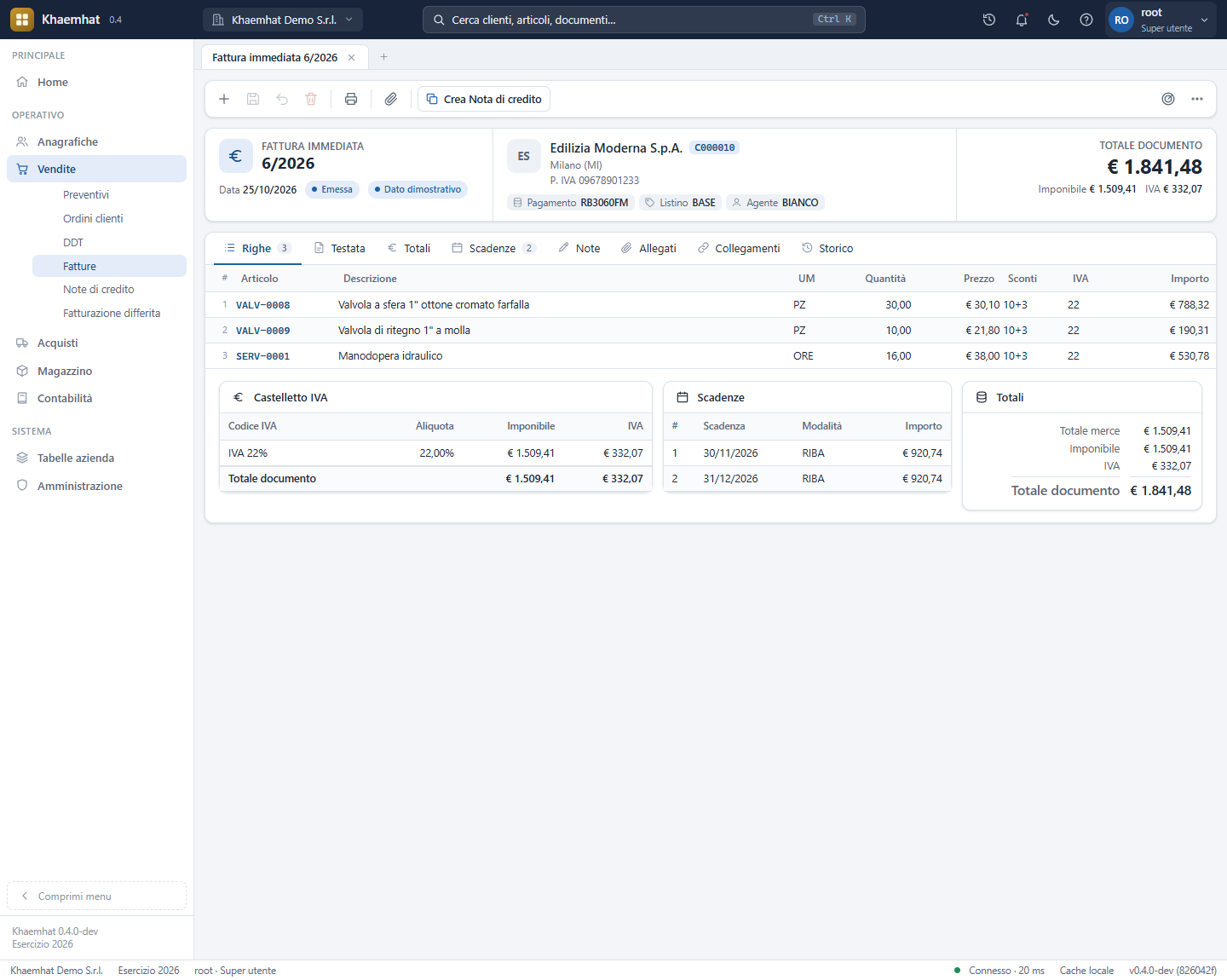
|
||||
|
||||
La guida completa è in [Vendite](Vendite). La contabilizzazione arriva con M7 e l'XML FatturaPA per lo SDI con M9
|
||||
La guida completa è in [Vendite](Vendite). Dalla 0.7 la fattura confermata è già in [Contabilità](Contabilita); l'XML FatturaPA per lo SDI con M9
|
||||
(modulo EINV, vedi [Fatturazione elettronica](Fatturazione-elettronica)).
|
||||
|
||||
## Domande frequenti
|
||||
|
||||
@@ -13,7 +13,7 @@ Il lavoro di dettaglio è nelle issue di Gitea, raggruppate per
|
||||
Finché il prodotto è in sviluppo le versioni restano **0.x**, anche dopo M13: la **1.0.0** sarà pubblicata solo
|
||||
quando verrà deciso esplicitamente.
|
||||
|
||||
**Completate:** M0 (0.0.1), M1 (0.1.0), M2 (0.2.0), M3 (0.3.0), M4 (0.4.0), M5 (0.5.0), M6 (0.6.0). **Prossima:** M7.
|
||||
**Completate:** M0 (0.0.1), M1 (0.1.0), M2 (0.2.0), M3 (0.3.0), M4 (0.4.0), M5 (0.5.0), M6 (0.6.0), M7 (0.7.0). **Prossima:** M8.
|
||||
|
||||
| # | Milestone | Contenuto principale | Versione |
|
||||
|---|---|---|---|
|
||||
|
||||
@@ -81,7 +81,7 @@ liquidazione IVA (*provvisoria*, *confermata*), registrazioni, interruttore **Bl
|
||||
|
||||
Indirizzo: `/tabelle/esercizi`. **Nuovo esercizio** crea l'anno successivo all'ultimo con i suoi dodici mesi. Il
|
||||
pulsante **Blocca** di un mese impedisce nuove registrazioni con date in quel mese; **Sblocca** chiede conferma. Un
|
||||
mese *liquidato* si sblocca solo annullando la liquidazione IVA (M7).
|
||||
mese *liquidato* si sblocca solo riaprendo la liquidazione IVA (vedi [IVA](IVA)).
|
||||
|
||||
Regola fondamentale: **si possono registrare documenti e movimenti contabili solo con data in un periodo aperto**. Un
|
||||
periodo bloccato rifiuta ogni registrazione con data al suo interno; la conferma della liquidazione IVA blocca il
|
||||
|
||||
@@ -10,8 +10,9 @@ e si inviano per e-mail.
|
||||
|
||||
> **In questa versione** i documenti hanno numeri, totali, castelletto IVA, bollo, ritenute, scadenze, collegamenti
|
||||
> riga per riga, stampa ed e-mail. Dalla 0.6 i documenti **muovono il magazzino** (DDT e fatture
|
||||
> accompagnatorie scaricano, gli ordini impegnano: vedi [Magazzino](Magazzino)). Arrivano più avanti: la
|
||||
> **registrazione contabile** (M7), le **partite** e il controllo del fido (M8), il **file XML** per lo
|
||||
> accompagnatorie scaricano, gli ordini impegnano: vedi [Magazzino](Magazzino)). Dalla 0.7 fatture e note
|
||||
> **si contabilizzano** da sole (vedi [Contabilità](Contabilita)). Arrivano più avanti: gli **incassi** e il controllo
|
||||
> del fido (M8), il **file XML** per lo
|
||||
> SDI (M9) e il collegamento alle opportunità del **CRM** (M11). I pulsanti di queste funzioni compaiono quando la
|
||||
> funzione c'è.
|
||||
|
||||
|
||||

|
After Width: | Height: | Size: 165 KiB |

|
After Width: | Height: | Size: 118 KiB |

|
After Width: | Height: | Size: 174 KiB |

|
After Width: | Height: | Size: 115 KiB |

|
After Width: | Height: | Size: 149 KiB |

|
After Width: | Height: | Size: 190 KiB |

|
After Width: | Height: | Size: 100 KiB |

|
After Width: | Height: | Size: 97 KiB |

|
After Width: | Height: | Size: 73 KiB |

|
After Width: | Height: | Size: 97 KiB |
@@ -115,6 +115,7 @@ public sealed partial class DocumentEngine
|
||||
private readonly CompanyFiscalContext _packs;
|
||||
private readonly TimeProvider _clock;
|
||||
private readonly ILogger<DocumentEngine> _logger;
|
||||
private readonly Ledger.LedgerPoster _ledger;
|
||||
|
||||
/// <summary>Creates the engine.</summary>
|
||||
/// <param name="factory">The units of work.</param>
|
||||
@@ -124,10 +125,13 @@ public sealed partial class DocumentEngine
|
||||
/// <param name="packs">The fiscal pack of each company (tax rounding, stamp duty).</param>
|
||||
/// <param name="clock">The clock.</param>
|
||||
/// <param name="logger">The log (section Documenti): confirmations, changes of state, deletions.</param>
|
||||
/// <param name="ledger">Posts the documents to the ledger (module ACCT).</param>
|
||||
public DocumentEngine(
|
||||
IUnitOfWorkFactory factory, PermissionService permissions, AuditTrail audit, FiscalYearService fiscal, CompanyFiscalContext packs, TimeProvider clock,
|
||||
ILogger<DocumentEngine> logger)
|
||||
ILogger<DocumentEngine> logger, Ledger.LedgerPoster ledger)
|
||||
{
|
||||
ArgumentNullException.ThrowIfNull(ledger);
|
||||
_ledger = ledger;
|
||||
ArgumentNullException.ThrowIfNull(logger);
|
||||
_logger = logger;
|
||||
ArgumentNullException.ThrowIfNull(packs);
|
||||
@@ -269,6 +273,7 @@ public sealed partial class DocumentEngine
|
||||
{
|
||||
await RefreshFulfillmentAsync(uow, record.Family, id, actor.UserName, cancellationToken).ConfigureAwait(false);
|
||||
await InventoryPoster.SyncAsync(uow, record.Family, id, cancellationToken).ConfigureAwait(false);
|
||||
await _ledger.SyncAsync(uow, record.Family, id, cancellationToken).ConfigureAwait(false);
|
||||
}
|
||||
|
||||
await uow.CommitAsync(cancellationToken).ConfigureAwait(false);
|
||||
@@ -357,6 +362,7 @@ public sealed partial class DocumentEngine
|
||||
await store.RecordAsync(_audit, uow, AuditAction.Update, id, before, header, actor.UserName, cancellationToken).ConfigureAwait(false);
|
||||
await LinkAsync(uow, definition, record, actor.UserName, cancellationToken).ConfigureAwait(false);
|
||||
await InventoryPoster.SyncAsync(uow, family, id, cancellationToken).ConfigureAwait(false);
|
||||
await _ledger.SyncAsync(uow, family, id, cancellationToken).ConfigureAwait(false);
|
||||
await uow.CommitAsync(cancellationToken).ConfigureAwait(false);
|
||||
LogConfirmed(_logger, header.Kind, header.DocumentNumber ?? id.ToString(System.Globalization.CultureInfo.InvariantCulture), header.Status, company, actor.UserName);
|
||||
}
|
||||
@@ -703,6 +709,7 @@ public sealed partial class DocumentEngine
|
||||
|
||||
// A cancelled delivery note gives its stock back; a closed or reopened order its open quantities.
|
||||
await InventoryPoster.SyncAsync(uow, family, id, cancellationToken).ConfigureAwait(false);
|
||||
await _ledger.SyncAsync(uow, family, id, cancellationToken).ConfigureAwait(false);
|
||||
await uow.CommitAsync(cancellationToken).ConfigureAwait(false);
|
||||
LogChanged(_logger, record.Header.Kind, record.Header.DocumentNumber ?? id.ToString(System.Globalization.CultureInfo.InvariantCulture), action, next, company, actor.UserName);
|
||||
}
|
||||
|
||||
@@ -2,6 +2,7 @@ using Khaemhat.Application.Modules;
|
||||
using Khaemhat.Application.Security;
|
||||
using Khaemhat.Application.Tables;
|
||||
using Khaemhat.Core.Accounting;
|
||||
using Khaemhat.Data;
|
||||
|
||||
namespace Khaemhat.Application.ImportExport;
|
||||
|
||||
@@ -17,9 +18,11 @@ namespace Khaemhat.Application.ImportExport;
|
||||
/// <param name="SubLedger">With a sub-ledger of customers or suppliers.</param>
|
||||
/// <param name="ClosesAutomatically">Closed by the year end.</param>
|
||||
/// <param name="Disabled">Not used any more.</param>
|
||||
/// <param name="StatementLine">The line of the legal statements (voce CEE).</param>
|
||||
/// <param name="Reclassification">The line of the reclassified statements.</param>
|
||||
public sealed record ImportedAccount(
|
||||
string Code, string Description, int Level, string? ParentCode, AccountNature Nature, AccountType Type, bool Postable, bool VatRelevant, bool SubLedger,
|
||||
bool ClosesAutomatically, bool Disabled);
|
||||
bool ClosesAutomatically, bool Disabled, string? StatementLine = null, string? Reclassification = null);
|
||||
|
||||
/// <summary>
|
||||
/// The checks of a chart of accounts from a file (SPEC §12.12, ADR 0031): codes of one to three parts separated by
|
||||
@@ -145,7 +148,7 @@ public static class ChartOfAccountsImportValidator
|
||||
if (messages.All(m => m.IsWarning) && nature is { } valid)
|
||||
{
|
||||
accounts.Add(new(code, row["descrizione"] ?? string.Empty, level, parent, valid, type, postable, flags.Contains('I'), flags.Contains('P'), flags.Contains('C'),
|
||||
flags.Contains('X')));
|
||||
flags.Contains('X'), row["voce_cee"], row["riclassifica"]));
|
||||
}
|
||||
|
||||
results.Add(new(row.Line, code, messages.Any(m => !m.IsWarning) ? ImportAction.Skip : ImportAction.Create, messages));
|
||||
@@ -182,15 +185,26 @@ public static class ChartOfAccountsImportValidator
|
||||
}
|
||||
|
||||
/// <summary>
|
||||
/// The chart of accounts (<c>piano-dei-conti</c>): CSV, XLSX or <c>khaemhat-coa.json</c>. Until the ledger exists (M7)
|
||||
/// the file is only checked; M7 writes the accounts this check accepts.
|
||||
/// The chart of accounts (<c>piano-dei-conti</c>): CSV, XLSX or <c>khaemhat-coa.json</c>. The accounts the check
|
||||
/// accepts are added; those that exist are updated when the options say so (M7, issue #62).
|
||||
/// </summary>
|
||||
/// <param name="permissions">Checks the permission.</param>
|
||||
public sealed class ChartOfAccountsImportTarget(PermissionService permissions) : IImportTarget
|
||||
public sealed class ChartOfAccountsImportTarget : IImportTarget
|
||||
{
|
||||
/// <summary>The permission to change the chart of accounts.</summary>
|
||||
public const string WritePermission = "ledger.account.write";
|
||||
|
||||
private readonly PermissionService _permissions;
|
||||
private readonly IUnitOfWorkFactory? _factory;
|
||||
|
||||
/// <summary>Creates the target.</summary>
|
||||
/// <param name="permissions">Checks the permission.</param>
|
||||
/// <param name="factory">The units of work, to write the accounts.</param>
|
||||
public ChartOfAccountsImportTarget(PermissionService permissions, IUnitOfWorkFactory? factory = null)
|
||||
{
|
||||
_permissions = permissions;
|
||||
_factory = factory;
|
||||
}
|
||||
|
||||
/// <inheritdoc />
|
||||
public string Key => "piano-dei-conti";
|
||||
|
||||
@@ -204,10 +218,10 @@ public sealed class ChartOfAccountsImportTarget(PermissionService permissions) :
|
||||
public string ExportPermission => "ledger.account.read";
|
||||
|
||||
/// <inheritdoc />
|
||||
public bool CanApply => false;
|
||||
public bool CanApply => _factory is not null;
|
||||
|
||||
/// <inheritdoc />
|
||||
public bool CanExport => false;
|
||||
public bool CanExport => _factory is not null;
|
||||
|
||||
/// <inheritdoc />
|
||||
public IReadOnlyList<ImportField> Fields => ChartOfAccountsImportValidator.Fields;
|
||||
@@ -216,15 +230,46 @@ public sealed class ChartOfAccountsImportTarget(PermissionService permissions) :
|
||||
public async Task<IReadOnlyList<ImportRowResult>> CheckAsync(ImportContext context, IReadOnlyList<ImportRow> rows, CancellationToken cancellationToken)
|
||||
{
|
||||
ArgumentNullException.ThrowIfNull(context);
|
||||
await CompanyGuard.DemandAsync(permissions, context.Actor, context.CompanyCode, Permission, cancellationToken).ConfigureAwait(false);
|
||||
await CompanyGuard.DemandAsync(_permissions, context.Actor, context.CompanyCode, Permission, cancellationToken).ConfigureAwait(false);
|
||||
return ChartOfAccountsImportValidator.Check(rows).Results;
|
||||
}
|
||||
|
||||
/// <inheritdoc />
|
||||
public Task<IReadOnlyList<ImportRowResult>> ApplyAsync(ImportContext context, IReadOnlyList<ImportRow> rows, CancellationToken cancellationToken) =>
|
||||
throw new InvalidOperationException(ImportErrors.CheckOnly);
|
||||
public async Task<IReadOnlyList<ImportRowResult>> ApplyAsync(ImportContext context, IReadOnlyList<ImportRow> rows, CancellationToken cancellationToken)
|
||||
{
|
||||
ArgumentNullException.ThrowIfNull(context);
|
||||
var factory = _factory ?? throw new InvalidOperationException(ImportErrors.CheckOnly);
|
||||
var company = await CompanyGuard.DemandAsync(_permissions, context.Actor, context.CompanyCode, Permission, cancellationToken).ConfigureAwait(false);
|
||||
var (results, accounts) = ChartOfAccountsImportValidator.Check(rows);
|
||||
var update = context.Options.Existing == ExistingCodeAction.Update;
|
||||
Dictionary<string, bool> written;
|
||||
await using (var uow = await factory.CreateAsync(DatabaseScope.Company(company), cancellationToken).ConfigureAwait(false))
|
||||
{
|
||||
await uow.BeginAsync(cancellationToken).ConfigureAwait(false);
|
||||
written = await Ledger.LedgerService.ImportAsync(uow, accounts, update, cancellationToken).ConfigureAwait(false);
|
||||
await uow.CommitAsync(cancellationToken).ConfigureAwait(false);
|
||||
}
|
||||
|
||||
return [.. results.Select(r => r.Action == ImportAction.Skip
|
||||
? r
|
||||
: r with { Action = written.TryGetValue(r.Key, out var created) ? (created ? ImportAction.Create : ImportAction.Update) : ImportAction.Skip })];
|
||||
}
|
||||
|
||||
/// <inheritdoc />
|
||||
public Task<IReadOnlyList<IReadOnlyList<object?>>> ExportAsync(ImportContext context, CancellationToken cancellationToken) =>
|
||||
Task.FromResult<IReadOnlyList<IReadOnlyList<object?>>>([]);
|
||||
public async Task<IReadOnlyList<IReadOnlyList<object?>>> ExportAsync(ImportContext context, CancellationToken cancellationToken)
|
||||
{
|
||||
ArgumentNullException.ThrowIfNull(context);
|
||||
var factory = _factory ?? throw new InvalidOperationException(ImportErrors.CheckOnly);
|
||||
var company = await CompanyGuard.DemandAsync(_permissions, context.Actor, context.CompanyCode, ExportPermission, cancellationToken).ConfigureAwait(false);
|
||||
await using var uow = await factory.CreateAsync(DatabaseScope.Company(company), cancellationToken).ConfigureAwait(false);
|
||||
var accounts = (await uow.Repository<GlAccount, long>().ListAsync(Data.Querying.Query.For<GlAccount>(), cancellationToken).ConfigureAwait(false)).Items
|
||||
.OrderBy(a => a.Code, StringComparer.Ordinal);
|
||||
return [.. accounts.Select(a => (IReadOnlyList<object?>)
|
||||
[
|
||||
a.Code, a.Description, a.Level, ChartOfAccountsImportValidator.ParentOf(a.Code), ChartOfAccountsImportValidator.NatureWords[(int)a.Nature],
|
||||
ChartOfAccountsImportValidator.TypeWords[(int)a.Type], a.StatementLine, a.Reclassification,
|
||||
(a.Postable ? "M" : string.Empty) + (a.VatRelevant ? "I" : string.Empty) + (a.SubLedger ? "P" : string.Empty)
|
||||
+ (a.ClosesAutomatically ? "C" : string.Empty) + (a.Disabled ? "X" : string.Empty),
|
||||
])];
|
||||
}
|
||||
}
|
||||
@@ -59,6 +59,7 @@ public sealed class JobScheduler
|
||||
new("system.attachments-trash", "Svuotamento cestino allegati", Files.AttachmentTrashPurgeJob.JobType, "45 3 * * *", 1800),
|
||||
new("system.ecb-rates", "Cambi di riferimento BCE", Tables.EcbRatesJob.JobType, "30 16 * * 1-5", 300, UsesNetwork: true),
|
||||
new("inventory.rebuild", "Ricostruzione del magazzino", Inventory.InventoryRebuildJob.JobType, "15 2 * * 0", 3600),
|
||||
new("ledger.recurring", "Registrazioni ricorrenti", Ledger.RecurringEntriesJob.JobType, "0 5 * * *", 1800),
|
||||
];
|
||||
|
||||
private readonly IUnitOfWorkFactory _factory;
|
||||
|
||||
@@ -0,0 +1,562 @@
|
||||
using Khaemhat.Application.Audit;
|
||||
using Khaemhat.Application.Security;
|
||||
using Khaemhat.Application.Tables;
|
||||
using Khaemhat.Core.Accounting;
|
||||
using Khaemhat.Core.Parties;
|
||||
using Khaemhat.Core.Tables;
|
||||
using Khaemhat.Data;
|
||||
using Khaemhat.Data.Querying;
|
||||
|
||||
namespace Khaemhat.Application.Ledger;
|
||||
|
||||
/// <summary>An entry with its lines and VAT lines.</summary>
|
||||
/// <param name="Entry">The entry.</param>
|
||||
/// <param name="Lines">The lines.</param>
|
||||
/// <param name="Vat">The VAT lines.</param>
|
||||
/// <param name="PartyName">The name of the customer or supplier of the entry.</param>
|
||||
public sealed record EntryView(GlEntry Entry, IReadOnlyList<GlEntryLine> Lines, IReadOnlyList<GlEntryVat> Vat, string? PartyName)
|
||||
{
|
||||
/// <summary>Debit minus credit.</summary>
|
||||
public decimal Difference => Lines.Sum(l => l.Debit - l.Credit);
|
||||
}
|
||||
|
||||
/// <summary>An entry as the journal lists it.</summary>
|
||||
/// <param name="Entry">The entry.</param>
|
||||
/// <param name="PartyName">The customer or supplier.</param>
|
||||
public sealed record EntryRow(GlEntry Entry, string? PartyName);
|
||||
|
||||
/// <summary>What the journal list shows.</summary>
|
||||
/// <param name="From">From this day.</param>
|
||||
/// <param name="To">Up to this day.</param>
|
||||
/// <param name="Status">Only this state.</param>
|
||||
/// <param name="TemplateCode">Only this template.</param>
|
||||
/// <param name="Text">Text in the description or the document number.</param>
|
||||
/// <param name="Offset">The first row.</param>
|
||||
/// <param name="Limit">How many rows.</param>
|
||||
public sealed record EntryFilter(
|
||||
DateOnly? From = null, DateOnly? To = null, GlEntryStatus? Status = null, string? TemplateCode = null, string? Text = null, int Offset = 0, int Limit = 50);
|
||||
|
||||
/// <summary>An entry typed in the journal.</summary>
|
||||
/// <param name="Id">The entry, for a change.</param>
|
||||
/// <param name="EntryDate">The date of registration.</param>
|
||||
/// <param name="Description">The description.</param>
|
||||
/// <param name="Lines">The lines.</param>
|
||||
public sealed record EntryInput(long? Id, DateOnly EntryDate, string Description, IReadOnlyList<EntryLineDraft> Lines)
|
||||
{
|
||||
/// <summary>The template.</summary>
|
||||
public long? JournalTemplateId { get; init; }
|
||||
|
||||
/// <summary>The date of competence.</summary>
|
||||
public DateOnly? CompetenceDate { get; init; }
|
||||
|
||||
/// <summary>The number of the document.</summary>
|
||||
public string? DocumentNumber { get; init; }
|
||||
|
||||
/// <summary>The date of the document.</summary>
|
||||
public DateOnly? DocumentDate { get; init; }
|
||||
|
||||
/// <summary>The customer or supplier.</summary>
|
||||
public long? PartyId { get; init; }
|
||||
|
||||
/// <summary>The VAT register.</summary>
|
||||
public long? VatRegisterId { get; init; }
|
||||
|
||||
/// <summary>The VAT date.</summary>
|
||||
public DateOnly? VatDate { get; init; }
|
||||
|
||||
/// <summary>The VAT lines.</summary>
|
||||
public IReadOnlyList<EntryVatDraft> Vat { get; init; } = [];
|
||||
|
||||
/// <summary>Notes.</summary>
|
||||
public string? Notes { get; init; }
|
||||
|
||||
/// <summary>Post it (it must balance) rather than keep it as a draft.</summary>
|
||||
public bool Post { get; init; }
|
||||
}
|
||||
|
||||
/// <summary>A journal template with its lines, for the guided entry.</summary>
|
||||
/// <param name="Template">The template.</param>
|
||||
/// <param name="Lines">Its lines.</param>
|
||||
public sealed record TemplateView(JournalTemplate Template, IReadOnlyList<JournalTemplateLine> Lines);
|
||||
|
||||
/// <summary>
|
||||
/// The journal (prima nota, SPEC §11.7, issue #63, mockups 040-041, ADR 0036): drafts that may not balance, posted
|
||||
/// entries (provvisorie) numbered per year in the order of registration, final entries (definitive) numbered on the
|
||||
/// general journal in date order and never changed again; a reversal corrects them. The guided entry starts from the
|
||||
/// lines of a template; the manual one shows the imbalance while it is typed. The period must be open (for VAT too when
|
||||
/// the entry has VAT lines). Entries of documents change only through their document.
|
||||
/// </summary>
|
||||
public sealed class JournalEntryService
|
||||
{
|
||||
private readonly IUnitOfWorkFactory _factory;
|
||||
private readonly PermissionService _permissions;
|
||||
private readonly FiscalYearService _fiscal;
|
||||
private readonly AuditTrail _audit;
|
||||
private readonly TimeProvider _clock;
|
||||
|
||||
/// <summary>Creates the service.</summary>
|
||||
/// <param name="factory">The units of work.</param>
|
||||
/// <param name="permissions">The permissions.</param>
|
||||
/// <param name="fiscal">The fiscal calendar.</param>
|
||||
/// <param name="audit">The history.</param>
|
||||
/// <param name="clock">The clock.</param>
|
||||
public JournalEntryService(IUnitOfWorkFactory factory, PermissionService permissions, FiscalYearService fiscal, AuditTrail audit, TimeProvider clock)
|
||||
{
|
||||
ArgumentNullException.ThrowIfNull(factory);
|
||||
ArgumentNullException.ThrowIfNull(permissions);
|
||||
ArgumentNullException.ThrowIfNull(fiscal);
|
||||
ArgumentNullException.ThrowIfNull(audit);
|
||||
ArgumentNullException.ThrowIfNull(clock);
|
||||
_factory = factory;
|
||||
_permissions = permissions;
|
||||
_fiscal = fiscal;
|
||||
_audit = audit;
|
||||
_clock = clock;
|
||||
}
|
||||
|
||||
/// <summary>The entries, the latest first.</summary>
|
||||
/// <param name="actor">Who reads.</param>
|
||||
/// <param name="companyCode">The company.</param>
|
||||
/// <param name="filter">The filter and the page.</param>
|
||||
/// <param name="cancellationToken">Cancellation.</param>
|
||||
/// <returns>The page and the total.</returns>
|
||||
public async Task<(IReadOnlyList<EntryRow> Rows, int Total)> ListAsync(Actor actor, string companyCode, EntryFilter filter, CancellationToken cancellationToken = default)
|
||||
{
|
||||
ArgumentNullException.ThrowIfNull(filter);
|
||||
var company = await CompanyGuard.DemandAsync(_permissions, actor, companyCode, LedgerPermissions.EntryRead, cancellationToken).ConfigureAwait(false);
|
||||
await using var uow = await _factory.CreateAsync(DatabaseScope.Company(company), cancellationToken).ConfigureAwait(false);
|
||||
var query = Query.For<GlEntry>();
|
||||
if (filter.From is { } from)
|
||||
{
|
||||
query = query.Where(e => e.EntryDate >= from);
|
||||
}
|
||||
|
||||
if (filter.To is { } to)
|
||||
{
|
||||
query = query.Where(e => e.EntryDate <= to);
|
||||
}
|
||||
|
||||
if (filter.Status is { } status)
|
||||
{
|
||||
query = query.Where(e => e.Status == status);
|
||||
}
|
||||
|
||||
if (!string.IsNullOrWhiteSpace(filter.TemplateCode))
|
||||
{
|
||||
var code = filter.TemplateCode;
|
||||
query = query.Where(e => e.TemplateCode == code);
|
||||
}
|
||||
|
||||
if (!string.IsNullOrWhiteSpace(filter.Text))
|
||||
{
|
||||
var text = filter.Text.Trim();
|
||||
query = query.Where(e => e.Description.Contains(text) || e.DocumentNumber!.Contains(text) || e.EntryNumber!.Contains(text));
|
||||
}
|
||||
|
||||
var repository = uow.Repository<GlEntry, long>();
|
||||
var total = await repository.CountAsync(query, cancellationToken).ConfigureAwait(false);
|
||||
var page = (await repository.ListAsync(
|
||||
query.OrderByDescending(e => e.EntryDate).OrderByDescending(e => e.Id).Page(Math.Max(0, filter.Offset), Math.Clamp(filter.Limit, 1, 500)),
|
||||
cancellationToken).ConfigureAwait(false)).Items;
|
||||
var names = await PartyNamesAsync(uow, page.Select(e => e.PartyId), cancellationToken).ConfigureAwait(false);
|
||||
return ([.. page.Select(e => new EntryRow(e, e.PartyId is { } p && names.TryGetValue(p, out var n) ? n : null))], total);
|
||||
}
|
||||
|
||||
/// <summary>An entry with its lines.</summary>
|
||||
/// <param name="actor">Who reads.</param>
|
||||
/// <param name="companyCode">The company.</param>
|
||||
/// <param name="id">The entry.</param>
|
||||
/// <param name="cancellationToken">Cancellation.</param>
|
||||
/// <returns>The entry, or none.</returns>
|
||||
public async Task<EntryView?> GetAsync(Actor actor, string companyCode, long id, CancellationToken cancellationToken = default)
|
||||
{
|
||||
var company = await CompanyGuard.DemandAsync(_permissions, actor, companyCode, LedgerPermissions.EntryRead, cancellationToken).ConfigureAwait(false);
|
||||
await using var uow = await _factory.CreateAsync(DatabaseScope.Company(company), cancellationToken).ConfigureAwait(false);
|
||||
return await ViewAsync(uow, id, cancellationToken).ConfigureAwait(false);
|
||||
}
|
||||
|
||||
/// <summary>The journal templates with their lines, for the guided entry.</summary>
|
||||
/// <param name="actor">Who reads.</param>
|
||||
/// <param name="companyCode">The company.</param>
|
||||
/// <param name="cancellationToken">Cancellation.</param>
|
||||
/// <returns>The active templates, by code.</returns>
|
||||
public async Task<IReadOnlyList<TemplateView>> TemplatesAsync(Actor actor, string companyCode, CancellationToken cancellationToken = default)
|
||||
{
|
||||
var company = await CompanyGuard.DemandAsync(_permissions, actor, companyCode, LedgerPermissions.EntryRead, cancellationToken).ConfigureAwait(false);
|
||||
await using var uow = await _factory.CreateAsync(DatabaseScope.Company(company), cancellationToken).ConfigureAwait(false);
|
||||
var templates = (await uow.Repository<JournalTemplate, long>().ListAsync(Query.For<JournalTemplate>().Where(t => !t.Disabled).OrderBy(t => t.Code), cancellationToken)
|
||||
.ConfigureAwait(false)).Items;
|
||||
var lines = (await uow.Repository<JournalTemplateLine, long>().ListAsync(Query.For<JournalTemplateLine>().OrderBy(l => l.SortOrder), cancellationToken).ConfigureAwait(false)).Items;
|
||||
return [.. templates.Select(t => new TemplateView(t, [.. lines.Where(l => l.JournalTemplateId == t.Id)]))];
|
||||
}
|
||||
|
||||
/// <summary>
|
||||
/// Saves an entry typed in the journal: a draft may not balance, a posted entry must and gets its number. Final
|
||||
/// entries and entries of documents cannot change.
|
||||
/// </summary>
|
||||
/// <param name="actor">Who writes.</param>
|
||||
/// <param name="companyCode">The company.</param>
|
||||
/// <param name="input">The entry.</param>
|
||||
/// <param name="cancellationToken">Cancellation.</param>
|
||||
/// <returns>The entry as saved.</returns>
|
||||
public async Task<EntryView> SaveAsync(Actor actor, string companyCode, EntryInput input, CancellationToken cancellationToken = default)
|
||||
{
|
||||
ArgumentNullException.ThrowIfNull(input);
|
||||
ArgumentNullException.ThrowIfNull(actor);
|
||||
var company = await CompanyGuard.DemandAsync(_permissions, actor, companyCode, LedgerPermissions.EntryWrite, cancellationToken).ConfigureAwait(false);
|
||||
if (input.EntryDate == default)
|
||||
{
|
||||
throw new ValidationFailedException(["EntryDate:" + LedgerErrors.DateRequired]);
|
||||
}
|
||||
|
||||
if (input.Post)
|
||||
{
|
||||
await _fiscal.DemandOpenAsync(company, input.EntryDate, input.Vat.Count > 0 ? PeriodUse.Vat : PeriodUse.NoVat, cancellationToken).ConfigureAwait(false);
|
||||
}
|
||||
|
||||
long id;
|
||||
await using (var uow = await _factory.CreateAsync(DatabaseScope.Company(company), cancellationToken).ConfigureAwait(false))
|
||||
{
|
||||
await uow.BeginAsync(cancellationToken).ConfigureAwait(false);
|
||||
var entries = uow.Repository<GlEntry, long>();
|
||||
GlEntry? before = null;
|
||||
if (input.Id is { } existingId)
|
||||
{
|
||||
before = await entries.GetAsync(existingId, cancellationToken).ConfigureAwait(false) ?? throw new KeyNotFoundException(LedgerErrors.NotFound);
|
||||
if (before.Status == GlEntryStatus.Final)
|
||||
{
|
||||
throw new ValidationFailedException(["Status:" + LedgerErrors.Final]);
|
||||
}
|
||||
|
||||
if (before.Source == GlEntrySource.Document)
|
||||
{
|
||||
throw new ValidationFailedException(["Source:" + LedgerErrors.FromDocument]);
|
||||
}
|
||||
}
|
||||
|
||||
var accounts = await LedgerStore.AccountsAsync(uow, cancellationToken).ConfigureAwait(false);
|
||||
var lines = input.Lines.Where(l => l.AccountId is not null || l.Debit != 0m || l.Credit != 0m).ToList();
|
||||
var errors = JournalEntryValidator.Check(
|
||||
input.Description,
|
||||
[.. lines.Select(l => new EntryLineCheck(l.AccountId, l.PartyId, l.Debit, l.Credit))],
|
||||
input.Vat.Count,
|
||||
input.VatRegisterId is not null,
|
||||
LedgerStore.Rules(accounts),
|
||||
input.Post).ToList();
|
||||
if (input.Post)
|
||||
{
|
||||
await CheckFinalOrderAsync(uow, input.EntryDate, errors, cancellationToken).ConfigureAwait(false);
|
||||
}
|
||||
|
||||
if (errors.Count > 0)
|
||||
{
|
||||
throw new ValidationFailedException(errors);
|
||||
}
|
||||
|
||||
var template = input.JournalTemplateId is { } templateId
|
||||
? await uow.Repository<JournalTemplate, long>().GetAsync(templateId, cancellationToken).ConfigureAwait(false)
|
||||
: null;
|
||||
var entry = before is null ? new GlEntry { Source = GlEntrySource.Manual } : Clone(before);
|
||||
entry.EntryDate = input.EntryDate;
|
||||
entry.CompetenceDate = input.CompetenceDate;
|
||||
entry.JournalTemplateId = template?.Id;
|
||||
entry.TemplateCode = template?.Code;
|
||||
entry.Description = LedgerStore.Trim(input.Description.Trim(), 200)!;
|
||||
entry.DocumentNumber = LedgerStore.Trim(input.DocumentNumber, 30);
|
||||
entry.DocumentDate = input.DocumentDate;
|
||||
entry.PartyId = input.PartyId;
|
||||
entry.VatRegisterId = input.VatRegisterId;
|
||||
entry.VatDate = input.VatRegisterId is null ? null : input.VatDate ?? input.EntryDate;
|
||||
entry.Notes = LedgerStore.Trim(input.Notes, 500);
|
||||
entry.Status = input.Post ? GlEntryStatus.Posted : before?.Status ?? GlEntryStatus.Draft;
|
||||
if (before is not null && before.Number is not null && before.Year != input.EntryDate.Year)
|
||||
{
|
||||
entry.Number = null;
|
||||
entry.EntryNumber = null;
|
||||
}
|
||||
|
||||
if (before is null)
|
||||
{
|
||||
entry = await LedgerStore.InsertAsync(uow, entry, lines, input.Vat, cancellationToken).ConfigureAwait(false);
|
||||
await _audit.RecordAsync(uow, AuditAction.Insert, entry.Id, null, entry, actor.UserName, cancellationToken).ConfigureAwait(false);
|
||||
}
|
||||
else
|
||||
{
|
||||
await LedgerStore.UpdateAsync(uow, entry, lines, input.Vat, cancellationToken).ConfigureAwait(false);
|
||||
await _audit.RecordAsync(uow, AuditAction.Update, entry.Id, before, entry, actor.UserName, cancellationToken).ConfigureAwait(false);
|
||||
}
|
||||
|
||||
id = entry.Id;
|
||||
await uow.CommitAsync(cancellationToken).ConfigureAwait(false);
|
||||
}
|
||||
|
||||
return await GetAsync(actor, company, id, cancellationToken).ConfigureAwait(false) ?? throw new KeyNotFoundException(LedgerErrors.NotFound);
|
||||
}
|
||||
|
||||
/// <summary>Removes an entry that is not final and does not come from a document.</summary>
|
||||
/// <param name="actor">Who removes it.</param>
|
||||
/// <param name="companyCode">The company.</param>
|
||||
/// <param name="id">The entry.</param>
|
||||
/// <param name="cancellationToken">Cancellation.</param>
|
||||
/// <returns>A task.</returns>
|
||||
public async Task DeleteAsync(Actor actor, string companyCode, long id, CancellationToken cancellationToken = default)
|
||||
{
|
||||
ArgumentNullException.ThrowIfNull(actor);
|
||||
var company = await CompanyGuard.DemandAsync(_permissions, actor, companyCode, LedgerPermissions.EntryWrite, cancellationToken).ConfigureAwait(false);
|
||||
await using var uow = await _factory.CreateAsync(DatabaseScope.Company(company), cancellationToken).ConfigureAwait(false);
|
||||
await uow.BeginAsync(cancellationToken).ConfigureAwait(false);
|
||||
var entry = await uow.Repository<GlEntry, long>().GetAsync(id, cancellationToken).ConfigureAwait(false) ?? throw new KeyNotFoundException(LedgerErrors.NotFound);
|
||||
if (entry.Status == GlEntryStatus.Final)
|
||||
{
|
||||
throw new ValidationFailedException(["Status:" + LedgerErrors.Final]);
|
||||
}
|
||||
|
||||
if (entry.Source == GlEntrySource.Document)
|
||||
{
|
||||
throw new ValidationFailedException(["Source:" + LedgerErrors.FromDocument]);
|
||||
}
|
||||
|
||||
await uow.ExecuteAsync(SqlFragment.Of($"UPDATE gl_recurring_entries SET last_entry_id = NULL WHERE last_entry_id = {id}"), cancellationToken).ConfigureAwait(false);
|
||||
if (await uow.Repository<RecurringEntry, long>().CountAsync(Query.For<RecurringEntry>().Where(r => r.ModelEntryId == id), cancellationToken).ConfigureAwait(false) > 0)
|
||||
{
|
||||
throw new ValidationFailedException(["Id:" + LedgerErrors.RecurringModel]);
|
||||
}
|
||||
|
||||
await LedgerStore.DeleteAsync(uow, id, cancellationToken).ConfigureAwait(false);
|
||||
await _audit.RecordAsync(uow, AuditAction.Delete, id, entry, (GlEntry?)null, actor.UserName, cancellationToken).ConfigureAwait(false);
|
||||
await uow.CommitAsync(cancellationToken).ConfigureAwait(false);
|
||||
}
|
||||
|
||||
/// <summary>
|
||||
/// Reverses an entry (storno): a new posted entry with the same lines on the other side and the VAT with the
|
||||
/// opposite sign; the open items of the entry not yet settled are removed.
|
||||
/// </summary>
|
||||
/// <param name="actor">Who reverses.</param>
|
||||
/// <param name="companyCode">The company.</param>
|
||||
/// <param name="id">The entry.</param>
|
||||
/// <param name="date">The date of the reversal.</param>
|
||||
/// <param name="cancellationToken">Cancellation.</param>
|
||||
/// <returns>The reversal.</returns>
|
||||
public async Task<EntryView> ReverseAsync(Actor actor, string companyCode, long id, DateOnly date, CancellationToken cancellationToken = default)
|
||||
{
|
||||
ArgumentNullException.ThrowIfNull(actor);
|
||||
var company = await CompanyGuard.DemandAsync(_permissions, actor, companyCode, LedgerPermissions.EntryWrite, cancellationToken).ConfigureAwait(false);
|
||||
await _fiscal.DemandOpenAsync(company, date, PeriodUse.NoVat, cancellationToken).ConfigureAwait(false);
|
||||
long reversalId;
|
||||
await using (var uow = await _factory.CreateAsync(DatabaseScope.Company(company), cancellationToken).ConfigureAwait(false))
|
||||
{
|
||||
await uow.BeginAsync(cancellationToken).ConfigureAwait(false);
|
||||
var entry = await uow.Repository<GlEntry, long>().GetAsync(id, cancellationToken).ConfigureAwait(false) ?? throw new KeyNotFoundException(LedgerErrors.NotFound);
|
||||
if (entry.Source == GlEntrySource.Document && entry.Status != GlEntryStatus.Final)
|
||||
{
|
||||
throw new ValidationFailedException(["Source:" + LedgerErrors.FromDocument]);
|
||||
}
|
||||
|
||||
var reversal = await ReverseAsync(uow, entry, date, actor.UserName, cancellationToken).ConfigureAwait(false);
|
||||
await _audit.RecordAsync(uow, AuditAction.Insert, reversal.Id, null, reversal, actor.UserName, cancellationToken).ConfigureAwait(false);
|
||||
reversalId = reversal.Id;
|
||||
await uow.CommitAsync(cancellationToken).ConfigureAwait(false);
|
||||
}
|
||||
|
||||
return await GetAsync(actor, company, reversalId, cancellationToken).ConfigureAwait(false) ?? throw new KeyNotFoundException(LedgerErrors.NotFound);
|
||||
}
|
||||
|
||||
/// <summary>
|
||||
/// Makes final the posted entries up to a day (stampa definitiva del libro giornale): in date order each gets the
|
||||
/// next number of the journal of its fiscal year, then never changes again.
|
||||
/// </summary>
|
||||
/// <param name="actor">Who does it: needs <c>ledger.entry.finalize</c>.</param>
|
||||
/// <param name="companyCode">The company.</param>
|
||||
/// <param name="upTo">The last day.</param>
|
||||
/// <param name="cancellationToken">Cancellation.</param>
|
||||
/// <returns>How many entries became final.</returns>
|
||||
public async Task<int> FinalizeAsync(Actor actor, string companyCode, DateOnly upTo, CancellationToken cancellationToken = default)
|
||||
{
|
||||
ArgumentNullException.ThrowIfNull(actor);
|
||||
var company = await CompanyGuard.DemandAsync(_permissions, actor, companyCode, LedgerPermissions.EntryFinalize, cancellationToken).ConfigureAwait(false);
|
||||
var done = 0;
|
||||
await using (var uow = await _factory.CreateAsync(DatabaseScope.Company(company), cancellationToken).ConfigureAwait(false))
|
||||
{
|
||||
await uow.BeginAsync(cancellationToken).ConfigureAwait(false);
|
||||
var drafts = await uow.Repository<GlEntry, long>().CountAsync(
|
||||
Query.For<GlEntry>().Where(e => e.Status == GlEntryStatus.Draft && e.EntryDate <= upTo), cancellationToken).ConfigureAwait(false);
|
||||
if (drafts > 0)
|
||||
{
|
||||
throw new ValidationFailedException(["UpTo:" + LedgerErrors.DraftsBeforeFinal]);
|
||||
}
|
||||
|
||||
var entries = (await uow.Repository<GlEntry, long>().ListAsync(
|
||||
Query.For<GlEntry>().Where(e => e.Status == GlEntryStatus.Posted && e.EntryDate <= upTo).OrderBy(e => e.EntryDate).OrderBy(e => e.Number).OrderBy(e => e.Id),
|
||||
cancellationToken).ConfigureAwait(false)).Items;
|
||||
var years = (await uow.Repository<FiscalYear, long>().ListAsync(Query.For<FiscalYear>(), cancellationToken).ConfigureAwait(false)).Items;
|
||||
var now = _clock.GetUtcNow().UtcDateTime;
|
||||
foreach (var entry in entries)
|
||||
{
|
||||
var year = years.FirstOrDefault(y => y.StartDate <= entry.EntryDate && y.EndDate >= entry.EntryDate)
|
||||
?? throw new ValidationFailedException(["UpTo:" + LedgerErrors.NoFiscalYear]);
|
||||
year.LastFinalEntryNumber++;
|
||||
year.LastFinalEntryDate = entry.EntryDate;
|
||||
entry.JournalNumber = year.LastFinalEntryNumber;
|
||||
entry.FinalizedAt = now;
|
||||
entry.FinalizedBy = actor.UserName;
|
||||
await LedgerStore.SetStatusAsync(uow, entry, GlEntryStatus.Final, cancellationToken).ConfigureAwait(false);
|
||||
done++;
|
||||
}
|
||||
|
||||
foreach (var year in years.Where(y => entries.Any(e => y.StartDate <= e.EntryDate && y.EndDate >= e.EntryDate)))
|
||||
{
|
||||
await uow.Repository<FiscalYear, long>().UpdateAsync(year, cancellationToken).ConfigureAwait(false);
|
||||
}
|
||||
|
||||
await uow.CommitAsync(cancellationToken).ConfigureAwait(false);
|
||||
}
|
||||
|
||||
await _fiscal.InvalidateAsync(company, cancellationToken).ConfigureAwait(false);
|
||||
return done;
|
||||
}
|
||||
|
||||
/// <summary>Posts a draft: it must balance.</summary>
|
||||
/// <param name="actor">Who posts.</param>
|
||||
/// <param name="companyCode">The company.</param>
|
||||
/// <param name="id">The entry.</param>
|
||||
/// <param name="cancellationToken">Cancellation.</param>
|
||||
/// <returns>The entry as posted.</returns>
|
||||
public async Task<EntryView> PostAsync(Actor actor, string companyCode, long id, CancellationToken cancellationToken = default)
|
||||
{
|
||||
var view = await GetAsync(actor, companyCode, id, cancellationToken).ConfigureAwait(false) ?? throw new KeyNotFoundException(LedgerErrors.NotFound);
|
||||
var e = view.Entry;
|
||||
return await SaveAsync(actor, companyCode, new EntryInput(e.Id, e.EntryDate, e.Description, [.. view.Lines.Select(Draft)])
|
||||
{
|
||||
JournalTemplateId = e.JournalTemplateId,
|
||||
CompetenceDate = e.CompetenceDate,
|
||||
DocumentNumber = e.DocumentNumber,
|
||||
DocumentDate = e.DocumentDate,
|
||||
PartyId = e.PartyId,
|
||||
VatRegisterId = e.VatRegisterId,
|
||||
VatDate = e.VatDate,
|
||||
Vat = [.. view.Vat.Select(Draft)],
|
||||
Notes = e.Notes,
|
||||
Post = true,
|
||||
}, cancellationToken).ConfigureAwait(false);
|
||||
}
|
||||
|
||||
/// <summary>A line of an entry as a draft line.</summary>
|
||||
/// <param name="line">The line.</param>
|
||||
/// <returns>The draft.</returns>
|
||||
public static EntryLineDraft Draft(GlEntryLine line)
|
||||
{
|
||||
ArgumentNullException.ThrowIfNull(line);
|
||||
return new EntryLineDraft(line.AccountId, line.PartyId, line.Description, line.Debit, line.Credit, line.CostCenterId, line.JobId);
|
||||
}
|
||||
|
||||
/// <summary>A VAT line of an entry as a draft line.</summary>
|
||||
/// <param name="line">The line.</param>
|
||||
/// <returns>The draft.</returns>
|
||||
public static EntryVatDraft Draft(GlEntryVat line)
|
||||
{
|
||||
ArgumentNullException.ThrowIfNull(line);
|
||||
return new EntryVatDraft(line.TaxCodeId, line.Rate, line.Nature, line.Taxable, line.Tax, line.NonDeductibleTax, line.Exigibility, line.VatRegisterId);
|
||||
}
|
||||
|
||||
/// <summary>Writes the reversal of an entry in the open transaction.</summary>
|
||||
internal static async Task<GlEntry> ReverseAsync(IUnitOfWork uow, GlEntry entry, DateOnly date, string? userName, CancellationToken cancellationToken)
|
||||
{
|
||||
if (entry.ReversedById is not null)
|
||||
{
|
||||
throw new ValidationFailedException(["Id:" + LedgerErrors.AlreadyReversed]);
|
||||
}
|
||||
|
||||
if (entry.Status == GlEntryStatus.Draft)
|
||||
{
|
||||
throw new ValidationFailedException(["Status:" + LedgerErrors.NotPosted]);
|
||||
}
|
||||
|
||||
var lines = await LedgerStore.LinesAsync(uow, entry.Id, cancellationToken).ConfigureAwait(false);
|
||||
var vat = await LedgerStore.VatAsync(uow, entry.Id, cancellationToken).ConfigureAwait(false);
|
||||
var reversal = new GlEntry
|
||||
{
|
||||
EntryDate = date < entry.EntryDate ? entry.EntryDate : date,
|
||||
JournalTemplateId = entry.JournalTemplateId,
|
||||
TemplateCode = entry.TemplateCode,
|
||||
Description = LedgerStore.Trim("Storno " + (entry.EntryNumber ?? string.Empty) + " " + entry.Description, 200)!,
|
||||
Status = GlEntryStatus.Posted,
|
||||
Source = GlEntrySource.Reversal,
|
||||
SourceFamily = entry.SourceFamily,
|
||||
SourceDocumentId = entry.SourceDocumentId,
|
||||
SourceKind = entry.SourceKind,
|
||||
DocumentNumber = entry.DocumentNumber,
|
||||
DocumentDate = entry.DocumentDate,
|
||||
PartyId = entry.PartyId,
|
||||
VatRegisterId = entry.VatRegisterId,
|
||||
VatProtocol = entry.VatProtocol,
|
||||
VatDate = date < entry.EntryDate ? entry.VatDate : date,
|
||||
ReversalOfId = entry.Id,
|
||||
IsDemo = entry.IsDemo,
|
||||
Notes = userName is null ? null : "Storno di " + userName,
|
||||
};
|
||||
reversal = await LedgerStore.InsertAsync(
|
||||
uow,
|
||||
reversal,
|
||||
[.. lines.Select(l => new EntryLineDraft(l.AccountId, l.PartyId, l.Description, l.Credit, l.Debit, l.CostCenterId, l.JobId))],
|
||||
[.. vat.Select(v => new EntryVatDraft(v.TaxCodeId, v.Rate, v.Nature, -v.Taxable, -v.Tax, -v.NonDeductibleTax, v.Exigibility, v.VatRegisterId))],
|
||||
cancellationToken).ConfigureAwait(false);
|
||||
entry.ReversedById = reversal.Id;
|
||||
await uow.Repository<GlEntry, long>().UpdateAsync(entry, cancellationToken).ConfigureAwait(false);
|
||||
await uow.ExecuteAsync(SqlFragment.Of($"DELETE FROM gl_open_items WHERE entry_id = {entry.Id} AND paid_amount = 0"), cancellationToken).ConfigureAwait(false);
|
||||
return reversal;
|
||||
}
|
||||
|
||||
internal static async Task<EntryView?> ViewAsync(IUnitOfWork uow, long id, CancellationToken cancellationToken)
|
||||
{
|
||||
if (await uow.Repository<GlEntry, long>().GetAsync(id, cancellationToken).ConfigureAwait(false) is not { } entry)
|
||||
{
|
||||
return null;
|
||||
}
|
||||
|
||||
var lines = await LedgerStore.LinesAsync(uow, id, cancellationToken).ConfigureAwait(false);
|
||||
var vat = await LedgerStore.VatAsync(uow, id, cancellationToken).ConfigureAwait(false);
|
||||
var names = await PartyNamesAsync(uow, [entry.PartyId], cancellationToken).ConfigureAwait(false);
|
||||
return new EntryView(entry, lines, vat, entry.PartyId is { } p && names.TryGetValue(p, out var name) ? name : null);
|
||||
}
|
||||
|
||||
internal static async Task<Dictionary<long, string>> PartyNamesAsync(IUnitOfWork uow, IEnumerable<long?> ids, CancellationToken cancellationToken)
|
||||
{
|
||||
var list = ids.Where(i => i is not null).Select(i => i!.Value).Distinct().ToList();
|
||||
if (list.Count == 0)
|
||||
{
|
||||
return [];
|
||||
}
|
||||
|
||||
return (await uow.Repository<Party, long>().ListAsync(Query.For<Party>().Where(p => list.Contains(p.Id)), cancellationToken).ConfigureAwait(false)).Items
|
||||
.ToDictionary(p => p.Id, p => p.Name);
|
||||
}
|
||||
|
||||
private static async Task CheckFinalOrderAsync(IUnitOfWork uow, DateOnly date, List<string> errors, CancellationToken cancellationToken)
|
||||
{
|
||||
var year = await uow.Repository<FiscalYear, long>().FindAsync(
|
||||
Query.For<FiscalYear>().Where(y => y.StartDate <= date && y.EndDate >= date), cancellationToken).ConfigureAwait(false);
|
||||
if (year?.LastFinalEntryDate is { } last && date < last)
|
||||
{
|
||||
errors.Add("EntryDate:" + LedgerErrors.FinalOrder);
|
||||
}
|
||||
}
|
||||
|
||||
private static GlEntry Clone(GlEntry entry) => new()
|
||||
{
|
||||
Id = entry.Id,
|
||||
Year = entry.Year,
|
||||
Number = entry.Number,
|
||||
EntryNumber = entry.EntryNumber,
|
||||
JournalNumber = entry.JournalNumber,
|
||||
EntryDate = entry.EntryDate,
|
||||
Description = entry.Description,
|
||||
Status = entry.Status,
|
||||
Source = entry.Source,
|
||||
IsDemo = entry.IsDemo,
|
||||
RowVersion = entry.RowVersion,
|
||||
CreatedAt = entry.CreatedAt,
|
||||
CreatedBy = entry.CreatedBy,
|
||||
UpdatedAt = entry.UpdatedAt,
|
||||
UpdatedBy = entry.UpdatedBy,
|
||||
};
|
||||
}
|
||||
@@ -0,0 +1,448 @@
|
||||
using Khaemhat.Application.Documents;
|
||||
using Khaemhat.Application.Licensing;
|
||||
using Khaemhat.Application.Modules;
|
||||
using Khaemhat.Application.Security;
|
||||
using Khaemhat.Core.Accounting;
|
||||
using Khaemhat.Core.Documents;
|
||||
using Khaemhat.Core.Items;
|
||||
using Khaemhat.Core.Parties;
|
||||
using Khaemhat.Core.Tables;
|
||||
using Khaemhat.Data;
|
||||
using Khaemhat.Data.Querying;
|
||||
|
||||
namespace Khaemhat.Application.Ledger;
|
||||
|
||||
/// <summary>
|
||||
/// Posts the documents to the ledger (SPEC §11.7, issue #64, ADR 0037) inside the transaction of the document engine,
|
||||
/// like <see cref="Inventory.InventoryPoster"/> does with the warehouse: an invoice, credit note or self-invoice in
|
||||
/// force writes its entry (with the VAT lines of its register, the open items of its installments and its
|
||||
/// withholding); a change writes it again with the same number; a cancelled document loses it, or gets a reversal when
|
||||
/// its entry is already final. Nothing is posted while the module ACCT is not licensed: the documents can be posted
|
||||
/// later in bulk (<see cref="LedgerService.PostPendingAsync"/>).
|
||||
/// </summary>
|
||||
public sealed class LedgerPoster
|
||||
{
|
||||
private readonly ILicenseGate _licence;
|
||||
|
||||
/// <summary>Creates the poster.</summary>
|
||||
/// <param name="licence">The licence (module ACCT).</param>
|
||||
public LedgerPoster(ILicenseGate licence)
|
||||
{
|
||||
ArgumentNullException.ThrowIfNull(licence);
|
||||
_licence = licence;
|
||||
}
|
||||
|
||||
/// <summary>Whether the documents post to the ledger.</summary>
|
||||
public bool Active => _licence.IsModuleActive(ModuleCodes.Accounting);
|
||||
|
||||
/// <summary>What a kind of document posts, if anything.</summary>
|
||||
/// <param name="kind">The kind.</param>
|
||||
/// <returns>The posting kind and whether the sides are reversed, or <see langword="null"/>.</returns>
|
||||
public static (PostingKind Kind, bool Reverse)? PostingOf(DocumentKind kind) => kind switch
|
||||
{
|
||||
DocumentKind.ImmediateInvoice or DocumentKind.AccompanyingInvoice or DocumentKind.DeferredInvoice or DocumentKind.DownPaymentInvoice
|
||||
or DocumentKind.DebitNote or DocumentKind.Fee => (PostingKind.Sale, false),
|
||||
DocumentKind.CreditNote => (PostingKind.Sale, true),
|
||||
DocumentKind.SelfInvoice => (PostingKind.SelfInvoice, false),
|
||||
DocumentKind.PurchaseInvoice => (PostingKind.Purchase, false),
|
||||
DocumentKind.PurchaseCreditNote => (PostingKind.Purchase, true),
|
||||
_ => null,
|
||||
};
|
||||
|
||||
/// <summary>Writes again the entry of a document from its current state.</summary>
|
||||
/// <param name="uow">The unit of work of the company, in a transaction.</param>
|
||||
/// <param name="family">The family.</param>
|
||||
/// <param name="documentId">The document.</param>
|
||||
/// <param name="cancellationToken">Cancellation.</param>
|
||||
/// <returns>The entry, or <see langword="null"/> when the document posts nothing.</returns>
|
||||
public async Task<GlEntry?> SyncAsync(IUnitOfWork uow, DocumentFamily family, long documentId, CancellationToken cancellationToken = default)
|
||||
{
|
||||
ArgumentNullException.ThrowIfNull(uow);
|
||||
if (!Active || family is not (DocumentFamily.SaleDocument or DocumentFamily.PurchaseDocument))
|
||||
{
|
||||
return null;
|
||||
}
|
||||
|
||||
return await PostAsync(uow, family, documentId, cancellationToken).ConfigureAwait(false);
|
||||
}
|
||||
|
||||
/// <summary>Posts or removes the entry of a document whatever the licence (bulk posting, tests).</summary>
|
||||
/// <param name="uow">The unit of work of the company, in a transaction.</param>
|
||||
/// <param name="family">The family.</param>
|
||||
/// <param name="documentId">The document.</param>
|
||||
/// <param name="cancellationToken">Cancellation.</param>
|
||||
/// <returns>The entry, or <see langword="null"/>.</returns>
|
||||
internal static async Task<GlEntry?> PostAsync(IUnitOfWork uow, DocumentFamily family, long documentId, CancellationToken cancellationToken)
|
||||
{
|
||||
var store = DocumentStores.Of(family);
|
||||
var header = await store.GetAsync(uow, documentId, cancellationToken).ConfigureAwait(false);
|
||||
var existing = await CurrentEntryAsync(uow, family, documentId, cancellationToken).ConfigureAwait(false);
|
||||
var posting = header is null ? null : PostingOf(header.Kind);
|
||||
if (header is null || posting is null || !DocumentStateMachine.IsInForce(header.Status))
|
||||
{
|
||||
await RemoveAsync(uow, existing, cancellationToken).ConfigureAwait(false);
|
||||
await RemoveWithholdingsAsync(uow, family, documentId, cancellationToken).ConfigureAwait(false);
|
||||
if (header is not null && (header.Posted || header.GlEntryId is not null))
|
||||
{
|
||||
header.Posted = false;
|
||||
header.GlEntryId = null;
|
||||
await store.UpdateAsync(uow, header, cancellationToken).ConfigureAwait(false);
|
||||
}
|
||||
|
||||
return null;
|
||||
}
|
||||
|
||||
var built = await BuildAsync(uow, family, header, posting.Value, cancellationToken).ConfigureAwait(false);
|
||||
if (built is null)
|
||||
{
|
||||
return null;
|
||||
}
|
||||
|
||||
var (entry, lines, vat) = built.Value;
|
||||
GlEntry result;
|
||||
if (existing is null)
|
||||
{
|
||||
result = await LedgerStore.InsertAsync(uow, entry, lines, vat, cancellationToken).ConfigureAwait(false);
|
||||
}
|
||||
else if (existing.Status != GlEntryStatus.Final)
|
||||
{
|
||||
Copy(entry, existing);
|
||||
await LedgerStore.UpdateAsync(uow, existing, lines, vat, cancellationToken).ConfigureAwait(false);
|
||||
await uow.ExecuteAsync(SqlFragment.Of($"DELETE FROM gl_open_items WHERE entry_id = {existing.Id}"), cancellationToken).ConfigureAwait(false);
|
||||
result = existing;
|
||||
}
|
||||
else if (await SameAsync(uow, existing, lines, cancellationToken).ConfigureAwait(false))
|
||||
{
|
||||
return existing;
|
||||
}
|
||||
else
|
||||
{
|
||||
// A final entry never changes: the reversal cancels it and a new entry posts the document as it is now.
|
||||
await JournalEntryService.ReverseAsync(uow, existing, existing.EntryDate, null, cancellationToken).ConfigureAwait(false);
|
||||
result = await LedgerStore.InsertAsync(uow, entry, lines, vat, cancellationToken).ConfigureAwait(false);
|
||||
}
|
||||
|
||||
await OpenItemsAsync(uow, family, header, posting.Value, result, lines, cancellationToken).ConfigureAwait(false);
|
||||
await WithholdingAsync(uow, family, header, result, cancellationToken).ConfigureAwait(false);
|
||||
if (!header.Posted || header.GlEntryId != result.Id)
|
||||
{
|
||||
header.Posted = true;
|
||||
header.GlEntryId = result.Id;
|
||||
await store.UpdateAsync(uow, header, cancellationToken).ConfigureAwait(false);
|
||||
}
|
||||
|
||||
return result;
|
||||
}
|
||||
|
||||
/// <summary>The entry of a document that is not reversed, if any.</summary>
|
||||
internal static async Task<GlEntry?> CurrentEntryAsync(IUnitOfWork uow, DocumentFamily family, long documentId, CancellationToken cancellationToken)
|
||||
{
|
||||
var entries = (await uow.Repository<GlEntry, long>().ListAsync(
|
||||
Query.For<GlEntry>().Where(e => e.SourceFamily == family && e.SourceDocumentId == documentId && e.Source == GlEntrySource.Document)
|
||||
.OrderByDescending(e => e.Id), cancellationToken).ConfigureAwait(false)).Items;
|
||||
return entries.FirstOrDefault(e => e.ReversedById is null);
|
||||
}
|
||||
|
||||
private static async Task RemoveAsync(IUnitOfWork uow, GlEntry? existing, CancellationToken cancellationToken)
|
||||
{
|
||||
if (existing is null)
|
||||
{
|
||||
return;
|
||||
}
|
||||
|
||||
if (existing.Status == GlEntryStatus.Final)
|
||||
{
|
||||
await JournalEntryService.ReverseAsync(uow, existing, existing.EntryDate, null, cancellationToken).ConfigureAwait(false);
|
||||
}
|
||||
else
|
||||
{
|
||||
await LedgerStore.DeleteAsync(uow, existing.Id, cancellationToken).ConfigureAwait(false);
|
||||
}
|
||||
}
|
||||
|
||||
private static async Task RemoveWithholdingsAsync(IUnitOfWork uow, DocumentFamily family, long documentId, CancellationToken cancellationToken)
|
||||
{
|
||||
var waiting = nameof(WithholdingStatus.Waiting);
|
||||
var suffered = nameof(WithholdingStatus.Suffered);
|
||||
var text = family.ToString();
|
||||
await uow.ExecuteAsync(
|
||||
SqlFragment.Of($"DELETE FROM withholdings WHERE source_family = {text} AND source_document_id = {documentId} AND status IN ({waiting}, {suffered})"),
|
||||
cancellationToken).ConfigureAwait(false);
|
||||
}
|
||||
|
||||
private static void Copy(GlEntry from, GlEntry to)
|
||||
{
|
||||
to.EntryDate = from.EntryDate;
|
||||
to.JournalTemplateId = from.JournalTemplateId;
|
||||
to.TemplateCode = from.TemplateCode;
|
||||
to.Description = from.Description;
|
||||
to.SourceKind = from.SourceKind;
|
||||
to.DocumentNumber = from.DocumentNumber;
|
||||
to.DocumentDate = from.DocumentDate;
|
||||
to.PartyId = from.PartyId;
|
||||
to.VatRegisterId = from.VatRegisterId;
|
||||
to.VatProtocol = from.VatProtocol;
|
||||
to.VatDate = from.VatDate;
|
||||
to.IsDemo = from.IsDemo;
|
||||
if (to.Year != from.EntryDate.Year)
|
||||
{
|
||||
// A new year means a new number.
|
||||
to.Number = null;
|
||||
to.EntryNumber = null;
|
||||
}
|
||||
}
|
||||
|
||||
private static async Task<bool> SameAsync(IUnitOfWork uow, GlEntry existing, IReadOnlyList<EntryLineDraft> lines, CancellationToken cancellationToken)
|
||||
{
|
||||
var stored = await LedgerStore.LinesAsync(uow, existing.Id, cancellationToken).ConfigureAwait(false);
|
||||
static string Key(long? account, long? party, decimal debit, decimal credit) => $"{account}|{party}|{debit:0.00}|{credit:0.00}";
|
||||
var left = stored.Select(l => Key(l.AccountId, l.PartyId, l.Debit, l.Credit)).Order(StringComparer.Ordinal);
|
||||
var right = lines.Select(l => Key(l.AccountId, l.PartyId, l.Debit, l.Credit)).Order(StringComparer.Ordinal);
|
||||
return left.SequenceEqual(right, StringComparer.Ordinal);
|
||||
}
|
||||
|
||||
private static async Task<(GlEntry Entry, List<EntryLineDraft> Lines, List<EntryVatDraft> Vat)?> BuildAsync(
|
||||
IUnitOfWork uow, DocumentFamily family, DocumentHeader header, (PostingKind Kind, bool Reverse) posting, CancellationToken cancellationToken)
|
||||
{
|
||||
var type = await uow.Repository<DocumentType, long>().GetAsync(header.DocumentTypeId, cancellationToken).ConfigureAwait(false);
|
||||
var templateCode = type?.JournalTemplateCode ?? DefaultTemplate(posting);
|
||||
if (await LedgerStore.TemplateAsync(uow, templateCode, cancellationToken).ConfigureAwait(false) is not { } found)
|
||||
{
|
||||
return null;
|
||||
}
|
||||
|
||||
var (template, templateLines) = found;
|
||||
PartyPurchaseTerms? purchaseTerms = null;
|
||||
if (posting.Kind == PostingKind.Purchase && header.PartyId is { } supplierId)
|
||||
{
|
||||
purchaseTerms = await uow.Repository<PartyPurchaseTerms, long>().FindAsync(
|
||||
Query.For<PartyPurchaseTerms>().Where(t => t.PartyId == supplierId), cancellationToken).ConfigureAwait(false);
|
||||
}
|
||||
|
||||
var registerCode = purchaseTerms?.VatRegisterCode ?? type?.VatRegisterCode ?? template.VatRegisterCode;
|
||||
var register = await LedgerStore.RegisterAsync(uow, registerCode, cancellationToken).ConfigureAwait(false);
|
||||
var accounts = (await uow.Repository<GlAccount, long>().ListAsync(Query.For<GlAccount>(), cancellationToken).ConfigureAwait(false)).Items;
|
||||
var byCode = accounts.ToDictionary(a => a.Code, StringComparer.Ordinal);
|
||||
long? Of(string? code) => code is not null && byCode.TryGetValue(code, out var account) && account.Postable ? account.Id : null;
|
||||
long? Role(PostingRole role) => templateLines.FirstOrDefault(l => l.Role == role && l.AccountId is not null)?.AccountId;
|
||||
|
||||
var party = header.PartyId is { } partyId ? await uow.Repository<Party, long>().GetAsync(partyId, cancellationToken).ConfigureAwait(false) : null;
|
||||
var record = await DocumentEngine.LoadAsync(uow, family, header.Id, cancellationToken).ConfigureAwait(false);
|
||||
if (record is null)
|
||||
{
|
||||
return null;
|
||||
}
|
||||
|
||||
var sale = posting.Kind == PostingKind.Sale;
|
||||
var items = await ItemsAsync(uow, record.Lines, cancellationToken).ConfigureAwait(false);
|
||||
var taxCodes = (await uow.Repository<TaxCode, long>().ListAsync(Query.For<TaxCode>(), cancellationToken).ConfigureAwait(false)).Items.ToDictionary(t => t.Id);
|
||||
var inputLines = new List<PostingLineInput>();
|
||||
foreach (var line in record.Lines.Where(l => l.Kind != DocumentLineKind.Description && l.TaxableAmount != 0m))
|
||||
{
|
||||
var item = line.ItemId is { } itemId && items.TryGetValue(itemId, out var found2) ? found2 : null;
|
||||
var tax = line.TaxCodeId is { } taxId && taxCodes.TryGetValue(taxId, out var code) ? code : null;
|
||||
var account = Of(line.AccountCode)
|
||||
?? Of(sale ? item?.RevenueAccountCode : item?.CostAccountCode)
|
||||
?? Of(purchaseTerms?.CostAccountCode)
|
||||
?? Of(sale ? tax?.SalesAccountCode : tax?.PurchaseAccountCode);
|
||||
inputLines.Add(new PostingLineInput(account, line.TaxableAmount, line.TaxCodeId, line.CostCenterId, line.JobId));
|
||||
}
|
||||
|
||||
var taxes = record.Figures.Summary
|
||||
.Select(s => new PostingTaxInput(s.TaxCodeId, s.Rate, s.Nature, s.Exigibility, s.Taxable, s.Tax, s.NonDeductibleTax))
|
||||
.ToList();
|
||||
var stamp = header.StampDutyCharged ? header.StampDuty : 0m;
|
||||
var total = taxes.Sum(t => t.Taxable) + taxes.Sum(t => t.Tax) + stamp;
|
||||
var partyAccount = posting.Kind switch
|
||||
{
|
||||
PostingKind.Sale => Of(party?.CustomerAccountCode) ?? Role(PostingRole.Customer),
|
||||
PostingKind.Purchase => Of(party?.SupplierAccountCode) ?? Role(PostingRole.Supplier),
|
||||
_ => null,
|
||||
};
|
||||
var accountsOfPosting = new PostingAccounts(
|
||||
partyAccount,
|
||||
Role(sale ? PostingRole.Revenue : PostingRole.Cost),
|
||||
Role(PostingRole.SalesVat),
|
||||
Role(PostingRole.PurchaseVat),
|
||||
Role(PostingRole.StampDuty),
|
||||
Role(PostingRole.SocialSecurity));
|
||||
PostingResult result;
|
||||
try
|
||||
{
|
||||
result = PostingEngine.Post(
|
||||
new PostingInput(posting.Kind, posting.Reverse, header.PartyId, inputLines, taxes, total, stamp, sale ? header.SocialSecurityAmount : 0m),
|
||||
accountsOfPosting);
|
||||
}
|
||||
catch (PostingAccountMissingException exception)
|
||||
{
|
||||
throw new ValidationFailedException("Ledger:" + LedgerErrors.RoleAccountMissing, exception);
|
||||
}
|
||||
|
||||
if (result.Vat.Count > 0 && register is null)
|
||||
{
|
||||
throw new ValidationFailedException(["VatRegisterId:" + LedgerErrors.VatRegisterRequired]);
|
||||
}
|
||||
|
||||
// A self-invoice is annotated also in the purchase register of reverse charge (double annotation, §11.5).
|
||||
VatRegister? purchaseRegister = null;
|
||||
if (posting.Kind == PostingKind.SelfInvoice)
|
||||
{
|
||||
var registers = (await uow.Repository<VatRegister, long>().ListAsync(Query.For<VatRegister>(), cancellationToken).ConfigureAwait(false)).Items;
|
||||
purchaseRegister = registers.FirstOrDefault(r => r.Kind == VatRegisterKind.Purchases && r.ReverseCharge && !r.Disabled)
|
||||
?? registers.FirstOrDefault(r => r.Kind == VatRegisterKind.Purchases && !r.Disabled);
|
||||
}
|
||||
|
||||
var purchase = family == DocumentFamily.PurchaseDocument;
|
||||
var documentNumber = purchase ? header.ExternalReference ?? header.DocumentNumber : header.DocumentNumber;
|
||||
var documentDate = purchase ? header.ExternalDate ?? header.DocumentDate : header.DocumentDate;
|
||||
var entryDate = purchase ? header.VatDate ?? header.DocumentDate : header.DocumentDate;
|
||||
var entry = new GlEntry
|
||||
{
|
||||
EntryDate = entryDate,
|
||||
JournalTemplateId = template.Id,
|
||||
TemplateCode = template.Code,
|
||||
Description = LedgerStore.Trim(Describe(template.Description, documentNumber, documentDate, party), 200)!,
|
||||
Status = GlEntryStatus.Posted,
|
||||
Source = GlEntrySource.Document,
|
||||
SourceFamily = family,
|
||||
SourceDocumentId = header.Id,
|
||||
SourceKind = header.Kind,
|
||||
DocumentNumber = LedgerStore.Trim(documentNumber, 30),
|
||||
DocumentDate = documentDate,
|
||||
PartyId = header.PartyId,
|
||||
VatRegisterId = result.Vat.Count > 0 ? register?.Id : null,
|
||||
VatProtocol = purchase ? header.VatProtocol ?? header.Number : header.Number,
|
||||
VatDate = header.VatDate ?? entryDate,
|
||||
IsDemo = header.IsDemo,
|
||||
};
|
||||
var description = LedgerStore.Trim(documentNumber is null ? template.Description : template.Description + " " + documentNumber, 200);
|
||||
var lines = result.Lines
|
||||
.Select(l => new EntryLineDraft(l.AccountId, l.PartyId, description, l.Debit, l.Credit, l.CostCenterId, l.JobId))
|
||||
.ToList();
|
||||
var vat = result.Vat
|
||||
.Select(v => new EntryVatDraft(
|
||||
v.Tax.TaxCodeId, v.Tax.Rate, v.Tax.Nature, v.Tax.Taxable, v.Tax.Tax, v.Tax.NonDeductibleTax, v.Tax.Exigibility,
|
||||
v.RegisterKind == VatRegisterKind.Purchases && purchaseRegister is not null ? purchaseRegister.Id : register?.Id))
|
||||
.ToList();
|
||||
return (entry, lines, vat);
|
||||
}
|
||||
|
||||
private static string DefaultTemplate((PostingKind Kind, bool Reverse) posting) => posting switch
|
||||
{
|
||||
(PostingKind.Sale, false) => "FV",
|
||||
(PostingKind.Sale, true) => "NCV",
|
||||
(PostingKind.Purchase, false) => "FA",
|
||||
(PostingKind.Purchase, true) => "NCA",
|
||||
_ => "AFRC",
|
||||
};
|
||||
|
||||
private static string Describe(string template, string? number, DateOnly date, Party? party)
|
||||
{
|
||||
var text = template;
|
||||
if (number is not null)
|
||||
{
|
||||
text += " n. " + number;
|
||||
}
|
||||
|
||||
text += " del " + date.ToString("dd/MM/yyyy", System.Globalization.CultureInfo.InvariantCulture);
|
||||
if (party is not null)
|
||||
{
|
||||
text += " - " + party.Name;
|
||||
}
|
||||
|
||||
return text;
|
||||
}
|
||||
|
||||
private static async Task<Dictionary<long, Item>> ItemsAsync(IUnitOfWork uow, IReadOnlyList<DocumentLine> lines, CancellationToken cancellationToken)
|
||||
{
|
||||
var ids = lines.Where(l => l.ItemId is not null).Select(l => l.ItemId!.Value).Distinct().ToList();
|
||||
if (ids.Count == 0)
|
||||
{
|
||||
return [];
|
||||
}
|
||||
|
||||
return (await uow.Repository<Item, long>().ListAsync(Query.For<Item>().Where(i => ids.Contains(i.Id)), cancellationToken).ConfigureAwait(false)).Items.ToDictionary(i => i.Id);
|
||||
}
|
||||
|
||||
private static async Task OpenItemsAsync(
|
||||
IUnitOfWork uow, DocumentFamily family, DocumentHeader header, (PostingKind Kind, bool Reverse) posting, GlEntry entry,
|
||||
IReadOnlyList<EntryLineDraft> lines, CancellationToken cancellationToken)
|
||||
{
|
||||
if (posting.Kind == PostingKind.SelfInvoice || header.PartyId is not { } partyId)
|
||||
{
|
||||
return;
|
||||
}
|
||||
|
||||
var partyLine = lines.FirstOrDefault(l => l.PartyId == partyId);
|
||||
if (partyLine?.AccountId is not { } accountId)
|
||||
{
|
||||
return;
|
||||
}
|
||||
|
||||
var installments = (await uow.Repository<DocumentInstallment, long>().ListAsync(
|
||||
Query.For<DocumentInstallment>().Where(i => i.Family == family && i.DocumentId == header.Id).OrderBy(i => i.Number), cancellationToken).ConfigureAwait(false)).Items;
|
||||
var sign = posting.Reverse ? -1m : 1m;
|
||||
var rows = installments.Count > 0
|
||||
? installments.Select(i => (i.Number, i.DueDate, i.Amount, i.PaymentMethodId)).ToList()
|
||||
: [(1, header.DocumentDate, header.NetAmount != 0m ? header.NetAmount : header.TotalAmount, header.PaymentMethodId)];
|
||||
var repository = uow.Repository<OpenItem, long>();
|
||||
foreach (var (number, due, amount, method) in rows)
|
||||
{
|
||||
await repository.InsertAsync(new OpenItem
|
||||
{
|
||||
Direction = posting.Kind == PostingKind.Sale ? OpenItemDirection.Receivable : OpenItemDirection.Payable,
|
||||
PartyId = partyId,
|
||||
AccountId = accountId,
|
||||
EntryId = entry.Id,
|
||||
SourceFamily = family,
|
||||
SourceDocumentId = header.Id,
|
||||
DocumentNumber = entry.DocumentNumber,
|
||||
DocumentDate = entry.DocumentDate ?? header.DocumentDate,
|
||||
Installment = number,
|
||||
DueDate = due,
|
||||
Amount = sign * amount,
|
||||
PaymentMethodId = method,
|
||||
IsDemo = header.IsDemo,
|
||||
}, cancellationToken).ConfigureAwait(false);
|
||||
}
|
||||
}
|
||||
|
||||
private static async Task WithholdingAsync(IUnitOfWork uow, DocumentFamily family, DocumentHeader header, GlEntry entry, CancellationToken cancellationToken)
|
||||
{
|
||||
await RemoveWithholdingsAsync(uow, family, header.Id, cancellationToken).ConfigureAwait(false);
|
||||
if (header.WithholdingAmount == 0m || header.PartyId is not { } partyId)
|
||||
{
|
||||
return;
|
||||
}
|
||||
|
||||
var existing = await uow.Repository<Withholding, long>().CountAsync(
|
||||
Query.For<Withholding>().Where(w => w.SourceFamily == family && w.SourceDocumentId == header.Id), cancellationToken).ConfigureAwait(false);
|
||||
if (existing > 0)
|
||||
{
|
||||
// Already due or paid: the payment stays as it was.
|
||||
return;
|
||||
}
|
||||
|
||||
var operated = family == DocumentFamily.PurchaseDocument;
|
||||
var sign = header.Kind is DocumentKind.CreditNote or DocumentKind.PurchaseCreditNote ? -1m : 1m;
|
||||
await uow.Repository<Withholding, long>().InsertAsync(new Withholding
|
||||
{
|
||||
Direction = operated ? WithholdingDirection.Operated : WithholdingDirection.Suffered,
|
||||
SourceFamily = family,
|
||||
SourceDocumentId = header.Id,
|
||||
DocumentNumber = entry.DocumentNumber,
|
||||
DocumentDate = entry.DocumentDate ?? header.DocumentDate,
|
||||
PartyId = partyId,
|
||||
WithholdingType = header.WithholdingType,
|
||||
Reason = header.WithholdingReason,
|
||||
Taxable = sign * (header.TaxableAmount - header.SocialSecurityAmount),
|
||||
SocialSecurityFund = header.SocialSecurityFund,
|
||||
SocialSecurityAmount = sign * header.SocialSecurityAmount,
|
||||
Rate = header.WithholdingRate ?? 0m,
|
||||
BasePercent = header.WithholdingBasePercent,
|
||||
Amount = sign * header.WithholdingAmount,
|
||||
Status = operated ? WithholdingStatus.Waiting : WithholdingStatus.Suffered,
|
||||
IsDemo = header.IsDemo,
|
||||
}, cancellationToken).ConfigureAwait(false);
|
||||
}
|
||||
}
|
||||
@@ -0,0 +1,436 @@
|
||||
using System.Globalization;
|
||||
using Khaemhat.Application.Security;
|
||||
using Khaemhat.Application.Tables;
|
||||
using Khaemhat.Core.Accounting;
|
||||
using Khaemhat.Core.Tables;
|
||||
using Khaemhat.Data;
|
||||
using Khaemhat.Data.Querying;
|
||||
|
||||
namespace Khaemhat.Application.Ledger;
|
||||
|
||||
/// <summary>A movement of an account (or of a party on an account), with the running balance.</summary>
|
||||
/// <param name="EntryId">The entry, for the drill-down.</param>
|
||||
/// <param name="EntryNumber">The number of the entry.</param>
|
||||
/// <param name="EntryDate">The date.</param>
|
||||
/// <param name="Description">The description of the line, or of the entry.</param>
|
||||
/// <param name="DocumentNumber">The number of the document.</param>
|
||||
/// <param name="DocumentDate">The date of the document.</param>
|
||||
/// <param name="TemplateCode">The journal template.</param>
|
||||
/// <param name="AccountCode">The account (when the view is of a party).</param>
|
||||
/// <param name="Debit">The debit.</param>
|
||||
/// <param name="Credit">The credit.</param>
|
||||
/// <param name="Balance">The balance after the movement, debit positive.</param>
|
||||
/// <param name="Status">The state of the entry.</param>
|
||||
public sealed record LedgerMovement(
|
||||
long EntryId, string? EntryNumber, DateOnly EntryDate, string? Description, string? DocumentNumber, DateOnly? DocumentDate, string? TemplateCode, string? AccountCode,
|
||||
decimal Debit, decimal Credit, decimal Balance, GlEntryStatus Status);
|
||||
|
||||
/// <summary>A page of the movements of an account or a party.</summary>
|
||||
/// <param name="Opening">The balance before the period.</param>
|
||||
/// <param name="Movements">The movements of the page.</param>
|
||||
/// <param name="TotalCount">How many movements the period has.</param>
|
||||
/// <param name="TotalDebit">The debits of the period.</param>
|
||||
/// <param name="TotalCredit">The credits of the period.</param>
|
||||
/// <param name="Closing">The balance at the end of the period.</param>
|
||||
public sealed record LedgerPage(decimal Opening, IReadOnlyList<LedgerMovement> Movements, long TotalCount, decimal TotalDebit, decimal TotalCredit, decimal Closing);
|
||||
|
||||
/// <summary>What the movements are asked for.</summary>
|
||||
/// <param name="AccountId">The account; with <paramref name="PartyId"/>, its sub-ledger.</param>
|
||||
/// <param name="PartyId">The customer or supplier (partitario, estratto conto).</param>
|
||||
/// <param name="From">From this day.</param>
|
||||
/// <param name="To">Up to this day.</param>
|
||||
/// <param name="IncludeDrafts">Count the drafts too.</param>
|
||||
/// <param name="Offset">The first movement of the page.</param>
|
||||
/// <param name="Limit">The size of the page.</param>
|
||||
public sealed record LedgerFilter(long? AccountId, long? PartyId, DateOnly From, DateOnly To, bool IncludeDrafts = false, int Offset = 0, int Limit = 50);
|
||||
|
||||
/// <summary>A line of the trial balance.</summary>
|
||||
/// <param name="AccountId">The account.</param>
|
||||
/// <param name="Code">The code.</param>
|
||||
/// <param name="Description">The description.</param>
|
||||
/// <param name="Level">The level (1 mastro, 2 conto, 3 sottoconto).</param>
|
||||
/// <param name="Nature">The nature.</param>
|
||||
/// <param name="Opening">The balance before the period.</param>
|
||||
/// <param name="Debit">The debits of the period.</param>
|
||||
/// <param name="Credit">The credits of the period.</param>
|
||||
/// <param name="Closing">The balance at the end, debit positive.</param>
|
||||
public sealed record TrialBalanceLine(long AccountId, string Code, string Description, int Level, AccountNature Nature, decimal Opening, decimal Debit, decimal Credit, decimal Closing);
|
||||
|
||||
/// <summary>The trial balance of a period.</summary>
|
||||
/// <param name="Lines">The accounts with movements or a balance, with the totals of their parents.</param>
|
||||
/// <param name="TotalDebit">The debits of the period.</param>
|
||||
/// <param name="TotalCredit">The credits of the period.</param>
|
||||
/// <param name="Result">The result of the period (revenues minus costs).</param>
|
||||
public sealed record TrialBalance(IReadOnlyList<TrialBalanceLine> Lines, decimal TotalDebit, decimal TotalCredit, decimal Result)
|
||||
{
|
||||
/// <summary>Whether debits and credits match.</summary>
|
||||
public bool Balanced => TotalDebit == TotalCredit;
|
||||
}
|
||||
|
||||
/// <summary>A party with a balance on the customer or supplier accounts.</summary>
|
||||
/// <param name="PartyId">The party.</param>
|
||||
/// <param name="Name">The name.</param>
|
||||
/// <param name="Debit">The debits.</param>
|
||||
/// <param name="Credit">The credits.</param>
|
||||
/// <param name="Balance">The balance, debit positive.</param>
|
||||
/// <param name="OpenItems">The open items not closed.</param>
|
||||
public sealed record PartyBalance(long PartyId, string Name, decimal Debit, decimal Credit, decimal Balance, int OpenItems);
|
||||
|
||||
/// <summary>
|
||||
/// What the ledger tells (SPEC §11.7, issue #67, mockup 044): the movements of an account (mastrino) and of a customer
|
||||
/// or supplier (partitario, estratto conto) with the running balance and the way to the entry; the open items; the
|
||||
/// trial balance of a period, by cost center too, with the balances of the parents; the general journal (libro
|
||||
/// giornale), provisional or as numbered. All the lists are paged in the database.
|
||||
/// </summary>
|
||||
public sealed class LedgerQueryService
|
||||
{
|
||||
private readonly IUnitOfWorkFactory _factory;
|
||||
private readonly PermissionService _permissions;
|
||||
|
||||
/// <summary>Creates the service.</summary>
|
||||
/// <param name="factory">The units of work.</param>
|
||||
/// <param name="permissions">The permissions.</param>
|
||||
public LedgerQueryService(IUnitOfWorkFactory factory, PermissionService permissions)
|
||||
{
|
||||
ArgumentNullException.ThrowIfNull(factory);
|
||||
ArgumentNullException.ThrowIfNull(permissions);
|
||||
_factory = factory;
|
||||
_permissions = permissions;
|
||||
}
|
||||
|
||||
/// <summary>The movements of an account or of a party in a period, with the running balance.</summary>
|
||||
/// <param name="actor">Who reads.</param>
|
||||
/// <param name="companyCode">The company.</param>
|
||||
/// <param name="filter">The account or party, the period, the page.</param>
|
||||
/// <param name="cancellationToken">Cancellation.</param>
|
||||
/// <returns>The page.</returns>
|
||||
public async Task<LedgerPage> MovementsAsync(Actor actor, string companyCode, LedgerFilter filter, CancellationToken cancellationToken = default)
|
||||
{
|
||||
ArgumentNullException.ThrowIfNull(filter);
|
||||
var company = await CompanyGuard.DemandAsync(_permissions, actor, companyCode, LedgerPermissions.EntryRead, cancellationToken).ConfigureAwait(false);
|
||||
await using var uow = await _factory.CreateAsync(DatabaseScope.Company(company), cancellationToken).ConfigureAwait(false);
|
||||
return await MovementsAsync(uow, filter, cancellationToken).ConfigureAwait(false);
|
||||
}
|
||||
|
||||
/// <summary>The customers or suppliers with their balance on the sub-ledger accounts.</summary>
|
||||
/// <param name="actor">Who reads.</param>
|
||||
/// <param name="companyCode">The company.</param>
|
||||
/// <param name="type">Customers or suppliers.</param>
|
||||
/// <param name="to">Up to this day.</param>
|
||||
/// <param name="search">Part of the name.</param>
|
||||
/// <param name="cancellationToken">Cancellation.</param>
|
||||
/// <returns>The parties, by name.</returns>
|
||||
public async Task<IReadOnlyList<PartyBalance>> PartyBalancesAsync(
|
||||
Actor actor, string companyCode, AccountType type, DateOnly to, string? search = null, CancellationToken cancellationToken = default)
|
||||
{
|
||||
var company = await CompanyGuard.DemandAsync(_permissions, actor, companyCode, LedgerPermissions.EntryRead, cancellationToken).ConfigureAwait(false);
|
||||
await using var uow = await _factory.CreateAsync(DatabaseScope.Company(company), cancellationToken).ConfigureAwait(false);
|
||||
var draft = nameof(GlEntryStatus.Draft);
|
||||
var typeText = type.ToString();
|
||||
var direction = (type == AccountType.Suppliers ? OpenItemDirection.Payable : OpenItemDirection.Receivable).ToString();
|
||||
var like = "%" + (search ?? string.Empty).Trim().ToUpperInvariant() + "%";
|
||||
var rows = await uow.QueryAsync<PartyRow>(SqlFragment.Of($"""
|
||||
SELECT l.party_id AS party_id, p.name AS name, SUM(l.debit) AS debit, SUM(l.credit) AS credit,
|
||||
(SELECT COUNT(*) FROM gl_open_items o WHERE o.party_id = l.party_id AND o.direction = {direction} AND o.closed = {false}) AS open_items
|
||||
FROM gl_entry_lines l JOIN gl_accounts a ON a.id = l.account_id JOIN parties p ON p.id = l.party_id
|
||||
WHERE a.type = {typeText} AND l.status <> {draft} AND l.entry_date <= {to} AND UPPER(p.name) LIKE {like}
|
||||
GROUP BY l.party_id, p.name
|
||||
ORDER BY p.name
|
||||
"""), cancellationToken).ConfigureAwait(false);
|
||||
return [.. rows.Select(r => new PartyBalance(r.PartyId, r.Name, r.Debit ?? 0m, r.Credit ?? 0m, (r.Debit ?? 0m) - (r.Credit ?? 0m), (int)r.OpenItems))];
|
||||
}
|
||||
|
||||
/// <summary>The open items of a party (or of all), by due date.</summary>
|
||||
/// <param name="actor">Who reads.</param>
|
||||
/// <param name="companyCode">The company.</param>
|
||||
/// <param name="partyId">The party, or <see langword="null"/> for all.</param>
|
||||
/// <param name="direction">Receivables or payables.</param>
|
||||
/// <param name="includeClosed">Show the closed items too.</param>
|
||||
/// <param name="cancellationToken">Cancellation.</param>
|
||||
/// <returns>The items.</returns>
|
||||
public async Task<IReadOnlyList<OpenItem>> OpenItemsAsync(
|
||||
Actor actor, string companyCode, long? partyId, OpenItemDirection direction, bool includeClosed = false, CancellationToken cancellationToken = default)
|
||||
{
|
||||
var company = await CompanyGuard.DemandAsync(_permissions, actor, companyCode, LedgerPermissions.EntryRead, cancellationToken).ConfigureAwait(false);
|
||||
await using var uow = await _factory.CreateAsync(DatabaseScope.Company(company), cancellationToken).ConfigureAwait(false);
|
||||
var query = Query.For<OpenItem>().Where(o => o.Direction == direction);
|
||||
if (partyId is { } id)
|
||||
{
|
||||
query = query.Where(o => o.PartyId == id);
|
||||
}
|
||||
|
||||
if (!includeClosed)
|
||||
{
|
||||
query = query.Where(o => !o.Closed);
|
||||
}
|
||||
|
||||
return (await uow.Repository<OpenItem, long>().ListAsync(query.OrderBy(o => o.DueDate).OrderBy(o => o.Id), cancellationToken).ConfigureAwait(false)).Items;
|
||||
}
|
||||
|
||||
/// <summary>The trial balance of a period (bilancio di verifica), optionally of one cost center.</summary>
|
||||
/// <param name="actor">Who reads.</param>
|
||||
/// <param name="companyCode">The company.</param>
|
||||
/// <param name="from">From this day.</param>
|
||||
/// <param name="to">Up to this day.</param>
|
||||
/// <param name="costCenterId">Only the lines of this cost center.</param>
|
||||
/// <param name="includeDrafts">Count the drafts too.</param>
|
||||
/// <param name="cancellationToken">Cancellation.</param>
|
||||
/// <returns>The trial balance.</returns>
|
||||
public async Task<TrialBalance> TrialBalanceAsync(
|
||||
Actor actor, string companyCode, DateOnly from, DateOnly to, long? costCenterId = null, bool includeDrafts = false, CancellationToken cancellationToken = default)
|
||||
{
|
||||
var company = await CompanyGuard.DemandAsync(_permissions, actor, companyCode, LedgerPermissions.EntryRead, cancellationToken).ConfigureAwait(false);
|
||||
await using var uow = await _factory.CreateAsync(DatabaseScope.Company(company), cancellationToken).ConfigureAwait(false);
|
||||
return await TrialBalanceAsync(uow, from, to, costCenterId, includeDrafts, cancellationToken).ConfigureAwait(false);
|
||||
}
|
||||
|
||||
/// <summary>The trial balance as PDF.</summary>
|
||||
/// <param name="actor">Who prints.</param>
|
||||
/// <param name="companyCode">The company.</param>
|
||||
/// <param name="from">From this day.</param>
|
||||
/// <param name="to">Up to this day.</param>
|
||||
/// <param name="costCenterId">Only the lines of this cost center.</param>
|
||||
/// <param name="cancellationToken">Cancellation.</param>
|
||||
/// <returns>The file.</returns>
|
||||
public async Task<LedgerFile> PrintTrialBalanceAsync(Actor actor, string companyCode, DateOnly from, DateOnly to, long? costCenterId = null, CancellationToken cancellationToken = default)
|
||||
{
|
||||
var company = await CompanyGuard.DemandAsync(_permissions, actor, companyCode, LedgerPermissions.EntryRead, cancellationToken).ConfigureAwait(false);
|
||||
await using var uow = await _factory.CreateAsync(DatabaseScope.Company(company), cancellationToken).ConfigureAwait(false);
|
||||
var balance = await TrialBalanceAsync(uow, from, to, costCenterId, includeDrafts: false, cancellationToken).ConfigureAwait(false);
|
||||
var profile = await uow.Repository<CompanyProfile, long>().FindAsync(Query.For<CompanyProfile>(), cancellationToken).ConfigureAwait(false);
|
||||
var center = costCenterId is { } c ? await uow.Repository<CostCenter, long>().GetAsync(c, cancellationToken).ConfigureAwait(false) : null;
|
||||
var rows = new List<IReadOnlyList<string?>>();
|
||||
foreach (var line in balance.Lines)
|
||||
{
|
||||
var bold = line.Level < 3 ? "**" : string.Empty;
|
||||
rows.Add([
|
||||
bold + line.Code, new string(' ', (line.Level - 1) * 2) + line.Description, LedgerReport.Money(line.Opening), LedgerReport.Money(line.Debit),
|
||||
LedgerReport.Money(line.Credit), line.Closing > 0m ? LedgerReport.Money(line.Closing) : null, line.Closing < 0m ? LedgerReport.Money(-line.Closing) : null,
|
||||
]);
|
||||
}
|
||||
|
||||
rows.Add(["**Totali", null, null, LedgerReport.Money(balance.TotalDebit), LedgerReport.Money(balance.TotalCredit), null, null]);
|
||||
rows.Add(["**Risultato", balance.Result >= 0m ? "Utile del periodo" : "Perdita del periodo", null, null, null, null, LedgerReport.Money(Math.Abs(balance.Result))]);
|
||||
var (file, _) = await LedgerReport.WriteAsync(
|
||||
VatService.CompanyLine(profile),
|
||||
"Bilancio di verifica" + (center is null ? string.Empty : " - centro di costo " + center.Code + " " + center.Description),
|
||||
"Dal " + LedgerReport.Date(from) + " al " + LedgerReport.Date(to),
|
||||
[new("Conto", 70), new("Descrizione", 260), new("Saldo iniziale", 85, true), new("Dare", 85, true), new("Avere", 85, true), new("Saldo dare", 85, true),
|
||||
new("Saldo avere", 85, true)],
|
||||
rows,
|
||||
to.Year,
|
||||
1,
|
||||
cancellationToken).ConfigureAwait(false);
|
||||
return new LedgerFile(string.Create(CultureInfo.InvariantCulture, $"bilancio_verifica_{from:yyyyMMdd}_{to:yyyyMMdd}.pdf"), Infrastructure.Files.PdfWriter.MediaType, file);
|
||||
}
|
||||
|
||||
/// <summary>The movements of an account or party as PDF (mastrino, estratto conto).</summary>
|
||||
/// <param name="actor">Who prints.</param>
|
||||
/// <param name="companyCode">The company.</param>
|
||||
/// <param name="filter">The account or party and the period (the page is ignored).</param>
|
||||
/// <param name="cancellationToken">Cancellation.</param>
|
||||
/// <returns>The file.</returns>
|
||||
public async Task<LedgerFile> PrintMovementsAsync(Actor actor, string companyCode, LedgerFilter filter, CancellationToken cancellationToken = default)
|
||||
{
|
||||
ArgumentNullException.ThrowIfNull(filter);
|
||||
var company = await CompanyGuard.DemandAsync(_permissions, actor, companyCode, LedgerPermissions.EntryRead, cancellationToken).ConfigureAwait(false);
|
||||
await using var uow = await _factory.CreateAsync(DatabaseScope.Company(company), cancellationToken).ConfigureAwait(false);
|
||||
var page = await MovementsAsync(uow, filter with { Offset = 0, Limit = 100_000 }, cancellationToken).ConfigureAwait(false);
|
||||
var profile = await uow.Repository<CompanyProfile, long>().FindAsync(Query.For<CompanyProfile>(), cancellationToken).ConfigureAwait(false);
|
||||
var account = filter.AccountId is { } a ? await uow.Repository<GlAccount, long>().GetAsync(a, cancellationToken).ConfigureAwait(false) : null;
|
||||
var party = filter.PartyId is { } p ? await uow.Repository<Core.Parties.Party, long>().GetAsync(p, cancellationToken).ConfigureAwait(false) : null;
|
||||
var title = party is not null ? "Estratto conto " + party.Name : "Mastrino " + account?.Code + " " + account?.Description;
|
||||
var rows = new List<IReadOnlyList<string?>> { new[] { "**Saldo iniziale", null, null, null, null, null, Signed(page.Opening) } };
|
||||
foreach (var m in page.Movements)
|
||||
{
|
||||
rows.Add([LedgerReport.Date(m.EntryDate), m.EntryNumber, m.DocumentNumber, m.Description, LedgerReport.Money(m.Debit), LedgerReport.Money(m.Credit), Signed(m.Balance)]);
|
||||
}
|
||||
|
||||
rows.Add(["**Totali", null, null, null, LedgerReport.Money(page.TotalDebit), LedgerReport.Money(page.TotalCredit), Signed(page.Closing)]);
|
||||
var (file, _) = await LedgerReport.WriteAsync(
|
||||
VatService.CompanyLine(profile), title, "Dal " + LedgerReport.Date(filter.From) + " al " + LedgerReport.Date(filter.To),
|
||||
[new("Data", 55), new("Registrazione", 70), new("Documento", 80), new("Descrizione", 300), new("Dare", 80, true), new("Avere", 80, true), new("Saldo", 90, true)],
|
||||
rows, filter.To.Year, 1, cancellationToken).ConfigureAwait(false);
|
||||
return new LedgerFile(
|
||||
string.Create(CultureInfo.InvariantCulture, $"{(party is not null ? "estratto_conto_" + party.Code : "mastrino_" + account?.Code)}_{filter.To:yyyyMMdd}.pdf"),
|
||||
Infrastructure.Files.PdfWriter.MediaType,
|
||||
file);
|
||||
}
|
||||
|
||||
/// <summary>
|
||||
/// The general journal (libro giornale) of a period: every entry in date order with its lines. The provisional
|
||||
/// print shows the posted entries too; the final one only the final entries, with their journal numbers and the
|
||||
/// pages numbered from the first page of the year.
|
||||
/// </summary>
|
||||
/// <param name="actor">Who prints.</param>
|
||||
/// <param name="companyCode">The company.</param>
|
||||
/// <param name="from">From this day.</param>
|
||||
/// <param name="to">Up to this day.</param>
|
||||
/// <param name="final">Only the final entries.</param>
|
||||
/// <param name="cancellationToken">Cancellation.</param>
|
||||
/// <returns>The file.</returns>
|
||||
public async Task<LedgerFile> PrintJournalAsync(Actor actor, string companyCode, DateOnly from, DateOnly to, bool final = false, CancellationToken cancellationToken = default)
|
||||
{
|
||||
var company = await CompanyGuard.DemandAsync(_permissions, actor, companyCode, LedgerPermissions.EntryRead, cancellationToken).ConfigureAwait(false);
|
||||
await using var uow = await _factory.CreateAsync(DatabaseScope.Company(company), cancellationToken).ConfigureAwait(false);
|
||||
var profile = await uow.Repository<CompanyProfile, long>().FindAsync(Query.For<CompanyProfile>(), cancellationToken).ConfigureAwait(false);
|
||||
var fiscalYear = await uow.Repository<FiscalYear, long>().FindAsync(Query.For<FiscalYear>().Where(y => y.StartDate <= to && y.EndDate >= to), cancellationToken).ConfigureAwait(false);
|
||||
var draft = nameof(GlEntryStatus.Draft);
|
||||
var finalText = nameof(GlEntryStatus.Final);
|
||||
var condition = final ? SqlFragment.Of($"e.status = {finalText}") : SqlFragment.Of($"e.status <> {draft}");
|
||||
var lines = await uow.QueryAsync<JournalRow>(SqlFragment.Of($"""
|
||||
SELECT e.id AS entry_id, e.entry_number AS entry_number, e.journal_number AS journal_number, e.entry_date AS entry_date, e.description AS entry_description,
|
||||
e.document_number AS document_number, a.code AS account_code, a.description AS account_description, p.name AS party_name,
|
||||
l.description AS description, l.debit AS debit, l.credit AS credit
|
||||
FROM gl_entries e JOIN gl_entry_lines l ON l.entry_id = e.id JOIN gl_accounts a ON a.id = l.account_id LEFT JOIN parties p ON p.id = l.party_id
|
||||
WHERE e.entry_date >= {from} AND e.entry_date <= {to} AND {condition}
|
||||
ORDER BY e.entry_date, e.journal_number, e.number, e.id, l.line_number
|
||||
"""), cancellationToken).ConfigureAwait(false);
|
||||
var rows = new List<IReadOnlyList<string?>>();
|
||||
long? current = null;
|
||||
foreach (var line in lines)
|
||||
{
|
||||
if (line.EntryId != current)
|
||||
{
|
||||
current = line.EntryId;
|
||||
rows.Add([
|
||||
"**" + LedgerReport.Date(line.EntryDate), line.JournalNumber?.ToString(CultureInfo.InvariantCulture) ?? line.EntryNumber, null,
|
||||
line.EntryDescription + (line.DocumentNumber is { Length: > 0 } d ? " - doc. " + d : string.Empty), null, null,
|
||||
]);
|
||||
}
|
||||
|
||||
rows.Add([null, null, line.AccountCode, line.AccountDescription + (line.PartyName is { Length: > 0 } n ? " - " + n : string.Empty) + (line.Description is { Length: > 0 } t && t != line.EntryDescription ? " (" + t + ")" : string.Empty),
|
||||
LedgerReport.Money(line.Debit), LedgerReport.Money(line.Credit)]);
|
||||
}
|
||||
|
||||
rows.Add(["**Totali del periodo", null, null, null, LedgerReport.Money(lines.Sum(l => l.Debit)), LedgerReport.Money(lines.Sum(l => l.Credit))]);
|
||||
var (file, _) = await LedgerReport.WriteAsync(
|
||||
VatService.CompanyLine(profile),
|
||||
"Libro giornale",
|
||||
(final ? "Registrazioni definitive" : "Stampa provvisoria") + " dal " + LedgerReport.Date(from) + " al " + LedgerReport.Date(to),
|
||||
[new("Data", 60), new("Numero", 65), new("Conto", 65), new("Descrizione", 400), new("Dare", 90, true), new("Avere", 90, true)],
|
||||
rows,
|
||||
to.Year,
|
||||
final ? Math.Max(1, fiscalYear?.JournalFirstPage ?? 1) : 1,
|
||||
cancellationToken).ConfigureAwait(false);
|
||||
return new LedgerFile(
|
||||
string.Create(CultureInfo.InvariantCulture, $"libro_giornale_{from:yyyyMMdd}_{to:yyyyMMdd}{(final ? "_definitivo" : "_provvisorio")}.pdf"),
|
||||
Infrastructure.Files.PdfWriter.MediaType,
|
||||
file);
|
||||
}
|
||||
|
||||
/// <summary>The movements of an account or party, paged in the database, with the running balance.</summary>
|
||||
internal static async Task<LedgerPage> MovementsAsync(IUnitOfWork uow, LedgerFilter filter, CancellationToken cancellationToken)
|
||||
{
|
||||
if (filter.AccountId is null && filter.PartyId is null)
|
||||
{
|
||||
throw new ValidationFailedException(["AccountId:" + LedgerErrors.AccountRequired]);
|
||||
}
|
||||
|
||||
var where = Condition(filter);
|
||||
var from = filter.From;
|
||||
var to = filter.To;
|
||||
var opening = await uow.QuerySingleAsync<decimal?>(SqlFragment.Of($"SELECT SUM(l.debit - l.credit) FROM gl_entry_lines l WHERE {where} AND l.entry_date < {from}"), cancellationToken)
|
||||
.ConfigureAwait(false) ?? 0m;
|
||||
var totals = (await uow.QueryAsync<TotalsRow>(SqlFragment.Of($"""
|
||||
SELECT COUNT(*) AS lines, SUM(l.debit) AS debit, SUM(l.credit) AS credit FROM gl_entry_lines l
|
||||
WHERE {where} AND l.entry_date >= {from} AND l.entry_date <= {to}
|
||||
"""), cancellationToken).ConfigureAwait(false))[0];
|
||||
var offset = Math.Max(0, filter.Offset);
|
||||
var limit = Math.Clamp(filter.Limit, 1, 100_000);
|
||||
var before = offset == 0
|
||||
? 0m
|
||||
: await uow.QuerySingleAsync<decimal?>(SqlFragment.Of($"""
|
||||
SELECT SUM(x.amount) FROM (
|
||||
SELECT l.debit - l.credit AS amount FROM gl_entry_lines l JOIN gl_entries e ON e.id = l.entry_id
|
||||
WHERE {where} AND l.entry_date >= {from} AND l.entry_date <= {to}
|
||||
ORDER BY l.entry_date, e.number, l.entry_id, l.line_number LIMIT {offset}) x
|
||||
"""), cancellationToken).ConfigureAwait(false) ?? 0m;
|
||||
var rows = await uow.QueryAsync<MovementRow>(SqlFragment.Of($"""
|
||||
SELECT l.entry_id AS entry_id, e.entry_number AS entry_number, l.entry_date AS entry_date, COALESCE(l.description, e.description) AS description,
|
||||
e.document_number AS document_number, e.document_date AS document_date, e.template_code AS template_code, a.code AS account_code,
|
||||
l.debit AS debit, l.credit AS credit, l.status AS status
|
||||
FROM gl_entry_lines l JOIN gl_entries e ON e.id = l.entry_id JOIN gl_accounts a ON a.id = l.account_id
|
||||
WHERE {where} AND l.entry_date >= {from} AND l.entry_date <= {to}
|
||||
ORDER BY l.entry_date, e.number, l.entry_id, l.line_number
|
||||
LIMIT {limit} OFFSET {offset}
|
||||
"""), cancellationToken).ConfigureAwait(false);
|
||||
var balance = opening + before;
|
||||
var movements = new List<LedgerMovement>(rows.Count);
|
||||
foreach (var r in rows)
|
||||
{
|
||||
balance += r.Debit - r.Credit;
|
||||
movements.Add(new LedgerMovement(r.EntryId, r.EntryNumber, r.EntryDate, r.Description, r.DocumentNumber, r.DocumentDate, r.TemplateCode, r.AccountCode, r.Debit, r.Credit, balance, r.Status));
|
||||
}
|
||||
|
||||
var debit = totals.Debit ?? 0m;
|
||||
var credit = totals.Credit ?? 0m;
|
||||
return new LedgerPage(opening, movements, totals.Lines, debit, credit, opening + debit - credit);
|
||||
}
|
||||
|
||||
/// <summary>The trial balance, with the totals of the parent accounts.</summary>
|
||||
internal static async Task<TrialBalance> TrialBalanceAsync(IUnitOfWork uow, DateOnly from, DateOnly to, long? costCenterId, bool includeDrafts, CancellationToken cancellationToken)
|
||||
{
|
||||
var draft = nameof(GlEntryStatus.Draft);
|
||||
var status = includeDrafts ? SqlFragment.Literal("1 = 1") : SqlFragment.Of($"l.status <> {draft}");
|
||||
var center = costCenterId is { } c ? SqlFragment.Of($"l.cost_center_id = {c}") : SqlFragment.Literal("1 = 1");
|
||||
var sums = await uow.QueryAsync<BalanceRow>(SqlFragment.Of($"""
|
||||
SELECT l.account_id AS account_id,
|
||||
SUM(CASE WHEN l.entry_date < {from} THEN l.debit - l.credit ELSE 0 END) AS opening,
|
||||
SUM(CASE WHEN l.entry_date >= {from} THEN l.debit ELSE 0 END) AS debit,
|
||||
SUM(CASE WHEN l.entry_date >= {from} THEN l.credit ELSE 0 END) AS credit
|
||||
FROM gl_entry_lines l
|
||||
WHERE l.entry_date <= {to} AND {status} AND {center}
|
||||
GROUP BY l.account_id
|
||||
"""), cancellationToken).ConfigureAwait(false);
|
||||
var accounts = await LedgerStore.AccountsAsync(uow, cancellationToken).ConfigureAwait(false);
|
||||
var totals = new Dictionary<long, (decimal Opening, decimal Debit, decimal Credit)>();
|
||||
foreach (var s in sums)
|
||||
{
|
||||
var id = (long?)s.AccountId;
|
||||
while (id is { } current && accounts.TryGetValue(current, out var account))
|
||||
{
|
||||
totals.TryGetValue(current, out var t);
|
||||
totals[current] = (t.Opening + (s.Opening ?? 0m), t.Debit + (s.Debit ?? 0m), t.Credit + (s.Credit ?? 0m));
|
||||
id = account.ParentId;
|
||||
}
|
||||
}
|
||||
|
||||
var lines = totals
|
||||
.Select(kv => (Account: accounts[kv.Key], kv.Value))
|
||||
.Where(x => x.Value.Opening != 0m || x.Value.Debit != 0m || x.Value.Credit != 0m)
|
||||
.OrderBy(x => x.Account.Code, StringComparer.Ordinal)
|
||||
.Select(x => new TrialBalanceLine(
|
||||
x.Account.Id, x.Account.Code, x.Account.Description, x.Account.Level, x.Account.Nature, x.Value.Opening, x.Value.Debit, x.Value.Credit,
|
||||
x.Value.Opening + x.Value.Debit - x.Value.Credit))
|
||||
.ToList();
|
||||
var leaves = lines.Where(l => accounts[l.AccountId].Postable).ToList();
|
||||
var result = -leaves.Where(l => l.Nature is AccountNature.Revenue or AccountNature.Cost).Sum(l => l.Debit - l.Credit);
|
||||
return new TrialBalance(lines, leaves.Sum(l => l.Debit), leaves.Sum(l => l.Credit), result);
|
||||
}
|
||||
|
||||
private static SqlFragment Condition(LedgerFilter filter)
|
||||
{
|
||||
var draft = nameof(GlEntryStatus.Draft);
|
||||
var status = filter.IncludeDrafts ? SqlFragment.Literal("1 = 1") : SqlFragment.Of($"l.status <> {draft}");
|
||||
var account = filter.AccountId is { } a ? SqlFragment.Of($"l.account_id = {a}") : SqlFragment.Literal("1 = 1");
|
||||
var party = filter.PartyId is { } p ? SqlFragment.Of($"l.party_id = {p}") : SqlFragment.Literal("1 = 1");
|
||||
return SqlFragment.Of($"{status} AND {account} AND {party}");
|
||||
}
|
||||
|
||||
private static string? Signed(decimal amount) => amount == 0m ? "0,00" : LedgerReport.Money(Math.Abs(amount)) + (amount > 0m ? " D" : " A");
|
||||
|
||||
private sealed record MovementRow(
|
||||
long EntryId, string? EntryNumber, DateOnly EntryDate, string? Description, string? DocumentNumber, DateOnly? DocumentDate, string? TemplateCode, string? AccountCode,
|
||||
decimal Debit, decimal Credit, GlEntryStatus Status);
|
||||
|
||||
private sealed record TotalsRow(long Lines, decimal? Debit, decimal? Credit);
|
||||
|
||||
private sealed record BalanceRow(long AccountId, decimal? Opening, decimal? Debit, decimal? Credit);
|
||||
|
||||
private sealed record PartyRow(long PartyId, string Name, decimal? Debit, decimal? Credit, long OpenItems);
|
||||
|
||||
private sealed record JournalRow(
|
||||
long EntryId, string? EntryNumber, long? JournalNumber, DateOnly EntryDate, string EntryDescription, string? DocumentNumber, string AccountCode, string AccountDescription,
|
||||
string? PartyName, string? Description, decimal Debit, decimal Credit);
|
||||
}
|
||||
@@ -0,0 +1,138 @@
|
||||
using System.Globalization;
|
||||
using Khaemhat.Infrastructure.Files;
|
||||
|
||||
namespace Khaemhat.Application.Ledger;
|
||||
|
||||
/// <summary>A column of a ledger print.</summary>
|
||||
/// <param name="Title">The heading.</param>
|
||||
/// <param name="Width">The width in points.</param>
|
||||
/// <param name="Right">Aligned on the right (amounts).</param>
|
||||
public sealed record ReportColumn(string Title, double Width, bool Right = false);
|
||||
|
||||
/// <summary>
|
||||
/// The prints of the ledger (VAT registers, general journal, ledgers, trial balance, issue #65 and #67): A4 landscape,
|
||||
/// the company and the title on every page, the headings repeated, the pages numbered from a first page in the form
|
||||
/// <c>year/page</c> as the final prints of the books want (art. 2215-bis c.c., numbering by year).
|
||||
/// </summary>
|
||||
internal static class LedgerReport
|
||||
{
|
||||
private const double Margin = 28;
|
||||
private const double LineHeight = 11;
|
||||
private static readonly PdfColor Rule = PdfColor.Gray(180);
|
||||
|
||||
/// <summary>Writes a print.</summary>
|
||||
/// <param name="company">The name, VAT number and address of the company.</param>
|
||||
/// <param name="title">The title, such as <c>Registro IVA vendite</c>.</param>
|
||||
/// <param name="subtitle">The period and the kind of print.</param>
|
||||
/// <param name="columns">The columns.</param>
|
||||
/// <param name="rows">The rows; a row whose first cell starts with <c>**</c> is a bold total.</param>
|
||||
/// <param name="year">The year of the page numbers.</param>
|
||||
/// <param name="firstPage">The number of the first page.</param>
|
||||
/// <param name="cancellationToken">Cancellation.</param>
|
||||
/// <returns>The file and the number of pages.</returns>
|
||||
public static async Task<(byte[] File, int Pages)> WriteAsync(
|
||||
string company, string title, string subtitle, IReadOnlyList<ReportColumn> columns, IReadOnlyList<IReadOnlyList<string?>> rows, int year, int firstPage,
|
||||
CancellationToken cancellationToken)
|
||||
{
|
||||
using var buffer = new MemoryStream();
|
||||
int pages;
|
||||
await using (var pdf = new PdfWriter(buffer, new PdfDocumentInfo { Title = title }, leaveOpen: true))
|
||||
{
|
||||
var width = PdfWriter.A4Height;
|
||||
var height = PdfWriter.A4Width;
|
||||
var scale = Math.Min(1d, (width - (2 * Margin)) / Math.Max(1d, columns.Sum(c => c.Width)));
|
||||
PdfPage? page = null;
|
||||
var y = 0d;
|
||||
var number = firstPage;
|
||||
async Task NewPageAsync()
|
||||
{
|
||||
page = await pdf.AddPageAsync(width, height, cancellationToken).ConfigureAwait(false);
|
||||
y = height - Margin;
|
||||
page.DrawText(company, Margin, y, PdfFont.HelveticaBold, 9);
|
||||
page.DrawTextRight(year.ToString(CultureInfo.InvariantCulture) + "/" + number.ToString(CultureInfo.InvariantCulture), width - Margin, y, PdfFont.Helvetica, 9);
|
||||
y -= 14;
|
||||
page.DrawText(title, Margin, y, PdfFont.HelveticaBold, 12);
|
||||
y -= 12;
|
||||
page.DrawText(subtitle, Margin, y, PdfFont.Helvetica, 8.5);
|
||||
y -= 16;
|
||||
var x = Margin;
|
||||
foreach (var column in columns)
|
||||
{
|
||||
var w = column.Width * scale;
|
||||
if (column.Right)
|
||||
{
|
||||
page.DrawTextRight(column.Title, x + w - 2, y, PdfFont.HelveticaBold, 7.5);
|
||||
}
|
||||
else
|
||||
{
|
||||
page.DrawText(column.Title, x + 2, y, PdfFont.HelveticaBold, 7.5);
|
||||
}
|
||||
|
||||
x += w;
|
||||
}
|
||||
|
||||
page.DrawLine(Margin, y - 3, width - Margin, y - 3, 0.6, Rule);
|
||||
y -= LineHeight + 2;
|
||||
number++;
|
||||
}
|
||||
|
||||
await NewPageAsync().ConfigureAwait(false);
|
||||
foreach (var row in rows)
|
||||
{
|
||||
if (y < Margin + LineHeight)
|
||||
{
|
||||
await NewPageAsync().ConfigureAwait(false);
|
||||
}
|
||||
|
||||
var bold = row.Count > 0 && row[0] is { } first && first.StartsWith("**", StringComparison.Ordinal);
|
||||
var font = bold ? PdfFont.HelveticaBold : PdfFont.Helvetica;
|
||||
var x = Margin;
|
||||
for (var i = 0; i < columns.Count; i++)
|
||||
{
|
||||
var w = columns[i].Width * scale;
|
||||
var text = i < row.Count ? row[i] : null;
|
||||
if (i == 0 && bold)
|
||||
{
|
||||
text = text![2..];
|
||||
}
|
||||
|
||||
text = PdfTextLayout.Fit(text, font, 7.5, w - 4);
|
||||
if (columns[i].Right)
|
||||
{
|
||||
page!.DrawTextRight(text, x + w - 2, y, font, 7.5);
|
||||
}
|
||||
else
|
||||
{
|
||||
page!.DrawText(text, x + 2, y, font, 7.5);
|
||||
}
|
||||
|
||||
x += w;
|
||||
}
|
||||
|
||||
if (bold)
|
||||
{
|
||||
page!.DrawLine(Margin, y + LineHeight - 2, width - Margin, y + LineHeight - 2, 0.4, Rule);
|
||||
}
|
||||
|
||||
y -= LineHeight;
|
||||
}
|
||||
|
||||
pages = pdf.PageCount;
|
||||
await pdf.CloseAsync(cancellationToken).ConfigureAwait(false);
|
||||
}
|
||||
|
||||
return (buffer.ToArray(), pages);
|
||||
}
|
||||
|
||||
/// <summary>An amount as the prints show it, with the Italian separators.</summary>
|
||||
/// <param name="amount">The amount.</param>
|
||||
/// <returns>The text; empty for zero.</returns>
|
||||
public static string Money(decimal amount) => amount == 0m ? string.Empty : amount.ToString("#,##0.00", Italian);
|
||||
|
||||
/// <summary>A date as the prints show it.</summary>
|
||||
/// <param name="date">The date.</param>
|
||||
/// <returns>The text.</returns>
|
||||
public static string Date(DateOnly? date) => date?.ToString("dd/MM/yyyy", CultureInfo.InvariantCulture) ?? string.Empty;
|
||||
|
||||
private static readonly CultureInfo Italian = CultureInfo.GetCultureInfo("it-IT");
|
||||
}
|
||||
@@ -0,0 +1,508 @@
|
||||
using Khaemhat.Application.Audit;
|
||||
using Khaemhat.Application.Documents;
|
||||
using Khaemhat.Application.ImportExport;
|
||||
using Khaemhat.Application.Security;
|
||||
using Khaemhat.Application.Tables;
|
||||
using Khaemhat.Core.Accounting;
|
||||
using Khaemhat.Core.Documents;
|
||||
using Khaemhat.Data;
|
||||
using Khaemhat.Data.Querying;
|
||||
|
||||
namespace Khaemhat.Application.Ledger;
|
||||
|
||||
/// <summary>An account typed in the chart.</summary>
|
||||
/// <param name="Id">The account, for a change.</param>
|
||||
/// <param name="Code">The code, such as <c>05.01.003</c>.</param>
|
||||
/// <param name="Description">The description.</param>
|
||||
/// <param name="Nature">The statement it ends up in (taken from the parent below the first level).</param>
|
||||
/// <param name="Type">What the automatic postings look for.</param>
|
||||
public sealed record AccountInput(long? Id, string Code, string Description, AccountNature Nature, AccountType Type = AccountType.Generic)
|
||||
{
|
||||
/// <summary>The line of the legal statements.</summary>
|
||||
public string? StatementLine { get; init; }
|
||||
|
||||
/// <summary>The line of the reclassified statements.</summary>
|
||||
public string? Reclassification { get; init; }
|
||||
|
||||
/// <summary>The lines carry a customer or supplier.</summary>
|
||||
public bool SubLedger { get; init; }
|
||||
|
||||
/// <summary>Relevant for VAT.</summary>
|
||||
public bool VatRelevant { get; init; }
|
||||
|
||||
/// <summary>Closed at the year end.</summary>
|
||||
public bool ClosesAutomatically { get; init; } = true;
|
||||
|
||||
/// <summary>No longer used.</summary>
|
||||
public bool Disabled { get; init; }
|
||||
}
|
||||
|
||||
/// <summary>A line of a journal template typed on its screen.</summary>
|
||||
/// <param name="Role">What it stands for.</param>
|
||||
/// <param name="Side">Debit or credit.</param>
|
||||
/// <param name="AccountId">The account.</param>
|
||||
/// <param name="Description">The description proposed.</param>
|
||||
public sealed record TemplateLineInput(PostingRole Role, AccountSide Side, long? AccountId, string? Description);
|
||||
|
||||
/// <summary>A journal template typed on its screen (mockup 043).</summary>
|
||||
/// <param name="Id">The template, for a change.</param>
|
||||
/// <param name="Code">The code.</param>
|
||||
/// <param name="Description">The description.</param>
|
||||
/// <param name="Area">The kind of operations.</param>
|
||||
/// <param name="Lines">The model of the lines.</param>
|
||||
public sealed record TemplateInput(long? Id, string Code, string Description, JournalArea Area, IReadOnlyList<TemplateLineInput> Lines)
|
||||
{
|
||||
/// <summary>The VAT register.</summary>
|
||||
public string? VatRegisterCode { get; init; }
|
||||
|
||||
/// <summary>Opens items of customers or suppliers.</summary>
|
||||
public bool OpensItems { get; init; }
|
||||
|
||||
/// <summary>Reverses the sides (credit notes).</summary>
|
||||
public bool Reverses { get; init; }
|
||||
|
||||
/// <summary>No longer used.</summary>
|
||||
public bool Disabled { get; init; }
|
||||
}
|
||||
|
||||
/// <summary>What a bulk posting did.</summary>
|
||||
/// <param name="Posted">Documents posted or posted again.</param>
|
||||
/// <param name="Failed">Documents that could not be posted, with the reason.</param>
|
||||
public sealed record PostingReport(int Posted, IReadOnlyList<string> Failed);
|
||||
|
||||
/// <summary>
|
||||
/// The chart of accounts and the journal templates (SPEC §11.7, issue #62, mockups 042-043, ADR 0036): three levels
|
||||
/// where only the leaves receive postings, the nature inherited from the mastro, no removal of accounts with postings or
|
||||
/// children; the import of a chart (CSV, XLSX, JSON) through the guided import; the bulk posting of the documents not yet
|
||||
/// posted and the posting again of a period (issue #64).
|
||||
/// </summary>
|
||||
public sealed class LedgerService
|
||||
{
|
||||
private readonly IUnitOfWorkFactory _factory;
|
||||
private readonly PermissionService _permissions;
|
||||
private readonly AuditTrail _audit;
|
||||
|
||||
/// <summary>Creates the service.</summary>
|
||||
/// <param name="factory">The units of work.</param>
|
||||
/// <param name="permissions">The permissions.</param>
|
||||
/// <param name="audit">The history.</param>
|
||||
public LedgerService(IUnitOfWorkFactory factory, PermissionService permissions, AuditTrail audit)
|
||||
{
|
||||
ArgumentNullException.ThrowIfNull(factory);
|
||||
ArgumentNullException.ThrowIfNull(permissions);
|
||||
ArgumentNullException.ThrowIfNull(audit);
|
||||
_factory = factory;
|
||||
_permissions = permissions;
|
||||
_audit = audit;
|
||||
}
|
||||
|
||||
/// <summary>The chart of accounts, by code.</summary>
|
||||
/// <param name="actor">Who reads.</param>
|
||||
/// <param name="companyCode">The company.</param>
|
||||
/// <param name="cancellationToken">Cancellation.</param>
|
||||
/// <returns>Every account.</returns>
|
||||
public async Task<IReadOnlyList<GlAccount>> AccountsAsync(Actor actor, string companyCode, CancellationToken cancellationToken = default)
|
||||
{
|
||||
var company = await CompanyGuard.DemandAsync(_permissions, actor, companyCode, LedgerPermissions.EntryRead, cancellationToken).ConfigureAwait(false);
|
||||
await using var uow = await _factory.CreateAsync(DatabaseScope.Company(company), cancellationToken).ConfigureAwait(false);
|
||||
return [.. (await uow.Repository<GlAccount, long>().ListAsync(Query.For<GlAccount>(), cancellationToken).ConfigureAwait(false)).Items.OrderBy(a => a.Code, StringComparer.Ordinal)];
|
||||
}
|
||||
|
||||
/// <summary>The VAT registers, by code.</summary>
|
||||
/// <param name="actor">Who reads.</param>
|
||||
/// <param name="companyCode">The company.</param>
|
||||
/// <param name="cancellationToken">Cancellation.</param>
|
||||
/// <returns>Every register.</returns>
|
||||
public async Task<IReadOnlyList<VatRegister>> RegistersAsync(Actor actor, string companyCode, CancellationToken cancellationToken = default)
|
||||
{
|
||||
var company = await CompanyGuard.DemandAsync(_permissions, actor, companyCode, LedgerPermissions.EntryRead, cancellationToken).ConfigureAwait(false);
|
||||
await using var uow = await _factory.CreateAsync(DatabaseScope.Company(company), cancellationToken).ConfigureAwait(false);
|
||||
// Sales first, then purchases and receipts; the ordinary register before the reverse charge one (enums are stored as text).
|
||||
var registers = (await uow.Repository<VatRegister, long>().ListAsync(Query.For<VatRegister>(), cancellationToken).ConfigureAwait(false)).Items;
|
||||
return [.. registers.OrderBy(r => r.Kind).ThenBy(r => r.ReverseCharge).ThenBy(r => r.Code, StringComparer.Ordinal)];
|
||||
}
|
||||
|
||||
/// <summary>Saves an account: a new one under a leaf with postings is refused, the parent stops being postable.</summary>
|
||||
/// <param name="actor">Who writes.</param>
|
||||
/// <param name="companyCode">The company.</param>
|
||||
/// <param name="input">The account.</param>
|
||||
/// <param name="cancellationToken">Cancellation.</param>
|
||||
/// <returns>The account as saved.</returns>
|
||||
public async Task<GlAccount> SaveAccountAsync(Actor actor, string companyCode, AccountInput input, CancellationToken cancellationToken = default)
|
||||
{
|
||||
ArgumentNullException.ThrowIfNull(input);
|
||||
ArgumentNullException.ThrowIfNull(actor);
|
||||
var company = await CompanyGuard.DemandAsync(_permissions, actor, companyCode, LedgerPermissions.AccountWrite, cancellationToken).ConfigureAwait(false);
|
||||
await using var uow = await _factory.CreateAsync(DatabaseScope.Company(company), cancellationToken).ConfigureAwait(false);
|
||||
await uow.BeginAsync(cancellationToken).ConfigureAwait(false);
|
||||
var repository = uow.Repository<GlAccount, long>();
|
||||
var code = (input.Code ?? string.Empty).Trim();
|
||||
var errors = new List<string>();
|
||||
var level = AccountCodes.LevelOf(code);
|
||||
if (level == 0)
|
||||
{
|
||||
errors.Add("Code:" + LedgerErrors.AccountCode);
|
||||
}
|
||||
|
||||
if (string.IsNullOrWhiteSpace(input.Description))
|
||||
{
|
||||
errors.Add("Description:" + LedgerErrors.DescriptionRequired);
|
||||
}
|
||||
|
||||
GlAccount? before = null;
|
||||
if (input.Id is { } id)
|
||||
{
|
||||
before = await repository.GetAsync(id, cancellationToken).ConfigureAwait(false) ?? throw new KeyNotFoundException(LedgerErrors.AccountMissing);
|
||||
if (!string.Equals(before.Code, code, StringComparison.Ordinal))
|
||||
{
|
||||
errors.Add("Code:" + LedgerErrors.AccountUsed);
|
||||
}
|
||||
}
|
||||
else if (level > 0 && await repository.FindAsync(Query.For<GlAccount>().Where(a => a.Code == code), cancellationToken).ConfigureAwait(false) is not null)
|
||||
{
|
||||
errors.Add("Code:" + LedgerErrors.AccountDuplicate);
|
||||
}
|
||||
|
||||
GlAccount? parent = null;
|
||||
if (level > 1)
|
||||
{
|
||||
var parentCode = AccountCodes.ParentOf(code);
|
||||
parent = await repository.FindAsync(Query.For<GlAccount>().Where(a => a.Code == parentCode), cancellationToken).ConfigureAwait(false);
|
||||
if (parent is null)
|
||||
{
|
||||
errors.Add("Code:" + LedgerErrors.AccountParent);
|
||||
}
|
||||
else if (before is null && parent.Postable && await UsedAsync(uow, parent.Id, cancellationToken).ConfigureAwait(false))
|
||||
{
|
||||
errors.Add("Code:" + LedgerErrors.AccountUsed);
|
||||
}
|
||||
}
|
||||
|
||||
if (errors.Count > 0)
|
||||
{
|
||||
throw new ValidationFailedException(errors);
|
||||
}
|
||||
|
||||
var account = before is null ? new GlAccount { Code = code, Level = level, ParentId = parent?.Id } : Clone(before);
|
||||
account.Description = input.Description.Trim();
|
||||
account.Nature = parent?.Nature ?? input.Nature;
|
||||
account.Type = input.Type;
|
||||
account.StatementLine = LedgerStore.Trim(input.StatementLine?.Trim(), 20);
|
||||
account.Reclassification = LedgerStore.Trim(input.Reclassification?.Trim(), 20);
|
||||
account.SubLedger = input.SubLedger;
|
||||
account.VatRelevant = input.VatRelevant;
|
||||
account.ClosesAutomatically = input.ClosesAutomatically;
|
||||
account.Disabled = input.Disabled;
|
||||
if (before is null)
|
||||
{
|
||||
account.Postable = level > 1;
|
||||
account.Id = await repository.InsertAsync(account, cancellationToken).ConfigureAwait(false);
|
||||
await _audit.RecordAsync(uow, AuditAction.Insert, account.Id, null, account, actor.UserName, cancellationToken).ConfigureAwait(false);
|
||||
if (parent is { Postable: true })
|
||||
{
|
||||
parent.Postable = false;
|
||||
await repository.UpdateAsync(parent, cancellationToken).ConfigureAwait(false);
|
||||
}
|
||||
}
|
||||
else
|
||||
{
|
||||
await repository.UpdateAsync(account, cancellationToken).ConfigureAwait(false);
|
||||
await _audit.RecordAsync(uow, AuditAction.Update, account.Id, before, account, actor.UserName, cancellationToken).ConfigureAwait(false);
|
||||
}
|
||||
|
||||
await uow.CommitAsync(cancellationToken).ConfigureAwait(false);
|
||||
return account;
|
||||
}
|
||||
|
||||
/// <summary>Removes an account without children, postings or use in the templates.</summary>
|
||||
/// <param name="actor">Who removes it.</param>
|
||||
/// <param name="companyCode">The company.</param>
|
||||
/// <param name="id">The account.</param>
|
||||
/// <param name="cancellationToken">Cancellation.</param>
|
||||
/// <returns>A task.</returns>
|
||||
public async Task DeleteAccountAsync(Actor actor, string companyCode, long id, CancellationToken cancellationToken = default)
|
||||
{
|
||||
ArgumentNullException.ThrowIfNull(actor);
|
||||
var company = await CompanyGuard.DemandAsync(_permissions, actor, companyCode, LedgerPermissions.AccountWrite, cancellationToken).ConfigureAwait(false);
|
||||
await using var uow = await _factory.CreateAsync(DatabaseScope.Company(company), cancellationToken).ConfigureAwait(false);
|
||||
await uow.BeginAsync(cancellationToken).ConfigureAwait(false);
|
||||
var repository = uow.Repository<GlAccount, long>();
|
||||
var account = await repository.GetAsync(id, cancellationToken).ConfigureAwait(false) ?? throw new KeyNotFoundException(LedgerErrors.AccountMissing);
|
||||
if (await repository.CountAsync(Query.For<GlAccount>().Where(a => a.ParentId == id), cancellationToken).ConfigureAwait(false) > 0)
|
||||
{
|
||||
throw new ValidationFailedException(["Id:" + LedgerErrors.AccountHasChildren]);
|
||||
}
|
||||
|
||||
var inTemplates = await uow.Repository<JournalTemplateLine, long>().CountAsync(Query.For<JournalTemplateLine>().Where(l => l.AccountId == id), cancellationToken)
|
||||
.ConfigureAwait(false);
|
||||
if (inTemplates > 0 || await UsedAsync(uow, id, cancellationToken).ConfigureAwait(false))
|
||||
{
|
||||
throw new ValidationFailedException(["Id:" + LedgerErrors.AccountUsed]);
|
||||
}
|
||||
|
||||
await repository.DeleteAsync(id, cancellationToken).ConfigureAwait(false);
|
||||
await _audit.RecordAsync(uow, AuditAction.Delete, id, account, (GlAccount?)null, actor.UserName, cancellationToken).ConfigureAwait(false);
|
||||
if (account.ParentId is { } parentId
|
||||
&& await repository.CountAsync(Query.For<GlAccount>().Where(a => a.ParentId == parentId), cancellationToken).ConfigureAwait(false) == 0
|
||||
&& await repository.GetAsync(parentId, cancellationToken).ConfigureAwait(false) is { Level: > 1 } parent)
|
||||
{
|
||||
parent.Postable = true;
|
||||
await repository.UpdateAsync(parent, cancellationToken).ConfigureAwait(false);
|
||||
}
|
||||
|
||||
await uow.CommitAsync(cancellationToken).ConfigureAwait(false);
|
||||
}
|
||||
|
||||
/// <summary>The journal templates with their lines.</summary>
|
||||
/// <param name="actor">Who reads.</param>
|
||||
/// <param name="companyCode">The company.</param>
|
||||
/// <param name="cancellationToken">Cancellation.</param>
|
||||
/// <returns>Every template, by code.</returns>
|
||||
public async Task<IReadOnlyList<TemplateView>> TemplatesAsync(Actor actor, string companyCode, CancellationToken cancellationToken = default)
|
||||
{
|
||||
var company = await CompanyGuard.DemandAsync(_permissions, actor, companyCode, LedgerPermissions.EntryRead, cancellationToken).ConfigureAwait(false);
|
||||
await using var uow = await _factory.CreateAsync(DatabaseScope.Company(company), cancellationToken).ConfigureAwait(false);
|
||||
var templates = (await uow.Repository<JournalTemplate, long>().ListAsync(Query.For<JournalTemplate>().OrderBy(t => t.Code), cancellationToken).ConfigureAwait(false)).Items;
|
||||
var lines = (await uow.Repository<JournalTemplateLine, long>().ListAsync(Query.For<JournalTemplateLine>().OrderBy(l => l.SortOrder), cancellationToken).ConfigureAwait(false)).Items;
|
||||
return [.. templates.Select(t => new TemplateView(t, [.. lines.Where(l => l.JournalTemplateId == t.Id)]))];
|
||||
}
|
||||
|
||||
/// <summary>Saves a journal template with its lines.</summary>
|
||||
/// <param name="actor">Who writes.</param>
|
||||
/// <param name="companyCode">The company.</param>
|
||||
/// <param name="input">The template.</param>
|
||||
/// <param name="cancellationToken">Cancellation.</param>
|
||||
/// <returns>The template as saved.</returns>
|
||||
public async Task<TemplateView> SaveTemplateAsync(Actor actor, string companyCode, TemplateInput input, CancellationToken cancellationToken = default)
|
||||
{
|
||||
ArgumentNullException.ThrowIfNull(input);
|
||||
ArgumentNullException.ThrowIfNull(actor);
|
||||
var company = await CompanyGuard.DemandAsync(_permissions, actor, companyCode, LedgerPermissions.AccountWrite, cancellationToken).ConfigureAwait(false);
|
||||
await using var uow = await _factory.CreateAsync(DatabaseScope.Company(company), cancellationToken).ConfigureAwait(false);
|
||||
await uow.BeginAsync(cancellationToken).ConfigureAwait(false);
|
||||
var repository = uow.Repository<JournalTemplate, long>();
|
||||
var code = (input.Code ?? string.Empty).Trim().ToUpperInvariant();
|
||||
var errors = new List<string>();
|
||||
if (code.Length is 0 or > 10)
|
||||
{
|
||||
errors.Add("Code:" + LedgerErrors.TemplateCode);
|
||||
}
|
||||
|
||||
if (string.IsNullOrWhiteSpace(input.Description))
|
||||
{
|
||||
errors.Add("Description:" + LedgerErrors.DescriptionRequired);
|
||||
}
|
||||
|
||||
var other = await repository.FindAsync(Query.For<JournalTemplate>().Where(t => t.Code == code), cancellationToken).ConfigureAwait(false);
|
||||
if (other is not null && other.Id != input.Id)
|
||||
{
|
||||
errors.Add("Code:" + LedgerErrors.TemplateDuplicate);
|
||||
}
|
||||
|
||||
if (input.VatRegisterCode is { Length: > 0 } registerCode && await LedgerStore.RegisterAsync(uow, registerCode, cancellationToken).ConfigureAwait(false) is null)
|
||||
{
|
||||
errors.Add("VatRegisterCode:" + LedgerErrors.VatRegisterRequired);
|
||||
}
|
||||
|
||||
if (errors.Count > 0)
|
||||
{
|
||||
throw new ValidationFailedException(errors);
|
||||
}
|
||||
|
||||
JournalTemplate? before = input.Id is { } id ? await repository.GetAsync(id, cancellationToken).ConfigureAwait(false) : null;
|
||||
var template = before is null ? new JournalTemplate() : new JournalTemplate { Id = before.Id, RowVersion = before.RowVersion, CreatedAt = before.CreatedAt, CreatedBy = before.CreatedBy, IsDemo = before.IsDemo };
|
||||
template.Code = code;
|
||||
template.Description = input.Description.Trim();
|
||||
template.Area = input.Area;
|
||||
template.VatRegisterCode = string.IsNullOrWhiteSpace(input.VatRegisterCode) ? null : input.VatRegisterCode.Trim();
|
||||
template.OpensItems = input.OpensItems;
|
||||
template.Reverses = input.Reverses;
|
||||
template.Disabled = input.Disabled;
|
||||
if (before is null)
|
||||
{
|
||||
template.Id = await repository.InsertAsync(template, cancellationToken).ConfigureAwait(false);
|
||||
await _audit.RecordAsync(uow, AuditAction.Insert, template.Id, null, template, actor.UserName, cancellationToken).ConfigureAwait(false);
|
||||
}
|
||||
else
|
||||
{
|
||||
await repository.UpdateAsync(template, cancellationToken).ConfigureAwait(false);
|
||||
await _audit.RecordAsync(uow, AuditAction.Update, template.Id, before, template, actor.UserName, cancellationToken).ConfigureAwait(false);
|
||||
}
|
||||
|
||||
var templateId = template.Id;
|
||||
await uow.ExecuteAsync(SqlFragment.Of($"DELETE FROM gl_journal_template_lines WHERE journal_template_id = {templateId}"), cancellationToken).ConfigureAwait(false);
|
||||
var lines = new List<JournalTemplateLine>();
|
||||
for (var i = 0; i < input.Lines.Count; i++)
|
||||
{
|
||||
var line = input.Lines[i];
|
||||
var row = new JournalTemplateLine
|
||||
{
|
||||
JournalTemplateId = templateId,
|
||||
SortOrder = (i + 1) * 10,
|
||||
Role = line.Role,
|
||||
Side = line.Side,
|
||||
AccountId = line.AccountId,
|
||||
Description = LedgerStore.Trim(line.Description, 100),
|
||||
};
|
||||
row.Id = await uow.Repository<JournalTemplateLine, long>().InsertAsync(row, cancellationToken).ConfigureAwait(false);
|
||||
lines.Add(row);
|
||||
}
|
||||
|
||||
await uow.CommitAsync(cancellationToken).ConfigureAwait(false);
|
||||
return new TemplateView(template, lines);
|
||||
}
|
||||
|
||||
/// <summary>Removes a template that no entry or document type uses.</summary>
|
||||
/// <param name="actor">Who removes it.</param>
|
||||
/// <param name="companyCode">The company.</param>
|
||||
/// <param name="id">The template.</param>
|
||||
/// <param name="cancellationToken">Cancellation.</param>
|
||||
/// <returns>A task.</returns>
|
||||
public async Task DeleteTemplateAsync(Actor actor, string companyCode, long id, CancellationToken cancellationToken = default)
|
||||
{
|
||||
ArgumentNullException.ThrowIfNull(actor);
|
||||
var company = await CompanyGuard.DemandAsync(_permissions, actor, companyCode, LedgerPermissions.AccountWrite, cancellationToken).ConfigureAwait(false);
|
||||
await using var uow = await _factory.CreateAsync(DatabaseScope.Company(company), cancellationToken).ConfigureAwait(false);
|
||||
await uow.BeginAsync(cancellationToken).ConfigureAwait(false);
|
||||
var template = await uow.Repository<JournalTemplate, long>().GetAsync(id, cancellationToken).ConfigureAwait(false) ?? throw new KeyNotFoundException(LedgerErrors.TemplateMissing);
|
||||
var code = template.Code;
|
||||
var entries = await uow.Repository<GlEntry, long>().CountAsync(Query.For<GlEntry>().Where(e => e.JournalTemplateId == id), cancellationToken).ConfigureAwait(false);
|
||||
var types = await uow.Repository<Core.Tables.DocumentType, long>().CountAsync(Query.For<Core.Tables.DocumentType>().Where(t => t.JournalTemplateCode == code), cancellationToken)
|
||||
.ConfigureAwait(false);
|
||||
if (entries > 0 || types > 0)
|
||||
{
|
||||
throw new ValidationFailedException(["Id:" + LedgerErrors.TemplateUsed]);
|
||||
}
|
||||
|
||||
await uow.ExecuteAsync(SqlFragment.Of($"DELETE FROM gl_journal_template_lines WHERE journal_template_id = {id}"), cancellationToken).ConfigureAwait(false);
|
||||
await uow.Repository<JournalTemplate, long>().DeleteAsync(id, cancellationToken).ConfigureAwait(false);
|
||||
await _audit.RecordAsync(uow, AuditAction.Delete, id, template, (JournalTemplate?)null, actor.UserName, cancellationToken).ConfigureAwait(false);
|
||||
await uow.CommitAsync(cancellationToken).ConfigureAwait(false);
|
||||
}
|
||||
|
||||
/// <summary>
|
||||
/// Posts the documents in force of a period that have no entry (issue #64: posting in bulk, for instance after the
|
||||
/// module is licensed), or with <paramref name="again"/> writes again the entries that are not final.
|
||||
/// </summary>
|
||||
/// <param name="actor">Who posts.</param>
|
||||
/// <param name="companyCode">The company.</param>
|
||||
/// <param name="from">From this day.</param>
|
||||
/// <param name="to">Up to this day.</param>
|
||||
/// <param name="again">Post again also the documents already posted.</param>
|
||||
/// <param name="cancellationToken">Cancellation.</param>
|
||||
/// <returns>What was posted.</returns>
|
||||
public async Task<PostingReport> PostPendingAsync(Actor actor, string companyCode, DateOnly from, DateOnly to, bool again = false, CancellationToken cancellationToken = default)
|
||||
{
|
||||
var company = await CompanyGuard.DemandAsync(_permissions, actor, companyCode, LedgerPermissions.EntryWrite, cancellationToken).ConfigureAwait(false);
|
||||
var posted = 0;
|
||||
var failed = new List<string>();
|
||||
foreach (var family in new[] { DocumentFamily.SaleDocument, DocumentFamily.PurchaseDocument })
|
||||
{
|
||||
List<DocumentHeader> headers;
|
||||
await using (var read = await _factory.CreateAsync(DatabaseScope.Company(company), cancellationToken).ConfigureAwait(false))
|
||||
{
|
||||
headers = [.. (await DocumentStores.Of(family).InForceAsync(read, cancellationToken).ConfigureAwait(false))
|
||||
.Where(h => h.DocumentDate >= from && h.DocumentDate <= to && LedgerPoster.PostingOf(h.Kind) is not null && (again || !h.Posted))
|
||||
.OrderBy(h => h.DocumentDate).ThenBy(h => h.Id)];
|
||||
}
|
||||
|
||||
foreach (var header in headers)
|
||||
{
|
||||
// One transaction per document: one that cannot post does not stop the others.
|
||||
try
|
||||
{
|
||||
await using var uow = await _factory.CreateAsync(DatabaseScope.Company(company), cancellationToken).ConfigureAwait(false);
|
||||
await uow.BeginAsync(cancellationToken).ConfigureAwait(false);
|
||||
if (await LedgerPoster.PostAsync(uow, family, header.Id, cancellationToken).ConfigureAwait(false) is not null)
|
||||
{
|
||||
posted++;
|
||||
}
|
||||
|
||||
await uow.CommitAsync(cancellationToken).ConfigureAwait(false);
|
||||
}
|
||||
catch (ValidationFailedException exception)
|
||||
{
|
||||
failed.Add((header.DocumentNumber ?? header.Id.ToString(System.Globalization.CultureInfo.InvariantCulture)) + ": " + string.Join(", ", exception.Errors));
|
||||
}
|
||||
}
|
||||
}
|
||||
|
||||
return new PostingReport(posted, failed);
|
||||
}
|
||||
|
||||
/// <summary>Writes the accounts the import of a chart accepted: new codes are added, existing ones updated.</summary>
|
||||
/// <param name="uow">The unit of work, in a transaction.</param>
|
||||
/// <param name="accounts">The accounts, parents first or in any order.</param>
|
||||
/// <param name="update">Update the accounts that exist.</param>
|
||||
/// <param name="cancellationToken">Cancellation.</param>
|
||||
/// <returns>For each code, whether it was created (<see langword="true"/>) or updated.</returns>
|
||||
internal static async Task<Dictionary<string, bool>> ImportAsync(IUnitOfWork uow, IReadOnlyList<ImportedAccount> accounts, bool update, CancellationToken cancellationToken)
|
||||
{
|
||||
var repository = uow.Repository<GlAccount, long>();
|
||||
var existing = (await repository.ListAsync(Query.For<GlAccount>(), cancellationToken).ConfigureAwait(false)).Items.ToDictionary(a => a.Code, StringComparer.OrdinalIgnoreCase);
|
||||
var result = new Dictionary<string, bool>(StringComparer.OrdinalIgnoreCase);
|
||||
foreach (var imported in accounts.OrderBy(a => a.Level).ThenBy(a => a.Code, StringComparer.Ordinal))
|
||||
{
|
||||
if (existing.TryGetValue(imported.Code, out var account))
|
||||
{
|
||||
if (!update)
|
||||
{
|
||||
continue;
|
||||
}
|
||||
|
||||
account.Description = LedgerStore.Trim(imported.Description, 100)!;
|
||||
account.Nature = imported.Nature;
|
||||
account.Type = imported.Type;
|
||||
account.StatementLine = LedgerStore.Trim(imported.StatementLine, 20) ?? account.StatementLine;
|
||||
account.Reclassification = LedgerStore.Trim(imported.Reclassification, 20) ?? account.Reclassification;
|
||||
account.VatRelevant = imported.VatRelevant;
|
||||
account.SubLedger = imported.SubLedger;
|
||||
account.ClosesAutomatically = imported.ClosesAutomatically;
|
||||
account.Disabled = imported.Disabled;
|
||||
await repository.UpdateAsync(account, cancellationToken).ConfigureAwait(false);
|
||||
result[imported.Code] = false;
|
||||
continue;
|
||||
}
|
||||
|
||||
account = new GlAccount
|
||||
{
|
||||
Code = imported.Code,
|
||||
Description = LedgerStore.Trim(imported.Description, 100)!,
|
||||
Level = imported.Level,
|
||||
ParentId = imported.ParentCode is { } parent && existing.TryGetValue(parent, out var found) ? found.Id : null,
|
||||
Nature = imported.Nature,
|
||||
Type = imported.Type,
|
||||
StatementLine = LedgerStore.Trim(imported.StatementLine, 20),
|
||||
Reclassification = LedgerStore.Trim(imported.Reclassification, 20),
|
||||
SubLedger = imported.SubLedger,
|
||||
VatRelevant = imported.VatRelevant,
|
||||
ClosesAutomatically = imported.ClosesAutomatically,
|
||||
Disabled = imported.Disabled,
|
||||
Postable = imported.Postable,
|
||||
};
|
||||
account.Id = await repository.InsertAsync(account, cancellationToken).ConfigureAwait(false);
|
||||
existing[account.Code] = account;
|
||||
result[imported.Code] = true;
|
||||
}
|
||||
|
||||
return result;
|
||||
}
|
||||
|
||||
internal static async Task<bool> UsedAsync(IUnitOfWork uow, long accountId, CancellationToken cancellationToken) =>
|
||||
await uow.Repository<GlEntryLine, long>().CountAsync(Query.For<GlEntryLine>().Where(l => l.AccountId == accountId), cancellationToken).ConfigureAwait(false) > 0;
|
||||
|
||||
private static GlAccount Clone(GlAccount a) => new()
|
||||
{
|
||||
Id = a.Id,
|
||||
Code = a.Code,
|
||||
Level = a.Level,
|
||||
ParentId = a.ParentId,
|
||||
Postable = a.Postable,
|
||||
IsDemo = a.IsDemo,
|
||||
RowVersion = a.RowVersion,
|
||||
CreatedAt = a.CreatedAt,
|
||||
CreatedBy = a.CreatedBy,
|
||||
UpdatedAt = a.UpdatedAt,
|
||||
UpdatedBy = a.UpdatedBy,
|
||||
};
|
||||
}
|
||||
@@ -0,0 +1,257 @@
|
||||
using System.Globalization;
|
||||
using Khaemhat.Core.Accounting;
|
||||
using Khaemhat.Data;
|
||||
using Khaemhat.Data.Querying;
|
||||
|
||||
namespace Khaemhat.Application.Ledger;
|
||||
|
||||
/// <summary>The permissions of the ledger (module ACCT, <see cref="Modules.BuiltInModules"/>).</summary>
|
||||
public static class LedgerPermissions
|
||||
{
|
||||
/// <summary>See the chart of accounts and the journal templates.</summary>
|
||||
public const string AccountRead = "ledger.account.read";
|
||||
|
||||
/// <summary>Change the chart of accounts and the journal templates.</summary>
|
||||
public const string AccountWrite = "ledger.account.write";
|
||||
|
||||
/// <summary>See the journal, the ledgers and the balances.</summary>
|
||||
public const string EntryRead = "ledger.entry.read";
|
||||
|
||||
/// <summary>Write entries and post documents.</summary>
|
||||
public const string EntryWrite = "ledger.entry.write";
|
||||
|
||||
/// <summary>Make entries final (libro giornale).</summary>
|
||||
public const string EntryFinalize = "ledger.entry.finalize";
|
||||
|
||||
/// <summary>See the VAT registers.</summary>
|
||||
public const string VatRegisterRead = "vat.register.read";
|
||||
|
||||
/// <summary>See the settlements, withholdings, stamp duty and F24.</summary>
|
||||
public const string SettlementRead = "vat.settlement.read";
|
||||
|
||||
/// <summary>Confirm settlements and record tax payments.</summary>
|
||||
public const string SettlementConfirm = "vat.settlement.confirm";
|
||||
}
|
||||
|
||||
/// <summary>A line of an entry being written.</summary>
|
||||
/// <param name="AccountId">The account.</param>
|
||||
/// <param name="PartyId">The customer or supplier.</param>
|
||||
/// <param name="Description">The description.</param>
|
||||
/// <param name="Debit">The debit.</param>
|
||||
/// <param name="Credit">The credit.</param>
|
||||
/// <param name="CostCenterId">The cost center.</param>
|
||||
/// <param name="JobId">The job.</param>
|
||||
public sealed record EntryLineDraft(long? AccountId, long? PartyId, string? Description, decimal Debit, decimal Credit, long? CostCenterId = null, long? JobId = null);
|
||||
|
||||
/// <summary>A VAT line of an entry being written.</summary>
|
||||
/// <param name="TaxCodeId">The VAT code.</param>
|
||||
/// <param name="Rate">The rate.</param>
|
||||
/// <param name="Nature">The nature.</param>
|
||||
/// <param name="Taxable">The taxable amount, with sign.</param>
|
||||
/// <param name="Tax">The VAT, with sign.</param>
|
||||
/// <param name="NonDeductibleTax">The VAT not deductible.</param>
|
||||
/// <param name="Exigibility">When the VAT is due.</param>
|
||||
/// <param name="RegisterId">The register, when different from the one of the entry (self-invoices).</param>
|
||||
public sealed record EntryVatDraft(
|
||||
long? TaxCodeId, decimal Rate, string? Nature, decimal Taxable, decimal Tax, decimal NonDeductibleTax = 0m,
|
||||
Core.Tax.TaxExigibility Exigibility = Core.Tax.TaxExigibility.Immediate, long? RegisterId = null);
|
||||
|
||||
/// <summary>
|
||||
/// What every writer of the ledger shares (ADR 0036): the numbering of the entries in each year, the
|
||||
/// writing of an entry with its lines and VAT lines (which keep its date and state), the removal of an entry and the
|
||||
/// lookups of accounts, templates and registers.
|
||||
/// </summary>
|
||||
internal static class LedgerStore
|
||||
{
|
||||
/// <summary>Writes a new entry with its lines and VAT lines; posted entries get their number.</summary>
|
||||
public static async Task<GlEntry> InsertAsync(
|
||||
IUnitOfWork uow, GlEntry entry, IReadOnlyList<EntryLineDraft> lines, IReadOnlyList<EntryVatDraft> vat, CancellationToken cancellationToken)
|
||||
{
|
||||
entry.Year = entry.EntryDate.Year;
|
||||
entry.TotalDebit = lines.Sum(l => l.Debit);
|
||||
entry.TotalCredit = lines.Sum(l => l.Credit);
|
||||
if (entry.Status != GlEntryStatus.Draft && entry.Number is null)
|
||||
{
|
||||
await NumberAsync(uow, entry, cancellationToken).ConfigureAwait(false);
|
||||
}
|
||||
|
||||
entry.Id = await uow.Repository<GlEntry, long>().InsertAsync(entry, cancellationToken).ConfigureAwait(false);
|
||||
await WriteLinesAsync(uow, entry, lines, vat, cancellationToken).ConfigureAwait(false);
|
||||
return entry;
|
||||
}
|
||||
|
||||
/// <summary>Replaces the lines of an entry and updates it.</summary>
|
||||
public static async Task UpdateAsync(
|
||||
IUnitOfWork uow, GlEntry entry, IReadOnlyList<EntryLineDraft> lines, IReadOnlyList<EntryVatDraft> vat, CancellationToken cancellationToken)
|
||||
{
|
||||
entry.Year = entry.Number is null ? entry.EntryDate.Year : entry.Year;
|
||||
entry.TotalDebit = lines.Sum(l => l.Debit);
|
||||
entry.TotalCredit = lines.Sum(l => l.Credit);
|
||||
if (entry.Status != GlEntryStatus.Draft && entry.Number is null)
|
||||
{
|
||||
await NumberAsync(uow, entry, cancellationToken).ConfigureAwait(false);
|
||||
}
|
||||
|
||||
await uow.Repository<GlEntry, long>().UpdateAsync(entry, cancellationToken).ConfigureAwait(false);
|
||||
await RemoveLinesAsync(uow, entry.Id, cancellationToken).ConfigureAwait(false);
|
||||
await WriteLinesAsync(uow, entry, lines, vat, cancellationToken).ConfigureAwait(false);
|
||||
}
|
||||
|
||||
/// <summary>Changes the state of an entry and of its lines.</summary>
|
||||
public static async Task SetStatusAsync(IUnitOfWork uow, GlEntry entry, GlEntryStatus status, CancellationToken cancellationToken)
|
||||
{
|
||||
entry.Status = status;
|
||||
if (status != GlEntryStatus.Draft && entry.Number is null)
|
||||
{
|
||||
await NumberAsync(uow, entry, cancellationToken).ConfigureAwait(false);
|
||||
}
|
||||
|
||||
await uow.Repository<GlEntry, long>().UpdateAsync(entry, cancellationToken).ConfigureAwait(false);
|
||||
var text = status.ToString();
|
||||
await uow.ExecuteAsync(SqlFragment.Of($"UPDATE gl_entry_lines SET status = {text} WHERE entry_id = {entry.Id}"), cancellationToken).ConfigureAwait(false);
|
||||
await uow.ExecuteAsync(SqlFragment.Of($"UPDATE gl_entry_vat SET status = {text} WHERE entry_id = {entry.Id}"), cancellationToken).ConfigureAwait(false);
|
||||
}
|
||||
|
||||
/// <summary>Removes an entry with its lines, VAT lines and open items.</summary>
|
||||
public static async Task DeleteAsync(IUnitOfWork uow, long entryId, CancellationToken cancellationToken)
|
||||
{
|
||||
await RemoveLinesAsync(uow, entryId, cancellationToken).ConfigureAwait(false);
|
||||
await uow.ExecuteAsync(SqlFragment.Of($"DELETE FROM gl_open_items WHERE entry_id = {entryId}"), cancellationToken).ConfigureAwait(false);
|
||||
await uow.ExecuteAsync(SqlFragment.Of($"UPDATE gl_entries SET reversed_by_id = NULL WHERE reversed_by_id = {entryId}"), cancellationToken).ConfigureAwait(false);
|
||||
await uow.Repository<GlEntry, long>().DeleteAsync(entryId, cancellationToken).ConfigureAwait(false);
|
||||
}
|
||||
|
||||
/// <summary>The lines of an entry, in order.</summary>
|
||||
public static async Task<IReadOnlyList<GlEntryLine>> LinesAsync(IUnitOfWork uow, long entryId, CancellationToken cancellationToken) =>
|
||||
(await uow.Repository<GlEntryLine, long>().ListAsync(Query.For<GlEntryLine>().Where(l => l.EntryId == entryId).OrderBy(l => l.LineNumber), cancellationToken)
|
||||
.ConfigureAwait(false)).Items;
|
||||
|
||||
/// <summary>The VAT lines of an entry, in order.</summary>
|
||||
public static async Task<IReadOnlyList<GlEntryVat>> VatAsync(IUnitOfWork uow, long entryId, CancellationToken cancellationToken) =>
|
||||
(await uow.Repository<GlEntryVat, long>().ListAsync(Query.For<GlEntryVat>().Where(l => l.EntryId == entryId).OrderBy(l => l.LineNumber), cancellationToken)
|
||||
.ConfigureAwait(false)).Items;
|
||||
|
||||
/// <summary>Every account, by id.</summary>
|
||||
public static async Task<Dictionary<long, GlAccount>> AccountsAsync(IUnitOfWork uow, CancellationToken cancellationToken) =>
|
||||
(await uow.Repository<GlAccount, long>().ListAsync(Query.For<GlAccount>(), cancellationToken).ConfigureAwait(false)).Items.ToDictionary(a => a.Id);
|
||||
|
||||
/// <summary>The rules the validator reads, by id.</summary>
|
||||
public static Dictionary<long, AccountRule> Rules(IReadOnlyDictionary<long, GlAccount> accounts) =>
|
||||
accounts.Values.ToDictionary(a => a.Id, a => new AccountRule(a.Id, a.Postable, a.Disabled, a.SubLedger));
|
||||
|
||||
/// <summary>A journal template with its lines, by code.</summary>
|
||||
public static async Task<(JournalTemplate Template, IReadOnlyList<JournalTemplateLine> Lines)?> TemplateAsync(
|
||||
IUnitOfWork uow, string? code, CancellationToken cancellationToken)
|
||||
{
|
||||
if (string.IsNullOrWhiteSpace(code))
|
||||
{
|
||||
return null;
|
||||
}
|
||||
|
||||
var template = await uow.Repository<JournalTemplate, long>().FindAsync(Query.For<JournalTemplate>().Where(t => t.Code == code), cancellationToken).ConfigureAwait(false);
|
||||
if (template is null)
|
||||
{
|
||||
return null;
|
||||
}
|
||||
|
||||
var lines = (await uow.Repository<JournalTemplateLine, long>().ListAsync(
|
||||
Query.For<JournalTemplateLine>().Where(l => l.JournalTemplateId == template.Id).OrderBy(l => l.SortOrder), cancellationToken).ConfigureAwait(false)).Items;
|
||||
return (template, lines);
|
||||
}
|
||||
|
||||
/// <summary>A VAT register by code.</summary>
|
||||
public static Task<VatRegister?> RegisterAsync(IUnitOfWork uow, string? code, CancellationToken cancellationToken) =>
|
||||
string.IsNullOrWhiteSpace(code)
|
||||
? Task.FromResult<VatRegister?>(null)
|
||||
: uow.Repository<VatRegister, long>().FindAsync(Query.For<VatRegister>().Where(r => r.Code == code), cancellationToken);
|
||||
|
||||
/// <summary>The account of a code, if any.</summary>
|
||||
public static Task<GlAccount?> AccountAsync(IUnitOfWork uow, string? code, CancellationToken cancellationToken) =>
|
||||
string.IsNullOrWhiteSpace(code)
|
||||
? Task.FromResult<GlAccount?>(null)
|
||||
: uow.Repository<GlAccount, long>().FindAsync(Query.For<GlAccount>().Where(a => a.Code == code), cancellationToken);
|
||||
|
||||
/// <summary>
|
||||
/// Gives the entry the next number of its year (protocollo di prima nota). The numbers follow the order of
|
||||
/// registration, not of the dates: the date order is the one of the journal, given when entries become final.
|
||||
/// </summary>
|
||||
public static async Task NumberAsync(IUnitOfWork uow, GlEntry entry, CancellationToken cancellationToken)
|
||||
{
|
||||
entry.Year = entry.EntryDate.Year;
|
||||
var year = entry.Year;
|
||||
var number = (await uow.QuerySingleAsync<long?>(SqlFragment.Of($"SELECT MAX(number) FROM gl_entries WHERE year = {year}"), cancellationToken).ConfigureAwait(false) ?? 0L) + 1L;
|
||||
entry.Number = number;
|
||||
entry.EntryNumber = Format(entry.Year, number);
|
||||
}
|
||||
|
||||
/// <summary>The number of an entry as shown.</summary>
|
||||
public static string Format(int year, long number) =>
|
||||
year.ToString(CultureInfo.InvariantCulture) + "/" + number.ToString("D5", CultureInfo.InvariantCulture);
|
||||
|
||||
private static async Task RemoveLinesAsync(IUnitOfWork uow, long entryId, CancellationToken cancellationToken)
|
||||
{
|
||||
await uow.ExecuteAsync(SqlFragment.Of($"DELETE FROM gl_entry_lines WHERE entry_id = {entryId}"), cancellationToken).ConfigureAwait(false);
|
||||
await uow.ExecuteAsync(SqlFragment.Of($"DELETE FROM gl_entry_vat WHERE entry_id = {entryId}"), cancellationToken).ConfigureAwait(false);
|
||||
}
|
||||
|
||||
private static async Task WriteLinesAsync(
|
||||
IUnitOfWork uow, GlEntry entry, IReadOnlyList<EntryLineDraft> lines, IReadOnlyList<EntryVatDraft> vat, CancellationToken cancellationToken)
|
||||
{
|
||||
var repository = uow.Repository<GlEntryLine, long>();
|
||||
for (var i = 0; i < lines.Count; i++)
|
||||
{
|
||||
var line = lines[i];
|
||||
await repository.InsertAsync(new GlEntryLine
|
||||
{
|
||||
EntryId = entry.Id,
|
||||
LineNumber = i + 1,
|
||||
EntryDate = entry.EntryDate,
|
||||
Status = entry.Status,
|
||||
AccountId = line.AccountId ?? 0,
|
||||
PartyId = line.PartyId,
|
||||
Description = Trim(line.Description, 200),
|
||||
Debit = line.Debit,
|
||||
Credit = line.Credit,
|
||||
CostCenterId = line.CostCenterId,
|
||||
JobId = line.JobId,
|
||||
}, cancellationToken).ConfigureAwait(false);
|
||||
}
|
||||
|
||||
if (vat.Count == 0)
|
||||
{
|
||||
return;
|
||||
}
|
||||
|
||||
var registers = (await uow.Repository<VatRegister, long>().ListAsync(Query.For<VatRegister>(), cancellationToken).ConfigureAwait(false)).Items.ToDictionary(r => r.Id);
|
||||
var vatRepository = uow.Repository<GlEntryVat, long>();
|
||||
for (var i = 0; i < vat.Count; i++)
|
||||
{
|
||||
var line = vat[i];
|
||||
var registerId = line.RegisterId ?? entry.VatRegisterId ?? 0;
|
||||
if (!registers.TryGetValue(registerId, out var register))
|
||||
{
|
||||
continue;
|
||||
}
|
||||
|
||||
await vatRepository.InsertAsync(new GlEntryVat
|
||||
{
|
||||
EntryId = entry.Id,
|
||||
LineNumber = i + 1,
|
||||
VatRegisterId = register.Id,
|
||||
RegisterKind = register.Kind,
|
||||
VatDate = entry.VatDate ?? entry.EntryDate,
|
||||
Status = entry.Status,
|
||||
TaxCodeId = line.TaxCodeId,
|
||||
Rate = line.Rate,
|
||||
Nature = line.Nature,
|
||||
Exigibility = line.Exigibility,
|
||||
Taxable = line.Taxable,
|
||||
Tax = line.Tax,
|
||||
NonDeductibleTax = line.NonDeductibleTax,
|
||||
}, cancellationToken).ConfigureAwait(false);
|
||||
}
|
||||
}
|
||||
|
||||
/// <summary>A text cut to a length.</summary>
|
||||
public static string? Trim(string? text, int length) => text is null || text.Length <= length ? text : text[..length];
|
||||
}
|
||||
@@ -0,0 +1,288 @@
|
||||
using System.Globalization;
|
||||
using Khaemhat.Application.Audit;
|
||||
using Khaemhat.Application.Jobs;
|
||||
using Khaemhat.Application.Licensing;
|
||||
using Khaemhat.Application.Modules;
|
||||
using Khaemhat.Application.Security;
|
||||
using Khaemhat.Application.Tables;
|
||||
using Khaemhat.Core.Accounting;
|
||||
using Khaemhat.Core.Instance;
|
||||
using Khaemhat.Data;
|
||||
using Khaemhat.Data.Companies;
|
||||
using Khaemhat.Data.Querying;
|
||||
|
||||
namespace Khaemhat.Application.Ledger;
|
||||
|
||||
/// <summary>A recurring entry being written.</summary>
|
||||
/// <param name="Id">The recurring entry, or <see langword="null"/> for a new one.</param>
|
||||
/// <param name="Description">What it is (rent, leasing, insurance).</param>
|
||||
/// <param name="ModelEntryId">The entry copied each time (usually a draft kept as model).</param>
|
||||
/// <param name="Frequency">How often.</param>
|
||||
/// <param name="NextDate">The date of the next entry.</param>
|
||||
/// <param name="EndDate">The last date, if any.</param>
|
||||
/// <param name="Disabled">Suspended.</param>
|
||||
public sealed record RecurringEntryInput(long? Id, string Description, long ModelEntryId, RecurrenceFrequency Frequency, DateOnly NextDate, DateOnly? EndDate, bool Disabled = false);
|
||||
|
||||
/// <summary>
|
||||
/// The recurring entries (SPEC §11.7, issue #63): a model entry copied at each due date, posted with the date of the
|
||||
/// due date; the job <c>ledger.recurring</c> writes those due every morning, and the screen can write them on demand.
|
||||
/// An entry that cannot be posted (closed period, final journal after the date) stops its recurrence at that date
|
||||
/// and is reported in the run.
|
||||
/// </summary>
|
||||
public sealed class RecurringEntryService
|
||||
{
|
||||
private readonly IUnitOfWorkFactory _factory;
|
||||
private readonly PermissionService _permissions;
|
||||
private readonly JournalEntryService _journal;
|
||||
private readonly AuditTrail _audit;
|
||||
|
||||
/// <summary>Creates the service.</summary>
|
||||
/// <param name="factory">The units of work.</param>
|
||||
/// <param name="permissions">The permissions.</param>
|
||||
/// <param name="journal">The journal.</param>
|
||||
/// <param name="audit">The history.</param>
|
||||
public RecurringEntryService(IUnitOfWorkFactory factory, PermissionService permissions, JournalEntryService journal, AuditTrail audit)
|
||||
{
|
||||
ArgumentNullException.ThrowIfNull(factory);
|
||||
ArgumentNullException.ThrowIfNull(permissions);
|
||||
ArgumentNullException.ThrowIfNull(journal);
|
||||
ArgumentNullException.ThrowIfNull(audit);
|
||||
_factory = factory;
|
||||
_permissions = permissions;
|
||||
_journal = journal;
|
||||
_audit = audit;
|
||||
}
|
||||
|
||||
/// <summary>The recurring entries, by next date.</summary>
|
||||
/// <param name="actor">Who reads.</param>
|
||||
/// <param name="companyCode">The company.</param>
|
||||
/// <param name="cancellationToken">Cancellation.</param>
|
||||
/// <returns>The recurring entries.</returns>
|
||||
public async Task<IReadOnlyList<RecurringEntry>> ListAsync(Actor actor, string companyCode, CancellationToken cancellationToken = default)
|
||||
{
|
||||
var company = await CompanyGuard.DemandAsync(_permissions, actor, companyCode, LedgerPermissions.EntryRead, cancellationToken).ConfigureAwait(false);
|
||||
await using var uow = await _factory.CreateAsync(DatabaseScope.Company(company), cancellationToken).ConfigureAwait(false);
|
||||
return (await uow.Repository<RecurringEntry, long>().ListAsync(Query.For<RecurringEntry>().OrderBy(r => r.NextDate), cancellationToken).ConfigureAwait(false)).Items;
|
||||
}
|
||||
|
||||
/// <summary>Writes a recurring entry.</summary>
|
||||
/// <param name="actor">Who writes.</param>
|
||||
/// <param name="companyCode">The company.</param>
|
||||
/// <param name="input">The recurring entry.</param>
|
||||
/// <param name="cancellationToken">Cancellation.</param>
|
||||
/// <returns>The recurring entry.</returns>
|
||||
public async Task<RecurringEntry> SaveAsync(Actor actor, string companyCode, RecurringEntryInput input, CancellationToken cancellationToken = default)
|
||||
{
|
||||
ArgumentNullException.ThrowIfNull(actor);
|
||||
ArgumentNullException.ThrowIfNull(input);
|
||||
var company = await CompanyGuard.DemandAsync(_permissions, actor, companyCode, LedgerPermissions.EntryWrite, cancellationToken).ConfigureAwait(false);
|
||||
await using var uow = await _factory.CreateAsync(DatabaseScope.Company(company), cancellationToken).ConfigureAwait(false);
|
||||
await uow.BeginAsync(cancellationToken).ConfigureAwait(false);
|
||||
var errors = new List<string>();
|
||||
if (string.IsNullOrWhiteSpace(input.Description))
|
||||
{
|
||||
errors.Add("Description:" + LedgerErrors.DescriptionRequired);
|
||||
}
|
||||
|
||||
var model = await uow.Repository<GlEntry, long>().GetAsync(input.ModelEntryId, cancellationToken).ConfigureAwait(false);
|
||||
if (model is null || model.Source == GlEntrySource.Document || model.VatRegisterId is not null)
|
||||
{
|
||||
errors.Add("ModelEntryId:" + LedgerErrors.RecurringModel);
|
||||
}
|
||||
|
||||
if (input.NextDate == default)
|
||||
{
|
||||
errors.Add("NextDate:" + LedgerErrors.DateRequired);
|
||||
}
|
||||
|
||||
if (errors.Count > 0)
|
||||
{
|
||||
throw new ValidationFailedException(errors);
|
||||
}
|
||||
|
||||
var repository = uow.Repository<RecurringEntry, long>();
|
||||
RecurringEntry? before = null;
|
||||
RecurringEntry recurring;
|
||||
if (input.Id is { } id)
|
||||
{
|
||||
recurring = await repository.GetAsync(id, cancellationToken).ConfigureAwait(false) ?? throw new KeyNotFoundException(LedgerErrors.NotFound);
|
||||
before = new RecurringEntry { Id = recurring.Id, Description = recurring.Description, NextDate = recurring.NextDate, Frequency = recurring.Frequency, Disabled = recurring.Disabled };
|
||||
}
|
||||
else
|
||||
{
|
||||
recurring = new RecurringEntry();
|
||||
}
|
||||
|
||||
recurring.Description = LedgerStore.Trim(input.Description.Trim(), 200)!;
|
||||
recurring.ModelEntryId = input.ModelEntryId;
|
||||
recurring.Frequency = input.Frequency;
|
||||
recurring.NextDate = input.NextDate;
|
||||
recurring.EndDate = input.EndDate;
|
||||
recurring.Disabled = input.Disabled;
|
||||
if (before is null)
|
||||
{
|
||||
recurring.Id = await repository.InsertAsync(recurring, cancellationToken).ConfigureAwait(false);
|
||||
}
|
||||
else
|
||||
{
|
||||
await repository.UpdateAsync(recurring, cancellationToken).ConfigureAwait(false);
|
||||
}
|
||||
|
||||
await _audit.RecordAsync(uow, before is null ? AuditAction.Insert : AuditAction.Update, recurring.Id, before, recurring, actor.UserName, cancellationToken).ConfigureAwait(false);
|
||||
await uow.CommitAsync(cancellationToken).ConfigureAwait(false);
|
||||
return recurring;
|
||||
}
|
||||
|
||||
/// <summary>Deletes a recurring entry (the entries already written stay).</summary>
|
||||
/// <param name="actor">Who deletes.</param>
|
||||
/// <param name="companyCode">The company.</param>
|
||||
/// <param name="id">The recurring entry.</param>
|
||||
/// <param name="cancellationToken">Cancellation.</param>
|
||||
/// <returns>A task.</returns>
|
||||
public async Task DeleteAsync(Actor actor, string companyCode, long id, CancellationToken cancellationToken = default)
|
||||
{
|
||||
ArgumentNullException.ThrowIfNull(actor);
|
||||
var company = await CompanyGuard.DemandAsync(_permissions, actor, companyCode, LedgerPermissions.EntryWrite, cancellationToken).ConfigureAwait(false);
|
||||
await using var uow = await _factory.CreateAsync(DatabaseScope.Company(company), cancellationToken).ConfigureAwait(false);
|
||||
await uow.BeginAsync(cancellationToken).ConfigureAwait(false);
|
||||
var recurring = await uow.Repository<RecurringEntry, long>().GetAsync(id, cancellationToken).ConfigureAwait(false) ?? throw new KeyNotFoundException(LedgerErrors.NotFound);
|
||||
await uow.Repository<RecurringEntry, long>().DeleteAsync(id, cancellationToken).ConfigureAwait(false);
|
||||
await _audit.RecordAsync(uow, AuditAction.Delete, id, recurring, null, actor.UserName, cancellationToken).ConfigureAwait(false);
|
||||
await uow.CommitAsync(cancellationToken).ConfigureAwait(false);
|
||||
}
|
||||
|
||||
/// <summary>Writes the recurring entries due up to a day.</summary>
|
||||
/// <param name="actor">Who writes them.</param>
|
||||
/// <param name="companyCode">The company.</param>
|
||||
/// <param name="upTo">Up to this day.</param>
|
||||
/// <param name="cancellationToken">Cancellation.</param>
|
||||
/// <returns>The entries written and the problems met.</returns>
|
||||
public async Task<(int Written, IReadOnlyList<string> Problems)> GenerateAsync(Actor actor, string companyCode, DateOnly upTo, CancellationToken cancellationToken = default)
|
||||
{
|
||||
ArgumentNullException.ThrowIfNull(actor);
|
||||
var company = await CompanyGuard.DemandAsync(_permissions, actor, companyCode, LedgerPermissions.EntryWrite, cancellationToken).ConfigureAwait(false);
|
||||
IReadOnlyList<RecurringEntry> due;
|
||||
await using (var uow = await _factory.CreateAsync(DatabaseScope.Company(company), cancellationToken).ConfigureAwait(false))
|
||||
{
|
||||
due = (await uow.Repository<RecurringEntry, long>().ListAsync(
|
||||
Query.For<RecurringEntry>().Where(r => !r.Disabled && r.NextDate <= upTo).OrderBy(r => r.NextDate), cancellationToken).ConfigureAwait(false)).Items;
|
||||
}
|
||||
|
||||
var written = 0;
|
||||
var problems = new List<string>();
|
||||
foreach (var recurring in due)
|
||||
{
|
||||
while (recurring.NextDate <= upTo && (recurring.EndDate is null || recurring.NextDate <= recurring.EndDate))
|
||||
{
|
||||
var model = await _journal.GetAsync(actor, company, recurring.ModelEntryId, cancellationToken).ConfigureAwait(false);
|
||||
if (model is null)
|
||||
{
|
||||
problems.Add(recurring.Description + ": " + LedgerErrors.RecurringModel);
|
||||
break;
|
||||
}
|
||||
|
||||
EntryView entry;
|
||||
try
|
||||
{
|
||||
entry = await _journal.SaveAsync(actor, company, new EntryInput(
|
||||
null,
|
||||
recurring.NextDate,
|
||||
model.Entry.Description,
|
||||
[.. model.Lines.Select(JournalEntryService.Draft)])
|
||||
{
|
||||
JournalTemplateId = model.Entry.JournalTemplateId,
|
||||
PartyId = model.Entry.PartyId,
|
||||
Notes = recurring.Description,
|
||||
Post = true,
|
||||
}, cancellationToken).ConfigureAwait(false);
|
||||
}
|
||||
catch (ValidationFailedException ex)
|
||||
{
|
||||
problems.Add(recurring.Description + " " + LedgerReport.Date(recurring.NextDate) + ": " + string.Join(", ", ex.Errors));
|
||||
break;
|
||||
}
|
||||
|
||||
await using (var uow = await _factory.CreateAsync(DatabaseScope.Company(company), cancellationToken).ConfigureAwait(false))
|
||||
{
|
||||
await uow.BeginAsync(cancellationToken).ConfigureAwait(false);
|
||||
var source = nameof(GlEntrySource.Recurring);
|
||||
var entryId = entry.Entry.Id;
|
||||
await uow.ExecuteAsync(SqlFragment.Of($"UPDATE gl_entries SET source = {source} WHERE id = {entryId}"), cancellationToken).ConfigureAwait(false);
|
||||
recurring.LastEntryId = entryId;
|
||||
recurring.NextDate = Next(recurring.NextDate, recurring.Frequency);
|
||||
if (recurring.EndDate is { } end && recurring.NextDate > end)
|
||||
{
|
||||
recurring.Disabled = true;
|
||||
}
|
||||
|
||||
await uow.Repository<RecurringEntry, long>().UpdateAsync(recurring, cancellationToken).ConfigureAwait(false);
|
||||
await uow.CommitAsync(cancellationToken).ConfigureAwait(false);
|
||||
}
|
||||
|
||||
written++;
|
||||
}
|
||||
}
|
||||
|
||||
return (written, problems);
|
||||
}
|
||||
|
||||
/// <summary>The date after a due date.</summary>
|
||||
/// <param name="date">The due date.</param>
|
||||
/// <param name="frequency">How often.</param>
|
||||
/// <returns>The next due date (the end of the month stays the end of the month).</returns>
|
||||
public static DateOnly Next(DateOnly date, RecurrenceFrequency frequency)
|
||||
{
|
||||
var months = frequency switch
|
||||
{
|
||||
RecurrenceFrequency.Quarterly => 3,
|
||||
RecurrenceFrequency.HalfYearly => 6,
|
||||
RecurrenceFrequency.Yearly => 12,
|
||||
_ => 1,
|
||||
};
|
||||
var endOfMonth = date.Day == DateTime.DaysInMonth(date.Year, date.Month);
|
||||
var next = date.AddMonths(months);
|
||||
return endOfMonth ? new DateOnly(next.Year, next.Month, DateTime.DaysInMonth(next.Year, next.Month)) : next;
|
||||
}
|
||||
}
|
||||
|
||||
/// <summary>Writes the recurring entries due of every active company with the ledger, every morning.</summary>
|
||||
/// <param name="companies">The companies.</param>
|
||||
/// <param name="service">The recurring entries.</param>
|
||||
/// <param name="license">The licence.</param>
|
||||
/// <param name="clock">The clock.</param>
|
||||
public sealed class RecurringEntriesJob(ICompanyRegistry companies, RecurringEntryService service, ILicenseGate license, TimeProvider clock) : IScheduledJob
|
||||
{
|
||||
/// <summary>The job type.</summary>
|
||||
public const string JobType = "ledger.recurring";
|
||||
|
||||
/// <inheritdoc />
|
||||
public string Type => JobType;
|
||||
|
||||
/// <inheritdoc />
|
||||
public async Task<string?> RunAsync(JobContext context, CancellationToken cancellationToken)
|
||||
{
|
||||
if (!license.IsModuleActive(ModuleCodes.Accounting))
|
||||
{
|
||||
return "Modulo contabilità non attivo.";
|
||||
}
|
||||
|
||||
var today = DateOnly.FromDateTime(clock.GetLocalNow().DateTime);
|
||||
int written = 0, done = 0;
|
||||
var problems = new List<string>();
|
||||
foreach (var company in await companies.ListAsync(cancellationToken).ConfigureAwait(false))
|
||||
{
|
||||
if (company.Status is CompanyStatus.Disabled)
|
||||
{
|
||||
continue;
|
||||
}
|
||||
|
||||
var (w, p) = await service.GenerateAsync(Actor.System, company.Code, today, cancellationToken).ConfigureAwait(false);
|
||||
written += w;
|
||||
problems.AddRange(p.Select(x => company.Code + " - " + x));
|
||||
done++;
|
||||
}
|
||||
|
||||
return string.Create(CultureInfo.InvariantCulture, $"{done} aziende, {written} registrazioni ricorrenti scritte.")
|
||||
+ (problems.Count > 0 ? " Non scritte: " + string.Join("; ", problems) : string.Empty);
|
||||
}
|
||||
}
|
||||
@@ -0,0 +1,848 @@
|
||||
using System.Globalization;
|
||||
using Khaemhat.Application.Audit;
|
||||
using Khaemhat.Application.Security;
|
||||
using Khaemhat.Application.Tables;
|
||||
using Khaemhat.Core.Accounting;
|
||||
using Khaemhat.Core.Documents;
|
||||
using Khaemhat.Core.Parties;
|
||||
using Khaemhat.Core.Tables;
|
||||
using Khaemhat.Data;
|
||||
using Khaemhat.Data.Querying;
|
||||
using Khaemhat.Fiscal.Abstractions;
|
||||
using Khaemhat.Infrastructure.Files;
|
||||
|
||||
namespace Khaemhat.Application.Ledger;
|
||||
|
||||
/// <summary>A withholding with the name of its party.</summary>
|
||||
/// <param name="Withholding">The withholding.</param>
|
||||
/// <param name="PartyName">The supplier or customer.</param>
|
||||
/// <param name="PartyTaxCode">Its tax code (or VAT number).</param>
|
||||
public sealed record WithholdingRow(Withholding Withholding, string PartyName, string? PartyTaxCode);
|
||||
|
||||
/// <summary>The stamp duty on the e-invoices of a quarter.</summary>
|
||||
/// <param name="Year">The year.</param>
|
||||
/// <param name="Quarter">The quarter.</param>
|
||||
/// <param name="Documents">The invoices with stamp duty.</param>
|
||||
/// <param name="Amount">The duty.</param>
|
||||
/// <param name="DueDate">When it is paid (moved to a later quarter below the threshold).</param>
|
||||
/// <param name="Payment">The F24 line, once recorded.</param>
|
||||
public sealed record StampDutyQuarter(int Year, int Quarter, int Documents, decimal Amount, DateOnly DueDate, TaxPayment? Payment);
|
||||
|
||||
/// <summary>An invoice with stamp duty.</summary>
|
||||
/// <param name="DocumentId">The invoice.</param>
|
||||
/// <param name="DocumentNumber">Its number.</param>
|
||||
/// <param name="DocumentDate">Its date.</param>
|
||||
/// <param name="PartyName">The customer.</param>
|
||||
/// <param name="Taxable">The taxable amount.</param>
|
||||
/// <param name="StampDuty">The duty.</param>
|
||||
/// <param name="Charged">Charged to the customer (otherwise borne by the company).</param>
|
||||
/// <param name="Kind">The kind of document.</param>
|
||||
public sealed record StampDutyDocument(long DocumentId, string? DocumentNumber, DateOnly DocumentDate, string? PartyName, decimal Taxable, decimal StampDuty, bool Charged, DocumentKind Kind);
|
||||
|
||||
/// <summary>A line of the F24 written by hand.</summary>
|
||||
/// <param name="Id">The line, or <see langword="null"/> for a new one.</param>
|
||||
/// <param name="DueDate">The due date.</param>
|
||||
/// <param name="PaymentCode">The payment code.</param>
|
||||
/// <param name="ReferenceYear">The reference year.</param>
|
||||
/// <param name="ReferencePeriod">The month or installment.</param>
|
||||
/// <param name="Description">What it pays.</param>
|
||||
/// <param name="Amount">The amount (negative for a credit used in compensation).</param>
|
||||
public sealed record TaxPaymentInput(long? Id, DateOnly DueDate, string PaymentCode, int ReferenceYear, string? ReferencePeriod, string Description, decimal Amount);
|
||||
|
||||
/// <summary>
|
||||
/// The taxes that the ledger pays and keeps (SPEC §11.7, issues #65-#66, mockups 047 and 060, ADR 0037): the lines of
|
||||
/// the F24 with their data file and their payment entry; the withholdings operated on the fees received (due when the
|
||||
/// invoice is paid, by the 16th of the next month) and suffered on the fees issued, with the data for the CU; the
|
||||
/// quarterly stamp duty on the e-invoices.
|
||||
/// </summary>
|
||||
public sealed class TaxService
|
||||
{
|
||||
/// <summary>The stamp duty of a quarter at or below this moves to the next due date (DM 4/12/2023).</summary>
|
||||
public const decimal StampDutyThreshold = 5000m;
|
||||
|
||||
// The sale documents that carry the stamp duty of the quarter: invoices, fees, debit and credit notes.
|
||||
private static readonly SqlFragment StampKinds = SqlFragment.Join(", ", new[]
|
||||
{
|
||||
DocumentKind.ImmediateInvoice, DocumentKind.AccompanyingInvoice, DocumentKind.DeferredInvoice, DocumentKind.DownPaymentInvoice,
|
||||
DocumentKind.CreditNote, DocumentKind.DebitNote, DocumentKind.Fee,
|
||||
}.Select(k => SqlFragment.Parameter(k.ToString())));
|
||||
|
||||
private readonly IUnitOfWorkFactory _factory;
|
||||
private readonly PermissionService _permissions;
|
||||
private readonly CompanyFiscalContext _packs;
|
||||
private readonly AuditTrail _audit;
|
||||
private readonly TimeProvider _clock;
|
||||
|
||||
/// <summary>Creates the service.</summary>
|
||||
/// <param name="factory">The units of work.</param>
|
||||
/// <param name="permissions">The permissions.</param>
|
||||
/// <param name="packs">The fiscal pack of each company.</param>
|
||||
/// <param name="audit">The history.</param>
|
||||
/// <param name="clock">The clock.</param>
|
||||
public TaxService(IUnitOfWorkFactory factory, PermissionService permissions, CompanyFiscalContext packs, AuditTrail audit, TimeProvider clock)
|
||||
{
|
||||
ArgumentNullException.ThrowIfNull(factory);
|
||||
ArgumentNullException.ThrowIfNull(permissions);
|
||||
ArgumentNullException.ThrowIfNull(packs);
|
||||
ArgumentNullException.ThrowIfNull(audit);
|
||||
ArgumentNullException.ThrowIfNull(clock);
|
||||
_factory = factory;
|
||||
_permissions = permissions;
|
||||
_packs = packs;
|
||||
_audit = audit;
|
||||
_clock = clock;
|
||||
}
|
||||
|
||||
/// <summary>The F24 lines due in a year.</summary>
|
||||
/// <param name="actor">Who reads.</param>
|
||||
/// <param name="companyCode">The company.</param>
|
||||
/// <param name="year">The year of the due dates.</param>
|
||||
/// <param name="cancellationToken">Cancellation.</param>
|
||||
/// <returns>The lines, by due date and code.</returns>
|
||||
public async Task<IReadOnlyList<TaxPayment>> PaymentsAsync(Actor actor, string companyCode, int year, CancellationToken cancellationToken = default)
|
||||
{
|
||||
var company = await CompanyGuard.DemandAsync(_permissions, actor, companyCode, LedgerPermissions.SettlementRead, cancellationToken).ConfigureAwait(false);
|
||||
await using var uow = await _factory.CreateAsync(DatabaseScope.Company(company), cancellationToken).ConfigureAwait(false);
|
||||
var from = new DateOnly(year, 1, 1);
|
||||
var to = new DateOnly(year, 12, 31);
|
||||
return (await uow.Repository<TaxPayment, long>().ListAsync(
|
||||
Query.For<TaxPayment>().Where(t => t.DueDate >= from && t.DueDate <= to).OrderBy(t => t.DueDate).OrderBy(t => t.PaymentCode), cancellationToken).ConfigureAwait(false)).Items;
|
||||
}
|
||||
|
||||
/// <summary>Writes a line of the F24 by hand (a tax the ledger does not compute, or a credit used in compensation).</summary>
|
||||
/// <param name="actor">Who writes.</param>
|
||||
/// <param name="companyCode">The company.</param>
|
||||
/// <param name="input">The line.</param>
|
||||
/// <param name="cancellationToken">Cancellation.</param>
|
||||
/// <returns>The line.</returns>
|
||||
public async Task<TaxPayment> SavePaymentAsync(Actor actor, string companyCode, TaxPaymentInput input, CancellationToken cancellationToken = default)
|
||||
{
|
||||
ArgumentNullException.ThrowIfNull(actor);
|
||||
ArgumentNullException.ThrowIfNull(input);
|
||||
var company = await CompanyGuard.DemandAsync(_permissions, actor, companyCode, LedgerPermissions.SettlementConfirm, cancellationToken).ConfigureAwait(false);
|
||||
var errors = new List<string>();
|
||||
if (string.IsNullOrWhiteSpace(input.PaymentCode) || input.PaymentCode.Trim().Length > 10)
|
||||
{
|
||||
errors.Add("PaymentCode:" + LedgerErrors.AmountRequired);
|
||||
}
|
||||
|
||||
if (string.IsNullOrWhiteSpace(input.Description))
|
||||
{
|
||||
errors.Add("Description:" + LedgerErrors.DescriptionRequired);
|
||||
}
|
||||
|
||||
if (input.Amount == 0m)
|
||||
{
|
||||
errors.Add("Amount:" + LedgerErrors.AmountRequired);
|
||||
}
|
||||
|
||||
if (errors.Count > 0)
|
||||
{
|
||||
throw new ValidationFailedException(errors);
|
||||
}
|
||||
|
||||
await using var uow = await _factory.CreateAsync(DatabaseScope.Company(company), cancellationToken).ConfigureAwait(false);
|
||||
await uow.BeginAsync(cancellationToken).ConfigureAwait(false);
|
||||
var payments = uow.Repository<TaxPayment, long>();
|
||||
TaxPayment? before = null;
|
||||
TaxPayment payment;
|
||||
if (input.Id is { } id)
|
||||
{
|
||||
payment = await payments.GetAsync(id, cancellationToken).ConfigureAwait(false) ?? throw new KeyNotFoundException(LedgerErrors.NotFound);
|
||||
if (payment.PaidOn is not null || payment.Source != TaxPaymentSource.Manual)
|
||||
{
|
||||
throw new ValidationFailedException(["Id:" + LedgerErrors.PaymentPaid]);
|
||||
}
|
||||
|
||||
before = Copy(payment);
|
||||
}
|
||||
else
|
||||
{
|
||||
payment = new TaxPayment { Source = TaxPaymentSource.Manual };
|
||||
}
|
||||
|
||||
payment.DueDate = input.DueDate;
|
||||
payment.PaymentCode = input.PaymentCode.Trim();
|
||||
payment.ReferenceYear = input.ReferenceYear;
|
||||
payment.ReferencePeriod = LedgerStore.Trim(input.ReferencePeriod?.Trim(), 10);
|
||||
payment.Description = LedgerStore.Trim(input.Description.Trim(), 200)!;
|
||||
payment.Amount = input.Amount;
|
||||
if (before is null)
|
||||
{
|
||||
payment.Id = await payments.InsertAsync(payment, cancellationToken).ConfigureAwait(false);
|
||||
}
|
||||
else
|
||||
{
|
||||
await payments.UpdateAsync(payment, cancellationToken).ConfigureAwait(false);
|
||||
}
|
||||
|
||||
await _audit.RecordAsync(uow, before is null ? AuditAction.Insert : AuditAction.Update, payment.Id, before, payment, actor.UserName, cancellationToken).ConfigureAwait(false);
|
||||
await uow.CommitAsync(cancellationToken).ConfigureAwait(false);
|
||||
return payment;
|
||||
}
|
||||
|
||||
/// <summary>Deletes a line written by hand and not paid.</summary>
|
||||
/// <param name="actor">Who deletes.</param>
|
||||
/// <param name="companyCode">The company.</param>
|
||||
/// <param name="id">The line.</param>
|
||||
/// <param name="cancellationToken">Cancellation.</param>
|
||||
/// <returns>A task.</returns>
|
||||
public async Task DeletePaymentAsync(Actor actor, string companyCode, long id, CancellationToken cancellationToken = default)
|
||||
{
|
||||
ArgumentNullException.ThrowIfNull(actor);
|
||||
var company = await CompanyGuard.DemandAsync(_permissions, actor, companyCode, LedgerPermissions.SettlementConfirm, cancellationToken).ConfigureAwait(false);
|
||||
await using var uow = await _factory.CreateAsync(DatabaseScope.Company(company), cancellationToken).ConfigureAwait(false);
|
||||
await uow.BeginAsync(cancellationToken).ConfigureAwait(false);
|
||||
var payment = await uow.Repository<TaxPayment, long>().GetAsync(id, cancellationToken).ConfigureAwait(false) ?? throw new KeyNotFoundException(LedgerErrors.NotFound);
|
||||
if (payment.PaidOn is not null || payment.Source != TaxPaymentSource.Manual)
|
||||
{
|
||||
throw new ValidationFailedException(["Id:" + LedgerErrors.PaymentPaid]);
|
||||
}
|
||||
|
||||
await uow.Repository<TaxPayment, long>().DeleteAsync(id, cancellationToken).ConfigureAwait(false);
|
||||
await _audit.RecordAsync(uow, AuditAction.Delete, id, payment, null, actor.UserName, cancellationToken).ConfigureAwait(false);
|
||||
await uow.CommitAsync(cancellationToken).ConfigureAwait(false);
|
||||
}
|
||||
|
||||
/// <summary>The F24 of a due date: its unpaid lines, one per code and period.</summary>
|
||||
/// <param name="actor">Who reads.</param>
|
||||
/// <param name="companyCode">The company.</param>
|
||||
/// <param name="dueDate">The due date.</param>
|
||||
/// <param name="cancellationToken">Cancellation.</param>
|
||||
/// <returns>The form.</returns>
|
||||
public async Task<TaxPaymentForm> FormAsync(Actor actor, string companyCode, DateOnly dueDate, CancellationToken cancellationToken = default)
|
||||
{
|
||||
var company = await CompanyGuard.DemandAsync(_permissions, actor, companyCode, LedgerPermissions.SettlementRead, cancellationToken).ConfigureAwait(false);
|
||||
await using var uow = await _factory.CreateAsync(DatabaseScope.Company(company), cancellationToken).ConfigureAwait(false);
|
||||
return await FormAsync(uow, dueDate, paid: false, cancellationToken).ConfigureAwait(false);
|
||||
}
|
||||
|
||||
/// <summary>The data file of the F24 of a due date.</summary>
|
||||
/// <param name="actor">Who asks.</param>
|
||||
/// <param name="companyCode">The company.</param>
|
||||
/// <param name="dueDate">The due date.</param>
|
||||
/// <param name="cancellationToken">Cancellation.</param>
|
||||
/// <returns>The file.</returns>
|
||||
public async Task<LedgerFile> ExportFormAsync(Actor actor, string companyCode, DateOnly dueDate, CancellationToken cancellationToken = default)
|
||||
{
|
||||
var company = await CompanyGuard.DemandAsync(_permissions, actor, companyCode, LedgerPermissions.SettlementRead, cancellationToken).ConfigureAwait(false);
|
||||
var exporter = (await _packs.PackOfAsync(company, cancellationToken).ConfigureAwait(false)).Require<ITaxPaymentFormExporter>();
|
||||
await using var uow = await _factory.CreateAsync(DatabaseScope.Company(company), cancellationToken).ConfigureAwait(false);
|
||||
var form = await FormAsync(uow, dueDate, paid: null, cancellationToken).ConfigureAwait(false);
|
||||
return new LedgerFile(exporter.FileName(form), "text/csv", exporter.Export(form));
|
||||
}
|
||||
|
||||
/// <summary>
|
||||
/// Records the payment of the F24 of a due date: its lines are paid, the withholdings in it are paid, and the entry
|
||||
/// <c>F24</c> moves the tax accounts against the bank.
|
||||
/// </summary>
|
||||
/// <param name="actor">Who records it.</param>
|
||||
/// <param name="companyCode">The company.</param>
|
||||
/// <param name="dueDate">The due date.</param>
|
||||
/// <param name="paidOn">The day of payment.</param>
|
||||
/// <param name="bankAccountId">The bank account debited; <see langword="null"/> for the default one.</param>
|
||||
/// <param name="cancellationToken">Cancellation.</param>
|
||||
/// <returns>The payment entry, if the ledger has the template.</returns>
|
||||
public async Task<GlEntry?> PayAsync(Actor actor, string companyCode, DateOnly dueDate, DateOnly paidOn, long? bankAccountId = null, CancellationToken cancellationToken = default)
|
||||
{
|
||||
ArgumentNullException.ThrowIfNull(actor);
|
||||
var company = await CompanyGuard.DemandAsync(_permissions, actor, companyCode, LedgerPermissions.SettlementConfirm, cancellationToken).ConfigureAwait(false);
|
||||
await using var uow = await _factory.CreateAsync(DatabaseScope.Company(company), cancellationToken).ConfigureAwait(false);
|
||||
await uow.BeginAsync(cancellationToken).ConfigureAwait(false);
|
||||
var payments = (await uow.Repository<TaxPayment, long>().ListAsync(
|
||||
Query.For<TaxPayment>().Where(t => t.DueDate == dueDate && t.PaidOn == null).OrderBy(t => t.PaymentCode), cancellationToken).ConfigureAwait(false)).Items;
|
||||
if (payments.Count == 0)
|
||||
{
|
||||
throw new ValidationFailedException(["DueDate:" + LedgerErrors.PaymentPaid]);
|
||||
}
|
||||
|
||||
var bank = await BankAsync(uow, bankAccountId, cancellationToken).ConfigureAwait(false);
|
||||
GlEntry? entry = null;
|
||||
if (await LedgerStore.TemplateAsync(uow, "F24", cancellationToken).ConfigureAwait(false) is { } found)
|
||||
{
|
||||
var (template, templateLines) = found;
|
||||
long? Role(PostingRole role) => templateLines.FirstOrDefault(l => l.Role == role && l.AccountId is not null)?.AccountId;
|
||||
var stampAccount = templateLines.FirstOrDefault(l => l.Role == PostingRole.Account && l.AccountId is not null)?.AccountId;
|
||||
var bankAccount = (await LedgerStore.AccountAsync(uow, bank?.AccountCode, cancellationToken).ConfigureAwait(false))?.Id ?? Role(PostingRole.Bank);
|
||||
var lines = new List<EntryLineDraft>();
|
||||
foreach (var payment in payments)
|
||||
{
|
||||
var account = payment.Source switch
|
||||
{
|
||||
TaxPaymentSource.Withholding => Role(PostingRole.WithholdingPayable),
|
||||
TaxPaymentSource.StampDuty => stampAccount,
|
||||
_ => Role(PostingRole.VatSettlement),
|
||||
};
|
||||
if (account is null)
|
||||
{
|
||||
throw new ValidationFailedException(["Ledger:" + LedgerErrors.RoleAccountMissing]);
|
||||
}
|
||||
|
||||
var text = LedgerStore.Trim(payment.PaymentCode + " " + payment.Description, 200);
|
||||
lines.Add(payment.Amount >= 0m
|
||||
? new EntryLineDraft(account, null, text, payment.Amount, 0m)
|
||||
: new EntryLineDraft(account, null, text, 0m, -payment.Amount));
|
||||
}
|
||||
|
||||
var total = payments.Sum(p => p.Amount);
|
||||
if (bankAccount is null)
|
||||
{
|
||||
throw new ValidationFailedException(["BankAccountId:" + LedgerErrors.BankAccountMissing]);
|
||||
}
|
||||
|
||||
if (total != 0m)
|
||||
{
|
||||
lines.Add(total > 0m ? new EntryLineDraft(bankAccount, null, "Addebito F24", 0m, total) : new EntryLineDraft(bankAccount, null, "Addebito F24", -total, 0m));
|
||||
}
|
||||
|
||||
entry = await LedgerStore.InsertAsync(uow, new GlEntry
|
||||
{
|
||||
EntryDate = paidOn,
|
||||
JournalTemplateId = template.Id,
|
||||
TemplateCode = template.Code,
|
||||
Description = LedgerStore.Trim(template.Description + " scadenza " + LedgerReport.Date(dueDate), 200)!,
|
||||
Status = GlEntryStatus.Posted,
|
||||
Source = GlEntrySource.TaxPayment,
|
||||
IsDemo = payments.All(p => p.IsDemo),
|
||||
}, lines, [], cancellationToken).ConfigureAwait(false);
|
||||
}
|
||||
|
||||
foreach (var payment in payments)
|
||||
{
|
||||
var before = Copy(payment);
|
||||
payment.PaidOn = paidOn;
|
||||
payment.BankAccountId = bank?.Id;
|
||||
payment.GlEntryId = entry?.Id;
|
||||
await uow.Repository<TaxPayment, long>().UpdateAsync(payment, cancellationToken).ConfigureAwait(false);
|
||||
await _audit.RecordAsync(uow, AuditAction.Update, payment.Id, before, payment, actor.UserName, cancellationToken).ConfigureAwait(false);
|
||||
if (payment.Source == TaxPaymentSource.Withholding)
|
||||
{
|
||||
var paymentId = payment.Id;
|
||||
var paidStatus = nameof(WithholdingStatus.Paid);
|
||||
await uow.ExecuteAsync(SqlFragment.Of($"UPDATE withholdings SET status = {paidStatus} WHERE tax_payment_id = {paymentId}"), cancellationToken).ConfigureAwait(false);
|
||||
}
|
||||
}
|
||||
|
||||
await uow.CommitAsync(cancellationToken).ConfigureAwait(false);
|
||||
return entry;
|
||||
}
|
||||
|
||||
/// <summary>Takes back the payment of an F24: the entry goes (or is reversed when final), the lines are unpaid.</summary>
|
||||
/// <param name="actor">Who does it.</param>
|
||||
/// <param name="companyCode">The company.</param>
|
||||
/// <param name="dueDate">The due date.</param>
|
||||
/// <param name="cancellationToken">Cancellation.</param>
|
||||
/// <returns>A task.</returns>
|
||||
public async Task UnpayAsync(Actor actor, string companyCode, DateOnly dueDate, CancellationToken cancellationToken = default)
|
||||
{
|
||||
ArgumentNullException.ThrowIfNull(actor);
|
||||
var company = await CompanyGuard.DemandAsync(_permissions, actor, companyCode, LedgerPermissions.SettlementConfirm, cancellationToken).ConfigureAwait(false);
|
||||
await using var uow = await _factory.CreateAsync(DatabaseScope.Company(company), cancellationToken).ConfigureAwait(false);
|
||||
await uow.BeginAsync(cancellationToken).ConfigureAwait(false);
|
||||
var payments = (await uow.Repository<TaxPayment, long>().ListAsync(
|
||||
Query.For<TaxPayment>().Where(t => t.DueDate == dueDate && t.PaidOn != null), cancellationToken).ConfigureAwait(false)).Items;
|
||||
foreach (var entryId in payments.Select(p => p.GlEntryId).OfType<long>().Distinct())
|
||||
{
|
||||
if (await uow.Repository<GlEntry, long>().GetAsync(entryId, cancellationToken).ConfigureAwait(false) is not { } entry)
|
||||
{
|
||||
continue;
|
||||
}
|
||||
|
||||
if (entry.Status == GlEntryStatus.Final)
|
||||
{
|
||||
await JournalEntryService.ReverseAsync(uow, entry, Today(), actor.UserName, cancellationToken).ConfigureAwait(false);
|
||||
}
|
||||
else
|
||||
{
|
||||
await LedgerStore.DeleteAsync(uow, entryId, cancellationToken).ConfigureAwait(false);
|
||||
}
|
||||
}
|
||||
|
||||
foreach (var payment in payments)
|
||||
{
|
||||
var before = Copy(payment);
|
||||
payment.PaidOn = null;
|
||||
payment.GlEntryId = null;
|
||||
payment.BankAccountId = null;
|
||||
await uow.Repository<TaxPayment, long>().UpdateAsync(payment, cancellationToken).ConfigureAwait(false);
|
||||
await _audit.RecordAsync(uow, AuditAction.Update, payment.Id, before, payment, actor.UserName, cancellationToken).ConfigureAwait(false);
|
||||
var paymentId = payment.Id;
|
||||
var due = nameof(WithholdingStatus.Due);
|
||||
await uow.ExecuteAsync(SqlFragment.Of($"UPDATE withholdings SET status = {due} WHERE tax_payment_id = {paymentId}"), cancellationToken).ConfigureAwait(false);
|
||||
}
|
||||
|
||||
await uow.CommitAsync(cancellationToken).ConfigureAwait(false);
|
||||
}
|
||||
|
||||
/// <summary>The withholdings of the documents of a year.</summary>
|
||||
/// <param name="actor">Who reads.</param>
|
||||
/// <param name="companyCode">The company.</param>
|
||||
/// <param name="year">The year of the documents.</param>
|
||||
/// <param name="direction">Operated or suffered; <see langword="null"/> for both.</param>
|
||||
/// <param name="cancellationToken">Cancellation.</param>
|
||||
/// <returns>The withholdings, by date.</returns>
|
||||
public async Task<IReadOnlyList<WithholdingRow>> WithholdingsAsync(
|
||||
Actor actor, string companyCode, int year, WithholdingDirection? direction = null, CancellationToken cancellationToken = default)
|
||||
{
|
||||
var company = await CompanyGuard.DemandAsync(_permissions, actor, companyCode, LedgerPermissions.SettlementRead, cancellationToken).ConfigureAwait(false);
|
||||
await using var uow = await _factory.CreateAsync(DatabaseScope.Company(company), cancellationToken).ConfigureAwait(false);
|
||||
var from = new DateOnly(year, 1, 1);
|
||||
var to = new DateOnly(year, 12, 31);
|
||||
var query = Query.For<Withholding>().Where(w => w.DocumentDate >= from && w.DocumentDate <= to);
|
||||
if (direction is { } d)
|
||||
{
|
||||
query = query.Where(w => w.Direction == d);
|
||||
}
|
||||
|
||||
var items = (await uow.Repository<Withholding, long>().ListAsync(query.OrderBy(w => w.DocumentDate), cancellationToken).ConfigureAwait(false)).Items;
|
||||
return await RowsAsync(uow, items, cancellationToken).ConfigureAwait(false);
|
||||
}
|
||||
|
||||
/// <summary>
|
||||
/// Records that the invoice of a withholding has been paid. An operated withholding becomes due: the entry
|
||||
/// <c>RIT</c> moves it from the supplier to the tax authority, and it joins the F24 line of its code due on the
|
||||
/// 16th of the next month. A suffered withholding: the entry <c>RITS</c> moves it from the customer to the tax credit.
|
||||
/// </summary>
|
||||
/// <param name="actor">Who records it.</param>
|
||||
/// <param name="companyCode">The company.</param>
|
||||
/// <param name="id">The withholding.</param>
|
||||
/// <param name="paidOn">The day the invoice was paid.</param>
|
||||
/// <param name="cancellationToken">Cancellation.</param>
|
||||
/// <returns>The withholding.</returns>
|
||||
public async Task<Withholding> InvoicePaidAsync(Actor actor, string companyCode, long id, DateOnly paidOn, CancellationToken cancellationToken = default)
|
||||
{
|
||||
ArgumentNullException.ThrowIfNull(actor);
|
||||
var company = await CompanyGuard.DemandAsync(_permissions, actor, companyCode, LedgerPermissions.SettlementConfirm, cancellationToken).ConfigureAwait(false);
|
||||
var pack = await _packs.PackOfAsync(company, cancellationToken).ConfigureAwait(false);
|
||||
var settlementRules = pack.Require<IVatSettlementRules>();
|
||||
var withholdingRules = pack.GetFeature<IWithholdingRules>();
|
||||
await using var uow = await _factory.CreateAsync(DatabaseScope.Company(company), cancellationToken).ConfigureAwait(false);
|
||||
await uow.BeginAsync(cancellationToken).ConfigureAwait(false);
|
||||
var withholding = await uow.Repository<Withholding, long>().GetAsync(id, cancellationToken).ConfigureAwait(false) ?? throw new KeyNotFoundException(LedgerErrors.NotFound);
|
||||
if (withholding.InvoicePaidOn is not null)
|
||||
{
|
||||
throw new ValidationFailedException(["Id:" + LedgerErrors.PaymentPaid]);
|
||||
}
|
||||
|
||||
var before = Copy(withholding);
|
||||
var operated = withholding.Direction == WithholdingDirection.Operated;
|
||||
var entry = await PostWithholdingAsync(uow, withholding, paidOn, operated ? "RIT" : "RITS", cancellationToken).ConfigureAwait(false);
|
||||
withholding.InvoicePaidOn = paidOn;
|
||||
withholding.GlEntryId = entry?.Id;
|
||||
if (operated)
|
||||
{
|
||||
withholding.Status = WithholdingStatus.Due;
|
||||
withholding.PaymentCode ??= PaymentCodeOf(withholding, withholdingRules);
|
||||
var due = settlementRules.WithholdingDue(paidOn.Year, paidOn.Month);
|
||||
var code = withholding.PaymentCode;
|
||||
var payments = uow.Repository<TaxPayment, long>();
|
||||
var period = paidOn.Month.ToString("00", CultureInfo.InvariantCulture);
|
||||
var year = paidOn.Year;
|
||||
var payment = await payments.FindAsync(
|
||||
Query.For<TaxPayment>().Where(t => t.Source == TaxPaymentSource.Withholding && t.PaymentCode == code && t.ReferenceYear == year
|
||||
&& t.ReferencePeriod == period && t.PaidOn == null),
|
||||
cancellationToken).ConfigureAwait(false);
|
||||
if (payment is null)
|
||||
{
|
||||
payment = new TaxPayment
|
||||
{
|
||||
DueDate = due,
|
||||
PaymentCode = code,
|
||||
ReferenceYear = year,
|
||||
ReferencePeriod = period,
|
||||
Description = LedgerStore.Trim("Ritenute d'acconto " + paidOn.ToString("MMMM yyyy", CultureInfo.GetCultureInfo("it-IT")), 200)!,
|
||||
Amount = withholding.Amount,
|
||||
Source = TaxPaymentSource.Withholding,
|
||||
IsDemo = withholding.IsDemo,
|
||||
};
|
||||
payment.Id = await payments.InsertAsync(payment, cancellationToken).ConfigureAwait(false);
|
||||
}
|
||||
else
|
||||
{
|
||||
payment.Amount += withholding.Amount;
|
||||
await payments.UpdateAsync(payment, cancellationToken).ConfigureAwait(false);
|
||||
}
|
||||
|
||||
withholding.TaxPaymentId = payment.Id;
|
||||
}
|
||||
|
||||
await uow.Repository<Withholding, long>().UpdateAsync(withholding, cancellationToken).ConfigureAwait(false);
|
||||
await _audit.RecordAsync(uow, AuditAction.Update, withholding.Id, before, withholding, actor.UserName, cancellationToken).ConfigureAwait(false);
|
||||
await uow.CommitAsync(cancellationToken).ConfigureAwait(false);
|
||||
return withholding;
|
||||
}
|
||||
|
||||
/// <summary>Takes back the payment of the invoice of a withholding while its F24 line is not paid.</summary>
|
||||
/// <param name="actor">Who does it.</param>
|
||||
/// <param name="companyCode">The company.</param>
|
||||
/// <param name="id">The withholding.</param>
|
||||
/// <param name="cancellationToken">Cancellation.</param>
|
||||
/// <returns>The withholding.</returns>
|
||||
public async Task<Withholding> UndoInvoicePaidAsync(Actor actor, string companyCode, long id, CancellationToken cancellationToken = default)
|
||||
{
|
||||
ArgumentNullException.ThrowIfNull(actor);
|
||||
var company = await CompanyGuard.DemandAsync(_permissions, actor, companyCode, LedgerPermissions.SettlementConfirm, cancellationToken).ConfigureAwait(false);
|
||||
await using var uow = await _factory.CreateAsync(DatabaseScope.Company(company), cancellationToken).ConfigureAwait(false);
|
||||
await uow.BeginAsync(cancellationToken).ConfigureAwait(false);
|
||||
var withholding = await uow.Repository<Withholding, long>().GetAsync(id, cancellationToken).ConfigureAwait(false) ?? throw new KeyNotFoundException(LedgerErrors.NotFound);
|
||||
if (withholding.Status == WithholdingStatus.Paid)
|
||||
{
|
||||
throw new ValidationFailedException(["Id:" + LedgerErrors.PaymentPaid]);
|
||||
}
|
||||
|
||||
var before = Copy(withholding);
|
||||
if (withholding.TaxPaymentId is { } paymentId && await uow.Repository<TaxPayment, long>().GetAsync(paymentId, cancellationToken).ConfigureAwait(false) is { } payment)
|
||||
{
|
||||
payment.Amount -= withholding.Amount;
|
||||
if (payment.Amount == 0m)
|
||||
{
|
||||
await uow.Repository<TaxPayment, long>().DeleteAsync(paymentId, cancellationToken).ConfigureAwait(false);
|
||||
}
|
||||
else
|
||||
{
|
||||
await uow.Repository<TaxPayment, long>().UpdateAsync(payment, cancellationToken).ConfigureAwait(false);
|
||||
}
|
||||
}
|
||||
|
||||
if (withholding.GlEntryId is { } entryId && await uow.Repository<GlEntry, long>().GetAsync(entryId, cancellationToken).ConfigureAwait(false) is { } entry)
|
||||
{
|
||||
if (entry.Status == GlEntryStatus.Final)
|
||||
{
|
||||
await JournalEntryService.ReverseAsync(uow, entry, Today(), actor.UserName, cancellationToken).ConfigureAwait(false);
|
||||
}
|
||||
else
|
||||
{
|
||||
await LedgerStore.DeleteAsync(uow, entryId, cancellationToken).ConfigureAwait(false);
|
||||
}
|
||||
}
|
||||
|
||||
withholding.InvoicePaidOn = null;
|
||||
withholding.GlEntryId = null;
|
||||
withholding.TaxPaymentId = null;
|
||||
withholding.Status = withholding.Direction == WithholdingDirection.Operated ? WithholdingStatus.Waiting : WithholdingStatus.Suffered;
|
||||
await uow.Repository<Withholding, long>().UpdateAsync(withholding, cancellationToken).ConfigureAwait(false);
|
||||
await _audit.RecordAsync(uow, AuditAction.Update, withholding.Id, before, withholding, actor.UserName, cancellationToken).ConfigureAwait(false);
|
||||
await uow.CommitAsync(cancellationToken).ConfigureAwait(false);
|
||||
return withholding;
|
||||
}
|
||||
|
||||
/// <summary>
|
||||
/// The data for the single certifications (CU) of a year: one row per payee with the fees paid in the year, the
|
||||
/// taxable amount, the withholdings and the reason, as the intermediary needs them to fill the model.
|
||||
/// </summary>
|
||||
/// <param name="actor">Who asks.</param>
|
||||
/// <param name="companyCode">The company.</param>
|
||||
/// <param name="year">The year of payment.</param>
|
||||
/// <param name="cancellationToken">Cancellation.</param>
|
||||
/// <returns>The CSV file.</returns>
|
||||
public async Task<LedgerFile> CertificationsAsync(Actor actor, string companyCode, int year, CancellationToken cancellationToken = default)
|
||||
{
|
||||
var company = await CompanyGuard.DemandAsync(_permissions, actor, companyCode, LedgerPermissions.SettlementRead, cancellationToken).ConfigureAwait(false);
|
||||
await using var uow = await _factory.CreateAsync(DatabaseScope.Company(company), cancellationToken).ConfigureAwait(false);
|
||||
var from = new DateOnly(year, 1, 1);
|
||||
var to = new DateOnly(year, 12, 31);
|
||||
var items = (await uow.Repository<Withholding, long>().ListAsync(
|
||||
Query.For<Withholding>().Where(w => w.Direction == WithholdingDirection.Operated && w.InvoicePaidOn >= from && w.InvoicePaidOn <= to).OrderBy(w => w.PartyId),
|
||||
cancellationToken).ConfigureAwait(false)).Items;
|
||||
var rows = await RowsAsync(uow, items, cancellationToken).ConfigureAwait(false);
|
||||
using var buffer = new MemoryStream();
|
||||
await using (var csv = new CsvWriter(buffer, CsvOptions.Italian, leaveOpen: true))
|
||||
{
|
||||
await csv.WriteRowAsync(
|
||||
["codice_fiscale", "denominazione", "causale", "anno", "compenso_lordo", "somme_non_soggette", "imponibile", "ritenute", "codice_tributo", "documenti"],
|
||||
cancellationToken).ConfigureAwait(false);
|
||||
foreach (var group in rows.GroupBy(r => (r.Withholding.PartyId, r.Withholding.Reason, r.Withholding.PaymentCode)))
|
||||
{
|
||||
var first = group.First();
|
||||
var gross = group.Sum(r => r.Withholding.Taxable);
|
||||
var taxable = group.Sum(r => Math.Round(r.Withholding.Taxable * r.Withholding.BasePercent / 100m, 2, MidpointRounding.AwayFromZero));
|
||||
await csv.WriteRowAsync(
|
||||
[first.PartyTaxCode, first.PartyName, group.Key.Reason, year, gross, gross - taxable, taxable, group.Sum(r => r.Withholding.Amount), group.Key.PaymentCode,
|
||||
string.Join(' ', group.Select(r => r.Withholding.DocumentNumber))],
|
||||
cancellationToken).ConfigureAwait(false);
|
||||
}
|
||||
}
|
||||
|
||||
return new LedgerFile(string.Create(CultureInfo.InvariantCulture, $"CU_{year}.csv"), "text/csv", buffer.ToArray());
|
||||
}
|
||||
|
||||
/// <summary>The stamp duty on the e-invoices of each quarter of a year.</summary>
|
||||
/// <param name="actor">Who reads.</param>
|
||||
/// <param name="companyCode">The company.</param>
|
||||
/// <param name="year">The year.</param>
|
||||
/// <param name="cancellationToken">Cancellation.</param>
|
||||
/// <returns>Four quarters.</returns>
|
||||
public async Task<IReadOnlyList<StampDutyQuarter>> StampDutyAsync(Actor actor, string companyCode, int year, CancellationToken cancellationToken = default)
|
||||
{
|
||||
var company = await CompanyGuard.DemandAsync(_permissions, actor, companyCode, LedgerPermissions.SettlementRead, cancellationToken).ConfigureAwait(false);
|
||||
var rules = (await _packs.PackOfAsync(company, cancellationToken).ConfigureAwait(false)).Require<IVatSettlementRules>();
|
||||
await using var uow = await _factory.CreateAsync(DatabaseScope.Company(company), cancellationToken).ConfigureAwait(false);
|
||||
return await StampDutyAsync(uow, rules, year, cancellationToken).ConfigureAwait(false);
|
||||
}
|
||||
|
||||
/// <summary>The sale invoices with stamp duty of a quarter.</summary>
|
||||
/// <param name="actor">Who reads.</param>
|
||||
/// <param name="companyCode">The company.</param>
|
||||
/// <param name="year">The year.</param>
|
||||
/// <param name="quarter">The quarter.</param>
|
||||
/// <param name="cancellationToken">Cancellation.</param>
|
||||
/// <returns>The invoices, by date.</returns>
|
||||
public async Task<IReadOnlyList<StampDutyDocument>> StampDutyDocumentsAsync(Actor actor, string companyCode, int year, int quarter, CancellationToken cancellationToken = default)
|
||||
{
|
||||
var company = await CompanyGuard.DemandAsync(_permissions, actor, companyCode, LedgerPermissions.SettlementRead, cancellationToken).ConfigureAwait(false);
|
||||
await using var uow = await _factory.CreateAsync(DatabaseScope.Company(company), cancellationToken).ConfigureAwait(false);
|
||||
var from = new DateOnly(year, ((quarter - 1) * 3) + 1, 1);
|
||||
var to = from.AddMonths(3).AddDays(-1);
|
||||
var draft = nameof(DocumentStatus.Draft);
|
||||
var cancelled = nameof(DocumentStatus.Cancelled);
|
||||
return await uow.QueryAsync<StampDutyDocument>(SqlFragment.Of($"""
|
||||
SELECT d.id AS document_id, d.document_number AS document_number, d.document_date AS document_date, p.name AS party_name,
|
||||
d.taxable_amount AS taxable, d.stamp_duty AS stamp_duty, d.stamp_duty_charged AS charged, d.kind AS kind
|
||||
FROM sale_documents d LEFT JOIN parties p ON p.id = d.party_id
|
||||
WHERE d.stamp_duty > 0 AND d.document_date >= {from} AND d.document_date <= {to} AND d.status <> {draft} AND d.status <> {cancelled} AND d.kind IN ({StampKinds})
|
||||
ORDER BY d.document_date, d.number
|
||||
"""), cancellationToken).ConfigureAwait(false);
|
||||
}
|
||||
|
||||
/// <summary>Records the F24 line of the stamp duty of a quarter (or updates it while unpaid).</summary>
|
||||
/// <param name="actor">Who records it.</param>
|
||||
/// <param name="companyCode">The company.</param>
|
||||
/// <param name="year">The year.</param>
|
||||
/// <param name="quarter">The quarter.</param>
|
||||
/// <param name="cancellationToken">Cancellation.</param>
|
||||
/// <returns>The line, or <see langword="null"/> when no duty is due.</returns>
|
||||
public async Task<TaxPayment?> StampDutyPaymentAsync(Actor actor, string companyCode, int year, int quarter, CancellationToken cancellationToken = default)
|
||||
{
|
||||
ArgumentNullException.ThrowIfNull(actor);
|
||||
ArgumentOutOfRangeException.ThrowIfLessThan(quarter, 1);
|
||||
ArgumentOutOfRangeException.ThrowIfGreaterThan(quarter, 4);
|
||||
var company = await CompanyGuard.DemandAsync(_permissions, actor, companyCode, LedgerPermissions.SettlementConfirm, cancellationToken).ConfigureAwait(false);
|
||||
var pack = await _packs.PackOfAsync(company, cancellationToken).ConfigureAwait(false);
|
||||
var rules = pack.Require<IVatSettlementRules>();
|
||||
var form = pack.Require<ITaxPaymentFormExporter>();
|
||||
await using var uow = await _factory.CreateAsync(DatabaseScope.Company(company), cancellationToken).ConfigureAwait(false);
|
||||
await uow.BeginAsync(cancellationToken).ConfigureAwait(false);
|
||||
var data = (await StampDutyAsync(uow, rules, year, cancellationToken).ConfigureAwait(false))[quarter - 1];
|
||||
if (data.Payment is { PaidOn: not null })
|
||||
{
|
||||
throw new ValidationFailedException(["Quarter:" + LedgerErrors.PaymentPaid]);
|
||||
}
|
||||
|
||||
if (data.Amount == 0m)
|
||||
{
|
||||
if (data.Payment is { } stale)
|
||||
{
|
||||
await uow.Repository<TaxPayment, long>().DeleteAsync(stale.Id, cancellationToken).ConfigureAwait(false);
|
||||
await uow.CommitAsync(cancellationToken).ConfigureAwait(false);
|
||||
}
|
||||
|
||||
return null;
|
||||
}
|
||||
|
||||
var payment = data.Payment ?? new TaxPayment { Source = TaxPaymentSource.StampDuty, SourceId = (year * 10L) + quarter, ReferenceYear = year };
|
||||
var before = data.Payment is null ? null : Copy(payment);
|
||||
payment.DueDate = data.DueDate;
|
||||
payment.PaymentCode = form.StampDutyCode(quarter);
|
||||
payment.Description = string.Create(CultureInfo.InvariantCulture, $"Imposta di bollo fatture elettroniche {quarter}° trimestre {year} ({data.Documents} fatture)");
|
||||
payment.Amount = data.Amount;
|
||||
if (before is null)
|
||||
{
|
||||
payment.Id = await uow.Repository<TaxPayment, long>().InsertAsync(payment, cancellationToken).ConfigureAwait(false);
|
||||
}
|
||||
else
|
||||
{
|
||||
await uow.Repository<TaxPayment, long>().UpdateAsync(payment, cancellationToken).ConfigureAwait(false);
|
||||
}
|
||||
|
||||
await _audit.RecordAsync(uow, before is null ? AuditAction.Insert : AuditAction.Update, payment.Id, before, payment, actor.UserName, cancellationToken).ConfigureAwait(false);
|
||||
await uow.CommitAsync(cancellationToken).ConfigureAwait(false);
|
||||
return payment;
|
||||
}
|
||||
|
||||
/// <summary>
|
||||
/// The stamp duty of each quarter from the issued sale invoices with the duty, with the due date moved when the
|
||||
/// amount stays below the threshold: the first quarter with the second, the first two with the third.
|
||||
/// </summary>
|
||||
internal static async Task<IReadOnlyList<StampDutyQuarter>> StampDutyAsync(IUnitOfWork uow, IVatSettlementRules rules, int year, CancellationToken cancellationToken)
|
||||
{
|
||||
var from = new DateOnly(year, 1, 1);
|
||||
var to = new DateOnly(year, 12, 31);
|
||||
var draft = nameof(DocumentStatus.Draft);
|
||||
var cancelled = nameof(DocumentStatus.Cancelled);
|
||||
var rows = await uow.QueryAsync<StampRow>(SqlFragment.Of($"""
|
||||
SELECT document_date AS document_date, stamp_duty AS stamp_duty FROM sale_documents
|
||||
WHERE stamp_duty > 0 AND document_date >= {from} AND document_date <= {to} AND status <> {draft} AND status <> {cancelled} AND kind IN ({StampKinds})
|
||||
"""), cancellationToken).ConfigureAwait(false);
|
||||
var payments = (await uow.Repository<TaxPayment, long>().ListAsync(
|
||||
Query.For<TaxPayment>().Where(t => t.Source == TaxPaymentSource.StampDuty && t.ReferenceYear == year), cancellationToken).ConfigureAwait(false)).Items;
|
||||
var result = new List<StampDutyQuarter>();
|
||||
var carried = 0m;
|
||||
for (var q = 1; q <= 4; q++)
|
||||
{
|
||||
var quarter = rows.Where(r => ((r.DocumentDate.Month - 1) / 3) + 1 == q).ToList();
|
||||
var amount = quarter.Sum(r => r.StampDuty);
|
||||
var due = rules.StampDutyDue(year, q);
|
||||
if (q == 1 && amount <= StampDutyThreshold)
|
||||
{
|
||||
due = rules.StampDutyDue(year, 2);
|
||||
carried = amount;
|
||||
}
|
||||
else if (q == 2 && carried > 0m && carried + amount <= StampDutyThreshold)
|
||||
{
|
||||
due = rules.StampDutyDue(year, 3);
|
||||
carried += amount;
|
||||
}
|
||||
else
|
||||
{
|
||||
carried = 0m;
|
||||
}
|
||||
|
||||
var sourceId = (year * 10L) + q;
|
||||
result.Add(new StampDutyQuarter(year, q, quarter.Count, amount, due, payments.FirstOrDefault(p => p.SourceId == sourceId)));
|
||||
}
|
||||
|
||||
// A first quarter moved to the second, when the second goes over the threshold, keeps the due date of the second.
|
||||
if (result[0].DueDate == rules.StampDutyDue(year, 2) && result[1].DueDate == rules.StampDutyDue(year, 3))
|
||||
{
|
||||
result[0] = result[0] with { DueDate = rules.StampDutyDue(year, 3) };
|
||||
}
|
||||
|
||||
return result;
|
||||
}
|
||||
|
||||
private static async Task<TaxPaymentForm> FormAsync(IUnitOfWork uow, DateOnly dueDate, bool? paid, CancellationToken cancellationToken)
|
||||
{
|
||||
var query = Query.For<TaxPayment>().Where(t => t.DueDate == dueDate);
|
||||
query = paid switch
|
||||
{
|
||||
true => query.Where(t => t.PaidOn != null),
|
||||
false => query.Where(t => t.PaidOn == null),
|
||||
_ => query,
|
||||
};
|
||||
var payments = (await uow.Repository<TaxPayment, long>().ListAsync(query.OrderBy(t => t.PaymentCode), cancellationToken).ConfigureAwait(false)).Items;
|
||||
var profile = await uow.Repository<CompanyProfile, long>().FindAsync(Query.For<CompanyProfile>(), cancellationToken).ConfigureAwait(false);
|
||||
var lines = payments
|
||||
.GroupBy(p => (p.PaymentCode, p.ReferencePeriod, p.ReferenceYear))
|
||||
.Select(g =>
|
||||
{
|
||||
var amount = g.Sum(p => p.Amount);
|
||||
return new TaxPaymentFormLine(g.Key.PaymentCode, g.Key.ReferencePeriod, g.Key.ReferenceYear, Math.Max(0m, amount), Math.Max(0m, -amount), g.First().Description);
|
||||
})
|
||||
.ToList();
|
||||
return new TaxPaymentForm(dueDate, profile?.TaxCode ?? profile?.VatNumber ?? string.Empty, profile?.LegalName ?? string.Empty, lines);
|
||||
}
|
||||
|
||||
private static async Task<BankAccount?> BankAsync(IUnitOfWork uow, long? id, CancellationToken cancellationToken)
|
||||
{
|
||||
var banks = uow.Repository<BankAccount, long>();
|
||||
if (id is { } bankId)
|
||||
{
|
||||
return await banks.GetAsync(bankId, cancellationToken).ConfigureAwait(false) ?? throw new ValidationFailedException(["BankAccountId:" + LedgerErrors.BankAccountMissing]);
|
||||
}
|
||||
|
||||
var profile = await uow.Repository<CompanyProfile, long>().FindAsync(Query.For<CompanyProfile>(), cancellationToken).ConfigureAwait(false);
|
||||
if (profile?.DefaultBankAccountId is { } defaultId && await banks.GetAsync(defaultId, cancellationToken).ConfigureAwait(false) is { } preferred)
|
||||
{
|
||||
return preferred;
|
||||
}
|
||||
|
||||
return await banks.FindAsync(Query.For<BankAccount>().Where(b => b.IsDefault), cancellationToken).ConfigureAwait(false);
|
||||
}
|
||||
|
||||
// The entry of a withholding when its invoice is paid: operated, supplier debit / withholdings payable credit;
|
||||
// suffered, withholdings credit debit / customer credit. The party keeps its own account when it has one.
|
||||
private static async Task<GlEntry?> PostWithholdingAsync(IUnitOfWork uow, Withholding withholding, DateOnly date, string templateCode, CancellationToken cancellationToken)
|
||||
{
|
||||
if (await LedgerStore.TemplateAsync(uow, templateCode, cancellationToken).ConfigureAwait(false) is not { } found)
|
||||
{
|
||||
return null;
|
||||
}
|
||||
|
||||
var (template, templateLines) = found;
|
||||
var operated = withholding.Direction == WithholdingDirection.Operated;
|
||||
var party = await uow.Repository<Party, long>().GetAsync(withholding.PartyId, cancellationToken).ConfigureAwait(false);
|
||||
var partyRole = operated ? PostingRole.Supplier : PostingRole.Customer;
|
||||
var taxRole = operated ? PostingRole.WithholdingPayable : PostingRole.WithholdingCredit;
|
||||
var partyAccount = (await LedgerStore.AccountAsync(uow, operated ? party?.SupplierAccountCode : party?.CustomerAccountCode, cancellationToken).ConfigureAwait(false))?.Id
|
||||
?? templateLines.FirstOrDefault(l => l.Role == partyRole)?.AccountId;
|
||||
var taxAccount = templateLines.FirstOrDefault(l => l.Role == taxRole)?.AccountId;
|
||||
if (partyAccount is null || taxAccount is null)
|
||||
{
|
||||
throw new ValidationFailedException(["Ledger:" + LedgerErrors.RoleAccountMissing]);
|
||||
}
|
||||
|
||||
var amount = Math.Abs(withholding.Amount);
|
||||
var credit = withholding.Amount < 0m;
|
||||
var text = LedgerStore.Trim("Ritenuta fattura " + withholding.DocumentNumber, 200);
|
||||
EntryLineDraft Line(long account, long? partyId, bool debit) =>
|
||||
debit != credit ? new EntryLineDraft(account, partyId, text, amount, 0m) : new EntryLineDraft(account, partyId, text, 0m, amount);
|
||||
IReadOnlyList<EntryLineDraft> lines = operated
|
||||
? [Line(partyAccount.Value, withholding.PartyId, debit: true), Line(taxAccount.Value, null, debit: false)]
|
||||
: [Line(taxAccount.Value, null, debit: true), Line(partyAccount.Value, withholding.PartyId, debit: false)];
|
||||
return await LedgerStore.InsertAsync(uow, new GlEntry
|
||||
{
|
||||
EntryDate = date,
|
||||
JournalTemplateId = template.Id,
|
||||
TemplateCode = template.Code,
|
||||
Description = LedgerStore.Trim(template.Description + " " + withholding.DocumentNumber, 200)!,
|
||||
Status = GlEntryStatus.Posted,
|
||||
Source = GlEntrySource.Withholding,
|
||||
SourceFamily = withholding.SourceFamily,
|
||||
SourceDocumentId = withholding.SourceDocumentId,
|
||||
DocumentNumber = withholding.DocumentNumber,
|
||||
DocumentDate = withholding.DocumentDate,
|
||||
PartyId = withholding.PartyId,
|
||||
IsDemo = withholding.IsDemo,
|
||||
}, lines, [], cancellationToken).ConfigureAwait(false);
|
||||
}
|
||||
|
||||
private static string PaymentCodeOf(Withholding withholding, IWithholdingRules? rules)
|
||||
{
|
||||
var kinds = rules?.Kinds ?? [];
|
||||
var kind = kinds.FirstOrDefault(k => k.InvoiceType == withholding.WithholdingType && k.Rate == withholding.Rate && k.PaymentReason == withholding.Reason)
|
||||
?? kinds.FirstOrDefault(k => k.InvoiceType == withholding.WithholdingType && k.PaymentReason == withholding.Reason)
|
||||
?? kinds.FirstOrDefault(k => k.InvoiceType == withholding.WithholdingType);
|
||||
return kind?.PaymentCode ?? "1040";
|
||||
}
|
||||
|
||||
private static async Task<IReadOnlyList<WithholdingRow>> RowsAsync(IUnitOfWork uow, IReadOnlyList<Withholding> items, CancellationToken cancellationToken)
|
||||
{
|
||||
var ids = items.Select(w => w.PartyId).Distinct().ToList();
|
||||
var parties = ids.Count == 0
|
||||
? []
|
||||
: (await uow.Repository<Party, long>().ListAsync(Query.For<Party>().Where(p => ids.Contains(p.Id)), cancellationToken).ConfigureAwait(false)).Items.ToDictionary(p => p.Id);
|
||||
return [.. items.Select(w => parties.TryGetValue(w.PartyId, out var p)
|
||||
? new WithholdingRow(w, p.Name, p.TaxCode ?? p.VatNumber)
|
||||
: new WithholdingRow(w, string.Empty, null))];
|
||||
}
|
||||
|
||||
private DateOnly Today() => DateOnly.FromDateTime(_clock.GetLocalNow().DateTime);
|
||||
|
||||
private static TaxPayment Copy(TaxPayment p) => new()
|
||||
{
|
||||
Id = p.Id,
|
||||
DueDate = p.DueDate,
|
||||
PaymentCode = p.PaymentCode,
|
||||
ReferenceYear = p.ReferenceYear,
|
||||
ReferencePeriod = p.ReferencePeriod,
|
||||
Description = p.Description,
|
||||
Amount = p.Amount,
|
||||
Source = p.Source,
|
||||
PaidOn = p.PaidOn,
|
||||
GlEntryId = p.GlEntryId,
|
||||
};
|
||||
|
||||
private static Withholding Copy(Withholding w) => new()
|
||||
{
|
||||
Id = w.Id,
|
||||
Direction = w.Direction,
|
||||
DocumentNumber = w.DocumentNumber,
|
||||
Amount = w.Amount,
|
||||
Status = w.Status,
|
||||
InvoicePaidOn = w.InvoicePaidOn,
|
||||
TaxPaymentId = w.TaxPaymentId,
|
||||
GlEntryId = w.GlEntryId,
|
||||
};
|
||||
|
||||
private sealed record StampRow(DateOnly DocumentDate, decimal StampDuty);
|
||||
}
|
||||
@@ -0,0 +1,770 @@
|
||||
using System.Globalization;
|
||||
using Khaemhat.Application.Audit;
|
||||
using Khaemhat.Application.Security;
|
||||
using Khaemhat.Application.Tables;
|
||||
using Khaemhat.Core.Accounting;
|
||||
using Khaemhat.Core.Tables;
|
||||
using Khaemhat.Core.Tax;
|
||||
using Khaemhat.Data;
|
||||
using Khaemhat.Data.Querying;
|
||||
using Khaemhat.Fiscal.Abstractions;
|
||||
|
||||
namespace Khaemhat.Application.Ledger;
|
||||
|
||||
/// <summary>A line of a VAT register.</summary>
|
||||
/// <param name="EntryId">The entry.</param>
|
||||
/// <param name="EntryNumber">The number of the entry.</param>
|
||||
/// <param name="VatProtocol">The protocol.</param>
|
||||
/// <param name="VatDate">The VAT date.</param>
|
||||
/// <param name="DocumentNumber">The number of the document.</param>
|
||||
/// <param name="DocumentDate">The date of the document.</param>
|
||||
/// <param name="PartyName">The customer or supplier.</param>
|
||||
/// <param name="Rate">The rate.</param>
|
||||
/// <param name="Nature">The nature.</param>
|
||||
/// <param name="Exigibility">When the VAT is due.</param>
|
||||
/// <param name="Taxable">The taxable amount.</param>
|
||||
/// <param name="Tax">The VAT.</param>
|
||||
/// <param name="NonDeductibleTax">The VAT not deductible.</param>
|
||||
/// <param name="Status">The state of the entry.</param>
|
||||
public sealed record VatRegisterRow(
|
||||
long EntryId, string? EntryNumber, long? VatProtocol, DateOnly VatDate, string? DocumentNumber, DateOnly? DocumentDate, string? PartyName,
|
||||
decimal Rate, string? Nature, TaxExigibility Exigibility, decimal Taxable, decimal Tax, decimal NonDeductibleTax, GlEntryStatus Status);
|
||||
|
||||
/// <summary>A total by rate of a VAT register.</summary>
|
||||
/// <param name="Rate">The rate.</param>
|
||||
/// <param name="Nature">The nature.</param>
|
||||
/// <param name="Taxable">The taxable amount.</param>
|
||||
/// <param name="Tax">The VAT.</param>
|
||||
/// <param name="NonDeductibleTax">The VAT not deductible.</param>
|
||||
public sealed record VatRateTotal(decimal Rate, string? Nature, decimal Taxable, decimal Tax, decimal NonDeductibleTax);
|
||||
|
||||
/// <summary>A VAT register in a period.</summary>
|
||||
/// <param name="Register">The register.</param>
|
||||
/// <param name="Rows">The lines, by date and protocol.</param>
|
||||
/// <param name="Totals">The totals by rate.</param>
|
||||
public sealed record VatRegisterView(VatRegister Register, IReadOnlyList<VatRegisterRow> Rows, IReadOnlyList<VatRateTotal> Totals);
|
||||
|
||||
/// <summary>A settlement with its lines and the names of its registers.</summary>
|
||||
/// <param name="Settlement">The settlement.</param>
|
||||
/// <param name="Lines">One line per register.</param>
|
||||
/// <param name="Registers">The registers, by id.</param>
|
||||
public sealed record VatSettlementView(VatSettlement Settlement, IReadOnlyList<VatSettlementLine> Lines, IReadOnlyDictionary<long, VatRegister> Registers);
|
||||
|
||||
/// <summary>A file produced by the ledger.</summary>
|
||||
/// <param name="FileName">The name proposed.</param>
|
||||
/// <param name="MediaType">The media type.</param>
|
||||
/// <param name="Content">The content.</param>
|
||||
public sealed record LedgerFile(string FileName, string MediaType, byte[] Content);
|
||||
|
||||
/// <summary>
|
||||
/// The VAT of the ledger (SPEC §11.7, issue #65, mockups 045-046, ADR 0037): the registers read from the VAT lines of
|
||||
/// the posted entries, their provisional print and their final print with the pages numbered by year; the periodic
|
||||
/// settlement, monthly or quarterly as the company profile says, with the credit and the debit below the minimum
|
||||
/// carried, the interest of quarterly payers, the pro rata and the December advance; its confirmation settles the
|
||||
/// periods (no more VAT documents in them), posts the entry that closes the VAT accounts and writes the F24 line; the
|
||||
/// communication of the settlements (LIPE) of a quarter.
|
||||
/// </summary>
|
||||
public sealed class VatService
|
||||
{
|
||||
private readonly IUnitOfWorkFactory _factory;
|
||||
private readonly PermissionService _permissions;
|
||||
private readonly CompanyFiscalContext _packs;
|
||||
private readonly FiscalYearService _fiscal;
|
||||
private readonly AuditTrail _audit;
|
||||
private readonly TimeProvider _clock;
|
||||
|
||||
/// <summary>Creates the service.</summary>
|
||||
/// <param name="factory">The units of work.</param>
|
||||
/// <param name="permissions">The permissions.</param>
|
||||
/// <param name="packs">The fiscal pack of each company.</param>
|
||||
/// <param name="fiscal">The fiscal calendar.</param>
|
||||
/// <param name="audit">The history.</param>
|
||||
/// <param name="clock">The clock.</param>
|
||||
public VatService(IUnitOfWorkFactory factory, PermissionService permissions, CompanyFiscalContext packs, FiscalYearService fiscal, AuditTrail audit, TimeProvider clock)
|
||||
{
|
||||
ArgumentNullException.ThrowIfNull(factory);
|
||||
ArgumentNullException.ThrowIfNull(permissions);
|
||||
ArgumentNullException.ThrowIfNull(packs);
|
||||
ArgumentNullException.ThrowIfNull(fiscal);
|
||||
ArgumentNullException.ThrowIfNull(audit);
|
||||
ArgumentNullException.ThrowIfNull(clock);
|
||||
_factory = factory;
|
||||
_permissions = permissions;
|
||||
_packs = packs;
|
||||
_fiscal = fiscal;
|
||||
_audit = audit;
|
||||
_clock = clock;
|
||||
}
|
||||
|
||||
/// <summary>A VAT register in a period.</summary>
|
||||
/// <param name="actor">Who reads.</param>
|
||||
/// <param name="companyCode">The company.</param>
|
||||
/// <param name="registerId">The register.</param>
|
||||
/// <param name="from">From this VAT date.</param>
|
||||
/// <param name="to">Up to this VAT date.</param>
|
||||
/// <param name="cancellationToken">Cancellation.</param>
|
||||
/// <returns>The register.</returns>
|
||||
public async Task<VatRegisterView> RegisterAsync(Actor actor, string companyCode, long registerId, DateOnly from, DateOnly to, CancellationToken cancellationToken = default)
|
||||
{
|
||||
var company = await CompanyGuard.DemandAsync(_permissions, actor, companyCode, LedgerPermissions.VatRegisterRead, cancellationToken).ConfigureAwait(false);
|
||||
await using var uow = await _factory.CreateAsync(DatabaseScope.Company(company), cancellationToken).ConfigureAwait(false);
|
||||
return await RegisterAsync(uow, registerId, from, to, cancellationToken).ConfigureAwait(false);
|
||||
}
|
||||
|
||||
/// <summary>
|
||||
/// The print of a register: provisional (any period, nothing recorded) or final (from the day after the last final
|
||||
/// print, numbering the pages after the last page of the year).
|
||||
/// </summary>
|
||||
/// <param name="actor">Who prints.</param>
|
||||
/// <param name="companyCode">The company.</param>
|
||||
/// <param name="registerId">The register.</param>
|
||||
/// <param name="from">From this day (for a final print, the day after the last one).</param>
|
||||
/// <param name="to">Up to this day.</param>
|
||||
/// <param name="final">A final print.</param>
|
||||
/// <param name="cancellationToken">Cancellation.</param>
|
||||
/// <returns>The PDF.</returns>
|
||||
public async Task<LedgerFile> PrintRegisterAsync(Actor actor, string companyCode, long registerId, DateOnly from, DateOnly to, bool final, CancellationToken cancellationToken = default)
|
||||
{
|
||||
ArgumentNullException.ThrowIfNull(actor);
|
||||
var company = await CompanyGuard.DemandAsync(
|
||||
_permissions, actor, companyCode, final ? LedgerPermissions.SettlementConfirm : LedgerPermissions.VatRegisterRead, cancellationToken).ConfigureAwait(false);
|
||||
await using var uow = await _factory.CreateAsync(DatabaseScope.Company(company), cancellationToken).ConfigureAwait(false);
|
||||
await uow.BeginAsync(cancellationToken).ConfigureAwait(false);
|
||||
var register = await uow.Repository<VatRegister, long>().GetAsync(registerId, cancellationToken).ConfigureAwait(false) ?? throw new KeyNotFoundException(LedgerErrors.VatRegisterRequired);
|
||||
var firstPage = 1;
|
||||
if (final)
|
||||
{
|
||||
var expected = register.LastPrintedDate is { } last && last.Year == to.Year ? last.AddDays(1) : new DateOnly(to.Year, 1, 1);
|
||||
if (from != expected || to < from || to.Year != from.Year)
|
||||
{
|
||||
throw new ValidationFailedException(["From:" + LedgerErrors.PrintOrder]);
|
||||
}
|
||||
|
||||
firstPage = register.PrintYear == to.Year ? register.LastPage + 1 : 1;
|
||||
}
|
||||
|
||||
var view = await RegisterAsync(uow, registerId, from, to, cancellationToken).ConfigureAwait(false);
|
||||
var profile = await uow.Repository<CompanyProfile, long>().FindAsync(Query.For<CompanyProfile>(), cancellationToken).ConfigureAwait(false);
|
||||
var rows = new List<IReadOnlyList<string?>>();
|
||||
foreach (var row in view.Rows)
|
||||
{
|
||||
rows.Add([
|
||||
row.VatProtocol?.ToString(CultureInfo.InvariantCulture), LedgerReport.Date(row.VatDate), row.DocumentNumber, LedgerReport.Date(row.DocumentDate), row.PartyName,
|
||||
row.Nature ?? row.Rate.ToString("0.##", CultureInfo.InvariantCulture) + "%", LedgerReport.Money(row.Taxable), LedgerReport.Money(row.Tax),
|
||||
LedgerReport.Money(row.NonDeductibleTax),
|
||||
]);
|
||||
}
|
||||
|
||||
foreach (var total in view.Totals)
|
||||
{
|
||||
rows.Add(["**Totale", null, null, null, null, total.Nature ?? total.Rate.ToString("0.##", CultureInfo.InvariantCulture) + "%",
|
||||
LedgerReport.Money(total.Taxable), LedgerReport.Money(total.Tax), LedgerReport.Money(total.NonDeductibleTax)]);
|
||||
}
|
||||
|
||||
rows.Add(["**Totale registro", null, null, null, null, null, LedgerReport.Money(view.Totals.Sum(t => t.Taxable)), LedgerReport.Money(view.Totals.Sum(t => t.Tax)),
|
||||
LedgerReport.Money(view.Totals.Sum(t => t.NonDeductibleTax))]);
|
||||
var (file, pages) = await LedgerReport.WriteAsync(
|
||||
CompanyLine(profile),
|
||||
register.Code + " - " + register.Description,
|
||||
(final ? "Stampa definitiva" : "Stampa provvisoria") + " dal " + LedgerReport.Date(from) + " al " + LedgerReport.Date(to),
|
||||
[new("Prot.", 40), new("Data reg.", 55), new("Documento", 75), new("Data doc.", 55), new("Controparte", 210), new("Aliquota", 50), new("Imponibile", 85, true),
|
||||
new("Imposta", 75, true), new("Indetraibile", 70, true)],
|
||||
rows,
|
||||
to.Year,
|
||||
firstPage,
|
||||
cancellationToken).ConfigureAwait(false);
|
||||
if (final)
|
||||
{
|
||||
var before = new VatRegister { Id = register.Id, Code = register.Code, PrintYear = register.PrintYear, LastPage = register.LastPage, LastPrintedDate = register.LastPrintedDate };
|
||||
register.PrintYear = to.Year;
|
||||
register.LastPage = firstPage + pages - 1;
|
||||
register.LastPrintedDate = to;
|
||||
await uow.Repository<VatRegister, long>().UpdateAsync(register, cancellationToken).ConfigureAwait(false);
|
||||
await uow.Repository<VatRegisterPrint, long>().InsertAsync(new VatRegisterPrint
|
||||
{
|
||||
VatRegisterId = register.Id,
|
||||
Year = to.Year,
|
||||
FromDate = from,
|
||||
ToDate = to,
|
||||
FirstPage = firstPage,
|
||||
LastPage = register.LastPage,
|
||||
PrintedAt = _clock.GetUtcNow().UtcDateTime,
|
||||
PrintedBy = actor.UserName,
|
||||
}, cancellationToken).ConfigureAwait(false);
|
||||
await _audit.RecordAsync(uow, AuditAction.Update, register.Id, before, register, actor.UserName, cancellationToken).ConfigureAwait(false);
|
||||
}
|
||||
|
||||
await uow.CommitAsync(cancellationToken).ConfigureAwait(false);
|
||||
return new LedgerFile(
|
||||
string.Create(CultureInfo.InvariantCulture, $"{register.Code}_{from:yyyyMMdd}_{to:yyyyMMdd}{(final ? "_definitivo" : string.Empty)}.pdf"),
|
||||
Infrastructure.Files.PdfWriter.MediaType,
|
||||
file);
|
||||
}
|
||||
|
||||
/// <summary>The settlements of a year.</summary>
|
||||
/// <param name="actor">Who reads.</param>
|
||||
/// <param name="companyCode">The company.</param>
|
||||
/// <param name="year">The year.</param>
|
||||
/// <param name="cancellationToken">Cancellation.</param>
|
||||
/// <returns>The settlements, by period.</returns>
|
||||
public async Task<IReadOnlyList<VatSettlement>> SettlementsAsync(Actor actor, string companyCode, int year, CancellationToken cancellationToken = default)
|
||||
{
|
||||
var company = await CompanyGuard.DemandAsync(_permissions, actor, companyCode, LedgerPermissions.SettlementRead, cancellationToken).ConfigureAwait(false);
|
||||
await using var uow = await _factory.CreateAsync(DatabaseScope.Company(company), cancellationToken).ConfigureAwait(false);
|
||||
return (await uow.Repository<VatSettlement, long>().ListAsync(Query.For<VatSettlement>().Where(s => s.Year == year).OrderBy(s => s.Number), cancellationToken)
|
||||
.ConfigureAwait(false)).Items;
|
||||
}
|
||||
|
||||
/// <summary>A settlement with its lines.</summary>
|
||||
/// <param name="actor">Who reads.</param>
|
||||
/// <param name="companyCode">The company.</param>
|
||||
/// <param name="id">The settlement.</param>
|
||||
/// <param name="cancellationToken">Cancellation.</param>
|
||||
/// <returns>The settlement, or none.</returns>
|
||||
public async Task<VatSettlementView?> SettlementAsync(Actor actor, string companyCode, long id, CancellationToken cancellationToken = default)
|
||||
{
|
||||
var company = await CompanyGuard.DemandAsync(_permissions, actor, companyCode, LedgerPermissions.SettlementRead, cancellationToken).ConfigureAwait(false);
|
||||
await using var uow = await _factory.CreateAsync(DatabaseScope.Company(company), cancellationToken).ConfigureAwait(false);
|
||||
return await ViewAsync(uow, id, cancellationToken).ConfigureAwait(false);
|
||||
}
|
||||
|
||||
/// <summary>
|
||||
/// Computes (again) the settlement of a period from the registers: the VAT due and deductible, the credit and the
|
||||
/// debit carried from the previous settlement, the advance for the last period, interest and minimum.
|
||||
/// </summary>
|
||||
/// <param name="actor">Who computes: needs <c>vat.settlement.read</c>.</param>
|
||||
/// <param name="companyCode">The company.</param>
|
||||
/// <param name="year">The year.</param>
|
||||
/// <param name="number">The month or quarter.</param>
|
||||
/// <param name="cancellationToken">Cancellation.</param>
|
||||
/// <returns>The settlement, as a draft.</returns>
|
||||
public async Task<VatSettlementView> ComputeAsync(Actor actor, string companyCode, int year, int number, CancellationToken cancellationToken = default)
|
||||
{
|
||||
ArgumentNullException.ThrowIfNull(actor);
|
||||
var company = await CompanyGuard.DemandAsync(_permissions, actor, companyCode, LedgerPermissions.SettlementRead, cancellationToken).ConfigureAwait(false);
|
||||
var pack = await _packs.PackOfAsync(company, cancellationToken).ConfigureAwait(false);
|
||||
var rules = pack.Require<IVatSettlementRules>();
|
||||
long id;
|
||||
await using (var uow = await _factory.CreateAsync(DatabaseScope.Company(company), cancellationToken).ConfigureAwait(false))
|
||||
{
|
||||
await uow.BeginAsync(cancellationToken).ConfigureAwait(false);
|
||||
var profile = await uow.Repository<CompanyProfile, long>().FindAsync(Query.For<CompanyProfile>(), cancellationToken).ConfigureAwait(false);
|
||||
var periodicity = profile?.VatPeriodicity ?? VatPeriodicity.Monthly;
|
||||
var period = TaxPeriod.Of(year, number, periodicity);
|
||||
var settlements = uow.Repository<VatSettlement, long>();
|
||||
var existing = await settlements.FindAsync(
|
||||
Query.For<VatSettlement>().Where(s => s.Year == year && s.Number == number && s.Periodicity == periodicity), cancellationToken).ConfigureAwait(false);
|
||||
if (existing is { Status: VatSettlementStatus.Confirmed })
|
||||
{
|
||||
throw new ValidationFailedException(["Number:" + LedgerErrors.SettlementConfirmed]);
|
||||
}
|
||||
|
||||
var later = await settlements.CountAsync(
|
||||
Query.For<VatSettlement>().Where(s => s.Status == VatSettlementStatus.Confirmed && s.StartDate > period.End), cancellationToken).ConfigureAwait(false);
|
||||
if (later > 0)
|
||||
{
|
||||
throw new ValidationFailedException(["Number:" + LedgerErrors.SettlementLater]);
|
||||
}
|
||||
|
||||
var previousList = (await settlements.ListAsync(
|
||||
Query.For<VatSettlement>().Where(s => s.Status == VatSettlementStatus.Confirmed && s.EndDate < period.Start).OrderByDescending(s => s.EndDate).Take(1),
|
||||
cancellationToken).ConfigureAwait(false)).Items;
|
||||
var previous = previousList.Count > 0 ? previousList[0] : null;
|
||||
var last = number == (periodicity == VatPeriodicity.Monthly ? 12 : 4);
|
||||
var advance = 0m;
|
||||
if (last)
|
||||
{
|
||||
advance = await uow.QuerySingleAsync<decimal?>(
|
||||
SqlFragment.Of($"SELECT SUM(amount) FROM tax_payments WHERE source = {nameof(TaxPaymentSource.VatAdvance)} AND reference_year = {year}"),
|
||||
cancellationToken).ConfigureAwait(false) ?? 0m;
|
||||
}
|
||||
|
||||
var totals = await TotalsAsync(uow, period.Start, period.End, cancellationToken).ConfigureAwait(false);
|
||||
var terms = new VatSettlementTerms(
|
||||
ProRataPercent: profile?.ProRataPercent is > 0m and var p ? p : 100m,
|
||||
PreviousCredit: previous?.CreditCarried ?? 0m,
|
||||
PreviousDebit: previous?.DebitCarried ?? 0m,
|
||||
AdvancePaid: advance,
|
||||
InterestPercent: pack.Calendar.VatInterestRate(periodicity),
|
||||
MinimumPayment: rules.MinimumPayment);
|
||||
var result = VatSettlementCalculator.Compute(totals, terms);
|
||||
var settlement = existing ?? new VatSettlement { Year = year, Number = number, Periodicity = periodicity };
|
||||
settlement.StartDate = period.Start;
|
||||
settlement.EndDate = period.End;
|
||||
settlement.SettlementDate = period.End;
|
||||
settlement.Status = VatSettlementStatus.Draft;
|
||||
settlement.SalesTax = result.SalesTax;
|
||||
settlement.PurchaseTax = result.PurchaseTax;
|
||||
settlement.NonDeductibleTax = result.NonDeductibleTax;
|
||||
settlement.DeferredTax = result.DeferredTax;
|
||||
settlement.ProRataPercent = terms.ProRataPercent;
|
||||
settlement.PreviousCredit = terms.PreviousCredit;
|
||||
settlement.PreviousDebit = terms.PreviousDebit;
|
||||
settlement.AdvancePaid = terms.AdvancePaid;
|
||||
settlement.InterestPercent = terms.InterestPercent;
|
||||
settlement.Interest = result.Interest;
|
||||
settlement.AmountDue = result.AmountDue;
|
||||
settlement.CreditCarried = result.CreditCarried;
|
||||
settlement.DebitCarried = result.DebitCarried;
|
||||
settlement.PaymentCode = rules.PaymentCode(period);
|
||||
settlement.DueDate = pack.Calendar.VatPaymentDue(period);
|
||||
if (existing is null)
|
||||
{
|
||||
settlement.Id = await settlements.InsertAsync(settlement, cancellationToken).ConfigureAwait(false);
|
||||
}
|
||||
else
|
||||
{
|
||||
await settlements.UpdateAsync(settlement, cancellationToken).ConfigureAwait(false);
|
||||
}
|
||||
|
||||
var settlementId = settlement.Id;
|
||||
await uow.ExecuteAsync(SqlFragment.Of($"DELETE FROM vat_settlement_lines WHERE settlement_id = {settlementId}"), cancellationToken).ConfigureAwait(false);
|
||||
foreach (var total in totals)
|
||||
{
|
||||
await uow.Repository<VatSettlementLine, long>().InsertAsync(new VatSettlementLine
|
||||
{
|
||||
SettlementId = settlementId,
|
||||
VatRegisterId = total.RegisterId,
|
||||
RegisterKind = total.Kind,
|
||||
Documents = total.Documents,
|
||||
Taxable = total.Taxable,
|
||||
Tax = total.Tax,
|
||||
NonDeductibleTax = total.NonDeductibleTax,
|
||||
DeferredTax = total.DeferredTax,
|
||||
}, cancellationToken).ConfigureAwait(false);
|
||||
}
|
||||
|
||||
id = settlementId;
|
||||
await uow.CommitAsync(cancellationToken).ConfigureAwait(false);
|
||||
}
|
||||
|
||||
return await SettlementAsync(actor, company, id, cancellationToken).ConfigureAwait(false) ?? throw new KeyNotFoundException(LedgerErrors.NotFound);
|
||||
}
|
||||
|
||||
/// <summary>
|
||||
/// Confirms a settlement: the periods become settled, the entry <c>LIQ</c> closes the VAT accounts into the VAT
|
||||
/// settlement account (with the interest and the pro rata) and the amount due becomes an F24 line.
|
||||
/// </summary>
|
||||
/// <param name="actor">Who confirms: needs <c>vat.settlement.confirm</c>.</param>
|
||||
/// <param name="companyCode">The company.</param>
|
||||
/// <param name="id">The settlement.</param>
|
||||
/// <param name="cancellationToken">Cancellation.</param>
|
||||
/// <returns>The settlement as confirmed.</returns>
|
||||
public async Task<VatSettlementView> ConfirmAsync(Actor actor, string companyCode, long id, CancellationToken cancellationToken = default)
|
||||
{
|
||||
ArgumentNullException.ThrowIfNull(actor);
|
||||
var company = await CompanyGuard.DemandAsync(_permissions, actor, companyCode, LedgerPermissions.SettlementConfirm, cancellationToken).ConfigureAwait(false);
|
||||
var pack = await _packs.PackOfAsync(company, cancellationToken).ConfigureAwait(false);
|
||||
var rules = pack.Require<IVatSettlementRules>();
|
||||
var form = pack.GetFeature<ITaxPaymentFormExporter>();
|
||||
await using (var uow = await _factory.CreateAsync(DatabaseScope.Company(company), cancellationToken).ConfigureAwait(false))
|
||||
{
|
||||
await uow.BeginAsync(cancellationToken).ConfigureAwait(false);
|
||||
var settlements = uow.Repository<VatSettlement, long>();
|
||||
var settlement = await settlements.GetAsync(id, cancellationToken).ConfigureAwait(false) ?? throw new KeyNotFoundException(LedgerErrors.NotFound);
|
||||
if (settlement.Status == VatSettlementStatus.Confirmed)
|
||||
{
|
||||
throw new ValidationFailedException(["Id:" + LedgerErrors.SettlementConfirmed]);
|
||||
}
|
||||
|
||||
var start = settlement.StartDate;
|
||||
var earlier = await settlements.CountAsync(
|
||||
Query.For<VatSettlement>().Where(s => s.Status == VatSettlementStatus.Draft && s.StartDate < start), cancellationToken).ConfigureAwait(false);
|
||||
if (earlier > 0)
|
||||
{
|
||||
throw new ValidationFailedException(["Id:" + LedgerErrors.SettlementPrevious]);
|
||||
}
|
||||
|
||||
var before = Copy(settlement);
|
||||
var entry = await PostSettlementAsync(uow, settlement, cancellationToken).ConfigureAwait(false);
|
||||
settlement.GlEntryId = entry?.Id;
|
||||
if (settlement.AmountDue > 0m)
|
||||
{
|
||||
var period = TaxPeriod.Of(settlement.Year, settlement.Number, settlement.Periodicity);
|
||||
var paymentId = await uow.Repository<TaxPayment, long>().InsertAsync(new TaxPayment
|
||||
{
|
||||
DueDate = settlement.DueDate ?? settlement.EndDate,
|
||||
PaymentCode = settlement.PaymentCode ?? rules.PaymentCode(period),
|
||||
ReferenceYear = settlement.Year,
|
||||
ReferencePeriod = rules.PaymentPeriod(period),
|
||||
Description = Describe(settlement, form),
|
||||
Amount = settlement.AmountDue,
|
||||
Source = TaxPaymentSource.VatSettlement,
|
||||
SourceId = settlement.Id,
|
||||
IsDemo = settlement.IsDemo,
|
||||
}, cancellationToken).ConfigureAwait(false);
|
||||
settlement.TaxPaymentId = paymentId;
|
||||
}
|
||||
|
||||
settlement.Status = VatSettlementStatus.Confirmed;
|
||||
settlement.ConfirmedAt = _clock.GetUtcNow().UtcDateTime;
|
||||
settlement.ConfirmedBy = actor.UserName;
|
||||
await settlements.UpdateAsync(settlement, cancellationToken).ConfigureAwait(false);
|
||||
var end = settlement.EndDate;
|
||||
var open = nameof(FiscalPeriodStatus.Open);
|
||||
var settled = nameof(FiscalPeriodStatus.Settled);
|
||||
await uow.ExecuteAsync(
|
||||
SqlFragment.Of($"UPDATE fiscal_periods SET status = {settled} WHERE start_date >= {start} AND end_date <= {end} AND status = {open}"),
|
||||
cancellationToken).ConfigureAwait(false);
|
||||
await _audit.RecordAsync(uow, AuditAction.Update, settlement.Id, before, settlement, actor.UserName, cancellationToken).ConfigureAwait(false);
|
||||
await uow.CommitAsync(cancellationToken).ConfigureAwait(false);
|
||||
}
|
||||
|
||||
await _fiscal.InvalidateAsync(company, cancellationToken).ConfigureAwait(false);
|
||||
return await SettlementAsync(actor, company, id, cancellationToken).ConfigureAwait(false) ?? throw new KeyNotFoundException(LedgerErrors.NotFound);
|
||||
}
|
||||
|
||||
/// <summary>
|
||||
/// Takes back the last confirmed settlement while its F24 line is not paid: the entry goes (or is reversed when
|
||||
/// final), the periods open again, the settlement becomes a draft.
|
||||
/// </summary>
|
||||
/// <param name="actor">Who does it.</param>
|
||||
/// <param name="companyCode">The company.</param>
|
||||
/// <param name="id">The settlement.</param>
|
||||
/// <param name="cancellationToken">Cancellation.</param>
|
||||
/// <returns>The settlement as a draft.</returns>
|
||||
public async Task<VatSettlementView> ReopenAsync(Actor actor, string companyCode, long id, CancellationToken cancellationToken = default)
|
||||
{
|
||||
ArgumentNullException.ThrowIfNull(actor);
|
||||
var company = await CompanyGuard.DemandAsync(_permissions, actor, companyCode, LedgerPermissions.SettlementConfirm, cancellationToken).ConfigureAwait(false);
|
||||
await using (var uow = await _factory.CreateAsync(DatabaseScope.Company(company), cancellationToken).ConfigureAwait(false))
|
||||
{
|
||||
await uow.BeginAsync(cancellationToken).ConfigureAwait(false);
|
||||
var settlements = uow.Repository<VatSettlement, long>();
|
||||
var settlement = await settlements.GetAsync(id, cancellationToken).ConfigureAwait(false) ?? throw new KeyNotFoundException(LedgerErrors.NotFound);
|
||||
var end = settlement.EndDate;
|
||||
if (await settlements.CountAsync(Query.For<VatSettlement>().Where(s => s.Status == VatSettlementStatus.Confirmed && s.StartDate > end), cancellationToken)
|
||||
.ConfigureAwait(false) > 0)
|
||||
{
|
||||
throw new ValidationFailedException(["Id:" + LedgerErrors.SettlementLater]);
|
||||
}
|
||||
|
||||
if (settlement.TaxPaymentId is { } paymentId && await uow.Repository<TaxPayment, long>().GetAsync(paymentId, cancellationToken).ConfigureAwait(false) is { } payment)
|
||||
{
|
||||
if (payment.PaidOn is not null)
|
||||
{
|
||||
throw new ValidationFailedException(["Id:" + LedgerErrors.PaymentPaid]);
|
||||
}
|
||||
|
||||
await uow.Repository<TaxPayment, long>().DeleteAsync(paymentId, cancellationToken).ConfigureAwait(false);
|
||||
}
|
||||
|
||||
if (settlement.GlEntryId is { } entryId && await uow.Repository<GlEntry, long>().GetAsync(entryId, cancellationToken).ConfigureAwait(false) is { } entry)
|
||||
{
|
||||
if (entry.Status == GlEntryStatus.Final)
|
||||
{
|
||||
await JournalEntryService.ReverseAsync(uow, entry, DateOnly.FromDateTime(_clock.GetLocalNow().DateTime), actor.UserName, cancellationToken).ConfigureAwait(false);
|
||||
}
|
||||
else
|
||||
{
|
||||
await LedgerStore.DeleteAsync(uow, entryId, cancellationToken).ConfigureAwait(false);
|
||||
}
|
||||
}
|
||||
|
||||
var before = Copy(settlement);
|
||||
settlement.Status = VatSettlementStatus.Draft;
|
||||
settlement.GlEntryId = null;
|
||||
settlement.TaxPaymentId = null;
|
||||
settlement.ConfirmedAt = null;
|
||||
settlement.ConfirmedBy = null;
|
||||
await settlements.UpdateAsync(settlement, cancellationToken).ConfigureAwait(false);
|
||||
var start = settlement.StartDate;
|
||||
var open = nameof(FiscalPeriodStatus.Open);
|
||||
var settled = nameof(FiscalPeriodStatus.Settled);
|
||||
await uow.ExecuteAsync(
|
||||
SqlFragment.Of($"UPDATE fiscal_periods SET status = {open} WHERE start_date >= {start} AND end_date <= {end} AND status = {settled}"),
|
||||
cancellationToken).ConfigureAwait(false);
|
||||
await _audit.RecordAsync(uow, AuditAction.Update, settlement.Id, before, settlement, actor.UserName, cancellationToken).ConfigureAwait(false);
|
||||
await uow.CommitAsync(cancellationToken).ConfigureAwait(false);
|
||||
}
|
||||
|
||||
await _fiscal.InvalidateAsync(company, cancellationToken).ConfigureAwait(false);
|
||||
return await SettlementAsync(actor, company, id, cancellationToken).ConfigureAwait(false) ?? throw new KeyNotFoundException(LedgerErrors.NotFound);
|
||||
}
|
||||
|
||||
/// <summary>The base of the December advance for each method, as the ledger knows it.</summary>
|
||||
/// <param name="actor">Who reads.</param>
|
||||
/// <param name="companyCode">The company.</param>
|
||||
/// <param name="year">The year of the advance.</param>
|
||||
/// <param name="cancellationToken">Cancellation.</param>
|
||||
/// <returns>The historical base (last period of the previous year, before its advance) and the actual one (VAT due from the start of the last period to 20 December).</returns>
|
||||
public async Task<(decimal Historical, decimal Actual)> AdvanceBasisAsync(Actor actor, string companyCode, int year, CancellationToken cancellationToken = default)
|
||||
{
|
||||
var company = await CompanyGuard.DemandAsync(_permissions, actor, companyCode, LedgerPermissions.SettlementRead, cancellationToken).ConfigureAwait(false);
|
||||
await using var uow = await _factory.CreateAsync(DatabaseScope.Company(company), cancellationToken).ConfigureAwait(false);
|
||||
var profile = await uow.Repository<CompanyProfile, long>().FindAsync(Query.For<CompanyProfile>(), cancellationToken).ConfigureAwait(false);
|
||||
var periodicity = profile?.VatPeriodicity ?? VatPeriodicity.Monthly;
|
||||
var lastNumber = periodicity == VatPeriodicity.Monthly ? 12 : 4;
|
||||
var previousYear = year - 1;
|
||||
var previous = await uow.Repository<VatSettlement, long>().FindAsync(
|
||||
Query.For<VatSettlement>().Where(s => s.Year == previousYear && s.Number == lastNumber && s.Status == VatSettlementStatus.Confirmed), cancellationToken).ConfigureAwait(false);
|
||||
var historical = previous is null ? 0m : previous.AmountDue - previous.Interest + previous.AdvancePaid;
|
||||
var period = TaxPeriod.Of(year, lastNumber, periodicity);
|
||||
var totals = await TotalsAsync(uow, period.Start, new DateOnly(year, 12, 20), cancellationToken).ConfigureAwait(false);
|
||||
var actual = VatSettlementCalculator.Compute(totals, new VatSettlementTerms(profile?.ProRataPercent is > 0m and var p ? p : 100m)).Balance;
|
||||
return (Math.Max(0m, historical), Math.Max(0m, actual));
|
||||
}
|
||||
|
||||
/// <summary>Records the December advance as an F24 line due on 27 December.</summary>
|
||||
/// <param name="actor">Who records it.</param>
|
||||
/// <param name="companyCode">The company.</param>
|
||||
/// <param name="year">The year.</param>
|
||||
/// <param name="method">The method.</param>
|
||||
/// <param name="basis">The base of the method.</param>
|
||||
/// <param name="cancellationToken">Cancellation.</param>
|
||||
/// <returns>The F24 line, or <see langword="null"/> when nothing is due.</returns>
|
||||
public async Task<TaxPayment?> AdvanceAsync(Actor actor, string companyCode, int year, VatAdvanceMethod method, decimal basis, CancellationToken cancellationToken = default)
|
||||
{
|
||||
ArgumentNullException.ThrowIfNull(actor);
|
||||
var company = await CompanyGuard.DemandAsync(_permissions, actor, companyCode, LedgerPermissions.SettlementConfirm, cancellationToken).ConfigureAwait(false);
|
||||
var pack = await _packs.PackOfAsync(company, cancellationToken).ConfigureAwait(false);
|
||||
var rules = pack.Require<IVatSettlementRules>();
|
||||
var form = pack.Require<ITaxPaymentFormExporter>();
|
||||
var amount = VatAdvanceCalculator.Compute(method, basis, rules.AdvancePercent, rules.AdvanceMinimum);
|
||||
if (amount == 0m)
|
||||
{
|
||||
return null;
|
||||
}
|
||||
|
||||
await using var uow = await _factory.CreateAsync(DatabaseScope.Company(company), cancellationToken).ConfigureAwait(false);
|
||||
await uow.BeginAsync(cancellationToken).ConfigureAwait(false);
|
||||
var profile = await uow.Repository<CompanyProfile, long>().FindAsync(Query.For<CompanyProfile>(), cancellationToken).ConfigureAwait(false);
|
||||
var payments = uow.Repository<TaxPayment, long>();
|
||||
var existing = await payments.FindAsync(
|
||||
Query.For<TaxPayment>().Where(t => t.Source == TaxPaymentSource.VatAdvance && t.ReferenceYear == year), cancellationToken).ConfigureAwait(false);
|
||||
if (existing is { PaidOn: not null })
|
||||
{
|
||||
throw new ValidationFailedException(["Year:" + LedgerErrors.PaymentPaid]);
|
||||
}
|
||||
|
||||
var payment = existing ?? new TaxPayment { Source = TaxPaymentSource.VatAdvance, ReferenceYear = year };
|
||||
payment.DueDate = rules.AdvanceDue(year);
|
||||
payment.PaymentCode = form.VatAdvanceCode(profile?.VatPeriodicity ?? VatPeriodicity.Monthly);
|
||||
payment.Description = "Acconto IVA " + year.ToString(CultureInfo.InvariantCulture) + " (metodo " + method switch
|
||||
{
|
||||
VatAdvanceMethod.Historical => "storico",
|
||||
VatAdvanceMethod.Forecast => "previsionale",
|
||||
_ => "analitico",
|
||||
} + ")";
|
||||
payment.Amount = amount;
|
||||
if (existing is null)
|
||||
{
|
||||
payment.Id = await payments.InsertAsync(payment, cancellationToken).ConfigureAwait(false);
|
||||
}
|
||||
else
|
||||
{
|
||||
await payments.UpdateAsync(payment, cancellationToken).ConfigureAwait(false);
|
||||
}
|
||||
|
||||
await _audit.RecordAsync(uow, existing is null ? AuditAction.Insert : AuditAction.Update, payment.Id, existing, payment, actor.UserName, cancellationToken).ConfigureAwait(false);
|
||||
await uow.CommitAsync(cancellationToken).ConfigureAwait(false);
|
||||
return payment;
|
||||
}
|
||||
|
||||
/// <summary>The communication of the settlements of a quarter (LIPE) from its confirmed settlements.</summary>
|
||||
/// <param name="actor">Who asks.</param>
|
||||
/// <param name="companyCode">The company.</param>
|
||||
/// <param name="year">The year.</param>
|
||||
/// <param name="quarter">The quarter.</param>
|
||||
/// <param name="cancellationToken">Cancellation.</param>
|
||||
/// <returns>The file.</returns>
|
||||
public async Task<LedgerFile> PeriodicReturnAsync(Actor actor, string companyCode, int year, int quarter, CancellationToken cancellationToken = default)
|
||||
{
|
||||
var company = await CompanyGuard.DemandAsync(_permissions, actor, companyCode, LedgerPermissions.SettlementRead, cancellationToken).ConfigureAwait(false);
|
||||
var pack = await _packs.PackOfAsync(company, cancellationToken).ConfigureAwait(false);
|
||||
var writer = pack.Require<IPeriodicVatReturnWriter>();
|
||||
await using var uow = await _factory.CreateAsync(DatabaseScope.Company(company), cancellationToken).ConfigureAwait(false);
|
||||
var profile = await uow.Repository<CompanyProfile, long>().FindAsync(Query.For<CompanyProfile>(), cancellationToken).ConfigureAwait(false);
|
||||
var first = new DateOnly(year, ((quarter - 1) * 3) + 1, 1);
|
||||
var last = first.AddMonths(3).AddDays(-1);
|
||||
var settlements = (await uow.Repository<VatSettlement, long>().ListAsync(
|
||||
Query.For<VatSettlement>().Where(s => s.Status == VatSettlementStatus.Confirmed && s.StartDate >= first && s.EndDate <= last).OrderBy(s => s.StartDate),
|
||||
cancellationToken).ConfigureAwait(false)).Items;
|
||||
if (settlements.Count == 0)
|
||||
{
|
||||
throw new ValidationFailedException(["Quarter:" + LedgerErrors.SettlementPrevious]);
|
||||
}
|
||||
|
||||
var modules = new List<PeriodicVatReturnModule>();
|
||||
foreach (var s in settlements)
|
||||
{
|
||||
var settlementId = s.Id;
|
||||
var lines = (await uow.Repository<VatSettlementLine, long>().ListAsync(Query.For<VatSettlementLine>().Where(l => l.SettlementId == settlementId), cancellationToken)
|
||||
.ConfigureAwait(false)).Items;
|
||||
var balance = s.AmountDue > 0m ? s.AmountDue : s.DebitCarried > 0m ? 0m : -s.CreditCarried;
|
||||
modules.Add(new PeriodicVatReturnModule(
|
||||
TaxPeriod.Of(s.Year, s.Number, s.Periodicity),
|
||||
lines.Where(l => l.RegisterKind != VatRegisterKind.Purchases).Sum(l => l.Taxable),
|
||||
lines.Where(l => l.RegisterKind == VatRegisterKind.Purchases).Sum(l => l.Taxable),
|
||||
s.SalesTax,
|
||||
s.PurchaseTax,
|
||||
s.PreviousDebit,
|
||||
s.PreviousCredit,
|
||||
s.Interest,
|
||||
s.AdvancePaid,
|
||||
balance));
|
||||
}
|
||||
|
||||
var data = new PeriodicVatReturn(
|
||||
year, quarter, profile?.TaxCode ?? profile?.VatNumber ?? string.Empty, profile?.VatNumber ?? string.Empty, null, profile?.IntermediaryTaxCode,
|
||||
DateOnly.FromDateTime(_clock.GetLocalNow().DateTime), modules);
|
||||
return new LedgerFile(writer.FileName(data), "application/xml", writer.Write(data));
|
||||
}
|
||||
|
||||
/// <summary>The VAT of each register in a period, from the posted entries.</summary>
|
||||
internal static async Task<IReadOnlyList<VatRegisterTotals>> TotalsAsync(IUnitOfWork uow, DateOnly from, DateOnly to, CancellationToken cancellationToken)
|
||||
{
|
||||
var draft = nameof(GlEntryStatus.Draft);
|
||||
var immediate = nameof(TaxExigibility.Immediate);
|
||||
var rows = await uow.QueryAsync<TotalsRow>(SqlFragment.Of($"""
|
||||
SELECT v.vat_register_id AS register_id, r.kind AS kind, COUNT(DISTINCT v.entry_id) AS documents,
|
||||
SUM(v.taxable) AS taxable, SUM(v.tax) AS tax, SUM(v.non_deductible_tax) AS non_deductible_tax,
|
||||
SUM(CASE WHEN v.exigibility <> {immediate} THEN v.tax ELSE 0 END) AS deferred_tax
|
||||
FROM gl_entry_vat v JOIN vat_registers r ON r.id = v.vat_register_id
|
||||
WHERE v.status <> {draft} AND v.vat_date >= {from} AND v.vat_date <= {to}
|
||||
GROUP BY v.vat_register_id, r.kind
|
||||
"""), cancellationToken).ConfigureAwait(false);
|
||||
return [.. rows.Select(r => new VatRegisterTotals(r.RegisterId, r.Kind, (int)r.Documents, r.Taxable ?? 0m, r.Tax ?? 0m, r.NonDeductibleTax ?? 0m, r.DeferredTax ?? 0m))];
|
||||
}
|
||||
|
||||
/// <summary>The lines and totals of a register in a period.</summary>
|
||||
internal static async Task<VatRegisterView> RegisterAsync(IUnitOfWork uow, long registerId, DateOnly from, DateOnly to, CancellationToken cancellationToken)
|
||||
{
|
||||
var register = await uow.Repository<VatRegister, long>().GetAsync(registerId, cancellationToken).ConfigureAwait(false) ?? throw new KeyNotFoundException(LedgerErrors.VatRegisterRequired);
|
||||
var draft = nameof(GlEntryStatus.Draft);
|
||||
var rows = await uow.QueryAsync<VatRegisterRow>(SqlFragment.Of($"""
|
||||
SELECT v.entry_id AS entry_id, e.entry_number AS entry_number, e.vat_protocol AS vat_protocol, v.vat_date AS vat_date,
|
||||
e.document_number AS document_number, e.document_date AS document_date, p.name AS party_name, v.rate AS rate, v.nature AS nature,
|
||||
v.exigibility AS exigibility, v.taxable AS taxable, v.tax AS tax, v.non_deductible_tax AS non_deductible_tax, v.status AS status
|
||||
FROM gl_entry_vat v JOIN gl_entries e ON e.id = v.entry_id LEFT JOIN parties p ON p.id = e.party_id
|
||||
WHERE v.vat_register_id = {registerId} AND v.status <> {draft} AND v.vat_date >= {from} AND v.vat_date <= {to}
|
||||
ORDER BY v.vat_date, e.vat_protocol, e.id, v.line_number
|
||||
"""), cancellationToken).ConfigureAwait(false);
|
||||
var totals = rows.GroupBy(r => (r.Rate, r.Nature))
|
||||
.Select(g => new VatRateTotal(g.Key.Rate, g.Key.Nature, g.Sum(r => r.Taxable), g.Sum(r => r.Tax), g.Sum(r => r.NonDeductibleTax)))
|
||||
.OrderByDescending(t => t.Rate).ThenBy(t => t.Nature, StringComparer.Ordinal)
|
||||
.ToList();
|
||||
return new VatRegisterView(register, rows, totals);
|
||||
}
|
||||
|
||||
/// <summary>The name and VAT number of the company for the heading of the prints.</summary>
|
||||
internal static string CompanyLine(CompanyProfile? profile) =>
|
||||
profile is null ? string.Empty : profile.LegalName + (profile.VatNumber is { Length: > 0 } vat ? " - P.IVA " + vat : string.Empty);
|
||||
|
||||
private static async Task<VatSettlementView?> ViewAsync(IUnitOfWork uow, long id, CancellationToken cancellationToken)
|
||||
{
|
||||
if (await uow.Repository<VatSettlement, long>().GetAsync(id, cancellationToken).ConfigureAwait(false) is not { } settlement)
|
||||
{
|
||||
return null;
|
||||
}
|
||||
|
||||
var lines = (await uow.Repository<VatSettlementLine, long>().ListAsync(Query.For<VatSettlementLine>().Where(l => l.SettlementId == id), cancellationToken)
|
||||
.ConfigureAwait(false)).Items;
|
||||
var registers = (await uow.Repository<VatRegister, long>().ListAsync(Query.For<VatRegister>(), cancellationToken).ConfigureAwait(false)).Items.ToDictionary(r => r.Id);
|
||||
return new VatSettlementView(settlement, [.. lines.OrderBy(l => l.RegisterKind).ThenBy(l => registers.TryGetValue(l.VatRegisterId, out var r) ? r.Code : string.Empty, StringComparer.Ordinal)], registers);
|
||||
}
|
||||
|
||||
// The entry LIQ: VAT on sales debit, VAT on purchases credit (what is deducted and the share lost to the pro rata),
|
||||
// the pro rata to its cost, the interest debit, the balance to the VAT settlement account.
|
||||
private static async Task<GlEntry?> PostSettlementAsync(IUnitOfWork uow, VatSettlement settlement, CancellationToken cancellationToken)
|
||||
{
|
||||
if (await LedgerStore.TemplateAsync(uow, "LIQ", cancellationToken).ConfigureAwait(false) is not { } found)
|
||||
{
|
||||
return null;
|
||||
}
|
||||
|
||||
var (template, templateLines) = found;
|
||||
long? Role(PostingRole role, string? description = null) =>
|
||||
templateLines.FirstOrDefault(l => l.Role == role && l.AccountId is not null && (description is null || l.Description == description))?.AccountId;
|
||||
var salesVat = Role(PostingRole.SalesVat);
|
||||
var purchaseVat = Role(PostingRole.PurchaseVat);
|
||||
var settlementAccount = Role(PostingRole.VatSettlement);
|
||||
var interestAccount = templateLines.FirstOrDefault(l => l.Role == PostingRole.Account && l.AccountId is not null)?.AccountId;
|
||||
var proRataAccount = Role(PostingRole.Cost);
|
||||
if (salesVat is null || purchaseVat is null || settlementAccount is null)
|
||||
{
|
||||
throw new ValidationFailedException(["Ledger:" + LedgerErrors.RoleAccountMissing]);
|
||||
}
|
||||
|
||||
var proRata = await ProRataShareAsync(uow, settlement, cancellationToken).ConfigureAwait(false);
|
||||
var lines = new List<EntryLineDraft>();
|
||||
void Add(long? account, decimal amount, AccountSide side, string description)
|
||||
{
|
||||
if (amount == 0m || account is null)
|
||||
{
|
||||
return;
|
||||
}
|
||||
|
||||
if (amount < 0m)
|
||||
{
|
||||
amount = -amount;
|
||||
side = side == AccountSide.Debit ? AccountSide.Credit : AccountSide.Debit;
|
||||
}
|
||||
|
||||
lines.Add(new EntryLineDraft(account, null, description, side == AccountSide.Debit ? amount : 0m, side == AccountSide.Debit ? 0m : amount));
|
||||
}
|
||||
|
||||
Add(salesVat, settlement.SalesTax, AccountSide.Debit, "IVA a debito del periodo");
|
||||
Add(purchaseVat, settlement.PurchaseTax + proRata, AccountSide.Credit, "IVA a credito del periodo");
|
||||
Add(proRata == 0m ? null : proRataAccount ?? settlementAccount, proRata, AccountSide.Debit, "IVA indetraibile da pro rata");
|
||||
var interest = interestAccount is null ? 0m : settlement.Interest;
|
||||
Add(interestAccount, interest, AccountSide.Debit, "Interessi trimestrali");
|
||||
Add(settlementAccount, settlement.SalesTax - settlement.PurchaseTax + interest, AccountSide.Credit, "Saldo della liquidazione");
|
||||
if (lines.Count == 0)
|
||||
{
|
||||
return null;
|
||||
}
|
||||
|
||||
var entry = new GlEntry
|
||||
{
|
||||
EntryDate = settlement.EndDate,
|
||||
JournalTemplateId = template.Id,
|
||||
TemplateCode = template.Code,
|
||||
Description = LedgerStore.Trim(template.Description + " " + PeriodText(settlement), 200)!,
|
||||
Status = GlEntryStatus.Posted,
|
||||
Source = GlEntrySource.VatSettlement,
|
||||
IsDemo = settlement.IsDemo,
|
||||
};
|
||||
return await LedgerStore.InsertAsync(uow, entry, lines, [], cancellationToken).ConfigureAwait(false);
|
||||
}
|
||||
|
||||
// The VAT of the purchase registers lost to the pro rata (beyond what the codes already make non-deductible).
|
||||
private static async Task<decimal> ProRataShareAsync(IUnitOfWork uow, VatSettlement settlement, CancellationToken cancellationToken)
|
||||
{
|
||||
if (settlement.ProRataPercent >= 100m)
|
||||
{
|
||||
return 0m;
|
||||
}
|
||||
|
||||
var totals = await TotalsAsync(uow, settlement.StartDate, settlement.EndDate, cancellationToken).ConfigureAwait(false);
|
||||
var byCode = totals.Where(t => t.Kind == VatRegisterKind.Purchases).Sum(t => t.NonDeductibleTax);
|
||||
return settlement.NonDeductibleTax - byCode;
|
||||
}
|
||||
|
||||
private static string PeriodText(VatSettlement settlement) =>
|
||||
settlement.Periodicity == VatPeriodicity.Monthly
|
||||
? settlement.StartDate.ToString("MMMM yyyy", CultureInfo.GetCultureInfo("it-IT"))
|
||||
: settlement.Number.ToString(CultureInfo.InvariantCulture) + "° trimestre " + settlement.Year.ToString(CultureInfo.InvariantCulture);
|
||||
|
||||
private static string Describe(VatSettlement settlement, ITaxPaymentFormExporter? form)
|
||||
{
|
||||
var code = settlement.PaymentCode;
|
||||
// The description of the code already names the month or the quarter: only the year is added.
|
||||
var text = form?.Codes.FirstOrDefault(c => c.Code == code)?.Description;
|
||||
return LedgerStore.Trim(text is null ? "Versamento IVA " + PeriodText(settlement) : text + " " + settlement.Year.ToString(CultureInfo.InvariantCulture), 200)!;
|
||||
}
|
||||
|
||||
private static VatSettlement Copy(VatSettlement s) => new()
|
||||
{
|
||||
Id = s.Id,
|
||||
Year = s.Year,
|
||||
Number = s.Number,
|
||||
Status = s.Status,
|
||||
AmountDue = s.AmountDue,
|
||||
CreditCarried = s.CreditCarried,
|
||||
GlEntryId = s.GlEntryId,
|
||||
TaxPaymentId = s.TaxPaymentId,
|
||||
};
|
||||
|
||||
private sealed record TotalsRow(long RegisterId, VatRegisterKind Kind, long Documents, decimal? Taxable, decimal? Tax, decimal? NonDeductibleTax, decimal? DeferredTax);
|
||||
}
|
||||
@@ -0,0 +1,123 @@
|
||||
using Khaemhat.Application.Instance;
|
||||
using Khaemhat.Application.Ledger;
|
||||
using Khaemhat.Application.Security;
|
||||
using Khaemhat.Core.Accounting;
|
||||
using Khaemhat.Core.Tables;
|
||||
using Khaemhat.Core.Tax;
|
||||
using Khaemhat.Data;
|
||||
using Khaemhat.Data.Querying;
|
||||
|
||||
namespace Khaemhat.Application.Seeding;
|
||||
|
||||
/// <summary>
|
||||
/// The demo accounting (SPEC §14, issue #68): the demo documents posted, the professional's invoice paid so that its
|
||||
/// withholding is due, the monthly rental of the office printer as a recurring entry, the VAT settlements of the periods already
|
||||
/// ended confirmed, and the F24 already due paid. It runs after the demo sales and purchases and only once: when
|
||||
/// the company has typed or settled anything in the ledger it adds nothing.
|
||||
/// </summary>
|
||||
/// <param name="ledger">Posts the documents.</param>
|
||||
/// <param name="journal">Writes the model entry of the rental.</param>
|
||||
/// <param name="vat">Computes and confirms the settlements.</param>
|
||||
/// <param name="taxes">Withholdings, stamp duty and F24.</param>
|
||||
/// <param name="recurring">The recurring rental.</param>
|
||||
/// <param name="factory">Reads the ledger.</param>
|
||||
/// <param name="clock">Today.</param>
|
||||
public sealed class DemoLedgerSeeder(
|
||||
LedgerService ledger, JournalEntryService journal, VatService vat, TaxService taxes, RecurringEntryService recurring, IUnitOfWorkFactory factory, TimeProvider clock)
|
||||
: ICompanySeeder
|
||||
{
|
||||
/// <summary>The account of the rental, from the Italian chart of accounts (Noleggi).</summary>
|
||||
public const string RentAccount = "22.01.003";
|
||||
|
||||
/// <summary>The bank account that pays it.</summary>
|
||||
public const string BankAccount = "07.01.001";
|
||||
|
||||
/// <summary>The monthly rental of the demo office printer.</summary>
|
||||
public const decimal Rent = 45m;
|
||||
|
||||
private static readonly Actor Seed = Actor.System;
|
||||
|
||||
/// <inheritdoc />
|
||||
public int Order => 40;
|
||||
|
||||
/// <inheritdoc />
|
||||
public async Task SeedAsync(string companyCode, CompanySeedContext context, CancellationToken cancellationToken = default)
|
||||
{
|
||||
ArgumentNullException.ThrowIfNull(context);
|
||||
if (!context.Demo)
|
||||
{
|
||||
return;
|
||||
}
|
||||
|
||||
var today = DateOnly.FromDateTime(TimeZoneInfo.ConvertTime(clock.GetUtcNow(), TimeZoneInfo.Local).DateTime);
|
||||
var start = new DateOnly(today.Year, 1, 1);
|
||||
long? rentId;
|
||||
long? bankId;
|
||||
VatPeriodicity periodicity;
|
||||
await using (var uow = await factory.CreateAsync(DatabaseScope.Company(companyCode), cancellationToken).ConfigureAwait(false))
|
||||
{
|
||||
var accounts = uow.Repository<GlAccount, long>();
|
||||
if (await accounts.CountAsync(Query.For<GlAccount>(), cancellationToken).ConfigureAwait(false) == 0)
|
||||
{
|
||||
return; // No chart of accounts: the company has no accounting module.
|
||||
}
|
||||
|
||||
if (await uow.Repository<GlEntry, long>().CountAsync(
|
||||
Query.For<GlEntry>().Where(e => e.Source == GlEntrySource.Manual || e.Source == GlEntrySource.VatSettlement), cancellationToken).ConfigureAwait(false) > 0
|
||||
|| await uow.Repository<VatSettlement, long>().CountAsync(Query.For<VatSettlement>(), cancellationToken).ConfigureAwait(false) > 0)
|
||||
{
|
||||
return;
|
||||
}
|
||||
|
||||
rentId = (await accounts.FindAsync(Query.For<GlAccount>().Where(a => a.Code == RentAccount), cancellationToken).ConfigureAwait(false))?.Id;
|
||||
bankId = (await accounts.FindAsync(Query.For<GlAccount>().Where(a => a.Code == BankAccount), cancellationToken).ConfigureAwait(false))?.Id;
|
||||
periodicity = (await uow.Repository<CompanyProfile, long>().FindAsync(Query.For<CompanyProfile>(), cancellationToken).ConfigureAwait(false))?.VatPeriodicity
|
||||
?? VatPeriodicity.Monthly;
|
||||
}
|
||||
|
||||
// The documents confirmed before the ledger existed.
|
||||
await ledger.PostPendingAsync(Seed, companyCode, start, today, cancellationToken: cancellationToken).ConfigureAwait(false);
|
||||
|
||||
// The professionals' invoices paid ten days after their date: their withholdings become due.
|
||||
foreach (var row in await taxes.WithholdingsAsync(Seed, companyCode, today.Year, WithholdingDirection.Operated, cancellationToken).ConfigureAwait(false))
|
||||
{
|
||||
if (row.Withholding.Status == WithholdingStatus.Waiting)
|
||||
{
|
||||
var paid = row.Withholding.DocumentDate.AddDays(10);
|
||||
await taxes.InvoicePaidAsync(Seed, companyCode, row.Withholding.Id, paid > today ? today : paid, cancellationToken).ConfigureAwait(false);
|
||||
}
|
||||
}
|
||||
|
||||
// The printer rental of January, and the same entry every month after as a recurring entry.
|
||||
if (rentId is { } rent && bankId is { } bank)
|
||||
{
|
||||
var first = new DateOnly(today.Year, 1, 5);
|
||||
var model = await journal.SaveAsync(Seed, companyCode, new EntryInput(null, first, "Noleggio stampante multifunzione",
|
||||
[new EntryLineDraft(rent, null, null, Rent, 0m), new EntryLineDraft(bank, null, null, 0m, Rent)]) { Post = true }, cancellationToken).ConfigureAwait(false);
|
||||
await recurring.SaveAsync(Seed, companyCode, new RecurringEntryInput(null, "Noleggio mensile stampante", model.Entry.Id, RecurrenceFrequency.Monthly,
|
||||
RecurringEntryService.Next(first, RecurrenceFrequency.Monthly), null, false), cancellationToken).ConfigureAwait(false);
|
||||
await recurring.GenerateAsync(Seed, companyCode, today, cancellationToken).ConfigureAwait(false);
|
||||
}
|
||||
|
||||
// The settlements of the periods already ended, in order, and the stamp duty of the quarters ended.
|
||||
var periods = periodicity == VatPeriodicity.Quarterly ? (today.Month - 1) / 3 : today.Month - 1;
|
||||
for (var number = 1; number <= periods; number++)
|
||||
{
|
||||
var computed = await vat.ComputeAsync(Seed, companyCode, today.Year, number, cancellationToken).ConfigureAwait(false);
|
||||
await vat.ConfirmAsync(Seed, companyCode, computed.Settlement.Id, cancellationToken).ConfigureAwait(false);
|
||||
}
|
||||
|
||||
for (var quarter = 1; quarter <= (today.Month - 1) / 3; quarter++)
|
||||
{
|
||||
await taxes.StampDutyPaymentAsync(Seed, companyCode, today.Year, quarter, cancellationToken).ConfigureAwait(false);
|
||||
}
|
||||
|
||||
// The F24 already due are paid on their day; those still to come stay to pay.
|
||||
var dues = (await taxes.PaymentsAsync(Seed, companyCode, today.Year, cancellationToken).ConfigureAwait(false))
|
||||
.Where(p => p.PaidOn is null && p.DueDate < today).Select(p => p.DueDate).Distinct().Order().ToList();
|
||||
foreach (var due in dues)
|
||||
{
|
||||
await taxes.PayAsync(Seed, companyCode, due, due, cancellationToken: cancellationToken).ConfigureAwait(false);
|
||||
}
|
||||
}
|
||||
}
|
||||
@@ -0,0 +1,124 @@
|
||||
using Khaemhat.Application.Modules;
|
||||
using Khaemhat.Core.Accounting;
|
||||
using Khaemhat.Core.Tables;
|
||||
using Khaemhat.Data.Querying;
|
||||
using Khaemhat.Fiscal.Abstractions;
|
||||
|
||||
namespace Khaemhat.Application.Seeding;
|
||||
|
||||
/// <summary>
|
||||
/// The ledger of the base data (SPEC §14, issue #62): the model chart of accounts of the country pack in three levels,
|
||||
/// the VAT registers, the journal templates with their lines and, on the document types that have none, the template
|
||||
/// and the register they post with. Like every base seeder it adds only what is missing.
|
||||
/// </summary>
|
||||
public sealed class LedgerSeeder : ISeeder
|
||||
{
|
||||
/// <inheritdoc />
|
||||
public string ModuleCode => ModuleCodes.Accounting;
|
||||
|
||||
/// <inheritdoc />
|
||||
public SeedKind Kind => SeedKind.Base;
|
||||
|
||||
/// <inheritdoc />
|
||||
public int Order => 50;
|
||||
|
||||
/// <inheritdoc />
|
||||
public async Task RunAsync(SeedContext context, CancellationToken cancellationToken)
|
||||
{
|
||||
ArgumentNullException.ThrowIfNull(context);
|
||||
if (context.Pack.GetFeature<ILedgerTemplate>() is not { } ledger)
|
||||
{
|
||||
return;
|
||||
}
|
||||
|
||||
var accounts = await SeedAccountsAsync(context, ledger, cancellationToken).ConfigureAwait(false);
|
||||
await context.EnsureAsync(
|
||||
"vat_registers",
|
||||
ledger.VatRegisters.Select(r => new VatRegister { Code = r.Code, Description = r.Description, Kind = r.Kind, ReverseCharge = r.ReverseCharge }),
|
||||
cancellationToken).ConfigureAwait(false);
|
||||
await SeedTemplatesAsync(context, ledger, accounts, cancellationToken).ConfigureAwait(false);
|
||||
|
||||
var types = context.UnitOfWork.Repository<DocumentType, long>();
|
||||
foreach (var posting in ledger.DocumentPostings)
|
||||
{
|
||||
var type = await types.FindAsync(Query.For<DocumentType>().Where(t => t.Code == posting.DocumentTypeCode), cancellationToken).ConfigureAwait(false);
|
||||
if (type is not null && type.JournalTemplateCode is null && type.VatRegisterCode is null)
|
||||
{
|
||||
type.JournalTemplateCode = posting.JournalTemplateCode;
|
||||
type.VatRegisterCode = posting.VatRegisterCode;
|
||||
await types.UpdateAsync(type, cancellationToken).ConfigureAwait(false);
|
||||
context.Count("document_types");
|
||||
}
|
||||
}
|
||||
}
|
||||
|
||||
private static async Task<Dictionary<string, GlAccount>> SeedAccountsAsync(SeedContext context, ILedgerTemplate ledger, CancellationToken cancellationToken)
|
||||
{
|
||||
var repository = context.UnitOfWork.Repository<GlAccount, long>();
|
||||
var existing = (await repository.ListAsync(Query.For<GlAccount>(), cancellationToken).ConfigureAwait(false)).Items
|
||||
.ToDictionary(a => a.Code, StringComparer.Ordinal);
|
||||
var parents = ledger.Accounts.Where(a => a.ParentCode is not null).Select(a => a.ParentCode!).ToHashSet(StringComparer.Ordinal);
|
||||
foreach (var template in ledger.Accounts.OrderBy(a => a.Level).ThenBy(a => a.Code, StringComparer.Ordinal))
|
||||
{
|
||||
if (existing.ContainsKey(template.Code))
|
||||
{
|
||||
continue;
|
||||
}
|
||||
|
||||
var account = new GlAccount
|
||||
{
|
||||
Code = template.Code,
|
||||
Description = template.Description,
|
||||
Level = template.Level,
|
||||
ParentId = template.ParentCode is { } parent && existing.TryGetValue(parent, out var found) ? found.Id : null,
|
||||
Nature = template.Nature,
|
||||
Type = template.Type,
|
||||
StatementLine = template.StatementLine,
|
||||
SubLedger = template.SubLedger,
|
||||
VatRelevant = template.VatRelevant,
|
||||
ClosesAutomatically = template.Nature != AccountNature.Memorandum,
|
||||
Postable = !parents.Contains(template.Code),
|
||||
};
|
||||
account.Id = await repository.InsertAsync(account, cancellationToken).ConfigureAwait(false);
|
||||
existing[account.Code] = account;
|
||||
context.Count("gl_accounts");
|
||||
}
|
||||
|
||||
return existing;
|
||||
}
|
||||
|
||||
private static async Task SeedTemplatesAsync(
|
||||
SeedContext context, ILedgerTemplate ledger, Dictionary<string, GlAccount> accounts, CancellationToken cancellationToken)
|
||||
{
|
||||
var repository = context.UnitOfWork.Repository<JournalTemplate, long>();
|
||||
var lines = context.UnitOfWork.Repository<JournalTemplateLine, long>();
|
||||
var existing = (await repository.ListAsync(Query.For<JournalTemplate>(), cancellationToken).ConfigureAwait(false)).Items
|
||||
.Select(t => t.Code).ToHashSet(StringComparer.OrdinalIgnoreCase);
|
||||
foreach (var template in ledger.JournalTemplates.Where(t => !existing.Contains(t.Code)))
|
||||
{
|
||||
var id = await repository.InsertAsync(new JournalTemplate
|
||||
{
|
||||
Code = template.Code,
|
||||
Description = template.Description,
|
||||
Area = template.Area,
|
||||
VatRegisterCode = template.VatRegisterCode,
|
||||
OpensItems = template.OpensItems,
|
||||
Reverses = template.Reverses,
|
||||
}, cancellationToken).ConfigureAwait(false);
|
||||
context.Count("gl_journal_templates");
|
||||
for (var i = 0; i < template.Lines.Count; i++)
|
||||
{
|
||||
var line = template.Lines[i];
|
||||
await lines.InsertAsync(new JournalTemplateLine
|
||||
{
|
||||
JournalTemplateId = id,
|
||||
SortOrder = (i + 1) * 10,
|
||||
Role = line.Role,
|
||||
Side = line.Side,
|
||||
AccountId = line.AccountCode is { } code && accounts.TryGetValue(code, out var account) ? account.Id : null,
|
||||
Description = line.Description,
|
||||
}, cancellationToken).ConfigureAwait(false);
|
||||
}
|
||||
}
|
||||
}
|
||||
}
|
||||
@@ -0,0 +1,264 @@
|
||||
using System.Globalization;
|
||||
|
||||
namespace Khaemhat.Core.Accounting;
|
||||
|
||||
/// <summary>The error codes of the journal; the interface translates them (<c>Ledger.json</c>).</summary>
|
||||
public static class LedgerErrors
|
||||
{
|
||||
/// <summary>The entry does not exist.</summary>
|
||||
public const string NotFound = "ledger.entry.not-found";
|
||||
|
||||
/// <summary>The entry has no description.</summary>
|
||||
public const string DescriptionRequired = "ledger.entry.description-required";
|
||||
|
||||
/// <summary>The entry has no date.</summary>
|
||||
public const string DateRequired = "ledger.entry.date-required";
|
||||
|
||||
/// <summary>The entry has no lines.</summary>
|
||||
public const string LinesRequired = "ledger.entry.lines-required";
|
||||
|
||||
/// <summary>Debit and credit differ.</summary>
|
||||
public const string Unbalanced = "ledger.entry.unbalanced";
|
||||
|
||||
/// <summary>A line without account.</summary>
|
||||
public const string AccountRequired = "ledger.line.account-required";
|
||||
|
||||
/// <summary>A line on an account that does not exist.</summary>
|
||||
public const string AccountMissing = "ledger.line.account-missing";
|
||||
|
||||
/// <summary>A line on a level that does not receive postings (mastro or conto with children).</summary>
|
||||
public const string AccountNotPostable = "ledger.line.account-not-postable";
|
||||
|
||||
/// <summary>A line on an account no longer used.</summary>
|
||||
public const string AccountDisabled = "ledger.line.account-disabled";
|
||||
|
||||
/// <summary>A line of a sub-ledger account without customer or supplier.</summary>
|
||||
public const string PartyRequired = "ledger.line.party-required";
|
||||
|
||||
/// <summary>A line with neither debit nor credit.</summary>
|
||||
public const string AmountRequired = "ledger.line.amount-required";
|
||||
|
||||
/// <summary>A line with both debit and credit.</summary>
|
||||
public const string BothSides = "ledger.line.both-sides";
|
||||
|
||||
/// <summary>A negative amount.</summary>
|
||||
public const string Negative = "ledger.line.negative";
|
||||
|
||||
/// <summary>VAT lines without the VAT register.</summary>
|
||||
public const string VatRegisterRequired = "ledger.entry.vat-register-required";
|
||||
|
||||
/// <summary>A VAT line without VAT code.</summary>
|
||||
public const string VatCodeRequired = "ledger.vat.code-required";
|
||||
|
||||
/// <summary>A final entry cannot change: reverse it.</summary>
|
||||
public const string Final = "ledger.entry.final";
|
||||
|
||||
/// <summary>An entry of a document changes only through the document.</summary>
|
||||
public const string FromDocument = "ledger.entry.from-document";
|
||||
|
||||
/// <summary>The entry was already reversed.</summary>
|
||||
public const string AlreadyReversed = "ledger.entry.already-reversed";
|
||||
|
||||
/// <summary>Only posted or final entries are reversed.</summary>
|
||||
public const string NotPosted = "ledger.entry.not-posted";
|
||||
|
||||
/// <summary>Entries become final in date order: an earlier date is already final.</summary>
|
||||
public const string FinalOrder = "ledger.entry.final-order";
|
||||
|
||||
/// <summary>A role of the journal template has no account.</summary>
|
||||
public const string RoleAccountMissing = "ledger.posting.account-missing";
|
||||
|
||||
/// <summary>The journal template does not exist.</summary>
|
||||
public const string TemplateMissing = "ledger.template.missing";
|
||||
|
||||
/// <summary>The account has postings: disable it instead.</summary>
|
||||
public const string AccountUsed = "ledger.account.used";
|
||||
|
||||
/// <summary>The account has children.</summary>
|
||||
public const string AccountHasChildren = "ledger.account.has-children";
|
||||
|
||||
/// <summary>The code of the account does not fit its parent.</summary>
|
||||
public const string AccountParent = "ledger.account.parent";
|
||||
|
||||
/// <summary>Another account has the code.</summary>
|
||||
public const string AccountDuplicate = "ledger.account.duplicate";
|
||||
|
||||
/// <summary>The code of the account is not one to three groups of digits separated by points.</summary>
|
||||
public const string AccountCode = "ledger.account.code";
|
||||
|
||||
/// <summary>The entry is the model of a recurring entry.</summary>
|
||||
public const string RecurringModel = "ledger.entry.recurring-model";
|
||||
|
||||
/// <summary>Drafts are left before the day to make final.</summary>
|
||||
public const string DraftsBeforeFinal = "ledger.entry.drafts-before-final";
|
||||
|
||||
/// <summary>No fiscal year contains the day.</summary>
|
||||
public const string NoFiscalYear = "ledger.entry.no-fiscal-year";
|
||||
|
||||
/// <summary>The code of a template is missing or longer than 10.</summary>
|
||||
public const string TemplateCode = "ledger.template.code";
|
||||
|
||||
/// <summary>Another template has the code.</summary>
|
||||
public const string TemplateDuplicate = "ledger.template.duplicate";
|
||||
|
||||
/// <summary>The template is used by entries or document types.</summary>
|
||||
public const string TemplateUsed = "ledger.template.used";
|
||||
|
||||
/// <summary>The settlement of the period is already confirmed.</summary>
|
||||
public const string SettlementConfirmed = "vat.settlement.confirmed";
|
||||
|
||||
/// <summary>The previous period is not settled.</summary>
|
||||
public const string SettlementPrevious = "vat.settlement.previous";
|
||||
|
||||
/// <summary>A later period is already settled.</summary>
|
||||
public const string SettlementLater = "vat.settlement.later";
|
||||
|
||||
/// <summary>The tax payment is already paid.</summary>
|
||||
public const string PaymentPaid = "tax.payment.paid";
|
||||
|
||||
/// <summary>The withholding is not due or already paid.</summary>
|
||||
public const string WithholdingNotDue = "withholding.not-due";
|
||||
|
||||
/// <summary>The account of the bank is missing.</summary>
|
||||
public const string BankAccountMissing = "ledger.bank.account-missing";
|
||||
|
||||
/// <summary>The final print of a VAT register must follow the last one.</summary>
|
||||
public const string PrintOrder = "vat.register.print-order";
|
||||
}
|
||||
|
||||
/// <summary>An account as the validator needs it.</summary>
|
||||
/// <param name="Id">The account.</param>
|
||||
/// <param name="Postable">Receives postings.</param>
|
||||
/// <param name="Disabled">No longer used.</param>
|
||||
/// <param name="SubLedger">Its lines need a customer or supplier.</param>
|
||||
public sealed record AccountRule(long Id, bool Postable, bool Disabled, bool SubLedger);
|
||||
|
||||
/// <summary>A line as the validator reads it.</summary>
|
||||
/// <param name="AccountId">The account.</param>
|
||||
/// <param name="PartyId">The customer or supplier.</param>
|
||||
/// <param name="Debit">The debit.</param>
|
||||
/// <param name="Credit">The credit.</param>
|
||||
public sealed record EntryLineCheck(long? AccountId, long? PartyId, decimal Debit, decimal Credit);
|
||||
|
||||
/// <summary>
|
||||
/// The rules of an entry (SPEC §11.7, issue #63): a draft may not balance, a posted entry must; every line on an
|
||||
/// active leaf account, with the party on sub-ledger accounts, one side only and no negative amounts; VAT lines need
|
||||
/// the register. The open period is checked by the service, which knows the calendar.
|
||||
/// </summary>
|
||||
public static class JournalEntryValidator
|
||||
{
|
||||
/// <summary>Checks an entry.</summary>
|
||||
/// <param name="description">The description.</param>
|
||||
/// <param name="lines">The lines.</param>
|
||||
/// <param name="vatLines">The number of VAT lines.</param>
|
||||
/// <param name="hasVatRegister">Whether the entry has its VAT register.</param>
|
||||
/// <param name="accounts">The accounts, by id.</param>
|
||||
/// <param name="posting">Whether the entry is being posted (it must balance) or saved as a draft.</param>
|
||||
/// <returns>The errors, as <c>field:code</c>; empty when valid.</returns>
|
||||
public static IReadOnlyList<string> Check(
|
||||
string? description, IReadOnlyList<EntryLineCheck> lines, int vatLines, bool hasVatRegister, IReadOnlyDictionary<long, AccountRule> accounts, bool posting)
|
||||
{
|
||||
ArgumentNullException.ThrowIfNull(lines);
|
||||
ArgumentNullException.ThrowIfNull(accounts);
|
||||
var errors = new List<string>();
|
||||
if (string.IsNullOrWhiteSpace(description))
|
||||
{
|
||||
errors.Add("Description:" + LedgerErrors.DescriptionRequired);
|
||||
}
|
||||
|
||||
if (posting && lines.Count == 0 && vatLines == 0)
|
||||
{
|
||||
errors.Add("Lines:" + LedgerErrors.LinesRequired);
|
||||
}
|
||||
|
||||
for (var i = 0; i < lines.Count; i++)
|
||||
{
|
||||
var line = lines[i];
|
||||
var field = "Lines." + i.ToString(CultureInfo.InvariantCulture) + ".";
|
||||
if (line.AccountId is not { } accountId)
|
||||
{
|
||||
errors.Add(field + "AccountId:" + LedgerErrors.AccountRequired);
|
||||
}
|
||||
else if (!accounts.TryGetValue(accountId, out var account))
|
||||
{
|
||||
errors.Add(field + "AccountId:" + LedgerErrors.AccountMissing);
|
||||
}
|
||||
else
|
||||
{
|
||||
if (!account.Postable)
|
||||
{
|
||||
errors.Add(field + "AccountId:" + LedgerErrors.AccountNotPostable);
|
||||
}
|
||||
|
||||
if (account.Disabled)
|
||||
{
|
||||
errors.Add(field + "AccountId:" + LedgerErrors.AccountDisabled);
|
||||
}
|
||||
|
||||
if (account.SubLedger && line.PartyId is null && posting)
|
||||
{
|
||||
errors.Add(field + "PartyId:" + LedgerErrors.PartyRequired);
|
||||
}
|
||||
}
|
||||
|
||||
if (line.Debit < 0m || line.Credit < 0m)
|
||||
{
|
||||
errors.Add(field + "Debit:" + LedgerErrors.Negative);
|
||||
}
|
||||
else if (line.Debit != 0m && line.Credit != 0m)
|
||||
{
|
||||
errors.Add(field + "Credit:" + LedgerErrors.BothSides);
|
||||
}
|
||||
else if (line.Debit == 0m && line.Credit == 0m && posting)
|
||||
{
|
||||
errors.Add(field + "Debit:" + LedgerErrors.AmountRequired);
|
||||
}
|
||||
}
|
||||
|
||||
if (posting && Difference(lines) != 0m)
|
||||
{
|
||||
errors.Add("Lines:" + LedgerErrors.Unbalanced);
|
||||
}
|
||||
|
||||
if (vatLines > 0 && !hasVatRegister)
|
||||
{
|
||||
errors.Add("VatRegisterId:" + LedgerErrors.VatRegisterRequired);
|
||||
}
|
||||
|
||||
return errors;
|
||||
}
|
||||
|
||||
/// <summary>Debit minus credit of the lines.</summary>
|
||||
/// <param name="lines">The lines.</param>
|
||||
/// <returns>The difference; zero when the entry balances.</returns>
|
||||
public static decimal Difference(IEnumerable<EntryLineCheck> lines) =>
|
||||
lines?.Sum(l => l.Debit - l.Credit) ?? throw new ArgumentNullException(nameof(lines));
|
||||
}
|
||||
|
||||
/// <summary>Codes of accounts in the form <c>MM.CC.SSS</c>.</summary>
|
||||
public static class AccountCodes
|
||||
{
|
||||
/// <summary>The level of a code (number of parts), or zero when the code is not valid.</summary>
|
||||
/// <param name="code">The code.</param>
|
||||
/// <returns>1 to 3, or 0.</returns>
|
||||
public static int LevelOf(string? code)
|
||||
{
|
||||
if (string.IsNullOrWhiteSpace(code))
|
||||
{
|
||||
return 0;
|
||||
}
|
||||
|
||||
var parts = code.Trim().Split('.');
|
||||
return parts.Length is >= 1 and <= 3 && parts.All(p => p.Length is >= 1 and <= 6 && p.All(char.IsAsciiLetterOrDigit)) ? parts.Length : 0;
|
||||
}
|
||||
|
||||
/// <summary>The code of the parent: the code without its last part.</summary>
|
||||
/// <param name="code">The code.</param>
|
||||
/// <returns>The parent code, or <see langword="null"/> for a mastro.</returns>
|
||||
public static string? ParentOf(string code)
|
||||
{
|
||||
ArgumentNullException.ThrowIfNull(code);
|
||||
var dot = code.LastIndexOf('.');
|
||||
return dot < 0 ? null : code[..dot];
|
||||
}
|
||||
}
|
||||
@@ -0,0 +1,837 @@
|
||||
using Khaemhat.Core.Documents;
|
||||
using Khaemhat.Core.Entities;
|
||||
using Khaemhat.Core.Tables;
|
||||
using Khaemhat.Core.Tax;
|
||||
|
||||
namespace Khaemhat.Core.Accounting;
|
||||
|
||||
/// <summary>The side of a posting.</summary>
|
||||
public enum AccountSide
|
||||
{
|
||||
/// <summary>Dare.</summary>
|
||||
Debit = 0,
|
||||
|
||||
/// <summary>Avere.</summary>
|
||||
Credit = 1,
|
||||
}
|
||||
|
||||
/// <summary>
|
||||
/// An account of the chart (SPEC §11.7, mockup 042, <c>gl_accounts</c>): three levels, mastro (<c>05</c>), conto
|
||||
/// (<c>05.01</c>) and sottoconto (<c>05.01.001</c>); only the leaves receive postings. Customers and suppliers are not
|
||||
/// accounts of their own: their sub-ledger is the control account plus the party on each line (ADR 0036).
|
||||
/// </summary>
|
||||
public sealed class GlAccount : CodedEntity
|
||||
{
|
||||
/// <summary>The level, 1 to 3: the number of parts of the code.</summary>
|
||||
public int Level { get; set; }
|
||||
|
||||
/// <summary>The account it adds up into.</summary>
|
||||
public long? ParentId { get; set; }
|
||||
|
||||
/// <summary>The statement it ends up in.</summary>
|
||||
public AccountNature Nature { get; set; }
|
||||
|
||||
/// <summary>What the automatic postings look for in it.</summary>
|
||||
public AccountType Type { get; set; }
|
||||
|
||||
/// <summary>The line of the legal financial statements (voce CEE, art. 2424/2425), such as <c>C.II.1</c>.</summary>
|
||||
public string? StatementLine { get; set; }
|
||||
|
||||
/// <summary>The line of the reclassified statements.</summary>
|
||||
public string? Reclassification { get; set; }
|
||||
|
||||
/// <summary>The lines carry a customer or supplier: the account has a sub-ledger (partitario).</summary>
|
||||
public bool SubLedger { get; set; }
|
||||
|
||||
/// <summary>Relevant for VAT (revenues and costs that go to the VAT registers).</summary>
|
||||
public bool VatRelevant { get; set; }
|
||||
|
||||
/// <summary>Closed by the year end into the income statement or the balance sheet.</summary>
|
||||
public bool ClosesAutomatically { get; set; }
|
||||
|
||||
/// <summary>Postings go on it: only the leaves.</summary>
|
||||
public bool Postable { get; set; }
|
||||
}
|
||||
|
||||
/// <summary>What a VAT register records.</summary>
|
||||
public enum VatRegisterKind
|
||||
{
|
||||
/// <summary>Invoices issued: VAT due.</summary>
|
||||
Sales = 0,
|
||||
|
||||
/// <summary>Invoices received: VAT deductible.</summary>
|
||||
Purchases = 1,
|
||||
|
||||
/// <summary>Daily receipts of retail sales (corrispettivi): VAT due.</summary>
|
||||
Receipts = 2,
|
||||
}
|
||||
|
||||
/// <summary>
|
||||
/// A VAT register (SPEC §11.7, mockup 045, <c>vat_registers</c>): sales, purchases or receipts, with sections for
|
||||
/// the self-invoices of reverse charge (the same operation annotated in a sales and a purchase register).
|
||||
/// </summary>
|
||||
public sealed class VatRegister : CodedEntity
|
||||
{
|
||||
/// <summary>What it records.</summary>
|
||||
public VatRegisterKind Kind { get; set; }
|
||||
|
||||
/// <summary>A section for reverse-charge self-invoices: the VAT is due and deducted together (neutral).</summary>
|
||||
public bool ReverseCharge { get; set; }
|
||||
|
||||
/// <summary>The year of the last final print.</summary>
|
||||
public int? PrintYear { get; set; }
|
||||
|
||||
/// <summary>The last page of the last final print of <see cref="PrintYear"/>.</summary>
|
||||
public int LastPage { get; set; }
|
||||
|
||||
/// <summary>The last day printed in final form.</summary>
|
||||
public DateOnly? LastPrintedDate { get; set; }
|
||||
}
|
||||
|
||||
/// <summary>The kind of operations a journal template records.</summary>
|
||||
public enum JournalArea
|
||||
{
|
||||
/// <summary>Anything else.</summary>
|
||||
General = 0,
|
||||
|
||||
/// <summary>Invoices issued and their notes.</summary>
|
||||
Sales = 1,
|
||||
|
||||
/// <summary>Invoices received and their notes.</summary>
|
||||
Purchases = 2,
|
||||
|
||||
/// <summary>Collections, payments, transfers.</summary>
|
||||
Treasury = 3,
|
||||
|
||||
/// <summary>VAT settlements and tax payments.</summary>
|
||||
Taxes = 4,
|
||||
|
||||
/// <summary>Year end: accruals, depreciation, closing and opening.</summary>
|
||||
YearEnd = 5,
|
||||
}
|
||||
|
||||
/// <summary>
|
||||
/// A journal template (causale contabile, SPEC §11.7, mockup 043, <c>gl_journal_templates</c>): what an entry is,
|
||||
/// which VAT register it uses and the model of its lines.
|
||||
/// </summary>
|
||||
public sealed class JournalTemplate : CodedEntity
|
||||
{
|
||||
/// <summary>The kind of operations.</summary>
|
||||
public JournalArea Area { get; set; }
|
||||
|
||||
/// <summary>The VAT register, by code, for entries with VAT.</summary>
|
||||
public string? VatRegisterCode { get; set; }
|
||||
|
||||
/// <summary>The entries open items of customers or suppliers (scadenze).</summary>
|
||||
public bool OpensItems { get; set; }
|
||||
|
||||
/// <summary>The sign of the document is reversed (credit notes).</summary>
|
||||
public bool Reverses { get; set; }
|
||||
}
|
||||
|
||||
/// <summary>What a line of a journal template stands for, so that the automatic postings find its account.</summary>
|
||||
public enum PostingRole
|
||||
{
|
||||
/// <summary>A fixed account (contropartita).</summary>
|
||||
Account = 0,
|
||||
|
||||
/// <summary>The customer: the customers control account with the party.</summary>
|
||||
Customer = 1,
|
||||
|
||||
/// <summary>The supplier: the suppliers control account with the party.</summary>
|
||||
Supplier = 2,
|
||||
|
||||
/// <summary>Revenues, by line.</summary>
|
||||
Revenue = 3,
|
||||
|
||||
/// <summary>Costs, by line.</summary>
|
||||
Cost = 4,
|
||||
|
||||
/// <summary>VAT on sales.</summary>
|
||||
SalesVat = 5,
|
||||
|
||||
/// <summary>VAT on purchases.</summary>
|
||||
PurchaseVat = 6,
|
||||
|
||||
/// <summary>A bank account.</summary>
|
||||
Bank = 7,
|
||||
|
||||
/// <summary>Cash.</summary>
|
||||
Cash = 8,
|
||||
|
||||
/// <summary>Withholding taxes to pay (Erario c/ritenute).</summary>
|
||||
WithholdingPayable = 9,
|
||||
|
||||
/// <summary>Withholding taxes suffered (Erario c/ritenute subite).</summary>
|
||||
WithholdingCredit = 10,
|
||||
|
||||
/// <summary>Social security contributions charged on fees (rivalsa cassa previdenza).</summary>
|
||||
SocialSecurity = 11,
|
||||
|
||||
/// <summary>Stamp duty charged to the customer, or paid.</summary>
|
||||
StampDuty = 12,
|
||||
|
||||
/// <summary>Roundings and small differences (abbuoni).</summary>
|
||||
Rounding = 13,
|
||||
|
||||
/// <summary>The VAT settlement account (Erario c/IVA).</summary>
|
||||
VatSettlement = 14,
|
||||
|
||||
/// <summary>VAT of split payment, due by the public customer.</summary>
|
||||
SplitPaymentVat = 15,
|
||||
}
|
||||
|
||||
/// <summary>A line of a journal template (<c>gl_journal_template_lines</c>).</summary>
|
||||
public sealed class JournalTemplateLine : Entity<long>
|
||||
{
|
||||
/// <summary>The template.</summary>
|
||||
public long JournalTemplateId { get; set; }
|
||||
|
||||
/// <summary>The order.</summary>
|
||||
public int SortOrder { get; set; }
|
||||
|
||||
/// <summary>What the line stands for.</summary>
|
||||
public PostingRole Role { get; set; }
|
||||
|
||||
/// <summary>Debit or credit, for an invoice (a credit note reverses it).</summary>
|
||||
public AccountSide Side { get; set; }
|
||||
|
||||
/// <summary>The account: fixed for <see cref="PostingRole.Account"/>, the default for the other roles.</summary>
|
||||
public long? AccountId { get; set; }
|
||||
|
||||
/// <summary>The description proposed on the line.</summary>
|
||||
public string? Description { get; set; }
|
||||
}
|
||||
|
||||
/// <summary>The state of an entry.</summary>
|
||||
public enum GlEntryStatus
|
||||
{
|
||||
/// <summary>Being written: may not balance, counts nowhere.</summary>
|
||||
Draft = 0,
|
||||
|
||||
/// <summary>Posted (provvisoria): balanced, counts in balances and registers, can still change.</summary>
|
||||
Posted = 1,
|
||||
|
||||
/// <summary>Final (definitiva): numbered on the journal, immutable; only a reversal corrects it.</summary>
|
||||
Final = 2,
|
||||
}
|
||||
|
||||
/// <summary>Where an entry comes from.</summary>
|
||||
public enum GlEntrySource
|
||||
{
|
||||
/// <summary>Typed in the journal.</summary>
|
||||
Manual = 0,
|
||||
|
||||
/// <summary>Posted by a document (invoice, credit note, self-invoice).</summary>
|
||||
Document = 1,
|
||||
|
||||
/// <summary>A VAT settlement.</summary>
|
||||
VatSettlement = 2,
|
||||
|
||||
/// <summary>A tax payment (F24).</summary>
|
||||
TaxPayment = 3,
|
||||
|
||||
/// <summary>Generated from a recurring entry.</summary>
|
||||
Recurring = 4,
|
||||
|
||||
/// <summary>The reversal of another entry.</summary>
|
||||
Reversal = 5,
|
||||
|
||||
/// <summary>The payment of an invoice with a withholding.</summary>
|
||||
Withholding = 6,
|
||||
}
|
||||
|
||||
/// <summary>
|
||||
/// An entry of the journal (registrazione di prima nota, SPEC §11.7, mockups 040-041, <c>gl_entries</c>): numbered
|
||||
/// per year when posted, numbered on the journal (libro giornale) when final.
|
||||
/// </summary>
|
||||
public sealed class GlEntry : Entity<long>, IDemoMarkable
|
||||
{
|
||||
/// <summary>The year of the number.</summary>
|
||||
public int Year { get; set; }
|
||||
|
||||
/// <summary>The number in the year, once posted.</summary>
|
||||
public long? Number { get; set; }
|
||||
|
||||
/// <summary>The number as shown, such as <c>2026/00125</c>.</summary>
|
||||
public string? EntryNumber { get; set; }
|
||||
|
||||
/// <summary>The progressive number on the journal, once final.</summary>
|
||||
public long? JournalNumber { get; set; }
|
||||
|
||||
/// <summary>The date of registration.</summary>
|
||||
public DateOnly EntryDate { get; set; }
|
||||
|
||||
/// <summary>The date of economic competence, when different.</summary>
|
||||
public DateOnly? CompetenceDate { get; set; }
|
||||
|
||||
/// <summary>The journal template.</summary>
|
||||
public long? JournalTemplateId { get; set; }
|
||||
|
||||
/// <summary>The code of the template, as it was.</summary>
|
||||
public string? TemplateCode { get; set; }
|
||||
|
||||
/// <summary>The description.</summary>
|
||||
public string Description { get; set; } = string.Empty;
|
||||
|
||||
/// <summary>The state.</summary>
|
||||
public GlEntryStatus Status { get; set; }
|
||||
|
||||
/// <summary>Where it comes from.</summary>
|
||||
public GlEntrySource Source { get; set; }
|
||||
|
||||
/// <summary>The family of the document that posted it.</summary>
|
||||
public DocumentFamily? SourceFamily { get; set; }
|
||||
|
||||
/// <summary>The document that posted it.</summary>
|
||||
public long? SourceDocumentId { get; set; }
|
||||
|
||||
/// <summary>The kind of that document.</summary>
|
||||
public DocumentKind? SourceKind { get; set; }
|
||||
|
||||
/// <summary>The number of the document (the supplier's number for purchases).</summary>
|
||||
public string? DocumentNumber { get; set; }
|
||||
|
||||
/// <summary>The date of the document.</summary>
|
||||
public DateOnly? DocumentDate { get; set; }
|
||||
|
||||
/// <summary>The customer or supplier.</summary>
|
||||
public long? PartyId { get; set; }
|
||||
|
||||
/// <summary>The VAT register, for entries with VAT.</summary>
|
||||
public long? VatRegisterId { get; set; }
|
||||
|
||||
/// <summary>The protocol in the VAT register.</summary>
|
||||
public long? VatProtocol { get; set; }
|
||||
|
||||
/// <summary>The date the VAT counts from (registration for purchases).</summary>
|
||||
public DateOnly? VatDate { get; set; }
|
||||
|
||||
/// <summary>The entry this one reverses.</summary>
|
||||
public long? ReversalOfId { get; set; }
|
||||
|
||||
/// <summary>The entry that reversed this one.</summary>
|
||||
public long? ReversedById { get; set; }
|
||||
|
||||
/// <summary>The total debit (equal to the credit once posted).</summary>
|
||||
public decimal TotalDebit { get; set; }
|
||||
|
||||
/// <summary>The total credit.</summary>
|
||||
public decimal TotalCredit { get; set; }
|
||||
|
||||
/// <summary>When it became final.</summary>
|
||||
public DateTime? FinalizedAt { get; set; }
|
||||
|
||||
/// <summary>Who made it final.</summary>
|
||||
public string? FinalizedBy { get; set; }
|
||||
|
||||
/// <summary>Notes.</summary>
|
||||
public string? Notes { get; set; }
|
||||
|
||||
/// <inheritdoc />
|
||||
public bool IsDemo { get; set; }
|
||||
|
||||
/// <summary>Whether it balances.</summary>
|
||||
public bool Balanced => TotalDebit == TotalCredit;
|
||||
}
|
||||
|
||||
/// <summary>A line of an entry (<c>gl_entry_lines</c>).</summary>
|
||||
public sealed class GlEntryLine : Entity<long>
|
||||
{
|
||||
/// <summary>The entry.</summary>
|
||||
public long EntryId { get; set; }
|
||||
|
||||
/// <summary>The order, from 1.</summary>
|
||||
public int LineNumber { get; set; }
|
||||
|
||||
/// <summary>The date of the entry (kept here to read balances without joins).</summary>
|
||||
public DateOnly EntryDate { get; set; }
|
||||
|
||||
/// <summary>The state of the entry (kept here: drafts count nowhere).</summary>
|
||||
public GlEntryStatus Status { get; set; }
|
||||
|
||||
/// <summary>The account.</summary>
|
||||
public long AccountId { get; set; }
|
||||
|
||||
/// <summary>The customer or supplier, on sub-ledger accounts.</summary>
|
||||
public long? PartyId { get; set; }
|
||||
|
||||
/// <summary>The description.</summary>
|
||||
public string? Description { get; set; }
|
||||
|
||||
/// <summary>The debit.</summary>
|
||||
public decimal Debit { get; set; }
|
||||
|
||||
/// <summary>The credit.</summary>
|
||||
public decimal Credit { get; set; }
|
||||
|
||||
/// <summary>The cost center.</summary>
|
||||
public long? CostCenterId { get; set; }
|
||||
|
||||
/// <summary>The job.</summary>
|
||||
public long? JobId { get; set; }
|
||||
|
||||
/// <summary>The open item it settles or creates.</summary>
|
||||
public long? OpenItemId { get; set; }
|
||||
}
|
||||
|
||||
/// <summary>A VAT line of an entry (<c>gl_entry_vat</c>): what the VAT registers and the settlement read.</summary>
|
||||
public sealed class GlEntryVat : Entity<long>
|
||||
{
|
||||
/// <summary>The entry.</summary>
|
||||
public long EntryId { get; set; }
|
||||
|
||||
/// <summary>The order, from 1.</summary>
|
||||
public int LineNumber { get; set; }
|
||||
|
||||
/// <summary>The register.</summary>
|
||||
public long VatRegisterId { get; set; }
|
||||
|
||||
/// <summary>The kind of the register (kept here for the settlement).</summary>
|
||||
public VatRegisterKind RegisterKind { get; set; }
|
||||
|
||||
/// <summary>The VAT date of the entry (kept here: the registers and the settlement read by it).</summary>
|
||||
public DateOnly VatDate { get; set; }
|
||||
|
||||
/// <summary>The state of the entry (kept here).</summary>
|
||||
public GlEntryStatus Status { get; set; }
|
||||
|
||||
/// <summary>The VAT code.</summary>
|
||||
public long? TaxCodeId { get; set; }
|
||||
|
||||
/// <summary>The rate in percent.</summary>
|
||||
public decimal Rate { get; set; }
|
||||
|
||||
/// <summary>The nature of operations without VAT.</summary>
|
||||
public string? Nature { get; set; }
|
||||
|
||||
/// <summary>When the VAT becomes due.</summary>
|
||||
public TaxExigibility Exigibility { get; set; }
|
||||
|
||||
/// <summary>The taxable amount, with the sign of the operation (negative for credit notes).</summary>
|
||||
public decimal Taxable { get; set; }
|
||||
|
||||
/// <summary>The VAT, with the sign of the operation.</summary>
|
||||
public decimal Tax { get; set; }
|
||||
|
||||
/// <summary>The part of the VAT that cannot be deducted.</summary>
|
||||
public decimal NonDeductibleTax { get; set; }
|
||||
}
|
||||
|
||||
/// <summary>Whether an open item is to collect or to pay.</summary>
|
||||
public enum OpenItemDirection
|
||||
{
|
||||
/// <summary>From a customer.</summary>
|
||||
Receivable = 0,
|
||||
|
||||
/// <summary>To a supplier.</summary>
|
||||
Payable = 1,
|
||||
}
|
||||
|
||||
/// <summary>
|
||||
/// An open item (partita aperta, <c>gl_open_items</c>): an installment of an invoice posted to the ledger, which the
|
||||
/// schedule of collections and payments (M8) settles.
|
||||
/// </summary>
|
||||
public sealed class OpenItem : Entity<long>, IDemoMarkable
|
||||
{
|
||||
/// <summary>To collect or to pay.</summary>
|
||||
public OpenItemDirection Direction { get; set; }
|
||||
|
||||
/// <summary>The customer or supplier.</summary>
|
||||
public long PartyId { get; set; }
|
||||
|
||||
/// <summary>The control account.</summary>
|
||||
public long AccountId { get; set; }
|
||||
|
||||
/// <summary>The entry that opened it.</summary>
|
||||
public long EntryId { get; set; }
|
||||
|
||||
/// <summary>The family of the document.</summary>
|
||||
public DocumentFamily? SourceFamily { get; set; }
|
||||
|
||||
/// <summary>The document.</summary>
|
||||
public long? SourceDocumentId { get; set; }
|
||||
|
||||
/// <summary>The number of the document.</summary>
|
||||
public string? DocumentNumber { get; set; }
|
||||
|
||||
/// <summary>The date of the document.</summary>
|
||||
public DateOnly DocumentDate { get; set; }
|
||||
|
||||
/// <summary>The installment, from 1.</summary>
|
||||
public int Installment { get; set; }
|
||||
|
||||
/// <summary>The due date.</summary>
|
||||
public DateOnly DueDate { get; set; }
|
||||
|
||||
/// <summary>The amount, negative for credit notes.</summary>
|
||||
public decimal Amount { get; set; }
|
||||
|
||||
/// <summary>What was collected or paid.</summary>
|
||||
public decimal PaidAmount { get; set; }
|
||||
|
||||
/// <summary>The payment method.</summary>
|
||||
public long? PaymentMethodId { get; set; }
|
||||
|
||||
/// <summary>Fully settled.</summary>
|
||||
public bool Closed { get; set; }
|
||||
|
||||
/// <inheritdoc />
|
||||
public bool IsDemo { get; set; }
|
||||
}
|
||||
|
||||
/// <summary>How often a recurring entry repeats.</summary>
|
||||
public enum RecurrenceFrequency
|
||||
{
|
||||
/// <summary>Every month.</summary>
|
||||
Monthly = 0,
|
||||
|
||||
/// <summary>Every three months.</summary>
|
||||
Quarterly = 1,
|
||||
|
||||
/// <summary>Every six months.</summary>
|
||||
HalfYearly = 2,
|
||||
|
||||
/// <summary>Every year.</summary>
|
||||
Yearly = 3,
|
||||
}
|
||||
|
||||
/// <summary>
|
||||
/// A recurring entry (<c>gl_recurring_entries</c>): an entry used as model, copied as a draft at each due date (rents,
|
||||
/// leases, fees).
|
||||
/// </summary>
|
||||
public sealed class RecurringEntry : Entity<long>, IDemoMarkable
|
||||
{
|
||||
/// <summary>The description.</summary>
|
||||
public string Description { get; set; } = string.Empty;
|
||||
|
||||
/// <summary>The entry copied.</summary>
|
||||
public long ModelEntryId { get; set; }
|
||||
|
||||
/// <summary>How often.</summary>
|
||||
public RecurrenceFrequency Frequency { get; set; }
|
||||
|
||||
/// <summary>The date of the next copy.</summary>
|
||||
public DateOnly NextDate { get; set; }
|
||||
|
||||
/// <summary>No copies after this day.</summary>
|
||||
public DateOnly? EndDate { get; set; }
|
||||
|
||||
/// <summary>The last entry made.</summary>
|
||||
public long? LastEntryId { get; set; }
|
||||
|
||||
/// <summary>Suspended.</summary>
|
||||
public bool Disabled { get; set; }
|
||||
|
||||
/// <inheritdoc />
|
||||
public bool IsDemo { get; set; }
|
||||
}
|
||||
|
||||
/// <summary>The state of a VAT settlement.</summary>
|
||||
public enum VatSettlementStatus
|
||||
{
|
||||
/// <summary>Computed, can be computed again.</summary>
|
||||
Draft = 0,
|
||||
|
||||
/// <summary>Confirmed: the period is settled and the entry posted.</summary>
|
||||
Confirmed = 1,
|
||||
}
|
||||
|
||||
/// <summary>A periodic VAT settlement (SPEC §11.7, mockup 046, <c>vat_settlements</c>).</summary>
|
||||
public sealed class VatSettlement : Entity<long>, IDemoMarkable
|
||||
{
|
||||
/// <summary>The year.</summary>
|
||||
public int Year { get; set; }
|
||||
|
||||
/// <summary>The month (1-12) or the quarter (1-4).</summary>
|
||||
public int Number { get; set; }
|
||||
|
||||
/// <summary>Monthly or quarterly.</summary>
|
||||
public VatPeriodicity Periodicity { get; set; }
|
||||
|
||||
/// <summary>The first day.</summary>
|
||||
public DateOnly StartDate { get; set; }
|
||||
|
||||
/// <summary>The last day.</summary>
|
||||
public DateOnly EndDate { get; set; }
|
||||
|
||||
/// <summary>The day of the settlement.</summary>
|
||||
public DateOnly SettlementDate { get; set; }
|
||||
|
||||
/// <summary>The state.</summary>
|
||||
public VatSettlementStatus Status { get; set; }
|
||||
|
||||
/// <summary>The VAT due on sales of the period.</summary>
|
||||
public decimal SalesTax { get; set; }
|
||||
|
||||
/// <summary>The VAT deductible on purchases, after the pro rata.</summary>
|
||||
public decimal PurchaseTax { get; set; }
|
||||
|
||||
/// <summary>The VAT on purchases that cannot be deducted.</summary>
|
||||
public decimal NonDeductibleTax { get; set; }
|
||||
|
||||
/// <summary>The VAT of the period not yet due (deferred, split payment, cash accounting).</summary>
|
||||
public decimal DeferredTax { get; set; }
|
||||
|
||||
/// <summary>The pro rata applied, percent.</summary>
|
||||
public decimal ProRataPercent { get; set; } = 100m;
|
||||
|
||||
/// <summary>The credit of the previous period.</summary>
|
||||
public decimal PreviousCredit { get; set; }
|
||||
|
||||
/// <summary>The debit of the previous period below the minimum, carried here.</summary>
|
||||
public decimal PreviousDebit { get; set; }
|
||||
|
||||
/// <summary>The advance paid in December, deducted from the last period.</summary>
|
||||
public decimal AdvancePaid { get; set; }
|
||||
|
||||
/// <summary>The interest rate for quarterly payers, percent.</summary>
|
||||
public decimal InterestPercent { get; set; }
|
||||
|
||||
/// <summary>The interest.</summary>
|
||||
public decimal Interest { get; set; }
|
||||
|
||||
/// <summary>The VAT to pay (zero when below the minimum or in credit).</summary>
|
||||
public decimal AmountDue { get; set; }
|
||||
|
||||
/// <summary>The credit carried to the next period.</summary>
|
||||
public decimal CreditCarried { get; set; }
|
||||
|
||||
/// <summary>The debit below the minimum, carried to the next period.</summary>
|
||||
public decimal DebitCarried { get; set; }
|
||||
|
||||
/// <summary>The F24 payment code.</summary>
|
||||
public string? PaymentCode { get; set; }
|
||||
|
||||
/// <summary>The day the payment is due.</summary>
|
||||
public DateOnly? DueDate { get; set; }
|
||||
|
||||
/// <summary>The entry that closes the VAT accounts.</summary>
|
||||
public long? GlEntryId { get; set; }
|
||||
|
||||
/// <summary>The tax payment created.</summary>
|
||||
public long? TaxPaymentId { get; set; }
|
||||
|
||||
/// <summary>When it was confirmed.</summary>
|
||||
public DateTime? ConfirmedAt { get; set; }
|
||||
|
||||
/// <summary>Who confirmed it.</summary>
|
||||
public string? ConfirmedBy { get; set; }
|
||||
|
||||
/// <inheritdoc />
|
||||
public bool IsDemo { get; set; }
|
||||
}
|
||||
|
||||
/// <summary>A line of a VAT settlement: one register (<c>vat_settlement_lines</c>).</summary>
|
||||
public sealed class VatSettlementLine : Entity<long>
|
||||
{
|
||||
/// <summary>The settlement.</summary>
|
||||
public long SettlementId { get; set; }
|
||||
|
||||
/// <summary>The register.</summary>
|
||||
public long VatRegisterId { get; set; }
|
||||
|
||||
/// <summary>The kind of the register.</summary>
|
||||
public VatRegisterKind RegisterKind { get; set; }
|
||||
|
||||
/// <summary>The number of entries.</summary>
|
||||
public int Documents { get; set; }
|
||||
|
||||
/// <summary>The taxable amount.</summary>
|
||||
public decimal Taxable { get; set; }
|
||||
|
||||
/// <summary>The VAT.</summary>
|
||||
public decimal Tax { get; set; }
|
||||
|
||||
/// <summary>The VAT not deductible.</summary>
|
||||
public decimal NonDeductibleTax { get; set; }
|
||||
|
||||
/// <summary>The VAT not yet due.</summary>
|
||||
public decimal DeferredTax { get; set; }
|
||||
}
|
||||
|
||||
/// <summary>What a tax payment pays.</summary>
|
||||
public enum TaxPaymentSource
|
||||
{
|
||||
/// <summary>Typed by hand.</summary>
|
||||
Manual = 0,
|
||||
|
||||
/// <summary>A VAT settlement.</summary>
|
||||
VatSettlement = 1,
|
||||
|
||||
/// <summary>The VAT advance of December.</summary>
|
||||
VatAdvance = 2,
|
||||
|
||||
/// <summary>Withholding taxes.</summary>
|
||||
Withholding = 3,
|
||||
|
||||
/// <summary>Stamp duty on e-invoices.</summary>
|
||||
StampDuty = 4,
|
||||
}
|
||||
|
||||
/// <summary>
|
||||
/// A line of a tax payment form (rigo F24, <c>tax_payments</c>): a payment code, the period it refers to and the
|
||||
/// amount; paid lines post the payment entry.
|
||||
/// </summary>
|
||||
public sealed class TaxPayment : Entity<long>, IDemoMarkable
|
||||
{
|
||||
/// <summary>The day it is due.</summary>
|
||||
public DateOnly DueDate { get; set; }
|
||||
|
||||
/// <summary>The payment code, such as <c>6009</c>.</summary>
|
||||
public string PaymentCode { get; set; } = string.Empty;
|
||||
|
||||
/// <summary>The year the payment refers to.</summary>
|
||||
public int ReferenceYear { get; set; }
|
||||
|
||||
/// <summary>The month or installment it refers to, as the form wants it (<c>0009</c>, <c>0003</c>).</summary>
|
||||
public string? ReferencePeriod { get; set; }
|
||||
|
||||
/// <summary>The description.</summary>
|
||||
public string Description { get; set; } = string.Empty;
|
||||
|
||||
/// <summary>The amount due.</summary>
|
||||
public decimal Amount { get; set; }
|
||||
|
||||
/// <summary>What it pays.</summary>
|
||||
public TaxPaymentSource Source { get; set; }
|
||||
|
||||
/// <summary>The record it pays (settlement), when one.</summary>
|
||||
public long? SourceId { get; set; }
|
||||
|
||||
/// <summary>The day it was paid.</summary>
|
||||
public DateOnly? PaidOn { get; set; }
|
||||
|
||||
/// <summary>The bank account used.</summary>
|
||||
public long? BankAccountId { get; set; }
|
||||
|
||||
/// <summary>The entry of the payment.</summary>
|
||||
public long? GlEntryId { get; set; }
|
||||
|
||||
/// <inheritdoc />
|
||||
public bool IsDemo { get; set; }
|
||||
}
|
||||
|
||||
/// <summary>Whether the company withheld a tax or suffered it.</summary>
|
||||
public enum WithholdingDirection
|
||||
{
|
||||
/// <summary>Withheld by the company on fees it pays (operata): to pay with F24.</summary>
|
||||
Operated = 0,
|
||||
|
||||
/// <summary>Withheld by a customer on the company's fees (subita): a tax credit.</summary>
|
||||
Suffered = 1,
|
||||
}
|
||||
|
||||
/// <summary>The state of a withholding.</summary>
|
||||
public enum WithholdingStatus
|
||||
{
|
||||
/// <summary>The invoice is not paid yet: nothing is due.</summary>
|
||||
Waiting = 0,
|
||||
|
||||
/// <summary>The invoice is paid: due by the 16th of the next month.</summary>
|
||||
Due = 1,
|
||||
|
||||
/// <summary>Paid with F24.</summary>
|
||||
Paid = 2,
|
||||
|
||||
/// <summary>Suffered: a credit for the tax return.</summary>
|
||||
Suffered = 3,
|
||||
}
|
||||
|
||||
/// <summary>
|
||||
/// A withholding tax of an invoice (ritenuta d'acconto, SPEC §11.7, mockup 047, <c>withholdings</c>): operated on the
|
||||
/// fees and commissions received, suffered on the fees issued.
|
||||
/// </summary>
|
||||
public sealed class Withholding : Entity<long>, IDemoMarkable
|
||||
{
|
||||
/// <summary>Operated or suffered.</summary>
|
||||
public WithholdingDirection Direction { get; set; }
|
||||
|
||||
/// <summary>The family of the invoice.</summary>
|
||||
public DocumentFamily SourceFamily { get; set; }
|
||||
|
||||
/// <summary>The invoice.</summary>
|
||||
public long SourceDocumentId { get; set; }
|
||||
|
||||
/// <summary>The number of the invoice.</summary>
|
||||
public string? DocumentNumber { get; set; }
|
||||
|
||||
/// <summary>The date of the invoice.</summary>
|
||||
public DateOnly DocumentDate { get; set; }
|
||||
|
||||
/// <summary>The supplier (operated) or customer (suffered).</summary>
|
||||
public long PartyId { get; set; }
|
||||
|
||||
/// <summary>The type of the e-invoice, such as <c>RT01</c>.</summary>
|
||||
public string? WithholdingType { get; set; }
|
||||
|
||||
/// <summary>The reason of the payment (<c>A</c>, <c>R</c>...).</summary>
|
||||
public string? Reason { get; set; }
|
||||
|
||||
/// <summary>The fee or commission.</summary>
|
||||
public decimal Taxable { get; set; }
|
||||
|
||||
/// <summary>The social security fund, such as <c>TC22</c>.</summary>
|
||||
public string? SocialSecurityFund { get; set; }
|
||||
|
||||
/// <summary>The social security contribution charged.</summary>
|
||||
public decimal SocialSecurityAmount { get; set; }
|
||||
|
||||
/// <summary>The rate, percent.</summary>
|
||||
public decimal Rate { get; set; }
|
||||
|
||||
/// <summary>The share of the fee the rate applies to, percent.</summary>
|
||||
public decimal BasePercent { get; set; } = 100m;
|
||||
|
||||
/// <summary>The tax withheld.</summary>
|
||||
public decimal Amount { get; set; }
|
||||
|
||||
/// <summary>The F24 payment code.</summary>
|
||||
public string? PaymentCode { get; set; }
|
||||
|
||||
/// <summary>The day the invoice was paid: the withholding is due from that month.</summary>
|
||||
public DateOnly? InvoicePaidOn { get; set; }
|
||||
|
||||
/// <summary>The state.</summary>
|
||||
public WithholdingStatus Status { get; set; }
|
||||
|
||||
/// <summary>The F24 line that paid it.</summary>
|
||||
public long? TaxPaymentId { get; set; }
|
||||
|
||||
/// <summary>The entry that moved it to the tax authority when the invoice was paid.</summary>
|
||||
public long? GlEntryId { get; set; }
|
||||
|
||||
/// <inheritdoc />
|
||||
public bool IsDemo { get; set; }
|
||||
}
|
||||
|
||||
/// <summary>A print of a VAT register (<c>vat_register_prints</c>): final prints number the pages of the year.</summary>
|
||||
public sealed class VatRegisterPrint : Entity<long>
|
||||
{
|
||||
/// <summary>The register.</summary>
|
||||
public long VatRegisterId { get; set; }
|
||||
|
||||
/// <summary>The year.</summary>
|
||||
public int Year { get; set; }
|
||||
|
||||
/// <summary>The first day.</summary>
|
||||
public DateOnly FromDate { get; set; }
|
||||
|
||||
/// <summary>The last day.</summary>
|
||||
public DateOnly ToDate { get; set; }
|
||||
|
||||
/// <summary>The first page.</summary>
|
||||
public int FirstPage { get; set; }
|
||||
|
||||
/// <summary>The last page.</summary>
|
||||
public int LastPage { get; set; }
|
||||
|
||||
/// <summary>The attachment with the PDF.</summary>
|
||||
public long? AttachmentId { get; set; }
|
||||
|
||||
/// <summary>When.</summary>
|
||||
public DateTime PrintedAt { get; set; }
|
||||
|
||||
/// <summary>Who.</summary>
|
||||
public string? PrintedBy { get; set; }
|
||||
}
|
||||
@@ -0,0 +1,276 @@
|
||||
using Khaemhat.Core.Tax;
|
||||
|
||||
namespace Khaemhat.Core.Accounting;
|
||||
|
||||
/// <summary>What a document posts.</summary>
|
||||
public enum PostingKind
|
||||
{
|
||||
/// <summary>An invoice issued, a debit note, a fee: customer, revenues, VAT on sales.</summary>
|
||||
Sale = 0,
|
||||
|
||||
/// <summary>An invoice received: supplier, costs, VAT on purchases.</summary>
|
||||
Purchase = 1,
|
||||
|
||||
/// <summary>A self-invoice or integration (reverse charge): VAT due and VAT deducted, no customer or supplier.</summary>
|
||||
SelfInvoice = 2,
|
||||
}
|
||||
|
||||
/// <summary>A revenue or cost line of a document, after discounts.</summary>
|
||||
/// <param name="AccountId">The account of the line (from the line, the item, the party or the template).</param>
|
||||
/// <param name="Amount">The taxable amount of the line, positive.</param>
|
||||
/// <param name="TaxCodeId">The VAT code of the line (non-deductible VAT goes to its cost).</param>
|
||||
/// <param name="CostCenterId">The cost center.</param>
|
||||
/// <param name="JobId">The job.</param>
|
||||
public sealed record PostingLineInput(long? AccountId, decimal Amount, long? TaxCodeId = null, long? CostCenterId = null, long? JobId = null);
|
||||
|
||||
/// <summary>A line of the tax summary of a document.</summary>
|
||||
/// <param name="TaxCodeId">The VAT code.</param>
|
||||
/// <param name="Rate">The rate.</param>
|
||||
/// <param name="Nature">The nature, for operations without VAT.</param>
|
||||
/// <param name="Exigibility">When the VAT is due.</param>
|
||||
/// <param name="Taxable">The taxable amount.</param>
|
||||
/// <param name="Tax">The VAT.</param>
|
||||
/// <param name="NonDeductibleTax">The VAT not deductible.</param>
|
||||
public sealed record PostingTaxInput(long? TaxCodeId, decimal Rate, string? Nature, TaxExigibility Exigibility, decimal Taxable, decimal Tax, decimal NonDeductibleTax);
|
||||
|
||||
/// <summary>A document to post, with its amounts as computed by the documents engine.</summary>
|
||||
/// <param name="Kind">Sale, purchase or self-invoice.</param>
|
||||
/// <param name="Reverse">A credit note: every side is reversed and the VAT is negative.</param>
|
||||
/// <param name="PartyId">The customer or supplier.</param>
|
||||
/// <param name="Lines">The revenue or cost lines.</param>
|
||||
/// <param name="Taxes">The tax summary.</param>
|
||||
/// <param name="Total">The total of the document (taxable, VAT and stamp duty charged).</param>
|
||||
/// <param name="StampDuty">The stamp duty charged on the document (zero when the company bears it).</param>
|
||||
/// <param name="SocialSecurity">The social security contribution charged on a fee (rivalsa).</param>
|
||||
public sealed record PostingInput(
|
||||
PostingKind Kind,
|
||||
bool Reverse,
|
||||
long? PartyId,
|
||||
IReadOnlyList<PostingLineInput> Lines,
|
||||
IReadOnlyList<PostingTaxInput> Taxes,
|
||||
decimal Total,
|
||||
decimal StampDuty = 0m,
|
||||
decimal SocialSecurity = 0m);
|
||||
|
||||
/// <summary>The accounts a posting needs besides those of the lines.</summary>
|
||||
/// <param name="Party">The control account of the customer or supplier.</param>
|
||||
/// <param name="DefaultLine">The revenue or cost when a line has none (and the non-deductible VAT of a self-invoice).</param>
|
||||
/// <param name="SalesVat">VAT on sales.</param>
|
||||
/// <param name="PurchaseVat">VAT on purchases.</param>
|
||||
/// <param name="StampDuty">Stamp duty (revenue when charged to a customer, cost when charged by a supplier).</param>
|
||||
/// <param name="SocialSecurity">Social security charged on fees (revenue on sales).</param>
|
||||
public sealed record PostingAccounts(long? Party, long? DefaultLine, long? SalesVat, long? PurchaseVat, long? StampDuty = null, long? SocialSecurity = null);
|
||||
|
||||
/// <summary>A line of the entry produced.</summary>
|
||||
/// <param name="Role">What the line stands for.</param>
|
||||
/// <param name="AccountId">The account.</param>
|
||||
/// <param name="PartyId">The customer or supplier, on their line.</param>
|
||||
/// <param name="Side">Debit or credit.</param>
|
||||
/// <param name="Amount">The amount, positive.</param>
|
||||
/// <param name="CostCenterId">The cost center.</param>
|
||||
/// <param name="JobId">The job.</param>
|
||||
public sealed record PostedLine(PostingRole Role, long AccountId, long? PartyId, AccountSide Side, decimal Amount, long? CostCenterId = null, long? JobId = null)
|
||||
{
|
||||
/// <summary>The debit.</summary>
|
||||
public decimal Debit => Side == AccountSide.Debit ? Amount : 0m;
|
||||
|
||||
/// <summary>The credit.</summary>
|
||||
public decimal Credit => Side == AccountSide.Credit ? Amount : 0m;
|
||||
}
|
||||
|
||||
/// <summary>A VAT line of the entry produced, for a register of the given kind.</summary>
|
||||
/// <param name="RegisterKind">Sales or purchases (a self-invoice writes one of each).</param>
|
||||
/// <param name="Tax">The tax line, with the sign of the operation.</param>
|
||||
public sealed record PostedVat(VatRegisterKind RegisterKind, PostingTaxInput Tax);
|
||||
|
||||
/// <summary>The entry of a document.</summary>
|
||||
/// <param name="Lines">The lines.</param>
|
||||
/// <param name="Vat">The VAT lines.</param>
|
||||
public sealed record PostingResult(IReadOnlyList<PostedLine> Lines, IReadOnlyList<PostedVat> Vat)
|
||||
{
|
||||
/// <summary>The total debit.</summary>
|
||||
public decimal Debit => Lines.Sum(l => l.Debit);
|
||||
|
||||
/// <summary>The total credit.</summary>
|
||||
public decimal Credit => Lines.Sum(l => l.Credit);
|
||||
}
|
||||
|
||||
/// <summary>An account a posting needs is not configured.</summary>
|
||||
/// <param name="role">The role without account.</param>
|
||||
public sealed class PostingAccountMissingException(PostingRole role) : Exception("No account for " + role + ".")
|
||||
{
|
||||
/// <summary>The role without account.</summary>
|
||||
public PostingRole Role { get; } = role;
|
||||
}
|
||||
|
||||
/// <summary>
|
||||
/// The posting rules of the documents (SPEC §11.7, issue #64, ADR 0037): pure, from the amounts the documents engine
|
||||
/// computed to a balanced entry.
|
||||
/// <list type="bullet">
|
||||
/// <item>Sale: customer debit for the total; revenues credit by account; social security and stamp duty charged to their
|
||||
/// accounts; VAT on sales credit. Split payment: the VAT goes back from the customer (the public body pays it).</item>
|
||||
/// <item>Purchase: supplier credit for the total; costs debit by account, with the non-deductible VAT of their code;
|
||||
/// VAT on purchases debit for the deductible part; stamp duty charged by the supplier to its account.</item>
|
||||
/// <item>Self-invoice: VAT on purchases debit (deductible part), its non-deductible part to the default cost, VAT on
|
||||
/// sales credit; one VAT line in a sales register and one in a purchase register for each rate.</item>
|
||||
/// </list>
|
||||
/// A credit note reverses every side; the differences between the lines and the taxable amount of the summary (footer
|
||||
/// discount, roundings) go to the largest line.
|
||||
/// </summary>
|
||||
public static class PostingEngine
|
||||
{
|
||||
/// <summary>Posts a document.</summary>
|
||||
/// <param name="input">The document.</param>
|
||||
/// <param name="accounts">The accounts.</param>
|
||||
/// <returns>The entry.</returns>
|
||||
/// <exception cref="PostingAccountMissingException">An account the document needs is missing.</exception>
|
||||
public static PostingResult Post(PostingInput input, PostingAccounts accounts)
|
||||
{
|
||||
ArgumentNullException.ThrowIfNull(input);
|
||||
ArgumentNullException.ThrowIfNull(accounts);
|
||||
var lines = new List<PostedLine>();
|
||||
var vat = new List<PostedVat>();
|
||||
var sign = input.Reverse ? -1m : 1m;
|
||||
var taxable = input.Taxes.Sum(t => t.Taxable);
|
||||
var tax = input.Taxes.Sum(t => t.Tax);
|
||||
var nonDeductible = input.Taxes.Sum(t => t.NonDeductibleTax);
|
||||
switch (input.Kind)
|
||||
{
|
||||
case PostingKind.Sale:
|
||||
Add(lines, PostingRole.Customer, Need(accounts.Party, PostingRole.Customer), input.PartyId, AccountSide.Debit, input.Total);
|
||||
AddRevenues(lines, input, accounts, taxable, AccountSide.Credit, PostingRole.Revenue);
|
||||
if (input.SocialSecurity != 0m)
|
||||
{
|
||||
Add(lines, PostingRole.SocialSecurity, accounts.SocialSecurity ?? Need(accounts.DefaultLine, PostingRole.SocialSecurity), null, AccountSide.Credit, input.SocialSecurity);
|
||||
}
|
||||
|
||||
if (input.StampDuty != 0m)
|
||||
{
|
||||
Add(lines, PostingRole.StampDuty, Need(accounts.StampDuty, PostingRole.StampDuty), null, AccountSide.Credit, input.StampDuty);
|
||||
}
|
||||
|
||||
Add(lines, PostingRole.SalesVat, tax == 0m ? 0 : Need(accounts.SalesVat, PostingRole.SalesVat), null, AccountSide.Credit, tax);
|
||||
var split = input.Taxes.Where(t => t.Exigibility == TaxExigibility.SplitPayment).Sum(t => t.Tax);
|
||||
if (split != 0m)
|
||||
{
|
||||
Add(lines, PostingRole.SplitPaymentVat, Need(accounts.SalesVat, PostingRole.SalesVat), null, AccountSide.Debit, split);
|
||||
Add(lines, PostingRole.Customer, Need(accounts.Party, PostingRole.Customer), input.PartyId, AccountSide.Credit, split);
|
||||
}
|
||||
|
||||
vat.AddRange(input.Taxes.Select(t => new PostedVat(VatRegisterKind.Sales, Signed(t, sign))));
|
||||
break;
|
||||
|
||||
case PostingKind.Purchase:
|
||||
Add(lines, PostingRole.Supplier, Need(accounts.Party, PostingRole.Supplier), input.PartyId, AccountSide.Credit, input.Total);
|
||||
AddRevenues(lines, input, accounts, taxable, AccountSide.Debit, PostingRole.Cost);
|
||||
if (input.StampDuty != 0m)
|
||||
{
|
||||
Add(lines, PostingRole.StampDuty, Need(accounts.StampDuty, PostingRole.StampDuty), null, AccountSide.Debit, input.StampDuty);
|
||||
}
|
||||
|
||||
Add(lines, PostingRole.PurchaseVat, tax - nonDeductible == 0m ? 0 : Need(accounts.PurchaseVat, PostingRole.PurchaseVat), null, AccountSide.Debit, tax - nonDeductible);
|
||||
vat.AddRange(input.Taxes.Select(t => new PostedVat(VatRegisterKind.Purchases, Signed(t, sign))));
|
||||
break;
|
||||
|
||||
default:
|
||||
Add(lines, PostingRole.PurchaseVat, tax - nonDeductible == 0m ? 0 : Need(accounts.PurchaseVat, PostingRole.PurchaseVat), null, AccountSide.Debit, tax - nonDeductible);
|
||||
Add(lines, PostingRole.Cost, nonDeductible == 0m ? 0 : Need(accounts.DefaultLine, PostingRole.Cost), null, AccountSide.Debit, nonDeductible);
|
||||
Add(lines, PostingRole.SalesVat, tax == 0m ? 0 : Need(accounts.SalesVat, PostingRole.SalesVat), null, AccountSide.Credit, tax);
|
||||
vat.AddRange(input.Taxes.Select(t => new PostedVat(VatRegisterKind.Sales, Signed(t with { NonDeductibleTax = 0m }, sign))));
|
||||
vat.AddRange(input.Taxes.Select(t => new PostedVat(VatRegisterKind.Purchases, Signed(t, sign))));
|
||||
break;
|
||||
}
|
||||
|
||||
// A credit note posts the other way round; a negative amount moves to the other side.
|
||||
var result = lines
|
||||
.Select(l => input.Reverse ? l with { Side = Other(l.Side) } : l)
|
||||
.Select(l => l.Amount < 0m ? l with { Side = Other(l.Side), Amount = -l.Amount } : l)
|
||||
.ToList();
|
||||
return new PostingResult(result, vat);
|
||||
}
|
||||
|
||||
// Revenues or costs by account, cost center and job; the non-deductible VAT of a purchase to the lines of its code;
|
||||
// what the lines do not explain (footer discount, roundings, contributions on purchases) to the largest group.
|
||||
private static void AddRevenues(List<PostedLine> lines, PostingInput input, PostingAccounts accounts, decimal taxable, AccountSide side, PostingRole role)
|
||||
{
|
||||
var groups = new List<(long Account, long? CostCenter, long? Job, decimal Amount, long? TaxCode)>();
|
||||
foreach (var line in input.Lines.Where(l => l.Amount != 0m))
|
||||
{
|
||||
var account = line.AccountId ?? Need(accounts.DefaultLine, role);
|
||||
var index = groups.FindIndex(g => g.Account == account && g.CostCenter == line.CostCenterId && g.Job == line.JobId && g.TaxCode == line.TaxCodeId);
|
||||
if (index < 0)
|
||||
{
|
||||
groups.Add((account, line.CostCenterId, line.JobId, line.Amount, line.TaxCodeId));
|
||||
}
|
||||
else
|
||||
{
|
||||
groups[index] = groups[index] with { Amount = groups[index].Amount + line.Amount };
|
||||
}
|
||||
}
|
||||
|
||||
var explained = groups.Sum(g => g.Amount) + (input.Kind == PostingKind.Sale ? input.SocialSecurity : 0m);
|
||||
var rest = taxable - explained;
|
||||
if (input.Kind == PostingKind.Purchase)
|
||||
{
|
||||
foreach (var tax in input.Taxes.Where(t => t.NonDeductibleTax != 0m))
|
||||
{
|
||||
var index = Largest(groups, tax.TaxCodeId);
|
||||
if (index < 0)
|
||||
{
|
||||
rest += tax.NonDeductibleTax;
|
||||
}
|
||||
else
|
||||
{
|
||||
groups[index] = groups[index] with { Amount = groups[index].Amount + tax.NonDeductibleTax };
|
||||
}
|
||||
}
|
||||
}
|
||||
|
||||
if (rest != 0m)
|
||||
{
|
||||
var index = Largest(groups, null);
|
||||
if (index < 0)
|
||||
{
|
||||
groups.Add((Need(accounts.DefaultLine, role), null, null, rest, null));
|
||||
}
|
||||
else
|
||||
{
|
||||
groups[index] = groups[index] with { Amount = groups[index].Amount + rest };
|
||||
}
|
||||
}
|
||||
|
||||
foreach (var group in groups)
|
||||
{
|
||||
Add(lines, role, group.Account, null, side, group.Amount, group.CostCenter, group.Job);
|
||||
}
|
||||
}
|
||||
|
||||
private static int Largest(List<(long Account, long? CostCenter, long? Job, decimal Amount, long? TaxCode)> groups, long? taxCode)
|
||||
{
|
||||
var best = -1;
|
||||
for (var i = 0; i < groups.Count; i++)
|
||||
{
|
||||
if ((taxCode is null || groups[i].TaxCode == taxCode) && (best < 0 || Math.Abs(groups[i].Amount) > Math.Abs(groups[best].Amount)))
|
||||
{
|
||||
best = i;
|
||||
}
|
||||
}
|
||||
|
||||
return best;
|
||||
}
|
||||
|
||||
private static void Add(List<PostedLine> lines, PostingRole role, long account, long? party, AccountSide side, decimal amount, long? costCenter = null, long? job = null)
|
||||
{
|
||||
if (amount != 0m)
|
||||
{
|
||||
lines.Add(new PostedLine(role, account, party, side, amount, costCenter, job));
|
||||
}
|
||||
}
|
||||
|
||||
private static long Need(long? account, PostingRole role) => account ?? throw new PostingAccountMissingException(role);
|
||||
|
||||
private static PostingTaxInput Signed(PostingTaxInput tax, decimal sign) =>
|
||||
sign == 1m ? tax : tax with { Taxable = -tax.Taxable, Tax = -tax.Tax, NonDeductibleTax = -tax.NonDeductibleTax };
|
||||
|
||||
private static AccountSide Other(AccountSide side) => side == AccountSide.Debit ? AccountSide.Credit : AccountSide.Debit;
|
||||
}
|
||||
@@ -0,0 +1,150 @@
|
||||
namespace Khaemhat.Core.Accounting;
|
||||
|
||||
/// <summary>The VAT of one register in a period, as the settlement reads it.</summary>
|
||||
/// <param name="RegisterId">The register.</param>
|
||||
/// <param name="Kind">Sales, purchases or receipts.</param>
|
||||
/// <param name="Documents">The number of entries.</param>
|
||||
/// <param name="Taxable">The taxable amount.</param>
|
||||
/// <param name="Tax">The VAT of the period.</param>
|
||||
/// <param name="NonDeductibleTax">The VAT on purchases that cannot be deducted by its code.</param>
|
||||
/// <param name="DeferredTax">The VAT not due in the period (deferred, split payment).</param>
|
||||
public sealed record VatRegisterTotals(long RegisterId, VatRegisterKind Kind, int Documents, decimal Taxable, decimal Tax, decimal NonDeductibleTax, decimal DeferredTax);
|
||||
|
||||
/// <summary>What the settlement needs besides the registers.</summary>
|
||||
/// <param name="ProRataPercent">The share of VAT on purchases that can be deducted (pro rata), percent.</param>
|
||||
/// <param name="PreviousCredit">The credit carried from the previous period.</param>
|
||||
/// <param name="PreviousDebit">The debit below the minimum carried from the previous period.</param>
|
||||
/// <param name="AdvancePaid">The December advance, deducted from the last period of the year.</param>
|
||||
/// <param name="InterestPercent">The interest of quarterly payers, percent (zero for monthly).</param>
|
||||
/// <param name="MinimumPayment">The smallest amount paid; below it the debit is carried (Italy: 25.82).</param>
|
||||
public sealed record VatSettlementTerms(
|
||||
decimal ProRataPercent = 100m,
|
||||
decimal PreviousCredit = 0m,
|
||||
decimal PreviousDebit = 0m,
|
||||
decimal AdvancePaid = 0m,
|
||||
decimal InterestPercent = 0m,
|
||||
decimal MinimumPayment = 0m);
|
||||
|
||||
/// <summary>The result of a settlement.</summary>
|
||||
/// <param name="SalesTax">The VAT due on sales and receipts.</param>
|
||||
/// <param name="PurchaseTax">The VAT deducted on purchases, after the pro rata.</param>
|
||||
/// <param name="NonDeductibleTax">The VAT on purchases not deducted (by code and by pro rata).</param>
|
||||
/// <param name="DeferredTax">The VAT of the period not yet due.</param>
|
||||
/// <param name="Balance">Due minus deducted, minus the credit and the advance, plus the debit carried: positive to pay.</param>
|
||||
/// <param name="Interest">The interest of quarterly payers.</param>
|
||||
/// <param name="AmountDue">What to pay; zero below the minimum or in credit.</param>
|
||||
/// <param name="CreditCarried">The credit for the next period.</param>
|
||||
/// <param name="DebitCarried">The debit below the minimum, for the next period.</param>
|
||||
public sealed record VatSettlementResult(
|
||||
decimal SalesTax,
|
||||
decimal PurchaseTax,
|
||||
decimal NonDeductibleTax,
|
||||
decimal DeferredTax,
|
||||
decimal Balance,
|
||||
decimal Interest,
|
||||
decimal AmountDue,
|
||||
decimal CreditCarried,
|
||||
decimal DebitCarried);
|
||||
|
||||
/// <summary>
|
||||
/// The periodic VAT settlement (SPEC §11.7, issue #65, mockup 046): VAT due on the sales and receipts registers minus
|
||||
/// the VAT deductible on the purchase registers (after the pro rata), minus the credit of the previous period and the
|
||||
/// December advance, plus the debit carried; quarterly payers add the interest; below the minimum nothing is paid and
|
||||
/// the debit moves to the next period.
|
||||
/// </summary>
|
||||
public static class VatSettlementCalculator
|
||||
{
|
||||
/// <summary>Computes a settlement.</summary>
|
||||
/// <param name="registers">The VAT of each register in the period.</param>
|
||||
/// <param name="terms">Pro rata, carried amounts, advance, interest and minimum.</param>
|
||||
/// <returns>The result, rounded to the cent.</returns>
|
||||
public static VatSettlementResult Compute(IReadOnlyList<VatRegisterTotals> registers, VatSettlementTerms terms)
|
||||
{
|
||||
ArgumentNullException.ThrowIfNull(registers);
|
||||
ArgumentNullException.ThrowIfNull(terms);
|
||||
var sales = registers.Where(r => r.Kind != VatRegisterKind.Purchases).Sum(r => r.Tax - r.DeferredTax);
|
||||
var purchases = registers.Where(r => r.Kind == VatRegisterKind.Purchases).ToList();
|
||||
var deductibleBeforeProRata = purchases.Sum(r => r.Tax - r.NonDeductibleTax - r.DeferredTax);
|
||||
var deductible = ProRataCalculator.Deductible(deductibleBeforeProRata, terms.ProRataPercent);
|
||||
var nonDeductible = purchases.Sum(r => r.NonDeductibleTax) + (deductibleBeforeProRata - deductible);
|
||||
var deferred = registers.Sum(r => r.DeferredTax);
|
||||
var balance = Round(sales - deductible - terms.PreviousCredit + terms.PreviousDebit - terms.AdvancePaid);
|
||||
if (balance <= 0m)
|
||||
{
|
||||
return new VatSettlementResult(Round(sales), deductible, Round(nonDeductible), Round(deferred), balance, 0m, 0m, -balance, 0m);
|
||||
}
|
||||
|
||||
var interest = Round(balance * terms.InterestPercent / 100m);
|
||||
var due = balance + interest;
|
||||
return due < terms.MinimumPayment
|
||||
? new VatSettlementResult(Round(sales), deductible, Round(nonDeductible), Round(deferred), balance, 0m, 0m, 0m, balance)
|
||||
: new VatSettlementResult(Round(sales), deductible, Round(nonDeductible), Round(deferred), balance, interest, due, 0m, 0m);
|
||||
}
|
||||
|
||||
private static decimal Round(decimal amount) => Math.Round(amount, 2, MidpointRounding.AwayFromZero);
|
||||
}
|
||||
|
||||
/// <summary>
|
||||
/// The pro rata of deduction (art. 19-bis DPR 633/72): the share of operations that give the right to deduct over all
|
||||
/// operations, rounded up to the unit; during the year the percentage of the previous year applies.
|
||||
/// </summary>
|
||||
public static class ProRataCalculator
|
||||
{
|
||||
/// <summary>The pro rata percentage of a year.</summary>
|
||||
/// <param name="withRightToDeduct">Operations that give the right to deduct (taxable, non taxable).</param>
|
||||
/// <param name="exempt">Exempt operations that do not (art. 10, except the occasional ones).</param>
|
||||
/// <returns>The percentage, a whole number from 0 to 100; 100 without exempt operations.</returns>
|
||||
public static decimal Percent(decimal withRightToDeduct, decimal exempt)
|
||||
{
|
||||
var total = withRightToDeduct + exempt;
|
||||
if (exempt <= 0m || total <= 0m)
|
||||
{
|
||||
return 100m;
|
||||
}
|
||||
|
||||
return Math.Clamp(Math.Ceiling(withRightToDeduct * 100m / total), 0m, 100m);
|
||||
}
|
||||
|
||||
/// <summary>The VAT deductible with a pro rata.</summary>
|
||||
/// <param name="tax">The VAT that would be deductible without the pro rata.</param>
|
||||
/// <param name="percent">The pro rata, percent.</param>
|
||||
/// <returns>The deductible VAT, rounded to the cent.</returns>
|
||||
public static decimal Deductible(decimal tax, decimal percent) =>
|
||||
percent >= 100m ? tax : Math.Round(tax * Math.Max(0m, percent) / 100m, 2, MidpointRounding.AwayFromZero);
|
||||
}
|
||||
|
||||
/// <summary>How the December VAT advance is computed.</summary>
|
||||
public enum VatAdvanceMethod
|
||||
{
|
||||
/// <summary>A share (Italy: 88%) of what was paid for the same period of the previous year.</summary>
|
||||
Historical = 0,
|
||||
|
||||
/// <summary>A share of the VAT expected for the last period of this year.</summary>
|
||||
Forecast = 1,
|
||||
|
||||
/// <summary>The VAT actually due for the operations up to 20 December.</summary>
|
||||
Actual = 2,
|
||||
}
|
||||
|
||||
/// <summary>The December VAT advance (acconto IVA, issue #65).</summary>
|
||||
public static class VatAdvanceCalculator
|
||||
{
|
||||
/// <summary>The advance.</summary>
|
||||
/// <param name="method">The method.</param>
|
||||
/// <param name="basis">For the historical method the VAT paid for the last period of the previous year (before the
|
||||
/// advance deducted then); for the forecast the VAT expected for the last period; for the actual method the VAT due up
|
||||
/// to 20 December.</param>
|
||||
/// <param name="percent">The share for the historical and forecast methods, percent (Italy: 88).</param>
|
||||
/// <param name="minimum">Below this nothing is paid (Italy: 103.29).</param>
|
||||
/// <returns>The advance, rounded to the cent; zero below the minimum.</returns>
|
||||
public static decimal Compute(VatAdvanceMethod method, decimal basis, decimal percent, decimal minimum)
|
||||
{
|
||||
if (basis <= 0m)
|
||||
{
|
||||
return 0m;
|
||||
}
|
||||
|
||||
var amount = method == VatAdvanceMethod.Actual ? basis : Math.Round(basis * percent / 100m, 2, MidpointRounding.AwayFromZero);
|
||||
return amount < minimum ? 0m : amount;
|
||||
}
|
||||
}
|
||||
@@ -0,0 +1,172 @@
|
||||
using Khaemhat.Core.Accounting;
|
||||
using Khaemhat.Data.Mapping;
|
||||
|
||||
namespace Khaemhat.Data.CompanyDatabase;
|
||||
|
||||
/// <summary>Map of <see cref="GlAccount"/> to <c>gl_accounts</c>.</summary>
|
||||
public sealed class GlAccountMap : EntityMap<GlAccount>
|
||||
{
|
||||
/// <summary>Creates the map.</summary>
|
||||
public GlAccountMap()
|
||||
{
|
||||
ToTable("gl_accounts");
|
||||
Map(x => x.Code).MaxLength(20);
|
||||
Map(x => x.Description).MaxLength(100);
|
||||
Map(x => x.StatementLine).MaxLength(20);
|
||||
Map(x => x.Reclassification).MaxLength(20);
|
||||
}
|
||||
}
|
||||
|
||||
/// <summary>Map of <see cref="VatRegister"/> to <c>vat_registers</c>.</summary>
|
||||
public sealed class VatRegisterMap : EntityMap<VatRegister>
|
||||
{
|
||||
/// <summary>Creates the map.</summary>
|
||||
public VatRegisterMap()
|
||||
{
|
||||
ToTable("vat_registers");
|
||||
Map(x => x.Code).MaxLength(10);
|
||||
Map(x => x.Description).MaxLength(100);
|
||||
}
|
||||
}
|
||||
|
||||
/// <summary>Map of <see cref="JournalTemplate"/> to <c>gl_journal_templates</c>.</summary>
|
||||
public sealed class JournalTemplateMap : EntityMap<JournalTemplate>
|
||||
{
|
||||
/// <summary>Creates the map.</summary>
|
||||
public JournalTemplateMap()
|
||||
{
|
||||
ToTable("gl_journal_templates");
|
||||
Map(x => x.Code).MaxLength(10);
|
||||
Map(x => x.Description).MaxLength(100);
|
||||
Map(x => x.VatRegisterCode).MaxLength(10);
|
||||
}
|
||||
}
|
||||
|
||||
/// <summary>Map of <see cref="JournalTemplateLine"/> to <c>gl_journal_template_lines</c>.</summary>
|
||||
public sealed class JournalTemplateLineMap : EntityMap<JournalTemplateLine>
|
||||
{
|
||||
/// <summary>Creates the map.</summary>
|
||||
public JournalTemplateLineMap()
|
||||
{
|
||||
ToTable("gl_journal_template_lines");
|
||||
Map(x => x.Description).MaxLength(100);
|
||||
}
|
||||
}
|
||||
|
||||
/// <summary>Map of <see cref="GlEntry"/> to <c>gl_entries</c>.</summary>
|
||||
public sealed class GlEntryMap : EntityMap<GlEntry>
|
||||
{
|
||||
/// <summary>Creates the map.</summary>
|
||||
public GlEntryMap()
|
||||
{
|
||||
ToTable("gl_entries");
|
||||
Map(x => x.EntryNumber).MaxLength(20);
|
||||
Map(x => x.TemplateCode).MaxLength(10);
|
||||
Map(x => x.Description).MaxLength(200);
|
||||
Map(x => x.DocumentNumber).MaxLength(30);
|
||||
Map(x => x.FinalizedBy).MaxLength(100);
|
||||
Map(x => x.Notes).MaxLength(500);
|
||||
}
|
||||
}
|
||||
|
||||
/// <summary>Map of <see cref="GlEntryLine"/> to <c>gl_entry_lines</c>.</summary>
|
||||
public sealed class GlEntryLineMap : EntityMap<GlEntryLine>
|
||||
{
|
||||
/// <summary>Creates the map.</summary>
|
||||
public GlEntryLineMap()
|
||||
{
|
||||
ToTable("gl_entry_lines");
|
||||
Map(x => x.Description).MaxLength(200);
|
||||
}
|
||||
}
|
||||
|
||||
/// <summary>Map of <see cref="GlEntryVat"/> to <c>gl_entry_vat</c>.</summary>
|
||||
public sealed class GlEntryVatMap : EntityMap<GlEntryVat>
|
||||
{
|
||||
/// <summary>Creates the map.</summary>
|
||||
public GlEntryVatMap()
|
||||
{
|
||||
ToTable("gl_entry_vat");
|
||||
Map(x => x.Nature).MaxLength(10);
|
||||
}
|
||||
}
|
||||
|
||||
/// <summary>Map of <see cref="OpenItem"/> to <c>gl_open_items</c>.</summary>
|
||||
public sealed class OpenItemMap : EntityMap<OpenItem>
|
||||
{
|
||||
/// <summary>Creates the map.</summary>
|
||||
public OpenItemMap()
|
||||
{
|
||||
ToTable("gl_open_items");
|
||||
Map(x => x.DocumentNumber).MaxLength(30);
|
||||
}
|
||||
}
|
||||
|
||||
/// <summary>Map of <see cref="RecurringEntry"/> to <c>gl_recurring_entries</c>.</summary>
|
||||
public sealed class RecurringEntryMap : EntityMap<RecurringEntry>
|
||||
{
|
||||
/// <summary>Creates the map.</summary>
|
||||
public RecurringEntryMap()
|
||||
{
|
||||
ToTable("gl_recurring_entries");
|
||||
Map(x => x.Description).MaxLength(200);
|
||||
}
|
||||
}
|
||||
|
||||
/// <summary>Map of <see cref="VatSettlement"/> to <c>vat_settlements</c>.</summary>
|
||||
public sealed class VatSettlementMap : EntityMap<VatSettlement>
|
||||
{
|
||||
/// <summary>Creates the map.</summary>
|
||||
public VatSettlementMap()
|
||||
{
|
||||
ToTable("vat_settlements");
|
||||
Map(x => x.PaymentCode).MaxLength(10);
|
||||
Map(x => x.ConfirmedBy).MaxLength(100);
|
||||
}
|
||||
}
|
||||
|
||||
/// <summary>Map of <see cref="VatSettlementLine"/> to <c>vat_settlement_lines</c>.</summary>
|
||||
public sealed class VatSettlementLineMap : EntityMap<VatSettlementLine>
|
||||
{
|
||||
/// <summary>Creates the map.</summary>
|
||||
public VatSettlementLineMap() => ToTable("vat_settlement_lines");
|
||||
}
|
||||
|
||||
/// <summary>Map of <see cref="TaxPayment"/> to <c>tax_payments</c>.</summary>
|
||||
public sealed class TaxPaymentMap : EntityMap<TaxPayment>
|
||||
{
|
||||
/// <summary>Creates the map.</summary>
|
||||
public TaxPaymentMap()
|
||||
{
|
||||
ToTable("tax_payments");
|
||||
Map(x => x.PaymentCode).MaxLength(10);
|
||||
Map(x => x.ReferencePeriod).MaxLength(10);
|
||||
Map(x => x.Description).MaxLength(200);
|
||||
}
|
||||
}
|
||||
|
||||
/// <summary>Map of <see cref="Withholding"/> to <c>withholdings</c>.</summary>
|
||||
public sealed class WithholdingMap : EntityMap<Withholding>
|
||||
{
|
||||
/// <summary>Creates the map.</summary>
|
||||
public WithholdingMap()
|
||||
{
|
||||
ToTable("withholdings");
|
||||
Map(x => x.DocumentNumber).MaxLength(30);
|
||||
Map(x => x.WithholdingType).MaxLength(10);
|
||||
Map(x => x.Reason).MaxLength(10);
|
||||
Map(x => x.SocialSecurityFund).MaxLength(10);
|
||||
Map(x => x.PaymentCode).MaxLength(10);
|
||||
}
|
||||
}
|
||||
|
||||
/// <summary>Map of <see cref="VatRegisterPrint"/> to <c>vat_register_prints</c>.</summary>
|
||||
public sealed class VatRegisterPrintMap : EntityMap<VatRegisterPrint>
|
||||
{
|
||||
/// <summary>Creates the map.</summary>
|
||||
public VatRegisterPrintMap()
|
||||
{
|
||||
ToTable("vat_register_prints");
|
||||
Map(x => x.PrintedBy).MaxLength(100);
|
||||
}
|
||||
}
|
||||
@@ -0,0 +1,338 @@
|
||||
using Khaemhat.Data.Migrations;
|
||||
using Khaemhat.Data.Schema;
|
||||
|
||||
namespace Khaemhat.Data.CompanyDatabase.Migrations;
|
||||
|
||||
/// <summary>
|
||||
/// The general ledger (SPEC §11.7, ADR 0036 and 0037, issues #62-#67): chart of accounts, VAT registers, journal
|
||||
/// templates, entries with their lines and VAT lines, open items, recurring entries, VAT settlements, tax payments (F24
|
||||
/// lines), withholdings and the final prints of the VAT registers. The lines keep the date and the state of their entry,
|
||||
/// so balances, ledgers and registers read one table with an index.
|
||||
/// </summary>
|
||||
[Migration(20261113_002, "create_ledger")]
|
||||
public sealed class M20261113_002_CreateLedger : IMigration
|
||||
{
|
||||
/// <inheritdoc />
|
||||
public void Up(ISchemaBuilder schema)
|
||||
{
|
||||
ArgumentNullException.ThrowIfNull(schema);
|
||||
schema.CreateTable("gl_accounts", t =>
|
||||
{
|
||||
t.Id();
|
||||
t.String("code", 20).NotNull();
|
||||
t.String("description", 100).NotNull();
|
||||
t.Bool("disabled").NotNull().Default(false);
|
||||
t.Int32("level").NotNull().Default(1);
|
||||
t.Int64("parent_id");
|
||||
t.String("nature", 40).NotNull();
|
||||
t.String("type", 40).NotNull();
|
||||
t.String("statement_line", 20);
|
||||
t.String("reclassification", 20);
|
||||
t.Bool("sub_ledger").NotNull().Default(false);
|
||||
t.Bool("vat_relevant").NotNull().Default(false);
|
||||
t.Bool("closes_automatically").NotNull().Default(true);
|
||||
t.Bool("postable").NotNull().Default(false);
|
||||
t.DemoColumn();
|
||||
t.AuditColumns();
|
||||
t.Unique("ux_gl_accounts_code", "code");
|
||||
t.Index("ix_gl_accounts_parent", "parent_id");
|
||||
t.ForeignKey("fk_gl_accounts_parent", "parent_id", "gl_accounts", ReferentialAction.Restrict);
|
||||
});
|
||||
|
||||
schema.CreateTable("vat_registers", t =>
|
||||
{
|
||||
t.Id();
|
||||
t.String("code", 10).NotNull();
|
||||
t.String("description", 100).NotNull();
|
||||
t.Bool("disabled").NotNull().Default(false);
|
||||
t.String("kind", 40).NotNull();
|
||||
t.Bool("reverse_charge").NotNull().Default(false);
|
||||
t.Int32("print_year");
|
||||
t.Int32("last_page").NotNull().Default(0);
|
||||
t.Date("last_printed_date");
|
||||
t.DemoColumn();
|
||||
t.AuditColumns();
|
||||
t.Unique("ux_vat_registers_code", "code");
|
||||
});
|
||||
|
||||
schema.CreateTable("gl_journal_templates", t =>
|
||||
{
|
||||
t.Id();
|
||||
t.String("code", 10).NotNull();
|
||||
t.String("description", 100).NotNull();
|
||||
t.Bool("disabled").NotNull().Default(false);
|
||||
t.String("area", 40).NotNull();
|
||||
t.String("vat_register_code", 10);
|
||||
t.Bool("opens_items").NotNull().Default(false);
|
||||
t.Bool("reverses").NotNull().Default(false);
|
||||
t.DemoColumn();
|
||||
t.AuditColumns();
|
||||
t.Unique("ux_gl_journal_templates_code", "code");
|
||||
});
|
||||
|
||||
schema.CreateTable("gl_journal_template_lines", t =>
|
||||
{
|
||||
t.Id();
|
||||
t.Int64("journal_template_id").NotNull();
|
||||
t.Int32("sort_order").NotNull().Default(0);
|
||||
t.String("role", 40).NotNull();
|
||||
t.String("side", 40).NotNull();
|
||||
t.Int64("account_id");
|
||||
t.String("description", 100);
|
||||
t.AuditColumns();
|
||||
t.Index("ix_gl_journal_template_lines_template", "journal_template_id");
|
||||
t.ForeignKey("fk_gl_journal_template_lines_template", "journal_template_id", "gl_journal_templates", ReferentialAction.Cascade);
|
||||
t.ForeignKey("fk_gl_journal_template_lines_account", "account_id", "gl_accounts", ReferentialAction.Restrict);
|
||||
});
|
||||
|
||||
schema.CreateTable("gl_entries", t =>
|
||||
{
|
||||
t.Id();
|
||||
t.Int32("year").NotNull();
|
||||
t.Int64("number");
|
||||
t.String("entry_number", 20);
|
||||
t.Int64("journal_number");
|
||||
t.Date("entry_date").NotNull();
|
||||
t.Date("competence_date");
|
||||
t.Int64("journal_template_id");
|
||||
t.String("template_code", 10);
|
||||
t.String("description", 200).NotNull();
|
||||
t.String("status", 40).NotNull();
|
||||
t.String("source", 40).NotNull();
|
||||
t.String("source_family", 40);
|
||||
t.Int64("source_document_id");
|
||||
t.String("source_kind", 40);
|
||||
t.String("document_number", 30);
|
||||
t.Date("document_date");
|
||||
t.Int64("party_id");
|
||||
t.Int64("vat_register_id");
|
||||
t.Int64("vat_protocol");
|
||||
t.Date("vat_date");
|
||||
t.Int64("reversal_of_id");
|
||||
t.Int64("reversed_by_id");
|
||||
t.Decimal("total_debit").NotNull().Default(0m);
|
||||
t.Decimal("total_credit").NotNull().Default(0m);
|
||||
t.DateTimeUtc("finalized_at");
|
||||
t.String("finalized_by", 100);
|
||||
t.String("notes", 500);
|
||||
t.DemoColumn();
|
||||
t.AuditColumns();
|
||||
t.Index("ix_gl_entries_date", "entry_date", "number");
|
||||
t.Unique("ux_gl_entries_number", "year", "number");
|
||||
t.Index("ix_gl_entries_source", "source_family", "source_document_id");
|
||||
t.Index("ix_gl_entries_status", "status", "entry_date");
|
||||
t.Index("ix_gl_entries_register", "vat_register_id", "vat_date");
|
||||
t.ForeignKey("fk_gl_entries_template", "journal_template_id", "gl_journal_templates", ReferentialAction.Restrict);
|
||||
t.ForeignKey("fk_gl_entries_register", "vat_register_id", "vat_registers", ReferentialAction.Restrict);
|
||||
t.ForeignKey("fk_gl_entries_party", "party_id", "parties", ReferentialAction.Restrict);
|
||||
});
|
||||
|
||||
schema.CreateTable("gl_open_items", t =>
|
||||
{
|
||||
t.Id();
|
||||
t.String("direction", 40).NotNull();
|
||||
t.Int64("party_id").NotNull();
|
||||
t.Int64("account_id").NotNull();
|
||||
t.Int64("entry_id").NotNull();
|
||||
t.String("source_family", 40);
|
||||
t.Int64("source_document_id");
|
||||
t.String("document_number", 30);
|
||||
t.Date("document_date").NotNull();
|
||||
t.Int32("installment").NotNull().Default(1);
|
||||
t.Date("due_date").NotNull();
|
||||
t.Decimal("amount").NotNull().Default(0m);
|
||||
t.Decimal("paid_amount").NotNull().Default(0m);
|
||||
t.Int64("payment_method_id");
|
||||
t.Bool("closed").NotNull().Default(false);
|
||||
t.DemoColumn();
|
||||
t.AuditColumns();
|
||||
t.Index("ix_gl_open_items_party", "party_id", "closed", "due_date");
|
||||
t.Index("ix_gl_open_items_due", "closed", "due_date");
|
||||
t.Index("ix_gl_open_items_entry", "entry_id");
|
||||
t.ForeignKey("fk_gl_open_items_entry", "entry_id", "gl_entries", ReferentialAction.Cascade);
|
||||
t.ForeignKey("fk_gl_open_items_party", "party_id", "parties", ReferentialAction.Restrict);
|
||||
t.ForeignKey("fk_gl_open_items_account", "account_id", "gl_accounts", ReferentialAction.Restrict);
|
||||
});
|
||||
|
||||
schema.CreateTable("gl_entry_lines", t =>
|
||||
{
|
||||
t.Id();
|
||||
t.Int64("entry_id").NotNull();
|
||||
t.Int32("line_number").NotNull();
|
||||
t.Date("entry_date").NotNull();
|
||||
t.String("status", 40).NotNull();
|
||||
t.Int64("account_id").NotNull();
|
||||
t.Int64("party_id");
|
||||
t.String("description", 200);
|
||||
t.Decimal("debit").NotNull().Default(0m);
|
||||
t.Decimal("credit").NotNull().Default(0m);
|
||||
t.Int64("cost_center_id");
|
||||
t.Int64("job_id");
|
||||
t.Int64("open_item_id");
|
||||
t.AuditColumns();
|
||||
t.Index("ix_gl_entry_lines_entry", "entry_id");
|
||||
t.Index("ix_gl_entry_lines_account", "account_id", "entry_date");
|
||||
t.Index("ix_gl_entry_lines_party", "party_id", "account_id", "entry_date");
|
||||
t.Index("ix_gl_entry_lines_cost_center", "cost_center_id", "entry_date");
|
||||
t.ForeignKey("fk_gl_entry_lines_entry", "entry_id", "gl_entries", ReferentialAction.Cascade);
|
||||
t.ForeignKey("fk_gl_entry_lines_account", "account_id", "gl_accounts", ReferentialAction.Restrict);
|
||||
t.ForeignKey("fk_gl_entry_lines_party", "party_id", "parties", ReferentialAction.Restrict);
|
||||
});
|
||||
|
||||
schema.CreateTable("gl_entry_vat", t =>
|
||||
{
|
||||
t.Id();
|
||||
t.Int64("entry_id").NotNull();
|
||||
t.Int32("line_number").NotNull();
|
||||
t.Int64("vat_register_id").NotNull();
|
||||
t.String("register_kind", 40).NotNull();
|
||||
t.Date("vat_date").NotNull();
|
||||
t.String("status", 40).NotNull();
|
||||
t.Int64("tax_code_id");
|
||||
t.Decimal("rate").NotNull().Default(0m);
|
||||
t.String("nature", 10);
|
||||
t.String("exigibility", 40).NotNull();
|
||||
t.Decimal("taxable").NotNull().Default(0m);
|
||||
t.Decimal("tax").NotNull().Default(0m);
|
||||
t.Decimal("non_deductible_tax").NotNull().Default(0m);
|
||||
t.AuditColumns();
|
||||
t.Index("ix_gl_entry_vat_entry", "entry_id");
|
||||
t.Index("ix_gl_entry_vat_register", "vat_register_id", "vat_date");
|
||||
t.ForeignKey("fk_gl_entry_vat_entry", "entry_id", "gl_entries", ReferentialAction.Cascade);
|
||||
t.ForeignKey("fk_gl_entry_vat_register", "vat_register_id", "vat_registers", ReferentialAction.Restrict);
|
||||
});
|
||||
|
||||
schema.CreateTable("gl_recurring_entries", t =>
|
||||
{
|
||||
t.Id();
|
||||
t.String("description", 200).NotNull();
|
||||
t.Int64("model_entry_id").NotNull();
|
||||
t.String("frequency", 40).NotNull();
|
||||
t.Date("next_date").NotNull();
|
||||
t.Date("end_date");
|
||||
t.Int64("last_entry_id");
|
||||
t.Bool("disabled").NotNull().Default(false);
|
||||
t.DemoColumn();
|
||||
t.AuditColumns();
|
||||
t.Index("ix_gl_recurring_entries_next", "disabled", "next_date");
|
||||
t.ForeignKey("fk_gl_recurring_entries_model", "model_entry_id", "gl_entries", ReferentialAction.Restrict);
|
||||
});
|
||||
|
||||
schema.CreateTable("vat_settlements", t =>
|
||||
{
|
||||
t.Id();
|
||||
t.Int32("year").NotNull();
|
||||
t.Int32("number").NotNull();
|
||||
t.String("periodicity", 40).NotNull();
|
||||
t.Date("start_date").NotNull();
|
||||
t.Date("end_date").NotNull();
|
||||
t.Date("settlement_date").NotNull();
|
||||
t.String("status", 40).NotNull();
|
||||
t.Decimal("sales_tax").NotNull().Default(0m);
|
||||
t.Decimal("purchase_tax").NotNull().Default(0m);
|
||||
t.Decimal("non_deductible_tax").NotNull().Default(0m);
|
||||
t.Decimal("deferred_tax").NotNull().Default(0m);
|
||||
t.Decimal("pro_rata_percent").NotNull().Default(100m);
|
||||
t.Decimal("previous_credit").NotNull().Default(0m);
|
||||
t.Decimal("previous_debit").NotNull().Default(0m);
|
||||
t.Decimal("advance_paid").NotNull().Default(0m);
|
||||
t.Decimal("interest_percent").NotNull().Default(0m);
|
||||
t.Decimal("interest").NotNull().Default(0m);
|
||||
t.Decimal("amount_due").NotNull().Default(0m);
|
||||
t.Decimal("credit_carried").NotNull().Default(0m);
|
||||
t.Decimal("debit_carried").NotNull().Default(0m);
|
||||
t.String("payment_code", 10);
|
||||
t.Date("due_date");
|
||||
t.Int64("gl_entry_id");
|
||||
t.Int64("tax_payment_id");
|
||||
t.DateTimeUtc("confirmed_at");
|
||||
t.String("confirmed_by", 100);
|
||||
t.DemoColumn();
|
||||
t.AuditColumns();
|
||||
t.Unique("ux_vat_settlements_period", "year", "periodicity", "number");
|
||||
});
|
||||
|
||||
schema.CreateTable("vat_settlement_lines", t =>
|
||||
{
|
||||
t.Id();
|
||||
t.Int64("settlement_id").NotNull();
|
||||
t.Int64("vat_register_id").NotNull();
|
||||
t.String("register_kind", 40).NotNull();
|
||||
t.Int32("documents").NotNull().Default(0);
|
||||
t.Decimal("taxable").NotNull().Default(0m);
|
||||
t.Decimal("tax").NotNull().Default(0m);
|
||||
t.Decimal("non_deductible_tax").NotNull().Default(0m);
|
||||
t.Decimal("deferred_tax").NotNull().Default(0m);
|
||||
t.AuditColumns();
|
||||
t.Index("ix_vat_settlement_lines_settlement", "settlement_id");
|
||||
t.ForeignKey("fk_vat_settlement_lines_settlement", "settlement_id", "vat_settlements", ReferentialAction.Cascade);
|
||||
t.ForeignKey("fk_vat_settlement_lines_register", "vat_register_id", "vat_registers", ReferentialAction.Restrict);
|
||||
});
|
||||
|
||||
schema.CreateTable("tax_payments", t =>
|
||||
{
|
||||
t.Id();
|
||||
t.Date("due_date").NotNull();
|
||||
t.String("payment_code", 10).NotNull();
|
||||
t.Int32("reference_year").NotNull();
|
||||
t.String("reference_period", 10);
|
||||
t.String("description", 200).NotNull();
|
||||
t.Decimal("amount").NotNull().Default(0m);
|
||||
t.String("source", 40).NotNull();
|
||||
t.Int64("source_id");
|
||||
t.Date("paid_on");
|
||||
t.Int64("bank_account_id");
|
||||
t.Int64("gl_entry_id");
|
||||
t.DemoColumn();
|
||||
t.AuditColumns();
|
||||
t.Index("ix_tax_payments_due", "due_date");
|
||||
t.Index("ix_tax_payments_source", "source", "source_id");
|
||||
});
|
||||
|
||||
schema.CreateTable("withholdings", t =>
|
||||
{
|
||||
t.Id();
|
||||
t.String("direction", 40).NotNull();
|
||||
t.String("source_family", 40).NotNull();
|
||||
t.Int64("source_document_id").NotNull();
|
||||
t.String("document_number", 30);
|
||||
t.Date("document_date").NotNull();
|
||||
t.Int64("party_id").NotNull();
|
||||
t.String("withholding_type", 10);
|
||||
t.String("reason", 10);
|
||||
t.Decimal("taxable").NotNull().Default(0m);
|
||||
t.String("social_security_fund", 10);
|
||||
t.Decimal("social_security_amount").NotNull().Default(0m);
|
||||
t.Decimal("rate").NotNull().Default(0m);
|
||||
t.Decimal("base_percent").NotNull().Default(100m);
|
||||
t.Decimal("amount").NotNull().Default(0m);
|
||||
t.String("payment_code", 10);
|
||||
t.Date("invoice_paid_on");
|
||||
t.String("status", 40).NotNull();
|
||||
t.Int64("tax_payment_id");
|
||||
t.Int64("gl_entry_id");
|
||||
t.DemoColumn();
|
||||
t.AuditColumns();
|
||||
t.Index("ix_withholdings_source", "source_family", "source_document_id");
|
||||
t.Index("ix_withholdings_status", "direction", "status", "invoice_paid_on");
|
||||
t.ForeignKey("fk_withholdings_party", "party_id", "parties", ReferentialAction.Restrict);
|
||||
});
|
||||
|
||||
schema.CreateTable("vat_register_prints", t =>
|
||||
{
|
||||
t.Id();
|
||||
t.Int64("vat_register_id").NotNull();
|
||||
t.Int32("year").NotNull();
|
||||
t.Date("from_date").NotNull();
|
||||
t.Date("to_date").NotNull();
|
||||
t.Int32("first_page").NotNull();
|
||||
t.Int32("last_page").NotNull();
|
||||
t.Int64("attachment_id");
|
||||
t.DateTimeUtc("printed_at").NotNull();
|
||||
t.String("printed_by", 100);
|
||||
t.AuditColumns();
|
||||
t.Index("ix_vat_register_prints_register", "vat_register_id", "year");
|
||||
t.ForeignKey("fk_vat_register_prints_register", "vat_register_id", "vat_registers", ReferentialAction.Cascade);
|
||||
});
|
||||
}
|
||||
}
|
||||
@@ -1,4 +1,3 @@
|
||||
using Khaemhat.Core.Accounting;
|
||||
using Khaemhat.Core.Tax;
|
||||
|
||||
namespace Khaemhat.Fiscal.Abstractions;
|
||||
@@ -96,7 +95,7 @@ public interface IFixedAssetRules
|
||||
/// <param name="Description">What it pays.</param>
|
||||
public sealed record TaxPaymentCode(string Code, string Description);
|
||||
|
||||
/// <summary>The country's tax payment form (Italy: F24); the file export arrives with the VAT settlement (M7).</summary>
|
||||
/// <summary>The country's tax payment form (Italy: F24): the payment codes and the data of a form.</summary>
|
||||
public interface ITaxPaymentFormExporter
|
||||
{
|
||||
/// <summary>The name of the form, such as <c>F24</c>.</summary>
|
||||
@@ -119,6 +118,19 @@ public interface ITaxPaymentFormExporter
|
||||
/// <param name="quarter">The quarter, 1-4.</param>
|
||||
/// <returns>The payment code.</returns>
|
||||
string StampDutyCode(int quarter);
|
||||
|
||||
/// <summary>The name proposed for the data file of a form.</summary>
|
||||
/// <param name="form">The form.</param>
|
||||
/// <returns>The file name.</returns>
|
||||
string FileName(TaxPaymentForm form);
|
||||
|
||||
/// <summary>
|
||||
/// The data of a form for the intermediary or the home banking: one line per payment code, in the order and with the
|
||||
/// fields of the form (ADR 0037: the telematic layout of the intermediaries is not produced).
|
||||
/// </summary>
|
||||
/// <param name="form">The form.</param>
|
||||
/// <returns>The file, UTF-8.</returns>
|
||||
byte[] Export(TaxPaymentForm form);
|
||||
}
|
||||
|
||||
/// <summary>Which statement a schema line belongs to.</summary>
|
||||
@@ -147,24 +159,6 @@ public interface IFinancialStatementsSchema
|
||||
IReadOnlyList<FinancialStatementLine> Lines(FinancialStatementKind kind);
|
||||
}
|
||||
|
||||
/// <summary>An account of the country's model chart of accounts.</summary>
|
||||
/// <param name="Code">The hierarchical code, such as <c>01.01.001</c>.</param>
|
||||
/// <param name="Description">The description.</param>
|
||||
/// <param name="ParentCode">The parent account, if any.</param>
|
||||
/// <param name="Nature">The statement it ends up in.</param>
|
||||
/// <param name="StatementLine">The financial statement line it maps to, if any.</param>
|
||||
public sealed record AccountTemplate(string Code, string Description, string? ParentCode, AccountNature Nature, string? StatementLine);
|
||||
|
||||
/// <summary>The model chart of accounts loaded into a new company (arrives with the ledger, M7).</summary>
|
||||
public interface IChartOfAccountsTemplate
|
||||
{
|
||||
/// <summary>The name of the model, such as <c>PMI standard</c>.</summary>
|
||||
string Name { get; }
|
||||
|
||||
/// <summary>The accounts, parents before children.</summary>
|
||||
IReadOnlyList<AccountTemplate> Accounts { get; }
|
||||
}
|
||||
|
||||
/// <summary>A line of an Intrastat return.</summary>
|
||||
/// <param name="CountryCode">The country of the counterparty.</param>
|
||||
/// <param name="VatNumber">The VAT number of the counterparty, without country prefix.</param>
|
||||
|
||||
@@ -0,0 +1,211 @@
|
||||
using Khaemhat.Core.Accounting;
|
||||
|
||||
namespace Khaemhat.Fiscal.Abstractions;
|
||||
|
||||
/// <summary>An account of the country's model chart of accounts.</summary>
|
||||
/// <param name="Code">The hierarchical code, such as <c>05.01.001</c>.</param>
|
||||
/// <param name="Description">The description.</param>
|
||||
/// <param name="Nature">The statement it ends up in.</param>
|
||||
/// <param name="Type">What the automatic postings look for in it.</param>
|
||||
/// <param name="StatementLine">The line of the legal financial statements, if any.</param>
|
||||
/// <param name="SubLedger">The lines carry a customer or supplier.</param>
|
||||
/// <param name="VatRelevant">Relevant for VAT.</param>
|
||||
public sealed record AccountTemplate(
|
||||
string Code,
|
||||
string Description,
|
||||
AccountNature Nature,
|
||||
AccountType Type = AccountType.Generic,
|
||||
string? StatementLine = null,
|
||||
bool SubLedger = false,
|
||||
bool VatRelevant = false)
|
||||
{
|
||||
/// <summary>The parent account: the code without its last part.</summary>
|
||||
public string? ParentCode => AccountCodes.ParentOf(Code);
|
||||
|
||||
/// <summary>The level: the number of parts of the code.</summary>
|
||||
public int Level => AccountCodes.LevelOf(Code);
|
||||
}
|
||||
|
||||
/// <summary>A VAT register of the base data.</summary>
|
||||
/// <param name="Code">The code, such as <c>VEN1</c>.</param>
|
||||
/// <param name="Description">The description.</param>
|
||||
/// <param name="Kind">Sales, purchases or receipts.</param>
|
||||
/// <param name="ReverseCharge">A section for reverse-charge self-invoices.</param>
|
||||
public sealed record VatRegisterTemplate(string Code, string Description, VatRegisterKind Kind, bool ReverseCharge = false);
|
||||
|
||||
/// <summary>A line of a journal template of the base data.</summary>
|
||||
/// <param name="Role">What it stands for.</param>
|
||||
/// <param name="Side">Debit or credit for an invoice.</param>
|
||||
/// <param name="AccountCode">The account, by code (fixed for <see cref="PostingRole.Account"/>, default otherwise).</param>
|
||||
/// <param name="Description">The description proposed.</param>
|
||||
public sealed record JournalTemplateLineTemplate(PostingRole Role, AccountSide Side, string? AccountCode = null, string? Description = null);
|
||||
|
||||
/// <summary>A journal template (causale contabile) of the base data.</summary>
|
||||
/// <param name="Code">The code, such as <c>FV</c>.</param>
|
||||
/// <param name="Description">The description.</param>
|
||||
/// <param name="Area">The kind of operations.</param>
|
||||
/// <param name="VatRegisterCode">The VAT register, for entries with VAT.</param>
|
||||
/// <param name="OpensItems">The entries open items of customers or suppliers.</param>
|
||||
/// <param name="Reverses">Credit notes: the sides of the document are reversed.</param>
|
||||
/// <param name="Lines">The model of the lines.</param>
|
||||
public sealed record JournalTemplateTemplate(
|
||||
string Code, string Description, JournalArea Area, string? VatRegisterCode, bool OpensItems, bool Reverses, IReadOnlyList<JournalTemplateLineTemplate> Lines);
|
||||
|
||||
/// <summary>Which journal template and VAT register a document type of the base data uses.</summary>
|
||||
/// <param name="DocumentTypeCode">The document type, such as <c>FI</c>.</param>
|
||||
/// <param name="JournalTemplateCode">The journal template, such as <c>FV</c>.</param>
|
||||
/// <param name="VatRegisterCode">The VAT register, such as <c>VEN1</c>.</param>
|
||||
public sealed record DocumentPostingTemplate(string DocumentTypeCode, string JournalTemplateCode, string? VatRegisterCode);
|
||||
|
||||
/// <summary>
|
||||
/// The ledger of the base data (SPEC §11.7, §14, issue #62): the model chart of accounts, the VAT registers, the
|
||||
/// journal templates and the template and register of each document type. The accounts of the roles (customers,
|
||||
/// VAT on sales...) are those of the lines of the templates.
|
||||
/// </summary>
|
||||
public interface ILedgerTemplate
|
||||
{
|
||||
/// <summary>The name of the model chart, such as <c>PMI standard</c>.</summary>
|
||||
string Name { get; }
|
||||
|
||||
/// <summary>The accounts, parents before children.</summary>
|
||||
IReadOnlyList<AccountTemplate> Accounts { get; }
|
||||
|
||||
/// <summary>The VAT registers.</summary>
|
||||
IReadOnlyList<VatRegisterTemplate> VatRegisters { get; }
|
||||
|
||||
/// <summary>The journal templates.</summary>
|
||||
IReadOnlyList<JournalTemplateTemplate> JournalTemplates { get; }
|
||||
|
||||
/// <summary>The template and register of the document types.</summary>
|
||||
IReadOnlyList<DocumentPostingTemplate> DocumentPostings { get; }
|
||||
|
||||
/// <summary>The account of a role when no template line gives one (customers, suppliers, VAT, bank...).</summary>
|
||||
/// <param name="role">The role.</param>
|
||||
/// <returns>The account code, or <see langword="null"/>.</returns>
|
||||
string? AccountOf(PostingRole role);
|
||||
}
|
||||
|
||||
/// <summary>The rules of the periodic VAT settlement and of the other tax payments of the country.</summary>
|
||||
public interface IVatSettlementRules
|
||||
{
|
||||
/// <summary>The smallest VAT payment; below it the debit is carried (Italy: 25.82).</summary>
|
||||
decimal MinimumPayment { get; }
|
||||
|
||||
/// <summary>The share of the base of the December advance with the historical and forecast methods (Italy: 88).</summary>
|
||||
decimal AdvancePercent { get; }
|
||||
|
||||
/// <summary>The smallest advance (Italy: 103.29).</summary>
|
||||
decimal AdvanceMinimum { get; }
|
||||
|
||||
/// <summary>The payment code of the VAT of a period (Italy: 6001-6012, 6031-6033, and 6099 for the last quarter).</summary>
|
||||
/// <param name="period">The period.</param>
|
||||
/// <returns>The code.</returns>
|
||||
string PaymentCode(TaxPeriod period);
|
||||
|
||||
/// <summary>What the form wants in the field of the month or installment for the VAT of a period (Italy: <c>0101</c> for 6099).</summary>
|
||||
/// <param name="period">The period.</param>
|
||||
/// <returns>The value, or <see langword="null"/>.</returns>
|
||||
string? PaymentPeriod(TaxPeriod period);
|
||||
|
||||
/// <summary>The day the December advance is due (Italy: 27 December).</summary>
|
||||
/// <param name="year">The year.</param>
|
||||
/// <returns>The day, past holidays.</returns>
|
||||
DateOnly AdvanceDue(int year);
|
||||
|
||||
/// <summary>The day withholdings of fees paid in a month are due (Italy: the 16th of the next month).</summary>
|
||||
/// <param name="year">The year of the payment of the invoice.</param>
|
||||
/// <param name="month">The month.</param>
|
||||
/// <returns>The day, past holidays.</returns>
|
||||
DateOnly WithholdingDue(int year, int month);
|
||||
|
||||
/// <summary>The day the stamp duty of the e-invoices of a quarter is due.</summary>
|
||||
/// <param name="year">The year.</param>
|
||||
/// <param name="quarter">The quarter, 1-4.</param>
|
||||
/// <returns>The day, past holidays.</returns>
|
||||
DateOnly StampDutyDue(int year, int quarter);
|
||||
|
||||
/// <summary>The day the communication of the settlements of a quarter is due (Italy: LIPE).</summary>
|
||||
/// <param name="year">The year.</param>
|
||||
/// <param name="quarter">The quarter, 1-4.</param>
|
||||
/// <returns>The day, past holidays.</returns>
|
||||
DateOnly PeriodicReturnDue(int year, int quarter);
|
||||
}
|
||||
|
||||
/// <summary>A period of the communication of VAT settlements (a month, or a quarter for quarterly payers).</summary>
|
||||
/// <param name="Period">The period.</param>
|
||||
/// <param name="ActiveTotal">The taxable amount of the operations issued.</param>
|
||||
/// <param name="PassiveTotal">The taxable amount of the operations received.</param>
|
||||
/// <param name="TaxDue">The VAT due.</param>
|
||||
/// <param name="TaxDeducted">The VAT deducted.</param>
|
||||
/// <param name="PreviousDebit">The debit below the minimum carried from the previous period.</param>
|
||||
/// <param name="PreviousCredit">The credit of the previous period.</param>
|
||||
/// <param name="Interest">The interest of quarterly payers.</param>
|
||||
/// <param name="Advance">The December advance.</param>
|
||||
/// <param name="Balance">Positive to pay, negative in credit.</param>
|
||||
public sealed record PeriodicVatReturnModule(
|
||||
TaxPeriod Period,
|
||||
decimal ActiveTotal,
|
||||
decimal PassiveTotal,
|
||||
decimal TaxDue,
|
||||
decimal TaxDeducted,
|
||||
decimal PreviousDebit,
|
||||
decimal PreviousCredit,
|
||||
decimal Interest,
|
||||
decimal Advance,
|
||||
decimal Balance);
|
||||
|
||||
/// <summary>The communication of VAT settlements of a quarter (Italy: LIPE).</summary>
|
||||
/// <param name="Year">The year.</param>
|
||||
/// <param name="Quarter">The quarter.</param>
|
||||
/// <param name="TaxCode">The tax code of the company.</param>
|
||||
/// <param name="VatNumber">The VAT number of the company, without country.</param>
|
||||
/// <param name="DeclarantTaxCode">Who signs, when not the company (its legal representative).</param>
|
||||
/// <param name="IntermediaryTaxCode">The intermediary who sends it, if any.</param>
|
||||
/// <param name="CommitmentDate">The day of the commitment of the intermediary.</param>
|
||||
/// <param name="Modules">The months or the quarter.</param>
|
||||
public sealed record PeriodicVatReturn(
|
||||
int Year,
|
||||
int Quarter,
|
||||
string TaxCode,
|
||||
string VatNumber,
|
||||
string? DeclarantTaxCode,
|
||||
string? IntermediaryTaxCode,
|
||||
DateOnly CommitmentDate,
|
||||
IReadOnlyList<PeriodicVatReturnModule> Modules);
|
||||
|
||||
/// <summary>Writes the file of the communication of VAT settlements (Italy: LIPE XML).</summary>
|
||||
public interface IPeriodicVatReturnWriter
|
||||
{
|
||||
/// <summary>The name of the communication, such as <c>LIPE</c>.</summary>
|
||||
string Name { get; }
|
||||
|
||||
/// <summary>The file name proposed.</summary>
|
||||
/// <param name="data">The communication.</param>
|
||||
/// <returns>The name.</returns>
|
||||
string FileName(PeriodicVatReturn data);
|
||||
|
||||
/// <summary>Writes the file.</summary>
|
||||
/// <param name="data">The communication.</param>
|
||||
/// <returns>The file, UTF-8.</returns>
|
||||
byte[] Write(PeriodicVatReturn data);
|
||||
}
|
||||
|
||||
/// <summary>A line of a tax payment form (Italy: a line of the Erario section of the F24).</summary>
|
||||
/// <param name="Code">The payment code.</param>
|
||||
/// <param name="Period">The month or installment, as the form wants it.</param>
|
||||
/// <param name="Year">The reference year.</param>
|
||||
/// <param name="Debit">The amount due.</param>
|
||||
/// <param name="Credit">The credit used in compensation.</param>
|
||||
/// <param name="Description">What it pays.</param>
|
||||
public sealed record TaxPaymentFormLine(string Code, string? Period, int Year, decimal Debit, decimal Credit, string Description);
|
||||
|
||||
/// <summary>A tax payment form (Italy: F24) of one due date.</summary>
|
||||
/// <param name="DueDate">The day.</param>
|
||||
/// <param name="TaxCode">The tax code of the company.</param>
|
||||
/// <param name="Name">The name of the company.</param>
|
||||
/// <param name="Lines">The lines.</param>
|
||||
public sealed record TaxPaymentForm(DateOnly DueDate, string TaxCode, string Name, IReadOnlyList<TaxPaymentFormLine> Lines)
|
||||
{
|
||||
/// <summary>The balance to pay.</summary>
|
||||
public decimal Balance => Lines.Sum(l => l.Debit - l.Credit);
|
||||
}
|
||||
@@ -0,0 +1,238 @@
|
||||
codice;descrizione;natura;tipo;voce_cee;partitario;iva
|
||||
01;Immobilizzazioni immateriali;A;;B.I;;
|
||||
01.01;Immobilizzazioni immateriali;A;;B.I;;
|
||||
01.01.001;Costi di impianto e di ampliamento;A;;B.I.1;;
|
||||
01.01.002;Costi di sviluppo;A;;B.I.2;;
|
||||
01.01.003;Software e diritti di utilizzazione;A;;B.I.3;;
|
||||
01.01.004;Marchi e brevetti;A;;B.I.4;;
|
||||
01.01.005;Avviamento;A;;B.I.5;;
|
||||
01.01.006;Altre immobilizzazioni immateriali;A;;B.I.7;;
|
||||
02;Immobilizzazioni materiali;A;;B.II;;
|
||||
02.01;Terreni e fabbricati;A;;B.II.1;;
|
||||
02.01.001;Terreni;A;;B.II.1;;
|
||||
02.01.002;Fabbricati;A;;B.II.1;;
|
||||
02.02;Impianti e macchinari;A;;B.II.2;;
|
||||
02.02.001;Impianti generici;A;;B.II.2;;
|
||||
02.02.002;Macchinari;A;;B.II.2;;
|
||||
02.03;Attrezzature;A;;B.II.3;;
|
||||
02.03.001;Attrezzature industriali e commerciali;A;;B.II.3;;
|
||||
02.04;Altri beni;A;;B.II.4;;
|
||||
02.04.001;Mobili e arredi;A;;B.II.4;;
|
||||
02.04.002;Macchine d'ufficio elettroniche;A;;B.II.4;;
|
||||
02.04.003;Autovetture;A;;B.II.4;;
|
||||
02.04.004;Autocarri;A;;B.II.4;;
|
||||
02.04.005;Beni di costo unitario non superiore a 516,46 euro;A;;B.II.4;;
|
||||
03;Immobilizzazioni finanziarie;A;;B.III;;
|
||||
03.01;Partecipazioni e crediti immobilizzati;A;;B.III;;
|
||||
03.01.001;Partecipazioni;A;;B.III.1;;
|
||||
03.01.002;Depositi cauzionali;A;;B.III.2;;
|
||||
04;Rimanenze;A;;C.I;;
|
||||
04.01;Rimanenze di magazzino;A;;C.I;;
|
||||
04.01.001;Rimanenze di merci;A;;C.I.4;;
|
||||
04.01.002;Rimanenze di materie prime;A;;C.I.1;;
|
||||
04.01.003;Rimanenze di prodotti finiti;A;;C.I.4;;
|
||||
04.01.004;Acconti a fornitori per merci;A;;C.I.5;;
|
||||
05;Crediti verso clienti;A;;C.II.1;;
|
||||
05.01;Clienti;A;CL;C.II.1;;
|
||||
05.01.001;Clienti Italia;A;CL;C.II.1;S;
|
||||
05.01.002;Clienti esteri;A;CL;C.II.1;S;
|
||||
05.01.003;Clienti c/fatture da emettere;A;;C.II.1;;
|
||||
05.02;Effetti e rettifiche;A;;C.II.1;;
|
||||
05.02.001;Effetti attivi e RiBa all'incasso;A;;C.II.1;;
|
||||
05.02.002;Fondo svalutazione crediti;A;;C.II.1;;
|
||||
06;Altri crediti;A;;C.II;;
|
||||
06.01;Crediti diversi;A;;C.II.5-quater;;
|
||||
06.01.001;Crediti diversi;A;;C.II.5-quater;;
|
||||
06.01.002;Anticipi a fornitori;A;;C.II.5-quater;;
|
||||
06.01.003;Crediti verso dipendenti;A;;C.II.5-quater;;
|
||||
06.02;Crediti per IVA;A;IV;C.II.5-bis;;
|
||||
06.02.001;IVA su acquisti;A;IV;C.II.5-bis;;
|
||||
06.02.002;Erario c/IVA a credito annuale;A;IV;C.II.5-bis;;
|
||||
06.03;Crediti tributari;A;ER;C.II.5-bis;;
|
||||
06.03.001;Erario c/ritenute subite;A;ER;C.II.5-bis;;
|
||||
06.03.002;Erario c/acconti IRES;A;ER;C.II.5-bis;;
|
||||
06.03.003;Erario c/acconti IRAP;A;ER;C.II.5-bis;;
|
||||
07;Disponibilità liquide;A;;C.IV;;
|
||||
07.01;Banche;A;BA;C.IV.1;;
|
||||
07.01.001;Banca c/c;A;BA;C.IV.1;;
|
||||
07.01.002;Banca c/c secondo conto;A;BA;C.IV.1;;
|
||||
07.01.003;Conto postale;A;BA;C.IV.1;;
|
||||
07.02;Cassa;A;CA;C.IV.3;;
|
||||
07.02.001;Cassa contanti;A;CA;C.IV.3;;
|
||||
07.02.002;Carte di pagamento prepagate;A;CA;C.IV.3;;
|
||||
08;Ratei e risconti attivi;A;;D;;
|
||||
08.01;Ratei e risconti attivi;A;;D;;
|
||||
08.01.001;Ratei attivi;A;;D;;
|
||||
08.01.002;Risconti attivi;A;;D;;
|
||||
09;Fondi di ammortamento;A;;B.II;;
|
||||
09.01;Fondi di ammortamento immobilizzazioni immateriali;A;;B.I;;
|
||||
09.01.001;Fondo ammortamento immobilizzazioni immateriali;A;;B.I;;
|
||||
09.02;Fondi di ammortamento immobilizzazioni materiali;A;;B.II;;
|
||||
09.02.001;Fondo ammortamento fabbricati;A;;B.II.1;;
|
||||
09.02.002;Fondo ammortamento impianti e macchinari;A;;B.II.2;;
|
||||
09.02.003;Fondo ammortamento attrezzature;A;;B.II.3;;
|
||||
09.02.004;Fondo ammortamento mobili e arredi;A;;B.II.4;;
|
||||
09.02.005;Fondo ammortamento macchine d'ufficio;A;;B.II.4;;
|
||||
09.02.006;Fondo ammortamento automezzi;A;;B.II.4;;
|
||||
10;Patrimonio netto;P;;A;;
|
||||
10.01;Capitale e riserve;P;;A;;
|
||||
10.01.001;Capitale sociale;P;;A.I;;
|
||||
10.01.002;Riserva legale;P;;A.IV;;
|
||||
10.01.003;Riserva straordinaria;P;;A.VI;;
|
||||
10.01.004;Versamenti in conto capitale;P;;A.VI;;
|
||||
10.02;Risultati;P;;A;;
|
||||
10.02.001;Utili (perdite) portati a nuovo;P;;A.VIII;;
|
||||
10.02.002;Utile (perdita) dell'esercizio;P;;A.IX;;
|
||||
11;Fondi per rischi e oneri;P;;B;;
|
||||
11.01;Fondi per rischi e oneri;P;;B;;
|
||||
11.01.001;Fondo rischi su crediti;P;;B.4;;
|
||||
11.01.002;Fondo imposte anche differite;P;;B.2;;
|
||||
11.01.003;Altri fondi per rischi e oneri;P;;B.4;;
|
||||
12;Trattamento di fine rapporto;P;;C;;
|
||||
12.01;Trattamento di fine rapporto;P;;C;;
|
||||
12.01.001;Fondo trattamento di fine rapporto;P;;C;;
|
||||
13;Debiti verso banche e finanziatori;P;;D.4;;
|
||||
13.01;Debiti verso banche;P;;D.4;;
|
||||
13.01.001;Banche c/anticipi su fatture;P;;D.4;;
|
||||
13.01.002;Mutui passivi;P;;D.4;;
|
||||
13.01.003;Finanziamenti bancari a breve;P;;D.4;;
|
||||
13.02;Altri finanziatori;P;;D.3;;
|
||||
13.02.001;Finanziamenti dei soci;P;;D.3;;
|
||||
14;Debiti verso fornitori;P;;D.7;;
|
||||
14.01;Fornitori;P;FO;D.7;;
|
||||
14.01.001;Fornitori Italia;P;FO;D.7;S;
|
||||
14.01.002;Fornitori esteri;P;FO;D.7;S;
|
||||
14.01.003;Fornitori c/fatture da ricevere;P;;D.7;;
|
||||
14.02;Acconti ed effetti;P;;D.6;;
|
||||
14.02.001;Acconti da clienti;P;;D.6;;
|
||||
14.02.002;Effetti passivi;P;;D.9;;
|
||||
15;Debiti tributari e previdenziali;P;;D.12;;
|
||||
15.01;Debiti per IVA;P;IV;D.12;;
|
||||
15.01.001;IVA su vendite;P;IV;D.12;;
|
||||
15.01.002;Erario c/liquidazione IVA;P;IV;D.12;;
|
||||
15.01.003;Erario c/IVA in sospensione;P;IV;D.12;;
|
||||
15.02;Erario c/ritenute;P;ER;D.12;;
|
||||
15.02.001;Erario c/ritenute lavoro autonomo;P;ER;D.12;;
|
||||
15.02.002;Erario c/ritenute provvigioni;P;ER;D.12;;
|
||||
15.02.003;Erario c/ritenute lavoro dipendente;P;ER;D.12;;
|
||||
15.03;Debiti previdenziali;P;;D.13;;
|
||||
15.03.001;INPS c/contributi;P;;D.13;;
|
||||
15.03.002;Enasarco c/contributi;P;;D.13;;
|
||||
15.03.003;INAIL c/premi;P;;D.13;;
|
||||
15.04;Imposte;P;ER;D.12;;
|
||||
15.04.001;Erario c/IRES;P;ER;D.12;;
|
||||
15.04.002;Erario c/IRAP;P;ER;D.12;;
|
||||
15.04.003;Erario c/imposta di bollo;P;ER;D.12;;
|
||||
16;Altri debiti;P;;D.14;;
|
||||
16.01;Debiti diversi;P;;D.14;;
|
||||
16.01.001;Debiti diversi;P;;D.14;;
|
||||
16.01.002;Dipendenti c/retribuzioni;P;;D.14;;
|
||||
16.01.003;Amministratori c/compensi;P;;D.14;;
|
||||
17;Ratei e risconti passivi;P;;E;;
|
||||
17.01;Ratei e risconti passivi;P;;E;;
|
||||
17.01.001;Ratei passivi;P;;E;;
|
||||
17.01.002;Risconti passivi;P;;E;;
|
||||
20;Acquisti di materie e merci;C;;B.6;;
|
||||
20.01;Acquisti;C;;B.6;;
|
||||
20.01.001;Merci c/acquisti;C;;B.6;;S
|
||||
20.01.002;Materie prime c/acquisti;C;;B.6;;S
|
||||
20.01.003;Materiale di consumo;C;;B.6;;S
|
||||
20.01.004;Imballaggi;C;;B.6;;S
|
||||
20.01.005;Carburanti e lubrificanti;C;;B.6;;S
|
||||
20.01.006;Cancelleria;C;;B.6;;S
|
||||
20.02;Rettifiche degli acquisti;C;;B.6;;
|
||||
20.02.001;Resi e sconti su acquisti;C;;B.6;;S
|
||||
21;Costi per servizi;C;;B.7;;
|
||||
21.01;Utenze;C;;B.7;;
|
||||
21.01.001;Energia elettrica;C;;B.7;;S
|
||||
21.01.002;Gas e riscaldamento;C;;B.7;;S
|
||||
21.01.003;Acqua;C;;B.7;;S
|
||||
21.01.004;Telefonia e internet;C;;B.7;;S
|
||||
21.02;Servizi professionali;C;;B.7;;
|
||||
21.02.001;Consulenze tecniche;C;;B.7;;S
|
||||
21.02.002;Consulenze legali e notarili;C;;B.7;;S
|
||||
21.02.003;Compensi per la contabilità;C;;B.7;;S
|
||||
21.02.004;Compensi agli amministratori;C;;B.7;;
|
||||
21.02.005;Provvigioni ad agenti;C;;B.7;;S
|
||||
21.03;Servizi commerciali e generali;C;;B.7;;
|
||||
21.03.001;Trasporti su acquisti;C;;B.7;;S
|
||||
21.03.002;Trasporti su vendite;C;;B.7;;S
|
||||
21.03.003;Manutenzioni e riparazioni;C;;B.7;;S
|
||||
21.03.004;Pubblicità e promozione;C;;B.7;;S
|
||||
21.03.005;Assicurazioni;C;;B.7;;
|
||||
21.03.006;Servizi software e cloud;C;;B.7;;S
|
||||
21.03.007;Pulizia e vigilanza;C;;B.7;;S
|
||||
21.03.008;Viaggi e trasferte;C;;B.7;;S
|
||||
21.03.009;Spese postali e di spedizione;C;;B.7;;S
|
||||
21.03.010;Formazione del personale;C;;B.7;;S
|
||||
21.03.011;Spese e commissioni bancarie;C;;B.7;;
|
||||
22;Godimento di beni di terzi;C;;B.8;;
|
||||
22.01;Godimento di beni di terzi;C;;B.8;;
|
||||
22.01.001;Affitti passivi;C;;B.8;;S
|
||||
22.01.002;Canoni di leasing;C;;B.8;;S
|
||||
22.01.003;Noleggi;C;;B.8;;S
|
||||
23;Costi del personale;C;;B.9;;
|
||||
23.01;Costi del personale;C;;B.9;;
|
||||
23.01.001;Salari e stipendi;C;;B.9.a;;
|
||||
23.01.002;Oneri sociali;C;;B.9.b;;
|
||||
23.01.003;Trattamento di fine rapporto;C;;B.9.c;;
|
||||
24;Ammortamenti e svalutazioni;C;;B.10;;
|
||||
24.01;Ammortamenti;C;;B.10;;
|
||||
24.01.001;Ammortamento immobilizzazioni immateriali;C;;B.10.a;;
|
||||
24.01.002;Ammortamento immobilizzazioni materiali;C;;B.10.b;;
|
||||
24.02;Svalutazioni;C;;B.10.d;;
|
||||
24.02.001;Svalutazione dei crediti;C;;B.10.d;;
|
||||
25;Variazioni delle rimanenze;C;;B.11;;
|
||||
25.01;Variazioni delle rimanenze;C;;B.11;;
|
||||
25.01.001;Rimanenze iniziali di merci;C;;B.11;;
|
||||
25.01.002;Rimanenze finali di merci;C;;B.11;;
|
||||
26;Accantonamenti;C;;B.12;;
|
||||
26.01;Accantonamenti;C;;B.12;;
|
||||
26.01.001;Accantonamento per rischi;C;;B.12;;
|
||||
26.01.002;Altri accantonamenti;C;;B.13;;
|
||||
27;Oneri diversi di gestione;C;;B.14;;
|
||||
27.01;Oneri diversi di gestione;C;;B.14;;
|
||||
27.01.001;Imposte e tasse diverse;C;;B.14;;
|
||||
27.01.002;Imposta di bollo;C;;B.14;;
|
||||
27.01.003;IVA indetraibile;C;;B.14;;
|
||||
27.01.004;Abbuoni e arrotondamenti passivi;C;;B.14;;
|
||||
27.01.005;Sopravvenienze passive;C;;B.14;;
|
||||
27.01.006;Minusvalenze ordinarie;C;;B.14;;
|
||||
27.01.007;Sanzioni e interessi su tributi;C;;B.14;;
|
||||
27.01.008;Quote associative e abbonamenti;C;;B.14;;S
|
||||
28;Oneri finanziari;C;;C.17;;
|
||||
28.01;Interessi e oneri finanziari;C;;C.17;;
|
||||
28.01.001;Interessi passivi bancari;C;;C.17;;
|
||||
28.01.002;Interessi passivi su mutui;C;;C.17;;
|
||||
28.01.003;Interessi sulla liquidazione IVA trimestrale;C;;C.17;;
|
||||
28.01.004;Oneri finanziari diversi;C;;C.17;;
|
||||
29;Imposte sul reddito;C;;20;;
|
||||
29.01;Imposte sul reddito dell'esercizio;C;;20;;
|
||||
29.01.001;IRES dell'esercizio;C;;20;;
|
||||
29.01.002;IRAP dell'esercizio;C;;20;;
|
||||
30;Ricavi delle vendite e delle prestazioni;R;;A.1;;
|
||||
30.01;Ricavi;R;;A.1;;
|
||||
30.01.001;Ricavi per vendita di merci;R;;A.1;;S
|
||||
30.01.002;Ricavi per vendita di prodotti;R;;A.1;;S
|
||||
30.01.003;Ricavi per prestazioni di servizi;R;;A.1;;S
|
||||
30.01.004;Ricavi per cessioni intracomunitarie ed esportazioni;R;;A.1;;S
|
||||
30.02;Rettifiche dei ricavi;R;;A.1;;
|
||||
30.02.001;Resi e sconti su vendite;R;;A.1;;S
|
||||
31;Altri ricavi e proventi;R;;A.5;;
|
||||
31.01;Altri ricavi e proventi;R;;A.5;;
|
||||
31.01.001;Rimborso spese di trasporto;R;;A.5;;S
|
||||
31.01.002;Rimborso spese di bollo;R;;A.5;;
|
||||
31.01.003;Rivalsa contributi previdenziali;R;;A.5;;S
|
||||
31.01.004;Abbuoni e arrotondamenti attivi;R;;A.5;;
|
||||
31.01.005;Plusvalenze ordinarie;R;;A.5;;
|
||||
31.01.006;Sopravvenienze attive;R;;A.5;;
|
||||
31.01.007;Contributi in conto esercizio;R;;A.5;;
|
||||
32;Proventi finanziari;R;;C.16;;
|
||||
32.01;Proventi finanziari;R;;C.16;;
|
||||
32.01.001;Interessi attivi bancari;R;;C.16;;
|
||||
32.01.002;Altri proventi finanziari;R;;C.16;;
|
||||
90;Conti di apertura e chiusura;O;;;;
|
||||
90.01;Conti di apertura e chiusura;O;;;;
|
||||
90.01.001;Stato patrimoniale di apertura;O;;;;
|
||||
90.01.002;Stato patrimoniale di chiusura;O;;;;
|
||||
90.01.003;Conto economico di chiusura;O;;;;
|
||||
|
@@ -0,0 +1,256 @@
|
||||
using Khaemhat.Core.Accounting;
|
||||
using Khaemhat.Fiscal.Abstractions;
|
||||
using Khaemhat.Infrastructure.Files;
|
||||
|
||||
namespace Khaemhat.Fiscal.Italy;
|
||||
|
||||
/// <summary>
|
||||
/// The Italian ledger of the base data (SPEC §11.7, issue #62, ADR 0036): a chart of accounts for small and medium
|
||||
/// companies in three levels (mastro, conto, sottoconto) linked to the lines of the financial statements of art.
|
||||
/// 2424-2425 of the Civil Code, the VAT registers, the journal templates (causali contabili) and the template of each
|
||||
/// document type. The chart is the embedded file <c>Data/piano-dei-conti.csv</c>.
|
||||
/// </summary>
|
||||
public sealed class ItalianLedgerTemplate : ILedgerTemplate
|
||||
{
|
||||
/// <summary>The account of trade receivables from Italian customers.</summary>
|
||||
public const string Customers = "05.01.001";
|
||||
|
||||
/// <summary>The account of trade payables to Italian suppliers.</summary>
|
||||
public const string Suppliers = "14.01.001";
|
||||
|
||||
/// <summary>VAT on purchases.</summary>
|
||||
public const string PurchaseVat = "06.02.001";
|
||||
|
||||
/// <summary>VAT on sales.</summary>
|
||||
public const string SalesVat = "15.01.001";
|
||||
|
||||
/// <summary>The VAT settlement account.</summary>
|
||||
public const string VatSettlement = "15.01.002";
|
||||
|
||||
/// <summary>The main bank account.</summary>
|
||||
public const string Bank = "07.01.001";
|
||||
|
||||
/// <summary>Cash.</summary>
|
||||
public const string Cash = "07.02.001";
|
||||
|
||||
/// <summary>Sales of goods.</summary>
|
||||
public const string Revenue = "30.01.001";
|
||||
|
||||
/// <summary>Purchases of goods.</summary>
|
||||
public const string Cost = "20.01.001";
|
||||
|
||||
/// <summary>Withholdings operated on fees of self-employed workers, to pay.</summary>
|
||||
public const string WithholdingPayable = "15.02.001";
|
||||
|
||||
/// <summary>Withholdings suffered on the company's fees.</summary>
|
||||
public const string WithholdingCredit = "06.03.001";
|
||||
|
||||
/// <summary>Social security charged on fees.</summary>
|
||||
public const string SocialSecurity = "31.01.003";
|
||||
|
||||
/// <summary>Stamp duty charged to customers.</summary>
|
||||
public const string StampDutyCharged = "31.01.002";
|
||||
|
||||
/// <summary>Stamp duty as a cost.</summary>
|
||||
public const string StampDutyCost = "27.01.002";
|
||||
|
||||
/// <summary>Rounding and allowances.</summary>
|
||||
public const string Rounding = "27.01.004";
|
||||
|
||||
/// <summary>The interest of quarterly VAT payers.</summary>
|
||||
public const string VatInterest = "28.01.003";
|
||||
|
||||
private readonly Lazy<IReadOnlyList<AccountTemplate>> _accounts = new(ReadAccounts);
|
||||
|
||||
/// <inheritdoc />
|
||||
public string Name => "PMI standard";
|
||||
|
||||
/// <inheritdoc />
|
||||
public IReadOnlyList<AccountTemplate> Accounts => _accounts.Value;
|
||||
|
||||
/// <inheritdoc />
|
||||
public IReadOnlyList<VatRegisterTemplate> VatRegisters { get; } =
|
||||
[
|
||||
new("VEN1", "Registro fatture emesse", VatRegisterKind.Sales),
|
||||
new("ACQ1", "Registro fatture acquisti", VatRegisterKind.Purchases),
|
||||
new("CORR", "Registro dei corrispettivi", VatRegisterKind.Receipts),
|
||||
new("VEN-RC", "Registro fatture emesse - autofatture e integrazioni", VatRegisterKind.Sales, ReverseCharge: true),
|
||||
new("ACQ-RC", "Registro fatture acquisti - autofatture e integrazioni", VatRegisterKind.Purchases, ReverseCharge: true),
|
||||
];
|
||||
|
||||
/// <inheritdoc />
|
||||
public IReadOnlyList<JournalTemplateTemplate> JournalTemplates { get; } = BuildTemplates();
|
||||
|
||||
/// <inheritdoc />
|
||||
public IReadOnlyList<DocumentPostingTemplate> DocumentPostings { get; } = BuildDocumentPostings();
|
||||
|
||||
/// <inheritdoc />
|
||||
public string? AccountOf(PostingRole role) => role switch
|
||||
{
|
||||
PostingRole.Customer => Customers,
|
||||
PostingRole.Supplier => Suppliers,
|
||||
PostingRole.Revenue => Revenue,
|
||||
PostingRole.Cost => Cost,
|
||||
PostingRole.SalesVat or PostingRole.SplitPaymentVat => SalesVat,
|
||||
PostingRole.PurchaseVat => PurchaseVat,
|
||||
PostingRole.Bank => Bank,
|
||||
PostingRole.Cash => Cash,
|
||||
PostingRole.WithholdingPayable => WithholdingPayable,
|
||||
PostingRole.WithholdingCredit => WithholdingCredit,
|
||||
PostingRole.SocialSecurity => SocialSecurity,
|
||||
PostingRole.StampDuty => StampDutyCost,
|
||||
PostingRole.Rounding => Rounding,
|
||||
PostingRole.VatSettlement => VatSettlement,
|
||||
_ => null,
|
||||
};
|
||||
|
||||
private static List<JournalTemplateTemplate> BuildTemplates()
|
||||
{
|
||||
static JournalTemplateLineTemplate L(PostingRole role, AccountSide side, string? account = null, string? description = null) =>
|
||||
new(role, side, account, description);
|
||||
|
||||
return
|
||||
[
|
||||
new("FV", "Fattura di vendita", JournalArea.Sales, "VEN1", OpensItems: true, Reverses: false,
|
||||
[
|
||||
L(PostingRole.Customer, AccountSide.Debit, Customers),
|
||||
L(PostingRole.Revenue, AccountSide.Credit, Revenue),
|
||||
L(PostingRole.SocialSecurity, AccountSide.Credit, SocialSecurity),
|
||||
L(PostingRole.StampDuty, AccountSide.Credit, StampDutyCharged),
|
||||
L(PostingRole.SalesVat, AccountSide.Credit, SalesVat),
|
||||
]),
|
||||
new("NCV", "Nota di credito a cliente", JournalArea.Sales, "VEN1", OpensItems: true, Reverses: true,
|
||||
[
|
||||
L(PostingRole.Customer, AccountSide.Debit, Customers),
|
||||
L(PostingRole.Revenue, AccountSide.Credit, "30.02.001"),
|
||||
L(PostingRole.SocialSecurity, AccountSide.Credit, SocialSecurity),
|
||||
L(PostingRole.StampDuty, AccountSide.Credit, StampDutyCharged),
|
||||
L(PostingRole.SalesVat, AccountSide.Credit, SalesVat),
|
||||
]),
|
||||
new("FA", "Fattura di acquisto", JournalArea.Purchases, "ACQ1", OpensItems: true, Reverses: false,
|
||||
[
|
||||
L(PostingRole.Supplier, AccountSide.Credit, Suppliers),
|
||||
L(PostingRole.Cost, AccountSide.Debit, Cost),
|
||||
L(PostingRole.StampDuty, AccountSide.Debit, StampDutyCost),
|
||||
L(PostingRole.PurchaseVat, AccountSide.Debit, PurchaseVat),
|
||||
]),
|
||||
new("NCA", "Nota di credito da fornitore", JournalArea.Purchases, "ACQ1", OpensItems: true, Reverses: true,
|
||||
[
|
||||
L(PostingRole.Supplier, AccountSide.Credit, Suppliers),
|
||||
L(PostingRole.Cost, AccountSide.Debit, "20.02.001"),
|
||||
L(PostingRole.StampDuty, AccountSide.Debit, StampDutyCost),
|
||||
L(PostingRole.PurchaseVat, AccountSide.Debit, PurchaseVat),
|
||||
]),
|
||||
new("AFRC", "Autofattura e integrazione reverse charge", JournalArea.Purchases, "VEN-RC", OpensItems: false, Reverses: false,
|
||||
[
|
||||
L(PostingRole.PurchaseVat, AccountSide.Debit, PurchaseVat),
|
||||
L(PostingRole.Cost, AccountSide.Debit, "27.01.003", "IVA indetraibile"),
|
||||
L(PostingRole.SalesVat, AccountSide.Credit, SalesVat),
|
||||
]),
|
||||
new("CORR", "Corrispettivi giornalieri", JournalArea.Sales, "CORR", OpensItems: false, Reverses: false,
|
||||
[
|
||||
L(PostingRole.Cash, AccountSide.Debit, Cash),
|
||||
L(PostingRole.Revenue, AccountSide.Credit, Revenue),
|
||||
L(PostingRole.SalesVat, AccountSide.Credit, SalesVat),
|
||||
]),
|
||||
new("INC", "Incasso da cliente", JournalArea.Treasury, null, OpensItems: false, Reverses: false,
|
||||
[
|
||||
L(PostingRole.Bank, AccountSide.Debit, Bank),
|
||||
L(PostingRole.Customer, AccountSide.Credit, Customers),
|
||||
]),
|
||||
new("PAG", "Pagamento a fornitore", JournalArea.Treasury, null, OpensItems: false, Reverses: false,
|
||||
[
|
||||
L(PostingRole.Supplier, AccountSide.Debit, Suppliers),
|
||||
L(PostingRole.Bank, AccountSide.Credit, Bank),
|
||||
]),
|
||||
new("RIT", "Ritenuta d'acconto operata", JournalArea.Taxes, null, OpensItems: false, Reverses: false,
|
||||
[
|
||||
L(PostingRole.Supplier, AccountSide.Debit, Suppliers),
|
||||
L(PostingRole.WithholdingPayable, AccountSide.Credit, WithholdingPayable),
|
||||
]),
|
||||
new("RITS", "Ritenuta d'acconto subita", JournalArea.Taxes, null, OpensItems: false, Reverses: false,
|
||||
[
|
||||
L(PostingRole.WithholdingCredit, AccountSide.Debit, WithholdingCredit),
|
||||
L(PostingRole.Customer, AccountSide.Credit, Customers),
|
||||
]),
|
||||
new("LIQ", "Liquidazione IVA periodica", JournalArea.Taxes, null, OpensItems: false, Reverses: false,
|
||||
[
|
||||
L(PostingRole.SalesVat, AccountSide.Debit, SalesVat),
|
||||
L(PostingRole.PurchaseVat, AccountSide.Credit, PurchaseVat),
|
||||
L(PostingRole.Account, AccountSide.Debit, VatInterest, "Interessi trimestrali"),
|
||||
L(PostingRole.Cost, AccountSide.Debit, "27.01.003", "IVA indetraibile da pro rata"),
|
||||
L(PostingRole.VatSettlement, AccountSide.Credit, VatSettlement),
|
||||
]),
|
||||
new("F24", "Versamento con modello F24", JournalArea.Taxes, null, OpensItems: false, Reverses: false,
|
||||
[
|
||||
L(PostingRole.VatSettlement, AccountSide.Debit, VatSettlement),
|
||||
L(PostingRole.WithholdingPayable, AccountSide.Debit, WithholdingPayable),
|
||||
L(PostingRole.Account, AccountSide.Debit, StampDutyCost, "Imposta di bollo"),
|
||||
L(PostingRole.Bank, AccountSide.Credit, Bank),
|
||||
]),
|
||||
new("GIRO", "Giroconto", JournalArea.General, null, OpensItems: false, Reverses: false,
|
||||
[
|
||||
L(PostingRole.Account, AccountSide.Debit),
|
||||
L(PostingRole.Account, AccountSide.Credit),
|
||||
]),
|
||||
new("SPB", "Spese e commissioni bancarie", JournalArea.Treasury, null, OpensItems: false, Reverses: false,
|
||||
[
|
||||
L(PostingRole.Account, AccountSide.Debit, "21.03.011"),
|
||||
L(PostingRole.Bank, AccountSide.Credit, Bank),
|
||||
]),
|
||||
new("STO", "Storno di scrittura", JournalArea.General, null, OpensItems: false, Reverses: true, []),
|
||||
];
|
||||
}
|
||||
|
||||
private static List<DocumentPostingTemplate> BuildDocumentPostings()
|
||||
{
|
||||
var postings = new List<DocumentPostingTemplate>();
|
||||
foreach (var code in new[] { "FI", "FA", "FD", "FACC", "ND", "PAR" })
|
||||
{
|
||||
postings.Add(new(code, "FV", "VEN1"));
|
||||
}
|
||||
|
||||
postings.Add(new("NC", "NCV", "VEN1"));
|
||||
postings.Add(new("FF", "FA", "ACQ1"));
|
||||
postings.Add(new("NCF", "NCA", "ACQ1"));
|
||||
for (var n = 16; n <= 29; n++)
|
||||
{
|
||||
postings.Add(new("AF" + n.ToString(System.Globalization.CultureInfo.InvariantCulture), "AFRC", "VEN-RC"));
|
||||
}
|
||||
|
||||
return postings;
|
||||
}
|
||||
|
||||
private static IReadOnlyList<AccountTemplate> ReadAccounts()
|
||||
{
|
||||
using var stream = typeof(ItalianLedgerTemplate).Assembly.GetManifestResourceStream("Khaemhat.Fiscal.Italy.Data.piano-dei-conti.csv")
|
||||
?? throw new InvalidOperationException("The file piano-dei-conti.csv is missing from the assembly.");
|
||||
using var reader = new StreamReader(stream);
|
||||
return [.. CsvReader.Parse(reader.ReadToEnd(), ';').Skip(1).Where(l => l.Count >= 3 && l[0].Length > 0).Select(ToAccount)];
|
||||
}
|
||||
|
||||
private static AccountTemplate ToAccount(IReadOnlyList<string> l)
|
||||
{
|
||||
string Field(int i) => l.Count > i ? l[i].Trim() : string.Empty;
|
||||
var nature = Field(2) switch
|
||||
{
|
||||
"A" => AccountNature.Asset,
|
||||
"P" => AccountNature.Liability,
|
||||
"C" => AccountNature.Cost,
|
||||
"R" => AccountNature.Revenue,
|
||||
_ => AccountNature.Memorandum,
|
||||
};
|
||||
var type = Field(3) switch
|
||||
{
|
||||
"CL" => AccountType.Customers,
|
||||
"FO" => AccountType.Suppliers,
|
||||
"BA" => AccountType.Bank,
|
||||
"CA" => AccountType.Cash,
|
||||
"IV" => AccountType.Vat,
|
||||
"ER" => AccountType.Tax,
|
||||
_ => AccountType.Generic,
|
||||
};
|
||||
var line = Field(4);
|
||||
return new AccountTemplate(Field(0), Field(1), nature, type, line.Length == 0 ? null : line, Field(5) == "S", Field(6) == "S");
|
||||
}
|
||||
}
|
||||
@@ -115,6 +115,40 @@ public sealed class F24Exporter : ITaxPaymentFormExporter
|
||||
return (2520 + quarter).ToString(System.Globalization.CultureInfo.InvariantCulture);
|
||||
}
|
||||
|
||||
/// <inheritdoc />
|
||||
public string FileName(TaxPaymentForm form)
|
||||
{
|
||||
ArgumentNullException.ThrowIfNull(form);
|
||||
return $"F24_{form.TaxCode}_{form.DueDate.ToString("yyyyMMdd", System.Globalization.CultureInfo.InvariantCulture)}.csv";
|
||||
}
|
||||
|
||||
/// <inheritdoc />
|
||||
/// <remarks>
|
||||
/// A semicolon file in UTF-8: a header line with due date, tax code and name, then one line per code of the Erario
|
||||
/// section (sezione <c>ER</c>) with code, installment or month, reference year, debit and credit with a comma, and the
|
||||
/// description; the last line is the balance. Intermediaries and home banking import it or copy it into the form.
|
||||
/// </remarks>
|
||||
public byte[] Export(TaxPaymentForm form)
|
||||
{
|
||||
ArgumentNullException.ThrowIfNull(form);
|
||||
var culture = System.Globalization.CultureInfo.InvariantCulture;
|
||||
static string Amount(decimal value) =>
|
||||
value == 0m ? string.Empty : value.ToString("0.00", System.Globalization.CultureInfo.InvariantCulture).Replace('.', ',');
|
||||
static string Clean(string value) => value.Replace(';', ',').Replace('\n', ' ').Replace('\r', ' ');
|
||||
var text = new System.Text.StringBuilder();
|
||||
text.Append("F24;").Append(form.DueDate.ToString("dd/MM/yyyy", culture)).Append(';').Append(form.TaxCode).Append(';').Append(Clean(form.Name)).Append('\n');
|
||||
text.Append("Sezione;Codice tributo;Rateazione/mese;Anno di riferimento;Importo a debito;Importo a credito;Descrizione\n");
|
||||
foreach (var line in form.Lines)
|
||||
{
|
||||
text.Append("ER;").Append(line.Code).Append(';').Append(line.Period ?? string.Empty).Append(';')
|
||||
.Append(line.Year.ToString(culture)).Append(';').Append(Amount(line.Debit)).Append(';').Append(Amount(line.Credit)).Append(';')
|
||||
.Append(Clean(line.Description)).Append('\n');
|
||||
}
|
||||
|
||||
text.Append("Saldo;;;;").Append(form.Balance.ToString("0.00", culture).Replace('.', ',')).Append(";;\n");
|
||||
return new System.Text.UTF8Encoding(false).GetBytes(text.ToString());
|
||||
}
|
||||
|
||||
private static List<TaxPaymentCode> BuildCodes()
|
||||
{
|
||||
string[] months = ["gennaio", "febbraio", "marzo", "aprile", "maggio", "giugno", "luglio", "agosto", "settembre", "ottobre", "novembre", "dicembre"];
|
||||
@@ -135,6 +169,7 @@ public sealed class F24Exporter : ITaxPaymentFormExporter
|
||||
codes.Add(new("1040", "Ritenute su redditi di lavoro autonomo"));
|
||||
codes.Add(new("1038", "Ritenute su provvigioni"));
|
||||
codes.Add(new("1019", "Ritenute del 4% operate dal condominio a titolo di acconto IRPEF"));
|
||||
codes.Add(new("1001", "Ritenute su retribuzioni, pensioni, trasferte, mensilita' aggiuntive"));
|
||||
for (var q = 1; q <= 4; q++)
|
||||
{
|
||||
codes.Add(new((2520 + q).ToString(System.Globalization.CultureInfo.InvariantCulture), $"Imposta di bollo sulle fatture elettroniche, {q}° trimestre"));
|
||||
|
||||
@@ -24,6 +24,9 @@ public sealed class ItalyFiscalPack : FiscalPackBase
|
||||
AddFeature<ITaxIdentifierRules>(new ItalianTaxIdentifierRules());
|
||||
AddFeature<IBaseTablesTemplate>(new ItalianBaseTables());
|
||||
AddFeature<IPlaceDirectory>(new ItalianPlaces());
|
||||
AddFeature<ILedgerTemplate>(new ItalianLedgerTemplate());
|
||||
AddFeature<IVatSettlementRules>(new VatSettlementRulesIt());
|
||||
AddFeature<IPeriodicVatReturnWriter>(new LipeWriter());
|
||||
|
||||
// ABI and CAB are read from every Italian IBAN; bank names and BICs arrive with the ABI list (ADR 0026).
|
||||
AddFeature<IBankDirectory>(new ItalianBankDirectory([]));
|
||||
|
||||
@@ -0,0 +1,189 @@
|
||||
using System.Globalization;
|
||||
using System.Text;
|
||||
using System.Xml;
|
||||
using Khaemhat.Core.Tax;
|
||||
using Khaemhat.Fiscal.Abstractions;
|
||||
|
||||
namespace Khaemhat.Fiscal.Italy;
|
||||
|
||||
/// <summary>
|
||||
/// The Italian rules of the periodic VAT settlement and of the other payments of the ledger (issue #65, ADR 0037):
|
||||
/// <list type="bullet">
|
||||
/// <item>payments below 25.82 euro are not made and move to the next period (art. 1 c. 4 DPR 100/1998);</item>
|
||||
/// <item>the December advance is 88% of the base, not due below 103.29 euro, paid by 27 December (L. 405/1990);</item>
|
||||
/// <item>the last quarter of quarterly payers is paid with the annual return, code 6099 installment <c>0101</c>;</item>
|
||||
/// <item>withholdings are paid by the 16th of the month after the payment of the fee;</item>
|
||||
/// <item>the stamp duty of e-invoices of a quarter by 31 May, 30 September, 30 November and 28 February (DM 17/06/2014);</item>
|
||||
/// <item>the communication of the settlements (LIPE) by 31 May, 16 September, 30 November and the end of February.</item>
|
||||
/// </list>
|
||||
/// Deadlines on Saturdays, Sundays and holidays move to the next working day; payments due from 1 to 20 August to the 20th.
|
||||
/// </summary>
|
||||
public sealed class VatSettlementRulesIt : IVatSettlementRules
|
||||
{
|
||||
private readonly ItalianFiscalCalendar _calendar = new();
|
||||
|
||||
/// <inheritdoc />
|
||||
public decimal MinimumPayment => 25.82m;
|
||||
|
||||
/// <inheritdoc />
|
||||
public decimal AdvancePercent => 88m;
|
||||
|
||||
/// <inheritdoc />
|
||||
public decimal AdvanceMinimum => 103.29m;
|
||||
|
||||
/// <inheritdoc />
|
||||
public string PaymentCode(TaxPeriod period)
|
||||
{
|
||||
ArgumentNullException.ThrowIfNull(period);
|
||||
return period.Periodicity == VatPeriodicity.Monthly
|
||||
? (6000 + period.Number).ToString(CultureInfo.InvariantCulture)
|
||||
: period.Number == 4 ? "6099" : (6030 + period.Number).ToString(CultureInfo.InvariantCulture);
|
||||
}
|
||||
|
||||
/// <inheritdoc />
|
||||
public string? PaymentPeriod(TaxPeriod period)
|
||||
{
|
||||
ArgumentNullException.ThrowIfNull(period);
|
||||
return period.Periodicity == VatPeriodicity.Quarterly && period.Number == 4 ? "0101" : null;
|
||||
}
|
||||
|
||||
/// <inheritdoc />
|
||||
public DateOnly AdvanceDue(int year) => _calendar.NextWorkingDay(new DateOnly(year, 12, 27));
|
||||
|
||||
/// <inheritdoc />
|
||||
public DateOnly WithholdingDue(int year, int month) => Payment(new DateOnly(year, month, 16).AddMonths(1));
|
||||
|
||||
/// <inheritdoc />
|
||||
public DateOnly StampDutyDue(int year, int quarter) => Payment(quarter switch
|
||||
{
|
||||
1 => new DateOnly(year, 5, 31),
|
||||
2 => new DateOnly(year, 9, 30),
|
||||
3 => new DateOnly(year, 11, 30),
|
||||
4 => new DateOnly(year + 1, 2, 28),
|
||||
_ => throw new ArgumentOutOfRangeException(nameof(quarter)),
|
||||
});
|
||||
|
||||
/// <inheritdoc />
|
||||
public DateOnly PeriodicReturnDue(int year, int quarter) => _calendar.NextWorkingDay(quarter switch
|
||||
{
|
||||
1 => new DateOnly(year, 5, 31),
|
||||
2 => new DateOnly(year, 9, 16),
|
||||
3 => new DateOnly(year, 11, 30),
|
||||
4 => new DateOnly(year + 1, 3, 1).AddDays(-1),
|
||||
_ => throw new ArgumentOutOfRangeException(nameof(quarter)),
|
||||
});
|
||||
|
||||
private DateOnly Payment(DateOnly due) =>
|
||||
_calendar.NextWorkingDay(due.Month == 8 && due.Day <= 20 ? new DateOnly(due.Year, 8, 20) : due);
|
||||
}
|
||||
|
||||
/// <summary>
|
||||
/// The communication of the periodic VAT settlements (LIPE, art. 21-bis DL 78/2010) in the XML of the technical
|
||||
/// specifications <c>IVP18</c> of the Agenzia delle Entrate: one <c>Modulo</c> per month or quarter, amounts with a comma
|
||||
/// and two decimals. The file is meant for the intermediary or for the web services of the Agenzia, which sign and send it.
|
||||
/// </summary>
|
||||
public sealed class LipeWriter : IPeriodicVatReturnWriter
|
||||
{
|
||||
/// <summary>The namespace of the schema.</summary>
|
||||
public const string Namespace = "urn:www.agenziaentrate.gov.it:specificheTecniche:sco:ivp";
|
||||
|
||||
/// <inheritdoc />
|
||||
public string Name => "LIPE";
|
||||
|
||||
/// <inheritdoc />
|
||||
public string FileName(PeriodicVatReturn data)
|
||||
{
|
||||
ArgumentNullException.ThrowIfNull(data);
|
||||
return string.Create(CultureInfo.InvariantCulture, $"IT{data.TaxCode}_LI_{data.Year}_T{data.Quarter}.xml");
|
||||
}
|
||||
|
||||
/// <inheritdoc />
|
||||
public byte[] Write(PeriodicVatReturn data)
|
||||
{
|
||||
ArgumentNullException.ThrowIfNull(data);
|
||||
var settings = new XmlWriterSettings { Encoding = new UTF8Encoding(false), Indent = true };
|
||||
using var buffer = new MemoryStream();
|
||||
using (var xml = XmlWriter.Create(buffer, settings))
|
||||
{
|
||||
xml.WriteStartDocument();
|
||||
xml.WriteStartElement("iv", "Fornitura", Namespace);
|
||||
xml.WriteStartElement("iv", "Intestazione", Namespace);
|
||||
Element(xml, "CodiceFornitura", "IVP18");
|
||||
if (data.DeclarantTaxCode is { Length: > 0 } declarant)
|
||||
{
|
||||
Element(xml, "CodiceFiscaleDichiarante", declarant);
|
||||
Element(xml, "CodiceCarica", "1");
|
||||
}
|
||||
|
||||
xml.WriteEndElement();
|
||||
xml.WriteStartElement("iv", "Comunicazione", Namespace);
|
||||
xml.WriteAttributeString("identificativo", "00001");
|
||||
xml.WriteStartElement("iv", "Frontespizio", Namespace);
|
||||
Element(xml, "CodiceFiscale", data.TaxCode);
|
||||
Element(xml, "AnnoImposta", data.Year.ToString(CultureInfo.InvariantCulture));
|
||||
Element(xml, "PartitaIVA", data.VatNumber);
|
||||
if (data.DeclarantTaxCode is { Length: > 0 } signer)
|
||||
{
|
||||
Element(xml, "CFDichiarante", signer);
|
||||
Element(xml, "CodiceCaricaDichiarante", "1");
|
||||
}
|
||||
|
||||
Element(xml, "FirmaDichiarazione", "1");
|
||||
if (data.IntermediaryTaxCode is { Length: > 0 } intermediary)
|
||||
{
|
||||
Element(xml, "CFIntermediario", intermediary);
|
||||
Element(xml, "ImpegnoPresentazione", "1");
|
||||
Element(xml, "DataImpegno", data.CommitmentDate.ToString("ddMMyyyy", CultureInfo.InvariantCulture));
|
||||
Element(xml, "FirmaIntermediario", "1");
|
||||
}
|
||||
|
||||
xml.WriteEndElement();
|
||||
xml.WriteStartElement("iv", "DatiContabili", Namespace);
|
||||
var number = 0;
|
||||
foreach (var module in data.Modules)
|
||||
{
|
||||
xml.WriteStartElement("iv", "Modulo", Namespace);
|
||||
Element(xml, "NumeroModulo", (++number).ToString(CultureInfo.InvariantCulture));
|
||||
Element(
|
||||
xml,
|
||||
module.Period.Periodicity == VatPeriodicity.Monthly ? "Mese" : "Trimestre",
|
||||
module.Period.Number.ToString(CultureInfo.InvariantCulture));
|
||||
Amount(xml, "TotaleOperazioniAttive", module.ActiveTotal);
|
||||
Amount(xml, "TotaleOperazioniPassive", module.PassiveTotal);
|
||||
Amount(xml, "IvaEsigibile", module.TaxDue);
|
||||
Amount(xml, "IvaDetratta", module.TaxDeducted);
|
||||
var difference = module.TaxDue - module.TaxDeducted;
|
||||
Amount(xml, difference >= 0m ? "IvaDovuta" : "IvaCredito", Math.Abs(difference));
|
||||
Amount(xml, "DebitoPrecedente", module.PreviousDebit);
|
||||
Amount(xml, "CreditoPeriodoPrecedente", module.PreviousCredit);
|
||||
Amount(xml, "InteressiDovuti", module.Interest);
|
||||
Amount(xml, "Acconto", module.Advance);
|
||||
Amount(xml, module.Balance >= 0m ? "ImportoDaVersare" : "ImportoACredito", Math.Abs(module.Balance), always: true);
|
||||
xml.WriteEndElement();
|
||||
}
|
||||
|
||||
xml.WriteEndElement();
|
||||
xml.WriteEndElement();
|
||||
xml.WriteEndElement();
|
||||
xml.WriteEndDocument();
|
||||
}
|
||||
|
||||
return buffer.ToArray();
|
||||
}
|
||||
|
||||
/// <summary>An amount as the schema wants it: comma and two decimals, no thousands separator.</summary>
|
||||
/// <param name="amount">The amount.</param>
|
||||
/// <returns>The text, such as <c>1234,50</c>.</returns>
|
||||
public static string FormatAmount(decimal amount) =>
|
||||
Math.Round(amount, 2, MidpointRounding.AwayFromZero).ToString("0.00", CultureInfo.InvariantCulture).Replace('.', ',');
|
||||
|
||||
private static void Element(XmlWriter xml, string name, string value) => xml.WriteElementString("iv", name, Namespace, value);
|
||||
|
||||
private static void Amount(XmlWriter xml, string name, decimal value, bool always = false)
|
||||
{
|
||||
if (value != 0m || always)
|
||||
{
|
||||
Element(xml, name, FormatAmount(value));
|
||||
}
|
||||
}
|
||||
}
|
||||
@@ -40,7 +40,7 @@ else
|
||||
<KhSelect TValue="MissingCodeAction" Label="@T["ImportExport.Missing"]" Name="missing" Options="MissingChoices" Value="_options.Missing"
|
||||
ValueChanged="SetMissing" Span="6" Disabled="_busy" />
|
||||
}
|
||||
else if (IsPrices)
|
||||
else if (OnlyExistingOption)
|
||||
{
|
||||
<KhSelect TValue="ExistingCodeAction" Label="@T["ImportExport.Existing"]" Name="existing" Options="ExistingChoices" Value="_options.Existing"
|
||||
ValueChanged="SetExisting" Span="12" Disabled="_busy" />
|
||||
|
||||
@@ -40,7 +40,7 @@ public partial class ImportExportPage
|
||||
|
||||
private bool IsRecordTarget => Target is PartiesImportTarget or ItemsImportTarget;
|
||||
|
||||
private bool IsPrices => Target is PricesImportTarget;
|
||||
private bool OnlyExistingOption => Target is PricesImportTarget or ChartOfAccountsImportTarget;
|
||||
|
||||
private bool CanExport => Target.CanExport && Session.Permissions.Flags.CanExport && Session.Permissions.Allows(Target.ExportPermission);
|
||||
|
||||
|
||||
@@ -0,0 +1,316 @@
|
||||
@page "/contabilita/piano-dei-conti"
|
||||
@attribute [Authorize]
|
||||
@using Khaemhat.Application.Ledger
|
||||
@using Khaemhat.Application.Security
|
||||
@using Khaemhat.Core.Accounting
|
||||
@using Khaemhat.Web.Ledger
|
||||
@inject ShellSession Session
|
||||
@inject LedgerService Ledger
|
||||
@inject LedgerQueryService Queries
|
||||
@inject ToastService Toasts
|
||||
@inject DialogService Dialogs
|
||||
@inject IJSRuntime JS
|
||||
@inject TimeProvider Clock
|
||||
|
||||
@* The chart of accounts and the account ledger (SPEC §11.7, mockup 042): mastri, conti and sottoconti in three levels
|
||||
with the line of the legal statements, the account chosen with its data and its movements in a period, each with
|
||||
the way to its entry. Accounts with movements or children cannot be deleted, only disabled. *@
|
||||
<KhPageTitle Text="@T["Ledger.Accounts.Title"]" Icon="layers" />
|
||||
|
||||
<LedgerGuard Permission="@LedgerPermissions.AccountRead">
|
||||
<div class="phead">
|
||||
<div>
|
||||
<div class="crumbs"><a href="@LedgerScreens.BasePath">@T["Shell.Menu.Ledger"]</a> / @T["Ledger.Accounts.Title"]</div>
|
||||
<h1>@T["Ledger.Accounts.Heading"]</h1>
|
||||
<div class="sub">@T["Ledger.Accounts.Hint"]</div>
|
||||
</div>
|
||||
<div class="grow"></div>
|
||||
<div class="toolbar">
|
||||
@if (CanWrite)
|
||||
{
|
||||
<button type="button" class="btn primary" disabled="@_busy" @onclick="() => Edit(null)"><KhIcon Name="plus" /> @T["Ledger.Accounts.New"]</button>
|
||||
}
|
||||
</div>
|
||||
</div>
|
||||
|
||||
<div class="kh-ledger-split">
|
||||
<KhPanel Title="@T["Ledger.Accounts.Chart"]" Icon="list" Tight="true">
|
||||
<div class="filters">
|
||||
<input type="search" class="in" placeholder="@T["Ledger.Accounts.Search"]" aria-label="@T["Ledger.Accounts.Search"]" value="@_search"
|
||||
@oninput="e => _search = e.Value?.ToString()" />
|
||||
<span class="grow"></span>
|
||||
<span class="muted sm">@T.Format("Ledger.Accounts.Count", T.Number(_accounts.Count))</span>
|
||||
</div>
|
||||
<div class="kh-ledger-tree">
|
||||
<table class="grid" aria-label="@T["Ledger.Accounts.Chart"]">
|
||||
<thead>
|
||||
<tr>
|
||||
<th scope="col">@T["Ledger.Fields.Code"]</th>
|
||||
<th scope="col">@T["Ledger.Fields.Description"]</th>
|
||||
<th scope="col">@T["Ledger.Fields.Nature"]</th>
|
||||
<th scope="col">@T["Ledger.Fields.StatementLine"]</th>
|
||||
</tr>
|
||||
</thead>
|
||||
<tbody>
|
||||
@foreach (var a in Visible)
|
||||
{
|
||||
<tr class="@(a.Id == _selected?.Id ? "sel" : null) @(a.Disabled ? "muted" : null)" style="cursor:pointer" @onclick="() => SelectAsync(a)">
|
||||
<td class="code lvl@(a.Level)" style="padding-left:@((a.Level - 1) * 14 + 8)px">@a.Code</td>
|
||||
<td class="lvl@(a.Level)">@a.Description</td>
|
||||
<td>@T[LedgerScreens.EnumKey(a.Nature)]</td>
|
||||
<td class="code">@a.StatementLine</td>
|
||||
</tr>
|
||||
}
|
||||
</tbody>
|
||||
</table>
|
||||
</div>
|
||||
</KhPanel>
|
||||
|
||||
<div class="kh-ledger-side">
|
||||
@if (_editing)
|
||||
{
|
||||
<KhPanel Title="@T[_id is null ? "Ledger.Accounts.New" : "Ledger.Accounts.Edit"]" Icon="edit">
|
||||
<div class="form plain">
|
||||
<KhTextBox Label="@T["Ledger.Fields.Code"]" Name="code" @bind-Value="_code" Span="4" Required="true" Mono="true" MaxLength="20" Hint="@T["Ledger.Accounts.CodeHint"]" Disabled="@(_id is not null)" />
|
||||
<KhTextBox Label="@T["Ledger.Fields.Description"]" Name="description" @bind-Value="_description" Span="8" Required="true" MaxLength="100" />
|
||||
<KhSelect TValue="AccountNature" Label="@T["Ledger.Fields.Nature"]" Name="nature" Options="LedgerScreens.Choices<AccountNature>(T)" @bind-Value="_nature" Span="6" />
|
||||
<KhSelect TValue="AccountType" Label="@T["Ledger.Fields.Type"]" Name="type" Options="LedgerScreens.Choices<AccountType>(T)" @bind-Value="_type" Span="6" />
|
||||
<KhTextBox Label="@T["Ledger.Fields.StatementLine"]" Name="cee" @bind-Value="_statementLine" Span="6" MaxLength="20" Mono="true" Hint="@T["Ledger.Accounts.CeeHint"]" />
|
||||
<KhTextBox Label="@T["Ledger.Fields.Reclassification"]" Name="reclass" @bind-Value="_reclassification" Span="6" MaxLength="20" Mono="true" />
|
||||
<KhCheck Label="@T["Ledger.Fields.SubLedger"]" Name="subledger" @bind-Value="_subLedger" Span="6" />
|
||||
<KhCheck Label="@T["Ledger.Fields.VatRelevant"]" Name="vat" @bind-Value="_vatRelevant" Span="6" />
|
||||
<KhCheck Label="@T["Ledger.Fields.ClosesAutomatically"]" Name="closes" @bind-Value="_closes" Span="6" />
|
||||
<KhCheck Label="@T["Ledger.Fields.Disabled"]" Name="disabled" @bind-Value="_disabled" Span="6" />
|
||||
</div>
|
||||
<div class="kh-formactions">
|
||||
@if (_id is { } id)
|
||||
{
|
||||
<button type="button" class="btn" disabled="@_busy" @onclick="() => DeleteAsync(id)"><KhIcon Name="trash" /> @T["Common.Delete"]</button>
|
||||
}
|
||||
<button type="button" class="btn" @onclick="() => _editing = false">@T["Common.Cancel"]</button>
|
||||
<button type="button" class="btn primary" disabled="@_busy" @onclick="SaveAsync"><KhIcon Name="check" /> @T["Common.Save"]</button>
|
||||
</div>
|
||||
</KhPanel>
|
||||
}
|
||||
else if (_selected is { } account)
|
||||
{
|
||||
<KhPanel Title="@(account.Code + " · " + account.Description)" Icon="book">
|
||||
<Actions>
|
||||
@if (CanWrite)
|
||||
{
|
||||
<button type="button" class="btn sm" @onclick="() => Edit(account)"><KhIcon Name="edit" /> @T["Common.Edit"]</button>
|
||||
}
|
||||
</Actions>
|
||||
<ChildContent>
|
||||
<dl class="kv">
|
||||
<dt>@T["Ledger.Fields.Level"]</dt><dd>@T[$"Ledger.Accounts.Level{account.Level}"]</dd>
|
||||
<dt>@T["Ledger.Fields.Nature"]</dt><dd>@T[LedgerScreens.EnumKey(account.Nature)]</dd>
|
||||
<dt>@T["Ledger.Fields.Type"]</dt><dd>@T[LedgerScreens.EnumKey(account.Type)]</dd>
|
||||
<dt>@T["Ledger.Fields.StatementLine"]</dt><dd class="code">@(account.StatementLine ?? "-")</dd>
|
||||
<dt>@T["Ledger.Fields.SubLedger"]</dt><dd>@T[account.SubLedger ? "Common.Yes" : "Common.No"]</dd>
|
||||
</dl>
|
||||
</ChildContent>
|
||||
</KhPanel>
|
||||
|
||||
@if (account.Postable && Session.Permissions.Allows(LedgerPermissions.EntryRead))
|
||||
{
|
||||
<KhPanel Title="@T["Ledger.Accounts.Ledger"]" Icon="list" Tight="true">
|
||||
<Actions>
|
||||
<button type="button" class="btn sm" disabled="@_busy" @onclick="PrintAsync"><KhIcon Name="printer" /> @T["Ledger.Print"]</button>
|
||||
</Actions>
|
||||
<ChildContent>
|
||||
<MovementsTable Page="_page" From="_from" To="_to" FromChanged="SetFromAsync" ToChanged="SetToAsync" OnPage="PageAsync" Offset="_offset" PageSize="PageSize" ShowAccount="false" />
|
||||
</ChildContent>
|
||||
</KhPanel>
|
||||
}
|
||||
}
|
||||
else
|
||||
{
|
||||
<p class="kh-wempty">@T["Ledger.Accounts.Choose"]</p>
|
||||
}
|
||||
</div>
|
||||
</div>
|
||||
</LedgerGuard>
|
||||
|
||||
@code {
|
||||
private const int PageSize = 30;
|
||||
private IReadOnlyList<GlAccount> _accounts = [];
|
||||
private GlAccount? _selected;
|
||||
private string? _search;
|
||||
private bool _busy;
|
||||
private LedgerPage? _page;
|
||||
private int _offset;
|
||||
private DateOnly? _from;
|
||||
private DateOnly? _to;
|
||||
private bool _editing;
|
||||
private long? _id;
|
||||
private string? _code;
|
||||
private string? _description;
|
||||
private AccountNature _nature;
|
||||
private AccountType _type;
|
||||
private string? _statementLine;
|
||||
private string? _reclassification;
|
||||
private bool _subLedger;
|
||||
private bool _vatRelevant;
|
||||
private bool _closes = true;
|
||||
private bool _disabled;
|
||||
|
||||
private bool CanWrite => Session.Permissions.Allows(LedgerPermissions.AccountWrite);
|
||||
|
||||
private IEnumerable<GlAccount> Visible => string.IsNullOrWhiteSpace(_search)
|
||||
? _accounts
|
||||
: _accounts.Where(a => a.Code.StartsWith(_search.Trim(), StringComparison.OrdinalIgnoreCase) || a.Description.Contains(_search.Trim(), StringComparison.OrdinalIgnoreCase));
|
||||
|
||||
/// <inheritdoc />
|
||||
protected override async Task OnInitializedAsync()
|
||||
{
|
||||
await Session.EnsureLoadedAsync();
|
||||
var today = DateOnly.FromDateTime(Clock.GetLocalNow().DateTime);
|
||||
_from = new DateOnly(today.Year, 1, 1);
|
||||
_to = new DateOnly(today.Year, 12, 31);
|
||||
if (Session.Actor is { } actor && Session.Company?.Code is { } company && Session.Permissions.Allows(LedgerPermissions.AccountRead)
|
||||
&& Session.Licenses.IsModuleActive(Khaemhat.Application.Modules.ModuleCodes.Accounting))
|
||||
{
|
||||
_accounts = await Ledger.AccountsAsync(actor, company);
|
||||
}
|
||||
}
|
||||
|
||||
private async Task SelectAsync(GlAccount account)
|
||||
{
|
||||
_selected = account;
|
||||
_editing = false;
|
||||
_offset = 0;
|
||||
await LoadMovementsAsync();
|
||||
}
|
||||
|
||||
private async Task LoadMovementsAsync()
|
||||
{
|
||||
_page = null;
|
||||
if (Session.Actor is not { } actor || Session.Company?.Code is not { } company || _selected is not { Postable: true } account
|
||||
|| _from is not { } from || _to is not { } to || !Session.Permissions.Allows(LedgerPermissions.EntryRead))
|
||||
{
|
||||
return;
|
||||
}
|
||||
|
||||
_page = await Queries.MovementsAsync(actor, company, new LedgerFilter(account.Id, null, from, to, false, _offset, PageSize));
|
||||
}
|
||||
|
||||
private async Task SetFromAsync(DateOnly? date)
|
||||
{
|
||||
_from = date;
|
||||
_offset = 0;
|
||||
await LoadMovementsAsync();
|
||||
}
|
||||
|
||||
private async Task SetToAsync(DateOnly? date)
|
||||
{
|
||||
_to = date;
|
||||
_offset = 0;
|
||||
await LoadMovementsAsync();
|
||||
}
|
||||
|
||||
private async Task PageAsync(int offset)
|
||||
{
|
||||
_offset = offset;
|
||||
await LoadMovementsAsync();
|
||||
}
|
||||
|
||||
private async Task PrintAsync()
|
||||
{
|
||||
if (Session.Actor is not { } actor || Session.Company?.Code is not { } company || _selected is not { } account || _from is not { } from || _to is not { } to)
|
||||
{
|
||||
return;
|
||||
}
|
||||
|
||||
_busy = true;
|
||||
try
|
||||
{
|
||||
await LedgerScreens.DownloadAsync(JS, await Queries.PrintMovementsAsync(actor, company, new LedgerFilter(account.Id, null, from, to)));
|
||||
}
|
||||
finally
|
||||
{
|
||||
_busy = false;
|
||||
}
|
||||
}
|
||||
|
||||
private void Edit(GlAccount? account)
|
||||
{
|
||||
_id = account?.Id;
|
||||
_code = account?.Code ?? (_selected is { Level: < 3 } parent ? parent.Code + "." : null);
|
||||
_description = account?.Description;
|
||||
_nature = account?.Nature ?? _selected?.Nature ?? AccountNature.Asset;
|
||||
_type = account?.Type ?? (account is null ? _selected?.Type ?? AccountType.Generic : AccountType.Generic);
|
||||
_statementLine = account?.StatementLine ?? (account is null ? _selected?.StatementLine : null);
|
||||
_reclassification = account?.Reclassification;
|
||||
_subLedger = account?.SubLedger ?? false;
|
||||
_vatRelevant = account?.VatRelevant ?? false;
|
||||
_closes = account?.ClosesAutomatically ?? true;
|
||||
_disabled = account?.Disabled ?? false;
|
||||
_editing = true;
|
||||
}
|
||||
|
||||
private async Task SaveAsync()
|
||||
{
|
||||
if (Session.Actor is not { } actor || Session.Company?.Code is not { } company)
|
||||
{
|
||||
return;
|
||||
}
|
||||
|
||||
_busy = true;
|
||||
try
|
||||
{
|
||||
var saved = await Ledger.SaveAccountAsync(actor, company, new AccountInput(_id, _code ?? string.Empty, _description ?? string.Empty, _nature, _type)
|
||||
{
|
||||
StatementLine = _statementLine,
|
||||
Reclassification = _reclassification,
|
||||
SubLedger = _subLedger,
|
||||
VatRelevant = _vatRelevant,
|
||||
ClosesAutomatically = _closes,
|
||||
Disabled = _disabled,
|
||||
});
|
||||
_accounts = await Ledger.AccountsAsync(actor, company);
|
||||
_selected = _accounts.FirstOrDefault(a => a.Id == saved.Id);
|
||||
_editing = false;
|
||||
Toasts.Show(ToastKind.Success, T["Ledger.Saved"], saved.Code);
|
||||
await LoadMovementsAsync();
|
||||
}
|
||||
catch (ValidationFailedException ex)
|
||||
{
|
||||
Toasts.Show(ToastKind.Error, T["Ledger.NotSaved"], LedgerScreens.Errors(T, ex));
|
||||
}
|
||||
finally
|
||||
{
|
||||
_busy = false;
|
||||
}
|
||||
}
|
||||
|
||||
private async Task DeleteAsync(long id)
|
||||
{
|
||||
if (Session.Actor is not { } actor || Session.Company?.Code is not { } company)
|
||||
{
|
||||
return;
|
||||
}
|
||||
|
||||
if (!await Dialogs.ConfirmAsync(new ConfirmRequest(T["Ledger.Accounts.Delete"], T.Format("Ledger.Accounts.DeleteText", _code ?? string.Empty), T["Common.Delete"], T["Common.Cancel"])))
|
||||
{
|
||||
return;
|
||||
}
|
||||
|
||||
_busy = true;
|
||||
try
|
||||
{
|
||||
await Ledger.DeleteAccountAsync(actor, company, id);
|
||||
_accounts = await Ledger.AccountsAsync(actor, company);
|
||||
_selected = null;
|
||||
_editing = false;
|
||||
}
|
||||
catch (ValidationFailedException ex)
|
||||
{
|
||||
Toasts.Show(ToastKind.Error, T["Ledger.NotDone"], LedgerScreens.Errors(T, ex));
|
||||
}
|
||||
finally
|
||||
{
|
||||
_busy = false;
|
||||
}
|
||||
}
|
||||
}
|
||||
@@ -0,0 +1,207 @@
|
||||
@page "/contabilita/bilancio"
|
||||
@attribute [Authorize]
|
||||
@using Khaemhat.Application.Ledger
|
||||
@using Khaemhat.Application.Security
|
||||
@using Khaemhat.Application.Tables
|
||||
@using Khaemhat.Core.Accounting
|
||||
@using Khaemhat.Core.Tables
|
||||
@using Khaemhat.Web.Ledger
|
||||
@inject ShellSession Session
|
||||
@inject LedgerQueryService Queries
|
||||
@inject TableService Tables
|
||||
@inject ToastService Toasts
|
||||
@inject IJSRuntime JS
|
||||
@inject TimeProvider Clock
|
||||
|
||||
@* The trial balance and the general journal (SPEC §11.7, issue #67): the balances of every account in a period, with
|
||||
the totals of conti and mastri, by cost center too, debits and credits that must match and the result of the
|
||||
period; the print of the trial balance and of the general journal, provisional or of the final entries. *@
|
||||
<KhPageTitle Text="@T["Ledger.Balance.Title"]" Icon="chart" />
|
||||
|
||||
<LedgerGuard Permission="@LedgerPermissions.EntryRead">
|
||||
<div class="phead">
|
||||
<div>
|
||||
<div class="crumbs"><a href="@LedgerScreens.BasePath">@T["Shell.Menu.Ledger"]</a> / @T["Ledger.Balance.Title"]</div>
|
||||
<h1>@T["Ledger.Balance.Heading"]</h1>
|
||||
<div class="sub">@T["Ledger.Balance.Hint"]</div>
|
||||
</div>
|
||||
<div class="grow"></div>
|
||||
<div class="toolbar">
|
||||
<button type="button" class="btn" disabled="@(_busy || _from is null || _to is null)" @onclick="PrintAsync"><KhIcon Name="printer" /> @T["Ledger.Balance.Print"]</button>
|
||||
<button type="button" class="btn" disabled="@(_busy || _from is null || _to is null)" @onclick="() => JournalAsync(final: false)"><KhIcon Name="book" /> @T["Ledger.Balance.JournalProvisional"]</button>
|
||||
<button type="button" class="btn" disabled="@(_busy || _from is null || _to is null)" @onclick="() => JournalAsync(final: true)"><KhIcon Name="lock" /> @T["Ledger.Balance.JournalFinal"]</button>
|
||||
</div>
|
||||
</div>
|
||||
|
||||
<KhPanel Tight="true">
|
||||
<div class="filters kh-ledger-filters">
|
||||
<KhDateBox Label="@T["Ledger.Fields.From"]" Name="from" Value="_from" ValueChanged="SetFromAsync" />
|
||||
<KhDateBox Label="@T["Ledger.Fields.To"]" Name="to" Value="_to" ValueChanged="SetToAsync" />
|
||||
<KhSelect TValue="long?" Label="@T["Ledger.Fields.CostCenter"]" Name="center" Options="CenterChoices" Value="_center" ValueChanged="SetCenterAsync" Empty="@T["Ledger.Balance.AllCenters"]" />
|
||||
<KhSelect TValue="int" Label="@T["Ledger.Balance.Detail"]" Name="level" Options="LevelChoices" @bind-Value="_level" />
|
||||
<KhCheck Label="@T["Ledger.Balance.Drafts"]" Name="drafts" Value="_drafts" ValueChanged="SetDraftsAsync" />
|
||||
</div>
|
||||
@if (_balance is { } balance)
|
||||
{
|
||||
<KhStrip Items="Stats(balance)" Label="@T["Ledger.Balance.Title"]" />
|
||||
@if (balance.Lines.Count == 0)
|
||||
{
|
||||
<p class="kh-wempty">@T["Ledger.Balance.None"]</p>
|
||||
}
|
||||
else
|
||||
{
|
||||
<div class="gridwrap kh-scrollx">
|
||||
<table class="grid kh-ledger-tree" aria-label="@T["Ledger.Balance.Title"]">
|
||||
<thead>
|
||||
<tr>
|
||||
<th scope="col">@T["Ledger.Fields.Account"]</th>
|
||||
<th scope="col">@T["Ledger.Fields.Description"]</th>
|
||||
<th scope="col" class="num">@T["Ledger.Balance.Opening"]</th>
|
||||
<th scope="col" class="num">@T["Ledger.Side.Dare"]</th>
|
||||
<th scope="col" class="num">@T["Ledger.Side.Avere"]</th>
|
||||
<th scope="col" class="num">@T["Ledger.Balance.Debit"]</th>
|
||||
<th scope="col" class="num">@T["Ledger.Balance.Credit"]</th>
|
||||
</tr>
|
||||
</thead>
|
||||
<tbody>
|
||||
@foreach (var line in balance.Lines.Where(l => l.Level <= _level))
|
||||
{
|
||||
<tr>
|
||||
<td class="code lvl@(line.Level)" style="padding-left:@((line.Level - 1) * 14 + 8)px">@line.Code</td>
|
||||
<td class="lvl@(line.Level)">@line.Description</td>
|
||||
<td class="num">@(line.Opening == 0m ? null : LedgerScreens.Balance(T, line.Opening))</td>
|
||||
<td class="num">@LedgerScreens.AmountText(T, line.Debit)</td>
|
||||
<td class="num">@LedgerScreens.AmountText(T, line.Credit)</td>
|
||||
<td class="num">@(line.Closing > 0m ? T.Money(line.Closing) : null)</td>
|
||||
<td class="num">@(line.Closing < 0m ? T.Money(-line.Closing) : null)</td>
|
||||
</tr>
|
||||
}
|
||||
</tbody>
|
||||
<tfoot>
|
||||
<tr>
|
||||
<td colspan="3"><b>@T["Ledger.Balance.Totals"]</b></td>
|
||||
<td class="num"><b>@T.Money(balance.TotalDebit)</b></td>
|
||||
<td class="num"><b>@T.Money(balance.TotalCredit)</b></td>
|
||||
<td colspan="2" class="num"><b>@T[balance.Result >= 0m ? "Ledger.Balance.Profit" : "Ledger.Balance.Loss"] @T.Money(Math.Abs(balance.Result))</b></td>
|
||||
</tr>
|
||||
</tfoot>
|
||||
</table>
|
||||
</div>
|
||||
}
|
||||
}
|
||||
</KhPanel>
|
||||
</LedgerGuard>
|
||||
|
||||
@code {
|
||||
private DateOnly? _from;
|
||||
private DateOnly? _to;
|
||||
private long? _center;
|
||||
private int _level = 3;
|
||||
private bool _drafts;
|
||||
private bool _busy;
|
||||
private TrialBalance? _balance;
|
||||
private IReadOnlyList<CostCenter> _centers = [];
|
||||
|
||||
private DateOnly Today => DateOnly.FromDateTime(Clock.GetLocalNow().DateTime);
|
||||
|
||||
private IReadOnlyList<KhOption<long?>> CenterChoices => [.. _centers.Select(c => new KhOption<long?>(c.Id, c.Code + " · " + c.Description))];
|
||||
|
||||
private IReadOnlyList<KhOption<int>> LevelChoices =>
|
||||
[
|
||||
new(1, T["Ledger.Accounts.Level1"]),
|
||||
new(2, T["Ledger.Accounts.Level2"]),
|
||||
new(3, T["Ledger.Accounts.Level3"]),
|
||||
];
|
||||
|
||||
private IReadOnlyList<KhStat> Stats(TrialBalance balance) =>
|
||||
[
|
||||
new(T["Ledger.Side.Dare"], T.Money(balance.TotalDebit)),
|
||||
new(T["Ledger.Side.Avere"], T.Money(balance.TotalCredit)),
|
||||
new(T["Ledger.Balance.Check"], T[balance.Balanced ? "Ledger.Balance.Balanced" : "Ledger.Balance.NotBalanced"], balance.Balanced ? KhTone.Ok : KhTone.Error),
|
||||
new(T["Ledger.Balance.Result"], T.Money(balance.Result), balance.Result >= 0m ? KhTone.Ok : KhTone.Warning),
|
||||
];
|
||||
|
||||
/// <inheritdoc />
|
||||
protected override async Task OnInitializedAsync()
|
||||
{
|
||||
await Session.EnsureLoadedAsync();
|
||||
_from = new DateOnly(Today.Year, 1, 1);
|
||||
_to = Today;
|
||||
if (Session.Actor is { } actor && Session.Company?.Code is { } company && Session.Permissions.Allows(LedgerPermissions.EntryRead)
|
||||
&& Session.Licenses.IsModuleActive(Khaemhat.Application.Modules.ModuleCodes.Accounting))
|
||||
{
|
||||
try
|
||||
{
|
||||
_centers = await Tables.ActiveAsync<CostCenter>(actor, company);
|
||||
}
|
||||
catch (AccessDeniedException)
|
||||
{
|
||||
_centers = [];
|
||||
}
|
||||
|
||||
await LoadAsync();
|
||||
}
|
||||
}
|
||||
|
||||
private async Task LoadAsync()
|
||||
{
|
||||
if (Session.Actor is not { } actor || Session.Company?.Code is not { } company || _from is not { } from || _to is not { } to)
|
||||
{
|
||||
return;
|
||||
}
|
||||
|
||||
_balance = await Queries.TrialBalanceAsync(actor, company, from, to, _center, _drafts);
|
||||
}
|
||||
|
||||
private async Task SetFromAsync(DateOnly? date)
|
||||
{
|
||||
_from = date;
|
||||
await LoadAsync();
|
||||
}
|
||||
|
||||
private async Task SetToAsync(DateOnly? date)
|
||||
{
|
||||
_to = date;
|
||||
await LoadAsync();
|
||||
}
|
||||
|
||||
private async Task SetCenterAsync(long? center)
|
||||
{
|
||||
_center = center;
|
||||
await LoadAsync();
|
||||
}
|
||||
|
||||
private async Task SetDraftsAsync(bool drafts)
|
||||
{
|
||||
_drafts = drafts;
|
||||
await LoadAsync();
|
||||
}
|
||||
|
||||
private async Task PrintAsync() => await RunAsync(async (actor, company, from, to) =>
|
||||
await LedgerScreens.DownloadAsync(JS, await Queries.PrintTrialBalanceAsync(actor, company, from, to, _center)));
|
||||
|
||||
private async Task JournalAsync(bool final) => await RunAsync(async (actor, company, from, to) =>
|
||||
await LedgerScreens.DownloadAsync(JS, await Queries.PrintJournalAsync(actor, company, from, to, final)));
|
||||
|
||||
private async Task RunAsync(Func<Actor, string, DateOnly, DateOnly, Task> action)
|
||||
{
|
||||
if (Session.Actor is not { } actor || Session.Company?.Code is not { } company || _from is not { } from || _to is not { } to)
|
||||
{
|
||||
return;
|
||||
}
|
||||
|
||||
_busy = true;
|
||||
try
|
||||
{
|
||||
await action(actor, company, from, to);
|
||||
}
|
||||
catch (ValidationFailedException ex)
|
||||
{
|
||||
Toasts.Show(ToastKind.Error, T["Ledger.NotDone"], LedgerScreens.Errors(T, ex));
|
||||
}
|
||||
finally
|
||||
{
|
||||
_busy = false;
|
||||
}
|
||||
}
|
||||
}
|
||||
@@ -0,0 +1,655 @@
|
||||
@page "/contabilita/prima-nota/nuova"
|
||||
@page "/contabilita/prima-nota/{Id:long}"
|
||||
@attribute [Authorize]
|
||||
@using Khaemhat.Application.Ledger
|
||||
@using Khaemhat.Application.Parties
|
||||
@using Khaemhat.Application.Security
|
||||
@using Khaemhat.Application.Tables
|
||||
@using Khaemhat.Core.Accounting
|
||||
@using Khaemhat.Core.Tables
|
||||
@using Khaemhat.Web.Ledger
|
||||
@inject ShellSession Session
|
||||
@inject JournalEntryService Journal
|
||||
@inject LedgerService Ledger
|
||||
@inject PartyService Parties
|
||||
@inject TableService Tables
|
||||
@inject ToastService Toasts
|
||||
@inject DialogService Dialogs
|
||||
@inject NavigationManager Navigation
|
||||
@inject TimeProvider Clock
|
||||
|
||||
@* An entry of the journal (SPEC §11.7, mockups 040-041): guided by a journal template, which proposes the accounts
|
||||
and the sides, or typed by hand; the totals and the imbalance are always in view and an entry is posted only when it
|
||||
balances; the VAT lines feed the VAT register of the entry. Entries of documents and final entries are read only:
|
||||
they are changed by the document, or reversed. *@
|
||||
<KhPageTitle Text="@Title" Icon="book" />
|
||||
|
||||
<LedgerGuard Permission="@LedgerPermissions.EntryRead">
|
||||
@if (!_loaded)
|
||||
{
|
||||
<p class="muted kh-pad">@T["Common.Loading"]</p>
|
||||
}
|
||||
else
|
||||
{
|
||||
<div class="phead">
|
||||
<div>
|
||||
<div class="crumbs"><a href="@LedgerScreens.BasePath">@T["Shell.Menu.Ledger"]</a> / <a href="@(LedgerScreens.BasePath + "/prima-nota")">@T["Ledger.Journal.Title"]</a> / @Title</div>
|
||||
<h1>@Title</h1>
|
||||
<div class="sub">
|
||||
@if (_entry is { } e)
|
||||
{
|
||||
<KhBadge Tone="LedgerScreens.ToneOf(e.Status)">@T[LedgerScreens.EnumKey(e.Status)]</KhBadge>
|
||||
<span> @T[LedgerScreens.EnumKey(e.Source)]</span>
|
||||
@if (e.JournalNumber is { } j)
|
||||
{
|
||||
<span> · @T.Format("Ledger.Entry.JournalNumber", j)</span>
|
||||
}
|
||||
@if (e.ReversalOfId is { } of)
|
||||
{
|
||||
<span> · <a href="@LedgerScreens.EntryUrl(of)">@T["Ledger.Entry.ReversalOf"]</a></span>
|
||||
}
|
||||
@if (e.ReversedById is { } by)
|
||||
{
|
||||
<span> · <a href="@LedgerScreens.EntryUrl(by)">@T["Ledger.Entry.ReversedBy"]</a></span>
|
||||
}
|
||||
}
|
||||
else
|
||||
{
|
||||
@T["Ledger.Entry.NewHint"]
|
||||
}
|
||||
</div>
|
||||
</div>
|
||||
<div class="grow"></div>
|
||||
<div class="toolbar">
|
||||
@if (Editable && CanWrite)
|
||||
{
|
||||
<button type="button" class="btn" disabled="@_busy" @onclick="() => SaveAsync(post: false)"><KhIcon Name="save" /> @T["Ledger.Entry.SaveDraft"]</button>
|
||||
<button type="button" class="btn primary" disabled="@(_busy || !Balanced)" @onclick="() => SaveAsync(post: true)"><KhIcon Name="check" /> @T["Ledger.Entry.Post"]</button>
|
||||
}
|
||||
@if (_entry is { } current && CanWrite)
|
||||
{
|
||||
@if (current.Status != GlEntryStatus.Draft && current.ReversedById is null && current.ReversalOfId is null)
|
||||
{
|
||||
<button type="button" class="btn" disabled="@_busy" @onclick="ReverseAsync"><KhIcon Name="undo" /> @T["Ledger.Entry.Reverse"]</button>
|
||||
}
|
||||
@if (current.Status != GlEntryStatus.Final && current.Source != GlEntrySource.Document)
|
||||
{
|
||||
<button type="button" class="btn" disabled="@_busy" @onclick="DeleteAsync"><KhIcon Name="trash" /> @T["Common.Delete"]</button>
|
||||
}
|
||||
}
|
||||
</div>
|
||||
</div>
|
||||
|
||||
<KhStrip Items="Stats" Label="@T["Ledger.Entry.Totals"]" />
|
||||
|
||||
@if (!Balanced && _lines.Any(l => l.Debit != 0m || l.Credit != 0m))
|
||||
{
|
||||
<div class="callout err kh-pad" role="alert">
|
||||
<KhIcon Name="alert" />
|
||||
<span>@T.Format("Ledger.Entry.Unbalanced", T.Money(Math.Abs(Difference)), T[Difference > 0m ? "Ledger.Side.Avere" : "Ledger.Side.Dare"])</span>
|
||||
</div>
|
||||
}
|
||||
|
||||
<KhPanel Title="@T["Ledger.Entry.Header"]" Icon="file">
|
||||
<div class="form plain">
|
||||
<KhDateBox Label="@T["Ledger.Fields.Date"]" Name="date" @bind-Value="_date" Span="3" Required="true" Disabled="!Editable" />
|
||||
<KhSelect TValue="long?" Label="@T["Ledger.Fields.Template"]" Name="template" Options="TemplateChoices" Value="_templateId" ValueChanged="SetTemplate"
|
||||
Empty="@T["Ledger.Entry.NoTemplate"]" Span="5" Disabled="!Editable" />
|
||||
<KhSelect TValue="long?" Label="@T["Ledger.Fields.VatRegister"]" Name="register" Options="RegisterChoices" @bind-Value="_registerId"
|
||||
Empty="@T["Ledger.Entry.NoRegister"]" Span="4" Disabled="!Editable" />
|
||||
<KhTextBox Label="@T["Ledger.Fields.Description"]" Name="description" @bind-Value="_description" Span="6" Required="true" MaxLength="200" Disabled="!Editable" />
|
||||
<KhTextBox Label="@T["Ledger.Fields.DocumentNumber"]" Name="docnumber" @bind-Value="_documentNumber" Span="3" MaxLength="30" Disabled="!Editable" />
|
||||
<KhDateBox Label="@T["Ledger.Fields.DocumentDate"]" Name="docdate" @bind-Value="_documentDate" Span="3" Disabled="!Editable" />
|
||||
</div>
|
||||
</KhPanel>
|
||||
|
||||
<KhPanel Title="@T["Ledger.Entry.Lines"]" Icon="list" Tight="true">
|
||||
<Actions>
|
||||
@if (Editable)
|
||||
{
|
||||
<button type="button" class="btn sm" @onclick="AddLine"><KhIcon Name="plus" /> @T["Ledger.Entry.AddLine"]</button>
|
||||
<button type="button" class="btn sm" disabled="@(Balanced || _lines.Count == 0)" @onclick="CloseDifference"><KhIcon Name="check" /> @T["Ledger.Entry.CloseDifference"]</button>
|
||||
}
|
||||
</Actions>
|
||||
<ChildContent>
|
||||
<datalist id="kh-accounts">
|
||||
@foreach (var a in _accounts.Where(a => a.Postable && !a.Disabled))
|
||||
{
|
||||
<option value="@(a.Code + " · " + a.Description)"></option>
|
||||
}
|
||||
</datalist>
|
||||
<div class="gridwrap kh-scrollx">
|
||||
<table class="grid" aria-label="@T["Ledger.Entry.Lines"]">
|
||||
<thead>
|
||||
<tr>
|
||||
<th scope="col">#</th>
|
||||
<th scope="col">@T["Ledger.Fields.Account"]</th>
|
||||
<th scope="col">@T["Ledger.Fields.Party"]</th>
|
||||
<th scope="col">@T["Ledger.Fields.LineDescription"]</th>
|
||||
<th scope="col">@T["Ledger.Fields.CostCenter"]</th>
|
||||
<th scope="col" class="num">@T["Ledger.Side.Dare"]</th>
|
||||
<th scope="col" class="num">@T["Ledger.Side.Avere"]</th>
|
||||
<th scope="col"></th>
|
||||
</tr>
|
||||
</thead>
|
||||
<tbody>
|
||||
@for (var i = 0; i < _lines.Count; i++)
|
||||
{
|
||||
var line = _lines[i];
|
||||
var n = i + 1;
|
||||
var account = AccountOf(line.AccountId);
|
||||
<tr class="@(line.AccountId is null && (line.Debit != 0m || line.Credit != 0m) ? "err" : null)">
|
||||
<td class="muted">@n</td>
|
||||
@if (Editable)
|
||||
{
|
||||
<td><input class="in" list="kh-accounts" aria-label="@(T["Ledger.Fields.Account"] + " " + n)" value="@AccountText(account)" @onchange="e => SetAccount(line, e.Value?.ToString())" style="min-width:260px" /></td>
|
||||
<td class="kh-cellpick">
|
||||
@if (account?.SubLedger == true)
|
||||
{
|
||||
<KhHotlink TItem="PartyRow" Name="@("party" + n)" Value="line.Party" ValueChanged="v => line.Party = v" Span="12"
|
||||
Search="(t, c) => SearchPartiesAsync(account, t, c)" CodeOf="r => r.Code" DescriptionOf="r => r.Name" Placeholder="@T["Ledger.Entry.ChooseParty"]" />
|
||||
}
|
||||
</td>
|
||||
<td><input class="in" maxlength="200" aria-label="@(T["Ledger.Fields.LineDescription"] + " " + n)" value="@line.Description" @onchange="e => line.Description = e.Value?.ToString()" /></td>
|
||||
<td>
|
||||
<select class="in" aria-label="@(T["Ledger.Fields.CostCenter"] + " " + n)" @onchange="e => line.CostCenterId = long.TryParse(e.Value?.ToString(), out var c) && c > 0 ? c : null">
|
||||
<option value="0"></option>
|
||||
@foreach (var center in _centers)
|
||||
{
|
||||
<option value="@center.Id" selected="@(center.Id == line.CostCenterId)">@center.Code</option>
|
||||
}
|
||||
</select>
|
||||
</td>
|
||||
<td class="num"><input class="in num" inputmode="decimal" aria-label="@(T["Ledger.Side.Dare"] + " " + n)" value="@LedgerScreens.AmountText(T, line.Debit)" @onchange="e => SetAmount(line, e.Value?.ToString(), debit: true)" /></td>
|
||||
<td class="num"><input class="in num" inputmode="decimal" aria-label="@(T["Ledger.Side.Avere"] + " " + n)" value="@LedgerScreens.AmountText(T, line.Credit)" @onchange="e => SetAmount(line, e.Value?.ToString(), debit: false)" /></td>
|
||||
<td><button type="button" class="btn sm" aria-label="@T["Ledger.Entry.RemoveLine"]" @onclick="() => _lines.Remove(line)"><KhIcon Name="trash" /></button></td>
|
||||
}
|
||||
else
|
||||
{
|
||||
<td><span class="code">@account?.Code</span> @account?.Description</td>
|
||||
<td>@line.Party?.Name</td>
|
||||
<td>@line.Description</td>
|
||||
<td>@_centers.FirstOrDefault(c => c.Id == line.CostCenterId)?.Code</td>
|
||||
<td class="num">@LedgerScreens.AmountText(T, line.Debit)</td>
|
||||
<td class="num">@LedgerScreens.AmountText(T, line.Credit)</td>
|
||||
<td></td>
|
||||
}
|
||||
</tr>
|
||||
}
|
||||
</tbody>
|
||||
<tfoot>
|
||||
<tr>
|
||||
<td colspan="5" class="num"><b>@T["Ledger.Entry.Totals"]</b></td>
|
||||
<td class="num"><b>@T.Money(TotalDebit)</b></td>
|
||||
<td class="num"><b>@T.Money(TotalCredit)</b></td>
|
||||
<td></td>
|
||||
</tr>
|
||||
</tfoot>
|
||||
</table>
|
||||
</div>
|
||||
</ChildContent>
|
||||
</KhPanel>
|
||||
|
||||
@if (_registerId is not null || _vat.Count > 0)
|
||||
{
|
||||
<KhPanel Title="@T["Ledger.Entry.Vat"]" Icon="euro" Tight="true">
|
||||
<Actions>
|
||||
@if (Editable)
|
||||
{
|
||||
<button type="button" class="btn sm" @onclick="() => _vat.Add(new VatLine())"><KhIcon Name="plus" /> @T["Ledger.Entry.AddVat"]</button>
|
||||
}
|
||||
</Actions>
|
||||
<ChildContent>
|
||||
<table class="grid" aria-label="@T["Ledger.Entry.Vat"]">
|
||||
<thead>
|
||||
<tr>
|
||||
<th scope="col">@T["Ledger.Fields.TaxCode"]</th>
|
||||
<th scope="col" class="num">@T["Ledger.Fields.Rate"]</th>
|
||||
<th scope="col" class="num">@T["Ledger.Fields.Taxable"]</th>
|
||||
<th scope="col" class="num">@T["Ledger.Fields.Tax"]</th>
|
||||
<th scope="col" class="num">@T["Ledger.Fields.NonDeductible"]</th>
|
||||
<th scope="col"></th>
|
||||
</tr>
|
||||
</thead>
|
||||
<tbody>
|
||||
@foreach (var v in _vat)
|
||||
{
|
||||
<tr>
|
||||
@if (Editable)
|
||||
{
|
||||
<td>
|
||||
<select class="in" aria-label="@T["Ledger.Fields.TaxCode"]" @onchange="e => SetTaxCode(v, e.Value?.ToString())">
|
||||
<option value="0"></option>
|
||||
@foreach (var taxCode in _taxCodes)
|
||||
{
|
||||
<option value="@taxCode.Id" selected="@(taxCode.Id == v.TaxCodeId)">@(taxCode.Code + " · " + taxCode.Description)</option>
|
||||
}
|
||||
</select>
|
||||
</td>
|
||||
<td class="num">@(v.Nature ?? v.Rate.ToString("0.##", T.Culture) + "%")</td>
|
||||
<td class="num"><input class="in num" inputmode="decimal" aria-label="@T["Ledger.Fields.Taxable"]" value="@LedgerScreens.AmountText(T, v.Taxable)" @onchange="e => SetTaxable(v, e.Value?.ToString())" /></td>
|
||||
<td class="num"><input class="in num" inputmode="decimal" aria-label="@T["Ledger.Fields.Tax"]" value="@LedgerScreens.AmountText(T, v.Tax)" @onchange="e => v.Tax = LedgerScreens.ParseAmount(T, e.Value?.ToString())" /></td>
|
||||
<td class="num"><input class="in num" inputmode="decimal" aria-label="@T["Ledger.Fields.NonDeductible"]" value="@LedgerScreens.AmountText(T, v.NonDeductible)" @onchange="e => v.NonDeductible = LedgerScreens.ParseAmount(T, e.Value?.ToString())" /></td>
|
||||
<td><button type="button" class="btn sm" aria-label="@T["Ledger.Entry.RemoveLine"]" @onclick="() => _vat.Remove(v)"><KhIcon Name="trash" /></button></td>
|
||||
}
|
||||
else
|
||||
{
|
||||
<td>@_taxCodes.FirstOrDefault(c => c.Id == v.TaxCodeId)?.Code</td>
|
||||
<td class="num">@(v.Nature ?? v.Rate.ToString("0.##", T.Culture) + "%")</td>
|
||||
<td class="num">@T.Money(v.Taxable)</td>
|
||||
<td class="num">@T.Money(v.Tax)</td>
|
||||
<td class="num">@LedgerScreens.AmountText(T, v.NonDeductible)</td>
|
||||
<td></td>
|
||||
}
|
||||
</tr>
|
||||
}
|
||||
</tbody>
|
||||
</table>
|
||||
</ChildContent>
|
||||
</KhPanel>
|
||||
}
|
||||
|
||||
<KhDialog Open="_reverseOpen" Title="@T["Ledger.Entry.Reverse"]" Icon="undo" OnClose="() => _reverseOpen = false">
|
||||
<ChildContent>
|
||||
<p>@T["Ledger.Entry.ReverseText"]</p>
|
||||
<div class="form plain">
|
||||
<KhDateBox Label="@T["Ledger.Entry.ReverseDate"]" Name="reversedate" @bind-Value="_reverseDate" Span="6" Required="true" />
|
||||
</div>
|
||||
</ChildContent>
|
||||
<Footer>
|
||||
<button type="button" class="btn" @onclick="() => _reverseOpen = false">@T["Common.Cancel"]</button>
|
||||
<button type="button" class="btn primary" disabled="@(_busy || _reverseDate is null)" @onclick="ConfirmReverseAsync"><KhIcon Name="undo" /> @T["Ledger.Entry.Reverse"]</button>
|
||||
</Footer>
|
||||
</KhDialog>
|
||||
}
|
||||
</LedgerGuard>
|
||||
|
||||
@code {
|
||||
private bool _loaded;
|
||||
private bool _busy;
|
||||
private GlEntry? _entry;
|
||||
private IReadOnlyList<GlAccount> _accounts = [];
|
||||
private IReadOnlyList<TemplateView> _templates = [];
|
||||
private IReadOnlyList<VatRegister> _registers = [];
|
||||
private IReadOnlyList<TaxCode> _taxCodes = [];
|
||||
private IReadOnlyList<CostCenter> _centers = [];
|
||||
private DateOnly? _date;
|
||||
private long? _templateId;
|
||||
private long? _registerId;
|
||||
private string? _description;
|
||||
private string? _documentNumber;
|
||||
private DateOnly? _documentDate;
|
||||
private List<Line> _lines = [];
|
||||
private List<VatLine> _vat = [];
|
||||
private bool _reverseOpen;
|
||||
private DateOnly? _reverseDate;
|
||||
|
||||
/// <summary>The entry, or <see langword="null"/> for a new one.</summary>
|
||||
[Parameter]
|
||||
public long? Id { get; set; }
|
||||
|
||||
private string Title => _entry is { } e ? T.Format("Ledger.Entry.Title", e.EntryNumber ?? T["Ledger.Journal.NoNumber"]) : T["Ledger.Entry.New"];
|
||||
|
||||
private bool CanWrite => Session.Permissions.Allows(LedgerPermissions.EntryWrite);
|
||||
|
||||
private bool Editable => CanWrite && (_entry is null || (_entry.Status != GlEntryStatus.Final && _entry.Source != GlEntrySource.Document));
|
||||
|
||||
private decimal TotalDebit => _lines.Sum(l => l.Debit);
|
||||
|
||||
private decimal TotalCredit => _lines.Sum(l => l.Credit);
|
||||
|
||||
private decimal Difference => TotalDebit - TotalCredit;
|
||||
|
||||
private bool Balanced => Difference == 0m && TotalDebit != 0m;
|
||||
|
||||
private IReadOnlyList<KhStat> Stats =>
|
||||
[
|
||||
new(T["Ledger.Side.Dare"], T.Money(TotalDebit)),
|
||||
new(T["Ledger.Side.Avere"], T.Money(TotalCredit)),
|
||||
new(T["Ledger.Entry.Difference"], T.Money(Math.Abs(Difference)), Difference == 0m ? KhTone.Ok : KhTone.Error),
|
||||
new(T["Ledger.Entry.LinesCount"], T.Number(_lines.Count)),
|
||||
];
|
||||
|
||||
private IReadOnlyList<KhOption<long?>> TemplateChoices =>
|
||||
[.. _templates.Where(t => !t.Template.Disabled).Select(t => new KhOption<long?>(t.Template.Id, t.Template.Code + " · " + t.Template.Description))];
|
||||
|
||||
private IReadOnlyList<KhOption<long?>> RegisterChoices =>
|
||||
[.. _registers.Where(r => !r.Disabled).Select(r => new KhOption<long?>(r.Id, r.Code + " · " + r.Description))];
|
||||
|
||||
/// <inheritdoc />
|
||||
protected override async Task OnParametersSetAsync()
|
||||
{
|
||||
await Session.EnsureLoadedAsync();
|
||||
if (Session.Actor is not { } actor || Session.Company?.Code is not { } company || !Session.Permissions.Allows(LedgerPermissions.EntryRead)
|
||||
|| !Session.Licenses.IsModuleActive(Khaemhat.Application.Modules.ModuleCodes.Accounting))
|
||||
{
|
||||
_loaded = true;
|
||||
return;
|
||||
}
|
||||
|
||||
if (_accounts.Count == 0)
|
||||
{
|
||||
_accounts = await Ledger.AccountsAsync(actor, company);
|
||||
_templates = await Journal.TemplatesAsync(actor, company);
|
||||
_registers = await Ledger.RegistersAsync(actor, company);
|
||||
_taxCodes = await ActiveAsync<TaxCode>(actor, company);
|
||||
_centers = await ActiveAsync<CostCenter>(actor, company);
|
||||
}
|
||||
|
||||
await LoadAsync(actor, company);
|
||||
_loaded = true;
|
||||
}
|
||||
|
||||
private async Task<IReadOnlyList<TItem>> ActiveAsync<TItem>(Actor actor, string company)
|
||||
where TItem : CodedEntity, new()
|
||||
{
|
||||
try
|
||||
{
|
||||
return await Tables.ActiveAsync<TItem>(actor, company);
|
||||
}
|
||||
catch (AccessDeniedException)
|
||||
{
|
||||
return [];
|
||||
}
|
||||
}
|
||||
|
||||
private async Task LoadAsync(Actor actor, string company)
|
||||
{
|
||||
if (Id is not { } id)
|
||||
{
|
||||
_entry = null;
|
||||
_date = DateOnly.FromDateTime(Clock.GetLocalNow().DateTime);
|
||||
_lines = [new Line(), new Line()];
|
||||
_vat = [];
|
||||
return;
|
||||
}
|
||||
|
||||
var view = await Journal.GetAsync(actor, company, id);
|
||||
if (view is null)
|
||||
{
|
||||
Navigation.NavigateTo(LedgerScreens.BasePath + "/prima-nota");
|
||||
return;
|
||||
}
|
||||
|
||||
var e = view.Entry;
|
||||
_entry = e;
|
||||
_date = e.EntryDate;
|
||||
_templateId = e.JournalTemplateId;
|
||||
_registerId = e.VatRegisterId;
|
||||
_description = e.Description;
|
||||
_documentNumber = e.DocumentNumber;
|
||||
_documentDate = e.DocumentDate;
|
||||
var partyIds = view.Lines.Where(l => l.PartyId is not null).Select(l => l.PartyId!.Value).Distinct().ToList();
|
||||
var parties = partyIds.Count == 0 || !Session.Permissions.Allows(PartyService.ReadPermission)
|
||||
? new Dictionary<long, PartyRow>()
|
||||
: (await Parties.RowsAsync(actor, company, partyIds)).ToDictionary(p => p.Id);
|
||||
_lines = [.. view.Lines.Select(l => new Line
|
||||
{
|
||||
AccountId = l.AccountId,
|
||||
Party = l.PartyId is { } p ? parties.GetValueOrDefault(p) : null,
|
||||
Description = l.Description,
|
||||
Debit = l.Debit,
|
||||
Credit = l.Credit,
|
||||
CostCenterId = l.CostCenterId,
|
||||
JobId = l.JobId,
|
||||
})];
|
||||
_vat = [.. view.Vat.Select(v => new VatLine
|
||||
{
|
||||
TaxCodeId = v.TaxCodeId,
|
||||
Rate = v.Rate,
|
||||
Nature = v.Nature,
|
||||
Taxable = v.Taxable,
|
||||
Tax = v.Tax,
|
||||
NonDeductible = v.NonDeductibleTax,
|
||||
Exigibility = v.Exigibility,
|
||||
RegisterId = v.VatRegisterId == e.VatRegisterId ? null : v.VatRegisterId,
|
||||
})];
|
||||
}
|
||||
|
||||
private GlAccount? AccountOf(long? id) => id is { } value ? _accounts.FirstOrDefault(a => a.Id == value) : null;
|
||||
|
||||
private static string AccountText(GlAccount? account) => account is null ? string.Empty : account.Code + " · " + account.Description;
|
||||
|
||||
private void SetAccount(Line line, string? text)
|
||||
{
|
||||
var code = (text ?? string.Empty).Split('·')[0].Trim();
|
||||
var account = _accounts.FirstOrDefault(a => string.Equals(a.Code, code, StringComparison.OrdinalIgnoreCase))
|
||||
?? _accounts.FirstOrDefault(a => a.Postable && a.Description.Contains(code, StringComparison.OrdinalIgnoreCase));
|
||||
line.AccountId = account?.Id;
|
||||
if (account?.SubLedger != true)
|
||||
{
|
||||
line.Party = null;
|
||||
}
|
||||
}
|
||||
|
||||
private void SetAmount(Line line, string? text, bool debit)
|
||||
{
|
||||
var amount = LedgerScreens.ParseAmount(T, text);
|
||||
if (debit)
|
||||
{
|
||||
line.Debit = amount;
|
||||
if (amount != 0m)
|
||||
{
|
||||
line.Credit = 0m;
|
||||
}
|
||||
}
|
||||
else
|
||||
{
|
||||
line.Credit = amount;
|
||||
if (amount != 0m)
|
||||
{
|
||||
line.Debit = 0m;
|
||||
}
|
||||
}
|
||||
}
|
||||
|
||||
private void AddLine() => _lines.Add(new Line { Description = _description });
|
||||
|
||||
// The last line without an amount (or a new one) takes the difference on the side that balances.
|
||||
private void CloseDifference()
|
||||
{
|
||||
var target = _lines.LastOrDefault(l => l.Debit == 0m && l.Credit == 0m);
|
||||
if (target is null)
|
||||
{
|
||||
target = new Line { Description = _description };
|
||||
_lines.Add(target);
|
||||
}
|
||||
|
||||
if (Difference > 0m)
|
||||
{
|
||||
target.Credit = Difference;
|
||||
}
|
||||
else
|
||||
{
|
||||
target.Debit = -Difference;
|
||||
}
|
||||
}
|
||||
|
||||
// A template proposes its lines with their accounts and sides, and its VAT register.
|
||||
private void SetTemplate(long? id)
|
||||
{
|
||||
_templateId = id;
|
||||
if (_templates.FirstOrDefault(t => t.Template.Id == id) is not { } view)
|
||||
{
|
||||
return;
|
||||
}
|
||||
|
||||
_description ??= view.Template.Description;
|
||||
if (view.Template.VatRegisterCode is { } code)
|
||||
{
|
||||
_registerId = _registers.FirstOrDefault(r => r.Code == code)?.Id ?? _registerId;
|
||||
}
|
||||
|
||||
if (_lines.All(l => l.Debit == 0m && l.Credit == 0m))
|
||||
{
|
||||
_lines = [.. view.Lines.Select(l => new Line { AccountId = l.AccountId, Description = l.Description ?? _description })];
|
||||
}
|
||||
}
|
||||
|
||||
private async Task<IReadOnlyList<PartyRow>> SearchPartiesAsync(GlAccount? account, string text, CancellationToken cancellationToken) =>
|
||||
Session.Actor is { } actor && Session.Company?.Code is { } company && Session.Permissions.Allows(PartyService.ReadPermission)
|
||||
? await Parties.SearchAsync(actor, company, account?.Type == AccountType.Suppliers ? PartyArchive.Suppliers : PartyArchive.Customers, text, cancellationToken)
|
||||
: [];
|
||||
|
||||
private void SetTaxCode(VatLine line, string? value)
|
||||
{
|
||||
line.TaxCodeId = long.TryParse(value, out var id) && id > 0 ? id : null;
|
||||
var code = _taxCodes.FirstOrDefault(c => c.Id == line.TaxCodeId);
|
||||
line.Rate = code?.Rate ?? 0m;
|
||||
line.Nature = code?.Nature;
|
||||
line.Exigibility = code?.Exigibility ?? Khaemhat.Core.Tax.TaxExigibility.Immediate;
|
||||
line.Tax = Math.Round(line.Taxable * line.Rate / 100m, 2, MidpointRounding.AwayFromZero);
|
||||
line.NonDeductible = Math.Round(line.Tax * (code?.NonDeductiblePercent ?? 0m) / 100m, 2, MidpointRounding.AwayFromZero);
|
||||
}
|
||||
|
||||
private void SetTaxable(VatLine line, string? text)
|
||||
{
|
||||
line.Taxable = LedgerScreens.ParseAmount(T, text);
|
||||
line.Tax = Math.Round(line.Taxable * line.Rate / 100m, 2, MidpointRounding.AwayFromZero);
|
||||
var code = _taxCodes.FirstOrDefault(c => c.Id == line.TaxCodeId);
|
||||
line.NonDeductible = Math.Round(line.Tax * (code?.NonDeductiblePercent ?? 0m) / 100m, 2, MidpointRounding.AwayFromZero);
|
||||
}
|
||||
|
||||
private async Task SaveAsync(bool post)
|
||||
{
|
||||
if (Session.Actor is not { } actor || Session.Company?.Code is not { } company)
|
||||
{
|
||||
return;
|
||||
}
|
||||
|
||||
_busy = true;
|
||||
try
|
||||
{
|
||||
var input = new EntryInput(
|
||||
_entry?.Id,
|
||||
_date ?? default,
|
||||
_description ?? string.Empty,
|
||||
[.. _lines.Select(l => new EntryLineDraft(l.AccountId, l.Party?.Id, l.Description, l.Debit, l.Credit, l.CostCenterId, l.JobId))])
|
||||
{
|
||||
JournalTemplateId = _templateId,
|
||||
DocumentNumber = _documentNumber,
|
||||
DocumentDate = _documentDate,
|
||||
PartyId = _lines.Select(l => l.Party?.Id).FirstOrDefault(p => p is not null),
|
||||
VatRegisterId = _registerId,
|
||||
VatDate = _date,
|
||||
Vat = [.. _vat.Where(v => v.Taxable != 0m || v.Tax != 0m).Select(v => new EntryVatDraft(v.TaxCodeId, v.Rate, v.Nature, v.Taxable, v.Tax, v.NonDeductible, v.Exigibility, v.RegisterId))],
|
||||
Notes = _entry?.Notes,
|
||||
Post = post,
|
||||
};
|
||||
var saved = await Journal.SaveAsync(actor, company, input);
|
||||
Toasts.Show(ToastKind.Success, T[post ? "Ledger.Entry.Posted" : "Ledger.Saved"], saved.Entry.EntryNumber);
|
||||
if (Id != saved.Entry.Id)
|
||||
{
|
||||
Navigation.NavigateTo(LedgerScreens.EntryUrl(saved.Entry.Id));
|
||||
}
|
||||
else
|
||||
{
|
||||
await LoadAsync(actor, company);
|
||||
}
|
||||
}
|
||||
catch (ValidationFailedException ex)
|
||||
{
|
||||
Toasts.Show(ToastKind.Error, T["Ledger.NotSaved"], LedgerScreens.Errors(T, ex));
|
||||
}
|
||||
finally
|
||||
{
|
||||
_busy = false;
|
||||
}
|
||||
}
|
||||
|
||||
private void ReverseAsync()
|
||||
{
|
||||
_reverseDate = DateOnly.FromDateTime(Clock.GetLocalNow().DateTime);
|
||||
_reverseOpen = true;
|
||||
}
|
||||
|
||||
private async Task ConfirmReverseAsync()
|
||||
{
|
||||
if (Session.Actor is not { } actor || Session.Company?.Code is not { } company || _entry is null || _reverseDate is not { } date)
|
||||
{
|
||||
return;
|
||||
}
|
||||
|
||||
_busy = true;
|
||||
try
|
||||
{
|
||||
var reversal = await Journal.ReverseAsync(actor, company, _entry.Id, date);
|
||||
_reverseOpen = false;
|
||||
Toasts.Show(ToastKind.Success, T["Ledger.Entry.Reversed"], reversal.Entry.EntryNumber);
|
||||
Navigation.NavigateTo(LedgerScreens.EntryUrl(reversal.Entry.Id));
|
||||
}
|
||||
catch (ValidationFailedException ex)
|
||||
{
|
||||
Toasts.Show(ToastKind.Error, T["Ledger.NotDone"], LedgerScreens.Errors(T, ex));
|
||||
}
|
||||
finally
|
||||
{
|
||||
_busy = false;
|
||||
}
|
||||
}
|
||||
|
||||
private async Task DeleteAsync()
|
||||
{
|
||||
if (Session.Actor is not { } actor || Session.Company?.Code is not { } company || _entry is null)
|
||||
{
|
||||
return;
|
||||
}
|
||||
|
||||
if (!await Dialogs.ConfirmAsync(new ConfirmRequest(T["Ledger.Entry.Delete"], T.Format("Ledger.Entry.DeleteText", _entry.EntryNumber ?? _entry.Description), T["Common.Delete"], T["Common.Cancel"])))
|
||||
{
|
||||
return;
|
||||
}
|
||||
|
||||
_busy = true;
|
||||
try
|
||||
{
|
||||
await Journal.DeleteAsync(actor, company, _entry.Id);
|
||||
Toasts.Show(ToastKind.Success, T["Ledger.Entry.Deleted"]);
|
||||
Navigation.NavigateTo(LedgerScreens.BasePath + "/prima-nota");
|
||||
}
|
||||
catch (ValidationFailedException ex)
|
||||
{
|
||||
Toasts.Show(ToastKind.Error, T["Ledger.NotDone"], LedgerScreens.Errors(T, ex));
|
||||
}
|
||||
finally
|
||||
{
|
||||
_busy = false;
|
||||
}
|
||||
}
|
||||
|
||||
private sealed class Line
|
||||
{
|
||||
public long? AccountId { get; set; }
|
||||
|
||||
public PartyRow? Party { get; set; }
|
||||
|
||||
public string? Description { get; set; }
|
||||
|
||||
public decimal Debit { get; set; }
|
||||
|
||||
public decimal Credit { get; set; }
|
||||
|
||||
public long? CostCenterId { get; set; }
|
||||
|
||||
public long? JobId { get; set; }
|
||||
}
|
||||
|
||||
private sealed class VatLine
|
||||
{
|
||||
public long? TaxCodeId { get; set; }
|
||||
|
||||
public decimal Rate { get; set; }
|
||||
|
||||
public string? Nature { get; set; }
|
||||
|
||||
public decimal Taxable { get; set; }
|
||||
|
||||
public decimal Tax { get; set; }
|
||||
|
||||
public decimal NonDeductible { get; set; }
|
||||
|
||||
public Khaemhat.Core.Tax.TaxExigibility Exigibility { get; set; }
|
||||
|
||||
public long? RegisterId { get; set; }
|
||||
}
|
||||
}
|
||||
@@ -0,0 +1,473 @@
|
||||
@page "/contabilita"
|
||||
@page "/contabilita/prima-nota"
|
||||
@attribute [Authorize]
|
||||
@using Khaemhat.Application.Ledger
|
||||
@using Khaemhat.Application.Security
|
||||
@using Khaemhat.Core.Accounting
|
||||
@using Khaemhat.Web.Ledger
|
||||
@inject ShellSession Session
|
||||
@inject JournalEntryService Journal
|
||||
@inject LedgerService Ledger
|
||||
@inject RecurringEntryService Recurring
|
||||
@inject ToastService Toasts
|
||||
@inject DialogService Dialogs
|
||||
@inject NavigationManager Navigation
|
||||
@inject TimeProvider Clock
|
||||
|
||||
@* The journal (SPEC §11.7, mockup 040): the entries of a period, paged, with their state (draft, posted, final), the
|
||||
way to each entry, the posting of the documents not yet in the ledger, the final numbering of the general journal
|
||||
and the recurring entries. *@
|
||||
<KhPageTitle Text="@T["Ledger.Journal.Title"]" Icon="book" />
|
||||
|
||||
<LedgerGuard Permission="@LedgerPermissions.EntryRead">
|
||||
<div class="phead">
|
||||
<div>
|
||||
<div class="crumbs"><a href="@LedgerScreens.BasePath">@T["Shell.Menu.Ledger"]</a> / @T["Ledger.Journal.Title"]</div>
|
||||
<h1>@T["Ledger.Journal.Heading"]</h1>
|
||||
<div class="sub">@T["Ledger.Journal.Hint"]</div>
|
||||
</div>
|
||||
<div class="grow"></div>
|
||||
<div class="toolbar">
|
||||
@if (CanWrite)
|
||||
{
|
||||
<a class="btn primary" href="@(LedgerScreens.BasePath + "/prima-nota/nuova")"><KhIcon Name="plus" /> @T["Ledger.Journal.New"]</a>
|
||||
<button type="button" class="btn" disabled="@_busy" @onclick="PostDocumentsAsync"><KhIcon Name="refresh" /> @T["Ledger.Journal.PostDocuments"]</button>
|
||||
}
|
||||
@if (CanFinalize)
|
||||
{
|
||||
<button type="button" class="btn" disabled="@_busy" @onclick="FinalizeAsync"><KhIcon Name="lock" /> @T["Ledger.Journal.Finalize"]</button>
|
||||
}
|
||||
</div>
|
||||
</div>
|
||||
|
||||
<KhTabs Items="Tabs" Active="@_tab" ActiveChanged="t => _tab = t" Label="@T["Ledger.Journal.Title"]" />
|
||||
|
||||
@if (_tab == "recurring")
|
||||
{
|
||||
<KhPanel Title="@T["Ledger.Recurring.Title"]" Icon="history" Tight="true">
|
||||
<Actions>
|
||||
@if (CanWrite)
|
||||
{
|
||||
<button type="button" class="btn" disabled="@_busy" @onclick="GenerateAsync"><KhIcon Name="zap" /> @T["Ledger.Recurring.Generate"]</button>
|
||||
<button type="button" class="btn primary" disabled="@_busy" @onclick="() => EditRecurring(null)"><KhIcon Name="plus" /> @T["Ledger.Recurring.New"]</button>
|
||||
}
|
||||
</Actions>
|
||||
<ChildContent>
|
||||
@if (_recurring.Count == 0)
|
||||
{
|
||||
<p class="kh-wempty">@T["Ledger.Recurring.None"]</p>
|
||||
}
|
||||
else
|
||||
{
|
||||
<table class="grid" aria-label="@T["Ledger.Recurring.Title"]">
|
||||
<thead>
|
||||
<tr>
|
||||
<th scope="col">@T["Ledger.Fields.Description"]</th>
|
||||
<th scope="col">@T["Ledger.Recurring.Frequency"]</th>
|
||||
<th scope="col">@T["Ledger.Recurring.NextDate"]</th>
|
||||
<th scope="col">@T["Ledger.Recurring.EndDate"]</th>
|
||||
<th scope="col">@T["Ledger.Recurring.Model"]</th>
|
||||
<th scope="col">@T["Ledger.Fields.Status"]</th>
|
||||
<th scope="col"></th>
|
||||
</tr>
|
||||
</thead>
|
||||
<tbody>
|
||||
@foreach (var r in _recurring)
|
||||
{
|
||||
<tr>
|
||||
<td>@r.Description</td>
|
||||
<td>@T[LedgerScreens.EnumKey(r.Frequency)]</td>
|
||||
<td>@T.Date(r.NextDate)</td>
|
||||
<td>@(r.EndDate is { } end ? T.Date(end) : "-")</td>
|
||||
<td><a href="@LedgerScreens.EntryUrl(r.ModelEntryId)">@T["Ledger.Recurring.OpenModel"]</a></td>
|
||||
<td><KhBadge Tone="@(r.Disabled ? KhTone.Neutral : KhTone.Ok)">@T[r.Disabled ? "Ledger.Recurring.Suspended" : "Ledger.Recurring.Active"]</KhBadge></td>
|
||||
<td class="num">
|
||||
@if (CanWrite)
|
||||
{
|
||||
<button type="button" class="btn sm" @onclick="() => EditRecurring(r)"><KhIcon Name="edit" /> @T["Common.Edit"]</button>
|
||||
<button type="button" class="btn sm" @onclick="() => DeleteRecurringAsync(r)"><KhIcon Name="trash" /></button>
|
||||
}
|
||||
</td>
|
||||
</tr>
|
||||
}
|
||||
</tbody>
|
||||
</table>
|
||||
}
|
||||
</ChildContent>
|
||||
</KhPanel>
|
||||
<p class="muted sm kh-pad">@T["Ledger.Recurring.Hint"]</p>
|
||||
}
|
||||
else
|
||||
{
|
||||
<KhPanel Tight="true">
|
||||
<div class="filters">
|
||||
<input type="search" class="in" placeholder="@T["Ledger.Journal.Search"]" aria-label="@T["Ledger.Journal.Search"]" value="@_text"
|
||||
@onchange="e => SetTextAsync(e.Value?.ToString())" />
|
||||
<KhDateBox Label="@T["Ledger.Fields.From"]" Name="from" Value="_from" ValueChanged="d => SetFromAsync(d)" />
|
||||
<KhDateBox Label="@T["Ledger.Fields.To"]" Name="to" Value="_to" ValueChanged="d => SetToAsync(d)" />
|
||||
<KhSelect TValue="GlEntryStatus?" Label="@T["Ledger.Fields.Status"]" Name="status" Options="StatusChoices" Value="_status" ValueChanged="SetStatusAsync" Empty="@T["Ledger.Journal.AllStates"]" />
|
||||
<span class="grow"></span>
|
||||
<span class="muted sm">@T.Format("Ledger.Journal.Count", T.Number(_total))</span>
|
||||
</div>
|
||||
@if (_rows.Count == 0)
|
||||
{
|
||||
<p class="kh-wempty">@T["Ledger.Journal.None"]</p>
|
||||
}
|
||||
else
|
||||
{
|
||||
<div class="gridwrap kh-scrollx">
|
||||
<table class="grid" aria-label="@T["Ledger.Journal.Title"]">
|
||||
<thead>
|
||||
<tr>
|
||||
<th scope="col">@T["Ledger.Fields.Number"]</th>
|
||||
<th scope="col">@T["Ledger.Fields.Date"]</th>
|
||||
<th scope="col">@T["Ledger.Fields.Template"]</th>
|
||||
<th scope="col">@T["Ledger.Fields.Description"]</th>
|
||||
<th scope="col">@T["Ledger.Fields.Document"]</th>
|
||||
<th scope="col">@T["Ledger.Fields.Party"]</th>
|
||||
<th scope="col" class="num">@T["Ledger.Fields.Amount"]</th>
|
||||
<th scope="col">@T["Ledger.Fields.Status"]</th>
|
||||
</tr>
|
||||
</thead>
|
||||
<tbody>
|
||||
@foreach (var row in _rows)
|
||||
{
|
||||
var e = row.Entry;
|
||||
<tr style="cursor:pointer" @onclick="() => Navigation.NavigateTo(LedgerScreens.EntryUrl(e.Id))">
|
||||
<td class="code"><a href="@LedgerScreens.EntryUrl(e.Id)">@(e.EntryNumber ?? T["Ledger.Journal.NoNumber"])</a></td>
|
||||
<td>@T.Date(e.EntryDate)</td>
|
||||
<td class="code">@e.TemplateCode</td>
|
||||
<td>@e.Description</td>
|
||||
<td>@e.DocumentNumber</td>
|
||||
<td>@row.PartyName</td>
|
||||
<td class="num">@T.Money(e.TotalDebit)</td>
|
||||
<td>
|
||||
<KhBadge Tone="LedgerScreens.ToneOf(e.Status)">@T[LedgerScreens.EnumKey(e.Status)]</KhBadge>
|
||||
@if (e.ReversedById is not null)
|
||||
{
|
||||
<KhBadge Tone="KhTone.Neutral">@T["Ledger.Journal.Reversed"]</KhBadge>
|
||||
}
|
||||
</td>
|
||||
</tr>
|
||||
}
|
||||
</tbody>
|
||||
</table>
|
||||
</div>
|
||||
<div class="filters">
|
||||
<span class="muted sm">@T.Format("Ledger.Pager", _offset + 1, Math.Min(_offset + PageSize, _total), _total)</span>
|
||||
<span class="grow"></span>
|
||||
<button type="button" class="btn sm" disabled="@(_offset == 0)" @onclick="() => PageAsync(-1)"><KhIcon Name="chevron-left" /> @T["Ledger.Previous"]</button>
|
||||
<button type="button" class="btn sm" disabled="@(_offset + PageSize >= _total)" @onclick="() => PageAsync(1)">@T["Ledger.Next"] <KhIcon Name="chevron-right" /></button>
|
||||
</div>
|
||||
}
|
||||
</KhPanel>
|
||||
}
|
||||
|
||||
<KhDialog Open="_finalizeOpen" Title="@T["Ledger.Journal.Finalize"]" Icon="lock" OnClose="() => _finalizeOpen = false">
|
||||
<ChildContent>
|
||||
<p>@T["Ledger.Journal.FinalizeText"]</p>
|
||||
<div class="form plain">
|
||||
<KhDateBox Label="@T["Ledger.Journal.FinalizeUpTo"]" Name="upto" @bind-Value="_upTo" Span="6" Required="true" />
|
||||
</div>
|
||||
</ChildContent>
|
||||
<Footer>
|
||||
<button type="button" class="btn" @onclick="() => _finalizeOpen = false">@T["Common.Cancel"]</button>
|
||||
<button type="button" class="btn primary" disabled="@(_busy || _upTo is null)" @onclick="ConfirmFinalizeAsync"><KhIcon Name="lock" /> @T["Ledger.Journal.Finalize"]</button>
|
||||
</Footer>
|
||||
</KhDialog>
|
||||
|
||||
<KhDialog Open="_postOpen" Title="@T["Ledger.Journal.PostDocuments"]" Icon="refresh" OnClose="() => _postOpen = false">
|
||||
<ChildContent>
|
||||
<p>@T["Ledger.Journal.PostText"]</p>
|
||||
<div class="form plain">
|
||||
<KhDateBox Label="@T["Ledger.Fields.From"]" Name="postfrom" @bind-Value="_postFrom" Span="6" Required="true" />
|
||||
<KhDateBox Label="@T["Ledger.Fields.To"]" Name="postto" @bind-Value="_postTo" Span="6" Required="true" />
|
||||
<KhCheck Label="@T["Ledger.Journal.PostAgain"]" Name="again" @bind-Value="_postAgain" Span="12" />
|
||||
</div>
|
||||
@if (_report is { } report)
|
||||
{
|
||||
<div class="callout @(report.Failed.Count == 0 ? "ok" : "warn")" role="status">
|
||||
<KhIcon Name="info" />
|
||||
<div>
|
||||
@T.Format("Ledger.Journal.Posted", report.Posted)
|
||||
@foreach (var failure in report.Failed)
|
||||
{
|
||||
<div class="sm">@failure</div>
|
||||
}
|
||||
</div>
|
||||
</div>
|
||||
}
|
||||
</ChildContent>
|
||||
<Footer>
|
||||
<button type="button" class="btn" @onclick="() => _postOpen = false">@T["Common.Close"]</button>
|
||||
<button type="button" class="btn primary" disabled="@(_busy || _postFrom is null || _postTo is null)" @onclick="ConfirmPostAsync"><KhIcon Name="zap" /> @T["Ledger.Journal.PostRun"]</button>
|
||||
</Footer>
|
||||
</KhDialog>
|
||||
|
||||
<KhDialog Open="_recurringOpen" Title="@T["Ledger.Recurring.Title"]" Icon="history" OnClose="() => _recurringOpen = false">
|
||||
<ChildContent>
|
||||
<div class="form plain">
|
||||
<KhTextBox Label="@T["Ledger.Fields.Description"]" Name="rdesc" @bind-Value="_rDescription" Span="12" Required="true" MaxLength="200" />
|
||||
<KhTextBox Label="@T["Ledger.Recurring.ModelNumber"]" Name="rmodel" @bind-Value="_rModel" Span="6" Required="true" Mono="true" Hint="@T["Ledger.Recurring.ModelHint"]" />
|
||||
<KhSelect TValue="RecurrenceFrequency" Label="@T["Ledger.Recurring.Frequency"]" Name="rfreq" Options="LedgerScreens.Choices<RecurrenceFrequency>(T)" @bind-Value="_rFrequency" Span="6" />
|
||||
<KhDateBox Label="@T["Ledger.Recurring.NextDate"]" Name="rnext" @bind-Value="_rNext" Span="6" Required="true" />
|
||||
<KhDateBox Label="@T["Ledger.Recurring.EndDate"]" Name="rend" @bind-Value="_rEnd" Span="6" />
|
||||
<KhCheck Label="@T["Ledger.Recurring.Suspended"]" Name="rdisabled" @bind-Value="_rDisabled" Span="12" />
|
||||
</div>
|
||||
</ChildContent>
|
||||
<Footer>
|
||||
<button type="button" class="btn" @onclick="() => _recurringOpen = false">@T["Common.Cancel"]</button>
|
||||
<button type="button" class="btn primary" disabled="@_busy" @onclick="SaveRecurringAsync"><KhIcon Name="check" /> @T["Common.Save"]</button>
|
||||
</Footer>
|
||||
</KhDialog>
|
||||
</LedgerGuard>
|
||||
|
||||
@code {
|
||||
private const int PageSize = 50;
|
||||
private IReadOnlyList<EntryRow> _rows = [];
|
||||
private IReadOnlyList<RecurringEntry> _recurring = [];
|
||||
private int _total;
|
||||
private int _offset;
|
||||
private string? _text;
|
||||
private DateOnly? _from;
|
||||
private DateOnly? _to;
|
||||
private GlEntryStatus? _status;
|
||||
private string _tab = "entries";
|
||||
private bool _busy;
|
||||
private bool _finalizeOpen;
|
||||
private DateOnly? _upTo;
|
||||
private bool _postOpen;
|
||||
private DateOnly? _postFrom;
|
||||
private DateOnly? _postTo;
|
||||
private bool _postAgain;
|
||||
private PostingReport? _report;
|
||||
private bool _recurringOpen;
|
||||
private long? _rId;
|
||||
private string? _rDescription;
|
||||
private string? _rModel;
|
||||
private RecurrenceFrequency _rFrequency;
|
||||
private DateOnly? _rNext;
|
||||
private DateOnly? _rEnd;
|
||||
private bool _rDisabled;
|
||||
|
||||
private bool CanWrite => Session.Permissions.Allows(LedgerPermissions.EntryWrite);
|
||||
|
||||
private bool CanFinalize => Session.Permissions.Allows(LedgerPermissions.EntryFinalize);
|
||||
|
||||
private DateOnly Today => DateOnly.FromDateTime(Clock.GetLocalNow().DateTime);
|
||||
|
||||
private IReadOnlyList<KhTabItem> Tabs =>
|
||||
[
|
||||
new("entries", "book", T["Ledger.Journal.Entries"], _total),
|
||||
new("recurring", "history", T["Ledger.Recurring.Title"], _recurring.Count),
|
||||
];
|
||||
|
||||
private IReadOnlyList<KhOption<GlEntryStatus?>> StatusChoices =>
|
||||
[.. Enum.GetValues<GlEntryStatus>().Select(s => new KhOption<GlEntryStatus?>(s, T[LedgerScreens.EnumKey(s)]))];
|
||||
|
||||
/// <inheritdoc />
|
||||
protected override async Task OnInitializedAsync()
|
||||
{
|
||||
await Session.EnsureLoadedAsync();
|
||||
_from = new DateOnly(Today.Year, 1, 1);
|
||||
_to = new DateOnly(Today.Year, 12, 31);
|
||||
if (Session.Actor is { } actor && Session.Company?.Code is { } company && Session.Permissions.Allows(LedgerPermissions.EntryRead)
|
||||
&& Session.Licenses.IsModuleActive(Khaemhat.Application.Modules.ModuleCodes.Accounting))
|
||||
{
|
||||
await LoadAsync();
|
||||
_recurring = await Recurring.ListAsync(actor, company);
|
||||
}
|
||||
}
|
||||
|
||||
private async Task LoadAsync()
|
||||
{
|
||||
if (Session.Actor is not { } actor || Session.Company?.Code is not { } company)
|
||||
{
|
||||
return;
|
||||
}
|
||||
|
||||
(_rows, _total) = await Journal.ListAsync(actor, company, new EntryFilter(_from, _to, _status, null, _text, _offset, PageSize));
|
||||
}
|
||||
|
||||
private async Task SetTextAsync(string? text)
|
||||
{
|
||||
_text = string.IsNullOrWhiteSpace(text) ? null : text.Trim();
|
||||
_offset = 0;
|
||||
await LoadAsync();
|
||||
}
|
||||
|
||||
private async Task SetFromAsync(DateOnly? date)
|
||||
{
|
||||
_from = date;
|
||||
_offset = 0;
|
||||
await LoadAsync();
|
||||
}
|
||||
|
||||
private async Task SetToAsync(DateOnly? date)
|
||||
{
|
||||
_to = date;
|
||||
_offset = 0;
|
||||
await LoadAsync();
|
||||
}
|
||||
|
||||
private async Task SetStatusAsync(GlEntryStatus? status)
|
||||
{
|
||||
_status = status;
|
||||
_offset = 0;
|
||||
await LoadAsync();
|
||||
}
|
||||
|
||||
private async Task PageAsync(int step)
|
||||
{
|
||||
_offset = Math.Max(0, _offset + (step * PageSize));
|
||||
await LoadAsync();
|
||||
}
|
||||
|
||||
private void FinalizeAsync()
|
||||
{
|
||||
_upTo ??= Today.AddDays(-Today.Day);
|
||||
_finalizeOpen = true;
|
||||
}
|
||||
|
||||
private async Task ConfirmFinalizeAsync()
|
||||
{
|
||||
if (Session.Actor is not { } actor || Session.Company?.Code is not { } company || _upTo is not { } upTo)
|
||||
{
|
||||
return;
|
||||
}
|
||||
|
||||
if (!await Dialogs.ConfirmAsync(new ConfirmRequest(T["Ledger.Journal.Finalize"], T.Format("Ledger.Journal.FinalizeConfirm", T.Date(upTo)), T["Ledger.Journal.Finalize"], T["Common.Cancel"])))
|
||||
{
|
||||
return;
|
||||
}
|
||||
|
||||
await RunAsync(async () =>
|
||||
{
|
||||
var count = await Journal.FinalizeAsync(actor, company, upTo);
|
||||
Toasts.Show(ToastKind.Success, T.Format("Ledger.Journal.Finalized", count));
|
||||
_finalizeOpen = false;
|
||||
await LoadAsync();
|
||||
});
|
||||
}
|
||||
|
||||
private void PostDocumentsAsync()
|
||||
{
|
||||
_postFrom ??= new DateOnly(Today.Year, 1, 1);
|
||||
_postTo ??= Today;
|
||||
_report = null;
|
||||
_postOpen = true;
|
||||
}
|
||||
|
||||
private async Task ConfirmPostAsync()
|
||||
{
|
||||
if (Session.Actor is not { } actor || Session.Company?.Code is not { } company || _postFrom is not { } from || _postTo is not { } to)
|
||||
{
|
||||
return;
|
||||
}
|
||||
|
||||
await RunAsync(async () =>
|
||||
{
|
||||
_report = await Ledger.PostPendingAsync(actor, company, from, to, _postAgain);
|
||||
await LoadAsync();
|
||||
});
|
||||
}
|
||||
|
||||
private void EditRecurring(RecurringEntry? r)
|
||||
{
|
||||
_rId = r?.Id;
|
||||
_rDescription = r?.Description;
|
||||
_rModel = r?.ModelEntryId.ToString(System.Globalization.CultureInfo.InvariantCulture);
|
||||
_rFrequency = r?.Frequency ?? RecurrenceFrequency.Monthly;
|
||||
_rNext = r?.NextDate ?? Today;
|
||||
_rEnd = r?.EndDate;
|
||||
_rDisabled = r?.Disabled ?? false;
|
||||
_recurringOpen = true;
|
||||
}
|
||||
|
||||
private async Task SaveRecurringAsync()
|
||||
{
|
||||
if (Session.Actor is not { } actor || Session.Company?.Code is not { } company)
|
||||
{
|
||||
return;
|
||||
}
|
||||
|
||||
var model = await ModelIdAsync(actor, company, _rModel);
|
||||
await RunAsync(async () =>
|
||||
{
|
||||
await Recurring.SaveAsync(actor, company, new RecurringEntryInput(_rId, _rDescription ?? string.Empty, model, _rFrequency, _rNext ?? default, _rEnd, _rDisabled));
|
||||
_recurring = await Recurring.ListAsync(actor, company);
|
||||
_recurringOpen = false;
|
||||
Toasts.Show(ToastKind.Success, T["Ledger.Saved"]);
|
||||
});
|
||||
}
|
||||
|
||||
// The model is chosen by the number of the entry as shown (2026/00012) or by its id.
|
||||
private async Task<long> ModelIdAsync(Actor actor, string company, string? text)
|
||||
{
|
||||
text = text?.Trim();
|
||||
if (string.IsNullOrEmpty(text))
|
||||
{
|
||||
return 0;
|
||||
}
|
||||
|
||||
if (!text.Contains('/', StringComparison.Ordinal) && long.TryParse(text, System.Globalization.NumberStyles.Integer, System.Globalization.CultureInfo.InvariantCulture, out var id))
|
||||
{
|
||||
return id;
|
||||
}
|
||||
|
||||
var (rows, _) = await Journal.ListAsync(actor, company, new EntryFilter(Text: text, Limit: 20));
|
||||
return rows.FirstOrDefault(r => r.Entry.EntryNumber == text)?.Entry.Id ?? 0;
|
||||
}
|
||||
|
||||
private async Task DeleteRecurringAsync(RecurringEntry r)
|
||||
{
|
||||
if (Session.Actor is not { } actor || Session.Company?.Code is not { } company)
|
||||
{
|
||||
return;
|
||||
}
|
||||
|
||||
if (!await Dialogs.ConfirmAsync(new ConfirmRequest(T["Ledger.Recurring.Delete"], T.Format("Ledger.Recurring.DeleteText", r.Description), T["Common.Delete"], T["Common.Cancel"])))
|
||||
{
|
||||
return;
|
||||
}
|
||||
|
||||
await RunAsync(async () =>
|
||||
{
|
||||
await Recurring.DeleteAsync(actor, company, r.Id);
|
||||
_recurring = await Recurring.ListAsync(actor, company);
|
||||
});
|
||||
}
|
||||
|
||||
private async Task GenerateAsync()
|
||||
{
|
||||
if (Session.Actor is not { } actor || Session.Company?.Code is not { } company)
|
||||
{
|
||||
return;
|
||||
}
|
||||
|
||||
await RunAsync(async () =>
|
||||
{
|
||||
var (written, problems) = await Recurring.GenerateAsync(actor, company, Today);
|
||||
Toasts.Show(problems.Count == 0 ? ToastKind.Success : ToastKind.Warning, T.Format("Ledger.Recurring.Generated", written), string.Join(" ", problems));
|
||||
_recurring = await Recurring.ListAsync(actor, company);
|
||||
await LoadAsync();
|
||||
});
|
||||
}
|
||||
|
||||
private async Task RunAsync(Func<Task> action)
|
||||
{
|
||||
_busy = true;
|
||||
try
|
||||
{
|
||||
await action();
|
||||
}
|
||||
catch (ValidationFailedException ex)
|
||||
{
|
||||
Toasts.Show(ToastKind.Error, T["Ledger.NotDone"], LedgerScreens.Errors(T, ex));
|
||||
}
|
||||
finally
|
||||
{
|
||||
_busy = false;
|
||||
}
|
||||
}
|
||||
}
|
||||
@@ -0,0 +1,55 @@
|
||||
@using Khaemhat.Application.Modules
|
||||
@inject ShellSession Session
|
||||
|
||||
@* What every page of the ledger checks first: an open company, the module ACCT in the licence and the permission. *@
|
||||
@if (!_loaded)
|
||||
{
|
||||
<p class="muted kh-pad">@T["Common.Loading"]</p>
|
||||
}
|
||||
else if (Session.Company is null)
|
||||
{
|
||||
<div class="kh-message">
|
||||
<KhIcon Name="building" Class="lg" />
|
||||
<h1>@T["Ledger.NoCompany"]</h1>
|
||||
</div>
|
||||
}
|
||||
else if (!Session.Licenses.IsModuleActive(ModuleCodes.Accounting))
|
||||
{
|
||||
<div class="kh-message">
|
||||
<KhIcon Name="key" Class="lg" />
|
||||
<h1>@T["Ledger.NoModule.Title"]</h1>
|
||||
<p class="lead">@T["Ledger.NoModule.Lead"]</p>
|
||||
</div>
|
||||
}
|
||||
else if (!Session.Permissions.Allows(Permission))
|
||||
{
|
||||
<div class="kh-message">
|
||||
<KhIcon Name="lock" Class="lg" />
|
||||
<h1>@T["Pages.AccessDenied.Title"]</h1>
|
||||
<p class="lead">@T["Pages.AccessDenied.Lead"]</p>
|
||||
<a class="btn" href="./">@T["Common.BackHome"]</a>
|
||||
</div>
|
||||
}
|
||||
else
|
||||
{
|
||||
@ChildContent
|
||||
}
|
||||
|
||||
@code {
|
||||
private bool _loaded;
|
||||
|
||||
/// <summary>The permission the page needs.</summary>
|
||||
[Parameter, EditorRequired]
|
||||
public string Permission { get; set; } = string.Empty;
|
||||
|
||||
/// <summary>The page.</summary>
|
||||
[Parameter]
|
||||
public RenderFragment? ChildContent { get; set; }
|
||||
|
||||
/// <inheritdoc />
|
||||
protected override async Task OnInitializedAsync()
|
||||
{
|
||||
await Session.EnsureLoadedAsync();
|
||||
_loaded = true;
|
||||
}
|
||||
}
|
||||
@@ -0,0 +1,114 @@
|
||||
@using Khaemhat.Application.Ledger
|
||||
@using Khaemhat.Web.Ledger
|
||||
|
||||
@* The movements of an account or a party (mastrino, estratto conto, mockups 042 and 044): the period, the opening
|
||||
balance, the movements of the page with the running balance and the way to each entry, the totals and the pager. *@
|
||||
<div class="filters kh-ledger-filters">
|
||||
<KhDateBox Label="@T["Ledger.Fields.From"]" Name="mfrom" Value="From" ValueChanged="FromChanged" />
|
||||
<KhDateBox Label="@T["Ledger.Fields.To"]" Name="mto" Value="To" ValueChanged="ToChanged" />
|
||||
<span class="grow"></span>
|
||||
@if (Page is { } p)
|
||||
{
|
||||
<span class="muted sm">@T["Ledger.Movements.Opening"]: <b>@LedgerScreens.Balance(T, p.Opening)</b></span>
|
||||
}
|
||||
</div>
|
||||
@if (Page is not { } page)
|
||||
{
|
||||
<p class="muted kh-pad">@T["Common.Loading"]</p>
|
||||
}
|
||||
else if (page.TotalCount == 0)
|
||||
{
|
||||
<p class="kh-wempty">@T["Ledger.Movements.None"]</p>
|
||||
}
|
||||
else
|
||||
{
|
||||
<div class="gridwrap kh-scrollx">
|
||||
<table class="grid" aria-label="@T["Ledger.Movements.Title"]">
|
||||
<thead>
|
||||
<tr>
|
||||
<th scope="col">@T["Ledger.Fields.Date"]</th>
|
||||
<th scope="col">@T["Ledger.Fields.Number"]</th>
|
||||
@if (ShowAccount)
|
||||
{
|
||||
<th scope="col">@T["Ledger.Fields.Account"]</th>
|
||||
}
|
||||
<th scope="col">@T["Ledger.Fields.Document"]</th>
|
||||
<th scope="col">@T["Ledger.Fields.Description"]</th>
|
||||
<th scope="col" class="num">@T["Ledger.Side.Dare"]</th>
|
||||
<th scope="col" class="num">@T["Ledger.Side.Avere"]</th>
|
||||
<th scope="col" class="num">@T["Ledger.Movements.Balance"]</th>
|
||||
</tr>
|
||||
</thead>
|
||||
<tbody>
|
||||
@foreach (var m in page.Movements)
|
||||
{
|
||||
<tr>
|
||||
<td>@T.Date(m.EntryDate)</td>
|
||||
<td class="code"><a href="@LedgerScreens.EntryUrl(m.EntryId)">@(m.EntryNumber ?? T["Ledger.Journal.NoNumber"])</a></td>
|
||||
@if (ShowAccount)
|
||||
{
|
||||
<td class="code">@m.AccountCode</td>
|
||||
}
|
||||
<td>@m.DocumentNumber</td>
|
||||
<td>@m.Description</td>
|
||||
<td class="num">@LedgerScreens.AmountText(T, m.Debit)</td>
|
||||
<td class="num">@LedgerScreens.AmountText(T, m.Credit)</td>
|
||||
<td class="num">@LedgerScreens.Balance(T, m.Balance)</td>
|
||||
</tr>
|
||||
}
|
||||
</tbody>
|
||||
<tfoot>
|
||||
<tr>
|
||||
<td colspan="@(ShowAccount ? 5 : 4)" class="num"><b>@T["Ledger.Movements.Totals"]</b></td>
|
||||
<td class="num"><b>@T.Money(page.TotalDebit)</b></td>
|
||||
<td class="num"><b>@T.Money(page.TotalCredit)</b></td>
|
||||
<td class="num"><b>@LedgerScreens.Balance(T, page.Closing)</b></td>
|
||||
</tr>
|
||||
</tfoot>
|
||||
</table>
|
||||
</div>
|
||||
<div class="filters">
|
||||
<span class="muted sm">@T.Format("Ledger.Pager", Offset + 1, Math.Min(Offset + PageSize, page.TotalCount), page.TotalCount)</span>
|
||||
<span class="grow"></span>
|
||||
<button type="button" class="btn sm" disabled="@(Offset == 0)" @onclick="() => OnPage.InvokeAsync(Math.Max(0, Offset - PageSize))"><KhIcon Name="chevron-left" /> @T["Ledger.Previous"]</button>
|
||||
<button type="button" class="btn sm" disabled="@(Offset + PageSize >= page.TotalCount)" @onclick="() => OnPage.InvokeAsync(Offset + PageSize)">@T["Ledger.Next"] <KhIcon Name="chevron-right" /></button>
|
||||
</div>
|
||||
}
|
||||
|
||||
@code {
|
||||
/// <summary>The page of movements, or <see langword="null"/> while loading.</summary>
|
||||
[Parameter]
|
||||
public LedgerPage? Page { get; set; }
|
||||
|
||||
/// <summary>From this day.</summary>
|
||||
[Parameter]
|
||||
public DateOnly? From { get; set; }
|
||||
|
||||
/// <summary>Up to this day.</summary>
|
||||
[Parameter]
|
||||
public DateOnly? To { get; set; }
|
||||
|
||||
/// <summary>The start of the period changed.</summary>
|
||||
[Parameter]
|
||||
public EventCallback<DateOnly?> FromChanged { get; set; }
|
||||
|
||||
/// <summary>The end of the period changed.</summary>
|
||||
[Parameter]
|
||||
public EventCallback<DateOnly?> ToChanged { get; set; }
|
||||
|
||||
/// <summary>Another page is asked, by its first movement.</summary>
|
||||
[Parameter]
|
||||
public EventCallback<int> OnPage { get; set; }
|
||||
|
||||
/// <summary>The first movement of the page.</summary>
|
||||
[Parameter]
|
||||
public int Offset { get; set; }
|
||||
|
||||
/// <summary>The size of a page.</summary>
|
||||
[Parameter]
|
||||
public int PageSize { get; set; } = 30;
|
||||
|
||||
/// <summary>Show the account of each movement (statements of a party).</summary>
|
||||
[Parameter]
|
||||
public bool ShowAccount { get; set; }
|
||||
}
|
||||
@@ -0,0 +1,246 @@
|
||||
@page "/contabilita/partitari"
|
||||
@attribute [Authorize]
|
||||
@using Khaemhat.Application.Ledger
|
||||
@using Khaemhat.Core.Accounting
|
||||
@using Khaemhat.Web.Ledger
|
||||
@inject ShellSession Session
|
||||
@inject LedgerQueryService Queries
|
||||
@inject IJSRuntime JS
|
||||
@inject TimeProvider Clock
|
||||
|
||||
@* The sub-ledgers of customers and suppliers (partitario, estratto conto, SPEC §11.7, mockup 044): each party with
|
||||
its balance and its open items; the party chosen with its movements in a period on every account, the running
|
||||
balance and the way to each entry, its open items and the print of the statement. *@
|
||||
<KhPageTitle Text="@T["Ledger.Parties.Title"]" Icon="users" />
|
||||
|
||||
<LedgerGuard Permission="@LedgerPermissions.EntryRead">
|
||||
<div class="phead">
|
||||
<div>
|
||||
<div class="crumbs"><a href="@LedgerScreens.BasePath">@T["Shell.Menu.Ledger"]</a> / @T["Ledger.Parties.Title"]</div>
|
||||
<h1>@T["Ledger.Parties.Heading"]</h1>
|
||||
<div class="sub">@T["Ledger.Parties.Hint"]</div>
|
||||
</div>
|
||||
</div>
|
||||
|
||||
<KhTabs Items="Tabs" Active="@(_type == AccountType.Suppliers ? "suppliers" : "customers")" ActiveChanged="SetTypeAsync" Label="@T["Ledger.Parties.Title"]" />
|
||||
|
||||
<div class="kh-ledger-split">
|
||||
<KhPanel Title="@T[_type == AccountType.Suppliers ? "Ledger.Parties.Suppliers" : "Ledger.Parties.Customers"]" Icon="users" Tight="true">
|
||||
<div class="filters">
|
||||
<input type="search" class="in" placeholder="@T["Ledger.Parties.Search"]" aria-label="@T["Ledger.Parties.Search"]" value="@_search"
|
||||
@onchange="e => SearchAsync(e.Value?.ToString())" />
|
||||
<span class="grow"></span>
|
||||
<span class="muted sm">@T.Format("Ledger.Parties.Total", LedgerScreens.Balance(T, _balances.Sum(b => b.Balance)))</span>
|
||||
</div>
|
||||
@if (_balances.Count == 0)
|
||||
{
|
||||
<p class="kh-wempty">@T["Ledger.Parties.None"]</p>
|
||||
}
|
||||
else
|
||||
{
|
||||
<div class="kh-ledger-tree">
|
||||
<table class="grid" aria-label="@T["Ledger.Parties.Title"]">
|
||||
<thead>
|
||||
<tr>
|
||||
<th scope="col">@T["Ledger.Fields.Party"]</th>
|
||||
<th scope="col" class="num">@T["Ledger.Side.Dare"]</th>
|
||||
<th scope="col" class="num">@T["Ledger.Side.Avere"]</th>
|
||||
<th scope="col" class="num">@T["Ledger.Movements.Balance"]</th>
|
||||
<th scope="col" class="num">@T["Ledger.Parties.OpenItems"]</th>
|
||||
</tr>
|
||||
</thead>
|
||||
<tbody>
|
||||
@foreach (var b in _balances)
|
||||
{
|
||||
<tr class="@(b.PartyId == _selected?.PartyId ? "sel" : null)" style="cursor:pointer" @onclick="() => SelectAsync(b)">
|
||||
<td>@b.Name</td>
|
||||
<td class="num">@T.Money(b.Debit)</td>
|
||||
<td class="num">@T.Money(b.Credit)</td>
|
||||
<td class="num"><b>@LedgerScreens.Balance(T, b.Balance)</b></td>
|
||||
<td class="num">@(b.OpenItems > 0 ? T.Number(b.OpenItems) : null)</td>
|
||||
</tr>
|
||||
}
|
||||
</tbody>
|
||||
</table>
|
||||
</div>
|
||||
}
|
||||
</KhPanel>
|
||||
|
||||
<div class="kh-ledger-side">
|
||||
@if (_selected is { } party)
|
||||
{
|
||||
<KhPanel Title="@T.Format("Ledger.Parties.Statement", party.Name)" Icon="file" Tight="true">
|
||||
<Actions>
|
||||
<button type="button" class="btn sm" disabled="@_busy" @onclick="PrintAsync"><KhIcon Name="printer" /> @T["Ledger.Print"]</button>
|
||||
</Actions>
|
||||
<ChildContent>
|
||||
<MovementsTable Page="_page" From="_from" To="_to" FromChanged="SetFromAsync" ToChanged="SetToAsync" OnPage="PageAsync" Offset="_offset" PageSize="PageSize" />
|
||||
</ChildContent>
|
||||
</KhPanel>
|
||||
<KhPanel Title="@T["Ledger.Parties.OpenItemsTitle"]" Icon="clock" Tight="true">
|
||||
<Actions>
|
||||
<KhCheck Label="@T["Ledger.Parties.ShowClosed"]" Name="closed" Value="_closed" ValueChanged="SetClosedAsync" />
|
||||
</Actions>
|
||||
<ChildContent>
|
||||
@if (_items.Count == 0)
|
||||
{
|
||||
<p class="kh-wempty">@T["Ledger.Parties.NoOpenItems"]</p>
|
||||
}
|
||||
else
|
||||
{
|
||||
<table class="grid" aria-label="@T["Ledger.Parties.OpenItemsTitle"]">
|
||||
<thead>
|
||||
<tr>
|
||||
<th scope="col">@T["Ledger.Fields.Document"]</th>
|
||||
<th scope="col">@T["Ledger.Fields.DocumentDate"]</th>
|
||||
<th scope="col">@T["Ledger.Parties.Installment"]</th>
|
||||
<th scope="col">@T["Ledger.Parties.DueDate"]</th>
|
||||
<th scope="col" class="num">@T["Ledger.Fields.Amount"]</th>
|
||||
<th scope="col" class="num">@T["Ledger.Parties.Paid"]</th>
|
||||
<th scope="col" class="num">@T["Ledger.Parties.Residual"]</th>
|
||||
</tr>
|
||||
</thead>
|
||||
<tbody>
|
||||
@foreach (var item in _items)
|
||||
{
|
||||
var overdue = !item.Closed && item.DueDate < Today;
|
||||
<tr class="@(item.Closed ? "muted" : null)">
|
||||
<td><a href="@LedgerScreens.EntryUrl(item.EntryId)">@item.DocumentNumber</a></td>
|
||||
<td>@T.Date(item.DocumentDate)</td>
|
||||
<td>@item.Installment</td>
|
||||
<td class="@(overdue ? "err" : null)">@T.Date(item.DueDate)</td>
|
||||
<td class="num">@T.Money(item.Amount)</td>
|
||||
<td class="num">@LedgerScreens.AmountText(T, item.PaidAmount)</td>
|
||||
<td class="num"><b>@T.Money(item.Amount - item.PaidAmount)</b></td>
|
||||
</tr>
|
||||
}
|
||||
</tbody>
|
||||
</table>
|
||||
}
|
||||
</ChildContent>
|
||||
</KhPanel>
|
||||
}
|
||||
else
|
||||
{
|
||||
<p class="kh-wempty">@T["Ledger.Parties.Choose"]</p>
|
||||
}
|
||||
</div>
|
||||
</div>
|
||||
</LedgerGuard>
|
||||
|
||||
@code {
|
||||
private const int PageSize = 30;
|
||||
private AccountType _type = AccountType.Customers;
|
||||
private IReadOnlyList<PartyBalance> _balances = [];
|
||||
private PartyBalance? _selected;
|
||||
private string? _search;
|
||||
private LedgerPage? _page;
|
||||
private IReadOnlyList<OpenItem> _items = [];
|
||||
private int _offset;
|
||||
private DateOnly? _from;
|
||||
private DateOnly? _to;
|
||||
private bool _closed;
|
||||
private bool _busy;
|
||||
|
||||
private DateOnly Today => DateOnly.FromDateTime(Clock.GetLocalNow().DateTime);
|
||||
|
||||
private IReadOnlyList<KhTabItem> Tabs =>
|
||||
[
|
||||
new("customers", "users", T["Ledger.Parties.Customers"]),
|
||||
new("suppliers", "truck", T["Ledger.Parties.Suppliers"]),
|
||||
];
|
||||
|
||||
/// <inheritdoc />
|
||||
protected override async Task OnInitializedAsync()
|
||||
{
|
||||
await Session.EnsureLoadedAsync();
|
||||
_from = new DateOnly(Today.Year, 1, 1);
|
||||
_to = Today;
|
||||
await LoadAsync();
|
||||
}
|
||||
|
||||
private async Task LoadAsync()
|
||||
{
|
||||
if (Session.Actor is { } actor && Session.Company?.Code is { } company && Session.Permissions.Allows(LedgerPermissions.EntryRead)
|
||||
&& Session.Licenses.IsModuleActive(Khaemhat.Application.Modules.ModuleCodes.Accounting))
|
||||
{
|
||||
_balances = await Queries.PartyBalancesAsync(actor, company, _type, _to ?? Today, _search);
|
||||
}
|
||||
}
|
||||
|
||||
private async Task SetTypeAsync(string tab)
|
||||
{
|
||||
_type = tab == "suppliers" ? AccountType.Suppliers : AccountType.Customers;
|
||||
_selected = null;
|
||||
await LoadAsync();
|
||||
}
|
||||
|
||||
private async Task SearchAsync(string? text)
|
||||
{
|
||||
_search = text;
|
||||
await LoadAsync();
|
||||
}
|
||||
|
||||
private async Task SelectAsync(PartyBalance party)
|
||||
{
|
||||
_selected = party;
|
||||
_offset = 0;
|
||||
await LoadPartyAsync();
|
||||
}
|
||||
|
||||
private async Task LoadPartyAsync()
|
||||
{
|
||||
_page = null;
|
||||
if (Session.Actor is not { } actor || Session.Company?.Code is not { } company || _selected is not { } party || _from is not { } from || _to is not { } to)
|
||||
{
|
||||
return;
|
||||
}
|
||||
|
||||
_page = await Queries.MovementsAsync(actor, company, new LedgerFilter(null, party.PartyId, from, to, false, _offset, PageSize));
|
||||
_items = await Queries.OpenItemsAsync(actor, company, party.PartyId, _type == AccountType.Suppliers ? OpenItemDirection.Payable : OpenItemDirection.Receivable, _closed);
|
||||
}
|
||||
|
||||
private async Task SetFromAsync(DateOnly? date)
|
||||
{
|
||||
_from = date;
|
||||
_offset = 0;
|
||||
await LoadPartyAsync();
|
||||
}
|
||||
|
||||
private async Task SetToAsync(DateOnly? date)
|
||||
{
|
||||
_to = date;
|
||||
_offset = 0;
|
||||
await LoadPartyAsync();
|
||||
}
|
||||
|
||||
private async Task PageAsync(int offset)
|
||||
{
|
||||
_offset = offset;
|
||||
await LoadPartyAsync();
|
||||
}
|
||||
|
||||
private async Task SetClosedAsync(bool closed)
|
||||
{
|
||||
_closed = closed;
|
||||
await LoadPartyAsync();
|
||||
}
|
||||
|
||||
private async Task PrintAsync()
|
||||
{
|
||||
if (Session.Actor is not { } actor || Session.Company?.Code is not { } company || _selected is not { } party || _from is not { } from || _to is not { } to)
|
||||
{
|
||||
return;
|
||||
}
|
||||
|
||||
_busy = true;
|
||||
try
|
||||
{
|
||||
await LedgerScreens.DownloadAsync(JS, await Queries.PrintMovementsAsync(actor, company, new LedgerFilter(null, party.PartyId, from, to)));
|
||||
}
|
||||
finally
|
||||
{
|
||||
_busy = false;
|
||||
}
|
||||
}
|
||||
}
|
||||
@@ -0,0 +1,227 @@
|
||||
@page "/contabilita/bollo"
|
||||
@attribute [Authorize]
|
||||
@using Khaemhat.Application.Ledger
|
||||
@using Khaemhat.Application.Security
|
||||
@using Khaemhat.Web.Ledger
|
||||
@inject ShellSession Session
|
||||
@inject TaxService Taxes
|
||||
@inject ToastService Toasts
|
||||
@inject IJSRuntime JS
|
||||
@inject TimeProvider Clock
|
||||
|
||||
@* The virtual stamp duty on e-invoices (SPEC §11.7, mockup 060): the invoices of a quarter with the duty, the amount,
|
||||
the payment code and the due date (a small first quarter goes with the second, the first two with the third), the
|
||||
F24 line, its data file and its payment. *@
|
||||
<KhPageTitle Text="@T["Ledger.StampDuty.Title"]" Icon="file-check" />
|
||||
|
||||
<LedgerGuard Permission="@LedgerPermissions.SettlementRead">
|
||||
<div class="phead">
|
||||
<div>
|
||||
<div class="crumbs"><a href="@LedgerScreens.BasePath">@T["Shell.Menu.Ledger"]</a> / @T["Ledger.StampDuty.Title"]</div>
|
||||
<h1>@T["Ledger.StampDuty.Heading"]</h1>
|
||||
<div class="sub">@T["Ledger.StampDuty.Hint"]</div>
|
||||
</div>
|
||||
<div class="grow"></div>
|
||||
<div class="toolbar">
|
||||
@if (Current is { } q)
|
||||
{
|
||||
<KhBadge Tone="KhTone.Info">@T.Format("Ledger.StampDuty.QuarterBadge", q.Quarter, q.Year)</KhBadge>
|
||||
}
|
||||
@if (CanConfirm)
|
||||
{
|
||||
<button type="button" class="btn primary" disabled="@(_busy || Current is null || Current.Amount == 0m || Current.Payment?.PaidOn is not null)" @onclick="RecordAsync"><KhIcon Name="check" /> @T["Ledger.StampDuty.Record"]</button>
|
||||
}
|
||||
<button type="button" class="btn" disabled="@(_busy || Current?.Payment is null)" @onclick="ExportAsync"><KhIcon Name="download" /> @T["Ledger.StampDuty.Export"]</button>
|
||||
</div>
|
||||
</div>
|
||||
|
||||
<div class="filters kh-ledger-filters">
|
||||
<KhSelect TValue="int" Label="@T["Ledger.Settlement.Year"]" Name="year" Options="YearChoices" Value="_year" ValueChanged="SetYearAsync" />
|
||||
<KhSelect TValue="int" Label="@T["Ledger.StampDuty.Quarter"]" Name="quarter" Options="QuarterChoices" Value="_quarter" ValueChanged="SetQuarterAsync" />
|
||||
</div>
|
||||
|
||||
@if (Current is { } current)
|
||||
{
|
||||
<KhStrip Items="Stats(current)" Label="@T["Ledger.StampDuty.Title"]" />
|
||||
}
|
||||
|
||||
<KhPanel Tight="true">
|
||||
@if (_documents.Count == 0)
|
||||
{
|
||||
<p class="kh-wempty">@T["Ledger.StampDuty.None"]</p>
|
||||
}
|
||||
else
|
||||
{
|
||||
<table class="grid" aria-label="@T["Ledger.StampDuty.Title"]">
|
||||
<thead>
|
||||
<tr>
|
||||
<th scope="col">@T["Ledger.Fields.Document"]</th>
|
||||
<th scope="col">@T["Ledger.Fields.DocumentDate"]</th>
|
||||
<th scope="col">@T["Ledger.Fields.Party"]</th>
|
||||
<th scope="col" class="num">@T["Ledger.Fields.Taxable"]</th>
|
||||
<th scope="col" class="num">@T["Ledger.StampDuty.Duty"]</th>
|
||||
<th scope="col">@T["Ledger.StampDuty.Charge"]</th>
|
||||
</tr>
|
||||
</thead>
|
||||
<tbody>
|
||||
@foreach (var d in _documents)
|
||||
{
|
||||
<tr>
|
||||
<td class="code"><a href="@Khaemhat.Web.Documents.SalesScreens.RecordUrl(d.Kind, d.DocumentId)">@d.DocumentNumber</a></td>
|
||||
<td>@T.Date(d.DocumentDate)</td>
|
||||
<td>@d.PartyName</td>
|
||||
<td class="num">@T.Money(d.Taxable)</td>
|
||||
<td class="num">@T.Money(d.StampDuty)</td>
|
||||
<td><KhBadge Tone="@(d.Charged ? KhTone.Info : KhTone.Neutral)">@T[d.Charged ? "Ledger.StampDuty.Charged" : "Ledger.StampDuty.Borne"]</KhBadge></td>
|
||||
</tr>
|
||||
}
|
||||
</tbody>
|
||||
</table>
|
||||
}
|
||||
<div class="filters"><span class="muted sm">@T["Ledger.StampDuty.Footer"]</span></div>
|
||||
</KhPanel>
|
||||
|
||||
<KhPanel Title="@T.Format("Ledger.StampDuty.Year", _year)" Icon="calendar" Tight="true">
|
||||
<table class="grid" aria-label="@T.Format("Ledger.StampDuty.Year", _year)">
|
||||
<thead>
|
||||
<tr>
|
||||
<th scope="col">@T["Ledger.StampDuty.Quarter"]</th>
|
||||
<th scope="col" class="num">@T["Ledger.StampDuty.Invoices"]</th>
|
||||
<th scope="col" class="num">@T["Ledger.Fields.Amount"]</th>
|
||||
<th scope="col">@T["Ledger.Settlement.DueDate"]</th>
|
||||
<th scope="col">@T["Ledger.Fields.Status"]</th>
|
||||
</tr>
|
||||
</thead>
|
||||
<tbody>
|
||||
@foreach (var q in _quarters)
|
||||
{
|
||||
<tr class="@(q.Quarter == _quarter ? "sel" : null)" style="cursor:pointer" @onclick="() => SetQuarterAsync(q.Quarter)">
|
||||
<td>@T.Format("Ledger.StampDuty.QuarterBadge", q.Quarter, q.Year)</td>
|
||||
<td class="num">@q.Documents</td>
|
||||
<td class="num">@T.Money(q.Amount)</td>
|
||||
<td>@T.Date(q.DueDate)</td>
|
||||
<td>
|
||||
@if (q.Payment is { PaidOn: { } paid })
|
||||
{
|
||||
<KhBadge Tone="KhTone.Ok">@T.Format("Ledger.StampDuty.PaidOn", T.Date(paid))</KhBadge>
|
||||
}
|
||||
else if (q.Payment is not null)
|
||||
{
|
||||
<KhBadge Tone="KhTone.Warning">@T["Ledger.StampDuty.InF24"]</KhBadge>
|
||||
}
|
||||
else if (q.Amount > 0m)
|
||||
{
|
||||
<KhBadge Tone="KhTone.Neutral">@T["Ledger.StampDuty.ToRecord"]</KhBadge>
|
||||
}
|
||||
</td>
|
||||
</tr>
|
||||
}
|
||||
</tbody>
|
||||
</table>
|
||||
</KhPanel>
|
||||
</LedgerGuard>
|
||||
|
||||
@code {
|
||||
private int _year;
|
||||
private int _quarter;
|
||||
private IReadOnlyList<StampDutyQuarter> _quarters = [];
|
||||
private IReadOnlyList<StampDutyDocument> _documents = [];
|
||||
private bool _busy;
|
||||
|
||||
private DateOnly Today => DateOnly.FromDateTime(Clock.GetLocalNow().DateTime);
|
||||
|
||||
private bool CanConfirm => Session.Permissions.Allows(LedgerPermissions.SettlementConfirm);
|
||||
|
||||
private StampDutyQuarter? Current => _quarters.FirstOrDefault(q => q.Quarter == _quarter);
|
||||
|
||||
private IReadOnlyList<KhOption<int>> YearChoices => [.. Enumerable.Range(Today.Year - 3, 5).Select(y => new KhOption<int>(y, y.ToString(System.Globalization.CultureInfo.InvariantCulture)))];
|
||||
|
||||
private IReadOnlyList<KhOption<int>> QuarterChoices => [.. Enumerable.Range(1, 4).Select(q => new KhOption<int>(q, T.Format("Ledger.StampDuty.QuarterBadge", q, _year)))];
|
||||
|
||||
private IReadOnlyList<KhStat> Stats(StampDutyQuarter q)
|
||||
{
|
||||
var previous = q.Quarter > 1 ? _quarters.FirstOrDefault(p => p.Quarter == q.Quarter - 1) : null;
|
||||
return
|
||||
[
|
||||
new(T["Ledger.StampDuty.Invoices"], T.Number(q.Documents)),
|
||||
new(T["Ledger.Fields.Amount"], T.Money(q.Amount)),
|
||||
new(T["Ledger.Settlement.PaymentCode"], q.Payment?.PaymentCode ?? "-"),
|
||||
new(T["Ledger.Settlement.DueDate"], T.Date(q.DueDate)),
|
||||
new(T["Ledger.StampDuty.Previous"], previous is null ? "-" : T.Money(previous.Amount) + (previous.Payment?.PaidOn is { } paid ? " · " + T.Format("Ledger.StampDuty.PaidOn", T.Date(paid)) : string.Empty),
|
||||
previous?.Payment?.PaidOn is not null ? KhTone.Ok : KhTone.Neutral),
|
||||
];
|
||||
}
|
||||
|
||||
/// <inheritdoc />
|
||||
protected override async Task OnInitializedAsync()
|
||||
{
|
||||
await Session.EnsureLoadedAsync();
|
||||
_year = Today.Year;
|
||||
_quarter = ((Today.Month - 1) / 3) + 1;
|
||||
if (Session.Actor is { } && Session.Company is { } && Session.Permissions.Allows(LedgerPermissions.SettlementRead)
|
||||
&& Session.Licenses.IsModuleActive(Khaemhat.Application.Modules.ModuleCodes.Accounting))
|
||||
{
|
||||
await LoadAsync();
|
||||
}
|
||||
}
|
||||
|
||||
private async Task LoadAsync()
|
||||
{
|
||||
if (Session.Actor is not { } actor || Session.Company?.Code is not { } company)
|
||||
{
|
||||
return;
|
||||
}
|
||||
|
||||
_quarters = await Taxes.StampDutyAsync(actor, company, _year);
|
||||
_documents = await Taxes.StampDutyDocumentsAsync(actor, company, _year, _quarter);
|
||||
}
|
||||
|
||||
private async Task SetYearAsync(int year)
|
||||
{
|
||||
_year = year;
|
||||
await LoadAsync();
|
||||
}
|
||||
|
||||
private async Task SetQuarterAsync(int quarter)
|
||||
{
|
||||
_quarter = quarter;
|
||||
await LoadAsync();
|
||||
}
|
||||
|
||||
private async Task RecordAsync() => await RunAsync(async (actor, company) =>
|
||||
{
|
||||
var payment = await Taxes.StampDutyPaymentAsync(actor, company, _year, _quarter);
|
||||
Toasts.Show(ToastKind.Success, payment is null ? T["Ledger.StampDuty.NoneDue"] : T.Format("Ledger.StampDuty.Recorded", T.Money(payment.Amount), T.Date(payment.DueDate)));
|
||||
await LoadAsync();
|
||||
});
|
||||
|
||||
private async Task ExportAsync() => await RunAsync(async (actor, company) =>
|
||||
{
|
||||
if (Current?.Payment is { } payment)
|
||||
{
|
||||
await LedgerScreens.DownloadAsync(JS, await Taxes.ExportFormAsync(actor, company, payment.DueDate));
|
||||
}
|
||||
});
|
||||
|
||||
private async Task RunAsync(Func<Actor, string, Task> action)
|
||||
{
|
||||
if (Session.Actor is not { } actor || Session.Company?.Code is not { } company)
|
||||
{
|
||||
return;
|
||||
}
|
||||
|
||||
_busy = true;
|
||||
try
|
||||
{
|
||||
await action(actor, company);
|
||||
}
|
||||
catch (ValidationFailedException ex)
|
||||
{
|
||||
Toasts.Show(ToastKind.Error, T["Ledger.NotDone"], LedgerScreens.Errors(T, ex));
|
||||
}
|
||||
finally
|
||||
{
|
||||
_busy = false;
|
||||
}
|
||||
}
|
||||
}
|
||||
@@ -0,0 +1,283 @@
|
||||
@page "/contabilita/causali"
|
||||
@attribute [Authorize]
|
||||
@using Khaemhat.Application.Ledger
|
||||
@using Khaemhat.Application.Security
|
||||
@using Khaemhat.Core.Accounting
|
||||
@using Khaemhat.Web.Ledger
|
||||
@inject ShellSession Session
|
||||
@inject LedgerService Ledger
|
||||
@inject ToastService Toasts
|
||||
@inject DialogService Dialogs
|
||||
|
||||
@* The journal templates (causali contabili, SPEC §11.7, mockup 043): each template is a model of entry, with the
|
||||
lines in order, the role of each line (customer, revenue, VAT on sales...), its side and its usual account, the VAT
|
||||
register and whether it opens items. The documents post through the template of their type. *@
|
||||
<KhPageTitle Text="@T["Ledger.Templates.Title"]" Icon="layers" />
|
||||
|
||||
<LedgerGuard Permission="@LedgerPermissions.AccountRead">
|
||||
<div class="phead">
|
||||
<div>
|
||||
<div class="crumbs"><a href="@LedgerScreens.BasePath">@T["Shell.Menu.Ledger"]</a> / @T["Ledger.Templates.Title"]</div>
|
||||
<h1>@T["Ledger.Templates.Heading"]</h1>
|
||||
<div class="sub">@T["Ledger.Templates.Hint"]</div>
|
||||
</div>
|
||||
<div class="grow"></div>
|
||||
<div class="toolbar">
|
||||
@if (CanWrite)
|
||||
{
|
||||
<button type="button" class="btn primary" disabled="@_busy" @onclick="() => Edit(null)"><KhIcon Name="plus" /> @T["Ledger.Templates.New"]</button>
|
||||
}
|
||||
</div>
|
||||
</div>
|
||||
|
||||
<div class="kh-ledger-split">
|
||||
<KhPanel Title="@T["Ledger.Templates.List"]" Icon="list" Tight="true">
|
||||
<table class="grid" aria-label="@T["Ledger.Templates.List"]">
|
||||
<thead>
|
||||
<tr>
|
||||
<th scope="col">@T["Ledger.Fields.Code"]</th>
|
||||
<th scope="col">@T["Ledger.Fields.Description"]</th>
|
||||
<th scope="col">@T["Ledger.Fields.VatRegister"]</th>
|
||||
</tr>
|
||||
</thead>
|
||||
<tbody>
|
||||
@foreach (var view in _templates)
|
||||
{
|
||||
var t = view.Template;
|
||||
<tr class="@(t.Id == _id ? "sel" : null) @(t.Disabled ? "muted" : null)" style="cursor:pointer" @onclick="() => Edit(view)">
|
||||
<td class="code">@t.Code</td>
|
||||
<td>@t.Description</td>
|
||||
<td class="code">@t.VatRegisterCode</td>
|
||||
</tr>
|
||||
}
|
||||
</tbody>
|
||||
</table>
|
||||
</KhPanel>
|
||||
|
||||
<div class="kh-ledger-side">
|
||||
@if (_editing)
|
||||
{
|
||||
<datalist id="kh-template-accounts">
|
||||
@foreach (var a in _accounts.Where(a => a.Postable && !a.Disabled))
|
||||
{
|
||||
<option value="@(a.Code + " · " + a.Description)"></option>
|
||||
}
|
||||
</datalist>
|
||||
<KhPanel Title="@T[_id is null ? "Ledger.Templates.New" : "Ledger.Templates.Edit"]" Icon="edit">
|
||||
<div class="form plain">
|
||||
<KhTextBox Label="@T["Ledger.Fields.Code"]" Name="code" @bind-Value="_code" Span="3" Required="true" Mono="true" MaxLength="10" Disabled="!CanWrite" />
|
||||
<KhTextBox Label="@T["Ledger.Fields.Description"]" Name="description" @bind-Value="_description" Span="9" Required="true" MaxLength="100" Disabled="!CanWrite" />
|
||||
<KhSelect TValue="JournalArea" Label="@T["Ledger.Fields.Area"]" Name="area" Options="LedgerScreens.Choices<JournalArea>(T)" @bind-Value="_area" Span="4" Disabled="!CanWrite" />
|
||||
<KhSelect TValue="string" Label="@T["Ledger.Fields.VatRegister"]" Name="register" Options="RegisterChoices" @bind-Value="_register" Empty="@T["Ledger.Entry.NoRegister"]" Span="4" Disabled="!CanWrite" />
|
||||
<KhCheck Label="@T["Ledger.Fields.OpensItems"]" Name="opens" @bind-Value="_opensItems" Span="4" Disabled="!CanWrite" />
|
||||
<KhCheck Label="@T["Ledger.Fields.Reverses"]" Name="reverses" @bind-Value="_reverses" Span="4" Disabled="!CanWrite" />
|
||||
<KhCheck Label="@T["Ledger.Fields.Disabled"]" Name="disabled" @bind-Value="_disabled" Span="4" Disabled="!CanWrite" />
|
||||
</div>
|
||||
</KhPanel>
|
||||
<KhPanel Title="@T["Ledger.Templates.Lines"]" Icon="list" Tight="true">
|
||||
<Actions>
|
||||
@if (CanWrite)
|
||||
{
|
||||
<button type="button" class="btn sm" @onclick="() => _lines.Add(new Line())"><KhIcon Name="plus" /> @T["Ledger.Entry.AddLine"]</button>
|
||||
}
|
||||
</Actions>
|
||||
<ChildContent>
|
||||
<table class="grid" aria-label="@T["Ledger.Templates.Lines"]">
|
||||
<thead>
|
||||
<tr>
|
||||
<th scope="col">@T["Ledger.Fields.Role"]</th>
|
||||
<th scope="col">@T["Ledger.Fields.Side"]</th>
|
||||
<th scope="col">@T["Ledger.Fields.Account"]</th>
|
||||
<th scope="col">@T["Ledger.Fields.LineDescription"]</th>
|
||||
<th scope="col"></th>
|
||||
</tr>
|
||||
</thead>
|
||||
<tbody>
|
||||
@foreach (var line in _lines)
|
||||
{
|
||||
<tr>
|
||||
<td>
|
||||
<select class="in" aria-label="@T["Ledger.Fields.Role"]" disabled="@(!CanWrite)" @onchange="e => SetRole(line, e.Value)">
|
||||
@foreach (var role in Enum.GetValues<PostingRole>())
|
||||
{
|
||||
<option value="@role" selected="@(role == line.Role)">@T[LedgerScreens.EnumKey(role)]</option>
|
||||
}
|
||||
</select>
|
||||
</td>
|
||||
<td>
|
||||
<select class="in" aria-label="@T["Ledger.Fields.Side"]" disabled="@(!CanWrite)" @onchange="e => SetSide(line, e.Value)">
|
||||
@foreach (var side in Enum.GetValues<AccountSide>())
|
||||
{
|
||||
<option value="@side" selected="@(side == line.Side)">@T[LedgerScreens.EnumKey(side)]</option>
|
||||
}
|
||||
</select>
|
||||
</td>
|
||||
<td><input class="in" list="kh-template-accounts" aria-label="@T["Ledger.Fields.Account"]" disabled="@(!CanWrite)" value="@AccountText(line.AccountId)" @onchange="e => SetAccount(line, e.Value?.ToString())" style="min-width:220px" /></td>
|
||||
<td><input class="in" maxlength="100" aria-label="@T["Ledger.Fields.LineDescription"]" disabled="@(!CanWrite)" value="@line.Description" @onchange="e => line.Description = e.Value?.ToString()" /></td>
|
||||
<td>
|
||||
@if (CanWrite)
|
||||
{
|
||||
<button type="button" class="btn sm" aria-label="@T["Ledger.Entry.RemoveLine"]" @onclick="() => _lines.Remove(line)"><KhIcon Name="trash" /></button>
|
||||
}
|
||||
</td>
|
||||
</tr>
|
||||
}
|
||||
</tbody>
|
||||
</table>
|
||||
</ChildContent>
|
||||
</KhPanel>
|
||||
@if (CanWrite)
|
||||
{
|
||||
<div class="kh-formactions">
|
||||
@if (_id is { } id)
|
||||
{
|
||||
<button type="button" class="btn" disabled="@_busy" @onclick="() => DeleteAsync(id)"><KhIcon Name="trash" /> @T["Common.Delete"]</button>
|
||||
}
|
||||
<button type="button" class="btn" @onclick="() => _editing = false">@T["Common.Cancel"]</button>
|
||||
<button type="button" class="btn primary" disabled="@_busy" @onclick="SaveAsync"><KhIcon Name="check" /> @T["Common.Save"]</button>
|
||||
</div>
|
||||
}
|
||||
}
|
||||
else
|
||||
{
|
||||
<p class="kh-wempty">@T["Ledger.Templates.Choose"]</p>
|
||||
}
|
||||
</div>
|
||||
</div>
|
||||
</LedgerGuard>
|
||||
|
||||
@code {
|
||||
private IReadOnlyList<TemplateView> _templates = [];
|
||||
private IReadOnlyList<GlAccount> _accounts = [];
|
||||
private IReadOnlyList<VatRegister> _registers = [];
|
||||
private bool _busy;
|
||||
private bool _editing;
|
||||
private long? _id;
|
||||
private string? _code;
|
||||
private string? _description;
|
||||
private JournalArea _area;
|
||||
private string? _register;
|
||||
private bool _opensItems;
|
||||
private bool _reverses;
|
||||
private bool _disabled;
|
||||
private List<Line> _lines = [];
|
||||
|
||||
private bool CanWrite => Session.Permissions.Allows(LedgerPermissions.AccountWrite);
|
||||
|
||||
private IReadOnlyList<KhOption<string>> RegisterChoices => [.. _registers.Select(r => new KhOption<string>(r.Code, r.Code + " · " + r.Description))];
|
||||
|
||||
/// <inheritdoc />
|
||||
protected override async Task OnInitializedAsync()
|
||||
{
|
||||
await Session.EnsureLoadedAsync();
|
||||
if (Session.Actor is { } actor && Session.Company?.Code is { } company && Session.Permissions.Allows(LedgerPermissions.AccountRead)
|
||||
&& Session.Licenses.IsModuleActive(Khaemhat.Application.Modules.ModuleCodes.Accounting))
|
||||
{
|
||||
_templates = await Ledger.TemplatesAsync(actor, company);
|
||||
_accounts = await Ledger.AccountsAsync(actor, company);
|
||||
_registers = await Ledger.RegistersAsync(actor, company);
|
||||
}
|
||||
}
|
||||
|
||||
private string AccountText(long? id) => _accounts.FirstOrDefault(a => a.Id == id) is { } a ? a.Code + " · " + a.Description : string.Empty;
|
||||
|
||||
private void SetAccount(Line line, string? text)
|
||||
{
|
||||
var code = (text ?? string.Empty).Split('·')[0].Trim();
|
||||
line.AccountId = code.Length == 0 ? null : _accounts.FirstOrDefault(a => string.Equals(a.Code, code, StringComparison.OrdinalIgnoreCase))?.Id;
|
||||
}
|
||||
|
||||
private void Edit(TemplateView? view)
|
||||
{
|
||||
var t = view?.Template;
|
||||
_id = t?.Id;
|
||||
_code = t?.Code;
|
||||
_description = t?.Description;
|
||||
_area = t?.Area ?? JournalArea.General;
|
||||
_register = t?.VatRegisterCode;
|
||||
_opensItems = t?.OpensItems ?? false;
|
||||
_reverses = t?.Reverses ?? false;
|
||||
_disabled = t?.Disabled ?? false;
|
||||
_lines = view is null
|
||||
? [new Line { Side = AccountSide.Debit }, new Line { Side = AccountSide.Credit }]
|
||||
: [.. view.Lines.Select(l => new Line { Role = l.Role, Side = l.Side, AccountId = l.AccountId, Description = l.Description })];
|
||||
_editing = true;
|
||||
}
|
||||
|
||||
private async Task SaveAsync()
|
||||
{
|
||||
if (Session.Actor is not { } actor || Session.Company?.Code is not { } company)
|
||||
{
|
||||
return;
|
||||
}
|
||||
|
||||
_busy = true;
|
||||
try
|
||||
{
|
||||
var saved = await Ledger.SaveTemplateAsync(actor, company, new TemplateInput(
|
||||
_id, _code ?? string.Empty, _description ?? string.Empty, _area, [.. _lines.Select(l => new TemplateLineInput(l.Role, l.Side, l.AccountId, l.Description))])
|
||||
{
|
||||
VatRegisterCode = _register,
|
||||
OpensItems = _opensItems,
|
||||
Reverses = _reverses,
|
||||
Disabled = _disabled,
|
||||
});
|
||||
_templates = await Ledger.TemplatesAsync(actor, company);
|
||||
Edit(_templates.FirstOrDefault(t => t.Template.Id == saved.Template.Id));
|
||||
Toasts.Show(ToastKind.Success, T["Ledger.Saved"], saved.Template.Code);
|
||||
}
|
||||
catch (ValidationFailedException ex)
|
||||
{
|
||||
Toasts.Show(ToastKind.Error, T["Ledger.NotSaved"], LedgerScreens.Errors(T, ex));
|
||||
}
|
||||
finally
|
||||
{
|
||||
_busy = false;
|
||||
}
|
||||
}
|
||||
|
||||
private async Task DeleteAsync(long id)
|
||||
{
|
||||
if (Session.Actor is not { } actor || Session.Company?.Code is not { } company)
|
||||
{
|
||||
return;
|
||||
}
|
||||
|
||||
if (!await Dialogs.ConfirmAsync(new ConfirmRequest(T["Ledger.Templates.Delete"], T.Format("Ledger.Templates.DeleteText", _code ?? string.Empty), T["Common.Delete"], T["Common.Cancel"])))
|
||||
{
|
||||
return;
|
||||
}
|
||||
|
||||
_busy = true;
|
||||
try
|
||||
{
|
||||
await Ledger.DeleteTemplateAsync(actor, company, id);
|
||||
_templates = await Ledger.TemplatesAsync(actor, company);
|
||||
_editing = false;
|
||||
_id = null;
|
||||
}
|
||||
catch (ValidationFailedException ex)
|
||||
{
|
||||
Toasts.Show(ToastKind.Error, T["Ledger.NotDone"], LedgerScreens.Errors(T, ex));
|
||||
}
|
||||
finally
|
||||
{
|
||||
_busy = false;
|
||||
}
|
||||
}
|
||||
|
||||
private sealed class Line
|
||||
{
|
||||
public PostingRole Role { get; set; }
|
||||
|
||||
public AccountSide Side { get; set; }
|
||||
|
||||
public long? AccountId { get; set; }
|
||||
|
||||
public string? Description { get; set; }
|
||||
}
|
||||
|
||||
private static void SetRole(Line line, object? value) => line.Role = Enum.Parse<PostingRole>(value?.ToString() ?? nameof(PostingRole.Account));
|
||||
|
||||
private static void SetSide(Line line, object? value) => line.Side = Enum.Parse<AccountSide>(value?.ToString() ?? nameof(AccountSide.Debit));
|
||||
}
|
||||
@@ -0,0 +1,263 @@
|
||||
@page "/contabilita/registri-iva"
|
||||
@attribute [Authorize]
|
||||
@using Khaemhat.Application.Ledger
|
||||
@using Khaemhat.Application.Security
|
||||
@using Khaemhat.Core.Accounting
|
||||
@using Khaemhat.Web.Ledger
|
||||
@inject ShellSession Session
|
||||
@inject VatService Vat
|
||||
@inject LedgerService Ledger
|
||||
@inject ToastService Toasts
|
||||
@inject DialogService Dialogs
|
||||
@inject IJSRuntime JS
|
||||
@inject TimeProvider Clock
|
||||
|
||||
@* The VAT registers (SPEC §11.7, mockup 045): the lines of a register in a period with protocol, document, party,
|
||||
rate, taxable and VAT, the totals by rate; the provisional print of any period and the final print, which goes on
|
||||
from the day after the last one and numbers the pages of the year after the last page printed. *@
|
||||
<KhPageTitle Text="@T["Ledger.VatRegisters.Title"]" Icon="file-check" />
|
||||
|
||||
<LedgerGuard Permission="@LedgerPermissions.VatRegisterRead">
|
||||
<div class="phead">
|
||||
<div>
|
||||
<div class="crumbs"><a href="@LedgerScreens.BasePath">@T["Shell.Menu.Ledger"]</a> / @T["Ledger.VatRegisters.Title"]</div>
|
||||
<h1>@T["Ledger.VatRegisters.Heading"]</h1>
|
||||
<div class="sub">@T["Ledger.VatRegisters.Hint"]</div>
|
||||
</div>
|
||||
<div class="grow"></div>
|
||||
<div class="toolbar">
|
||||
<button type="button" class="btn" disabled="@(_busy || _view is null)" @onclick="() => PrintAsync(final: false)"><KhIcon Name="printer" /> @T["Ledger.VatRegisters.PrintProvisional"]</button>
|
||||
@if (Session.Permissions.Allows(LedgerPermissions.SettlementConfirm))
|
||||
{
|
||||
<button type="button" class="btn primary" disabled="@(_busy || _view is null)" @onclick="OpenFinal"><KhIcon Name="lock" /> @T["Ledger.VatRegisters.PrintFinal"]</button>
|
||||
}
|
||||
</div>
|
||||
</div>
|
||||
|
||||
@if (_registers.Count > 0)
|
||||
{
|
||||
<KhTabs Items="Tabs" Active="@_registerId.ToString(System.Globalization.CultureInfo.InvariantCulture)" ActiveChanged="SetRegisterAsync" Label="@T["Ledger.VatRegisters.Title"]" />
|
||||
}
|
||||
|
||||
@if (_view is { } view)
|
||||
{
|
||||
<KhStrip Items="Stats(view)" Label="@view.Register.Description" />
|
||||
|
||||
<KhPanel Tight="true">
|
||||
<div class="filters kh-ledger-filters">
|
||||
<KhDateBox Label="@T["Ledger.Fields.From"]" Name="from" Value="_from" ValueChanged="SetFromAsync" />
|
||||
<KhDateBox Label="@T["Ledger.Fields.To"]" Name="to" Value="_to" ValueChanged="SetToAsync" />
|
||||
<span class="grow"></span>
|
||||
<span class="muted sm">@T.Format("Ledger.VatRegisters.Lines", T.Number(view.Rows.Count))</span>
|
||||
</div>
|
||||
@if (view.Rows.Count == 0)
|
||||
{
|
||||
<p class="kh-wempty">@T["Ledger.VatRegisters.None"]</p>
|
||||
}
|
||||
else
|
||||
{
|
||||
<div class="gridwrap kh-scrollx">
|
||||
<table class="grid" aria-label="@view.Register.Description">
|
||||
<thead>
|
||||
<tr>
|
||||
<th scope="col">@T["Ledger.Fields.Protocol"]</th>
|
||||
<th scope="col">@T["Ledger.Fields.VatDate"]</th>
|
||||
<th scope="col">@T["Ledger.Fields.Document"]</th>
|
||||
<th scope="col">@T["Ledger.Fields.DocumentDate"]</th>
|
||||
<th scope="col">@T["Ledger.Fields.Party"]</th>
|
||||
<th scope="col">@T["Ledger.Fields.Rate"]</th>
|
||||
<th scope="col" class="num">@T["Ledger.Fields.Taxable"]</th>
|
||||
<th scope="col" class="num">@T["Ledger.Fields.Tax"]</th>
|
||||
<th scope="col" class="num">@T["Ledger.Fields.NonDeductible"]</th>
|
||||
<th scope="col">@T["Ledger.Fields.Exigibility"]</th>
|
||||
</tr>
|
||||
</thead>
|
||||
<tbody>
|
||||
@foreach (var r in view.Rows)
|
||||
{
|
||||
<tr>
|
||||
<td class="code"><a href="@LedgerScreens.EntryUrl(r.EntryId)">@r.VatProtocol</a></td>
|
||||
<td>@T.Date(r.VatDate)</td>
|
||||
<td>@r.DocumentNumber</td>
|
||||
<td>@(r.DocumentDate is { } d ? T.Date(d) : null)</td>
|
||||
<td>@r.PartyName</td>
|
||||
<td>@RateText(r.Rate, r.Nature)</td>
|
||||
<td class="num">@T.Money(r.Taxable)</td>
|
||||
<td class="num">@T.Money(r.Tax)</td>
|
||||
<td class="num">@LedgerScreens.AmountText(T, r.NonDeductibleTax)</td>
|
||||
<td>@(r.Exigibility == Khaemhat.Core.Tax.TaxExigibility.Immediate ? null : T["Ledger.Enums.TaxExigibility." + r.Exigibility])</td>
|
||||
</tr>
|
||||
}
|
||||
</tbody>
|
||||
</table>
|
||||
</div>
|
||||
}
|
||||
</KhPanel>
|
||||
|
||||
<KhPanel Title="@T["Ledger.VatRegisters.Totals"]" Icon="euro" Tight="true">
|
||||
<table class="grid" aria-label="@T["Ledger.VatRegisters.Totals"]">
|
||||
<thead>
|
||||
<tr>
|
||||
<th scope="col">@T["Ledger.Fields.Rate"]</th>
|
||||
<th scope="col" class="num">@T["Ledger.Fields.Taxable"]</th>
|
||||
<th scope="col" class="num">@T["Ledger.Fields.Tax"]</th>
|
||||
<th scope="col" class="num">@T["Ledger.Fields.NonDeductible"]</th>
|
||||
</tr>
|
||||
</thead>
|
||||
<tbody>
|
||||
@foreach (var t in view.Totals)
|
||||
{
|
||||
<tr>
|
||||
<td>@RateText(t.Rate, t.Nature)</td>
|
||||
<td class="num">@T.Money(t.Taxable)</td>
|
||||
<td class="num">@T.Money(t.Tax)</td>
|
||||
<td class="num">@LedgerScreens.AmountText(T, t.NonDeductibleTax)</td>
|
||||
</tr>
|
||||
}
|
||||
</tbody>
|
||||
<tfoot>
|
||||
<tr>
|
||||
<td><b>@T["Ledger.VatRegisters.RegisterTotal"]</b></td>
|
||||
<td class="num"><b>@T.Money(view.Totals.Sum(t => t.Taxable))</b></td>
|
||||
<td class="num"><b>@T.Money(view.Totals.Sum(t => t.Tax))</b></td>
|
||||
<td class="num"><b>@LedgerScreens.AmountText(T, view.Totals.Sum(t => t.NonDeductibleTax))</b></td>
|
||||
</tr>
|
||||
</tfoot>
|
||||
</table>
|
||||
</KhPanel>
|
||||
}
|
||||
else if (_registers.Count == 0)
|
||||
{
|
||||
<p class="kh-wempty">@T["Ledger.VatRegisters.NoRegisters"]</p>
|
||||
}
|
||||
|
||||
<KhDialog Open="_finalOpen" Title="@T["Ledger.VatRegisters.PrintFinal"]" Icon="lock" OnClose="() => _finalOpen = false">
|
||||
<ChildContent>
|
||||
<p>@T.Format("Ledger.VatRegisters.FinalText", _finalFrom is { } ff ? T.Date(ff) : "-", _view?.Register.PrintYear == _finalTo?.Year ? (_view?.Register.LastPage ?? 0) + 1 : 1)</p>
|
||||
<div class="form plain">
|
||||
<KhDateBox Label="@T["Ledger.VatRegisters.FinalUpTo"]" Name="finalto" @bind-Value="_finalTo" Span="6" Required="true" />
|
||||
</div>
|
||||
</ChildContent>
|
||||
<Footer>
|
||||
<button type="button" class="btn" @onclick="() => _finalOpen = false">@T["Common.Cancel"]</button>
|
||||
<button type="button" class="btn primary" disabled="@(_busy || _finalTo is null)" @onclick="() => PrintAsync(final: true)"><KhIcon Name="printer" /> @T["Ledger.VatRegisters.PrintFinal"]</button>
|
||||
</Footer>
|
||||
</KhDialog>
|
||||
</LedgerGuard>
|
||||
|
||||
@code {
|
||||
private IReadOnlyList<VatRegister> _registers = [];
|
||||
private long _registerId;
|
||||
private VatRegisterView? _view;
|
||||
private DateOnly? _from;
|
||||
private DateOnly? _to;
|
||||
private bool _busy;
|
||||
private bool _finalOpen;
|
||||
private DateOnly? _finalFrom;
|
||||
private DateOnly? _finalTo;
|
||||
|
||||
private DateOnly Today => DateOnly.FromDateTime(Clock.GetLocalNow().DateTime);
|
||||
|
||||
private IReadOnlyList<KhTabItem> Tabs =>
|
||||
[.. _registers.Where(r => !r.Disabled).Select(r => new KhTabItem(r.Id.ToString(System.Globalization.CultureInfo.InvariantCulture), "file", r.Code + " · " + r.Description))];
|
||||
|
||||
private IReadOnlyList<KhStat> Stats(VatRegisterView view) =>
|
||||
[
|
||||
new(T["Ledger.Fields.Kind"], T[LedgerScreens.EnumKey(view.Register.Kind)] + (view.Register.ReverseCharge ? " · RC" : string.Empty)),
|
||||
new(T["Ledger.Fields.Taxable"], T.Money(view.Totals.Sum(t => t.Taxable))),
|
||||
new(T["Ledger.Fields.Tax"], T.Money(view.Totals.Sum(t => t.Tax))),
|
||||
new(T["Ledger.VatRegisters.LastPrint"], view.Register.LastPrintedDate is { } d ? T.Date(d) : T["Ledger.VatRegisters.NeverPrinted"],
|
||||
view.Register.LastPrintedDate is null ? KhTone.Warning : KhTone.Ok),
|
||||
new(T["Ledger.VatRegisters.LastPage"], view.Register.PrintYear is { } y ? y.ToString(System.Globalization.CultureInfo.InvariantCulture) + "/" + view.Register.LastPage.ToString(System.Globalization.CultureInfo.InvariantCulture) : "-"),
|
||||
];
|
||||
|
||||
/// <inheritdoc />
|
||||
protected override async Task OnInitializedAsync()
|
||||
{
|
||||
await Session.EnsureLoadedAsync();
|
||||
_from = new DateOnly(Today.Year, Today.Month, 1).AddMonths(-1);
|
||||
_to = new DateOnly(Today.Year, Today.Month, 1).AddDays(-1);
|
||||
if (Session.Actor is { } actor && Session.Company?.Code is { } company && Session.Permissions.Allows(LedgerPermissions.VatRegisterRead)
|
||||
&& Session.Licenses.IsModuleActive(Khaemhat.Application.Modules.ModuleCodes.Accounting))
|
||||
{
|
||||
_registers = await Ledger.RegistersAsync(actor, company);
|
||||
_registerId = _registers.FirstOrDefault(r => !r.Disabled)?.Id ?? 0;
|
||||
await LoadAsync();
|
||||
}
|
||||
}
|
||||
|
||||
private async Task LoadAsync()
|
||||
{
|
||||
if (Session.Actor is not { } actor || Session.Company?.Code is not { } company || _registerId == 0 || _from is not { } from || _to is not { } to)
|
||||
{
|
||||
return;
|
||||
}
|
||||
|
||||
_view = await Vat.RegisterAsync(actor, company, _registerId, from, to);
|
||||
}
|
||||
|
||||
private async Task SetRegisterAsync(string id)
|
||||
{
|
||||
_registerId = long.Parse(id, System.Globalization.CultureInfo.InvariantCulture);
|
||||
await LoadAsync();
|
||||
}
|
||||
|
||||
private async Task SetFromAsync(DateOnly? date)
|
||||
{
|
||||
_from = date;
|
||||
await LoadAsync();
|
||||
}
|
||||
|
||||
private async Task SetToAsync(DateOnly? date)
|
||||
{
|
||||
_to = date;
|
||||
await LoadAsync();
|
||||
}
|
||||
|
||||
private string RateText(decimal rate, string? nature) => nature ?? rate.ToString("0.##", T.Culture) + "%";
|
||||
|
||||
private void OpenFinal()
|
||||
{
|
||||
var register = _view?.Register;
|
||||
_finalFrom = register?.LastPrintedDate is { } last ? last.AddDays(1) : new DateOnly(Today.Year, 1, 1);
|
||||
_finalTo = _to;
|
||||
_finalOpen = true;
|
||||
}
|
||||
|
||||
private async Task PrintAsync(bool final)
|
||||
{
|
||||
if (Session.Actor is not { } actor || Session.Company?.Code is not { } company || _from is not { } from || _to is not { } to)
|
||||
{
|
||||
return;
|
||||
}
|
||||
|
||||
if (final && !await Dialogs.ConfirmAsync(new ConfirmRequest(T["Ledger.VatRegisters.PrintFinal"], T["Ledger.VatRegisters.FinalConfirm"], T["Ledger.VatRegisters.PrintFinal"], T["Common.Cancel"])))
|
||||
{
|
||||
return;
|
||||
}
|
||||
|
||||
_busy = true;
|
||||
try
|
||||
{
|
||||
var file = final
|
||||
? await Vat.PrintRegisterAsync(actor, company, _registerId, _finalFrom ?? from, _finalTo ?? to, final: true)
|
||||
: await Vat.PrintRegisterAsync(actor, company, _registerId, from, to, final: false);
|
||||
await LedgerScreens.DownloadAsync(JS, file);
|
||||
if (final)
|
||||
{
|
||||
_finalOpen = false;
|
||||
_registers = await Ledger.RegistersAsync(actor, company);
|
||||
Toasts.Show(ToastKind.Success, T["Ledger.VatRegisters.Printed"]);
|
||||
await LoadAsync();
|
||||
}
|
||||
}
|
||||
catch (ValidationFailedException ex)
|
||||
{
|
||||
Toasts.Show(ToastKind.Error, T["Ledger.NotDone"], LedgerScreens.Errors(T, ex));
|
||||
}
|
||||
finally
|
||||
{
|
||||
_busy = false;
|
||||
}
|
||||
}
|
||||
}
|
||||
@@ -0,0 +1,411 @@
|
||||
@page "/contabilita/liquidazione-iva"
|
||||
@attribute [Authorize]
|
||||
@using Khaemhat.Application.Ledger
|
||||
@using Khaemhat.Application.Security
|
||||
@using Khaemhat.Application.Tables
|
||||
@using Khaemhat.Core.Accounting
|
||||
@using Khaemhat.Core.Tax
|
||||
@using Khaemhat.Web.Ledger
|
||||
@inject ShellSession Session
|
||||
@inject VatService Vat
|
||||
@inject TaxService Taxes
|
||||
@inject CompanyProfileService Profiles
|
||||
@inject ToastService Toasts
|
||||
@inject DialogService Dialogs
|
||||
@inject IJSRuntime JS
|
||||
@inject TimeProvider Clock
|
||||
|
||||
@* The periodic VAT settlement (SPEC §11.7, mockup 046): the registers of the period, the VAT due and deductible, the
|
||||
credit carried, the advance and the interest of quarterly payers; the confirmation settles the months (no more VAT
|
||||
documents there), posts the entry and writes the F24 line; the LIPE of the quarter and the F24 data for the
|
||||
intermediary or the home banking. In December, the advance. *@
|
||||
<KhPageTitle Text="@T["Ledger.Settlement.Title"]" Icon="coins" />
|
||||
|
||||
<LedgerGuard Permission="@LedgerPermissions.SettlementRead">
|
||||
<div class="phead">
|
||||
<div>
|
||||
<div class="crumbs"><a href="@LedgerScreens.BasePath">@T["Shell.Menu.Ledger"]</a> / @T["Ledger.Settlement.Title"]</div>
|
||||
<h1>@T["Ledger.Settlement.Heading"]</h1>
|
||||
<div class="sub">@T["Ledger.Settlement.Hint"]</div>
|
||||
</div>
|
||||
<div class="grow"></div>
|
||||
<div class="toolbar">
|
||||
<KhBadge Tone="KhTone.Info">@PeriodName(_year, _number)</KhBadge>
|
||||
@if (_view is { } v)
|
||||
{
|
||||
<KhBadge Tone="@(v.Settlement.Status == VatSettlementStatus.Confirmed ? KhTone.Ok : KhTone.Warning)">@T[LedgerScreens.EnumKey(v.Settlement.Status)]</KhBadge>
|
||||
}
|
||||
</div>
|
||||
</div>
|
||||
|
||||
<div class="toolbar kh-pad">
|
||||
<button type="button" class="btn primary" disabled="@(_busy || Confirmed)" @onclick="ComputeAsync"><KhIcon Name="zap" /> @T["Ledger.Settlement.Compute"]</button>
|
||||
@if (CanConfirm)
|
||||
{
|
||||
@if (Confirmed)
|
||||
{
|
||||
<button type="button" class="btn" disabled="@_busy" @onclick="ReopenAsync"><KhIcon Name="undo" /> @T["Ledger.Settlement.Reopen"]</button>
|
||||
}
|
||||
else
|
||||
{
|
||||
<button type="button" class="btn" disabled="@(_busy || _view is null)" @onclick="ConfirmAsync"><KhIcon Name="lock" /> @T["Ledger.Settlement.Confirm"]</button>
|
||||
}
|
||||
}
|
||||
<button type="button" class="btn" disabled="@(_busy || !QuarterClosed)" @onclick="LipeAsync"><KhIcon Name="file" /> @T["Ledger.Settlement.Lipe"]</button>
|
||||
<button type="button" class="btn" disabled="@(_busy || _view?.Settlement.DueDate is null || _view.Settlement.AmountDue == 0m)" @onclick="F24Async"><KhIcon Name="download" /> @T["Ledger.Settlement.F24Data"]</button>
|
||||
</div>
|
||||
|
||||
<KhPanel>
|
||||
<div class="form plain">
|
||||
<KhField Label="@T["Ledger.Settlement.Periodicity"]" Span="3"><span class="in ro">@T["Ledger.Enums.VatPeriodicity." + _periodicity]</span></KhField>
|
||||
<KhSelect TValue="int" Label="@T["Ledger.Settlement.Year"]" Name="year" Options="YearChoices" Value="_year" ValueChanged="SetYearAsync" Span="2" />
|
||||
<KhSelect TValue="int" Label="@T["Ledger.Settlement.Period"]" Name="period" Options="PeriodChoices" Value="_number" ValueChanged="SetPeriodAsync" Span="3" />
|
||||
<KhField Label="@T["Ledger.Settlement.PreviousCredit"]" Span="2"><span class="in ro">@T.Money(_view?.Settlement.PreviousCredit ?? 0m)</span></KhField>
|
||||
<KhField Label="@T["Ledger.Settlement.ProRata"]" Span="2"><span class="in ro">@T.Format("Ledger.Settlement.ProRataValue", (_view?.Settlement.ProRataPercent ?? 100m).ToString("0.##", T.Culture))</span></KhField>
|
||||
</div>
|
||||
</KhPanel>
|
||||
|
||||
@if (_view is { } view)
|
||||
{
|
||||
var s = view.Settlement;
|
||||
<KhPanel Title="@T["Ledger.Settlement.Registers"]" Icon="file-check" Tight="true">
|
||||
<table class="grid" aria-label="@T["Ledger.Settlement.Registers"]">
|
||||
<thead>
|
||||
<tr>
|
||||
<th scope="col">@T["Ledger.Fields.VatRegister"]</th>
|
||||
<th scope="col">@T["Ledger.Fields.Kind"]</th>
|
||||
<th scope="col" class="num">@T["Ledger.Settlement.Documents"]</th>
|
||||
<th scope="col" class="num">@T["Ledger.Fields.Taxable"]</th>
|
||||
<th scope="col" class="num">@T["Ledger.Fields.Tax"]</th>
|
||||
<th scope="col" class="num">@T["Ledger.Fields.NonDeductible"]</th>
|
||||
<th scope="col" class="num">@T["Ledger.Settlement.Deferred"]</th>
|
||||
</tr>
|
||||
</thead>
|
||||
<tbody>
|
||||
@foreach (var line in view.Lines)
|
||||
{
|
||||
var register = view.Registers.GetValueOrDefault(line.VatRegisterId);
|
||||
<tr>
|
||||
<td class="code">@register?.Code</td>
|
||||
<td>@register?.Description</td>
|
||||
<td class="num">@line.Documents</td>
|
||||
<td class="num">@T.Money(line.Taxable)</td>
|
||||
<td class="num">@T.Money(line.Tax)</td>
|
||||
<td class="num">@LedgerScreens.AmountText(T, line.NonDeductibleTax)</td>
|
||||
<td class="num">@LedgerScreens.AmountText(T, line.DeferredTax)</td>
|
||||
</tr>
|
||||
}
|
||||
</tbody>
|
||||
</table>
|
||||
</KhPanel>
|
||||
|
||||
<div class="kh-ledger-two">
|
||||
<KhPanel Title="@T["Ledger.Settlement.Calculation"]" Icon="chart">
|
||||
<div class="totals">
|
||||
<span>@T["Ledger.Settlement.SalesTax"]</span><span>@T.Money(s.SalesTax)</span>
|
||||
<span>@T["Ledger.Settlement.PurchaseTax"]</span><span>@T.Money(s.PurchaseTax)</span>
|
||||
<span>@T["Ledger.Settlement.NonDeductibleTax"]</span><span>@T.Money(s.NonDeductibleTax)</span>
|
||||
<span>@T["Ledger.Settlement.DeferredTax"]</span><span>@T.Money(s.DeferredTax)</span>
|
||||
<span>@T["Ledger.Settlement.PreviousCredit"]</span><span>@T.Money(s.PreviousCredit)</span>
|
||||
<span>@T["Ledger.Settlement.PreviousDebit"]</span><span>@T.Money(s.PreviousDebit)</span>
|
||||
<span>@T["Ledger.Settlement.AdvancePaid"]</span><span>@T.Money(s.AdvancePaid)</span>
|
||||
<span>@T.Format("Ledger.Settlement.Interest", s.InterestPercent.ToString("0.##", T.Culture))</span><span>@T.Money(s.Interest)</span>
|
||||
@if (s.AmountDue > 0m)
|
||||
{
|
||||
<span class="big">@T["Ledger.Settlement.AmountDue"]</span><span>@T.Money(s.AmountDue)</span>
|
||||
}
|
||||
else if (s.DebitCarried > 0m)
|
||||
{
|
||||
<span class="big">@T["Ledger.Settlement.DebitCarried"]</span><span>@T.Money(s.DebitCarried)</span>
|
||||
}
|
||||
else
|
||||
{
|
||||
<span class="big">@T["Ledger.Settlement.CreditCarried"]</span><span>@T.Money(s.CreditCarried)</span>
|
||||
}
|
||||
</div>
|
||||
</KhPanel>
|
||||
<KhPanel Title="@T["Ledger.Settlement.Payment"]" Icon="euro">
|
||||
<dl class="kv">
|
||||
<dt>@T["Ledger.Settlement.PaymentCode"]</dt><dd class="code">@s.PaymentCode</dd>
|
||||
<dt>@T["Ledger.Settlement.Year"]</dt><dd>@s.Year</dd>
|
||||
<dt>@T["Ledger.Fields.Amount"]</dt><dd>@T.Money(s.AmountDue)</dd>
|
||||
<dt>@T["Ledger.Settlement.DueDate"]</dt><dd>@(s.DueDate is { } due ? T.Date(due) : "-")</dd>
|
||||
<dt>@T["Ledger.Settlement.Entry"]</dt><dd>
|
||||
@if (s.GlEntryId is { } entry)
|
||||
{
|
||||
<a href="@LedgerScreens.EntryUrl(entry)">@T["Ledger.Settlement.OpenEntry"]</a>
|
||||
}
|
||||
else
|
||||
{
|
||||
<span>-</span>
|
||||
}
|
||||
</dd>
|
||||
<dt>@T["Ledger.Settlement.LipeQuarter"]</dt><dd>@T.Format("Ledger.Settlement.QuarterName", QuarterOf(s), s.Year)</dd>
|
||||
</dl>
|
||||
<div class="callout info kh-pad">
|
||||
<KhIcon Name="info" />
|
||||
<span>@T["Ledger.Settlement.Telematic"]</span>
|
||||
</div>
|
||||
</KhPanel>
|
||||
</div>
|
||||
}
|
||||
else
|
||||
{
|
||||
<p class="kh-wempty">@T["Ledger.Settlement.NotComputed"]</p>
|
||||
}
|
||||
|
||||
<KhPanel Title="@T.Format("Ledger.Settlement.YearList", _year)" Icon="list" Tight="true">
|
||||
@if (_settlements.Count == 0)
|
||||
{
|
||||
<p class="kh-wempty">@T["Ledger.Settlement.NoneYet"]</p>
|
||||
}
|
||||
else
|
||||
{
|
||||
<table class="grid" aria-label="@T.Format("Ledger.Settlement.YearList", _year)">
|
||||
<thead>
|
||||
<tr>
|
||||
<th scope="col">@T["Ledger.Settlement.Period"]</th>
|
||||
<th scope="col" class="num">@T["Ledger.Settlement.SalesTax"]</th>
|
||||
<th scope="col" class="num">@T["Ledger.Settlement.PurchaseTax"]</th>
|
||||
<th scope="col" class="num">@T["Ledger.Settlement.AmountDue"]</th>
|
||||
<th scope="col" class="num">@T["Ledger.Settlement.CreditCarried"]</th>
|
||||
<th scope="col">@T["Ledger.Settlement.DueDate"]</th>
|
||||
<th scope="col">@T["Ledger.Fields.Status"]</th>
|
||||
</tr>
|
||||
</thead>
|
||||
<tbody>
|
||||
@foreach (var item in _settlements)
|
||||
{
|
||||
<tr class="@(item.Number == _number ? "sel" : null)" style="cursor:pointer" @onclick="() => SetPeriodAsync(item.Number)">
|
||||
<td>@PeriodName(item.Year, item.Number)</td>
|
||||
<td class="num">@T.Money(item.SalesTax)</td>
|
||||
<td class="num">@T.Money(item.PurchaseTax)</td>
|
||||
<td class="num">@(item.AmountDue == 0m ? null : T.Money(item.AmountDue))</td>
|
||||
<td class="num">@(item.CreditCarried == 0m ? null : T.Money(item.CreditCarried))</td>
|
||||
<td>@(item.DueDate is { } due ? T.Date(due) : null)</td>
|
||||
<td><KhBadge Tone="@(item.Status == VatSettlementStatus.Confirmed ? KhTone.Ok : KhTone.Warning)">@T[LedgerScreens.EnumKey(item.Status)]</KhBadge></td>
|
||||
</tr>
|
||||
}
|
||||
</tbody>
|
||||
</table>
|
||||
}
|
||||
</KhPanel>
|
||||
|
||||
@if (CanConfirm)
|
||||
{
|
||||
<KhPanel Title="@T.Format("Ledger.Advance.Title", _year)" Icon="calendar">
|
||||
<p class="muted sm">@T["Ledger.Advance.Hint"]</p>
|
||||
<div class="form plain">
|
||||
<KhSelect TValue="VatAdvanceMethod" Label="@T["Ledger.Advance.Method"]" Name="method" Options="LedgerScreens.Choices<VatAdvanceMethod>(T)" Value="_method" ValueChanged="SetMethod" Span="4" />
|
||||
<KhNumberBox Label="@T["Ledger.Advance.Basis"]" Name="basis" @bind-Value="_basis" Span="4" Hint="@T["Ledger.Advance.BasisHint"]" />
|
||||
<KhField Label="@T["Ledger.Advance.Bases"]" Span="4">
|
||||
<span class="in ro">@T.Format("Ledger.Advance.BasesValue", T.Money(_bases.Historical), T.Money(_bases.Actual))</span>
|
||||
</KhField>
|
||||
</div>
|
||||
<div class="kh-formactions">
|
||||
<button type="button" class="btn" disabled="@_busy" @onclick="LoadBasesAsync"><KhIcon Name="refresh" /> @T["Ledger.Advance.Refresh"]</button>
|
||||
<button type="button" class="btn primary" disabled="@(_busy || (_basis ?? 0m) <= 0m)" @onclick="AdvanceAsync"><KhIcon Name="check" /> @T["Ledger.Advance.Record"]</button>
|
||||
</div>
|
||||
</KhPanel>
|
||||
}
|
||||
</LedgerGuard>
|
||||
|
||||
@code {
|
||||
private VatPeriodicity _periodicity = VatPeriodicity.Monthly;
|
||||
private int _year;
|
||||
private int _number;
|
||||
private VatSettlementView? _view;
|
||||
private IReadOnlyList<VatSettlement> _settlements = [];
|
||||
private bool _busy;
|
||||
private VatAdvanceMethod _method = VatAdvanceMethod.Historical;
|
||||
private decimal? _basis;
|
||||
private (decimal Historical, decimal Actual) _bases;
|
||||
|
||||
private DateOnly Today => DateOnly.FromDateTime(Clock.GetLocalNow().DateTime);
|
||||
|
||||
private bool CanConfirm => Session.Permissions.Allows(LedgerPermissions.SettlementConfirm);
|
||||
|
||||
private bool Confirmed => _view?.Settlement.Status == VatSettlementStatus.Confirmed;
|
||||
|
||||
private int LastNumber => _periodicity == VatPeriodicity.Monthly ? 12 : 4;
|
||||
|
||||
// The LIPE of a quarter needs its settlements confirmed: the last month of the quarter (or the quarter itself).
|
||||
private bool QuarterClosed => _view?.Settlement is { Status: VatSettlementStatus.Confirmed } s
|
||||
&& (s.Periodicity == VatPeriodicity.Quarterly || s.Number % 3 == 0);
|
||||
|
||||
private IReadOnlyList<KhOption<int>> YearChoices => [.. Enumerable.Range(Today.Year - 3, 5).Select(y => new KhOption<int>(y, y.ToString(System.Globalization.CultureInfo.InvariantCulture)))];
|
||||
|
||||
private IReadOnlyList<KhOption<int>> PeriodChoices => [.. Enumerable.Range(1, LastNumber).Select(n => new KhOption<int>(n, PeriodName(_year, n)))];
|
||||
|
||||
/// <inheritdoc />
|
||||
protected override async Task OnInitializedAsync()
|
||||
{
|
||||
await Session.EnsureLoadedAsync();
|
||||
if (Session.Actor is not { } actor || Session.Company?.Code is not { } company || !Session.Permissions.Allows(LedgerPermissions.SettlementRead)
|
||||
|| !Session.Licenses.IsModuleActive(Khaemhat.Application.Modules.ModuleCodes.Accounting))
|
||||
{
|
||||
return;
|
||||
}
|
||||
|
||||
try
|
||||
{
|
||||
_periodicity = (await Profiles.GetAsync(actor, company)).VatPeriodicity;
|
||||
}
|
||||
catch (AccessDeniedException)
|
||||
{
|
||||
_periodicity = VatPeriodicity.Monthly;
|
||||
}
|
||||
|
||||
var previous = Today.AddMonths(-1);
|
||||
_year = previous.Year;
|
||||
_number = _periodicity == VatPeriodicity.Monthly ? previous.Month : ((previous.Month - 1) / 3) + 1;
|
||||
await LoadAsync();
|
||||
await LoadBasesAsync();
|
||||
}
|
||||
|
||||
private async Task LoadAsync()
|
||||
{
|
||||
if (Session.Actor is not { } actor || Session.Company?.Code is not { } company)
|
||||
{
|
||||
return;
|
||||
}
|
||||
|
||||
_settlements = await Vat.SettlementsAsync(actor, company, _year);
|
||||
var current = _settlements.FirstOrDefault(s => s.Number == _number && s.Periodicity == _periodicity);
|
||||
_view = current is null ? null : await Vat.SettlementAsync(actor, company, current.Id);
|
||||
}
|
||||
|
||||
private async Task LoadBasesAsync()
|
||||
{
|
||||
if (Session.Actor is not { } actor || Session.Company?.Code is not { } company)
|
||||
{
|
||||
return;
|
||||
}
|
||||
|
||||
_bases = await Vat.AdvanceBasisAsync(actor, company, _year);
|
||||
SetMethod(_method);
|
||||
}
|
||||
|
||||
private void SetMethod(VatAdvanceMethod method)
|
||||
{
|
||||
_method = method;
|
||||
_basis = method switch
|
||||
{
|
||||
VatAdvanceMethod.Historical => _bases.Historical,
|
||||
VatAdvanceMethod.Actual => _bases.Actual,
|
||||
_ => _basis,
|
||||
};
|
||||
}
|
||||
|
||||
private async Task SetYearAsync(int year)
|
||||
{
|
||||
_year = year;
|
||||
await LoadAsync();
|
||||
await LoadBasesAsync();
|
||||
}
|
||||
|
||||
private async Task SetPeriodAsync(int number)
|
||||
{
|
||||
_number = number;
|
||||
await LoadAsync();
|
||||
}
|
||||
|
||||
private string PeriodName(int year, int number)
|
||||
{
|
||||
if (year == 0)
|
||||
{
|
||||
return string.Empty;
|
||||
}
|
||||
|
||||
if (_periodicity == VatPeriodicity.Quarterly)
|
||||
{
|
||||
return T.Format("Ledger.Settlement.QuarterName", number, year);
|
||||
}
|
||||
|
||||
var text = new DateOnly(year, number, 1).ToString("MMMM yyyy", T.Culture);
|
||||
return char.ToUpper(text[0], T.Culture) + text[1..];
|
||||
}
|
||||
|
||||
private static int QuarterOf(VatSettlement s) => s.Periodicity == VatPeriodicity.Quarterly ? s.Number : ((s.Number - 1) / 3) + 1;
|
||||
|
||||
private async Task ComputeAsync() => await RunAsync(async (actor, company) =>
|
||||
{
|
||||
_view = await Vat.ComputeAsync(actor, company, _year, _number);
|
||||
_settlements = await Vat.SettlementsAsync(actor, company, _year);
|
||||
});
|
||||
|
||||
private async Task ConfirmAsync()
|
||||
{
|
||||
if (_view is not { } view || !await Dialogs.ConfirmAsync(new ConfirmRequest(
|
||||
T["Ledger.Settlement.Confirm"], T.Format("Ledger.Settlement.ConfirmText", PeriodName(_year, _number), T.Money(view.Settlement.AmountDue)), T["Ledger.Settlement.Confirm"], T["Common.Cancel"])))
|
||||
{
|
||||
return;
|
||||
}
|
||||
|
||||
await RunAsync(async (actor, company) =>
|
||||
{
|
||||
_view = await Vat.ConfirmAsync(actor, company, view.Settlement.Id);
|
||||
_settlements = await Vat.SettlementsAsync(actor, company, _year);
|
||||
Toasts.Show(ToastKind.Success, T["Ledger.Settlement.Confirmed"], PeriodName(_year, _number));
|
||||
});
|
||||
}
|
||||
|
||||
private async Task ReopenAsync()
|
||||
{
|
||||
if (_view is not { } view || !await Dialogs.ConfirmAsync(new ConfirmRequest(
|
||||
T["Ledger.Settlement.Reopen"], T["Ledger.Settlement.ReopenText"], T["Ledger.Settlement.Reopen"], T["Common.Cancel"])))
|
||||
{
|
||||
return;
|
||||
}
|
||||
|
||||
await RunAsync(async (actor, company) =>
|
||||
{
|
||||
_view = await Vat.ReopenAsync(actor, company, view.Settlement.Id);
|
||||
_settlements = await Vat.SettlementsAsync(actor, company, _year);
|
||||
});
|
||||
}
|
||||
|
||||
private async Task LipeAsync() => await RunAsync(async (actor, company) =>
|
||||
{
|
||||
if (_view?.Settlement is { } s)
|
||||
{
|
||||
await LedgerScreens.DownloadAsync(JS, await Vat.PeriodicReturnAsync(actor, company, s.Year, QuarterOf(s)));
|
||||
}
|
||||
});
|
||||
|
||||
private async Task F24Async() => await RunAsync(async (actor, company) =>
|
||||
{
|
||||
if (_view?.Settlement.DueDate is { } due)
|
||||
{
|
||||
await LedgerScreens.DownloadAsync(JS, await Taxes.ExportFormAsync(actor, company, due));
|
||||
}
|
||||
});
|
||||
|
||||
private async Task AdvanceAsync() => await RunAsync(async (actor, company) =>
|
||||
{
|
||||
var payment = await Vat.AdvanceAsync(actor, company, _year, _method, _basis ?? 0m);
|
||||
Toasts.Show(ToastKind.Success, payment is null ? T["Ledger.Advance.NoneDue"] : T.Format("Ledger.Advance.Recorded", T.Money(payment.Amount), T.Date(payment.DueDate)));
|
||||
});
|
||||
|
||||
private async Task RunAsync(Func<Actor, string, Task> action)
|
||||
{
|
||||
if (Session.Actor is not { } actor || Session.Company?.Code is not { } company)
|
||||
{
|
||||
return;
|
||||
}
|
||||
|
||||
_busy = true;
|
||||
try
|
||||
{
|
||||
await action(actor, company);
|
||||
}
|
||||
catch (ValidationFailedException ex)
|
||||
{
|
||||
Toasts.Show(ToastKind.Error, T["Ledger.NotDone"], LedgerScreens.Errors(T, ex));
|
||||
}
|
||||
finally
|
||||
{
|
||||
_busy = false;
|
||||
}
|
||||
}
|
||||
}
|
||||
@@ -0,0 +1,420 @@
|
||||
@page "/contabilita/ritenute"
|
||||
@attribute [Authorize]
|
||||
@using Khaemhat.Application.Ledger
|
||||
@using Khaemhat.Application.Security
|
||||
@using Khaemhat.Core.Accounting
|
||||
@using Khaemhat.Web.Ledger
|
||||
@inject ShellSession Session
|
||||
@inject TaxService Taxes
|
||||
@inject ToastService Toasts
|
||||
@inject DialogService Dialogs
|
||||
@inject IJSRuntime JS
|
||||
@inject TimeProvider Clock
|
||||
|
||||
@* Withholdings and the F24 (SPEC §11.7, mockup 047): the withholdings operated on the fees received, which become due
|
||||
when the invoice is paid and join the F24 of the 16th of the next month, and those suffered on the fees issued, a
|
||||
credit for the tax return; the CU data of a year; the F24 of a due date with every tax in it (VAT, withholdings,
|
||||
stamp duty), its data file and the record of its payment. *@
|
||||
<KhPageTitle Text="@T["Ledger.Withholdings.Title"]" Icon="shield-check" />
|
||||
|
||||
<LedgerGuard Permission="@LedgerPermissions.SettlementRead">
|
||||
<div class="phead">
|
||||
<div>
|
||||
<div class="crumbs"><a href="@LedgerScreens.BasePath">@T["Shell.Menu.Ledger"]</a> / @T["Ledger.Withholdings.Title"]</div>
|
||||
<h1>@T["Ledger.Withholdings.Heading"]</h1>
|
||||
<div class="sub">@T["Ledger.Withholdings.Hint"]</div>
|
||||
</div>
|
||||
<div class="grow"></div>
|
||||
<div class="toolbar">
|
||||
<button type="button" class="btn" disabled="@_busy" @onclick="CertificationsAsync"><KhIcon Name="file" /> @T["Ledger.Withholdings.Cu"]</button>
|
||||
</div>
|
||||
</div>
|
||||
|
||||
<KhTabs Items="Tabs" Active="@_tab" ActiveChanged="SetTabAsync" Label="@T["Ledger.Withholdings.Title"]" />
|
||||
|
||||
<KhPanel Tight="true">
|
||||
<div class="filters kh-ledger-filters">
|
||||
<KhSelect TValue="int" Label="@T["Ledger.Settlement.Year"]" Name="year" Options="YearChoices" Value="_year" ValueChanged="SetYearAsync" />
|
||||
<span class="grow"></span>
|
||||
<span class="muted sm">@T.Format("Ledger.Withholdings.Total", T.Money(_rows.Sum(r => r.Withholding.Amount)))</span>
|
||||
</div>
|
||||
@if (_rows.Count == 0)
|
||||
{
|
||||
<p class="kh-wempty">@T["Ledger.Withholdings.None"]</p>
|
||||
}
|
||||
else
|
||||
{
|
||||
<div class="gridwrap kh-scrollx">
|
||||
<table class="grid" aria-label="@T["Ledger.Withholdings.Title"]">
|
||||
<thead>
|
||||
<tr>
|
||||
<th scope="col">@T["Ledger.Fields.Document"]</th>
|
||||
<th scope="col">@T["Ledger.Fields.DocumentDate"]</th>
|
||||
<th scope="col">@T["Ledger.Fields.Party"]</th>
|
||||
<th scope="col">@T["Ledger.Withholdings.Type"]</th>
|
||||
<th scope="col" class="num">@T["Ledger.Fields.Taxable"]</th>
|
||||
<th scope="col">@T["Ledger.Withholdings.Fund"]</th>
|
||||
<th scope="col" class="num">@T["Ledger.Withholdings.FundAmount"]</th>
|
||||
<th scope="col">@T["Ledger.Withholdings.Rate"]</th>
|
||||
<th scope="col" class="num">@T["Ledger.Fields.Amount"]</th>
|
||||
<th scope="col">@T["Ledger.Withholdings.PaidOn"]</th>
|
||||
<th scope="col">@T["Ledger.Fields.Status"]</th>
|
||||
<th scope="col"></th>
|
||||
</tr>
|
||||
</thead>
|
||||
<tbody>
|
||||
@foreach (var row in _rows)
|
||||
{
|
||||
var w = row.Withholding;
|
||||
<tr>
|
||||
<td class="code">
|
||||
@if (w.GlEntryId is { } entry)
|
||||
{
|
||||
<a href="@LedgerScreens.EntryUrl(entry)">@w.DocumentNumber</a>
|
||||
}
|
||||
else
|
||||
{
|
||||
@w.DocumentNumber
|
||||
}
|
||||
</td>
|
||||
<td>@T.Date(w.DocumentDate)</td>
|
||||
<td>@row.PartyName</td>
|
||||
<td>@w.WithholdingType @(w.Reason is { } reason ? "· " + reason : null)</td>
|
||||
<td class="num">@T.Money(w.Taxable)</td>
|
||||
<td>@w.SocialSecurityFund</td>
|
||||
<td class="num">@LedgerScreens.AmountText(T, w.SocialSecurityAmount)</td>
|
||||
<td>@(w.Rate.ToString("0.##", T.Culture))% @(w.BasePercent != 100m ? T.Format("Ledger.Withholdings.On", w.BasePercent.ToString("0.##", T.Culture)) : null)</td>
|
||||
<td class="num"><b>@T.Money(w.Amount)</b></td>
|
||||
<td>@(w.InvoicePaidOn is { } paid ? T.Date(paid) : null)</td>
|
||||
<td><KhBadge Tone="ToneOf(w.Status)">@T[LedgerScreens.EnumKey(w.Status)]</KhBadge></td>
|
||||
<td class="num">
|
||||
@if (CanConfirm)
|
||||
{
|
||||
@if (w.InvoicePaidOn is null)
|
||||
{
|
||||
<button type="button" class="btn sm" disabled="@_busy" @onclick="() => OpenPaid(row)"><KhIcon Name="check" /> @T["Ledger.Withholdings.InvoicePaid"]</button>
|
||||
}
|
||||
else if (w.Status != WithholdingStatus.Paid)
|
||||
{
|
||||
<button type="button" class="btn sm" disabled="@_busy" @onclick="() => UndoAsync(row)"><KhIcon Name="undo" /></button>
|
||||
}
|
||||
}
|
||||
</td>
|
||||
</tr>
|
||||
}
|
||||
</tbody>
|
||||
</table>
|
||||
</div>
|
||||
}
|
||||
<div class="filters"><span class="muted sm">@T["Ledger.Withholdings.Footer"]</span></div>
|
||||
</KhPanel>
|
||||
|
||||
<div class="kh-ledger-two">
|
||||
<KhPanel Title="@T["Ledger.F24.Title"]" Icon="euro" Tight="true">
|
||||
<Actions>
|
||||
<select class="in" style="width:auto" aria-label="@T["Ledger.F24.DueDate"]" @onchange="e => SetDueAsync(e.Value?.ToString())">
|
||||
@foreach (var date in _dueDates)
|
||||
{
|
||||
<option value="@date.ToString("yyyy-MM-dd", System.Globalization.CultureInfo.InvariantCulture)" selected="@(date == _due)">@T.Date(date)</option>
|
||||
}
|
||||
</select>
|
||||
<button type="button" class="btn sm" disabled="@(_busy || _due is null)" @onclick="ExportAsync"><KhIcon Name="download" /> @T["Ledger.Settlement.F24Data"]</button>
|
||||
@if (CanConfirm)
|
||||
{
|
||||
@if (_formPaid)
|
||||
{
|
||||
<button type="button" class="btn sm" disabled="@_busy" @onclick="UnpayAsync"><KhIcon Name="undo" /> @T["Ledger.F24.Unpay"]</button>
|
||||
}
|
||||
else
|
||||
{
|
||||
<button type="button" class="btn sm primary" disabled="@(_busy || _form is null || _form.Lines.Count == 0)" @onclick="OpenPay"><KhIcon Name="check" /> @T["Ledger.F24.Pay"]</button>
|
||||
}
|
||||
}
|
||||
</Actions>
|
||||
<ChildContent>
|
||||
@if (_form is not { Lines.Count: > 0 } form)
|
||||
{
|
||||
<p class="kh-wempty">@T[_formPaid ? "Ledger.F24.AllPaid" : "Ledger.F24.None"]</p>
|
||||
}
|
||||
else
|
||||
{
|
||||
<table class="grid" aria-label="@T["Ledger.F24.Lines"]">
|
||||
<thead>
|
||||
<tr>
|
||||
<th scope="col">@T["Ledger.Settlement.PaymentCode"]</th>
|
||||
<th scope="col">@T["Ledger.Fields.Description"]</th>
|
||||
<th scope="col">@T["Ledger.Settlement.Period"]</th>
|
||||
<th scope="col" class="num">@T["Ledger.Side.Dare"]</th>
|
||||
<th scope="col" class="num">@T["Ledger.F24.Credit"]</th>
|
||||
</tr>
|
||||
</thead>
|
||||
<tbody>
|
||||
@foreach (var line in form.Lines)
|
||||
{
|
||||
<tr>
|
||||
<td class="code">@line.Code</td>
|
||||
<td>@line.Description</td>
|
||||
<td>@(line.Period is { } p ? p + "/" + line.Year : line.Year.ToString(System.Globalization.CultureInfo.InvariantCulture))</td>
|
||||
<td class="num">@LedgerScreens.AmountText(T, line.Debit)</td>
|
||||
<td class="num">@LedgerScreens.AmountText(T, line.Credit)</td>
|
||||
</tr>
|
||||
}
|
||||
</tbody>
|
||||
<tfoot>
|
||||
<tr>
|
||||
<td colspan="3"><b>@T.Format("Ledger.F24.Total", _due is { } td ? T.Date(td) : string.Empty)</b></td>
|
||||
<td class="num" colspan="2"><b>@T.Money(form.Balance)</b></td>
|
||||
</tr>
|
||||
</tfoot>
|
||||
</table>
|
||||
}
|
||||
</ChildContent>
|
||||
</KhPanel>
|
||||
<div class="callout info">
|
||||
<KhIcon Name="info" />
|
||||
<span>@T["Ledger.Withholdings.Note"]</span>
|
||||
</div>
|
||||
</div>
|
||||
|
||||
<KhDialog Open="_paidOpen" Title="@T["Ledger.Withholdings.InvoicePaid"]" Icon="check" OnClose="() => _paidOpen = false">
|
||||
<ChildContent>
|
||||
<p>@T.Format("Ledger.Withholdings.InvoicePaidText", _paidRow?.Withholding.DocumentNumber ?? string.Empty, _paidRow?.PartyName ?? string.Empty)</p>
|
||||
<div class="form plain">
|
||||
<KhDateBox Label="@T["Ledger.Withholdings.PaidOn"]" Name="paidon" @bind-Value="_paidOn" Span="6" Required="true" />
|
||||
</div>
|
||||
</ChildContent>
|
||||
<Footer>
|
||||
<button type="button" class="btn" @onclick="() => _paidOpen = false">@T["Common.Cancel"]</button>
|
||||
<button type="button" class="btn primary" disabled="@(_busy || _paidOn is null)" @onclick="ConfirmPaidAsync"><KhIcon Name="check" /> @T["Common.Save"]</button>
|
||||
</Footer>
|
||||
</KhDialog>
|
||||
|
||||
<KhDialog Open="_payOpen" Title="@T["Ledger.F24.Pay"]" Icon="euro" OnClose="() => _payOpen = false">
|
||||
<ChildContent>
|
||||
<p>@T.Format("Ledger.F24.PayText", _due is { } pd ? T.Date(pd) : string.Empty, T.Money(_form?.Balance ?? 0m))</p>
|
||||
<div class="form plain">
|
||||
<KhDateBox Label="@T["Ledger.F24.PaidOn"]" Name="f24paid" @bind-Value="_payOn" Span="6" Required="true" />
|
||||
</div>
|
||||
</ChildContent>
|
||||
<Footer>
|
||||
<button type="button" class="btn" @onclick="() => _payOpen = false">@T["Common.Cancel"]</button>
|
||||
<button type="button" class="btn primary" disabled="@(_busy || _payOn is null)" @onclick="PayAsync"><KhIcon Name="check" /> @T["Ledger.F24.Pay"]</button>
|
||||
</Footer>
|
||||
</KhDialog>
|
||||
</LedgerGuard>
|
||||
|
||||
@code {
|
||||
private string _tab = "operated";
|
||||
private int _year;
|
||||
private IReadOnlyList<WithholdingRow> _rows = [];
|
||||
private IReadOnlyList<DateOnly> _dueDates = [];
|
||||
private DateOnly? _due;
|
||||
private Khaemhat.Fiscal.Abstractions.TaxPaymentForm? _form;
|
||||
private bool _formPaid;
|
||||
private bool _busy;
|
||||
private bool _paidOpen;
|
||||
private WithholdingRow? _paidRow;
|
||||
private DateOnly? _paidOn;
|
||||
private bool _payOpen;
|
||||
private DateOnly? _payOn;
|
||||
|
||||
private DateOnly Today => DateOnly.FromDateTime(Clock.GetLocalNow().DateTime);
|
||||
|
||||
private bool CanConfirm => Session.Permissions.Allows(LedgerPermissions.SettlementConfirm);
|
||||
|
||||
private IReadOnlyList<KhTabItem> Tabs =>
|
||||
[
|
||||
new("operated", "users", T["Ledger.Withholdings.Operated"]),
|
||||
new("suffered", "user", T["Ledger.Withholdings.Suffered"]),
|
||||
new("all", "list", T["Ledger.Withholdings.All"]),
|
||||
];
|
||||
|
||||
private IReadOnlyList<KhOption<int>> YearChoices => [.. Enumerable.Range(Today.Year - 3, 5).Select(y => new KhOption<int>(y, y.ToString(System.Globalization.CultureInfo.InvariantCulture)))];
|
||||
|
||||
/// <inheritdoc />
|
||||
protected override async Task OnInitializedAsync()
|
||||
{
|
||||
await Session.EnsureLoadedAsync();
|
||||
_year = Today.Year;
|
||||
if (Session.Actor is { } && Session.Company is { } && Session.Permissions.Allows(LedgerPermissions.SettlementRead)
|
||||
&& Session.Licenses.IsModuleActive(Khaemhat.Application.Modules.ModuleCodes.Accounting))
|
||||
{
|
||||
await LoadAsync();
|
||||
await LoadDueDatesAsync(null);
|
||||
}
|
||||
}
|
||||
|
||||
private async Task LoadAsync()
|
||||
{
|
||||
if (Session.Actor is not { } actor || Session.Company?.Code is not { } company)
|
||||
{
|
||||
return;
|
||||
}
|
||||
|
||||
WithholdingDirection? direction = _tab switch
|
||||
{
|
||||
"operated" => WithholdingDirection.Operated,
|
||||
"suffered" => WithholdingDirection.Suffered,
|
||||
_ => null,
|
||||
};
|
||||
_rows = await Taxes.WithholdingsAsync(actor, company, _year, direction);
|
||||
}
|
||||
|
||||
// The due dates of the year with something on them; the first one still unpaid from today on is chosen.
|
||||
private async Task LoadDueDatesAsync(DateOnly? keep)
|
||||
{
|
||||
if (Session.Actor is not { } actor || Session.Company?.Code is not { } company)
|
||||
{
|
||||
return;
|
||||
}
|
||||
|
||||
var payments = (await Taxes.PaymentsAsync(actor, company, _year)).Concat(await Taxes.PaymentsAsync(actor, company, _year + 1)).ToList();
|
||||
_dueDates = [.. payments.Select(p => p.DueDate).Distinct().Order()];
|
||||
DateOnly? firstUnpaid = payments.Where(p => p.PaidOn is null).OrderBy(p => p.DueDate).Select(p => (DateOnly?)p.DueDate).FirstOrDefault();
|
||||
DateOnly? lastDue = _dueDates.Count > 0 ? _dueDates[^1] : null;
|
||||
_due = keep is { } k && _dueDates.Contains(k) ? k : firstUnpaid ?? lastDue;
|
||||
_formPaid = _due is { } due && payments.Where(p => p.DueDate == due).All(p => p.PaidOn is not null);
|
||||
await LoadFormAsync();
|
||||
}
|
||||
|
||||
private async Task LoadFormAsync()
|
||||
{
|
||||
_form = null;
|
||||
if (Session.Actor is not { } actor || Session.Company?.Code is not { } company || _due is not { } due)
|
||||
{
|
||||
return;
|
||||
}
|
||||
|
||||
_form = await Taxes.FormAsync(actor, company, due);
|
||||
}
|
||||
|
||||
private async Task SetTabAsync(string tab)
|
||||
{
|
||||
_tab = tab;
|
||||
await LoadAsync();
|
||||
}
|
||||
|
||||
private async Task SetYearAsync(int year)
|
||||
{
|
||||
_year = year;
|
||||
await LoadAsync();
|
||||
await LoadDueDatesAsync(null);
|
||||
}
|
||||
|
||||
private async Task SetDueAsync(string? text)
|
||||
{
|
||||
if (DateOnly.TryParseExact(text, "yyyy-MM-dd", System.Globalization.CultureInfo.InvariantCulture, System.Globalization.DateTimeStyles.None, out var date))
|
||||
{
|
||||
await LoadDueDatesAsync(date);
|
||||
}
|
||||
}
|
||||
|
||||
private void OpenPaid(WithholdingRow row)
|
||||
{
|
||||
_paidRow = row;
|
||||
_paidOn = Today;
|
||||
_paidOpen = true;
|
||||
}
|
||||
|
||||
private async Task ConfirmPaidAsync() => await RunAsync(async (actor, company) =>
|
||||
{
|
||||
if (_paidRow is { } row && _paidOn is { } date)
|
||||
{
|
||||
await Taxes.InvoicePaidAsync(actor, company, row.Withholding.Id, date);
|
||||
_paidOpen = false;
|
||||
await LoadAsync();
|
||||
await LoadDueDatesAsync(_due);
|
||||
}
|
||||
});
|
||||
|
||||
private async Task UndoAsync(WithholdingRow row)
|
||||
{
|
||||
if (!await Dialogs.ConfirmAsync(new ConfirmRequest(T["Ledger.Withholdings.Undo"], T.Format("Ledger.Withholdings.UndoText", row.Withholding.DocumentNumber ?? string.Empty), T["Ledger.Withholdings.Undo"], T["Common.Cancel"])))
|
||||
{
|
||||
return;
|
||||
}
|
||||
|
||||
await RunAsync(async (actor, company) =>
|
||||
{
|
||||
await Taxes.UndoInvoicePaidAsync(actor, company, row.Withholding.Id);
|
||||
await LoadAsync();
|
||||
await LoadDueDatesAsync(_due);
|
||||
});
|
||||
}
|
||||
|
||||
private async Task CertificationsAsync() => await RunAsync(async (actor, company) => await LedgerScreens.DownloadAsync(JS, await Taxes.CertificationsAsync(actor, company, _year)));
|
||||
|
||||
private async Task ExportAsync() => await RunAsync(async (actor, company) =>
|
||||
{
|
||||
if (_due is { } due)
|
||||
{
|
||||
await LedgerScreens.DownloadAsync(JS, await Taxes.ExportFormAsync(actor, company, due));
|
||||
}
|
||||
});
|
||||
|
||||
private void OpenPay()
|
||||
{
|
||||
_payOn = _due is { } due && due <= Today ? due : Today;
|
||||
_payOpen = true;
|
||||
}
|
||||
|
||||
private async Task PayAsync() => await RunAsync(async (actor, company) =>
|
||||
{
|
||||
if (_due is { } due && _payOn is { } paidOn)
|
||||
{
|
||||
var entry = await Taxes.PayAsync(actor, company, due, paidOn);
|
||||
_payOpen = false;
|
||||
Toasts.Show(ToastKind.Success, T["Ledger.F24.Paid"], entry?.EntryNumber);
|
||||
await LoadAsync();
|
||||
await LoadDueDatesAsync(due);
|
||||
}
|
||||
});
|
||||
|
||||
private async Task UnpayAsync()
|
||||
{
|
||||
if (!await Dialogs.ConfirmAsync(new ConfirmRequest(T["Ledger.F24.Unpay"], T["Ledger.F24.UnpayText"], T["Ledger.F24.Unpay"], T["Common.Cancel"])))
|
||||
{
|
||||
return;
|
||||
}
|
||||
|
||||
await RunAsync(async (actor, company) =>
|
||||
{
|
||||
if (_due is { } due)
|
||||
{
|
||||
await Taxes.UnpayAsync(actor, company, due);
|
||||
await LoadAsync();
|
||||
await LoadDueDatesAsync(due);
|
||||
}
|
||||
});
|
||||
}
|
||||
|
||||
private static KhTone ToneOf(WithholdingStatus status) => status switch
|
||||
{
|
||||
WithholdingStatus.Due => KhTone.Warning,
|
||||
WithholdingStatus.Paid => KhTone.Ok,
|
||||
WithholdingStatus.Suffered => KhTone.Neutral,
|
||||
_ => KhTone.Info,
|
||||
};
|
||||
|
||||
private async Task RunAsync(Func<Actor, string, Task> action)
|
||||
{
|
||||
if (Session.Actor is not { } actor || Session.Company?.Code is not { } company)
|
||||
{
|
||||
return;
|
||||
}
|
||||
|
||||
_busy = true;
|
||||
try
|
||||
{
|
||||
await action(actor, company);
|
||||
}
|
||||
catch (ValidationFailedException ex)
|
||||
{
|
||||
Toasts.Show(ToastKind.Error, T["Ledger.NotDone"], LedgerScreens.Errors(T, ex));
|
||||
}
|
||||
finally
|
||||
{
|
||||
_busy = false;
|
||||
}
|
||||
}
|
||||
}
|
||||
@@ -154,6 +154,16 @@ internal static class KhaemhatServices
|
||||
services.AddSingleton<IScheduledJob, Khaemhat.Application.Inventory.InventoryRebuildJob>();
|
||||
services.AddSingleton<Khaemhat.Application.Items.PriceListService>();
|
||||
|
||||
// The ledger (ADR 0036, ADR 0037): the documents post through LedgerPoster inside the transaction of the engine.
|
||||
services.AddSingleton<Khaemhat.Application.Ledger.LedgerPoster>();
|
||||
services.AddSingleton<Khaemhat.Application.Ledger.JournalEntryService>();
|
||||
services.AddSingleton<Khaemhat.Application.Ledger.LedgerService>();
|
||||
services.AddSingleton<Khaemhat.Application.Ledger.VatService>();
|
||||
services.AddSingleton<Khaemhat.Application.Ledger.TaxService>();
|
||||
services.AddSingleton<Khaemhat.Application.Ledger.LedgerQueryService>();
|
||||
services.AddSingleton<Khaemhat.Application.Ledger.RecurringEntryService>();
|
||||
services.AddSingleton<IScheduledJob, Khaemhat.Application.Ledger.RecurringEntriesJob>();
|
||||
|
||||
// The document engine (ADR 0032): one engine, the copies, a typed service per family.
|
||||
services.AddSingleton<Khaemhat.Application.Documents.DocumentEngine>();
|
||||
services.AddSingleton<Khaemhat.Application.Documents.DocumentCopyService>();
|
||||
@@ -177,6 +187,7 @@ internal static class KhaemhatServices
|
||||
services.AddSingleton<ISeeder, BaseTablesSeeder>();
|
||||
services.AddSingleton<ISeeder, DemoPartiesSeeder>();
|
||||
services.AddSingleton<ISeeder, DemoItemsSeeder>();
|
||||
services.AddSingleton<ISeeder, LedgerSeeder>();
|
||||
services.AddSingleton<SeedRunner>();
|
||||
|
||||
// Companies and start.
|
||||
@@ -186,6 +197,8 @@ internal static class KhaemhatServices
|
||||
services.AddSingleton<ICompanySeeder>(sp => sp.GetRequiredService<DemoSalesSeeder>());
|
||||
services.AddSingleton<DemoPurchasesSeeder>();
|
||||
services.AddSingleton<ICompanySeeder>(sp => sp.GetRequiredService<DemoPurchasesSeeder>());
|
||||
services.AddSingleton<DemoLedgerSeeder>();
|
||||
services.AddSingleton<ICompanySeeder>(sp => sp.GetRequiredService<DemoLedgerSeeder>());
|
||||
services.AddSingleton<CompanyService>();
|
||||
services.AddSingleton<CompanyContextResolver>();
|
||||
services.AddScoped<ICompanyContext, WebCompanyContext>();
|
||||
|
||||
@@ -133,6 +133,7 @@ public static class SeedCommand
|
||||
// The demo documents go through the document engine, after the masters they use.
|
||||
await services.GetRequiredService<DemoSalesSeeder>().SeedAsync(code, new CompanySeedContext(IsNew: false, Base: false, Demo: true)).ConfigureAwait(false);
|
||||
await services.GetRequiredService<DemoPurchasesSeeder>().SeedAsync(code, new CompanySeedContext(IsNew: false, Base: false, Demo: true)).ConfigureAwait(false);
|
||||
await services.GetRequiredService<DemoLedgerSeeder>().SeedAsync(code, new CompanySeedContext(IsNew: false, Base: false, Demo: true)).ConfigureAwait(false);
|
||||
}
|
||||
}
|
||||
|
||||
|
||||
@@ -0,0 +1,106 @@
|
||||
using Khaemhat.Application.Ledger;
|
||||
using Khaemhat.Application.Localization;
|
||||
using Khaemhat.Application.Security;
|
||||
using Khaemhat.Core.Accounting;
|
||||
using Khaemhat.Web.Tables;
|
||||
using Khaemhat.Web.Ui;
|
||||
using Microsoft.JSInterop;
|
||||
|
||||
namespace Khaemhat.Web.Ledger;
|
||||
|
||||
/// <summary>What the screens of the ledger share (SPEC §11.7, mockups 040-047 and 060): addresses, texts of enums and errors, downloads.</summary>
|
||||
public static class LedgerScreens
|
||||
{
|
||||
/// <summary>The address of the area.</summary>
|
||||
public const string BasePath = "/contabilita";
|
||||
|
||||
/// <summary>The address of an entry.</summary>
|
||||
/// <param name="id">The entry.</param>
|
||||
/// <returns>The address.</returns>
|
||||
public static string EntryUrl(long id) => BasePath + "/prima-nota/" + id.ToString(System.Globalization.CultureInfo.InvariantCulture);
|
||||
|
||||
/// <summary>The key of the text of an enum value.</summary>
|
||||
/// <param name="value">The value.</param>
|
||||
/// <returns>The key.</returns>
|
||||
public static string EnumKey(Enum value)
|
||||
{
|
||||
ArgumentNullException.ThrowIfNull(value);
|
||||
return "Ledger.Enums." + value.GetType().Name + "." + value;
|
||||
}
|
||||
|
||||
/// <summary>The choices of an enum.</summary>
|
||||
/// <typeparam name="TEnum">The enum.</typeparam>
|
||||
/// <param name="texts">The texts.</param>
|
||||
/// <returns>The choices in declaration order.</returns>
|
||||
public static IReadOnlyList<KhOption<TEnum>> Choices<TEnum>(ITexts texts)
|
||||
where TEnum : struct, Enum
|
||||
{
|
||||
ArgumentNullException.ThrowIfNull(texts);
|
||||
return [.. Enum.GetValues<TEnum>().Select(v => new KhOption<TEnum>(v, texts[EnumKey(v)]))];
|
||||
}
|
||||
|
||||
/// <summary>The text of the errors of a refused operation.</summary>
|
||||
/// <param name="texts">The texts.</param>
|
||||
/// <param name="exception">The refusal.</param>
|
||||
/// <returns>The messages, one sentence each.</returns>
|
||||
public static string Errors(ITexts texts, ValidationFailedException exception)
|
||||
{
|
||||
ArgumentNullException.ThrowIfNull(texts);
|
||||
ArgumentNullException.ThrowIfNull(exception);
|
||||
return string.Join(" ", exception.Errors.Select(e => TableValues.SplitError(e).Code).Distinct(StringComparer.Ordinal).Select(c => texts.Contains(c) ? texts[c] : c));
|
||||
}
|
||||
|
||||
/// <summary>The tone of the state of an entry.</summary>
|
||||
/// <param name="status">The state.</param>
|
||||
/// <returns>The tone.</returns>
|
||||
public static KhTone ToneOf(GlEntryStatus status) => status switch
|
||||
{
|
||||
GlEntryStatus.Draft => KhTone.Warning,
|
||||
GlEntryStatus.Final => KhTone.Ok,
|
||||
_ => KhTone.Info,
|
||||
};
|
||||
|
||||
/// <summary>A balance as the screens show it: amount and side (D or A).</summary>
|
||||
/// <param name="texts">The texts.</param>
|
||||
/// <param name="amount">The balance, debit positive.</param>
|
||||
/// <returns>The text.</returns>
|
||||
public static string Balance(ITexts texts, decimal amount)
|
||||
{
|
||||
ArgumentNullException.ThrowIfNull(texts);
|
||||
return amount == 0m ? texts.Money(0m) : texts.Money(Math.Abs(amount)) + " " + texts[amount > 0m ? "Ledger.Side.D" : "Ledger.Side.A"];
|
||||
}
|
||||
|
||||
/// <summary>Gives the browser a file made by the ledger.</summary>
|
||||
/// <param name="js">The interop.</param>
|
||||
/// <param name="file">The file.</param>
|
||||
/// <returns>A task.</returns>
|
||||
public static async Task DownloadAsync(IJSRuntime js, LedgerFile file)
|
||||
{
|
||||
ArgumentNullException.ThrowIfNull(js);
|
||||
ArgumentNullException.ThrowIfNull(file);
|
||||
using var buffer = new MemoryStream(file.Content);
|
||||
using var stream = new DotNetStreamReference(buffer, leaveOpen: true);
|
||||
await js.InvokeVoidAsync("khaemhat.download", file.FileName, file.MediaType, stream).ConfigureAwait(false);
|
||||
}
|
||||
|
||||
/// <summary>Reads an amount typed with the Italian separators.</summary>
|
||||
/// <param name="texts">The texts (for the culture).</param>
|
||||
/// <param name="text">The text.</param>
|
||||
/// <returns>The amount, or zero.</returns>
|
||||
public static decimal ParseAmount(ITexts texts, string? text)
|
||||
{
|
||||
ArgumentNullException.ThrowIfNull(texts);
|
||||
var clean = (text ?? string.Empty).Replace("€", string.Empty, StringComparison.Ordinal).Replace(".", string.Empty, StringComparison.Ordinal).Trim();
|
||||
return decimal.TryParse(clean, System.Globalization.NumberStyles.Number, texts.Culture, out var value) ? Math.Round(value, 2, MidpointRounding.AwayFromZero) : 0m;
|
||||
}
|
||||
|
||||
/// <summary>An amount for an input box: empty for zero.</summary>
|
||||
/// <param name="texts">The texts.</param>
|
||||
/// <param name="amount">The amount.</param>
|
||||
/// <returns>The text.</returns>
|
||||
public static string AmountText(ITexts texts, decimal amount)
|
||||
{
|
||||
ArgumentNullException.ThrowIfNull(texts);
|
||||
return amount == 0m ? string.Empty : amount.ToString("#,##0.00", texts.Culture);
|
||||
}
|
||||
}
|
||||
@@ -4,6 +4,8 @@
|
||||
"Close": "Chiudi",
|
||||
"Cancel": "Annulla",
|
||||
"Save": "Salva",
|
||||
"Edit": "Modifica",
|
||||
"Delete": "Elimina",
|
||||
"Reset": "Ripristina",
|
||||
"Yes": "Sì",
|
||||
"No": "No",
|
||||
|
||||
@@ -0,0 +1,520 @@
|
||||
{
|
||||
"Ledger": {
|
||||
"Saved": "Salvato",
|
||||
"NotSaved": "Non salvato",
|
||||
"NotDone": "Operazione non eseguita",
|
||||
"NoCompany": "Scegli un'azienda per lavorare sulla contabilità",
|
||||
"NoModule": {
|
||||
"Title": "Contabilità non attiva",
|
||||
"Lead": "La licenza di questa azienda non comprende il modulo Contabilità generale e IVA (ACCT). Attivalo da Amministrazione, Licenze."
|
||||
},
|
||||
"Print": "Stampa",
|
||||
"Pager": "{0}-{1} di {2}",
|
||||
"Previous": "Precedenti",
|
||||
"Next": "Successivi",
|
||||
"Side": {
|
||||
"Dare": "Dare",
|
||||
"Avere": "Avere",
|
||||
"D": "D",
|
||||
"A": "A"
|
||||
},
|
||||
"Fields": {
|
||||
"Account": "Conto",
|
||||
"Amount": "Importo",
|
||||
"Area": "Area",
|
||||
"ClosesAutomatically": "Chiuso in automatico a fine esercizio",
|
||||
"Code": "Codice",
|
||||
"CostCenter": "Centro di costo",
|
||||
"Date": "Data",
|
||||
"Description": "Descrizione",
|
||||
"Disabled": "Disattivato",
|
||||
"Document": "Documento",
|
||||
"DocumentDate": "Data documento",
|
||||
"DocumentNumber": "Numero documento",
|
||||
"Exigibility": "Esigibilità",
|
||||
"From": "Dal",
|
||||
"To": "Al",
|
||||
"Kind": "Tipo",
|
||||
"Level": "Livello",
|
||||
"LineDescription": "Descrizione riga",
|
||||
"Nature": "Natura",
|
||||
"NonDeductible": "Indetraibile",
|
||||
"Number": "Numero",
|
||||
"OpensItems": "Apre partite",
|
||||
"Party": "Cliente o fornitore",
|
||||
"Protocol": "Protocollo",
|
||||
"Rate": "Aliquota",
|
||||
"Reclassification": "Riclassificazione",
|
||||
"Reverses": "Causale di storno",
|
||||
"Role": "Ruolo",
|
||||
"Side": "Segno",
|
||||
"StatementLine": "Voce di bilancio CEE",
|
||||
"Status": "Stato",
|
||||
"SubLedger": "Partitario",
|
||||
"Tax": "Imposta",
|
||||
"TaxCode": "Codice IVA",
|
||||
"Taxable": "Imponibile",
|
||||
"Template": "Causale",
|
||||
"Type": "Tipo",
|
||||
"VatDate": "Data registrazione IVA",
|
||||
"VatRegister": "Registro IVA",
|
||||
"VatRelevant": "Rilevante IVA"
|
||||
},
|
||||
"Journal": {
|
||||
"Title": "Prima nota",
|
||||
"Heading": "Prima nota",
|
||||
"Hint": "Le registrazioni contabili dell'esercizio: manuali, dai documenti, dalle liquidazioni e dai versamenti.",
|
||||
"Entries": "Registrazioni",
|
||||
"Count": "{0} registrazioni",
|
||||
"None": "Nessuna registrazione con questi filtri.",
|
||||
"Search": "Cerca per descrizione, numero o documento",
|
||||
"AllStates": "Tutti gli stati",
|
||||
"New": "Nuova registrazione",
|
||||
"NoNumber": "Bozza",
|
||||
"Reversed": "Stornata",
|
||||
"PostDocuments": "Contabilizza documenti",
|
||||
"PostText": "Registra in prima nota i documenti di vendita e acquisto confermati del periodo che non sono ancora contabilizzati.",
|
||||
"PostAgain": "Ricontabilizza anche i documenti già registrati (solo se le registrazioni non sono definitive)",
|
||||
"PostRun": "Contabilizza",
|
||||
"Posted": "Documenti contabilizzati: {0}.",
|
||||
"Finalize": "Rendi definitive",
|
||||
"FinalizeText": "Le registrazioni rese definitive ricevono il numero di libro giornale e non si possono più modificare né eliminare: si correggono solo con uno storno.",
|
||||
"FinalizeUpTo": "Fino al giorno",
|
||||
"FinalizeConfirm": "Rendere definitive tutte le registrazioni fino al {0}? L'operazione non si può annullare.",
|
||||
"Finalized": "Registrazioni rese definitive: {0}."
|
||||
},
|
||||
"Entry": {
|
||||
"Title": "Registrazione {0}",
|
||||
"New": "Nuova registrazione",
|
||||
"NewHint": "Scegli una causale per proporre le righe, poi completa conti e importi: Dare e Avere devono quadrare.",
|
||||
"Header": "Testata",
|
||||
"Lines": "Righe",
|
||||
"LinesCount": "Righe",
|
||||
"Vat": "Castelletto IVA",
|
||||
"Totals": "Totali",
|
||||
"Difference": "Sbilancio",
|
||||
"Unbalanced": "La registrazione non quadra: mancano {0} in {1}.",
|
||||
"CloseDifference": "Chiudi lo sbilancio",
|
||||
"AddLine": "Aggiungi riga",
|
||||
"RemoveLine": "Togli riga",
|
||||
"AddVat": "Aggiungi aliquota",
|
||||
"ChooseParty": "Cerca cliente o fornitore",
|
||||
"NoTemplate": "Nessuna causale",
|
||||
"NoRegister": "Nessun registro IVA",
|
||||
"JournalNumber": "Libro giornale n. {0}",
|
||||
"SaveDraft": "Salva bozza",
|
||||
"Post": "Registra",
|
||||
"Posted": "Registrazione salvata",
|
||||
"Reverse": "Storna",
|
||||
"ReverseDate": "Data dello storno",
|
||||
"ReverseText": "Lo storno crea una nuova registrazione con Dare e Avere invertiti che annulla questa.",
|
||||
"Reversed": "Storno registrato",
|
||||
"ReversalOf": "storno di un'altra registrazione",
|
||||
"ReversedBy": "stornata da un'altra registrazione",
|
||||
"Delete": "Elimina registrazione",
|
||||
"DeleteText": "Eliminare la registrazione {0}? Solo le registrazioni non definitive si possono eliminare.",
|
||||
"Deleted": "Registrazione eliminata"
|
||||
},
|
||||
"Recurring": {
|
||||
"Title": "Ricorrenti",
|
||||
"Hint": "Le registrazioni che si ripetono (affitti, canoni, ratei): ogni notte Khaemhat copia la registrazione modello alle date previste.",
|
||||
"None": "Nessuna registrazione ricorrente.",
|
||||
"New": "Nuova ricorrente",
|
||||
"Model": "Registrazione modello",
|
||||
"ModelNumber": "Numero della registrazione modello",
|
||||
"ModelHint": "Il numero di prima nota della registrazione da copiare.",
|
||||
"OpenModel": "Apri il modello",
|
||||
"Frequency": "Frequenza",
|
||||
"NextDate": "Prossima data",
|
||||
"EndDate": "Fino al",
|
||||
"Active": "Attiva",
|
||||
"Suspended": "Sospesa",
|
||||
"Generate": "Genera ora",
|
||||
"Generated": "Registrazioni ricorrenti generate: {0}.",
|
||||
"Delete": "Elimina ricorrente",
|
||||
"DeleteText": "Eliminare la ricorrente \"{0}\"? Le registrazioni già generate restano."
|
||||
},
|
||||
"Accounts": {
|
||||
"Title": "Piano dei conti",
|
||||
"Heading": "Piano dei conti",
|
||||
"Hint": "Mastri, conti e sottoconti dell'azienda, con natura, voce di bilancio CEE e mastrino dei movimenti.",
|
||||
"Chart": "Conti",
|
||||
"Count": "{0} conti",
|
||||
"Search": "Cerca per codice o descrizione",
|
||||
"Choose": "Scegli un conto per vederne i dati e il mastrino.",
|
||||
"New": "Nuovo conto",
|
||||
"Edit": "Modifica conto",
|
||||
"Delete": "Elimina conto",
|
||||
"DeleteText": "Eliminare il conto {0}? Si possono eliminare solo i conti senza movimenti e senza sottoconti.",
|
||||
"CodeHint": "Mastro, conto e sottoconto separati da punti, ad esempio 05.01.001.",
|
||||
"CeeHint": "La voce dello schema di bilancio civilistico (art. 2424 e 2425 c.c.), ad esempio CII1.",
|
||||
"Ledger": "Mastrino",
|
||||
"Level1": "Mastri",
|
||||
"Level2": "Conti",
|
||||
"Level3": "Sottoconti"
|
||||
},
|
||||
"Templates": {
|
||||
"Title": "Causali contabili",
|
||||
"Heading": "Causali contabili",
|
||||
"Hint": "Le causali guidano la prima nota: propongono conti, segni e registro IVA delle righe.",
|
||||
"List": "Causali",
|
||||
"Choose": "Scegli una causale per modificarla.",
|
||||
"New": "Nuova causale",
|
||||
"Edit": "Modifica causale",
|
||||
"Lines": "Righe proposte",
|
||||
"Delete": "Elimina causale",
|
||||
"DeleteText": "Eliminare la causale {0}? Le causali usate da una registrazione non si possono eliminare."
|
||||
},
|
||||
"Parties": {
|
||||
"Title": "Partitari",
|
||||
"Heading": "Partitari clienti e fornitori",
|
||||
"Hint": "Saldo contabile, estratto conto e partite aperte di ogni cliente e fornitore.",
|
||||
"Customers": "Clienti",
|
||||
"Suppliers": "Fornitori",
|
||||
"Search": "Cerca per nome o codice",
|
||||
"None": "Nessun movimento per questi soggetti.",
|
||||
"Total": "Saldo complessivo {0}",
|
||||
"OpenItems": "Aperte",
|
||||
"Choose": "Scegli un cliente o un fornitore per vederne l'estratto conto.",
|
||||
"Statement": "Estratto conto di {0}",
|
||||
"OpenItemsTitle": "Partite",
|
||||
"ShowClosed": "Mostra anche le partite chiuse",
|
||||
"NoOpenItems": "Nessuna partita aperta.",
|
||||
"Installment": "Rata",
|
||||
"DueDate": "Scadenza",
|
||||
"Paid": "Pagato",
|
||||
"Residual": "Residuo"
|
||||
},
|
||||
"Movements": {
|
||||
"Title": "Movimenti",
|
||||
"None": "Nessun movimento nel periodo.",
|
||||
"Opening": "Saldo iniziale",
|
||||
"Totals": "Totali del periodo",
|
||||
"Balance": "Saldo"
|
||||
},
|
||||
"Balance": {
|
||||
"Title": "Bilancio di verifica",
|
||||
"Heading": "Bilancio di verifica e libro giornale",
|
||||
"Hint": "I saldi di tutti i conti nel periodo, con i totali di conti e mastri; la stampa del bilancio e del libro giornale.",
|
||||
"AllCenters": "Tutti i centri di costo",
|
||||
"Detail": "Dettaglio",
|
||||
"Drafts": "Comprendi le bozze",
|
||||
"Print": "Stampa bilancio",
|
||||
"JournalProvisional": "Libro giornale di prova",
|
||||
"JournalFinal": "Libro giornale definitivo",
|
||||
"None": "Nessun saldo nel periodo.",
|
||||
"Opening": "Saldo iniziale",
|
||||
"Debit": "Saldo Dare",
|
||||
"Credit": "Saldo Avere",
|
||||
"Totals": "Totali",
|
||||
"Check": "Quadratura",
|
||||
"Balanced": "Dare e Avere quadrano",
|
||||
"NotBalanced": "Dare e Avere non quadrano",
|
||||
"Result": "Risultato del periodo",
|
||||
"Profit": "Utile",
|
||||
"Loss": "Perdita"
|
||||
},
|
||||
"VatRegisters": {
|
||||
"Title": "Registri IVA",
|
||||
"Heading": "Registri IVA",
|
||||
"Hint": "Vendite, acquisti e corrispettivi del periodo con protocollo, imponibile e imposta per aliquota; stampa di prova e definitiva.",
|
||||
"NoRegisters": "Non ci sono registri IVA: aggiorna le tabelle di base dell'azienda.",
|
||||
"None": "Nessuna registrazione nel periodo.",
|
||||
"Lines": "{0} registrazioni",
|
||||
"Totals": "Riepilogo per aliquota",
|
||||
"RegisterTotal": "Totale registro",
|
||||
"LastPrint": "Ultima stampa definitiva",
|
||||
"LastPage": "Ultima pagina",
|
||||
"NeverPrinted": "Mai stampato",
|
||||
"PrintProvisional": "Stampa di prova",
|
||||
"PrintFinal": "Stampa definitiva",
|
||||
"FinalUpTo": "Fino al giorno",
|
||||
"FinalText": "La stampa definitiva parte dal {0} e numera le pagine dalla {1}; dopo la stampa le registrazioni del periodo non si possono più modificare.",
|
||||
"FinalConfirm": "Stampare in definitivo il registro? L'operazione non si può annullare.",
|
||||
"Printed": "Registro stampato"
|
||||
},
|
||||
"Settlement": {
|
||||
"Title": "Liquidazione IVA",
|
||||
"Heading": "Liquidazione IVA periodica",
|
||||
"Hint": "Calcolo dell'IVA a debito e a credito del periodo, credito o debito riportato, interessi trimestrali, registrazione e dati per F24 e LIPE.",
|
||||
"Periodicity": "Periodicità",
|
||||
"Year": "Anno",
|
||||
"Period": "Periodo",
|
||||
"QuarterName": "{0}° trimestre {1}",
|
||||
"PreviousCredit": "Credito periodo precedente",
|
||||
"PreviousDebit": "Debito periodo precedente",
|
||||
"Compute": "Calcola",
|
||||
"Confirm": "Conferma liquidazione",
|
||||
"ConfirmText": "Confermare la liquidazione di {0}? Viene registrata in prima nota e l'importo di {1} va nei versamenti F24.",
|
||||
"Confirmed": "Liquidazione confermata",
|
||||
"Reopen": "Riapri",
|
||||
"ReopenText": "Riaprire la liquidazione? La registrazione viene eliminata o stornata e il versamento F24 tolto, se non è già pagato.",
|
||||
"NotComputed": "Liquidazione non ancora calcolata: premi Calcola.",
|
||||
"Calculation": "Calcolo",
|
||||
"Registers": "Registri del periodo",
|
||||
"Documents": "Documenti",
|
||||
"Deferred": "Esigibilità differita",
|
||||
"SalesTax": "IVA a debito sulle vendite",
|
||||
"PurchaseTax": "IVA a credito sugli acquisti",
|
||||
"NonDeductibleTax": "IVA indetraibile",
|
||||
"DeferredTax": "IVA a esigibilità differita",
|
||||
"ProRata": "Pro rata",
|
||||
"ProRataValue": "Detraibilità {0}%",
|
||||
"CreditCarried": "Credito da riportare",
|
||||
"DebitCarried": "Debito sotto la soglia di versamento, riportato",
|
||||
"AdvancePaid": "Acconto versato",
|
||||
"Interest": "Interessi trimestrali {0}%",
|
||||
"AmountDue": "Da versare",
|
||||
"Payment": "Versamento",
|
||||
"PaymentCode": "Codice tributo",
|
||||
"DueDate": "Scadenza",
|
||||
"Entry": "Registrazione",
|
||||
"OpenEntry": "Apri la registrazione",
|
||||
"LipeQuarter": "Trimestre LIPE",
|
||||
"Lipe": "Comunicazione LIPE",
|
||||
"F24Data": "Dati F24",
|
||||
"Telematic": "Khaemhat prepara i file della comunicazione LIPE e i dati del modello F24: l'invio telematico si fa con i servizi dell'Agenzia delle Entrate o dell'intermediario.",
|
||||
"YearList": "Liquidazioni {0}",
|
||||
"NoneYet": "Nessuna liquidazione nell'anno."
|
||||
},
|
||||
"Advance": {
|
||||
"Title": "Acconto IVA {0}",
|
||||
"Hint": "L'acconto di dicembre si versa entro il 27/12 con il codice 6013 (mensili) o 6035 (trimestrali); non è dovuto sotto 103,29 euro.",
|
||||
"Bases": "Basi di calcolo",
|
||||
"BasesValue": "Storico {0} · Effettivo {1}",
|
||||
"Method": "Metodo",
|
||||
"Basis": "Base di calcolo",
|
||||
"BasisHint": "Per il metodo previsionale, l'IVA che prevedi di dover versare per dicembre o il quarto trimestre.",
|
||||
"Refresh": "Ricalcola le basi",
|
||||
"Record": "Registra acconto",
|
||||
"Recorded": "Acconto di {0} da versare entro il {1}",
|
||||
"NoneDue": "Nessun acconto dovuto"
|
||||
},
|
||||
"Withholdings": {
|
||||
"Title": "Ritenute d'acconto",
|
||||
"Heading": "Ritenute d'acconto e F24",
|
||||
"Hint": "Le ritenute operate sui compensi ai professionisti e quelle subite sulle tue fatture; prospetto F24, versamento e dati per la Certificazione Unica.",
|
||||
"Operated": "Operate",
|
||||
"Suffered": "Subite",
|
||||
"All": "Tutte",
|
||||
"None": "Nessuna ritenuta nell'anno.",
|
||||
"Type": "Tipo",
|
||||
"Rate": "Aliquota",
|
||||
"On": "su {0}% dell'imponibile",
|
||||
"Fund": "Cassa",
|
||||
"FundAmount": "Contributo cassa",
|
||||
"PaidOn": "Pagata il",
|
||||
"Total": "Totale ritenute {0}",
|
||||
"Footer": "La ritenuta operata diventa dovuta quando paghi la fattura del professionista e si versa entro il 16 del mese successivo.",
|
||||
"Note": "La Certificazione Unica si invia con i servizi dell'Agenzia delle Entrate: Khaemhat prepara i dati dei percipienti.",
|
||||
"Cu": "Dati Certificazione Unica",
|
||||
"InvoicePaid": "Fattura pagata",
|
||||
"InvoicePaidText": "Registra il pagamento della fattura {0} di {1}: la ritenuta diventa da versare con l'F24 del mese successivo.",
|
||||
"Undo": "Annulla pagamento",
|
||||
"UndoText": "Annullare il pagamento della fattura {0}? La registrazione della ritenuta viene tolta."
|
||||
},
|
||||
"F24": {
|
||||
"Title": "Prospetto F24",
|
||||
"DueDate": "Scadenza",
|
||||
"Lines": "Righe del modello F24",
|
||||
"None": "Nessun tributo in scadenza.",
|
||||
"AllPaid": "Tutti i tributi della scadenza sono pagati.",
|
||||
"Credit": "Credito",
|
||||
"Total": "Saldo F24 del {0}",
|
||||
"Pay": "Registra pagamento",
|
||||
"PayText": "Registra il pagamento dell'F24 del {0} per {1}: Khaemhat scrive la registrazione in prima nota.",
|
||||
"PaidOn": "Pagato il",
|
||||
"Paid": "Pagamento F24 registrato",
|
||||
"Unpay": "Annulla pagamento",
|
||||
"UnpayText": "Annullare il pagamento dell'F24? La registrazione del pagamento viene tolta o stornata."
|
||||
},
|
||||
"StampDuty": {
|
||||
"Title": "Imposta di bollo",
|
||||
"Heading": "Imposta di bollo sulle fatture elettroniche",
|
||||
"Hint": "Il bollo virtuale da 2 euro sulle fatture esenti sopra 77,47 euro, per trimestre, con codice tributo e scadenza.",
|
||||
"Year": "Bollo {0}",
|
||||
"Quarter": "Trimestre",
|
||||
"QuarterBadge": "{0}° trim. {1}",
|
||||
"Invoices": "Fatture",
|
||||
"Duty": "Bollo",
|
||||
"Charge": "Addebito",
|
||||
"Charged": "Addebitato al cliente",
|
||||
"Borne": "A carico dell'azienda",
|
||||
"None": "Nessuna fattura con bollo nel trimestre.",
|
||||
"Footer": "Sotto 5.000 euro il bollo del primo trimestre si versa con il secondo (30/9) e quello dei primi due con il terzo (30/11).",
|
||||
"Previous": "Trimestre precedente",
|
||||
"Record": "Metti in F24",
|
||||
"Recorded": "Bollo di {0} da versare entro il {1}",
|
||||
"NoneDue": "Nessun bollo da versare",
|
||||
"Export": "Dati F24",
|
||||
"PaidOn": "pagato il {0}",
|
||||
"InF24": "In F24",
|
||||
"ToRecord": "Da mettere in F24"
|
||||
},
|
||||
"Enums": {
|
||||
"GlEntryStatus": {
|
||||
"Draft": "Bozza",
|
||||
"Posted": "Registrata",
|
||||
"Final": "Definitiva"
|
||||
},
|
||||
"GlEntrySource": {
|
||||
"Manual": "Manuale",
|
||||
"Document": "Da documento",
|
||||
"VatSettlement": "Liquidazione IVA",
|
||||
"TaxPayment": "Versamento F24",
|
||||
"Recurring": "Ricorrente",
|
||||
"Reversal": "Storno",
|
||||
"Withholding": "Ritenuta"
|
||||
},
|
||||
"RecurrenceFrequency": {
|
||||
"Monthly": "Mensile",
|
||||
"Quarterly": "Trimestrale",
|
||||
"HalfYearly": "Semestrale",
|
||||
"Yearly": "Annuale"
|
||||
},
|
||||
"AccountNature": {
|
||||
"Asset": "Attività",
|
||||
"Liability": "Passività",
|
||||
"Cost": "Costo",
|
||||
"Revenue": "Ricavo",
|
||||
"Memorandum": "Conto d'ordine"
|
||||
},
|
||||
"AccountType": {
|
||||
"Generic": "Generico",
|
||||
"Customers": "Clienti",
|
||||
"Suppliers": "Fornitori",
|
||||
"Bank": "Banca",
|
||||
"Cash": "Cassa",
|
||||
"Vat": "IVA",
|
||||
"Tax": "Tributi"
|
||||
},
|
||||
"JournalArea": {
|
||||
"General": "Generale",
|
||||
"Sales": "Vendite",
|
||||
"Purchases": "Acquisti",
|
||||
"Treasury": "Tesoreria",
|
||||
"Taxes": "Imposte",
|
||||
"YearEnd": "Chiusura esercizio"
|
||||
},
|
||||
"PostingRole": {
|
||||
"Account": "Conto indicato",
|
||||
"Customer": "Cliente",
|
||||
"Supplier": "Fornitore",
|
||||
"Revenue": "Ricavo",
|
||||
"Cost": "Costo",
|
||||
"SalesVat": "IVA vendite",
|
||||
"PurchaseVat": "IVA acquisti",
|
||||
"Bank": "Banca",
|
||||
"Cash": "Cassa",
|
||||
"WithholdingPayable": "Ritenute da versare",
|
||||
"WithholdingCredit": "Ritenute subite",
|
||||
"SocialSecurity": "Contributo cassa",
|
||||
"StampDuty": "Bollo",
|
||||
"Rounding": "Arrotondamenti",
|
||||
"VatSettlement": "Erario c/IVA",
|
||||
"SplitPaymentVat": "IVA split payment"
|
||||
},
|
||||
"AccountSide": {
|
||||
"Debit": "Dare",
|
||||
"Credit": "Avere"
|
||||
},
|
||||
"VatRegisterKind": {
|
||||
"Sales": "Vendite",
|
||||
"Purchases": "Acquisti",
|
||||
"Receipts": "Corrispettivi"
|
||||
},
|
||||
"VatSettlementStatus": {
|
||||
"Draft": "Da confermare",
|
||||
"Confirmed": "Confermata"
|
||||
},
|
||||
"WithholdingStatus": {
|
||||
"Waiting": "In attesa del pagamento",
|
||||
"Due": "Da versare",
|
||||
"Paid": "Versata",
|
||||
"Suffered": "Subita"
|
||||
},
|
||||
"VatAdvanceMethod": {
|
||||
"Historical": "Storico",
|
||||
"Forecast": "Previsionale",
|
||||
"Actual": "Effettivo"
|
||||
},
|
||||
"VatPeriodicity": {
|
||||
"Monthly": "Mensile",
|
||||
"Quarterly": "Trimestrale"
|
||||
},
|
||||
"TaxExigibility": {
|
||||
"Immediate": "Immediata",
|
||||
"Deferred": "Differita",
|
||||
"SplitPayment": "Scissione dei pagamenti"
|
||||
}
|
||||
}
|
||||
},
|
||||
"ledger": {
|
||||
"entry": {
|
||||
"not-found": "La registrazione non esiste più.",
|
||||
"description-required": "Scrivi la descrizione della registrazione.",
|
||||
"date-required": "Indica la data di registrazione.",
|
||||
"lines-required": "Una registrazione ha almeno due righe.",
|
||||
"unbalanced": "Il totale Dare e il totale Avere non coincidono.",
|
||||
"vat-register-required": "Con righe IVA serve un registro IVA.",
|
||||
"final": "La registrazione è definitiva: si corregge solo con uno storno.",
|
||||
"from-document": "La registrazione viene da un documento: correggi il documento e ricontabilizzalo.",
|
||||
"already-reversed": "La registrazione è già stata stornata.",
|
||||
"not-posted": "Si possono stornare solo le registrazioni registrate.",
|
||||
"final-order": "Le date devono seguire l'ordine del libro giornale: c'è già una registrazione definitiva successiva.",
|
||||
"recurring-model": "La registrazione è il modello di una ricorrente: togli prima la ricorrente.",
|
||||
"drafts-before-final": "Ci sono bozze nel periodo: registrale o eliminale prima di renderlo definitivo.",
|
||||
"no-fiscal-year": "Non c'è un esercizio aperto per questa data."
|
||||
},
|
||||
"line": {
|
||||
"account-required": "Ogni riga ha un conto.",
|
||||
"account-missing": "Un conto delle righe non esiste più.",
|
||||
"account-not-postable": "Si registra solo sui sottoconti, non su mastri e conti.",
|
||||
"account-disabled": "Un conto delle righe è disattivato.",
|
||||
"party-required": "Le righe su clienti e fornitori indicano il soggetto.",
|
||||
"amount-required": "Ogni riga ha un importo in Dare o in Avere.",
|
||||
"both-sides": "Una riga ha l'importo in Dare oppure in Avere, non in entrambi.",
|
||||
"negative": "Gli importi non possono essere negativi."
|
||||
},
|
||||
"vat": {
|
||||
"code-required": "Ogni riga IVA ha un codice IVA."
|
||||
},
|
||||
"posting": {
|
||||
"account-missing": "Manca un conto per contabilizzare il documento: controlla causali e piano dei conti."
|
||||
},
|
||||
"template": {
|
||||
"missing": "Manca la causale contabile per questo documento: aggiorna le tabelle di base.",
|
||||
"code": "Il codice della causale non è valido.",
|
||||
"duplicate": "Esiste già una causale con questo codice.",
|
||||
"used": "La causale è usata da registrazioni: disattivala invece di eliminarla."
|
||||
},
|
||||
"account": {
|
||||
"used": "Il conto ha movimenti: disattivalo invece di eliminarlo.",
|
||||
"has-children": "Il conto ha sottoconti: elimina prima quelli.",
|
||||
"parent": "Il conto padre non esiste: crea prima il mastro o il conto.",
|
||||
"duplicate": "Esiste già un conto con questo codice.",
|
||||
"code": "Il codice del conto non è valido: usa mastro, conto e sottoconto separati da punti."
|
||||
},
|
||||
"bank": {
|
||||
"account-missing": "Il conto bancario non ha un conto contabile e manca il conto banca predefinito."
|
||||
}
|
||||
},
|
||||
"vat": {
|
||||
"settlement": {
|
||||
"confirmed": "La liquidazione è confermata: riaprila per ricalcolarla.",
|
||||
"previous": "Conferma prima la liquidazione del periodo precedente.",
|
||||
"later": "C'è una liquidazione successiva confermata: riapri prima quella."
|
||||
},
|
||||
"register": {
|
||||
"print-order": "La stampa definitiva riprende dal giorno dopo l'ultima stampata."
|
||||
}
|
||||
},
|
||||
"tax": {
|
||||
"payment": {
|
||||
"paid": "Il versamento è già pagato: annulla prima il pagamento."
|
||||
}
|
||||
},
|
||||
"withholding": {
|
||||
"not-due": "La ritenuta non è ancora da versare: registra prima il pagamento della fattura."
|
||||
}
|
||||
}
|
||||
@@ -89,8 +89,12 @@
|
||||
"_": "Contabilità",
|
||||
"Journal": "Prima nota",
|
||||
"Accounts": "Piano dei conti",
|
||||
"Templates": "Causali",
|
||||
"Parties": "Partitari",
|
||||
"VatRegisters": "Registri IVA",
|
||||
"VatSettlement": "Liquidazione IVA",
|
||||
"Withholdings": "Ritenute e F24",
|
||||
"StampDuty": "Bollo virtuale",
|
||||
"Statements": "Bilancio"
|
||||
},
|
||||
"Finance": {
|
||||
@@ -104,7 +108,6 @@
|
||||
"_": "Fatt. elettronica",
|
||||
"Dashboard": "Cruscotto SDI",
|
||||
"Channels": "Canali di trasmissione",
|
||||
"StampDuty": "Bollo virtuale",
|
||||
"IntentDeclarations": "Dichiarazioni d'intento"
|
||||
},
|
||||
"Assets": {
|
||||
|
||||
@@ -69,14 +69,16 @@ public static class MenuCatalog
|
||||
Area("Shell.Menu.Inventory", "box", "/magazzino", ModuleCodes.Core, "inventory.stock.read", null,
|
||||
("Shell.Menu.Inventory.Stock", "giacenze"), ("Shell.Menu.Inventory.Entries", "movimenti"), ("Shell.Menu.Inventory.StockTake", "inventario"),
|
||||
("Shell.Menu.Inventory.Reorder", "riordino")),
|
||||
Area("Shell.Menu.Ledger", "book", "/contabilita", ModuleCodes.Accounting, "ledger.entry.read", "M7",
|
||||
("Shell.Menu.Ledger.Journal", "prima-nota"), ("Shell.Menu.Ledger.Accounts", "piano-dei-conti"), ("Shell.Menu.Ledger.VatRegisters", "registri-iva"),
|
||||
("Shell.Menu.Ledger.VatSettlement", "liquidazione-iva"), ("Shell.Menu.Ledger.Statements", "bilancio")),
|
||||
Area("Shell.Menu.Ledger", "book", "/contabilita", ModuleCodes.Accounting, "ledger.entry.read", null,
|
||||
("Shell.Menu.Ledger.Journal", "prima-nota"), ("Shell.Menu.Ledger.Accounts", "piano-dei-conti"), ("Shell.Menu.Ledger.Templates", "causali"),
|
||||
("Shell.Menu.Ledger.Parties", "partitari"), ("Shell.Menu.Ledger.VatRegisters", "registri-iva"),
|
||||
("Shell.Menu.Ledger.VatSettlement", "liquidazione-iva"), ("Shell.Menu.Ledger.Withholdings", "ritenute"),
|
||||
("Shell.Menu.Ledger.StampDuty", "bollo"), ("Shell.Menu.Ledger.Statements", "bilancio")),
|
||||
Area("Shell.Menu.Finance", "coins", "/scadenzario", ModuleCodes.Finance, "finance.schedule.read", "M9",
|
||||
("Shell.Menu.Finance.OpenItems", "scadenze"), ("Shell.Menu.Finance.Remittances", "distinte"), ("Shell.Menu.Finance.Dunning", "solleciti"),
|
||||
("Shell.Menu.Finance.Reconciliation", "riconciliazione")),
|
||||
Area("Shell.Menu.EInvoicing", "file-check", "/fatturazione-elettronica", ModuleCodes.EInvoicing, "einvoice.document.read", "M8",
|
||||
("Shell.Menu.EInvoicing.Dashboard", "cruscotto"), ("Shell.Menu.EInvoicing.Channels", "canali"), ("Shell.Menu.EInvoicing.StampDuty", "bollo"),
|
||||
("Shell.Menu.EInvoicing.Dashboard", "cruscotto"), ("Shell.Menu.EInvoicing.Channels", "canali"),
|
||||
("Shell.Menu.EInvoicing.IntentDeclarations", "dichiarazioni-intento")),
|
||||
Area("Shell.Menu.Assets", "building", "/cespiti", ModuleCodes.Assets, "assets.asset.read", "M10",
|
||||
("Shell.Menu.Assets.Register", "registro"), ("Shell.Menu.Assets.Depreciation", "ammortamenti")),
|
||||
|
||||
@@ -422,3 +422,17 @@ h1[tabindex="-1"]:focus { outline: none; box-shadow: none; }
|
||||
.kh-cellpick .f > label:empty { display: none; }
|
||||
.kh-plainlist { margin: 4px 0 0; padding-left: 18px; }
|
||||
.kh-pendingself { margin-bottom: 12px; }
|
||||
|
||||
/* Ledger (M7): chart and detail side by side, levels of the chart, the summary of a settlement, grids of amounts. */
|
||||
.kh-ledger-split { display: grid; grid-template-columns: minmax(0, 4fr) minmax(0, 7fr); gap: 12px; align-items: start; }
|
||||
.kh-ledger-side { display: flex; flex-direction: column; gap: 12px; min-width: 0; }
|
||||
.kh-ledger-tree { max-height: 68vh; overflow: auto; }
|
||||
.kh-ledger-tree .lvl1, .kh-ledger-tree .lvl2 { font-weight: 600; }
|
||||
.kh-ledger-tree .lvl1 { color: var(--kh-accent); }
|
||||
.kh-ledger-two { display: grid; grid-template-columns: minmax(0, 3fr) minmax(0, 2fr); gap: 12px; align-items: start; }
|
||||
.kh-ledger-checks { display: flex; flex-wrap: wrap; gap: 4px 10px; font-size: 12px; color: var(--kh-ok); }
|
||||
.kh-ledger-checks .no { color: var(--kh-warn); }
|
||||
.kh-ledger-filters .f { margin: 0; }
|
||||
.grid tr.err td { background: var(--kh-err-soft); }
|
||||
.grid tfoot td { border-top: 1px solid var(--kh-border); }
|
||||
@media (max-width: 1100px) { .kh-ledger-split, .kh-ledger-two { grid-template-columns: minmax(0, 1fr); } }
|
||||
@@ -0,0 +1,299 @@
|
||||
using Khaemhat.Core.Accounting;
|
||||
using Khaemhat.Core.Tax;
|
||||
|
||||
namespace Khaemhat.Core.Tests.Accounting;
|
||||
|
||||
/// <summary>
|
||||
/// The pure rules of the ledger (issues #62-#65): the checks of an entry, the account codes, the posting of each kind of
|
||||
/// document, the VAT settlement with pro rata, carried amounts, interest and minimum, and the December advance.
|
||||
/// </summary>
|
||||
[TestClass]
|
||||
public sealed class LedgerRulesTests
|
||||
{
|
||||
private const long Customer = 1;
|
||||
private const long Supplier = 2;
|
||||
private const long Revenue = 3;
|
||||
private const long OtherRevenue = 4;
|
||||
private const long Cost = 5;
|
||||
private const long SalesVat = 6;
|
||||
private const long PurchaseVat = 7;
|
||||
private const long Stamp = 8;
|
||||
private const long Fund = 9;
|
||||
|
||||
private static readonly PostingAccounts SaleAccounts = new(Customer, Revenue, SalesVat, PurchaseVat, Stamp, Fund);
|
||||
private static readonly PostingAccounts PurchaseAccounts = new(Supplier, Cost, SalesVat, PurchaseVat, Stamp);
|
||||
|
||||
private static readonly Dictionary<long, AccountRule> Accounts = new()
|
||||
{
|
||||
[Customer] = new(Customer, Postable: true, Disabled: false, SubLedger: true),
|
||||
[Revenue] = new(Revenue, Postable: true, Disabled: false, SubLedger: false),
|
||||
[Cost] = new(Cost, Postable: false, Disabled: false, SubLedger: false),
|
||||
[SalesVat] = new(SalesVat, Postable: true, Disabled: true, SubLedger: false),
|
||||
};
|
||||
|
||||
[TestMethod]
|
||||
public void Validator_AcceptsABalancedEntry_AndAcceptsUnbalancedDrafts()
|
||||
{
|
||||
EntryLineCheck[] lines = [new(Customer, 10, 122m, 0m), new(Revenue, null, 0m, 122m)];
|
||||
Assert.IsEmpty(JournalEntryValidator.Check("Fattura", lines, 0, false, Accounts, posting: true));
|
||||
|
||||
EntryLineCheck[] half = [new(Revenue, null, 0m, 100m)];
|
||||
Assert.IsEmpty(JournalEntryValidator.Check("Bozza", half, 0, false, Accounts, posting: false));
|
||||
CollectionAssert.Contains(JournalEntryValidator.Check("Bozza", half, 0, false, Accounts, posting: true).ToList(), "Lines:" + LedgerErrors.Unbalanced);
|
||||
Assert.AreEqual(-100m, JournalEntryValidator.Difference(half));
|
||||
}
|
||||
|
||||
[TestMethod]
|
||||
public void Validator_ReportsEveryProblemOfTheLines()
|
||||
{
|
||||
EntryLineCheck[] lines =
|
||||
[
|
||||
new(null, null, 10m, 0m),
|
||||
new(99, null, 10m, 0m),
|
||||
new(Cost, null, 10m, 0m),
|
||||
new(SalesVat, null, 0m, 10m),
|
||||
new(Customer, null, 0m, 10m),
|
||||
new(Revenue, null, -5m, 0m),
|
||||
new(Revenue, null, 5m, 5m),
|
||||
new(Revenue, null, 0m, 0m),
|
||||
];
|
||||
|
||||
var errors = JournalEntryValidator.Check(" ", lines, 1, false, Accounts, posting: true);
|
||||
|
||||
CollectionAssert.IsSubsetOf(
|
||||
new[]
|
||||
{
|
||||
"Description:" + LedgerErrors.DescriptionRequired,
|
||||
"Lines.0.AccountId:" + LedgerErrors.AccountRequired,
|
||||
"Lines.1.AccountId:" + LedgerErrors.AccountMissing,
|
||||
"Lines.2.AccountId:" + LedgerErrors.AccountNotPostable,
|
||||
"Lines.3.AccountId:" + LedgerErrors.AccountDisabled,
|
||||
"Lines.4.PartyId:" + LedgerErrors.PartyRequired,
|
||||
"Lines.5.Debit:" + LedgerErrors.Negative,
|
||||
"Lines.6.Credit:" + LedgerErrors.BothSides,
|
||||
"Lines.7.Debit:" + LedgerErrors.AmountRequired,
|
||||
"VatRegisterId:" + LedgerErrors.VatRegisterRequired,
|
||||
},
|
||||
errors.ToList());
|
||||
}
|
||||
|
||||
[TestMethod]
|
||||
[DataRow("05", 1)]
|
||||
[DataRow("05.01", 2)]
|
||||
[DataRow("05.01.001", 3)]
|
||||
[DataRow("05.01.001.1", 0)]
|
||||
[DataRow("05..001", 0)]
|
||||
[DataRow("", 0)]
|
||||
[DataRow("05.0-1", 0)]
|
||||
public void AccountCodes_HaveUpToThreeLevels(string code, int level) => Assert.AreEqual(level, AccountCodes.LevelOf(code));
|
||||
|
||||
[TestMethod]
|
||||
public void AccountCodes_KnowTheirParent()
|
||||
{
|
||||
Assert.AreEqual("05.01", AccountCodes.ParentOf("05.01.001"));
|
||||
Assert.AreEqual("05", AccountCodes.ParentOf("05.01"));
|
||||
Assert.IsNull(AccountCodes.ParentOf("05"));
|
||||
}
|
||||
|
||||
[TestMethod]
|
||||
public void Sale_DebitsTheCustomer_CreditsRevenuesStampAndVat()
|
||||
{
|
||||
var input = new PostingInput(
|
||||
PostingKind.Sale, false, 10,
|
||||
[new PostingLineInput(Revenue, 600m), new PostingLineInput(OtherRevenue, 400m), new PostingLineInput(Revenue, 0m)],
|
||||
[Tax(1000m, 22m, 220m)],
|
||||
Total: 1222m, StampDuty: 2m);
|
||||
|
||||
var result = PostingEngine.Post(input, SaleAccounts);
|
||||
|
||||
Assert.AreEqual(result.Debit, result.Credit);
|
||||
Assert.AreEqual(1222m, Line(result, PostingRole.Customer).Debit);
|
||||
Assert.AreEqual(10L, Line(result, PostingRole.Customer).PartyId);
|
||||
Assert.AreEqual(600m, result.Lines.Single(l => l.AccountId == Revenue).Credit);
|
||||
Assert.AreEqual(400m, result.Lines.Single(l => l.AccountId == OtherRevenue).Credit);
|
||||
Assert.AreEqual(2m, Line(result, PostingRole.StampDuty).Credit);
|
||||
Assert.AreEqual(220m, Line(result, PostingRole.SalesVat).Credit);
|
||||
Assert.AreEqual(VatRegisterKind.Sales, result.Vat.Single().RegisterKind);
|
||||
}
|
||||
|
||||
[TestMethod]
|
||||
public void Sale_GivesTheFooterDiscountToTheLargestLine()
|
||||
{
|
||||
// Lines for 1000, a footer discount of 10: the summary says 990.
|
||||
var input = new PostingInput(PostingKind.Sale, false, 10,
|
||||
[new PostingLineInput(Revenue, 700m), new PostingLineInput(OtherRevenue, 300m)], [Tax(990m, 22m, 217.8m)], Total: 1207.8m);
|
||||
|
||||
var result = PostingEngine.Post(input, SaleAccounts);
|
||||
|
||||
Assert.AreEqual(result.Debit, result.Credit);
|
||||
Assert.AreEqual(690m, result.Lines.Single(l => l.AccountId == Revenue).Credit);
|
||||
Assert.AreEqual(300m, result.Lines.Single(l => l.AccountId == OtherRevenue).Credit);
|
||||
}
|
||||
|
||||
[TestMethod]
|
||||
public void Sale_WithSplitPayment_TakesTheVatBackFromTheCustomer()
|
||||
{
|
||||
var input = new PostingInput(PostingKind.Sale, false, 10, [new PostingLineInput(Revenue, 1000m)],
|
||||
[Tax(1000m, 22m, 220m) with { Exigibility = TaxExigibility.SplitPayment }], Total: 1220m);
|
||||
|
||||
var result = PostingEngine.Post(input, SaleAccounts);
|
||||
|
||||
Assert.AreEqual(result.Debit, result.Credit);
|
||||
var customer = result.Lines.Where(l => l.Role == PostingRole.Customer).Sum(l => l.Debit - l.Credit);
|
||||
Assert.AreEqual(1000m, customer, "The public body pays the taxable amount only.");
|
||||
Assert.AreEqual(220m, Line(result, PostingRole.SplitPaymentVat).Debit);
|
||||
}
|
||||
|
||||
[TestMethod]
|
||||
public void Fee_CreditsTheSocialSecurityCharged()
|
||||
{
|
||||
var input = new PostingInput(PostingKind.Sale, false, 10, [new PostingLineInput(Revenue, 1000m)], [Tax(1040m, 22m, 228.8m)],
|
||||
Total: 1268.8m, SocialSecurity: 40m);
|
||||
|
||||
var result = PostingEngine.Post(input, SaleAccounts);
|
||||
|
||||
Assert.AreEqual(result.Debit, result.Credit);
|
||||
Assert.AreEqual(40m, Line(result, PostingRole.SocialSecurity).Credit);
|
||||
Assert.AreEqual(1000m, Line(result, PostingRole.Revenue).Credit);
|
||||
}
|
||||
|
||||
[TestMethod]
|
||||
public void Purchase_PutsTheNonDeductibleVatOnTheCost()
|
||||
{
|
||||
var input = new PostingInput(PostingKind.Purchase, false, 20, [new PostingLineInput(Cost, 500m, TaxCodeId: 77)],
|
||||
[new PostingTaxInput(77, 22m, null, TaxExigibility.Immediate, 500m, 110m, 66m)], Total: 610m);
|
||||
|
||||
var result = PostingEngine.Post(input, PurchaseAccounts);
|
||||
|
||||
Assert.AreEqual(result.Debit, result.Credit);
|
||||
Assert.AreEqual(610m, Line(result, PostingRole.Supplier).Credit);
|
||||
Assert.AreEqual(566m, Line(result, PostingRole.Cost).Debit);
|
||||
Assert.AreEqual(44m, Line(result, PostingRole.PurchaseVat).Debit);
|
||||
Assert.AreEqual(VatRegisterKind.Purchases, result.Vat.Single().RegisterKind);
|
||||
}
|
||||
|
||||
[TestMethod]
|
||||
public void CreditNote_ReversesEverySide_AndTheVat()
|
||||
{
|
||||
var input = new PostingInput(PostingKind.Sale, true, 10, [new PostingLineInput(Revenue, 100m)], [Tax(100m, 22m, 22m)], Total: 122m);
|
||||
|
||||
var result = PostingEngine.Post(input, SaleAccounts);
|
||||
|
||||
Assert.AreEqual(result.Debit, result.Credit);
|
||||
Assert.AreEqual(122m, Line(result, PostingRole.Customer).Credit);
|
||||
Assert.AreEqual(100m, Line(result, PostingRole.Revenue).Debit);
|
||||
Assert.AreEqual(22m, Line(result, PostingRole.SalesVat).Debit);
|
||||
Assert.AreEqual(-22m, result.Vat.Single().Tax.Tax);
|
||||
Assert.AreEqual(-100m, result.Vat.Single().Tax.Taxable);
|
||||
}
|
||||
|
||||
[TestMethod]
|
||||
public void SelfInvoice_WritesTheVatInBothRegisters()
|
||||
{
|
||||
var input = new PostingInput(PostingKind.SelfInvoice, false, null, [], [Tax(1000m, 22m, 220m)], Total: 220m);
|
||||
|
||||
var result = PostingEngine.Post(input, PurchaseAccounts);
|
||||
|
||||
Assert.AreEqual(result.Debit, result.Credit);
|
||||
Assert.AreEqual(220m, Line(result, PostingRole.PurchaseVat).Debit);
|
||||
Assert.AreEqual(220m, Line(result, PostingRole.SalesVat).Credit);
|
||||
CollectionAssert.AreEquivalent(new[] { VatRegisterKind.Sales, VatRegisterKind.Purchases }, result.Vat.Select(v => v.RegisterKind).ToList());
|
||||
}
|
||||
|
||||
[TestMethod]
|
||||
public void Posting_WithoutAnAccount_SaysWhichOne()
|
||||
{
|
||||
var input = new PostingInput(PostingKind.Sale, false, 10, [new PostingLineInput(Revenue, 100m)], [Tax(100m, 22m, 22m)], Total: 122m);
|
||||
|
||||
var missing = Assert.ThrowsExactly<PostingAccountMissingException>(() => PostingEngine.Post(input, SaleAccounts with { SalesVat = null }));
|
||||
|
||||
Assert.AreEqual(PostingRole.SalesVat, missing.Role);
|
||||
}
|
||||
|
||||
[TestMethod]
|
||||
public void Settlement_PaysTheDifference_WithQuarterlyInterest()
|
||||
{
|
||||
VatRegisterTotals[] registers =
|
||||
[
|
||||
new(1, VatRegisterKind.Sales, 10, 20000m, 4400m, 0m, 0m),
|
||||
new(2, VatRegisterKind.Receipts, 3, 1000m, 220m, 0m, 0m),
|
||||
new(3, VatRegisterKind.Purchases, 8, 10000m, 2200m, 200m, 0m),
|
||||
];
|
||||
|
||||
var result = VatSettlementCalculator.Compute(registers, new VatSettlementTerms(PreviousCredit: 300m, InterestPercent: 1m, MinimumPayment: 25.82m));
|
||||
|
||||
Assert.AreEqual(4620m, result.SalesTax);
|
||||
Assert.AreEqual(2000m, result.PurchaseTax);
|
||||
Assert.AreEqual(200m, result.NonDeductibleTax);
|
||||
Assert.AreEqual(2320m, result.Balance); // 4620 - 2000 - 300
|
||||
Assert.AreEqual(23.2m, result.Interest);
|
||||
Assert.AreEqual(2343.2m, result.AmountDue);
|
||||
Assert.AreEqual(0m, result.CreditCarried);
|
||||
}
|
||||
|
||||
[TestMethod]
|
||||
public void Settlement_InCredit_CarriesTheCredit()
|
||||
{
|
||||
VatRegisterTotals[] registers = [new(1, VatRegisterKind.Sales, 1, 1000m, 220m, 0m, 0m), new(3, VatRegisterKind.Purchases, 1, 5000m, 1100m, 0m, 0m)];
|
||||
|
||||
var result = VatSettlementCalculator.Compute(registers, new VatSettlementTerms(InterestPercent: 1m, MinimumPayment: 25.82m));
|
||||
|
||||
Assert.AreEqual(0m, result.AmountDue);
|
||||
Assert.AreEqual(880m, result.CreditCarried);
|
||||
Assert.AreEqual(0m, result.Interest);
|
||||
}
|
||||
|
||||
[TestMethod]
|
||||
public void Settlement_BelowTheMinimum_CarriesTheDebit()
|
||||
{
|
||||
VatRegisterTotals[] registers = [new(1, VatRegisterKind.Sales, 1, 100m, 22m, 0m, 0m)];
|
||||
|
||||
var result = VatSettlementCalculator.Compute(registers, new VatSettlementTerms(MinimumPayment: 25.82m));
|
||||
|
||||
Assert.AreEqual(0m, result.AmountDue);
|
||||
Assert.AreEqual(22m, result.DebitCarried);
|
||||
|
||||
var next = VatSettlementCalculator.Compute(registers, new VatSettlementTerms(PreviousDebit: result.DebitCarried, MinimumPayment: 25.82m));
|
||||
Assert.AreEqual(44m, next.AmountDue);
|
||||
}
|
||||
|
||||
[TestMethod]
|
||||
public void Settlement_LeavesTheDeferredVatForLater_AndDeductsTheAdvance()
|
||||
{
|
||||
VatRegisterTotals[] registers = [new(1, VatRegisterKind.Sales, 2, 2000m, 440m, 0m, 220m)];
|
||||
|
||||
var result = VatSettlementCalculator.Compute(registers, new VatSettlementTerms(AdvancePaid: 100m));
|
||||
|
||||
Assert.AreEqual(220m, result.SalesTax);
|
||||
Assert.AreEqual(220m, result.DeferredTax);
|
||||
Assert.AreEqual(120m, result.AmountDue);
|
||||
}
|
||||
|
||||
[TestMethod]
|
||||
public void ProRata_RoundsUp_AndLimitsTheDeduction()
|
||||
{
|
||||
Assert.AreEqual(100m, ProRataCalculator.Percent(1000m, 0m));
|
||||
Assert.AreEqual(67m, ProRataCalculator.Percent(2000m, 1000m)); // 66.67 rounded up
|
||||
Assert.AreEqual(670m, ProRataCalculator.Deductible(1000m, 67m));
|
||||
|
||||
VatRegisterTotals[] registers = [new(1, VatRegisterKind.Sales, 1, 10000m, 2200m, 0m, 0m), new(3, VatRegisterKind.Purchases, 1, 5000m, 1000m, 0m, 0m)];
|
||||
var result = VatSettlementCalculator.Compute(registers, new VatSettlementTerms(ProRataPercent: 67m));
|
||||
Assert.AreEqual(670m, result.PurchaseTax);
|
||||
Assert.AreEqual(330m, result.NonDeductibleTax);
|
||||
Assert.AreEqual(1530m, result.AmountDue);
|
||||
}
|
||||
|
||||
[TestMethod]
|
||||
public void Advance_IsEightyEightPercent_AndNothingBelowTheMinimum()
|
||||
{
|
||||
Assert.AreEqual(880m, VatAdvanceCalculator.Compute(VatAdvanceMethod.Historical, 1000m, 88m, 103.29m));
|
||||
Assert.AreEqual(440m, VatAdvanceCalculator.Compute(VatAdvanceMethod.Forecast, 500m, 88m, 103.29m));
|
||||
Assert.AreEqual(500m, VatAdvanceCalculator.Compute(VatAdvanceMethod.Actual, 500m, 88m, 103.29m));
|
||||
Assert.AreEqual(0m, VatAdvanceCalculator.Compute(VatAdvanceMethod.Historical, 100m, 88m, 103.29m));
|
||||
Assert.AreEqual(0m, VatAdvanceCalculator.Compute(VatAdvanceMethod.Actual, -10m, 88m, 103.29m));
|
||||
}
|
||||
|
||||
private static PostingTaxInput Tax(decimal taxable, decimal rate, decimal tax) => new(1, rate, null, TaxExigibility.Immediate, taxable, tax, 0m);
|
||||
|
||||
private static PostedLine Line(PostingResult result, PostingRole role) => result.Lines.Single(l => l.Role == role);
|
||||
}
|
||||
@@ -82,6 +82,8 @@ public sealed class MappingTests
|
||||
"purchase_orders", "purchase_order_lines", "purchase_documents", "purchase_document_lines", "inventory_documents", "inventory_document_lines",
|
||||
"document_links", "document_tax_summaries", "document_installments",
|
||||
"inventory_entries", "inventory_entry_lines", "item_balances", "stock_takes", "stock_take_lines",
|
||||
"gl_accounts", "vat_registers", "gl_journal_templates", "gl_journal_template_lines", "gl_entries", "gl_entry_lines", "gl_entry_vat",
|
||||
"gl_open_items", "gl_recurring_entries", "vat_settlements", "vat_settlement_lines", "tax_payments", "withholdings", "vat_register_prints",
|
||||
];
|
||||
CollectionAssert.AreEquivalent(expected, registry.Maps.Select(m => m.Table).ToArray());
|
||||
}
|
||||
|
||||
@@ -0,0 +1,158 @@
|
||||
using System.Text;
|
||||
using System.Xml.Linq;
|
||||
using Khaemhat.Core.Accounting;
|
||||
using Khaemhat.Core.Tax;
|
||||
using Khaemhat.Fiscal.Abstractions;
|
||||
|
||||
namespace Khaemhat.Fiscal.Italy.Tests;
|
||||
|
||||
/// <summary>
|
||||
/// The Italian ledger (issues #62, #65, #66): the model chart of accounts and its templates, the F24 codes and due dates
|
||||
/// of VAT, withholdings and stamp duty, the LIPE file and the F24 data file.
|
||||
/// </summary>
|
||||
[TestClass]
|
||||
public sealed class ItalianLedgerTests
|
||||
{
|
||||
private static readonly ItalyFiscalPack Pack = new();
|
||||
private static readonly ILedgerTemplate Template = Pack.Require<ILedgerTemplate>();
|
||||
private static readonly IVatSettlementRules Rules = Pack.Require<IVatSettlementRules>();
|
||||
|
||||
[TestMethod]
|
||||
public void Chart_HasValidCodes_WithTheirParentsFirst()
|
||||
{
|
||||
var seen = new HashSet<string>(StringComparer.Ordinal);
|
||||
Assert.IsGreaterThan(100, Template.Accounts.Count);
|
||||
foreach (var account in Template.Accounts)
|
||||
{
|
||||
Assert.AreNotEqual(0, account.Level, account.Code);
|
||||
Assert.IsTrue(seen.Add(account.Code), "Duplicate " + account.Code);
|
||||
if (account.ParentCode is { } parent)
|
||||
{
|
||||
Assert.Contains(parent, seen, account.Code + " comes before its parent " + parent);
|
||||
}
|
||||
}
|
||||
}
|
||||
|
||||
[TestMethod]
|
||||
public void Templates_UseAccountsOfTheChart_AndTheRolesHaveSubAccounts()
|
||||
{
|
||||
var accounts = Template.Accounts.ToDictionary(a => a.Code, StringComparer.Ordinal);
|
||||
var registers = Template.VatRegisters.Select(r => r.Code).ToHashSet(StringComparer.Ordinal);
|
||||
foreach (var template in Template.JournalTemplates)
|
||||
{
|
||||
Assert.IsTrue(template.Reverses || template.Lines.Count > 0, template.Code + " proposes its lines (only the reversal copies them)");
|
||||
if (template.VatRegisterCode is { } register)
|
||||
{
|
||||
Assert.Contains(register, registers, template.Code);
|
||||
}
|
||||
|
||||
foreach (var line in template.Lines.Where(l => l.AccountCode is not null))
|
||||
{
|
||||
Assert.IsTrue(accounts.TryGetValue(line.AccountCode!, out var account), template.Code + " " + line.AccountCode);
|
||||
Assert.AreEqual(3, account.Level, template.Code + " posts on a sub-account");
|
||||
}
|
||||
}
|
||||
|
||||
foreach (var role in Enum.GetValues<PostingRole>().Where(r => r != PostingRole.Account))
|
||||
{
|
||||
if (Template.AccountOf(role) is { } code)
|
||||
{
|
||||
Assert.AreEqual(3, accounts[code].Level, role.ToString());
|
||||
}
|
||||
}
|
||||
|
||||
Assert.IsTrue(accounts[ItalianLedgerTemplate.Customers].SubLedger);
|
||||
Assert.IsTrue(accounts[ItalianLedgerTemplate.Suppliers].SubLedger);
|
||||
var templates = Template.JournalTemplates.Select(t => t.Code).ToHashSet(StringComparer.Ordinal);
|
||||
foreach (var posting in Template.DocumentPostings)
|
||||
{
|
||||
Assert.Contains(posting.JournalTemplateCode, templates, posting.DocumentTypeCode);
|
||||
}
|
||||
}
|
||||
|
||||
[TestMethod]
|
||||
public void Templates_ForTheSettlementAndThePayments_Exist()
|
||||
{
|
||||
var codes = Template.JournalTemplates.Select(t => t.Code).ToList();
|
||||
CollectionAssert.IsSubsetOf(new[] { "FV", "NCV", "FA", "NCA", "LIQ", "F24", "RIT", "RITS" }, codes);
|
||||
}
|
||||
|
||||
[TestMethod]
|
||||
[DataRow(VatPeriodicity.Monthly, 1, "6001", null)]
|
||||
[DataRow(VatPeriodicity.Monthly, 12, "6012", null)]
|
||||
[DataRow(VatPeriodicity.Quarterly, 1, "6031", null)]
|
||||
[DataRow(VatPeriodicity.Quarterly, 3, "6033", null)]
|
||||
[DataRow(VatPeriodicity.Quarterly, 4, "6099", "0101")]
|
||||
public void VatPaymentCodes(VatPeriodicity periodicity, int number, string code, string? period)
|
||||
{
|
||||
var tax = TaxPeriod.Of(2026, number, periodicity);
|
||||
Assert.AreEqual(code, Rules.PaymentCode(tax));
|
||||
Assert.AreEqual(period, Rules.PaymentPeriod(tax));
|
||||
}
|
||||
|
||||
[TestMethod]
|
||||
public void TheRules_HaveTheItalianAmounts()
|
||||
{
|
||||
Assert.AreEqual(25.82m, Rules.MinimumPayment);
|
||||
Assert.AreEqual(88m, Rules.AdvancePercent);
|
||||
Assert.AreEqual(103.29m, Rules.AdvanceMinimum);
|
||||
}
|
||||
|
||||
[TestMethod]
|
||||
public void DueDates_MoveToTheNextWorkingDay_AndAugustToThe20th()
|
||||
{
|
||||
// The withholdings of March 2026 by 16 April (a Thursday); of July by 20 August.
|
||||
Assert.AreEqual(new DateOnly(2026, 4, 16), Rules.WithholdingDue(2026, 3));
|
||||
Assert.AreEqual(new DateOnly(2026, 8, 20), Rules.WithholdingDue(2026, 7));
|
||||
// 16 May 2026 is a Saturday: Monday 18.
|
||||
Assert.AreEqual(new DateOnly(2026, 5, 18), Rules.WithholdingDue(2026, 4));
|
||||
// The stamp duty of the second quarter by 30 September, of the first by 31 May (a Sunday: 1 June).
|
||||
Assert.AreEqual(new DateOnly(2026, 9, 30), Rules.StampDutyDue(2026, 2));
|
||||
Assert.AreEqual(new DateOnly(2026, 6, 1), Rules.StampDutyDue(2026, 1));
|
||||
// The advance by 27 December (a Sunday in 2026: Monday 28).
|
||||
Assert.AreEqual(new DateOnly(2026, 12, 28), Rules.AdvanceDue(2026));
|
||||
}
|
||||
|
||||
[TestMethod]
|
||||
public void Lipe_WritesOneModulePerPeriod_WithCommaAmounts()
|
||||
{
|
||||
var data = new PeriodicVatReturn(2026, 3, "01234567890", "01234567890", null, null, new DateOnly(2026, 11, 13),
|
||||
[
|
||||
new PeriodicVatReturnModule(TaxPeriod.Of(2026, 3, VatPeriodicity.Quarterly), 20000m, 10000m, 4400m, 2200m, 0m, 300m, 19m, 0m, 1919m),
|
||||
]);
|
||||
var writer = Pack.Require<IPeriodicVatReturnWriter>();
|
||||
|
||||
var xml = XDocument.Parse(Encoding.UTF8.GetString(writer.Write(data)));
|
||||
XNamespace iv = LipeWriter.Namespace;
|
||||
var module = xml.Descendants(iv + "Modulo").Single();
|
||||
|
||||
Assert.AreEqual("IT01234567890_LI_2026_T3.xml", writer.FileName(data));
|
||||
Assert.AreEqual("IVP18", xml.Descendants(iv + "CodiceFornitura").Single().Value);
|
||||
Assert.AreEqual("3", module.Element(iv + "Trimestre")!.Value);
|
||||
Assert.AreEqual("4400,00", module.Element(iv + "IvaEsigibile")!.Value);
|
||||
Assert.AreEqual("2200,00", module.Element(iv + "IvaDovuta")!.Value);
|
||||
Assert.AreEqual("300,00", module.Element(iv + "CreditoPeriodoPrecedente")!.Value);
|
||||
Assert.AreEqual("1919,00", module.Element(iv + "ImportoDaVersare")!.Value);
|
||||
Assert.IsNull(module.Element(iv + "Acconto"), "Zero amounts are left out.");
|
||||
Assert.AreEqual("1234,50", LipeWriter.FormatAmount(1234.5m));
|
||||
}
|
||||
|
||||
[TestMethod]
|
||||
public void F24_ExportsTheErarioLines_AndTheBalance()
|
||||
{
|
||||
var form = new TaxPaymentForm(new DateOnly(2026, 11, 16), "01234567890", "Demo; S.r.l.",
|
||||
[
|
||||
new TaxPaymentFormLine("6033", null, 2026, 1919m, 0m, "IVA terzo trimestre"),
|
||||
new TaxPaymentFormLine("1040", "10", 2026, 400m, 0m, "Ritenute lavoro autonomo"),
|
||||
]);
|
||||
var exporter = Pack.Require<ITaxPaymentFormExporter>();
|
||||
|
||||
var lines = Encoding.UTF8.GetString(exporter.Export(form)).Split('\n', StringSplitOptions.RemoveEmptyEntries);
|
||||
|
||||
Assert.AreEqual("F24;16/11/2026;01234567890;Demo, S.r.l.", lines[0]);
|
||||
Assert.AreEqual("ER;6033;;2026;1919,00;;IVA terzo trimestre", lines[2]);
|
||||
Assert.AreEqual("ER;1040;10;2026;400,00;;Ritenute lavoro autonomo", lines[3]);
|
||||
Assert.AreEqual("Saldo;;;;2319,00;;", lines[4]);
|
||||
Assert.AreEqual(2319m, form.Balance);
|
||||
}
|
||||
}
|
||||
@@ -0,0 +1,178 @@
|
||||
using System.Globalization;
|
||||
using Khaemhat.Application.Instance;
|
||||
using Khaemhat.Application.Ledger;
|
||||
using Khaemhat.Application.Security;
|
||||
using Khaemhat.Application.Seeding;
|
||||
using Khaemhat.Core.Accounting;
|
||||
using Khaemhat.Core.Security;
|
||||
using Khaemhat.Core.Tax;
|
||||
using Khaemhat.Web.Tests.Hosting;
|
||||
using Microsoft.Extensions.DependencyInjection;
|
||||
|
||||
namespace Khaemhat.Web.Tests.Ledger;
|
||||
|
||||
/// <summary>
|
||||
/// The demo accounting and the ledger flows on a real instance (issues #63-#68): the demo documents posted and balanced,
|
||||
/// the settlements of the periods ended confirmed and checked by hand against the VAT registers, the withholding of the
|
||||
/// professional due, the recurring rent, an entry typed, posted, reversed and made final.
|
||||
/// </summary>
|
||||
[TestClass]
|
||||
public sealed class DemoLedgerTests
|
||||
{
|
||||
private static readonly Actor Root = new(TestInstance.SuperUser, UserLevel.SuperUser, 1, null, null);
|
||||
|
||||
public TestContext TestContext { get; set; } = null!;
|
||||
|
||||
[TestMethod]
|
||||
public async Task DemoSeed_PostsTheYear_AndSettlesThePeriodsEnded()
|
||||
{
|
||||
var (app, _, company) = await TestInstance.StartAsync(CancellationToken.None);
|
||||
await using (app)
|
||||
{
|
||||
await SeedAsync(app.Services, company);
|
||||
var today = DateOnly.FromDateTime(DateTime.Now);
|
||||
var queries = app.Services.GetRequiredService<LedgerQueryService>();
|
||||
var vat = app.Services.GetRequiredService<VatService>();
|
||||
var journal = app.Services.GetRequiredService<JournalEntryService>();
|
||||
|
||||
// Every document of the year is in the journal, and the trial balance balances.
|
||||
var (entries, total) = await journal.ListAsync(Root, company, new EntryFilter(Limit: 500));
|
||||
Assert.IsGreaterThan(10, total);
|
||||
Assert.IsTrue(entries.Any(e => e.Entry.Source == GlEntrySource.Document));
|
||||
var rents = Enumerable.Range(2, today.Month - 1).Count(m => new DateOnly(today.Year, m, 5) <= today);
|
||||
Assert.AreEqual(rents, entries.Count(e => e.Entry.Source == GlEntrySource.Recurring), "The rent of every month after January.");
|
||||
var balance = await queries.TrialBalanceAsync(Root, company, new DateOnly(today.Year, 1, 1), today);
|
||||
Assert.IsTrue(balance.Balanced, $"Debit {balance.TotalDebit} credit {balance.TotalCredit}");
|
||||
|
||||
// The settlements of the periods ended are confirmed, in order.
|
||||
var settlements = await vat.SettlementsAsync(Root, company, today.Year);
|
||||
Assert.IsNotEmpty(settlements);
|
||||
Assert.IsTrue(settlements.All(s => s.Status == VatSettlementStatus.Confirmed));
|
||||
foreach (var s in settlements.OrderBy(s => s.Number))
|
||||
{
|
||||
TestContext.WriteLine(string.Create(CultureInfo.InvariantCulture,
|
||||
$"{s.Number}/{s.Year}: sales {s.SalesTax:0.00} purchases {s.PurchaseTax:0.00} credit in {s.PreviousCredit:0.00} due {s.AmountDue:0.00} credit out {s.CreditCarried:0.00}"));
|
||||
}
|
||||
|
||||
var first = settlements.Where(s => s.SalesTax != 0m || s.PurchaseTax != 0m).OrderBy(s => s.Number).First();
|
||||
|
||||
// The first settlement with VAT checked by hand against the registers.
|
||||
var registers = await app.Services.GetRequiredService<LedgerService>().RegistersAsync(Root, company);
|
||||
decimal sales = 0m, deductible = 0m;
|
||||
foreach (var register in registers)
|
||||
{
|
||||
var view = await vat.RegisterAsync(Root, company, register.Id, first.StartDate, first.EndDate);
|
||||
var due = view.Rows.Where(r => r.Exigibility == TaxExigibility.Immediate).Sum(r => r.Tax);
|
||||
if (register.Kind == VatRegisterKind.Purchases)
|
||||
{
|
||||
deductible += due - view.Rows.Sum(r => r.NonDeductibleTax);
|
||||
}
|
||||
else
|
||||
{
|
||||
sales += due;
|
||||
}
|
||||
}
|
||||
|
||||
deductible = ProRataCalculator.Deductible(deductible, first.ProRataPercent);
|
||||
var difference = sales - deductible - first.PreviousCredit + first.PreviousDebit;
|
||||
var interest = difference > 0m ? Math.Round(difference * first.InterestPercent / 100m, 2, MidpointRounding.AwayFromZero) : 0m;
|
||||
var expected = difference + interest >= 25.82m ? difference + interest : 0m;
|
||||
Report(first, sales, deductible, interest, expected);
|
||||
Assert.AreEqual(sales, first.SalesTax);
|
||||
Assert.AreEqual(deductible, first.PurchaseTax);
|
||||
Assert.AreEqual(expected, first.AmountDue);
|
||||
Assert.AreEqual(difference < 0m ? -difference : 0m, first.CreditCarried);
|
||||
if (first.AmountDue > 0m)
|
||||
{
|
||||
Assert.IsNotNull(first.GlEntryId);
|
||||
Assert.IsNotNull(first.TaxPaymentId);
|
||||
}
|
||||
|
||||
// The professional's invoice is paid: its withholding is due (or already paid with an F24).
|
||||
var withholdings = await app.Services.GetRequiredService<TaxService>().WithholdingsAsync(Root, company, today.Year, WithholdingDirection.Operated);
|
||||
Assert.IsNotEmpty(withholdings);
|
||||
Assert.IsTrue(withholdings.All(w => w.Withholding.Status is WithholdingStatus.Due or WithholdingStatus.Paid));
|
||||
|
||||
// Run again, nothing changes.
|
||||
var seeder = app.Services.GetRequiredService<DemoLedgerSeeder>();
|
||||
await seeder.SeedAsync(company, new CompanySeedContext(IsNew: false, Base: false, Demo: true));
|
||||
Assert.AreEqual(total, (await journal.ListAsync(Root, company, new EntryFilter(Limit: 1))).Total);
|
||||
await app.StopAsync();
|
||||
}
|
||||
}
|
||||
|
||||
[TestMethod]
|
||||
public async Task AnEntry_IsTypedPostedReversedAndMadeFinal()
|
||||
{
|
||||
var (app, _, company) = await TestInstance.StartAsync(CancellationToken.None);
|
||||
await using (app)
|
||||
{
|
||||
await app.Services.GetRequiredService<SeedRunner>().RunAsync(company, SeedKind.Base);
|
||||
var ledger = app.Services.GetRequiredService<LedgerService>();
|
||||
var journal = app.Services.GetRequiredService<JournalEntryService>();
|
||||
var queries = app.Services.GetRequiredService<LedgerQueryService>();
|
||||
var accounts = (await ledger.AccountsAsync(Root, company)).ToDictionary(a => a.Code, StringComparer.Ordinal);
|
||||
var rent = accounts[DemoLedgerSeeder.RentAccount].Id;
|
||||
var bank = accounts[DemoLedgerSeeder.BankAccount].Id;
|
||||
var day = new DateOnly(DateTime.Now.Year, 1, 10);
|
||||
|
||||
// An unbalanced entry is kept as a draft, not posted.
|
||||
EntryLineDraft[] half = [new(rent, null, null, 500m, 0m), new(bank, null, null, 0m, 400m)];
|
||||
var draft = await journal.SaveAsync(Root, company, new EntryInput(null, day, "Affitto", half));
|
||||
Assert.AreEqual(GlEntryStatus.Draft, draft.Entry.Status);
|
||||
var refused = await Assert.ThrowsExactlyAsync<ValidationFailedException>(
|
||||
() => journal.SaveAsync(Root, company, new EntryInput(draft.Entry.Id, day, "Affitto", half) { Post = true }));
|
||||
Assert.Contains("Lines:" + LedgerErrors.Unbalanced, refused.Errors);
|
||||
|
||||
// Balanced, it is posted with its number; the rent account moves.
|
||||
EntryLineDraft[] lines = [new(rent, null, null, 500m, 0m), new(bank, null, null, 0m, 500m)];
|
||||
var posted = await journal.SaveAsync(Root, company, new EntryInput(draft.Entry.Id, day, "Affitto", lines) { Post = true });
|
||||
Assert.AreEqual(GlEntryStatus.Posted, posted.Entry.Status);
|
||||
Assert.IsNotNull(posted.Entry.EntryNumber);
|
||||
var page = await queries.MovementsAsync(Root, company, new LedgerFilter(rent, null, day.AddDays(-9), day.AddDays(20)));
|
||||
Assert.AreEqual(500m, page.Closing);
|
||||
|
||||
// The reversal cancels it, and a second reversal is refused.
|
||||
var reversal = await journal.ReverseAsync(Root, company, posted.Entry.Id, day.AddDays(1));
|
||||
Assert.AreEqual(GlEntrySource.Reversal, reversal.Entry.Source);
|
||||
page = await queries.MovementsAsync(Root, company, new LedgerFilter(rent, null, day.AddDays(-9), day.AddDays(20)));
|
||||
Assert.AreEqual(0m, page.Closing);
|
||||
Assert.AreEqual(2, page.TotalCount);
|
||||
var again = await Assert.ThrowsExactlyAsync<ValidationFailedException>(() => journal.ReverseAsync(Root, company, posted.Entry.Id, day.AddDays(2)));
|
||||
Assert.IsTrue(again.Errors.Any(e => e.EndsWith(LedgerErrors.AlreadyReversed, StringComparison.Ordinal)));
|
||||
|
||||
// Made final, the entries get their journal number and cannot be deleted.
|
||||
Assert.AreEqual(2, await journal.FinalizeAsync(Root, company, day.AddDays(1)));
|
||||
var final = await journal.GetAsync(Root, company, posted.Entry.Id);
|
||||
Assert.AreEqual(GlEntryStatus.Final, final!.Entry.Status);
|
||||
var locked = await Assert.ThrowsExactlyAsync<ValidationFailedException>(() => journal.DeleteAsync(Root, company, posted.Entry.Id));
|
||||
Assert.IsTrue(locked.Errors.Any(e => e.EndsWith(LedgerErrors.Final, StringComparison.Ordinal)));
|
||||
await app.StopAsync();
|
||||
}
|
||||
}
|
||||
|
||||
[TestMethod]
|
||||
[DataRow("2026-01-31", RecurrenceFrequency.Monthly, "2026-02-28")]
|
||||
[DataRow("2026-02-28", RecurrenceFrequency.Monthly, "2026-03-31")]
|
||||
[DataRow("2026-01-05", RecurrenceFrequency.Monthly, "2026-02-05")]
|
||||
[DataRow("2026-01-15", RecurrenceFrequency.Quarterly, "2026-04-15")]
|
||||
[DataRow("2026-03-31", RecurrenceFrequency.HalfYearly, "2026-09-30")]
|
||||
[DataRow("2026-06-10", RecurrenceFrequency.Yearly, "2027-06-10")]
|
||||
public void Recurring_NextDate_KeepsTheEndOfTheMonth(string date, RecurrenceFrequency frequency, string next) =>
|
||||
Assert.AreEqual(DateOnly.Parse(next, CultureInfo.InvariantCulture), RecurringEntryService.Next(DateOnly.Parse(date, CultureInfo.InvariantCulture), frequency));
|
||||
|
||||
private static async Task SeedAsync(IServiceProvider services, string company)
|
||||
{
|
||||
await services.GetRequiredService<SeedRunner>().RunAsync(company, SeedKind.Demo);
|
||||
var context = new CompanySeedContext(IsNew: false, Base: false, Demo: true);
|
||||
await services.GetRequiredService<DemoSalesSeeder>().SeedAsync(company, context);
|
||||
await services.GetRequiredService<DemoPurchasesSeeder>().SeedAsync(company, context);
|
||||
await services.GetRequiredService<DemoLedgerSeeder>().SeedAsync(company, context);
|
||||
}
|
||||
|
||||
private void Report(VatSettlement settlement, decimal sales, decimal deductible, decimal interest, decimal expected) =>
|
||||
TestContext.WriteLine(string.Create(CultureInfo.InvariantCulture,
|
||||
$"Settlement {settlement.Number}/{settlement.Year} ({settlement.Periodicity}, {settlement.StartDate:dd/MM}-{settlement.EndDate:dd/MM}): " +
|
||||
$"sales VAT {sales:0.00}, deductible {deductible:0.00}, previous credit {settlement.PreviousCredit:0.00}, interest {interest:0.00}, " +
|
||||
$"due {expected:0.00}; code {settlement.PaymentCode} by {settlement.DueDate:dd/MM/yyyy}"));
|
||||
}
|
||||
@@ -1,6 +1,10 @@
|
||||
using System.Text;
|
||||
using System.Text.RegularExpressions;
|
||||
using System.Reflection;
|
||||
using Khaemhat.Application.Preferences;
|
||||
using Khaemhat.Core.Accounting;
|
||||
using Khaemhat.Core.Tax;
|
||||
using Khaemhat.Web.Ledger;
|
||||
using Khaemhat.Web.Shell;
|
||||
|
||||
namespace Khaemhat.Web.Tests.Shell;
|
||||
@@ -94,6 +98,26 @@ public sealed partial class LocalizationRulesTests
|
||||
Assert.IsEmpty(keys.Where(k => !ShellTests.Texts.Contains(k)).ToList());
|
||||
}
|
||||
|
||||
[TestMethod]
|
||||
public void LedgerEnumsAndErrors_HaveTexts()
|
||||
{
|
||||
var keys = new List<string>();
|
||||
foreach (var type in new[]
|
||||
{
|
||||
typeof(GlEntryStatus), typeof(GlEntrySource), typeof(RecurrenceFrequency), typeof(AccountNature), typeof(AccountType),
|
||||
typeof(JournalArea), typeof(PostingRole), typeof(AccountSide), typeof(VatRegisterKind), typeof(VatSettlementStatus),
|
||||
typeof(WithholdingStatus), typeof(VatAdvanceMethod), typeof(VatPeriodicity), typeof(TaxExigibility),
|
||||
})
|
||||
{
|
||||
keys.AddRange(Enum.GetValues(type).Cast<Enum>().Select(LedgerScreens.EnumKey));
|
||||
}
|
||||
|
||||
keys.AddRange(typeof(LedgerErrors).GetFields(BindingFlags.Public | BindingFlags.Static)
|
||||
.Where(f => f.IsLiteral).Select(f => (string)f.GetRawConstantValue()!));
|
||||
|
||||
Assert.IsEmpty(keys.Where(k => !ShellTests.Texts.Contains(k)).ToList());
|
||||
}
|
||||
|
||||
[TestMethod]
|
||||
public void TextFiles_AvoidCharactersGiteaFlagsAsAmbiguous()
|
||||
{
|
||||
@@ -271,6 +295,6 @@ public sealed partial class LocalizationRulesTests
|
||||
[GeneratedRegex(@"&[a-zA-Z]+;|&#\d+;")]
|
||||
private static partial Regex EntityPattern();
|
||||
|
||||
[GeneratedRegex("\"((?:Shell|Pages|Auth|Common|Ui|Dashboard|Parties|Items|ImportExport)\\.[A-Za-z0-9_.]+)\"")]
|
||||
[GeneratedRegex("\"((?:Shell|Pages|Auth|Common|Ui|Dashboard|Parties|Items|ImportExport|Ledger)\\.[A-Za-z0-9_.]+)\"")]
|
||||
private static partial Regex KeyPattern();
|
||||
}
|
||||