Merge M2 · Sistema e sicurezza (#118)
This commit is contained in:
 Alby96 committed
commit
28d8fe531c
109 files changed
+12220
-125
No files matched your search
+11
-5
@@ -135,19 +135,25 @@ jobs:
|
||||
docker build -f docker/Dockerfile --build-arg VERSION=0.0.0-ci --build-arg GIT_SHA="$(git rev-parse --short HEAD)" \
|
||||
--label khaemhat-ci.job="$(hostname)" -t "$NAME:image" .
|
||||
|
||||
- name: Smoke test (/health/live, non-root user, PUID/PGID)
|
||||
- name: Smoke test (start-up, login page, non-root user, PUID/PGID)
|
||||
run: |
|
||||
docker network create --label khaemhat-ci.job="$(hostname)" "$NAME"
|
||||
docker network connect "$NAME" "$(hostname)"
|
||||
# Since M2 the instance needs a key, a super user and a first company; the key is thrown away with the run.
|
||||
docker run -d --name "$NAME-app" --network "$NAME" --label khaemhat-ci.job="$(hostname)" \
|
||||
-e KHAEMHAT_SYSTEM_DB=sqlite:///data/system.db -e KHAEMHAT_LICENSE_MODE=test -e PUID=99 -e PGID=100 "$NAME:image"
|
||||
for i in $(seq 1 30); do
|
||||
if curl -fsS --max-time 5 "http://$NAME-app:8080/health/live"; then echo; break; fi
|
||||
-e KHAEMHAT_SYSTEM_DB=sqlite:///data/system.db -e KHAEMHAT_LICENSE_MODE=test \
|
||||
-e KHAEMHAT_SECRET_KEY="$(head -c 32 /dev/urandom | base64)" \
|
||||
-e KHAEMHAT_SUPERUSER=root -e KHAEMHAT_SUPERUSER_PASSWORD=Ci-Smoke-Test-2026 -e KHAEMHAT_COMPANY_CODE=CI \
|
||||
-e PUID=99 -e PGID=100 "$NAME:image"
|
||||
for i in $(seq 1 60); do
|
||||
if curl -fsS --max-time 5 "http://$NAME-app:8080/health/ready"; then echo; break; fi
|
||||
sleep 2
|
||||
done
|
||||
curl -fsS --max-time 5 "http://$NAME-app:8080/health"
|
||||
echo
|
||||
curl -fsS --max-time 5 "http://$NAME-app:8080/" | grep -q "in costruzione"
|
||||
test "$(curl -s -o /dev/null -w '%{http_code}' --max-time 5 "http://$NAME-app:8080/")" = "302"
|
||||
curl -fsS --max-time 5 "http://$NAME-app:8080/login" | grep -q "Accedi"
|
||||
curl -fsS -D - -o /dev/null --max-time 5 "http://$NAME-app:8080/login" | grep -qi "content-security-policy"
|
||||
test "$(docker exec "$NAME-app" sh -c 'stat -c %u:%g /proc/1')" = "99:100"
|
||||
test "$(docker exec "$NAME-app" stat -c %u:%g /data)" = "99:100"
|
||||
docker exec "$NAME-app" pg_dump --version
|
||||
|
||||
@@ -113,15 +113,18 @@ jobs:
|
||||
--label khaemhat-ci.job="$(hostname)" \
|
||||
-t "$IMAGE:$VERSION" .
|
||||
|
||||
- name: Smoke test (/health/live)
|
||||
- name: Smoke test (/health/ready)
|
||||
if: env.PUBLISHED != 'true'
|
||||
run: |
|
||||
docker network create --label khaemhat-ci.job="$(hostname)" "$NAME"
|
||||
docker network connect "$NAME" "$(hostname)"
|
||||
docker run -d --name "$NAME-app" --network "$NAME" --label khaemhat-ci.job="$(hostname)" \
|
||||
-e KHAEMHAT_SYSTEM_DB=sqlite:///data/system.db -e KHAEMHAT_LICENSE_MODE=test "$IMAGE:$VERSION"
|
||||
for i in $(seq 1 30); do
|
||||
if curl -fsS --max-time 5 "http://$NAME-app:8080/health/live"; then echo; break; fi
|
||||
-e KHAEMHAT_SYSTEM_DB=sqlite:///data/system.db -e KHAEMHAT_LICENSE_MODE=test \
|
||||
-e KHAEMHAT_SECRET_KEY="$(head -c 32 /dev/urandom | base64)" \
|
||||
-e KHAEMHAT_SUPERUSER=root -e KHAEMHAT_SUPERUSER_PASSWORD=Ci-Smoke-Test-2026 -e KHAEMHAT_COMPANY_CODE=CI \
|
||||
"$IMAGE:$VERSION"
|
||||
for i in $(seq 1 60); do
|
||||
if curl -fsS --max-time 5 "http://$NAME-app:8080/health/ready"; then echo; break; fi
|
||||
sleep 2
|
||||
done
|
||||
report="$(curl -fsS --max-time 5 "http://$NAME-app:8080/health")"
|
||||
|
||||
@@ -424,3 +424,4 @@ deploy/.env
|
||||
out/
|
||||
# License signing keys (tools/Khaemhat.LicenseTool): the private key never enters the repository (ADR 0008).
|
||||
*.khkey
|
||||
*.pem
|
||||
@@ -7,6 +7,43 @@ un'immagine `gitea.encke-hake.ts.net/balbosoft/khaemhat:X.Y.Z`.
|
||||
|
||||
## [Unreleased]
|
||||
|
||||
## [0.2.0] - 2026-11-11
|
||||
|
||||
M2 — Sistema e sicurezza. L'istanza si avvia da sola, crea super utente e prima azienda, e si entra con password e
|
||||
verifica in due passaggi.
|
||||
|
||||
### Added
|
||||
- Avvio guidato dalle variabili `KHAEMHAT_*` (anche `_FILE`): tutte le variabili sbagliate elencate insieme e uscita
|
||||
con codice 2; migrazioni del sistema e delle aziende all'avvio, super utente e prima azienda al primo avvio,
|
||||
pagina "Avvio in corso" e `/health/ready` a 503 finché non è pronto (ADR 0019).
|
||||
- Account di istanza (super utente, amministratori) e utenti aziendali, password PBKDF2-SHA256 con storico, blocco
|
||||
dopo 5 errori, limite di 10 accessi al minuto per indirizzo IP.
|
||||
- Pagine di accesso (mockup 001-003): scelta dell'azienda, cambio password obbligatorio, attivazione e verifica in
|
||||
due passaggi (TOTP, RFC 6238) con 10 codici di recupero; uscita con `POST /logout`.
|
||||
- Sessioni nel database con token salvato come hash, rigenerato a ogni passo, revocabili, riverificate dal circuito
|
||||
Blazor ogni minuto; audit di sicurezza in `sys_security_audit` con catena di hash.
|
||||
- Ruoli predefiniti, permessi `modulo.area.azione` con override per utente, attributi `[RequirePermission]`,
|
||||
`[RequireLevel]`, `[RequireModule]`.
|
||||
- Licenze: trial di 60 giorni, file `.khl` firmati ECDSA P-256, codici di attivazione dei moduli, modalità test con
|
||||
i codici fittizi, limite di aziende e di utenti contemporanei; strumento `tools/Khaemhat.LicenseTool`.
|
||||
- Chiavi DataProtection nel database di sistema, cifrate con la chiave di istanza.
|
||||
- Cache in memoria o su Redis (client RESP scritto in casa, `KHAEMHAT_REDIS`), con ritorno alla memoria se Redis non
|
||||
risponde.
|
||||
- Log su database (`sys_log`) per sezioni, con identificativo di traccia (`X-Trace-Id`), utente e azienda; query
|
||||
lente nella sezione *Prestazioni*; esito delle migrazioni nella sezione *Migrazioni*.
|
||||
- Attività programmate: cron a 5 campi con fuso orario, lock, timeout, tentativi, storico; job di sistema per pulizia
|
||||
sessioni, controllo licenza e retention del log.
|
||||
- Storico dei record (`audit_log` aziendale) con i soli campi cambiati.
|
||||
- Aziende: creazione e collegamento, stati attiva / manutenzione / sola lettura / disattivata, contesto azienda per
|
||||
pagine e API (`X-Company`), risposta 503 per le aziende in manutenzione.
|
||||
- Header di sicurezza su tutte le risposte (CSP senza script inline, `X-Frame-Options`, `nosniff`,
|
||||
`Referrer-Policy`, `Permissions-Policy`).
|
||||
- Tabelle di sistema e aziendali di M2, documentate in `docs/DATA-MODEL.md` (rigenerato).
|
||||
|
||||
### Changed
|
||||
- La home richiede l'accesso: senza sessione porta a `/login`.
|
||||
- I database SQLite in memoria restano disponibili per tutta la vita del processo.
|
||||
|
||||
## [0.1.0] - 2026-11-11
|
||||
|
||||
M1 — Strato dati. Nessuna funzione visibile nell'interfaccia: è il motore su cui si appoggiano tutte le milestone
|
||||
|
||||
+418
-1
@@ -376,6 +376,15 @@ Migrazioni applicate in ordine:
|
||||
|
||||
- `core` 20261111001 `create_sys_companies` (M20261111_001_CreateSysCompanies)
|
||||
- `core` 20261111002 `create_sys_settings` (M20261111_002_CreateSysSettings)
|
||||
- `core` 20261111003 `create_sys_users` (M20261111_003_CreateSysUsers)
|
||||
- `core` 20261111004 `create_sys_sessions` (M20261111_004_CreateSysSessions)
|
||||
- `core` 20261111005 `create_sys_roles_templates` (M20261111_005_CreateSysRolesTemplates)
|
||||
- `core` 20261111006 `create_sys_licenses` (M20261111_006_CreateSysLicenses)
|
||||
- `core` 20261111007 `create_sys_data_protection_keys` (M20261111_007_CreateSysDataProtectionKeys)
|
||||
- `core` 20261111008 `create_sys_log` (M20261111_008_CreateSysLog)
|
||||
- `core` 20261111009 `create_sys_security_audit` (M20261111_009_CreateSysSecurityAudit)
|
||||
- `core` 20261111010 `create_sys_scheduler` (M20261111_010_CreateSysScheduler)
|
||||
- `core` 20261111011 `create_sys_notifications` (M20261111_011_CreateSysNotifications)
|
||||
|
||||
#### `schema_version`
|
||||
|
||||
@@ -409,6 +418,212 @@ Chiave primaria: `module`, `version`.
|
||||
|
||||
- indice unico `ux_sys_companies_code` su `code`
|
||||
|
||||
#### `sys_data_protection_keys`
|
||||
|
||||
| Colonna | Tipo | Null | Default | Note |
|
||||
|---|---|---|---|---|
|
||||
| `id` | Int64 | no | | chiave primaria, identity |
|
||||
| `friendly_name` | String(200) | no | | |
|
||||
| `xml` | Text | no | | |
|
||||
| `created_at` | DateTimeUtc | no | | |
|
||||
| `created_by` | String(100) | sì | | |
|
||||
| `updated_at` | DateTimeUtc | sì | | |
|
||||
| `updated_by` | String(100) | sì | | |
|
||||
| `row_version` | Int64 | no | `1` | |
|
||||
|
||||
- indice unico `ux_sys_data_protection_keys_friendly_name` su `friendly_name`
|
||||
|
||||
#### `sys_job_locks`
|
||||
|
||||
| Colonna | Tipo | Null | Default | Note |
|
||||
|---|---|---|---|---|
|
||||
| `id` | String(100) | no | | chiave primaria |
|
||||
| `owner` | String(100) | no | | |
|
||||
| `acquired_at` | DateTimeUtc | no | | |
|
||||
| `expires_at` | DateTimeUtc | no | | |
|
||||
|
||||
#### `sys_job_runs`
|
||||
|
||||
| Colonna | Tipo | Null | Default | Note |
|
||||
|---|---|---|---|---|
|
||||
| `id` | Int64 | no | | chiave primaria, identity |
|
||||
| `task_code` | String(100) | no | | |
|
||||
| `started_at` | DateTimeUtc | no | | |
|
||||
| `finished_at` | DateTimeUtc | sì | | |
|
||||
| `outcome` | String(40) | no | | |
|
||||
| `attempt` | Int32 | no | `1` | |
|
||||
| `message` | Text | sì | | |
|
||||
| `trace_id` | String(64) | sì | | |
|
||||
|
||||
- indice `ix_sys_job_runs_task_code_started_at` su `task_code`, `started_at`
|
||||
|
||||
#### `sys_license_activations`
|
||||
|
||||
| Colonna | Tipo | Null | Default | Note |
|
||||
|---|---|---|---|---|
|
||||
| `id` | Int64 | no | | chiave primaria, identity |
|
||||
| `action` | String(40) | no | | |
|
||||
| `source` | String(40) | no | | |
|
||||
| `modules` | String(400) | sì | | |
|
||||
| `outcome` | String(60) | no | | |
|
||||
| `message` | Text | sì | | |
|
||||
| `created_at` | DateTimeUtc | no | | |
|
||||
| `created_by` | String(100) | sì | | |
|
||||
| `updated_at` | DateTimeUtc | sì | | |
|
||||
| `updated_by` | String(100) | sì | | |
|
||||
| `row_version` | Int64 | no | `1` | |
|
||||
|
||||
#### `sys_licenses`
|
||||
|
||||
| Colonna | Tipo | Null | Default | Note |
|
||||
|---|---|---|---|---|
|
||||
| `id` | Int64 | no | | chiave primaria, identity |
|
||||
| `source` | String(40) | no | | |
|
||||
| `payload` | Text | no | | |
|
||||
| `licensee` | String(200) | sì | | |
|
||||
| `modules` | String(400) | no | | |
|
||||
| `max_concurrent_users` | Int32 | no | `0` | |
|
||||
| `max_companies` | Int32 | no | `0` | |
|
||||
| `issued_at` | DateTimeUtc | sì | | |
|
||||
| `expires_at` | DateTimeUtc | sì | | |
|
||||
| `grace_period_days` | Int32 | no | `0` | |
|
||||
| `is_active` | Bool | no | `true` | |
|
||||
| `created_at` | DateTimeUtc | no | | |
|
||||
| `created_by` | String(100) | sì | | |
|
||||
| `updated_at` | DateTimeUtc | sì | | |
|
||||
| `updated_by` | String(100) | sì | | |
|
||||
| `row_version` | Int64 | no | `1` | |
|
||||
|
||||
#### `sys_log`
|
||||
|
||||
| Colonna | Tipo | Null | Default | Note |
|
||||
|---|---|---|---|---|
|
||||
| `id` | Int64 | no | | chiave primaria, identity |
|
||||
| `at` | DateTimeUtc | no | | |
|
||||
| `level` | String(20) | no | | |
|
||||
| `section` | String(40) | no | | |
|
||||
| `source` | String(200) | no | | |
|
||||
| `message` | Text | no | | |
|
||||
| `exception` | Text | sì | | |
|
||||
| `user_name` | String(100) | sì | | |
|
||||
| `company_code` | String(20) | sì | | |
|
||||
| `trace_id` | String(64) | sì | | |
|
||||
| `request` | String(400) | sì | | |
|
||||
| `entity` | String(100) | sì | | |
|
||||
| `entity_id` | String(100) | sì | | |
|
||||
| `data` | Json | sì | | |
|
||||
|
||||
- indice `ix_sys_log_at` su `at`
|
||||
- indice `ix_sys_log_section_at` su `section`, `at`
|
||||
- indice `ix_sys_log_trace_id` su `trace_id`
|
||||
|
||||
#### `sys_notifications`
|
||||
|
||||
| Colonna | Tipo | Null | Default | Note |
|
||||
|---|---|---|---|---|
|
||||
| `id` | Int64 | no | | chiave primaria, identity |
|
||||
| `recipient_user_id` | Int64 | sì | | |
|
||||
| `category` | String(40) | no | | |
|
||||
| `severity` | String(40) | no | | |
|
||||
| `title` | String(200) | no | | |
|
||||
| `body` | Text | sì | | |
|
||||
| `link` | String(400) | sì | | |
|
||||
| `read_at` | DateTimeUtc | sì | | |
|
||||
| `created_at` | DateTimeUtc | no | | |
|
||||
| `created_by` | String(100) | sì | | |
|
||||
| `updated_at` | DateTimeUtc | sì | | |
|
||||
| `updated_by` | String(100) | sì | | |
|
||||
| `row_version` | Int64 | no | `1` | |
|
||||
|
||||
- indice `ix_sys_notifications_recipient_user_id` su `recipient_user_id`
|
||||
|
||||
#### `sys_roles_templates`
|
||||
|
||||
| Colonna | Tipo | Null | Default | Note |
|
||||
|---|---|---|---|---|
|
||||
| `id` | Int64 | no | | chiave primaria, identity |
|
||||
| `code` | String(50) | no | | |
|
||||
| `name` | String(100) | no | | |
|
||||
| `description` | Text | sì | | |
|
||||
| `permissions` | Json | no | | |
|
||||
| `sort_order` | Int32 | no | `0` | |
|
||||
| `created_at` | DateTimeUtc | no | | |
|
||||
| `created_by` | String(100) | sì | | |
|
||||
| `updated_at` | DateTimeUtc | sì | | |
|
||||
| `updated_by` | String(100) | sì | | |
|
||||
| `row_version` | Int64 | no | `1` | |
|
||||
|
||||
- indice unico `ux_sys_roles_templates_code` su `code`
|
||||
|
||||
#### `sys_scheduled_tasks`
|
||||
|
||||
| Colonna | Tipo | Null | Default | Note |
|
||||
|---|---|---|---|---|
|
||||
| `id` | Int64 | no | | chiave primaria, identity |
|
||||
| `code` | String(100) | no | | |
|
||||
| `name` | String(200) | no | | |
|
||||
| `job_type` | String(100) | no | | |
|
||||
| `company_code` | String(20) | sì | | |
|
||||
| `cron` | String(100) | no | | |
|
||||
| `time_zone` | String(64) | no | | |
|
||||
| `timeout_seconds` | Int32 | no | `600` | |
|
||||
| `max_retries` | Int32 | no | `0` | |
|
||||
| `is_enabled` | Bool | no | `true` | |
|
||||
| `is_system` | Bool | no | `false` | |
|
||||
| `parameters` | Json | sì | | |
|
||||
| `last_run_at` | DateTimeUtc | sì | | |
|
||||
| `next_run_at` | DateTimeUtc | sì | | |
|
||||
| `last_outcome` | String(40) | sì | | |
|
||||
| `created_at` | DateTimeUtc | no | | |
|
||||
| `created_by` | String(100) | sì | | |
|
||||
| `updated_at` | DateTimeUtc | sì | | |
|
||||
| `updated_by` | String(100) | sì | | |
|
||||
| `row_version` | Int64 | no | `1` | |
|
||||
|
||||
- indice unico `ux_sys_scheduled_tasks_code` su `code`
|
||||
|
||||
#### `sys_security_audit`
|
||||
|
||||
| Colonna | Tipo | Null | Default | Note |
|
||||
|---|---|---|---|---|
|
||||
| `id` | Int64 | no | | chiave primaria, identity |
|
||||
| `at` | DateTimeUtc | no | | |
|
||||
| `action` | String(100) | no | | |
|
||||
| `user_name` | String(100) | sì | | |
|
||||
| `company_code` | String(20) | sì | | |
|
||||
| `ip_address` | String(64) | sì | | |
|
||||
| `target` | String(200) | sì | | |
|
||||
| `details` | Json | sì | | |
|
||||
| `previous_hash` | String(64) | no | | |
|
||||
| `hash` | String(64) | no | | |
|
||||
|
||||
- indice `ix_sys_security_audit_at` su `at`
|
||||
|
||||
#### `sys_sessions`
|
||||
|
||||
| Colonna | Tipo | Null | Default | Note |
|
||||
|---|---|---|---|---|
|
||||
| `id` | Int64 | no | | chiave primaria, identity |
|
||||
| `token_hash` | String(64) | no | | |
|
||||
| `user_id` | Int64 | no | | -> `sys_users` (Cascade) |
|
||||
| `state` | String(40) | no | | |
|
||||
| `company_code` | String(20) | sì | | |
|
||||
| `ip_address` | String(64) | sì | | |
|
||||
| `user_agent` | String(400) | sì | | |
|
||||
| `persistent` | Bool | no | `false` | |
|
||||
| `last_seen_at` | DateTimeUtc | no | | |
|
||||
| `expires_at` | DateTimeUtc | no | | |
|
||||
| `revoked_at` | DateTimeUtc | sì | | |
|
||||
| `revoked_reason` | String(100) | sì | | |
|
||||
| `created_at` | DateTimeUtc | no | | |
|
||||
| `created_by` | String(100) | sì | | |
|
||||
| `updated_at` | DateTimeUtc | sì | | |
|
||||
| `updated_by` | String(100) | sì | | |
|
||||
| `row_version` | Int64 | no | `1` | |
|
||||
|
||||
- indice `ix_sys_sessions_user_id` su `user_id`
|
||||
- indice unico `ux_sys_sessions_token_hash` su `token_hash`
|
||||
|
||||
#### `sys_settings`
|
||||
|
||||
| Colonna | Tipo | Null | Default | Note |
|
||||
@@ -425,9 +640,118 @@ Chiave primaria: `module`, `version`.
|
||||
|
||||
- indice unico `ux_sys_settings_key` su `key`
|
||||
|
||||
#### `sys_users`
|
||||
|
||||
| Colonna | Tipo | Null | Default | Note |
|
||||
|---|---|---|---|---|
|
||||
| `id` | Int64 | no | | chiave primaria, identity |
|
||||
| `user_name` | String(100) | no | | |
|
||||
| `display_name` | String(200) | no | | |
|
||||
| `email` | String(254) | sì | | |
|
||||
| `level` | String(40) | no | | |
|
||||
| `password_hash` | String(200) | sì | | |
|
||||
| `password_history` | Json | sì | | |
|
||||
| `password_changed_at` | DateTimeUtc | sì | | |
|
||||
| `must_change_password` | Bool | no | `false` | |
|
||||
| `temporary_password_expires_at` | DateTimeUtc | sì | | |
|
||||
| `failed_login_count` | Int32 | no | `0` | |
|
||||
| `locked_until` | DateTimeUtc | sì | | |
|
||||
| `totp_secret` | Text | sì | | |
|
||||
| `totp_enabled` | Bool | no | `false` | |
|
||||
| `totp_last_step` | Int64 | sì | | |
|
||||
| `totp_recovery_codes` | Json | sì | | |
|
||||
| `recovery_token_hash` | String(64) | sì | | |
|
||||
| `recovery_token_expires_at` | DateTimeUtc | sì | | |
|
||||
| `is_active` | Bool | no | `true` | |
|
||||
| `last_login_at` | DateTimeUtc | sì | | |
|
||||
| `linked_company_code` | String(20) | sì | | |
|
||||
| `linked_user_id` | Int64 | sì | | |
|
||||
| `created_at` | DateTimeUtc | no | | |
|
||||
| `created_by` | String(100) | sì | | |
|
||||
| `updated_at` | DateTimeUtc | sì | | |
|
||||
| `updated_by` | String(100) | sì | | |
|
||||
| `row_version` | Int64 | no | `1` | |
|
||||
|
||||
- indice unico `ux_sys_users_user_name` su `user_name`
|
||||
|
||||
### Database aziendale
|
||||
|
||||
Nessuna migrazione: la tabella `schema_version` è l'unica presente.
|
||||
Migrazioni applicate in ordine:
|
||||
|
||||
- `core` 20261111001 `create_users` (M20261111_001_CreateUsers)
|
||||
- `core` 20261111002 `create_user_sessions` (M20261111_002_CreateUserSessions)
|
||||
- `core` 20261111003 `create_roles` (M20261111_003_CreateRoles)
|
||||
- `core` 20261111004 `create_audit_log` (M20261111_004_CreateAuditLog)
|
||||
- `core` 20261111005 `create_notifications` (M20261111_005_CreateNotifications)
|
||||
|
||||
#### `audit_log`
|
||||
|
||||
| Colonna | Tipo | Null | Default | Note |
|
||||
|---|---|---|---|---|
|
||||
| `id` | Int64 | no | | chiave primaria, identity |
|
||||
| `at` | DateTimeUtc | no | | |
|
||||
| `entity` | String(100) | no | | |
|
||||
| `entity_id` | String(100) | no | | |
|
||||
| `action` | String(20) | no | | |
|
||||
| `user_name` | String(100) | sì | | |
|
||||
| `diff` | Json | sì | | |
|
||||
| `trace_id` | String(64) | sì | | |
|
||||
|
||||
- indice `ix_audit_log_at` su `at`
|
||||
- indice `ix_audit_log_entity_entity_id` su `entity`, `entity_id`
|
||||
|
||||
#### `notifications`
|
||||
|
||||
| Colonna | Tipo | Null | Default | Note |
|
||||
|---|---|---|---|---|
|
||||
| `id` | Int64 | no | | chiave primaria, identity |
|
||||
| `recipient_user_id` | Int64 | sì | | |
|
||||
| `category` | String(40) | no | | |
|
||||
| `severity` | String(40) | no | | |
|
||||
| `title` | String(200) | no | | |
|
||||
| `body` | Text | sì | | |
|
||||
| `link` | String(400) | sì | | |
|
||||
| `read_at` | DateTimeUtc | sì | | |
|
||||
| `created_at` | DateTimeUtc | no | | |
|
||||
| `created_by` | String(100) | sì | | |
|
||||
| `updated_at` | DateTimeUtc | sì | | |
|
||||
| `updated_by` | String(100) | sì | | |
|
||||
| `row_version` | Int64 | no | `1` | |
|
||||
|
||||
- indice `ix_notifications_recipient_user_id` su `recipient_user_id`
|
||||
|
||||
#### `role_permissions`
|
||||
|
||||
| Colonna | Tipo | Null | Default | Note |
|
||||
|---|---|---|---|---|
|
||||
| `id` | Int64 | no | | chiave primaria, identity |
|
||||
| `role_id` | Int64 | no | | -> `roles` (Cascade) |
|
||||
| `permission` | String(100) | no | | |
|
||||
| `created_at` | DateTimeUtc | no | | |
|
||||
| `created_by` | String(100) | sì | | |
|
||||
| `updated_at` | DateTimeUtc | sì | | |
|
||||
| `updated_by` | String(100) | sì | | |
|
||||
| `row_version` | Int64 | no | `1` | |
|
||||
|
||||
- indice unico `ux_role_permissions_role_id_permission` su `role_id`, `permission`
|
||||
|
||||
#### `roles`
|
||||
|
||||
| Colonna | Tipo | Null | Default | Note |
|
||||
|---|---|---|---|---|
|
||||
| `id` | Int64 | no | | chiave primaria, identity |
|
||||
| `code` | String(50) | no | | |
|
||||
| `name` | String(100) | no | | |
|
||||
| `description` | Text | sì | | |
|
||||
| `is_predefined` | Bool | no | `false` | |
|
||||
| `template_code` | String(50) | sì | | |
|
||||
| `created_at` | DateTimeUtc | no | | |
|
||||
| `created_by` | String(100) | sì | | |
|
||||
| `updated_at` | DateTimeUtc | sì | | |
|
||||
| `updated_by` | String(100) | sì | | |
|
||||
| `row_version` | Int64 | no | `1` | |
|
||||
|
||||
- indice unico `ux_roles_code` su `code`
|
||||
|
||||
#### `schema_version`
|
||||
|
||||
@@ -441,4 +765,97 @@ Nessuna migrazione: la tabella `schema_version` è l'unica presente.
|
||||
|
||||
Chiave primaria: `module`, `version`.
|
||||
|
||||
#### `user_permission_overrides`
|
||||
|
||||
| Colonna | Tipo | Null | Default | Note |
|
||||
|---|---|---|---|---|
|
||||
| `id` | Int64 | no | | chiave primaria, identity |
|
||||
| `user_id` | Int64 | no | | -> `users` (Cascade) |
|
||||
| `permission` | String(100) | no | | |
|
||||
| `allowed` | Bool | no | | |
|
||||
| `created_at` | DateTimeUtc | no | | |
|
||||
| `created_by` | String(100) | sì | | |
|
||||
| `updated_at` | DateTimeUtc | sì | | |
|
||||
| `updated_by` | String(100) | sì | | |
|
||||
| `row_version` | Int64 | no | `1` | |
|
||||
|
||||
- indice unico `ux_user_permission_overrides_user_id_permission` su `user_id`, `permission`
|
||||
|
||||
#### `user_roles`
|
||||
|
||||
| Colonna | Tipo | Null | Default | Note |
|
||||
|---|---|---|---|---|
|
||||
| `id` | Int64 | no | | chiave primaria, identity |
|
||||
| `user_id` | Int64 | no | | -> `users` (Cascade) |
|
||||
| `role_id` | Int64 | no | | -> `roles` (Cascade) |
|
||||
| `created_at` | DateTimeUtc | no | | |
|
||||
| `created_by` | String(100) | sì | | |
|
||||
| `updated_at` | DateTimeUtc | sì | | |
|
||||
| `updated_by` | String(100) | sì | | |
|
||||
| `row_version` | Int64 | no | `1` | |
|
||||
|
||||
- indice unico `ux_user_roles_user_id_role_id` su `user_id`, `role_id`
|
||||
|
||||
#### `user_sessions`
|
||||
|
||||
| Colonna | Tipo | Null | Default | Note |
|
||||
|---|---|---|---|---|
|
||||
| `id` | Int64 | no | | chiave primaria, identity |
|
||||
| `token_hash` | String(64) | no | | |
|
||||
| `user_id` | Int64 | no | | -> `users` (Cascade) |
|
||||
| `state` | String(40) | no | | |
|
||||
| `company_code` | String(20) | sì | | |
|
||||
| `ip_address` | String(64) | sì | | |
|
||||
| `user_agent` | String(400) | sì | | |
|
||||
| `persistent` | Bool | no | `false` | |
|
||||
| `last_seen_at` | DateTimeUtc | no | | |
|
||||
| `expires_at` | DateTimeUtc | no | | |
|
||||
| `revoked_at` | DateTimeUtc | sì | | |
|
||||
| `revoked_reason` | String(100) | sì | | |
|
||||
| `created_at` | DateTimeUtc | no | | |
|
||||
| `created_by` | String(100) | sì | | |
|
||||
| `updated_at` | DateTimeUtc | sì | | |
|
||||
| `updated_by` | String(100) | sì | | |
|
||||
| `row_version` | Int64 | no | `1` | |
|
||||
|
||||
- indice `ix_user_sessions_user_id` su `user_id`
|
||||
- indice unico `ux_user_sessions_token_hash` su `token_hash`
|
||||
|
||||
#### `users`
|
||||
|
||||
| Colonna | Tipo | Null | Default | Note |
|
||||
|---|---|---|---|---|
|
||||
| `id` | Int64 | no | | chiave primaria, identity |
|
||||
| `user_name` | String(100) | no | | |
|
||||
| `display_name` | String(200) | no | | |
|
||||
| `email` | String(254) | sì | | |
|
||||
| `kind` | String(40) | no | | |
|
||||
| `password_hash` | String(200) | sì | | |
|
||||
| `password_history` | Json | sì | | |
|
||||
| `password_changed_at` | DateTimeUtc | sì | | |
|
||||
| `must_change_password` | Bool | no | `false` | |
|
||||
| `temporary_password_expires_at` | DateTimeUtc | sì | | |
|
||||
| `failed_login_count` | Int32 | no | `0` | |
|
||||
| `locked_until` | DateTimeUtc | sì | | |
|
||||
| `totp_secret` | Text | sì | | |
|
||||
| `totp_enabled` | Bool | no | `false` | |
|
||||
| `totp_required` | Bool | no | `false` | |
|
||||
| `totp_last_step` | Int64 | sì | | |
|
||||
| `totp_recovery_codes` | Json | sì | | |
|
||||
| `recovery_token_hash` | String(64) | sì | | |
|
||||
| `recovery_token_expires_at` | DateTimeUtc | sì | | |
|
||||
| `is_active` | Bool | no | `true` | |
|
||||
| `last_login_at` | DateTimeUtc | sì | | |
|
||||
| `own_customers_only` | Bool | no | `false` | |
|
||||
| `can_see_costs` | Bool | no | `false` | |
|
||||
| `can_export` | Bool | no | `false` | |
|
||||
| `can_use_api` | Bool | no | `false` | |
|
||||
| `created_at` | DateTimeUtc | no | | |
|
||||
| `created_by` | String(100) | sì | | |
|
||||
| `updated_at` | DateTimeUtc | sì | | |
|
||||
| `updated_by` | String(100) | sì | | |
|
||||
| `row_version` | Int64 | no | `1` | |
|
||||
|
||||
- indice unico `ux_users_user_name` su `user_name`
|
||||
|
||||
<!-- END GENERATED -->
|
||||
+21
-13
@@ -136,8 +136,8 @@ programmata passa da un controllo esplicito.
|
||||
|
||||
| Aspetto | Regola |
|
||||
|---|---|
|
||||
| Autenticazione | cookie ASP.NET Core con `CookieSessionAuthenticationHandler`; nessun ASP.NET Identity/EF |
|
||||
| Attributi del cookie | `HttpOnly; Secure; SameSite=Lax` |
|
||||
| Autenticazione | schema `KhaemhatSession` scritto in casa (`SessionAuthenticationHandler`, ADR 0019); nessun ASP.NET Identity/EF |
|
||||
| Attributi del cookie | `khaemhat_session`, `HttpOnly; SameSite=Lax`; `Secure` quando la richiesta è HTTPS o `KHAEMHAT_PUBLIC_URL` è `https` |
|
||||
| Identificatore | 256 bit casuali da `SecureTokenGenerator` (`RandomNumberGenerator`) |
|
||||
| Stato | riga di sessione in `sys_sessions` (account di istanza) o `user_sessions` (utenti aziendali): dispositivo, IP, creazione, ultimo uso, revoca |
|
||||
| Scadenza | scorrevole, con timeout di inattività da impostazioni (mockup 086: 480 minuti) |
|
||||
@@ -148,9 +148,12 @@ programmata passa da un controllo esplicito.
|
||||
| Antiforgery | sui form statici (login, cambio password, recupero) |
|
||||
| Cookie ammessi | sessione e tema prima del login (SPEC §1.5); nessun cookie di profilazione |
|
||||
|
||||
Proposta: nella riga di sessione salvare l'**hash SHA-256** dell'identificatore, non il valore, così una lettura del
|
||||
database non consente di impersonare le sessioni attive. Rigenerare l'identificatore dopo il login e dopo il
|
||||
passaggio TOTP (prevenzione della session fixation).
|
||||
**Implementato in M2.** La riga di sessione contiene solo l'**hash SHA-256** dell'identificatore: una lettura del
|
||||
database non consente di impersonare le sessioni attive. L'identificatore viene **rigenerato a ogni passaggio di
|
||||
stato** (password verificata, TOTP verificato, password cambiata), contro la session fixation. Una sessione che non è
|
||||
ancora *attiva* (manca il TOTP o il cambio password) apre solo le pagine del suo passo. Il circuito Blazor ricontrolla
|
||||
la sessione ogni minuto e si chiude se è stata revocata; mettere un'azienda in manutenzione o disattivarla revoca le
|
||||
sessioni dei suoi utenti.
|
||||
|
||||
---
|
||||
|
||||
@@ -253,8 +256,8 @@ passaggio TOTP (prevenzione della session fixation).
|
||||
interfaccia `ISecretProtector` in `Khaemhat.Core`.
|
||||
- La chiave e i segreti in chiaro **non vanno mai** in log, messaggi d'errore, diagnostica, risposte API o file su
|
||||
disco (SPEC §1.5: nessun `appsettings.<Env>.json` con segreti, nessun file temporaneo).
|
||||
- Le varianti `_FILE` delle variabili (Docker secrets) sono previste per `KHAEMHAT_SYSTEM_DB` e le credenziali del
|
||||
super utente; proposta: estenderle a `KHAEMHAT_SECRET_KEY` e alle altre variabili sensibili.
|
||||
- Le varianti `_FILE` (Docker secrets) valgono per tutte le variabili sensibili, `KHAEMHAT_SECRET_KEY` compresa
|
||||
(ADR 0014); impostare sia la variabile sia la sua `_FILE` è un errore di avvio.
|
||||
|
||||
### 7.2 Rotazione (`SecretRotationService`, `SecretRotation`)
|
||||
|
||||
@@ -275,8 +278,9 @@ della vecchia chiave come chiave di sola decifratura identificata dalla versione
|
||||
- Le chiavi DataProtection di ASP.NET Core (cookie, antiforgery) sono nel **database di sistema**
|
||||
(`sys_data_protection_keys`) tramite `DataProtectionDbXmlRepository`: nessun file su disco, cookie validi dopo un
|
||||
riavvio o un nuovo container.
|
||||
- Proposta: cifrare l'XML delle chiavi a riposo con un `IXmlEncryptor` basato su `SecretProtector`, così la sola
|
||||
lettura del database di sistema non consente di falsificare cookie.
|
||||
- **Implementato in M2** (`DataProtectionKeyStore`, `SecretKeyXmlEncryptor`): l'XML delle chiavi è cifrato a riposo
|
||||
con `SecretProtector` (scopo `dataprotection:keys`), così la sola lettura del database di sistema non consente di
|
||||
falsificare cookie o token antiforgery. Il database di sistema è migrato prima che DataProtection legga le chiavi.
|
||||
|
||||
---
|
||||
|
||||
@@ -286,14 +290,18 @@ della vecchia chiave come chiave di sola decifratura identificata dalla versione
|
||||
|
||||
| Header | Valore |
|
||||
|---|---|
|
||||
| `Content-Security-Policy` | `default-src 'self'`; script solo `'self'` + **nonce** per gli script di Blazor; `connect-src 'self'` (WebSocket del circuito sullo stesso host); `frame-ancestors 'none'`; `object-src 'none'`; `base-uri 'self'` (dettaglio proposto) |
|
||||
| `Content-Security-Policy` | `default-src 'self'; script-src 'self'; style-src 'self' 'unsafe-inline'; img-src 'self' data:; font-src 'self'; connect-src 'self'; frame-ancestors 'none'; form-action 'self'; base-uri 'self'; object-src 'none'` |
|
||||
| `X-Frame-Options` | `DENY` |
|
||||
| `Referrer-Policy` | proposta: `strict-origin-when-cross-origin` (o `no-referrer`) |
|
||||
| `X-Content-Type-Options` | proposta: `nosniff` |
|
||||
| `Referrer-Policy` | `same-origin` |
|
||||
| `X-Content-Type-Options` | `nosniff` |
|
||||
| `Permissions-Policy` | `camera=(), microphone=(), geolocation=(), payment=()` |
|
||||
| `Cross-Origin-Opener-Policy` | `same-origin` |
|
||||
| `Strict-Transport-Security` | impostato dal **reverse proxy**, che termina TLS |
|
||||
|
||||
- Nessuna risorsa da CDN, nessun font scaricato, nessuno script di terze parti (SPEC §1.2): la CSP può restare
|
||||
rigorosa. JavaScript solo in `wwwroot/js`, senza `eval` né gestori inline.
|
||||
rigorosa. In M2 non serve nemmeno il nonce: nessuna pagina ha script inline (la `<ImportMap />` di Blazor, che
|
||||
ne scriverebbe uno, non è usata). `style-src 'unsafe-inline'` resta perché Blazor applica stili agli elementi
|
||||
durante la riconnessione. JavaScript solo in `wwwroot/js`, senza `eval` né gestori inline.
|
||||
- L'impostazione *CSP rigorosa (nonce)* (mockup 086) esiste per la diagnosi; disattivarla è un evento di audit.
|
||||
- Blazor esegue l'escaping dell'output: vietato `MarkupString` su contenuti provenienti da utenti o da file
|
||||
(eccezione: l'anteprima XML formattata, che va resa come testo).
|
||||
|
||||
+14
-6
@@ -3,16 +3,16 @@
|
||||
> Punto di ripresa per ogni sessione. Aggiornare a fine sessione.
|
||||
|
||||
**Ultimo aggiornamento:** 2026-11-11
|
||||
**Milestone corrente:** M2 — Sistema e sicurezza (M1 chiusa con il tag `v0.1.0`)
|
||||
**Prossimo passo:** M2 partendo dall'issue #15 (colonna *Da fare* del progetto *Khaemhat 1.0 — Sviluppo*). Da
|
||||
recuperare in M2: registrazione dell'esito delle migrazioni nella sezione di log *Migrazioni* (ADR 0018), avvio che
|
||||
rifiuta di partire senza `KHAEMHAT_SECRET_KEY` valida, misure di riferimento su PostgreSQL in `docs/DATA-MODEL.md`
|
||||
§6.1.
|
||||
**Milestone corrente:** M2 — Sistema e sicurezza, completata nel ramo `feat/15-sistema-e-sicurezza` (PR verso `main`);
|
||||
il tag `v0.2.0` si crea dopo il merge.
|
||||
**Prossimo passo:** M3 — Interfaccia (issue #25-#36): layout, navigazione e componenti sopra le pagine di accesso di M2.
|
||||
Da recuperare: misure di riferimento su PostgreSQL in `docs/DATA-MODEL.md` §6.1; pagina di cambio password con
|
||||
indicatore di robustezza (mockup 003) in M3.
|
||||
|
||||
## Fatto
|
||||
|
||||
- Specifica normativa in `docs/SPEC.md`; `CLAUDE.md` con emendamenti E1-E6.
|
||||
- ADR 0001-0018.
|
||||
- ADR 0001-0019.
|
||||
- Mockup in `docs/mockups/` (22 in alta risoluzione + galleria, 88 miniature, `mockup.css`, indice).
|
||||
- Icone in `assets/`; deploy in `deploy/` (compose Unraid, `.env.example`, template Unraid).
|
||||
- Documentazione tecnica: `ARCHITECTURE.md`, `DATA-MODEL.md` (provvisorio, sarà generato), `MODULES.md`, `API.md`,
|
||||
@@ -30,6 +30,14 @@ rifiuta di partire senza `KHAEMHAT_SECRET_KEY` valida, misure di riferimento su
|
||||
(AES-256-GCM, formato `khs1`), `tools/Khaemhat.DataModelTool` e gli script `new-migration.sh` e
|
||||
`gen-datamodel.sh`; ADR 0018. Test: 106 test dello strato dati verdi su SQLite in locale e su PostgreSQL 16 e 17 in CI
|
||||
(in locale Docker non è disponibile).
|
||||
- **M2 (`v0.2.0`, PR da aprire):** avvio da variabili con elenco degli errori, migrazioni all'avvio, super utente e
|
||||
prima azienda; account di istanza e aziendali, password con storico e blocco, sessioni nel database, TOTP con codici
|
||||
di recupero, pagine di accesso (mockup 001-003); ruoli, permessi e attributi di autorizzazione; licenze firmate,
|
||||
codici di attivazione, modalità test, `tools/Khaemhat.LicenseTool`; DataProtection nel database cifrata; cache
|
||||
memoria/Redis (client RESP in casa); log su database per sezioni con traccia; attività programmate con cron, lock e
|
||||
job di sistema; storico dei record; aziende con stati e contesto (`X-Company`); header di sicurezza; ADR 0019.
|
||||
Test: 180 verdi in locale, più 21 di PostgreSQL saltati senza Docker (girano in CI). La chiave privata delle licenze è fuori dal
|
||||
repository (`Khaemhat-private/khaemhat-license.khkey`) e va conservata dal titolare.
|
||||
- Su Gitea: etichette, milestone M0-M14, 114 issue con checklist, progetti *Khaemhat 1.0 — Sviluppo* (M0-M13)
|
||||
e *Khaemhat 1.1+ — Fase 2* (M14). Numerazione: M0 #1-#6 e #114, M1 #7-#14, M2 #15-#24, M3 #25-#36,
|
||||
M4 #37-#46, M5 #47-#54, M6 #55-#61, M7 #62-#68, M8 #69-#73, M9 #74-#81, M10 #82-#87, M11 #88-#91,
|
||||
|
||||
@@ -0,0 +1,54 @@
|
||||
# ADR 0019 - Sistema e sicurezza: scelte di M2
|
||||
|
||||
- **Stato:** accettata
|
||||
- **Data:** 2026-11-11
|
||||
- **Modifica:** SPEC §5.4, §6, §7, §8, §9.3, §9.5, §9.6; milestone M2, issue #15-#24
|
||||
|
||||
## Contesto
|
||||
|
||||
M2 costruisce avvio, account, accesso, licenze, cache, log, attività programmate e contesto azienda. La specifica
|
||||
indica il risultato ma lascia aperti alcuni dettagli, o li descrive con componenti che non si possono usare senza
|
||||
librerie esterne (SPEC §1.2). Questo ADR fissa le scelte fatte.
|
||||
|
||||
## Decisione
|
||||
|
||||
1. **Autenticazione con uno schema proprio.** Lo schema `KhaemhatSession` (`SessionAuthenticationHandler`) legge il
|
||||
cookie `khaemhat_session` = `<database>.<token>`: `_` per gli account di istanza (`sys_sessions`), il codice
|
||||
azienda per gli utenti aziendali (`user_sessions`). Nel database c'è solo l'hash SHA-256 del token. Non si usa il
|
||||
cookie di autenticazione di ASP.NET Core: la sessione deve essere revocabile e contata per la licenza, e il suo
|
||||
stato vive nel database, non nel cookie.
|
||||
2. **Accesso in passi.** Una sessione nasce in uno stato (`PendingPasswordChange`, `PendingTotpSetup`,
|
||||
`PendingTotp`, `Active`) e solo `Active` autentica le pagine. Ogni passaggio di stato rigenera il token. Le pagine
|
||||
di accesso sono SSR statiche con `EditForm` (antiforgery incluso), escluse dal routing interattivo.
|
||||
3. **Attivazione TOTP senza QR.** La pagina mostra la chiave in base32 a gruppi di quattro e il collegamento
|
||||
`otpauth://`; un codice QR richiederebbe una libreria o un generatore scritto in casa che non vale il costo. Dopo
|
||||
la conferma si mostrano 10 codici di recupero monouso (salvati come hash).
|
||||
4. **Avvio in due tempi.** `BootstrapService.StartAsync` migra il database di sistema **prima** che parta il server
|
||||
(DataProtection legge le chiavi da lì); il resto (licenza, super utente, prima azienda, migrazioni delle aziende)
|
||||
gira in background mentre `/health/ready` risponde 503 e le pagine mostrano "Avvio in corso". Un errore di
|
||||
configurazione ferma il processo con codice 2 ed elenca tutte le variabili sbagliate; un errore di avvio con
|
||||
codice 1. Un'azienda che non si migra va in manutenzione senza fermare le altre.
|
||||
5. **Chiavi DataProtection** in `sys_data_protection_keys`, cifrate con `SecretProtector`.
|
||||
6. **Log su database** con un `ILoggerProvider` scritto in casa: coda limitata (20 000 eventi, si scartano i più
|
||||
vecchi), scrittura a blocchi di 200 ogni secondo, sezione ricavata dalla categoria o dallo scope `Section`,
|
||||
`TraceId`, utente e azienda dallo scope della richiesta. Gli eventi di `Microsoft.*` e `System.*` sotto
|
||||
`Warning` non vanno nel database. Retention per livello con un job notturno.
|
||||
7. **Redis** con un client RESP2 scritto in casa (una connessione, un comando alla volta, `AUTH`, `SELECT`, TLS
|
||||
con `rediss://`). Se Redis non risponde la cache passa alla memoria e lo scrive nel log una volta al minuto:
|
||||
la cache non fa mai fallire una richiesta.
|
||||
8. **Attività programmate**: cron a 5 campi con fuso orario (le ore che non esistono al cambio dell'ora legale si
|
||||
saltano), lock per attività in `sys_job_locks` con scadenza pari al timeout (un lock scaduto si riprende), una
|
||||
riga di `sys_job_runs` per tentativo, notifica agli account di istanza quando l'ultimo tentativo fallisce.
|
||||
9. **Contesto azienda**: gli utenti aziendali lavorano solo nella propria azienda; gli account di istanza la
|
||||
scelgono (sessione, o header `X-Company` per le API). Un'azienda in manutenzione è chiusa agli utenti aziendali,
|
||||
una disattivata a tutti: pagine con avviso 503, API con 503 e `Retry-After`; un `X-Company` di un'altra azienda
|
||||
dà 403.
|
||||
10. **Database SQLite in memoria** (test e demo): il provider tiene aperta una connessione per ogni database in
|
||||
memoria creato con `EnsureDatabaseExistsAsync`, che altrimenti sparirebbe con l'ultima connessione.
|
||||
|
||||
## Conseguenze
|
||||
|
||||
- Nessuna dipendenza nuova; tutto è coperto da test (vettori RFC 6238, RESP, cron con ora legale, flusso di accesso
|
||||
sull'host reale, isolamento di due aziende).
|
||||
- Le schermate di amministrazione (utenti, ruoli, licenze, log, attività) arrivano in M12 sopra questi servizi.
|
||||
- La pagina di cambio password è più semplice del mockup 003 (niente indicatore di robustezza) fino a M3.
|
||||
@@ -1,8 +1,13 @@
|
||||
# Attività programmate
|
||||
|
||||
> **Stato:** bozza · **Ultima revisione:** 2026-11-10 · **Versione software:** non ancora rilasciata (milestone M2 e M12)
|
||||
> **Stato:** parziale · **Ultima revisione:** 2026-11-11 · **Versione software:** 0.2.0 (milestone M2 e M12)
|
||||
> **Modulo di licenza:** CORE (procedure oltre quelle di sistema: AUTO; report pianificati: REPORT) · **Livello richiesto:** amministratore · **Specifica:** SPEC §9, §11.12, §11.13, §12.5
|
||||
|
||||
> **Nella versione 0.2.0** c'è il motore: espressioni cron a 5 campi con fuso orario, lock per attività (una sola
|
||||
> esecuzione anche con più istanze), timeout, tentativi, storico delle esecuzioni e notifica agli amministratori
|
||||
> quando un'attività fallisce. Girano i tre job di sistema (pulizia sessioni, controllo licenza, retention del log).
|
||||
> La schermata e le attività create dagli utenti arrivano in M12.
|
||||
|
||||
## A cosa serve
|
||||
|
||||
Le **attività programmate** fanno lavorare Khaemhat da solo a orari stabiliti: backup notturni, fatturazione
|
||||
@@ -132,6 +137,14 @@ il dettaglio dell'ultima. Le esecuzioni sono registrate nel database di sistema.
|
||||
|
||||
## Job di sistema
|
||||
|
||||
Nella versione 0.2.0 i job di sistema sono questi (orari nel fuso `Europe/Rome`):
|
||||
|
||||
| Codice | Cosa fa | Quando |
|
||||
|---|---|---|
|
||||
| `system.sessions-cleanup` | elimina le sessioni scadute o revocate da più di 30 giorni, nel database di sistema e in ogni azienda non disattivata | al minuto 15 di ogni ora |
|
||||
| `system.license-check` | ricalcola la licenza; avvisa gli amministratori a 30, 14, 7, 3 e 1 giorno dalla scadenza e quando è scaduta | ogni ora |
|
||||
| `system.log-retention` | elimina gli eventi di log più vecchi della retention del loro livello | ogni notte alle 03:30 |
|
||||
|
||||
Oltre alle attività degli amministratori, Khaemhat esegue sempre alcuni **job di sistema**: pulizia (log e sessioni
|
||||
secondo la retention), controllo della licenza, aggiornamento dei cambi BCE, lettura dell'inbox e dei canali SDI,
|
||||
coda delle e-mail, verifica delle giacenze, backup. Le attività di sistema predefinite sono create con le tabelle di
|
||||
|
||||
@@ -1,8 +1,13 @@
|
||||
# Istanza e database
|
||||
|
||||
> **Stato:** bozza · **Ultima revisione:** 2026-11-10 · **Versione software:** non ancora rilasciata (milestone M2 e M12)
|
||||
> **Stato:** parziale · **Ultima revisione:** 2026-11-11 · **Versione software:** 0.2.0 (milestone M2 e M12)
|
||||
> **Modulo di licenza:** CORE (aziende oltre la prima: MULTI) · **Livello richiesto:** amministratore; azioni distruttive solo super utente · **Specifica:** SPEC §5.3, §5.4, §7.1, §12.1, §13
|
||||
|
||||
> **Nella versione 0.2.0** ci sono la creazione della prima azienda al primo avvio, la creazione e il collegamento
|
||||
> di altre aziende (dal codice, con il modulo MULTI), gli stati *attiva / manutenzione / sola lettura / disattivata*
|
||||
> con le sessioni chiuse quando un'azienda va in manutenzione e il contesto azienda per pagine e API (header
|
||||
> `X-Company`). Le schermate descritte qui arrivano in M12.
|
||||
|
||||
## A cosa serve
|
||||
|
||||
Un'installazione di Khaemhat (una **istanza**, cioè un container) può servire più aziende. Ogni azienda ha il
|
||||
|
||||
@@ -1,8 +1,13 @@
|
||||
# Licenze e moduli
|
||||
|
||||
> **Stato:** bozza · **Ultima revisione:** 2026-11-10 · **Versione software:** non ancora rilasciata (milestone M2)
|
||||
> **Stato:** parziale · **Ultima revisione:** 2026-11-11 · **Versione software:** 0.2.0 (milestone M2)
|
||||
> **Modulo di licenza:** CORE · **Livello richiesto:** super utente (attivazione); amministratore (consultazione) · **Specifica:** SPEC §1.8, §6, §8, §12.2
|
||||
|
||||
> **Nella versione 0.2.0** ci sono verifica e applicazione della licenza: trial di 60 giorni, file `.khl` firmati
|
||||
> (ECDSA P-256) da `KHAEMHAT_LICENSE` o caricati, codici di attivazione dei moduli, modalità test con i codici
|
||||
> fittizi, controllo orario della scadenza con notifiche, limite di aziende e di utenti contemporanei. La schermata
|
||||
> **Licenze e moduli** arriva in M12.
|
||||
|
||||
## A cosa serve
|
||||
|
||||
Khaemhat è diviso in **moduli** attivabili con licenza. La pagina **Licenze e moduli** mostra la licenza
|
||||
|
||||
+6
-1
@@ -1,8 +1,13 @@
|
||||
# Log
|
||||
|
||||
> **Stato:** bozza · **Ultima revisione:** 2026-11-10 · **Versione software:** non ancora rilasciata (milestone M2)
|
||||
> **Stato:** parziale · **Ultima revisione:** 2026-11-11 · **Versione software:** 0.2.0 (milestone M2)
|
||||
> **Modulo di licenza:** CORE · **Livello richiesto:** amministratore · **Specifica:** SPEC §7.3, §9.5, §12.7
|
||||
|
||||
> **Nella versione 0.2.0** il log è scritto nel database di sistema (`sys_log`) con sezione, livello, utente,
|
||||
> azienda e identificativo di traccia (header `X-Trace-Id`), oltre che su console in JSON; la retention per livello
|
||||
> gira ogni notte. La schermata **Log** con filtri e regole di avviso arriva in M12: fino ad allora si legge il log
|
||||
> del container.
|
||||
|
||||
## A cosa serve
|
||||
|
||||
Il **log applicativo** registra ciò che succede in Khaemhat: accessi, documenti emessi, invii SDI, backup,
|
||||
|
||||
+28
-14
@@ -1,6 +1,6 @@
|
||||
# Primi passi
|
||||
|
||||
> **Stato:** bozza · **Ultima revisione:** 2026-11-10 · **Versione software:** non ancora rilasciata (milestone M2-M5)
|
||||
> **Stato:** parziale (passi 1-4 completi) · **Ultima revisione:** 2026-11-11 · **Versione software:** 0.2.0 (passi 1-4), passi successivi M3-M5
|
||||
> **Modulo di licenza:** CORE · **Livello richiesto:** super utente, poi amministratore · **Specifica:** SPEC §5.4, §7, §8, §12, §14
|
||||
|
||||
Questa pagina accompagna chi ha appena installato Khaemhat dal primo avvio del container fino alla prima fattura
|
||||
@@ -57,15 +57,20 @@ disattivata al primo cambio password.
|
||||
*Mockup 001 — pagina di accesso: a sinistra marca e funzioni principali, a destra il modulo con azienda, nome utente,
|
||||
password e l'avviso della modalità Trial (anteprima ridotta).*
|
||||
|
||||
1. Nel campo **Azienda** scegli la prima azienda (quella creata dal container, ad esempio *Khaemhat Demo S.r.l.*).
|
||||
1. Nel campo **Azienda** lascia la prima azienda, già proposta (quella creata dal container, ad esempio
|
||||
*Khaemhat Demo S.r.l.*). Il super utente e gli amministratori possono anche scegliere **Nessuna (account di
|
||||
istanza)** per lavorare solo sulle pagine di amministrazione dell'istanza.
|
||||
2. In **Nome utente** scrivi il nome del super utente (`KHAEMHAT_SUPERUSER`, predefinito `root`).
|
||||
3. In **Password** scrivi la password iniziale (`KHAEMHAT_SUPERUSER_PASSWORD`).
|
||||
4. Spunta **Ricordami su questo dispositivo** solo su un computer personale.
|
||||
5. Premi **Accedi**.
|
||||
|
||||
Il riquadro giallo in fondo al modulo ricorda che l'istanza è in **modalità Trial** finché non attivi una licenza
|
||||
(passo 6). Il collegamento **Password dimenticata?** invia un link monouso all'indirizzo e-mail registrato; funziona
|
||||
solo dopo aver configurato la posta (SMTP) in **Amministrazione → Impostazioni**.
|
||||
(passo 6). Il collegamento **Password dimenticata?** invia un link monouso all'indirizzo e-mail registrato; arriva con
|
||||
la posta (SMTP) in una milestone successiva: nella versione 0.2.0 non è ancora presente.
|
||||
|
||||
Dopo 5 tentativi sbagliati l'account resta bloccato per 15 minuti; da uno stesso indirizzo IP sono accettati al
|
||||
massimo 10 invii al minuto del modulo di accesso.
|
||||
|
||||
## Passo 3 — Cambio password obbligatorio
|
||||
|
||||
@@ -74,11 +79,15 @@ solo dopo aver configurato la posta (SMTP) in **Amministrazione → Impostazioni
|
||||
*Mockup 003 — cambio password al primo accesso, con indicatore di robustezza e avviso che la password del container
|
||||
viene disattivata (anteprima ridotta).*
|
||||
|
||||
1. In **Password attuale (provvisoria)** riscrivi la password iniziale.
|
||||
1. In **Password attuale o provvisoria** riscrivi la password iniziale.
|
||||
2. In **Nuova password** scrivi la nuova password. La regola predefinita chiede almeno **10 caratteri** e **3 classi**
|
||||
(lettere, numeri, simboli) e non ammette nessuna delle ultime 5 password usate.
|
||||
3. Ripetila in **Conferma nuova password** e controlla la barra **Robustezza**.
|
||||
4. Premi **Imposta password e continua**.
|
||||
(minuscole, maiuscole, numeri, simboli), non deve contenere il nome utente e non ammette nessuna delle ultime 5
|
||||
password usate.
|
||||
3. Ripetila in **Ripeti la nuova password**.
|
||||
4. Premi **Salva e continua**.
|
||||
|
||||
Nella versione 0.2.0 la pagina è più essenziale del mockup 003: l'indicatore di robustezza arriva con l'interfaccia
|
||||
completa (M3).
|
||||
|
||||
Da questo momento la password scritta nelle variabili del container non vale più. Puoi toglierla dal file `.env` o
|
||||
dal template: non viene più letta.
|
||||
@@ -87,12 +96,15 @@ dal template: non viene più letta.
|
||||
|
||||
Per il super utente e per gli amministratori la verifica in due passaggi è **obbligatoria** (SPEC §7.3). Al primo
|
||||
accesso Khaemhat chiede di collegare un'app di autenticazione (qualunque app compatibile con lo standard TOTP,
|
||||
RFC 6238). La schermata di attivazione non è tra i mockup: il formato esatto (chiave testuale e/o codice QR) sarà
|
||||
definito in sviluppo.
|
||||
RFC 6238). La schermata **Configura la verifica in due passaggi** non è tra i mockup (ADR 0019): mostra la chiave
|
||||
in gruppi di quattro caratteri e il collegamento **Apri nell'app di autenticazione** (`otpauth://`), utile sul
|
||||
telefono. Non c'è un codice QR, perché generarlo richiederebbe una libreria esterna (SPEC §1.2).
|
||||
|
||||
1. Apri l'app di autenticazione sul telefono e aggiungi un nuovo account con la chiave mostrata da Khaemhat.
|
||||
2. Scrivi in Khaemhat il codice a 6 cifre generato dall'app per confermare il collegamento.
|
||||
3. Conserva in un luogo sicuro le eventuali informazioni di recupero proposte.
|
||||
1. Apri l'app di autenticazione (Google Authenticator, Microsoft Authenticator, Aegis, 2FAS…) e aggiungi un nuovo
|
||||
account scrivendo la chiave mostrata da Khaemhat, oppure tocca **Apri nell'app di autenticazione** dal telefono.
|
||||
2. In **Primo codice dell'app** scrivi le 6 cifre generate dall'app e premi **Attiva**.
|
||||
3. Khaemhat mostra **10 codici di recupero**: copiali in un luogo sicuro. Ognuno vale una volta sola al posto del
|
||||
codice dell'app e non verrà mostrato di nuovo. Poi premi **Ho salvato i codici, continua**.
|
||||
|
||||
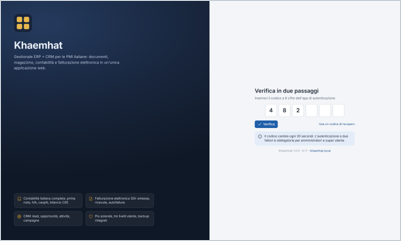
|
||||
|
||||
@@ -102,8 +114,10 @@ ogni 30 secondi (anteprima ridotta).*
|
||||
Agli accessi successivi, dopo la password, compare la schermata **Verifica in due passaggi**: scrivi le 6 cifre
|
||||
mostrate dall'app e premi **Verifica**. Il codice cambia ogni 30 secondi.
|
||||
|
||||
Al posto delle 6 cifre puoi scrivere uno dei codici di recupero.
|
||||
|
||||
> **Attenzione.** Se perdi il telefono con l'app e sei il super utente, nessun altro può reimpostare il tuo accesso
|
||||
> dall'interfaccia. Tieni una copia sicura della chiave TOTP o delle informazioni di recupero.
|
||||
> dall'interfaccia. Tieni al sicuro i codici di recupero.
|
||||
|
||||
## Passo 5 — Creare un amministratore
|
||||
|
||||
|
||||
@@ -1,8 +1,14 @@
|
||||
# Utenti e permessi
|
||||
|
||||
> **Stato:** bozza · **Ultima revisione:** 2026-11-10 · **Versione software:** non ancora rilasciata (milestone M2)
|
||||
> **Stato:** parziale · **Ultima revisione:** 2026-11-11 · **Versione software:** 0.2.0 (milestone M2)
|
||||
> **Modulo di licenza:** CORE · **Livello richiesto:** amministratore (amministratori: solo super utente) · **Permessi principali:** `company.users.manage` · **Specifica:** SPEC §7, §12.3, §12.4
|
||||
|
||||
> **Nella versione 0.2.0** ci sono il motore e l'accesso: i tre livelli, gli account di istanza e gli utenti di
|
||||
> azienda, password con storico e blocco, verifica in due passaggi con codici di recupero, sessioni revocabili, ruoli
|
||||
> predefiniti e permessi `modulo.area.azione` con override, controlli sulle pagine (`[RequirePermission]`,
|
||||
> `[RequireLevel]`, `[RequireModule]`). Le schermate **Utenti** e **Ruoli e permessi** descritte qui arrivano in M12:
|
||||
> fino ad allora gli utenti si gestiscono solo con il super utente creato dal container.
|
||||
|
||||
## A cosa serve
|
||||
|
||||
Queste due pagine stabiliscono **chi entra** in Khaemhat e **cosa può fare**:
|
||||
|
||||
@@ -0,0 +1,124 @@
|
||||
using System.Diagnostics;
|
||||
using System.Globalization;
|
||||
using System.Reflection;
|
||||
using System.Text.Json;
|
||||
using Khaemhat.Core.Entities;
|
||||
using Khaemhat.Core.Instance;
|
||||
using Khaemhat.Data;
|
||||
using Khaemhat.Data.Querying;
|
||||
|
||||
namespace Khaemhat.Application.Audit;
|
||||
|
||||
/// <summary>What happened to a record.</summary>
|
||||
public enum AuditAction
|
||||
{
|
||||
/// <summary>Created.</summary>
|
||||
Insert = 0,
|
||||
|
||||
/// <summary>Changed.</summary>
|
||||
Update = 1,
|
||||
|
||||
/// <summary>Deleted.</summary>
|
||||
Delete = 2,
|
||||
}
|
||||
|
||||
/// <summary>
|
||||
/// The history of the records of a company (SPEC §7.4): every insert, update and delete of master data, documents,
|
||||
/// entries and settings writes a row in the company's <c>audit_log</c>, in the same unit of work as the change, with the
|
||||
/// changed fields as JSON <c>{"Field": [old, new]}</c>. Audit columns and secrets are never written.
|
||||
/// </summary>
|
||||
public sealed class AuditTrail(TimeProvider clock)
|
||||
{
|
||||
private static readonly HashSet<string> Skipped = new(StringComparer.Ordinal)
|
||||
{
|
||||
nameof(IAuditable.CreatedAt), nameof(IAuditable.CreatedBy), nameof(IAuditable.UpdatedAt), nameof(IAuditable.UpdatedBy), "RowVersion",
|
||||
"PasswordHash", "PasswordHistory", "TotpSecret", "TotpRecoveryCodes", "RecoveryTokenHash", "TokenHash", "ConnectionString",
|
||||
};
|
||||
|
||||
/// <summary>Writes the history row of a change, inside the caller's unit of work.</summary>
|
||||
/// <typeparam name="T">The entity type.</typeparam>
|
||||
/// <param name="unitOfWork">The company unit of work holding the change.</param>
|
||||
/// <param name="action">What happened.</param>
|
||||
/// <param name="entityId">The record.</param>
|
||||
/// <param name="before">The record before (updates and deletes).</param>
|
||||
/// <param name="after">The record after (inserts and updates).</param>
|
||||
/// <param name="userName">Who did it.</param>
|
||||
/// <param name="cancellationToken">Cancellation.</param>
|
||||
/// <returns><see langword="true"/> when a row was written (an update that changes nothing writes none).</returns>
|
||||
public async Task<bool> RecordAsync<T>(
|
||||
IUnitOfWork unitOfWork, AuditAction action, object entityId, T? before, T? after, string? userName, CancellationToken cancellationToken = default)
|
||||
where T : class
|
||||
{
|
||||
ArgumentNullException.ThrowIfNull(unitOfWork);
|
||||
ArgumentNullException.ThrowIfNull(entityId);
|
||||
var diff = Diff(before, after);
|
||||
if (action == AuditAction.Update && diff.Count == 0)
|
||||
{
|
||||
return false;
|
||||
}
|
||||
|
||||
await unitOfWork.Repository<AuditEntry, long>().InsertAsync(
|
||||
new AuditEntry
|
||||
{
|
||||
At = clock.GetUtcNow().UtcDateTime,
|
||||
Entity = typeof(T).Name,
|
||||
EntityId = Convert.ToString(entityId, CultureInfo.InvariantCulture) ?? string.Empty,
|
||||
Action = action.ToString(),
|
||||
UserName = userName,
|
||||
Diff = JsonSerializer.Serialize(diff),
|
||||
TraceId = Activity.Current?.TraceId.ToString(),
|
||||
},
|
||||
cancellationToken).ConfigureAwait(false);
|
||||
return true;
|
||||
}
|
||||
|
||||
/// <summary>The history of a record, newest first (the "Storico" panel).</summary>
|
||||
/// <param name="unitOfWork">A company unit of work.</param>
|
||||
/// <param name="entity">The entity name.</param>
|
||||
/// <param name="entityId">The record.</param>
|
||||
/// <param name="cancellationToken">Cancellation.</param>
|
||||
/// <returns>The rows.</returns>
|
||||
public static async Task<IReadOnlyList<AuditEntry>> HistoryAsync(IUnitOfWork unitOfWork, string entity, string entityId, CancellationToken cancellationToken = default)
|
||||
{
|
||||
ArgumentNullException.ThrowIfNull(unitOfWork);
|
||||
return (await unitOfWork.Repository<AuditEntry, long>().ListAsync(
|
||||
Query.For<AuditEntry>().Where(a => a.Entity == entity && a.EntityId == entityId).OrderByDescending(a => a.Id), cancellationToken).ConfigureAwait(false)).Items;
|
||||
}
|
||||
|
||||
/// <summary>The changed fields between two versions of a record.</summary>
|
||||
/// <typeparam name="T">The entity type.</typeparam>
|
||||
/// <param name="before">The old version, or <see langword="null"/>.</param>
|
||||
/// <param name="after">The new version, or <see langword="null"/>.</param>
|
||||
/// <returns>Field name to <c>[old, new]</c>.</returns>
|
||||
public static IReadOnlyDictionary<string, object?[]> Diff<T>(T? before, T? after)
|
||||
where T : class
|
||||
{
|
||||
var result = new SortedDictionary<string, object?[]>(StringComparer.Ordinal);
|
||||
foreach (var property in typeof(T).GetProperties(BindingFlags.Public | BindingFlags.Instance))
|
||||
{
|
||||
if (!property.CanRead || property.GetIndexParameters().Length > 0 || Skipped.Contains(property.Name))
|
||||
{
|
||||
continue;
|
||||
}
|
||||
|
||||
var old = before is null ? null : Simple(property.GetValue(before));
|
||||
var current = after is null ? null : Simple(property.GetValue(after));
|
||||
if (!Equals(old, current))
|
||||
{
|
||||
result[property.Name] = [old, current];
|
||||
}
|
||||
}
|
||||
|
||||
return result;
|
||||
}
|
||||
|
||||
private static object? Simple(object? value) => value switch
|
||||
{
|
||||
null => null,
|
||||
string or bool or int or long or decimal or double => value,
|
||||
DateTime date => date.ToString("O", CultureInfo.InvariantCulture),
|
||||
Enum e => e.ToString(),
|
||||
IFormattable formattable => formattable.ToString(null, CultureInfo.InvariantCulture),
|
||||
_ => value.ToString(),
|
||||
};
|
||||
}
|
||||
@@ -0,0 +1,122 @@
|
||||
using System.Globalization;
|
||||
using System.Security.Cryptography;
|
||||
using System.Text;
|
||||
using System.Text.Json;
|
||||
using Khaemhat.Core.Instance;
|
||||
using Khaemhat.Data;
|
||||
using Khaemhat.Data.Querying;
|
||||
|
||||
namespace Khaemhat.Application.Audit;
|
||||
|
||||
/// <summary>A security or instance action to record.</summary>
|
||||
/// <param name="Action">The action code, for example <c>login.succeeded</c>, <c>user.created</c>, <c>license.activated</c>.</param>
|
||||
/// <param name="UserName">Who acted.</param>
|
||||
/// <param name="CompanyCode">The company concerned.</param>
|
||||
/// <param name="Target">What the action was about.</param>
|
||||
/// <param name="Details">Further details, serialized as JSON (never secrets).</param>
|
||||
/// <param name="IpAddress">The client address.</param>
|
||||
public sealed record SecurityEvent(
|
||||
string Action, string? UserName, string? CompanyCode = null, string? Target = null, object? Details = null, string? IpAddress = null);
|
||||
|
||||
/// <summary>Writes <c>sys_security_audit</c>.</summary>
|
||||
public interface ISecurityAuditLog
|
||||
{
|
||||
/// <summary>Records an action.</summary>
|
||||
/// <param name="securityEvent">The action.</param>
|
||||
/// <param name="cancellationToken">Cancellation.</param>
|
||||
/// <returns>A task.</returns>
|
||||
Task WriteAsync(SecurityEvent securityEvent, CancellationToken cancellationToken = default);
|
||||
}
|
||||
|
||||
/// <summary>
|
||||
/// The immutable security audit (SPEC §7.3): rows are only inserted, each with the SHA-256 of its content chained to
|
||||
/// the previous row, under an application lock so that two writers never fork the chain. <see cref="VerifyAsync"/>
|
||||
/// finds a changed or removed row.
|
||||
/// </summary>
|
||||
/// <param name="factory">Opens the system database.</param>
|
||||
/// <param name="clock">The clock.</param>
|
||||
public sealed class SecurityAuditLog(IUnitOfWorkFactory factory, TimeProvider clock) : ISecurityAuditLog
|
||||
{
|
||||
private const string LockKey = "security-audit";
|
||||
|
||||
/// <inheritdoc />
|
||||
public async Task WriteAsync(SecurityEvent securityEvent, CancellationToken cancellationToken = default)
|
||||
{
|
||||
ArgumentNullException.ThrowIfNull(securityEvent);
|
||||
var entry = new SecurityAuditEntry
|
||||
{
|
||||
At = Truncate(clock.GetUtcNow().UtcDateTime),
|
||||
Action = Clip(securityEvent.Action, 100)!,
|
||||
UserName = Clip(securityEvent.UserName, 100),
|
||||
CompanyCode = Clip(securityEvent.CompanyCode, 20),
|
||||
Target = Clip(securityEvent.Target, 200),
|
||||
IpAddress = Clip(securityEvent.IpAddress, 64),
|
||||
Details = securityEvent.Details is null ? null : JsonSerializer.Serialize(securityEvent.Details),
|
||||
};
|
||||
|
||||
await using var unitOfWork = await factory.CreateAsync(DatabaseScope.System, cancellationToken).ConfigureAwait(false);
|
||||
await unitOfWork.InTransactionAsync(
|
||||
async ct =>
|
||||
{
|
||||
await unitOfWork.AcquireLockAsync(LockKey, ct).ConfigureAwait(false);
|
||||
var repository = unitOfWork.Repository<SecurityAuditEntry, long>();
|
||||
var last = await repository.FindAsync(Query.For<SecurityAuditEntry>().OrderByDescending(e => e.Id).Take(1), ct).ConfigureAwait(false);
|
||||
entry.PreviousHash = last?.Hash ?? string.Empty;
|
||||
entry.Hash = ComputeHash(entry);
|
||||
await repository.InsertAsync(entry, ct).ConfigureAwait(false);
|
||||
},
|
||||
cancellationToken).ConfigureAwait(false);
|
||||
}
|
||||
|
||||
/// <summary>Checks the whole chain.</summary>
|
||||
/// <param name="cancellationToken">Cancellation.</param>
|
||||
/// <returns>The identifier of the first row that does not match, or <see langword="null"/> when the chain is intact.</returns>
|
||||
public async Task<long?> VerifyAsync(CancellationToken cancellationToken = default)
|
||||
{
|
||||
await using var unitOfWork = await factory.CreateAsync(DatabaseScope.System, cancellationToken).ConfigureAwait(false);
|
||||
var previous = string.Empty;
|
||||
const int PageSize = 1000;
|
||||
for (var offset = 0; ; offset += PageSize)
|
||||
{
|
||||
var page = await unitOfWork.Repository<SecurityAuditEntry, long>()
|
||||
.ListAsync(Query.For<SecurityAuditEntry>().OrderBy(e => e.Id).Page(offset, PageSize), cancellationToken).ConfigureAwait(false);
|
||||
foreach (var entry in page.Items)
|
||||
{
|
||||
if (entry.PreviousHash != previous || entry.Hash != ComputeHash(entry))
|
||||
{
|
||||
return entry.Id;
|
||||
}
|
||||
|
||||
previous = entry.Hash;
|
||||
}
|
||||
|
||||
if (page.Items.Count < PageSize)
|
||||
{
|
||||
return null;
|
||||
}
|
||||
}
|
||||
}
|
||||
|
||||
/// <summary>The hash of a row: every field and the previous hash, separated so that fields cannot run into each other.</summary>
|
||||
/// <param name="entry">The row.</param>
|
||||
/// <returns>64 hexadecimal digits.</returns>
|
||||
public static string ComputeHash(SecurityAuditEntry entry)
|
||||
{
|
||||
ArgumentNullException.ThrowIfNull(entry);
|
||||
var content = string.Join(
|
||||
'\u001F',
|
||||
entry.PreviousHash,
|
||||
DateTime.SpecifyKind(entry.At, DateTimeKind.Utc).ToString("yyyy-MM-ddTHH:mm:ss.ffffffZ", CultureInfo.InvariantCulture),
|
||||
entry.Action,
|
||||
entry.UserName ?? string.Empty,
|
||||
entry.CompanyCode ?? string.Empty,
|
||||
entry.IpAddress ?? string.Empty,
|
||||
entry.Target ?? string.Empty,
|
||||
entry.Details ?? string.Empty);
|
||||
return Convert.ToHexStringLower(SHA256.HashData(Encoding.UTF8.GetBytes(content)));
|
||||
}
|
||||
|
||||
private static DateTime Truncate(DateTime value) => DateTime.SpecifyKind(new DateTime(value.Ticks - (value.Ticks % 10)), DateTimeKind.Utc);
|
||||
|
||||
private static string? Clip(string? value, int length) => value is null || value.Length <= length ? value : value[..length];
|
||||
}
|
||||
@@ -0,0 +1,115 @@
|
||||
namespace Khaemhat.Application.Configuration;
|
||||
|
||||
/// <summary>
|
||||
/// Reads the <c>KHAEMHAT_*</c> variables of SPEC §6 into <see cref="KhaemhatOptions"/>, applying the <c>_FILE</c>
|
||||
/// rule of ADR 0014 to the sensitive ones: when <c>X_FILE</c> is set, the value of <c>X</c> is the content of that file
|
||||
/// without the final line break; setting both is a configuration error, and so is a file that cannot be read.
|
||||
/// Problems are collected in <see cref="KhaemhatOptions.ReadErrors"/>; values never appear in messages.
|
||||
/// </summary>
|
||||
public sealed class EnvironmentConfigurationReader
|
||||
{
|
||||
/// <summary>The variables that accept a <c>_FILE</c> variant (ADR 0014).</summary>
|
||||
public static readonly IReadOnlySet<string> FileVariables = new HashSet<string>(StringComparer.Ordinal)
|
||||
{
|
||||
"KHAEMHAT_SYSTEM_DB", "KHAEMHAT_DB_SERVER", "KHAEMHAT_SECRET_KEY", "KHAEMHAT_SECRET_KEY_NEW",
|
||||
"KHAEMHAT_SUPERUSER", "KHAEMHAT_SUPERUSER_PASSWORD", "KHAEMHAT_SUPERUSER_EMAIL", "KHAEMHAT_LICENSE",
|
||||
"KHAEMHAT_REDIS", "KHAEMHAT_SMTP_PASSWORD", "KHAEMHAT_UPDATE_TOKEN",
|
||||
};
|
||||
|
||||
private readonly Func<string, string?> _lookup;
|
||||
private readonly Func<string, string> _readFile;
|
||||
|
||||
/// <summary>Creates a reader.</summary>
|
||||
/// <param name="lookup">Returns a variable, or <see langword="null"/> when unset (the host configuration: environment and command line).</param>
|
||||
/// <param name="readFile">Reads a secret file; the default reads from disk.</param>
|
||||
public EnvironmentConfigurationReader(Func<string, string?> lookup, Func<string, string>? readFile = null)
|
||||
{
|
||||
ArgumentNullException.ThrowIfNull(lookup);
|
||||
_lookup = lookup;
|
||||
_readFile = readFile ?? File.ReadAllText;
|
||||
}
|
||||
|
||||
/// <summary>Reads every variable.</summary>
|
||||
/// <returns>The options, with the reading problems in <see cref="KhaemhatOptions.ReadErrors"/>.</returns>
|
||||
public KhaemhatOptions Read()
|
||||
{
|
||||
var errors = new List<string>();
|
||||
string? Get(string name) => Value(name, errors);
|
||||
|
||||
return new KhaemhatOptions
|
||||
{
|
||||
SystemDb = Get("KHAEMHAT_SYSTEM_DB"),
|
||||
DbServer = Get("KHAEMHAT_DB_SERVER"),
|
||||
SecretKey = Get("KHAEMHAT_SECRET_KEY"),
|
||||
RotationSecretKey = Get("KHAEMHAT_SECRET_KEY_NEW"),
|
||||
SuperUser = Get("KHAEMHAT_SUPERUSER"),
|
||||
SuperUserPassword = Get("KHAEMHAT_SUPERUSER_PASSWORD"),
|
||||
SuperUserEmail = Get("KHAEMHAT_SUPERUSER_EMAIL"),
|
||||
CompanyCode = Get("KHAEMHAT_COMPANY_CODE"),
|
||||
CompanyName = Get("KHAEMHAT_COMPANY_NAME"),
|
||||
Country = Get("KHAEMHAT_COUNTRY") ?? "IT",
|
||||
LicenseMode = Get("KHAEMHAT_LICENSE_MODE") ?? "production",
|
||||
License = Get("KHAEMHAT_LICENSE"),
|
||||
Redis = Get("KHAEMHAT_REDIS"),
|
||||
DataDir = Get("KHAEMHAT_DATA_DIR") ?? "/data",
|
||||
Urls = Get("KHAEMHAT_URLS"),
|
||||
PublicUrl = Get("KHAEMHAT_PUBLIC_URL"),
|
||||
SmtpHost = Get("KHAEMHAT_SMTP_HOST"),
|
||||
SmtpPort = Get("KHAEMHAT_SMTP_PORT"),
|
||||
SmtpUser = Get("KHAEMHAT_SMTP_USER"),
|
||||
SmtpPassword = Get("KHAEMHAT_SMTP_PASSWORD"),
|
||||
SmtpFrom = Get("KHAEMHAT_SMTP_FROM"),
|
||||
SmtpSecurity = Get("KHAEMHAT_SMTP_SECURITY"),
|
||||
LogLevel = Get("KHAEMHAT_LOG_LEVEL"),
|
||||
SeedBase = Get("KHAEMHAT_SEED_BASE"),
|
||||
SeedDemo = Get("KHAEMHAT_SEED_DEMO"),
|
||||
UpdateFeed = Get("KHAEMHAT_UPDATE_FEED"),
|
||||
UpdateToken = Get("KHAEMHAT_UPDATE_TOKEN"),
|
||||
TimeZone = Get("TZ"),
|
||||
ReadErrors = errors,
|
||||
};
|
||||
}
|
||||
|
||||
private string? Value(string name, List<string> errors)
|
||||
{
|
||||
var direct = Normalize(_lookup(name));
|
||||
if (!FileVariables.Contains(name))
|
||||
{
|
||||
return direct;
|
||||
}
|
||||
|
||||
var path = Normalize(_lookup(name + "_FILE"));
|
||||
if (path is null)
|
||||
{
|
||||
return direct;
|
||||
}
|
||||
|
||||
if (direct is not null)
|
||||
{
|
||||
errors.Add($"{name} and {name}_FILE are both set: keep only one of them.");
|
||||
return null;
|
||||
}
|
||||
|
||||
try
|
||||
{
|
||||
return Normalize(TrimFinalLineBreak(_readFile(path)));
|
||||
}
|
||||
catch (Exception ex) when (ex is IOException or UnauthorizedAccessException or ArgumentException or NotSupportedException)
|
||||
{
|
||||
errors.Add($"{name}_FILE points to a file that cannot be read ({ex.GetType().Name}): check the path and the permissions of the secret.");
|
||||
return null;
|
||||
}
|
||||
}
|
||||
|
||||
private static string? Normalize(string? value) => string.IsNullOrWhiteSpace(value) ? null : value;
|
||||
|
||||
private static string TrimFinalLineBreak(string value)
|
||||
{
|
||||
if (value.EndsWith("\r\n", StringComparison.Ordinal))
|
||||
{
|
||||
return value[..^2];
|
||||
}
|
||||
|
||||
return value.EndsWith('\n') ? value[..^1] : value;
|
||||
}
|
||||
}
|
||||
@@ -0,0 +1,356 @@
|
||||
using System.Globalization;
|
||||
using System.Net.Mail;
|
||||
using Khaemhat.Application.Security;
|
||||
using Khaemhat.Data;
|
||||
using Microsoft.Extensions.Logging;
|
||||
|
||||
namespace Khaemhat.Application.Configuration;
|
||||
|
||||
/// <summary>How the licences behave (<c>KHAEMHAT_LICENSE_MODE</c>).</summary>
|
||||
public enum LicenseMode
|
||||
{
|
||||
/// <summary>Only signed licences count.</summary>
|
||||
Production = 0,
|
||||
|
||||
/// <summary>The fictitious codes of SPEC §8.3 are accepted too. Never in production.</summary>
|
||||
Test = 1,
|
||||
}
|
||||
|
||||
/// <summary>The connection security of the mail server.</summary>
|
||||
public enum SmtpSecurity
|
||||
{
|
||||
/// <summary>STARTTLS on a plain connection (port 587).</summary>
|
||||
StartTls = 0,
|
||||
|
||||
/// <summary>TLS from the start (port 465).</summary>
|
||||
Ssl = 1,
|
||||
|
||||
/// <summary>No encryption: only for a local relay.</summary>
|
||||
None = 2,
|
||||
}
|
||||
|
||||
/// <summary>A configuration that does not let the instance start. The message lists every problem, never a value.</summary>
|
||||
public sealed class ConfigurationException : Exception
|
||||
{
|
||||
/// <summary>Creates the exception.</summary>
|
||||
public ConfigurationException()
|
||||
: this([])
|
||||
{
|
||||
}
|
||||
|
||||
/// <summary>Creates the exception.</summary>
|
||||
/// <param name="message">The message.</param>
|
||||
public ConfigurationException(string message)
|
||||
: base(message) => Errors = [message];
|
||||
|
||||
/// <summary>Creates the exception.</summary>
|
||||
/// <param name="message">The message.</param>
|
||||
/// <param name="innerException">The cause.</param>
|
||||
public ConfigurationException(string message, Exception innerException)
|
||||
: base(message, innerException) => Errors = [message];
|
||||
|
||||
/// <summary>Creates the exception from a list of problems.</summary>
|
||||
/// <param name="errors">The problems.</param>
|
||||
public ConfigurationException(IReadOnlyList<string> errors)
|
||||
: base(Describe(errors)) => Errors = errors;
|
||||
|
||||
/// <summary>The problems, one per line of the message.</summary>
|
||||
public IReadOnlyList<string> Errors { get; }
|
||||
|
||||
private static string Describe(IReadOnlyList<string> errors) =>
|
||||
"Khaemhat cannot start: the configuration is not valid (see docs/DEPLOY.md and the wiki page Installazione-Docker)."
|
||||
+ string.Concat((errors ?? []).Select(e => Environment.NewLine + " - " + e));
|
||||
}
|
||||
|
||||
/// <summary>
|
||||
/// The instance configuration of SPEC §6, read from the environment by <see cref="EnvironmentConfigurationReader"/>.
|
||||
/// Values stay in memory: nothing is written to disk. <see cref="Validate"/> checks everything before the host starts;
|
||||
/// the typed accessors (<see cref="SystemDatabase"/>, <see cref="Mode"/>...) are meant for a validated instance.
|
||||
/// </summary>
|
||||
public sealed class KhaemhatOptions
|
||||
{
|
||||
/// <summary><c>KHAEMHAT_SYSTEM_DB</c>: the system database URL (required).</summary>
|
||||
public string? SystemDb { get; init; }
|
||||
|
||||
/// <summary><c>KHAEMHAT_DB_SERVER</c>: the PostgreSQL server where company databases are created.</summary>
|
||||
public string? DbServer { get; init; }
|
||||
|
||||
/// <summary><c>KHAEMHAT_SECRET_KEY</c>: base64 of at least 32 bytes (required).</summary>
|
||||
public string? SecretKey { get; init; }
|
||||
|
||||
/// <summary><c>KHAEMHAT_SECRET_KEY_NEW</c>: the new key during a rotation (SPEC §12.9).</summary>
|
||||
public string? RotationSecretKey { get; init; }
|
||||
|
||||
/// <summary><c>KHAEMHAT_SUPERUSER</c>: the super user name, read only while <c>sys_users</c> is empty.</summary>
|
||||
public string? SuperUser { get; init; }
|
||||
|
||||
/// <summary><c>KHAEMHAT_SUPERUSER_PASSWORD</c>: its first password, to change at the first access.</summary>
|
||||
public string? SuperUserPassword { get; init; }
|
||||
|
||||
/// <summary><c>KHAEMHAT_SUPERUSER_EMAIL</c>: its e-mail address.</summary>
|
||||
public string? SuperUserEmail { get; init; }
|
||||
|
||||
/// <summary><c>KHAEMHAT_COMPANY_CODE</c>: the first company, read only while <c>sys_companies</c> is empty.</summary>
|
||||
public string? CompanyCode { get; init; }
|
||||
|
||||
/// <summary><c>KHAEMHAT_COMPANY_NAME</c>: its name.</summary>
|
||||
public string? CompanyName { get; init; }
|
||||
|
||||
/// <summary><c>KHAEMHAT_COUNTRY</c>: the fiscal package of the first company (default <c>IT</c>).</summary>
|
||||
public string Country { get; init; } = "IT";
|
||||
|
||||
/// <summary><c>KHAEMHAT_LICENSE_MODE</c>: <c>production</c> (default) or <c>test</c>.</summary>
|
||||
public string LicenseMode { get; init; } = "production";
|
||||
|
||||
/// <summary><c>KHAEMHAT_LICENSE</c>: the text of a <c>.khl</c> licence; absent means Trial.</summary>
|
||||
public string? License { get; init; }
|
||||
|
||||
/// <summary><c>KHAEMHAT_REDIS</c>: <c>redis://</c> or <c>rediss://</c>; absent means in-memory cache.</summary>
|
||||
public string? Redis { get; init; }
|
||||
|
||||
/// <summary><c>KHAEMHAT_DATA_DIR</c>: the only folder the instance writes to (default <c>/data</c>).</summary>
|
||||
public string DataDir { get; init; } = "/data";
|
||||
|
||||
/// <summary><c>KHAEMHAT_URLS</c>: the listening addresses.</summary>
|
||||
public string? Urls { get; init; }
|
||||
|
||||
/// <summary><c>KHAEMHAT_PUBLIC_URL</c>: the address users reach, for links in e-mails.</summary>
|
||||
public string? PublicUrl { get; init; }
|
||||
|
||||
/// <summary><c>KHAEMHAT_SMTP_HOST</c>.</summary>
|
||||
public string? SmtpHost { get; init; }
|
||||
|
||||
/// <summary><c>KHAEMHAT_SMTP_PORT</c>.</summary>
|
||||
public string? SmtpPort { get; init; }
|
||||
|
||||
/// <summary><c>KHAEMHAT_SMTP_USER</c>.</summary>
|
||||
public string? SmtpUser { get; init; }
|
||||
|
||||
/// <summary><c>KHAEMHAT_SMTP_PASSWORD</c>.</summary>
|
||||
public string? SmtpPassword { get; init; }
|
||||
|
||||
/// <summary><c>KHAEMHAT_SMTP_FROM</c>.</summary>
|
||||
public string? SmtpFrom { get; init; }
|
||||
|
||||
/// <summary><c>KHAEMHAT_SMTP_SECURITY</c>: <c>starttls</c> (default), <c>ssl</c> or <c>none</c>.</summary>
|
||||
public string? SmtpSecurity { get; init; }
|
||||
|
||||
/// <summary><c>KHAEMHAT_LOG_LEVEL</c>: the minimum level on stdout.</summary>
|
||||
public string? LogLevel { get; init; }
|
||||
|
||||
/// <summary><c>KHAEMHAT_SEED_BASE</c>: load the base tables when a company is created (default true).</summary>
|
||||
public string? SeedBase { get; init; }
|
||||
|
||||
/// <summary><c>KHAEMHAT_SEED_DEMO</c>: load the demo data into an empty company (default false).</summary>
|
||||
public string? SeedDemo { get; init; }
|
||||
|
||||
/// <summary><c>KHAEMHAT_UPDATE_FEED</c>: the package list read by the update check.</summary>
|
||||
public string? UpdateFeed { get; init; }
|
||||
|
||||
/// <summary><c>KHAEMHAT_UPDATE_TOKEN</c>: a read-only token for the feed.</summary>
|
||||
public string? UpdateToken { get; init; }
|
||||
|
||||
/// <summary><c>TZ</c>: the time zone of the container.</summary>
|
||||
public string? TimeZone { get; init; }
|
||||
|
||||
/// <summary>The problems met while reading (both <c>X</c> and <c>X_FILE</c>, unreadable files).</summary>
|
||||
public IReadOnlyList<string> ReadErrors { get; init; } = [];
|
||||
|
||||
/// <summary>The system database, parsed.</summary>
|
||||
public DatabaseUrl SystemDatabase => DatabaseUrl.Parse(SystemDb ?? throw new ConfigurationException("KHAEMHAT_SYSTEM_DB is not set."));
|
||||
|
||||
/// <summary>
|
||||
/// Where company databases are created: <see cref="DbServer"/> when set, otherwise the server (PostgreSQL) or the
|
||||
/// folder (SQLite) of the system database.
|
||||
/// </summary>
|
||||
public DatabaseUrl CompanyServer => DbServer is { } server ? DatabaseUrl.Parse(server) : SystemDatabase;
|
||||
|
||||
/// <summary>The licence mode, parsed.</summary>
|
||||
public LicenseMode Mode => string.Equals(LicenseMode, "test", StringComparison.OrdinalIgnoreCase)
|
||||
? Configuration.LicenseMode.Test
|
||||
: Configuration.LicenseMode.Production;
|
||||
|
||||
/// <summary>Whether base data is loaded into new companies.</summary>
|
||||
public bool SeedBaseEnabled => ParseBool(SeedBase) ?? true;
|
||||
|
||||
/// <summary>Whether demo data is loaded into new, empty companies.</summary>
|
||||
public bool SeedDemoEnabled => ParseBool(SeedDemo) ?? false;
|
||||
|
||||
/// <summary>The SMTP port, defaulting by security mode.</summary>
|
||||
public int SmtpPortNumber => int.TryParse(SmtpPort, NumberStyles.None, CultureInfo.InvariantCulture, out var port)
|
||||
? port
|
||||
: SmtpSecurityMode == Configuration.SmtpSecurity.Ssl ? 465 : 587;
|
||||
|
||||
/// <summary>The SMTP security, parsed.</summary>
|
||||
public SmtpSecurity SmtpSecurityMode => SmtpSecurity?.ToUpperInvariant() switch
|
||||
{
|
||||
"SSL" or "TLS" => Configuration.SmtpSecurity.Ssl,
|
||||
"NONE" => Configuration.SmtpSecurity.None,
|
||||
_ => Configuration.SmtpSecurity.StartTls,
|
||||
};
|
||||
|
||||
/// <summary>
|
||||
/// Checks the whole configuration. Messages name the variable and the expected form, never its value.
|
||||
/// The variables needed only at first start (super user, first company) are checked by the bootstrap, which knows
|
||||
/// whether the tables are still empty; here only their form is checked when they are set.
|
||||
/// </summary>
|
||||
/// <returns>The problems; empty when the instance can start.</returns>
|
||||
public IReadOnlyList<string> Validate()
|
||||
{
|
||||
var errors = new List<string>(ReadErrors);
|
||||
|
||||
if (SystemDb is null)
|
||||
{
|
||||
if (!ReadErrors.Any(e => e.StartsWith("KHAEMHAT_SYSTEM_DB", StringComparison.Ordinal)))
|
||||
{
|
||||
errors.Add("KHAEMHAT_SYSTEM_DB is required: postgres://user:password@host:5432/khaemhat_system or sqlite:///data/system.db.");
|
||||
}
|
||||
}
|
||||
else if (!DatabaseUrl.TryParse(SystemDb, out _))
|
||||
{
|
||||
errors.Add("KHAEMHAT_SYSTEM_DB is not a valid database URL: use postgres://user:password@host:5432/khaemhat_system or sqlite:///data/system.db.");
|
||||
}
|
||||
|
||||
if (DbServer is not null && (!DatabaseUrl.TryParse(DbServer, out var server) || server.Engine != DbEngine.PostgreSql))
|
||||
{
|
||||
errors.Add("KHAEMHAT_DB_SERVER must be a PostgreSQL server URL: postgres://user:password@host:5432/ (a role with CREATEDB).");
|
||||
}
|
||||
|
||||
CheckKey("KHAEMHAT_SECRET_KEY", SecretKey, required: true, errors);
|
||||
CheckKey("KHAEMHAT_SECRET_KEY_NEW", RotationSecretKey, required: false, errors);
|
||||
|
||||
if (SuperUser is not null && !UserNames.IsValid(SuperUser))
|
||||
{
|
||||
errors.Add("KHAEMHAT_SUPERUSER must be 3 to 50 characters: letters, digits, dot, dash or underscore.");
|
||||
}
|
||||
|
||||
if (SuperUserEmail is not null && !IsEmail(SuperUserEmail))
|
||||
{
|
||||
errors.Add("KHAEMHAT_SUPERUSER_EMAIL is not a valid e-mail address.");
|
||||
}
|
||||
|
||||
if (CompanyCode is not null && !CompanyCodes.IsValid(CompanyCode.Trim().ToUpperInvariant()))
|
||||
{
|
||||
errors.Add("KHAEMHAT_COMPANY_CODE must be 1 to 20 characters: letters, digits or underscore, starting with a letter.");
|
||||
}
|
||||
|
||||
if (CompanyName is { Length: > 200 })
|
||||
{
|
||||
errors.Add("KHAEMHAT_COMPANY_NAME is longer than 200 characters.");
|
||||
}
|
||||
|
||||
if (!string.Equals(Country, "IT", StringComparison.OrdinalIgnoreCase))
|
||||
{
|
||||
errors.Add("KHAEMHAT_COUNTRY: the only fiscal package available is IT.");
|
||||
}
|
||||
|
||||
if (!string.Equals(LicenseMode, "production", StringComparison.OrdinalIgnoreCase)
|
||||
&& !string.Equals(LicenseMode, "test", StringComparison.OrdinalIgnoreCase))
|
||||
{
|
||||
errors.Add("KHAEMHAT_LICENSE_MODE must be production or test.");
|
||||
}
|
||||
|
||||
if (Redis is not null && !(Uri.TryCreate(Redis, UriKind.Absolute, out var redis) && redis.Scheme is "redis" or "rediss"))
|
||||
{
|
||||
errors.Add("KHAEMHAT_REDIS must be redis://[:password@]host:6379/0 or rediss:// for TLS.");
|
||||
}
|
||||
|
||||
if (string.IsNullOrWhiteSpace(DataDir) || !Path.IsPathFullyQualified(DataDir))
|
||||
{
|
||||
errors.Add("KHAEMHAT_DATA_DIR must be an absolute path (default /data).");
|
||||
}
|
||||
|
||||
if (PublicUrl is not null && !IsHttpUrl(PublicUrl))
|
||||
{
|
||||
errors.Add("KHAEMHAT_PUBLIC_URL must be an absolute http or https address, for example https://gestionale.example.com.");
|
||||
}
|
||||
|
||||
if (SmtpPort is not null && !(int.TryParse(SmtpPort, NumberStyles.None, CultureInfo.InvariantCulture, out var port) && port is > 0 and < 65536))
|
||||
{
|
||||
errors.Add("KHAEMHAT_SMTP_PORT must be a port number between 1 and 65535.");
|
||||
}
|
||||
|
||||
if (SmtpSecurity is not null && SmtpSecurity.ToUpperInvariant() is not ("STARTTLS" or "SSL" or "TLS" or "NONE"))
|
||||
{
|
||||
errors.Add("KHAEMHAT_SMTP_SECURITY must be starttls, ssl or none.");
|
||||
}
|
||||
|
||||
if (SmtpFrom is not null && !IsEmail(SmtpFrom))
|
||||
{
|
||||
errors.Add("KHAEMHAT_SMTP_FROM is not a valid e-mail address.");
|
||||
}
|
||||
|
||||
if (LogLevel is not null && !(Enum.TryParse<LogLevel>(LogLevel, ignoreCase: true, out var level) && Enum.IsDefined(level)))
|
||||
{
|
||||
errors.Add("KHAEMHAT_LOG_LEVEL must be Trace, Debug, Information, Warning, Error, Critical or None.");
|
||||
}
|
||||
|
||||
if (SeedBase is not null && ParseBool(SeedBase) is null)
|
||||
{
|
||||
errors.Add("KHAEMHAT_SEED_BASE must be true or false.");
|
||||
}
|
||||
|
||||
if (SeedDemo is not null && ParseBool(SeedDemo) is null)
|
||||
{
|
||||
errors.Add("KHAEMHAT_SEED_DEMO must be true or false.");
|
||||
}
|
||||
|
||||
if (UpdateFeed is not null && !IsHttpUrl(UpdateFeed))
|
||||
{
|
||||
errors.Add("KHAEMHAT_UPDATE_FEED must be an absolute http or https address.");
|
||||
}
|
||||
|
||||
if (TimeZone is not null && !TimeZoneInfo.TryFindSystemTimeZoneById(TimeZone, out _))
|
||||
{
|
||||
errors.Add("TZ is not a known time zone, for example Europe/Rome.");
|
||||
}
|
||||
|
||||
return errors;
|
||||
}
|
||||
|
||||
/// <summary>Throws when <see cref="Validate"/> finds problems.</summary>
|
||||
/// <exception cref="ConfigurationException">The configuration is not valid.</exception>
|
||||
public void EnsureValid()
|
||||
{
|
||||
var errors = Validate();
|
||||
if (errors.Count > 0)
|
||||
{
|
||||
throw new ConfigurationException(errors);
|
||||
}
|
||||
}
|
||||
|
||||
private static void CheckKey(string name, string? value, bool required, List<string> errors)
|
||||
{
|
||||
if (value is null)
|
||||
{
|
||||
if (required)
|
||||
{
|
||||
errors.Add($"{name} is required: the base64 of at least 32 random bytes (for example: openssl rand -base64 32).");
|
||||
}
|
||||
|
||||
return;
|
||||
}
|
||||
|
||||
try
|
||||
{
|
||||
_ = Infrastructure.Security.SecretKey.FromBase64(value);
|
||||
}
|
||||
catch (FormatException ex)
|
||||
{
|
||||
errors.Add(ex.Message.Replace("KHAEMHAT_SECRET_KEY", name, StringComparison.Ordinal));
|
||||
}
|
||||
}
|
||||
|
||||
private static bool? ParseBool(string? value) => value?.Trim().ToUpperInvariant() switch
|
||||
{
|
||||
null => null,
|
||||
"TRUE" or "1" or "YES" or "SI" => true,
|
||||
"FALSE" or "0" or "NO" => false,
|
||||
_ => null,
|
||||
};
|
||||
|
||||
private static bool IsHttpUrl(string value) =>
|
||||
Uri.TryCreate(value, UriKind.Absolute, out var uri) && (uri.Scheme == Uri.UriSchemeHttp || uri.Scheme == Uri.UriSchemeHttps);
|
||||
|
||||
private static bool IsEmail(string value) => MailAddress.TryCreate(value, out var address) && address.Address == value.Trim();
|
||||
}
|
||||
@@ -0,0 +1,116 @@
|
||||
using Khaemhat.Application.Security;
|
||||
using Khaemhat.Core.Instance;
|
||||
using Khaemhat.Data;
|
||||
using Khaemhat.Data.Companies;
|
||||
|
||||
namespace Khaemhat.Application.Instance;
|
||||
|
||||
/// <summary>The outcome of choosing the company a request or a circuit works in.</summary>
|
||||
public enum CompanyAccess
|
||||
{
|
||||
/// <summary>The company can be used.</summary>
|
||||
Granted = 0,
|
||||
|
||||
/// <summary>No company chosen (an instance account on instance pages).</summary>
|
||||
None = 1,
|
||||
|
||||
/// <summary>The company does not exist.</summary>
|
||||
NotFound = 2,
|
||||
|
||||
/// <summary>A company account asked for another company.</summary>
|
||||
Forbidden = 3,
|
||||
|
||||
/// <summary>The company is in maintenance and the account is not an instance account.</summary>
|
||||
Maintenance = 4,
|
||||
|
||||
/// <summary>The company is disabled.</summary>
|
||||
Disabled = 5,
|
||||
}
|
||||
|
||||
/// <summary>The company of the current request or Blazor circuit (SPEC §5.4).</summary>
|
||||
/// <param name="Access">Whether the company can be used.</param>
|
||||
/// <param name="Company">The company, when it exists.</param>
|
||||
public sealed record CompanyContextResult(CompanyAccess Access, Company? Company)
|
||||
{
|
||||
/// <summary>No company.</summary>
|
||||
public static CompanyContextResult None { get; } = new(CompanyAccess.None, null);
|
||||
|
||||
/// <summary>The company code, when granted.</summary>
|
||||
public string? Code => Access == CompanyAccess.Granted ? Company!.Code : null;
|
||||
|
||||
/// <summary>Whether writes are refused (company in <see cref="CompanyStatus.ReadOnly"/>).</summary>
|
||||
public bool IsReadOnly => Company?.Status == CompanyStatus.ReadOnly;
|
||||
|
||||
/// <summary>Whether the company is temporarily unavailable (the API answers 503).</summary>
|
||||
public bool IsUnavailable => Access is CompanyAccess.Maintenance or CompanyAccess.Disabled;
|
||||
|
||||
/// <summary>The database scope of the company.</summary>
|
||||
/// <returns>The scope.</returns>
|
||||
/// <exception cref="InvalidOperationException">No company is granted.</exception>
|
||||
public DatabaseScope Scope() =>
|
||||
Access == CompanyAccess.Granted ? DatabaseScope.Company(Company!.Code) : throw new InvalidOperationException("No company is available in this context.");
|
||||
}
|
||||
|
||||
/// <summary>The company the current user works in. Scoped: one per request and one per Blazor circuit.</summary>
|
||||
public interface ICompanyContext
|
||||
{
|
||||
/// <summary>Resolves (once) and returns the company.</summary>
|
||||
/// <param name="cancellationToken">Cancellation.</param>
|
||||
/// <returns>The result.</returns>
|
||||
ValueTask<CompanyContextResult> GetAsync(CancellationToken cancellationToken = default);
|
||||
}
|
||||
|
||||
/// <summary>
|
||||
/// The rules that choose the company (SPEC §1.4, §5.4): company accounts work only in their own company; instance
|
||||
/// accounts choose it (session company, or the <c>X-Company</c> header of an API call). A company in maintenance is open
|
||||
/// only to instance accounts; a disabled company to nobody.
|
||||
/// </summary>
|
||||
/// <param name="companies">The company registry.</param>
|
||||
public sealed class CompanyContextResolver(ICompanyRegistry companies)
|
||||
{
|
||||
/// <summary>The header naming the company of an API call.</summary>
|
||||
public const string Header = "X-Company";
|
||||
|
||||
/// <summary>Chooses the company.</summary>
|
||||
/// <param name="actor">The signed-in user, or <see langword="null"/>.</param>
|
||||
/// <param name="requested">The company asked by the request (header), or <see langword="null"/>.</param>
|
||||
/// <param name="cancellationToken">Cancellation.</param>
|
||||
/// <returns>The result.</returns>
|
||||
public async Task<CompanyContextResult> ResolveAsync(Actor? actor, string? requested, CancellationToken cancellationToken = default)
|
||||
{
|
||||
if (actor is null)
|
||||
{
|
||||
return CompanyContextResult.None;
|
||||
}
|
||||
|
||||
requested = string.IsNullOrWhiteSpace(requested) ? null : requested.Trim().ToUpperInvariant();
|
||||
string? code;
|
||||
if (actor.IsInstanceAccount)
|
||||
{
|
||||
code = requested ?? actor.CompanyCode;
|
||||
}
|
||||
else
|
||||
{
|
||||
if (requested is not null && !string.Equals(requested, actor.CompanyCode, StringComparison.OrdinalIgnoreCase))
|
||||
{
|
||||
return new CompanyContextResult(CompanyAccess.Forbidden, null);
|
||||
}
|
||||
|
||||
code = actor.CompanyCode;
|
||||
}
|
||||
|
||||
if (code is null)
|
||||
{
|
||||
return CompanyContextResult.None;
|
||||
}
|
||||
|
||||
var company = await companies.FindAsync(code, cancellationToken).ConfigureAwait(false);
|
||||
return company switch
|
||||
{
|
||||
null => new CompanyContextResult(CompanyAccess.NotFound, null),
|
||||
{ Status: CompanyStatus.Disabled } => new CompanyContextResult(CompanyAccess.Disabled, company),
|
||||
{ Status: CompanyStatus.Maintenance } when !actor.IsInstanceAccount => new CompanyContextResult(CompanyAccess.Maintenance, company),
|
||||
_ => new CompanyContextResult(CompanyAccess.Granted, company),
|
||||
};
|
||||
}
|
||||
}
|
||||
@@ -0,0 +1,314 @@
|
||||
using Khaemhat.Application.Audit;
|
||||
using Khaemhat.Application.Licensing;
|
||||
using Khaemhat.Application.Security;
|
||||
using Khaemhat.Core.Instance;
|
||||
using Khaemhat.Core.Logging;
|
||||
using Khaemhat.Data;
|
||||
using Khaemhat.Data.Companies;
|
||||
using Khaemhat.Data.Migrations;
|
||||
using Microsoft.Extensions.Logging;
|
||||
|
||||
namespace Khaemhat.Application.Instance;
|
||||
|
||||
/// <summary>Where the databases of the instance are and which migrations they get.</summary>
|
||||
/// <param name="System">The system database (<c>KHAEMHAT_SYSTEM_DB</c>).</param>
|
||||
/// <param name="CompanyServer">Where new company databases are created (<c>KHAEMHAT_DB_SERVER</c>, or next to the system one).</param>
|
||||
/// <param name="SystemMigrations">The migrations of the system database.</param>
|
||||
/// <param name="CompanyMigrations">The migrations of every company database.</param>
|
||||
public sealed record InstanceDatabases(DatabaseUrl System, DatabaseUrl CompanyServer, MigrationCatalog SystemMigrations, MigrationCatalog CompanyMigrations);
|
||||
|
||||
/// <summary>A company to create.</summary>
|
||||
/// <param name="Code">The code (database <c>khaemhat_<code></c>).</param>
|
||||
/// <param name="Name">The company name.</param>
|
||||
/// <param name="IsDefault">Whether it becomes the default company.</param>
|
||||
/// <param name="Notes">Notes for administrators.</param>
|
||||
/// <param name="SeedDemo">Whether to load the demo data.</param>
|
||||
public sealed record NewCompany(string Code, string Name, bool IsDefault = false, string? Notes = null, bool SeedDemo = false);
|
||||
|
||||
/// <summary>
|
||||
/// Fills a new or migrated company database. Modules register their own: base data at creation (plan of accounts, VAT
|
||||
/// codes) and demo data when asked (SPEC §5.5). Seeders must be idempotent: they run again at every start.
|
||||
/// </summary>
|
||||
public interface ICompanySeeder
|
||||
{
|
||||
/// <summary>The order among seeders (lower first).</summary>
|
||||
int Order { get; }
|
||||
|
||||
/// <summary>Fills the database.</summary>
|
||||
/// <param name="companyCode">The company.</param>
|
||||
/// <param name="context">What to load.</param>
|
||||
/// <param name="cancellationToken">Cancellation.</param>
|
||||
/// <returns>A task.</returns>
|
||||
Task SeedAsync(string companyCode, CompanySeedContext context, CancellationToken cancellationToken = default);
|
||||
}
|
||||
|
||||
/// <summary>What a seeder is asked to load.</summary>
|
||||
/// <param name="IsNew">Whether the database was just created.</param>
|
||||
/// <param name="Base">Whether the base data is wanted (<c>KHAEMHAT_SEED_BASE</c>).</param>
|
||||
/// <param name="Demo">Whether the demo data is wanted.</param>
|
||||
public sealed record CompanySeedContext(bool IsNew, bool Base, bool Demo);
|
||||
|
||||
/// <summary>The predefined roles of SPEC §7.2, kept equal to their templates in every company.</summary>
|
||||
/// <param name="roles">The role service.</param>
|
||||
public sealed class PredefinedRolesSeeder(RoleService roles) : ICompanySeeder
|
||||
{
|
||||
/// <inheritdoc />
|
||||
public int Order => 0;
|
||||
|
||||
/// <inheritdoc />
|
||||
public Task SeedAsync(string companyCode, CompanySeedContext context, CancellationToken cancellationToken = default) =>
|
||||
roles.SyncPredefinedRolesAsync(companyCode, cancellationToken);
|
||||
}
|
||||
|
||||
/// <summary>
|
||||
/// Creates, attaches and migrates company databases (SPEC §5.4, §12.1; mockup 080). Creating a company is an
|
||||
/// instance administration task: super user or administrators. The number of companies is limited by the licence
|
||||
/// (module MULTI).
|
||||
/// </summary>
|
||||
public sealed class CompanyService
|
||||
{
|
||||
private readonly ICompanyRegistry _registry;
|
||||
private readonly DbProviderCatalog _providers;
|
||||
private readonly MigrationRunner _migrations;
|
||||
private readonly InstanceDatabases _databases;
|
||||
private readonly ILicenseGate _licenses;
|
||||
private readonly SessionStore _sessions;
|
||||
private readonly ISecurityAuditLog _audit;
|
||||
private readonly IReadOnlyList<ICompanySeeder> _seeders;
|
||||
private readonly ILogger<CompanyService> _logger;
|
||||
|
||||
/// <summary>Creates the service.</summary>
|
||||
/// <param name="registry">The company registry.</param>
|
||||
/// <param name="providers">The database providers.</param>
|
||||
/// <param name="migrations">Applies migrations.</param>
|
||||
/// <param name="databases">Where databases are.</param>
|
||||
/// <param name="licenses">The licence in force.</param>
|
||||
/// <param name="sessions">The sessions (revoked when a company goes into maintenance).</param>
|
||||
/// <param name="audit">The security audit.</param>
|
||||
/// <param name="seeders">The seeders of the modules.</param>
|
||||
/// <param name="logger">The log.</param>
|
||||
public CompanyService(
|
||||
ICompanyRegistry registry, DbProviderCatalog providers, MigrationRunner migrations, InstanceDatabases databases, ILicenseGate licenses,
|
||||
SessionStore sessions, ISecurityAuditLog audit, IEnumerable<ICompanySeeder> seeders, ILogger<CompanyService> logger)
|
||||
{
|
||||
ArgumentNullException.ThrowIfNull(registry);
|
||||
ArgumentNullException.ThrowIfNull(providers);
|
||||
ArgumentNullException.ThrowIfNull(migrations);
|
||||
ArgumentNullException.ThrowIfNull(databases);
|
||||
ArgumentNullException.ThrowIfNull(licenses);
|
||||
ArgumentNullException.ThrowIfNull(sessions);
|
||||
ArgumentNullException.ThrowIfNull(audit);
|
||||
ArgumentNullException.ThrowIfNull(seeders);
|
||||
ArgumentNullException.ThrowIfNull(logger);
|
||||
_registry = registry;
|
||||
_providers = providers;
|
||||
_migrations = migrations;
|
||||
_databases = databases;
|
||||
_licenses = licenses;
|
||||
_sessions = sessions;
|
||||
_audit = audit;
|
||||
_seeders = [.. seeders.OrderBy(s => s.Order)];
|
||||
_logger = logger;
|
||||
}
|
||||
|
||||
/// <summary>The companies of the instance.</summary>
|
||||
/// <param name="cancellationToken">Cancellation.</param>
|
||||
/// <returns>The companies by code.</returns>
|
||||
public Task<IReadOnlyList<Company>> ListAsync(CancellationToken cancellationToken = default) => _registry.ListAsync(cancellationToken);
|
||||
|
||||
/// <summary>
|
||||
/// Creates a company: a new database <c>khaemhat_<code></c> on the company server, registered, migrated and
|
||||
/// filled by the seeders.
|
||||
/// </summary>
|
||||
/// <param name="actor">Who acts: an instance account.</param>
|
||||
/// <param name="company">The company.</param>
|
||||
/// <param name="cancellationToken">Cancellation.</param>
|
||||
/// <returns>The registered company.</returns>
|
||||
/// <exception cref="AccessDeniedException">The actor is not an instance account, or the licence allows no more companies.</exception>
|
||||
public async Task<Company> CreateAsync(Actor actor, NewCompany company, CancellationToken cancellationToken = default)
|
||||
{
|
||||
ArgumentNullException.ThrowIfNull(actor);
|
||||
ArgumentNullException.ThrowIfNull(company);
|
||||
RequireInstanceAdministrator(actor);
|
||||
var code = Validate(company.Code, company.Name);
|
||||
await RequireRoomAsync(cancellationToken).ConfigureAwait(false);
|
||||
|
||||
var url = _databases.CompanyServer.WithDatabase(CompanyCodes.DatabaseName(code));
|
||||
var target = _providers.Resolve(url);
|
||||
if (!url.IsInMemory && await target.Provider.DatabaseExistsAsync(target.ConnectionString, cancellationToken).ConfigureAwait(false))
|
||||
{
|
||||
throw new ValidationFailedException([$"Il database {url.DatabaseName} esiste già: usa «Collega database esistente»."]);
|
||||
}
|
||||
|
||||
await target.Provider.EnsureDatabaseExistsAsync(target.ConnectionString, cancellationToken).ConfigureAwait(false);
|
||||
var registered = await _registry.RegisterAsync(new CompanyRegistration(code, company.Name, url, company.IsDefault, company.Notes), cancellationToken)
|
||||
.ConfigureAwait(false);
|
||||
await PrepareAsync(registered, new CompanySeedContext(IsNew: true, Base: true, Demo: company.SeedDemo), cancellationToken).ConfigureAwait(false);
|
||||
await _audit.WriteAsync(new SecurityEvent("company.created", actor.UserName, Target: code), cancellationToken).ConfigureAwait(false);
|
||||
return registered;
|
||||
}
|
||||
|
||||
/// <summary>
|
||||
/// Attaches an existing company database (restored from a backup or moved from another instance) and migrates it.
|
||||
/// </summary>
|
||||
/// <param name="actor">Who acts: an instance account.</param>
|
||||
/// <param name="code">The company code.</param>
|
||||
/// <param name="name">The company name.</param>
|
||||
/// <param name="database">Where the database is.</param>
|
||||
/// <param name="cancellationToken">Cancellation.</param>
|
||||
/// <returns>The registered company.</returns>
|
||||
public async Task<Company> AttachAsync(Actor actor, string code, string name, DatabaseUrl database, CancellationToken cancellationToken = default)
|
||||
{
|
||||
ArgumentNullException.ThrowIfNull(actor);
|
||||
ArgumentNullException.ThrowIfNull(database);
|
||||
RequireInstanceAdministrator(actor);
|
||||
var normalized = Validate(code, name);
|
||||
await RequireRoomAsync(cancellationToken).ConfigureAwait(false);
|
||||
|
||||
var target = _providers.Resolve(database);
|
||||
if (!await target.Provider.DatabaseExistsAsync(target.ConnectionString, cancellationToken).ConfigureAwait(false))
|
||||
{
|
||||
throw new ValidationFailedException(["Il database indicato non esiste o non è raggiungibile."]);
|
||||
}
|
||||
|
||||
var registered = await _registry.RegisterAsync(new CompanyRegistration(normalized, name, database), cancellationToken).ConfigureAwait(false);
|
||||
await PrepareAsync(registered, new CompanySeedContext(IsNew: false, Base: false, Demo: false), cancellationToken).ConfigureAwait(false);
|
||||
await _audit.WriteAsync(new SecurityEvent("company.attached", actor.UserName, Target: normalized), cancellationToken).ConfigureAwait(false);
|
||||
return registered;
|
||||
}
|
||||
|
||||
/// <summary>
|
||||
/// Changes the state of a company. Maintenance and disabling sign out its users at once; instance accounts can still
|
||||
/// open a company in maintenance.
|
||||
/// </summary>
|
||||
/// <param name="actor">Who acts: an instance account.</param>
|
||||
/// <param name="code">The company.</param>
|
||||
/// <param name="status">The new state.</param>
|
||||
/// <param name="cancellationToken">Cancellation.</param>
|
||||
/// <returns>A task.</returns>
|
||||
public async Task SetStatusAsync(Actor actor, string code, CompanyStatus status, CancellationToken cancellationToken = default)
|
||||
{
|
||||
ArgumentNullException.ThrowIfNull(actor);
|
||||
RequireInstanceAdministrator(actor);
|
||||
await _registry.SetStatusAsync(code, status, cancellationToken).ConfigureAwait(false);
|
||||
if (status is CompanyStatus.Maintenance or CompanyStatus.Disabled)
|
||||
{
|
||||
var revoked = await _sessions.RevokeCompanyAsync(code, "company-" + status.ToString().ToLowerInvariant(), cancellationToken).ConfigureAwait(false);
|
||||
_logger.LogInformation("Company {Company} is now {Status}: {Count} sessions closed.", code, status, revoked);
|
||||
}
|
||||
|
||||
await _audit.WriteAsync(
|
||||
new SecurityEvent("company.status", actor.UserName, Target: CompanyCodes.Normalize(code), Details: status.ToString()), cancellationToken).ConfigureAwait(false);
|
||||
}
|
||||
|
||||
/// <summary>
|
||||
/// Migrates every company that is not disabled and runs the seeders again (at each start). A company whose
|
||||
/// migration fails is put in maintenance and logged; the others go on.
|
||||
/// </summary>
|
||||
/// <param name="seedDemo">Whether demo data is wanted (<c>KHAEMHAT_SEED_DEMO</c>).</param>
|
||||
/// <param name="cancellationToken">Cancellation.</param>
|
||||
/// <returns>The companies that failed.</returns>
|
||||
public async Task<IReadOnlyList<string>> PrepareAllAsync(bool seedDemo, CancellationToken cancellationToken = default)
|
||||
{
|
||||
var failed = new List<string>();
|
||||
foreach (var company in await _registry.ListAsync(cancellationToken).ConfigureAwait(false))
|
||||
{
|
||||
if (company.Status == CompanyStatus.Disabled)
|
||||
{
|
||||
continue;
|
||||
}
|
||||
|
||||
try
|
||||
{
|
||||
await PrepareAsync(company, new CompanySeedContext(IsNew: false, Base: false, Demo: seedDemo), cancellationToken).ConfigureAwait(false);
|
||||
}
|
||||
catch (Exception ex) when (ex is not OperationCanceledException)
|
||||
{
|
||||
failed.Add(company.Code);
|
||||
using (_logger.BeginScope(LogSections.Scope(LogSection.Migrations)))
|
||||
{
|
||||
_logger.LogError(ex, "Company {Company} could not be migrated: it is put in maintenance.", company.Code);
|
||||
}
|
||||
|
||||
await _registry.SetStatusAsync(company.Code, CompanyStatus.Maintenance, cancellationToken).ConfigureAwait(false);
|
||||
}
|
||||
}
|
||||
|
||||
return failed;
|
||||
}
|
||||
|
||||
private async Task PrepareAsync(Company company, CompanySeedContext context, CancellationToken cancellationToken)
|
||||
{
|
||||
var target = await _registry.ResolveAsync(company.Code, cancellationToken).ConfigureAwait(false);
|
||||
var report = await _migrations.RunAsync(target, _databases.CompanyMigrations, cancellationToken).ConfigureAwait(false);
|
||||
LogMigrations(_logger, report, company.Code);
|
||||
foreach (var seeder in _seeders)
|
||||
{
|
||||
await seeder.SeedAsync(company.Code, context, cancellationToken).ConfigureAwait(false);
|
||||
}
|
||||
}
|
||||
|
||||
/// <summary>Writes a migration report in the section <i>Migrazioni</i>.</summary>
|
||||
/// <param name="logger">The log.</param>
|
||||
/// <param name="report">The report.</param>
|
||||
/// <param name="companyCode">The company, or <see langword="null"/> for the system database.</param>
|
||||
public static void LogMigrations(ILogger logger, MigrationReport report, string? companyCode)
|
||||
{
|
||||
ArgumentNullException.ThrowIfNull(logger);
|
||||
ArgumentNullException.ThrowIfNull(report);
|
||||
using var section = logger.BeginScope(LogSections.Scope(LogSection.Migrations));
|
||||
using var company = logger.BeginScope(new Dictionary<string, object?> { [LogSections.CompanyKey] = companyCode });
|
||||
foreach (var (migration, duration) in report.Applied)
|
||||
{
|
||||
logger.LogInformation("Migration {Migration} applied to {Database} in {Milliseconds} ms.", migration.ToString(), report.Database, (long)duration.TotalMilliseconds);
|
||||
}
|
||||
|
||||
foreach (var warning in report.Warnings)
|
||||
{
|
||||
logger.LogWarning("Database {Database}: {Warning}", report.Database, warning);
|
||||
}
|
||||
|
||||
if (report.Applied.Count == 0)
|
||||
{
|
||||
logger.LogDebug("Database {Database} is up to date ({Count} migrations).", report.Database, report.AlreadyApplied);
|
||||
}
|
||||
}
|
||||
|
||||
private static string Validate(string code, string name)
|
||||
{
|
||||
var errors = new List<string>();
|
||||
if (!CompanyCodes.IsValid((code ?? string.Empty).Trim().ToUpperInvariant()))
|
||||
{
|
||||
errors.Add("Il codice azienda deve avere da 1 a 20 caratteri tra lettere, cifre e trattino basso.");
|
||||
}
|
||||
|
||||
if (string.IsNullOrWhiteSpace(name) || name.Trim().Length > 200)
|
||||
{
|
||||
errors.Add("La ragione sociale è obbligatoria (al massimo 200 caratteri).");
|
||||
}
|
||||
|
||||
return errors.Count > 0 ? throw new ValidationFailedException(errors) : CompanyCodes.Normalize(code!);
|
||||
}
|
||||
|
||||
private async Task RequireRoomAsync(CancellationToken cancellationToken)
|
||||
{
|
||||
var limit = _licenses.Current.MaxCompanies;
|
||||
var count = (await _registry.ListAsync(cancellationToken).ConfigureAwait(false)).Count;
|
||||
if (count >= limit)
|
||||
{
|
||||
throw new AccessDeniedException(
|
||||
SecurityErrors.LicenseLimitReached,
|
||||
limit <= 1
|
||||
? "La licenza consente una sola azienda: per gestirne altre serve il modulo Multi-azienda (MULTI)."
|
||||
: $"La licenza consente al massimo {limit} aziende.");
|
||||
}
|
||||
}
|
||||
|
||||
private static void RequireInstanceAdministrator(Actor actor)
|
||||
{
|
||||
if (!actor.IsInstanceAccount)
|
||||
{
|
||||
throw new AccessDeniedException(SecurityErrors.LevelTooLow, "Solo gli account di istanza possono gestire le aziende.");
|
||||
}
|
||||
}
|
||||
}
|
||||
@@ -0,0 +1,264 @@
|
||||
using System.Globalization;
|
||||
using Khaemhat.Application.Configuration;
|
||||
using Khaemhat.Application.Licensing;
|
||||
using Khaemhat.Application.Security;
|
||||
using Khaemhat.Core.Logging;
|
||||
using Khaemhat.Data;
|
||||
using Khaemhat.Data.Migrations;
|
||||
using Khaemhat.Infrastructure.Logging;
|
||||
using Microsoft.Extensions.Logging;
|
||||
|
||||
namespace Khaemhat.Application.Instance;
|
||||
|
||||
/// <summary>Where the start of the instance is.</summary>
|
||||
public enum BootstrapPhase
|
||||
{
|
||||
/// <summary>Migrations and first-start setup in progress: <c>/health/ready</c> answers 503.</summary>
|
||||
Starting = 0,
|
||||
|
||||
/// <summary>Ready to serve.</summary>
|
||||
Ready = 1,
|
||||
|
||||
/// <summary>The start failed; the process is stopping.</summary>
|
||||
Failed = 2,
|
||||
}
|
||||
|
||||
/// <summary>The start state, read by the readiness endpoint and the middleware.</summary>
|
||||
public sealed class BootstrapState
|
||||
{
|
||||
private volatile BootstrapPhase _phase;
|
||||
|
||||
/// <summary>The phase.</summary>
|
||||
public BootstrapPhase Phase => _phase;
|
||||
|
||||
/// <summary>Whether the instance serves requests.</summary>
|
||||
public bool IsReady => _phase == BootstrapPhase.Ready;
|
||||
|
||||
/// <summary>Why the start failed (no secrets).</summary>
|
||||
public string? Error { get; private set; }
|
||||
|
||||
/// <summary>Companies put in maintenance because their migration failed.</summary>
|
||||
public IReadOnlyList<string> FailedCompanies { get; private set; } = [];
|
||||
|
||||
/// <summary>Marks the start as completed.</summary>
|
||||
/// <param name="failedCompanies">The companies that could not be migrated.</param>
|
||||
public void MarkReady(IReadOnlyList<string> failedCompanies)
|
||||
{
|
||||
FailedCompanies = failedCompanies ?? [];
|
||||
_phase = BootstrapPhase.Ready;
|
||||
}
|
||||
|
||||
/// <summary>Marks the start as failed.</summary>
|
||||
/// <param name="error">Why.</param>
|
||||
public void MarkFailed(string error)
|
||||
{
|
||||
Error = error;
|
||||
_phase = BootstrapPhase.Failed;
|
||||
}
|
||||
}
|
||||
|
||||
/// <summary>
|
||||
/// The start sequence (SPEC §5.3, §7.1, §8, §23): migrate the system database, start writing the log there, fix the
|
||||
/// instance identifier and the trial start, seed the role templates, compute the licence, create the super user and the
|
||||
/// first company from the variables when the tables are empty, then migrate every company. Every step is idempotent: a
|
||||
/// second start, or two instances starting together, change nothing.
|
||||
/// </summary>
|
||||
public sealed class StartupOrchestrator
|
||||
{
|
||||
private readonly InstanceDatabases _databases;
|
||||
private readonly DbProviderCatalog _providers;
|
||||
private readonly MigrationRunner _migrations;
|
||||
private readonly SystemSettingsStore _settings;
|
||||
private readonly RoleService _roles;
|
||||
private readonly ILicenseGate _licenses;
|
||||
private readonly SystemUserService _systemUsers;
|
||||
private readonly CompanyService _companies;
|
||||
private readonly KhaemhatOptions _options;
|
||||
private readonly IUnitOfWorkFactory _factory;
|
||||
private readonly DbLogSink? _logSink;
|
||||
private readonly BootstrapState _state;
|
||||
private readonly TimeProvider _clock;
|
||||
private readonly ILogger<StartupOrchestrator> _logger;
|
||||
private bool _systemReady;
|
||||
|
||||
/// <summary>Creates the orchestrator.</summary>
|
||||
/// <param name="databases">Where databases are.</param>
|
||||
/// <param name="providers">The providers.</param>
|
||||
/// <param name="migrations">Applies migrations.</param>
|
||||
/// <param name="settings">The instance settings.</param>
|
||||
/// <param name="roles">The role templates.</param>
|
||||
/// <param name="licenses">The licence.</param>
|
||||
/// <param name="systemUsers">The instance accounts.</param>
|
||||
/// <param name="companies">The companies.</param>
|
||||
/// <param name="options">The variables.</param>
|
||||
/// <param name="factory">Opens the databases.</param>
|
||||
/// <param name="logSink">The database log, started once the system database is ready (absent in some tests).</param>
|
||||
/// <param name="state">The start state.</param>
|
||||
/// <param name="clock">The clock.</param>
|
||||
/// <param name="logger">The log.</param>
|
||||
public StartupOrchestrator(
|
||||
InstanceDatabases databases, DbProviderCatalog providers, MigrationRunner migrations, SystemSettingsStore settings, RoleService roles,
|
||||
ILicenseGate licenses, SystemUserService systemUsers, CompanyService companies, KhaemhatOptions options, IUnitOfWorkFactory factory,
|
||||
DbLogSink? logSink, BootstrapState state, TimeProvider clock, ILogger<StartupOrchestrator> logger)
|
||||
{
|
||||
ArgumentNullException.ThrowIfNull(databases);
|
||||
ArgumentNullException.ThrowIfNull(providers);
|
||||
ArgumentNullException.ThrowIfNull(migrations);
|
||||
ArgumentNullException.ThrowIfNull(settings);
|
||||
ArgumentNullException.ThrowIfNull(roles);
|
||||
ArgumentNullException.ThrowIfNull(licenses);
|
||||
ArgumentNullException.ThrowIfNull(systemUsers);
|
||||
ArgumentNullException.ThrowIfNull(companies);
|
||||
ArgumentNullException.ThrowIfNull(options);
|
||||
ArgumentNullException.ThrowIfNull(factory);
|
||||
ArgumentNullException.ThrowIfNull(state);
|
||||
ArgumentNullException.ThrowIfNull(clock);
|
||||
ArgumentNullException.ThrowIfNull(logger);
|
||||
_databases = databases;
|
||||
_providers = providers;
|
||||
_migrations = migrations;
|
||||
_settings = settings;
|
||||
_roles = roles;
|
||||
_licenses = licenses;
|
||||
_systemUsers = systemUsers;
|
||||
_companies = companies;
|
||||
_options = options;
|
||||
_factory = factory;
|
||||
_logSink = logSink;
|
||||
_state = state;
|
||||
_clock = clock;
|
||||
_logger = logger;
|
||||
}
|
||||
|
||||
/// <summary>
|
||||
/// Creates (when missing) and migrates the system database, then starts writing the log there. It runs before the
|
||||
/// host starts serving, because DataProtection and sessions read the system database from the first request.
|
||||
/// </summary>
|
||||
/// <param name="cancellationToken">Cancellation (host stopping).</param>
|
||||
/// <returns>A task.</returns>
|
||||
public async Task PrepareSystemDatabaseAsync(CancellationToken cancellationToken = default)
|
||||
{
|
||||
if (_systemReady)
|
||||
{
|
||||
return;
|
||||
}
|
||||
|
||||
using var section = _logger.BeginScope(LogSections.Scope(LogSection.System));
|
||||
var system = _providers.Resolve(_databases.System);
|
||||
await system.Provider.EnsureDatabaseExistsAsync(system.ConnectionString, cancellationToken).ConfigureAwait(false);
|
||||
var report = await _migrations.RunAsync(system, _databases.SystemMigrations, cancellationToken).ConfigureAwait(false);
|
||||
CompanyService.LogMigrations(_logger, report, null);
|
||||
_logSink?.Start(_factory);
|
||||
_systemReady = true;
|
||||
}
|
||||
|
||||
/// <summary>Runs the start sequence and marks the state ready.</summary>
|
||||
/// <param name="cancellationToken">Cancellation (host stopping).</param>
|
||||
/// <returns>A task.</returns>
|
||||
/// <exception cref="ConfigurationException">First start without the variables it needs.</exception>
|
||||
public async Task RunAsync(CancellationToken cancellationToken = default)
|
||||
{
|
||||
// 1. System database: created when missing (SQLite file, PostgreSQL database if the role may), then migrated.
|
||||
await PrepareSystemDatabaseAsync(cancellationToken).ConfigureAwait(false);
|
||||
using var section = _logger.BeginScope(LogSections.Scope(LogSection.System));
|
||||
|
||||
// 2. Instance identity and trial start, fixed at the first start and never changed.
|
||||
await _settings.GetOrAddAsync(SystemSettingsStore.InstanceIdKey, Guid.NewGuid().ToString("D"), cancellationToken).ConfigureAwait(false);
|
||||
await _settings.GetOrAddAsync(
|
||||
SystemSettingsStore.TrialStartedKey, _clock.GetUtcNow().UtcDateTime.ToString("O", CultureInfo.InvariantCulture), cancellationToken).ConfigureAwait(false);
|
||||
|
||||
// 3. Role templates and licence.
|
||||
await _roles.SeedTemplatesAsync(cancellationToken).ConfigureAwait(false);
|
||||
var license = await _licenses.RefreshAsync(cancellationToken).ConfigureAwait(false);
|
||||
_logger.LogInformation(
|
||||
"License: {Kind} {Status}, modules {Modules}, {Users} concurrent users, {Companies} companies.",
|
||||
license.Kind, license.Status, string.Join(',', license.Modules.Order(StringComparer.Ordinal)), license.MaxConcurrentUsers, license.MaxCompanies);
|
||||
|
||||
// 4. Super user, only when there is no instance account at all.
|
||||
if (!await _systemUsers.AnyAsync(cancellationToken).ConfigureAwait(false))
|
||||
{
|
||||
await CreateSuperUserAsync(cancellationToken).ConfigureAwait(false);
|
||||
}
|
||||
|
||||
// 5. First company, only when the registry is empty.
|
||||
if ((await _companies.ListAsync(cancellationToken).ConfigureAwait(false)).Count == 0)
|
||||
{
|
||||
await CreateFirstCompanyAsync(cancellationToken).ConfigureAwait(false);
|
||||
}
|
||||
|
||||
// 6. Every company migrated and seeded again.
|
||||
var failed = await _companies.PrepareAllAsync(_options.SeedDemoEnabled, cancellationToken).ConfigureAwait(false);
|
||||
_state.MarkReady(failed);
|
||||
_logger.LogInformation("Khaemhat is ready.");
|
||||
}
|
||||
|
||||
private async Task CreateSuperUserAsync(CancellationToken cancellationToken)
|
||||
{
|
||||
var missing = new List<string>();
|
||||
if (_options.SuperUser is null)
|
||||
{
|
||||
missing.Add("KHAEMHAT_SUPERUSER is required at the first start: the user name of the super user.");
|
||||
}
|
||||
|
||||
if (_options.SuperUserPassword is null)
|
||||
{
|
||||
missing.Add("KHAEMHAT_SUPERUSER_PASSWORD (or KHAEMHAT_SUPERUSER_PASSWORD_FILE) is required at the first start: the first password of the super user.");
|
||||
}
|
||||
|
||||
if (missing.Count > 0)
|
||||
{
|
||||
throw new ConfigurationException(missing);
|
||||
}
|
||||
|
||||
try
|
||||
{
|
||||
var user = await _systemUsers.CreateSuperUserAsync(
|
||||
new NewSystemUser(_options.SuperUser!, _options.SuperUser!, _options.SuperUserEmail), _options.SuperUserPassword!, cancellationToken).ConfigureAwait(false);
|
||||
_logger.LogInformation("Super user {UserName} created: change the password and set up the two-step verification at the first access.", user.UserName);
|
||||
}
|
||||
catch (ValidationFailedException ex)
|
||||
{
|
||||
throw new ConfigurationException([.. ex.Errors.Select(e => "KHAEMHAT_SUPERUSER_PASSWORD does not satisfy the password policy: " + e)]);
|
||||
}
|
||||
catch (InvalidOperationException)
|
||||
{
|
||||
// Another instance created it a moment ago.
|
||||
}
|
||||
}
|
||||
|
||||
private async Task CreateFirstCompanyAsync(CancellationToken cancellationToken)
|
||||
{
|
||||
var code = _options.CompanyCode?.Trim().ToUpperInvariant();
|
||||
if (code is null)
|
||||
{
|
||||
_logger.LogWarning("No company exists and KHAEMHAT_COMPANY_CODE is not set: create the first company from Amministrazione > Aziende.");
|
||||
return;
|
||||
}
|
||||
|
||||
try
|
||||
{
|
||||
var name = string.IsNullOrWhiteSpace(_options.CompanyName) ? code : _options.CompanyName.Trim();
|
||||
var url = _databases.CompanyServer.WithDatabase(CompanyCodes.DatabaseName(code));
|
||||
var target = _providers.Resolve(url);
|
||||
if (!url.IsInMemory && await target.Provider.DatabaseExistsAsync(target.ConnectionString, cancellationToken).ConfigureAwait(false))
|
||||
{
|
||||
// The system database was recreated but the company one survived: attach it instead of refusing.
|
||||
await _companies.AttachAsync(Actor.System, code, name, url, cancellationToken).ConfigureAwait(false);
|
||||
_logger.LogWarning("Company database {Database} already existed: attached as company {Company}.", url.DatabaseName, code);
|
||||
return;
|
||||
}
|
||||
|
||||
await _companies.CreateAsync(Actor.System, new NewCompany(code, name, IsDefault: true, SeedDemo: _options.SeedDemoEnabled), cancellationToken)
|
||||
.ConfigureAwait(false);
|
||||
_logger.LogInformation("Company {Company} created.", code);
|
||||
}
|
||||
catch (InvalidOperationException)
|
||||
{
|
||||
// Another instance registered it a moment ago; anything else is a real failure.
|
||||
if ((await _companies.ListAsync(cancellationToken).ConfigureAwait(false)).Count == 0)
|
||||
{
|
||||
throw;
|
||||
}
|
||||
}
|
||||
}
|
||||
}
|
||||
@@ -0,0 +1,82 @@
|
||||
using Khaemhat.Core.Instance;
|
||||
using Khaemhat.Core.Security;
|
||||
using Khaemhat.Data;
|
||||
using Khaemhat.Data.Querying;
|
||||
|
||||
namespace Khaemhat.Application.Instance;
|
||||
|
||||
/// <summary>
|
||||
/// Instance settings in <c>sys_settings</c>. Secret values are encrypted with the instance key and the purpose
|
||||
/// <c>setting:<key></c>.
|
||||
/// </summary>
|
||||
/// <param name="factory">Opens the system database.</param>
|
||||
/// <param name="protector">Encrypts secret values.</param>
|
||||
public sealed class SystemSettingsStore(IUnitOfWorkFactory factory, ISecretProtector protector)
|
||||
{
|
||||
/// <summary>The identifier of the instance, created at first start.</summary>
|
||||
public const string InstanceIdKey = "instance.id";
|
||||
|
||||
/// <summary>When the trial started (ISO 8601 UTC), set at first start.</summary>
|
||||
public const string TrialStartedKey = "license.trial-started-at";
|
||||
|
||||
/// <summary>Reads a setting.</summary>
|
||||
/// <param name="key">The key.</param>
|
||||
/// <param name="cancellationToken">Cancellation.</param>
|
||||
/// <returns>The value (decrypted when secret), or <see langword="null"/>.</returns>
|
||||
public async Task<string?> GetAsync(string key, CancellationToken cancellationToken = default)
|
||||
{
|
||||
ArgumentException.ThrowIfNullOrWhiteSpace(key);
|
||||
await using var unitOfWork = await factory.CreateAsync(DatabaseScope.System, cancellationToken).ConfigureAwait(false);
|
||||
var setting = await unitOfWork.Repository<SystemSetting, long>().FindAsync(Query.For<SystemSetting>().Where(s => s.Key == key), cancellationToken)
|
||||
.ConfigureAwait(false);
|
||||
if (setting?.Value is null)
|
||||
{
|
||||
return null;
|
||||
}
|
||||
|
||||
return setting.IsSecret ? protector.Unprotect(setting.Value, Purpose(key)) : setting.Value;
|
||||
}
|
||||
|
||||
/// <summary>Writes a setting.</summary>
|
||||
/// <param name="key">The key.</param>
|
||||
/// <param name="value">The value.</param>
|
||||
/// <param name="secret">Whether to encrypt it.</param>
|
||||
/// <param name="cancellationToken">Cancellation.</param>
|
||||
/// <returns>A task.</returns>
|
||||
public async Task SetAsync(string key, string? value, bool secret = false, CancellationToken cancellationToken = default)
|
||||
{
|
||||
ArgumentException.ThrowIfNullOrWhiteSpace(key);
|
||||
await using var unitOfWork = await factory.CreateAsync(DatabaseScope.System, cancellationToken).ConfigureAwait(false);
|
||||
var settings = unitOfWork.Repository<SystemSetting, long>();
|
||||
var stored = value is null || !secret ? value : protector.Protect(value, Purpose(key));
|
||||
var setting = await settings.FindAsync(Query.For<SystemSetting>().Where(s => s.Key == key), cancellationToken).ConfigureAwait(false);
|
||||
if (setting is null)
|
||||
{
|
||||
await settings.InsertAsync(new SystemSetting { Key = key, Value = stored, IsSecret = secret }, cancellationToken).ConfigureAwait(false);
|
||||
return;
|
||||
}
|
||||
|
||||
setting.Value = stored;
|
||||
setting.IsSecret = secret;
|
||||
await settings.UpdateAsync(setting, cancellationToken).ConfigureAwait(false);
|
||||
}
|
||||
|
||||
/// <summary>Writes a setting only if it does not exist yet (bootstrap values such as the instance id).</summary>
|
||||
/// <param name="key">The key.</param>
|
||||
/// <param name="value">The value.</param>
|
||||
/// <param name="cancellationToken">Cancellation.</param>
|
||||
/// <returns>The value now stored.</returns>
|
||||
public async Task<string> GetOrAddAsync(string key, string value, CancellationToken cancellationToken = default)
|
||||
{
|
||||
var existing = await GetAsync(key, cancellationToken).ConfigureAwait(false);
|
||||
if (existing is not null)
|
||||
{
|
||||
return existing;
|
||||
}
|
||||
|
||||
await SetAsync(key, value, secret: false, cancellationToken).ConfigureAwait(false);
|
||||
return value;
|
||||
}
|
||||
|
||||
private static string Purpose(string key) => "setting:" + key;
|
||||
}
|
||||
@@ -0,0 +1,361 @@
|
||||
using System.Diagnostics;
|
||||
using Khaemhat.Application.Instance;
|
||||
using Khaemhat.Application.Notifications;
|
||||
using Khaemhat.Core.Instance;
|
||||
using Khaemhat.Core.Logging;
|
||||
using Khaemhat.Core.Scheduling;
|
||||
using Khaemhat.Data;
|
||||
using Khaemhat.Data.Querying;
|
||||
using Microsoft.Extensions.Hosting;
|
||||
using Microsoft.Extensions.Logging;
|
||||
|
||||
namespace Khaemhat.Application.Jobs;
|
||||
|
||||
/// <summary>What a job run receives.</summary>
|
||||
/// <param name="Task">The task (code, company, parameters).</param>
|
||||
/// <param name="Attempt">The attempt number, from 1.</param>
|
||||
/// <param name="TraceId">The trace identifier of the run, also in the log.</param>
|
||||
public sealed record JobContext(ScheduledTask Task, int Attempt, string TraceId);
|
||||
|
||||
/// <summary>
|
||||
/// A kind of job the scheduler can run (SPEC §9.4). Modules register theirs (e-mail import, SDI polling, reminders,
|
||||
/// backups); <see cref="Type"/> is what <c>sys_scheduled_tasks.job_type</c> names.
|
||||
/// </summary>
|
||||
public interface IScheduledJob
|
||||
{
|
||||
/// <summary>The job type.</summary>
|
||||
string Type { get; }
|
||||
|
||||
/// <summary>Runs the job. The token is cancelled at the task timeout or at shutdown.</summary>
|
||||
/// <param name="context">The run.</param>
|
||||
/// <param name="cancellationToken">Cancellation.</param>
|
||||
/// <returns>A message for the run history, or <see langword="null"/>.</returns>
|
||||
Task<string?> RunAsync(JobContext context, CancellationToken cancellationToken);
|
||||
}
|
||||
|
||||
/// <summary>A task created at start when missing.</summary>
|
||||
/// <param name="Code">The task code.</param>
|
||||
/// <param name="Name">The name shown.</param>
|
||||
/// <param name="JobType">The job type.</param>
|
||||
/// <param name="Cron">When it runs.</param>
|
||||
/// <param name="TimeoutSeconds">Its timeout.</param>
|
||||
public sealed record SystemTaskDefinition(string Code, string Name, string JobType, string Cron, int TimeoutSeconds = 600);
|
||||
|
||||
/// <summary>
|
||||
/// The scheduler (SPEC §9.4; mockup 083): reads <c>sys_scheduled_tasks</c>, runs the due ones with a lock in
|
||||
/// <c>sys_job_locks</c> (so two instances never run the same task together), applies timeout and retries, writes
|
||||
/// <c>sys_job_runs</c> and the section <i>Attività programmate</i> of the log, and notifies the instance accounts when a
|
||||
/// task fails for good.
|
||||
/// </summary>
|
||||
public sealed class JobScheduler
|
||||
{
|
||||
/// <summary>The system tasks of M2.</summary>
|
||||
public static readonly IReadOnlyList<SystemTaskDefinition> SystemTasks =
|
||||
[
|
||||
new("system.sessions-cleanup", "Pulizia sessioni scadute", SessionCleanupJob.JobType, "15 * * * *", 300),
|
||||
new("system.license-check", "Verifica licenza", LicenseCheckJob.JobType, "0 * * * *", 120),
|
||||
new("system.log-retention", "Conservazione del log", LogRetentionJob.JobType, "30 3 * * *", 1800),
|
||||
];
|
||||
|
||||
private readonly IUnitOfWorkFactory _factory;
|
||||
private readonly Dictionary<string, IScheduledJob> _jobs;
|
||||
private readonly NotificationDispatcher _notifications;
|
||||
private readonly TimeProvider _clock;
|
||||
private readonly ILogger<JobScheduler> _logger;
|
||||
private readonly string _owner = Environment.MachineName + ":" + Environment.ProcessId;
|
||||
|
||||
/// <summary>Creates the scheduler.</summary>
|
||||
/// <param name="factory">Opens the system database.</param>
|
||||
/// <param name="jobs">The job types.</param>
|
||||
/// <param name="notifications">Notifies failures.</param>
|
||||
/// <param name="clock">The clock.</param>
|
||||
/// <param name="logger">The log.</param>
|
||||
public JobScheduler(IUnitOfWorkFactory factory, IEnumerable<IScheduledJob> jobs, NotificationDispatcher notifications, TimeProvider clock, ILogger<JobScheduler> logger)
|
||||
{
|
||||
ArgumentNullException.ThrowIfNull(factory);
|
||||
ArgumentNullException.ThrowIfNull(jobs);
|
||||
ArgumentNullException.ThrowIfNull(notifications);
|
||||
ArgumentNullException.ThrowIfNull(clock);
|
||||
ArgumentNullException.ThrowIfNull(logger);
|
||||
_factory = factory;
|
||||
_jobs = jobs.ToDictionary(j => j.Type, StringComparer.Ordinal);
|
||||
_notifications = notifications;
|
||||
_clock = clock;
|
||||
_logger = logger;
|
||||
}
|
||||
|
||||
/// <summary>Creates the system tasks that are missing and computes the next run of every task without one.</summary>
|
||||
/// <param name="cancellationToken">Cancellation.</param>
|
||||
/// <returns>A task.</returns>
|
||||
public async Task EnsureSystemTasksAsync(CancellationToken cancellationToken = default)
|
||||
{
|
||||
var now = _clock.GetUtcNow().UtcDateTime;
|
||||
await using var unitOfWork = await _factory.CreateAsync(DatabaseScope.System, cancellationToken).ConfigureAwait(false);
|
||||
var tasks = unitOfWork.Repository<ScheduledTask, long>();
|
||||
await unitOfWork.InTransactionAsync(
|
||||
async ct =>
|
||||
{
|
||||
await unitOfWork.AcquireLockAsync("scheduler-setup", ct).ConfigureAwait(false);
|
||||
foreach (var definition in SystemTasks)
|
||||
{
|
||||
var code = definition.Code;
|
||||
if (await tasks.CountAsync(Query.For<ScheduledTask>().Where(t => t.Code == code), ct).ConfigureAwait(false) == 0)
|
||||
{
|
||||
var task = new ScheduledTask
|
||||
{
|
||||
Code = code,
|
||||
Name = definition.Name,
|
||||
JobType = definition.JobType,
|
||||
Cron = definition.Cron,
|
||||
TimeoutSeconds = definition.TimeoutSeconds,
|
||||
IsSystem = true,
|
||||
};
|
||||
task.NextRunAt = Next(task, now);
|
||||
await tasks.InsertAsync(task, ct).ConfigureAwait(false);
|
||||
}
|
||||
}
|
||||
},
|
||||
cancellationToken).ConfigureAwait(false);
|
||||
}
|
||||
|
||||
/// <summary>Runs every enabled task that is due, one after the other.</summary>
|
||||
/// <param name="cancellationToken">Cancellation (shutdown).</param>
|
||||
/// <returns>How many tasks ran.</returns>
|
||||
public async Task<int> RunDueAsync(CancellationToken cancellationToken = default)
|
||||
{
|
||||
var now = _clock.GetUtcNow().UtcDateTime;
|
||||
IReadOnlyList<ScheduledTask> due;
|
||||
await using (var unitOfWork = await _factory.CreateAsync(DatabaseScope.System, cancellationToken).ConfigureAwait(false))
|
||||
{
|
||||
due = (await unitOfWork.Repository<ScheduledTask, long>().ListAsync(
|
||||
Query.For<ScheduledTask>().Where(t => t.IsEnabled && t.NextRunAt != null && t.NextRunAt <= now).OrderBy(t => t.NextRunAt), cancellationToken)
|
||||
.ConfigureAwait(false)).Items;
|
||||
}
|
||||
|
||||
var count = 0;
|
||||
foreach (var task in due)
|
||||
{
|
||||
cancellationToken.ThrowIfCancellationRequested();
|
||||
if (await RunAsync(task.Code, cancellationToken).ConfigureAwait(false) is not JobOutcome.Skipped)
|
||||
{
|
||||
count++;
|
||||
}
|
||||
}
|
||||
|
||||
return count;
|
||||
}
|
||||
|
||||
/// <summary>Runs a task now (also "Esegui ora" from the administration page).</summary>
|
||||
/// <param name="code">The task code.</param>
|
||||
/// <param name="cancellationToken">Cancellation.</param>
|
||||
/// <returns>The outcome; <see cref="JobOutcome.Skipped"/> when another run holds the lock.</returns>
|
||||
public async Task<JobOutcome> RunAsync(string code, CancellationToken cancellationToken = default)
|
||||
{
|
||||
ScheduledTask? task;
|
||||
await using (var unitOfWork = await _factory.CreateAsync(DatabaseScope.System, cancellationToken).ConfigureAwait(false))
|
||||
{
|
||||
task = await unitOfWork.Repository<ScheduledTask, long>().FindAsync(Query.For<ScheduledTask>().Where(t => t.Code == code), cancellationToken).ConfigureAwait(false);
|
||||
}
|
||||
|
||||
if (task is null)
|
||||
{
|
||||
throw new KeyNotFoundException($"No scheduled task has code {code}.");
|
||||
}
|
||||
|
||||
var timeout = TimeSpan.FromSeconds(Math.Max(1, task.TimeoutSeconds));
|
||||
if (!await TryLockAsync(task.Code, timeout, cancellationToken).ConfigureAwait(false))
|
||||
{
|
||||
return JobOutcome.Skipped;
|
||||
}
|
||||
|
||||
try
|
||||
{
|
||||
return await RunLockedAsync(task, timeout, cancellationToken).ConfigureAwait(false);
|
||||
}
|
||||
finally
|
||||
{
|
||||
await UnlockAsync(task.Code).ConfigureAwait(false);
|
||||
}
|
||||
}
|
||||
|
||||
private async Task<JobOutcome> RunLockedAsync(ScheduledTask task, TimeSpan timeout, CancellationToken cancellationToken)
|
||||
{
|
||||
using var section = _logger.BeginScope(LogSections.Scope(LogSection.ScheduledJobs));
|
||||
var outcome = JobOutcome.Failed;
|
||||
string? message = null;
|
||||
for (var attempt = 1; attempt <= task.MaxRetries + 1; attempt++)
|
||||
{
|
||||
var traceId = ActivityTraceId.CreateRandom().ToString();
|
||||
using var scope = _logger.BeginScope(new Dictionary<string, object?> { [LogSections.TraceIdKey] = traceId, [LogSections.CompanyKey] = task.CompanyCode });
|
||||
var run = new JobRun { TaskCode = task.Code, StartedAt = _clock.GetUtcNow().UtcDateTime, Outcome = JobOutcome.Running, Attempt = attempt, TraceId = traceId };
|
||||
run.Id = await SaveRunAsync(run, insert: true, cancellationToken).ConfigureAwait(false);
|
||||
(outcome, message) = await ExecuteAsync(task, new JobContext(task, attempt, traceId), timeout, cancellationToken).ConfigureAwait(false);
|
||||
run.Outcome = outcome;
|
||||
run.Message = message is { Length: > 2000 } ? message[..2000] : message;
|
||||
run.FinishedAt = _clock.GetUtcNow().UtcDateTime;
|
||||
await SaveRunAsync(run, insert: false, CancellationToken.None).ConfigureAwait(false);
|
||||
if (outcome == JobOutcome.Succeeded || cancellationToken.IsCancellationRequested)
|
||||
{
|
||||
break;
|
||||
}
|
||||
}
|
||||
|
||||
await FinishAsync(task, outcome, cancellationToken).ConfigureAwait(false);
|
||||
if (outcome is JobOutcome.Failed or JobOutcome.TimedOut)
|
||||
{
|
||||
await _notifications.NotifyInstanceAsync(
|
||||
new NotificationMessage("jobs", NotificationSeverity.Error, $"Attività «{task.Name}» non riuscita", message, "/amministrazione/attivita"),
|
||||
cancellationToken: CancellationToken.None).ConfigureAwait(false);
|
||||
}
|
||||
|
||||
return outcome;
|
||||
}
|
||||
|
||||
private async Task<(JobOutcome Outcome, string? Message)> ExecuteAsync(ScheduledTask task, JobContext context, TimeSpan timeout, CancellationToken cancellationToken)
|
||||
{
|
||||
if (!_jobs.TryGetValue(task.JobType, out var job))
|
||||
{
|
||||
_logger.LogError("Task {Task}: job type {JobType} is not known.", task.Code, task.JobType);
|
||||
return (JobOutcome.Failed, "Tipo di attività sconosciuto: " + task.JobType);
|
||||
}
|
||||
|
||||
using var timeoutSource = CancellationTokenSource.CreateLinkedTokenSource(cancellationToken);
|
||||
timeoutSource.CancelAfter(timeout);
|
||||
var started = Stopwatch.GetTimestamp();
|
||||
try
|
||||
{
|
||||
var message = await job.RunAsync(context, timeoutSource.Token).ConfigureAwait(false);
|
||||
_logger.LogInformation("Task {Task} completed in {Milliseconds} ms. {Message}", task.Code, (long)Stopwatch.GetElapsedTime(started).TotalMilliseconds, message);
|
||||
return (JobOutcome.Succeeded, message);
|
||||
}
|
||||
catch (OperationCanceledException) when (!cancellationToken.IsCancellationRequested)
|
||||
{
|
||||
_logger.LogError("Task {Task} stopped after the timeout of {Seconds} s (attempt {Attempt}).", task.Code, (int)timeout.TotalSeconds, context.Attempt);
|
||||
return (JobOutcome.TimedOut, $"Interrotta dopo {(int)timeout.TotalSeconds} secondi.");
|
||||
}
|
||||
catch (Exception ex) when (ex is not OperationCanceledException)
|
||||
{
|
||||
_logger.LogError(ex, "Task {Task} failed (attempt {Attempt}).", task.Code, context.Attempt);
|
||||
return (JobOutcome.Failed, ex.Message);
|
||||
}
|
||||
}
|
||||
|
||||
private async Task FinishAsync(ScheduledTask task, JobOutcome outcome, CancellationToken cancellationToken)
|
||||
{
|
||||
var now = _clock.GetUtcNow().UtcDateTime;
|
||||
await using var unitOfWork = await _factory.CreateAsync(DatabaseScope.System, CancellationToken.None).ConfigureAwait(false);
|
||||
var tasks = unitOfWork.Repository<ScheduledTask, long>();
|
||||
var current = await tasks.GetAsync(task.Id, CancellationToken.None).ConfigureAwait(false);
|
||||
if (current is null)
|
||||
{
|
||||
return;
|
||||
}
|
||||
|
||||
current.LastRunAt = now;
|
||||
current.LastOutcome = outcome;
|
||||
current.NextRunAt = Next(current, now);
|
||||
await tasks.UpdateAsync(current, cancellationToken.IsCancellationRequested ? CancellationToken.None : cancellationToken).ConfigureAwait(false);
|
||||
}
|
||||
|
||||
private async Task<long> SaveRunAsync(JobRun run, bool insert, CancellationToken cancellationToken)
|
||||
{
|
||||
await using var unitOfWork = await _factory.CreateAsync(DatabaseScope.System, cancellationToken).ConfigureAwait(false);
|
||||
var runs = unitOfWork.Repository<JobRun, long>();
|
||||
if (insert)
|
||||
{
|
||||
return await runs.InsertAsync(run, cancellationToken).ConfigureAwait(false);
|
||||
}
|
||||
|
||||
await runs.UpdateAsync(run, cancellationToken).ConfigureAwait(false);
|
||||
return run.Id;
|
||||
}
|
||||
|
||||
// A lock row per task; an expired lock (a process that died) is taken over.
|
||||
private async Task<bool> TryLockAsync(string code, TimeSpan timeout, CancellationToken cancellationToken)
|
||||
{
|
||||
var now = _clock.GetUtcNow().UtcDateTime;
|
||||
await using var unitOfWork = await _factory.CreateAsync(DatabaseScope.System, cancellationToken).ConfigureAwait(false);
|
||||
var locks = unitOfWork.Repository<JobLock, string>();
|
||||
var acquired = false;
|
||||
await unitOfWork.InTransactionAsync(
|
||||
async ct =>
|
||||
{
|
||||
await unitOfWork.AcquireLockAsync("job-locks", ct).ConfigureAwait(false);
|
||||
var existing = await locks.GetAsync(code, ct).ConfigureAwait(false);
|
||||
if (existing is not null && existing.ExpiresAt > now)
|
||||
{
|
||||
return;
|
||||
}
|
||||
|
||||
if (existing is not null)
|
||||
{
|
||||
await locks.DeleteAsync(code, ct).ConfigureAwait(false);
|
||||
}
|
||||
|
||||
await locks.InsertAsync(new JobLock { Id = code, Owner = _owner, AcquiredAt = now, ExpiresAt = now + timeout + TimeSpan.FromMinutes(1) }, ct).ConfigureAwait(false);
|
||||
acquired = true;
|
||||
},
|
||||
cancellationToken).ConfigureAwait(false);
|
||||
return acquired;
|
||||
}
|
||||
|
||||
private async Task UnlockAsync(string code)
|
||||
{
|
||||
await using var unitOfWork = await _factory.CreateAsync(DatabaseScope.System, CancellationToken.None).ConfigureAwait(false);
|
||||
var owner = _owner;
|
||||
await unitOfWork.ExecuteAsync(
|
||||
SqlFragment.Of($"DELETE FROM {SqlFragment.Identifier("sys_job_locks")} WHERE id = {code} AND owner = {owner}"), CancellationToken.None).ConfigureAwait(false);
|
||||
}
|
||||
|
||||
private DateTime? Next(ScheduledTask task, DateTime now)
|
||||
{
|
||||
if (!CronExpression.TryParse(task.Cron, out var cron, out _))
|
||||
{
|
||||
_logger.LogError("Task {Task}: the cron expression '{Cron}' is not valid; the task will not run.", task.Code, task.Cron);
|
||||
return null;
|
||||
}
|
||||
|
||||
var zone = TimeZoneInfo.TryFindSystemTimeZoneById(task.TimeZone, out var found) ? found : TimeZoneInfo.Utc;
|
||||
return cron.NextAfter(now, zone);
|
||||
}
|
||||
}
|
||||
|
||||
/// <summary>Runs the scheduler every 30 seconds once the instance is ready.</summary>
|
||||
/// <param name="scheduler">The scheduler.</param>
|
||||
/// <param name="state">The start state.</param>
|
||||
/// <param name="logger">The log.</param>
|
||||
public sealed class JobSchedulerService(JobScheduler scheduler, BootstrapState state, ILogger<JobSchedulerService> logger) : BackgroundService
|
||||
{
|
||||
/// <summary>How often due tasks are looked for.</summary>
|
||||
public static readonly TimeSpan Interval = TimeSpan.FromSeconds(30);
|
||||
|
||||
/// <inheritdoc />
|
||||
protected override async Task ExecuteAsync(CancellationToken stoppingToken)
|
||||
{
|
||||
while (!state.IsReady)
|
||||
{
|
||||
if (state.Phase == BootstrapPhase.Failed)
|
||||
{
|
||||
return;
|
||||
}
|
||||
|
||||
await Task.Delay(TimeSpan.FromSeconds(1), stoppingToken).ConfigureAwait(false);
|
||||
}
|
||||
|
||||
await scheduler.EnsureSystemTasksAsync(stoppingToken).ConfigureAwait(false);
|
||||
using var timer = new PeriodicTimer(Interval);
|
||||
do
|
||||
{
|
||||
try
|
||||
{
|
||||
await scheduler.RunDueAsync(stoppingToken).ConfigureAwait(false);
|
||||
}
|
||||
catch (Exception ex) when (ex is not OperationCanceledException)
|
||||
{
|
||||
using var section = logger.BeginScope(LogSections.Scope(LogSection.ScheduledJobs));
|
||||
logger.LogError(ex, "The scheduler could not read the tasks.");
|
||||
}
|
||||
}
|
||||
while (await timer.WaitForNextTickAsync(stoppingToken).ConfigureAwait(false));
|
||||
}
|
||||
}
|
||||
@@ -0,0 +1,119 @@
|
||||
using System.Globalization;
|
||||
using Khaemhat.Application.Licensing;
|
||||
using Khaemhat.Application.Notifications;
|
||||
using Khaemhat.Application.Security;
|
||||
using Khaemhat.Core.Instance;
|
||||
using Khaemhat.Data;
|
||||
using Khaemhat.Data.Companies;
|
||||
|
||||
namespace Khaemhat.Application.Jobs;
|
||||
|
||||
/// <summary>Deletes sessions expired or revoked more than 30 days ago, in the system database and in every company.</summary>
|
||||
/// <param name="sessions">The sessions.</param>
|
||||
/// <param name="companies">The companies.</param>
|
||||
public sealed class SessionCleanupJob(SessionStore sessions, ICompanyRegistry companies) : IScheduledJob
|
||||
{
|
||||
/// <summary>The job type.</summary>
|
||||
public const string JobType = "system.sessions-cleanup";
|
||||
|
||||
/// <summary>How long ended sessions stay for the history.</summary>
|
||||
public static readonly TimeSpan Keep = TimeSpan.FromDays(30);
|
||||
|
||||
/// <inheritdoc />
|
||||
public string Type => JobType;
|
||||
|
||||
/// <inheritdoc />
|
||||
public async Task<string?> RunAsync(JobContext context, CancellationToken cancellationToken)
|
||||
{
|
||||
var deleted = await sessions.PurgeAsync(DatabaseScope.System, Keep, cancellationToken).ConfigureAwait(false);
|
||||
foreach (var company in await companies.ListAsync(cancellationToken).ConfigureAwait(false))
|
||||
{
|
||||
if (company.Status is not CompanyStatus.Disabled)
|
||||
{
|
||||
deleted += await sessions.PurgeAsync(DatabaseScope.Company(company.Code), Keep, cancellationToken).ConfigureAwait(false);
|
||||
}
|
||||
}
|
||||
|
||||
return string.Create(CultureInfo.InvariantCulture, $"{deleted} sessioni eliminate.");
|
||||
}
|
||||
}
|
||||
|
||||
/// <summary>
|
||||
/// Computes the licence again every hour (SPEC §8.2) and notifies the instance accounts when it is about to expire or
|
||||
/// has expired.
|
||||
/// </summary>
|
||||
/// <param name="licenses">The licence.</param>
|
||||
/// <param name="notifications">The notifications.</param>
|
||||
/// <param name="clock">The clock.</param>
|
||||
public sealed class LicenseCheckJob(ILicenseGate licenses, NotificationDispatcher notifications, TimeProvider clock) : IScheduledJob
|
||||
{
|
||||
/// <summary>The job type.</summary>
|
||||
public const string JobType = "system.license-check";
|
||||
|
||||
/// <inheritdoc />
|
||||
public string Type => JobType;
|
||||
|
||||
/// <inheritdoc />
|
||||
public async Task<string?> RunAsync(JobContext context, CancellationToken cancellationToken)
|
||||
{
|
||||
var state = await licenses.RefreshAsync(cancellationToken).ConfigureAwait(false);
|
||||
var now = clock.GetUtcNow().UtcDateTime;
|
||||
var days = state.DaysLeft(now);
|
||||
if (state.Status != LicenseStatus.Valid)
|
||||
{
|
||||
await notifications.NotifyInstanceAsync(
|
||||
new NotificationMessage("licenses", NotificationSeverity.Error, "Licenza scaduta", "Rinnova la licenza da Amministrazione > Licenze e moduli.", "/amministrazione/licenze"),
|
||||
cancellationToken: cancellationToken).ConfigureAwait(false);
|
||||
}
|
||||
else if (days is 30 or 14 or 7 or 3 or 1 && now.Hour == 9)
|
||||
{
|
||||
await notifications.NotifyInstanceAsync(
|
||||
new NotificationMessage("licenses", NotificationSeverity.Warning, $"La licenza scade tra {days} giorni", null, "/amministrazione/licenze"),
|
||||
cancellationToken: cancellationToken).ConfigureAwait(false);
|
||||
}
|
||||
|
||||
return $"{state.Kind} {state.Status}, moduli {string.Join(',', state.Modules.Order(StringComparer.Ordinal))}.";
|
||||
}
|
||||
}
|
||||
|
||||
/// <summary>
|
||||
/// Deletes old log events (SPEC §9.5): debug and trace after 7 days, information after 90, warnings after 180, errors
|
||||
/// and critical events after 365.
|
||||
/// </summary>
|
||||
/// <param name="factory">Opens the system database.</param>
|
||||
/// <param name="clock">The clock.</param>
|
||||
public sealed class LogRetentionJob(IUnitOfWorkFactory factory, TimeProvider clock) : IScheduledJob
|
||||
{
|
||||
/// <summary>The job type.</summary>
|
||||
public const string JobType = "system.log-retention";
|
||||
|
||||
/// <summary>How many days each level is kept.</summary>
|
||||
public static readonly IReadOnlyDictionary<string, int> RetentionDays = new Dictionary<string, int>(StringComparer.Ordinal)
|
||||
{
|
||||
["Trace"] = 7,
|
||||
["Debug"] = 7,
|
||||
["Information"] = 90,
|
||||
["Warning"] = 180,
|
||||
["Error"] = 365,
|
||||
["Critical"] = 365,
|
||||
};
|
||||
|
||||
/// <inheritdoc />
|
||||
public string Type => JobType;
|
||||
|
||||
/// <inheritdoc />
|
||||
public async Task<string?> RunAsync(JobContext context, CancellationToken cancellationToken)
|
||||
{
|
||||
var now = clock.GetUtcNow().UtcDateTime;
|
||||
var deleted = 0;
|
||||
await using var unitOfWork = await factory.CreateAsync(DatabaseScope.System, cancellationToken).ConfigureAwait(false);
|
||||
foreach (var (level, days) in RetentionDays)
|
||||
{
|
||||
var limit = now.AddDays(-days);
|
||||
deleted += await unitOfWork.ExecuteAsync(
|
||||
SqlFragment.Of($"DELETE FROM {SqlFragment.Identifier("sys_log")} WHERE level = {level} AND at < {limit}"), cancellationToken).ConfigureAwait(false);
|
||||
}
|
||||
|
||||
return string.Create(CultureInfo.InvariantCulture, $"{deleted} eventi eliminati.");
|
||||
}
|
||||
}
|
||||
@@ -4,6 +4,11 @@
|
||||
<RootNamespace>Khaemhat.Application</RootNamespace>
|
||||
</PropertyGroup>
|
||||
|
||||
<!-- The ASP.NET Core shared framework (logging, options, DataProtection, hosting): part of .NET, not a package. -->
|
||||
<ItemGroup>
|
||||
<FrameworkReference Include="Microsoft.AspNetCore.App" />
|
||||
</ItemGroup>
|
||||
|
||||
<ItemGroup>
|
||||
<ProjectReference Include="../Khaemhat.Core/Khaemhat.Core.csproj" />
|
||||
<ProjectReference Include="../Khaemhat.Data/Khaemhat.Data.csproj" />
|
||||
|
||||
@@ -0,0 +1,384 @@
|
||||
using System.Globalization;
|
||||
using Khaemhat.Application.Audit;
|
||||
using Khaemhat.Application.Configuration;
|
||||
using Khaemhat.Application.Instance;
|
||||
using Khaemhat.Application.Modules;
|
||||
using Khaemhat.Application.Security;
|
||||
using Khaemhat.Core.Instance;
|
||||
using Khaemhat.Data;
|
||||
using Khaemhat.Data.Querying;
|
||||
using Khaemhat.Infrastructure.Licensing;
|
||||
using Microsoft.Extensions.Logging;
|
||||
|
||||
namespace Khaemhat.Application.Licensing;
|
||||
|
||||
/// <summary>The licence in force and the modules it activates.</summary>
|
||||
public interface ILicenseGate
|
||||
{
|
||||
/// <summary>The licence computed at the last refresh.</summary>
|
||||
LicenseState Current { get; }
|
||||
|
||||
/// <summary>Whether a module is licensed.</summary>
|
||||
/// <param name="moduleCode">The module code.</param>
|
||||
/// <returns><see langword="true"/> if active.</returns>
|
||||
bool IsModuleActive(string moduleCode);
|
||||
|
||||
/// <summary>Recomputes the licence from the database and the environment.</summary>
|
||||
/// <param name="cancellationToken">Cancellation.</param>
|
||||
/// <returns>The new state.</returns>
|
||||
Task<LicenseState> RefreshAsync(CancellationToken cancellationToken = default);
|
||||
}
|
||||
|
||||
/// <summary>Where the gate reads the licence from the environment.</summary>
|
||||
/// <param name="EnvironmentLicense">The text of <c>KHAEMHAT_LICENSE</c>, if set.</param>
|
||||
/// <param name="Mode">The licence mode.</param>
|
||||
public sealed record LicenseSettings(string? EnvironmentLicense, LicenseMode Mode);
|
||||
|
||||
/// <summary>
|
||||
/// Computes the licence (SPEC §8): the best signed licence (environment or installed) bound to this instance, else the
|
||||
/// trial; plus the module activation codes; plus, in test mode only, the fictitious codes. Every signature is checked
|
||||
/// again at each refresh, so a row changed in the database does not grant anything.
|
||||
/// </summary>
|
||||
public sealed class LicenseGate : ILicenseGate
|
||||
{
|
||||
private readonly IUnitOfWorkFactory _factory;
|
||||
private readonly SystemSettingsStore _settings;
|
||||
private readonly LicenseVerifier _verifier;
|
||||
private readonly LicenseSettings _licenseSettings;
|
||||
private readonly TimeProvider _clock;
|
||||
private readonly ILogger<LicenseGate> _logger;
|
||||
private volatile LicenseState _current;
|
||||
|
||||
/// <summary>Creates the gate. Until the first refresh the state is the trial.</summary>
|
||||
/// <param name="factory">Opens the system database.</param>
|
||||
/// <param name="settings">The instance settings.</param>
|
||||
/// <param name="verifier">Checks signatures.</param>
|
||||
/// <param name="licenseSettings">The environment licence and mode.</param>
|
||||
/// <param name="clock">The clock.</param>
|
||||
/// <param name="logger">The log.</param>
|
||||
public LicenseGate(
|
||||
IUnitOfWorkFactory factory, SystemSettingsStore settings, LicenseVerifier verifier, LicenseSettings licenseSettings,
|
||||
TimeProvider clock, ILogger<LicenseGate> logger)
|
||||
{
|
||||
ArgumentNullException.ThrowIfNull(factory);
|
||||
ArgumentNullException.ThrowIfNull(settings);
|
||||
ArgumentNullException.ThrowIfNull(verifier);
|
||||
ArgumentNullException.ThrowIfNull(licenseSettings);
|
||||
ArgumentNullException.ThrowIfNull(clock);
|
||||
ArgumentNullException.ThrowIfNull(logger);
|
||||
_factory = factory;
|
||||
_settings = settings;
|
||||
_verifier = verifier;
|
||||
_licenseSettings = licenseSettings;
|
||||
_clock = clock;
|
||||
_logger = logger;
|
||||
var now = clock.GetUtcNow().UtcDateTime;
|
||||
_current = Trial(now, now, 0, [], 0, licenseSettings.Mode == LicenseMode.Test);
|
||||
}
|
||||
|
||||
/// <inheritdoc />
|
||||
public LicenseState Current => _current;
|
||||
|
||||
/// <summary>The instance identifier read at the last refresh.</summary>
|
||||
public string? InstanceId { get; private set; }
|
||||
|
||||
/// <inheritdoc />
|
||||
public bool IsModuleActive(string moduleCode) => _current.Includes(moduleCode);
|
||||
|
||||
/// <inheritdoc />
|
||||
public async Task<LicenseState> RefreshAsync(CancellationToken cancellationToken = default)
|
||||
{
|
||||
var now = _clock.GetUtcNow().UtcDateTime;
|
||||
var testMode = _licenseSettings.Mode == LicenseMode.Test;
|
||||
InstanceId = await _settings.GetAsync(SystemSettingsStore.InstanceIdKey, cancellationToken).ConfigureAwait(false);
|
||||
var trialStart = DateTime.TryParse(
|
||||
await _settings.GetAsync(SystemSettingsStore.TrialStartedKey, cancellationToken).ConfigureAwait(false),
|
||||
CultureInfo.InvariantCulture,
|
||||
DateTimeStyles.AdjustToUniversal | DateTimeStyles.AssumeUniversal,
|
||||
out var started) ? started : now;
|
||||
|
||||
IReadOnlyList<LicenseRecord> records;
|
||||
await using (var unitOfWork = await _factory.CreateAsync(DatabaseScope.System, cancellationToken).ConfigureAwait(false))
|
||||
{
|
||||
records = (await unitOfWork.Repository<LicenseRecord, long>()
|
||||
.ListAsync(Query.For<LicenseRecord>().Where(r => r.IsActive).OrderBy(r => r.Id), cancellationToken).ConfigureAwait(false)).Items;
|
||||
}
|
||||
|
||||
var documents = records.Where(r => r.Source == LicenseSource.File).Select(r => r.Payload).ToList();
|
||||
if (_licenseSettings.EnvironmentLicense is { } environment)
|
||||
{
|
||||
documents.Insert(0, environment);
|
||||
}
|
||||
|
||||
var license = documents
|
||||
.Select(text => _verifier.Verify(text).Document)
|
||||
.Where(d => d is not null && (d.InstanceId is null || string.Equals(d.InstanceId, InstanceId, StringComparison.OrdinalIgnoreCase)))
|
||||
.OrderByDescending(d => d!.ExpiresAt ?? DateTime.MaxValue)
|
||||
.FirstOrDefault();
|
||||
|
||||
var extraModules = new HashSet<string>(StringComparer.Ordinal);
|
||||
foreach (var record in records.Where(r => r.Source == LicenseSource.ActivationCode))
|
||||
{
|
||||
var (code, _) = _verifier.VerifyActivationCode(record.Payload);
|
||||
if (code is not null && code.ExpiresAt > now && (InstanceId is null || code.IsFor(InstanceId)))
|
||||
{
|
||||
extraModules.Add(code.Module);
|
||||
}
|
||||
}
|
||||
|
||||
var testUsers = 0;
|
||||
var trialExtension = 0;
|
||||
if (testMode)
|
||||
{
|
||||
foreach (var test in records.Where(r => r.Source == LicenseSource.TestCode).Select(r => TestLicenseCatalog.Find(r.Payload)).OfType<TestCode>())
|
||||
{
|
||||
extraModules.UnionWith(test.Modules);
|
||||
testUsers = Math.Max(testUsers, test.ConcurrentUsers);
|
||||
trialExtension += test.TrialExtensionDays;
|
||||
}
|
||||
}
|
||||
|
||||
var state = license is null
|
||||
? Trial(now, trialStart, trialExtension, extraModules, testUsers, testMode)
|
||||
: Licensed(now, license, extraModules, testUsers, testMode);
|
||||
if (state.Status != _current.Status || state.Kind != _current.Kind)
|
||||
{
|
||||
_logger.LogInformation("Licence {Kind} {Status}: modules {Modules}, {Users} users.", state.Kind, state.Status, string.Join(',', state.Modules), state.MaxConcurrentUsers);
|
||||
}
|
||||
|
||||
_current = state;
|
||||
return state;
|
||||
}
|
||||
|
||||
private static LicenseState Trial(DateTime now, DateTime trialStart, int extensionDays, IEnumerable<string> extra, int testUsers, bool testMode)
|
||||
{
|
||||
var modules = new HashSet<string>(LicenseState.TrialModules, StringComparer.Ordinal);
|
||||
modules.UnionWith(extra);
|
||||
var expires = trialStart + LicenseState.TrialLength + TimeSpan.FromDays(extensionDays);
|
||||
return new LicenseState
|
||||
{
|
||||
Kind = LicenseKind.Trial,
|
||||
Status = now <= expires ? LicenseStatus.Valid : LicenseStatus.Expired,
|
||||
Modules = modules,
|
||||
MaxConcurrentUsers = Math.Max(LicenseState.TrialUsers, testUsers),
|
||||
MaxCompanies = modules.Contains(ModuleCodes.MultiCompany) ? int.MaxValue : 1,
|
||||
ExpiresAt = expires,
|
||||
GraceEndsAt = expires,
|
||||
IsTestMode = testMode,
|
||||
};
|
||||
}
|
||||
|
||||
private static LicenseState Licensed(DateTime now, LicenseDocument license, IEnumerable<string> extra, int testUsers, bool testMode)
|
||||
{
|
||||
var modules = new HashSet<string>(license.Modules.Select(m => m.Trim().ToUpperInvariant()), StringComparer.Ordinal) { ModuleCodes.Core };
|
||||
modules.UnionWith(extra);
|
||||
var graceEnds = license.ExpiresAt?.AddDays(license.GracePeriodDays);
|
||||
var status = license.ExpiresAt is not { } expires || now <= expires
|
||||
? LicenseStatus.Valid
|
||||
: now <= graceEnds ? LicenseStatus.Grace : LicenseStatus.Expired;
|
||||
return new LicenseState
|
||||
{
|
||||
Kind = LicenseKind.Licensed,
|
||||
Status = status,
|
||||
Licensee = license.Licensee,
|
||||
Modules = modules,
|
||||
MaxConcurrentUsers = Math.Max(license.MaxConcurrentUsers, testUsers),
|
||||
MaxCompanies = modules.Contains(ModuleCodes.MultiCompany) ? (license.MaxCompanies > 1 ? license.MaxCompanies : int.MaxValue) : 1,
|
||||
ExpiresAt = license.ExpiresAt,
|
||||
GraceEndsAt = graceEnds,
|
||||
IsTestMode = testMode,
|
||||
};
|
||||
}
|
||||
}
|
||||
|
||||
/// <summary>The outcome of an activation.</summary>
|
||||
/// <param name="Succeeded">Whether the licence or code was installed.</param>
|
||||
/// <param name="Outcome">The outcome code: <c>ok</c> or one of <see cref="LicenseErrors"/>.</param>
|
||||
/// <param name="State">The licence in force afterwards.</param>
|
||||
public sealed record ActivationResult(bool Succeeded, string Outcome, LicenseState State);
|
||||
|
||||
/// <summary>Installs and removes licences (SPEC §8.2). Today offline; a remote activation server may come later.</summary>
|
||||
public interface ILicenseActivationService
|
||||
{
|
||||
/// <summary>Installs a <c>.khl</c> licence, a module activation code or, in test mode, a fictitious code.</summary>
|
||||
/// <param name="actor">Who acts: only the super user.</param>
|
||||
/// <param name="input">The licence text or the code.</param>
|
||||
/// <param name="cancellationToken">Cancellation.</param>
|
||||
/// <returns>The outcome.</returns>
|
||||
Task<ActivationResult> ActivateAsync(Actor actor, string input, CancellationToken cancellationToken = default);
|
||||
|
||||
/// <summary>Removes an installed licence or code (it stays in the history).</summary>
|
||||
/// <param name="actor">Who acts: only the super user.</param>
|
||||
/// <param name="licenseId">The row of <c>sys_licenses</c>.</param>
|
||||
/// <param name="cancellationToken">Cancellation.</param>
|
||||
/// <returns>The licence in force afterwards.</returns>
|
||||
Task<LicenseState> DeactivateAsync(Actor actor, long licenseId, CancellationToken cancellationToken = default);
|
||||
}
|
||||
|
||||
/// <summary>Activation checked locally with the public key: no network involved.</summary>
|
||||
public sealed class OfflineActivationService(
|
||||
IUnitOfWorkFactory factory, LicenseGate gate, LicenseVerifier verifier, LicenseSettings settings, ModuleRegistry modules,
|
||||
ISecurityAuditLog audit, TimeProvider clock) : ILicenseActivationService
|
||||
{
|
||||
/// <inheritdoc />
|
||||
public async Task<ActivationResult> ActivateAsync(Actor actor, string input, CancellationToken cancellationToken = default)
|
||||
{
|
||||
ArgumentNullException.ThrowIfNull(actor);
|
||||
RequireSuperUser(actor);
|
||||
var text = (input ?? string.Empty).Trim();
|
||||
var now = clock.GetUtcNow().UtcDateTime;
|
||||
if (gate.InstanceId is null)
|
||||
{
|
||||
await gate.RefreshAsync(cancellationToken).ConfigureAwait(false);
|
||||
}
|
||||
|
||||
var (record, outcome) = Prepare(text, now);
|
||||
await using (var unitOfWork = await factory.CreateAsync(DatabaseScope.System, cancellationToken).ConfigureAwait(false))
|
||||
{
|
||||
await unitOfWork.InTransactionAsync(
|
||||
async ct =>
|
||||
{
|
||||
if (record is not null)
|
||||
{
|
||||
var licenses = unitOfWork.Repository<LicenseRecord, long>();
|
||||
if (record.Source == LicenseSource.File)
|
||||
{
|
||||
// A new instance licence replaces the previous one; codes stay.
|
||||
foreach (var old in (await licenses.ListAsync(
|
||||
Query.For<LicenseRecord>().Where(r => r.IsActive && r.Source == LicenseSource.File), ct).ConfigureAwait(false)).Items)
|
||||
{
|
||||
old.IsActive = false;
|
||||
await licenses.UpdateAsync(old, ct).ConfigureAwait(false);
|
||||
}
|
||||
}
|
||||
|
||||
await licenses.InsertAsync(record, ct).ConfigureAwait(false);
|
||||
}
|
||||
|
||||
await unitOfWork.Repository<LicenseActivation, long>().InsertAsync(
|
||||
new LicenseActivation
|
||||
{
|
||||
Action = record is null ? "rejected" : "activated",
|
||||
Source = record?.Source ?? SourceOf(text),
|
||||
Modules = record?.Modules,
|
||||
Outcome = outcome,
|
||||
},
|
||||
ct).ConfigureAwait(false);
|
||||
},
|
||||
cancellationToken).ConfigureAwait(false);
|
||||
}
|
||||
|
||||
await audit.WriteAsync(
|
||||
new SecurityEvent(record is null ? "license.rejected" : "license.activated", actor.UserName, Target: record?.Modules, Details: new { outcome }),
|
||||
cancellationToken).ConfigureAwait(false);
|
||||
var state = await gate.RefreshAsync(cancellationToken).ConfigureAwait(false);
|
||||
return new ActivationResult(record is not null, outcome, state);
|
||||
}
|
||||
|
||||
/// <inheritdoc />
|
||||
public async Task<LicenseState> DeactivateAsync(Actor actor, long licenseId, CancellationToken cancellationToken = default)
|
||||
{
|
||||
ArgumentNullException.ThrowIfNull(actor);
|
||||
RequireSuperUser(actor);
|
||||
string? modules;
|
||||
await using (var unitOfWork = await factory.CreateAsync(DatabaseScope.System, cancellationToken).ConfigureAwait(false))
|
||||
{
|
||||
var licenses = unitOfWork.Repository<LicenseRecord, long>();
|
||||
var record = await licenses.GetAsync(licenseId, cancellationToken).ConfigureAwait(false)
|
||||
?? throw new KeyNotFoundException("No installed licence has this identifier.");
|
||||
record.IsActive = false;
|
||||
modules = record.Modules;
|
||||
await licenses.UpdateAsync(record, cancellationToken).ConfigureAwait(false);
|
||||
await unitOfWork.Repository<LicenseActivation, long>().InsertAsync(
|
||||
new LicenseActivation { Action = "deactivated", Source = record.Source, Modules = record.Modules, Outcome = "ok" }, cancellationToken)
|
||||
.ConfigureAwait(false);
|
||||
}
|
||||
|
||||
await audit.WriteAsync(new SecurityEvent("license.deactivated", actor.UserName, Target: modules), cancellationToken).ConfigureAwait(false);
|
||||
return await gate.RefreshAsync(cancellationToken).ConfigureAwait(false);
|
||||
}
|
||||
|
||||
private (LicenseRecord? Record, string Outcome) Prepare(string text, DateTime now)
|
||||
{
|
||||
if (TestLicenseCatalog.LooksLikeTestCode(text))
|
||||
{
|
||||
if (settings.Mode != LicenseMode.Test)
|
||||
{
|
||||
return (null, LicenseErrors.TestOnly);
|
||||
}
|
||||
|
||||
var test = TestLicenseCatalog.Find(text);
|
||||
return test is null
|
||||
? (null, LicenseErrors.FormatInvalid)
|
||||
: (new LicenseRecord { Source = LicenseSource.TestCode, Payload = text.ToUpperInvariant(), Modules = string.Join(',', test.Modules), Licensee = "Test" }, "ok");
|
||||
}
|
||||
|
||||
if (text.StartsWith(ModuleActivationCode.Prefix + "-", StringComparison.OrdinalIgnoreCase))
|
||||
{
|
||||
var (code, error) = verifier.VerifyActivationCode(text);
|
||||
if (code is null)
|
||||
{
|
||||
return (null, error!);
|
||||
}
|
||||
|
||||
if (modules.FindModule(code.Module) is null)
|
||||
{
|
||||
return (null, LicenseErrors.UnknownModule);
|
||||
}
|
||||
|
||||
if (code.ExpiresAt <= now)
|
||||
{
|
||||
return (null, LicenseErrors.Expired);
|
||||
}
|
||||
|
||||
if (gate.InstanceId is { } instance && !code.IsFor(instance))
|
||||
{
|
||||
return (null, LicenseErrors.WrongInstance);
|
||||
}
|
||||
|
||||
return (new LicenseRecord { Source = LicenseSource.ActivationCode, Payload = text.ToUpperInvariant(), Modules = code.Module, ExpiresAt = code.ExpiresAt }, "ok");
|
||||
}
|
||||
|
||||
var verification = verifier.Verify(text);
|
||||
if (verification.Document is not { } document)
|
||||
{
|
||||
return (null, verification.Error!);
|
||||
}
|
||||
|
||||
if (document.InstanceId is not null && !string.Equals(document.InstanceId, gate.InstanceId, StringComparison.OrdinalIgnoreCase))
|
||||
{
|
||||
return (null, LicenseErrors.WrongInstance);
|
||||
}
|
||||
|
||||
if (document.ExpiresAt is { } expires && expires.AddDays(document.GracePeriodDays) <= now)
|
||||
{
|
||||
return (null, LicenseErrors.Expired);
|
||||
}
|
||||
|
||||
return (new LicenseRecord
|
||||
{
|
||||
Source = LicenseSource.File,
|
||||
Payload = text,
|
||||
Licensee = document.Licensee.Length > 200 ? document.Licensee[..200] : document.Licensee,
|
||||
Modules = string.Join(',', document.Modules),
|
||||
MaxConcurrentUsers = document.MaxConcurrentUsers,
|
||||
MaxCompanies = document.MaxCompanies,
|
||||
IssuedAt = document.IssuedAt,
|
||||
ExpiresAt = document.ExpiresAt,
|
||||
GracePeriodDays = document.GracePeriodDays,
|
||||
}, "ok");
|
||||
}
|
||||
|
||||
private static LicenseSource SourceOf(string text) =>
|
||||
TestLicenseCatalog.LooksLikeTestCode(text) ? LicenseSource.TestCode
|
||||
: text.StartsWith(ModuleActivationCode.Prefix + "-", StringComparison.OrdinalIgnoreCase) ? LicenseSource.ActivationCode
|
||||
: LicenseSource.File;
|
||||
|
||||
private static void RequireSuperUser(Actor actor)
|
||||
{
|
||||
if (!actor.IsSuperUser)
|
||||
{
|
||||
throw new AccessDeniedException(SecurityErrors.LevelTooLow, "Only the super user activates licences and modules.");
|
||||
}
|
||||
}
|
||||
}
|
||||
@@ -0,0 +1,136 @@
|
||||
using Khaemhat.Application.Modules;
|
||||
|
||||
namespace Khaemhat.Application.Licensing;
|
||||
|
||||
/// <summary>Where the instance stands with its licence.</summary>
|
||||
public enum LicenseStatus
|
||||
{
|
||||
/// <summary>Valid.</summary>
|
||||
Valid = 0,
|
||||
|
||||
/// <summary>Expired but within the grace period: everything works, with a banner.</summary>
|
||||
Grace = 1,
|
||||
|
||||
/// <summary>Expired beyond the grace period: read-only with a banner (SPEC §8.2).</summary>
|
||||
Expired = 2,
|
||||
}
|
||||
|
||||
/// <summary>What kind of licence is in force.</summary>
|
||||
public enum LicenseKind
|
||||
{
|
||||
/// <summary>No licence: CORE and ACCT, 3 users, 60 days.</summary>
|
||||
Trial = 0,
|
||||
|
||||
/// <summary>A signed licence.</summary>
|
||||
Licensed = 1,
|
||||
}
|
||||
|
||||
/// <summary>The licence in force, computed by <see cref="LicenseGate"/>. Immutable.</summary>
|
||||
public sealed record LicenseState
|
||||
{
|
||||
/// <summary>The trial modules (SPEC §6).</summary>
|
||||
public static readonly IReadOnlyList<string> TrialModules = [ModuleCodes.Core, ModuleCodes.Accounting];
|
||||
|
||||
/// <summary>The trial users.</summary>
|
||||
public const int TrialUsers = 3;
|
||||
|
||||
/// <summary>The trial length.</summary>
|
||||
public static readonly TimeSpan TrialLength = TimeSpan.FromDays(60);
|
||||
|
||||
/// <summary>The licence kind.</summary>
|
||||
public LicenseKind Kind { get; init; }
|
||||
|
||||
/// <summary>The status.</summary>
|
||||
public LicenseStatus Status { get; init; }
|
||||
|
||||
/// <summary>The holder.</summary>
|
||||
public string? Licensee { get; init; }
|
||||
|
||||
/// <summary>The active modules.</summary>
|
||||
public IReadOnlySet<string> Modules { get; init; } = new HashSet<string>(StringComparer.Ordinal);
|
||||
|
||||
/// <summary>The concurrent users allowed across all companies.</summary>
|
||||
public int MaxConcurrentUsers { get; init; }
|
||||
|
||||
/// <summary>The companies allowed.</summary>
|
||||
public int MaxCompanies { get; init; }
|
||||
|
||||
/// <summary>When the licence (or the trial) expires.</summary>
|
||||
public DateTime? ExpiresAt { get; init; }
|
||||
|
||||
/// <summary>When the grace period ends.</summary>
|
||||
public DateTime? GraceEndsAt { get; init; }
|
||||
|
||||
/// <summary>Whether the fictitious codes are accepted (<c>KHAEMHAT_LICENSE_MODE=test</c>): the interface shows a banner.</summary>
|
||||
public bool IsTestMode { get; init; }
|
||||
|
||||
/// <summary>Whether data can only be read.</summary>
|
||||
public bool IsReadOnly => Status == LicenseStatus.Expired;
|
||||
|
||||
/// <summary>Whether a module is active.</summary>
|
||||
/// <param name="module">The module code.</param>
|
||||
/// <returns><see langword="true"/> if licensed.</returns>
|
||||
public bool Includes(string module) => Modules.Contains(module);
|
||||
|
||||
/// <summary>Days left before the expiry (0 when expired), or <see langword="null"/> without expiry.</summary>
|
||||
/// <param name="now">The current time.</param>
|
||||
/// <returns>The days.</returns>
|
||||
public int? DaysLeft(DateTime now) => ExpiresAt is { } expires ? Math.Max(0, (int)Math.Ceiling((expires - now).TotalDays)) : null;
|
||||
}
|
||||
|
||||
/// <summary>
|
||||
/// The fictitious licence codes of SPEC §8.3, valid only with <c>KHAEMHAT_LICENSE_MODE=test</c>. Outside test mode they
|
||||
/// are refused with <c>license_test_only</c>. Automated tests use <see cref="All"/>.
|
||||
/// </summary>
|
||||
public static class TestLicenseCatalog
|
||||
{
|
||||
/// <summary>Every module.</summary>
|
||||
public const string All = "KH-TEST-ALL-0000-9999";
|
||||
|
||||
/// <summary>25 concurrent users.</summary>
|
||||
public const string Users25 = "KH-TEST-USERS-0025-0014";
|
||||
|
||||
/// <summary>60 more days of trial.</summary>
|
||||
public const string TrialExtension = "KH-TEST-TRIAL-0060-0015";
|
||||
|
||||
private static readonly Dictionary<string, TestCode> Codes = new(StringComparer.Ordinal)
|
||||
{
|
||||
["KH-TEST-CORE-0000-0001"] = Module(ModuleCodes.Core),
|
||||
["KH-TEST-ACCT-0000-0002"] = Module(ModuleCodes.Accounting),
|
||||
["KH-TEST-ASSET-0000-0003"] = Module(ModuleCodes.Assets),
|
||||
["KH-TEST-FIN-0000-0004"] = Module(ModuleCodes.Finance),
|
||||
["KH-TEST-EINV-0000-0005"] = Module(ModuleCodes.EInvoicing),
|
||||
["KH-TEST-INTRA-0000-0006"] = Module(ModuleCodes.Intrastat),
|
||||
["KH-TEST-CRM-0000-0007"] = Module(ModuleCodes.Crm),
|
||||
["KH-TEST-SVC-0000-0008"] = Module(ModuleCodes.Services),
|
||||
["KH-TEST-CHAN-0000-0009"] = Module(ModuleCodes.Channels),
|
||||
["KH-TEST-AUTO-0000-0010"] = Module(ModuleCodes.Automation),
|
||||
["KH-TEST-API-0000-0011"] = Module(ModuleCodes.Api),
|
||||
["KH-TEST-MULTI-0000-0012"] = Module(ModuleCodes.MultiCompany),
|
||||
["KH-TEST-REPORT-0000-0013"] = Module(ModuleCodes.Reports),
|
||||
[All] = new TestCode([.. BuiltInModules.All.Select(m => m.Code)], 0, 0),
|
||||
[Users25] = new TestCode([], 25, 0),
|
||||
[TrialExtension] = new TestCode([], 0, 60),
|
||||
};
|
||||
|
||||
/// <summary>Every code.</summary>
|
||||
public static IReadOnlyCollection<string> AllCodes => Codes.Keys;
|
||||
|
||||
/// <summary>Whether the text looks like a fictitious code (to refuse it with the right error outside test mode).</summary>
|
||||
/// <param name="text">The text.</param>
|
||||
/// <returns><see langword="true"/> if it starts with <c>KH-TEST-</c>.</returns>
|
||||
public static bool LooksLikeTestCode(string? text) => text?.Trim().StartsWith("KH-TEST-", StringComparison.OrdinalIgnoreCase) == true;
|
||||
|
||||
/// <summary>Finds a code.</summary>
|
||||
/// <param name="code">The code.</param>
|
||||
/// <returns>The effect, or <see langword="null"/> when unknown.</returns>
|
||||
public static TestCode? Find(string code) => Codes.GetValueOrDefault(code.Trim().ToUpperInvariant());
|
||||
|
||||
private static TestCode Module(string module) => new([module], 0, 0);
|
||||
}
|
||||
|
||||
/// <summary>The effect of a fictitious code.</summary>
|
||||
/// <param name="Modules">The modules it activates.</param>
|
||||
/// <param name="ConcurrentUsers">The users it grants (0 = no change).</param>
|
||||
/// <param name="TrialExtensionDays">The days it adds to the trial.</param>
|
||||
public sealed record TestCode(IReadOnlyList<string> Modules, int ConcurrentUsers, int TrialExtensionDays);
|
||||
@@ -0,0 +1,152 @@
|
||||
namespace Khaemhat.Application.Modules;
|
||||
|
||||
/// <summary>
|
||||
/// The modules of SPEC §8.1 with their permissions. Codes follow <c>area.entity.action</c>; the area is functional
|
||||
/// (<c>sales</c>, <c>ledger</c>...) while <see cref="PermissionDefinition.Module"/> is the licence code.
|
||||
/// </summary>
|
||||
public static class BuiltInModules
|
||||
{
|
||||
/// <summary>Every module, in the order of SPEC §8.1.</summary>
|
||||
public static IReadOnlyList<IModule> All { get; } =
|
||||
[
|
||||
Module(ModuleCodes.Core, "Base",
|
||||
("company.users.manage", "Gestire utenti e ruoli dell'azienda"),
|
||||
("company.settings.read", "Vedere le impostazioni dell'azienda"),
|
||||
("company.settings.write", "Modificare le impostazioni dell'azienda"),
|
||||
("parties.party.read", "Vedere anagrafiche"),
|
||||
("parties.party.write", "Creare e modificare anagrafiche"),
|
||||
("parties.party.delete", "Eliminare anagrafiche"),
|
||||
("parties.party.export", "Esportare anagrafiche"),
|
||||
("items.item.read", "Vedere articoli e listini"),
|
||||
("items.item.write", "Creare e modificare articoli e listini"),
|
||||
("items.item.delete", "Eliminare articoli"),
|
||||
("items.cost.read", "Vedere costi e margini degli articoli"),
|
||||
("sales.quote.read", "Vedere preventivi"),
|
||||
("sales.quote.write", "Creare e modificare preventivi"),
|
||||
("sales.order.read", "Vedere ordini cliente"),
|
||||
("sales.order.write", "Creare e modificare ordini cliente"),
|
||||
("sales.delivery.read", "Vedere DDT di vendita"),
|
||||
("sales.delivery.write", "Creare e modificare DDT di vendita"),
|
||||
("sales.invoice.read", "Vedere fatture di vendita"),
|
||||
("sales.invoice.write", "Creare e modificare fatture in bozza"),
|
||||
("sales.invoice.issue", "Emettere fatture di vendita"),
|
||||
("sales.invoice.delete", "Eliminare fatture in bozza"),
|
||||
("sales.invoice.print", "Stampare fatture di vendita"),
|
||||
("sales.invoice.export", "Esportare fatture di vendita"),
|
||||
("purchases.order.read", "Vedere ordini fornitore"),
|
||||
("purchases.order.write", "Creare e modificare ordini fornitore"),
|
||||
("purchases.invoice.read", "Vedere fatture di acquisto"),
|
||||
("purchases.invoice.write", "Registrare fatture di acquisto"),
|
||||
("inventory.stock.read", "Vedere giacenze"),
|
||||
("inventory.entry.read", "Vedere movimenti di magazzino"),
|
||||
("inventory.entry.write", "Creare movimenti di magazzino in bozza"),
|
||||
("inventory.entry.post", "Confermare movimenti di magazzino"),
|
||||
("attachments.read", "Vedere e scaricare allegati"),
|
||||
("attachments.write", "Caricare e generare allegati"),
|
||||
("attachments.delete", "Eliminare allegati"),
|
||||
("reports.report.read", "Vedere i report di base")),
|
||||
Module(ModuleCodes.Accounting, "Contabilità",
|
||||
("ledger.account.read", "Vedere il piano dei conti"),
|
||||
("ledger.account.write", "Modificare il piano dei conti"),
|
||||
("ledger.entry.read", "Vedere la prima nota"),
|
||||
("ledger.entry.write", "Registrare in prima nota"),
|
||||
("ledger.entry.finalize", "Rendere definitive le registrazioni"),
|
||||
("ledger.entry.reopen", "Riaprire registrazioni definitive"),
|
||||
("ledger.year.close", "Chiudere l'esercizio"),
|
||||
("vat.register.read", "Vedere i registri IVA"),
|
||||
("vat.settlement.read", "Vedere le liquidazioni IVA"),
|
||||
("vat.settlement.confirm", "Confermare le liquidazioni IVA")),
|
||||
Module(ModuleCodes.Assets, "Cespiti",
|
||||
("assets.asset.read", "Vedere i cespiti"),
|
||||
("assets.asset.write", "Gestire i cespiti"),
|
||||
("assets.depreciation.post", "Registrare gli ammortamenti")),
|
||||
Module(ModuleCodes.Finance, "Tesoreria",
|
||||
("finance.schedule.read", "Vedere lo scadenzario"),
|
||||
("finance.schedule.write", "Modificare lo scadenzario"),
|
||||
("finance.payment.read", "Vedere incassi e pagamenti"),
|
||||
("finance.payment.write", "Registrare incassi e pagamenti"),
|
||||
("finance.bank.reconcile", "Riconciliare i movimenti bancari")),
|
||||
Module(ModuleCodes.EInvoicing, "Fatturazione elettronica",
|
||||
("einvoice.document.read", "Vedere i documenti elettronici"),
|
||||
("einvoice.document.send", "Inviare documenti allo SDI"),
|
||||
("einvoice.inbox.read", "Vedere le fatture ricevute"),
|
||||
("einvoice.inbox.import", "Importare le fatture ricevute")),
|
||||
Module(ModuleCodes.Intrastat, "Intrastat",
|
||||
("intrastat.list.read", "Vedere gli elenchi Intrastat"),
|
||||
("intrastat.list.write", "Compilare gli elenchi Intrastat"),
|
||||
("intrastat.list.export", "Esportare il file per le Dogane")),
|
||||
Module(ModuleCodes.Crm, "CRM",
|
||||
("crm.lead.read", "Vedere i lead"),
|
||||
("crm.lead.write", "Gestire i lead"),
|
||||
("crm.opportunity.read", "Vedere le opportunità"),
|
||||
("crm.opportunity.write", "Gestire le opportunità"),
|
||||
("crm.activity.read", "Vedere attività e agenda"),
|
||||
("crm.activity.write", "Gestire attività e agenda"),
|
||||
("crm.campaign.read", "Vedere le campagne"),
|
||||
("crm.campaign.write", "Gestire le campagne"),
|
||||
("crm.ticket.read", "Vedere i ticket"),
|
||||
("crm.ticket.write", "Gestire i ticket")),
|
||||
Module(ModuleCodes.Services, "Servizi",
|
||||
("services.contract.read", "Vedere i contratti di assistenza"),
|
||||
("services.contract.write", "Gestire i contratti di assistenza"),
|
||||
("services.intervention.read", "Vedere gli interventi"),
|
||||
("services.intervention.write", "Gestire interventi e rapportini")),
|
||||
Module(ModuleCodes.Channels, "Canali e-commerce",
|
||||
("channels.channel.read", "Vedere i canali"),
|
||||
("channels.channel.write", "Configurare i canali"),
|
||||
("channels.order.import", "Importare gli ordini web")),
|
||||
Module(ModuleCodes.Automation, "Automazioni",
|
||||
("automation.rule.read", "Vedere le regole"),
|
||||
("automation.rule.write", "Gestire le regole"),
|
||||
("automation.procedure.run", "Eseguire le procedure")),
|
||||
Module(ModuleCodes.Api, "Integrazioni",
|
||||
("api.key.manage", "Gestire le chiavi API dell'azienda"),
|
||||
("api.webhook.manage", "Gestire i webhook")),
|
||||
Module(ModuleCodes.MultiCompany, "Multi-azienda"),
|
||||
Module(ModuleCodes.Reports, "Report avanzati",
|
||||
("reports.advanced.read", "Vedere i report avanzati"),
|
||||
("reports.schedule.write", "Pianificare report via e-mail"),
|
||||
("reports.accountant.export", "Esportare i dati per il commercialista")),
|
||||
];
|
||||
|
||||
private static ModuleDefinition Module(string code, string name, params (string Code, string Description)[] permissions) =>
|
||||
new(code, name, [.. permissions.Select(p => new PermissionDefinition(p.Code, code, p.Description))]);
|
||||
}
|
||||
|
||||
/// <summary>A predefined role (SPEC §7.2): kept in <c>sys_roles_templates</c> and copied into each company.</summary>
|
||||
/// <param name="Code">The role code.</param>
|
||||
/// <param name="Name">The name shown.</param>
|
||||
/// <param name="Description">What the role is for.</param>
|
||||
/// <param name="Permissions">The permission patterns.</param>
|
||||
public sealed record RoleTemplateDefinition(string Code, string Name, string Description, IReadOnlyList<string> Permissions);
|
||||
|
||||
/// <summary>The eight predefined roles of SPEC §7.2.</summary>
|
||||
public static class PredefinedRoles
|
||||
{
|
||||
/// <summary>The administration role: every permission.</summary>
|
||||
public const string Administration = "ADMIN";
|
||||
|
||||
/// <summary>The read-only role.</summary>
|
||||
public const string ReadOnly = "READONLY";
|
||||
|
||||
/// <summary>The roles, in display order.</summary>
|
||||
public static IReadOnlyList<RoleTemplateDefinition> All { get; } =
|
||||
[
|
||||
new(Administration, "Amministrazione", "Tutte le funzioni dell'azienda, compresi utenti e impostazioni.", ["*"]),
|
||||
new("ACCOUNTING", "Contabilità", "Contabilità, IVA, cespiti, tesoreria, fatturazione elettronica e Intrastat.",
|
||||
["ledger.*", "vat.*", "assets.*", "finance.*", "einvoice.*", "intrastat.*", "parties.party.read", "sales.invoice.read",
|
||||
"purchases.invoice.*", "reports.report.read", "attachments.read", "attachments.write"]),
|
||||
new("SALES", "Vendite", "Preventivi, ordini, DDT e fatture di vendita; anagrafiche clienti.",
|
||||
["sales.*", "parties.*", "items.item.read", "inventory.stock.read", "crm.lead.read", "crm.opportunity.read",
|
||||
"reports.report.read", "attachments.read", "attachments.write"]),
|
||||
new("PURCHASES", "Acquisti", "Ordini e fatture fornitore, anagrafiche e articoli.",
|
||||
["purchases.*", "parties.*", "items.*", "inventory.stock.read", "reports.report.read", "attachments.read", "attachments.write"]),
|
||||
new("WAREHOUSE", "Magazzino", "Movimenti, giacenze e DDT.",
|
||||
["inventory.*", "items.item.read", "items.item.write", "sales.delivery.*", "purchases.order.read", "attachments.read"]),
|
||||
new("CRM", "CRM", "Lead, opportunità, attività, campagne e ticket.",
|
||||
["crm.*", "parties.*", "sales.quote.*", "attachments.read", "attachments.write"]),
|
||||
new("SERVICES", "Servizi", "Contratti di assistenza, interventi e ticket.",
|
||||
["services.*", "parties.party.read", "items.item.read", "crm.ticket.*", "attachments.read", "attachments.write"]),
|
||||
new(ReadOnly, "Sola lettura", "Vede tutto ciò che la licenza comprende, senza modificare nulla.", ["*.read"]),
|
||||
];
|
||||
}
|
||||
@@ -0,0 +1,166 @@
|
||||
namespace Khaemhat.Application.Modules;
|
||||
|
||||
/// <summary>The module codes of SPEC §8.1, which are also the licence codes.</summary>
|
||||
public static class ModuleCodes
|
||||
{
|
||||
/// <summary>Base: parties, items, documents, warehouse, administration.</summary>
|
||||
public const string Core = "CORE";
|
||||
|
||||
/// <summary>Accounting and VAT.</summary>
|
||||
public const string Accounting = "ACCT";
|
||||
|
||||
/// <summary>Fixed assets.</summary>
|
||||
public const string Assets = "ASSET";
|
||||
|
||||
/// <summary>Treasury.</summary>
|
||||
public const string Finance = "FIN";
|
||||
|
||||
/// <summary>Electronic invoicing.</summary>
|
||||
public const string EInvoicing = "EINV";
|
||||
|
||||
/// <summary>Intrastat.</summary>
|
||||
public const string Intrastat = "INTRA";
|
||||
|
||||
/// <summary>CRM.</summary>
|
||||
public const string Crm = "CRM";
|
||||
|
||||
/// <summary>Services.</summary>
|
||||
public const string Services = "SVC";
|
||||
|
||||
/// <summary>E-commerce channels.</summary>
|
||||
public const string Channels = "CHAN";
|
||||
|
||||
/// <summary>Automations.</summary>
|
||||
public const string Automation = "AUTO";
|
||||
|
||||
/// <summary>API, MCP and webhooks.</summary>
|
||||
public const string Api = "API";
|
||||
|
||||
/// <summary>Companies beyond the first.</summary>
|
||||
public const string MultiCompany = "MULTI";
|
||||
|
||||
/// <summary>Advanced reports.</summary>
|
||||
public const string Reports = "REPORT";
|
||||
}
|
||||
|
||||
/// <summary>A permission a module declares: a code <c>module.entity.action</c> (SPEC §7.2).</summary>
|
||||
/// <param name="Code">The code, for example <c>sales.invoice.issue</c>.</param>
|
||||
/// <param name="Module">The licence code of the module that owns it.</param>
|
||||
/// <param name="Description">What it allows, in Italian (shown in the permission matrix).</param>
|
||||
public sealed record PermissionDefinition(string Code, string Module, string Description);
|
||||
|
||||
/// <summary>A functional module (SPEC §8.1): its licence code, its name and the permissions it declares.</summary>
|
||||
public interface IModule
|
||||
{
|
||||
/// <summary>The licence code.</summary>
|
||||
string Code { get; }
|
||||
|
||||
/// <summary>The name shown in the interface.</summary>
|
||||
string Name { get; }
|
||||
|
||||
/// <summary>The permissions.</summary>
|
||||
IReadOnlyList<PermissionDefinition> Permissions { get; }
|
||||
}
|
||||
|
||||
/// <summary>A module declared in code.</summary>
|
||||
/// <param name="Code">The licence code.</param>
|
||||
/// <param name="Name">The name shown.</param>
|
||||
/// <param name="Permissions">The permissions.</param>
|
||||
public sealed record ModuleDefinition(string Code, string Name, IReadOnlyList<PermissionDefinition> Permissions) : IModule;
|
||||
|
||||
/// <summary>
|
||||
/// The modules of the product and their permissions. The list is static: what the licence does not include stays
|
||||
/// declared but is filtered by <c>ILicenseGate</c> (menus hidden, permissions denied with
|
||||
/// <c>module_not_licensed</c>). Each milestone adds the permissions of the screens it delivers.
|
||||
/// </summary>
|
||||
public sealed class ModuleRegistry
|
||||
{
|
||||
private readonly Dictionary<string, IModule> _modules;
|
||||
private readonly Dictionary<string, PermissionDefinition> _permissions;
|
||||
|
||||
/// <summary>Creates a registry.</summary>
|
||||
/// <param name="modules">The modules.</param>
|
||||
/// <exception cref="InvalidOperationException">Two modules share a code, or two permissions share a code.</exception>
|
||||
public ModuleRegistry(IEnumerable<IModule> modules)
|
||||
{
|
||||
ArgumentNullException.ThrowIfNull(modules);
|
||||
_modules = new Dictionary<string, IModule>(StringComparer.Ordinal);
|
||||
_permissions = new Dictionary<string, PermissionDefinition>(StringComparer.Ordinal);
|
||||
foreach (var module in modules)
|
||||
{
|
||||
if (!_modules.TryAdd(module.Code, module))
|
||||
{
|
||||
throw new InvalidOperationException($"Module {module.Code} is declared twice.");
|
||||
}
|
||||
|
||||
foreach (var permission in module.Permissions)
|
||||
{
|
||||
if (!PermissionPattern.IsCode(permission.Code) || permission.Module != module.Code)
|
||||
{
|
||||
throw new InvalidOperationException($"Permission {permission.Code} of {module.Code} is not a module.entity.action code of that module.");
|
||||
}
|
||||
|
||||
if (!_permissions.TryAdd(permission.Code, permission))
|
||||
{
|
||||
throw new InvalidOperationException($"Permission {permission.Code} is declared twice.");
|
||||
}
|
||||
}
|
||||
}
|
||||
}
|
||||
|
||||
/// <summary>The registry of the product modules.</summary>
|
||||
public static ModuleRegistry Default { get; } = new(BuiltInModules.All);
|
||||
|
||||
/// <summary>The modules, in the order of SPEC §8.1.</summary>
|
||||
public IReadOnlyCollection<IModule> Modules => _modules.Values;
|
||||
|
||||
/// <summary>Every permission.</summary>
|
||||
public IReadOnlyCollection<PermissionDefinition> Permissions => _permissions.Values;
|
||||
|
||||
/// <summary>Finds a module.</summary>
|
||||
/// <param name="code">The licence code.</param>
|
||||
/// <returns>The module, or <see langword="null"/>.</returns>
|
||||
public IModule? FindModule(string code) => _modules.GetValueOrDefault(code);
|
||||
|
||||
/// <summary>Finds a permission.</summary>
|
||||
/// <param name="code">The permission code.</param>
|
||||
/// <returns>The permission, or <see langword="null"/>.</returns>
|
||||
public PermissionDefinition? FindPermission(string code) => _permissions.GetValueOrDefault(code);
|
||||
|
||||
/// <summary>The permissions a pattern grants (<c>*</c>, <c>sales.*</c>, <c>*.read</c> or a code).</summary>
|
||||
/// <param name="pattern">The pattern.</param>
|
||||
/// <returns>The matching permissions.</returns>
|
||||
public IEnumerable<PermissionDefinition> Expand(string pattern) => _permissions.Values.Where(p => PermissionPattern.Matches(pattern, p.Code));
|
||||
}
|
||||
|
||||
/// <summary>Permission codes and the patterns used by roles: <c>*</c>, <c>module.*</c>, <c>*.action</c> or an exact code.</summary>
|
||||
public static class PermissionPattern
|
||||
{
|
||||
/// <summary>Whether <paramref name="code"/> has the form <c>module.entity.action</c> (two or three lower-case segments).</summary>
|
||||
/// <param name="code">The code.</param>
|
||||
/// <returns><see langword="true"/> if valid.</returns>
|
||||
public static bool IsCode(string? code) =>
|
||||
code is not null && code.Split('.') is { Length: 2 or 3 } parts
|
||||
&& parts.All(p => p.Length > 0 && p.All(c => c is (>= 'a' and <= 'z') or (>= '0' and <= '9') or '_'));
|
||||
|
||||
/// <summary>Whether a pattern grants a permission code.</summary>
|
||||
/// <param name="pattern">The pattern.</param>
|
||||
/// <param name="code">The permission code.</param>
|
||||
/// <returns><see langword="true"/> if it matches.</returns>
|
||||
public static bool Matches(string pattern, string code)
|
||||
{
|
||||
ArgumentNullException.ThrowIfNull(pattern);
|
||||
ArgumentNullException.ThrowIfNull(code);
|
||||
if (pattern == "*" || pattern == code)
|
||||
{
|
||||
return true;
|
||||
}
|
||||
|
||||
if (pattern.EndsWith(".*", StringComparison.Ordinal))
|
||||
{
|
||||
return code.StartsWith(pattern[..^1], StringComparison.Ordinal);
|
||||
}
|
||||
|
||||
return pattern.StartsWith("*.", StringComparison.Ordinal) && code.EndsWith(pattern[1..], StringComparison.Ordinal);
|
||||
}
|
||||
}
|
||||
@@ -0,0 +1,102 @@
|
||||
using Khaemhat.Core.Instance;
|
||||
using Khaemhat.Data;
|
||||
using Khaemhat.Data.Querying;
|
||||
using Microsoft.Extensions.Logging;
|
||||
|
||||
namespace Khaemhat.Application.Notifications;
|
||||
|
||||
/// <summary>A notification to deliver.</summary>
|
||||
/// <param name="Category">The area: <c>security</c>, <c>jobs</c>, <c>system</c>, <c>licenses</c>...</param>
|
||||
/// <param name="Severity">The weight.</param>
|
||||
/// <param name="Title">The title.</param>
|
||||
/// <param name="Body">The text.</param>
|
||||
/// <param name="Link">A link inside the application.</param>
|
||||
public sealed record NotificationMessage(string Category, NotificationSeverity Severity, string Title, string? Body = null, string? Link = null);
|
||||
|
||||
/// <summary>
|
||||
/// Delivers in-app notifications (SPEC §9; mockup 010): to instance accounts in <c>sys_notifications</c>, to company
|
||||
/// users in the company's <c>notifications</c>. A notification without recipient goes to everyone in the scope.
|
||||
/// Delivery never breaks the caller: a failure is logged.
|
||||
/// </summary>
|
||||
/// <param name="factory">Opens the databases.</param>
|
||||
/// <param name="logger">The log.</param>
|
||||
public sealed class NotificationDispatcher(IUnitOfWorkFactory factory, ILogger<NotificationDispatcher> logger)
|
||||
{
|
||||
/// <summary>Notifies instance accounts.</summary>
|
||||
/// <param name="message">The notification.</param>
|
||||
/// <param name="recipientUserId">One account, or <see langword="null"/> for all of them.</param>
|
||||
/// <param name="cancellationToken">Cancellation.</param>
|
||||
/// <returns>A task.</returns>
|
||||
public async Task NotifyInstanceAsync(NotificationMessage message, long? recipientUserId = null, CancellationToken cancellationToken = default)
|
||||
{
|
||||
ArgumentNullException.ThrowIfNull(message);
|
||||
try
|
||||
{
|
||||
await using var unitOfWork = await factory.CreateAsync(DatabaseScope.System, cancellationToken).ConfigureAwait(false);
|
||||
await unitOfWork.Repository<SystemNotification, long>().InsertAsync(Fill(new SystemNotification(), message, recipientUserId), cancellationToken).ConfigureAwait(false);
|
||||
}
|
||||
catch (Exception ex) when (ex is not OperationCanceledException)
|
||||
{
|
||||
logger.LogError(ex, "Notification {Title} not delivered to instance accounts.", message.Title);
|
||||
}
|
||||
}
|
||||
|
||||
/// <summary>Notifies the users of a company.</summary>
|
||||
/// <param name="companyCode">The company.</param>
|
||||
/// <param name="message">The notification.</param>
|
||||
/// <param name="recipientUserId">One user, or <see langword="null"/> for all of them.</param>
|
||||
/// <param name="cancellationToken">Cancellation.</param>
|
||||
/// <returns>A task.</returns>
|
||||
public async Task NotifyCompanyAsync(string companyCode, NotificationMessage message, long? recipientUserId = null, CancellationToken cancellationToken = default)
|
||||
{
|
||||
ArgumentNullException.ThrowIfNull(message);
|
||||
try
|
||||
{
|
||||
await using var unitOfWork = await factory.CreateAsync(DatabaseScope.Company(companyCode), cancellationToken).ConfigureAwait(false);
|
||||
await unitOfWork.Repository<Notification, long>().InsertAsync(Fill(new Notification(), message, recipientUserId), cancellationToken).ConfigureAwait(false);
|
||||
}
|
||||
catch (Exception ex) when (ex is not OperationCanceledException)
|
||||
{
|
||||
logger.LogError(ex, "Notification {Title} not delivered to company {Company}.", message.Title, companyCode);
|
||||
}
|
||||
}
|
||||
|
||||
/// <summary>The unread notifications of an instance account (its own and those for everyone).</summary>
|
||||
/// <param name="userId">The account.</param>
|
||||
/// <param name="cancellationToken">Cancellation.</param>
|
||||
/// <returns>The notifications, newest first.</returns>
|
||||
public async Task<IReadOnlyList<SystemNotification>> UnreadForInstanceAsync(long userId, CancellationToken cancellationToken = default)
|
||||
{
|
||||
await using var unitOfWork = await factory.CreateAsync(DatabaseScope.System, cancellationToken).ConfigureAwait(false);
|
||||
return (await unitOfWork.Repository<SystemNotification, long>().ListAsync(
|
||||
Query.For<SystemNotification>().Where(n => n.ReadAt == null && (n.RecipientUserId == null || n.RecipientUserId == userId)).OrderByDescending(n => n.Id).Take(100),
|
||||
cancellationToken).ConfigureAwait(false)).Items;
|
||||
}
|
||||
|
||||
/// <summary>The unread notifications of a company user.</summary>
|
||||
/// <param name="companyCode">The company.</param>
|
||||
/// <param name="userId">The user.</param>
|
||||
/// <param name="cancellationToken">Cancellation.</param>
|
||||
/// <returns>The notifications, newest first.</returns>
|
||||
public async Task<IReadOnlyList<Notification>> UnreadForUserAsync(string companyCode, long userId, CancellationToken cancellationToken = default)
|
||||
{
|
||||
await using var unitOfWork = await factory.CreateAsync(DatabaseScope.Company(companyCode), cancellationToken).ConfigureAwait(false);
|
||||
return (await unitOfWork.Repository<Notification, long>().ListAsync(
|
||||
Query.For<Notification>().Where(n => n.ReadAt == null && (n.RecipientUserId == null || n.RecipientUserId == userId)).OrderByDescending(n => n.Id).Take(100),
|
||||
cancellationToken).ConfigureAwait(false)).Items;
|
||||
}
|
||||
|
||||
private static T Fill<T>(T notification, NotificationMessage message, long? recipient)
|
||||
where T : NotificationRecord
|
||||
{
|
||||
notification.RecipientUserId = recipient;
|
||||
notification.Category = Clip(message.Category, 40);
|
||||
notification.Severity = message.Severity;
|
||||
notification.Title = Clip(message.Title, 200);
|
||||
notification.Body = message.Body;
|
||||
notification.Link = message.Link is null ? null : Clip(message.Link, 400);
|
||||
return notification;
|
||||
}
|
||||
|
||||
private static string Clip(string value, int length) => value.Length <= length ? value : value[..length];
|
||||
}
|
||||
@@ -0,0 +1,351 @@
|
||||
using System.Text.Json;
|
||||
using Khaemhat.Core.Security;
|
||||
using Khaemhat.Infrastructure.Security;
|
||||
|
||||
namespace Khaemhat.Application.Security;
|
||||
|
||||
/// <summary>The outcome of a password check at sign-in.</summary>
|
||||
/// <param name="Succeeded">Whether the password was right and the account may go on.</param>
|
||||
/// <param name="Error">The error code when it did not succeed (<see cref="SecurityErrors"/>).</param>
|
||||
/// <param name="MustChangePassword">The password must be changed before entering.</param>
|
||||
public sealed record PasswordCheck(bool Succeeded, string? Error, bool MustChangePassword)
|
||||
{
|
||||
/// <summary>A failure.</summary>
|
||||
/// <param name="error">The error code.</param>
|
||||
/// <returns>The outcome.</returns>
|
||||
public static PasswordCheck Fail(string error) => new(false, error, false);
|
||||
}
|
||||
|
||||
/// <summary>
|
||||
/// The credential rules shared by instance accounts and company users (SPEC §7.3): password check with lockout,
|
||||
/// password change with policy and history, temporary passwords, recovery tokens, TOTP and recovery codes.
|
||||
/// The methods change the account in memory; the caller saves it.
|
||||
/// </summary>
|
||||
public sealed class AccountSecurity
|
||||
{
|
||||
private const string SecretPurpose = "account:totp";
|
||||
private readonly PasswordPolicy _policy;
|
||||
private readonly ISecretProtector _protector;
|
||||
private readonly TimeProvider _clock;
|
||||
|
||||
/// <summary>Creates the service.</summary>
|
||||
/// <param name="policy">The password policy.</param>
|
||||
/// <param name="protector">Encrypts TOTP secrets.</param>
|
||||
/// <param name="clock">The clock.</param>
|
||||
public AccountSecurity(PasswordPolicy policy, ISecretProtector protector, TimeProvider clock)
|
||||
{
|
||||
ArgumentNullException.ThrowIfNull(policy);
|
||||
ArgumentNullException.ThrowIfNull(protector);
|
||||
ArgumentNullException.ThrowIfNull(clock);
|
||||
_policy = policy;
|
||||
_protector = protector;
|
||||
_clock = clock;
|
||||
}
|
||||
|
||||
/// <summary>The policy settings.</summary>
|
||||
public SecurityPolicyOptions Options => _policy.Options;
|
||||
|
||||
private DateTime Now => _clock.GetUtcNow().UtcDateTime;
|
||||
|
||||
/// <summary>Checks the password typed at sign-in, counting failures and locking the account after too many.</summary>
|
||||
/// <param name="account">The account.</param>
|
||||
/// <param name="password">The password typed.</param>
|
||||
/// <returns>The outcome.</returns>
|
||||
public PasswordCheck CheckPassword(IAccount account, string password)
|
||||
{
|
||||
ArgumentNullException.ThrowIfNull(account);
|
||||
ArgumentNullException.ThrowIfNull(password);
|
||||
var now = Now;
|
||||
if (!account.IsActive)
|
||||
{
|
||||
return PasswordCheck.Fail(SecurityErrors.AccountDisabled);
|
||||
}
|
||||
|
||||
if (account.LockedUntil is { } locked && locked > now)
|
||||
{
|
||||
return PasswordCheck.Fail(SecurityErrors.AccountLocked);
|
||||
}
|
||||
|
||||
var verification = PasswordHasher.Verify(account.PasswordHash, password);
|
||||
if (verification == PasswordVerification.Failed)
|
||||
{
|
||||
account.FailedLoginCount++;
|
||||
if (account.FailedLoginCount >= Options.MaxFailedAttempts)
|
||||
{
|
||||
account.LockedUntil = now + Options.LockoutDuration;
|
||||
account.FailedLoginCount = 0;
|
||||
return PasswordCheck.Fail(SecurityErrors.AccountLocked);
|
||||
}
|
||||
|
||||
return PasswordCheck.Fail(SecurityErrors.InvalidCredentials);
|
||||
}
|
||||
|
||||
account.FailedLoginCount = 0;
|
||||
account.LockedUntil = null;
|
||||
if (account.TemporaryPasswordExpiresAt is { } expires && expires <= now)
|
||||
{
|
||||
return PasswordCheck.Fail(SecurityErrors.TemporaryPasswordExpired);
|
||||
}
|
||||
|
||||
if (verification == PasswordVerification.SucceededRehashNeeded)
|
||||
{
|
||||
account.PasswordHash = PasswordHasher.Hash(password, Options.HashIterations);
|
||||
}
|
||||
|
||||
var expired = Options.ExpiryDays is { } days && account.PasswordChangedAt is { } changed && changed.AddDays(days) <= now;
|
||||
return new PasswordCheck(true, null, account.MustChangePassword || expired);
|
||||
}
|
||||
|
||||
/// <summary>Records a completed sign-in.</summary>
|
||||
/// <param name="account">The account.</param>
|
||||
public void RecordSignIn(IAccount account)
|
||||
{
|
||||
ArgumentNullException.ThrowIfNull(account);
|
||||
account.LastLoginAt = Now;
|
||||
}
|
||||
|
||||
/// <summary>Sets a new password chosen by the user, after checking policy and history.</summary>
|
||||
/// <param name="account">The account.</param>
|
||||
/// <param name="newPassword">The new password.</param>
|
||||
/// <returns>The error codes; empty when the password was set.</returns>
|
||||
public IReadOnlyList<string> ChangePassword(IAccount account, string newPassword)
|
||||
{
|
||||
ArgumentNullException.ThrowIfNull(account);
|
||||
ArgumentNullException.ThrowIfNull(newPassword);
|
||||
var errors = new List<string>(_policy.Check(newPassword, account.UserName));
|
||||
if (errors.Count == 0 && IsReused(account, newPassword))
|
||||
{
|
||||
errors.Add(SecurityErrors.PasswordReused);
|
||||
}
|
||||
|
||||
if (errors.Count == 0)
|
||||
{
|
||||
Store(account, newPassword, temporary: false);
|
||||
}
|
||||
|
||||
return errors;
|
||||
}
|
||||
|
||||
/// <summary>
|
||||
/// Sets a password without the history check: the first password of the super user, or a temporary password made by
|
||||
/// an administrator. Both must be changed at the next sign-in.
|
||||
/// </summary>
|
||||
/// <param name="account">The account.</param>
|
||||
/// <param name="password">The password.</param>
|
||||
/// <param name="temporary">Whether it expires after <see cref="SecurityPolicyOptions.TemporaryPasswordLifetime"/>.</param>
|
||||
/// <returns>The policy error codes; empty when the password was set.</returns>
|
||||
public IReadOnlyList<string> SetInitialPassword(IAccount account, string password, bool temporary)
|
||||
{
|
||||
ArgumentNullException.ThrowIfNull(account);
|
||||
ArgumentNullException.ThrowIfNull(password);
|
||||
var errors = _policy.Check(password, account.UserName);
|
||||
if (errors.Count == 0)
|
||||
{
|
||||
Store(account, password, temporary);
|
||||
account.MustChangePassword = true;
|
||||
}
|
||||
|
||||
return errors;
|
||||
}
|
||||
|
||||
/// <summary>Creates a temporary password that satisfies the policy and sets it.</summary>
|
||||
/// <param name="account">The account.</param>
|
||||
/// <returns>The password to give to the user, once.</returns>
|
||||
public string IssueTemporaryPassword(IAccount account)
|
||||
{
|
||||
ArgumentNullException.ThrowIfNull(account);
|
||||
|
||||
// Two readable groups plus a lower-case suffix and a symbol: four classes, 14 characters.
|
||||
var password = SecureTokenGenerator.CreateReadableCode(2) + "-" + SecureTokenGenerator.CreateReadableCode(1).ToLowerInvariant();
|
||||
Store(account, password, temporary: true);
|
||||
account.MustChangePassword = true;
|
||||
return password;
|
||||
}
|
||||
|
||||
/// <summary>Creates a single-use recovery token, valid for <see cref="SecurityPolicyOptions.RecoveryTokenLifetime"/>.</summary>
|
||||
/// <param name="account">The account.</param>
|
||||
/// <returns>The token to send by e-mail; only its hash is stored.</returns>
|
||||
public string IssueRecoveryToken(IAccount account)
|
||||
{
|
||||
ArgumentNullException.ThrowIfNull(account);
|
||||
var token = SecureTokenGenerator.Create();
|
||||
account.RecoveryTokenHash = SecureTokenGenerator.Hash(token);
|
||||
account.RecoveryTokenExpiresAt = Now + Options.RecoveryTokenLifetime;
|
||||
return token;
|
||||
}
|
||||
|
||||
/// <summary>Uses a recovery token to set a new password. The token stops working whatever the outcome of the policy.</summary>
|
||||
/// <param name="account">The account.</param>
|
||||
/// <param name="token">The token from the e-mail.</param>
|
||||
/// <param name="newPassword">The new password.</param>
|
||||
/// <returns>The error codes; empty when the password was set.</returns>
|
||||
public IReadOnlyList<string> RedeemRecoveryToken(IAccount account, string token, string newPassword)
|
||||
{
|
||||
ArgumentNullException.ThrowIfNull(account);
|
||||
ArgumentNullException.ThrowIfNull(token);
|
||||
var valid = account.RecoveryTokenExpiresAt is { } expires && expires > Now
|
||||
&& SecureTokenGenerator.HashesEqual(account.RecoveryTokenHash, SecureTokenGenerator.Hash(token));
|
||||
if (!valid)
|
||||
{
|
||||
return [SecurityErrors.RecoveryTokenInvalid];
|
||||
}
|
||||
|
||||
var errors = ChangePassword(account, newPassword);
|
||||
if (errors.Count == 0)
|
||||
{
|
||||
account.RecoveryTokenHash = null;
|
||||
account.RecoveryTokenExpiresAt = null;
|
||||
account.LockedUntil = null;
|
||||
account.FailedLoginCount = 0;
|
||||
}
|
||||
|
||||
return errors;
|
||||
}
|
||||
|
||||
/// <summary>Starts the TOTP setup: a new secret, stored encrypted and not yet active.</summary>
|
||||
/// <param name="account">The account.</param>
|
||||
/// <returns>The secret in base32, to show once with <see cref="TotpGenerator.ProvisioningUri"/>.</returns>
|
||||
public string BeginTotpSetup(IAccount account)
|
||||
{
|
||||
ArgumentNullException.ThrowIfNull(account);
|
||||
var secret = TotpGenerator.CreateSecret();
|
||||
account.TotpSecret = _protector.Protect(secret, SecretPurpose);
|
||||
account.TotpEnabled = false;
|
||||
account.TotpLastStep = null;
|
||||
return secret;
|
||||
}
|
||||
|
||||
/// <summary>The secret of a setup started and not yet confirmed, so that reloading the page shows the same one.</summary>
|
||||
/// <param name="account">The account.</param>
|
||||
/// <returns>The secret in base32, or <see langword="null"/> when no setup is pending.</returns>
|
||||
public string? PendingTotpSecret(IAccount account)
|
||||
{
|
||||
ArgumentNullException.ThrowIfNull(account);
|
||||
return account is { TotpEnabled: false, TotpSecret: { } secret } ? _protector.Unprotect(secret, SecretPurpose) : null;
|
||||
}
|
||||
|
||||
/// <summary>Completes the TOTP setup with a first code from the app, and creates the recovery codes.</summary>
|
||||
/// <param name="account">The account.</param>
|
||||
/// <param name="code">The code shown by the app.</param>
|
||||
/// <returns>The ten recovery codes to show once; <see langword="null"/> if the code is wrong.</returns>
|
||||
public IReadOnlyList<string>? ConfirmTotpSetup(IAccount account, string code)
|
||||
{
|
||||
ArgumentNullException.ThrowIfNull(account);
|
||||
if (account.TotpSecret is null || !VerifyCode(account, code))
|
||||
{
|
||||
return null;
|
||||
}
|
||||
|
||||
account.TotpEnabled = true;
|
||||
var codes = Enumerable.Range(0, 10).Select(_ => SecureTokenGenerator.CreateReadableCode(2)).ToList();
|
||||
account.TotpRecoveryCodes = JsonSerializer.Serialize(codes.Select(c => SecureTokenGenerator.Hash(c)).ToList());
|
||||
return codes;
|
||||
}
|
||||
|
||||
/// <summary>Checks a TOTP code at sign-in. A code is never accepted twice.</summary>
|
||||
/// <param name="account">The account.</param>
|
||||
/// <param name="code">The code.</param>
|
||||
/// <returns>Whether the code is valid.</returns>
|
||||
public bool VerifyTotp(IAccount account, string code)
|
||||
{
|
||||
ArgumentNullException.ThrowIfNull(account);
|
||||
return account.TotpEnabled && account.TotpSecret is not null && VerifyCode(account, code);
|
||||
}
|
||||
|
||||
/// <summary>Uses one of the recovery codes in place of a TOTP code. Each code works once.</summary>
|
||||
/// <param name="account">The account.</param>
|
||||
/// <param name="code">The recovery code.</param>
|
||||
/// <returns>Whether the code was valid.</returns>
|
||||
public static bool UseRecoveryCode(IAccount account, string code)
|
||||
{
|
||||
ArgumentNullException.ThrowIfNull(account);
|
||||
ArgumentNullException.ThrowIfNull(code);
|
||||
var hashes = Deserialize(account.TotpRecoveryCodes);
|
||||
var hash = SecureTokenGenerator.Hash(code.Trim().ToUpperInvariant());
|
||||
var index = hashes.FindIndex(h => SecureTokenGenerator.HashesEqual(h, hash));
|
||||
if (!account.TotpEnabled || index < 0)
|
||||
{
|
||||
return false;
|
||||
}
|
||||
|
||||
hashes.RemoveAt(index);
|
||||
account.TotpRecoveryCodes = JsonSerializer.Serialize(hashes);
|
||||
return true;
|
||||
}
|
||||
|
||||
/// <summary>Turns the two-step verification off (an administrator resetting a lost phone).</summary>
|
||||
/// <param name="account">The account.</param>
|
||||
public static void ResetTotp(IAccount account)
|
||||
{
|
||||
ArgumentNullException.ThrowIfNull(account);
|
||||
account.TotpEnabled = false;
|
||||
account.TotpSecret = null;
|
||||
account.TotpLastStep = null;
|
||||
account.TotpRecoveryCodes = null;
|
||||
}
|
||||
|
||||
private bool VerifyCode(IAccount account, string code)
|
||||
{
|
||||
string secret;
|
||||
try
|
||||
{
|
||||
secret = _protector.Unprotect(account.TotpSecret!, SecretPurpose);
|
||||
}
|
||||
catch (SecretProtectionException)
|
||||
{
|
||||
return false;
|
||||
}
|
||||
|
||||
var step = TotpGenerator.Verify(secret, code, _clock.GetUtcNow(), account.TotpLastStep);
|
||||
if (step is null)
|
||||
{
|
||||
return false;
|
||||
}
|
||||
|
||||
account.TotpLastStep = step;
|
||||
return true;
|
||||
}
|
||||
|
||||
private bool IsReused(IAccount account, string password)
|
||||
{
|
||||
if (PasswordHasher.Verify(account.PasswordHash, password) != PasswordVerification.Failed)
|
||||
{
|
||||
return true;
|
||||
}
|
||||
|
||||
return Deserialize(account.PasswordHistory).Take(Options.HistorySize)
|
||||
.Any(h => PasswordHasher.Verify(h, password) != PasswordVerification.Failed);
|
||||
}
|
||||
|
||||
private void Store(IAccount account, string password, bool temporary)
|
||||
{
|
||||
if (account.PasswordHash is not null)
|
||||
{
|
||||
var history = Deserialize(account.PasswordHistory);
|
||||
history.Insert(0, account.PasswordHash);
|
||||
account.PasswordHistory = JsonSerializer.Serialize(history.Take(Math.Max(Options.HistorySize - 1, 0)).ToList());
|
||||
}
|
||||
|
||||
account.PasswordHash = PasswordHasher.Hash(password, Options.HashIterations);
|
||||
account.PasswordChangedAt = Now;
|
||||
account.MustChangePassword = false;
|
||||
account.TemporaryPasswordExpiresAt = temporary ? Now + Options.TemporaryPasswordLifetime : null;
|
||||
}
|
||||
|
||||
private static List<string> Deserialize(string? json)
|
||||
{
|
||||
if (string.IsNullOrWhiteSpace(json))
|
||||
{
|
||||
return [];
|
||||
}
|
||||
|
||||
try
|
||||
{
|
||||
return JsonSerializer.Deserialize<List<string>>(json) ?? [];
|
||||
}
|
||||
catch (JsonException)
|
||||
{
|
||||
return [];
|
||||
}
|
||||
}
|
||||
}
|
||||
@@ -0,0 +1,85 @@
|
||||
using Khaemhat.Core.Security;
|
||||
|
||||
namespace Khaemhat.Application.Security;
|
||||
|
||||
/// <summary>
|
||||
/// Who performs an action: an instance account (super user or administrator) or a company user. Services check the
|
||||
/// actor; the interface only hides what the actor cannot do.
|
||||
/// </summary>
|
||||
/// <param name="UserName">The user name, written in the audit columns and logs.</param>
|
||||
/// <param name="Level">The level.</param>
|
||||
/// <param name="SystemUserId">The instance account, for super user and administrators.</param>
|
||||
/// <param name="CompanyUserId">The company user (or the user an administrator is linked to).</param>
|
||||
/// <param name="CompanyCode">The company the actor works in.</param>
|
||||
public sealed record Actor(string UserName, UserLevel Level, long? SystemUserId, long? CompanyUserId, string? CompanyCode)
|
||||
{
|
||||
/// <summary>The instance itself: bootstrap, scheduled jobs.</summary>
|
||||
public static Actor System { get; } = new("system", UserLevel.SuperUser, null, null, null);
|
||||
|
||||
/// <summary>Whether the actor is an instance account.</summary>
|
||||
public bool IsInstanceAccount => Level >= UserLevel.Administrator;
|
||||
|
||||
/// <summary>Whether the actor is the super user.</summary>
|
||||
public bool IsSuperUser => Level == UserLevel.SuperUser;
|
||||
}
|
||||
|
||||
/// <summary>An action the actor may not perform. <see cref="Code"/> is one of <see cref="SecurityErrors"/>.</summary>
|
||||
public sealed class AccessDeniedException : Exception
|
||||
{
|
||||
/// <summary>Creates the exception.</summary>
|
||||
public AccessDeniedException()
|
||||
: this(SecurityErrors.PermissionDenied, "Access denied.")
|
||||
{
|
||||
}
|
||||
|
||||
/// <summary>Creates the exception.</summary>
|
||||
/// <param name="message">The message.</param>
|
||||
public AccessDeniedException(string message)
|
||||
: this(SecurityErrors.PermissionDenied, message)
|
||||
{
|
||||
}
|
||||
|
||||
/// <summary>Creates the exception.</summary>
|
||||
/// <param name="message">The message.</param>
|
||||
/// <param name="innerException">The cause.</param>
|
||||
public AccessDeniedException(string message, Exception innerException)
|
||||
: base(message, innerException) => Code = SecurityErrors.PermissionDenied;
|
||||
|
||||
/// <summary>Creates the exception.</summary>
|
||||
/// <param name="code">The error code.</param>
|
||||
/// <param name="message">The message.</param>
|
||||
public AccessDeniedException(string code, string message)
|
||||
: base(message) => Code = code;
|
||||
|
||||
/// <summary>The error code.</summary>
|
||||
public string Code { get; }
|
||||
}
|
||||
|
||||
/// <summary>A request the rules refuse (policy, duplicates); <see cref="Errors"/> holds error codes for the interface.</summary>
|
||||
public sealed class ValidationFailedException : Exception
|
||||
{
|
||||
/// <summary>Creates the exception.</summary>
|
||||
public ValidationFailedException()
|
||||
: this([])
|
||||
{
|
||||
}
|
||||
|
||||
/// <summary>Creates the exception.</summary>
|
||||
/// <param name="message">The message.</param>
|
||||
public ValidationFailedException(string message)
|
||||
: base(message) => Errors = [message];
|
||||
|
||||
/// <summary>Creates the exception.</summary>
|
||||
/// <param name="message">The message.</param>
|
||||
/// <param name="innerException">The cause.</param>
|
||||
public ValidationFailedException(string message, Exception innerException)
|
||||
: base(message, innerException) => Errors = [message];
|
||||
|
||||
/// <summary>Creates the exception.</summary>
|
||||
/// <param name="errors">The error codes.</param>
|
||||
public ValidationFailedException(IReadOnlyList<string> errors)
|
||||
: base("The request is not valid: " + string.Join(", ", errors ?? [])) => Errors = errors ?? [];
|
||||
|
||||
/// <summary>The error codes.</summary>
|
||||
public IReadOnlyList<string> Errors { get; }
|
||||
}
|
||||
@@ -0,0 +1,165 @@
|
||||
using System.Text.RegularExpressions;
|
||||
using Khaemhat.Infrastructure.Security;
|
||||
|
||||
namespace Khaemhat.Application.Security;
|
||||
|
||||
/// <summary>Sign-in names: 3 to 50 characters, letters, digits, dot, dash and underscore; compared in lower case.</summary>
|
||||
public static partial class UserNames
|
||||
{
|
||||
/// <summary>Whether a name has the allowed form.</summary>
|
||||
/// <param name="name">The name.</param>
|
||||
/// <returns><see langword="true"/> if valid.</returns>
|
||||
public static bool IsValid(string? name) => name is not null && Pattern().IsMatch(name.Trim());
|
||||
|
||||
/// <summary>The stored form: trimmed, lower case.</summary>
|
||||
/// <param name="name">The name.</param>
|
||||
/// <returns>The normalized name.</returns>
|
||||
/// <exception cref="ArgumentException">The name is not valid.</exception>
|
||||
public static string Normalize(string name)
|
||||
{
|
||||
ArgumentNullException.ThrowIfNull(name);
|
||||
return IsValid(name)
|
||||
? name.Trim().ToLowerInvariant()
|
||||
: throw new ArgumentException("A user name has 3 to 50 characters: letters, digits, dot, dash or underscore.", nameof(name));
|
||||
}
|
||||
|
||||
[GeneratedRegex(@"^[A-Za-z0-9][A-Za-z0-9._\-]{2,49}$", RegexOptions.CultureInvariant)]
|
||||
private static partial Regex Pattern();
|
||||
}
|
||||
|
||||
/// <summary>The security settings of accounts (SPEC §7.3). The defaults are those of the specification.</summary>
|
||||
public sealed record SecurityPolicyOptions
|
||||
{
|
||||
/// <summary>Minimum password length.</summary>
|
||||
public int MinimumLength { get; init; } = 10;
|
||||
|
||||
/// <summary>Minimum character classes among lower case, upper case, digits and symbols.</summary>
|
||||
public int MinimumClasses { get; init; } = 3;
|
||||
|
||||
/// <summary>How many previous passwords cannot be reused.</summary>
|
||||
public int HistorySize { get; init; } = 5;
|
||||
|
||||
/// <summary>Days after which a password must be changed; <see langword="null"/> for no expiry.</summary>
|
||||
public int? ExpiryDays { get; init; }
|
||||
|
||||
/// <summary>Failed sign-ins before the account is locked.</summary>
|
||||
public int MaxFailedAttempts { get; init; } = 5;
|
||||
|
||||
/// <summary>How long a locked account stays locked.</summary>
|
||||
public TimeSpan LockoutDuration { get; init; } = TimeSpan.FromMinutes(15);
|
||||
|
||||
/// <summary>How long a temporary password works.</summary>
|
||||
public TimeSpan TemporaryPasswordLifetime { get; init; } = TimeSpan.FromHours(72);
|
||||
|
||||
/// <summary>How long a password-recovery link works.</summary>
|
||||
public TimeSpan RecoveryTokenLifetime { get; init; } = TimeSpan.FromMinutes(30);
|
||||
|
||||
/// <summary>The sliding lifetime of a session.</summary>
|
||||
public TimeSpan SessionLifetime { get; init; } = TimeSpan.FromMinutes(480);
|
||||
|
||||
/// <summary>The lifetime of a session with "remember me on this device".</summary>
|
||||
public TimeSpan PersistentSessionLifetime { get; init; } = TimeSpan.FromDays(14);
|
||||
|
||||
/// <summary>The time to complete a pending sign-in step (TOTP, password change).</summary>
|
||||
public TimeSpan PendingStepLifetime { get; init; } = TimeSpan.FromMinutes(10);
|
||||
|
||||
/// <summary>Whether company users must use the two-step verification.</summary>
|
||||
public bool TotpRequiredForUsers { get; init; }
|
||||
|
||||
/// <summary>PBKDF2 iterations; lowered only by tests.</summary>
|
||||
public int HashIterations { get; init; } = PasswordHasher.Iterations;
|
||||
}
|
||||
|
||||
/// <summary>Checks new passwords against the policy.</summary>
|
||||
/// <param name="options">The policy.</param>
|
||||
public sealed class PasswordPolicy(SecurityPolicyOptions options)
|
||||
{
|
||||
/// <summary>The policy settings.</summary>
|
||||
public SecurityPolicyOptions Options { get; } = options ?? throw new ArgumentNullException(nameof(options));
|
||||
|
||||
/// <summary>Checks the form of a password.</summary>
|
||||
/// <param name="password">The new password.</param>
|
||||
/// <param name="userName">The user name, which the password must not contain.</param>
|
||||
/// <returns>Error codes: <c>password_too_short</c>, <c>password_too_simple</c>, <c>password_contains_user_name</c>.</returns>
|
||||
public IReadOnlyList<string> Check(string password, string? userName)
|
||||
{
|
||||
ArgumentNullException.ThrowIfNull(password);
|
||||
var errors = new List<string>();
|
||||
if (password.Length < Options.MinimumLength)
|
||||
{
|
||||
errors.Add(SecurityErrors.PasswordTooShort);
|
||||
}
|
||||
|
||||
var classes = (password.Any(char.IsLower) ? 1 : 0) + (password.Any(char.IsUpper) ? 1 : 0)
|
||||
+ (password.Any(char.IsDigit) ? 1 : 0) + (password.Any(c => !char.IsLetterOrDigit(c)) ? 1 : 0);
|
||||
if (classes < Options.MinimumClasses)
|
||||
{
|
||||
errors.Add(SecurityErrors.PasswordTooSimple);
|
||||
}
|
||||
|
||||
if (userName is { Length: >= 3 } && password.Contains(userName, StringComparison.OrdinalIgnoreCase))
|
||||
{
|
||||
errors.Add(SecurityErrors.PasswordContainsUserName);
|
||||
}
|
||||
|
||||
return errors;
|
||||
}
|
||||
}
|
||||
|
||||
/// <summary>The error codes of the security services; the interface turns them into Italian messages.</summary>
|
||||
public static class SecurityErrors
|
||||
{
|
||||
/// <summary>Wrong user, company or password (never says which).</summary>
|
||||
public const string InvalidCredentials = "invalid_credentials";
|
||||
|
||||
/// <summary>Too many failed attempts: the account is locked for a while.</summary>
|
||||
public const string AccountLocked = "account_locked";
|
||||
|
||||
/// <summary>The account is disabled.</summary>
|
||||
public const string AccountDisabled = "account_disabled";
|
||||
|
||||
/// <summary>The temporary password has expired.</summary>
|
||||
public const string TemporaryPasswordExpired = "temporary_password_expired";
|
||||
|
||||
/// <summary>The password is shorter than the policy.</summary>
|
||||
public const string PasswordTooShort = "password_too_short";
|
||||
|
||||
/// <summary>The password uses too few character classes.</summary>
|
||||
public const string PasswordTooSimple = "password_too_simple";
|
||||
|
||||
/// <summary>The password contains the user name.</summary>
|
||||
public const string PasswordContainsUserName = "password_contains_user_name";
|
||||
|
||||
/// <summary>The password was used recently.</summary>
|
||||
public const string PasswordReused = "password_reused";
|
||||
|
||||
/// <summary>The current password is wrong.</summary>
|
||||
public const string CurrentPasswordWrong = "current_password_wrong";
|
||||
|
||||
/// <summary>The TOTP code is wrong or already used.</summary>
|
||||
public const string TotpInvalid = "totp_invalid";
|
||||
|
||||
/// <summary>The recovery token is wrong, used or expired.</summary>
|
||||
public const string RecoveryTokenInvalid = "recovery_token_invalid";
|
||||
|
||||
/// <summary>Too many attempts from this address.</summary>
|
||||
public const string RateLimited = "rate_limited";
|
||||
|
||||
/// <summary>The licence allows no more concurrent users.</summary>
|
||||
public const string ConcurrentUsersExceeded = "concurrent_users_exceeded";
|
||||
|
||||
/// <summary>The level of the account does not allow the action.</summary>
|
||||
public const string LevelTooLow = "level_too_low";
|
||||
|
||||
/// <summary>The permission is missing.</summary>
|
||||
public const string PermissionDenied = "permission_denied";
|
||||
|
||||
/// <summary>The module is not in the licence.</summary>
|
||||
public const string ModuleNotLicensed = "module_not_licensed";
|
||||
|
||||
/// <summary>The company is in maintenance or disabled.</summary>
|
||||
public const string CompanyUnavailable = "company_unavailable";
|
||||
|
||||
/// <summary>The licence allows no more of something (companies, users).</summary>
|
||||
public const string LicenseLimitReached = "license_limit_reached";
|
||||
}
|
||||
@@ -0,0 +1,175 @@
|
||||
using Khaemhat.Application.Licensing;
|
||||
using Khaemhat.Application.Modules;
|
||||
using Khaemhat.Core.Caching;
|
||||
using Khaemhat.Core.Security;
|
||||
using Khaemhat.Data;
|
||||
using Khaemhat.Data.Querying;
|
||||
|
||||
namespace Khaemhat.Application.Security;
|
||||
|
||||
/// <summary>The per-user flags of SPEC §7.2.</summary>
|
||||
/// <param name="OwnCustomersOnly">Sees only the customers assigned to the user.</param>
|
||||
/// <param name="CanSeeCosts">Sees costs and margins.</param>
|
||||
/// <param name="CanExport">Can export.</param>
|
||||
/// <param name="CanUseApi">Can use the API.</param>
|
||||
public sealed record UserFlags(bool OwnCustomersOnly, bool CanSeeCosts, bool CanExport, bool CanUseApi)
|
||||
{
|
||||
/// <summary>Everything allowed: instance accounts.</summary>
|
||||
public static UserFlags Unrestricted { get; } = new(false, true, true, true);
|
||||
}
|
||||
|
||||
/// <summary>What a user may do in a company, before the licence is applied. Cached per user.</summary>
|
||||
/// <param name="AllAccess">Instance accounts: every permission.</param>
|
||||
/// <param name="Granted">The patterns granted by roles and overrides.</param>
|
||||
/// <param name="Denied">The patterns denied by overrides (they win).</param>
|
||||
/// <param name="Flags">The per-user flags.</param>
|
||||
public sealed record EffectivePermissions(bool AllAccess, IReadOnlyList<string> Granted, IReadOnlyList<string> Denied, UserFlags Flags)
|
||||
{
|
||||
/// <summary>Every permission.</summary>
|
||||
public static EffectivePermissions All { get; } = new(true, ["*"], [], UserFlags.Unrestricted);
|
||||
|
||||
/// <summary>No permission.</summary>
|
||||
public static EffectivePermissions None { get; } = new(false, [], [], new UserFlags(true, false, false, false));
|
||||
|
||||
/// <summary>Whether the roles and overrides allow a code (the licence is checked by <see cref="PermissionService"/>).</summary>
|
||||
/// <param name="code">The permission code.</param>
|
||||
/// <returns><see langword="true"/> if allowed.</returns>
|
||||
public bool Allows(string code) =>
|
||||
AllAccess || (!Denied.Any(d => PermissionPattern.Matches(d, code)) && Granted.Any(g => PermissionPattern.Matches(g, code)));
|
||||
}
|
||||
|
||||
/// <summary>The outcome of a permission check: <see cref="Error"/> is <c>permission_denied</c>, <c>module_not_licensed</c> or <c>license_read_only</c>.</summary>
|
||||
/// <param name="Allowed">Whether the action is allowed.</param>
|
||||
/// <param name="Error">The reason otherwise.</param>
|
||||
public sealed record PermissionCheck(bool Allowed, string? Error)
|
||||
{
|
||||
/// <summary>Allowed.</summary>
|
||||
public static PermissionCheck Ok { get; } = new(true, null);
|
||||
}
|
||||
|
||||
/// <summary>
|
||||
/// Resolves permissions (SPEC §7.2): instance accounts have every permission; company users have the union of their
|
||||
/// roles plus granted overrides, minus denied overrides. A module outside the licence is denied with
|
||||
/// <c>module_not_licensed</c>; past the licence grace only <c>.read</c> permissions remain. Results are cached per user
|
||||
/// under <c>kh:{company}:permissions:</c> and invalidated when roles or users change.
|
||||
/// </summary>
|
||||
public sealed class PermissionService(IUnitOfWorkFactory factory, ICacheProvider cache, ILicenseGate licenses, ModuleRegistry modules)
|
||||
{
|
||||
/// <summary>The error when the licence is expired beyond the grace period.</summary>
|
||||
public const string LicenseReadOnly = "license_read_only";
|
||||
|
||||
private const string Area = "permissions";
|
||||
private static readonly TimeSpan CacheTime = TimeSpan.FromMinutes(10);
|
||||
|
||||
/// <summary>The permissions of an actor in its company.</summary>
|
||||
/// <param name="actor">The actor.</param>
|
||||
/// <param name="cancellationToken">Cancellation.</param>
|
||||
/// <returns>The permissions.</returns>
|
||||
public async Task<EffectivePermissions> GetAsync(Actor actor, CancellationToken cancellationToken = default)
|
||||
{
|
||||
ArgumentNullException.ThrowIfNull(actor);
|
||||
if (actor.IsInstanceAccount)
|
||||
{
|
||||
return EffectivePermissions.All;
|
||||
}
|
||||
|
||||
if (actor.CompanyCode is not { } company || actor.CompanyUserId is not { } userId)
|
||||
{
|
||||
return EffectivePermissions.None;
|
||||
}
|
||||
|
||||
return await cache.GetOrCreateAsync(
|
||||
CacheKeys.For(company, Area, userId.ToString(System.Globalization.CultureInfo.InvariantCulture)),
|
||||
ct => new ValueTask<EffectivePermissions>(LoadAsync(company, userId, ct)),
|
||||
CacheTime,
|
||||
cancellationToken).ConfigureAwait(false);
|
||||
}
|
||||
|
||||
/// <summary>Checks one permission, licence included.</summary>
|
||||
/// <param name="actor">The actor.</param>
|
||||
/// <param name="code">The permission code.</param>
|
||||
/// <param name="cancellationToken">Cancellation.</param>
|
||||
/// <returns>The outcome.</returns>
|
||||
public async Task<PermissionCheck> CheckAsync(Actor actor, string code, CancellationToken cancellationToken = default)
|
||||
{
|
||||
ArgumentNullException.ThrowIfNull(code);
|
||||
if (modules.FindPermission(code) is not { } definition)
|
||||
{
|
||||
return new PermissionCheck(false, SecurityErrors.PermissionDenied);
|
||||
}
|
||||
|
||||
if (!licenses.IsModuleActive(definition.Module))
|
||||
{
|
||||
return new PermissionCheck(false, SecurityErrors.ModuleNotLicensed);
|
||||
}
|
||||
|
||||
if (licenses.Current.IsReadOnly && !code.EndsWith(".read", StringComparison.Ordinal))
|
||||
{
|
||||
return new PermissionCheck(false, LicenseReadOnly);
|
||||
}
|
||||
|
||||
var permissions = await GetAsync(actor, cancellationToken).ConfigureAwait(false);
|
||||
return permissions.Allows(code) ? PermissionCheck.Ok : new PermissionCheck(false, SecurityErrors.PermissionDenied);
|
||||
}
|
||||
|
||||
/// <summary>Throws when the actor may not perform the action.</summary>
|
||||
/// <param name="actor">The actor.</param>
|
||||
/// <param name="code">The permission code.</param>
|
||||
/// <param name="cancellationToken">Cancellation.</param>
|
||||
/// <returns>A task.</returns>
|
||||
/// <exception cref="AccessDeniedException">The permission is missing or the module is not licensed.</exception>
|
||||
public async Task DemandAsync(Actor actor, string code, CancellationToken cancellationToken = default)
|
||||
{
|
||||
var check = await CheckAsync(actor, code, cancellationToken).ConfigureAwait(false);
|
||||
if (!check.Allowed)
|
||||
{
|
||||
throw new AccessDeniedException(check.Error!, $"Permission {code} is not granted.");
|
||||
}
|
||||
}
|
||||
|
||||
/// <summary>Whether the actor holds every permission a set of patterns would grant (roles are never above one's own).</summary>
|
||||
/// <param name="actor">The actor.</param>
|
||||
/// <param name="patterns">The patterns.</param>
|
||||
/// <param name="cancellationToken">Cancellation.</param>
|
||||
/// <returns><see langword="true"/> when nothing in the patterns exceeds the actor.</returns>
|
||||
public async Task<bool> CoversAsync(Actor actor, IEnumerable<string> patterns, CancellationToken cancellationToken = default)
|
||||
{
|
||||
ArgumentNullException.ThrowIfNull(patterns);
|
||||
var own = await GetAsync(actor, cancellationToken).ConfigureAwait(false);
|
||||
return own.AllAccess || patterns.SelectMany(modules.Expand).All(p => own.Allows(p.Code));
|
||||
}
|
||||
|
||||
/// <summary>Forgets the cached permissions of a company, here and on the other instances.</summary>
|
||||
/// <param name="companyCode">The company.</param>
|
||||
/// <param name="cancellationToken">Cancellation.</param>
|
||||
/// <returns>A task.</returns>
|
||||
public ValueTask InvalidateAsync(string companyCode, CancellationToken cancellationToken = default) =>
|
||||
cache.PublishInvalidationAsync(CacheKeys.Prefix(CompanyCodes.Normalize(companyCode), Area), cancellationToken);
|
||||
|
||||
private async Task<EffectivePermissions> LoadAsync(string company, long userId, CancellationToken cancellationToken)
|
||||
{
|
||||
await using var unitOfWork = await factory.CreateAsync(DatabaseScope.Company(company), cancellationToken).ConfigureAwait(false);
|
||||
var user = await unitOfWork.Repository<CompanyUser, long>().GetAsync(userId, cancellationToken).ConfigureAwait(false);
|
||||
if (user is not { IsActive: true })
|
||||
{
|
||||
return EffectivePermissions.None;
|
||||
}
|
||||
|
||||
var roleIds = (await unitOfWork.Repository<UserRole, long>()
|
||||
.ListAsync(Query.For<UserRole>().Where(r => r.UserId == userId), cancellationToken).ConfigureAwait(false)).Items.Select(r => r.RoleId).ToArray();
|
||||
var granted = roleIds.Length == 0
|
||||
? []
|
||||
: (await unitOfWork.Repository<RoleGrant, long>()
|
||||
.ListAsync(Query.For<RoleGrant>().Where(g => roleIds.Contains(g.RoleId)), cancellationToken).ConfigureAwait(false)).Items
|
||||
.Select(g => g.Permission).ToList();
|
||||
var overrides = (await unitOfWork.Repository<UserPermissionOverride, long>()
|
||||
.ListAsync(Query.For<UserPermissionOverride>().Where(o => o.UserId == userId), cancellationToken).ConfigureAwait(false)).Items;
|
||||
granted.AddRange(overrides.Where(o => o.Allowed).Select(o => o.Permission));
|
||||
var denied = overrides.Where(o => !o.Allowed).Select(o => o.Permission).ToList();
|
||||
return new EffectivePermissions(
|
||||
false,
|
||||
[.. granted.Distinct(StringComparer.Ordinal)],
|
||||
denied,
|
||||
new UserFlags(user.OwnCustomersOnly, user.CanSeeCosts, user.CanExport, user.CanUseApi));
|
||||
}
|
||||
}
|
||||
@@ -0,0 +1,238 @@
|
||||
using System.Text.Json;
|
||||
using Khaemhat.Application.Audit;
|
||||
using Khaemhat.Application.Modules;
|
||||
using Khaemhat.Core.Security;
|
||||
using Khaemhat.Data;
|
||||
using Khaemhat.Data.Querying;
|
||||
|
||||
namespace Khaemhat.Application.Security;
|
||||
|
||||
/// <summary>A role with its permission patterns.</summary>
|
||||
/// <param name="Role">The role.</param>
|
||||
/// <param name="Permissions">The patterns.</param>
|
||||
public sealed record RoleWithPermissions(Role Role, IReadOnlyList<string> Permissions);
|
||||
|
||||
/// <summary>
|
||||
/// Roles (SPEC §7.2): the eight predefined roles live as templates in <c>sys_roles_templates</c> and are copied into each
|
||||
/// company, where they can be cloned but not changed. Users with <c>company.users.manage</c> manage roles never above
|
||||
/// their own permissions.
|
||||
/// </summary>
|
||||
public sealed class RoleService(IUnitOfWorkFactory factory, PermissionService permissions, ISecurityAuditLog audit)
|
||||
{
|
||||
/// <summary>Writes or updates the predefined templates in the system database (bootstrap and every start).</summary>
|
||||
/// <param name="cancellationToken">Cancellation.</param>
|
||||
/// <returns>A task.</returns>
|
||||
public async Task SeedTemplatesAsync(CancellationToken cancellationToken = default)
|
||||
{
|
||||
await using var unitOfWork = await factory.CreateAsync(DatabaseScope.System, cancellationToken).ConfigureAwait(false);
|
||||
var templates = unitOfWork.Repository<RoleTemplate, long>();
|
||||
var existing = (await templates.ListAsync(Query.For<RoleTemplate>(), cancellationToken).ConfigureAwait(false)).Items
|
||||
.ToDictionary(t => t.Code, StringComparer.Ordinal);
|
||||
await unitOfWork.InTransactionAsync(
|
||||
async ct =>
|
||||
{
|
||||
var order = 0;
|
||||
foreach (var definition in PredefinedRoles.All)
|
||||
{
|
||||
var json = JsonSerializer.Serialize(definition.Permissions);
|
||||
order += 10;
|
||||
if (!existing.TryGetValue(definition.Code, out var template))
|
||||
{
|
||||
await templates.InsertAsync(
|
||||
new RoleTemplate { Code = definition.Code, Name = definition.Name, Description = definition.Description, Permissions = json, SortOrder = order },
|
||||
ct).ConfigureAwait(false);
|
||||
}
|
||||
else if (template.Permissions != json || template.Name != definition.Name || template.Description != definition.Description)
|
||||
{
|
||||
template.Name = definition.Name;
|
||||
template.Description = definition.Description;
|
||||
template.Permissions = json;
|
||||
template.SortOrder = order;
|
||||
await templates.UpdateAsync(template, ct).ConfigureAwait(false);
|
||||
}
|
||||
}
|
||||
},
|
||||
cancellationToken).ConfigureAwait(false);
|
||||
}
|
||||
|
||||
/// <summary>
|
||||
/// Copies the templates into a company: missing predefined roles are created, existing ones are brought in line
|
||||
/// with their template (they are not modifiable, so the template wins).
|
||||
/// </summary>
|
||||
/// <param name="companyCode">The company.</param>
|
||||
/// <param name="cancellationToken">Cancellation.</param>
|
||||
/// <returns>A task.</returns>
|
||||
public async Task SyncPredefinedRolesAsync(string companyCode, CancellationToken cancellationToken = default)
|
||||
{
|
||||
IReadOnlyList<RoleTemplate> templates;
|
||||
await using (var system = await factory.CreateAsync(DatabaseScope.System, cancellationToken).ConfigureAwait(false))
|
||||
{
|
||||
templates = (await system.Repository<RoleTemplate, long>().ListAsync(Query.For<RoleTemplate>().OrderBy(t => t.SortOrder), cancellationToken)
|
||||
.ConfigureAwait(false)).Items;
|
||||
}
|
||||
|
||||
await using var unitOfWork = await factory.CreateAsync(DatabaseScope.Company(companyCode), cancellationToken).ConfigureAwait(false);
|
||||
var roles = unitOfWork.Repository<Role, long>();
|
||||
var grants = unitOfWork.Repository<RoleGrant, long>();
|
||||
await unitOfWork.InTransactionAsync(
|
||||
async ct =>
|
||||
{
|
||||
foreach (var template in templates)
|
||||
{
|
||||
var code = template.Code;
|
||||
var role = await roles.FindAsync(Query.For<Role>().Where(r => r.Code == code), ct).ConfigureAwait(false);
|
||||
if (role is null)
|
||||
{
|
||||
role = new Role { Code = code, Name = template.Name, Description = template.Description, IsPredefined = true, TemplateCode = code };
|
||||
role.Id = await roles.InsertAsync(role, ct).ConfigureAwait(false);
|
||||
}
|
||||
else if (!role.IsPredefined)
|
||||
{
|
||||
continue;
|
||||
}
|
||||
|
||||
var wanted = JsonSerializer.Deserialize<List<string>>(template.Permissions) ?? [];
|
||||
await ReplaceGrantsAsync(grants, role.Id, wanted, ct).ConfigureAwait(false);
|
||||
}
|
||||
},
|
||||
cancellationToken).ConfigureAwait(false);
|
||||
await permissions.InvalidateAsync(companyCode, cancellationToken).ConfigureAwait(false);
|
||||
}
|
||||
|
||||
/// <summary>The roles of a company with their permissions.</summary>
|
||||
/// <param name="companyCode">The company.</param>
|
||||
/// <param name="cancellationToken">Cancellation.</param>
|
||||
/// <returns>The roles, predefined first.</returns>
|
||||
public async Task<IReadOnlyList<RoleWithPermissions>> ListAsync(string companyCode, CancellationToken cancellationToken = default)
|
||||
{
|
||||
await using var unitOfWork = await factory.CreateAsync(DatabaseScope.Company(companyCode), cancellationToken).ConfigureAwait(false);
|
||||
var roles = (await unitOfWork.Repository<Role, long>().ListAsync(Query.For<Role>().OrderByDescending(r => r.IsPredefined).OrderBy(r => r.Name), cancellationToken)
|
||||
.ConfigureAwait(false)).Items;
|
||||
var grants = (await unitOfWork.Repository<RoleGrant, long>().ListAsync(Query.For<RoleGrant>(), cancellationToken).ConfigureAwait(false)).Items
|
||||
.ToLookup(g => g.RoleId);
|
||||
return [.. roles.Select(r => new RoleWithPermissions(r, [.. grants[r.Id].Select(g => g.Permission).Order(StringComparer.Ordinal)]))];
|
||||
}
|
||||
|
||||
/// <summary>Clones a role into a new, modifiable one.</summary>
|
||||
/// <param name="actor">Who acts.</param>
|
||||
/// <param name="companyCode">The company.</param>
|
||||
/// <param name="sourceCode">The role to clone.</param>
|
||||
/// <param name="newCode">The new code.</param>
|
||||
/// <param name="newName">The new name.</param>
|
||||
/// <param name="cancellationToken">Cancellation.</param>
|
||||
/// <returns>The new role.</returns>
|
||||
public async Task<Role> CloneAsync(Actor actor, string companyCode, string sourceCode, string newCode, string newName, CancellationToken cancellationToken = default)
|
||||
{
|
||||
await DemandManageAsync(actor, companyCode, cancellationToken).ConfigureAwait(false);
|
||||
ArgumentException.ThrowIfNullOrWhiteSpace(newName);
|
||||
var code = NormalizeCode(newCode);
|
||||
await using var unitOfWork = await factory.CreateAsync(DatabaseScope.Company(companyCode), cancellationToken).ConfigureAwait(false);
|
||||
var roles = unitOfWork.Repository<Role, long>();
|
||||
var grants = unitOfWork.Repository<RoleGrant, long>();
|
||||
var source = await roles.FindAsync(Query.For<Role>().Where(r => r.Code == sourceCode), cancellationToken).ConfigureAwait(false)
|
||||
?? throw new KeyNotFoundException($"No role has code {sourceCode}.");
|
||||
var sourceId = source.Id;
|
||||
var patterns = (await grants.ListAsync(Query.For<RoleGrant>().Where(g => g.RoleId == sourceId), cancellationToken).ConfigureAwait(false)).Items
|
||||
.Select(g => g.Permission).ToList();
|
||||
if (!await permissions.CoversAsync(actor, patterns, cancellationToken).ConfigureAwait(false))
|
||||
{
|
||||
throw new AccessDeniedException(SecurityErrors.PermissionDenied, "A role cannot grant more than the permissions of who creates it.");
|
||||
}
|
||||
|
||||
var role = new Role { Code = code, Name = newName.Trim(), Description = source.Description, IsPredefined = false, TemplateCode = source.Code };
|
||||
await unitOfWork.InTransactionAsync(
|
||||
async ct =>
|
||||
{
|
||||
if (await roles.CountAsync(Query.For<Role>().Where(r => r.Code == code), ct).ConfigureAwait(false) > 0)
|
||||
{
|
||||
throw new ValidationFailedException(["role_code_taken"]);
|
||||
}
|
||||
|
||||
role.Id = await roles.InsertAsync(role, ct).ConfigureAwait(false);
|
||||
await ReplaceGrantsAsync(grants, role.Id, patterns, ct).ConfigureAwait(false);
|
||||
},
|
||||
cancellationToken).ConfigureAwait(false);
|
||||
await audit.WriteAsync(new SecurityEvent("role.cloned", actor.UserName, companyCode, code, new { from = source.Code }), cancellationToken).ConfigureAwait(false);
|
||||
return role;
|
||||
}
|
||||
|
||||
/// <summary>Sets the permissions of a cloned role. Predefined roles are refused.</summary>
|
||||
/// <param name="actor">Who acts.</param>
|
||||
/// <param name="companyCode">The company.</param>
|
||||
/// <param name="roleCode">The role.</param>
|
||||
/// <param name="patterns">The new permission patterns.</param>
|
||||
/// <param name="cancellationToken">Cancellation.</param>
|
||||
/// <returns>A task.</returns>
|
||||
public async Task SetPermissionsAsync(Actor actor, string companyCode, string roleCode, IReadOnlyList<string> patterns, CancellationToken cancellationToken = default)
|
||||
{
|
||||
ArgumentNullException.ThrowIfNull(patterns);
|
||||
await DemandManageAsync(actor, companyCode, cancellationToken).ConfigureAwait(false);
|
||||
if (patterns.Any(p => p != "*" && !PermissionPattern.IsCode(p.Replace("*", "x", StringComparison.Ordinal))))
|
||||
{
|
||||
throw new ValidationFailedException(["permission_invalid"]);
|
||||
}
|
||||
|
||||
if (!await permissions.CoversAsync(actor, patterns, cancellationToken).ConfigureAwait(false))
|
||||
{
|
||||
throw new AccessDeniedException(SecurityErrors.PermissionDenied, "A role cannot grant more than the permissions of who changes it.");
|
||||
}
|
||||
|
||||
await using var unitOfWork = await factory.CreateAsync(DatabaseScope.Company(companyCode), cancellationToken).ConfigureAwait(false);
|
||||
var role = await unitOfWork.Repository<Role, long>().FindAsync(Query.For<Role>().Where(r => r.Code == roleCode), cancellationToken).ConfigureAwait(false)
|
||||
?? throw new KeyNotFoundException($"No role has code {roleCode}.");
|
||||
if (role.IsPredefined)
|
||||
{
|
||||
throw new ValidationFailedException(["role_predefined"]);
|
||||
}
|
||||
|
||||
await unitOfWork.InTransactionAsync(ct => ReplaceGrantsAsync(unitOfWork.Repository<RoleGrant, long>(), role.Id, patterns, ct), cancellationToken).ConfigureAwait(false);
|
||||
await permissions.InvalidateAsync(companyCode, cancellationToken).ConfigureAwait(false);
|
||||
await audit.WriteAsync(new SecurityEvent("role.permissions-changed", actor.UserName, companyCode, roleCode, new { patterns }), cancellationToken).ConfigureAwait(false);
|
||||
}
|
||||
|
||||
/// <summary>Checks that the actor may manage users and roles of a company.</summary>
|
||||
/// <param name="actor">The actor.</param>
|
||||
/// <param name="companyCode">The company.</param>
|
||||
/// <param name="cancellationToken">Cancellation.</param>
|
||||
/// <returns>A task.</returns>
|
||||
/// <exception cref="AccessDeniedException">The actor may not.</exception>
|
||||
internal async Task DemandManageAsync(Actor actor, string companyCode, CancellationToken cancellationToken)
|
||||
{
|
||||
ArgumentNullException.ThrowIfNull(actor);
|
||||
if (actor.IsInstanceAccount)
|
||||
{
|
||||
return;
|
||||
}
|
||||
|
||||
if (!string.Equals(actor.CompanyCode, CompanyCodes.Normalize(companyCode), StringComparison.Ordinal))
|
||||
{
|
||||
throw new AccessDeniedException(SecurityErrors.PermissionDenied, "A company user works only in its own company.");
|
||||
}
|
||||
|
||||
await permissions.DemandAsync(actor, "company.users.manage", cancellationToken).ConfigureAwait(false);
|
||||
}
|
||||
|
||||
private static string NormalizeCode(string code)
|
||||
{
|
||||
ArgumentNullException.ThrowIfNull(code);
|
||||
var normalized = code.Trim().ToUpperInvariant();
|
||||
return normalized.Length is >= 2 and <= 50 && normalized.All(c => char.IsAsciiLetterOrDigit(c) || c == '_')
|
||||
? normalized
|
||||
: throw new ValidationFailedException(["role_code_invalid"]);
|
||||
}
|
||||
|
||||
private static async Task ReplaceGrantsAsync(IRepository<RoleGrant, long> grants, long roleId, IEnumerable<string> patterns, CancellationToken cancellationToken)
|
||||
{
|
||||
var current = (await grants.ListAsync(Query.For<RoleGrant>().Where(g => g.RoleId == roleId), cancellationToken).ConfigureAwait(false)).Items;
|
||||
var wanted = patterns.Distinct(StringComparer.Ordinal).ToHashSet(StringComparer.Ordinal);
|
||||
foreach (var grant in current.Where(g => !wanted.Contains(g.Permission)))
|
||||
{
|
||||
await grants.DeleteAsync(grant.Id, cancellationToken).ConfigureAwait(false);
|
||||
}
|
||||
|
||||
foreach (var pattern in wanted.Except(current.Select(g => g.Permission)))
|
||||
{
|
||||
await grants.InsertAsync(new RoleGrant { RoleId = roleId, Permission = pattern }, cancellationToken).ConfigureAwait(false);
|
||||
}
|
||||
}
|
||||
}
|
||||
@@ -0,0 +1,468 @@
|
||||
using Khaemhat.Core.Caching;
|
||||
using Khaemhat.Core.Security;
|
||||
using Khaemhat.Data;
|
||||
using Khaemhat.Data.Companies;
|
||||
using Khaemhat.Data.Querying;
|
||||
using Khaemhat.Infrastructure.Security;
|
||||
|
||||
namespace Khaemhat.Application.Security;
|
||||
|
||||
/// <summary>
|
||||
/// Who a session belongs to: an instance account (<c>sys_sessions</c>) or a user of a company (<c>user_sessions</c> in
|
||||
/// that company's database).
|
||||
/// </summary>
|
||||
/// <param name="CompanyDatabase">The company whose database holds the user; <see langword="null"/> for instance accounts.</param>
|
||||
/// <param name="UserId">The account.</param>
|
||||
public sealed record SessionOwner(string? CompanyDatabase, long UserId)
|
||||
{
|
||||
/// <summary>Whether the owner is an instance account.</summary>
|
||||
public bool IsInstanceAccount => CompanyDatabase is null;
|
||||
}
|
||||
|
||||
/// <summary>What a valid session says about its user, resolved at each request and cached briefly.</summary>
|
||||
/// <param name="SessionId">The session row.</param>
|
||||
/// <param name="Owner">The owner.</param>
|
||||
/// <param name="State">The sign-in state.</param>
|
||||
/// <param name="UserName">The user name.</param>
|
||||
/// <param name="DisplayName">The name shown.</param>
|
||||
/// <param name="Level">The level.</param>
|
||||
/// <param name="CompanyCode">The company the session works in.</param>
|
||||
/// <param name="LinkedUserId">For administrators linked to a user of <paramref name="CompanyCode"/>: that user.</param>
|
||||
/// <param name="ExpiresAt">When the session expires unless used.</param>
|
||||
/// <param name="Persistent">Whether the cookie survives the browser.</param>
|
||||
public sealed record SessionIdentity(
|
||||
long SessionId, SessionOwner Owner, SessionState State, string UserName, string DisplayName, UserLevel Level,
|
||||
string? CompanyCode, long? LinkedUserId, DateTime ExpiresAt, bool Persistent)
|
||||
{
|
||||
/// <summary>The actor for the services.</summary>
|
||||
/// <returns>The actor.</returns>
|
||||
public Actor ToActor() => Owner.IsInstanceAccount
|
||||
? new Actor(UserName, Level, Owner.UserId, LinkedUserId, CompanyCode)
|
||||
: new Actor(UserName, UserLevel.Standard, null, Owner.UserId, CompanyCode);
|
||||
}
|
||||
|
||||
/// <summary>A session as listed to its user or to administrators.</summary>
|
||||
/// <param name="Id">The session row.</param>
|
||||
/// <param name="CreatedAt">The sign-in time.</param>
|
||||
/// <param name="LastSeenAt">The last request.</param>
|
||||
/// <param name="IpAddress">The client address.</param>
|
||||
/// <param name="UserAgent">The browser.</param>
|
||||
/// <param name="CompanyCode">The company.</param>
|
||||
public sealed record SessionSummary(long Id, DateTime CreatedAt, DateTime LastSeenAt, string? IpAddress, string? UserAgent, string? CompanyCode);
|
||||
|
||||
/// <summary>
|
||||
/// Sign-in sessions (SPEC §7.3). The cookie value is <c><scope>.<token></c>: the scope says which database
|
||||
/// holds the row (<c>_</c> for the system database, otherwise the company code) and the token is 256 random bits, of which
|
||||
/// only the SHA-256 hash is stored. Expiry is sliding; revocation takes effect at the next request.
|
||||
/// </summary>
|
||||
public sealed class SessionStore
|
||||
{
|
||||
private const string SystemScope = "_";
|
||||
private const string CacheArea = "sessions";
|
||||
private static readonly TimeSpan TouchInterval = TimeSpan.FromMinutes(1);
|
||||
private static readonly TimeSpan CacheTime = TimeSpan.FromSeconds(30);
|
||||
|
||||
private readonly IUnitOfWorkFactory _factory;
|
||||
private readonly ICompanyRegistry _companies;
|
||||
private readonly ICacheProvider _cache;
|
||||
private readonly SecurityPolicyOptions _policy;
|
||||
private readonly TimeProvider _clock;
|
||||
|
||||
/// <summary>Creates the store.</summary>
|
||||
/// <param name="factory">Opens the databases.</param>
|
||||
/// <param name="companies">The company registry.</param>
|
||||
/// <param name="cache">The cache of resolved sessions.</param>
|
||||
/// <param name="policy">Session lifetimes.</param>
|
||||
/// <param name="clock">The clock.</param>
|
||||
public SessionStore(IUnitOfWorkFactory factory, ICompanyRegistry companies, ICacheProvider cache, SecurityPolicyOptions policy, TimeProvider clock)
|
||||
{
|
||||
ArgumentNullException.ThrowIfNull(factory);
|
||||
ArgumentNullException.ThrowIfNull(companies);
|
||||
ArgumentNullException.ThrowIfNull(cache);
|
||||
ArgumentNullException.ThrowIfNull(policy);
|
||||
ArgumentNullException.ThrowIfNull(clock);
|
||||
_factory = factory;
|
||||
_companies = companies;
|
||||
_cache = cache;
|
||||
_policy = policy;
|
||||
_clock = clock;
|
||||
}
|
||||
|
||||
private DateTime Now => DateTime.SpecifyKind(Data.Execution.DataAccessContext.Truncate(_clock.GetUtcNow().UtcDateTime), DateTimeKind.Utc);
|
||||
|
||||
/// <summary>Creates a session.</summary>
|
||||
/// <param name="owner">The owner.</param>
|
||||
/// <param name="state">The sign-in state.</param>
|
||||
/// <param name="companyCode">The company the session works in.</param>
|
||||
/// <param name="ipAddress">The client address.</param>
|
||||
/// <param name="userAgent">The browser.</param>
|
||||
/// <param name="persistent">"Remember me on this device".</param>
|
||||
/// <param name="cancellationToken">Cancellation.</param>
|
||||
/// <returns>The cookie value.</returns>
|
||||
public async Task<string> CreateAsync(
|
||||
SessionOwner owner, SessionState state, string? companyCode, string? ipAddress, string? userAgent, bool persistent, CancellationToken cancellationToken = default)
|
||||
{
|
||||
ArgumentNullException.ThrowIfNull(owner);
|
||||
var token = SecureTokenGenerator.Create();
|
||||
var now = Now;
|
||||
SessionRecord session = owner.IsInstanceAccount ? new SystemSession() : new UserSession();
|
||||
session.TokenHash = SecureTokenGenerator.Hash(token);
|
||||
session.UserId = owner.UserId;
|
||||
session.State = state;
|
||||
session.CompanyCode = companyCode;
|
||||
session.IpAddress = Clip(ipAddress, 64);
|
||||
session.UserAgent = Clip(userAgent, 400);
|
||||
session.Persistent = persistent;
|
||||
session.LastSeenAt = now;
|
||||
session.ExpiresAt = now + Lifetime(state, persistent);
|
||||
|
||||
await using var unitOfWork = await OpenAsync(owner, cancellationToken).ConfigureAwait(false);
|
||||
if (session is SystemSession system)
|
||||
{
|
||||
await unitOfWork.Repository<SystemSession, long>().InsertAsync(system, cancellationToken).ConfigureAwait(false);
|
||||
}
|
||||
else
|
||||
{
|
||||
await unitOfWork.Repository<UserSession, long>().InsertAsync((UserSession)session, cancellationToken).ConfigureAwait(false);
|
||||
}
|
||||
|
||||
return (owner.CompanyDatabase ?? SystemScope) + "." + token;
|
||||
}
|
||||
|
||||
/// <summary>Finds the valid session of a cookie (not revoked, not expired) and slides its expiry.</summary>
|
||||
/// <param name="cookie">The cookie value.</param>
|
||||
/// <param name="cancellationToken">Cancellation.</param>
|
||||
/// <returns>The session row and owner, or <see langword="null"/>.</returns>
|
||||
public async Task<(SessionRecord Session, SessionOwner Owner)?> FindAsync(string? cookie, CancellationToken cancellationToken = default)
|
||||
{
|
||||
if (!TryParse(cookie, out var owner, out var hash))
|
||||
{
|
||||
return null;
|
||||
}
|
||||
|
||||
await using var unitOfWork = await OpenAsync(owner, cancellationToken).ConfigureAwait(false);
|
||||
var session = owner.IsInstanceAccount
|
||||
? await unitOfWork.Repository<SystemSession, long>().FindAsync(Query.For<SystemSession>().Where(s => s.TokenHash == hash), cancellationToken).ConfigureAwait(false)
|
||||
: (SessionRecord?)await unitOfWork.Repository<UserSession, long>().FindAsync(Query.For<UserSession>().Where(s => s.TokenHash == hash), cancellationToken).ConfigureAwait(false);
|
||||
var now = Now;
|
||||
if (session is null || session.RevokedAt is not null || session.ExpiresAt <= now)
|
||||
{
|
||||
return null;
|
||||
}
|
||||
|
||||
if (now - session.LastSeenAt >= TouchInterval)
|
||||
{
|
||||
session.LastSeenAt = now;
|
||||
session.ExpiresAt = now + Lifetime(session.State, session.Persistent);
|
||||
await SaveAsync(unitOfWork, session, cancellationToken).ConfigureAwait(false);
|
||||
}
|
||||
|
||||
return (session, owner with { UserId = session.UserId });
|
||||
}
|
||||
|
||||
/// <summary>Moves a session to another sign-in state and gives it a new token (the old cookie stops working).</summary>
|
||||
/// <param name="cookie">The current cookie value.</param>
|
||||
/// <param name="state">The new state.</param>
|
||||
/// <param name="cancellationToken">Cancellation.</param>
|
||||
/// <returns>The new cookie value, or <see langword="null"/> when the session is not valid.</returns>
|
||||
public async Task<string?> AdvanceAsync(string cookie, SessionState state, CancellationToken cancellationToken = default)
|
||||
{
|
||||
if (await FindAsync(cookie, cancellationToken).ConfigureAwait(false) is not var (session, owner))
|
||||
{
|
||||
return null;
|
||||
}
|
||||
|
||||
var token = SecureTokenGenerator.Create();
|
||||
var now = Now;
|
||||
session.TokenHash = SecureTokenGenerator.Hash(token);
|
||||
session.State = state;
|
||||
session.LastSeenAt = now;
|
||||
session.ExpiresAt = now + Lifetime(state, session.Persistent);
|
||||
await using var unitOfWork = await OpenAsync(owner, cancellationToken).ConfigureAwait(false);
|
||||
await SaveAsync(unitOfWork, session, cancellationToken).ConfigureAwait(false);
|
||||
await ForgetAsync(cookie, cancellationToken).ConfigureAwait(false);
|
||||
return (owner.CompanyDatabase ?? SystemScope) + "." + token;
|
||||
}
|
||||
|
||||
/// <summary>Changes the company a session of an instance account works in.</summary>
|
||||
/// <param name="cookie">The cookie value.</param>
|
||||
/// <param name="companyCode">The company, or <see langword="null"/>.</param>
|
||||
/// <param name="cancellationToken">Cancellation.</param>
|
||||
/// <returns>A task.</returns>
|
||||
public async Task SetCompanyAsync(string cookie, string? companyCode, CancellationToken cancellationToken = default)
|
||||
{
|
||||
if (await FindAsync(cookie, cancellationToken).ConfigureAwait(false) is not var (session, owner) || !owner.IsInstanceAccount)
|
||||
{
|
||||
throw new AccessDeniedException(SecurityErrors.PermissionDenied, "Only instance accounts choose the company.");
|
||||
}
|
||||
|
||||
session.CompanyCode = companyCode is null ? null : CompanyCodes.Normalize(companyCode);
|
||||
await using var unitOfWork = await OpenAsync(owner, cancellationToken).ConfigureAwait(false);
|
||||
await SaveAsync(unitOfWork, session, cancellationToken).ConfigureAwait(false);
|
||||
await ForgetAsync(cookie, cancellationToken).ConfigureAwait(false);
|
||||
}
|
||||
|
||||
/// <summary>Revokes the session of a cookie (sign-out).</summary>
|
||||
/// <param name="cookie">The cookie value.</param>
|
||||
/// <param name="reason">Why.</param>
|
||||
/// <param name="cancellationToken">Cancellation.</param>
|
||||
/// <returns>The owner of the revoked session, or <see langword="null"/>.</returns>
|
||||
public async Task<SessionOwner?> RevokeAsync(string? cookie, string reason, CancellationToken cancellationToken = default)
|
||||
{
|
||||
if (await FindAsync(cookie, cancellationToken).ConfigureAwait(false) is not var (session, owner))
|
||||
{
|
||||
return null;
|
||||
}
|
||||
|
||||
await RevokeAsync(owner, session.Id, reason, cancellationToken).ConfigureAwait(false);
|
||||
await ForgetAsync(cookie!, cancellationToken).ConfigureAwait(false);
|
||||
return owner;
|
||||
}
|
||||
|
||||
/// <summary>Revokes one session of an owner (from the list of sessions).</summary>
|
||||
/// <param name="owner">The owner.</param>
|
||||
/// <param name="sessionId">The session row.</param>
|
||||
/// <param name="reason">Why.</param>
|
||||
/// <param name="cancellationToken">Cancellation.</param>
|
||||
/// <returns>Whether a session was revoked.</returns>
|
||||
public async Task<bool> RevokeAsync(SessionOwner owner, long sessionId, string reason, CancellationToken cancellationToken = default)
|
||||
{
|
||||
ArgumentNullException.ThrowIfNull(owner);
|
||||
var revoked = await RevokeWhereAsync(owner, s => s.Id == sessionId && s.UserId == owner.UserId, reason, cancellationToken).ConfigureAwait(false);
|
||||
return revoked > 0;
|
||||
}
|
||||
|
||||
/// <summary>Revokes every session of an owner, except one (password change, administrator action).</summary>
|
||||
/// <param name="owner">The owner.</param>
|
||||
/// <param name="reason">Why.</param>
|
||||
/// <param name="exceptSessionId">The session to keep.</param>
|
||||
/// <param name="cancellationToken">Cancellation.</param>
|
||||
/// <returns>The number of sessions revoked.</returns>
|
||||
public Task<int> RevokeAllAsync(SessionOwner owner, string reason, long? exceptSessionId = null, CancellationToken cancellationToken = default)
|
||||
{
|
||||
ArgumentNullException.ThrowIfNull(owner);
|
||||
var keep = exceptSessionId ?? 0;
|
||||
return RevokeWhereAsync(owner, s => s.UserId == owner.UserId && s.Id != keep, reason, cancellationToken);
|
||||
}
|
||||
|
||||
/// <summary>
|
||||
/// Revokes every session of the users of a company (maintenance, disabling): instance accounts keep theirs, also when
|
||||
/// they work in that company.
|
||||
/// </summary>
|
||||
/// <param name="companyCode">The company.</param>
|
||||
/// <param name="reason">Why.</param>
|
||||
/// <param name="cancellationToken">Cancellation.</param>
|
||||
/// <returns>The number of sessions revoked.</returns>
|
||||
public async Task<int> RevokeCompanyAsync(string companyCode, string reason, CancellationToken cancellationToken = default)
|
||||
{
|
||||
var now = Now;
|
||||
var why = Clip(reason, 100);
|
||||
int count;
|
||||
await using (var unitOfWork = await _factory.CreateAsync(DatabaseScope.Company(companyCode), cancellationToken).ConfigureAwait(false))
|
||||
{
|
||||
count = await unitOfWork.ExecuteAsync(
|
||||
SqlFragment.Of($"UPDATE {SqlFragment.Identifier("user_sessions")} SET revoked_at = {now}, revoked_reason = {why} WHERE revoked_at IS NULL"),
|
||||
cancellationToken).ConfigureAwait(false);
|
||||
}
|
||||
|
||||
if (count > 0)
|
||||
{
|
||||
await _cache.PublishInvalidationAsync(CacheKeys.Prefix(null, CacheArea), cancellationToken).ConfigureAwait(false);
|
||||
}
|
||||
|
||||
return count;
|
||||
}
|
||||
|
||||
/// <summary>Whether a signed-in session is still valid (the periodic check of open Blazor circuits).</summary>
|
||||
/// <param name="owner">The owner.</param>
|
||||
/// <param name="sessionId">The session row.</param>
|
||||
/// <param name="cancellationToken">Cancellation.</param>
|
||||
/// <returns><see langword="true"/> while the session is active, not revoked and not expired.</returns>
|
||||
public async Task<bool> IsActiveAsync(SessionOwner owner, long sessionId, CancellationToken cancellationToken = default)
|
||||
{
|
||||
ArgumentNullException.ThrowIfNull(owner);
|
||||
var now = Now;
|
||||
await using var unitOfWork = await OpenAsync(owner, cancellationToken).ConfigureAwait(false);
|
||||
var userId = owner.UserId;
|
||||
return owner.IsInstanceAccount
|
||||
? await unitOfWork.Repository<SystemSession, long>().CountAsync(
|
||||
Query.For<SystemSession>().Where(s => s.Id == sessionId && s.UserId == userId && s.RevokedAt == null && s.ExpiresAt > now && s.State == SessionState.Active),
|
||||
cancellationToken).ConfigureAwait(false) > 0
|
||||
: await unitOfWork.Repository<UserSession, long>().CountAsync(
|
||||
Query.For<UserSession>().Where(s => s.Id == sessionId && s.UserId == userId && s.RevokedAt == null && s.ExpiresAt > now && s.State == SessionState.Active),
|
||||
cancellationToken).ConfigureAwait(false) > 0;
|
||||
}
|
||||
|
||||
/// <summary>The active sessions of an owner.</summary>
|
||||
/// <param name="owner">The owner.</param>
|
||||
/// <param name="cancellationToken">Cancellation.</param>
|
||||
/// <returns>The sessions, most recent first.</returns>
|
||||
public async Task<IReadOnlyList<SessionSummary>> ListAsync(SessionOwner owner, CancellationToken cancellationToken = default)
|
||||
{
|
||||
ArgumentNullException.ThrowIfNull(owner);
|
||||
var now = Now;
|
||||
var userId = owner.UserId;
|
||||
await using var unitOfWork = await OpenAsync(owner, cancellationToken).ConfigureAwait(false);
|
||||
IEnumerable<SessionRecord> sessions = owner.IsInstanceAccount
|
||||
? (await unitOfWork.Repository<SystemSession, long>().ListAsync(
|
||||
Query.For<SystemSession>().Where(s => s.UserId == userId && s.RevokedAt == null && s.ExpiresAt > now).OrderByDescending(s => s.LastSeenAt), cancellationToken)
|
||||
.ConfigureAwait(false)).Items
|
||||
: (await unitOfWork.Repository<UserSession, long>().ListAsync(
|
||||
Query.For<UserSession>().Where(s => s.UserId == userId && s.RevokedAt == null && s.ExpiresAt > now).OrderByDescending(s => s.LastSeenAt), cancellationToken)
|
||||
.ConfigureAwait(false)).Items;
|
||||
return [.. sessions.Select(s => new SessionSummary(s.Id, s.CreatedAt, s.LastSeenAt, s.IpAddress, s.UserAgent, s.CompanyCode))];
|
||||
}
|
||||
|
||||
/// <summary>Whether an owner has signed in before from the same browser (to warn about new devices).</summary>
|
||||
/// <param name="owner">The owner.</param>
|
||||
/// <param name="userAgent">The browser.</param>
|
||||
/// <param name="exceptSessionId">The session just created.</param>
|
||||
/// <param name="cancellationToken">Cancellation.</param>
|
||||
/// <returns><see langword="true"/> if a previous session used the same browser.</returns>
|
||||
public async Task<bool> IsKnownDeviceAsync(SessionOwner owner, string? userAgent, long exceptSessionId, CancellationToken cancellationToken = default)
|
||||
{
|
||||
ArgumentNullException.ThrowIfNull(owner);
|
||||
var agent = Clip(userAgent, 400);
|
||||
var userId = owner.UserId;
|
||||
await using var unitOfWork = await OpenAsync(owner, cancellationToken).ConfigureAwait(false);
|
||||
return owner.IsInstanceAccount
|
||||
? await unitOfWork.Repository<SystemSession, long>().CountAsync(
|
||||
Query.For<SystemSession>().Where(s => s.UserId == userId && s.UserAgent == agent && s.Id != exceptSessionId && s.State == SessionState.Active), cancellationToken)
|
||||
.ConfigureAwait(false) > 0
|
||||
: await unitOfWork.Repository<UserSession, long>().CountAsync(
|
||||
Query.For<UserSession>().Where(s => s.UserId == userId && s.UserAgent == agent && s.Id != exceptSessionId && s.State == SessionState.Active), cancellationToken)
|
||||
.ConfigureAwait(false) > 0;
|
||||
}
|
||||
|
||||
/// <summary>
|
||||
/// The users with an active session across the system database and every company (the concurrent-user limit of the
|
||||
/// licence, SPEC §7.3).
|
||||
/// </summary>
|
||||
/// <param name="cancellationToken">Cancellation.</param>
|
||||
/// <returns>The owners with at least one active session.</returns>
|
||||
public async Task<IReadOnlySet<SessionOwner>> ActiveOwnersAsync(CancellationToken cancellationToken = default)
|
||||
{
|
||||
var now = Now;
|
||||
var owners = new HashSet<SessionOwner>();
|
||||
await using (var system = await _factory.CreateAsync(DatabaseScope.System, cancellationToken).ConfigureAwait(false))
|
||||
{
|
||||
var rows = await system.QueryAsync<long>(
|
||||
SqlFragment.Of($"SELECT DISTINCT user_id FROM {SqlFragment.Identifier("sys_sessions")} WHERE revoked_at IS NULL AND expires_at > {now} AND state = {nameof(SessionState.Active)}"),
|
||||
cancellationToken).ConfigureAwait(false);
|
||||
owners.UnionWith(rows.Select(id => new SessionOwner(null, id)));
|
||||
}
|
||||
|
||||
foreach (var company in await _companies.ListAsync(cancellationToken).ConfigureAwait(false))
|
||||
{
|
||||
if (company.Status is Core.Instance.CompanyStatus.Disabled)
|
||||
{
|
||||
continue;
|
||||
}
|
||||
|
||||
await using var unitOfWork = await _factory.CreateAsync(DatabaseScope.Company(company.Code), cancellationToken).ConfigureAwait(false);
|
||||
var rows = await unitOfWork.QueryAsync<long>(
|
||||
SqlFragment.Of($"SELECT DISTINCT user_id FROM {SqlFragment.Identifier("user_sessions")} WHERE revoked_at IS NULL AND expires_at > {now} AND state = {nameof(SessionState.Active)}"),
|
||||
cancellationToken).ConfigureAwait(false);
|
||||
owners.UnionWith(rows.Select(id => new SessionOwner(company.Code, id)));
|
||||
}
|
||||
|
||||
return owners;
|
||||
}
|
||||
|
||||
/// <summary>Deletes sessions expired or revoked more than <paramref name="age"/> ago (the cleanup job).</summary>
|
||||
/// <param name="scope">The database.</param>
|
||||
/// <param name="age">How long to keep them for the history.</param>
|
||||
/// <param name="cancellationToken">Cancellation.</param>
|
||||
/// <returns>The rows deleted.</returns>
|
||||
public async Task<int> PurgeAsync(DatabaseScope scope, TimeSpan age, CancellationToken cancellationToken = default)
|
||||
{
|
||||
ArgumentNullException.ThrowIfNull(scope);
|
||||
var limit = Now - age;
|
||||
var table = scope.IsSystem ? "sys_sessions" : "user_sessions";
|
||||
await using var unitOfWork = await _factory.CreateAsync(scope, cancellationToken).ConfigureAwait(false);
|
||||
return await unitOfWork.ExecuteAsync(
|
||||
SqlFragment.Of($"DELETE FROM {SqlFragment.Identifier(table)} WHERE expires_at < {limit} OR revoked_at < {limit}"), cancellationToken).ConfigureAwait(false);
|
||||
}
|
||||
|
||||
/// <summary>The cache key of a cookie's resolved identity.</summary>
|
||||
/// <param name="cookie">The cookie value.</param>
|
||||
/// <returns>The key.</returns>
|
||||
public static string CacheKey(string cookie) => CacheKeys.For(null, CacheArea, SecureTokenGenerator.Hash(cookie ?? string.Empty));
|
||||
|
||||
/// <summary>Forgets the cached identity of a cookie.</summary>
|
||||
/// <param name="cookie">The cookie value.</param>
|
||||
/// <param name="cancellationToken">Cancellation.</param>
|
||||
/// <returns>A task.</returns>
|
||||
public ValueTask ForgetAsync(string cookie, CancellationToken cancellationToken = default) => _cache.RemoveAsync(CacheKey(cookie), cancellationToken);
|
||||
|
||||
/// <summary>How long a resolved identity may stay cached (revocations by id also clear the whole area).</summary>
|
||||
public static TimeSpan IdentityCacheTime => CacheTime;
|
||||
|
||||
private async Task<int> RevokeWhereAsync(SessionOwner owner, System.Linq.Expressions.Expression<Func<SessionRecord, bool>> filter, string reason, CancellationToken cancellationToken)
|
||||
{
|
||||
var now = Now;
|
||||
var predicate = filter.Compile();
|
||||
await using var unitOfWork = await OpenAsync(owner, cancellationToken).ConfigureAwait(false);
|
||||
var userId = owner.UserId;
|
||||
IEnumerable<SessionRecord> sessions = owner.IsInstanceAccount
|
||||
? (await unitOfWork.Repository<SystemSession, long>().ListAsync(Query.For<SystemSession>().Where(s => s.UserId == userId && s.RevokedAt == null), cancellationToken).ConfigureAwait(false)).Items
|
||||
: (await unitOfWork.Repository<UserSession, long>().ListAsync(Query.For<UserSession>().Where(s => s.UserId == userId && s.RevokedAt == null), cancellationToken).ConfigureAwait(false)).Items;
|
||||
var count = 0;
|
||||
foreach (var session in sessions.Where(predicate))
|
||||
{
|
||||
session.RevokedAt = now;
|
||||
session.RevokedReason = Clip(reason, 100);
|
||||
await SaveAsync(unitOfWork, session, cancellationToken).ConfigureAwait(false);
|
||||
count++;
|
||||
}
|
||||
|
||||
if (count > 0)
|
||||
{
|
||||
// The identity cache is keyed by cookie, which is unknown here: drop the whole area (entries live 30 seconds).
|
||||
await _cache.PublishInvalidationAsync(CacheKeys.Prefix(null, CacheArea), cancellationToken).ConfigureAwait(false);
|
||||
}
|
||||
|
||||
return count;
|
||||
}
|
||||
|
||||
private static async Task SaveAsync(IUnitOfWork unitOfWork, SessionRecord session, CancellationToken cancellationToken)
|
||||
{
|
||||
if (session is SystemSession system)
|
||||
{
|
||||
await unitOfWork.Repository<SystemSession, long>().UpdateAsync(system, cancellationToken).ConfigureAwait(false);
|
||||
}
|
||||
else
|
||||
{
|
||||
await unitOfWork.Repository<UserSession, long>().UpdateAsync((UserSession)session, cancellationToken).ConfigureAwait(false);
|
||||
}
|
||||
}
|
||||
|
||||
private TimeSpan Lifetime(SessionState state, bool persistent) =>
|
||||
state != SessionState.Active ? _policy.PendingStepLifetime : persistent ? _policy.PersistentSessionLifetime : _policy.SessionLifetime;
|
||||
|
||||
private Task<IUnitOfWork> OpenAsync(SessionOwner owner, CancellationToken cancellationToken) =>
|
||||
_factory.CreateAsync(owner.IsInstanceAccount ? DatabaseScope.System : DatabaseScope.Company(owner.CompanyDatabase!), cancellationToken);
|
||||
|
||||
private static bool TryParse(string? cookie, out SessionOwner owner, out string hash)
|
||||
{
|
||||
owner = new SessionOwner(null, 0);
|
||||
hash = string.Empty;
|
||||
var dot = cookie?.IndexOf('.', StringComparison.Ordinal) ?? -1;
|
||||
if (dot <= 0 || cookie!.Length - dot < 40)
|
||||
{
|
||||
return false;
|
||||
}
|
||||
|
||||
var scope = cookie[..dot];
|
||||
if (scope != SystemScope && !CompanyCodes.IsValid(scope))
|
||||
{
|
||||
return false;
|
||||
}
|
||||
|
||||
owner = new SessionOwner(scope == SystemScope ? null : scope, 0);
|
||||
hash = SecureTokenGenerator.Hash(cookie[(dot + 1)..]);
|
||||
return true;
|
||||
}
|
||||
|
||||
private static string? Clip(string? value, int length) => value is null || value.Length <= length ? value : value[..length];
|
||||
}
|
||||
@@ -0,0 +1,416 @@
|
||||
using Khaemhat.Application.Audit;
|
||||
using Khaemhat.Application.Licensing;
|
||||
using Khaemhat.Application.Notifications;
|
||||
using Khaemhat.Core.Instance;
|
||||
using Khaemhat.Core.Security;
|
||||
using Khaemhat.Data;
|
||||
using Khaemhat.Data.Companies;
|
||||
using Khaemhat.Infrastructure.Security;
|
||||
using Microsoft.Extensions.Logging;
|
||||
|
||||
namespace Khaemhat.Application.Security;
|
||||
|
||||
/// <summary>A sign-in attempt from the login page (mockup 001).</summary>
|
||||
/// <param name="CompanyCode">The company chosen; instance accounts may leave it empty.</param>
|
||||
/// <param name="UserName">The user name.</param>
|
||||
/// <param name="Password">The password.</param>
|
||||
/// <param name="Persistent">"Remember me on this device".</param>
|
||||
/// <param name="IpAddress">The client address.</param>
|
||||
/// <param name="UserAgent">The browser.</param>
|
||||
public sealed record SignInRequest(string? CompanyCode, string UserName, string Password, bool Persistent, string? IpAddress, string? UserAgent);
|
||||
|
||||
/// <summary>The outcome of a sign-in step.</summary>
|
||||
/// <param name="Succeeded">Whether the step succeeded.</param>
|
||||
/// <param name="Error">The error code otherwise (<see cref="SecurityErrors"/>).</param>
|
||||
/// <param name="Cookie">The new cookie value to set.</param>
|
||||
/// <param name="State">The state reached: the page to show next.</param>
|
||||
public sealed record SignInResult(bool Succeeded, string? Error, string? Cookie, SessionState? State)
|
||||
{
|
||||
/// <summary>A failure.</summary>
|
||||
/// <param name="error">The error code.</param>
|
||||
/// <returns>The outcome.</returns>
|
||||
public static SignInResult Fail(string error) => new(false, error, null, null);
|
||||
}
|
||||
|
||||
/// <summary>The data of a TOTP setup, shown once.</summary>
|
||||
/// <param name="Secret">The secret in base32, for manual entry.</param>
|
||||
/// <param name="ProvisioningUri">The <c>otpauth://</c> address.</param>
|
||||
public sealed record TotpSetup(string Secret, string ProvisioningUri);
|
||||
|
||||
/// <summary>
|
||||
/// The sign-in flow (SPEC §7.3; mockups 001-003): password with lockout, then the two-step verification (mandatory for
|
||||
/// instance accounts), then the forced password change, each step on a session in a pending state whose token is
|
||||
/// renewed at every step. Instance accounts are found in the system database first; otherwise the company user.
|
||||
/// Every outcome is recorded in <c>sys_security_audit</c>; the error never says whether the user exists.
|
||||
/// </summary>
|
||||
public sealed class SignInService(
|
||||
SystemUserService systemUsers,
|
||||
UserService companyUsers,
|
||||
ICompanyRegistry companies,
|
||||
AccountSecurity security,
|
||||
SessionStore sessions,
|
||||
ILicenseGate licenses,
|
||||
NotificationDispatcher notifications,
|
||||
ISecurityAuditLog audit,
|
||||
ILogger<SignInService> logger)
|
||||
{
|
||||
/// <summary>Checks company, user and password and opens a session in the first state.</summary>
|
||||
/// <param name="request">The attempt.</param>
|
||||
/// <param name="cancellationToken">Cancellation.</param>
|
||||
/// <returns>The outcome and the cookie.</returns>
|
||||
public async Task<SignInResult> SignInAsync(SignInRequest request, CancellationToken cancellationToken = default)
|
||||
{
|
||||
ArgumentNullException.ThrowIfNull(request);
|
||||
var companyCode = string.IsNullOrWhiteSpace(request.CompanyCode) ? null : request.CompanyCode.Trim().ToUpperInvariant();
|
||||
if (companyCode is not null && !CompanyCodes.IsValid(companyCode))
|
||||
{
|
||||
return SignInResult.Fail(SecurityErrors.InvalidCredentials);
|
||||
}
|
||||
|
||||
var company = companyCode is null ? null : await companies.FindAsync(companyCode, cancellationToken).ConfigureAwait(false);
|
||||
if (companyCode is not null && company is null)
|
||||
{
|
||||
await AuditAsync("login.failed", request.UserName, companyCode, request, new { reason = "company_unknown" }, cancellationToken).ConfigureAwait(false);
|
||||
return SignInResult.Fail(SecurityErrors.InvalidCredentials);
|
||||
}
|
||||
|
||||
var instanceAccount = await systemUsers.FindByNameAsync(request.UserName, cancellationToken).ConfigureAwait(false);
|
||||
if (instanceAccount is not null)
|
||||
{
|
||||
return await CompleteAsync(instanceAccount, new SessionOwner(null, instanceAccount.Id), company?.Code, request,
|
||||
ct => systemUsers.SaveAsync(instanceAccount, ct), cancellationToken).ConfigureAwait(false);
|
||||
}
|
||||
|
||||
if (company is null)
|
||||
{
|
||||
await AuditAsync("login.failed", request.UserName, null, request, new { reason = "company_missing" }, cancellationToken).ConfigureAwait(false);
|
||||
return SignInResult.Fail(SecurityErrors.InvalidCredentials);
|
||||
}
|
||||
|
||||
if (company.Status is CompanyStatus.Maintenance or CompanyStatus.Disabled)
|
||||
{
|
||||
return SignInResult.Fail(SecurityErrors.CompanyUnavailable);
|
||||
}
|
||||
|
||||
var user = await companyUsers.FindByNameAsync(company.Code, request.UserName, cancellationToken).ConfigureAwait(false);
|
||||
if (user is null || user.Kind == UserKind.Technical)
|
||||
{
|
||||
// Hash anyway, so that an unknown user takes as long as a wrong password.
|
||||
_ = PasswordHasher.Verify(DummyHash.Value, request.Password);
|
||||
await AuditAsync("login.failed", request.UserName, company.Code, request, new { reason = "user_unknown" }, cancellationToken).ConfigureAwait(false);
|
||||
return SignInResult.Fail(SecurityErrors.InvalidCredentials);
|
||||
}
|
||||
|
||||
return await CompleteAsync(user, new SessionOwner(company.Code, user.Id), company.Code, request,
|
||||
ct => companyUsers.SaveAsync(company.Code, user, ct), cancellationToken).ConfigureAwait(false);
|
||||
}
|
||||
|
||||
/// <summary>Checks the TOTP code (or a recovery code) of a session waiting for it.</summary>
|
||||
/// <param name="cookie">The cookie value.</param>
|
||||
/// <param name="code">The code.</param>
|
||||
/// <param name="cancellationToken">Cancellation.</param>
|
||||
/// <returns>The outcome and the new cookie.</returns>
|
||||
public async Task<SignInResult> VerifyTotpAsync(string cookie, string code, CancellationToken cancellationToken = default)
|
||||
{
|
||||
ArgumentNullException.ThrowIfNull(code);
|
||||
var pending = await LoadPendingAsync(cookie, SessionState.PendingTotp, cancellationToken).ConfigureAwait(false);
|
||||
if (pending is null)
|
||||
{
|
||||
return SignInResult.Fail(SecurityErrors.InvalidCredentials);
|
||||
}
|
||||
|
||||
var (account, owner, save, company) = pending.Value;
|
||||
var valid = code.Contains('-', StringComparison.Ordinal) ? AccountSecurity.UseRecoveryCode(account, code) : security.VerifyTotp(account, code);
|
||||
if (!valid)
|
||||
{
|
||||
account.FailedLoginCount++;
|
||||
var locked = account.FailedLoginCount >= security.Options.MaxFailedAttempts;
|
||||
if (locked)
|
||||
{
|
||||
account.LockedUntil = DateTime.UtcNow + security.Options.LockoutDuration;
|
||||
account.FailedLoginCount = 0;
|
||||
await sessions.RevokeAsync(cookie, "totp_locked", cancellationToken).ConfigureAwait(false);
|
||||
}
|
||||
|
||||
await save(cancellationToken).ConfigureAwait(false);
|
||||
await AuditAsync("login.totp-failed", account.UserName, company, null, null, cancellationToken).ConfigureAwait(false);
|
||||
return SignInResult.Fail(locked ? SecurityErrors.AccountLocked : SecurityErrors.TotpInvalid);
|
||||
}
|
||||
|
||||
account.FailedLoginCount = 0;
|
||||
await save(cancellationToken).ConfigureAwait(false);
|
||||
var next = account.MustChangePassword ? SessionState.PendingPasswordChange : SessionState.Active;
|
||||
return await AdvanceAsync(cookie, next, account, owner, company, cancellationToken).ConfigureAwait(false);
|
||||
}
|
||||
|
||||
/// <summary>Starts the TOTP setup of a session waiting for it, or of a complete session (profile).</summary>
|
||||
/// <param name="cookie">The cookie value.</param>
|
||||
/// <param name="cancellationToken">Cancellation.</param>
|
||||
/// <returns>The secret to show, or <see langword="null"/> when the session is not valid.</returns>
|
||||
public async Task<TotpSetup?> BeginTotpSetupAsync(string cookie, CancellationToken cancellationToken = default)
|
||||
{
|
||||
var pending = await LoadPendingAsync(cookie, null, cancellationToken).ConfigureAwait(false);
|
||||
if (pending is null || pending.Value.Account.TotpEnabled)
|
||||
{
|
||||
return null;
|
||||
}
|
||||
|
||||
var (account, _, save, company) = pending.Value;
|
||||
var secret = security.PendingTotpSecret(account);
|
||||
if (secret is null)
|
||||
{
|
||||
secret = security.BeginTotpSetup(account);
|
||||
await save(cancellationToken).ConfigureAwait(false);
|
||||
}
|
||||
|
||||
return new TotpSetup(secret, TotpGenerator.ProvisioningUri(secret, company is null ? account.UserName : account.UserName + "@" + company));
|
||||
}
|
||||
|
||||
/// <summary>Completes the TOTP setup with the first code from the app.</summary>
|
||||
/// <param name="cookie">The cookie value.</param>
|
||||
/// <param name="code">The code.</param>
|
||||
/// <param name="cancellationToken">Cancellation.</param>
|
||||
/// <returns>The outcome, the new cookie and the recovery codes to show once.</returns>
|
||||
public async Task<(SignInResult Result, IReadOnlyList<string>? RecoveryCodes)> ConfirmTotpSetupAsync(string cookie, string code, CancellationToken cancellationToken = default)
|
||||
{
|
||||
var pending = await LoadPendingAsync(cookie, null, cancellationToken).ConfigureAwait(false);
|
||||
if (pending is null)
|
||||
{
|
||||
return (SignInResult.Fail(SecurityErrors.InvalidCredentials), null);
|
||||
}
|
||||
|
||||
var (account, owner, save, company) = pending.Value;
|
||||
var codes = security.ConfirmTotpSetup(account, code);
|
||||
if (codes is null)
|
||||
{
|
||||
return (SignInResult.Fail(SecurityErrors.TotpInvalid), null);
|
||||
}
|
||||
|
||||
await save(cancellationToken).ConfigureAwait(false);
|
||||
await AuditAsync("user.totp-enabled", account.UserName, company, null, null, cancellationToken).ConfigureAwait(false);
|
||||
var session = await sessions.FindAsync(cookie, cancellationToken).ConfigureAwait(false);
|
||||
if (session?.Session.State != SessionState.PendingTotpSetup)
|
||||
{
|
||||
return (new SignInResult(true, null, cookie, session?.Session.State), codes);
|
||||
}
|
||||
|
||||
return (await AdvanceAsync(cookie, SessionState.Active, account, owner, company, cancellationToken).ConfigureAwait(false), codes);
|
||||
}
|
||||
|
||||
/// <summary>Changes the password: the forced change of mockup 003, or a change from the profile.</summary>
|
||||
/// <param name="cookie">The cookie value.</param>
|
||||
/// <param name="currentPassword">The current (or temporary) password.</param>
|
||||
/// <param name="newPassword">The new password.</param>
|
||||
/// <param name="cancellationToken">Cancellation.</param>
|
||||
/// <returns>The outcome, with every policy error code joined in <see cref="SignInResult.Error"/>.</returns>
|
||||
public async Task<SignInResult> ChangePasswordAsync(string cookie, string currentPassword, string newPassword, CancellationToken cancellationToken = default)
|
||||
{
|
||||
ArgumentNullException.ThrowIfNull(currentPassword);
|
||||
ArgumentNullException.ThrowIfNull(newPassword);
|
||||
var pending = await LoadPendingAsync(cookie, null, cancellationToken).ConfigureAwait(false);
|
||||
if (pending is null)
|
||||
{
|
||||
return SignInResult.Fail(SecurityErrors.InvalidCredentials);
|
||||
}
|
||||
|
||||
var (account, owner, save, company) = pending.Value;
|
||||
if (PasswordHasher.Verify(account.PasswordHash, currentPassword) == PasswordVerification.Failed)
|
||||
{
|
||||
return SignInResult.Fail(SecurityErrors.CurrentPasswordWrong);
|
||||
}
|
||||
|
||||
var errors = security.ChangePassword(account, newPassword);
|
||||
if (errors.Count > 0)
|
||||
{
|
||||
return SignInResult.Fail(string.Join(',', errors));
|
||||
}
|
||||
|
||||
await save(cancellationToken).ConfigureAwait(false);
|
||||
var current = await sessions.FindAsync(cookie, cancellationToken).ConfigureAwait(false);
|
||||
await sessions.RevokeAllAsync(owner, "password_changed", current?.Session.Id, cancellationToken).ConfigureAwait(false);
|
||||
await AuditAsync("user.password-changed", account.UserName, company, null, null, cancellationToken).ConfigureAwait(false);
|
||||
if (current?.Session.State != SessionState.PendingPasswordChange)
|
||||
{
|
||||
return new SignInResult(true, null, cookie, current?.Session.State);
|
||||
}
|
||||
|
||||
var next = NeedsTotpSetup(account, owner) ? SessionState.PendingTotpSetup : SessionState.Active;
|
||||
return await AdvanceAsync(cookie, next, account, owner, company, cancellationToken).ConfigureAwait(false);
|
||||
}
|
||||
|
||||
/// <summary>Signs out: the session is revoked.</summary>
|
||||
/// <param name="cookie">The cookie value.</param>
|
||||
/// <param name="cancellationToken">Cancellation.</param>
|
||||
/// <returns>A task.</returns>
|
||||
public async Task SignOutAsync(string? cookie, CancellationToken cancellationToken = default)
|
||||
{
|
||||
var identity = await ResolveAsync(cookie, cancellationToken).ConfigureAwait(false);
|
||||
var owner = await sessions.RevokeAsync(cookie, "sign_out", cancellationToken).ConfigureAwait(false);
|
||||
if (owner is not null)
|
||||
{
|
||||
var userName = identity?.UserName ?? owner.UserId.ToString(System.Globalization.CultureInfo.InvariantCulture);
|
||||
await AuditAsync("logout", userName, identity?.CompanyCode ?? owner.CompanyDatabase, null, null, cancellationToken).ConfigureAwait(false);
|
||||
}
|
||||
}
|
||||
|
||||
/// <summary>Resolves the identity of a cookie for the authentication handler.</summary>
|
||||
/// <param name="cookie">The cookie value.</param>
|
||||
/// <param name="cancellationToken">Cancellation.</param>
|
||||
/// <returns>The identity, or <see langword="null"/> when the session is not valid or the account cannot sign in anymore.</returns>
|
||||
public async Task<SessionIdentity?> ResolveAsync(string? cookie, CancellationToken cancellationToken = default)
|
||||
{
|
||||
if (await sessions.FindAsync(cookie, cancellationToken).ConfigureAwait(false) is not var (session, owner))
|
||||
{
|
||||
return null;
|
||||
}
|
||||
|
||||
if (owner.IsInstanceAccount)
|
||||
{
|
||||
var account = await systemUsers.GetAsync(owner.UserId, cancellationToken).ConfigureAwait(false);
|
||||
if (account is not { IsActive: true })
|
||||
{
|
||||
return null;
|
||||
}
|
||||
|
||||
var linked = account.LinkedCompanyCode is not null && account.LinkedCompanyCode == session.CompanyCode ? account.LinkedUserId : null;
|
||||
return new SessionIdentity(session.Id, owner, session.State, account.UserName, account.DisplayName, account.Level, session.CompanyCode, linked, session.ExpiresAt, session.Persistent);
|
||||
}
|
||||
|
||||
var company = await companies.FindAsync(owner.CompanyDatabase!, cancellationToken).ConfigureAwait(false);
|
||||
if (company is null || company.Status is CompanyStatus.Maintenance or CompanyStatus.Disabled)
|
||||
{
|
||||
return null;
|
||||
}
|
||||
|
||||
var user = await companyUsers.GetAsync(owner.CompanyDatabase!, owner.UserId, cancellationToken).ConfigureAwait(false);
|
||||
return user is { IsActive: true }
|
||||
? new SessionIdentity(session.Id, owner, session.State, user.UserName, user.DisplayName, UserLevel.Standard, company.Code, null, session.ExpiresAt, session.Persistent)
|
||||
: null;
|
||||
}
|
||||
|
||||
private async Task<SignInResult> CompleteAsync(
|
||||
IAccount account, SessionOwner owner, string? companyCode, SignInRequest request, Func<CancellationToken, Task> save, CancellationToken cancellationToken)
|
||||
{
|
||||
var check = security.CheckPassword(account, request.Password);
|
||||
await save(cancellationToken).ConfigureAwait(false);
|
||||
if (!check.Succeeded)
|
||||
{
|
||||
await AuditAsync("login.failed", account.UserName, companyCode, request, new { reason = check.Error }, cancellationToken).ConfigureAwait(false);
|
||||
return SignInResult.Fail(check.Error!);
|
||||
}
|
||||
|
||||
await licenses.RefreshAsync(cancellationToken).ConfigureAwait(false);
|
||||
var isSuperUser = account is SystemUser { Level: UserLevel.SuperUser };
|
||||
if (!isSuperUser)
|
||||
{
|
||||
var active = await sessions.ActiveOwnersAsync(cancellationToken).ConfigureAwait(false);
|
||||
if (!active.Contains(owner) && active.Count >= licenses.Current.MaxConcurrentUsers)
|
||||
{
|
||||
await AuditAsync("login.refused", account.UserName, companyCode, request, new { reason = SecurityErrors.ConcurrentUsersExceeded }, cancellationToken).ConfigureAwait(false);
|
||||
return SignInResult.Fail(SecurityErrors.ConcurrentUsersExceeded);
|
||||
}
|
||||
}
|
||||
|
||||
var state = account.TotpEnabled ? SessionState.PendingTotp
|
||||
: check.MustChangePassword ? SessionState.PendingPasswordChange
|
||||
: NeedsTotpSetup(account, owner) ? SessionState.PendingTotpSetup
|
||||
: SessionState.Active;
|
||||
var cookie = await sessions.CreateAsync(owner, state, companyCode, request.IpAddress, request.UserAgent, request.Persistent, cancellationToken).ConfigureAwait(false);
|
||||
await AuditAsync("login.password-accepted", account.UserName, companyCode, request, new { next = state.ToString() }, cancellationToken).ConfigureAwait(false);
|
||||
if (state == SessionState.Active)
|
||||
{
|
||||
await OnActiveAsync(cookie, account, owner, companyCode, save, cancellationToken).ConfigureAwait(false);
|
||||
}
|
||||
|
||||
return new SignInResult(true, null, cookie, state);
|
||||
}
|
||||
|
||||
private async Task<SignInResult> AdvanceAsync(string cookie, SessionState next, IAccount account, SessionOwner owner, string? company, CancellationToken cancellationToken)
|
||||
{
|
||||
var newCookie = await sessions.AdvanceAsync(cookie, next, cancellationToken).ConfigureAwait(false);
|
||||
if (newCookie is null)
|
||||
{
|
||||
return SignInResult.Fail(SecurityErrors.InvalidCredentials);
|
||||
}
|
||||
|
||||
if (next == SessionState.Active)
|
||||
{
|
||||
await OnActiveAsync(newCookie, account, owner, company, SaveFor(account, owner), cancellationToken).ConfigureAwait(false);
|
||||
}
|
||||
|
||||
return new SignInResult(true, null, newCookie, next);
|
||||
}
|
||||
|
||||
private async Task OnActiveAsync(string cookie, IAccount account, SessionOwner owner, string? company, Func<CancellationToken, Task> save, CancellationToken cancellationToken)
|
||||
{
|
||||
security.RecordSignIn(account);
|
||||
await save(cancellationToken).ConfigureAwait(false);
|
||||
await AuditAsync("login.succeeded", account.UserName, company, null, null, cancellationToken).ConfigureAwait(false);
|
||||
if (await sessions.FindAsync(cookie, cancellationToken).ConfigureAwait(false) is var (session, _)
|
||||
&& !await sessions.IsKnownDeviceAsync(owner, session.UserAgent, session.Id, cancellationToken).ConfigureAwait(false))
|
||||
{
|
||||
var message = new NotificationMessage(
|
||||
"security",
|
||||
NotificationSeverity.Warning,
|
||||
"Nuovo accesso da un dispositivo non riconosciuto",
|
||||
$"Accesso da {session.IpAddress ?? "indirizzo sconosciuto"} con {session.UserAgent ?? "browser sconosciuto"}. Se non sei stato tu, cambia la password e chiudi le sessioni dal profilo.",
|
||||
"/profilo/sessioni");
|
||||
if (owner.IsInstanceAccount)
|
||||
{
|
||||
await notifications.NotifyInstanceAsync(message, owner.UserId, cancellationToken).ConfigureAwait(false);
|
||||
}
|
||||
else
|
||||
{
|
||||
await notifications.NotifyCompanyAsync(owner.CompanyDatabase!, message, owner.UserId, cancellationToken).ConfigureAwait(false);
|
||||
}
|
||||
}
|
||||
}
|
||||
|
||||
private bool NeedsTotpSetup(IAccount account, SessionOwner owner) =>
|
||||
!account.TotpEnabled && (owner.IsInstanceAccount || account is CompanyUser { TotpRequired: true } || security.Options.TotpRequiredForUsers);
|
||||
|
||||
private Func<CancellationToken, Task> SaveFor(IAccount account, SessionOwner owner) => account switch
|
||||
{
|
||||
SystemUser system => ct => systemUsers.SaveAsync(system, ct),
|
||||
CompanyUser user => ct => companyUsers.SaveAsync(owner.CompanyDatabase!, user, ct),
|
||||
_ => throw new InvalidOperationException("Unknown account type."),
|
||||
};
|
||||
|
||||
private async Task<(IAccount Account, SessionOwner Owner, Func<CancellationToken, Task> Save, string? Company)?> LoadPendingAsync(
|
||||
string? cookie, SessionState? expected, CancellationToken cancellationToken)
|
||||
{
|
||||
if (await sessions.FindAsync(cookie, cancellationToken).ConfigureAwait(false) is not var (session, owner)
|
||||
|| (expected is not null && session.State != expected))
|
||||
{
|
||||
return null;
|
||||
}
|
||||
|
||||
IAccount? account = owner.IsInstanceAccount
|
||||
? await systemUsers.GetAsync(owner.UserId, cancellationToken).ConfigureAwait(false)
|
||||
: await companyUsers.GetAsync(owner.CompanyDatabase!, owner.UserId, cancellationToken).ConfigureAwait(false);
|
||||
if (account is not { IsActive: true })
|
||||
{
|
||||
return null;
|
||||
}
|
||||
|
||||
return (account, owner, SaveFor(account, owner), session.CompanyCode);
|
||||
}
|
||||
|
||||
private async Task AuditAsync(string action, string? userName, string? company, SignInRequest? request, object? details, CancellationToken cancellationToken)
|
||||
{
|
||||
try
|
||||
{
|
||||
await audit.WriteAsync(new SecurityEvent(action, userName, company, null, details, request?.IpAddress), cancellationToken).ConfigureAwait(false);
|
||||
}
|
||||
catch (Exception ex) when (ex is not OperationCanceledException)
|
||||
{
|
||||
logger.LogError(ex, "Security audit {Action} not written.", action);
|
||||
}
|
||||
}
|
||||
|
||||
/// <summary>A hash of a random password, compared when the user does not exist so the timing stays the same.</summary>
|
||||
private static class DummyHash
|
||||
{
|
||||
public static readonly string Value = PasswordHasher.Hash(SecureTokenGenerator.Create());
|
||||
}
|
||||
}
|
||||
@@ -0,0 +1,297 @@
|
||||
using Khaemhat.Application.Audit;
|
||||
using Khaemhat.Core.Security;
|
||||
using Khaemhat.Data;
|
||||
using Khaemhat.Data.Querying;
|
||||
|
||||
namespace Khaemhat.Application.Security;
|
||||
|
||||
/// <summary>A new instance account.</summary>
|
||||
/// <param name="UserName">The sign-in name.</param>
|
||||
/// <param name="DisplayName">The name shown.</param>
|
||||
/// <param name="Email">The e-mail address.</param>
|
||||
public sealed record NewSystemUser(string UserName, string DisplayName, string? Email);
|
||||
|
||||
/// <summary>
|
||||
/// Instance accounts (<c>sys_users</c>, SPEC §7.1): one super user, created at first start and never deleted or
|
||||
/// demoted; administrators, created and managed only by the super user. An administrator manages only its own profile.
|
||||
/// </summary>
|
||||
public sealed class SystemUserService
|
||||
{
|
||||
private readonly IUnitOfWorkFactory _factory;
|
||||
private readonly AccountSecurity _security;
|
||||
private readonly ISecurityAuditLog _audit;
|
||||
|
||||
/// <summary>Creates the service.</summary>
|
||||
/// <param name="factory">Opens the system database.</param>
|
||||
/// <param name="security">The credential rules.</param>
|
||||
/// <param name="audit">The security audit.</param>
|
||||
public SystemUserService(IUnitOfWorkFactory factory, AccountSecurity security, ISecurityAuditLog audit)
|
||||
{
|
||||
ArgumentNullException.ThrowIfNull(factory);
|
||||
ArgumentNullException.ThrowIfNull(security);
|
||||
ArgumentNullException.ThrowIfNull(audit);
|
||||
_factory = factory;
|
||||
_security = security;
|
||||
_audit = audit;
|
||||
}
|
||||
|
||||
/// <summary>Whether any instance account exists (the bootstrap reads the variables only when none does).</summary>
|
||||
/// <param name="cancellationToken">Cancellation.</param>
|
||||
/// <returns><see langword="true"/> when <c>sys_users</c> has rows.</returns>
|
||||
public async Task<bool> AnyAsync(CancellationToken cancellationToken = default)
|
||||
{
|
||||
await using var unitOfWork = await _factory.CreateAsync(DatabaseScope.System, cancellationToken).ConfigureAwait(false);
|
||||
return await unitOfWork.Repository<SystemUser, long>().CountAsync(Query.For<SystemUser>(), cancellationToken).ConfigureAwait(false) > 0;
|
||||
}
|
||||
|
||||
/// <summary>Lists the instance accounts.</summary>
|
||||
/// <param name="cancellationToken">Cancellation.</param>
|
||||
/// <returns>The accounts, super user first.</returns>
|
||||
public async Task<IReadOnlyList<SystemUser>> ListAsync(CancellationToken cancellationToken = default)
|
||||
{
|
||||
await using var unitOfWork = await _factory.CreateAsync(DatabaseScope.System, cancellationToken).ConfigureAwait(false);
|
||||
var page = await unitOfWork.Repository<SystemUser, long>()
|
||||
.ListAsync(Query.For<SystemUser>().OrderByDescending(u => u.Level).OrderBy(u => u.UserName), cancellationToken).ConfigureAwait(false);
|
||||
return page.Items;
|
||||
}
|
||||
|
||||
/// <summary>Finds an account by sign-in name.</summary>
|
||||
/// <param name="userName">The name, in any case.</param>
|
||||
/// <param name="cancellationToken">Cancellation.</param>
|
||||
/// <returns>The account, or <see langword="null"/>.</returns>
|
||||
public async Task<SystemUser?> FindByNameAsync(string userName, CancellationToken cancellationToken = default)
|
||||
{
|
||||
if (!UserNames.IsValid(userName))
|
||||
{
|
||||
return null;
|
||||
}
|
||||
|
||||
var name = UserNames.Normalize(userName);
|
||||
await using var unitOfWork = await _factory.CreateAsync(DatabaseScope.System, cancellationToken).ConfigureAwait(false);
|
||||
return await unitOfWork.Repository<SystemUser, long>().FindAsync(Query.For<SystemUser>().Where(u => u.UserName == name), cancellationToken)
|
||||
.ConfigureAwait(false);
|
||||
}
|
||||
|
||||
/// <summary>Finds an account.</summary>
|
||||
/// <param name="id">The identifier.</param>
|
||||
/// <param name="cancellationToken">Cancellation.</param>
|
||||
/// <returns>The account, or <see langword="null"/>.</returns>
|
||||
public async Task<SystemUser?> GetAsync(long id, CancellationToken cancellationToken = default)
|
||||
{
|
||||
await using var unitOfWork = await _factory.CreateAsync(DatabaseScope.System, cancellationToken).ConfigureAwait(false);
|
||||
return await unitOfWork.Repository<SystemUser, long>().GetAsync(id, cancellationToken).ConfigureAwait(false);
|
||||
}
|
||||
|
||||
/// <summary>
|
||||
/// Creates the super user at first start, from <c>KHAEMHAT_SUPERUSER*</c>. Refused when a super user exists.
|
||||
/// The password must be changed at the first access and the two-step verification set up.
|
||||
/// </summary>
|
||||
/// <param name="account">The account.</param>
|
||||
/// <param name="password">The first password.</param>
|
||||
/// <param name="cancellationToken">Cancellation.</param>
|
||||
/// <returns>The account.</returns>
|
||||
/// <exception cref="ValidationFailedException">The password does not satisfy the policy.</exception>
|
||||
public async Task<SystemUser> CreateSuperUserAsync(NewSystemUser account, string password, CancellationToken cancellationToken = default)
|
||||
{
|
||||
ArgumentNullException.ThrowIfNull(account);
|
||||
var user = NewAccount(account, UserLevel.SuperUser);
|
||||
var errors = _security.SetInitialPassword(user, password, temporary: false);
|
||||
if (errors.Count > 0)
|
||||
{
|
||||
throw new ValidationFailedException(errors);
|
||||
}
|
||||
|
||||
await using var unitOfWork = await _factory.CreateAsync(DatabaseScope.System, cancellationToken).ConfigureAwait(false);
|
||||
var users = unitOfWork.Repository<SystemUser, long>();
|
||||
await unitOfWork.InTransactionAsync(
|
||||
async ct =>
|
||||
{
|
||||
await unitOfWork.AcquireLockAsync("sys-users", ct).ConfigureAwait(false);
|
||||
if (await users.CountAsync(Query.For<SystemUser>().Where(u => u.Level == UserLevel.SuperUser), ct).ConfigureAwait(false) > 0)
|
||||
{
|
||||
throw new InvalidOperationException("The super user already exists.");
|
||||
}
|
||||
|
||||
await users.InsertAsync(user, ct).ConfigureAwait(false);
|
||||
},
|
||||
cancellationToken).ConfigureAwait(false);
|
||||
|
||||
await _audit.WriteAsync(new SecurityEvent("user.superuser-created", Actor.System.UserName, Target: user.UserName), cancellationToken).ConfigureAwait(false);
|
||||
return user;
|
||||
}
|
||||
|
||||
/// <summary>Creates an administrator with a temporary password. Only the super user may.</summary>
|
||||
/// <param name="actor">Who acts.</param>
|
||||
/// <param name="account">The account.</param>
|
||||
/// <param name="cancellationToken">Cancellation.</param>
|
||||
/// <returns>The account and its temporary password, to give once.</returns>
|
||||
public async Task<(SystemUser User, string TemporaryPassword)> CreateAdministratorAsync(
|
||||
Actor actor, NewSystemUser account, CancellationToken cancellationToken = default)
|
||||
{
|
||||
ArgumentNullException.ThrowIfNull(actor);
|
||||
ArgumentNullException.ThrowIfNull(account);
|
||||
RequireSuperUser(actor);
|
||||
var user = NewAccount(account, UserLevel.Administrator);
|
||||
var password = _security.IssueTemporaryPassword(user);
|
||||
|
||||
await using var unitOfWork = await _factory.CreateAsync(DatabaseScope.System, cancellationToken).ConfigureAwait(false);
|
||||
var users = unitOfWork.Repository<SystemUser, long>();
|
||||
await unitOfWork.InTransactionAsync(
|
||||
async ct =>
|
||||
{
|
||||
if (await users.CountAsync(Query.For<SystemUser>().Where(u => u.UserName == user.UserName), ct).ConfigureAwait(false) > 0)
|
||||
{
|
||||
throw new ValidationFailedException(["user_name_taken"]);
|
||||
}
|
||||
|
||||
await users.InsertAsync(user, ct).ConfigureAwait(false);
|
||||
},
|
||||
cancellationToken).ConfigureAwait(false);
|
||||
|
||||
await _audit.WriteAsync(new SecurityEvent("user.administrator-created", actor.UserName, Target: user.UserName), cancellationToken).ConfigureAwait(false);
|
||||
return (user, password);
|
||||
}
|
||||
|
||||
/// <summary>Changes name, e-mail and state of an account.</summary>
|
||||
/// <param name="actor">Who acts: the super user, or an administrator on its own profile.</param>
|
||||
/// <param name="id">The account.</param>
|
||||
/// <param name="displayName">The new name.</param>
|
||||
/// <param name="email">The new e-mail.</param>
|
||||
/// <param name="isActive">The new state; the super user cannot be disabled.</param>
|
||||
/// <param name="cancellationToken">Cancellation.</param>
|
||||
/// <returns>A task.</returns>
|
||||
public async Task UpdateAsync(Actor actor, long id, string displayName, string? email, bool isActive, CancellationToken cancellationToken = default)
|
||||
{
|
||||
ArgumentNullException.ThrowIfNull(actor);
|
||||
ArgumentException.ThrowIfNullOrWhiteSpace(displayName);
|
||||
await ChangeAsync(
|
||||
actor,
|
||||
id,
|
||||
"user.updated",
|
||||
user =>
|
||||
{
|
||||
if (user.Level == UserLevel.SuperUser && !isActive)
|
||||
{
|
||||
throw new AccessDeniedException(SecurityErrors.LevelTooLow, "The super user cannot be disabled.");
|
||||
}
|
||||
|
||||
if (!actor.IsSuperUser && user.IsActive != isActive)
|
||||
{
|
||||
throw new AccessDeniedException(SecurityErrors.LevelTooLow, "Only the super user enables or disables administrators.");
|
||||
}
|
||||
|
||||
user.DisplayName = displayName.Trim();
|
||||
user.Email = string.IsNullOrWhiteSpace(email) ? null : email.Trim();
|
||||
user.IsActive = isActive;
|
||||
},
|
||||
allowSelf: true,
|
||||
cancellationToken).ConfigureAwait(false);
|
||||
}
|
||||
|
||||
/// <summary>Gives an administrator a new temporary password. Only the super user may.</summary>
|
||||
/// <param name="actor">Who acts.</param>
|
||||
/// <param name="id">The account.</param>
|
||||
/// <param name="cancellationToken">Cancellation.</param>
|
||||
/// <returns>The temporary password.</returns>
|
||||
public async Task<string> ResetPasswordAsync(Actor actor, long id, CancellationToken cancellationToken = default)
|
||||
{
|
||||
string? password = null;
|
||||
await ChangeAsync(actor, id, "user.password-reset", user => password = _security.IssueTemporaryPassword(user), allowSelf: false, cancellationToken)
|
||||
.ConfigureAwait(false);
|
||||
return password!;
|
||||
}
|
||||
|
||||
/// <summary>Turns off the two-step verification of an administrator who lost the phone. Only the super user may.</summary>
|
||||
/// <param name="actor">Who acts.</param>
|
||||
/// <param name="id">The account.</param>
|
||||
/// <param name="cancellationToken">Cancellation.</param>
|
||||
/// <returns>A task.</returns>
|
||||
public Task ResetTotpAsync(Actor actor, long id, CancellationToken cancellationToken = default) =>
|
||||
ChangeAsync(actor, id, "user.totp-reset", AccountSecurity.ResetTotp, allowSelf: false, cancellationToken);
|
||||
|
||||
/// <summary>Links an administrator to a company user, to work as that user without a second sign-in.</summary>
|
||||
/// <param name="actor">Who acts: the super user, or the administrator itself.</param>
|
||||
/// <param name="id">The administrator.</param>
|
||||
/// <param name="companyCode">The company, or <see langword="null"/> to remove the link.</param>
|
||||
/// <param name="companyUserId">The company user.</param>
|
||||
/// <param name="cancellationToken">Cancellation.</param>
|
||||
/// <returns>A task.</returns>
|
||||
public Task LinkAsync(Actor actor, long id, string? companyCode, long? companyUserId, CancellationToken cancellationToken = default) =>
|
||||
ChangeAsync(
|
||||
actor,
|
||||
id,
|
||||
"user.linked",
|
||||
user =>
|
||||
{
|
||||
user.LinkedCompanyCode = companyCode is null ? null : CompanyCodes.Normalize(companyCode);
|
||||
user.LinkedUserId = companyCode is null ? null : companyUserId;
|
||||
},
|
||||
allowSelf: true,
|
||||
cancellationToken);
|
||||
|
||||
/// <summary>Deletes an administrator. Only the super user may; the super user itself cannot be deleted.</summary>
|
||||
/// <param name="actor">Who acts.</param>
|
||||
/// <param name="id">The account.</param>
|
||||
/// <param name="cancellationToken">Cancellation.</param>
|
||||
/// <returns>A task.</returns>
|
||||
public async Task DeleteAsync(Actor actor, long id, CancellationToken cancellationToken = default)
|
||||
{
|
||||
ArgumentNullException.ThrowIfNull(actor);
|
||||
RequireSuperUser(actor);
|
||||
await using var unitOfWork = await _factory.CreateAsync(DatabaseScope.System, cancellationToken).ConfigureAwait(false);
|
||||
var users = unitOfWork.Repository<SystemUser, long>();
|
||||
var user = await users.GetAsync(id, cancellationToken).ConfigureAwait(false) ?? throw new KeyNotFoundException("No instance account has this identifier.");
|
||||
if (user.Level == UserLevel.SuperUser)
|
||||
{
|
||||
throw new AccessDeniedException(SecurityErrors.LevelTooLow, "The super user cannot be deleted.");
|
||||
}
|
||||
|
||||
await users.DeleteAsync(id, cancellationToken).ConfigureAwait(false);
|
||||
await _audit.WriteAsync(new SecurityEvent("user.deleted", actor.UserName, Target: user.UserName), cancellationToken).ConfigureAwait(false);
|
||||
}
|
||||
|
||||
/// <summary>Saves an account changed by the sign-in flow (failures, lockout, TOTP step, password).</summary>
|
||||
/// <param name="user">The account.</param>
|
||||
/// <param name="cancellationToken">Cancellation.</param>
|
||||
/// <returns>A task.</returns>
|
||||
public async Task SaveAsync(SystemUser user, CancellationToken cancellationToken = default)
|
||||
{
|
||||
ArgumentNullException.ThrowIfNull(user);
|
||||
await using var unitOfWork = await _factory.CreateAsync(DatabaseScope.System, cancellationToken).ConfigureAwait(false);
|
||||
await unitOfWork.Repository<SystemUser, long>().UpdateAsync(user, cancellationToken).ConfigureAwait(false);
|
||||
}
|
||||
|
||||
private static SystemUser NewAccount(NewSystemUser account, UserLevel level) => new()
|
||||
{
|
||||
UserName = UserNames.Normalize(account.UserName),
|
||||
DisplayName = string.IsNullOrWhiteSpace(account.DisplayName) ? account.UserName.Trim() : account.DisplayName.Trim(),
|
||||
Email = string.IsNullOrWhiteSpace(account.Email) ? null : account.Email.Trim(),
|
||||
Level = level,
|
||||
IsActive = true,
|
||||
};
|
||||
|
||||
private static void RequireSuperUser(Actor actor)
|
||||
{
|
||||
if (!actor.IsSuperUser)
|
||||
{
|
||||
throw new AccessDeniedException(SecurityErrors.LevelTooLow, "Only the super user manages administrators.");
|
||||
}
|
||||
}
|
||||
|
||||
private async Task ChangeAsync(Actor actor, long id, string action, Action<SystemUser> change, bool allowSelf, CancellationToken cancellationToken)
|
||||
{
|
||||
ArgumentNullException.ThrowIfNull(actor);
|
||||
var self = actor.SystemUserId == id;
|
||||
if (!actor.IsSuperUser && !(allowSelf && self))
|
||||
{
|
||||
throw new AccessDeniedException(SecurityErrors.LevelTooLow, "Only the super user manages other instance accounts.");
|
||||
}
|
||||
|
||||
await using var unitOfWork = await _factory.CreateAsync(DatabaseScope.System, cancellationToken).ConfigureAwait(false);
|
||||
var users = unitOfWork.Repository<SystemUser, long>();
|
||||
var user = await users.GetAsync(id, cancellationToken).ConfigureAwait(false) ?? throw new KeyNotFoundException("No instance account has this identifier.");
|
||||
change(user);
|
||||
await users.UpdateAsync(user, cancellationToken).ConfigureAwait(false);
|
||||
await _audit.WriteAsync(new SecurityEvent(action, actor.UserName, Target: user.UserName), cancellationToken).ConfigureAwait(false);
|
||||
}
|
||||
}
|
||||
@@ -0,0 +1,274 @@
|
||||
using Khaemhat.Application.Audit;
|
||||
using Khaemhat.Core.Security;
|
||||
using Khaemhat.Data;
|
||||
using Khaemhat.Data.Querying;
|
||||
|
||||
namespace Khaemhat.Application.Security;
|
||||
|
||||
/// <summary>A new company user.</summary>
|
||||
/// <param name="UserName">The sign-in name.</param>
|
||||
/// <param name="DisplayName">The name shown.</param>
|
||||
/// <param name="Email">The e-mail address.</param>
|
||||
/// <param name="Kind">A person or a technical user for the API.</param>
|
||||
/// <param name="Roles">The role codes.</param>
|
||||
/// <param name="Flags">The per-user flags.</param>
|
||||
public sealed record NewCompanyUser(string UserName, string DisplayName, string? Email, UserKind Kind, IReadOnlyList<string> Roles, UserFlags Flags);
|
||||
|
||||
/// <summary>
|
||||
/// Company users (<c>users</c>, SPEC §7.1): created by instance accounts or by company users holding
|
||||
/// <c>company.users.manage</c>, who can never give roles above their own permissions.
|
||||
/// </summary>
|
||||
public sealed class UserService(IUnitOfWorkFactory factory, AccountSecurity security, PermissionService permissions, RoleService roles, ISecurityAuditLog audit)
|
||||
{
|
||||
/// <summary>Lists the users of a company.</summary>
|
||||
/// <param name="companyCode">The company.</param>
|
||||
/// <param name="cancellationToken">Cancellation.</param>
|
||||
/// <returns>The users by name.</returns>
|
||||
public async Task<IReadOnlyList<CompanyUser>> ListAsync(string companyCode, CancellationToken cancellationToken = default)
|
||||
{
|
||||
await using var unitOfWork = await factory.CreateAsync(DatabaseScope.Company(companyCode), cancellationToken).ConfigureAwait(false);
|
||||
return (await unitOfWork.Repository<CompanyUser, long>().ListAsync(Query.For<CompanyUser>().OrderBy(u => u.UserName), cancellationToken).ConfigureAwait(false)).Items;
|
||||
}
|
||||
|
||||
/// <summary>Finds a user by sign-in name.</summary>
|
||||
/// <param name="companyCode">The company.</param>
|
||||
/// <param name="userName">The name, in any case.</param>
|
||||
/// <param name="cancellationToken">Cancellation.</param>
|
||||
/// <returns>The user, or <see langword="null"/>.</returns>
|
||||
public async Task<CompanyUser?> FindByNameAsync(string companyCode, string userName, CancellationToken cancellationToken = default)
|
||||
{
|
||||
if (!UserNames.IsValid(userName))
|
||||
{
|
||||
return null;
|
||||
}
|
||||
|
||||
var name = UserNames.Normalize(userName);
|
||||
await using var unitOfWork = await factory.CreateAsync(DatabaseScope.Company(companyCode), cancellationToken).ConfigureAwait(false);
|
||||
return await unitOfWork.Repository<CompanyUser, long>().FindAsync(Query.For<CompanyUser>().Where(u => u.UserName == name), cancellationToken).ConfigureAwait(false);
|
||||
}
|
||||
|
||||
/// <summary>Finds a user.</summary>
|
||||
/// <param name="companyCode">The company.</param>
|
||||
/// <param name="id">The identifier.</param>
|
||||
/// <param name="cancellationToken">Cancellation.</param>
|
||||
/// <returns>The user, or <see langword="null"/>.</returns>
|
||||
public async Task<CompanyUser?> GetAsync(string companyCode, long id, CancellationToken cancellationToken = default)
|
||||
{
|
||||
await using var unitOfWork = await factory.CreateAsync(DatabaseScope.Company(companyCode), cancellationToken).ConfigureAwait(false);
|
||||
return await unitOfWork.Repository<CompanyUser, long>().GetAsync(id, cancellationToken).ConfigureAwait(false);
|
||||
}
|
||||
|
||||
/// <summary>Creates a user with a temporary password (people) or none (technical users).</summary>
|
||||
/// <param name="actor">Who acts.</param>
|
||||
/// <param name="companyCode">The company.</param>
|
||||
/// <param name="request">The user.</param>
|
||||
/// <param name="cancellationToken">Cancellation.</param>
|
||||
/// <returns>The user and its temporary password (<see langword="null"/> for technical users).</returns>
|
||||
public async Task<(CompanyUser User, string? TemporaryPassword)> CreateAsync(
|
||||
Actor actor, string companyCode, NewCompanyUser request, CancellationToken cancellationToken = default)
|
||||
{
|
||||
ArgumentNullException.ThrowIfNull(request);
|
||||
await roles.DemandManageAsync(actor, companyCode, cancellationToken).ConfigureAwait(false);
|
||||
var user = new CompanyUser
|
||||
{
|
||||
UserName = UserNames.Normalize(request.UserName),
|
||||
DisplayName = string.IsNullOrWhiteSpace(request.DisplayName) ? request.UserName.Trim() : request.DisplayName.Trim(),
|
||||
Email = string.IsNullOrWhiteSpace(request.Email) ? null : request.Email.Trim(),
|
||||
Kind = request.Kind,
|
||||
IsActive = true,
|
||||
OwnCustomersOnly = request.Flags.OwnCustomersOnly,
|
||||
CanSeeCosts = request.Flags.CanSeeCosts,
|
||||
CanExport = request.Flags.CanExport,
|
||||
CanUseApi = request.Kind == UserKind.Technical || request.Flags.CanUseApi,
|
||||
TotpRequired = security.Options.TotpRequiredForUsers,
|
||||
};
|
||||
var password = request.Kind == UserKind.Human ? security.IssueTemporaryPassword(user) : null;
|
||||
|
||||
await using var unitOfWork = await factory.CreateAsync(DatabaseScope.Company(companyCode), cancellationToken).ConfigureAwait(false);
|
||||
var users = unitOfWork.Repository<CompanyUser, long>();
|
||||
await unitOfWork.InTransactionAsync(
|
||||
async ct =>
|
||||
{
|
||||
if (await users.CountAsync(Query.For<CompanyUser>().Where(u => u.UserName == user.UserName), ct).ConfigureAwait(false) > 0)
|
||||
{
|
||||
throw new ValidationFailedException(["user_name_taken"]);
|
||||
}
|
||||
|
||||
user.Id = await users.InsertAsync(user, ct).ConfigureAwait(false);
|
||||
await AssignRolesAsync(unitOfWork, actor, user.Id, request.Roles, ct).ConfigureAwait(false);
|
||||
},
|
||||
cancellationToken).ConfigureAwait(false);
|
||||
|
||||
await audit.WriteAsync(new SecurityEvent("user.created", actor.UserName, companyCode, user.UserName, new { roles = request.Roles, kind = request.Kind.ToString() }), cancellationToken)
|
||||
.ConfigureAwait(false);
|
||||
return (user, password);
|
||||
}
|
||||
|
||||
/// <summary>Replaces the roles of a user.</summary>
|
||||
/// <param name="actor">Who acts.</param>
|
||||
/// <param name="companyCode">The company.</param>
|
||||
/// <param name="userId">The user.</param>
|
||||
/// <param name="roleCodes">The role codes.</param>
|
||||
/// <param name="cancellationToken">Cancellation.</param>
|
||||
/// <returns>A task.</returns>
|
||||
public async Task SetRolesAsync(Actor actor, string companyCode, long userId, IReadOnlyList<string> roleCodes, CancellationToken cancellationToken = default)
|
||||
{
|
||||
await roles.DemandManageAsync(actor, companyCode, cancellationToken).ConfigureAwait(false);
|
||||
await using var unitOfWork = await factory.CreateAsync(DatabaseScope.Company(companyCode), cancellationToken).ConfigureAwait(false);
|
||||
await unitOfWork.InTransactionAsync(ct => AssignRolesAsync(unitOfWork, actor, userId, roleCodes, ct), cancellationToken).ConfigureAwait(false);
|
||||
await permissions.InvalidateAsync(companyCode, cancellationToken).ConfigureAwait(false);
|
||||
await audit.WriteAsync(new SecurityEvent("user.roles-changed", actor.UserName, companyCode, userId.ToString(System.Globalization.CultureInfo.InvariantCulture), new { roles = roleCodes }), cancellationToken)
|
||||
.ConfigureAwait(false);
|
||||
}
|
||||
|
||||
/// <summary>Grants or denies single permissions to a user over its roles. Denials win.</summary>
|
||||
/// <param name="actor">Who acts.</param>
|
||||
/// <param name="companyCode">The company.</param>
|
||||
/// <param name="userId">The user.</param>
|
||||
/// <param name="overrides">Permission code and whether it is allowed.</param>
|
||||
/// <param name="cancellationToken">Cancellation.</param>
|
||||
/// <returns>A task.</returns>
|
||||
public async Task SetOverridesAsync(Actor actor, string companyCode, long userId, IReadOnlyDictionary<string, bool> overrides, CancellationToken cancellationToken = default)
|
||||
{
|
||||
ArgumentNullException.ThrowIfNull(overrides);
|
||||
await roles.DemandManageAsync(actor, companyCode, cancellationToken).ConfigureAwait(false);
|
||||
if (!await permissions.CoversAsync(actor, overrides.Where(o => o.Value).Select(o => o.Key), cancellationToken).ConfigureAwait(false))
|
||||
{
|
||||
throw new AccessDeniedException(SecurityErrors.PermissionDenied, "A user cannot grant permissions it does not hold.");
|
||||
}
|
||||
|
||||
await using var unitOfWork = await factory.CreateAsync(DatabaseScope.Company(companyCode), cancellationToken).ConfigureAwait(false);
|
||||
var repository = unitOfWork.Repository<UserPermissionOverride, long>();
|
||||
await unitOfWork.InTransactionAsync(
|
||||
async ct =>
|
||||
{
|
||||
foreach (var old in (await repository.ListAsync(Query.For<UserPermissionOverride>().Where(o => o.UserId == userId), ct).ConfigureAwait(false)).Items)
|
||||
{
|
||||
await repository.DeleteAsync(old.Id, ct).ConfigureAwait(false);
|
||||
}
|
||||
|
||||
foreach (var (code, allowed) in overrides)
|
||||
{
|
||||
await repository.InsertAsync(new UserPermissionOverride { UserId = userId, Permission = code, Allowed = allowed }, ct).ConfigureAwait(false);
|
||||
}
|
||||
},
|
||||
cancellationToken).ConfigureAwait(false);
|
||||
await permissions.InvalidateAsync(companyCode, cancellationToken).ConfigureAwait(false);
|
||||
await audit.WriteAsync(new SecurityEvent("user.overrides-changed", actor.UserName, companyCode, userId.ToString(System.Globalization.CultureInfo.InvariantCulture), overrides), cancellationToken)
|
||||
.ConfigureAwait(false);
|
||||
}
|
||||
|
||||
/// <summary>Changes name, e-mail, flags and state of a user.</summary>
|
||||
/// <param name="actor">Who acts.</param>
|
||||
/// <param name="companyCode">The company.</param>
|
||||
/// <param name="userId">The user.</param>
|
||||
/// <param name="displayName">The name.</param>
|
||||
/// <param name="email">The e-mail.</param>
|
||||
/// <param name="flags">The flags.</param>
|
||||
/// <param name="isActive">Whether it can sign in.</param>
|
||||
/// <param name="cancellationToken">Cancellation.</param>
|
||||
/// <returns>A task.</returns>
|
||||
public async Task UpdateAsync(
|
||||
Actor actor, string companyCode, long userId, string displayName, string? email, UserFlags flags, bool isActive, CancellationToken cancellationToken = default)
|
||||
{
|
||||
ArgumentNullException.ThrowIfNull(flags);
|
||||
ArgumentException.ThrowIfNullOrWhiteSpace(displayName);
|
||||
await ChangeAsync(actor, companyCode, userId, "user.updated", user =>
|
||||
{
|
||||
user.DisplayName = displayName.Trim();
|
||||
user.Email = string.IsNullOrWhiteSpace(email) ? null : email.Trim();
|
||||
user.OwnCustomersOnly = flags.OwnCustomersOnly;
|
||||
user.CanSeeCosts = flags.CanSeeCosts;
|
||||
user.CanExport = flags.CanExport;
|
||||
user.CanUseApi = user.Kind == UserKind.Technical || flags.CanUseApi;
|
||||
user.IsActive = isActive;
|
||||
}, cancellationToken).ConfigureAwait(false);
|
||||
}
|
||||
|
||||
/// <summary>Gives a user a new temporary password.</summary>
|
||||
/// <param name="actor">Who acts.</param>
|
||||
/// <param name="companyCode">The company.</param>
|
||||
/// <param name="userId">The user.</param>
|
||||
/// <param name="cancellationToken">Cancellation.</param>
|
||||
/// <returns>The temporary password.</returns>
|
||||
public async Task<string> ResetPasswordAsync(Actor actor, string companyCode, long userId, CancellationToken cancellationToken = default)
|
||||
{
|
||||
string? password = null;
|
||||
await ChangeAsync(actor, companyCode, userId, "user.password-reset", user =>
|
||||
{
|
||||
if (user.Kind == UserKind.Technical)
|
||||
{
|
||||
throw new ValidationFailedException(["technical_user_has_no_password"]);
|
||||
}
|
||||
|
||||
password = security.IssueTemporaryPassword(user);
|
||||
}, cancellationToken).ConfigureAwait(false);
|
||||
return password!;
|
||||
}
|
||||
|
||||
/// <summary>Turns off the two-step verification of a user who lost the phone.</summary>
|
||||
/// <param name="actor">Who acts.</param>
|
||||
/// <param name="companyCode">The company.</param>
|
||||
/// <param name="userId">The user.</param>
|
||||
/// <param name="cancellationToken">Cancellation.</param>
|
||||
/// <returns>A task.</returns>
|
||||
public Task ResetTotpAsync(Actor actor, string companyCode, long userId, CancellationToken cancellationToken = default) =>
|
||||
ChangeAsync(actor, companyCode, userId, "user.totp-reset", AccountSecurity.ResetTotp, cancellationToken);
|
||||
|
||||
/// <summary>Saves a user changed by the sign-in flow.</summary>
|
||||
/// <param name="companyCode">The company.</param>
|
||||
/// <param name="user">The user.</param>
|
||||
/// <param name="cancellationToken">Cancellation.</param>
|
||||
/// <returns>A task.</returns>
|
||||
public async Task SaveAsync(string companyCode, CompanyUser user, CancellationToken cancellationToken = default)
|
||||
{
|
||||
ArgumentNullException.ThrowIfNull(user);
|
||||
await using var unitOfWork = await factory.CreateAsync(DatabaseScope.Company(companyCode), cancellationToken).ConfigureAwait(false);
|
||||
await unitOfWork.Repository<CompanyUser, long>().UpdateAsync(user, cancellationToken).ConfigureAwait(false);
|
||||
}
|
||||
|
||||
private async Task ChangeAsync(Actor actor, string companyCode, long userId, string action, Action<CompanyUser> change, CancellationToken cancellationToken)
|
||||
{
|
||||
await roles.DemandManageAsync(actor, companyCode, cancellationToken).ConfigureAwait(false);
|
||||
await using var unitOfWork = await factory.CreateAsync(DatabaseScope.Company(companyCode), cancellationToken).ConfigureAwait(false);
|
||||
var users = unitOfWork.Repository<CompanyUser, long>();
|
||||
var user = await users.GetAsync(userId, cancellationToken).ConfigureAwait(false) ?? throw new KeyNotFoundException("No user has this identifier.");
|
||||
change(user);
|
||||
await users.UpdateAsync(user, cancellationToken).ConfigureAwait(false);
|
||||
await permissions.InvalidateAsync(companyCode, cancellationToken).ConfigureAwait(false);
|
||||
await audit.WriteAsync(new SecurityEvent(action, actor.UserName, companyCode, user.UserName), cancellationToken).ConfigureAwait(false);
|
||||
}
|
||||
|
||||
private async Task AssignRolesAsync(IUnitOfWork unitOfWork, Actor actor, long userId, IReadOnlyList<string> roleCodes, CancellationToken cancellationToken)
|
||||
{
|
||||
var codes = roleCodes.Select(r => r.Trim().ToUpperInvariant()).Distinct(StringComparer.Ordinal).ToArray();
|
||||
var found = codes.Length == 0
|
||||
? []
|
||||
: (await unitOfWork.Repository<Role, long>().ListAsync(Query.For<Role>().Where(r => codes.Contains(r.Code)), cancellationToken).ConfigureAwait(false)).Items;
|
||||
if (found.Count != codes.Length)
|
||||
{
|
||||
throw new ValidationFailedException(["role_unknown"]);
|
||||
}
|
||||
|
||||
var roleIds = found.Select(r => r.Id).ToArray();
|
||||
var patterns = roleIds.Length == 0
|
||||
? []
|
||||
: (await unitOfWork.Repository<RoleGrant, long>().ListAsync(Query.For<RoleGrant>().Where(g => roleIds.Contains(g.RoleId)), cancellationToken).ConfigureAwait(false)).Items
|
||||
.Select(g => g.Permission);
|
||||
if (!await permissions.CoversAsync(actor, patterns, cancellationToken).ConfigureAwait(false))
|
||||
{
|
||||
throw new AccessDeniedException(SecurityErrors.PermissionDenied, "A user cannot assign roles above its own permissions.");
|
||||
}
|
||||
|
||||
var userRoles = unitOfWork.Repository<UserRole, long>();
|
||||
foreach (var old in (await userRoles.ListAsync(Query.For<UserRole>().Where(r => r.UserId == userId), cancellationToken).ConfigureAwait(false)).Items)
|
||||
{
|
||||
await userRoles.DeleteAsync(old.Id, cancellationToken).ConfigureAwait(false);
|
||||
}
|
||||
|
||||
foreach (var roleId in roleIds)
|
||||
{
|
||||
await userRoles.InsertAsync(new UserRole { UserId = userId, RoleId = roleId }, cancellationToken).ConfigureAwait(false);
|
||||
}
|
||||
}
|
||||
}
|
||||
@@ -0,0 +1,80 @@
|
||||
namespace Khaemhat.Core.Caching;
|
||||
|
||||
/// <summary>
|
||||
/// The application cache (SPEC §9): in memory, or Redis when <c>KHAEMHAT_REDIS</c> is set. Values are stored as JSON
|
||||
/// in both cases, so the behaviour is the same with and without Redis. Keys follow <see cref="CacheKeys.For"/>.
|
||||
/// </summary>
|
||||
public interface ICacheProvider
|
||||
{
|
||||
/// <summary>Whether the cache is shared between instances (Redis reachable).</summary>
|
||||
bool IsDistributed { get; }
|
||||
|
||||
/// <summary>Reads a value.</summary>
|
||||
/// <typeparam name="T">The value type.</typeparam>
|
||||
/// <param name="key">The key.</param>
|
||||
/// <param name="cancellationToken">Cancellation.</param>
|
||||
/// <returns>The value, or <see langword="default"/> when missing or expired.</returns>
|
||||
ValueTask<T?> GetAsync<T>(string key, CancellationToken cancellationToken = default);
|
||||
|
||||
/// <summary>Stores a value.</summary>
|
||||
/// <typeparam name="T">The value type.</typeparam>
|
||||
/// <param name="key">The key.</param>
|
||||
/// <param name="value">The value.</param>
|
||||
/// <param name="timeToLive">How long it stays.</param>
|
||||
/// <param name="cancellationToken">Cancellation.</param>
|
||||
/// <returns>A task.</returns>
|
||||
ValueTask SetAsync<T>(string key, T value, TimeSpan timeToLive, CancellationToken cancellationToken = default);
|
||||
|
||||
/// <summary>Removes a value.</summary>
|
||||
/// <param name="key">The key.</param>
|
||||
/// <param name="cancellationToken">Cancellation.</param>
|
||||
/// <returns>A task.</returns>
|
||||
ValueTask RemoveAsync(string key, CancellationToken cancellationToken = default);
|
||||
|
||||
/// <summary>Removes every key that starts with <paramref name="prefix"/>.</summary>
|
||||
/// <param name="prefix">The prefix, for example <c>kh:DEMO:permissions:</c>.</param>
|
||||
/// <param name="cancellationToken">Cancellation.</param>
|
||||
/// <returns>A task.</returns>
|
||||
ValueTask RemoveByPrefixAsync(string prefix, CancellationToken cancellationToken = default);
|
||||
|
||||
/// <summary>Reads a value, or creates and stores it.</summary>
|
||||
/// <typeparam name="T">The value type.</typeparam>
|
||||
/// <param name="key">The key.</param>
|
||||
/// <param name="factory">Creates the value when missing.</param>
|
||||
/// <param name="timeToLive">How long it stays.</param>
|
||||
/// <param name="cancellationToken">Cancellation.</param>
|
||||
/// <returns>The value.</returns>
|
||||
ValueTask<T> GetOrCreateAsync<T>(string key, Func<CancellationToken, ValueTask<T>> factory, TimeSpan timeToLive, CancellationToken cancellationToken = default);
|
||||
|
||||
/// <summary>
|
||||
/// Removes the keys with <paramref name="prefix"/> here and tells the other instances to do the same (Redis pub/sub).
|
||||
/// </summary>
|
||||
/// <param name="prefix">The prefix.</param>
|
||||
/// <param name="cancellationToken">Cancellation.</param>
|
||||
/// <returns>A task.</returns>
|
||||
ValueTask PublishInvalidationAsync(string prefix, CancellationToken cancellationToken = default);
|
||||
}
|
||||
|
||||
/// <summary>Cache keys: <c>kh:{company}:{area}:{key}</c>, with <c>_</c> for the instance (SPEC §9).</summary>
|
||||
public static class CacheKeys
|
||||
{
|
||||
/// <summary>The instance scope.</summary>
|
||||
public const string Instance = "_";
|
||||
|
||||
/// <summary>A key.</summary>
|
||||
/// <param name="company">The company code, or <see langword="null"/> for the instance.</param>
|
||||
/// <param name="area">The area, for example <c>permissions</c>.</param>
|
||||
/// <param name="key">The key inside the area.</param>
|
||||
/// <returns>The full key.</returns>
|
||||
public static string For(string? company, string area, string key) => Prefix(company, area) + key;
|
||||
|
||||
/// <summary>The prefix of an area, for <see cref="ICacheProvider.RemoveByPrefixAsync"/>.</summary>
|
||||
/// <param name="company">The company code, or <see langword="null"/> for the instance.</param>
|
||||
/// <param name="area">The area.</param>
|
||||
/// <returns>The prefix, ending with a colon.</returns>
|
||||
public static string Prefix(string? company, string area)
|
||||
{
|
||||
ArgumentException.ThrowIfNullOrWhiteSpace(area);
|
||||
return "kh:" + (string.IsNullOrEmpty(company) ? Instance : company) + ":" + area + ":";
|
||||
}
|
||||
}
|
||||
@@ -0,0 +1,349 @@
|
||||
using Khaemhat.Core.Entities;
|
||||
|
||||
namespace Khaemhat.Core.Instance;
|
||||
|
||||
/// <summary>Where an installed licence comes from.</summary>
|
||||
public enum LicenseSource
|
||||
{
|
||||
/// <summary>A signed <c>.khl</c> instance licence.</summary>
|
||||
File = 0,
|
||||
|
||||
/// <summary>A signed activation code for one module.</summary>
|
||||
ActivationCode = 1,
|
||||
|
||||
/// <summary>A fictitious code of SPEC §8.3, accepted only in test mode.</summary>
|
||||
TestCode = 2,
|
||||
}
|
||||
|
||||
/// <summary>An installed licence or activation code (<c>sys_licenses</c>).</summary>
|
||||
public sealed class LicenseRecord : Entity<long>
|
||||
{
|
||||
/// <summary>Where the licence comes from.</summary>
|
||||
public LicenseSource Source { get; set; }
|
||||
|
||||
/// <summary>The licence text (<c>.khl</c> content or code), as installed.</summary>
|
||||
public string Payload { get; set; } = string.Empty;
|
||||
|
||||
/// <summary>The licence holder.</summary>
|
||||
public string? Licensee { get; set; }
|
||||
|
||||
/// <summary>The module codes, comma separated.</summary>
|
||||
public string Modules { get; set; } = string.Empty;
|
||||
|
||||
/// <summary>Concurrent users granted (0 = not stated by this licence).</summary>
|
||||
public int MaxConcurrentUsers { get; set; }
|
||||
|
||||
/// <summary>Companies granted (0 = not stated by this licence).</summary>
|
||||
public int MaxCompanies { get; set; }
|
||||
|
||||
/// <summary>When the licence was issued.</summary>
|
||||
public DateTime? IssuedAt { get; set; }
|
||||
|
||||
/// <summary>When the licence expires; <see langword="null"/> for no expiry.</summary>
|
||||
public DateTime? ExpiresAt { get; set; }
|
||||
|
||||
/// <summary>Days of full use after the expiry.</summary>
|
||||
public int GracePeriodDays { get; set; }
|
||||
|
||||
/// <summary>Whether the licence counts (a removed licence stays for the history).</summary>
|
||||
public bool IsActive { get; set; } = true;
|
||||
}
|
||||
|
||||
/// <summary>One step in the history of licences (<c>sys_license_activations</c>).</summary>
|
||||
public sealed class LicenseActivation : Entity<long>
|
||||
{
|
||||
/// <summary>What happened: <c>activated</c>, <c>deactivated</c>, <c>rejected</c>, <c>verified</c>, <c>expired</c>.</summary>
|
||||
public string Action { get; set; } = string.Empty;
|
||||
|
||||
/// <summary>The licence source.</summary>
|
||||
public LicenseSource Source { get; set; }
|
||||
|
||||
/// <summary>The modules concerned, comma separated.</summary>
|
||||
public string? Modules { get; set; }
|
||||
|
||||
/// <summary>The outcome code, for example <c>ok</c>, <c>license_test_only</c>, <c>signature_invalid</c>.</summary>
|
||||
public string Outcome { get; set; } = string.Empty;
|
||||
|
||||
/// <summary>A short explanation.</summary>
|
||||
public string? Message { get; set; }
|
||||
}
|
||||
|
||||
/// <summary>An ASP.NET Core DataProtection key kept in the system database (<c>sys_data_protection_keys</c>).</summary>
|
||||
public sealed class DataProtectionKey : Entity<long>
|
||||
{
|
||||
/// <summary>The key name given by DataProtection.</summary>
|
||||
public string FriendlyName { get; set; } = string.Empty;
|
||||
|
||||
/// <summary>The key XML. The key material inside is encrypted with the instance key.</summary>
|
||||
public string Xml { get; set; } = string.Empty;
|
||||
}
|
||||
|
||||
/// <summary>One event of the application log (<c>sys_log</c>, SPEC §9.5).</summary>
|
||||
public sealed class LogEntry : IEntity<long>
|
||||
{
|
||||
/// <inheritdoc />
|
||||
public long Id { get; set; }
|
||||
|
||||
/// <summary>When the event happened (UTC).</summary>
|
||||
public DateTime At { get; set; }
|
||||
|
||||
/// <summary>The level: Trace, Debug, Information, Warning, Error, Critical.</summary>
|
||||
public string Level { get; set; } = string.Empty;
|
||||
|
||||
/// <summary>The section (SPEC §9.5), for example <c>Authentication</c>.</summary>
|
||||
public string Section { get; set; } = string.Empty;
|
||||
|
||||
/// <summary>The logger category.</summary>
|
||||
public string Source { get; set; } = string.Empty;
|
||||
|
||||
/// <summary>The message.</summary>
|
||||
public string Message { get; set; } = string.Empty;
|
||||
|
||||
/// <summary>The exception with its stack, if any.</summary>
|
||||
public string? Exception { get; set; }
|
||||
|
||||
/// <summary>The user name.</summary>
|
||||
public string? UserName { get; set; }
|
||||
|
||||
/// <summary>The company code.</summary>
|
||||
public string? CompanyCode { get; set; }
|
||||
|
||||
/// <summary>The trace identifier shown to the user as the error code.</summary>
|
||||
public string? TraceId { get; set; }
|
||||
|
||||
/// <summary>The request (method and path).</summary>
|
||||
public string? Request { get; set; }
|
||||
|
||||
/// <summary>The entity concerned.</summary>
|
||||
public string? Entity { get; set; }
|
||||
|
||||
/// <summary>The identifier of the entity concerned.</summary>
|
||||
public string? EntityId { get; set; }
|
||||
|
||||
/// <summary>Further structured data as JSON.</summary>
|
||||
public string? Data { get; set; }
|
||||
}
|
||||
|
||||
/// <summary>
|
||||
/// A security or instance action (<c>sys_security_audit</c>): sign-ins, permissions, licences, databases, maintenance.
|
||||
/// Rows are never updated; each one carries the hash of the previous row, so a removed or changed row breaks the chain.
|
||||
/// </summary>
|
||||
public sealed class SecurityAuditEntry : IEntity<long>
|
||||
{
|
||||
/// <inheritdoc />
|
||||
public long Id { get; set; }
|
||||
|
||||
/// <summary>When it happened (UTC).</summary>
|
||||
public DateTime At { get; set; }
|
||||
|
||||
/// <summary>The action code, for example <c>login.succeeded</c>.</summary>
|
||||
public string Action { get; set; } = string.Empty;
|
||||
|
||||
/// <summary>Who acted.</summary>
|
||||
public string? UserName { get; set; }
|
||||
|
||||
/// <summary>The company concerned.</summary>
|
||||
public string? CompanyCode { get; set; }
|
||||
|
||||
/// <summary>The client address.</summary>
|
||||
public string? IpAddress { get; set; }
|
||||
|
||||
/// <summary>What the action was about (a user, a module, a database...).</summary>
|
||||
public string? Target { get; set; }
|
||||
|
||||
/// <summary>Details as JSON (never secrets).</summary>
|
||||
public string? Details { get; set; }
|
||||
|
||||
/// <summary>The hash of the previous row (empty for the first).</summary>
|
||||
public string PreviousHash { get; set; } = string.Empty;
|
||||
|
||||
/// <summary>SHA-256 of this row's content and <see cref="PreviousHash"/>.</summary>
|
||||
public string Hash { get; set; } = string.Empty;
|
||||
}
|
||||
|
||||
/// <summary>A change to company data (<c>audit_log</c>, SPEC §7.3), shown in the "Storico" of a record.</summary>
|
||||
public sealed class AuditEntry : IEntity<long>
|
||||
{
|
||||
/// <inheritdoc />
|
||||
public long Id { get; set; }
|
||||
|
||||
/// <summary>When it happened (UTC).</summary>
|
||||
public DateTime At { get; set; }
|
||||
|
||||
/// <summary>The entity (table) changed.</summary>
|
||||
public string Entity { get; set; } = string.Empty;
|
||||
|
||||
/// <summary>The identifier of the record.</summary>
|
||||
public string EntityId { get; set; } = string.Empty;
|
||||
|
||||
/// <summary><c>insert</c>, <c>update</c> or <c>delete</c>.</summary>
|
||||
public string Action { get; set; } = string.Empty;
|
||||
|
||||
/// <summary>Who changed it.</summary>
|
||||
public string? UserName { get; set; }
|
||||
|
||||
/// <summary>The changed fields as JSON: <c>{"field": {"old": ..., "new": ...}}</c>.</summary>
|
||||
public string? Diff { get; set; }
|
||||
|
||||
/// <summary>The trace of the request that made the change.</summary>
|
||||
public string? TraceId { get; set; }
|
||||
}
|
||||
|
||||
/// <summary>The outcome of a job run.</summary>
|
||||
public enum JobOutcome
|
||||
{
|
||||
/// <summary>Still running.</summary>
|
||||
Running = 0,
|
||||
|
||||
/// <summary>Completed.</summary>
|
||||
Succeeded = 1,
|
||||
|
||||
/// <summary>Failed after the retries.</summary>
|
||||
Failed = 2,
|
||||
|
||||
/// <summary>Stopped by the timeout.</summary>
|
||||
TimedOut = 3,
|
||||
|
||||
/// <summary>Not started because another run held the lock.</summary>
|
||||
Skipped = 4,
|
||||
}
|
||||
|
||||
/// <summary>A scheduled task (<c>sys_scheduled_tasks</c>): a system job or an activity set up by administrators.</summary>
|
||||
public sealed class ScheduledTask : Entity<long>
|
||||
{
|
||||
/// <summary>The task code, unique, for example <c>system.log-retention</c>.</summary>
|
||||
public string Code { get; set; } = string.Empty;
|
||||
|
||||
/// <summary>The name shown in the interface.</summary>
|
||||
public string Name { get; set; } = string.Empty;
|
||||
|
||||
/// <summary>The job type that runs it.</summary>
|
||||
public string JobType { get; set; } = string.Empty;
|
||||
|
||||
/// <summary>The company it works on; <see langword="null"/> for the instance.</summary>
|
||||
public string? CompanyCode { get; set; }
|
||||
|
||||
/// <summary>The cron expression (five fields).</summary>
|
||||
public string Cron { get; set; } = string.Empty;
|
||||
|
||||
/// <summary>The time zone of the cron expression (IANA name).</summary>
|
||||
public string TimeZone { get; set; } = "Europe/Rome";
|
||||
|
||||
/// <summary>The longest a run may last, in seconds.</summary>
|
||||
public int TimeoutSeconds { get; set; } = 600;
|
||||
|
||||
/// <summary>How many times a failed run is retried.</summary>
|
||||
public int MaxRetries { get; set; }
|
||||
|
||||
/// <summary>Whether the task runs.</summary>
|
||||
public bool IsEnabled { get; set; } = true;
|
||||
|
||||
/// <summary>A system job, which administrators can suspend but not delete.</summary>
|
||||
public bool IsSystem { get; set; }
|
||||
|
||||
/// <summary>The parameters as JSON.</summary>
|
||||
public string? Parameters { get; set; }
|
||||
|
||||
/// <summary>The last start.</summary>
|
||||
public DateTime? LastRunAt { get; set; }
|
||||
|
||||
/// <summary>The next planned start.</summary>
|
||||
public DateTime? NextRunAt { get; set; }
|
||||
|
||||
/// <summary>The outcome of the last run.</summary>
|
||||
public JobOutcome? LastOutcome { get; set; }
|
||||
}
|
||||
|
||||
/// <summary>One run of a scheduled task (<c>sys_job_runs</c>).</summary>
|
||||
public sealed class JobRun : IEntity<long>
|
||||
{
|
||||
/// <inheritdoc />
|
||||
public long Id { get; set; }
|
||||
|
||||
/// <summary>The task code.</summary>
|
||||
public string TaskCode { get; set; } = string.Empty;
|
||||
|
||||
/// <summary>When the run started (UTC).</summary>
|
||||
public DateTime StartedAt { get; set; }
|
||||
|
||||
/// <summary>When the run ended.</summary>
|
||||
public DateTime? FinishedAt { get; set; }
|
||||
|
||||
/// <summary>The outcome.</summary>
|
||||
public JobOutcome Outcome { get; set; }
|
||||
|
||||
/// <summary>The attempt number, from 1.</summary>
|
||||
public int Attempt { get; set; } = 1;
|
||||
|
||||
/// <summary>A short result or error message.</summary>
|
||||
public string? Message { get; set; }
|
||||
|
||||
/// <summary>The trace identifier of the run, to find its log.</summary>
|
||||
public string? TraceId { get; set; }
|
||||
}
|
||||
|
||||
/// <summary>
|
||||
/// A lock held by a job run (<c>sys_job_locks</c>): a row per running task, with an expiry so that a process that died
|
||||
/// does not block the task for ever.
|
||||
/// </summary>
|
||||
public sealed class JobLock : IEntity<string>
|
||||
{
|
||||
/// <summary>The lock key (the task code).</summary>
|
||||
public string Id { get; set; } = string.Empty;
|
||||
|
||||
/// <summary>The process that holds the lock.</summary>
|
||||
public string Owner { get; set; } = string.Empty;
|
||||
|
||||
/// <summary>When the lock was taken.</summary>
|
||||
public DateTime AcquiredAt { get; set; }
|
||||
|
||||
/// <summary>When the lock lapses.</summary>
|
||||
public DateTime ExpiresAt { get; set; }
|
||||
}
|
||||
|
||||
/// <summary>The weight of a notification.</summary>
|
||||
public enum NotificationSeverity
|
||||
{
|
||||
/// <summary>Information.</summary>
|
||||
Info = 0,
|
||||
|
||||
/// <summary>Something completed.</summary>
|
||||
Success = 1,
|
||||
|
||||
/// <summary>Needs attention.</summary>
|
||||
Warning = 2,
|
||||
|
||||
/// <summary>Something failed.</summary>
|
||||
Error = 3,
|
||||
}
|
||||
|
||||
/// <summary>An in-app notification (SPEC §9; mockup 010).</summary>
|
||||
public abstract class NotificationRecord : Entity<long>
|
||||
{
|
||||
/// <summary>The recipient; <see langword="null"/> for every user of the scope (all administrators, all users).</summary>
|
||||
public long? RecipientUserId { get; set; }
|
||||
|
||||
/// <summary>The area: <c>security</c>, <c>jobs</c>, <c>system</c>, <c>licenses</c>...</summary>
|
||||
public string Category { get; set; } = string.Empty;
|
||||
|
||||
/// <summary>The weight.</summary>
|
||||
public NotificationSeverity Severity { get; set; }
|
||||
|
||||
/// <summary>The title.</summary>
|
||||
public string Title { get; set; } = string.Empty;
|
||||
|
||||
/// <summary>The text.</summary>
|
||||
public string? Body { get; set; }
|
||||
|
||||
/// <summary>A link inside the application.</summary>
|
||||
public string? Link { get; set; }
|
||||
|
||||
/// <summary>When the recipient read it.</summary>
|
||||
public DateTime? ReadAt { get; set; }
|
||||
}
|
||||
|
||||
/// <summary>A notification for instance accounts (<c>sys_notifications</c>).</summary>
|
||||
public sealed class SystemNotification : NotificationRecord;
|
||||
|
||||
/// <summary>A notification for company users (<c>notifications</c>).</summary>
|
||||
public sealed class Notification : NotificationRecord;
|
||||
@@ -0,0 +1,131 @@
|
||||
namespace Khaemhat.Core.Logging;
|
||||
|
||||
/// <summary>The sections of the application log (SPEC §9.5; mockup 084). Each module writes to its own.</summary>
|
||||
public enum LogSection
|
||||
{
|
||||
/// <summary>Sistema.</summary>
|
||||
System = 0,
|
||||
|
||||
/// <summary>Autenticazione.</summary>
|
||||
Authentication = 1,
|
||||
|
||||
/// <summary>Database.</summary>
|
||||
Database = 2,
|
||||
|
||||
/// <summary>Migrazioni.</summary>
|
||||
Migrations = 3,
|
||||
|
||||
/// <summary>Documenti.</summary>
|
||||
Documents = 4,
|
||||
|
||||
/// <summary>Contabilità.</summary>
|
||||
Accounting = 5,
|
||||
|
||||
/// <summary>Magazzino.</summary>
|
||||
Inventory = 6,
|
||||
|
||||
/// <summary>SDI/e-invoicing.</summary>
|
||||
EInvoicing = 7,
|
||||
|
||||
/// <summary>CRM.</summary>
|
||||
Crm = 8,
|
||||
|
||||
/// <summary>Automazioni.</summary>
|
||||
Automation = 9,
|
||||
|
||||
/// <summary>Attività programmate.</summary>
|
||||
ScheduledJobs = 10,
|
||||
|
||||
/// <summary>Backup.</summary>
|
||||
Backup = 11,
|
||||
|
||||
/// <summary>API/MCP.</summary>
|
||||
Api = 12,
|
||||
|
||||
/// <summary>E-mail/PEC.</summary>
|
||||
Email = 13,
|
||||
|
||||
/// <summary>Integrazioni (VIES, BCE, intermediari).</summary>
|
||||
Integrations = 14,
|
||||
|
||||
/// <summary>UI/circuiti.</summary>
|
||||
Ui = 15,
|
||||
|
||||
/// <summary>Prestazioni.</summary>
|
||||
Performance = 16,
|
||||
}
|
||||
|
||||
/// <summary>Names, labels and the scope key of <see cref="LogSection"/>.</summary>
|
||||
public static class LogSections
|
||||
{
|
||||
/// <summary>The scope key that carries the section (<c>using (logger.BeginScope(LogSections.Scope(...)))</c>).</summary>
|
||||
public const string ScopeKey = "Section";
|
||||
|
||||
/// <summary>The scope key of the trace identifier.</summary>
|
||||
public const string TraceIdKey = "TraceId";
|
||||
|
||||
/// <summary>The scope key of the user name.</summary>
|
||||
public const string UserKey = "UserName";
|
||||
|
||||
/// <summary>The scope key of the company code.</summary>
|
||||
public const string CompanyKey = "CompanyCode";
|
||||
|
||||
/// <summary>The scope key of the request (method and path).</summary>
|
||||
public const string RequestKey = "Request";
|
||||
|
||||
/// <summary>The scope key of the entity concerned.</summary>
|
||||
public const string EntityKey = "Entity";
|
||||
|
||||
/// <summary>The scope key of the entity identifier.</summary>
|
||||
public const string EntityIdKey = "EntityId";
|
||||
|
||||
/// <summary>The Italian label shown in the log page.</summary>
|
||||
/// <param name="section">The section.</param>
|
||||
/// <returns>The label.</returns>
|
||||
public static string Label(LogSection section) => section switch
|
||||
{
|
||||
LogSection.System => "Sistema",
|
||||
LogSection.Authentication => "Autenticazione",
|
||||
LogSection.Database => "Database",
|
||||
LogSection.Migrations => "Migrazioni",
|
||||
LogSection.Documents => "Documenti",
|
||||
LogSection.Accounting => "Contabilità",
|
||||
LogSection.Inventory => "Magazzino",
|
||||
LogSection.EInvoicing => "SDI/e-invoicing",
|
||||
LogSection.Crm => "CRM",
|
||||
LogSection.Automation => "Automazioni",
|
||||
LogSection.ScheduledJobs => "Attività programmate",
|
||||
LogSection.Backup => "Backup",
|
||||
LogSection.Api => "API/MCP",
|
||||
LogSection.Email => "E-mail/PEC",
|
||||
LogSection.Integrations => "Integrazioni",
|
||||
LogSection.Ui => "UI/circuiti",
|
||||
LogSection.Performance => "Prestazioni",
|
||||
_ => section.ToString(),
|
||||
};
|
||||
|
||||
/// <summary>A scope state that sets the section of the events logged inside it.</summary>
|
||||
/// <param name="section">The section.</param>
|
||||
/// <returns>The scope state.</returns>
|
||||
public static IReadOnlyList<KeyValuePair<string, object?>> Scope(LogSection section) =>
|
||||
[new(ScopeKey, section.ToString())];
|
||||
|
||||
/// <summary>
|
||||
/// The section of a logger category when no scope sets one: by namespace, so that the framework's own events land in
|
||||
/// a sensible place.
|
||||
/// </summary>
|
||||
/// <param name="category">The logger category.</param>
|
||||
/// <returns>The section.</returns>
|
||||
public static LogSection FromCategory(string? category) => category switch
|
||||
{
|
||||
null => LogSection.System,
|
||||
_ when category.Contains(".Security", StringComparison.Ordinal) || category.Contains("Authentication", StringComparison.Ordinal)
|
||||
|| category.Contains("Authorization", StringComparison.Ordinal) || category.Contains("Antiforgery", StringComparison.Ordinal) => LogSection.Authentication,
|
||||
_ when category.Contains("Migration", StringComparison.Ordinal) => LogSection.Migrations,
|
||||
_ when category.StartsWith("Khaemhat.Data", StringComparison.Ordinal) => LogSection.Database,
|
||||
_ when category.Contains(".Jobs", StringComparison.Ordinal) => LogSection.ScheduledJobs,
|
||||
_ when category.StartsWith("Microsoft.AspNetCore.Components", StringComparison.Ordinal) => LogSection.Ui,
|
||||
_ when category.Contains("SlowQuer", StringComparison.Ordinal) || category.Contains("Performance", StringComparison.Ordinal) => LogSection.Performance,
|
||||
_ => LogSection.System,
|
||||
};
|
||||
}
|
||||
@@ -0,0 +1,203 @@
|
||||
using System.Globalization;
|
||||
|
||||
namespace Khaemhat.Core.Scheduling;
|
||||
|
||||
/// <summary>
|
||||
/// A five-field cron expression (<c>minute hour day-of-month month day-of-week</c>) for scheduled tasks (SPEC §9.4):
|
||||
/// <c>*</c>, lists (<c>1,15</c>), ranges (<c>1-5</c>), steps (<c>*/10</c>, <c>8-18/2</c>); day of week 0-7 with 0 and 7
|
||||
/// for Sunday. As in classic cron, when both day fields are restricted a day matches either. Times are computed in the
|
||||
/// task's time zone, so "every day at 02:30" stays at 02:30 across daylight saving changes (a skipped local time is
|
||||
/// skipped that day).
|
||||
/// </summary>
|
||||
public sealed class CronExpression
|
||||
{
|
||||
private readonly bool[] _minutes = new bool[60];
|
||||
private readonly bool[] _hours = new bool[24];
|
||||
private readonly bool[] _days = new bool[32];
|
||||
private readonly bool[] _months = new bool[13];
|
||||
private readonly bool[] _weekDays = new bool[7];
|
||||
private readonly bool _anyDay;
|
||||
private readonly bool _anyWeekDay;
|
||||
|
||||
private CronExpression(string text, string[] fields)
|
||||
{
|
||||
Text = text;
|
||||
Fill(fields[0], 0, 59, _minutes);
|
||||
Fill(fields[1], 0, 23, _hours);
|
||||
_anyDay = Fill(fields[2], 1, 31, _days);
|
||||
Fill(fields[3], 1, 12, _months);
|
||||
var weekDays = new bool[8];
|
||||
_anyWeekDay = Fill(fields[4], 0, 7, weekDays);
|
||||
for (var i = 0; i < 7; i++)
|
||||
{
|
||||
_weekDays[i] = weekDays[i] || (i == 0 && weekDays[7]);
|
||||
}
|
||||
}
|
||||
|
||||
/// <summary>The expression as written.</summary>
|
||||
public string Text { get; }
|
||||
|
||||
/// <summary>Parses an expression.</summary>
|
||||
/// <param name="text">The expression.</param>
|
||||
/// <returns>The parsed expression.</returns>
|
||||
/// <exception cref="FormatException">The expression is not valid.</exception>
|
||||
public static CronExpression Parse(string text) =>
|
||||
TryParse(text, out var result, out var error) ? result : throw new FormatException(error);
|
||||
|
||||
/// <summary>Tries to parse an expression.</summary>
|
||||
/// <param name="text">The expression.</param>
|
||||
/// <param name="result">The parsed expression.</param>
|
||||
/// <param name="error">Why it is not valid.</param>
|
||||
/// <returns><see langword="true"/> when valid.</returns>
|
||||
public static bool TryParse(string? text, [System.Diagnostics.CodeAnalysis.NotNullWhen(true)] out CronExpression? result, out string? error)
|
||||
{
|
||||
result = null;
|
||||
var fields = (text ?? string.Empty).Split(' ', StringSplitOptions.RemoveEmptyEntries);
|
||||
if (fields.Length != 5)
|
||||
{
|
||||
error = "A cron expression has five fields: minute hour day-of-month month day-of-week.";
|
||||
return false;
|
||||
}
|
||||
|
||||
try
|
||||
{
|
||||
result = new CronExpression(string.Join(' ', fields), fields);
|
||||
error = null;
|
||||
return true;
|
||||
}
|
||||
catch (FormatException ex)
|
||||
{
|
||||
error = ex.Message;
|
||||
return false;
|
||||
}
|
||||
}
|
||||
|
||||
/// <summary>The first occurrence strictly after a moment.</summary>
|
||||
/// <param name="afterUtc">The moment (UTC).</param>
|
||||
/// <param name="zone">The time zone of the schedule.</param>
|
||||
/// <returns>The next occurrence in UTC, or <see langword="null"/> when none exists in the next five years.</returns>
|
||||
public DateTime? NextAfter(DateTime afterUtc, TimeZoneInfo zone)
|
||||
{
|
||||
ArgumentNullException.ThrowIfNull(zone);
|
||||
var utc = DateTime.SpecifyKind(afterUtc, DateTimeKind.Utc);
|
||||
var local = TimeZoneInfo.ConvertTimeFromUtc(utc, zone);
|
||||
var candidate = new DateTime(local.Year, local.Month, local.Day, local.Hour, local.Minute, 0, DateTimeKind.Unspecified).AddMinutes(1);
|
||||
var limit = candidate.AddYears(5);
|
||||
while (candidate < limit)
|
||||
{
|
||||
if (!_months[candidate.Month])
|
||||
{
|
||||
candidate = new DateTime(candidate.Year, candidate.Month, 1, 0, 0, 0, DateTimeKind.Unspecified).AddMonths(1);
|
||||
continue;
|
||||
}
|
||||
|
||||
if (!DayMatches(candidate))
|
||||
{
|
||||
candidate = candidate.Date.AddDays(1);
|
||||
continue;
|
||||
}
|
||||
|
||||
if (!_hours[candidate.Hour])
|
||||
{
|
||||
candidate = candidate.Date.AddHours(candidate.Hour + 1);
|
||||
continue;
|
||||
}
|
||||
|
||||
if (!_minutes[candidate.Minute])
|
||||
{
|
||||
candidate = candidate.AddMinutes(1);
|
||||
continue;
|
||||
}
|
||||
|
||||
if (zone.IsInvalidTime(candidate))
|
||||
{
|
||||
candidate = candidate.AddMinutes(1);
|
||||
continue;
|
||||
}
|
||||
|
||||
var result = TimeZoneInfo.ConvertTimeToUtc(candidate, zone);
|
||||
if (result > utc)
|
||||
{
|
||||
return result;
|
||||
}
|
||||
|
||||
candidate = candidate.AddMinutes(1);
|
||||
}
|
||||
|
||||
return null;
|
||||
}
|
||||
|
||||
/// <inheritdoc />
|
||||
public override string ToString() => Text;
|
||||
|
||||
private bool DayMatches(DateTime date)
|
||||
{
|
||||
var day = _days[date.Day];
|
||||
var weekDay = _weekDays[(int)date.DayOfWeek];
|
||||
return (_anyDay, _anyWeekDay) switch
|
||||
{
|
||||
(true, true) => true,
|
||||
(true, false) => weekDay,
|
||||
(false, true) => day,
|
||||
_ => day || weekDay,
|
||||
};
|
||||
}
|
||||
|
||||
// Fills the allowed values of a field; returns true when the field is "*".
|
||||
private static bool Fill(string field, int min, int max, bool[] allowed)
|
||||
{
|
||||
if (field == "*")
|
||||
{
|
||||
for (var i = min; i <= max; i++)
|
||||
{
|
||||
allowed[i] = true;
|
||||
}
|
||||
|
||||
return true;
|
||||
}
|
||||
|
||||
foreach (var part in field.Split(','))
|
||||
{
|
||||
var step = 1;
|
||||
var range = part;
|
||||
var slash = part.IndexOf('/', StringComparison.Ordinal);
|
||||
if (slash >= 0)
|
||||
{
|
||||
step = Number(part[(slash + 1)..], 1, max, part);
|
||||
range = part[..slash];
|
||||
}
|
||||
|
||||
int from, to;
|
||||
if (range == "*")
|
||||
{
|
||||
(from, to) = (min, max);
|
||||
}
|
||||
else if (range.IndexOf('-', StringComparison.Ordinal) is var dash and > 0)
|
||||
{
|
||||
from = Number(range[..dash], min, max, part);
|
||||
to = Number(range[(dash + 1)..], min, max, part);
|
||||
if (to < from)
|
||||
{
|
||||
throw new FormatException($"The range '{part}' goes backwards.");
|
||||
}
|
||||
}
|
||||
else
|
||||
{
|
||||
from = Number(range, min, max, part);
|
||||
to = slash >= 0 ? max : from;
|
||||
}
|
||||
|
||||
for (var i = from; i <= to; i += step)
|
||||
{
|
||||
allowed[i] = true;
|
||||
}
|
||||
}
|
||||
|
||||
return false;
|
||||
}
|
||||
|
||||
private static int Number(string text, int min, int max, string part) =>
|
||||
int.TryParse(text, NumberStyles.None, CultureInfo.InvariantCulture, out var value) && value >= min && value <= max
|
||||
? value
|
||||
: throw new FormatException($"'{part}' is not valid: values go from {min} to {max}.");
|
||||
}
|
||||
@@ -0,0 +1,237 @@
|
||||
using Khaemhat.Core.Entities;
|
||||
|
||||
namespace Khaemhat.Core.Security;
|
||||
|
||||
/// <summary>
|
||||
/// The three access levels of SPEC §7.1, ordered: a higher value can do everything a lower one can.
|
||||
/// <see cref="SystemUser"/> rows hold <see cref="Administrator"/> or <see cref="SuperUser"/>; company users are
|
||||
/// <see cref="Standard"/>.
|
||||
/// </summary>
|
||||
public enum UserLevel
|
||||
{
|
||||
/// <summary>A company user, limited by the permissions of the roles.</summary>
|
||||
Standard = 0,
|
||||
|
||||
/// <summary>An instance administrator, created by the super user.</summary>
|
||||
Administrator = 1,
|
||||
|
||||
/// <summary>The only super user, created from the container variables at first start.</summary>
|
||||
SuperUser = 2,
|
||||
}
|
||||
|
||||
/// <summary>The kind of a company user.</summary>
|
||||
public enum UserKind
|
||||
{
|
||||
/// <summary>A person who signs in with a password.</summary>
|
||||
Human = 0,
|
||||
|
||||
/// <summary>A technical user for the API: no password, used only through API keys.</summary>
|
||||
Technical = 1,
|
||||
}
|
||||
|
||||
/// <summary>
|
||||
/// The credential fields shared by instance accounts (<c>sys_users</c>) and company users (<c>users</c>), so that
|
||||
/// password, lockout, TOTP and recovery rules are written once.
|
||||
/// </summary>
|
||||
public interface IAccount
|
||||
{
|
||||
/// <summary>The identifier.</summary>
|
||||
long Id { get; }
|
||||
|
||||
/// <summary>The sign-in name, unique in its database (compared case-insensitively, stored lower-case).</summary>
|
||||
string UserName { get; set; }
|
||||
|
||||
/// <summary>The name shown in the interface.</summary>
|
||||
string DisplayName { get; set; }
|
||||
|
||||
/// <summary>The e-mail address for recovery and notifications.</summary>
|
||||
string? Email { get; set; }
|
||||
|
||||
/// <summary>The password hash (<c>pbkdf2-sha256$...</c>); <see langword="null"/> for technical users.</summary>
|
||||
string? PasswordHash { get; set; }
|
||||
|
||||
/// <summary>The previous password hashes, newest first, as a JSON array (policy: no reuse of the last five).</summary>
|
||||
string? PasswordHistory { get; set; }
|
||||
|
||||
/// <summary>When the password was last set.</summary>
|
||||
DateTime? PasswordChangedAt { get; set; }
|
||||
|
||||
/// <summary>Whether the next sign-in must change the password (first access, temporary password, expiry).</summary>
|
||||
bool MustChangePassword { get; set; }
|
||||
|
||||
/// <summary>When a temporary password stops working; <see langword="null"/> for a normal password.</summary>
|
||||
DateTime? TemporaryPasswordExpiresAt { get; set; }
|
||||
|
||||
/// <summary>Consecutive failed sign-ins since the last success.</summary>
|
||||
int FailedLoginCount { get; set; }
|
||||
|
||||
/// <summary>The account is locked until this moment after too many failures.</summary>
|
||||
DateTime? LockedUntil { get; set; }
|
||||
|
||||
/// <summary>The TOTP secret, encrypted with the instance key.</summary>
|
||||
string? TotpSecret { get; set; }
|
||||
|
||||
/// <summary>Whether the two-step verification is active.</summary>
|
||||
bool TotpEnabled { get; set; }
|
||||
|
||||
/// <summary>The last accepted TOTP time step: a code is never accepted twice.</summary>
|
||||
long? TotpLastStep { get; set; }
|
||||
|
||||
/// <summary>The SHA-256 hashes of the unused recovery codes, as a JSON array.</summary>
|
||||
string? TotpRecoveryCodes { get; set; }
|
||||
|
||||
/// <summary>The SHA-256 hash of the pending password-recovery token.</summary>
|
||||
string? RecoveryTokenHash { get; set; }
|
||||
|
||||
/// <summary>When the recovery token expires.</summary>
|
||||
DateTime? RecoveryTokenExpiresAt { get; set; }
|
||||
|
||||
/// <summary>Whether the account can sign in.</summary>
|
||||
bool IsActive { get; set; }
|
||||
|
||||
/// <summary>The last successful sign-in.</summary>
|
||||
DateTime? LastLoginAt { get; set; }
|
||||
}
|
||||
|
||||
/// <summary>An instance account (<c>sys_users</c>): the super user or an administrator (SPEC §7.1).</summary>
|
||||
public sealed class SystemUser : Entity<long>, IAccount
|
||||
{
|
||||
/// <inheritdoc />
|
||||
public string UserName { get; set; } = string.Empty;
|
||||
|
||||
/// <inheritdoc />
|
||||
public string DisplayName { get; set; } = string.Empty;
|
||||
|
||||
/// <inheritdoc />
|
||||
public string? Email { get; set; }
|
||||
|
||||
/// <summary><see cref="UserLevel.SuperUser"/> or <see cref="UserLevel.Administrator"/>.</summary>
|
||||
public UserLevel Level { get; set; }
|
||||
|
||||
/// <inheritdoc />
|
||||
public string? PasswordHash { get; set; }
|
||||
|
||||
/// <inheritdoc />
|
||||
public string? PasswordHistory { get; set; }
|
||||
|
||||
/// <inheritdoc />
|
||||
public DateTime? PasswordChangedAt { get; set; }
|
||||
|
||||
/// <inheritdoc />
|
||||
public bool MustChangePassword { get; set; }
|
||||
|
||||
/// <inheritdoc />
|
||||
public DateTime? TemporaryPasswordExpiresAt { get; set; }
|
||||
|
||||
/// <inheritdoc />
|
||||
public int FailedLoginCount { get; set; }
|
||||
|
||||
/// <inheritdoc />
|
||||
public DateTime? LockedUntil { get; set; }
|
||||
|
||||
/// <inheritdoc />
|
||||
public string? TotpSecret { get; set; }
|
||||
|
||||
/// <inheritdoc />
|
||||
public bool TotpEnabled { get; set; }
|
||||
|
||||
/// <inheritdoc />
|
||||
public long? TotpLastStep { get; set; }
|
||||
|
||||
/// <inheritdoc />
|
||||
public string? TotpRecoveryCodes { get; set; }
|
||||
|
||||
/// <inheritdoc />
|
||||
public string? RecoveryTokenHash { get; set; }
|
||||
|
||||
/// <inheritdoc />
|
||||
public DateTime? RecoveryTokenExpiresAt { get; set; }
|
||||
|
||||
/// <inheritdoc />
|
||||
public bool IsActive { get; set; } = true;
|
||||
|
||||
/// <inheritdoc />
|
||||
public DateTime? LastLoginAt { get; set; }
|
||||
|
||||
/// <summary>The company of the linked user, for an administrator who works as a company user without a second sign-in.</summary>
|
||||
public string? LinkedCompanyCode { get; set; }
|
||||
|
||||
/// <summary>The linked company user.</summary>
|
||||
public long? LinkedUserId { get; set; }
|
||||
}
|
||||
|
||||
/// <summary>A company user (<c>users</c> in the company database).</summary>
|
||||
public sealed class CompanyUser : Entity<long>, IAccount
|
||||
{
|
||||
/// <inheritdoc />
|
||||
public string UserName { get; set; } = string.Empty;
|
||||
|
||||
/// <inheritdoc />
|
||||
public string DisplayName { get; set; } = string.Empty;
|
||||
|
||||
/// <inheritdoc />
|
||||
public string? Email { get; set; }
|
||||
|
||||
/// <summary>A person or a technical user for the API.</summary>
|
||||
public UserKind Kind { get; set; }
|
||||
|
||||
/// <inheritdoc />
|
||||
public string? PasswordHash { get; set; }
|
||||
|
||||
/// <inheritdoc />
|
||||
public string? PasswordHistory { get; set; }
|
||||
|
||||
/// <inheritdoc />
|
||||
public DateTime? PasswordChangedAt { get; set; }
|
||||
|
||||
/// <inheritdoc />
|
||||
public bool MustChangePassword { get; set; }
|
||||
|
||||
/// <inheritdoc />
|
||||
public DateTime? TemporaryPasswordExpiresAt { get; set; }
|
||||
|
||||
/// <inheritdoc />
|
||||
public int FailedLoginCount { get; set; }
|
||||
|
||||
/// <inheritdoc />
|
||||
public DateTime? LockedUntil { get; set; }
|
||||
|
||||
/// <inheritdoc />
|
||||
public string? TotpSecret { get; set; }
|
||||
|
||||
/// <inheritdoc />
|
||||
public bool TotpEnabled { get; set; }
|
||||
|
||||
/// <summary>Whether this user must set up the two-step verification (configurable per user).</summary>
|
||||
public bool TotpRequired { get; set; }
|
||||
|
||||
/// <inheritdoc />
|
||||
public long? TotpLastStep { get; set; }
|
||||
|
||||
/// <inheritdoc />
|
||||
public string? TotpRecoveryCodes { get; set; }
|
||||
|
||||
/// <inheritdoc />
|
||||
public string? RecoveryTokenHash { get; set; }
|
||||
|
||||
/// <inheritdoc />
|
||||
public DateTime? RecoveryTokenExpiresAt { get; set; }
|
||||
|
||||
/// <inheritdoc />
|
||||
public bool IsActive { get; set; } = true;
|
||||
|
||||
/// <inheritdoc />
|
||||
public DateTime? LastLoginAt { get; set; }
|
||||
|
||||
/// <summary>Sees only the customers assigned to the user (agents).</summary>
|
||||
public bool OwnCustomersOnly { get; set; }
|
||||
|
||||
/// <summary>Sees costs and margins.</summary>
|
||||
public bool CanSeeCosts { get; set; }
|
||||
|
||||
/// <summary>Can export lists and reports.</summary>
|
||||
public bool CanExport { get; set; }
|
||||
|
||||
/// <summary>Can use the API.</summary>
|
||||
public bool CanUseApi { get; set; }
|
||||
}
|
||||
@@ -0,0 +1,136 @@
|
||||
using Khaemhat.Core.Entities;
|
||||
|
||||
namespace Khaemhat.Core.Security;
|
||||
|
||||
/// <summary>How far a sign-in has gone. Only <see cref="Active"/> sessions open the application.</summary>
|
||||
public enum SessionState
|
||||
{
|
||||
/// <summary>The password was right; the TOTP code is still missing.</summary>
|
||||
PendingTotp = 0,
|
||||
|
||||
/// <summary>The two-step verification must be set up before going on (mandatory for instance accounts).</summary>
|
||||
PendingTotpSetup = 1,
|
||||
|
||||
/// <summary>The password must be changed before going on.</summary>
|
||||
PendingPasswordChange = 2,
|
||||
|
||||
/// <summary>A complete session.</summary>
|
||||
Active = 3,
|
||||
}
|
||||
|
||||
/// <summary>
|
||||
/// A sign-in session (SPEC §7.3). The cookie carries a random 256-bit token; the table stores only its SHA-256 hash,
|
||||
/// so a copy of the database does not let anyone in.
|
||||
/// </summary>
|
||||
public abstract class SessionRecord : Entity<long>
|
||||
{
|
||||
/// <summary>The SHA-256 hash of the token, in lower-case hexadecimal.</summary>
|
||||
public string TokenHash { get; set; } = string.Empty;
|
||||
|
||||
/// <summary>The account.</summary>
|
||||
public long UserId { get; set; }
|
||||
|
||||
/// <summary>The state of the sign-in.</summary>
|
||||
public SessionState State { get; set; }
|
||||
|
||||
/// <summary>The company the session works in (chosen at sign-in, changeable by instance accounts).</summary>
|
||||
public string? CompanyCode { get; set; }
|
||||
|
||||
/// <summary>The client address.</summary>
|
||||
public string? IpAddress { get; set; }
|
||||
|
||||
/// <summary>The browser, as sent by the client (truncated).</summary>
|
||||
public string? UserAgent { get; set; }
|
||||
|
||||
/// <summary>Whether the cookie survives the browser ("remember me on this device").</summary>
|
||||
public bool Persistent { get; set; }
|
||||
|
||||
/// <summary>The last request seen (updated at most once a minute).</summary>
|
||||
public DateTime LastSeenAt { get; set; }
|
||||
|
||||
/// <summary>When the session expires unless used again (sliding expiry).</summary>
|
||||
public DateTime ExpiresAt { get; set; }
|
||||
|
||||
/// <summary>When the session was revoked.</summary>
|
||||
public DateTime? RevokedAt { get; set; }
|
||||
|
||||
/// <summary>Why the session was revoked (sign-out, administrator, password change, maintenance...).</summary>
|
||||
public string? RevokedReason { get; set; }
|
||||
}
|
||||
|
||||
/// <summary>A session of an instance account (<c>sys_sessions</c>).</summary>
|
||||
public sealed class SystemSession : SessionRecord;
|
||||
|
||||
/// <summary>A session of a company user (<c>user_sessions</c>).</summary>
|
||||
public sealed class UserSession : SessionRecord;
|
||||
|
||||
/// <summary>A predefined role kept in the system database and copied into each company (<c>sys_roles_templates</c>).</summary>
|
||||
public sealed class RoleTemplate : Entity<long>
|
||||
{
|
||||
/// <summary>The role code, for example <c>ACCOUNTING</c>.</summary>
|
||||
public string Code { get; set; } = string.Empty;
|
||||
|
||||
/// <summary>The name shown in the interface.</summary>
|
||||
public string Name { get; set; } = string.Empty;
|
||||
|
||||
/// <summary>What the role is for.</summary>
|
||||
public string? Description { get; set; }
|
||||
|
||||
/// <summary>The permission codes as a JSON array; <c>*</c> grants every permission.</summary>
|
||||
public string Permissions { get; set; } = "[]";
|
||||
|
||||
/// <summary>The order in lists.</summary>
|
||||
public int SortOrder { get; set; }
|
||||
}
|
||||
|
||||
/// <summary>A role of a company (<c>roles</c>).</summary>
|
||||
public sealed class Role : Entity<long>
|
||||
{
|
||||
/// <summary>The role code, unique in the company.</summary>
|
||||
public string Code { get; set; } = string.Empty;
|
||||
|
||||
/// <summary>The name shown in the interface.</summary>
|
||||
public string Name { get; set; } = string.Empty;
|
||||
|
||||
/// <summary>What the role is for.</summary>
|
||||
public string? Description { get; set; }
|
||||
|
||||
/// <summary>A predefined role copied from a template: it can be cloned but not changed.</summary>
|
||||
public bool IsPredefined { get; set; }
|
||||
|
||||
/// <summary>The template the role comes from, or the role it was cloned from.</summary>
|
||||
public string? TemplateCode { get; set; }
|
||||
}
|
||||
|
||||
/// <summary>A permission granted by a role (<c>role_permissions</c>).</summary>
|
||||
public sealed class RoleGrant : Entity<long>
|
||||
{
|
||||
/// <summary>The role.</summary>
|
||||
public long RoleId { get; set; }
|
||||
|
||||
/// <summary>The permission code, or <c>*</c>.</summary>
|
||||
public string Permission { get; set; } = string.Empty;
|
||||
}
|
||||
|
||||
/// <summary>A role assigned to a company user (<c>user_roles</c>).</summary>
|
||||
public sealed class UserRole : Entity<long>
|
||||
{
|
||||
/// <summary>The user.</summary>
|
||||
public long UserId { get; set; }
|
||||
|
||||
/// <summary>The role.</summary>
|
||||
public long RoleId { get; set; }
|
||||
}
|
||||
|
||||
/// <summary>A permission granted or denied to one user over the roles (<c>user_permission_overrides</c>). Denials win.</summary>
|
||||
public sealed class UserPermissionOverride : Entity<long>
|
||||
{
|
||||
/// <summary>The user.</summary>
|
||||
public long UserId { get; set; }
|
||||
|
||||
/// <summary>The permission code.</summary>
|
||||
public string Permission { get; set; } = string.Empty;
|
||||
|
||||
/// <summary><see langword="true"/> grants, <see langword="false"/> denies.</summary>
|
||||
public bool Allowed { get; set; }
|
||||
}
|
||||
@@ -1,3 +1,4 @@
|
||||
using System.Collections.Concurrent;
|
||||
using System.Data;
|
||||
using System.Data.Common;
|
||||
using System.Globalization;
|
||||
@@ -11,9 +12,15 @@ namespace Khaemhat.Data.Sqlite;
|
||||
/// <c>foreign_keys=ON</c> and <c>busy_timeout=5000</c>; file databases use <c>journal_mode=WAL</c>. Databases are files
|
||||
/// under <c>KHAEMHAT_DATA_DIR</c>, or in-memory databases shared by the connections of the process (tests).
|
||||
/// </summary>
|
||||
/// <remarks>
|
||||
/// An in-memory database disappears with its last connection: <see cref="EnsureDatabaseExistsAsync"/> opens one that
|
||||
/// stays open for the life of the process (or until <see cref="DropDatabaseAsync"/>), so the database lives as long as
|
||||
/// the instance that created it.
|
||||
/// </remarks>
|
||||
public sealed class SqliteProvider : IDbProvider
|
||||
{
|
||||
private const int BusyTimeoutMilliseconds = 5000;
|
||||
private static readonly ConcurrentDictionary<string, SqliteConnection> MemoryKeepers = new(StringComparer.Ordinal);
|
||||
|
||||
/// <inheritdoc />
|
||||
public DbEngine Engine => DbEngine.Sqlite;
|
||||
@@ -62,6 +69,17 @@ public sealed class SqliteProvider : IDbProvider
|
||||
{
|
||||
if (!IsFile(connectionString))
|
||||
{
|
||||
var name = new SqliteConnectionStringBuilder(connectionString).DataSource;
|
||||
if (!MemoryKeepers.ContainsKey(name))
|
||||
{
|
||||
var keeper = new SqliteConnection(connectionString);
|
||||
await keeper.OpenAsync(cancellationToken).ConfigureAwait(false);
|
||||
if (!MemoryKeepers.TryAdd(name, keeper))
|
||||
{
|
||||
await keeper.DisposeAsync().ConfigureAwait(false);
|
||||
}
|
||||
}
|
||||
|
||||
return;
|
||||
}
|
||||
|
||||
@@ -76,6 +94,11 @@ public sealed class SqliteProvider : IDbProvider
|
||||
{
|
||||
if (!IsFile(connectionString))
|
||||
{
|
||||
if (MemoryKeepers.TryRemove(new SqliteConnectionStringBuilder(connectionString).DataSource, out var keeper))
|
||||
{
|
||||
keeper.Dispose();
|
||||
}
|
||||
|
||||
return Task.CompletedTask;
|
||||
}
|
||||
|
||||
|
||||
@@ -0,0 +1,97 @@
|
||||
using Khaemhat.Core.Instance;
|
||||
using Khaemhat.Core.Security;
|
||||
using Khaemhat.Data.Mapping;
|
||||
using Khaemhat.Data.SystemDatabase;
|
||||
|
||||
namespace Khaemhat.Data.CompanyDatabase;
|
||||
|
||||
/// <summary>Map of <see cref="CompanyUser"/> to <c>users</c>.</summary>
|
||||
public sealed class CompanyUserMap : EntityMap<CompanyUser>
|
||||
{
|
||||
/// <summary>Creates the map.</summary>
|
||||
public CompanyUserMap()
|
||||
{
|
||||
ToTable("users");
|
||||
AccountColumns.Configure(this);
|
||||
}
|
||||
}
|
||||
|
||||
/// <summary>Map of <see cref="UserSession"/> to <c>user_sessions</c>.</summary>
|
||||
public sealed class UserSessionMap : EntityMap<UserSession>
|
||||
{
|
||||
/// <summary>Creates the map.</summary>
|
||||
public UserSessionMap()
|
||||
{
|
||||
ToTable("user_sessions");
|
||||
SessionColumns.Configure(this);
|
||||
}
|
||||
}
|
||||
|
||||
/// <summary>Map of <see cref="Role"/> to <c>roles</c>.</summary>
|
||||
public sealed class RoleMap : EntityMap<Role>
|
||||
{
|
||||
/// <summary>Creates the map.</summary>
|
||||
public RoleMap()
|
||||
{
|
||||
ToTable("roles");
|
||||
Map(x => x.Code).MaxLength(50);
|
||||
Map(x => x.Name).MaxLength(100);
|
||||
Map(x => x.TemplateCode).MaxLength(50);
|
||||
}
|
||||
}
|
||||
|
||||
/// <summary>Map of <see cref="RoleGrant"/> to <c>role_permissions</c>.</summary>
|
||||
public sealed class RoleGrantMap : EntityMap<RoleGrant>
|
||||
{
|
||||
/// <summary>Creates the map.</summary>
|
||||
public RoleGrantMap()
|
||||
{
|
||||
ToTable("role_permissions");
|
||||
Map(x => x.Permission).MaxLength(100);
|
||||
}
|
||||
}
|
||||
|
||||
/// <summary>Map of <see cref="UserRole"/> to <c>user_roles</c>.</summary>
|
||||
public sealed class UserRoleMap : EntityMap<UserRole>
|
||||
{
|
||||
/// <summary>Creates the map.</summary>
|
||||
public UserRoleMap() => ToTable("user_roles");
|
||||
}
|
||||
|
||||
/// <summary>Map of <see cref="UserPermissionOverride"/> to <c>user_permission_overrides</c>.</summary>
|
||||
public sealed class UserPermissionOverrideMap : EntityMap<UserPermissionOverride>
|
||||
{
|
||||
/// <summary>Creates the map.</summary>
|
||||
public UserPermissionOverrideMap()
|
||||
{
|
||||
ToTable("user_permission_overrides");
|
||||
Map(x => x.Permission).MaxLength(100);
|
||||
}
|
||||
}
|
||||
|
||||
/// <summary>Map of <see cref="AuditEntry"/> to <c>audit_log</c>.</summary>
|
||||
public sealed class AuditEntryMap : EntityMap<AuditEntry>
|
||||
{
|
||||
/// <summary>Creates the map.</summary>
|
||||
public AuditEntryMap()
|
||||
{
|
||||
ToTable("audit_log");
|
||||
Map(x => x.Entity).MaxLength(100);
|
||||
Map(x => x.EntityId).MaxLength(100);
|
||||
Map(x => x.Action).MaxLength(20);
|
||||
Map(x => x.UserName).MaxLength(100);
|
||||
Map(x => x.Diff).Json();
|
||||
Map(x => x.TraceId).MaxLength(64);
|
||||
}
|
||||
}
|
||||
|
||||
/// <summary>Map of <see cref="Notification"/> to <c>notifications</c>.</summary>
|
||||
public sealed class NotificationMap : EntityMap<Notification>
|
||||
{
|
||||
/// <summary>Creates the map.</summary>
|
||||
public NotificationMap()
|
||||
{
|
||||
ToTable("notifications");
|
||||
NotificationColumns.Configure(this);
|
||||
}
|
||||
}
|
||||
@@ -0,0 +1,45 @@
|
||||
using Khaemhat.Data.Migrations;
|
||||
using Khaemhat.Data.Schema;
|
||||
|
||||
namespace Khaemhat.Data.CompanyDatabase.Migrations;
|
||||
|
||||
/// <summary>The company users (SPEC §7.1).</summary>
|
||||
[Migration(20261111_001, "create_users")]
|
||||
public sealed class M20261111_001_CreateUsers : IMigration
|
||||
{
|
||||
/// <inheritdoc />
|
||||
public void Up(ISchemaBuilder schema)
|
||||
{
|
||||
ArgumentNullException.ThrowIfNull(schema);
|
||||
schema.CreateTable("users", t =>
|
||||
{
|
||||
t.Id();
|
||||
t.String("user_name", 100).NotNull();
|
||||
t.String("display_name", 200).NotNull();
|
||||
t.String("email", 254);
|
||||
t.String("kind", 40).NotNull();
|
||||
t.String("password_hash", 200);
|
||||
t.Json("password_history");
|
||||
t.DateTimeUtc("password_changed_at");
|
||||
t.Bool("must_change_password").NotNull().Default(false);
|
||||
t.DateTimeUtc("temporary_password_expires_at");
|
||||
t.Int32("failed_login_count").NotNull().Default(0);
|
||||
t.DateTimeUtc("locked_until");
|
||||
t.Text("totp_secret");
|
||||
t.Bool("totp_enabled").NotNull().Default(false);
|
||||
t.Bool("totp_required").NotNull().Default(false);
|
||||
t.Int64("totp_last_step");
|
||||
t.Json("totp_recovery_codes");
|
||||
t.String("recovery_token_hash", 64);
|
||||
t.DateTimeUtc("recovery_token_expires_at");
|
||||
t.Bool("is_active").NotNull().Default(true);
|
||||
t.DateTimeUtc("last_login_at");
|
||||
t.Bool("own_customers_only").NotNull().Default(false);
|
||||
t.Bool("can_see_costs").NotNull().Default(false);
|
||||
t.Bool("can_export").NotNull().Default(false);
|
||||
t.Bool("can_use_api").NotNull().Default(false);
|
||||
t.AuditColumns();
|
||||
t.Unique("ux_users_user_name", "user_name");
|
||||
});
|
||||
}
|
||||
}
|
||||
@@ -0,0 +1,34 @@
|
||||
using Khaemhat.Data.Migrations;
|
||||
using Khaemhat.Data.Schema;
|
||||
|
||||
namespace Khaemhat.Data.CompanyDatabase.Migrations;
|
||||
|
||||
/// <summary>The sessions of the company users (SPEC §7.3).</summary>
|
||||
[Migration(20261111_002, "create_user_sessions")]
|
||||
public sealed class M20261111_002_CreateUserSessions : IMigration
|
||||
{
|
||||
/// <inheritdoc />
|
||||
public void Up(ISchemaBuilder schema)
|
||||
{
|
||||
ArgumentNullException.ThrowIfNull(schema);
|
||||
schema.CreateTable("user_sessions", t =>
|
||||
{
|
||||
t.Id();
|
||||
t.String("token_hash", 64).NotNull();
|
||||
t.Int64("user_id").NotNull();
|
||||
t.String("state", 40).NotNull();
|
||||
t.String("company_code", 20);
|
||||
t.String("ip_address", 64);
|
||||
t.String("user_agent", 400);
|
||||
t.Bool("persistent").NotNull().Default(false);
|
||||
t.DateTimeUtc("last_seen_at").NotNull();
|
||||
t.DateTimeUtc("expires_at").NotNull();
|
||||
t.DateTimeUtc("revoked_at");
|
||||
t.String("revoked_reason", 100);
|
||||
t.AuditColumns();
|
||||
t.Unique("ux_user_sessions_token_hash", "token_hash");
|
||||
t.Index("ix_user_sessions_user_id", "user_id");
|
||||
t.ForeignKey("fk_user_sessions_user", "user_id", "users", ReferentialAction.Cascade);
|
||||
});
|
||||
}
|
||||
}
|
||||
@@ -0,0 +1,58 @@
|
||||
using Khaemhat.Data.Migrations;
|
||||
using Khaemhat.Data.Schema;
|
||||
|
||||
namespace Khaemhat.Data.CompanyDatabase.Migrations;
|
||||
|
||||
/// <summary>Roles, their permissions, the roles of each user and the per-user overrides (SPEC §7.2).</summary>
|
||||
[Migration(20261111_003, "create_roles")]
|
||||
public sealed class M20261111_003_CreateRoles : IMigration
|
||||
{
|
||||
/// <inheritdoc />
|
||||
public void Up(ISchemaBuilder schema)
|
||||
{
|
||||
ArgumentNullException.ThrowIfNull(schema);
|
||||
schema.CreateTable("roles", t =>
|
||||
{
|
||||
t.Id();
|
||||
t.String("code", 50).NotNull();
|
||||
t.String("name", 100).NotNull();
|
||||
t.Text("description");
|
||||
t.Bool("is_predefined").NotNull().Default(false);
|
||||
t.String("template_code", 50);
|
||||
t.AuditColumns();
|
||||
t.Unique("ux_roles_code", "code");
|
||||
});
|
||||
|
||||
schema.CreateTable("role_permissions", t =>
|
||||
{
|
||||
t.Id();
|
||||
t.Int64("role_id").NotNull();
|
||||
t.String("permission", 100).NotNull();
|
||||
t.AuditColumns();
|
||||
t.Unique("ux_role_permissions_role_id_permission", "role_id", "permission");
|
||||
t.ForeignKey("fk_role_permissions_role", "role_id", "roles", ReferentialAction.Cascade);
|
||||
});
|
||||
|
||||
schema.CreateTable("user_roles", t =>
|
||||
{
|
||||
t.Id();
|
||||
t.Int64("user_id").NotNull();
|
||||
t.Int64("role_id").NotNull();
|
||||
t.AuditColumns();
|
||||
t.Unique("ux_user_roles_user_id_role_id", "user_id", "role_id");
|
||||
t.ForeignKey("fk_user_roles_user", "user_id", "users", ReferentialAction.Cascade);
|
||||
t.ForeignKey("fk_user_roles_role", "role_id", "roles", ReferentialAction.Cascade);
|
||||
});
|
||||
|
||||
schema.CreateTable("user_permission_overrides", t =>
|
||||
{
|
||||
t.Id();
|
||||
t.Int64("user_id").NotNull();
|
||||
t.String("permission", 100).NotNull();
|
||||
t.Bool("allowed").NotNull();
|
||||
t.AuditColumns();
|
||||
t.Unique("ux_user_permission_overrides_user_id_permission", "user_id", "permission");
|
||||
t.ForeignKey("fk_user_permission_overrides_user", "user_id", "users", ReferentialAction.Cascade);
|
||||
});
|
||||
}
|
||||
}
|
||||
@@ -0,0 +1,28 @@
|
||||
using Khaemhat.Data.Migrations;
|
||||
using Khaemhat.Data.Schema;
|
||||
|
||||
namespace Khaemhat.Data.CompanyDatabase.Migrations;
|
||||
|
||||
/// <summary>The history of changes to company data (SPEC §7.3).</summary>
|
||||
[Migration(20261111_004, "create_audit_log")]
|
||||
public sealed class M20261111_004_CreateAuditLog : IMigration
|
||||
{
|
||||
/// <inheritdoc />
|
||||
public void Up(ISchemaBuilder schema)
|
||||
{
|
||||
ArgumentNullException.ThrowIfNull(schema);
|
||||
schema.CreateTable("audit_log", t =>
|
||||
{
|
||||
t.Id();
|
||||
t.DateTimeUtc("at").NotNull();
|
||||
t.String("entity", 100).NotNull();
|
||||
t.String("entity_id", 100).NotNull();
|
||||
t.String("action", 20).NotNull();
|
||||
t.String("user_name", 100);
|
||||
t.Json("diff");
|
||||
t.String("trace_id", 64);
|
||||
t.Index("ix_audit_log_entity_entity_id", "entity", "entity_id");
|
||||
t.Index("ix_audit_log_at", "at");
|
||||
});
|
||||
}
|
||||
}
|
||||
@@ -0,0 +1,28 @@
|
||||
using Khaemhat.Data.Migrations;
|
||||
using Khaemhat.Data.Schema;
|
||||
|
||||
namespace Khaemhat.Data.CompanyDatabase.Migrations;
|
||||
|
||||
/// <summary>The notifications of the company users (SPEC §9).</summary>
|
||||
[Migration(20261111_005, "create_notifications")]
|
||||
public sealed class M20261111_005_CreateNotifications : IMigration
|
||||
{
|
||||
/// <inheritdoc />
|
||||
public void Up(ISchemaBuilder schema)
|
||||
{
|
||||
ArgumentNullException.ThrowIfNull(schema);
|
||||
schema.CreateTable("notifications", t =>
|
||||
{
|
||||
t.Id();
|
||||
t.Int64("recipient_user_id");
|
||||
t.String("category", 40).NotNull();
|
||||
t.String("severity", 40).NotNull();
|
||||
t.String("title", 200).NotNull();
|
||||
t.Text("body");
|
||||
t.String("link", 400);
|
||||
t.DateTimeUtc("read_at");
|
||||
t.AuditColumns();
|
||||
t.Index("ix_notifications_recipient_user_id", "recipient_user_id");
|
||||
});
|
||||
}
|
||||
}
|
||||
@@ -33,6 +33,15 @@ public sealed class DataAccessContext
|
||||
/// <summary>The current user name, or <see langword="null"/>.</summary>
|
||||
public string? CurrentUser => _currentUser();
|
||||
|
||||
/// <summary>Statements slower than this are reported to <see cref="SlowQueryObserver"/> (SPEC §9.5: 500 ms).</summary>
|
||||
public TimeSpan SlowQueryThreshold { get; init; } = TimeSpan.FromMilliseconds(500);
|
||||
|
||||
/// <summary>
|
||||
/// Receives the statements slower than <see cref="SlowQueryThreshold"/>: the host writes them to the log section
|
||||
/// <i>Prestazioni</i>. The SQL text carries no values: they are always parameters.
|
||||
/// </summary>
|
||||
public Action<SlowQuery>? SlowQueryObserver { get; init; }
|
||||
|
||||
/// <summary>The current UTC time, truncated to microseconds (the precision of PostgreSQL and of SQLite storage).</summary>
|
||||
public DateTime UtcNow => Truncate(Clock.GetUtcNow().UtcDateTime);
|
||||
|
||||
@@ -41,3 +50,9 @@ public sealed class DataAccessContext
|
||||
/// <returns>The truncated timestamp.</returns>
|
||||
public static DateTime Truncate(DateTime value) => new(value.Ticks - (value.Ticks % 10), value.Kind);
|
||||
}
|
||||
|
||||
/// <summary>A statement that took longer than <see cref="DataAccessContext.SlowQueryThreshold"/>.</summary>
|
||||
/// <param name="Database">The database name.</param>
|
||||
/// <param name="Sql">The SQL text (parameters, never values).</param>
|
||||
/// <param name="Duration">How long it took.</param>
|
||||
public sealed record SlowQuery(string Database, string Sql, TimeSpan Duration);
|
||||
@@ -218,6 +218,20 @@ public sealed class UnitOfWork : IUnitOfWork
|
||||
string text, IEnumerable<SqlParameterValue> parameters, Func<DbCommand, CancellationToken, Task<T>> run, CancellationToken cancellationToken)
|
||||
{
|
||||
ObjectDisposedException.ThrowIf(_disposed, this);
|
||||
var started = System.Diagnostics.Stopwatch.GetTimestamp();
|
||||
try
|
||||
{
|
||||
return await WriteCoreAsync(text, parameters, run, cancellationToken).ConfigureAwait(false);
|
||||
}
|
||||
finally
|
||||
{
|
||||
Observe(text, started);
|
||||
}
|
||||
}
|
||||
|
||||
private async Task<T> WriteCoreAsync<T>(
|
||||
string text, IEnumerable<SqlParameterValue> parameters, Func<DbCommand, CancellationToken, Task<T>> run, CancellationToken cancellationToken)
|
||||
{
|
||||
if (Transaction is not null)
|
||||
{
|
||||
await using var command = Executor.CreateCommand(Connection, Transaction, text, parameters);
|
||||
@@ -260,9 +274,34 @@ public sealed class UnitOfWork : IUnitOfWork
|
||||
return rows;
|
||||
}
|
||||
|
||||
return Transaction is not null
|
||||
? await Run(cancellationToken).ConfigureAwait(false)
|
||||
: await Context.RetryPolicy.ExecuteAsync(Run, Provider.IsTransient, cancellationToken).ConfigureAwait(false);
|
||||
var started = System.Diagnostics.Stopwatch.GetTimestamp();
|
||||
try
|
||||
{
|
||||
return Transaction is not null
|
||||
? await Run(cancellationToken).ConfigureAwait(false)
|
||||
: await Context.RetryPolicy.ExecuteAsync(Run, Provider.IsTransient, cancellationToken).ConfigureAwait(false);
|
||||
}
|
||||
finally
|
||||
{
|
||||
if (Context.SlowQueryObserver is not null)
|
||||
{
|
||||
Observe(sql.Render(Dialect).Text, started);
|
||||
}
|
||||
}
|
||||
}
|
||||
|
||||
private void Observe(string text, long started)
|
||||
{
|
||||
if (Context.SlowQueryObserver is not { } observer)
|
||||
{
|
||||
return;
|
||||
}
|
||||
|
||||
var elapsed = System.Diagnostics.Stopwatch.GetElapsedTime(started);
|
||||
if (elapsed >= Context.SlowQueryThreshold)
|
||||
{
|
||||
observer(new SlowQuery(Target.DatabaseName, text, elapsed));
|
||||
}
|
||||
}
|
||||
|
||||
private async Task EndTransactionAsync()
|
||||
|
||||
@@ -156,7 +156,7 @@ public abstract class EntityMap<T> : IEntityMap
|
||||
/// <typeparam name="TProperty">The property type.</typeparam>
|
||||
/// <param name="property">The property, for example <c>x => x.Code</c>.</param>
|
||||
/// <returns>The column map to configure.</returns>
|
||||
protected ColumnMap Map<TProperty>(Expression<Func<T, TProperty>> property)
|
||||
protected internal ColumnMap Map<TProperty>(Expression<Func<T, TProperty>> property)
|
||||
{
|
||||
if (_columns is not null)
|
||||
{
|
||||
|
||||
@@ -0,0 +1,42 @@
|
||||
using Khaemhat.Data.Migrations;
|
||||
using Khaemhat.Data.Schema;
|
||||
|
||||
namespace Khaemhat.Data.SystemDatabase.Migrations;
|
||||
|
||||
/// <summary>The instance accounts (SPEC §7.1): the super user and the administrators.</summary>
|
||||
[Migration(20261111_003, "create_sys_users", Target = MigrationTarget.System)]
|
||||
public sealed class M20261111_003_CreateSysUsers : IMigration
|
||||
{
|
||||
/// <inheritdoc />
|
||||
public void Up(ISchemaBuilder schema)
|
||||
{
|
||||
ArgumentNullException.ThrowIfNull(schema);
|
||||
schema.CreateTable("sys_users", t =>
|
||||
{
|
||||
t.Id();
|
||||
t.String("user_name", 100).NotNull();
|
||||
t.String("display_name", 200).NotNull();
|
||||
t.String("email", 254);
|
||||
t.String("level", 40).NotNull();
|
||||
t.String("password_hash", 200);
|
||||
t.Json("password_history");
|
||||
t.DateTimeUtc("password_changed_at");
|
||||
t.Bool("must_change_password").NotNull().Default(false);
|
||||
t.DateTimeUtc("temporary_password_expires_at");
|
||||
t.Int32("failed_login_count").NotNull().Default(0);
|
||||
t.DateTimeUtc("locked_until");
|
||||
t.Text("totp_secret");
|
||||
t.Bool("totp_enabled").NotNull().Default(false);
|
||||
t.Int64("totp_last_step");
|
||||
t.Json("totp_recovery_codes");
|
||||
t.String("recovery_token_hash", 64);
|
||||
t.DateTimeUtc("recovery_token_expires_at");
|
||||
t.Bool("is_active").NotNull().Default(true);
|
||||
t.DateTimeUtc("last_login_at");
|
||||
t.String("linked_company_code", 20);
|
||||
t.Int64("linked_user_id");
|
||||
t.AuditColumns();
|
||||
t.Unique("ux_sys_users_user_name", "user_name");
|
||||
});
|
||||
}
|
||||
}
|
||||
@@ -0,0 +1,34 @@
|
||||
using Khaemhat.Data.Migrations;
|
||||
using Khaemhat.Data.Schema;
|
||||
|
||||
namespace Khaemhat.Data.SystemDatabase.Migrations;
|
||||
|
||||
/// <summary>The sessions of the instance accounts (SPEC §7.3).</summary>
|
||||
[Migration(20261111_004, "create_sys_sessions", Target = MigrationTarget.System)]
|
||||
public sealed class M20261111_004_CreateSysSessions : IMigration
|
||||
{
|
||||
/// <inheritdoc />
|
||||
public void Up(ISchemaBuilder schema)
|
||||
{
|
||||
ArgumentNullException.ThrowIfNull(schema);
|
||||
schema.CreateTable("sys_sessions", t =>
|
||||
{
|
||||
t.Id();
|
||||
t.String("token_hash", 64).NotNull();
|
||||
t.Int64("user_id").NotNull();
|
||||
t.String("state", 40).NotNull();
|
||||
t.String("company_code", 20);
|
||||
t.String("ip_address", 64);
|
||||
t.String("user_agent", 400);
|
||||
t.Bool("persistent").NotNull().Default(false);
|
||||
t.DateTimeUtc("last_seen_at").NotNull();
|
||||
t.DateTimeUtc("expires_at").NotNull();
|
||||
t.DateTimeUtc("revoked_at");
|
||||
t.String("revoked_reason", 100);
|
||||
t.AuditColumns();
|
||||
t.Unique("ux_sys_sessions_token_hash", "token_hash");
|
||||
t.Index("ix_sys_sessions_user_id", "user_id");
|
||||
t.ForeignKey("fk_sys_sessions_user", "user_id", "sys_users", ReferentialAction.Cascade);
|
||||
});
|
||||
}
|
||||
}
|
||||
@@ -0,0 +1,26 @@
|
||||
using Khaemhat.Data.Migrations;
|
||||
using Khaemhat.Data.Schema;
|
||||
|
||||
namespace Khaemhat.Data.SystemDatabase.Migrations;
|
||||
|
||||
/// <summary>The predefined roles copied into each company (SPEC §7.2).</summary>
|
||||
[Migration(20261111_005, "create_sys_roles_templates", Target = MigrationTarget.System)]
|
||||
public sealed class M20261111_005_CreateSysRolesTemplates : IMigration
|
||||
{
|
||||
/// <inheritdoc />
|
||||
public void Up(ISchemaBuilder schema)
|
||||
{
|
||||
ArgumentNullException.ThrowIfNull(schema);
|
||||
schema.CreateTable("sys_roles_templates", t =>
|
||||
{
|
||||
t.Id();
|
||||
t.String("code", 50).NotNull();
|
||||
t.String("name", 100).NotNull();
|
||||
t.Text("description");
|
||||
t.Json("permissions").NotNull();
|
||||
t.Int32("sort_order").NotNull().Default(0);
|
||||
t.AuditColumns();
|
||||
t.Unique("ux_sys_roles_templates_code", "code");
|
||||
});
|
||||
}
|
||||
}
|
||||
@@ -0,0 +1,41 @@
|
||||
using Khaemhat.Data.Migrations;
|
||||
using Khaemhat.Data.Schema;
|
||||
|
||||
namespace Khaemhat.Data.SystemDatabase.Migrations;
|
||||
|
||||
/// <summary>The installed licences and their history (SPEC §8.2).</summary>
|
||||
[Migration(20261111_006, "create_sys_licenses", Target = MigrationTarget.System)]
|
||||
public sealed class M20261111_006_CreateSysLicenses : IMigration
|
||||
{
|
||||
/// <inheritdoc />
|
||||
public void Up(ISchemaBuilder schema)
|
||||
{
|
||||
ArgumentNullException.ThrowIfNull(schema);
|
||||
schema.CreateTable("sys_licenses", t =>
|
||||
{
|
||||
t.Id();
|
||||
t.String("source", 40).NotNull();
|
||||
t.Text("payload").NotNull();
|
||||
t.String("licensee", 200);
|
||||
t.String("modules", 400).NotNull();
|
||||
t.Int32("max_concurrent_users").NotNull().Default(0);
|
||||
t.Int32("max_companies").NotNull().Default(0);
|
||||
t.DateTimeUtc("issued_at");
|
||||
t.DateTimeUtc("expires_at");
|
||||
t.Int32("grace_period_days").NotNull().Default(0);
|
||||
t.Bool("is_active").NotNull().Default(true);
|
||||
t.AuditColumns();
|
||||
});
|
||||
|
||||
schema.CreateTable("sys_license_activations", t =>
|
||||
{
|
||||
t.Id();
|
||||
t.String("action", 40).NotNull();
|
||||
t.String("source", 40).NotNull();
|
||||
t.String("modules", 400);
|
||||
t.String("outcome", 60).NotNull();
|
||||
t.Text("message");
|
||||
t.AuditColumns();
|
||||
});
|
||||
}
|
||||
}
|
||||
+23
@@ -0,0 +1,23 @@
|
||||
using Khaemhat.Data.Migrations;
|
||||
using Khaemhat.Data.Schema;
|
||||
|
||||
namespace Khaemhat.Data.SystemDatabase.Migrations;
|
||||
|
||||
/// <summary>The DataProtection keys of the cookies and antiforgery tokens (SPEC §5.4).</summary>
|
||||
[Migration(20261111_007, "create_sys_data_protection_keys", Target = MigrationTarget.System)]
|
||||
public sealed class M20261111_007_CreateSysDataProtectionKeys : IMigration
|
||||
{
|
||||
/// <inheritdoc />
|
||||
public void Up(ISchemaBuilder schema)
|
||||
{
|
||||
ArgumentNullException.ThrowIfNull(schema);
|
||||
schema.CreateTable("sys_data_protection_keys", t =>
|
||||
{
|
||||
t.Id();
|
||||
t.String("friendly_name", 200).NotNull();
|
||||
t.Text("xml").NotNull();
|
||||
t.AuditColumns();
|
||||
t.Unique("ux_sys_data_protection_keys_friendly_name", "friendly_name");
|
||||
});
|
||||
}
|
||||
}
|
||||
@@ -0,0 +1,35 @@
|
||||
using Khaemhat.Data.Migrations;
|
||||
using Khaemhat.Data.Schema;
|
||||
|
||||
namespace Khaemhat.Data.SystemDatabase.Migrations;
|
||||
|
||||
/// <summary>The application log by section (SPEC §9.5).</summary>
|
||||
[Migration(20261111_008, "create_sys_log", Target = MigrationTarget.System)]
|
||||
public sealed class M20261111_008_CreateSysLog : IMigration
|
||||
{
|
||||
/// <inheritdoc />
|
||||
public void Up(ISchemaBuilder schema)
|
||||
{
|
||||
ArgumentNullException.ThrowIfNull(schema);
|
||||
schema.CreateTable("sys_log", t =>
|
||||
{
|
||||
t.Id();
|
||||
t.DateTimeUtc("at").NotNull();
|
||||
t.String("level", 20).NotNull();
|
||||
t.String("section", 40).NotNull();
|
||||
t.String("source", 200).NotNull();
|
||||
t.Text("message").NotNull();
|
||||
t.Text("exception");
|
||||
t.String("user_name", 100);
|
||||
t.String("company_code", 20);
|
||||
t.String("trace_id", 64);
|
||||
t.String("request", 400);
|
||||
t.String("entity", 100);
|
||||
t.String("entity_id", 100);
|
||||
t.Json("data");
|
||||
t.Index("ix_sys_log_at", "at");
|
||||
t.Index("ix_sys_log_section_at", "section", "at");
|
||||
t.Index("ix_sys_log_trace_id", "trace_id");
|
||||
});
|
||||
}
|
||||
}
|
||||
@@ -0,0 +1,29 @@
|
||||
using Khaemhat.Data.Migrations;
|
||||
using Khaemhat.Data.Schema;
|
||||
|
||||
namespace Khaemhat.Data.SystemDatabase.Migrations;
|
||||
|
||||
/// <summary>The immutable, hash-chained audit of security and instance actions (SPEC §7.3).</summary>
|
||||
[Migration(20261111_009, "create_sys_security_audit", Target = MigrationTarget.System)]
|
||||
public sealed class M20261111_009_CreateSysSecurityAudit : IMigration
|
||||
{
|
||||
/// <inheritdoc />
|
||||
public void Up(ISchemaBuilder schema)
|
||||
{
|
||||
ArgumentNullException.ThrowIfNull(schema);
|
||||
schema.CreateTable("sys_security_audit", t =>
|
||||
{
|
||||
t.Id();
|
||||
t.DateTimeUtc("at").NotNull();
|
||||
t.String("action", 100).NotNull();
|
||||
t.String("user_name", 100);
|
||||
t.String("company_code", 20);
|
||||
t.String("ip_address", 64);
|
||||
t.String("target", 200);
|
||||
t.Json("details");
|
||||
t.String("previous_hash", 64).NotNull();
|
||||
t.String("hash", 64).NotNull();
|
||||
t.Index("ix_sys_security_audit_at", "at");
|
||||
});
|
||||
}
|
||||
}
|
||||
@@ -0,0 +1,57 @@
|
||||
using Khaemhat.Data.Migrations;
|
||||
using Khaemhat.Data.Schema;
|
||||
|
||||
namespace Khaemhat.Data.SystemDatabase.Migrations;
|
||||
|
||||
/// <summary>Scheduled tasks, their runs and the locks that keep a task from running twice (SPEC §9).</summary>
|
||||
[Migration(20261111_010, "create_sys_scheduler", Target = MigrationTarget.System)]
|
||||
public sealed class M20261111_010_CreateSysScheduler : IMigration
|
||||
{
|
||||
/// <inheritdoc />
|
||||
public void Up(ISchemaBuilder schema)
|
||||
{
|
||||
ArgumentNullException.ThrowIfNull(schema);
|
||||
schema.CreateTable("sys_scheduled_tasks", t =>
|
||||
{
|
||||
t.Id();
|
||||
t.String("code", 100).NotNull();
|
||||
t.String("name", 200).NotNull();
|
||||
t.String("job_type", 100).NotNull();
|
||||
t.String("company_code", 20);
|
||||
t.String("cron", 100).NotNull();
|
||||
t.String("time_zone", 64).NotNull();
|
||||
t.Int32("timeout_seconds").NotNull().Default(600);
|
||||
t.Int32("max_retries").NotNull().Default(0);
|
||||
t.Bool("is_enabled").NotNull().Default(true);
|
||||
t.Bool("is_system").NotNull().Default(false);
|
||||
t.Json("parameters");
|
||||
t.DateTimeUtc("last_run_at");
|
||||
t.DateTimeUtc("next_run_at");
|
||||
t.String("last_outcome", 40);
|
||||
t.AuditColumns();
|
||||
t.Unique("ux_sys_scheduled_tasks_code", "code");
|
||||
});
|
||||
|
||||
schema.CreateTable("sys_job_runs", t =>
|
||||
{
|
||||
t.Id();
|
||||
t.String("task_code", 100).NotNull();
|
||||
t.DateTimeUtc("started_at").NotNull();
|
||||
t.DateTimeUtc("finished_at");
|
||||
t.String("outcome", 40).NotNull();
|
||||
t.Int32("attempt").NotNull().Default(1);
|
||||
t.Text("message");
|
||||
t.String("trace_id", 64);
|
||||
t.Index("ix_sys_job_runs_task_code_started_at", "task_code", "started_at");
|
||||
});
|
||||
|
||||
schema.CreateTable("sys_job_locks", t =>
|
||||
{
|
||||
t.String("id", 100).NotNull();
|
||||
t.String("owner", 100).NotNull();
|
||||
t.DateTimeUtc("acquired_at").NotNull();
|
||||
t.DateTimeUtc("expires_at").NotNull();
|
||||
t.PrimaryKey("id");
|
||||
});
|
||||
}
|
||||
}
|
||||
@@ -0,0 +1,28 @@
|
||||
using Khaemhat.Data.Migrations;
|
||||
using Khaemhat.Data.Schema;
|
||||
|
||||
namespace Khaemhat.Data.SystemDatabase.Migrations;
|
||||
|
||||
/// <summary>The notifications of the instance accounts (SPEC §9).</summary>
|
||||
[Migration(20261111_011, "create_sys_notifications", Target = MigrationTarget.System)]
|
||||
public sealed class M20261111_011_CreateSysNotifications : IMigration
|
||||
{
|
||||
/// <inheritdoc />
|
||||
public void Up(ISchemaBuilder schema)
|
||||
{
|
||||
ArgumentNullException.ThrowIfNull(schema);
|
||||
schema.CreateTable("sys_notifications", t =>
|
||||
{
|
||||
t.Id();
|
||||
t.Int64("recipient_user_id");
|
||||
t.String("category", 40).NotNull();
|
||||
t.String("severity", 40).NotNull();
|
||||
t.String("title", 200).NotNull();
|
||||
t.Text("body");
|
||||
t.String("link", 400);
|
||||
t.DateTimeUtc("read_at");
|
||||
t.AuditColumns();
|
||||
t.Index("ix_sys_notifications_recipient_user_id", "recipient_user_id");
|
||||
});
|
||||
}
|
||||
}
|
||||
@@ -0,0 +1,210 @@
|
||||
using Khaemhat.Core.Instance;
|
||||
using Khaemhat.Core.Security;
|
||||
using Khaemhat.Data.Mapping;
|
||||
|
||||
namespace Khaemhat.Data.SystemDatabase;
|
||||
|
||||
/// <summary>The account columns shared by <c>sys_users</c> and <c>users</c>.</summary>
|
||||
internal static class AccountColumns
|
||||
{
|
||||
public static void Configure<T>(EntityMap<T> map)
|
||||
where T : class, IAccount, new()
|
||||
{
|
||||
map.Map(x => x.UserName).MaxLength(100);
|
||||
map.Map(x => x.DisplayName).MaxLength(200);
|
||||
map.Map(x => x.Email).MaxLength(254);
|
||||
map.Map(x => x.PasswordHash).MaxLength(200);
|
||||
map.Map(x => x.PasswordHistory).Json();
|
||||
map.Map(x => x.TotpRecoveryCodes).Json();
|
||||
map.Map(x => x.RecoveryTokenHash).MaxLength(64);
|
||||
}
|
||||
}
|
||||
|
||||
/// <summary>Map of <see cref="SystemUser"/> to <c>sys_users</c>.</summary>
|
||||
public sealed class SystemUserMap : EntityMap<SystemUser>
|
||||
{
|
||||
/// <summary>Creates the map.</summary>
|
||||
public SystemUserMap()
|
||||
{
|
||||
ToTable("sys_users");
|
||||
AccountColumns.Configure(this);
|
||||
Map(x => x.LinkedCompanyCode).MaxLength(20);
|
||||
}
|
||||
}
|
||||
|
||||
/// <summary>Map of <see cref="SystemSession"/> to <c>sys_sessions</c>.</summary>
|
||||
public sealed class SystemSessionMap : EntityMap<SystemSession>
|
||||
{
|
||||
/// <summary>Creates the map.</summary>
|
||||
public SystemSessionMap()
|
||||
{
|
||||
ToTable("sys_sessions");
|
||||
SessionColumns.Configure(this);
|
||||
}
|
||||
}
|
||||
|
||||
/// <summary>The session columns shared by <c>sys_sessions</c> and <c>user_sessions</c>.</summary>
|
||||
internal static class SessionColumns
|
||||
{
|
||||
public static void Configure<T>(EntityMap<T> map)
|
||||
where T : SessionRecord, new()
|
||||
{
|
||||
map.Map(x => x.TokenHash).MaxLength(64);
|
||||
map.Map(x => x.CompanyCode).MaxLength(20);
|
||||
map.Map(x => x.IpAddress).MaxLength(64);
|
||||
map.Map(x => x.UserAgent).MaxLength(400);
|
||||
map.Map(x => x.RevokedReason).MaxLength(100);
|
||||
}
|
||||
}
|
||||
|
||||
/// <summary>Map of <see cref="RoleTemplate"/> to <c>sys_roles_templates</c>.</summary>
|
||||
public sealed class RoleTemplateMap : EntityMap<RoleTemplate>
|
||||
{
|
||||
/// <summary>Creates the map.</summary>
|
||||
public RoleTemplateMap()
|
||||
{
|
||||
ToTable("sys_roles_templates");
|
||||
Map(x => x.Code).MaxLength(50);
|
||||
Map(x => x.Name).MaxLength(100);
|
||||
Map(x => x.Permissions).Json();
|
||||
}
|
||||
}
|
||||
|
||||
/// <summary>Map of <see cref="LicenseRecord"/> to <c>sys_licenses</c>.</summary>
|
||||
public sealed class LicenseRecordMap : EntityMap<LicenseRecord>
|
||||
{
|
||||
/// <summary>Creates the map.</summary>
|
||||
public LicenseRecordMap()
|
||||
{
|
||||
ToTable("sys_licenses");
|
||||
Map(x => x.Licensee).MaxLength(200);
|
||||
Map(x => x.Modules).MaxLength(400);
|
||||
}
|
||||
}
|
||||
|
||||
/// <summary>Map of <see cref="LicenseActivation"/> to <c>sys_license_activations</c>.</summary>
|
||||
public sealed class LicenseActivationMap : EntityMap<LicenseActivation>
|
||||
{
|
||||
/// <summary>Creates the map.</summary>
|
||||
public LicenseActivationMap()
|
||||
{
|
||||
ToTable("sys_license_activations");
|
||||
Map(x => x.Action).MaxLength(40);
|
||||
Map(x => x.Modules).MaxLength(400);
|
||||
Map(x => x.Outcome).MaxLength(60);
|
||||
}
|
||||
}
|
||||
|
||||
/// <summary>Map of <see cref="DataProtectionKey"/> to <c>sys_data_protection_keys</c>.</summary>
|
||||
public sealed class DataProtectionKeyMap : EntityMap<DataProtectionKey>
|
||||
{
|
||||
/// <summary>Creates the map.</summary>
|
||||
public DataProtectionKeyMap()
|
||||
{
|
||||
ToTable("sys_data_protection_keys");
|
||||
Map(x => x.FriendlyName).MaxLength(200);
|
||||
}
|
||||
}
|
||||
|
||||
/// <summary>Map of <see cref="LogEntry"/> to <c>sys_log</c>.</summary>
|
||||
public sealed class LogEntryMap : EntityMap<LogEntry>
|
||||
{
|
||||
/// <summary>Creates the map.</summary>
|
||||
public LogEntryMap()
|
||||
{
|
||||
ToTable("sys_log");
|
||||
Map(x => x.Level).MaxLength(20);
|
||||
Map(x => x.Section).MaxLength(40);
|
||||
Map(x => x.Source).MaxLength(200);
|
||||
Map(x => x.UserName).MaxLength(100);
|
||||
Map(x => x.CompanyCode).MaxLength(20);
|
||||
Map(x => x.TraceId).MaxLength(64);
|
||||
Map(x => x.Request).MaxLength(400);
|
||||
Map(x => x.Entity).MaxLength(100);
|
||||
Map(x => x.EntityId).MaxLength(100);
|
||||
Map(x => x.Data).Json();
|
||||
}
|
||||
}
|
||||
|
||||
/// <summary>Map of <see cref="SecurityAuditEntry"/> to <c>sys_security_audit</c>.</summary>
|
||||
public sealed class SecurityAuditEntryMap : EntityMap<SecurityAuditEntry>
|
||||
{
|
||||
/// <summary>Creates the map.</summary>
|
||||
public SecurityAuditEntryMap()
|
||||
{
|
||||
ToTable("sys_security_audit");
|
||||
Map(x => x.Action).MaxLength(100);
|
||||
Map(x => x.UserName).MaxLength(100);
|
||||
Map(x => x.CompanyCode).MaxLength(20);
|
||||
Map(x => x.IpAddress).MaxLength(64);
|
||||
Map(x => x.Target).MaxLength(200);
|
||||
Map(x => x.Details).Json();
|
||||
Map(x => x.PreviousHash).MaxLength(64);
|
||||
Map(x => x.Hash).MaxLength(64);
|
||||
}
|
||||
}
|
||||
|
||||
/// <summary>Map of <see cref="ScheduledTask"/> to <c>sys_scheduled_tasks</c>.</summary>
|
||||
public sealed class ScheduledTaskMap : EntityMap<ScheduledTask>
|
||||
{
|
||||
/// <summary>Creates the map.</summary>
|
||||
public ScheduledTaskMap()
|
||||
{
|
||||
ToTable("sys_scheduled_tasks");
|
||||
Map(x => x.Code).MaxLength(100);
|
||||
Map(x => x.Name).MaxLength(200);
|
||||
Map(x => x.JobType).MaxLength(100);
|
||||
Map(x => x.CompanyCode).MaxLength(20);
|
||||
Map(x => x.Cron).MaxLength(100);
|
||||
Map(x => x.TimeZone).MaxLength(64);
|
||||
Map(x => x.Parameters).Json();
|
||||
}
|
||||
}
|
||||
|
||||
/// <summary>Map of <see cref="JobRun"/> to <c>sys_job_runs</c>.</summary>
|
||||
public sealed class JobRunMap : EntityMap<JobRun>
|
||||
{
|
||||
/// <summary>Creates the map.</summary>
|
||||
public JobRunMap()
|
||||
{
|
||||
ToTable("sys_job_runs");
|
||||
Map(x => x.TaskCode).MaxLength(100);
|
||||
Map(x => x.TraceId).MaxLength(64);
|
||||
}
|
||||
}
|
||||
|
||||
/// <summary>Map of <see cref="JobLock"/> to <c>sys_job_locks</c>.</summary>
|
||||
public sealed class JobLockMap : EntityMap<JobLock>
|
||||
{
|
||||
/// <summary>Creates the map.</summary>
|
||||
public JobLockMap()
|
||||
{
|
||||
ToTable("sys_job_locks");
|
||||
HasKey(x => x.Id, identity: false);
|
||||
Map(x => x.Id).MaxLength(100);
|
||||
Map(x => x.Owner).MaxLength(100);
|
||||
}
|
||||
}
|
||||
|
||||
/// <summary>Map of <see cref="SystemNotification"/> to <c>sys_notifications</c>.</summary>
|
||||
public sealed class SystemNotificationMap : EntityMap<SystemNotification>
|
||||
{
|
||||
/// <summary>Creates the map.</summary>
|
||||
public SystemNotificationMap()
|
||||
{
|
||||
ToTable("sys_notifications");
|
||||
NotificationColumns.Configure(this);
|
||||
}
|
||||
}
|
||||
|
||||
/// <summary>The notification columns shared by <c>sys_notifications</c> and <c>notifications</c>.</summary>
|
||||
internal static class NotificationColumns
|
||||
{
|
||||
public static void Configure<T>(EntityMap<T> map)
|
||||
where T : NotificationRecord, new()
|
||||
{
|
||||
map.Map(x => x.Category).MaxLength(40);
|
||||
map.Map(x => x.Title).MaxLength(200);
|
||||
map.Map(x => x.Link).MaxLength(400);
|
||||
}
|
||||
}
|
||||
@@ -0,0 +1,128 @@
|
||||
using System.Collections.Concurrent;
|
||||
using System.Text.Json;
|
||||
using Khaemhat.Core.Caching;
|
||||
|
||||
namespace Khaemhat.Infrastructure.Caching;
|
||||
|
||||
/// <summary>
|
||||
/// The in-memory cache of a single instance. Values are kept as JSON, like in Redis, so a cached object is never shared
|
||||
/// by reference between callers. Expired entries are removed when read and by a sweep every few hundred writes.
|
||||
/// </summary>
|
||||
/// <param name="clock">The clock.</param>
|
||||
public sealed class MemoryCacheProvider(TimeProvider clock) : ICacheProvider
|
||||
{
|
||||
private const int SweepEvery = 512;
|
||||
private readonly ConcurrentDictionary<string, Entry> _entries = new(StringComparer.Ordinal);
|
||||
private int _writes;
|
||||
|
||||
/// <summary>Creates a cache on the system clock.</summary>
|
||||
public MemoryCacheProvider()
|
||||
: this(TimeProvider.System)
|
||||
{
|
||||
}
|
||||
|
||||
/// <inheritdoc />
|
||||
public bool IsDistributed => false;
|
||||
|
||||
/// <summary>The number of entries, expired ones included until swept.</summary>
|
||||
public int Count => _entries.Count;
|
||||
|
||||
/// <inheritdoc />
|
||||
public ValueTask<T?> GetAsync<T>(string key, CancellationToken cancellationToken = default)
|
||||
{
|
||||
ArgumentNullException.ThrowIfNull(key);
|
||||
if (_entries.TryGetValue(key, out var entry))
|
||||
{
|
||||
if (entry.ExpiresAt > clock.GetUtcNow())
|
||||
{
|
||||
return ValueTask.FromResult(JsonSerializer.Deserialize<T>(entry.Json));
|
||||
}
|
||||
|
||||
_entries.TryRemove(new KeyValuePair<string, Entry>(key, entry));
|
||||
}
|
||||
|
||||
return ValueTask.FromResult(default(T));
|
||||
}
|
||||
|
||||
/// <summary>Reads the raw JSON of a value (the Redis fallback uses it).</summary>
|
||||
/// <param name="key">The key.</param>
|
||||
/// <returns>The JSON, or <see langword="null"/>.</returns>
|
||||
public byte[]? GetRaw(string key) =>
|
||||
_entries.TryGetValue(key, out var entry) && entry.ExpiresAt > clock.GetUtcNow() ? entry.Json : null;
|
||||
|
||||
/// <inheritdoc />
|
||||
public ValueTask SetAsync<T>(string key, T value, TimeSpan timeToLive, CancellationToken cancellationToken = default)
|
||||
{
|
||||
SetRaw(key, JsonSerializer.SerializeToUtf8Bytes(value), timeToLive);
|
||||
return ValueTask.CompletedTask;
|
||||
}
|
||||
|
||||
/// <summary>Stores raw JSON.</summary>
|
||||
/// <param name="key">The key.</param>
|
||||
/// <param name="json">The JSON.</param>
|
||||
/// <param name="timeToLive">How long it stays.</param>
|
||||
public void SetRaw(string key, byte[] json, TimeSpan timeToLive)
|
||||
{
|
||||
ArgumentNullException.ThrowIfNull(key);
|
||||
ArgumentNullException.ThrowIfNull(json);
|
||||
ArgumentOutOfRangeException.ThrowIfLessThanOrEqual(timeToLive, TimeSpan.Zero);
|
||||
_entries[key] = new Entry(json, clock.GetUtcNow() + timeToLive);
|
||||
if (Interlocked.Increment(ref _writes) % SweepEvery == 0)
|
||||
{
|
||||
Sweep();
|
||||
}
|
||||
}
|
||||
|
||||
/// <inheritdoc />
|
||||
public ValueTask RemoveAsync(string key, CancellationToken cancellationToken = default)
|
||||
{
|
||||
ArgumentNullException.ThrowIfNull(key);
|
||||
_entries.TryRemove(key, out _);
|
||||
return ValueTask.CompletedTask;
|
||||
}
|
||||
|
||||
/// <inheritdoc />
|
||||
public ValueTask RemoveByPrefixAsync(string prefix, CancellationToken cancellationToken = default)
|
||||
{
|
||||
ArgumentNullException.ThrowIfNull(prefix);
|
||||
foreach (var key in _entries.Keys.Where(k => k.StartsWith(prefix, StringComparison.Ordinal)))
|
||||
{
|
||||
_entries.TryRemove(key, out _);
|
||||
}
|
||||
|
||||
return ValueTask.CompletedTask;
|
||||
}
|
||||
|
||||
/// <inheritdoc />
|
||||
public async ValueTask<T> GetOrCreateAsync<T>(
|
||||
string key, Func<CancellationToken, ValueTask<T>> factory, TimeSpan timeToLive, CancellationToken cancellationToken = default)
|
||||
{
|
||||
ArgumentNullException.ThrowIfNull(factory);
|
||||
if (GetRaw(key) is { } json)
|
||||
{
|
||||
return JsonSerializer.Deserialize<T>(json)!;
|
||||
}
|
||||
|
||||
var value = await factory(cancellationToken).ConfigureAwait(false);
|
||||
await SetAsync(key, value, timeToLive, cancellationToken).ConfigureAwait(false);
|
||||
return value;
|
||||
}
|
||||
|
||||
/// <inheritdoc />
|
||||
public ValueTask PublishInvalidationAsync(string prefix, CancellationToken cancellationToken = default) =>
|
||||
RemoveByPrefixAsync(prefix, cancellationToken);
|
||||
|
||||
/// <summary>Removes everything (used when Redis comes back, so stale local values are not served).</summary>
|
||||
public void Clear() => _entries.Clear();
|
||||
|
||||
private void Sweep()
|
||||
{
|
||||
var now = clock.GetUtcNow();
|
||||
foreach (var pair in _entries.Where(p => p.Value.ExpiresAt <= now))
|
||||
{
|
||||
_entries.TryRemove(pair);
|
||||
}
|
||||
}
|
||||
|
||||
private sealed record Entry(byte[] Json, DateTimeOffset ExpiresAt);
|
||||
}
|
||||
@@ -0,0 +1,382 @@
|
||||
using System.Globalization;
|
||||
using System.Net.Security;
|
||||
using System.Net.Sockets;
|
||||
using System.Security.Authentication;
|
||||
using System.Text.Json;
|
||||
using Khaemhat.Core.Caching;
|
||||
using Microsoft.Extensions.Logging;
|
||||
|
||||
namespace Khaemhat.Infrastructure.Caching;
|
||||
|
||||
/// <summary>
|
||||
/// Where Redis is (<c>KHAEMHAT_REDIS</c>, SPEC §6): <c>redis://[[user]:password@]host[:6379][/db]</c>, or
|
||||
/// <c>rediss://</c> for TLS. The password never appears in <see cref="ToString"/>.
|
||||
/// </summary>
|
||||
public sealed class RedisEndpoint
|
||||
{
|
||||
private RedisEndpoint(string host, int port, bool tls, string? user, string? password, int database)
|
||||
{
|
||||
Host = host;
|
||||
Port = port;
|
||||
UseTls = tls;
|
||||
User = user;
|
||||
Password = password;
|
||||
Database = database;
|
||||
}
|
||||
|
||||
/// <summary>The host.</summary>
|
||||
public string Host { get; }
|
||||
|
||||
/// <summary>The port.</summary>
|
||||
public int Port { get; }
|
||||
|
||||
/// <summary>Whether to use TLS.</summary>
|
||||
public bool UseTls { get; }
|
||||
|
||||
/// <summary>The ACL user, if any.</summary>
|
||||
public string? User { get; }
|
||||
|
||||
/// <summary>The password, if any.</summary>
|
||||
public string? Password { get; }
|
||||
|
||||
/// <summary>The database number.</summary>
|
||||
public int Database { get; }
|
||||
|
||||
/// <summary>Parses the URL.</summary>
|
||||
/// <param name="url">The URL.</param>
|
||||
/// <returns>The endpoint.</returns>
|
||||
/// <exception cref="FormatException">The URL is not valid (the message does not repeat it).</exception>
|
||||
public static RedisEndpoint Parse(string url)
|
||||
{
|
||||
if (!Uri.TryCreate(url, UriKind.Absolute, out var uri) || uri.Scheme is not ("redis" or "rediss") || string.IsNullOrEmpty(uri.Host))
|
||||
{
|
||||
throw new FormatException("KHAEMHAT_REDIS must be redis://[:password@]host:6379/0 or rediss://.");
|
||||
}
|
||||
|
||||
string? user = null, password = null;
|
||||
if (uri.UserInfo.Length > 0)
|
||||
{
|
||||
var colon = uri.UserInfo.IndexOf(':', StringComparison.Ordinal);
|
||||
user = colon < 0 ? null : Uri.UnescapeDataString(uri.UserInfo[..colon]);
|
||||
password = Uri.UnescapeDataString(colon < 0 ? uri.UserInfo : uri.UserInfo[(colon + 1)..]);
|
||||
user = string.IsNullOrEmpty(user) ? null : user;
|
||||
}
|
||||
|
||||
var path = uri.AbsolutePath.Trim('/');
|
||||
var database = path.Length == 0 ? 0 : int.TryParse(path, NumberStyles.None, CultureInfo.InvariantCulture, out var db) ? db : throw new FormatException("The Redis database must be a number.");
|
||||
return new RedisEndpoint(uri.Host, uri.IsDefaultPort ? 6379 : uri.Port, uri.Scheme == "rediss", user, password, database);
|
||||
}
|
||||
|
||||
/// <inheritdoc />
|
||||
public override string ToString() => (UseTls ? "rediss://" : "redis://") + (Password is null ? string.Empty : "***@") + Host + ":" + Port.ToString(CultureInfo.InvariantCulture) + "/" + Database.ToString(CultureInfo.InvariantCulture);
|
||||
}
|
||||
|
||||
/// <summary>
|
||||
/// A minimal Redis client written in house (SPEC §1.2: no external libraries): one connection, one command at a time,
|
||||
/// reconnecting after an error. Enough for the cache; pipelining and clustering are not needed.
|
||||
/// </summary>
|
||||
/// <param name="endpoint">Where Redis is.</param>
|
||||
public sealed class RedisClient(RedisEndpoint endpoint) : IAsyncDisposable
|
||||
{
|
||||
private readonly SemaphoreSlim _gate = new(1, 1);
|
||||
private TcpClient? _tcp;
|
||||
private Stream? _stream;
|
||||
private BufferedReader? _reader;
|
||||
|
||||
/// <summary>The endpoint.</summary>
|
||||
public RedisEndpoint Endpoint { get; } = endpoint ?? throw new ArgumentNullException(nameof(endpoint));
|
||||
|
||||
/// <summary>The time allowed to connect and for each command.</summary>
|
||||
public TimeSpan Timeout { get; init; } = TimeSpan.FromSeconds(2);
|
||||
|
||||
/// <summary>Sends a command and reads its reply.</summary>
|
||||
/// <param name="arguments">The command and its arguments.</param>
|
||||
/// <returns>The reply.</returns>
|
||||
/// <exception cref="RedisException">Redis answered with an error.</exception>
|
||||
/// <exception cref="IOException">The connection failed.</exception>
|
||||
public Task<RespValue> ExecuteAsync(params IReadOnlyList<object> arguments) => ExecuteAsync(arguments, CancellationToken.None);
|
||||
|
||||
/// <summary>Sends a command and reads its reply.</summary>
|
||||
/// <param name="arguments">The command and its arguments.</param>
|
||||
/// <param name="cancellationToken">Cancellation.</param>
|
||||
/// <returns>The reply.</returns>
|
||||
public async Task<RespValue> ExecuteAsync(IReadOnlyList<object> arguments, CancellationToken cancellationToken)
|
||||
{
|
||||
using var timeout = CancellationTokenSource.CreateLinkedTokenSource(cancellationToken);
|
||||
timeout.CancelAfter(Timeout);
|
||||
await _gate.WaitAsync(timeout.Token).ConfigureAwait(false);
|
||||
try
|
||||
{
|
||||
if (_stream is null)
|
||||
{
|
||||
await ConnectAsync(timeout.Token).ConfigureAwait(false);
|
||||
}
|
||||
|
||||
var reply = await SendAsync(arguments, timeout.Token).ConfigureAwait(false);
|
||||
return reply.Kind == RespKind.Error ? throw new RedisException(reply.Text ?? "Redis error.") : reply;
|
||||
}
|
||||
catch (Exception ex) when (ex is IOException or SocketException or OperationCanceledException or AuthenticationException)
|
||||
{
|
||||
Close();
|
||||
if (ex is OperationCanceledException && !cancellationToken.IsCancellationRequested)
|
||||
{
|
||||
throw new IOException("Redis did not answer in time.", ex);
|
||||
}
|
||||
|
||||
throw;
|
||||
}
|
||||
finally
|
||||
{
|
||||
_gate.Release();
|
||||
}
|
||||
}
|
||||
|
||||
/// <inheritdoc />
|
||||
public ValueTask DisposeAsync()
|
||||
{
|
||||
Close();
|
||||
_gate.Dispose();
|
||||
return ValueTask.CompletedTask;
|
||||
}
|
||||
|
||||
private async Task ConnectAsync(CancellationToken cancellationToken)
|
||||
{
|
||||
var tcp = new TcpClient { NoDelay = true };
|
||||
try
|
||||
{
|
||||
await tcp.ConnectAsync(Endpoint.Host, Endpoint.Port, cancellationToken).ConfigureAwait(false);
|
||||
Stream stream = tcp.GetStream();
|
||||
if (Endpoint.UseTls)
|
||||
{
|
||||
var ssl = new SslStream(stream, leaveInnerStreamOpen: false);
|
||||
await ssl.AuthenticateAsClientAsync(new SslClientAuthenticationOptions { TargetHost = Endpoint.Host }, cancellationToken).ConfigureAwait(false);
|
||||
stream = ssl;
|
||||
}
|
||||
|
||||
_tcp = tcp;
|
||||
_stream = stream;
|
||||
_reader = new BufferedReader(stream);
|
||||
}
|
||||
catch
|
||||
{
|
||||
tcp.Dispose();
|
||||
throw;
|
||||
}
|
||||
|
||||
if (Endpoint.Password is not null)
|
||||
{
|
||||
var auth = await SendAsync(Endpoint.User is null ? ["AUTH", Endpoint.Password] : ["AUTH", Endpoint.User, Endpoint.Password], cancellationToken).ConfigureAwait(false);
|
||||
if (auth.Kind == RespKind.Error)
|
||||
{
|
||||
Close();
|
||||
throw new RedisException("Redis refused the credentials.");
|
||||
}
|
||||
}
|
||||
|
||||
if (Endpoint.Database != 0)
|
||||
{
|
||||
var select = await SendAsync(["SELECT", Endpoint.Database], cancellationToken).ConfigureAwait(false);
|
||||
if (select.Kind == RespKind.Error)
|
||||
{
|
||||
Close();
|
||||
throw new RedisException(select.Text ?? "SELECT failed.");
|
||||
}
|
||||
}
|
||||
}
|
||||
|
||||
private async Task<RespValue> SendAsync(IReadOnlyList<object> arguments, CancellationToken cancellationToken)
|
||||
{
|
||||
await _stream!.WriteAsync(Resp.Command(arguments), cancellationToken).ConfigureAwait(false);
|
||||
await _stream.FlushAsync(cancellationToken).ConfigureAwait(false);
|
||||
return await Resp.ReadAsync(_reader!, cancellationToken).ConfigureAwait(false);
|
||||
}
|
||||
|
||||
private void Close()
|
||||
{
|
||||
_stream?.Dispose();
|
||||
_tcp?.Dispose();
|
||||
_stream = null;
|
||||
_tcp = null;
|
||||
_reader = null;
|
||||
}
|
||||
}
|
||||
|
||||
/// <summary>
|
||||
/// The shared cache on Redis (SPEC §9.3), for instances that run side by side. Values are JSON with a time to live.
|
||||
/// When Redis cannot be reached the cache falls back to memory and says so in the log (once a minute): nothing fails
|
||||
/// because of the cache.
|
||||
/// </summary>
|
||||
public sealed partial class RedisCacheProvider : ICacheProvider, IAsyncDisposable
|
||||
{
|
||||
private const string InvalidationChannel = "kh:invalidate";
|
||||
private readonly RedisClient _client;
|
||||
private readonly MemoryCacheProvider _fallback;
|
||||
private readonly TimeProvider _clock;
|
||||
private readonly ILogger<RedisCacheProvider> _logger;
|
||||
private DateTimeOffset _lastWarning = DateTimeOffset.MinValue;
|
||||
private volatile bool _healthy = true;
|
||||
|
||||
/// <summary>Creates the cache.</summary>
|
||||
/// <param name="client">The Redis client.</param>
|
||||
/// <param name="clock">The clock.</param>
|
||||
/// <param name="logger">The log.</param>
|
||||
public RedisCacheProvider(RedisClient client, TimeProvider clock, ILogger<RedisCacheProvider> logger)
|
||||
{
|
||||
ArgumentNullException.ThrowIfNull(client);
|
||||
ArgumentNullException.ThrowIfNull(clock);
|
||||
ArgumentNullException.ThrowIfNull(logger);
|
||||
_client = client;
|
||||
_clock = clock;
|
||||
_logger = logger;
|
||||
_fallback = new MemoryCacheProvider(clock);
|
||||
}
|
||||
|
||||
/// <inheritdoc />
|
||||
public bool IsDistributed => _healthy;
|
||||
|
||||
/// <inheritdoc />
|
||||
public async ValueTask<T?> GetAsync<T>(string key, CancellationToken cancellationToken = default)
|
||||
{
|
||||
ArgumentNullException.ThrowIfNull(key);
|
||||
var reply = await TryAsync(["GET", key], cancellationToken).ConfigureAwait(false);
|
||||
if (reply is null)
|
||||
{
|
||||
return await _fallback.GetAsync<T>(key, cancellationToken).ConfigureAwait(false);
|
||||
}
|
||||
|
||||
return reply.Bytes is { } bytes ? JsonSerializer.Deserialize<T>(bytes) : default;
|
||||
}
|
||||
|
||||
/// <inheritdoc />
|
||||
public async ValueTask SetAsync<T>(string key, T value, TimeSpan timeToLive, CancellationToken cancellationToken = default)
|
||||
{
|
||||
ArgumentNullException.ThrowIfNull(key);
|
||||
var json = JsonSerializer.SerializeToUtf8Bytes(value);
|
||||
var milliseconds = Math.Max(1, (long)timeToLive.TotalMilliseconds);
|
||||
if (await TryAsync(["SET", key, json, "PX", milliseconds], cancellationToken).ConfigureAwait(false) is null)
|
||||
{
|
||||
_fallback.SetRaw(key, json, timeToLive);
|
||||
}
|
||||
}
|
||||
|
||||
/// <inheritdoc />
|
||||
public async ValueTask RemoveAsync(string key, CancellationToken cancellationToken = default)
|
||||
{
|
||||
ArgumentNullException.ThrowIfNull(key);
|
||||
await _fallback.RemoveAsync(key, cancellationToken).ConfigureAwait(false);
|
||||
await TryAsync(["DEL", key], cancellationToken).ConfigureAwait(false);
|
||||
}
|
||||
|
||||
/// <inheritdoc />
|
||||
public async ValueTask RemoveByPrefixAsync(string prefix, CancellationToken cancellationToken = default)
|
||||
{
|
||||
ArgumentNullException.ThrowIfNull(prefix);
|
||||
await _fallback.RemoveByPrefixAsync(prefix, cancellationToken).ConfigureAwait(false);
|
||||
var cursor = "0";
|
||||
do
|
||||
{
|
||||
var reply = await TryAsync(["SCAN", cursor, "MATCH", EscapePattern(prefix) + "*", "COUNT", 500], cancellationToken).ConfigureAwait(false);
|
||||
if (reply?.Items is not [var next, { Items: { } keys }])
|
||||
{
|
||||
return;
|
||||
}
|
||||
|
||||
cursor = next.Text ?? "0";
|
||||
if (keys.Count > 0)
|
||||
{
|
||||
await TryAsync(["DEL", .. keys.Select(k => (object)k.Bytes!)], cancellationToken).ConfigureAwait(false);
|
||||
}
|
||||
}
|
||||
while (cursor != "0");
|
||||
}
|
||||
|
||||
/// <inheritdoc />
|
||||
public async ValueTask<T> GetOrCreateAsync<T>(string key, Func<CancellationToken, ValueTask<T>> factory, TimeSpan timeToLive, CancellationToken cancellationToken = default)
|
||||
{
|
||||
ArgumentNullException.ThrowIfNull(factory);
|
||||
var reply = await TryAsync(["GET", key], cancellationToken).ConfigureAwait(false);
|
||||
if (reply is null)
|
||||
{
|
||||
return await _fallback.GetOrCreateAsync(key, factory, timeToLive, cancellationToken).ConfigureAwait(false);
|
||||
}
|
||||
|
||||
if (reply.Bytes is { } bytes)
|
||||
{
|
||||
return JsonSerializer.Deserialize<T>(bytes)!;
|
||||
}
|
||||
|
||||
var value = await factory(cancellationToken).ConfigureAwait(false);
|
||||
await SetAsync(key, value, timeToLive, cancellationToken).ConfigureAwait(false);
|
||||
return value;
|
||||
}
|
||||
|
||||
/// <inheritdoc />
|
||||
/// <remarks>Keys live only in Redis, so deleting them is enough; the message lets future local copies follow.</remarks>
|
||||
public async ValueTask PublishInvalidationAsync(string prefix, CancellationToken cancellationToken = default)
|
||||
{
|
||||
await RemoveByPrefixAsync(prefix, cancellationToken).ConfigureAwait(false);
|
||||
await TryAsync(["PUBLISH", InvalidationChannel, prefix], cancellationToken).ConfigureAwait(false);
|
||||
}
|
||||
|
||||
/// <summary>Checks the connection (<c>PING</c>), for the start log and the system page.</summary>
|
||||
/// <param name="cancellationToken">Cancellation.</param>
|
||||
/// <returns><see langword="true"/> when Redis answered.</returns>
|
||||
public async Task<bool> PingAsync(CancellationToken cancellationToken = default) =>
|
||||
(await TryAsync(["PING"], cancellationToken).ConfigureAwait(false))?.Text == "PONG";
|
||||
|
||||
/// <inheritdoc />
|
||||
public ValueTask DisposeAsync() => _client.DisposeAsync();
|
||||
|
||||
/// <summary>Escapes the glob characters of a key prefix for <c>SCAN MATCH</c>.</summary>
|
||||
/// <param name="prefix">The prefix.</param>
|
||||
/// <returns>The escaped prefix.</returns>
|
||||
public static string EscapePattern(string prefix)
|
||||
{
|
||||
ArgumentNullException.ThrowIfNull(prefix);
|
||||
var builder = new System.Text.StringBuilder(prefix.Length + 8);
|
||||
foreach (var c in prefix)
|
||||
{
|
||||
if (c is '*' or '?' or '[' or ']' or '\\')
|
||||
{
|
||||
builder.Append('\\');
|
||||
}
|
||||
|
||||
builder.Append(c);
|
||||
}
|
||||
|
||||
return builder.ToString();
|
||||
}
|
||||
|
||||
private async Task<RespValue?> TryAsync(IReadOnlyList<object> arguments, CancellationToken cancellationToken)
|
||||
{
|
||||
try
|
||||
{
|
||||
var reply = await _client.ExecuteAsync(arguments, cancellationToken).ConfigureAwait(false);
|
||||
if (!_healthy)
|
||||
{
|
||||
_healthy = true;
|
||||
LogRecovered(_logger, _client.Endpoint.ToString());
|
||||
}
|
||||
|
||||
return reply;
|
||||
}
|
||||
catch (Exception ex) when (ex is IOException or SocketException or RedisException or AuthenticationException)
|
||||
{
|
||||
_healthy = false;
|
||||
var now = _clock.GetUtcNow();
|
||||
if (now - _lastWarning > TimeSpan.FromMinutes(1))
|
||||
{
|
||||
_lastWarning = now;
|
||||
LogUnavailable(_logger, _client.Endpoint.ToString(), ex.Message);
|
||||
}
|
||||
|
||||
return null;
|
||||
}
|
||||
}
|
||||
|
||||
[LoggerMessage(Level = LogLevel.Warning, Message = "Redis {Endpoint} is not available, the cache works in memory: {Reason}")]
|
||||
private static partial void LogUnavailable(ILogger logger, string endpoint, string reason);
|
||||
|
||||
[LoggerMessage(Level = LogLevel.Information, Message = "Redis {Endpoint} is available again.")]
|
||||
private static partial void LogRecovered(ILogger logger, string endpoint);
|
||||
}
|
||||
@@ -0,0 +1,222 @@
|
||||
using System.Buffers;
|
||||
using System.Globalization;
|
||||
using System.Text;
|
||||
|
||||
namespace Khaemhat.Infrastructure.Caching;
|
||||
|
||||
/// <summary>The kinds of RESP2 replies.</summary>
|
||||
public enum RespKind
|
||||
{
|
||||
/// <summary><c>+OK</c>.</summary>
|
||||
SimpleString = 0,
|
||||
|
||||
/// <summary><c>-ERR ...</c>.</summary>
|
||||
Error = 1,
|
||||
|
||||
/// <summary><c>:42</c>.</summary>
|
||||
Number = 2,
|
||||
|
||||
/// <summary><c>$5 hello</c>.</summary>
|
||||
BulkString = 3,
|
||||
|
||||
/// <summary><c>*2 ...</c>.</summary>
|
||||
Array = 4,
|
||||
|
||||
/// <summary><c>$-1</c> or <c>*-1</c>.</summary>
|
||||
Null = 5,
|
||||
}
|
||||
|
||||
/// <summary>A reply of the Redis protocol (RESP2).</summary>
|
||||
/// <param name="Kind">The kind.</param>
|
||||
/// <param name="Bytes">The bytes of a string or error.</param>
|
||||
/// <param name="Number">The value of an integer.</param>
|
||||
/// <param name="Items">The elements of an array.</param>
|
||||
public sealed record RespValue(RespKind Kind, byte[]? Bytes = null, long Number = 0, IReadOnlyList<RespValue>? Items = null)
|
||||
{
|
||||
/// <summary>The null reply.</summary>
|
||||
public static RespValue Null { get; } = new(RespKind.Null);
|
||||
|
||||
/// <summary>The text of a string or error reply.</summary>
|
||||
public string? Text => Bytes is null ? null : Encoding.UTF8.GetString(Bytes);
|
||||
}
|
||||
|
||||
/// <summary>A Redis error reply.</summary>
|
||||
public sealed class RedisException : Exception
|
||||
{
|
||||
/// <summary>Creates the exception.</summary>
|
||||
public RedisException()
|
||||
{
|
||||
}
|
||||
|
||||
/// <summary>Creates the exception with a message.</summary>
|
||||
/// <param name="message">The message.</param>
|
||||
public RedisException(string message) : base(message)
|
||||
{
|
||||
}
|
||||
|
||||
/// <summary>Creates the exception with a message and a cause.</summary>
|
||||
/// <param name="message">The message.</param>
|
||||
/// <param name="innerException">The cause.</param>
|
||||
public RedisException(string message, Exception innerException) : base(message, innerException)
|
||||
{
|
||||
}
|
||||
}
|
||||
|
||||
/// <summary>Encodes commands and decodes replies of RESP2 (https://redis.io/docs/reference/protocol-spec/).</summary>
|
||||
public static class Resp
|
||||
{
|
||||
private static readonly byte[] CrLf = "\r\n"u8.ToArray();
|
||||
|
||||
/// <summary>Encodes a command as an array of bulk strings.</summary>
|
||||
/// <param name="arguments">The command and its arguments.</param>
|
||||
/// <returns>The bytes to send.</returns>
|
||||
public static byte[] Command(params IReadOnlyList<object> arguments)
|
||||
{
|
||||
ArgumentNullException.ThrowIfNull(arguments);
|
||||
var buffer = new ArrayBufferWriter<byte>();
|
||||
Ascii(buffer, "*" + arguments.Count.ToString(CultureInfo.InvariantCulture));
|
||||
foreach (var argument in arguments)
|
||||
{
|
||||
var bytes = argument switch
|
||||
{
|
||||
byte[] raw => raw,
|
||||
string text => Encoding.UTF8.GetBytes(text),
|
||||
IFormattable number => Encoding.UTF8.GetBytes(number.ToString(null, CultureInfo.InvariantCulture)),
|
||||
_ => throw new ArgumentException("Arguments are strings, numbers or byte arrays.", nameof(arguments)),
|
||||
};
|
||||
Ascii(buffer, "$" + bytes.Length.ToString(CultureInfo.InvariantCulture));
|
||||
buffer.Write(bytes);
|
||||
buffer.Write(CrLf);
|
||||
}
|
||||
|
||||
return buffer.WrittenSpan.ToArray();
|
||||
}
|
||||
|
||||
/// <summary>Reads one reply.</summary>
|
||||
/// <param name="stream">The connection.</param>
|
||||
/// <param name="cancellationToken">Cancellation.</param>
|
||||
/// <returns>The reply.</returns>
|
||||
/// <exception cref="IOException">The connection closed or sent something that is not RESP.</exception>
|
||||
public static async Task<RespValue> ReadAsync(BufferedReader stream, CancellationToken cancellationToken = default)
|
||||
{
|
||||
ArgumentNullException.ThrowIfNull(stream);
|
||||
var line = await stream.ReadLineAsync(cancellationToken).ConfigureAwait(false);
|
||||
if (line.Length == 0)
|
||||
{
|
||||
throw new IOException("Empty RESP line.");
|
||||
}
|
||||
|
||||
var rest = line[1..];
|
||||
switch (line[0])
|
||||
{
|
||||
case '+':
|
||||
return new RespValue(RespKind.SimpleString, Encoding.UTF8.GetBytes(rest));
|
||||
case '-':
|
||||
return new RespValue(RespKind.Error, Encoding.UTF8.GetBytes(rest));
|
||||
case ':':
|
||||
return new RespValue(RespKind.Number, Number: Parse(rest));
|
||||
case '$':
|
||||
var length = Parse(rest);
|
||||
if (length < 0)
|
||||
{
|
||||
return RespValue.Null;
|
||||
}
|
||||
|
||||
var bytes = await stream.ReadExactlyAsync((int)length, cancellationToken).ConfigureAwait(false);
|
||||
var end = await stream.ReadLineAsync(cancellationToken).ConfigureAwait(false);
|
||||
return end.Length == 0 ? new RespValue(RespKind.BulkString, bytes) : throw new IOException("Bulk string without its line end.");
|
||||
case '*':
|
||||
var count = Parse(rest);
|
||||
if (count < 0)
|
||||
{
|
||||
return RespValue.Null;
|
||||
}
|
||||
|
||||
var items = new RespValue[count];
|
||||
for (var i = 0; i < count; i++)
|
||||
{
|
||||
items[i] = await ReadAsync(stream, cancellationToken).ConfigureAwait(false);
|
||||
}
|
||||
|
||||
return new RespValue(RespKind.Array, Items: items);
|
||||
default:
|
||||
throw new IOException("Unexpected RESP reply type.");
|
||||
}
|
||||
}
|
||||
|
||||
private static long Parse(string text) =>
|
||||
long.TryParse(text, NumberStyles.AllowLeadingSign, CultureInfo.InvariantCulture, out var value) ? value : throw new IOException("Invalid RESP length.");
|
||||
|
||||
private static void Ascii(ArrayBufferWriter<byte> buffer, string text)
|
||||
{
|
||||
buffer.Write(Encoding.ASCII.GetBytes(text));
|
||||
buffer.Write(CrLf);
|
||||
}
|
||||
}
|
||||
|
||||
/// <summary>Reads lines and fixed-size blocks from a stream, with its own buffer.</summary>
|
||||
/// <param name="stream">The stream.</param>
|
||||
public sealed class BufferedReader(Stream stream)
|
||||
{
|
||||
private readonly byte[] _buffer = new byte[16 * 1024];
|
||||
private int _start;
|
||||
private int _end;
|
||||
|
||||
/// <summary>Reads up to <c>\r\n</c> (not included), as ASCII.</summary>
|
||||
/// <param name="cancellationToken">Cancellation.</param>
|
||||
/// <returns>The line.</returns>
|
||||
public async Task<string> ReadLineAsync(CancellationToken cancellationToken)
|
||||
{
|
||||
var line = new List<byte>();
|
||||
while (true)
|
||||
{
|
||||
for (var i = _start; i < _end; i++)
|
||||
{
|
||||
if (_buffer[i] == '\n' && (i > _start ? _buffer[i - 1] == '\r' : line.Count > 0 && line[^1] == '\r'))
|
||||
{
|
||||
line.AddRange(_buffer.AsSpan(_start, i - _start).ToArray());
|
||||
_start = i + 1;
|
||||
line.RemoveAt(line.Count - 1);
|
||||
return Encoding.UTF8.GetString([.. line]);
|
||||
}
|
||||
}
|
||||
|
||||
line.AddRange(_buffer.AsSpan(_start, _end - _start).ToArray());
|
||||
await FillAsync(cancellationToken).ConfigureAwait(false);
|
||||
}
|
||||
}
|
||||
|
||||
/// <summary>Reads exactly <paramref name="count"/> bytes.</summary>
|
||||
/// <param name="count">How many.</param>
|
||||
/// <param name="cancellationToken">Cancellation.</param>
|
||||
/// <returns>The bytes.</returns>
|
||||
public async Task<byte[]> ReadExactlyAsync(int count, CancellationToken cancellationToken)
|
||||
{
|
||||
var result = new byte[count];
|
||||
var copied = 0;
|
||||
while (copied < count)
|
||||
{
|
||||
if (_start == _end)
|
||||
{
|
||||
await FillAsync(cancellationToken).ConfigureAwait(false);
|
||||
}
|
||||
|
||||
var take = Math.Min(count - copied, _end - _start);
|
||||
_buffer.AsSpan(_start, take).CopyTo(result.AsSpan(copied));
|
||||
_start += take;
|
||||
copied += take;
|
||||
}
|
||||
|
||||
return result;
|
||||
}
|
||||
|
||||
private async Task FillAsync(CancellationToken cancellationToken)
|
||||
{
|
||||
_start = 0;
|
||||
_end = await stream.ReadAsync(_buffer, cancellationToken).ConfigureAwait(false);
|
||||
if (_end == 0)
|
||||
{
|
||||
throw new IOException("The Redis connection was closed.");
|
||||
}
|
||||
}
|
||||
}
|
||||
@@ -4,6 +4,11 @@
|
||||
<RootNamespace>Khaemhat.Infrastructure</RootNamespace>
|
||||
</PropertyGroup>
|
||||
|
||||
<!-- The ASP.NET Core shared framework (logging, options, DataProtection, hosting): part of .NET, not a package. -->
|
||||
<ItemGroup>
|
||||
<FrameworkReference Include="Microsoft.AspNetCore.App" />
|
||||
</ItemGroup>
|
||||
|
||||
<ItemGroup>
|
||||
<ProjectReference Include="../Khaemhat.Core/Khaemhat.Core.csproj" />
|
||||
<ProjectReference Include="../Khaemhat.Data/Khaemhat.Data.csproj" />
|
||||
|
||||
@@ -0,0 +1,311 @@
|
||||
using System.Globalization;
|
||||
using System.Security.Cryptography;
|
||||
using System.Text;
|
||||
using System.Text.Json;
|
||||
using System.Text.Json.Serialization;
|
||||
using Khaemhat.Infrastructure.Security;
|
||||
|
||||
namespace Khaemhat.Infrastructure.Licensing;
|
||||
|
||||
/// <summary>
|
||||
/// An instance licence (SPEC §8.2). It travels as a <c>.khl</c> file: a JSON object with the licence and an ECDSA
|
||||
/// P-256 signature over its canonical form (<see cref="CanonicalBytes"/>).
|
||||
/// </summary>
|
||||
public sealed record LicenseDocument
|
||||
{
|
||||
/// <summary>The licence identifier.</summary>
|
||||
public string Id { get; init; } = string.Empty;
|
||||
|
||||
/// <summary>The licence holder.</summary>
|
||||
public string Licensee { get; init; } = string.Empty;
|
||||
|
||||
/// <summary>The instance the licence is bound to; <see langword="null"/> for any instance.</summary>
|
||||
public string? InstanceId { get; init; }
|
||||
|
||||
/// <summary>When it was issued (UTC).</summary>
|
||||
public DateTime IssuedAt { get; init; }
|
||||
|
||||
/// <summary>When it expires (UTC); <see langword="null"/> for no expiry.</summary>
|
||||
public DateTime? ExpiresAt { get; init; }
|
||||
|
||||
/// <summary>Concurrent users across all companies.</summary>
|
||||
public int MaxConcurrentUsers { get; init; }
|
||||
|
||||
/// <summary>Companies on the instance.</summary>
|
||||
public int MaxCompanies { get; init; }
|
||||
|
||||
/// <summary>The module codes.</summary>
|
||||
public IReadOnlyList<string> Modules { get; init; } = [];
|
||||
|
||||
/// <summary>Days of full use after the expiry, before read-only.</summary>
|
||||
public int GracePeriodDays { get; init; }
|
||||
|
||||
/// <summary>
|
||||
/// The bytes that are signed: compact JSON with the properties in declaration order, modules upper-case and sorted,
|
||||
/// times in ISO 8601 UTC to the second. Two equal licences always give the same bytes.
|
||||
/// </summary>
|
||||
/// <returns>The UTF-8 bytes.</returns>
|
||||
public byte[] CanonicalBytes()
|
||||
{
|
||||
var canonical = new Canonical(
|
||||
Id,
|
||||
Licensee,
|
||||
InstanceId,
|
||||
Format(IssuedAt),
|
||||
ExpiresAt is { } expires ? Format(expires) : null,
|
||||
MaxConcurrentUsers,
|
||||
MaxCompanies,
|
||||
[.. Modules.Select(m => m.Trim().ToUpperInvariant()).Distinct(StringComparer.Ordinal).Order(StringComparer.Ordinal)],
|
||||
GracePeriodDays);
|
||||
return JsonSerializer.SerializeToUtf8Bytes(canonical, LicenseJson.Options);
|
||||
}
|
||||
|
||||
private static string Format(DateTime value) =>
|
||||
DateTime.SpecifyKind(value, DateTimeKind.Utc).ToString("yyyy-MM-ddTHH:mm:ssZ", CultureInfo.InvariantCulture);
|
||||
|
||||
private sealed record Canonical(
|
||||
string Id, string Licensee, string? InstanceId, string IssuedAt, string? ExpiresAt,
|
||||
int MaxConcurrentUsers, int MaxCompanies, string[] Modules, int GracePeriodDays);
|
||||
}
|
||||
|
||||
/// <summary>The JSON settings of licence files.</summary>
|
||||
internal static class LicenseJson
|
||||
{
|
||||
public static JsonSerializerOptions Options { get; } = new()
|
||||
{
|
||||
PropertyNamingPolicy = JsonNamingPolicy.CamelCase,
|
||||
DefaultIgnoreCondition = JsonIgnoreCondition.Never,
|
||||
WriteIndented = false,
|
||||
};
|
||||
|
||||
public static JsonSerializerOptions Indented { get; } = new(Options) { WriteIndented = true };
|
||||
}
|
||||
|
||||
/// <summary>The outcome of a licence check. <see cref="Error"/> is <c>format_invalid</c> or <c>signature_invalid</c>.</summary>
|
||||
/// <param name="Document">The licence, when valid.</param>
|
||||
/// <param name="Error">The error code otherwise.</param>
|
||||
public sealed record LicenseVerification(LicenseDocument? Document, string? Error)
|
||||
{
|
||||
/// <summary>Whether the licence is authentic.</summary>
|
||||
public bool IsValid => Document is not null;
|
||||
}
|
||||
|
||||
/// <summary>Signs licences and activation codes. Used only by <c>tools/Khaemhat.LicenseTool</c>, with the private key.</summary>
|
||||
public static class LicenseSigner
|
||||
{
|
||||
/// <summary>The format marker of <c>.khl</c> files.</summary>
|
||||
public const string Format = "khl1";
|
||||
|
||||
/// <summary>Creates a key pair.</summary>
|
||||
/// <returns>The private key (PKCS#8 PEM) and the public key (SubjectPublicKeyInfo, base64).</returns>
|
||||
public static (string PrivateKeyPem, string PublicKeyBase64) CreateKeyPair()
|
||||
{
|
||||
using var key = ECDsa.Create(ECCurve.NamedCurves.nistP256);
|
||||
return (key.ExportPkcs8PrivateKeyPem(), Convert.ToBase64String(key.ExportSubjectPublicKeyInfo()));
|
||||
}
|
||||
|
||||
/// <summary>Signs a licence.</summary>
|
||||
/// <param name="document">The licence.</param>
|
||||
/// <param name="privateKey">The private key.</param>
|
||||
/// <returns>The <c>.khl</c> text.</returns>
|
||||
public static string Sign(LicenseDocument document, ECDsa privateKey)
|
||||
{
|
||||
ArgumentNullException.ThrowIfNull(document);
|
||||
ArgumentNullException.ThrowIfNull(privateKey);
|
||||
var signature = privateKey.SignData(document.CanonicalBytes(), HashAlgorithmName.SHA256, DSASignatureFormat.IeeeP1363FixedFieldConcatenation);
|
||||
var file = new LicenseFile(Format, document, Convert.ToBase64String(signature));
|
||||
return JsonSerializer.Serialize(file, LicenseJson.Indented);
|
||||
}
|
||||
|
||||
/// <summary>Creates a signed activation code for one module (see <see cref="ModuleActivationCode"/>).</summary>
|
||||
/// <param name="module">The module code.</param>
|
||||
/// <param name="expiresMonth">The last month of validity.</param>
|
||||
/// <param name="instanceId">The instance it is bound to, or <see langword="null"/> for any instance.</param>
|
||||
/// <param name="privateKey">The private key.</param>
|
||||
/// <returns>The code.</returns>
|
||||
public static string SignActivationCode(string module, DateOnly expiresMonth, string? instanceId, ECDsa privateKey)
|
||||
{
|
||||
ArgumentException.ThrowIfNullOrWhiteSpace(module);
|
||||
ArgumentNullException.ThrowIfNull(privateKey);
|
||||
var payload = new byte[10];
|
||||
RandomNumberGenerator.Fill(payload.AsSpan(0, 5));
|
||||
ModuleActivationCode.InstanceTag(instanceId).CopyTo(payload.AsSpan(5));
|
||||
var body = ModuleActivationCode.Body(module.Trim().ToUpperInvariant(), expiresMonth, Base32.Encode(payload));
|
||||
var signature = privateKey.SignData(Encoding.ASCII.GetBytes(body), HashAlgorithmName.SHA256, DSASignatureFormat.IeeeP1363FixedFieldConcatenation);
|
||||
return body + "-" + Base32.Encode(signature);
|
||||
}
|
||||
|
||||
internal sealed record LicenseFile(string Format, LicenseDocument License, string Signature);
|
||||
}
|
||||
|
||||
/// <summary>Checks licences and activation codes with the public key built into the product (SPEC §8.2).</summary>
|
||||
public sealed class LicenseVerifier
|
||||
{
|
||||
/// <summary>
|
||||
/// The public key of the BalboSoft licences (SubjectPublicKeyInfo, base64). The private key never enters the repository.
|
||||
/// </summary>
|
||||
public const string ProductPublicKey =
|
||||
"MFkwEwYHKoZIzj0CAQYIKoZIzj0DAQcDQgAEE4ybLR3rfbtmjS7vRBg8WQOz6qNOPG8itlFy9MufvWrT/qoOfxCLwehR9DnKE77GXvqD2J+ZM0Fs6ccS84YBDw==";
|
||||
|
||||
private readonly byte[] _publicKey;
|
||||
|
||||
/// <summary>Creates a verifier.</summary>
|
||||
/// <param name="publicKeyBase64">The public key (SubjectPublicKeyInfo, base64).</param>
|
||||
public LicenseVerifier(string publicKeyBase64)
|
||||
{
|
||||
ArgumentException.ThrowIfNullOrWhiteSpace(publicKeyBase64);
|
||||
_publicKey = Convert.FromBase64String(publicKeyBase64);
|
||||
}
|
||||
|
||||
/// <summary>A verifier with <see cref="ProductPublicKey"/>.</summary>
|
||||
public static LicenseVerifier Product { get; } = new(ProductPublicKey);
|
||||
|
||||
/// <summary>Checks a <c>.khl</c> file.</summary>
|
||||
/// <param name="text">The file content.</param>
|
||||
/// <returns>The licence when the signature is valid.</returns>
|
||||
public LicenseVerification Verify(string text)
|
||||
{
|
||||
LicenseSigner.LicenseFile? file;
|
||||
try
|
||||
{
|
||||
file = JsonSerializer.Deserialize<LicenseSigner.LicenseFile>(text ?? string.Empty, LicenseJson.Options);
|
||||
}
|
||||
catch (JsonException)
|
||||
{
|
||||
return new LicenseVerification(null, LicenseErrors.FormatInvalid);
|
||||
}
|
||||
|
||||
if (file is not { Format: LicenseSigner.Format, License: not null, Signature: not null })
|
||||
{
|
||||
return new LicenseVerification(null, LicenseErrors.FormatInvalid);
|
||||
}
|
||||
|
||||
byte[] signature;
|
||||
try
|
||||
{
|
||||
signature = Convert.FromBase64String(file.Signature);
|
||||
}
|
||||
catch (FormatException)
|
||||
{
|
||||
return new LicenseVerification(null, LicenseErrors.FormatInvalid);
|
||||
}
|
||||
|
||||
return VerifySignature(file.License.CanonicalBytes(), signature)
|
||||
? new LicenseVerification(file.License, null)
|
||||
: new LicenseVerification(null, LicenseErrors.SignatureInvalid);
|
||||
}
|
||||
|
||||
/// <summary>Checks a module activation code.</summary>
|
||||
/// <param name="code">The code.</param>
|
||||
/// <returns>The parsed code when the signature is valid, or the error code.</returns>
|
||||
public (ModuleActivationCode? Code, string? Error) VerifyActivationCode(string code)
|
||||
{
|
||||
if (!ModuleActivationCode.TryParse(code, out var parsed, out var signature))
|
||||
{
|
||||
return (null, LicenseErrors.FormatInvalid);
|
||||
}
|
||||
|
||||
return VerifySignature(Encoding.ASCII.GetBytes(parsed.SignedBody), signature)
|
||||
? (parsed, null)
|
||||
: (null, LicenseErrors.SignatureInvalid);
|
||||
}
|
||||
|
||||
private bool VerifySignature(byte[] data, byte[] signature)
|
||||
{
|
||||
try
|
||||
{
|
||||
using var key = ECDsa.Create();
|
||||
key.ImportSubjectPublicKeyInfo(_publicKey, out _);
|
||||
return key.VerifyData(data, signature, HashAlgorithmName.SHA256, DSASignatureFormat.IeeeP1363FixedFieldConcatenation);
|
||||
}
|
||||
catch (CryptographicException)
|
||||
{
|
||||
return false;
|
||||
}
|
||||
}
|
||||
}
|
||||
|
||||
/// <summary>
|
||||
/// An activation code for one module: <c>KH1-<MODULE>-<YYYYMM>-<payload base32>-<signature base32></c>
|
||||
/// (SPEC §8.2). The payload holds a serial and a tag of the instance (zeros for any instance); the module stays active
|
||||
/// until the end of the month <c>YYYYMM</c>.
|
||||
/// </summary>
|
||||
public sealed record ModuleActivationCode(string Module, DateOnly ExpiresMonth, string Payload)
|
||||
{
|
||||
/// <summary>The format version.</summary>
|
||||
public const string Prefix = "KH1";
|
||||
|
||||
/// <summary>The text that is signed (everything before the signature).</summary>
|
||||
public string SignedBody => Body(Module, ExpiresMonth, Payload);
|
||||
|
||||
/// <summary>The last moment of validity: the end of <see cref="ExpiresMonth"/> (UTC).</summary>
|
||||
public DateTime ExpiresAt => new DateTime(ExpiresMonth.Year, ExpiresMonth.Month, 1, 0, 0, 0, DateTimeKind.Utc).AddMonths(1).AddTicks(-10);
|
||||
|
||||
/// <summary>Whether the code works on an instance.</summary>
|
||||
/// <param name="instanceId">The instance identifier.</param>
|
||||
/// <returns><see langword="true"/> if the code is for any instance or for this one.</returns>
|
||||
public bool IsFor(string instanceId)
|
||||
{
|
||||
var tag = Base32.Decode(Payload).AsSpan(5);
|
||||
return tag.IndexOfAnyExcept((byte)0) < 0 || tag.SequenceEqual(InstanceTag(instanceId));
|
||||
}
|
||||
|
||||
internal static string Body(string module, DateOnly expiresMonth, string payload) =>
|
||||
string.Create(CultureInfo.InvariantCulture, $"{Prefix}-{module}-{expiresMonth.Year:D4}{expiresMonth.Month:D2}-{payload}");
|
||||
|
||||
internal static byte[] InstanceTag(string? instanceId) =>
|
||||
instanceId is null ? new byte[5] : SHA256.HashData(Encoding.UTF8.GetBytes(instanceId.Trim().ToUpperInvariant()))[..5];
|
||||
|
||||
internal static bool TryParse(string? text, [System.Diagnostics.CodeAnalysis.NotNullWhen(true)] out ModuleActivationCode? code, out byte[] signature)
|
||||
{
|
||||
code = null;
|
||||
signature = [];
|
||||
var parts = text?.Trim().ToUpperInvariant().Split('-');
|
||||
if (parts is not { Length: 5 } || parts[0] != Prefix || parts[1].Length is < 2 or > 10 || parts[2].Length != 6
|
||||
|| !int.TryParse(parts[2][..4], NumberStyles.None, CultureInfo.InvariantCulture, out var year)
|
||||
|| !int.TryParse(parts[2][4..], NumberStyles.None, CultureInfo.InvariantCulture, out var month)
|
||||
|| year < 2000 || month is < 1 or > 12)
|
||||
{
|
||||
return false;
|
||||
}
|
||||
|
||||
try
|
||||
{
|
||||
if (Base32.Decode(parts[3]).Length != 10)
|
||||
{
|
||||
return false;
|
||||
}
|
||||
|
||||
signature = Base32.Decode(parts[4]);
|
||||
}
|
||||
catch (FormatException)
|
||||
{
|
||||
return false;
|
||||
}
|
||||
|
||||
code = new ModuleActivationCode(parts[1], new DateOnly(year, month, 1), parts[3]);
|
||||
return true;
|
||||
}
|
||||
}
|
||||
|
||||
/// <summary>The error codes of licences.</summary>
|
||||
public static class LicenseErrors
|
||||
{
|
||||
/// <summary>The text is not a licence or a code.</summary>
|
||||
public const string FormatInvalid = "format_invalid";
|
||||
|
||||
/// <summary>The signature does not match: changed or not issued by BalboSoft.</summary>
|
||||
public const string SignatureInvalid = "signature_invalid";
|
||||
|
||||
/// <summary>A fictitious code outside test mode (SPEC §8.3).</summary>
|
||||
public const string TestOnly = "license_test_only";
|
||||
|
||||
/// <summary>The licence or code has expired.</summary>
|
||||
public const string Expired = "license_expired";
|
||||
|
||||
/// <summary>The licence or code belongs to another instance.</summary>
|
||||
public const string WrongInstance = "license_wrong_instance";
|
||||
|
||||
/// <summary>The module code is unknown.</summary>
|
||||
public const string UnknownModule = "module_unknown";
|
||||
}
|
||||
@@ -0,0 +1,261 @@
|
||||
using System.Text;
|
||||
using System.Text.Json;
|
||||
using System.Threading.Channels;
|
||||
using Khaemhat.Core.Instance;
|
||||
using Khaemhat.Core.Logging;
|
||||
using Khaemhat.Data;
|
||||
using Microsoft.Extensions.Logging;
|
||||
|
||||
namespace Khaemhat.Infrastructure.Logging;
|
||||
|
||||
/// <summary>
|
||||
/// The database half of the single log pipeline (SPEC §9.5): every event that passes the filters goes to stdout (JSON
|
||||
/// console) and here to <c>sys_log</c>. Events are queued and written in batches by <see cref="DbLogSink"/>; until the
|
||||
/// system database is ready (<see cref="DbLogSink.Start"/>) they wait in the queue. Section, trace, user, company and
|
||||
/// request come from the logging scopes.
|
||||
/// </summary>
|
||||
[ProviderAlias("Database")]
|
||||
public sealed class DbLoggerProvider : ILoggerProvider, ISupportExternalScope
|
||||
{
|
||||
private readonly DbLogSink _sink;
|
||||
private IExternalScopeProvider _scopes = new LoggerExternalScopeProvider();
|
||||
|
||||
/// <summary>Creates the provider.</summary>
|
||||
/// <param name="sink">The queue that writes the events.</param>
|
||||
public DbLoggerProvider(DbLogSink sink)
|
||||
{
|
||||
ArgumentNullException.ThrowIfNull(sink);
|
||||
_sink = sink;
|
||||
}
|
||||
|
||||
/// <inheritdoc />
|
||||
public ILogger CreateLogger(string categoryName) => new DbLogger(categoryName, this);
|
||||
|
||||
/// <inheritdoc />
|
||||
public void SetScopeProvider(IExternalScopeProvider scopeProvider) => _scopes = scopeProvider ?? new LoggerExternalScopeProvider();
|
||||
|
||||
/// <inheritdoc />
|
||||
public void Dispose()
|
||||
{
|
||||
}
|
||||
|
||||
private sealed class DbLogger(string category, DbLoggerProvider provider) : ILogger
|
||||
{
|
||||
public IDisposable? BeginScope<TState>(TState state)
|
||||
where TState : notnull => provider._scopes.Push(state);
|
||||
|
||||
public bool IsEnabled(LogLevel logLevel) => logLevel != LogLevel.None && !DbLogSink.IsWriting;
|
||||
|
||||
public void Log<TState>(LogLevel logLevel, EventId eventId, TState state, Exception? exception, Func<TState, Exception?, string> formatter)
|
||||
{
|
||||
if (!IsEnabled(logLevel) || category.StartsWith(typeof(DbLogSink).Namespace!, StringComparison.Ordinal))
|
||||
{
|
||||
return;
|
||||
}
|
||||
|
||||
var entry = new LogEntry
|
||||
{
|
||||
At = DateTime.UtcNow,
|
||||
Level = logLevel.ToString(),
|
||||
Section = LogSections.FromCategory(category).ToString(),
|
||||
Source = category.Length > 200 ? category[..200] : category,
|
||||
Message = formatter(state, exception),
|
||||
Exception = exception?.ToString(),
|
||||
};
|
||||
|
||||
var data = new Dictionary<string, object?>(StringComparer.Ordinal);
|
||||
if (state is IEnumerable<KeyValuePair<string, object?>> values)
|
||||
{
|
||||
foreach (var (key, value) in values)
|
||||
{
|
||||
if (key != "{OriginalFormat}")
|
||||
{
|
||||
data[key] = Simple(value);
|
||||
}
|
||||
}
|
||||
}
|
||||
|
||||
provider._scopes.ForEachScope(
|
||||
static (scope, target) =>
|
||||
{
|
||||
if (scope is not IEnumerable<KeyValuePair<string, object?>> pairs)
|
||||
{
|
||||
return;
|
||||
}
|
||||
|
||||
foreach (var (key, value) in pairs)
|
||||
{
|
||||
var text = value?.ToString();
|
||||
switch (key)
|
||||
{
|
||||
case LogSections.ScopeKey when text is not null: target.Entry.Section = text; break;
|
||||
case LogSections.TraceIdKey: target.Entry.TraceId = Clip(text, 64); break;
|
||||
case LogSections.UserKey: target.Entry.UserName = Clip(text, 100); break;
|
||||
case LogSections.CompanyKey: target.Entry.CompanyCode = Clip(text, 20); break;
|
||||
case LogSections.RequestKey: target.Entry.Request = Clip(text, 400); break;
|
||||
case LogSections.EntityKey: target.Entry.Entity = Clip(text, 100); break;
|
||||
case LogSections.EntityIdKey: target.Entry.EntityId = Clip(text, 100); break;
|
||||
default: break;
|
||||
}
|
||||
}
|
||||
},
|
||||
(Entry: entry, Data: data));
|
||||
|
||||
if (data.Count > 0)
|
||||
{
|
||||
try
|
||||
{
|
||||
entry.Data = JsonSerializer.Serialize(data);
|
||||
}
|
||||
catch (NotSupportedException)
|
||||
{
|
||||
entry.Data = null;
|
||||
}
|
||||
}
|
||||
|
||||
provider._sink.Enqueue(entry);
|
||||
}
|
||||
|
||||
private static object? Simple(object? value) => value switch
|
||||
{
|
||||
null or string or bool or int or long or double or decimal or float or short or byte => value,
|
||||
DateTime or DateTimeOffset or Guid or TimeSpan or Enum => value.ToString(),
|
||||
_ => value.ToString(),
|
||||
};
|
||||
|
||||
private static string? Clip(string? value, int length) => value is null || value.Length <= length ? value : value[..length];
|
||||
}
|
||||
}
|
||||
|
||||
/// <summary>
|
||||
/// Writes queued log events to <c>sys_log</c> in batches (up to 200 events or every second). The queue is bounded:
|
||||
/// when the database cannot keep up the oldest events are dropped, never the application. Events logged while the
|
||||
/// sink itself writes are ignored, so a database error cannot loop.
|
||||
/// </summary>
|
||||
public sealed class DbLogSink : IAsyncDisposable
|
||||
{
|
||||
private const int BatchSize = 200;
|
||||
private static readonly AsyncLocal<bool> Writing = new();
|
||||
private readonly Channel<LogEntry> _queue = Channel.CreateBounded<LogEntry>(
|
||||
new BoundedChannelOptions(20_000) { FullMode = BoundedChannelFullMode.DropOldest, SingleReader = true });
|
||||
|
||||
private IUnitOfWorkFactory? _factory;
|
||||
private Task? _writer;
|
||||
private CancellationTokenSource? _stopping;
|
||||
|
||||
/// <summary>Whether the current flow is the sink writing (its own events are not logged to the database).</summary>
|
||||
public static bool IsWriting => Writing.Value;
|
||||
|
||||
/// <summary>Events written since the start.</summary>
|
||||
public long Written { get; private set; }
|
||||
|
||||
/// <summary>Events lost because the database failed.</summary>
|
||||
public long Failed { get; private set; }
|
||||
|
||||
/// <summary>Queues an event.</summary>
|
||||
/// <param name="entry">The event.</param>
|
||||
public void Enqueue(LogEntry entry) => _queue.Writer.TryWrite(entry);
|
||||
|
||||
/// <summary>Starts writing, once the system database is migrated.</summary>
|
||||
/// <param name="factory">Opens the system database.</param>
|
||||
public void Start(IUnitOfWorkFactory factory)
|
||||
{
|
||||
ArgumentNullException.ThrowIfNull(factory);
|
||||
if (_writer is not null)
|
||||
{
|
||||
return;
|
||||
}
|
||||
|
||||
_factory = factory;
|
||||
_stopping = new CancellationTokenSource();
|
||||
_writer = Task.Run(() => RunAsync(_stopping.Token));
|
||||
}
|
||||
|
||||
/// <summary>Writes what is queued now (tests, shutdown).</summary>
|
||||
/// <param name="cancellationToken">Cancellation.</param>
|
||||
/// <returns>A task.</returns>
|
||||
public async Task FlushAsync(CancellationToken cancellationToken = default)
|
||||
{
|
||||
var batch = new List<LogEntry>();
|
||||
while (_queue.Reader.TryRead(out var entry))
|
||||
{
|
||||
batch.Add(entry);
|
||||
if (batch.Count == BatchSize)
|
||||
{
|
||||
await WriteAsync(batch, cancellationToken).ConfigureAwait(false);
|
||||
batch.Clear();
|
||||
}
|
||||
}
|
||||
|
||||
if (batch.Count > 0)
|
||||
{
|
||||
await WriteAsync(batch, cancellationToken).ConfigureAwait(false);
|
||||
}
|
||||
}
|
||||
|
||||
/// <inheritdoc />
|
||||
public async ValueTask DisposeAsync()
|
||||
{
|
||||
if (_stopping is null || _writer is null)
|
||||
{
|
||||
return;
|
||||
}
|
||||
|
||||
await _stopping.CancelAsync().ConfigureAwait(false);
|
||||
try
|
||||
{
|
||||
await _writer.ConfigureAwait(false);
|
||||
}
|
||||
catch (OperationCanceledException)
|
||||
{
|
||||
}
|
||||
|
||||
await FlushAsync(CancellationToken.None).ConfigureAwait(false);
|
||||
_stopping.Dispose();
|
||||
}
|
||||
|
||||
private async Task RunAsync(CancellationToken cancellationToken)
|
||||
{
|
||||
while (!cancellationToken.IsCancellationRequested)
|
||||
{
|
||||
await _queue.Reader.WaitToReadAsync(cancellationToken).ConfigureAwait(false);
|
||||
await Task.Delay(TimeSpan.FromSeconds(1), cancellationToken).ConfigureAwait(false);
|
||||
await FlushAsync(cancellationToken).ConfigureAwait(false);
|
||||
}
|
||||
}
|
||||
|
||||
private async Task WriteAsync(List<LogEntry> batch, CancellationToken cancellationToken)
|
||||
{
|
||||
if (_factory is null)
|
||||
{
|
||||
return;
|
||||
}
|
||||
|
||||
Writing.Value = true;
|
||||
try
|
||||
{
|
||||
await using var unitOfWork = await _factory.CreateAsync(DatabaseScope.System, cancellationToken).ConfigureAwait(false);
|
||||
var repository = unitOfWork.Repository<LogEntry, long>();
|
||||
await unitOfWork.InTransactionAsync(
|
||||
async ct =>
|
||||
{
|
||||
foreach (var entry in batch)
|
||||
{
|
||||
await repository.InsertAsync(entry, ct).ConfigureAwait(false);
|
||||
}
|
||||
},
|
||||
cancellationToken).ConfigureAwait(false);
|
||||
Written += batch.Count;
|
||||
}
|
||||
catch (Exception ex) when (ex is not OperationCanceledException)
|
||||
{
|
||||
Failed += batch.Count;
|
||||
await Console.Error.WriteLineAsync(new StringBuilder("Khaemhat: log events not written to sys_log: ").Append(ex.GetType().Name).Append(' ').Append(ex.Message), CancellationToken.None)
|
||||
.ConfigureAwait(false);
|
||||
}
|
||||
finally
|
||||
{
|
||||
Writing.Value = false;
|
||||
}
|
||||
}
|
||||
}
|
||||
@@ -0,0 +1,69 @@
|
||||
using System.Text;
|
||||
|
||||
namespace Khaemhat.Infrastructure.Security;
|
||||
|
||||
/// <summary>Base32 of RFC 4648 (alphabet <c>A-Z2-7</c>), used by TOTP secrets and activation codes. No padding is written.</summary>
|
||||
public static class Base32
|
||||
{
|
||||
private const string Alphabet = "ABCDEFGHIJKLMNOPQRSTUVWXYZ234567";
|
||||
|
||||
/// <summary>Encodes bytes.</summary>
|
||||
/// <param name="data">The bytes.</param>
|
||||
/// <returns>The text, without padding.</returns>
|
||||
public static string Encode(ReadOnlySpan<byte> data)
|
||||
{
|
||||
var builder = new StringBuilder((data.Length * 8 + 4) / 5);
|
||||
int buffer = 0, bits = 0;
|
||||
foreach (var b in data)
|
||||
{
|
||||
buffer = (buffer << 8) | b;
|
||||
bits += 8;
|
||||
while (bits >= 5)
|
||||
{
|
||||
builder.Append(Alphabet[(buffer >> (bits - 5)) & 31]);
|
||||
bits -= 5;
|
||||
}
|
||||
}
|
||||
|
||||
if (bits > 0)
|
||||
{
|
||||
builder.Append(Alphabet[(buffer << (5 - bits)) & 31]);
|
||||
}
|
||||
|
||||
return builder.ToString();
|
||||
}
|
||||
|
||||
/// <summary>Decodes text; spaces, dashes and padding are ignored, letters may be lower-case.</summary>
|
||||
/// <param name="text">The text.</param>
|
||||
/// <returns>The bytes.</returns>
|
||||
/// <exception cref="FormatException">A character is not in the alphabet.</exception>
|
||||
public static byte[] Decode(string text)
|
||||
{
|
||||
ArgumentNullException.ThrowIfNull(text);
|
||||
var output = new List<byte>(text.Length * 5 / 8);
|
||||
int buffer = 0, bits = 0;
|
||||
foreach (var raw in text)
|
||||
{
|
||||
if (raw is ' ' or '-' or '=')
|
||||
{
|
||||
continue;
|
||||
}
|
||||
|
||||
var index = Alphabet.IndexOf(char.ToUpperInvariant(raw), StringComparison.Ordinal);
|
||||
if (index < 0)
|
||||
{
|
||||
throw new FormatException("The text is not valid base32.");
|
||||
}
|
||||
|
||||
buffer = (buffer << 5) | index;
|
||||
bits += 5;
|
||||
if (bits >= 8)
|
||||
{
|
||||
output.Add((byte)((buffer >> (bits - 8)) & 0xFF));
|
||||
bits -= 8;
|
||||
}
|
||||
}
|
||||
|
||||
return [.. output];
|
||||
}
|
||||
}
|
||||
@@ -0,0 +1,77 @@
|
||||
using System.Xml.Linq;
|
||||
using Khaemhat.Core.Instance;
|
||||
using Khaemhat.Core.Security;
|
||||
using Khaemhat.Data;
|
||||
using Khaemhat.Data.Querying;
|
||||
using Microsoft.AspNetCore.DataProtection.Repositories;
|
||||
using Microsoft.AspNetCore.DataProtection.XmlEncryption;
|
||||
using Microsoft.Extensions.DependencyInjection;
|
||||
|
||||
namespace Khaemhat.Infrastructure.Security;
|
||||
|
||||
/// <summary>
|
||||
/// The ASP.NET Core DataProtection key ring in <c>sys_data_protection_keys</c> (SPEC §1.5: no key files on disk), so
|
||||
/// that cookies, antiforgery tokens and circuits survive restarts and are shared by instances on the same system
|
||||
/// database. Keys are encrypted with <see cref="SecretKeyXmlEncryptor"/>.
|
||||
/// </summary>
|
||||
/// <param name="factory">Opens the system database.</param>
|
||||
public sealed class DataProtectionKeyStore(IUnitOfWorkFactory factory) : IXmlRepository
|
||||
{
|
||||
/// <inheritdoc />
|
||||
public IReadOnlyCollection<XElement> GetAllElements() =>
|
||||
Task.Run(async () =>
|
||||
{
|
||||
await using var unitOfWork = await factory.CreateAsync(DatabaseScope.System).ConfigureAwait(false);
|
||||
var rows = await unitOfWork.Repository<DataProtectionKey, long>().ListAsync(Query.For<DataProtectionKey>().OrderBy(k => k.Id)).ConfigureAwait(false);
|
||||
return (IReadOnlyCollection<XElement>)[.. rows.Items.Select(k => XElement.Parse(k.Xml))];
|
||||
}).GetAwaiter().GetResult();
|
||||
|
||||
/// <inheritdoc />
|
||||
public void StoreElement(XElement element, string friendlyName)
|
||||
{
|
||||
ArgumentNullException.ThrowIfNull(element);
|
||||
Task.Run(async () =>
|
||||
{
|
||||
await using var unitOfWork = await factory.CreateAsync(DatabaseScope.System).ConfigureAwait(false);
|
||||
await unitOfWork.Repository<DataProtectionKey, long>().InsertAsync(new DataProtectionKey
|
||||
{
|
||||
FriendlyName = friendlyName.Length > 200 ? friendlyName[..200] : friendlyName,
|
||||
Xml = element.ToString(SaveOptions.DisableFormatting),
|
||||
}).ConfigureAwait(false);
|
||||
}).GetAwaiter().GetResult();
|
||||
}
|
||||
}
|
||||
|
||||
/// <summary>Encrypts DataProtection keys with the instance key (<c>KHAEMHAT_SECRET_KEY</c>).</summary>
|
||||
/// <param name="protector">The instance key.</param>
|
||||
public sealed class SecretKeyXmlEncryptor(ISecretProtector protector) : IXmlEncryptor
|
||||
{
|
||||
/// <summary>The purpose of the encryption.</summary>
|
||||
public const string Purpose = "dataprotection:keys";
|
||||
|
||||
/// <inheritdoc />
|
||||
public EncryptedXmlInfo Encrypt(XElement plaintextElement)
|
||||
{
|
||||
ArgumentNullException.ThrowIfNull(plaintextElement);
|
||||
var value = protector.Protect(plaintextElement.ToString(SaveOptions.DisableFormatting), Purpose);
|
||||
return new EncryptedXmlInfo(new XElement("khaemhatEncryptedKey", new XElement("value", value)), typeof(SecretKeyXmlDecryptor));
|
||||
}
|
||||
}
|
||||
|
||||
/// <summary>Decrypts what <see cref="SecretKeyXmlEncryptor"/> wrote; created by DataProtection with the service provider.</summary>
|
||||
public sealed class SecretKeyXmlDecryptor : IXmlDecryptor
|
||||
{
|
||||
private readonly ISecretProtector _protector;
|
||||
|
||||
/// <summary>Creates the decryptor.</summary>
|
||||
/// <param name="services">The services, holding the instance key.</param>
|
||||
public SecretKeyXmlDecryptor(IServiceProvider services) => _protector = services.GetRequiredService<ISecretProtector>();
|
||||
|
||||
/// <inheritdoc />
|
||||
public XElement Decrypt(XElement encryptedElement)
|
||||
{
|
||||
ArgumentNullException.ThrowIfNull(encryptedElement);
|
||||
var value = encryptedElement.Element("value")?.Value ?? throw new SecretProtectionException("The DataProtection key has no value.");
|
||||
return XElement.Parse(_protector.Unprotect(value, SecretKeyXmlEncryptor.Purpose));
|
||||
}
|
||||
}
|
||||
@@ -0,0 +1,112 @@
|
||||
using System.Globalization;
|
||||
using System.Security.Cryptography;
|
||||
using System.Text;
|
||||
|
||||
namespace Khaemhat.Infrastructure.Security;
|
||||
|
||||
/// <summary>The result of checking a password against a stored hash.</summary>
|
||||
public enum PasswordVerification
|
||||
{
|
||||
/// <summary>The password does not match (or the hash is not readable).</summary>
|
||||
Failed = 0,
|
||||
|
||||
/// <summary>The password matches.</summary>
|
||||
Succeeded = 1,
|
||||
|
||||
/// <summary>The password matches, but the hash uses older parameters: store a new hash.</summary>
|
||||
SucceededRehashNeeded = 2,
|
||||
}
|
||||
|
||||
/// <summary>
|
||||
/// Password hashes with PBKDF2-HMAC-SHA256 (SPEC §7.3): 600,000 iterations, a random 16-byte salt and a 32-byte
|
||||
/// result, stored as <c>pbkdf2-sha256$600000$<salt base64>$<hash base64></c>. The comparison runs in
|
||||
/// constant time.
|
||||
/// </summary>
|
||||
public static class PasswordHasher
|
||||
{
|
||||
/// <summary>The algorithm prefix of the stored format.</summary>
|
||||
public const string Algorithm = "pbkdf2-sha256";
|
||||
|
||||
/// <summary>The iterations of new hashes (OWASP 2023 recommendation for PBKDF2-HMAC-SHA256).</summary>
|
||||
public const int Iterations = 600_000;
|
||||
|
||||
private const int SaltLength = 16;
|
||||
private const int HashLength = 32;
|
||||
|
||||
/// <summary>Hashes a password with a new random salt.</summary>
|
||||
/// <param name="password">The password.</param>
|
||||
/// <returns>The stored form.</returns>
|
||||
public static string Hash(string password) => Hash(password, Iterations);
|
||||
|
||||
/// <summary>Hashes a password with the given iterations (tests use fewer to stay fast).</summary>
|
||||
/// <param name="password">The password.</param>
|
||||
/// <param name="iterations">The PBKDF2 iterations.</param>
|
||||
/// <returns>The stored form.</returns>
|
||||
public static string Hash(string password, int iterations)
|
||||
{
|
||||
ArgumentNullException.ThrowIfNull(password);
|
||||
ArgumentOutOfRangeException.ThrowIfLessThan(iterations, 1);
|
||||
var salt = RandomNumberGenerator.GetBytes(SaltLength);
|
||||
var hash = Derive(password, salt, iterations);
|
||||
return string.Join('$', Algorithm, iterations.ToString(CultureInfo.InvariantCulture), Convert.ToBase64String(salt), Convert.ToBase64String(hash));
|
||||
}
|
||||
|
||||
/// <summary>Checks a password against a stored hash.</summary>
|
||||
/// <param name="storedHash">The stored form; <see langword="null"/> never matches.</param>
|
||||
/// <param name="password">The password typed.</param>
|
||||
/// <returns>The outcome.</returns>
|
||||
public static PasswordVerification Verify(string? storedHash, string password)
|
||||
{
|
||||
ArgumentNullException.ThrowIfNull(password);
|
||||
if (!TryParse(storedHash, out var iterations, out var salt, out var expected))
|
||||
{
|
||||
return PasswordVerification.Failed;
|
||||
}
|
||||
|
||||
var actual = Derive(password, salt, iterations, expected.Length);
|
||||
if (!CryptographicOperations.FixedTimeEquals(actual, expected))
|
||||
{
|
||||
return PasswordVerification.Failed;
|
||||
}
|
||||
|
||||
return iterations < Iterations ? PasswordVerification.SucceededRehashNeeded : PasswordVerification.Succeeded;
|
||||
}
|
||||
|
||||
private static byte[] Derive(string password, byte[] salt, int iterations, int length = HashLength)
|
||||
{
|
||||
var bytes = Encoding.UTF8.GetBytes(password);
|
||||
try
|
||||
{
|
||||
return Rfc2898DeriveBytes.Pbkdf2(bytes, salt, iterations, HashAlgorithmName.SHA256, length);
|
||||
}
|
||||
finally
|
||||
{
|
||||
CryptographicOperations.ZeroMemory(bytes);
|
||||
}
|
||||
}
|
||||
|
||||
private static bool TryParse(string? stored, out int iterations, out byte[] salt, out byte[] hash)
|
||||
{
|
||||
iterations = 0;
|
||||
salt = [];
|
||||
hash = [];
|
||||
var parts = stored?.Split('$');
|
||||
if (parts is not { Length: 4 } || parts[0] != Algorithm
|
||||
|| !int.TryParse(parts[1], NumberStyles.None, CultureInfo.InvariantCulture, out iterations) || iterations < 1)
|
||||
{
|
||||
return false;
|
||||
}
|
||||
|
||||
try
|
||||
{
|
||||
salt = Convert.FromBase64String(parts[2]);
|
||||
hash = Convert.FromBase64String(parts[3]);
|
||||
}
|
||||
catch (FormatException)
|
||||
{
|
||||
return false;
|
||||
}
|
||||
|
||||
return salt.Length >= 8 && hash.Length >= 16;
|
||||
}
|
||||
}
|
||||
@@ -0,0 +1,64 @@
|
||||
using System.Security.Cryptography;
|
||||
using System.Text;
|
||||
|
||||
namespace Khaemhat.Infrastructure.Security;
|
||||
|
||||
/// <summary>
|
||||
/// Random tokens for sessions, password recovery and recovery codes. Tokens are URL-safe base64 without padding; the
|
||||
/// database stores only <see cref="Hash"/>, so a copy of a table does not reveal a usable token.
|
||||
/// </summary>
|
||||
public static class SecureTokenGenerator
|
||||
{
|
||||
/// <summary>A token of <paramref name="bytes"/> random bytes (32 = 256 bits).</summary>
|
||||
/// <param name="bytes">The entropy in bytes.</param>
|
||||
/// <returns>The token.</returns>
|
||||
public static string Create(int bytes = 32)
|
||||
{
|
||||
ArgumentOutOfRangeException.ThrowIfLessThan(bytes, 16);
|
||||
return Base64Url(RandomNumberGenerator.GetBytes(bytes));
|
||||
}
|
||||
|
||||
/// <summary>A short code for people: groups of letters and digits without look-alikes, for example <c>K7QM-2XRP</c>.</summary>
|
||||
/// <param name="groups">The number of groups of four characters.</param>
|
||||
/// <returns>The code.</returns>
|
||||
public static string CreateReadableCode(int groups = 2)
|
||||
{
|
||||
const string Alphabet = "ABCDEFGHJKLMNPQRSTUVWXYZ23456789";
|
||||
ArgumentOutOfRangeException.ThrowIfLessThan(groups, 1);
|
||||
var builder = new StringBuilder(groups * 5);
|
||||
for (var g = 0; g < groups; g++)
|
||||
{
|
||||
if (g > 0)
|
||||
{
|
||||
builder.Append('-');
|
||||
}
|
||||
|
||||
for (var i = 0; i < 4; i++)
|
||||
{
|
||||
builder.Append(Alphabet[RandomNumberGenerator.GetInt32(Alphabet.Length)]);
|
||||
}
|
||||
}
|
||||
|
||||
return builder.ToString();
|
||||
}
|
||||
|
||||
/// <summary>The SHA-256 hash of a token in lower-case hexadecimal, as stored in the database.</summary>
|
||||
/// <param name="token">The token.</param>
|
||||
/// <returns>64 hexadecimal digits.</returns>
|
||||
public static string Hash(string token)
|
||||
{
|
||||
ArgumentNullException.ThrowIfNull(token);
|
||||
return Convert.ToHexStringLower(SHA256.HashData(Encoding.UTF8.GetBytes(token)));
|
||||
}
|
||||
|
||||
/// <summary>Compares two token hashes in constant time.</summary>
|
||||
/// <param name="a">A hash.</param>
|
||||
/// <param name="b">Another hash.</param>
|
||||
/// <returns>Whether they are equal.</returns>
|
||||
public static bool HashesEqual(string? a, string? b) =>
|
||||
a is not null && b is not null
|
||||
&& CryptographicOperations.FixedTimeEquals(Encoding.ASCII.GetBytes(a), Encoding.ASCII.GetBytes(b));
|
||||
|
||||
private static string Base64Url(byte[] data) =>
|
||||
Convert.ToBase64String(data).TrimEnd('=').Replace('+', '-').Replace('/', '_');
|
||||
}
|
||||
@@ -0,0 +1,106 @@
|
||||
using System.Buffers.Binary;
|
||||
using System.Globalization;
|
||||
using System.Security.Cryptography;
|
||||
|
||||
namespace Khaemhat.Infrastructure.Security;
|
||||
|
||||
/// <summary>
|
||||
/// Time-based one-time passwords of RFC 6238 with the parameters every authenticator app supports: HMAC-SHA1,
|
||||
/// 6 digits, 30-second steps. Verification accepts one step before and after the current one (clock drift) and never
|
||||
/// the same step twice.
|
||||
/// </summary>
|
||||
public static class TotpGenerator
|
||||
{
|
||||
/// <summary>The length of a step in seconds.</summary>
|
||||
public const int StepSeconds = 30;
|
||||
|
||||
/// <summary>The number of digits.</summary>
|
||||
public const int Digits = 6;
|
||||
|
||||
/// <summary>The length of new secrets in bytes (160 bits, as RFC 4226 recommends).</summary>
|
||||
public const int SecretLength = 20;
|
||||
|
||||
/// <summary>A new random secret in base32, to show to the user and store encrypted.</summary>
|
||||
/// <returns>The secret.</returns>
|
||||
public static string CreateSecret() => Base32.Encode(RandomNumberGenerator.GetBytes(SecretLength));
|
||||
|
||||
/// <summary>The time step of a moment.</summary>
|
||||
/// <param name="time">The moment.</param>
|
||||
/// <returns>The step number.</returns>
|
||||
public static long StepOf(DateTimeOffset time) => time.ToUnixTimeSeconds() / StepSeconds;
|
||||
|
||||
/// <summary>The code of a step.</summary>
|
||||
/// <param name="secret">The secret bytes.</param>
|
||||
/// <param name="step">The step number.</param>
|
||||
/// <returns>The code, zero-padded to six digits.</returns>
|
||||
public static string Compute(ReadOnlySpan<byte> secret, long step)
|
||||
{
|
||||
Span<byte> counter = stackalloc byte[8];
|
||||
BinaryPrimitives.WriteInt64BigEndian(counter, step);
|
||||
Span<byte> hash = stackalloc byte[20];
|
||||
#pragma warning disable CA5350 // RFC 6238 and the authenticator apps use HMAC-SHA1; it is not used here for collision resistance.
|
||||
HMACSHA1.HashData(secret, counter, hash);
|
||||
#pragma warning restore CA5350
|
||||
var offset = hash[^1] & 0x0F;
|
||||
var binary = ((hash[offset] & 0x7F) << 24) | (hash[offset + 1] << 16) | (hash[offset + 2] << 8) | hash[offset + 3];
|
||||
return (binary % 1_000_000).ToString("D6", CultureInfo.InvariantCulture);
|
||||
}
|
||||
|
||||
/// <summary>Checks a code.</summary>
|
||||
/// <param name="secretBase32">The secret in base32.</param>
|
||||
/// <param name="code">The code typed (spaces are ignored).</param>
|
||||
/// <param name="now">The current time.</param>
|
||||
/// <param name="lastUsedStep">The last step accepted for this account, or <see langword="null"/>.</param>
|
||||
/// <returns>The matching step, to store as the last used one; <see langword="null"/> if the code is not valid.</returns>
|
||||
public static long? Verify(string secretBase32, string? code, DateTimeOffset now, long? lastUsedStep)
|
||||
{
|
||||
ArgumentNullException.ThrowIfNull(secretBase32);
|
||||
var digits = code?.Replace(" ", string.Empty, StringComparison.Ordinal);
|
||||
if (digits is not { Length: Digits } || !digits.All(char.IsAsciiDigit))
|
||||
{
|
||||
return null;
|
||||
}
|
||||
|
||||
var secret = Base32.Decode(secretBase32);
|
||||
try
|
||||
{
|
||||
var current = StepOf(now);
|
||||
for (var step = current - 1; step <= current + 1; step++)
|
||||
{
|
||||
if (lastUsedStep is { } last && step <= last)
|
||||
{
|
||||
continue;
|
||||
}
|
||||
|
||||
var expected = Compute(secret, step);
|
||||
if (CryptographicOperations.FixedTimeEquals(
|
||||
System.Text.Encoding.ASCII.GetBytes(expected), System.Text.Encoding.ASCII.GetBytes(digits)))
|
||||
{
|
||||
return step;
|
||||
}
|
||||
}
|
||||
|
||||
return null;
|
||||
}
|
||||
finally
|
||||
{
|
||||
CryptographicOperations.ZeroMemory(secret);
|
||||
}
|
||||
}
|
||||
|
||||
/// <summary>
|
||||
/// The <c>otpauth://</c> address that authenticator apps read (key URI format), for the QR code or a link.
|
||||
/// </summary>
|
||||
/// <param name="secretBase32">The secret in base32.</param>
|
||||
/// <param name="account">The account label, for example <c>root@DEMO</c>.</param>
|
||||
/// <param name="issuer">The issuer shown by the app.</param>
|
||||
/// <returns>The address.</returns>
|
||||
public static string ProvisioningUri(string secretBase32, string account, string issuer = "Khaemhat")
|
||||
{
|
||||
ArgumentNullException.ThrowIfNull(secretBase32);
|
||||
ArgumentNullException.ThrowIfNull(account);
|
||||
ArgumentNullException.ThrowIfNull(issuer);
|
||||
var label = Uri.EscapeDataString(issuer) + ":" + Uri.EscapeDataString(account);
|
||||
return $"otpauth://totp/{label}?secret={secretBase32}&issuer={Uri.EscapeDataString(issuer)}&algorithm=SHA1&digits={Digits}&period={StepSeconds}";
|
||||
}
|
||||
}
|
||||
@@ -12,14 +12,22 @@
|
||||
<ResourcePreloader />
|
||||
<link rel="stylesheet" href="@Assets["app.css"]" />
|
||||
<link rel="stylesheet" href="@Assets["Khaemhat.Web.styles.css"]" />
|
||||
<ImportMap />
|
||||
<HeadOutlet @rendermode="InteractiveServer" />
|
||||
@* No <ImportMap />: it is an inline script, and the content security policy allows none (no JS modules yet). *@
|
||||
<HeadOutlet @rendermode="PageRenderMode" />
|
||||
</head>
|
||||
|
||||
<body>
|
||||
<Routes @rendermode="InteractiveServer" />
|
||||
<Routes @rendermode="PageRenderMode" />
|
||||
<ReconnectModal />
|
||||
<script src="@Assets["_framework/blazor.web.js"]"></script>
|
||||
</body>
|
||||
|
||||
</html>
|
||||
|
||||
@code {
|
||||
[CascadingParameter]
|
||||
private HttpContext HttpContext { get; set; } = default!;
|
||||
|
||||
// The sign-in pages are static server-rendered forms (they set the cookie); everything else is interactive.
|
||||
private IComponentRenderMode? PageRenderMode => HttpContext.AcceptsInteractiveRouting() ? InteractiveServer : null;
|
||||
}
|
||||
@@ -0,0 +1,26 @@
|
||||
@inherits LayoutComponentBase
|
||||
@using Khaemhat.Core.Common
|
||||
@inject ProductVersion Version
|
||||
|
||||
@* Mockups 001-003: brand panel on the left, the form on the right. Texts move to the it-IT resources in M3. *@
|
||||
<div class="kh-auth">
|
||||
<aside class="brand">
|
||||
<div class="brand-top">
|
||||
<img class="mark" src="icon.svg" alt="" width="56" height="56" />
|
||||
<h2>Khaemhat</h2>
|
||||
<p>Gestionale ERP + CRM per PMI italiane: documenti, magazzino, contabilità e fatturazione elettronica in un'unica applicazione web.</p>
|
||||
</div>
|
||||
<ul class="features">
|
||||
<li><strong>Contabilità italiana completa</strong> prima nota, IVA, registri, bilancio CEE</li>
|
||||
<li><strong>Fatturazione elettronica</strong> SDI, conservazione, bollo, autofatture</li>
|
||||
<li><strong>CRM</strong> lead, opportunità, attività, campagne</li>
|
||||
<li><strong>Più aziende</strong> un database per azienda, backup integrati</li>
|
||||
</ul>
|
||||
</aside>
|
||||
<main class="panel">
|
||||
<section class="card">
|
||||
@Body
|
||||
</section>
|
||||
<footer>Khaemhat @Version.Version · <a href="https://gitea.encke-hake.ts.net/BalboSoft/Khaemhat/wiki">Documentazione</a></footer>
|
||||
</main>
|
||||
</div>
|
||||
@@ -0,0 +1,12 @@
|
||||
@page "/accesso-negato"
|
||||
@attribute [ExcludeFromInteractiveRouting]
|
||||
|
||||
<PageTitle>Khaemhat · accesso negato</PageTitle>
|
||||
|
||||
<main class="kh-construction">
|
||||
<section class="hero">
|
||||
<h1>Accesso negato</h1>
|
||||
<p class="lead">Il tuo profilo non ha il permesso per questa pagina, oppure il modulo non è compreso nella licenza.</p>
|
||||
<ul class="links"><li><a href="/">Torna alla pagina iniziale</a></li></ul>
|
||||
</section>
|
||||
</main>
|
||||
@@ -1,21 +1,42 @@
|
||||
@page "/"
|
||||
@attribute [Authorize]
|
||||
@using Khaemhat.Application.Licensing
|
||||
@using Khaemhat.Core.Common
|
||||
@inject ProductVersion Version
|
||||
@inject ILicenseGate Licenses
|
||||
|
||||
@* Placeholder until the shell of M3 (SPEC §20, M0): brand, icon and version, styled after the login hero (mockup 001).
|
||||
Texts move to the it-IT resources with the localization of M3. *@
|
||||
<PageTitle>Khaemhat · in costruzione</PageTitle>
|
||||
@* Placeholder until the shell of M3 (SPEC §20): who is signed in, in which company, with which licence. Texts move to
|
||||
the it-IT resources with the localization of M3. *@
|
||||
<PageTitle>Khaemhat</PageTitle>
|
||||
|
||||
<main class="kh-construction">
|
||||
<section class="hero">
|
||||
<img class="mark" src="icon.svg" alt="" width="96" height="96" />
|
||||
<h1>Khaemhat <span class="ver">v @Version.MajorMinor</span></h1>
|
||||
<p class="lead">Gestionale ERP + CRM per piccole e medie imprese italiane.</p>
|
||||
<p class="state">Installazione in costruzione: le funzioni arrivano milestone dopo milestone.</p>
|
||||
<ul class="links">
|
||||
<li><a href="https://gitea.encke-hake.ts.net/BalboSoft/Khaemhat/wiki/Roadmap">Roadmap</a></li>
|
||||
<li><a href="https://gitea.encke-hake.ts.net/BalboSoft/Khaemhat/wiki">Documentazione</a></li>
|
||||
</ul>
|
||||
<AuthorizeView>
|
||||
<p class="lead">Benvenuto, <strong>@context.User.FindFirst(SessionCookie.DisplayNameClaim)?.Value</strong>
|
||||
(@LevelLabel(context.User.FindFirst(SessionCookie.LevelClaim)?.Value))
|
||||
@if (context.User.FindFirst(SessionCookie.CompanyClaim)?.Value is { } company)
|
||||
{
|
||||
<span> · azienda <strong>@company</strong></span>
|
||||
}
|
||||
</p>
|
||||
</AuthorizeView>
|
||||
<p class="state">Accesso, utenti, ruoli, licenze e log sono pronti; le schermate di lavoro arrivano con l'interfaccia della milestone 3.
|
||||
Licenza: @(Licenses.Current.Kind == LicenseKind.Trial ? "prova" : Licenses.Current.Licensee) · moduli @string.Join(", ", Licenses.Current.Modules.Order())</p>
|
||||
<form method="post" action="/logout" class="links">
|
||||
<AntiforgeryToken />
|
||||
<button type="submit" class="kh-btn ghost">Esci</button>
|
||||
</form>
|
||||
<p class="build">Versione @Version.Full</p>
|
||||
</section>
|
||||
</main>
|
||||
|
||||
@code {
|
||||
private static string LevelLabel(string? level) => level switch
|
||||
{
|
||||
"SuperUser" => "super utente",
|
||||
"Administrator" => "amministratore",
|
||||
_ => "utente",
|
||||
};
|
||||
}
|
||||
@@ -0,0 +1,116 @@
|
||||
@page "/login"
|
||||
@attribute [ExcludeFromInteractiveRouting]
|
||||
@layout AuthLayout
|
||||
@using Khaemhat.Application.Licensing
|
||||
@using Khaemhat.Application.Security
|
||||
@using Khaemhat.Core.Instance
|
||||
@using Khaemhat.Data.Companies
|
||||
@inject SignInService SignIn
|
||||
@inject ICompanyRegistry Companies
|
||||
@inject ILicenseGate Licenses
|
||||
@inject SecurityPolicyOptions Policy
|
||||
@inject NavigationManager Navigation
|
||||
@inject TimeProvider Clock
|
||||
|
||||
<PageTitle>Accedi · Khaemhat</PageTitle>
|
||||
|
||||
<h1>Accedi</h1>
|
||||
<p class="sub">Scegli l'azienda e inserisci le credenziali.</p>
|
||||
|
||||
@foreach (var message in Errors)
|
||||
{
|
||||
<div class="kh-alert err" role="alert">@message</div>
|
||||
}
|
||||
|
||||
<EditForm Model="Input" method="post" FormName="login" OnSubmit="SubmitAsync" class="kh-form">
|
||||
<label for="company">Azienda</label>
|
||||
<InputSelect id="company" @bind-Value="Input.CompanyCode">
|
||||
<option value="">Nessuna (account di istanza)</option>
|
||||
@foreach (var company in AvailableCompanies)
|
||||
{
|
||||
<option value="@company.Code">@company.Name (@company.Code)</option>
|
||||
}
|
||||
</InputSelect>
|
||||
|
||||
<label for="user">Nome utente</label>
|
||||
<InputText id="user" @bind-Value="Input.UserName" autocomplete="username" autofocus required />
|
||||
|
||||
<label for="password">Password</label>
|
||||
<InputText id="password" type="password" @bind-Value="Input.Password" autocomplete="current-password" required />
|
||||
|
||||
<label class="check"><InputCheckbox @bind-Value="Input.Remember" /> Ricordami su questo dispositivo</label>
|
||||
|
||||
<button type="submit" class="kh-btn primary">Accedi</button>
|
||||
</EditForm>
|
||||
|
||||
@if (TrialNotice is not null)
|
||||
{
|
||||
<div class="kh-alert warn">@TrialNotice</div>
|
||||
}
|
||||
|
||||
@code {
|
||||
[CascadingParameter]
|
||||
private HttpContext HttpContext { get; set; } = default!;
|
||||
|
||||
[SupplyParameterFromForm]
|
||||
private LoginInput Input { get; set; } = default!;
|
||||
|
||||
[SupplyParameterFromQuery]
|
||||
private string? ReturnUrl { get; set; }
|
||||
|
||||
private IReadOnlyList<Company> AvailableCompanies { get; set; } = [];
|
||||
|
||||
private IReadOnlyList<string> Errors { get; set; } = [];
|
||||
|
||||
private string? TrialNotice { get; set; }
|
||||
|
||||
/// <inheritdoc />
|
||||
protected override async Task OnInitializedAsync()
|
||||
{
|
||||
Input ??= new LoginInput();
|
||||
AvailableCompanies = [.. (await Companies.ListAsync(HttpContext.RequestAborted)).Where(c => c.Status is CompanyStatus.Active or CompanyStatus.ReadOnly)];
|
||||
if (HttpMethods.IsGet(HttpContext.Request.Method) && string.IsNullOrEmpty(Input.CompanyCode))
|
||||
{
|
||||
Input.CompanyCode = AvailableCompanies.FirstOrDefault(c => c.IsDefault)?.Code;
|
||||
}
|
||||
|
||||
var license = Licenses.Current;
|
||||
if (license.Kind == LicenseKind.Trial)
|
||||
{
|
||||
TrialNotice = $"Licenza in modalità prova: restano {license.DaysLeft(Clock.GetUtcNow().UtcDateTime)} giorni, con i moduli Base e Contabilità e {license.MaxConcurrentUsers} utenti collegati.";
|
||||
}
|
||||
else if (license.Status != LicenseStatus.Valid)
|
||||
{
|
||||
TrialNotice = "La licenza è scaduta: rivolgiti all'amministratore.";
|
||||
}
|
||||
}
|
||||
|
||||
private async Task SubmitAsync()
|
||||
{
|
||||
var request = new SignInRequest(
|
||||
Input.CompanyCode, Input.UserName ?? string.Empty, Input.Password ?? string.Empty, Input.Remember,
|
||||
HttpContext.Connection.RemoteIpAddress?.ToString(), HttpContext.Request.Headers.UserAgent.ToString());
|
||||
var result = await SignIn.SignInAsync(request, HttpContext.RequestAborted);
|
||||
Input.Password = null;
|
||||
if (!result.Succeeded || result.Cookie is null)
|
||||
{
|
||||
Errors = LoginFlow.Messages(result.Error);
|
||||
return;
|
||||
}
|
||||
|
||||
var persistent = result.State == SessionState.Active && Input.Remember ? Clock.GetUtcNow() + Policy.PersistentSessionLifetime : (DateTimeOffset?)null;
|
||||
SessionCookie.Write(HttpContext, result.Cookie, persistent);
|
||||
Navigation.NavigateTo(LoginFlow.NextPage(result.State, ReturnUrl));
|
||||
}
|
||||
|
||||
private sealed class LoginInput
|
||||
{
|
||||
public string? CompanyCode { get; set; }
|
||||
|
||||
public string? UserName { get; set; }
|
||||
|
||||
public string? Password { get; set; }
|
||||
|
||||
public bool Remember { get; set; }
|
||||
}
|
||||
}
|
||||
@@ -0,0 +1,106 @@
|
||||
@page "/login/cambio-password"
|
||||
@attribute [ExcludeFromInteractiveRouting]
|
||||
@layout AuthLayout
|
||||
@using Khaemhat.Application.Security
|
||||
@inject SignInService SignIn
|
||||
@inject SecurityPolicyOptions Policy
|
||||
@inject NavigationManager Navigation
|
||||
@inject TimeProvider Clock
|
||||
|
||||
<PageTitle>Cambio password · Khaemhat</PageTitle>
|
||||
|
||||
<h1>Scegli una nuova password</h1>
|
||||
<p class="sub">Al primo accesso, o dopo una password provvisoria, serve una password personale.</p>
|
||||
|
||||
@foreach (var message in Errors)
|
||||
{
|
||||
<div class="kh-alert err" role="alert">@message</div>
|
||||
}
|
||||
|
||||
<EditForm Model="Input" method="post" FormName="password-change" OnSubmit="SubmitAsync" class="kh-form">
|
||||
<label for="current">Password attuale o provvisoria</label>
|
||||
<InputText id="current" type="password" @bind-Value="Input.Current" autocomplete="current-password" autofocus required />
|
||||
|
||||
<label for="new">Nuova password</label>
|
||||
<InputText id="new" type="password" @bind-Value="Input.New" autocomplete="new-password" required />
|
||||
|
||||
<label for="confirm">Ripeti la nuova password</label>
|
||||
<InputText id="confirm" type="password" @bind-Value="Input.Confirm" autocomplete="new-password" required />
|
||||
|
||||
<ul class="kh-rules">
|
||||
<li>Almeno @Policy.MinimumLength caratteri</li>
|
||||
<li>Almeno tre tipi tra minuscole, maiuscole, cifre e simboli</li>
|
||||
<li>Diversa dal nome utente e dalle ultime @Policy.HistorySize password</li>
|
||||
</ul>
|
||||
|
||||
<button type="submit" class="kh-btn primary">Salva e continua</button>
|
||||
</EditForm>
|
||||
|
||||
@code {
|
||||
[CascadingParameter]
|
||||
private HttpContext HttpContext { get; set; } = default!;
|
||||
|
||||
[SupplyParameterFromForm]
|
||||
private PasswordInput Input { get; set; } = default!;
|
||||
|
||||
[SupplyParameterFromQuery]
|
||||
private string? ReturnUrl { get; set; }
|
||||
|
||||
private IReadOnlyList<string> Errors { get; set; } = [];
|
||||
|
||||
private SessionIdentity? Identity { get; set; }
|
||||
|
||||
/// <inheritdoc />
|
||||
protected override async Task OnInitializedAsync()
|
||||
{
|
||||
Input ??= new PasswordInput();
|
||||
Identity = await SignIn.ResolveAsync(SessionCookie.Read(HttpContext), HttpContext.RequestAborted);
|
||||
if (Identity?.State != SessionState.PendingPasswordChange)
|
||||
{
|
||||
Navigation.NavigateTo(Identity is null ? LoginFlow.LoginPage : LoginFlow.NextPage(Identity.State, ReturnUrl));
|
||||
}
|
||||
}
|
||||
|
||||
private async Task SubmitAsync()
|
||||
{
|
||||
if (Identity?.State != SessionState.PendingPasswordChange)
|
||||
{
|
||||
return;
|
||||
}
|
||||
|
||||
if (!string.Equals(Input.New, Input.Confirm, StringComparison.Ordinal))
|
||||
{
|
||||
Errors = ["Le due nuove password non coincidono."];
|
||||
Clear();
|
||||
return;
|
||||
}
|
||||
|
||||
var result = await SignIn.ChangePasswordAsync(SessionCookie.Read(HttpContext)!, Input.Current ?? string.Empty, Input.New ?? string.Empty, HttpContext.RequestAborted);
|
||||
Clear();
|
||||
if (!result.Succeeded || result.Cookie is null)
|
||||
{
|
||||
Errors = LoginFlow.Messages(result.Error);
|
||||
return;
|
||||
}
|
||||
|
||||
var persistent = result.State == SessionState.Active && Identity.Persistent ? Clock.GetUtcNow() + Policy.PersistentSessionLifetime : (DateTimeOffset?)null;
|
||||
SessionCookie.Write(HttpContext, result.Cookie, persistent);
|
||||
Navigation.NavigateTo(LoginFlow.NextPage(result.State, ReturnUrl));
|
||||
}
|
||||
|
||||
private void Clear()
|
||||
{
|
||||
Input.Current = null;
|
||||
Input.New = null;
|
||||
Input.Confirm = null;
|
||||
}
|
||||
|
||||
private sealed class PasswordInput
|
||||
{
|
||||
public string? Current { get; set; }
|
||||
|
||||
public string? New { get; set; }
|
||||
|
||||
public string? Confirm { get; set; }
|
||||
}
|
||||
}
|
||||
@@ -0,0 +1,85 @@
|
||||
@page "/login/verifica"
|
||||
@attribute [ExcludeFromInteractiveRouting]
|
||||
@layout AuthLayout
|
||||
@using Khaemhat.Application.Security
|
||||
@inject SignInService SignIn
|
||||
@inject SecurityPolicyOptions Policy
|
||||
@inject NavigationManager Navigation
|
||||
@inject TimeProvider Clock
|
||||
|
||||
<PageTitle>Verifica in due passaggi · Khaemhat</PageTitle>
|
||||
|
||||
<h1>Verifica in due passaggi</h1>
|
||||
<p class="sub">Inserisci il codice a 6 cifre dell'app di autenticazione.</p>
|
||||
|
||||
@foreach (var message in Errors)
|
||||
{
|
||||
<div class="kh-alert err" role="alert">@message</div>
|
||||
}
|
||||
|
||||
<EditForm Model="Input" method="post" FormName="totp" OnSubmit="SubmitAsync" class="kh-form">
|
||||
<label for="code">Codice</label>
|
||||
<InputText id="code" class="otp" @bind-Value="Input.Code" inputmode="numeric" autocomplete="one-time-code" maxlength="20" autofocus required />
|
||||
<div class="row">
|
||||
<button type="submit" class="kh-btn primary">Verifica</button>
|
||||
<span class="hint">Oppure un codice di recupero (XXXX-XXXX)</span>
|
||||
</div>
|
||||
</EditForm>
|
||||
|
||||
<div class="kh-alert info">Il codice cambia ogni 30 secondi. L'autenticazione a due fattori è obbligatoria per amministratori e super utente.</div>
|
||||
|
||||
@code {
|
||||
[CascadingParameter]
|
||||
private HttpContext HttpContext { get; set; } = default!;
|
||||
|
||||
[SupplyParameterFromForm]
|
||||
private CodeInput Input { get; set; } = default!;
|
||||
|
||||
[SupplyParameterFromQuery]
|
||||
private string? ReturnUrl { get; set; }
|
||||
|
||||
private IReadOnlyList<string> Errors { get; set; } = [];
|
||||
|
||||
private SessionIdentity? Identity { get; set; }
|
||||
|
||||
/// <inheritdoc />
|
||||
protected override async Task OnInitializedAsync()
|
||||
{
|
||||
Input ??= new CodeInput();
|
||||
Identity = await SignIn.ResolveAsync(SessionCookie.Read(HttpContext), HttpContext.RequestAborted);
|
||||
if (Identity?.State != SessionState.PendingTotp)
|
||||
{
|
||||
Navigation.NavigateTo(Identity is null ? LoginFlow.LoginPage : LoginFlow.NextPage(Identity.State, ReturnUrl));
|
||||
}
|
||||
}
|
||||
|
||||
private async Task SubmitAsync()
|
||||
{
|
||||
if (Identity?.State != SessionState.PendingTotp)
|
||||
{
|
||||
return;
|
||||
}
|
||||
|
||||
var result = await SignIn.VerifyTotpAsync(SessionCookie.Read(HttpContext)!, (Input.Code ?? string.Empty).Replace(" ", string.Empty, StringComparison.Ordinal), HttpContext.RequestAborted);
|
||||
Input.Code = null;
|
||||
if (!result.Succeeded || result.Cookie is null)
|
||||
{
|
||||
Errors = LoginFlow.Messages(result.Error);
|
||||
if (result.Error == SecurityErrors.AccountLocked)
|
||||
{
|
||||
SessionCookie.Clear(HttpContext);
|
||||
}
|
||||
|
||||
return;
|
||||
}
|
||||
|
||||
var persistent = result.State == SessionState.Active && Identity.Persistent ? Clock.GetUtcNow() + Policy.PersistentSessionLifetime : (DateTimeOffset?)null;
|
||||
SessionCookie.Write(HttpContext, result.Cookie, persistent);
|
||||
Navigation.NavigateTo(LoginFlow.NextPage(result.State, ReturnUrl));
|
||||
}
|
||||
|
||||
private sealed class CodeInput
|
||||
{
|
||||
public string? Code { get; set; }
|
||||
}
|
||||
}
|
||||
@@ -0,0 +1,113 @@
|
||||
@page "/login/configura-verifica"
|
||||
@attribute [ExcludeFromInteractiveRouting]
|
||||
@layout AuthLayout
|
||||
@using Khaemhat.Application.Security
|
||||
@inject SignInService SignIn
|
||||
@inject SecurityPolicyOptions Policy
|
||||
@inject NavigationManager Navigation
|
||||
@inject TimeProvider Clock
|
||||
|
||||
<PageTitle>Configura la verifica in due passaggi · Khaemhat</PageTitle>
|
||||
|
||||
@if (RecoveryCodes is not null)
|
||||
{
|
||||
<h1>Codici di recupero</h1>
|
||||
<p class="sub">Conservali in un luogo sicuro: ognuno vale una volta sola, al posto del codice dell'app, se perdi il telefono. Non verranno mostrati di nuovo.</p>
|
||||
<ul class="kh-codes">
|
||||
@foreach (var recovery in RecoveryCodes)
|
||||
{
|
||||
<li><code>@recovery</code></li>
|
||||
}
|
||||
</ul>
|
||||
<a class="kh-btn primary" href="@NextUrl">Ho salvato i codici, continua</a>
|
||||
}
|
||||
else
|
||||
{
|
||||
<h1>Configura la verifica in due passaggi</h1>
|
||||
<p class="sub">Aggiungi l'account a un'app di autenticazione (Google Authenticator, Microsoft Authenticator, Aegis, 2FAS...) e inserisci il primo codice.</p>
|
||||
|
||||
@foreach (var message in Errors)
|
||||
{
|
||||
<div class="kh-alert err" role="alert">@message</div>
|
||||
}
|
||||
|
||||
@if (Setup is not null)
|
||||
{
|
||||
<dl class="kh-secret">
|
||||
<dt>Chiave da inserire nell'app</dt>
|
||||
<dd><code>@Grouped(Setup.Secret)</code></dd>
|
||||
<dt>Sul telefono</dt>
|
||||
<dd><a href="@Setup.ProvisioningUri">Apri nell'app di autenticazione</a></dd>
|
||||
</dl>
|
||||
}
|
||||
|
||||
<EditForm Model="Input" method="post" FormName="totp-setup" OnSubmit="SubmitAsync" class="kh-form">
|
||||
<label for="code">Primo codice dell'app</label>
|
||||
<InputText id="code" class="otp" @bind-Value="Input.Code" inputmode="numeric" autocomplete="one-time-code" maxlength="6" autofocus required />
|
||||
<button type="submit" class="kh-btn primary">Attiva</button>
|
||||
</EditForm>
|
||||
}
|
||||
|
||||
@code {
|
||||
[CascadingParameter]
|
||||
private HttpContext HttpContext { get; set; } = default!;
|
||||
|
||||
[SupplyParameterFromForm]
|
||||
private CodeInput Input { get; set; } = default!;
|
||||
|
||||
[SupplyParameterFromQuery]
|
||||
private string? ReturnUrl { get; set; }
|
||||
|
||||
private IReadOnlyList<string> Errors { get; set; } = [];
|
||||
|
||||
private SessionIdentity? Identity { get; set; }
|
||||
|
||||
private TotpSetup? Setup { get; set; }
|
||||
|
||||
private IReadOnlyList<string>? RecoveryCodes { get; set; }
|
||||
|
||||
private string NextUrl { get; set; } = "/";
|
||||
|
||||
/// <inheritdoc />
|
||||
protected override async Task OnInitializedAsync()
|
||||
{
|
||||
Input ??= new CodeInput();
|
||||
Identity = await SignIn.ResolveAsync(SessionCookie.Read(HttpContext), HttpContext.RequestAborted);
|
||||
if (Identity?.State != SessionState.PendingTotpSetup)
|
||||
{
|
||||
Navigation.NavigateTo(Identity is null ? LoginFlow.LoginPage : LoginFlow.NextPage(Identity.State, ReturnUrl));
|
||||
return;
|
||||
}
|
||||
|
||||
Setup = await SignIn.BeginTotpSetupAsync(SessionCookie.Read(HttpContext)!, HttpContext.RequestAborted);
|
||||
}
|
||||
|
||||
private async Task SubmitAsync()
|
||||
{
|
||||
if (Identity?.State != SessionState.PendingTotpSetup)
|
||||
{
|
||||
return;
|
||||
}
|
||||
|
||||
var (result, codes) = await SignIn.ConfirmTotpSetupAsync(SessionCookie.Read(HttpContext)!, (Input.Code ?? string.Empty).Trim(), HttpContext.RequestAborted);
|
||||
Input.Code = null;
|
||||
if (!result.Succeeded || result.Cookie is null || codes is null)
|
||||
{
|
||||
Errors = LoginFlow.Messages(result.Error);
|
||||
return;
|
||||
}
|
||||
|
||||
var persistent = result.State == SessionState.Active && Identity.Persistent ? Clock.GetUtcNow() + Policy.PersistentSessionLifetime : (DateTimeOffset?)null;
|
||||
SessionCookie.Write(HttpContext, result.Cookie, persistent);
|
||||
RecoveryCodes = codes;
|
||||
NextUrl = LoginFlow.NextPage(result.State, ReturnUrl);
|
||||
}
|
||||
|
||||
private static string Grouped(string secret) =>
|
||||
string.Join(' ', Enumerable.Range(0, (secret.Length + 3) / 4).Select(i => secret.Substring(i * 4, Math.Min(4, secret.Length - (i * 4)))));
|
||||
|
||||
private sealed class CodeInput
|
||||
{
|
||||
public string? Code { get; set; }
|
||||
}
|
||||
}
|
||||
@@ -0,0 +1,21 @@
|
||||
@inject NavigationManager Navigation
|
||||
|
||||
@* Inside an interactive circuit: a page needs a signed-in user (or the session ended) - back to the login page. *@
|
||||
@code {
|
||||
[CascadingParameter]
|
||||
private Task<AuthenticationState>? AuthenticationState { get; set; }
|
||||
|
||||
/// <inheritdoc />
|
||||
protected override async Task OnInitializedAsync()
|
||||
{
|
||||
var signedIn = AuthenticationState is not null && (await AuthenticationState).User.Identity?.IsAuthenticated == true;
|
||||
if (signedIn)
|
||||
{
|
||||
Navigation.NavigateTo("/accesso-negato", forceLoad: true);
|
||||
return;
|
||||
}
|
||||
|
||||
var path = "/" + Navigation.ToBaseRelativePath(Navigation.Uri);
|
||||
Navigation.NavigateTo(LoginFlow.LoginPage + (path.Length > 1 ? "?returnUrl=" + Uri.EscapeDataString(path) : string.Empty), forceLoad: true);
|
||||
}
|
||||
}
|
||||
@@ -1,6 +1,10 @@
|
||||
<Router AppAssembly="typeof(Program).Assembly" NotFoundPage="typeof(Pages.NotFound)">
|
||||
<Found Context="routeData">
|
||||
<RouteView RouteData="routeData" DefaultLayout="typeof(Layout.MainLayout)" />
|
||||
<AuthorizeRouteView RouteData="routeData" DefaultLayout="typeof(Layout.MainLayout)">
|
||||
<NotAuthorized>
|
||||
<RedirectToLogin />
|
||||
</NotAuthorized>
|
||||
</AuthorizeRouteView>
|
||||
<FocusOnNavigate RouteData="routeData" Selector="h1" />
|
||||
</Found>
|
||||
</Router>
|
||||
@@ -1,5 +1,7 @@
|
||||
@using System.Net.Http
|
||||
@using System.Net.Http.Json
|
||||
@using Microsoft.AspNetCore.Authorization
|
||||
@using Microsoft.AspNetCore.Components.Authorization
|
||||
@using Microsoft.AspNetCore.Components.Forms
|
||||
@using Microsoft.AspNetCore.Components.Routing
|
||||
@using Microsoft.AspNetCore.Components.Web
|
||||
@@ -9,3 +11,5 @@
|
||||
@using Khaemhat.Web
|
||||
@using Khaemhat.Web.Components
|
||||
@using Khaemhat.Web.Components.Layout
|
||||
@using Khaemhat.Core.Security
|
||||
@using Khaemhat.Web.Security
|
||||
@@ -0,0 +1,81 @@
|
||||
using Khaemhat.Application.Configuration;
|
||||
using Khaemhat.Application.Instance;
|
||||
using Khaemhat.Data.Migrations;
|
||||
using Khaemhat.Infrastructure.Logging;
|
||||
|
||||
namespace Khaemhat.Web.Hosting;
|
||||
|
||||
/// <summary>
|
||||
/// Runs the start sequence in the background, so that <c>/health/live</c> answers at once and <c>/health/ready</c>
|
||||
/// answers 503 until the databases are migrated. A failure stops the process with exit code 1: the container restart
|
||||
/// policy retries, and the log says why.
|
||||
/// </summary>
|
||||
/// <param name="orchestrator">The start sequence.</param>
|
||||
/// <param name="state">The start state.</param>
|
||||
/// <param name="logSink">The database log, flushed at shutdown.</param>
|
||||
/// <param name="lifetime">Stops the host on failure.</param>
|
||||
/// <param name="logger">The log.</param>
|
||||
internal sealed partial class BootstrapService(
|
||||
StartupOrchestrator orchestrator, BootstrapState state, DbLogSink logSink, IHostApplicationLifetime lifetime, ILogger<BootstrapService> logger)
|
||||
: BackgroundService
|
||||
{
|
||||
/// <summary>
|
||||
/// Migrates the system database before the host serves anything (this service is registered before DataProtection,
|
||||
/// whose key ring lives there), then lets the rest of the sequence run in the background. A failure here stops the
|
||||
/// start: without the system database nothing can work.
|
||||
/// </summary>
|
||||
/// <param name="cancellationToken">Cancellation.</param>
|
||||
/// <returns>A task.</returns>
|
||||
public override async Task StartAsync(CancellationToken cancellationToken)
|
||||
{
|
||||
try
|
||||
{
|
||||
await orchestrator.PrepareSystemDatabaseAsync(cancellationToken).ConfigureAwait(false);
|
||||
}
|
||||
catch (Exception ex) when (ex is not OperationCanceledException)
|
||||
{
|
||||
state.MarkFailed(Describe(ex));
|
||||
LogStartFailed(logger, ex, Describe(ex));
|
||||
throw;
|
||||
}
|
||||
|
||||
await base.StartAsync(cancellationToken).ConfigureAwait(false);
|
||||
}
|
||||
|
||||
/// <inheritdoc />
|
||||
public override async Task StopAsync(CancellationToken cancellationToken)
|
||||
{
|
||||
await base.StopAsync(cancellationToken).ConfigureAwait(false);
|
||||
await logSink.DisposeAsync().ConfigureAwait(false);
|
||||
}
|
||||
|
||||
/// <inheritdoc />
|
||||
protected override async Task ExecuteAsync(CancellationToken stoppingToken)
|
||||
{
|
||||
try
|
||||
{
|
||||
await orchestrator.RunAsync(stoppingToken).ConfigureAwait(false);
|
||||
}
|
||||
catch (OperationCanceledException) when (stoppingToken.IsCancellationRequested)
|
||||
{
|
||||
}
|
||||
catch (Exception ex)
|
||||
{
|
||||
var reason = Describe(ex);
|
||||
state.MarkFailed(reason);
|
||||
LogStartFailed(logger, ex, reason);
|
||||
Environment.ExitCode = 1;
|
||||
lifetime.StopApplication();
|
||||
}
|
||||
}
|
||||
|
||||
private static string Describe(Exception ex) => ex switch
|
||||
{
|
||||
ConfigurationException config => string.Join(" ", config.Errors),
|
||||
MigrationException migration => migration.Message,
|
||||
_ => ex.GetType().Name + ": " + ex.Message,
|
||||
};
|
||||
|
||||
[LoggerMessage(Level = LogLevel.Critical, Message = "Khaemhat cannot start: {Reason}")]
|
||||
private static partial void LogStartFailed(ILogger logger, Exception exception, string reason);
|
||||
}
|
||||
@@ -1,3 +1,4 @@
|
||||
using Khaemhat.Application.Instance;
|
||||
using Khaemhat.Core.Common;
|
||||
|
||||
namespace Khaemhat.Web.Hosting;
|
||||
@@ -5,13 +6,14 @@ namespace Khaemhat.Web.Hosting;
|
||||
/// <summary>
|
||||
/// Health endpoints for Docker and reverse proxies (SPEC §16.1, ADR 0012):
|
||||
/// <c>/health/live</c> says the process answers (the image HEALTHCHECK), <c>/health/ready</c> says it can serve
|
||||
/// requests (from M1 it also checks the system database), <c>/health</c> summarises both with the version.
|
||||
/// requests (the start sequence completed: databases migrated), <c>/health</c> summarises both with the version.
|
||||
/// They carry no personal or configuration data and need no authentication.
|
||||
/// </summary>
|
||||
public static class HealthEndpoints
|
||||
{
|
||||
/// <summary>Maps the three health endpoints.</summary>
|
||||
/// <param name="endpoints">The application's route builder.</param>
|
||||
/// <returns>The route builder.</returns>
|
||||
public static IEndpointRouteBuilder MapHealthEndpoints(this IEndpointRouteBuilder endpoints)
|
||||
{
|
||||
ArgumentNullException.ThrowIfNull(endpoints);
|
||||
@@ -19,22 +21,26 @@ public static class HealthEndpoints
|
||||
endpoints.MapGet("/health/live", () => Results.Text("live", "text/plain"))
|
||||
.ExcludeFromDescription();
|
||||
|
||||
endpoints.MapGet("/health/ready", () => Results.Text("ready", "text/plain"))
|
||||
endpoints.MapGet("/health/ready", (BootstrapState state) => state.IsReady
|
||||
? Results.Text("ready", "text/plain")
|
||||
: Results.Text(state.Phase == BootstrapPhase.Failed ? "failed" : "starting", "text/plain", statusCode: StatusCodes.Status503ServiceUnavailable))
|
||||
.ExcludeFromDescription();
|
||||
|
||||
endpoints.MapGet("/health", (ProductVersion version) => Results.Json(new HealthReport(
|
||||
Status: "ok",
|
||||
Live: true,
|
||||
Ready: true,
|
||||
Version: version.Version,
|
||||
Revision: version.Revision)))
|
||||
endpoints.MapGet("/health", (ProductVersion version, BootstrapState state) => Results.Json(
|
||||
new HealthReport(
|
||||
Status: state.IsReady ? "ok" : state.Phase == BootstrapPhase.Failed ? "failed" : "starting",
|
||||
Live: true,
|
||||
Ready: state.IsReady,
|
||||
Version: version.Version,
|
||||
Revision: version.Revision),
|
||||
statusCode: state.IsReady ? StatusCodes.Status200OK : StatusCodes.Status503ServiceUnavailable))
|
||||
.ExcludeFromDescription();
|
||||
|
||||
return endpoints;
|
||||
}
|
||||
|
||||
/// <summary>The body of <c>/health</c>.</summary>
|
||||
/// <param name="Status"><c>ok</c> when the instance is live and ready.</param>
|
||||
/// <param name="Status"><c>ok</c> when the instance is live and ready, <c>starting</c> or <c>failed</c> otherwise.</param>
|
||||
/// <param name="Live">Whether the process answers.</param>
|
||||
/// <param name="Ready">Whether the instance can serve requests.</param>
|
||||
/// <param name="Version">Product version (SemVer).</param>
|
||||
|
||||
@@ -1,6 +1,17 @@
|
||||
using Khaemhat.Application.Configuration;
|
||||
using Khaemhat.Application.Security;
|
||||
using Khaemhat.Core.Common;
|
||||
using Khaemhat.Infrastructure.Logging;
|
||||
using Khaemhat.Infrastructure.Security;
|
||||
using Khaemhat.Web.Components;
|
||||
using Khaemhat.Web.Security;
|
||||
using Microsoft.AspNetCore.Antiforgery;
|
||||
using Microsoft.AspNetCore.Authentication;
|
||||
using Microsoft.AspNetCore.Authorization;
|
||||
using Microsoft.AspNetCore.Components.Authorization;
|
||||
using Microsoft.AspNetCore.DataProtection;
|
||||
using Microsoft.AspNetCore.DataProtection.KeyManagement;
|
||||
using Microsoft.Extensions.Options;
|
||||
|
||||
namespace Khaemhat.Web.Hosting;
|
||||
|
||||
@@ -11,7 +22,9 @@ namespace Khaemhat.Web.Hosting;
|
||||
public static class KhaemhatApp
|
||||
{
|
||||
/// <summary>Creates the configured application, ready to run.</summary>
|
||||
/// <param name="args">Command-line arguments (ASP.NET Core host conventions, e.g. <c>--urls</c>).</param>
|
||||
/// <param name="args">Command-line arguments (ASP.NET Core host conventions, e.g. <c>--urls</c>; also <c>--KHAEMHAT_*=value</c>).</param>
|
||||
/// <returns>The application.</returns>
|
||||
/// <exception cref="ConfigurationException">The <c>KHAEMHAT_*</c> variables are missing or not valid.</exception>
|
||||
public static WebApplication Build(string[] args)
|
||||
{
|
||||
// ApplicationName pins the static web assets manifest to this assembly, also when tests host the app.
|
||||
@@ -21,9 +34,13 @@ public static class KhaemhatApp
|
||||
ApplicationName = typeof(KhaemhatApp).Assembly.GetName().Name,
|
||||
});
|
||||
|
||||
ApplyInstanceVariables(builder, args);
|
||||
// The variables of SPEC §6, with the _FILE variants of ADR 0014; any problem stops the start with every message.
|
||||
var options = new EnvironmentConfigurationReader(name => builder.Configuration[name]).Read();
|
||||
options.EnsureValid();
|
||||
ApplyHostVariables(builder, options, args);
|
||||
|
||||
// One JSON line per event on stdout outside development (SPEC §9.5); the database sink arrives in M2.
|
||||
// One pipeline (SPEC §9.5): JSON lines on stdout outside development, and the database sink everywhere.
|
||||
var logSink = new DbLogSink();
|
||||
if (!builder.Environment.IsDevelopment())
|
||||
{
|
||||
builder.Logging.ClearProviders();
|
||||
@@ -35,11 +52,29 @@ public static class KhaemhatApp
|
||||
});
|
||||
}
|
||||
|
||||
// Until the database key store of M2 exists, keys live in memory: nothing is written outside the data
|
||||
// folder (SPEC §1.5). Antiforgery and circuit tokens therefore reset when the container restarts.
|
||||
builder.Services.AddDataProtection()
|
||||
.SetApplicationName("Khaemhat")
|
||||
.UseEphemeralDataProtectionProvider();
|
||||
builder.Logging.AddProvider(new DbLoggerProvider(logSink));
|
||||
builder.Logging.AddFilter<DbLoggerProvider>("Microsoft", LogLevel.Warning);
|
||||
builder.Logging.AddFilter<DbLoggerProvider>("System", LogLevel.Warning);
|
||||
builder.Logging.AddFilter<DbLoggerProvider>(typeof(SessionAuthenticationHandler).FullName, LogLevel.Warning);
|
||||
|
||||
builder.Services.AddKhaemhat(options, logSink);
|
||||
|
||||
// DataProtection keys in the system database, encrypted with the instance key (SPEC §1.5).
|
||||
builder.Services.AddDataProtection().SetApplicationName("Khaemhat");
|
||||
builder.Services.AddSingleton<IConfigureOptions<KeyManagementOptions>>(sp => new ConfigureOptions<KeyManagementOptions>(o =>
|
||||
{
|
||||
o.XmlRepository = new DataProtectionKeyStore(sp.GetRequiredService<Data.IUnitOfWorkFactory>());
|
||||
o.XmlEncryptor = new SecretKeyXmlEncryptor(sp.GetRequiredService<Core.Security.ISecretProtector>());
|
||||
}));
|
||||
|
||||
// Sign-in with the session cookie (SPEC §7.3) and policies for permissions, levels and modules.
|
||||
builder.Services.AddAuthentication(SessionCookie.Scheme)
|
||||
.AddScheme<AuthenticationSchemeOptions, SessionAuthenticationHandler>(SessionCookie.Scheme, null);
|
||||
builder.Services.AddAuthorization();
|
||||
builder.Services.AddSingleton<IAuthorizationPolicyProvider, KhaemhatPolicyProvider>();
|
||||
builder.Services.AddSingleton<IAuthorizationHandler, KhaemhatAuthorizationHandler>();
|
||||
builder.Services.AddCascadingAuthenticationState();
|
||||
builder.Services.AddScoped<AuthenticationStateProvider, SessionRevalidatingStateProvider>();
|
||||
|
||||
builder.Services.AddSingleton(ProductVersion.FromAssembly(typeof(KhaemhatApp).Assembly));
|
||||
builder.Services.AddRazorComponents()
|
||||
@@ -53,37 +88,51 @@ public static class KhaemhatApp
|
||||
app.UseExceptionHandler("/Error", createScopeForErrors: true);
|
||||
}
|
||||
|
||||
app.UseSecurityHeaders();
|
||||
app.UseStatusCodePagesWithReExecute("/not-found", createScopeForStatusCodePages: true);
|
||||
app.MapHealthEndpoints();
|
||||
app.UseStartingPage();
|
||||
app.UseAuthentication();
|
||||
app.UseLogScope();
|
||||
app.UseCompanyAvailability();
|
||||
app.UseLoginRateLimit();
|
||||
app.UseAuthorization();
|
||||
app.UseAntiforgery();
|
||||
|
||||
app.MapHealthEndpoints();
|
||||
app.MapStaticAssets();
|
||||
app.MapSignOut();
|
||||
app.MapRazorComponents<App>()
|
||||
.AddInteractiveServerRenderMode();
|
||||
|
||||
return app;
|
||||
}
|
||||
|
||||
// The KHAEMHAT_* variables of SPEC §6 that the host itself needs. The full validation (KhaemhatOptions) is M1.
|
||||
private static void ApplyInstanceVariables(WebApplicationBuilder builder, string[] args)
|
||||
// Host settings taken from the variables: listening addresses and log level.
|
||||
private static void ApplyHostVariables(WebApplicationBuilder builder, KhaemhatOptions options, string[] args)
|
||||
{
|
||||
// KHAEMHAT_URLS wins over ASPNETCORE_HTTP_PORTS of the image; an explicit --urls argument wins over both.
|
||||
var urls = builder.Configuration["KHAEMHAT_URLS"];
|
||||
if (!string.IsNullOrWhiteSpace(urls) && !args.Any(a => a.StartsWith("--urls", StringComparison.Ordinal)))
|
||||
if (!string.IsNullOrWhiteSpace(options.Urls) && !args.Any(a => a.StartsWith("--urls", StringComparison.Ordinal)))
|
||||
{
|
||||
builder.WebHost.UseUrls(urls);
|
||||
builder.WebHost.UseUrls(options.Urls);
|
||||
}
|
||||
|
||||
var level = builder.Configuration["KHAEMHAT_LOG_LEVEL"];
|
||||
if (!string.IsNullOrWhiteSpace(level))
|
||||
if (!string.IsNullOrWhiteSpace(options.LogLevel) && Enum.TryParse<LogLevel>(options.LogLevel, ignoreCase: true, out var level))
|
||||
{
|
||||
if (!Enum.TryParse<LogLevel>(level, ignoreCase: true, out var parsed) || !Enum.IsDefined(parsed))
|
||||
{
|
||||
throw new InvalidOperationException(
|
||||
$"KHAEMHAT_LOG_LEVEL '{level}' is not valid: use Trace, Debug, Information, Warning, Error, Critical or None.");
|
||||
}
|
||||
|
||||
builder.Configuration["Logging:LogLevel:Default"] = parsed.ToString();
|
||||
builder.Configuration["Logging:LogLevel:Default"] = level.ToString();
|
||||
}
|
||||
}
|
||||
|
||||
// POST /logout: closes the session and removes the cookie; a form with the antiforgery token posts here.
|
||||
private static void MapSignOut(this IEndpointRouteBuilder endpoints) =>
|
||||
endpoints.MapPost("/logout", async (HttpContext context, SignInService signIn, IAntiforgery antiforgery) =>
|
||||
{
|
||||
if (!await antiforgery.IsRequestValidAsync(context).ConfigureAwait(false))
|
||||
{
|
||||
return Results.BadRequest();
|
||||
}
|
||||
|
||||
await signIn.SignOutAsync(SessionCookie.Read(context), context.RequestAborted).ConfigureAwait(false);
|
||||
SessionCookie.Clear(context);
|
||||
return Results.Redirect("/login");
|
||||
});
|
||||
}
|
||||
@@ -0,0 +1,141 @@
|
||||
using Khaemhat.Application.Audit;
|
||||
using Khaemhat.Application.Configuration;
|
||||
using Khaemhat.Application.Instance;
|
||||
using Khaemhat.Application.Jobs;
|
||||
using Khaemhat.Application.Licensing;
|
||||
using Khaemhat.Application.Modules;
|
||||
using Khaemhat.Application.Notifications;
|
||||
using Khaemhat.Application.Security;
|
||||
using Khaemhat.Core.Caching;
|
||||
using Khaemhat.Core.Logging;
|
||||
using Khaemhat.Core.Security;
|
||||
using Khaemhat.Data;
|
||||
using Khaemhat.Data.Companies;
|
||||
using Khaemhat.Data.Execution;
|
||||
using Khaemhat.Data.Mapping;
|
||||
using Khaemhat.Data.Migrations;
|
||||
using Khaemhat.Data.PostgreSql;
|
||||
using Khaemhat.Data.Sqlite;
|
||||
using Khaemhat.Infrastructure.Caching;
|
||||
using Khaemhat.Infrastructure.Licensing;
|
||||
using Khaemhat.Infrastructure.Logging;
|
||||
using Khaemhat.Infrastructure.Security;
|
||||
using Khaemhat.Web.Security;
|
||||
|
||||
namespace Khaemhat.Web.Hosting;
|
||||
|
||||
/// <summary>
|
||||
/// The composition of the instance (SPEC §3): data access on the configured databases, security, licences, log and
|
||||
/// the start sequence. Services are singletons: they hold no per-request state and open a unit of work per call.
|
||||
/// </summary>
|
||||
internal static class KhaemhatServices
|
||||
{
|
||||
/// <summary>Registers every service of the instance.</summary>
|
||||
/// <param name="services">The container.</param>
|
||||
/// <param name="options">The validated variables.</param>
|
||||
/// <param name="logSink">The database log queue, already plugged into the logging pipeline.</param>
|
||||
/// <returns>The container.</returns>
|
||||
public static IServiceCollection AddKhaemhat(this IServiceCollection services, KhaemhatOptions options, DbLogSink logSink)
|
||||
{
|
||||
var dataAssembly = typeof(CompanyRegistry).Assembly;
|
||||
services.AddSingleton(options);
|
||||
services.AddSingleton(logSink);
|
||||
services.AddSingleton(TimeProvider.System);
|
||||
services.AddSingleton<BootstrapState>();
|
||||
services.AddHttpContextAccessor();
|
||||
services.AddSingleton<CurrentUserName>();
|
||||
|
||||
// Secrets and data access.
|
||||
services.AddSingleton(SecretKey.FromBase64(options.SecretKey!));
|
||||
services.AddSingleton<SecretProtector>();
|
||||
services.AddSingleton<ISecretProtector>(sp => sp.GetRequiredService<SecretProtector>());
|
||||
services.AddSingleton(new DbProviderCatalog(new SqliteProvider(), new PostgresProvider()));
|
||||
services.AddSingleton(new MapRegistry().AddFromAssembly(dataAssembly));
|
||||
services.AddSingleton(sp =>
|
||||
{
|
||||
var slow = sp.GetRequiredService<ILoggerFactory>().CreateLogger("Khaemhat.Performance.SlowQueries");
|
||||
var user = sp.GetRequiredService<CurrentUserName>();
|
||||
return new DataAccessContext(sp.GetRequiredService<TimeProvider>(), user.Get)
|
||||
{
|
||||
SlowQueryObserver = query =>
|
||||
{
|
||||
using var section = slow.BeginScope(LogSections.Scope(LogSection.Performance));
|
||||
slow.LogWarning(
|
||||
"Slow query on {Database}: {Milliseconds} ms. {Sql}",
|
||||
query.Database, (long)query.Duration.TotalMilliseconds, query.Sql.Length > 2000 ? query.Sql[..2000] : query.Sql);
|
||||
},
|
||||
};
|
||||
});
|
||||
services.AddSingleton(sp => sp.GetRequiredService<DbProviderCatalog>().Resolve(options.SystemDatabase));
|
||||
services.AddSingleton<ICompanyRegistry>(sp => new CompanyRegistry(
|
||||
sp.GetRequiredService<DatabaseTarget>(), sp.GetRequiredService<DbProviderCatalog>(), sp.GetRequiredService<ISecretProtector>(),
|
||||
sp.GetRequiredService<MapRegistry>(), sp.GetRequiredService<DataAccessContext>()));
|
||||
services.AddSingleton<IDatabaseLocator>(sp => new DatabaseLocator(sp.GetRequiredService<DatabaseTarget>(), sp.GetRequiredService<ICompanyRegistry>()));
|
||||
services.AddSingleton<IUnitOfWorkFactory, UnitOfWorkFactory>();
|
||||
services.AddSingleton<MigrationRunner>();
|
||||
services.AddSingleton(new InstanceDatabases(
|
||||
options.SystemDatabase, options.CompanyServer, MigrationCatalog.ForSystem(dataAssembly), MigrationCatalog.ForCompany(dataAssembly)));
|
||||
|
||||
// Cache: in memory, or on Redis when KHAEMHAT_REDIS is set (falling back to memory while Redis is down).
|
||||
if (options.Redis is { } redis)
|
||||
{
|
||||
services.AddSingleton(new RedisClient(RedisEndpoint.Parse(redis)));
|
||||
services.AddSingleton<ICacheProvider>(sp => new RedisCacheProvider(
|
||||
sp.GetRequiredService<RedisClient>(), sp.GetRequiredService<TimeProvider>(), sp.GetRequiredService<ILogger<RedisCacheProvider>>()));
|
||||
}
|
||||
else
|
||||
{
|
||||
services.AddSingleton<ICacheProvider>(sp => new MemoryCacheProvider(sp.GetRequiredService<TimeProvider>()));
|
||||
}
|
||||
|
||||
// Security.
|
||||
services.AddSingleton(new SecurityPolicyOptions());
|
||||
services.AddSingleton<PasswordPolicy>();
|
||||
services.AddSingleton<AccountSecurity>();
|
||||
services.AddSingleton<ISecurityAuditLog, SecurityAuditLog>();
|
||||
services.AddSingleton<SystemSettingsStore>();
|
||||
services.AddSingleton(ModuleRegistry.Default);
|
||||
services.AddSingleton(LicenseVerifier.Product);
|
||||
services.AddSingleton(new LicenseSettings(options.License, options.Mode));
|
||||
services.AddSingleton<LicenseGate>();
|
||||
services.AddSingleton<ILicenseGate>(sp => sp.GetRequiredService<LicenseGate>());
|
||||
services.AddSingleton<ILicenseActivationService, OfflineActivationService>();
|
||||
services.AddSingleton<PermissionService>();
|
||||
services.AddSingleton<RoleService>();
|
||||
services.AddSingleton<SystemUserService>();
|
||||
services.AddSingleton<UserService>();
|
||||
services.AddSingleton<SessionStore>();
|
||||
services.AddSingleton<NotificationDispatcher>();
|
||||
services.AddSingleton<SignInService>();
|
||||
|
||||
// Companies and start.
|
||||
services.AddSingleton<ICompanySeeder, PredefinedRolesSeeder>();
|
||||
services.AddSingleton<CompanyService>();
|
||||
services.AddSingleton<CompanyContextResolver>();
|
||||
services.AddScoped<ICompanyContext, WebCompanyContext>();
|
||||
services.AddSingleton(sp => new StartupOrchestrator(
|
||||
sp.GetRequiredService<InstanceDatabases>(), sp.GetRequiredService<DbProviderCatalog>(), sp.GetRequiredService<MigrationRunner>(),
|
||||
sp.GetRequiredService<SystemSettingsStore>(), sp.GetRequiredService<RoleService>(), sp.GetRequiredService<ILicenseGate>(),
|
||||
sp.GetRequiredService<SystemUserService>(), sp.GetRequiredService<CompanyService>(), options, sp.GetRequiredService<IUnitOfWorkFactory>(),
|
||||
logSink, sp.GetRequiredService<BootstrapState>(), sp.GetRequiredService<TimeProvider>(), sp.GetRequiredService<ILogger<StartupOrchestrator>>()));
|
||||
services.AddHostedService<BootstrapService>();
|
||||
|
||||
// History of the records and scheduled tasks.
|
||||
services.AddSingleton<AuditTrail>();
|
||||
services.AddSingleton<IScheduledJob, SessionCleanupJob>();
|
||||
services.AddSingleton<IScheduledJob, LicenseCheckJob>();
|
||||
services.AddSingleton<IScheduledJob, LogRetentionJob>();
|
||||
services.AddSingleton<JobScheduler>();
|
||||
services.AddHostedService<JobSchedulerService>();
|
||||
return services;
|
||||
}
|
||||
}
|
||||
|
||||
/// <summary>The user name written in the audit columns: the signed-in user of the current request, else <c>system</c>.</summary>
|
||||
/// <param name="accessor">The current request.</param>
|
||||
internal sealed class CurrentUserName(IHttpContextAccessor accessor)
|
||||
{
|
||||
/// <summary>The name.</summary>
|
||||
/// <returns>The user name, or <see langword="null"/> outside requests.</returns>
|
||||
public string? Get() => accessor.HttpContext?.User.Identity is { IsAuthenticated: true, Name: { } name } ? name : null;
|
||||
}
|
||||
@@ -0,0 +1,186 @@
|
||||
using System.Diagnostics;
|
||||
using System.Net;
|
||||
using System.Threading.RateLimiting;
|
||||
using Khaemhat.Application.Instance;
|
||||
using Khaemhat.Core.Logging;
|
||||
using Khaemhat.Web.Security;
|
||||
|
||||
namespace Khaemhat.Web.Hosting;
|
||||
|
||||
/// <summary>The middleware of the instance, in pipeline order.</summary>
|
||||
internal static class KhaemhatMiddleware
|
||||
{
|
||||
/// <summary>
|
||||
/// Security headers on every response (SPEC §7.3): a content security policy without inline scripts, no framing,
|
||||
/// no MIME sniffing, no referrer outside the site.
|
||||
/// </summary>
|
||||
/// <param name="app">The application.</param>
|
||||
/// <returns>The application.</returns>
|
||||
public static IApplicationBuilder UseSecurityHeaders(this IApplicationBuilder app) => app.Use(async (context, next) =>
|
||||
{
|
||||
context.Response.OnStarting(() =>
|
||||
{
|
||||
var headers = context.Response.Headers;
|
||||
headers.ContentSecurityPolicy =
|
||||
"default-src 'self'; script-src 'self'; style-src 'self' 'unsafe-inline'; img-src 'self' data:; font-src 'self'; " +
|
||||
"connect-src 'self'; frame-ancestors 'none'; form-action 'self'; base-uri 'self'; object-src 'none'";
|
||||
headers.XContentTypeOptions = "nosniff";
|
||||
headers.XFrameOptions = "DENY";
|
||||
headers["Referrer-Policy"] = "same-origin";
|
||||
headers["Permissions-Policy"] = "camera=(), microphone=(), geolocation=(), payment=()";
|
||||
headers["Cross-Origin-Opener-Policy"] = "same-origin";
|
||||
return Task.CompletedTask;
|
||||
});
|
||||
await next(context).ConfigureAwait(false);
|
||||
});
|
||||
|
||||
/// <summary>
|
||||
/// While the start sequence runs (migrations), every request except health checks and static files gets a 503 page
|
||||
/// that refreshes itself.
|
||||
/// </summary>
|
||||
/// <param name="app">The application.</param>
|
||||
/// <returns>The application.</returns>
|
||||
public static IApplicationBuilder UseStartingPage(this IApplicationBuilder app) => app.Use(async (context, next) =>
|
||||
{
|
||||
var state = context.RequestServices.GetRequiredService<BootstrapState>();
|
||||
var path = context.Request.Path;
|
||||
if (state.IsReady || path.StartsWithSegments("/health") || Path.HasExtension(path.Value) || path.StartsWithSegments("/_framework"))
|
||||
{
|
||||
await next(context).ConfigureAwait(false);
|
||||
return;
|
||||
}
|
||||
|
||||
var message = state.Phase == BootstrapPhase.Failed
|
||||
? "Avvio non riuscito: controlla il log del container."
|
||||
: "Avvio in corso: aggiornamento dei database. La pagina si ricarica da sola.";
|
||||
await WriteUnavailablePageAsync(context, message, refreshSeconds: 5).ConfigureAwait(false);
|
||||
});
|
||||
|
||||
/// <summary>
|
||||
/// Company states (SPEC §5.4): a company in maintenance answers 503 to company accounts (the API with a JSON body,
|
||||
/// pages with a notice), a disabled company to everybody; an API call whose <c>X-Company</c> names another company
|
||||
/// than the account's own gets 403. Sign-in, health checks and static files are never blocked.
|
||||
/// </summary>
|
||||
/// <param name="app">The application.</param>
|
||||
/// <returns>The application.</returns>
|
||||
public static IApplicationBuilder UseCompanyAvailability(this IApplicationBuilder app) => app.Use(async (context, next) =>
|
||||
{
|
||||
var path = context.Request.Path;
|
||||
var actor = SessionCookie.ActorOf(context.User);
|
||||
if (actor is null || Path.HasExtension(path.Value) || path.StartsWithSegments("/_framework") || path.StartsWithSegments("/_blazor")
|
||||
|| path.StartsWithSegments("/health") || path.StartsWithSegments("/login") || path.StartsWithSegments("/logout"))
|
||||
{
|
||||
await next(context).ConfigureAwait(false);
|
||||
return;
|
||||
}
|
||||
|
||||
var isApi = path.StartsWithSegments("/api");
|
||||
var resolver = context.RequestServices.GetRequiredService<CompanyContextResolver>();
|
||||
var requested = isApi ? context.Request.Headers[CompanyContextResolver.Header].ToString() : null;
|
||||
var result = await resolver.ResolveAsync(actor, requested, context.RequestAborted).ConfigureAwait(false);
|
||||
var refused = isApi && result.Access is CompanyAccess.Forbidden or CompanyAccess.NotFound;
|
||||
if (!result.IsUnavailable && !refused)
|
||||
{
|
||||
await next(context).ConfigureAwait(false);
|
||||
return;
|
||||
}
|
||||
|
||||
if (isApi)
|
||||
{
|
||||
context.Response.StatusCode = result.IsUnavailable ? StatusCodes.Status503ServiceUnavailable
|
||||
: result.Access == CompanyAccess.Forbidden ? StatusCodes.Status403Forbidden : StatusCodes.Status404NotFound;
|
||||
if (result.IsUnavailable)
|
||||
{
|
||||
context.Response.Headers.RetryAfter = "60";
|
||||
}
|
||||
|
||||
await context.Response.WriteAsJsonAsync(new { error = ErrorCode(result.Access) }, context.RequestAborted).ConfigureAwait(false);
|
||||
return;
|
||||
}
|
||||
|
||||
var message = result.Access == CompanyAccess.Maintenance
|
||||
? "L'azienda è in manutenzione. Riprova tra qualche minuto."
|
||||
: "L'azienda è disattivata. Rivolgiti all'amministratore.";
|
||||
await WriteUnavailablePageAsync(context, message, refreshSeconds: result.Access == CompanyAccess.Maintenance ? 60 : null).ConfigureAwait(false);
|
||||
});
|
||||
|
||||
/// <summary>
|
||||
/// Puts trace identifier, request, user and company in the logging scope of the request (SPEC §9.5: one trace
|
||||
/// identifier follows the request across the log) and returns the identifier in <c>X-Trace-Id</c>.
|
||||
/// </summary>
|
||||
/// <param name="app">The application.</param>
|
||||
/// <returns>The application.</returns>
|
||||
public static IApplicationBuilder UseLogScope(this IApplicationBuilder app) => app.Use(async (context, next) =>
|
||||
{
|
||||
var traceId = Activity.Current?.TraceId.ToString() ?? context.TraceIdentifier;
|
||||
context.Response.Headers["X-Trace-Id"] = traceId;
|
||||
var logger = context.RequestServices.GetRequiredService<ILoggerFactory>().CreateLogger("Khaemhat.Web.Requests");
|
||||
var actor = SessionCookie.ActorOf(context.User);
|
||||
using var scope = logger.BeginScope(new Dictionary<string, object?>
|
||||
{
|
||||
[LogSections.TraceIdKey] = traceId,
|
||||
[LogSections.RequestKey] = context.Request.Method + " " + context.Request.Path,
|
||||
[LogSections.UserKey] = actor?.UserName,
|
||||
[LogSections.CompanyKey] = actor?.CompanyCode,
|
||||
});
|
||||
await next(context).ConfigureAwait(false);
|
||||
});
|
||||
|
||||
/// <summary>
|
||||
/// Limits sign-in attempts per client address (SPEC §7.3): 10 posts a minute on the login pages; beyond that 429.
|
||||
/// Account lockout after 5 wrong passwords is separate and lives in the account.
|
||||
/// </summary>
|
||||
/// <param name="app">The application.</param>
|
||||
/// <returns>The application.</returns>
|
||||
public static IApplicationBuilder UseLoginRateLimit(this IApplicationBuilder app)
|
||||
{
|
||||
var limiter = PartitionedRateLimiter.Create<HttpContext, string>(context =>
|
||||
RateLimitPartition.GetFixedWindowLimiter(
|
||||
context.Connection.RemoteIpAddress?.ToString() ?? "unknown",
|
||||
_ => new FixedWindowRateLimiterOptions { PermitLimit = 10, Window = TimeSpan.FromMinutes(1), QueueLimit = 0 }));
|
||||
return app.Use(async (context, next) =>
|
||||
{
|
||||
if (HttpMethods.IsPost(context.Request.Method) && context.Request.Path.StartsWithSegments("/login"))
|
||||
{
|
||||
using var lease = await limiter.AcquireAsync(context, 1, context.RequestAborted).ConfigureAwait(false);
|
||||
if (!lease.IsAcquired)
|
||||
{
|
||||
context.Response.StatusCode = StatusCodes.Status429TooManyRequests;
|
||||
context.Response.Headers.RetryAfter = "60";
|
||||
await context.Response.WriteAsync("Troppi tentativi di accesso: riprova tra un minuto.", context.RequestAborted).ConfigureAwait(false);
|
||||
return;
|
||||
}
|
||||
}
|
||||
|
||||
await next(context).ConfigureAwait(false);
|
||||
});
|
||||
}
|
||||
|
||||
private static string ErrorCode(CompanyAccess access) => access switch
|
||||
{
|
||||
CompanyAccess.Maintenance => "company_maintenance",
|
||||
CompanyAccess.Disabled => "company_disabled",
|
||||
CompanyAccess.Forbidden => "company_forbidden",
|
||||
_ => "company_not_found",
|
||||
};
|
||||
|
||||
private static Task WriteUnavailablePageAsync(HttpContext context, string message, int? refreshSeconds)
|
||||
{
|
||||
context.Response.StatusCode = StatusCodes.Status503ServiceUnavailable;
|
||||
context.Response.ContentType = "text/html; charset=utf-8";
|
||||
var refresh = string.Empty;
|
||||
if (refreshSeconds is { } seconds)
|
||||
{
|
||||
var text = seconds.ToString(System.Globalization.CultureInfo.InvariantCulture);
|
||||
context.Response.Headers.RetryAfter = text;
|
||||
refresh = "<meta http-equiv=\"refresh\" content=\"" + text + "\">";
|
||||
}
|
||||
|
||||
return context.Response.WriteAsync(
|
||||
"<!DOCTYPE html><html lang=\"it\"><head><meta charset=\"utf-8\">" + refresh +
|
||||
"<title>Khaemhat</title><link rel=\"stylesheet\" href=\"/app.css\"></head><body><main class=\"kh-construction\"><section class=\"hero\">" +
|
||||
"<img class=\"mark\" src=\"/icon.svg\" alt=\"\" width=\"96\" height=\"96\"><h1>Khaemhat</h1><p class=\"state\">" + WebUtility.HtmlEncode(message) +
|
||||
"</p></section></main></body></html>",
|
||||
context.RequestAborted);
|
||||
}
|
||||
}
|
||||
@@ -1,3 +1,27 @@
|
||||
using Khaemhat.Application.Configuration;
|
||||
using Khaemhat.Web.Hosting;
|
||||
|
||||
await KhaemhatApp.Build(args).RunAsync().ConfigureAwait(false);
|
||||
try
|
||||
{
|
||||
await KhaemhatApp.Build(args).RunAsync().ConfigureAwait(false);
|
||||
}
|
||||
catch (ConfigurationException ex)
|
||||
{
|
||||
// A missing or wrong variable: every problem on stderr, no value printed, exit code 2 (SPEC §6).
|
||||
await Console.Error.WriteLineAsync("Khaemhat cannot start, the configuration is not valid:").ConfigureAwait(false);
|
||||
foreach (var error in ex.Errors)
|
||||
{
|
||||
await Console.Error.WriteLineAsync(" - " + error).ConfigureAwait(false);
|
||||
}
|
||||
|
||||
return 2;
|
||||
}
|
||||
catch (Exception ex) when (ex is not OperationCanceledException)
|
||||
{
|
||||
// The start failed after the configuration was read (system database unreachable, migration refused): the log
|
||||
// already has the details; the container restart policy decides what happens next.
|
||||
await Console.Error.WriteLineAsync("Khaemhat stopped: " + ex.Message).ConfigureAwait(false);
|
||||
return 1;
|
||||
}
|
||||
|
||||
return Environment.ExitCode;
|
||||
@@ -0,0 +1,120 @@
|
||||
using Khaemhat.Application.Licensing;
|
||||
using Khaemhat.Application.Security;
|
||||
using Khaemhat.Core.Security;
|
||||
using Microsoft.AspNetCore.Authorization;
|
||||
using Microsoft.Extensions.Options;
|
||||
|
||||
namespace Khaemhat.Web.Security;
|
||||
|
||||
/// <summary>Requires a permission (SPEC §7.2), checked with the licence: <c>[RequirePermission("sales.invoices.create")]</c>.</summary>
|
||||
[AttributeUsage(AttributeTargets.Class | AttributeTargets.Method, AllowMultiple = true)]
|
||||
public sealed class RequirePermissionAttribute : AuthorizeAttribute
|
||||
{
|
||||
/// <summary>Creates the attribute.</summary>
|
||||
/// <param name="code">The permission code.</param>
|
||||
public RequirePermissionAttribute(string code)
|
||||
: base(KhaemhatPolicies.PermissionPrefix + code) => Code = code;
|
||||
|
||||
/// <summary>The permission code.</summary>
|
||||
public string Code { get; }
|
||||
}
|
||||
|
||||
/// <summary>Requires a level: <c>[RequireLevel(UserLevel.Administrator)]</c> for instance administration.</summary>
|
||||
[AttributeUsage(AttributeTargets.Class | AttributeTargets.Method, AllowMultiple = false)]
|
||||
public sealed class RequireLevelAttribute : AuthorizeAttribute
|
||||
{
|
||||
/// <summary>Creates the attribute.</summary>
|
||||
/// <param name="level">The minimum level.</param>
|
||||
public RequireLevelAttribute(UserLevel level)
|
||||
: base(KhaemhatPolicies.LevelPrefix + level) => Level = level;
|
||||
|
||||
/// <summary>The minimum level.</summary>
|
||||
public UserLevel Level { get; }
|
||||
}
|
||||
|
||||
/// <summary>Requires a licensed module: <c>[RequireModule("CRM")]</c>.</summary>
|
||||
[AttributeUsage(AttributeTargets.Class | AttributeTargets.Method, AllowMultiple = true)]
|
||||
public sealed class RequireModuleAttribute : AuthorizeAttribute
|
||||
{
|
||||
/// <summary>Creates the attribute.</summary>
|
||||
/// <param name="moduleCode">The module code.</param>
|
||||
public RequireModuleAttribute(string moduleCode)
|
||||
: base(KhaemhatPolicies.ModulePrefix + moduleCode) => ModuleCode = moduleCode;
|
||||
|
||||
/// <summary>The module code.</summary>
|
||||
public string ModuleCode { get; }
|
||||
}
|
||||
|
||||
/// <summary>The policy names built from the attributes.</summary>
|
||||
public static class KhaemhatPolicies
|
||||
{
|
||||
/// <summary>Prefix of permission policies.</summary>
|
||||
public const string PermissionPrefix = "perm:";
|
||||
|
||||
/// <summary>Prefix of level policies.</summary>
|
||||
public const string LevelPrefix = "level:";
|
||||
|
||||
/// <summary>Prefix of module policies.</summary>
|
||||
public const string ModulePrefix = "module:";
|
||||
}
|
||||
|
||||
/// <summary>A requirement built from a policy name.</summary>
|
||||
/// <param name="Kind">The prefix.</param>
|
||||
/// <param name="Value">The permission, level or module.</param>
|
||||
internal sealed record KhaemhatRequirement(string Kind, string Value) : IAuthorizationRequirement;
|
||||
|
||||
/// <summary>Builds the policies named by <see cref="KhaemhatPolicies"/> on demand; other names go to the default provider.</summary>
|
||||
/// <param name="options">The authorization options.</param>
|
||||
internal sealed class KhaemhatPolicyProvider(IOptions<AuthorizationOptions> options) : IAuthorizationPolicyProvider
|
||||
{
|
||||
private readonly DefaultAuthorizationPolicyProvider _fallback = new(options);
|
||||
|
||||
/// <inheritdoc />
|
||||
public Task<AuthorizationPolicy> GetDefaultPolicyAsync() => _fallback.GetDefaultPolicyAsync();
|
||||
|
||||
/// <inheritdoc />
|
||||
public Task<AuthorizationPolicy?> GetFallbackPolicyAsync() => _fallback.GetFallbackPolicyAsync();
|
||||
|
||||
/// <inheritdoc />
|
||||
public Task<AuthorizationPolicy?> GetPolicyAsync(string policyName)
|
||||
{
|
||||
foreach (var prefix in (string[])[KhaemhatPolicies.PermissionPrefix, KhaemhatPolicies.LevelPrefix, KhaemhatPolicies.ModulePrefix])
|
||||
{
|
||||
if (policyName.StartsWith(prefix, StringComparison.Ordinal))
|
||||
{
|
||||
return Task.FromResult<AuthorizationPolicy?>(new AuthorizationPolicyBuilder(SessionCookie.Scheme)
|
||||
.RequireAuthenticatedUser()
|
||||
.AddRequirements(new KhaemhatRequirement(prefix, policyName[prefix.Length..]))
|
||||
.Build());
|
||||
}
|
||||
}
|
||||
|
||||
return _fallback.GetPolicyAsync(policyName);
|
||||
}
|
||||
}
|
||||
|
||||
/// <summary>Evaluates <see cref="KhaemhatRequirement"/> with the permission service and the licence.</summary>
|
||||
/// <param name="permissions">The permissions.</param>
|
||||
/// <param name="licenses">The licence.</param>
|
||||
internal sealed class KhaemhatAuthorizationHandler(PermissionService permissions, ILicenseGate licenses) : AuthorizationHandler<KhaemhatRequirement>
|
||||
{
|
||||
/// <inheritdoc />
|
||||
protected override async Task HandleRequirementAsync(AuthorizationHandlerContext context, KhaemhatRequirement requirement)
|
||||
{
|
||||
if (SessionCookie.ActorOf(context.User) is not { } actor)
|
||||
{
|
||||
return;
|
||||
}
|
||||
|
||||
var allowed = requirement.Kind switch
|
||||
{
|
||||
KhaemhatPolicies.LevelPrefix => Enum.TryParse<UserLevel>(requirement.Value, out var level) && actor.Level >= level,
|
||||
KhaemhatPolicies.ModulePrefix => licenses.IsModuleActive(requirement.Value),
|
||||
_ => (await permissions.CheckAsync(actor, requirement.Value).ConfigureAwait(false)).Allowed,
|
||||
};
|
||||
if (allowed)
|
||||
{
|
||||
context.Succeed(requirement);
|
||||
}
|
||||
}
|
||||
}
|
||||
@@ -0,0 +1,70 @@
|
||||
using Khaemhat.Application.Security;
|
||||
using Khaemhat.Core.Security;
|
||||
|
||||
namespace Khaemhat.Web.Security;
|
||||
|
||||
/// <summary>The pages of the sign-in flow and the messages shown for the error codes of <see cref="SecurityErrors"/>.</summary>
|
||||
public static class LoginFlow
|
||||
{
|
||||
/// <summary>The login page (mockup 001).</summary>
|
||||
public const string LoginPage = "/login";
|
||||
|
||||
/// <summary>The TOTP page (mockup 002).</summary>
|
||||
public const string TotpPage = "/login/verifica";
|
||||
|
||||
/// <summary>The TOTP setup page.</summary>
|
||||
public const string TotpSetupPage = "/login/configura-verifica";
|
||||
|
||||
/// <summary>The forced password change (mockup 003).</summary>
|
||||
public const string PasswordChangePage = "/login/cambio-password";
|
||||
|
||||
/// <summary>Where a session in a state goes next.</summary>
|
||||
/// <param name="state">The state reached.</param>
|
||||
/// <param name="returnUrl">Where the user wanted to go.</param>
|
||||
/// <returns>The local address.</returns>
|
||||
public static string NextPage(SessionState? state, string? returnUrl) => state switch
|
||||
{
|
||||
SessionState.PendingTotp => TotpPage + Carry(returnUrl),
|
||||
SessionState.PendingTotpSetup => TotpSetupPage + Carry(returnUrl),
|
||||
SessionState.PendingPasswordChange => PasswordChangePage + Carry(returnUrl),
|
||||
SessionState.Active => SafeReturnUrl(returnUrl),
|
||||
_ => LoginPage,
|
||||
};
|
||||
|
||||
/// <summary>A return address only when it stays on this site.</summary>
|
||||
/// <param name="returnUrl">The address asked for.</param>
|
||||
/// <returns>The address, or <c>/</c>.</returns>
|
||||
public static string SafeReturnUrl(string? returnUrl) =>
|
||||
returnUrl is { Length: > 0 } url && url[0] == '/' && !url.StartsWith("//", StringComparison.Ordinal) && !url.StartsWith("/\\", StringComparison.Ordinal)
|
||||
&& !url.StartsWith("/login", StringComparison.OrdinalIgnoreCase)
|
||||
? url
|
||||
: "/";
|
||||
|
||||
/// <summary>The Italian message of an error code (several codes may be joined by commas).</summary>
|
||||
/// <param name="error">The code(s).</param>
|
||||
/// <returns>The messages.</returns>
|
||||
public static IReadOnlyList<string> Messages(string? error) =>
|
||||
string.IsNullOrEmpty(error) ? [] : [.. error.Split(',', StringSplitOptions.RemoveEmptyEntries | StringSplitOptions.TrimEntries).Select(Message)];
|
||||
|
||||
private static string Message(string code) => code switch
|
||||
{
|
||||
SecurityErrors.InvalidCredentials => "Azienda, utente o password non corretti.",
|
||||
SecurityErrors.AccountLocked => "Troppi tentativi non riusciti: l'account è bloccato per 15 minuti.",
|
||||
SecurityErrors.AccountDisabled => "L'account è disattivato: rivolgiti all'amministratore.",
|
||||
SecurityErrors.TemporaryPasswordExpired => "La password provvisoria è scaduta: chiedine una nuova all'amministratore.",
|
||||
SecurityErrors.PasswordTooShort => "La nuova password è troppo corta: servono almeno 10 caratteri.",
|
||||
SecurityErrors.PasswordTooSimple => "La nuova password deve contenere almeno tre tipi di carattere tra minuscole, maiuscole, cifre e simboli.",
|
||||
SecurityErrors.PasswordContainsUserName => "La nuova password non può contenere il nome utente.",
|
||||
SecurityErrors.PasswordReused => "La nuova password è uguale a una delle ultime cinque.",
|
||||
SecurityErrors.CurrentPasswordWrong => "La password attuale non è corretta.",
|
||||
SecurityErrors.TotpInvalid => "Codice non valido: controlla l'ora del telefono e riprova.",
|
||||
SecurityErrors.RateLimited => "Troppi tentativi: riprova tra un minuto.",
|
||||
SecurityErrors.ConcurrentUsersExceeded => "È stato raggiunto il numero massimo di utenti collegati previsto dalla licenza.",
|
||||
SecurityErrors.CompanyUnavailable => "L'azienda è in manutenzione o non è disponibile.",
|
||||
SecurityErrors.LicenseLimitReached => "La licenza non consente altri accessi di questo tipo.",
|
||||
_ => "Accesso non riuscito.",
|
||||
};
|
||||
|
||||
private static string Carry(string? returnUrl) =>
|
||||
SafeReturnUrl(returnUrl) is var url && url != "/" ? "?returnUrl=" + Uri.EscapeDataString(url) : string.Empty;
|
||||
}
|
||||
@@ -0,0 +1,216 @@
|
||||
using System.Globalization;
|
||||
using System.Security.Claims;
|
||||
using System.Text.Encodings.Web;
|
||||
using Khaemhat.Application.Configuration;
|
||||
using Khaemhat.Application.Security;
|
||||
using Khaemhat.Core.Security;
|
||||
using Microsoft.AspNetCore.Authentication;
|
||||
using Microsoft.AspNetCore.Components.Authorization;
|
||||
using Microsoft.AspNetCore.Components.Server;
|
||||
using Microsoft.Extensions.Options;
|
||||
|
||||
namespace Khaemhat.Web.Security;
|
||||
|
||||
/// <summary>The session cookie and the claims built from it.</summary>
|
||||
public static class SessionCookie
|
||||
{
|
||||
/// <summary>The authentication scheme.</summary>
|
||||
public const string Scheme = "KhaemhatSession";
|
||||
|
||||
/// <summary>The cookie name.</summary>
|
||||
public const string Name = "khaemhat_session";
|
||||
|
||||
/// <summary>Claim: the session row.</summary>
|
||||
public const string SessionIdClaim = "kh:session";
|
||||
|
||||
/// <summary>Claim: the database holding the account (<c>_</c> for instance accounts).</summary>
|
||||
public const string OwnerClaim = "kh:owner";
|
||||
|
||||
/// <summary>Claim: the account row.</summary>
|
||||
public const string UserIdClaim = "kh:user";
|
||||
|
||||
/// <summary>Claim: the level.</summary>
|
||||
public const string LevelClaim = "kh:level";
|
||||
|
||||
/// <summary>Claim: the company the session works in.</summary>
|
||||
public const string CompanyClaim = "kh:company";
|
||||
|
||||
/// <summary>Claim: the linked company user of an administrator.</summary>
|
||||
public const string LinkedUserClaim = "kh:linked";
|
||||
|
||||
/// <summary>Claim: the name shown.</summary>
|
||||
public const string DisplayNameClaim = "kh:display";
|
||||
|
||||
/// <summary>Sets the cookie.</summary>
|
||||
/// <param name="context">The request.</param>
|
||||
/// <param name="value">The cookie value.</param>
|
||||
/// <param name="persistentUntil">Expiry for "remember me"; <see langword="null"/> for a browser-session cookie.</param>
|
||||
public static void Write(HttpContext context, string value, DateTimeOffset? persistentUntil = null)
|
||||
{
|
||||
ArgumentNullException.ThrowIfNull(context);
|
||||
context.Response.Cookies.Append(Name, value, Options(context, persistentUntil));
|
||||
}
|
||||
|
||||
/// <summary>Removes the cookie.</summary>
|
||||
/// <param name="context">The request.</param>
|
||||
public static void Clear(HttpContext context)
|
||||
{
|
||||
ArgumentNullException.ThrowIfNull(context);
|
||||
context.Response.Cookies.Delete(Name, Options(context, null));
|
||||
}
|
||||
|
||||
/// <summary>The cookie of the request.</summary>
|
||||
/// <param name="context">The request.</param>
|
||||
/// <returns>The value, or <see langword="null"/>.</returns>
|
||||
public static string? Read(HttpContext context) => context?.Request.Cookies[Name];
|
||||
|
||||
/// <summary>The claims of a signed-in session.</summary>
|
||||
/// <param name="identity">The session.</param>
|
||||
/// <returns>The principal.</returns>
|
||||
public static ClaimsPrincipal Principal(SessionIdentity identity)
|
||||
{
|
||||
ArgumentNullException.ThrowIfNull(identity);
|
||||
var claims = new List<Claim>
|
||||
{
|
||||
new(ClaimTypes.Name, identity.UserName),
|
||||
new(DisplayNameClaim, identity.DisplayName),
|
||||
new(SessionIdClaim, identity.SessionId.ToString(CultureInfo.InvariantCulture)),
|
||||
new(OwnerClaim, identity.Owner.CompanyDatabase ?? "_"),
|
||||
new(UserIdClaim, identity.Owner.UserId.ToString(CultureInfo.InvariantCulture)),
|
||||
new(LevelClaim, identity.Level.ToString()),
|
||||
};
|
||||
if (identity.CompanyCode is not null)
|
||||
{
|
||||
claims.Add(new Claim(CompanyClaim, identity.CompanyCode));
|
||||
}
|
||||
|
||||
if (identity.LinkedUserId is { } linked)
|
||||
{
|
||||
claims.Add(new Claim(LinkedUserClaim, linked.ToString(CultureInfo.InvariantCulture)));
|
||||
}
|
||||
|
||||
return new ClaimsPrincipal(new ClaimsIdentity(claims, Scheme, ClaimTypes.Name, LevelClaim));
|
||||
}
|
||||
|
||||
/// <summary>The actor of a principal built by <see cref="Principal"/>.</summary>
|
||||
/// <param name="user">The principal.</param>
|
||||
/// <returns>The actor, or <see langword="null"/> when not signed in.</returns>
|
||||
public static Actor? ActorOf(ClaimsPrincipal? user)
|
||||
{
|
||||
if (user?.Identity is not { IsAuthenticated: true, Name: { } name } || OwnerOf(user) is not { } owner)
|
||||
{
|
||||
return null;
|
||||
}
|
||||
|
||||
var level = Enum.TryParse<UserLevel>(user.FindFirst(LevelClaim)?.Value, out var parsed) ? parsed : UserLevel.Standard;
|
||||
var company = user.FindFirst(CompanyClaim)?.Value;
|
||||
var linked = long.TryParse(user.FindFirst(LinkedUserClaim)?.Value, NumberStyles.None, CultureInfo.InvariantCulture, out var l) ? l : (long?)null;
|
||||
return owner.IsInstanceAccount
|
||||
? new Actor(name, level, owner.UserId, linked, company)
|
||||
: new Actor(name, UserLevel.Standard, null, owner.UserId, company);
|
||||
}
|
||||
|
||||
/// <summary>The account of a principal.</summary>
|
||||
/// <param name="user">The principal.</param>
|
||||
/// <returns>The owner, or <see langword="null"/>.</returns>
|
||||
public static SessionOwner? OwnerOf(ClaimsPrincipal? user)
|
||||
{
|
||||
var database = user?.FindFirst(OwnerClaim)?.Value;
|
||||
return database is not null && long.TryParse(user!.FindFirst(UserIdClaim)?.Value, NumberStyles.None, CultureInfo.InvariantCulture, out var id)
|
||||
? new SessionOwner(database == "_" ? null : database, id)
|
||||
: null;
|
||||
}
|
||||
|
||||
/// <summary>The session row of a principal.</summary>
|
||||
/// <param name="user">The principal.</param>
|
||||
/// <returns>The session id, or <see langword="null"/>.</returns>
|
||||
public static long? SessionIdOf(ClaimsPrincipal? user) =>
|
||||
long.TryParse(user?.FindFirst(SessionIdClaim)?.Value, NumberStyles.None, CultureInfo.InvariantCulture, out var id) ? id : null;
|
||||
|
||||
private static CookieOptions Options(HttpContext context, DateTimeOffset? persistentUntil)
|
||||
{
|
||||
var publicUrl = context.RequestServices.GetService<KhaemhatOptions>()?.PublicUrl;
|
||||
return new CookieOptions
|
||||
{
|
||||
HttpOnly = true,
|
||||
IsEssential = true,
|
||||
SameSite = SameSiteMode.Lax,
|
||||
Path = "/",
|
||||
Secure = context.Request.IsHttps || (publicUrl?.StartsWith("https://", StringComparison.OrdinalIgnoreCase) ?? false),
|
||||
Expires = persistentUntil,
|
||||
};
|
||||
}
|
||||
}
|
||||
|
||||
/// <summary>
|
||||
/// Authenticates requests with the session cookie (SPEC §7.3): only sessions that completed every sign-in step count;
|
||||
/// a pending session (TOTP, password change) is handled by the login pages themselves.
|
||||
/// </summary>
|
||||
/// <param name="options">The scheme options.</param>
|
||||
/// <param name="logger">The log factory.</param>
|
||||
/// <param name="encoder">The URL encoder.</param>
|
||||
/// <param name="signIn">Resolves sessions.</param>
|
||||
internal sealed class SessionAuthenticationHandler(
|
||||
IOptionsMonitor<AuthenticationSchemeOptions> options, ILoggerFactory logger, UrlEncoder encoder, SignInService signIn)
|
||||
: AuthenticationHandler<AuthenticationSchemeOptions>(options, logger, encoder)
|
||||
{
|
||||
/// <summary>The key of the resolved identity in <see cref="HttpContext.Items"/>.</summary>
|
||||
public const string IdentityItem = "kh:identity";
|
||||
|
||||
/// <inheritdoc />
|
||||
protected override async Task<AuthenticateResult> HandleAuthenticateAsync()
|
||||
{
|
||||
var cookie = SessionCookie.Read(Context);
|
||||
if (string.IsNullOrEmpty(cookie))
|
||||
{
|
||||
return AuthenticateResult.NoResult();
|
||||
}
|
||||
|
||||
var identity = await signIn.ResolveAsync(cookie, Context.RequestAborted).ConfigureAwait(false);
|
||||
if (identity is null)
|
||||
{
|
||||
return AuthenticateResult.NoResult();
|
||||
}
|
||||
|
||||
Context.Items[IdentityItem] = identity;
|
||||
return identity.State == SessionState.Active
|
||||
? AuthenticateResult.Success(new AuthenticationTicket(SessionCookie.Principal(identity), SessionCookie.Scheme))
|
||||
: AuthenticateResult.NoResult();
|
||||
}
|
||||
|
||||
/// <inheritdoc />
|
||||
protected override Task HandleChallengeAsync(AuthenticationProperties properties)
|
||||
{
|
||||
var path = Request.Path + Request.QueryString;
|
||||
Response.Redirect("/login" + (path.Length > 1 ? "?returnUrl=" + Uri.EscapeDataString(path) : string.Empty));
|
||||
return Task.CompletedTask;
|
||||
}
|
||||
|
||||
/// <inheritdoc />
|
||||
protected override Task HandleForbiddenAsync(AuthenticationProperties properties)
|
||||
{
|
||||
Response.Redirect("/accesso-negato");
|
||||
return Task.CompletedTask;
|
||||
}
|
||||
}
|
||||
|
||||
/// <summary>
|
||||
/// Checks every minute that the session behind an open Blazor circuit is still valid: a revoked or expired session
|
||||
/// (sign-out elsewhere, maintenance, disabled account) ends the circuit's authentication.
|
||||
/// </summary>
|
||||
/// <param name="loggerFactory">The log factory.</param>
|
||||
/// <param name="sessions">The sessions.</param>
|
||||
internal sealed class SessionRevalidatingStateProvider(ILoggerFactory loggerFactory, SessionStore sessions)
|
||||
: RevalidatingServerAuthenticationStateProvider(loggerFactory)
|
||||
{
|
||||
/// <inheritdoc />
|
||||
protected override TimeSpan RevalidationInterval => TimeSpan.FromMinutes(1);
|
||||
|
||||
/// <inheritdoc />
|
||||
protected override async Task<bool> ValidateAuthenticationStateAsync(AuthenticationState authenticationState, CancellationToken cancellationToken)
|
||||
{
|
||||
var user = authenticationState.User;
|
||||
return SessionCookie.OwnerOf(user) is { } owner && SessionCookie.SessionIdOf(user) is { } id
|
||||
&& await sessions.IsActiveAsync(owner, id, cancellationToken).ConfigureAwait(false);
|
||||
}
|
||||
}
|
||||
@@ -0,0 +1,46 @@
|
||||
using System.Security.Claims;
|
||||
using Khaemhat.Application.Instance;
|
||||
using Microsoft.AspNetCore.Components.Authorization;
|
||||
|
||||
namespace Khaemhat.Web.Security;
|
||||
|
||||
/// <summary>
|
||||
/// The company of a Blazor circuit or of an HTTP request: the user comes from the authentication state of the circuit,
|
||||
/// or from the request outside circuits, where an API call may also name the company in <c>X-Company</c>.
|
||||
/// </summary>
|
||||
/// <param name="authentication">The authentication state of the circuit.</param>
|
||||
/// <param name="http">The current request, outside circuits.</param>
|
||||
/// <param name="resolver">The rules.</param>
|
||||
internal sealed class WebCompanyContext(AuthenticationStateProvider authentication, IHttpContextAccessor http, CompanyContextResolver resolver) : ICompanyContext
|
||||
{
|
||||
private CompanyContextResult? _result;
|
||||
|
||||
/// <inheritdoc />
|
||||
public async ValueTask<CompanyContextResult> GetAsync(CancellationToken cancellationToken = default)
|
||||
{
|
||||
if (_result is not null)
|
||||
{
|
||||
return _result;
|
||||
}
|
||||
|
||||
ClaimsPrincipal? user;
|
||||
string? requested = null;
|
||||
try
|
||||
{
|
||||
user = (await authentication.GetAuthenticationStateAsync().ConfigureAwait(false)).User;
|
||||
}
|
||||
catch (InvalidOperationException)
|
||||
{
|
||||
// Outside a circuit the authentication state is not set: use the request.
|
||||
var context = http.HttpContext;
|
||||
user = context?.User;
|
||||
if (context?.Request.Path.StartsWithSegments("/api") == true)
|
||||
{
|
||||
requested = context.Request.Headers[CompanyContextResolver.Header].ToString();
|
||||
}
|
||||
}
|
||||
|
||||
_result = await resolver.ResolveAsync(SessionCookie.ActorOf(user), requested, cancellationToken).ConfigureAwait(false);
|
||||
return _result;
|
||||
}
|
||||
}
|
||||
@@ -29,3 +29,54 @@ body { font-family: var(--kh-font); font-size: 13px; background: var(--kh-bg); -
|
||||
#blazor-error-ui { background: #FADEDC; color: #1E2733; bottom: 0; box-shadow: 0 -1px 2px rgba(0, 0, 0, .2);
|
||||
display: none; left: 0; padding: .6rem 1.25rem .7rem 1.25rem; position: fixed; width: 100%; z-index: 1000; }
|
||||
#blazor-error-ui .dismiss { cursor: pointer; position: absolute; right: .75rem; top: .5rem; }
|
||||
|
||||
/* Sign-in pages (mockups 001-003): brand panel on the left, form card on the right. */
|
||||
.kh-auth { min-height: 100vh; display: grid; grid-template-columns: minmax(320px, 52%) 1fr; color: #1E2733; }
|
||||
.kh-auth .brand { display: flex; flex-direction: column; justify-content: space-between; padding: 48px 44px 36px; color: #E8EDF5;
|
||||
background: radial-gradient(1100px 620px at 15% 0%, #243A5E 0%, #17243A 55%, #0F1826 100%); }
|
||||
.kh-auth .brand .mark { border-radius: 14px; box-shadow: 0 10px 30px rgba(0, 0, 0, .35); }
|
||||
.kh-auth .brand h2 { font-size: 30px; letter-spacing: -.5px; margin: 18px 0 10px; font-weight: 650; }
|
||||
.kh-auth .brand p { max-width: 460px; color: #B8C5DA; font-size: 14px; line-height: 1.5; margin: 0; }
|
||||
.kh-auth .features { list-style: none; margin: 32px 0 0; padding: 0; display: grid; grid-template-columns: 1fr 1fr; gap: 10px; }
|
||||
.kh-auth .features li { padding: 10px 12px; border-radius: 8px; font-size: 11.5px; color: #B8C5DA; line-height: 1.4;
|
||||
background: rgba(255, 255, 255, .05); border: 1px solid rgba(255, 255, 255, .09); }
|
||||
.kh-auth .features strong { display: block; color: #E8EDF5; font-weight: 600; margin-bottom: 2px; }
|
||||
.kh-auth .panel { display: flex; flex-direction: column; align-items: center; justify-content: center; padding: 32px 24px; background: var(--kh-bg); }
|
||||
.kh-auth .card { width: 100%; max-width: 380px; }
|
||||
.kh-auth h1 { font-size: 20px; margin: 0 0 4px; font-weight: 650; }
|
||||
.kh-auth .sub { color: #5B6776; margin: 0 0 18px; line-height: 1.45; }
|
||||
.kh-auth footer { margin-top: 28px; font-size: 11.5px; color: #8A95A3; }
|
||||
.kh-auth footer a { color: #1F5FA8; text-decoration: none; }
|
||||
|
||||
.kh-form { display: flex; flex-direction: column; gap: 4px; }
|
||||
.kh-form label { font-size: 11.5px; font-weight: 600; color: #5B6776; margin-top: 8px; }
|
||||
.kh-form input[type=text], .kh-form input[type=password], .kh-form input:not([type]), .kh-form select {
|
||||
height: 32px; padding: 0 10px; border: 1px solid #C5CDD7; border-radius: 6px; background: #FFF; font: inherit; color: inherit; }
|
||||
.kh-form input:focus, .kh-form select:focus { outline: 2px solid #1F5FA8; outline-offset: -1px; border-color: #1F5FA8; }
|
||||
.kh-form .check { display: flex; align-items: center; gap: 8px; font-weight: 400; color: #1E2733; margin-top: 12px; }
|
||||
.kh-form .otp { height: 44px; font-size: 22px; letter-spacing: 8px; text-align: center; font-variant-numeric: tabular-nums; }
|
||||
.kh-form .row { display: flex; align-items: center; justify-content: space-between; gap: 12px; margin-top: 12px; }
|
||||
.kh-form .row .kh-btn { margin-top: 0; }
|
||||
.kh-form .hint { font-size: 11.5px; color: #8A95A3; }
|
||||
.kh-btn { display: inline-flex; align-items: center; justify-content: center; height: 32px; padding: 0 14px; margin-top: 16px; border-radius: 6px;
|
||||
border: 1px solid transparent; font: inherit; font-weight: 600; cursor: pointer; text-decoration: none; }
|
||||
.kh-btn.primary { background: #1F5FA8; color: #FFF; align-self: flex-start; }
|
||||
.kh-btn.primary:hover { background: #174A85; }
|
||||
.kh-btn.ghost { background: transparent; color: #F0C86A; border-color: rgba(240, 200, 106, .5); }
|
||||
.kh-alert { padding: 10px 12px; border-radius: 6px; margin: 12px 0; line-height: 1.45; font-size: 12.5px; }
|
||||
.kh-alert.err { background: #FADEDC; color: #9E362D; }
|
||||
.kh-alert.warn { background: #FBEFD9; color: #8B5511; margin-top: 20px; }
|
||||
.kh-alert.info { background: #E3ECF8; color: #174A85; margin-top: 20px; }
|
||||
.kh-rules { margin: 10px 0 0; padding-left: 18px; color: #5B6776; font-size: 11.5px; line-height: 1.6; }
|
||||
.kh-secret { margin: 0 0 6px; }
|
||||
.kh-secret dt { font-size: 11.5px; font-weight: 600; color: #5B6776; margin-top: 8px; }
|
||||
.kh-secret dd { margin: 4px 0 0; }
|
||||
.kh-secret code { font-size: 15px; letter-spacing: 1px; word-break: break-all; }
|
||||
.kh-codes { list-style: none; padding: 0; margin: 0 0 8px; display: grid; grid-template-columns: 1fr 1fr; gap: 6px; }
|
||||
.kh-codes code { display: block; padding: 6px 8px; background: #FFF; border: 1px solid #DDE3EA; border-radius: 6px; text-align: center; font-size: 14px; }
|
||||
|
||||
@media (max-width: 760px) {
|
||||
.kh-auth { grid-template-columns: 1fr; }
|
||||
.kh-auth .brand { padding: 24px; }
|
||||
.kh-auth .features { display: none; }
|
||||
}
|
||||
@@ -0,0 +1,147 @@
|
||||
using System.Security.Cryptography;
|
||||
using Khaemhat.Application.Audit;
|
||||
using Khaemhat.Application.Configuration;
|
||||
using Khaemhat.Application.Instance;
|
||||
using Khaemhat.Application.Security;
|
||||
using Khaemhat.Core.Instance;
|
||||
using Khaemhat.Core.Security;
|
||||
using Khaemhat.Data;
|
||||
using Khaemhat.Data.Companies;
|
||||
|
||||
namespace Khaemhat.Application.Tests;
|
||||
|
||||
/// <summary>Configuration, password policy, company context and record history (SPEC §5, §6, §7).</summary>
|
||||
[TestClass]
|
||||
public sealed class SystemRulesTests
|
||||
{
|
||||
private static readonly string Key = Convert.ToBase64String(RandomNumberGenerator.GetBytes(32));
|
||||
|
||||
[TestMethod]
|
||||
public void Configuration_ReadsSecretsFromFiles()
|
||||
{
|
||||
var variables = Required();
|
||||
variables.Remove("KHAEMHAT_SECRET_KEY");
|
||||
variables["KHAEMHAT_SECRET_KEY_FILE"] = "/run/secrets/key";
|
||||
var reader = new EnvironmentConfigurationReader(n => variables.GetValueOrDefault(n), path => path == "/run/secrets/key" ? Key + "\n" : throw new IOException());
|
||||
|
||||
var options = reader.Read();
|
||||
options.EnsureValid();
|
||||
|
||||
Assert.AreEqual(Key, options.SecretKey);
|
||||
}
|
||||
|
||||
[TestMethod]
|
||||
public void Configuration_RefusesAValueAndItsFileTogether_AndUnreadableFiles()
|
||||
{
|
||||
var variables = Required();
|
||||
variables["KHAEMHAT_SECRET_KEY_FILE"] = "/run/secrets/key";
|
||||
variables["KHAEMHAT_SUPERUSER_PASSWORD_FILE"] = "/missing";
|
||||
var reader = new EnvironmentConfigurationReader(n => variables.GetValueOrDefault(n), path => path == "/run/secrets/key" ? Key : throw new FileNotFoundException());
|
||||
|
||||
var error = Assert.ThrowsExactly<ConfigurationException>(() => reader.Read().EnsureValid());
|
||||
|
||||
Assert.IsTrue(error.Errors.Any(e => e.Contains("KHAEMHAT_SECRET_KEY and KHAEMHAT_SECRET_KEY_FILE", StringComparison.Ordinal)));
|
||||
Assert.IsTrue(error.Errors.Any(e => e.Contains("KHAEMHAT_SUPERUSER_PASSWORD_FILE", StringComparison.Ordinal)));
|
||||
Assert.IsFalse(error.Errors.Any(e => e.Contains(Key, StringComparison.Ordinal)), "Errors never repeat a secret.");
|
||||
}
|
||||
|
||||
[TestMethod]
|
||||
public void Configuration_ReportsEveryMissingVariableAtOnce()
|
||||
{
|
||||
var error = Assert.ThrowsExactly<ConfigurationException>(() => new EnvironmentConfigurationReader(_ => null).Read().EnsureValid());
|
||||
|
||||
Assert.IsTrue(error.Errors.Count >= 2);
|
||||
Assert.IsTrue(error.Errors.Any(e => e.StartsWith("KHAEMHAT_SYSTEM_DB", StringComparison.Ordinal)));
|
||||
Assert.IsTrue(error.Errors.Any(e => e.StartsWith("KHAEMHAT_SECRET_KEY", StringComparison.Ordinal)));
|
||||
}
|
||||
|
||||
[TestMethod]
|
||||
[DataRow("Corta-1", "password_too_short")]
|
||||
[DataRow("sololettereminuscole", "password_too_simple")]
|
||||
[DataRow("Mario.Rossi-2026", "password_contains_user_name")]
|
||||
public void PasswordPolicy_RefusesWeakPasswords(string password, string error) =>
|
||||
CollectionAssert.Contains(new PasswordPolicy(new SecurityPolicyOptions()).Check(password, "mario.rossi").ToList(), error);
|
||||
|
||||
[TestMethod]
|
||||
public void PasswordPolicy_AcceptsAGoodPassword() =>
|
||||
Assert.AreEqual(0, new PasswordPolicy(new SecurityPolicyOptions()).Check("Granaio-di-Tebe-57", "mario.rossi").Count);
|
||||
|
||||
[TestMethod]
|
||||
public async Task CompanyContext_CompanyAccountsStayInTheirCompany()
|
||||
{
|
||||
var resolver = new CompanyContextResolver(new FakeRegistry(("A", CompanyStatus.Active), ("B", CompanyStatus.Active)));
|
||||
var user = new Actor("mario", UserLevel.Standard, null, 7, "A");
|
||||
|
||||
Assert.AreEqual("A", (await resolver.ResolveAsync(user, null)).Code);
|
||||
Assert.AreEqual("A", (await resolver.ResolveAsync(user, "a")).Code);
|
||||
Assert.AreEqual(CompanyAccess.Forbidden, (await resolver.ResolveAsync(user, "B")).Access);
|
||||
Assert.AreEqual(CompanyAccess.None, (await resolver.ResolveAsync(null, "A")).Access);
|
||||
}
|
||||
|
||||
[TestMethod]
|
||||
public async Task CompanyContext_InstanceAccountsChooseTheCompany()
|
||||
{
|
||||
var resolver = new CompanyContextResolver(new FakeRegistry(("A", CompanyStatus.Active), ("B", CompanyStatus.Maintenance), ("C", CompanyStatus.Disabled)));
|
||||
var admin = new Actor("root", UserLevel.SuperUser, 1, null, "A");
|
||||
|
||||
Assert.AreEqual("A", (await resolver.ResolveAsync(admin, null)).Code);
|
||||
Assert.AreEqual("B", (await resolver.ResolveAsync(admin, "B")).Code);
|
||||
Assert.AreEqual(CompanyAccess.Disabled, (await resolver.ResolveAsync(admin, "C")).Access);
|
||||
Assert.AreEqual(CompanyAccess.NotFound, (await resolver.ResolveAsync(admin, "Z")).Access);
|
||||
Assert.AreEqual(CompanyAccess.None, (await resolver.ResolveAsync(admin with { CompanyCode = null }, null)).Access);
|
||||
}
|
||||
|
||||
[TestMethod]
|
||||
public async Task CompanyContext_MaintenanceIsClosedToCompanyAccounts_ReadOnlyIsFlagged()
|
||||
{
|
||||
var resolver = new CompanyContextResolver(new FakeRegistry(("B", CompanyStatus.Maintenance), ("R", CompanyStatus.ReadOnly)));
|
||||
|
||||
var maintenance = await resolver.ResolveAsync(new Actor("mario", UserLevel.Standard, null, 7, "B"), null);
|
||||
var readOnly = await resolver.ResolveAsync(new Actor("anna", UserLevel.Standard, null, 8, "R"), null);
|
||||
|
||||
Assert.IsTrue(maintenance.IsUnavailable);
|
||||
Assert.ThrowsExactly<InvalidOperationException>(() => maintenance.Scope());
|
||||
Assert.AreEqual(CompanyAccess.Granted, readOnly.Access);
|
||||
Assert.IsTrue(readOnly.IsReadOnly);
|
||||
Assert.AreEqual(DatabaseScope.Company("R"), readOnly.Scope());
|
||||
}
|
||||
|
||||
[TestMethod]
|
||||
public void AuditDiff_ListsOnlyChangedFields_AndNeverSecrets()
|
||||
{
|
||||
var before = new Role { Code = "VEND", Name = "Vendite", Description = null, CreatedBy = "a" };
|
||||
var after = new Role { Code = "VEND", Name = "Vendite Italia", Description = "Rete", CreatedBy = "b" };
|
||||
|
||||
var diff = AuditTrail.Diff(before, after);
|
||||
|
||||
CollectionAssert.AreEquivalent(new[] { "Description", "Name" }, diff.Keys.ToArray());
|
||||
CollectionAssert.AreEqual(new object?[] { "Vendite", "Vendite Italia" }, diff["Name"]);
|
||||
Assert.IsFalse(AuditTrail.Diff(new CompanyUser { PasswordHash = "x" }, new CompanyUser { PasswordHash = "y" }).ContainsKey("PasswordHash"));
|
||||
Assert.IsTrue(AuditTrail.Diff<Role>(null, after).ContainsKey("Code"));
|
||||
}
|
||||
|
||||
private static Dictionary<string, string> Required() => new(StringComparer.Ordinal)
|
||||
{
|
||||
["KHAEMHAT_SYSTEM_DB"] = "sqlite://memory/config",
|
||||
["KHAEMHAT_SECRET_KEY"] = Key,
|
||||
["KHAEMHAT_DATA_DIR"] = Path.GetFullPath(Path.GetTempPath()),
|
||||
["KHAEMHAT_SUPERUSER"] = "root",
|
||||
["KHAEMHAT_SUPERUSER_PASSWORD"] = "Test-Password-2026",
|
||||
};
|
||||
|
||||
private sealed class FakeRegistry(params (string Code, CompanyStatus Status)[] companies) : ICompanyRegistry
|
||||
{
|
||||
private readonly List<Company> _companies = [.. companies.Select((c, i) => new Company { Id = i + 1, Code = c.Code, Name = c.Code, Status = c.Status })];
|
||||
|
||||
public Task<IReadOnlyList<Company>> ListAsync(CancellationToken cancellationToken = default) => Task.FromResult<IReadOnlyList<Company>>(_companies);
|
||||
|
||||
public Task<Company?> FindAsync(string code, CancellationToken cancellationToken = default) =>
|
||||
Task.FromResult(_companies.FirstOrDefault(c => string.Equals(c.Code, code, StringComparison.OrdinalIgnoreCase)));
|
||||
|
||||
public Task<Company> RegisterAsync(CompanyRegistration registration, CancellationToken cancellationToken = default) => throw new NotSupportedException();
|
||||
|
||||
public Task<DatabaseTarget> ResolveAsync(string code, CancellationToken cancellationToken = default) => throw new NotSupportedException();
|
||||
|
||||
public Task SetStatusAsync(string code, CompanyStatus status, CancellationToken cancellationToken = default) => throw new NotSupportedException();
|
||||
}
|
||||
}
|
||||
@@ -0,0 +1,77 @@
|
||||
using Khaemhat.Core.Logging;
|
||||
using Khaemhat.Core.Scheduling;
|
||||
|
||||
namespace Khaemhat.Core.Tests.Common;
|
||||
|
||||
/// <summary>The five-field cron of the scheduled tasks (SPEC §9.6) and the log sections (SPEC §9.5).</summary>
|
||||
[TestClass]
|
||||
public sealed class CronExpressionTests
|
||||
{
|
||||
private static readonly TimeZoneInfo Rome = TimeZoneInfo.FindSystemTimeZoneById("Europe/Rome");
|
||||
|
||||
[TestMethod]
|
||||
[DataRow("15 * * * *", "2026-11-11T10:20:00Z", "2026-11-11T11:15:00Z")]
|
||||
[DataRow("*/10 * * * *", "2026-11-11T10:20:00Z", "2026-11-11T10:30:00Z")]
|
||||
[DataRow("0 9-17/4 * * *", "2026-11-11T10:00:00Z", "2026-11-11T13:00:00Z")]
|
||||
[DataRow("30 3 1,15 * *", "2026-11-11T00:00:00Z", "2026-11-15T03:30:00Z")]
|
||||
[DataRow("0 0 * * 7", "2026-11-11T00:00:00Z", "2026-11-15T00:00:00Z")]
|
||||
[DataRow("0 0 29 2 *", "2026-03-01T00:00:00Z", "2028-02-29T00:00:00Z")]
|
||||
public void NextAfter_InUtc(string cron, string after, string expected)
|
||||
{
|
||||
var next = CronExpression.Parse(cron).NextAfter(DateTime.Parse(after, null, System.Globalization.DateTimeStyles.AdjustToUniversal), TimeZoneInfo.Utc);
|
||||
|
||||
Assert.AreEqual(DateTime.Parse(expected, null, System.Globalization.DateTimeStyles.AdjustToUniversal), next);
|
||||
}
|
||||
|
||||
[TestMethod]
|
||||
public void DayOfMonthAndDayOfWeek_MatchEither()
|
||||
{
|
||||
// The 13th or any Friday: after Wednesday 11 November 2026 comes Friday the 13th, then Friday the 20th.
|
||||
var cron = CronExpression.Parse("0 12 13 * 5");
|
||||
var first = cron.NextAfter(new DateTime(2026, 11, 11, 0, 0, 0, DateTimeKind.Utc), TimeZoneInfo.Utc);
|
||||
var second = cron.NextAfter(first!.Value, TimeZoneInfo.Utc);
|
||||
|
||||
Assert.AreEqual(new DateTime(2026, 11, 13, 12, 0, 0, DateTimeKind.Utc), first);
|
||||
Assert.AreEqual(new DateTime(2026, 11, 20, 12, 0, 0, DateTimeKind.Utc), second);
|
||||
}
|
||||
|
||||
[TestMethod]
|
||||
public void LocalTimes_FollowTheTimeZone_AndSkipTheMissingHour()
|
||||
{
|
||||
var cron = CronExpression.Parse("30 2 * * *");
|
||||
|
||||
// 29 March 2026: in Rome clocks jump from 02:00 to 03:00, so 02:30 does not exist that night.
|
||||
var spring = cron.NextAfter(new DateTime(2026, 3, 28, 12, 0, 0, DateTimeKind.Utc), Rome);
|
||||
Assert.AreEqual(new DateTime(2026, 3, 30, 0, 30, 0, DateTimeKind.Utc), spring);
|
||||
|
||||
// In winter Rome is UTC+1.
|
||||
var winter = cron.NextAfter(new DateTime(2026, 11, 11, 12, 0, 0, DateTimeKind.Utc), Rome);
|
||||
Assert.AreEqual(new DateTime(2026, 11, 12, 1, 30, 0, DateTimeKind.Utc), winter);
|
||||
}
|
||||
|
||||
[TestMethod]
|
||||
[DataRow("")]
|
||||
[DataRow("* * * *")]
|
||||
[DataRow("60 * * * *")]
|
||||
[DataRow("* 24 * * *")]
|
||||
[DataRow("* * 0 * *")]
|
||||
[DataRow("* * * 13 *")]
|
||||
[DataRow("* * * * 8")]
|
||||
[DataRow("*/0 * * * *")]
|
||||
[DataRow("a * * * *")]
|
||||
public void InvalidExpressions_AreRefused(string text)
|
||||
{
|
||||
Assert.IsFalse(CronExpression.TryParse(text, out _, out var error));
|
||||
Assert.IsFalse(string.IsNullOrEmpty(error));
|
||||
}
|
||||
|
||||
[TestMethod]
|
||||
public void LogSections_ComeFromTheCategory()
|
||||
{
|
||||
Assert.AreEqual(LogSection.Migrations, LogSections.FromCategory("Khaemhat.Data.Migrations.MigrationRunner"));
|
||||
Assert.AreEqual("Sistema", LogSections.Label(LogSection.System));
|
||||
Assert.AreEqual(LogSection.Authentication, LogSections.FromCategory("Khaemhat.Application.Security.SignInService"));
|
||||
Assert.AreEqual(LogSection.ScheduledJobs, LogSections.FromCategory("Khaemhat.Application.Jobs.JobScheduler"));
|
||||
Assert.AreEqual("Performance", LogSections.Scope(LogSection.Performance).Single().Value);
|
||||
}
|
||||
}
|
||||
Loaded 100 of 109 files, more files were not shown because too many files have changed in this diff.
Show more
Reference in new issue
Block a user